Loveland, Ohio – In this LOVELAND MAGAZINE TV VIDEO taken during the October 26 Council meeting, Dave Bednar addresses Loveland City Council with questions about a proposed parking garage in the Downtown Historic District. He asked for clarity of the scope, cost, and timetable of building the garage and what it would do to provide traffic relief for the City.
Watch hundreds of other LOVELAND MAGAZINE TV videos including more from this Council meeting.
A fire, emitting many different-colored stars, burns from a cauldron represented by the gold-colored Olympic rings and the number “100” acting as the cauldron’s stand. The words “Atlanta 1996”, also written in gold, are placed underneath. The image is situated on a dark green background, with a gold border.
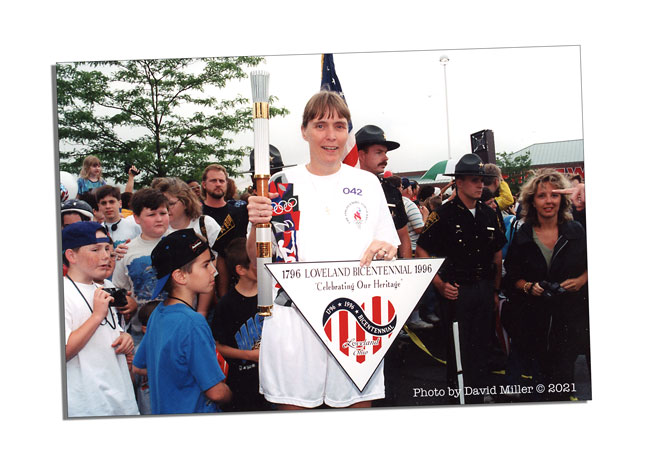
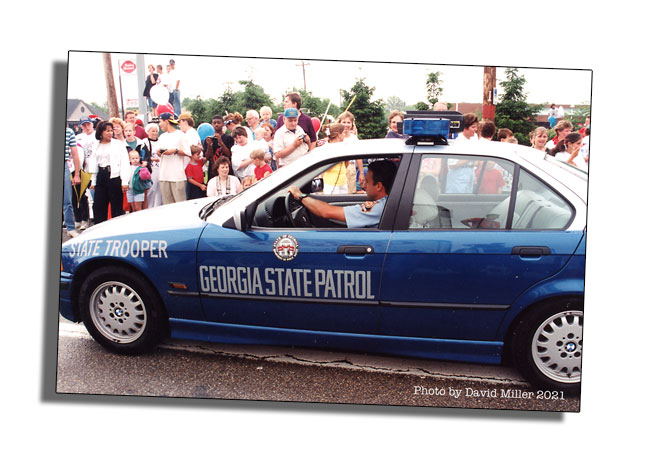
Loveland, Ohio – The City of Loveland celebrated its 200th birthday in 1996, its Bicentennial. The 1996 Olympic Summer Games was also held that year, in Atlanta Georgia. A symbolic Olympic Torch was carried by runners and walkers across the United States that Summer, escorted by the Georgia State Patrol, and made its way to be part of Loveland’s Bicentennial Parade.
Deerfield Township resident Deb Turner, who was chosen because she was determined to be a “Local Hero” for teaching physical education to special needs children, took a turn carrying the torch that day along West Loveland Avenue in Historic Downtown. Between June 8 and 9, the torch was carried between Cincinnati and Columbus.
The photos above were taken that day by Loveland’s Official Bicentennial Photographer, Loveland Magazine Publisher, David Miller who documented all of Loveland’s Bicentennial events throughout 1996.
The 2020 Summer Olympics, officially the Games of the XXXII Olympiad is scheduled to be held from July 23 to August 8. The games did not take place last Summer because of the global COVID 19 pandemic.
The 1996 flame was ultimately handed off to Muhammad Ali who lit the Olympic cauldron and later received a replacement gold medal for his boxing victory in the 1960 Summer Olympics. For the torch ceremony, more than 10,000 Olympic torches were manufactured by the American Meter Company and electroplated by Erie Plating Company. Each torch weighed about 3.5 pounds (1.6 kg) and was made primarily of aluminum, with a Georgia pecan wood handle and gold ornamentation. (Wikipedia)
The first torchbearer of the American part of the relay, Rafer Johnson, was the final torchbearer at the 1984 Summer Olympics held in Los Angeles.[6] It went on to visit 42 states and 29 state capitols along a journey of 26,875 kilometres (16,699 mi).[3][4] The torch was carried by 12,467 bearers including 2,000 former Olympians or other people somehow linked to the Olympic movement, 5,500 people who had been nominated locally as “community heroes”, and 2,500 people picked out in a draw.[4][5]
The route was designed to take in as many historically and culturally significant locations as possible.[6] The torch was first carried to Santa Monica Pier and was greeted at the first of hundreds of celebratory events. It then proceeded along the coast and up to Kingman, Arizona, at which point it joined the famous Route 66, passing close to the Grand Canyon and reaching Hoover Dam. It was carried across by Martha Watson and the world’s largest US flag was unfurled across the wall of the dam.[6]
The route featured a wide variety in the methods of transport used, including bicycles, boats, and trains.[3] From Las Vegas the flame was passed onto a special cauldron car on a Union Pacific train, the first of several train journeys. The National Pony Express Association participated in the journey with riders carrying the torch for over 56 continuous hours. On June 12 the torch was taken on board a replica of a 19th-century packet boat and pulled for 3.2 kilometres (2.0 mi) along Erie Canal by mule.[6] The torch was also carried into space for the first time, with astronauts taking an unlit torch with them aboard Space Shuttle Columbia as part of STS-78.[7][8][9] This was replicated during the 2000 Summer Olympics torch relay and as part of the 2014 Winter Olympics torch relay.[10]
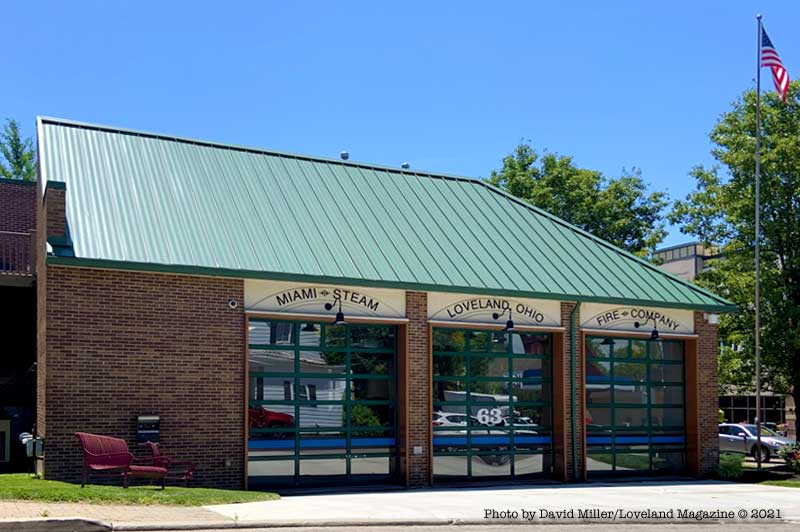
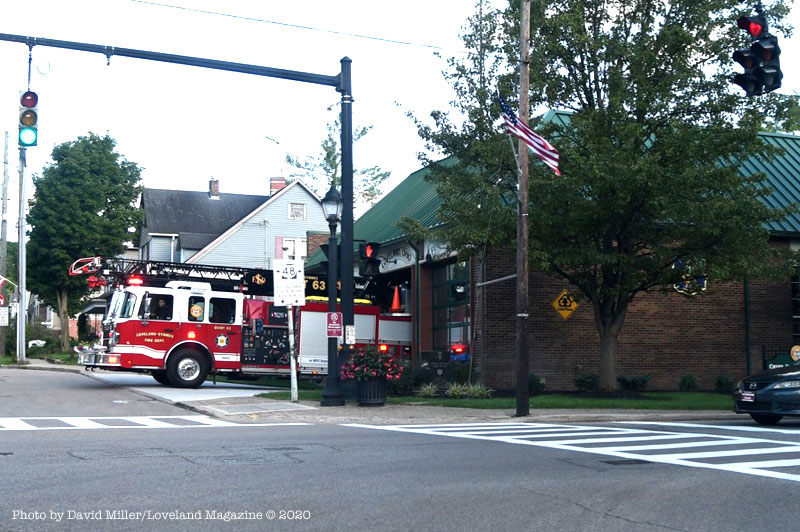
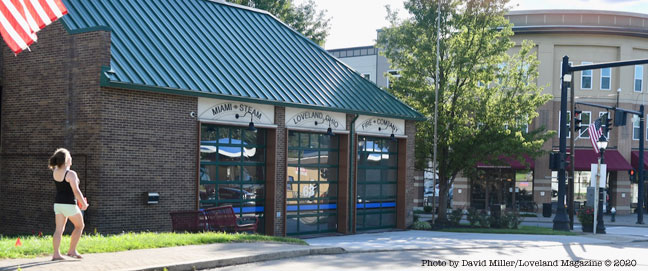
The photo above is Fire Station 63 In Historic Downtown Loveland
Loveland, Ohio – A Fire Station 63 Relocation Focus Group has been meeting to determine the best site to re-locate the fire station in Historic Downtown and has concluded that the City should build a new firehouse at the site of the old Masonic Temple on East Loveland Avenue.
MSA Design was contracted by the City of Loveland to conduct a study of needs at the current station and search for a possible new location.
When the Focus Group was formed, there was a primary site for the new station that they looked at, that being 227 East Loveland Avenue which is already owned proportionally by the Loveland Symmes Fire Fighters Association and the City of Loveland. The rear portion of the property is also the site of a fire training tower. According to a memo to the committee from City Manager Dave Kennedy on May 20, the “primary drawbacks to the location are that a large portion of the property rests in the floodplain, it is not a flat site, requires a retaining wall and would not facilitate drive-through bays for emergency vehicles.”
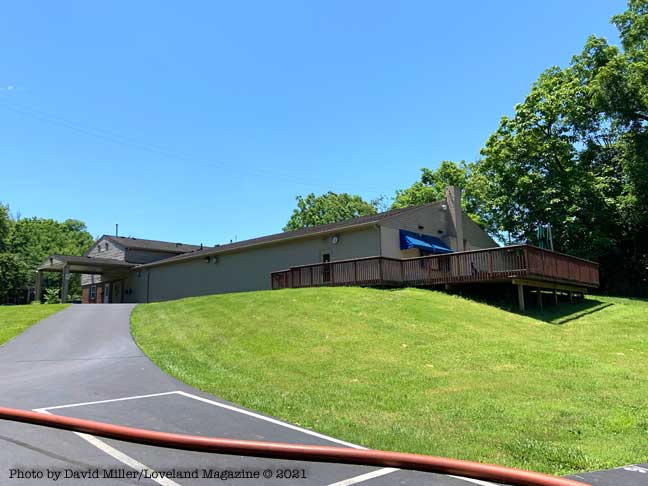
The Loveland Moose Lodge is located at 227 East Loveland Avenue. This is also where a fire training tower is located. When the Focus Group was formed, this was the primary site for the new station that they looked at
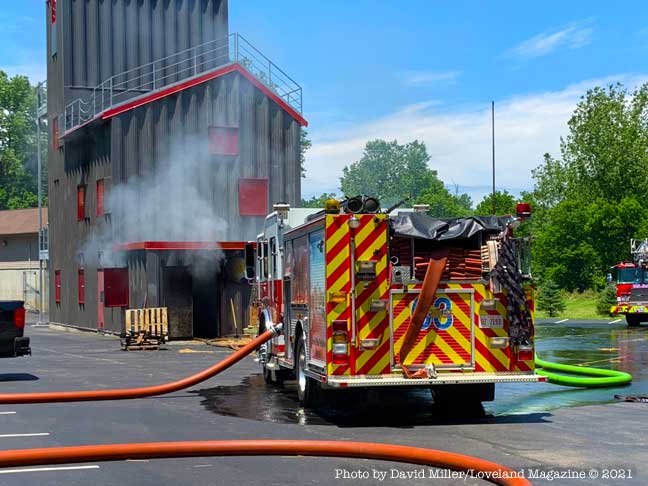
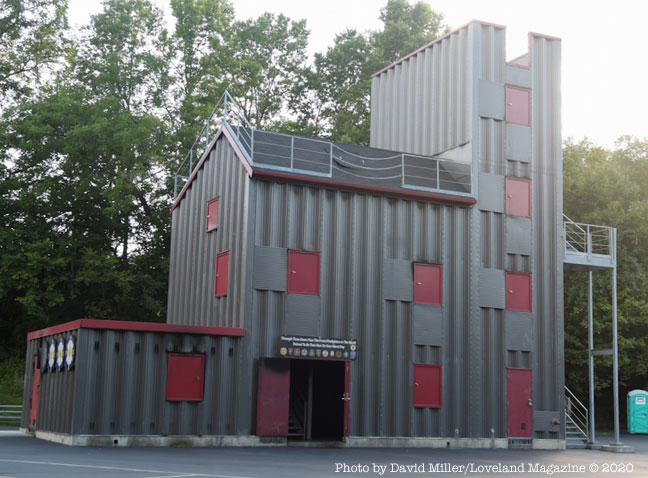
The fire training tower at 227 East Loveland Avenue.
Two other possible sites sites were evaluated, one on Oakland Road and one at Grailville on O’Bannonville Road.
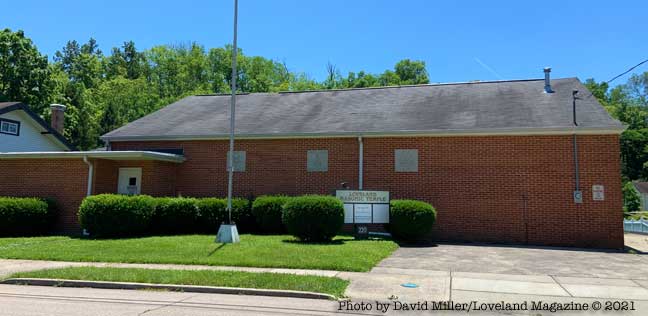
The preferred property at 220 East Loveland, is currently owned by the Firefighters Association, and was the former home of the Masonic Lodge #258.
MSA Design says in their report about the two East Loveland Avenue sites, “There are pros and cons to each of the two sites. While either site could be used for a new Station 63, it is MSA’s opinion that the newly studied site at 220 E. Loveland Avenue would be the best option as it eliminates the possibility of damage from flooding.”
The former Masonic Temple site is the preferred location for a new fire station. This is the front of the current building from 220 East Loveland Avenue.
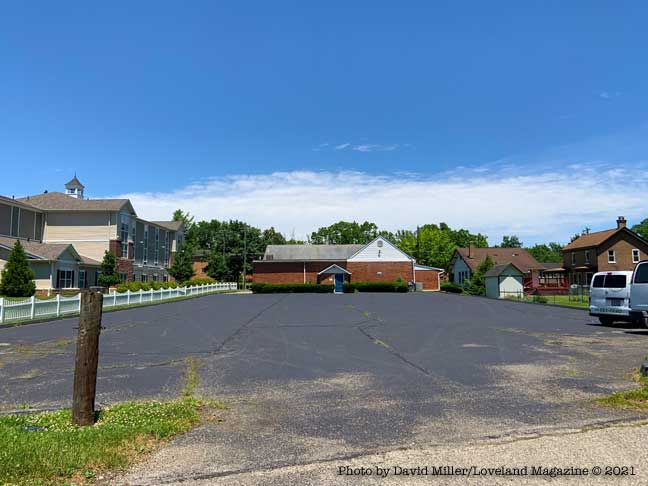
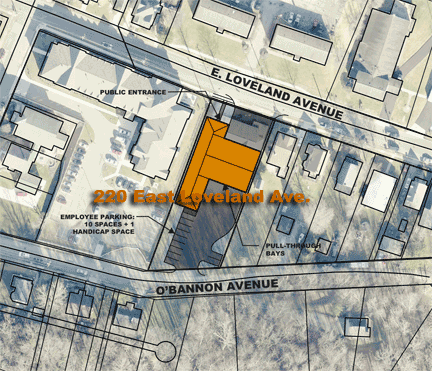
The report goes on to say about the Masonic Temple site, “While the size of the property is less than 227 East Loveland, it has two primary advantages; 1) It is not located in the floodplain and 2) It would provide for drive-through bays as the rear of the property abuts O’Bannon Avenue. Also, the site is flat, will not require construction of a retaining wall, and is a further distance from potential visibility issues which occur with westbound vehicular traffic on East Loveland approaching the East Loveland bridge.”
The rear of the Masonic Temple site as seen from O’Bannon Avenue. Vehicles returning from runs would be able to access the bays from the rear of the station
Jumping ahead to the conclusion, the study indicates that both sites are acceptable for the new station. Although both sites are acceptable, and the cost per square feet are proportionate, the advantage of constructing outside of the floodplain, utilizing O’Bannon Avenue for vehicles returning from runs and accessing the bays from the rear of the station, results in Masonic Temple site being preferred for the relocation of Fire Station 63.
MSA’s concept of how a new fire station would fit on the Masonic Temple site.
Another option that MSA Design looked at earlier was to tear down the current fire station and re-build on the existing site.
The assessment of Station 63 completed in October of 2020 was:
St. 63 is well maintained with exception of the roof- needs replaced due to leaks.
Code/Ada issues due to its usability and functionality
Overhead doors are 11×12 and considered small for firehouse doors. (This limits the equipment size to order (standard size vs. custom orders)
14×14 is typical size of new fire station bay doors
Size of bay also an issue: low ceiling and only 3-4 feet between parked vehicles
Living quarters are upstairs; typical firehouses have living quarters on same floor as vehicles
A new station would have bedrooms on the 1st floor with no stairs for fire personnel to go up/down for runs.
This would increase the turnaround time to get to vehicles as well
New code for stairs: 7-inch rise and 11-inch tread. Current St. 63 stairs are 8-inch rise and 10-inch tread.
Equipment/bunker gear also needs to be stored in separate rooms due to wear by diesel fuel fumes and UV light. Currently, at St. 63 all equipment and bunker gear is stored in the bay with the vehicles.
ADA requirements due to firehouse being a government facility need wheelchair access, which it currently does not have.
Elevator would be expensive to install
ADA also requires a storm shelter which would also be expensive to install
Any renovations done to the building means it would need to be brought up to current codes. Currently, the building is grandfathered in.
Current site is too small. A new building would mean no on-site parking.
It is MSA’s opinion that a single-story substation solution could be achieved on the site at 220 E. Loveland Avenue for, “$2.9 – $3.4 million ($335 – $390 per s.f.) in today’s dollars not including soft costs. It is MSA’s opinion that the cost of building at 227 E. Loveland Avenue as previously studied would be $5.5 – $6.5 million ($330 – $385 per s.f.) in today’s dollars plus soft costs.”
Kennedy told Loveland Magazine today, “I will say that the ability to have rear entry into the station is critical as one of the problems that plaques the current station is exiting and entering the station.”
Kennedy said he plans to make a presentation to Council at their second meeting in July.
Loveland, Ohio – Joe Timmerman captured this image of the four-sided clock in Historic Downtown this evening. Joe frequently contributes writing and photography to Loveland Magazine.
Joe is a Loveland native and graduate of Loveland High School. He is currently a sophomore journalism and photojournalism student at E.W. Scripps School of Journalism and the School of Visual Communications at Ohio University in Athens, Ohio.
Joe’s photo of the Little Miami river is currently Loveland Magazine’s cover. Read his latest piece of writing…
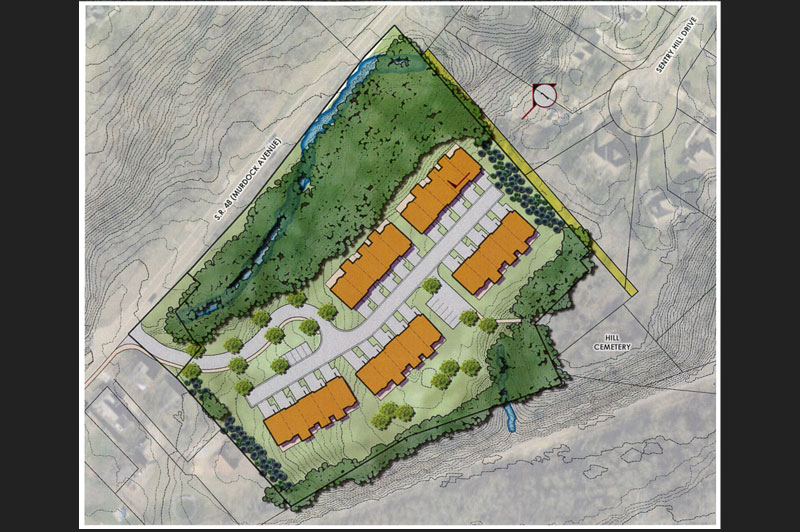
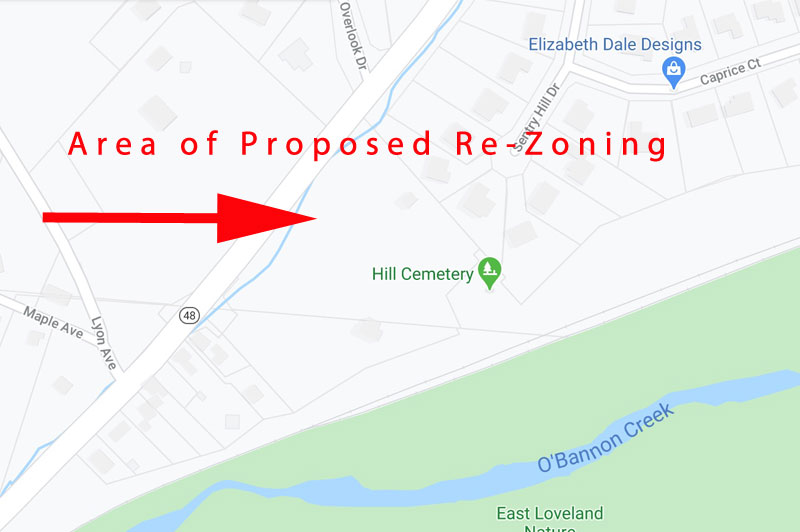
Loveland, Ohio – Joe Farruggia with Zicka Homes has been trying to rezone property off North Second Street (St. Rt. 48) south of the Sentry Hill subdivision with the potential use to build a 28-unit condominium development called the Blossom Hill Project since the first week in June. He has submitted three variations of the proposal, the latest on October 20. The current proposal is to limit the project to 25 or fewer individual units.
The site is approximately 5.5 acres on St. Rt. 48 adjacent to the Sentry Hill subdivision and on the opposite side of the street of the Loveland Health Care facility.
Previously, on June 24th and July 21, the Planning and Zoning Commission held public hearings for the zoning map amendment and recommended approval of the amendment. However, each time, Farruggia chose not to move forward with the processes which would be to have a public hearing before the City Council.
The latest iteration was also approved by the Planning Commission last week and sent to City Council for their consideration. The recommendation from Assistant City Manager Tom Smith is for Council to schedule a public hearing for the re-zoning on November 24.
The developer is asking for changes to the Loveland Zoning Map from the current zoning of Medium Density Residential to Residential Multi-Family.
The recommendation of the Commission according to Smith included the following conditions:
The proposed housing development for the property as submitted o Planning and Zoning Commission must be actively under construction within eighteen (18) months from the date of approval by City Council in order to maintain the zoning;
The approval shall be withdrawn, and the zoning shall revert to Residential Medium Density (R-MD) should the eighteen (18) month condition lapse.
Approval shall be exclusive to this applicant. No transferees or assignees of the applicant are subject to this approval.
Smith also said the developer agreed to requests made by Sentry Hill resident, Dave Stanton. These items were also part of the Planning and Zoning Commission’s motion for recommendation:
Construct a four to five-inch earth berm, fully landscaped with trees and grass, to be constructed along the property line of the two homes in the Sentry Hill subdivision and maintained by the new subdivision’s HOA.
Street lighting and exterior lighting on the townhomes be designed to prevent light pollution into the Sentry Hill Subdivision.
Townhomes to be constructed, at 40 feet, shall not exceed the height of the referenced home of 214 Sentry Hill Drive.
Limit the number of townhomes to be built at 25 or less.
No dumpsters or centralized garage collection. Individual residential trash and recycling pickup to be consistent with all the residential surrounding areas.
No stand-alone garages or sheds.
Exterior architecture and materials (brick, stone, and Hardie Plank) shall be consistent with the look and feel of neighboring communities.
Even though there are COVID 19 restrictions for the number of audience members in the hearing chamber, five residents appeared to express their displeasure with the re-zoning. No residents spoke in favor of the rezoning or the condos.
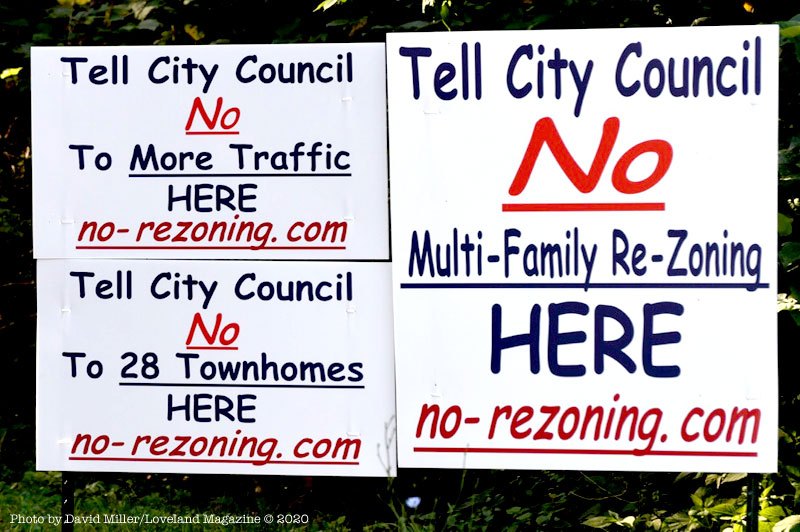
These signs were erected in July by citizens opposed to multi-family zoning adjacent to their homes on St. Route 48 in North Loveland.
Residents have pointed out that the proposal must follow the guidance of the City Master Plan specifically for North State Route 48. They say the project must maintain similar development densities, preserve open space, a rural atmosphere, and assure that there is adequate infrastructure to support the development as mandated in the current plan. They cite the current gridlock of Historic Downtown that must be addressed before the development moves forward.
City Manager Dave Kennedy has argued that the current Comprehensive Strategic Plan (2002) is old and not in line with the current needs of the City. The City is currently rewriting a new master plan for the City. Residents say re-writing the plan is well and good, but until there is a new plan the City and Zicka are governed by the one that exists.
Residents of South 48 also protest that adding so many residential units will add to their already current traffic nightmares of trying drive into and out of Historic Downtown.
During the hearing, Tom Scovanner told the Commission they should be skeptical of the studies Zicka presented to them. One presenter represented that they had prepared their study for the Commission, and Scovanner said, “No, they represent Zicka.” He posed the question to the Commission of whether they would have ever seen the study if it did not turn out favorably to the developer.
Scovanner, a litigator for Clermont County also said in no uncertain terms that the P&Z cannot do anything the Loveland law doesn’t allow them to do. Holding up the code, he said, “You’re bound by these codes. This doesn’t comport with the Comprehensive Master Plan.”
Tom Scovanner spoke to Planning Commission against the re-zoning for condos on Rt. 48.
Dave Stanton spoke to Planning Commission against the re-zoning for condos on Rt. 48.
Sue Ann Walker spoke to Planning Commission against the re-zoning for condos on Rt. 48.
Allen Brooks spoke to Planning Commission against the re-zoning for condos on Rt. 48.
Courtney Hauck spoke to Planning Commission against the re-zoning for 28 condos on Rt. 48.
Loveland, Ohio – City Council voted to move ahead with the sale of the city-owned Christman Farm on Butterworth Road after a public hearing on October 13. Taxpayers bought the former Warren County horse farm from Terry and Mary Christman in 2007 for $800,000. The property is within the boundary of the Little Miami School District. Loveland Schools will receive no property tax income from the development.
The next Community Improvement Corporation Meeting is at 5:30 PM Tuesday, October 20. The sale of the Christman Farm property is on their agenda.
The property consists of 9.8389 acres. The developer of the property will be the Campbell Berling Development Company. The proposed use of the property is for a single-family residential development of “no more” than 35 single-family homes. The company address is 333 Madison Pike, Suite C in Ft. Write Kentucky. The owner of the property will be CB Butterworth, LLC.
CB Butterworth, LLC was incorporated on September 16. Here is the business filing: Business_Details.
City Manager Dave Kennedy started the public hearing by spelling out what he believes are the advantages of the sale. Kennedy said that most of the “Estate Homes” will sell in the $1.2 M range with side entry garages. The empty-nester homes to be on the Christman Farm would not be built until after the 2022 HOMEARAMA was over. Kennedy said that Council wanted him to come up with a home product they could be proud of.
Kennedy proposed the transfer of the 9.8 acres to the Loveland Community Improvement Corporation (CIC) for eventual purchase by CB Butterworth, LLC, and prepared the legislation that was presented to City Council as an emergency measure. Emergency legislation cannot be overturned at the ballot box as they become effective immediately. Kennedy said the urgency was so he could begin constructing the sewers that will serve the development as soon as possible.
Bethany Wiegand spoke about the ways the proposal will affect her home and urged the Council to address traffic problems. She said it currently take her 20-25 minutes to leave her home in Butterworth Glen and get through the traffic in Historic Downtown. Wiegand grew up in Loveland, moved back – and asked that Council take care of the people that already live here and have already invested in the City. “Let’s solve the current issues for the current residents like myself,” said Wiegand. She also expressed interest in having a park on the property so she doesn’t have to go through Historic Downtown to use other recreation spaces.
Kennedy said in a memo to Council on October 13, “Per City regulations, all funds from the sale of the property from the CIC to CB Butterworth, LLC, will be transferred back to the City.” The sale will be contingent upon Planning and Zoning Commission approval of a re-zone to a Special Planning District.
Loveland City Manager Dave Kennedy (Loveland Magazine file photo)
There will be a request for a zone change and the “Estate” homes built on the Crane property will be a 2022 HOMEARAMA site.
CIC has been presented with a draft “Real Estate Purchase Agreement”.* $5,000 in earnest money will be due upon execution of the agreement. The sale will be continent upon Planning and Zoning Commission approval of a re-zone to a Special Planning District. The purchase price will be $350,000.
HOMEARAMA is an annual event that is billed as the “latest and greatest” in home and landscape design.
HOMEARAMA® offers you the opportunity to not only see the latest trends in home design and decorating, but also learn why buying a new home continues to represent an excellent value. Today’s new homes offer the latest trends in technology and more energy-saving features than ever before.
(Right-Click to open these images in a new tab or window to see a larger view.)
Resident Todd Osborn spoke in favor of the sale during the public hearing.
Taxpayers originally bought a total of 10.737 acres. The justification given at the time was that it would be the last chance for Loveland to have recreation space in fast-developing southern Warren County. In 2010, 0.8981 acres of the property, which included a home, was portioned off and sold to Judith Lund for $102,000.
A Recreation Tax Increment Financing District (TIF) was created by Ordinance 2008-38 to pay off the financing. The TIF consists of approximately 27 acres and includes the taxpayer-owned property known generally as the Christman Farm as well as the Crane property which is privately owned.
The Christmas Farm and the Crane properties are within the boundaries of the Little Miami School District. City Manager Dave Kennedy told Loveland Magazine on Friday that the District is “made whole” by the Recreation TIF. He said, “ Little Miami School District receives 100% of revenue as if there had been no TIF.” Read the TIF ordinance that Council passed in 2008. REC TIF
The TIF provides financing for the property purchase that the City recoups through increased property tax revenues generated from future development within its boundaries. Kennedy said during the public hearing that the debt service that has been paid out of the general fund over the years is $632,000 and that when the TIF funds start coming into the Recreation TIF fund, it will be transferred back out and returned to the general fund. He said that to finish the debt service will require an additional $347,000.
Tom Carroll, the City Manager at the time of the purchase, said, “The City will continue to slowly retire the debt on this property and the remaining ten acres of the Christman Farm will be land-banked until the Crane property is developed and a municipal park can be constructed. Continued patience is therefore necessary before Loveland can build its first park in Warren County.”
Taxpayers have been paying around $50,000 annually in debt service for the Christman Farm purchase.
In their offer letter, Campbell Berling says the development will have a buildout value of $25,250,00 with an assessed valuation of $6,860,000.
Campbell Berling will be paying $350,000.00 for the land. They plan to build fifteen $550,000 and up “empty nester” homes on the parcel they would like to buy from Loveland taxpayers. The lots would be between 11,000 and 18,000 sq. ft.
The Crane property would have 20 homes and two styles of “Estate Homes” valued at $850,000 and up on lots that would average 32,000 sq. ft.
Campbell Berling is proposing that future homeowners be allowed to pay the cost of sewer line extensions over 20-years.
Access to the development would be from Butterworth Road across from the Brandywine subdivision. The developer already has a “Crane family property”, parcel number 16074000240 under a purchase contract.
There have been 57 previous HOMEARAMA showcases
The 28th was in 1989 at The Glen of Claiborne(Loveland)
The 29th was in 1990 at Chatham Woods (Symmes Township)
After the public spoke about the sale council members asked questions to the City Manager and shared their views before voting unanimously to transfer the land to the CIC leading the way for the sale. Kennedy outlined a possible timeline of CIC action, constructing the sewers, and Planning and Zoning Commission approval. Kennedy suggested that the $350,00 taxpayers receive from the sale could be used to improve traffic in Historic Downtown, instead of repaying the principal on the current loan.
Section 4 of the emergency legislation states:
That this Ordinance is hereby declared to be an emergency measure necessary for the immediate preservation of the public peace, health, safety and general welfare and shall be effective immediately upon its passage. The reason for said declaration of emergency is to allow for the property to be transferred and sold as soon as possible so that infrastructure can be installed to allow for its development for the benefit of the City.
The CIC is a quasi-government arm of the City. Once they take possession of the land their actions are not subject to Council approval and their actions cannot be overruled by a vote at the ballot box.
CIC Members
Jay Stewart, Chair
Kathy Bailey, Mayor
Neal Oury, City Council Member
Kent Blair, City Council Member
Dr. Jeffrey Kemmet, Chamber Representative
David Parker
Michele Pettit, Board of Education Representative
A 2007 proposed development, Summit Pointe, was for 70 attached units, and later reduced to 58 units, however, it never came to fruition.
Kennedy in a memo to City Council said, “Proposals also included multiple high-density townhome type projects which would be rental occupied. These proposals were never accepted, due to the fact that City Council and staff did not see high density, much less rental type projects, as a good fit for the surrounding neighborhoods of Brandywine on the Little Miami and Butterworth Glen.”
Kennedy says in the memo that he and staff met with numerous Cincinnati area home builders in the hopes of creating a low-density project, and that one message from the developers that continued to surface was that the cost of bringing utilities to the properties was expensive. Therefore, most developers saw a higher density project as a way to recoup those expenses.
“With that consistent message from developers, and a low-density project clearly being the choice of City Council and staff, a possible option was created,” said Kennedy. The option is to include the City extending the sanitary sewer collection main up State Route 48 to the properties and placing an assessment on the parcels within the residential development so that the City would be reimbursed for the project costs.
An assessment on each parcel, for 20 years would allow for Loveland taxpayers to recoup their subsidy of the sanitary sewer main extension and to the Campbell Berling Development Company. Kennedy has not said what the sewer extension will cost nor said how the initial sewer construction will be financed. It remains unclear if Loveland taxpayers can recoup the cost of borrowing money for sewer construction.
After the taxpayers bought the land to be used as recreation and formal proposals for how it would be developed as ballfields and passive recreation came forward, opposition from many in the Brandywine subdivision doomed its development. Traffic concerns and “strangers” coming to a public park in their neighborhood distressed many homeowners. Many said they did not want to come across strangers as they were on walking trails and said they would not let their children play where strangers would be using the public park as well. Currently, anyone wishing to use city or school recreational fields, tennis and basketball courts, etc., in the immediate neighborhood must drive through Historic Downtown to facilities in Clermont or Hamilton County.
Kennedy told Council, “The proposed legislation, (was) being requested as an emergency to allow infrastructure work and planning to begin immediately.” Normally passed ordinances must be read at two separate council meetings and don’t become law until 30-days after the vote at the second meeting.
The developer wants to rezone all of the property as a Special Planning District which would require Planing and Zoning Commission and City Council approval.
Kennedy presented this “Fiscal Impact” study in the package of information he presented to City Council:
The agreed purchase price for the property is $350,000. As the project begins to develop it will begin to produce TIF revenues until the TIF expires in 2037. TIF revenue is calculated based upon an increasing scale as the development is completed and placed on the tax rolls. After the development is completed, TIF calculations include a 0.5% to 1% appreciation over the life of the TIF. Based on these calculations, the TIF at buildout, will produce revenue for the City in the range of $135,000 to $143,000 annually. If the project goes as scheduled, it will produce a total revenue over $2,000,000 to the City over the life of the TIF. A summary of projected TIF revenues to the City is shown below.
Ordinance 2020-_____
Ordinance transferring the real property on Butterworth Road located in the City of Loveland, Warren County, Ohio to the Community Improvement Corporation of Loveland and declaring an emergency
WHEREAS, the City of Loveland (the “City”) desires to see certain undeveloped real property owned by the City located on Butterworth Road known as Parcel No. 16072000550 used for a combination of residential and recreational purposes; and
WHEREAS, the City has determined that the Property is no longer needed for municipal purposes; and
WHEREAS, the Property should be transferred to the Community Improvement Corporation of Loveland without competitive bidding pursuant to Codified Ordinance Section 107.01(f) to dispose of as that organization shall best determine; and
WHEREAS, City Council conducted a public hearing on October 13, 2020 as to the disposition of the Property.
Now, Therefore, Be It Ordained by the Council of the City of Loveland, Hamilton, Clermont and Warren Counties, Ohio.
Section 1. Council of the City of Loveland (“City Council”) hereby determines that the undeveloped real property located on Butterworth Road known as Parcel 1607200055 and further described in Exhibit A attached hereto (the “Property”) is no longer needed for municipal purposes.
Section 2. City Council hereby authorizes the Property be transferred to the Community Improvement Corporation of Loveland to be used to promote the welfare of the people of the City, stabilize the economy, provide employment, assist in the development of industrial, commercial, distribution, and research activities to the benefit of the people of the City, provide additional opportunities for their gainful employment or will promote the reclamation, rehabilitation, and reutilization of vacant, abandoned, tax- foreclosed, or other real property in the City. The City Manager is authorized to execute any and all documents on behalf of the City consistent with this transfer.
Section 3. Council hereby finds and determines that all formal actions relative to the passage of this legislation were taken in an open meeting of this Council, and that all deliberations of this Council and of its committees, if any, which resulted in formal action, were taken in meetings open to the public, in full compliance with applicable legal requirements, including Section 121.22 of the Ohio Revised Code.
Section 4. That this Ordinance is hereby declared to be an emergency measure necessary for the immediate preservation of the public peace, health, safety and general welfare and shall be effective immediately upon its passage. The reason for said declaration of emergency is to allow for the property to be transferred and sold as soon as possible so that infrastructure can be installed to allow for its development for the benefit of the City.
* DRAFT
REAL ESTATE PURCHASE AGREEMENT
This Real Estate Purchase Agreement (“Agreement”) is entered into this _____ day of October, 2020, by and between the Community Improvement Corporation of Loveland, an Ohio not-for-profit corporation, whose address is 120 West Loveland Avenue, Loveland, Ohio 45140 (“Seller”), and CB BUTTERWORTH, LLC, an Ohio limited liability corporation, whose address is 3333 Madison Pike, Suite C, Ft. Wright, Kentucky 41017 (“Buyer”).
WITNESSETH:
1. Purchase and Sale: Subject to the terms, conditions and provisions hereinafter set forth, and good and valuable consideration, the sufficiency of which is hereby acknowledged, Seller agrees to sell and Buyer agrees to purchase a certain parcel of land containing approximately 9.8389 acres, known as Parcel No. 1607200055 and located in the City of Loveland, Warren County, Ohio, more particularly described in the attached Exhibit A, together with all improvements thereon and all appurtenant rights, privileges and easements (“Property”).
2. Purchase Price and Terms: The purchase price for the Property (“Purchase Price”) shall be Three Hundred Fifty Thousand and No/100 Dollars ($350,000.00). The Purchase Price shall be paid as follows:
a. Buyer shall pay the amount of Five Thousand and No/100 Dollars ($5,000.00) upon the execution of this Agreement as earnest money (“Earnest Money”) to apply toward the Purchase Price, and the Earnest Money shall be held by the Seller, without interest, pending the closing of the transaction contemplated herein. Except as otherwise provided herein, if the transaction contemplated herein does not close for any reason, other than the title to the Property not being marketable or a default by Seller, the Earnest Money shall be retained by Seller as liquidated damages and Buyer shall not be entitled to a refund of the Earnest Money; and
b. The balance of the Purchase Price shall be paid in cash or certified or cashier’s check, and shall be payable upon delivery of the deed at the closing time set forth herein, or at such sooner time as is mutually agreeable by the parties.
3. Property to be Conveyed: The Property shall include the land, together with any improvements thereon, all appurtenant rights, privileges, and easements.
4. Personal Property. No personal property shall be included in the sale of the Property.
5. Closing:
a. The closing shall occur at the location selected by Seller, on or before thirty (30) days after Buyer obtains zoning as provided for in paragraph 8, or May 7, 2021, whichever occurs sooner, or at such date, time and place as mutually determined in writing by the parties. At closing, title to the Property herein described shall be conveyed by Seller to Buyer, by a General Warranty Deed, in fee simple, and shall be transferable, recordable, marketable and shall be free, clear and unencumbered, and shall be subject to easements, restrictions and reservations of record, and real estate taxes and assessments of record.
b. Buyer shall be responsible for payment of any and all fees or costs of closing with respect to the Property, including, but not limited to, transfer taxes (if any), escrow fees, settlement fees, and recording fees.
6. Real Estate Taxes and Assessments: All real estate taxes and assessments, if any, shall be prorated effective as of the date of closing.
7. Occupancy and Possession: Subject to further terms, conditions, and provisions of this Agreement, Seller shall grant Buyer possession and occupancy of the Property herein described on the date of closing.
8. Contingencies: The purchase of the Property is contingent on Buyer obtaining zoning approval to the satisfaction of the Buyer from the City of Loveland for the construction of a single family residential development. Any such zoning shall include an obligation for payment of the sewer assessment provided for in paragraph 9 of this Agreement.
Buyer shall have the right to enter the Property and conduct any environmental testing deemed necessary by Buyer for Buyer’s proposed use of the Property. In the event the Property is not able to be used for Buyer’s proposed use of the Property as a result of any environmental conditions discovered prior to Closing, Buyer shall have the right to terminate the Agreement.
9. Sanitary Sewer Assessment by the City of Loveland: It is understood and agreed to by the Buyer that there shall be a twenty (20) year assessment placed on the Property as a lien, or on each of the parcels making up the Property if it is subsequently subdivided by Buyer, for all costs and fees associated with the construction of a sanitary sewer line by the City of Loveland to provide sanitary sewer service to the Property. The payment of the sewer assessment shall be due and payable to the City of Loveland by each property owner located within the Property.
10. Warranties and Representations: Seller makes no certifications of any representations or warranties with respect to the Property; as such, the Property is being sold “AS-IS, WHERE-IS AND WITH ALL FAULTS”, and without any representation and/or warranty from Seller whatsoever. Notwithstanding the above, Seller represents it is not aware of any adverse environmental conditions on the Property.
11. Brokers: Buyer and Seller each hereby represent to the other that it has not involved or worked with any brokers, agents or finders in the negotiation of this Agreement or the consummation of this transaction and that there are no brokers, agents or finders that have any right to claim a commission or fee due to the consummation of this transaction.
12. Notice: All notices, communications, requests, approvals, consents, and demands are herein required to be given or made in writing and shall be deemed to be served when delivered personally or when deposited in the U.S. mail, registered or certified mail, postage prepaid, to the address of the appropriate party as set forth above.
13. Miscellaneous:
a. Time of Essence: Time is of the essence hereof. 2
b. Governing Law: This Agreement is made and shall be construed under and in accordance with the laws of the State of Ohio without regard to its conflicts of law principles.
c. Entire Agreement; Modification: This Agreement supersedes all prior discussions and agreements between Seller and Buyer with respect to the Property and contains the sole and entire understanding between Seller and Buyer with respect to the Property. All promises, inducements, offers, solicitations, agreements, commitments, representations, and warranties heretofore made between such parties are merged into this Agreement. This Agreement shall not be modified or amended in any respect except by written instrument executed by or on behalf of each of the parties to this Agreement.
d. Counterparts: This Agreement may be executed in one or several counterparts, each of which constitute an original and all of which together shall constitute one and the same instrument.
e. Rights Cumulative: Except as expressly limited by the terms of this Agreement, all rights, powers, and privileges conferred hereunder shall be cumulative and not restrictive of those given by law.
f. Benefit: This Agreement shall inure to the benefit of and shall be binding upon the parties hereto and their respective representatives, successors and assigns, as the case may apply.
g. Survival of Provisions: All representations, covenants, warranties and agreements set forth in this Agreement, if any, shall survive the execution or delivery of any and all deeds and other documents at any time executed or delivered under, pursuant to, or by reason of this Agreement, and shall survive the payment of all monies made under, pursuant to, or by reason of this Agreement.
h. Severability: If any provision of this Agreement is judged by a court of competent jurisdiction to be illegal or unenforceable, that provision is severed from this Agreement and the remaining provisions remain in force.
i. No Waiver: Either party’s failure to object to any default on the part of the other party shall not be construed as a waiver of such default.
IN WITNESS WHEREOF, the parties hereto have executed this Agreement as of the last date written below (“Effective Date”).
SELLER:
The Community Improvement Corporation
of Loveland, an Ohio not-for-profit corporation
By:________________________________ Name: Jay Stewart
Title: President
Date:__________ 100029.001.14180797.1
BUYER:
CB Butterworth, LLC, an Ohio limited liability
Loveland, Ohio – The murderous 9/11 attack by terrorists against the United States will be remembered this Friday at 8 PM at the Police and Fire Memorial in Historic Downtown.
Two searchlights will be lit at dusk and a fireworks display will follow the ceremony.
The Police and Fire Memorial is located at 200 Harrison Avenue, in the same block as Nisbet Park along the Loveland Bike Trail.
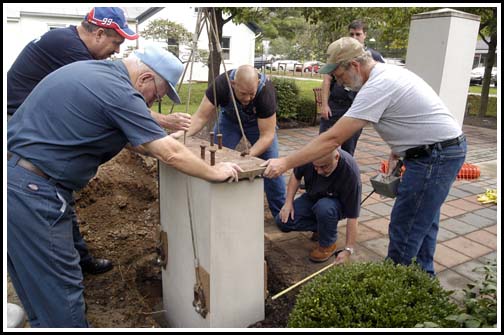
In September of 2004, Vernon Michael, and son Don, place the 9/11 Memorial into the concrete foundation at the Loveland Police and Fire Memorial. Michael’s Pre-Cast Concrete manufactured the pedestal to the design specifications of David Camele (with tape measure). Sitting atop of the concrete base is a distorted and rusty piece of structural steel brought to Loveland from the scrap pile of the World Trade Center. Camele designed the memorial so the steel would “bleed rust” onto the fabricated concrete base. Camele, a Loveland resident also designed the Loveland Veterans’ Memorial in the West Loveland Historic District and the Joy of Youth Statute at the entrance to Loveland High School.
The September 11 attacks were a series of four coordinated terrorist attacks by the Islamic terrorist group al-Qaeda against the United States on the morning of Tuesday, September 11, 2001.
The guest speaker is Ret. Lt Bruce Hoffbauer who is the 2020 Republican candidate for Hamilton County Sheriff.
The evening is hosted by the Loveland Symmes Fire Department.
Loveland, Ohio – The City and the Loveland Symmes Fire Department are exploring options for re-locating Fire Station 63 currently located in Historic Downtown on Second Street. It houses an engine company, a ladder company, and a medic unit. Station 63 is also home to Loveland’s original horse drawn steamer.
Fire Station 63 in Historic Downtown
The focus group will meet on Monday August 24 to review a “Fire Station 63 Relocation Report” prepared by MSA Design. You can review the report HERE. The report was paid for from “Fire Funds” at a cost of $12,000.
The report recommends locating a new Station 63 at 227 East Loveland Avenue.
Two other locations were studied, one at the corner of Oakland Road and Founders Drive, and the other on a street that may or may not be built connecting Oakland Road to O’Bannonville Road. Both of these alternate locations would have been on a portion of property if the Loveland City School District had purchased land from Grailville for new school buildings. The report says that since the exact locations that might be available for the construction of a new station at Gralville are unknown at this time, neither of these alternate options were studied in great detail.
In the executive summary of their report MSA says in part”
“The Department has been working out of a facility in downtown Loveland for many years. Over time, the suitability of this location has been compromised by increased traffic near the station. Additionally, a great deal of redevelopment has been going on in downtown Loveland, making the current station site a potential economic development opportunity. The construction of a new station would also allow the Department to adjust the size and layout to better serve their needs now and into the future.”
The site proposed for a new facility is east of its current location, at 227 East Loveland Avenue. The site consists of two parcels, one of which is already owned by the Loveland Firefighters Association, while the other is owned by City taxpayers. The Firefighters Association’s parcel houses an existing meeting hall (Fraternal Order of Moose Lodge) while the City resident’s parcel houses the Fire Department’s fire training tower, a public works facility and parking with access to outdoor recreational facilities including the East Loveland Nature Preserve.
The Fraternal Order of Moose Lodge on East Loveland Avenue where a new fire station might be built.
MSA’s report says that a new Station 63 could be constructed on the East Loveland Avenue site for between 5 and 5.8 million dollars ($300 – $350 per s.f.) in today’s dollars. MSA notes the fact that these numbers are given in 2020 dollars and that should be considered when budgeting for a future project.
City Manager Dave Kennedy told Loveland Magazine today that if a new station is built it will be paid for using the City’s Fire Fund. He anticipates that the City will sell bonds, and he does not anticipate a tax increase to pay off the bonds.
Members of the Fire Station 63 Relocation Focus Group are, Kathleen Eldredge, Allison Ellis, and Larry Flynn. Also in the group is LSFD Captain Bruce Hawk, representing the fire department, Councilmen Andy Bateman and Ted Phelps representing City Council, and City Manager Dave Kennedy representing City staff.
A fire training tower is already located on property where a replacement for Fire Station 63 might be built.
Kennedy said, “The Firefighter Association owns (part of) the land, They have indicated that if the City desires to build a fire station on that site they would donate the property to the city as they did the property to build the salt dome, the fire tower, and the nature trail parking lot. In the end the City of Loveland would own all of the land and all improvements provided the committee recommends and the City choses that site.”
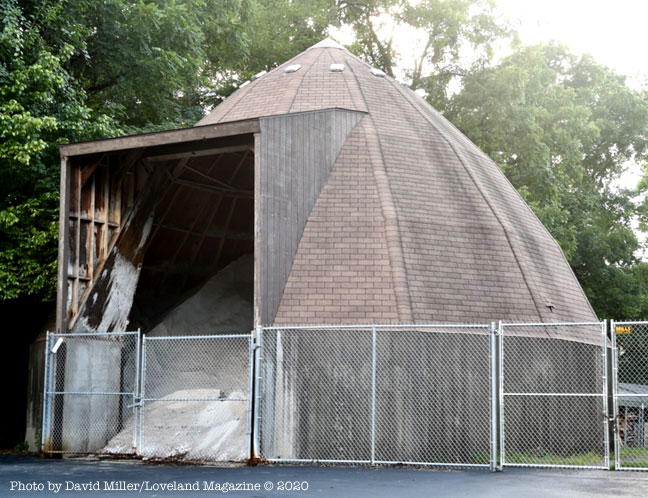
The City stores road salt on property where a replacement for Fire Station 63 might be built.
The current fire station sits on part of the land from the old City Hall and fire station that was destroyed in a fire in the early 1970’s and is owned by the City of Loveland
Kennedy said about the current fire station, “Returning the property to commercial use could be a possibility or council could choose another public use. At the end of the day the highest best use for the city with all factors considered would be presented to council.” He added that the proceeds of any sale of the current station and property, “would go back to the fund that was utilized to construct the Fire Station which was the fire fund.”
Kennedy added, “The current fire station is nearly 50 years old and was built to accommodate our volunteer fire department at that time. The Fire Station was built after the city hall and fire station was destroyed by fire in the early 1970’s. Operating out of the fire station is challenging for today’s modern fire service with on duty career firefighters. The station doesn’t provide quick access to apparatus and is challenging to respond from because of location and size of the front apron. Fire apparatus barley fits into the facility and is often damaged due to the size of the garage doors. The station doesn’t have safety and health features that are necessary for the hazards facing firefighters today.”
The City Manager was asked, however did not offer an estimate of when a recommendation might be forwarded to City Council or an estimate of when construction might start if they do.
Cassie Mattia is the Associate Editor of Loveland Magazine and lives in Historic Downtown.
by Cassie Mattia
Loveland, Ohio – Loveland videographer Bob Kessler wanted to get a unique perspective of this year’s 4th of July fireworks by getting up close and personal with the launch zone! Kessler was able to not only show the launch of the fireworks but the explosions as well in one wide-angle shot. Loveland Magazine and Kessler teamed up this year for the 4th so that he could receive credentials to be on the actual launch site. By doing this, Kessler was able to witness the firework preparations and be there when the fuses were lit.
Loveland’s and Symmes Township’s annual Independence Day celebrations were canceled this year, however, the City and Township were able to hold two simultaneous, “park and watch” firework shows on Saturday, July 4th.
Kessler positioned himself at Loveland’s launch site inside Philips Park which was closed to the public for the day. Symmes Park, which was also closed to the public for the day, acted as the launchpad for the Township.
Kessler explained that previously he shot video from various street views in Downtown Loveland and on the bridge of the Little Miami River. Typically, Loveland launches its annual show from inside Kiwanis Park on Wall Street but, this year, because of COVID 19 the City was concerned about having thousands of people crowd into Historic Downtown, which is known as the best viewing spot for the fireworks. City Hall ended up deciding to move the launch to a higher location in order to take advantage of the area’s church and school parking lots. Spectators were either encouraged to watch the shows, drive-in movie style and practice social distancing, or residents who lived near the parks were asked to stay at home to enjoy the show. Those that decided to watch the fireworks from their cars went to Loveland High School, Home of the Brave Park, church parking lots, and surrounding subdivisions while of course remaining socially distant.
Kessler told us that the launch locations were chosen to accommodate the use of larger shells, which go higher into the air and allow spectators to watch from a much wider area.
Here is Kessler’s favorite still shot from his vantage point at the launch pad inside Phillips Park. “This is my favorite picture from the batch I shot last night. I was about 250′ from the launch site, behind the exhibitors running the show. Nikon D850, 14mm, ISO 400, f/10, 8 seconds,” said Bob Kessler.
Kessler said he was excited about the addition of a second launch site at Symmes Park this year.
“The second launch site promised to make for a unique experience. That’s why I settled on Phillips Park as the best location for me to photograph both stills and video images.”
Dave Miller, Loveland Magazine’s Editor-in-Chief, covered the wide shots from the top of the stands at LHS’s stadium where he was able to view both Loveland’s and Symmes’ fireworks. He used two cameras, one acted as a live feed so LOVELAND MAGAZINE TV could have a live broadcast of the shows.
Kessler and Miller were in constant communication in the days leading up to the show as times and locations rapidly changed with not much notice to the public. Luckily Loveland Magazine had a firework “inside man,” which allowed us to communicate quick and accurate firework updates to the public.
A few minutes before launch time Kessler sent a message to Miller saying, “I passed the cop-test. The patrol came through and the Rozzi guy said, ‘He’s with us!”
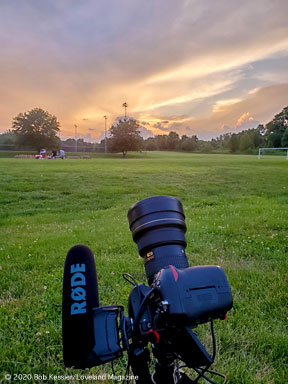
Some of the camera equipment Bob Kessler used at the launch site of the Loveland Fireworks show.
Loveland was the first to set off their rockets, then Symmes followed shortly after. Each firework show lasted about fifteen minutes. After the two shows finished both launch pads put on a simultaneous Grand Finale.
“I first contacted the Loveland Symmes Fire Department about getting permission to be close, as they previously ran the show and knew me and my work with Loveland Magazine,” Kessler explained, “I then approached Rozzi’s Famous Fireworks and got the permission of the exhibitor running the show to shoot within the normally closed firing zone.”
Kessler positioned himself in a ditch behind the show operator. Using a wide-angle lens and shooting 4K, he was able to capture a high definition video that allowed him to digitally “zoom-in” on the image without compromising quality. “I concurrently shot digital images with my still camera, the equivalent to an 8K image,” Kessler said.
Kessler experimented with various settings on his camera as the show progressed, mostly shooting still frames at various time exposures of 4, 6, 8, 10, and 12 seconds. “All this fussing had to be done quickly, as I knew the show would only last 15-20 minutes. I managed to get about 75 images and several videos,” Kessler said, “Out of that, I ended up with 11 shots that I liked enough to post on Facebook.”
Kessler learned from the Rozzi folks that the firework shells are able to go up to 100′ in the air for each inch of shell diameter. For example, a 4′ shell would go 400′ feet into the air while a 6′ shell would go about 600 feet into the air.
“I always look forward to working with Bob Kessler on video projects because I learn so much,” David Miller said, “My only regret is there wasn’t enough of him to go around that night so he couldn’t be in the stadium with me to adjust my camera. If he could have been there then all I would have had to do was hit the record button. My video would have been so much better!”
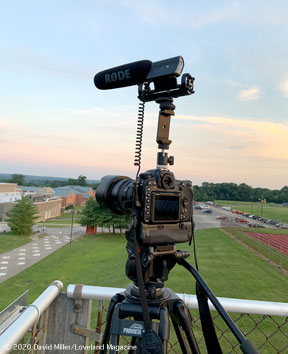
Some of the video equipment David Miller used to shoot video and live-stream the fireworks show from the high vantage point of the stands at Tiger Stadium
Miller also said that when Kessler offered to shoot the show he knew that he would expend countless hours readying his equipment and making adjustments. “Doing something like shooting fireworks is seat-of-pants. There are so many variables such as the rapidly setting sun. Will it be completely dark, well it will be if it’s a cloudy day. If the sun is out and going over the horizon which way will it be heading in relation to where the camera is? Fifteen minutes can make a huge difference in the ambient light that time of day,” Miller explained, “Bob sees all these variables in the days before and has the brainpower to take most of the guesswork out of the equation.”
Miller said he really enjoyed watching the evening unfold from the highest elevation in town. “When I got to the stadium there were already about 20 teens playing frisbee football and before the show, someone new showed up with a cooler of water balloons to cool them off with.”
At showtime, many of the teens and some adults joined Miller at the top of LHS’s bleachers to enjoy the vantage point of seeing both shows. “The pre-show of all the neighborhood fireworks displays going off from the high vantage point I had was pretty cool as well,” Miller added.
Did you miss the 4th of July firework shows this year? Well, we have you covered! Click below to relive Bob Kessler’s 4th of July Fireworks video production!
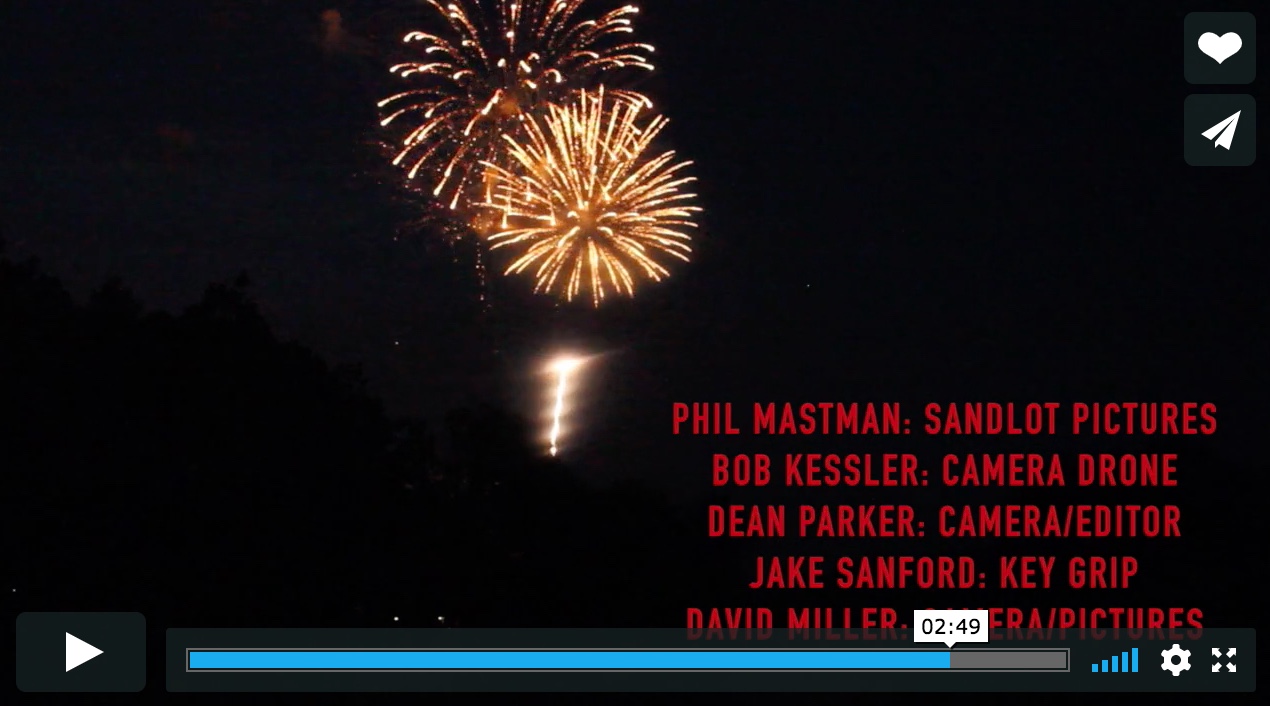
Kessler also produced a short clip of Loveland’s Finale which Loveland Magazine ended up using as an experiment of a “Video Cover Photo”.
Loveland Magazine sends out a special thanks to Rozzi’s Famous Fireworks for giving us access to the launch site and showing us such wonderful hospitality!
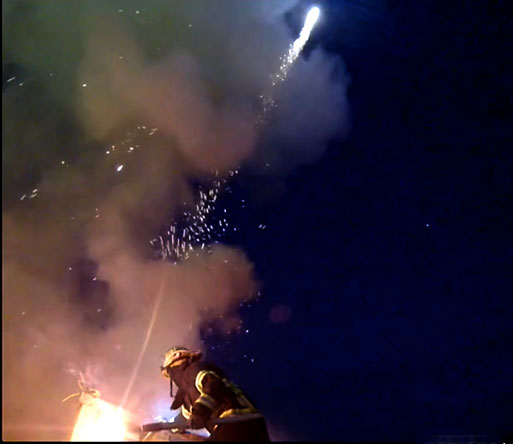
Check out these previous firework shows that Bob Kessler produced for Loveland Magazine TV. In this first video from 2015, Bob showed close-ups as the fuses were lit by a crew of Loveland Firefighters in full protective gear. Deputy Fire Chief Don Books talks about the show and how safe it was for the crew.
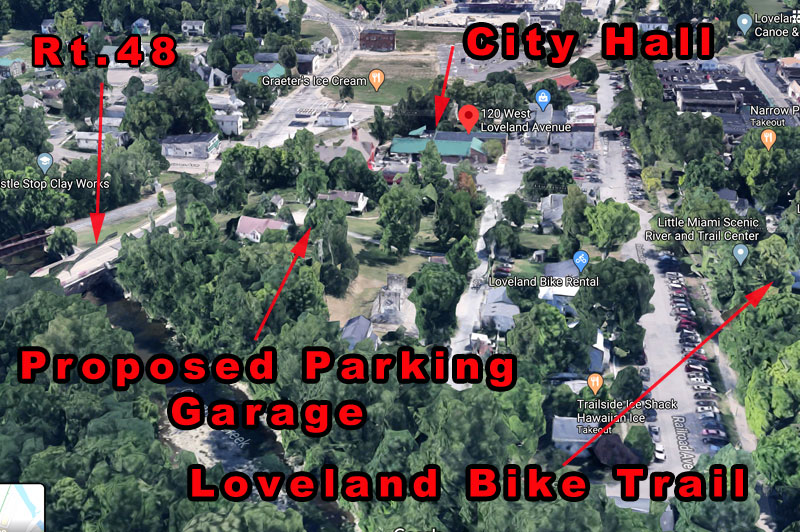
Loveland, Ohio – In a June memo to City Council, City Manager Dave Kennedy said that the COVID-19 pandemic has not dampened the need for a municipal parking garage in Historic Downtown. Because of budget concerns and a possible unknown income shortfall Kennedy had previously put on hold the engineering expenditure for the project and the engineering and design of the downtown parking facility was temporarily suspended.
Kennedy’s June report stated, “Meanwhile, parking needs in the city continued to expand and availability of potential funding sources for the project came to the city’s attention.” Kennedy further explained, “With the aforementioned, it was time to request the engineering and design team for the project, to prepare a final cost estimate, including civil engineering.”
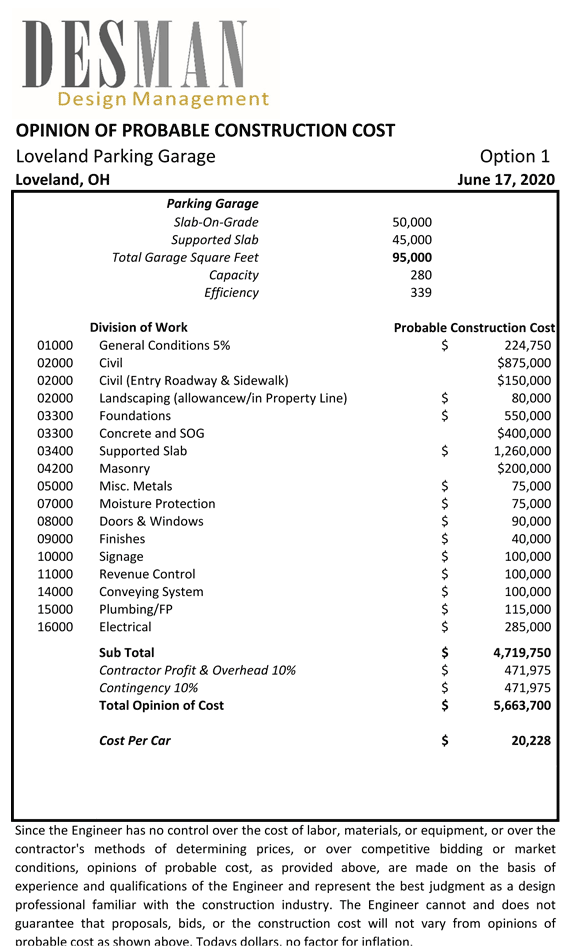
The total cost is estimated to be $5,663,700. (See estimate below)
Kennedy told Loveland Magazine Wednesday that the public will pay to park in the garage.
Below is an excerpt from the report concerning the design elements:
Design
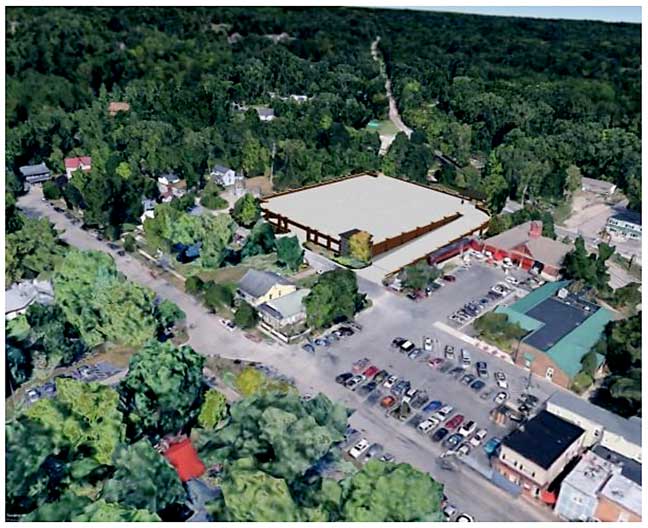
The design of the parking facility is simplistic by nature and includes a total of 279 parking spaces.
For reference this will equal more than two times the number of spaces currently at the Linda J. Cox Trailside Parking Area.
The facility includes two levels, with 138 spaces on the ground floor and 141 spaces on the 2nd level.
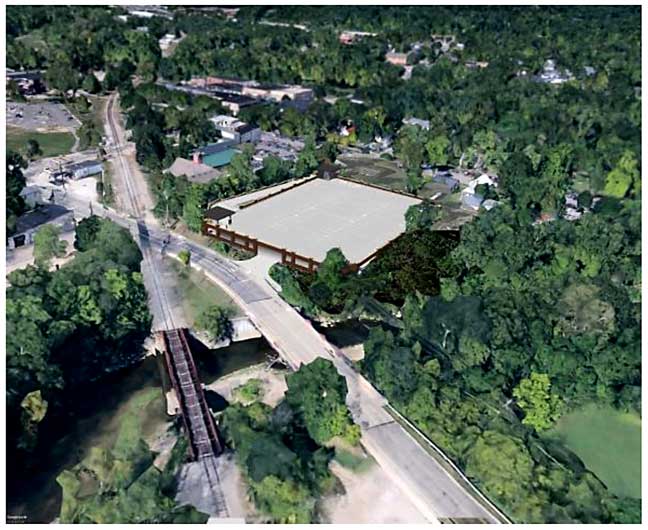
Access to the ground level will be both from Harrison Avenue/First Street and from State Route 48. Access to the 2nd level will be via an exterior ramp along the side of the Works’ railcar.
The project design does not include an internal ramp to the 2nd level, which would both reduce ground level spaces and add to the cost of the project.
Access from State Route 48 will include sidewalks to allow for both vehicular and pedestrian traffic to enter into the downtown district.
Kennedy said that specific design and material selections for the exterior facing of the facility have not been decided and that input from the public on this matter is important.
Kennedy said, “Specific design and material selections for the exterior facing of the facility have not been decided.”
“Although preliminary designs of the parking facility have been completed, the following aerials give a good perspective on how the project fits within the downtown district and how access from State Route 48 will be configured. Note that figure number 1, does not include the razing of the structure at 124 Railroad Avenue, which will serve as the access point into the facility from within the downtown district. This area is currently serving as temporary parking, until the new parking facility project commences.” – Source: June memo to City Council
Financing
Kennedy told the Council, “No doubt that this project will include city bond financing, it is a priority among city staff to reduce the local financing by securing other funding sources.” One source mentioned by Kennedy is the Appalachian Regional Commission (ARC) program, which is administered by the Ohio Valley Regional Development Commission (OVRDC). “The pre-application request is for $250,000, and is based heavily on jobs, in terms of retention and creation that the project could support,” said the City Manager.
Kennedy also said that the City may be eligible for Adjustment Assistance Programs including CARES Act Funding. The program is federally funded and can fund up to 50% of a project’s total cost. City staff is preparing a grant application for the funding.
Additionally, in 2019, the city submitted the parking facility project for funding consideration in the State of Ohio Biennial Capital Budget. Kennedy told Council, “This budget, which has not been adopted by the state, will undoubtedly be impacted by the COVID-19 pandemic so funding has not yet been committed.”
Public Hearings
Kennedy said in his report that the next step is to prepare for public meetings. “A public meeting will likely be scheduled for an outdoor venue and announced later this summer,” he said.
Additional points made by the City Manager
The project will add much needed parking to the downtown district
The project will increase public parking in the downtown district by 46%
The project is supported by the majority of the city’s downtown businesses
The project will include a new access point into the downtown district via State Route 48 thus better disbursing traffic flow
The two-level design will not dominate other buildings within the district
Public input on the facilities exterior features and other components will be sought and utilized in the project’s final design
The additional purchase and demolition of the structure at 124 Railroad Avenue will improve ingress and egress into the facility. Attachments: Parking Facility Cost Estimate
City adds 2 new parking locations
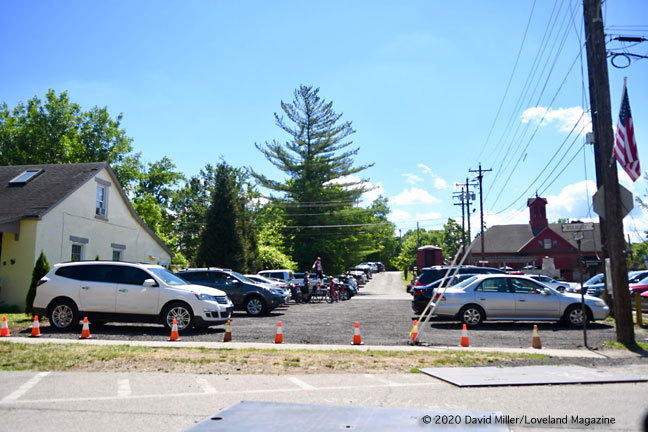
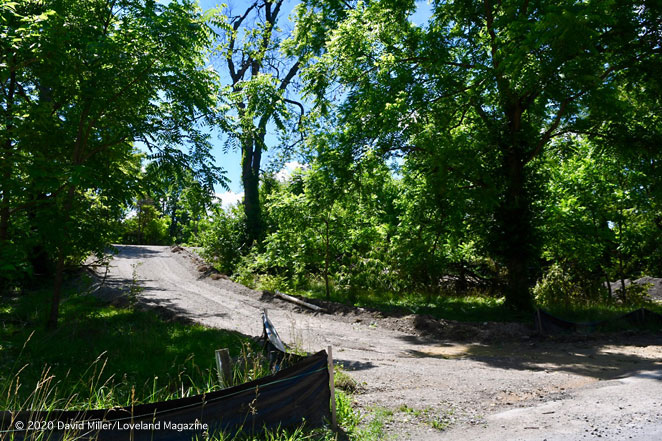
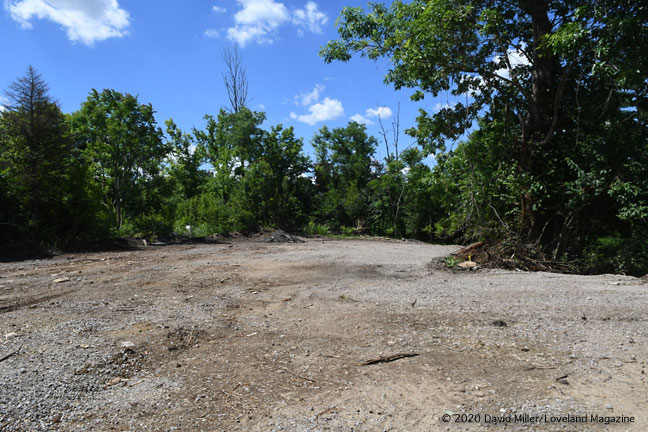
The land where the parking garage will be located is being turned into about 50 temporary parking spaces. Kennedy said Wednesday, “We’re not finished yet, but we think it will be close to another 50 spaces.”
Another new parking area that is complete is where the McCoy house next to City Hall used to stand at 124 Railroad Avenue. The City recently demolished the house in preparation for the parking garage construction. This spot has 20 spaces.
“We are working hard to add spaces,” Kennedy said.
Kennedy says this temporary parking space at the old McCoy house next to City Hall added 20 spaces.
The 2nd new temporary location for additional parking is where the new parking garage will eventually be constructed. These spaces will have access from First Street near Works Pizzeria.
The 2nd new temporary location for additional parking is where the new garage will eventually be constructed. These spaces will have access from First Street near The Works restaurant and will hold about 50 vehicles.


![[VIDEO] Dave Bednar asks questions about proposed parking garage in Historic District](https://lovelandmagazine.com/wp-content/uploads/2021/11/dave-bednar.jpg)







![[Meeting Videos] Christman Farm sale moves forward after public hearing](https://lovelandmagazine.com/wp-content/uploads/2020/10/feature-HOMEARAMA-1.jpg)


 A Recreation Tax Increment Financing District (TIF) was created by Ordinance 2008-38 to pay off the financing. The TIF consists of approximately 27 acres and includes the taxpayer-owned property known generally as the Christman Farm as well as the Crane property which is privately owned.
 The Crane property would have 20 homes and two styles of “Estate Homes” valued at $850,000 and up on lots that would average 32,000 sq. ft.
 Campbell Berling is proposing that future homeowners be allowed to pay the cost of sewer line extensions over 20-years.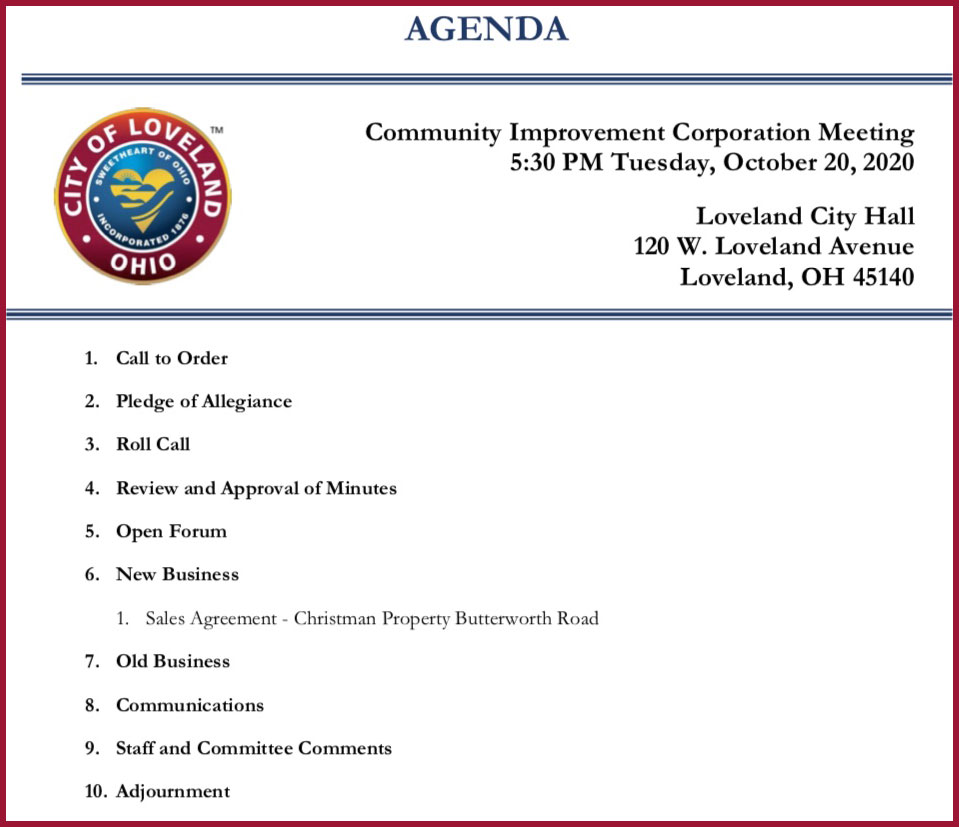
 Kennedy presented this “Fiscal Impact” study in the package of information he presented to City Council:

![[VIDEO] Bob Kessler gets intimate with 6″ shells on the 4th of July!](https://lovelandmagazine.com/wp-content/uploads/2020/07/feature-kessler-fireworks.jpg)