Tag: Inclusion

  • Courtney Explains It All With DJ Cowboy Jason Yockey!

    Courtney Explains It All With DJ Cowboy Jason Yockey!

    by Courtney Hineman

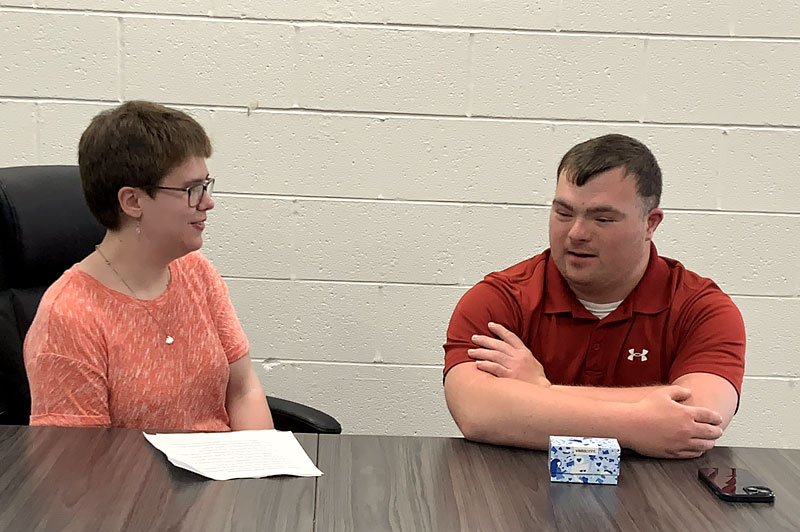
    Loveland, Ohio – The 3rd episode of Courtney Explains it All features an individual named Jason Yockey who is both a business owner and a fantastic self-advocate! Jason Yockey started his very own DJ business and so far, has seen a lot of success! Since he started about three years ago, Jason has DJ’d two weddings with the help of his friend David, a yearly campground event, about once a month at Empowered, and Fairfield Junior High’s 8th-grade dance. He has also done Empower’s all-state Banquet in Springfield, Ohio, and Our Lady of Victory’s Trike-a-Thon fundraiser.

    During my vlog episode, I asked Jason how he started his business, what he likes about being a DJ, and how he’s advocated for himself and others with disabilities. I hope you enjoy this episode, and our conversation makes you think about how you can help others with disabilities start their own business or do something they are passionate about!

    Contact and hire Jason – 513-290-9657

    Like and Follow Jason on FaceBook
    Donate to Jason via Venmo

    Here are Jason’s accounts to follow him

    djwesternbar.com

    youtube.com/@jasonspotify

    @jason_spotify_com

    Courtney Hineman is a disability rights advocate. She is the Community Outreach Advocate at the Butler County Board of Developmental Disabilities and was appointed by Governor DeWine to the Ohio Developmental Disabilities Council for the second term. She is a member of Butler County’s self-advocacy group, and enjoys participating in Best Buddies.

    In April, 2025 Courtney took her advocacy on the road to Washington, D.C., to attend the Disability Policy Seminar and Advocacy Day. While in D.C., Courtney met many disability and inclusion fellow advocates, shared her story, and explained why disability policies are vital to the developmental disability community with several U.S. legislators.”

    [WATCH INTERVIEW] Courtney Hineman took her advocacy on the road to D.C.

    My desire is that you will find the following organizations helpful as we continue our journey together!


    Butler County Board of Developmental Disabilities

    The Butler County Board of Developmental Disabilities supports over 4,100 Butler County Residents. Supports and services are available life-long through contracts with partner agencies or directly provided by our Board.

    Founded in 1967, the Butler County Board of Developmental Disabilities supports over 4,100 people. Supports and services are available life-long through partner agencies or directly provided by our Board.

    Much of our services go beyond the walls of our facilities and take place in the community. The Board’s supports are geared toward the philosophy of person-centered thinking, which places the individual at the center of decisions made about the services they receive. We are committed to helping people determine their dreams and helping to make those dreams come true.

    Hamilton County Board of Developmental Disabilities

    Hamilton County Developmental Disabilities Services (HCDDS) is a government social services agency established by state law. For more than 50 years, HCDDS has provided educational, vocational, and residential support and services to thousands of individuals with developmental disabilities (DD). Each year, we support approximately 7,300 people with intellectual and developmental disabilities throughout their lives, from babies through seniors, by providing case management, monitoring service quality, and funding services provided by our community partners.

    We treat each person we serve as a unique individual and connect them to services to reflect the life they want. By collaborating with more than 1,000 certified providers, we’re able to support people to live a life that is important and meaningful to them, on their own terms.

    Clermont County Board of Developmental Disabilities

    The mission of the Clermont County Board of Developmental Disabilities is to help those we serve expand capabilities and navigate the possibilities. We envision a culture comprised of inclusive communities where people with disabilities thrive and live a life on their own terms. Individuals and families served by the Clermont County Board of DD have the right of choice and flexibility regarding what, how and where services are provided.  Individuals and families will be empowered to make decisions, become partners and work cooperatively with professionals, and exert control over the services provided to them.

    Warren County Board of Developmental Disabilities

    The Warren County Board of Developmental Disabilities provides services and supports to over 2,400 people in Warren County who have developmental disabilities. The mission of the board is supporting people with disabilities and their families to achieve what is important to them. The Board employs 127 people in full and part time positions. We operate out of four locations in Warren County, and have an annual budget of $30,500,000.00. More than 65% of our revenue is derived from local levy funds.

    Ohio Developmental Disabilities Council


    The mission of the Ohio Developmental Disabilities Council (Ohio DD Council) is to create change that improves independence, productivity and inclusion for people with developmental disabilities and their families in community life. The Ohio DD Council operates under the authority of the federal Developmental Disabilities Assistance and Bill of Rights Act of 2000 (DD Act) and is a part of the Ohio DD Network. The Ohio Department of Developmental Disabilities assists and supports the Ohio DD Council as the federally mandated designated state agency.
  • Courtney Hineman: How to practice Inclusion

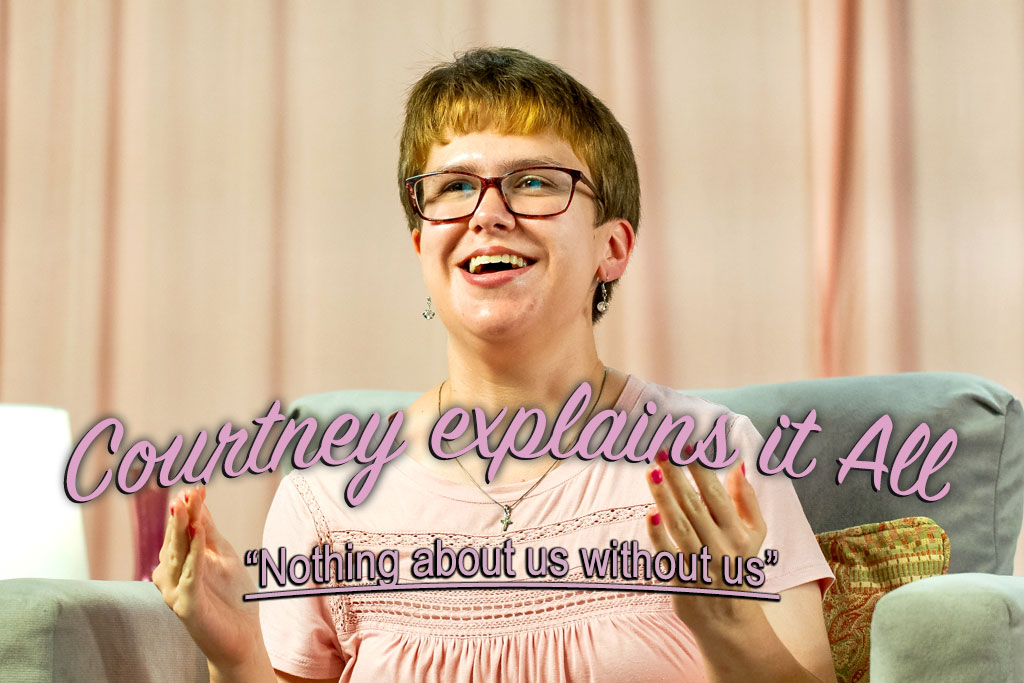
    Courtney Hineman: How to practice Inclusion

    by Courtney Hineman

    Loveland, Ohio – In my debut broadcast of “Courtney Explains it All” I talked about what inclusion means for those with a developmental disability and what we can all do together to make life more manageable and equitable.

    In this excerpt from my original full length vlog, I talk about one of my most loved organizations, Best Buddies. I also talk about how I learned to make friends and build upon those friendships.

    I think it is important for schools and workplaces to practice inclusion by learning and teaching about different kinds of disabilities and I give some concrete examples. Also, why it is important for businesses to give employment opportunities and support employees with a disability.

    As someone who has lived with a disability all my life my desire is to explain why inclusion is important for someone with a disability.

    I hope you find my explanations and tips helpful. Thank you so much for checking out my vlog!

    “Courtney Explains It All” is a vlog on LOVELAND MAGAZINE TV that will feature my insight on different topics, issues, and interviews focused on the developmental disability community.

    ________________________

    You can also watch the full episode here.

    ______________

    My desire is that you will find the following organizations helpful as we continue our journey together!


    Butler County Board of Developmental Disabilities

    The Butler County Board of Developmental Disabilities supports over 4,100 Butler County Residents. Supports and services are available life-long through contracts with partner agencies or directly provided by our Board.

    Founded in 1967, the Butler County Board of Developmental Disabilities supports over 4,100 people. Supports and services are available life-long through partner agencies or directly provided by our Board.

    Much of our services go beyond the walls of our facilities and take place in the community. The Board’s supports are geared toward the philosophy of person-centered thinking, which places the individual at the center of decisions made about the services they receive. We are committed to helping people determine their dreams and helping to make those dreams come true.

    Hamilton County Board of Developmental Disabilities

    Hamilton County Developmental Disabilities Services (HCDDS) is a government social services agency established by state law. For more than 50 years, HCDDS has provided educational, vocational, and residential support and services to thousands of individuals with developmental disabilities (DD). Each year, we support approximately 7,300 people with intellectual and developmental disabilities throughout their lives, from babies through seniors, by providing case management, monitoring service quality, and funding services provided by our community partners.

    We treat each person we serve as a unique individual and connect them to services to reflect the life they want. By collaborating with more than 1,000 certified providers, we’re able to support people to live a life that is important and meaningful to them, on their own terms.

    Clermont County Board of Developmental Disabilities

    The mission of the Clermont County Board of Developmental Disabilities is to help those we serve expand capabilities and navigate the possibilities. We envision a culture comprised of inclusive communities where people with disabilities thrive and live a life on their own terms. Individuals and families served by the Clermont County Board of DD have the right of choice and flexibility regarding what, how and where services are provided.  Individuals and families will be empowered to make decisions, become partners and work cooperatively with professionals, and exert control over the services provided to them.

    Warren County Board of Developmental Disabilities

    The Warren County Board of Developmental Disabilities provides services and supports to over 2,400 people in Warren County who have developmental disabilities. The mission of the board is supporting people with disabilities and their families to achieve what is important to them. The Board employs 127 people in full and part time positions. We operate out of four locations in Warren County, and have an annual budget of $30,500,000.00. More than 65% of our revenue is derived from local levy funds.

    Ohio Developmental Disabilities Council

    The mission of the Ohio Developmental Disabilities Council (Ohio DD Council) is to create change that improves independence, productivity and inclusion for people with developmental disabilities and their families in community life. The Ohio DD Council operates under the authority of the federal Developmental Disabilities Assistance and Bill of Rights Act of 2000 (DD Act) and is a part of the Ohio DD Network. The Ohio Department of Developmental Disabilities assists and supports the Ohio DD Council as the federally mandated designated state agency.

    ________________

    Courtney Hineman is a disability rights advocate. She is the Community Outreach Advocate at the Butler County Board of Developmental Disabilities and was appointed by Governor DeWine to the Ohio Developmental Disabilities Council for the second term. She is a member of Butler County’s self-advocacy group, and enjoys participating in Best Buddies.

  • Teaching about race is good, actually. States need to stop banning it.

    Teaching about race is good, actually. States need to stop banning it.

    Getty Images

    by Ian Wright

    In this back to school season, millions of American students are returning to classrooms where the wrong course, lesson, or textbook can lead to deep trouble. Why? Because for the last several years, conservative activists and lawmakers have been waging a crusade against “critical race theory,” or CRT.

    Critical race theory is an academic concept acknowledging that racism isn’t simply the result of individual prejudice but is also embedded in our institutions through laws, regulations, and rules.

    As school districts have emphasized, it’s a higher education concept rarely taught in K-12 schools. But cynical activists have used CRT as a catch-all term to target a broad range of diversity, equity, and inclusion initiatives — and seemingly any discussion about race and racism in the classroom.

    Since January 2021, 44 states have “introduced bills or taken other steps that would restrict teaching critical race theory or limit how teachers can discuss racism and sexism,” according to Education Weekly. And as of this writing, UCLA has identified 807 anti-CRT “bills, resolutions, executive orders, opinion letters, statements, and other measures” since September 2020.

    ________________

    IN OHIO

    Bills that would have prohibited discussion of certain topics related to race and sex, forbid schools from awarding credit for student service learning with advocacy groups, and ban “any textbook, instructional material, or academic curriculum that promotes any divisive or inherently racist concept” all failed to pass during the 2021 and 2022 sessions.

    ________________

    Critics claim — falsely — that CRT teaches that all white people are oppressors, while Black people are simply oppressed victims. Many opponents claim it teaches white students to “hate their own race,” or to feel guilty about events that happened before they were born.

    In reality, CRT gives students of every race the tools to understand how our institutions treat people of different races unequally — and how we can make those systems fairer. That’s learning students of every race would be better off with.

    But instead, this barrage of draconian legislation is having a chilling effect on speech in the classroom.

    In 2022, Florida passed the “Stop W.O.K.E. Act,” which prohibits teaching that could lead to a student feeling “discomfort” because of their race, sex, or nationality. But the law’s vague language makes it difficult for educators to determine what they can or cannot teach, ultimately restricting classroom instruction. In my home state of Texas, SB3 similarly restricts these classroom discussions.

    Running afoul of these laws can get teachers and school administrators in trouble. As a result of this hostile environment, the RAND Corporation found that two-thirds of K-12 school teachers have decided “to limit instruction about political and social issues in the classroom.”

    Notably, this self-censorship extends beyond states with such policies: 55 percent of teachers without state or local restrictions on CRT have still decided to limit classroom discussions of race and history.

    As a student, I find this distressing.

    My high school history classes gave me a much richer understanding of race in our history, especially the discussions we had at the height of the Black Lives Matter protests. And in college, I’ve gotten to learn about racial inequalities in everything from housing and real estate to health care, politics, education, and immigration policy.

    As a person of color, I can’t imagine where I’d be without this understanding. Neither white students nor students of color will benefit from laws designed to censor their understanding of history, critical thinking, and open dialogue in the classroom.

    The fight against CRT is a fight against the principles of education that encourage us to question, learn, and grow. Rather than shielding students from uncomfortable truths, which they can certainly handle, we should seek to equip them with the knowledge to navigate the world, think critically about our history and institutions, and push for a more inclusive country.

    This column was originally published at OtherWords.org.


    Ian Wright
    Ian Wright

    Ian Wright is a Henry A. Wallace Fellow at the Institute for Policy Studies and a student at Rice University from Dallas, Texas.

    MORE FROM AUTHOR


  • Courtney Hineman: “What defines Inclusion”

    Courtney Hineman: “What defines Inclusion”

    by Courtney Hineman

    Loveland, Ohio – In my debut broadcast of “Courtney Explains it All” I talked about what inclusion means for those with a developmental disability and what we can all do together to make life more manageable and equitable.

    This excerpt from my original full length vlog is about “What defines Inclusion”, and how you can practice it for your own benefit or to benefit others.

    As someone who has lived with a disability all my life my desire is to explain why inclusion is important for someone with a disability.

    I hope you find my explanations and tips helpful. Thank you so much for checking out my vlog!

    “Courtney Explains It All” is a vlog on LOVELAND MAGAZINE TV that will feature my insight on different topics, issues, and interviews focused on the developmental disability community.

    ________________________

    You can also watch the full episode here.

    ______________

    My desire is that you will find the following organizations helpful as we continue our journey together!


    Butler County Board of Developmental Disabilities

    The Butler County Board of Developmental Disabilities supports over 4,100 Butler County Residents. Supports and services are available life-long through contracts with partner agencies or directly provided by our Board.

    Founded in 1967, the Butler County Board of Developmental Disabilities supports over 4,100 people. Supports and services are available life-long through partner agencies or directly provided by our Board.

    Much of our services go beyond the walls of our facilities and take place in the community. The Board’s supports are geared toward the philosophy of person-centered thinking, which places the individual at the center of decisions made about the services they receive. We are committed to helping people determine their dreams and helping to make those dreams come true.

    Hamilton County Board of Developmental Disabilities

    Hamilton County Developmental Disabilities Services (HCDDS) is a government social services agency established by state law. For more than 50 years, HCDDS has provided educational, vocational, and residential support and services to thousands of individuals with developmental disabilities (DD). Each year, we support approximately 7,300 people with intellectual and developmental disabilities throughout their lives, from babies through seniors, by providing case management, monitoring service quality, and funding services provided by our community partners.

    We treat each person we serve as a unique individual and connect them to services to reflect the life they want. By collaborating with more than 1,000 certified providers, we’re able to support people to live a life that is important and meaningful to them, on their own terms.

    Clermont County Board of Developmental Disabilities

    The mission of the Clermont County Board of Developmental Disabilities is to help those we serve expand capabilities and navigate the possibilities. We envision a culture comprised of inclusive communities where people with disabilities thrive and live a life on their own terms. Individuals and families served by the Clermont County Board of DD have the right of choice and flexibility regarding what, how and where services are provided.  Individuals and families will be empowered to make decisions, become partners and work cooperatively with professionals, and exert control over the services provided to them.

    Warren County Board of Developmental Disabilities

    The Warren County Board of Developmental Disabilities provides services and supports to over 2,400 people in Warren County who have developmental disabilities. The mission of the board is supporting people with disabilities and their families to achieve what is important to them. The Board employs 127 people in full and part time positions. We operate out of four locations in Warren County, and have an annual budget of $30,500,000.00. More than 65% of our revenue is derived from local levy funds.

    Ohio Developmental Disabilities Council

    The mission of the Ohio Developmental Disabilities Council (Ohio DD Council) is to create change that improves independence, productivity and inclusion for people with developmental disabilities and their families in community life. The Ohio DD Council operates under the authority of the federal Developmental Disabilities Assistance and Bill of Rights Act of 2000 (DD Act) and is a part of the Ohio DD Network. The Ohio Department of Developmental Disabilities assists and supports the Ohio DD Council as the federally mandated designated state agency.
    ________________

    Courtney Hineman is a disability rights advocate. She is the Community Outreach Advocate at the Butler County Board of Developmental Disabilities and was appointed by Governor DeWine to the Ohio Developmental Disabilities Council for the second term. She is a member of Butler County’s self-advocacy group, and enjoys participating in Best Buddies.

  • Debut Edition: “Courtney Explains it All”

    Debut Edition: “Courtney Explains it All”

    by Courtney Hineman

    Loveland, Ohio – In my debut broadcast of “Courtney Explains it All” I talk about what inclusion means for those with a developmental disability and what we can all do together to make life more manageable and equitable.

    “Courtney Explains It All” is a vlog on LOVELAND MAGAZINE TV that will feature my insight on different topics, issues, and interviews focused on the developmental disability community.

    This vlog episode is about what inclusion is, what inclusion looks like, and how to advocate for others with disabilities. As someone who has lived with a disability all my life, I hope you find my explanations and tips helpful. Thank you so much for checking out my vlog!

    My desire is that you will find the following organizations helpful as we continue our journey together!

    ______________

    Welcome to the Roll Mobility – your go-to app for a smoother life, specially designed for wheelchair users and those with mobility issues. With a staggering 12% of U.S. adults facing mobility disabilities, we’re here to make a difference.

    Discover a world of convenience with Roll Mobility. Our platform equips you with reliable information about the accessibility of restaurants, public spaces, businesses, trails, and parking areas. Say goodbye to doubts about whether a place is truly accessible.

    Roll Mobility isn’t just an app; it’s a community-driven accessibility tool. Unlike other search engines, we understand that accurate data requires a united effort from the community. Together, we’re paving the way for a more inclusive future.

    Disability Rights Ohio 

    Disability Rights Ohio is a non-profit corporation with a mission to advocate for an equitable Ohio for people with disabilities

    Since October 2012, Disability Rights Ohio has served as Ohio’s Protection and Advocacy (P&A) system and Client Assistance Program (CAP). It is governed by a Board of Directors, primarily consisting of people with disabilities and family members of people with disabilities.

    Butler County Board of Developmental Disabilities

    The Butler County Board of Developmental Disabilities supports over 4,100 Butler County Residents. Supports and services are available life-long through contracts with partner agencies or directly provided by our Board.

    Founded in 1967, the Butler County Board of Developmental Disabilities supports over 4,100 people. Supports and services are available life-long through partner agencies or directly provided by our Board.

    Much of our services go beyond the walls of our facilities and take place in the community. The Board’s supports are geared toward the philosophy of person-centered thinking, which places the individual at the center of decisions made about the services they receive. We are committed to helping people determine their dreams and helping to make those dreams come true.

    Hamilton County Board of Developmental Disabilities

    Hamilton County Developmental Disabilities Services (HCDDS) is a government social services agency established by state law. For more than 50 years, HCDDS has provided educational, vocational, and residential support and services to thousands of individuals with developmental disabilities (DD). Each year, we support approximately 7,300 people with intellectual and developmental disabilities throughout their lives, from babies through seniors, by providing case management, monitoring service quality, and funding services provided by our community partners.

    We treat each person we serve as a unique individual and connect them to services to reflect the life they want. By collaborating with more than 1,000 certified providers, we’re able to support people to live a life that is important and meaningful to them, on their own terms.

    Clermont County Board of Developmental Disabilities

    The mission of the Clermont County Board of Developmental Disabilities is to help those we serve expand capabilities and navigate the possibilities. We envision a culture comprised of inclusive communities where people with disabilities thrive and live a life on their own terms. Individuals and families served by the Clermont County Board of DD have the right of choice and flexibility regarding what, how and where services are provided.  Individuals and families will be empowered to make decisions, become partners and work cooperatively with professionals, and exert control over the services provided to them.

    Warren County Board of Developmental Disabilities

    The Warren County Board of Developmental Disabilities provides services and supports to over 2,400 people in Warren County who have developmental disabilities. The mission of the board is supporting people with disabilities and their families to achieve what is important to them. The Board employs 127 people in full and part time positions. We operate out of four locations in Warren County, and have an annual budget of $30,500,000.00. More than 65% of our revenue is derived from local levy funds.

    Ohio Developmental Disabilities Council

    The mission of the Ohio Developmental Disabilities Council (Ohio DD Council) is to create change that improves independence, productivity and inclusion for people with developmental disabilities and their families in community life. The Ohio DD Council operates under the authority of the federal Developmental Disabilities Assistance and Bill of Rights Act of 2000 (DD Act) and is a part of the Ohio DD Network. The Ohio Department of Developmental Disabilities assists and supports the Ohio DD Council as the federally mandated designated state agency.

    ________________

    Courtney Hineman is a disability rights advocate. She is the Community Outreach Advocate at the Butler County Board of Developmental Disabilities and was appointed by Governor DeWine to the Ohio Developmental Disabilities Council for the second term. She is a member of Butler County’s self-advocacy group, and enjoys participating in Best Buddies.


  • Disability Pride Event: Nothing About Us Without Us

    Disability Pride Event: Nothing About Us Without Us

    Where? Deer Park Branch Library 4020 E Galbraith Rd, Cincinnati, OH 45236

    When? Saturday, July 27, 12:00-4:00PM

    Join the Cincinnati Public Library and Independence Alliance for a day of education, celebration, and community. They will have community resource tables, self-advocacy training, small break-out sessions, and an open-mic opportunity. Art Beyond Boundaries, an Independence Alliance program, will be displaying art pieces event space.

    Accessibility is the top priority. Contact Dee Henry by email or by phone at 513-241-8046 to request an accommodation.

    Event accessibility includes:

    • This is a wheelchair-accessible location with an accessible parking lot.
    • This is a fragrance-free event space.
    • There will be seating provided including chairs with no arms on the side.
    • American Sign Language interpreters will be present throughout the duration of the event.
    • Sensory refresh rooms will be available.
    • Plastic drinking straws will be available.

    View this event on Disability Pride Cincy’s website.

    ____________

    Independence Alliance is funded in part by:

    • U.S. Department of Health and Human Services – Administration for Community Living
    • U.S. Department of Housing and Urban Development
    • Opportunities for Ohioans with Disabilities
    • Kentucky Housing Corporation
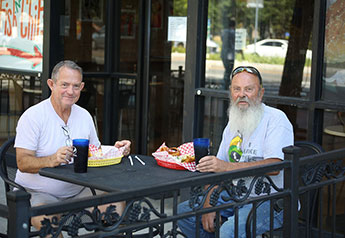
    Older men eating together at an outside table

    Am I eligible for Independence Alliance Services?

    People with permanent physical, cognitive, sensory or psychological disabilities that substantially limit one or more major life activities (for example caring for one’s self, walking, seeing, hearing, speaking, breathing, working, performing manual tasks, or learning) are eligible for Independence Alliance’s core services based on self-identification of their disability. Some ancillary services may require additional documentation related to a person’s disability.

    More About Independence Alliance Services

  • [VIDEO INTERVIEW] Ben’s Way a new initiative of the Ben Morrison Fund

    [VIDEO INTERVIEW] Ben’s Way a new initiative of the Ben Morrison Fund

    David Miller is the Managing Editor of Loveland Magazine

    Listen to the emotional account as Tori Morrison tells you how she finally summed up the emotional courage to meet the man who received Ben’s liver and kidneys

    by David Miller

    On September 22, Tori Morrison and Kate Jackson came to the LOVELAND MAGAZINE TV studio at the Simpson Farmhouse to talk about a new initiative of the Ben Morrison Fund. Morrison is the President and Treasurer of the Fund and Jackson is a member of the Board.

    The fund was established after Morrison lost her son Ben and his battle with his hidden mental health problems. Ben took his life by suicide in 2021. To honor Ben and help erase the stigma of pain and struggles with mental health, the fund was established to fight for others and fight against that stigma to help make sure no one feels alone.

    __________________

    “Ben’s continuing legacy will not be one of loss, but as a lifesaver through organ donation, as a loyal friend and stalwart teammate and a man of deep compassion for others.  His legacy will go on through the Ben Morrison Fund and through those of us who serve that cause and carry him with us to take care to light the way out of darkness for others and spark hope to always continue your story.”

    __________________

    The Ben Morrison Memorial Fund is committed to providing scholarships to graduating seniors from Loveland High School. They are dedicated to erasing the stigma of mental health struggles, opening conversations, and offering lifelines to help save the lives of young people in crisis.

    The Ben Morrison Memorial Fund is a 501(c)(3) nonprofit organization.

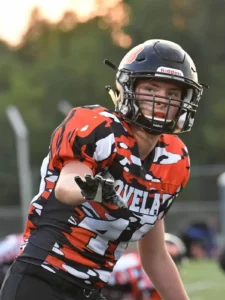
    In this interview, my guests will tell you about Ben and the life of giving and kindness he led, most of it not obvious to his mother Tori. She tells how “onery” Ben could be, typical of teenagers not allowing parents to know their true selves.

    Tori tells you that when Ben got his driver’s license she encouraged him to sign up to be an organ donor and asked him if he would. Ben would never answer her, his cantankerous nature was a tease. Tori and Ben’s father never knew he had signed the form until in the hospital after Ben took his life they asked them if it would be OK to harvest some of Ben’s organs. Realizing then that to their surprise Ben wanted that too, without hesitation they agreed.

    Listen as Tori reveals for the first time how the donor process works and how she became emotionally strong enough to agree to meet the man who received Ben’s liver and kidneys.

    Tori has now determined, because of the suggestion by Kate, that the current Loveland High School students don’t know what attributes Ben had that so enamored his class and teammates to him, and Ben’s Way would be a good vehicle to keep his legacy alive.

    • Ben spoke up for others.

    • He was unselfish.

    • A leader, and protector.

    • A young person who led by example and modeled hard work and resilience.

    • Ben treated others with acceptance, kindness, and encouragement.

    These attributes were revealed to them through the applications and actual words of the students who applied for the 21 scholarships the fund has awarded. Kate tells a story about being inspired after witnessing a young student one day that reminded her of Ben in the kind way he was treating a “special needs” child. Kate says, “Well number one, this is something Ben would do, and number two, this child should be recognized for doing something so positive in a world that’s not always so positive.” The child had done something, Ben’s way.

    Watch Tori and Kate tell you how Ben’s Way will transform life and lives at Loveland High School.

    __________________

    Ben may have been one of those unrecognized/uncounted victims of the COVID-19 Pandemic

    Covid was hard for Ben, as for all those seniors. He didn’t get his final lacrosse season, prom, graduation, or grad parties, and life changed in so many ways.  He didn’t know what his next chapter should be. But later that year, he decided to become a Firefighter and go to community college. He didn’t get to start those chapters. For some reason we will never know, maybe a bad day, a moment of self-doubt, an offhand comment that cut too deep, some inner turmoil or unspoken conflict, our Ben, a boy who never expressed depression nor showed signs of any form of struggle with mental illness, was suddenly and without explanation gone from our lives forever.

    __________________

    Kate Jackson was a football “Team Mom” and her son was a teammate of Ben when they played for Loveland High School. Ben also competed in lacrosse. Jackson said, “Ben was an important part of my son’s life and an important part of my life and Tori became likewise an important part of my life.”

    ______________

    Become a Ben’s Way Sponsor

    As a sponsor of Ben’s Way, you will help us bring this initiative to more schools. Students that are chosen will receive a $25 gift card.

    if you would like to sponsor Ben’s Way at a school, or you would like to bring Ben’s Way to your school, please send an email to BensWayInitiative@gmail.com

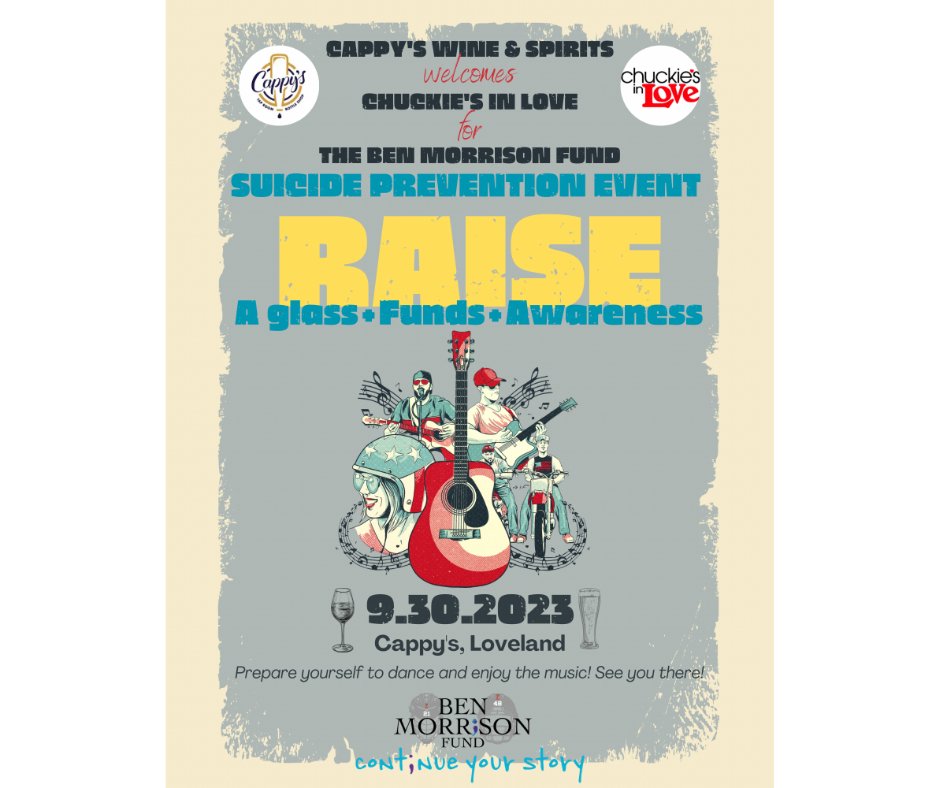
    On Saturday, September 29 Cappy’s Wine and Spirits is hosting a fundraiser for the Ben Morrison Fund featuring the Chuckies in Love band playing the “ultimate throwback tunes, bringing you the iconic sounds of the 70s & 80s”.

    Watch Chuckies in Love…

    Become a Ben’s Way Sponsor

    As a sponsor of Ben’s Way, you will help us bring this initiative to more schools. Students that are chosen will receive a $25 gift card.

    if you would like to sponsor Ben’s Way at a school, or you would like to bring Ben’s Way to your school, please send an email to BensWayInitiative@gmail.com

    Follow the Ben Morrison Memorial Fund on Facebook

  • Taking Lessons From Our Past: The Story of Everett and The Importance of DEI

    Taking Lessons From Our Past: The Story of Everett and The Importance of DEI

    John Coburn is a Loveland Resident, a lifelong educator, and a founding member of the Loveland Diversity Advisory Board.

    by John Coburn

     In 1954 my father-in-law Everett enlisted in the US. Army stationed in Alaska. The base was a rugged area far removed from big cities like Anchorage, Fairbanks, or his hometown of St. Louis. Everett quickly found himself the odd man out; it became clear the men in the company were not accepting of Black folks. Fortunately, he was blessed with the gift of gab, enabling him to hold his own without fear of repercussion. 

    Everett met a young man in his platoon named Ken. Ken, being Jewish and from New York, also struggled with the new environment and described Alaska as “living in a foreign land.” Friendly and outgoing, Everett became like a brother to Ken. Eventually the two forged a friendship with Ken dubbing his new pal “Duke.” While Ken and Duke were an unlikely duo–it seemed incredulous that a Jewish man and a Black man could become friends and work together– the truth was Everett knew no strangers, and he never left anyone behind.

    Everett’s strong sense of family instilled in him the importance of acceptance toward all people, regardless of their differences. As such, he helped Ken fit in with the rest of the company by reinforcing to Ken that he was special. By helping Ken to develop a sense of self-worth and demonstrating that he was a crucial member of the team, Duke enabled  Ken to develop a sense of belonging. That was a favor Ken never forgot and after the tour in Alaska ended, Everett and Ken remained lifelong friends. Over the next 60 years, they continued to stay in touch via yearly phone calls. When Everett died in 2020, Ken remembered his friend’s kindness, stating he would never have made it out of basic training without his friend Duke.

    By the 1970s, Everett was named the first Black employee at the St. Louis Corvette plant,  working in security for General Motors. (Technically, he was the second Black employee, but GM didn’t know this; Everett’s cousin Bob who got him the job was the first, but Bob passed as white.) 

    The interview process was brutal and Everett was openly mocked for having taken college courses at the local business school. While cruel and demeaning, unfortunately the interview was only a small glimpse of what was to come. 

    GM was a toxic workplace during those days and fellow workers desperately tried to get Everett fired or intimidate him into quitting by placing nooses and tools in his locker.  If you possessed company materials, you were subject to disciplinary action so those would be planted as well. Employees would drive to his home and sit in front of his house during the day, Everett recognizing the cars because of his position in security. He would come home after work crying tears of frustration. This pernicious behavior was against everything he believed and stood for. He’d initially believed his vivacious personality coupled with his gift of unconditional acceptance and love for others would help him navigate life’s challenges. He was starting to think it would not. Fortunately, his wife supported and encouraged him to continue to push forward. Eventually, Everett was the first black foreman at GM, receiving Quality awards for the work.

    In the years since, I’ve taken Everett’s experiences to heart and they’ve shaped the way I live and the way I approach my career as an educator. At one point, I accepted a job in the city next to my hometown as an assistant principal. The principal was indifferent to the idea of Diversity, Equity, and Inclusion and its impact on the school environment. It was obvious: both the school environment and the surrounding community were incredibly toxic. Students that were deemed different were overly disciplined and behind academically. It was clear no one felt a sense of belonging or importance, not the students in the school or the members of the community surrounding it. And with no leader to inspire these feelings, things would only continue to get worse. 

    With the help of another teacher, I instituted plans to help students academically. I continued my work with students and parents providing social-emotional support while addressing underlying social-emotional needs. I started an ACT Prep program to help improve the students’ college acceptance.

    In the spring, the community experienced a mass shooting that killed local government officials and police officers because of a community conflict. Those students that felt a sense of belonging began to seek social and emotional support. Despite the community upheaval, many students followed the academic plan and graduated with their classmates. The community has started to heal, and many community members have made it their mission to speak up and be more inclusive of others in their community.

    I share these stories about my father-in-law’s and my experiences to illustrate that everyone wants to belong. The need for belonging is an innate sense of the human condition. If we cannot develop relationships and feel a sense of acceptance, we become isolated, withdrawn, and want to quit. A feeling of belonging, and having people around you who foster that feeling, is an essential component to success. 

    That said, because of Covid-19 and social injustice, many students don’t have that sense of belonging. They may feel excluded at school or in society in general. This, as we’ve seen, is neither conducive to a healthy self-esteem or academic success. The question is, how can we help our students feel like they belong? 

    Taking inspiration from Everett, as I have done, has been instrumental. We can ask ourselves: 

    As teachers, are we accepting of students and not hypercritical? Everett welcomed all people. He did not put people down, and he was not overly judgmental. No matter what others said, he never judged anyone. 

    As educators, do we allow students the opportunity to restart?  Everett always gave everyone a fresh start. Once his nephew forged his signature on a document, and he received free service on his car. Everett forgave him. 

    Are we empathetic toward students? Everett displayed grace toward people even when people were unkind to him. 

     Finally, is our climate and culture inclusive, accepting, and inviting? It was not until the final years of working at GM that Everett felt a sense of belonging. Toward the end of life, Everett developed dementia. He recalled the names of most of his family and not much else. However, he remembered in detail his experiences at GM.

    Though it has only recently been given a formal title, Diversity, Equity, and Inclusion is a concept that has always been important. And while there will always be outliers like Everett who persevere despite the odds, there are far more Kens, who need the camaraderie and encouragement of others to succeed. As educators, caregivers, and members of the community, we are uniquely poised to provide this encouragement and well-crafted DEI programming is the most impactful way to do it. It need not be a political or divisive issue–the fact is that when everyone feels they belong, everyone wins.

    Regardless, I’ll continue to advocate for DEI not only because I’ve seen that it works, but also because I know that Everett wouldn’t have wanted it any other way. 

    This Guest Column by John Coburn is presented by Loveland Magazine in collaboration with the Loveland Diversity Advisory Board. Contact them if you’ve a story to share.

  • Loveland City Schools adopt Statement on Diversity

    Loveland City Schools adopt Statement on Diversity

    “This resolution is the first step toward ensuring a safe and inclusive learning environment for all students while fostering cultural awareness and understanding.” – Loveland Diversity Advisory Board

    by David Miller

    Loveland, Ohio – At their meeting on April 20, the Loveland City Board of Education voted unanimously to adopt a statement on diversity, equity, and inclusion. The statement will be placed into the Board Manual and distributed to school administrators and all staff. After staff discussions, it will be “pushed out into classrooms” according to Superintendent, Bradley Neavin.

    Board member Eileen Washburn  said before the vote, “I very much appreciate the work that was done. I hope it will be embraced and people really read it and act on it.” (read resolution below)

    Speaking of the student experience Neavin said, “This goes well beyond the walls of the schools. This prepares students to go out into a broader world and to have a broader world view.”

    The writing of the resolution was a collaboration between district leadership and the Loveland Diversity Advisory Board (DAB). “This resolution is the first step toward ensuring a safe and inclusive learning environment for all students while fostering cultural awareness and understanding,” said a statement issued by DAB after the approval.

    Below is the discussion of the Board while adopting the diversity, equity, and inclusion policy:


    Loveland City Schools Statement on Diversity, Equity, and Inclusion

    A comprehensive education in a free society develops persons who can think critically, engage in self-reflection, understand all cultures, live compassionately with others, and use their reflection and experiences to make sound judgments. As the great equalizer, education in a pluralistic society must strive to present varied events, activities and perceptions reflected in history, literature and other sources of humanity’s thought and expression. Therefore, the Loveland City School District commits unwavering support to diversity, equity, and inclusion of culture, thought, ideas and experiences.

    LCSD seeks to ensure the growth of every individual in our sphere of influence by:

    • Creating a safe & inclusive learning environment that provides equitable access for all members of the school community regardless of race, religion, ethnicity, gender identification or expression, sexual orientation, ability, language, family structure or economic status.
    • Providing access to materials and experiences which express diversity of perspective, broaden students’ worldviews, and better equip them to live, thrive, and contribute positively to a diverse world.
    • Engaging in culturally competent practices that target core areas: value of diversity, cultural awareness, understanding the dynamics of cultural interactions, and taking cultural knowledge and adapting it to diversity and learning.

    The Loveland City Schools commit to the development of critical thinkers by offering the opportunity to understand, study, and embrace difference as the fabric of our Democracy, a Democracy free from hatred, alienation, or division.


  • Great Oaks associates and Board member chosen for nationwide inclusion and equity program

    Great Oaks associates and Board member chosen for nationwide inclusion and equity program

    Two Great Oaks associates and a Great Oaks Board member have been chosen to be part of the new Inclusion, Access, Equity and Diversity (IAED) Mentorship Program launched by the Association for Career and Technical Education.

    Ramona Beck, Assistant Dean at Scarlet Oaks Career Campus and “AL” Long, Great Oaks Board member representing North College Hill, were among 32 educational leaders selected as mentors.  Scarlet Oaks English instructor Emma Godfrey is one of 36 mentees in the program. 

    Long is also a member of ACTE’s IAED Advisory Group, which helped develop the Mentorship Program and other activities.

    The IAED Mentorship Program was created to further inclusion, access, equity and diversity in career-technical education in the United States.  Mentors and mentees will be encouraged to take on leadership roles in the national ACTE organization and advised current career-technical leaders on IAED issues.

    Participants in the program will meet monthly and take on such activities as reviewing current best practices in IAED, developing statements and documents for career-technical schools and organizations, and helping to shape national policies and procedures.