Tag: Inclusion

  • In Crisis?

    In Crisis?

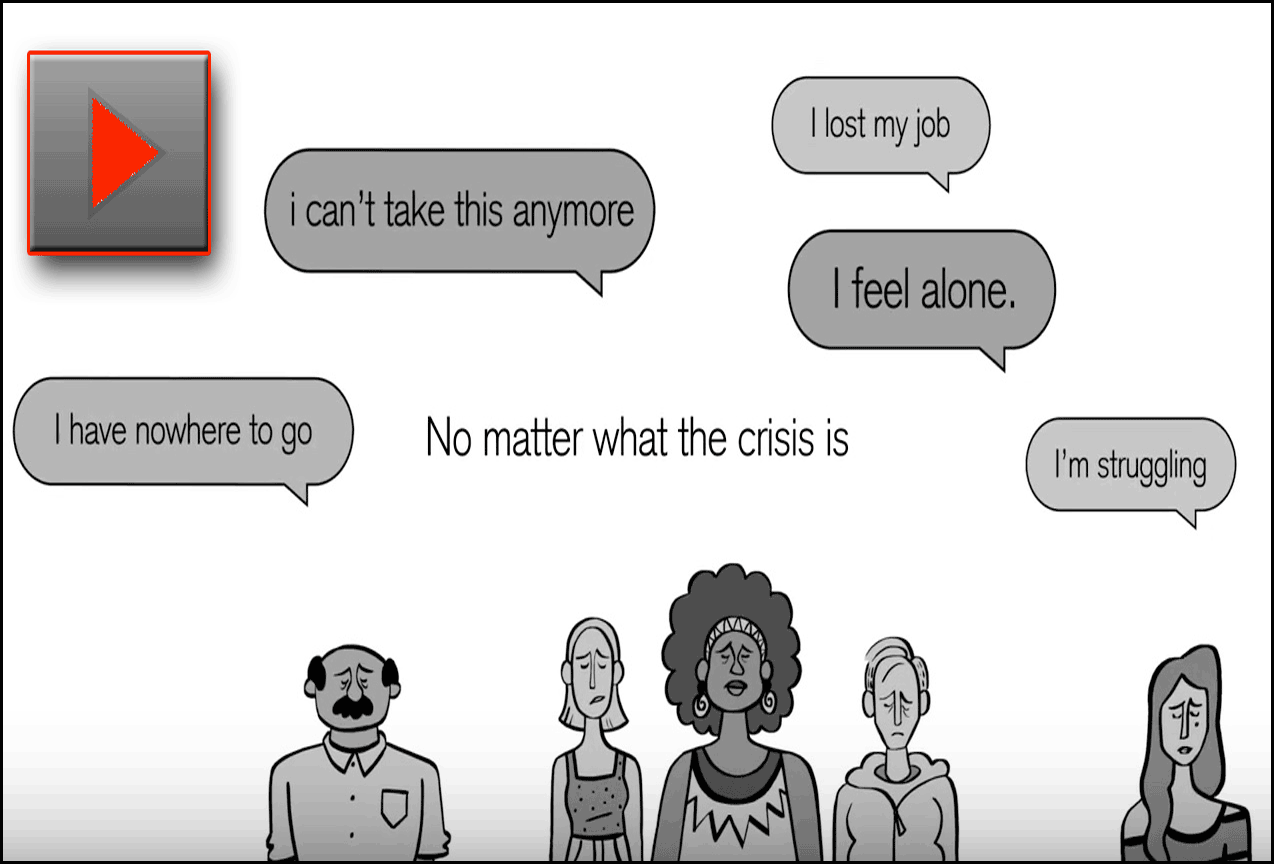
    Call 911 if you are facing a dangerous situation or thinking about hurting yourself

    These resources are suggested by the National Alliance on Mental Illness (NAMI) of Southwest Ohio, a grassroots education, support and advocacy organization.
    NAMI offers educational programs, support groups, and an information and referral phone line. They work together with their national organization (NAMI) and their state affiliate (NAMI Ohio) to advocate for people living with mental illness and their families.

    NAMI Southwest Ohio is committed to the following values:

    1. Recovery: Recovery is possible with comprehensive treatment. Mental illness, like most other illnesses, comprises biological, psychological, and social factors.
    2. Access to Treatment: All individuals should have access to treatment appropriate to their needs.
    3. Needs Adequately Addressed: The needs of all those affected by mental illness, including people living with mental illness, family members, friends and others should be adequately addressed.
    4. No Guilt, Shame, Blame or Stigma: There should be no stigma associated with mental illness.
    5. Collaboration: Collaboration within the mental health community is vital to effective treatment and recovery.
    6. Excellence: All NAMI’s support, education and advocacy programs should be conducted with the highest possible standards.
    7. Inclusion: All segments of the community should be included as we seek to be the voice for mental health in Southwest Ohio.
    8. Respect: All individuals should be treated with respect in every situation.
    9. Openness and Responsiveness to Change: NAMI will be quick to adapt to positive research, medications and treatment, and will be willing to consider changes that will improve the delivery of our mission.
    10. Fiscal Responsibility: Financial policies and decisions will be carefully weighed in order to optimize the use of resources in the most efficient and effective manner.

    Youth America Hotline

    (877) YOUTHLINE (968-8454)
    www.youthline.us

    The Youth America Hotline is a free peer-to-peer hotline network that links callers to community-based peer counseling hotlines.

    Call 911 if you are facing a dangerous situation or thinking about hurting yourself

    Crisis Text Line

    Text START to 741741

    The Crisis Text Line is available 24/7 to help you with any kind of crisis. Visit www.crisistextline.org/faq to learn more about how the Crisis Text Line works.

    CEO, Dan Gillison, talks to the NAMI community about COVID-19

    Local Resources By County

    Butler County:

    Mobile Crisis Team And Consultation

    (844) 4CRISIS (1-844-427-4747)

    24-hour Hotline: Need someone to talk to? Call the same Mobile Crisis Team phone number above. They are there to help!

    Clermont County:

    Clermont County Crisis Hotline

    (513) 528-SAVE (7283)
    www.child-focus.org

    This free and confidential hotline is available 24-7 and provides suicide prevention, crisis intervention and referral information to Clermont County youth and adults.

    Hamilton County:

    Talbert House Crisis Hotline

    (513) 281-CARE (2273) or text Talbert to 839863
    www.talberthouse.org

    This 24-hour suicide and crisis hotline offers crisis intervention and information and referral services to individuals of any age.

    Mobile Crisis Team At University Hospital

    (513) 584-5098
    www.uchealth.com

    To refer an adult or child, call (513) 584-5098. Mobile Crisis is available Monday through Friday from 8:30 am to 12:00 am and Saturday and Sunday from 12:00 pm to 8:30 pm.

    After hours, referrals can be made through Psychiatric Emergency Services (PES). Call (513) 584-8577. PES will page the Mobile Crisis Team if necessary.

    Psychiatric Emergency Services (PES)

    (513) 584-8577
    www.uchealth.com

    Provides round-the-clock care to patients in crisis with psychiatric emergencies, or for those experiencing suicidal and/or homicidal feelings.

    Psychiatric Intake Response Center (PIRC) At Cincinnati Children’s Hospital

    (513) 636-4124
    www.cincinnatichildrens.org

    Located within Cincinnati Children’s, PIRC is the admission and evaluation center for all psychiatric services.

    Hamilton County Mental Health Access Point (MHAP)

    (513) 558-8888
    www.mentalhealthaccesspoint.org

    Mental Health Access Point (MHAP) exists as the front door to the Hamilton County public mental health system. MHAP, a division of Central Clinic, provides assessment, support, and connections for children and adults residing in Hamilton County who are in need of mental health services.

    Warren County:

    Warren And Clinton Counties Crisis Hotline

    (877) 695-NEED (6333)
    www.mhrsonline.org

    This 24-hour telephone offers support to residents of Warren and Clinton Counties for emergencies related to mental health and substance abuse.

    National Resources 

    National Suicide Prevention Lifeline

    (800) 273-TALK (8255)
    www.suicidepreventionlifeline.org

    The National Suicide Prevention Lifeline is a free, 24-hour hotline available to anyone in suicidal crisis or emotional distress. Calls will be routed to the nearest crisis center to you.

    • Call for yourself or someone you care about
    • Free and confidential
    • A network of over 150 centers nationwide
    • Available 24/7

    Youth America Hotline

    (877) YOUTHLINE (968-8454)
    www.youthline.us

    The Youth America Hotline is a free peer-to-peer hotline network that links callers to community-based peer counseling hotlines.

    Veterans Crisis Line

    (800) 273-8255 and Press 1
    Text 838255
    www.veteranscrisisline.net

    The Veterans Crisis Line connects Veterans in crisis and their families and friends with qualified, caring Department of Veterans Affairs responders through a confidential toll-free hotline, online chat, or text.

    Suicide Prevention In College Resource Guide

    This online guide, created by Affordable Colleges Online, is designed to offer hope and help for college students who are experiencing suicidal thoughts, as well as their friends and family.

    www.affordablecollegesonline.org/college-resource-center/college-suicide-prevention

    NAMI Information Helpline

    (800) 950-NAMI (6264)
    www.nami.org

    Trained volunteers provide information, referrals, and support to all who have questions about or are affected by serious mental illness. The NAMI Information Helpline is available Monday through Friday, 10:00 am to 6:00 pm EST.

    Call 911 if you are facing a dangerous situation or thinking about hurting yourself
  • Residents urge BOE to form a Diversity Advisory Board

    Residents urge BOE to form a Diversity Advisory Board

    This statement was delivered by Leah Marcus at the Loveland Board of Education Meeting on 9/22/2020 on behalf of John Coburn, Julie Gebhart, Leah Marcus, Jennifer Shaftel, and Molly Simons, representing the Loveland Diversity Advisory Board (DAB) and the voices of their supporters in the Loveland Community.

    by Leah Marcus

    At the Loveland Board of Education Meeting on 9/22/2020 a group of community members, identifying as the Loveland Diversity Advisory Board made initial requests regarding the need to implement a Diversity, Equity, and Inclusion initiative within the School District. The statements delivered by community members are below:

    “As a part of the Diversity Advisory Board, I want to thank the Loveland Board of Education for hearing me today. This is a new group that started in the Loveland Area recently and our request is that there be an Advisory Board that looks at Diversity, Equity, and Inclusion concerns in our community, and more so, in our Loveland City School District. This effort would consist of school administrators working with the Advisory Board to talk and try to resolve some of these issues.

    I want to take a little bit of time to talk about my experiences in Loveland. I have lived here for six years and I want to talk about some things that have happened to me.

    One thing, when my wife and I first moved in, a neighbor asked my wife if we were the new neighbors.

    “Yes, we are the new neighbors.”

    “Oh, I will come by and ​see​ you.”

    I can’t tell you who that neighbor is.

    I have another neighbor. We just don’t talk. He doesn’t talk to me. I have said “Hi” to him, but we just don’t talk. He talks to the other neighbors-just not, to me.

    I have been at a stoplight here recently and I was called a “Nigger” when someone rolled their window down and felt like that was appropriate to do.

    There was another time that I was at a meeting, here in a Loveland school building, and I walked out with a couple of parents. We got lost in the building and we ended up going down a dark hallway. A community person walked up and said, “Oh, you’re used to being in dark places.”

    I think about that, and I think about the community where I grew up.

    I grew up in a community called Webster Groves, Missouri. I don’t know if anyone is familiar with that place, but it has similar demographics to what we have here, but we had a sense of belonging. Which I don’t necessarily feel here.

    This was in the 1970s, so Whites and Blacks got along. We talked to each other. We went to each other’s homes. We ate dinner together. We got to know each other, our parents got to know each other, and I don’t feel that sense of community here.

    Now don’t get me wrong, there are some wonderful things here in Loveland. There are wonderful things to do. I have met some wonderful people, but I am just saying that I don’t feel that.

    So when I think about my experiences I realize that I live in Loveland, but I work outside of Loveland. My church is outside of Loveland and my friends are outside of Loveland. I think about the kids that are in this environment every single day and I am wondering what data we are using to talk to the kids about their experiences that are here in the schools every single day.

    And again, I am just starting to become engaged in this environment. So let’s think about the long term ramifications of not having a Diversity, Equity, and Inclusion initiative.

    I am big on just reading my bible, and I pulled out a verse that says, “Whoever does not love their brother and sister, whom they have seen, cannot love G-d, whom they have not seen” (1 John 4:20). So what are those long-term ramifications and what are we teaching our kids? What kind of legacy are we leaving them? What if we don’t teach them that it is okay to engage with people who don’t look like them, whether it be someone who has special needs, or someone who identifies as LGBTQ, or someone who is Black or Brown?

    What kind of legacy are we leaving our children if we don’t say it is okay to engage with others that don’t look like you?​

    We are here tonight representing a diverse group of LCSD parents and community stakeholders to respectfully request the district’s action on two proposed initiatives:

    First

    We respectfully request that the District support a resolution to form a Diversity Advisory Board.

    Second

    We ask that the Board of Education facilitate a relationship between this group and school building administrators, so that a formal plan to address issues related to diversity, equity, and inclusion, that is, DEI, can be established, with parent input, and implemented, in the schools.

    We acknowledge that conversations regarding inclusion and diversity are already happening in the community with great frequency, whether that be on social media, our local written media, in our private homes, or  public forums such as this summer’s organized Peace Walk.

    Beyond these events, parents in our district, including many here tonight, have been meeting informally to educate ourselves and to understand how we can better leverage community resources to support our schools when it comes to creating an inclusive learning environment that prepares all students to succeed in an increasingly diverse workforce and world.

    Although our district’s values indirectly point to a shared commitment for inclusive education, informal and indirect commitment is not enough to make inclusion a reality in our schools. Achieving inclusion requires intention, including formal structures for engaging parents, students, and staff in conversations about what is needed to achieve this reality.

    Educational institutions have long acknowledged DEI initiatives as essential components of Social-Emotional Curriculum. Loveland, however, has yet to implement a permanent and intentional diversity statement or initiative. In fact, Loveland is one of only a handful of local districts with absolutely no DEI initiatives to speak of. The following districts have long-established comprehensive DEI plans: Sycamore, Indian Hill, Lebanon, Wyoming, Mason, Madeira, Kings, Cincinnati Public, Mariemont, Northwest, Fairfield, Forest Hills, Princeton, and Lakota.

    Compared to our neighboring districts, Loveland seems to be falling behind in this regard. It is time for Loveland to formally commit to addressing these issues.

    Institutional support for Inclusion and Diversity efforts have been shown to have positive outcomes for all students, including benefiting students’ critical thinking, decision making and cognitive skills, student success and engagement, as well as fostering a sense of belonging. On the flip-side, lack of DEI plans has been shown to result in hostile school and community environments, a lack of cohesion and consistency in dealing with district DEI issues, and, in some cases, costly lawsuits.

    Our Loveland Tigers do not want to be defined by a negative community incident, when we could be defined by the innovative, diverse leaders we educate in our district.

    Here, we present to you our proposal, along with letters from parents and community stakeholders who would like to see these initiatives come to fruition.”

    John Coburn, Julie Gebhart, Leah Marcus, Jennifer Shaftel, and Molly Simons, representing the Loveland Diversity Advisory Board (DAB) and the voices of our supporters in the Loveland Community.

  • Have you been social distancing from Black Americans?

    Have you been social distancing from Black Americans?

    by Eric Armstrong

    Hello Loveland friends – I really hope if you read this first sentence and find the time to read these next several paragraphs. It’s lengthy but I think it’s important.

    Since graduating from Loveland High School in 1998, Eric Armstrong obtained degrees in Chemical Engineering and Spanish from Purdue University. When not working in technical sales; he enjoys traveling the world in his free time.
     

    Systemic racial inequality, prejudice, ‘White Privilege’, are tough topics, powerful words. I imagine white people; are uncomfortable when they hear them, feel defensive when directed towards them, and I think most importantly are confused about what to do about them.

    You see racists are easy to identify and label, they wear hoods, yell slurs, and burn crosses. Racists don’t hide their disdain, they’re proud of it, and most importantly I imagine 90% of White Americans can say unequivocally “I’m not a racist, that’s not me!” “My family raised us to…”, “I have very close ____ friends.” etc…

    Other words, however, are harder to define

    The other words however are harder to define; they are subtle, woven into our nation’s very fabric, everyday behavior, and actions. Unfortunately, our country was built and founded on them. In their most basic forms, even Black Americans can struggle to explain them, it’s often an uneasy feeling or a story, the way you were treated. It’s some simple task that Black Americans worry about that would never cross the mind of a white person.

    A profound ignorance exists in education

    Moreover, IF you as a White American can comprehend the definitions and give examples of these words, then you’d realize 100% of White Americans have existed/participated/enabled them. That’s honestly what is at the core of everything happening today. A profound ignorance exists and the cure is education, open dialogue, and a paradigm shift in how we respond.

    I personally haven’t said much about what’s happened recently about the rash of killings locally here in Indianapolis or across the country. I’ve admittedly deflected and given short PC answers. There are two reasons and they are shared by many Black Americans;

    1) It reopens painful feelings and emotional wounds, and if you’re a Black American who has existed as I have (fairly comfortably) it’s a jarring reminder of what could happen to you and your friends, family, and colleagues.

    2) It’s exhausting. If you know me, I enjoy talking and pushing the boundaries of comfort on many topics. I don’t shy away from talking about race if engaged and I try to keep the conversation light so I’m approachable and those who truly want to understand, learn and change have a safe place to do so. However, for every one of those interactions, there are 20 other conversations, comments, posts, when White American dismiss Black Americans’ experiences as “one-off occurrences” or say “why do you make everything about race. It isn’t always about race.” Or “Well if “______Black American” wasn’t doing _____, _____ wouldn’t have happened.”

    Something different is happening now

    So admittedly, lazily, embarrassingly, I felt like this latest response was going to be the US status quo. People get fake mad, they post “Black Lives Matter” and are upset for a while, some Black Americans protest and march, then in a couple months things/people go back to ‘normal’.

    But I decided to write this because something different is happening. White Americans are out marching too, they’re verbalizing the issues and not just repeating buzz words. Most importantly they’re engaging us. They’re messaging me, texting me and asking me to have conversations. They’re asking me what those confusing words mean to ME, asking what my experience has been.

    A business colleague who I consider a friend sent me this;

    “Weird non-work related question. Would you be interested in coming to our house for dinner in the next two weeks? No need to answer tonight. The bigger human conversation is that our kids need to meet people who don’t look like them.”

    WOW.

    Maybe it WILL be different this time…

    Because if everyone wants to know how we “fix things” how we “make it better”. That’s it in a nutshell. White Americans must willingly have a lot of introspection, ask questions of themselves and Black Americans, and state the following:

    “I acknowledge that though I’m not a racist; I’m ignorant, uninformed, and contributing to prejudice, systemic racism, and white privilege with my inactivity. My posts and words are NOT enough.”

    How do you know you are contributing to this climate?

    What are the questions? How do you know you are contributing to this climate?

    If as a White American you’ve ever posted or said, “Skin color doesn’t matter to me.” or “I don’t see race.” Unless you are actually visually impaired; you’re saying (whether you intend to) I’m not recognizing that because your skin is brown, your experience in this world has been markedly different than mine.

    It must be acknowledged that race is a factor, a variable in a human’s life experience and reactions, questions, interactions, must be adjusted.

    Change your language to take that into account, instead say, “I actively try not to let my inherent biases and ignorances negatively impact how I interact with Black Americans.” SEE COLOR, VALUE DIFFERENCES.

    If as a White American you’ve called something ‘ghetto’ or used the word as an adjective to associate things with Black Americans. I compare it with how people use the word ‘gay’ to describe something they dislike.

    Or you’ve said “_____ doesn’t act black” or “_____ isn’t really even black.” Your words mean you believe they exhibit positive characteristics ascribed to White Americans.

    Other behavior

    How about these? You have many black friends and co-workers… right? Have you been to their homes or invited them to yours? Do you vacation with them? Have these conversations with them?

    It may not be how you treat those Black American friends and colleagues. How do you interact with the Black Americans who are strangers? Do you strike up conversations? Do you avoid sitting by them, cross the street, wait for the next elevator…?

    I have seen a lot of this world and our country and I’ve been invited into the homes of strangers internationally and never to the homes of some of my ‘friends’ here in the US.

    My Christian friends; do you attend diverse church services? What does your congregation look like? God valued/preaches inclusion and diversity but why is the church segregated?

    How about the neighborhood where you live? Any Black neighbors? Do your kids have Black American classmates? Do Black American kids play with your kids at your home and vice versa? If you say “No, there just aren’t Black Americans where I live. I live there because it’s safe and has good schools.” Well if there are no Black Americans there; are they in the underperforming schools and unsafe neighborhoods? The separate but equal ones?

    You have to ask why is that?

    If you asked your kids who are three Black Americans they know? Are they all celebrities/athletes? Do you go to businesses, concerts, read books, and see movies by Black Americans? You have to ask why is that? Who/what experiences are you exposing yourself and family to or limiting them from becoming educated about?

    Racist people are not the problem – I call it arms length prejudice

    Again, the racist people are not the problem. We know where they stand and what they believe. It’s the tolerant White Americans, the ones that have casually existed with Black Americans. I call it arms length prejudice. You have been fine with Black people having equal rights as long as it doesn’t change your world, come into your neighborhood, school, or church. As long as it doesn’t date your sons and daughters.

    Have you been social distancing from Black Americans?

    Have you been social distancing from Black Americans? You have to ask yourself have you been perpetuating that arm’s length distance whether subconsciously or consciously? Do you want things to change? Do you really care about the Black friend(s) or those Black strangers that you post black squares and Black lives matter hashtags about? It’s going to take more than posts and rhetoric. If you care about Black Americans but stand by while prejudiced comments are being spoken or ‘posted’ then it won’t change.

    If it’s tolerated by our leaders and business owners as them just “speaking their mind” or “telling it how it is” then you are supporting their harmful rhetoric.

    Our young humans

    Many of you are currently raising the young humans who will determine how Black Americans are treated in the next 20 to 40 years and beyond. If you change their experiences and relationships with Black Americans you will change the behaviors and outcomes. Posts, black squares, and words are fantastic; education, action, and follow up are better.

    It’s time for conversations

    Marching and demonstrating serves only to keep the issue in front of people’s minds. The actual work is done right here with us having the conversations and listening. Calling people out, calling yourself out. A lot of people want to be healthy, but don’t want to exercise. I see the same behavior with race. A lot of White Americans want the conversations about race to stop, for the problems to go away, but they don’t want to do the hard work to get us there.

    A lot of people want to be healthy, but don’t want to exercise.

    It’s time for these conversations. For White Americans to ask your friends of color about the first time they were called the n-word or were pulled over/followed for no reason?

    These conversations that must be had between Blacks and Whites are going to be uncomfortable they’re going bring upon Whites feelings of guilt and shame and often times Blacks may be embarrassed or angry, not at you, about their struggle; but it’s an important step in healing and understanding.

    Conversations can start today

    Lastly, both Blacks and Whites must understand that changing a behavior takes a long time. Some people estimate it takes 10,000 hours of doing a task to master it. How many hours have you and your children spent discussing, interacting, and educating yourself about Black Americans? Black Americans, how many conversations have you opened yourself up to with White Americans? This is not going to happen overnight…but the conversations can start today.

    I LOVE YOU ALL & GOD BLESS

    Eric Armstrong graduated from Loveland High School in 1998


    FRONT PAGE STORIES

  • Loveland Schools Robotics Team Supported Loveland Police Department inclusion efforts for Halloween

    Loveland Schools Robotics Team Supported Loveland Police Department inclusion efforts for Halloween

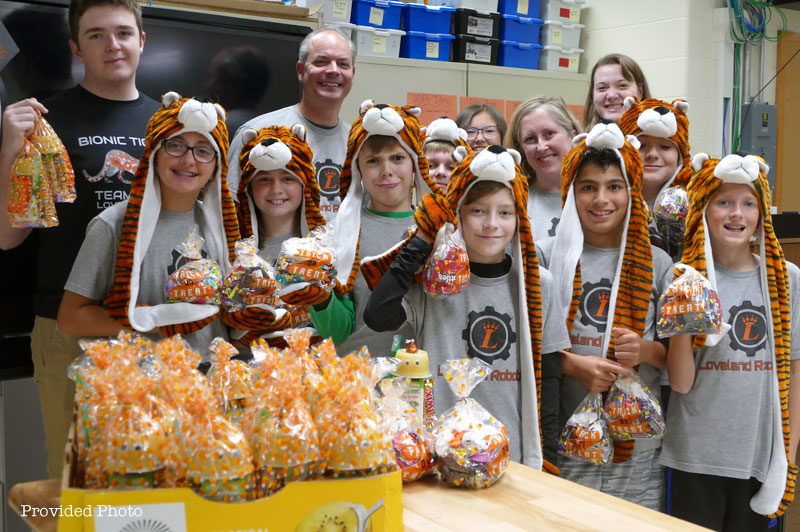
    “Loveland FTC Lego Team Striped Might, their coaches Anna Macura and Jay Frazier, and mentors Joanna Reese, Brayden Watts, and Ally Oh, created candy bags – including special robot candy – for the LPD’s efforts to make Halloween in Loveland inclusive of all, especially those who are restricted by disabilities. Inclusion is a core value of the FIRST Robotics program.”

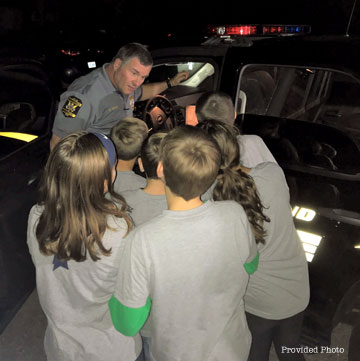
    During his hour-long visit with Striped Might, Lt. Szpak took the opportunity to demonstrate the technology he uses on the job.

    Loveland, Ohio – On Halloween, the Loveland Police Department (LPD) took candy to the homes of children and adults in the Loveland community who were unable to trick-or-treat due to a disability. It was part of the LPD’s effort to include those who otherwise would not be able to participate and make Halloween special for them, too. Loveland Middle School FIRSTLego Robotics team “Striped Might” met with Lieutenant Mike Szpak last Sunday evening to share their supply of candy and gifts to be distributed. Striped Might is a rookie team with rookie coaches – Anna Macura and Jay Frazier – rising up to the challenge of FIRSTRobotics.

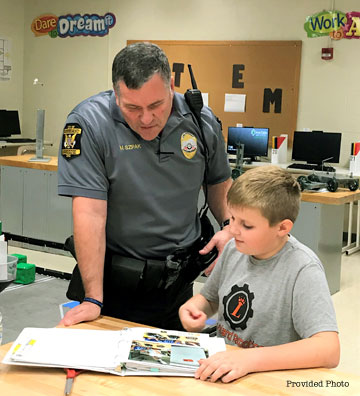
    Grant, one of more than a hundred students in grades 2-12 involved in robotics at Loveland Schools, showed his work to Lt. Szpak.

    “Robotics is not just about the BOT,” said Joanna Reese. “Inclusion is a core value of the robotics program and this is a wonderful way for us to share that with our community.” Reese is a member of the Bionic Tigers, one of two FIRST Tech Challenge (FTC) Robotics teams at Loveland High School, and serves as a mentor for the younger members of Striped Might.

    Lt. Szpak spent about an hour with the team members during their Sunday practice at Loveland Middle School. At the end of the visit, the team was invited to help deliver any Halloween leftover candy to Cincinnati Children’s Hospital and the Ronald McDonald House.

    Image may contain: text