Tag: Issue 1

  • Ohio’s six-week abortion ban overturned by Hamilton County judge

    Ohio’s six-week abortion ban overturned by Hamilton County judge

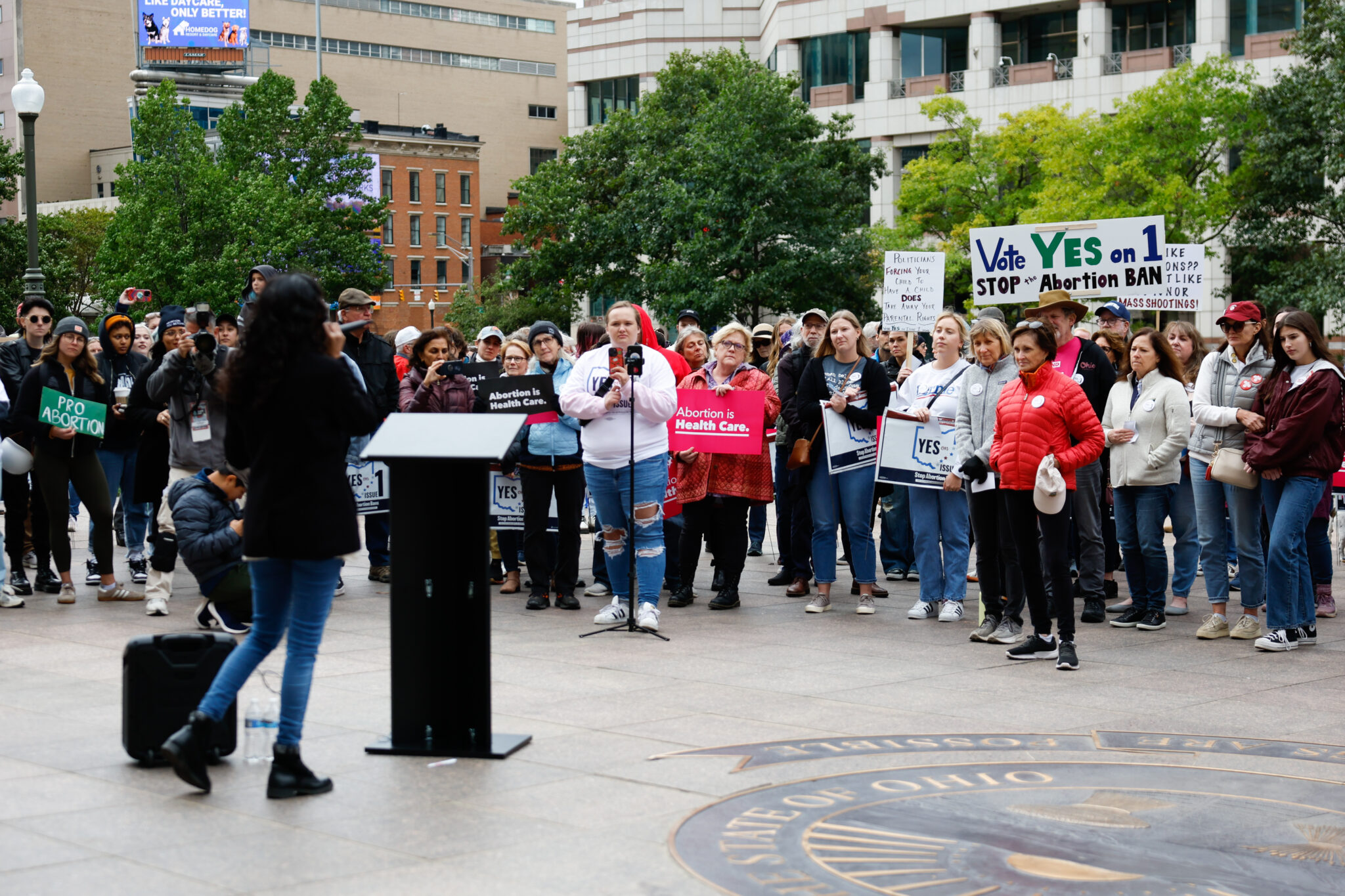
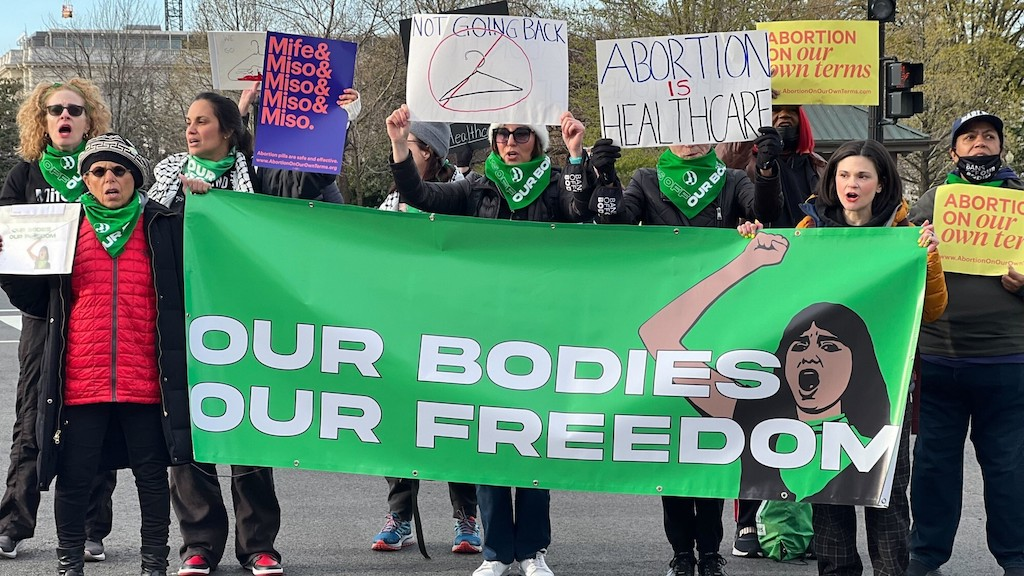
    The U.S. Supreme Court ruling in Dobbs v. Jackson Women’s Health Organization in June 2022 ended federal abortion rights. (Photo by Sofia Resnick/States Newsroom.)

    By:  Ohio Capital Journal

    The Ohio Attorney General’s Office says state has 30 days to “determine next steps.” The law will remain struck down unless Attorney General Dave Yost appeals the decision

    A Hamilton County judge has permanently overturned Ohio’s six-week abortion ban that had been tied up in court since its inception in 2019, but was put into effect for several months after Roe. v. Wade was overturned.

    Hamilton County Judge Christian A. Jenkins had already temporarily stopped enforcement of the law when the case entered his courtroom in the fall of 2022 several months after the Dobbs decision overturning national abortion rights established in Roe.

    Thursday’s decision means the law is struck down unless the Ohio Attorney General decides to appeal the decision.

    In November 2023, Ohio voters passed a reproductive rights amendment with 57% support.

    “Ohio’s Attorney General evidently didn’t get the memo,” Jenkins wrote. “For even after a large majority of Ohio’s voters … presumably both women and men — approved an amendment to the Ohio Constitution protecting the right to pre-viability abortion on November 8, 2023, the Attorney General urges this court to leave ‘untouched’ all but one provision of the so-called ‘Heartbeat Act’ clearly rejected by Ohio voters.”

    Hours after the Dobbs decision came down in June 2022, Ohio Attorney General Dave Yost asked a federal court reinstate the six-week abortion ban law, which was approved by the court quickly after the request was made. The ban included no exceptions for rape or incest.

    GET THE OHIO CAPITAL JOURNAL MORNING HEADLINES.


    Just as quickly, though, the law was then shoved back into court by abortion rights advocates. At first, advocates asked the Ohio Supreme Court to rule on the case, but after a period of inaction by the state’s high court, they chose to challenge the law locally, specifically in Hamilton County.

    A separate Hamilton County judge in September eliminated restrictions on telehealth abortion treatment.

    With the approval of the reproductive rights amendment in Ohio, attorneys had a new avenue to challenge the six-week ban. They used the language — which allowed abortion to the point of fetal viability, a determination to be made by the pregnant person’s physician, rather than at a point determined by state law — as a tipping point for arguments that the six-week ban was now unconstitutional. Fetal viability typically comes in a range between 24 to 26 weeks.

    Yost pushed back, saying the reproductive rights amendment could not be used to negate any law or provision that was remotely related to abortion rights.

    However, he also acknowledged it would be quite a battle to argue that the six-week ban did not violate the new constitutional amendment.

    In a legal analysis on the reproductive rights amendment before the vote, that has often been used against him in the year since, Yost said the amendment “will make it harder for Ohio to maintain the kinds of law already upheld as valid prior to last year’s decision in Dobbs.”

    “In other words, the Amendment would give greater protection to abortion to be free from regulation than at any time in Ohio’s history,” Yost wrote.

    He went on to say that “many Ohio laws would probably be invalidated,” and that “others might be at risk to varying degrees.”

    That included the so-called Heartbeat Act, according to him.

    “Ohio would no longer have the ability to limit abortions at any time before a fetus is viable,” he wrote. “Passage of Issue 1 would invalidate the Heartbeat Act, which restricts abortions (with health and other exceptions) after a fetal heartbeat is detected, which is usually at about six weeks.”

    Even so, Yost attempted to argue in the case that certain provisions included in the law should be allowed to stand.

    Jenkins disagreed, saying the state constitution “now unequivocally protects the right to abortion” and that “to give meaning to the voice of Ohio’s voters, the Amendment must be given full effect, and laws such as those enacted by (Senate Bill) 23 must be permanently enjoined.”

    He said that if Ohio courts adopted the state’s arguments, Ohio doctors who provide abortion care would continue to be at risk of felony criminal charges, $20,000 fines, medical license suspensions and renovations, and civil claims for wrongful death.

    “Patients seeking abortion-care would still be required to make two in-person visits to their provider, wait twenty-four hours to receive abortion care, receive state-mandated information designed to discourage abortion and have the reason for their abortion recorded and reprinted,” Jenkins wrote. “Unlike the Ohio Attorney General, this Court will uphold the Ohio Constitution’s protection of abortion rights. The will of the people of Ohio will be given effect.”

    ACLU of Ohio cooperating attorney Jessie Hill, who led the legal challenge in the case, called the ruling “momentous” and a show of “the power of Ohio’s new Reproductive Freedom Amendment in practice.”

    Dr. Sharon Liner, medical director for Planned Parenthood Southwest Ohio Region and one of the parties in the case, said the ruling was “an important step in the right direction for access.”

    “The permanent blocking of the six-week ban brings us one step closer to getting our patients the access they deserve,” Liner wrote in a statement.

    A spokesperson for Yost’s office said in a Friday morning statement that the state has up to 30 days to “determine next steps.”

    “This is a very long, complicated decision covering many issues, many of which are issues of first impression,” spokesperson Hannah Hundley told the Capital Journal.

    Ohio Right to Life and the Center for Christian Virtue were contacted and have not yet provided a response.

    Asked if Gov. Mike DeWine had any comment on the ruling, a spokesperson stated, “No.”


    Susan Tebben
    Susan Tebben

    Susan Tebben is an award-winning journalist with a decade of experience covering Ohio news, including courts and crime, Appalachian social issues, government, education, diversity and culture. She has worked for The Newark Advocate, The Glasgow (KY) Daily Times, The Athens Messenger, and WOUB Public Media. She has also had work featured on National Public Radio.

    Ohio Capital Journal is part of States Newsroom, the nation’s largest state-focused nonprofit news organization.

    MORE FROM AUTHOR

  • Black voters in Ohio will be impacted by Issue 1. How? Depends on who you ask.

    Black voters in Ohio will be impacted by Issue 1. How? Depends on who you ask.

    Photo by Ken Coleman, States Newsroom.

    By:  Ohio Capital Journal

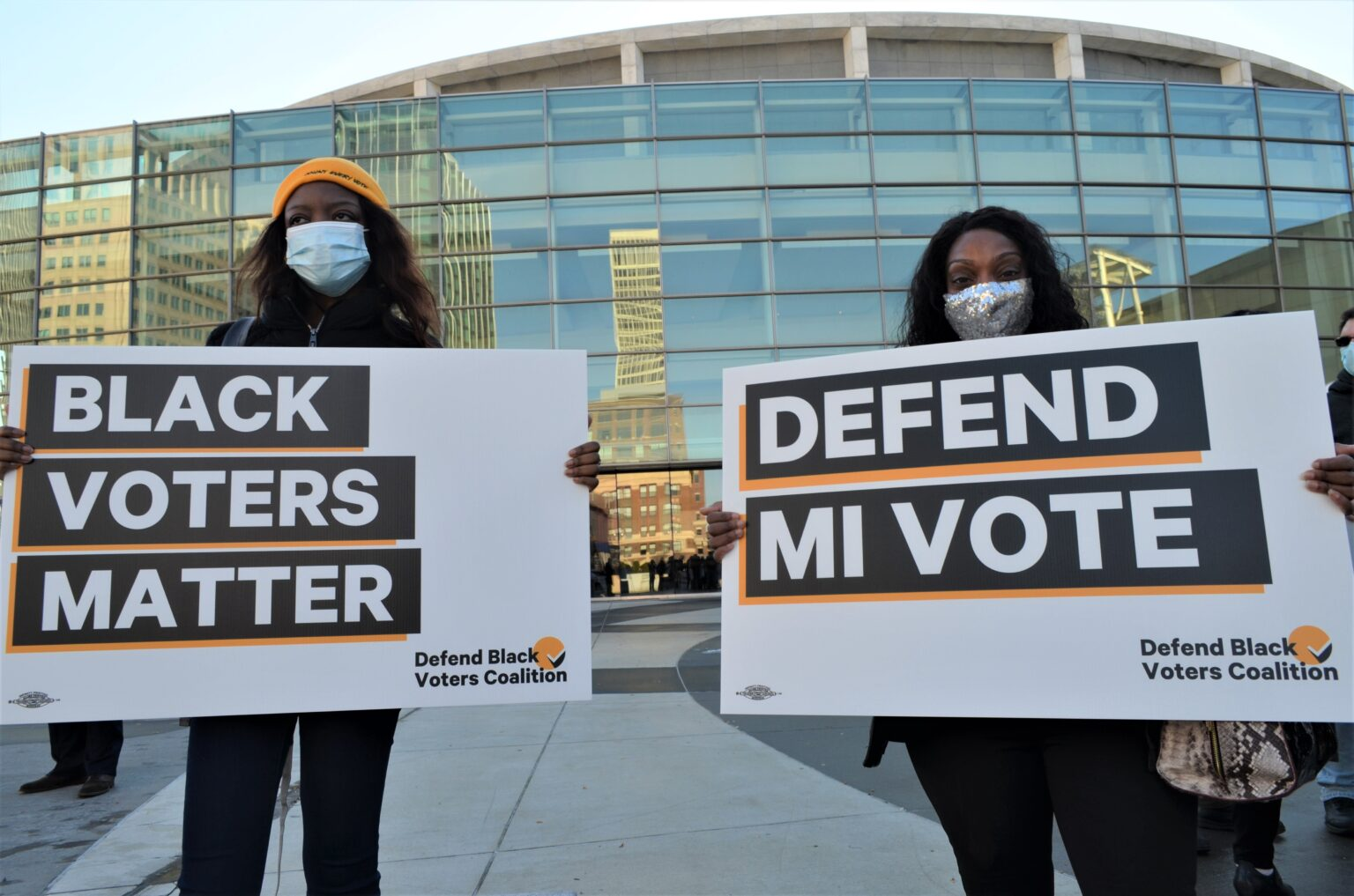
    Opponents of Ohio’s Issue 1 redistricting reform claim it would be bad for communities of color. Supporters of the proposal to replace politicians with a citizens commission point to the ways the current maps crack and pack Black voters.

    The Issue 1 proposal would replace the current Ohio Redistricting Commission made up of seven elected officials with a 15-member commission made up of citizens.

    The current commission includes the Ohio governor, auditor, and secretary of state, along with four lawmakers — one from each party in each chamber of the legislature. The 15-member citizens commission being proposed would be made up of five Republicans, five Democrats, and five independents, selected by a bipartisan panel of former judges.

    Voting yes on Issue 1 would create the 15-member Ohio Citizens Redistricting Commission. Voting no on Issue 1 would keep the current Ohio Redistricting Commission.

    Arguments for and against the ballot initiative have been targeted at communities of color, with both sides saying minority representation will be affected by the results of Issue 1.

    In a press conference at the Ohio Statehouse, state Sen. Michele Reynolds, R-Canal Winchester, brought former legislator John Barnes and two other Ohioans to urge voters to reject the ballot measure, claiming the changes “could fragment cohesive minority voting blocks, diluting our political influence.”


    “I am deeply concerned about the disastrous effects that Issue 1 will have on the Black state legislative and congressional districts in Ohio,” said Reynolds, who is one of five Black members of the 33-member Ohio Senate, and the only Republican.

    One of the Democratic members, state Sen. Catherine D. Ingram, who is also vice president of the Ohio Legislative Black Caucus, responded to Reynold’s press conference by saying Issue 1 “would ensure fair maps are drawn and expand opportunities for greater representation across our state, beyond the areas that have historically confined us.”

    “For generations, Black Americans have faced disenfranchisement, and gerrymandering adds an additional barrier to our adequate representation,” Ingram said in a statement.

    Issue 1 would create a 15-person citizens redistricting commission to replace the current commission. After a vetting process by a bipartisan panel of judges, the selected citizen commissioners would be required to hold public hearings and conduct the drawing of Statehouse and congressional maps in a transparent process, and create maps that receive a majority vote of the commission.

    Drawing the maps would require adherence to federal laws like the Voting Rights Act and the statewide partisan preferences of the voters of Ohio.

    The current process

    In 2021 and 2022, Republican partisans on the commission produced five Ohio Statehouse maps and two U.S. Congressional district maps that were struck down as unconstitutionally gerrymandered by a bipartisan majority on the Ohio Supreme Court.

    In 2023, the commission unanimously passed Statehouse maps with bipartisan support, although Democrats said they only supported them because redistricting reform was on the way and if they had voted no on them then the Republicans on the commission would have produced even more gerrymandered maps.

    Despite the fact that the congressional map was never revised to correct the errors found by the state’s highest court, it is the map being used for the 2024 election.

    A recent League of Women Voters of Ohio analysis of the current congressional map found that in Massillon, what’s considered a “large politically cohesive African American population” was split between the 6th and 13th Congressional districts.

    “Rather than keeping this clear community of interest united in one congressional district, mapmakers sliced Massillon into two pieces, specifically cutting off areas with large concentrations of minority voters from each other,” according to research analysis done by University of Cincinnati professor David Niven.

    Niven called the one-third of Stark County voters put in the 6th district “castaway voters,” citing research that said being a “castaway” voter “inhibits political information flows, mobilization and ultimately, representation.”

    “The political consequences of landing on the other side of those lines are powerful,” Niven wrote.

    The boundary-drawing of certain current congressional districts are “inexplicable” and “drawn in service of confusion not representation,” according to Niven’s research.

    The 1st district, for example, borders the 8th district in a “textbook gerrymandering maneuver — dividing a neighborhood and town and causing confusion on who lives in which district, serving no legitimate purpose,” Niven wrote.

    “Here’s a congressional district where people on the southern end of the district live in the shadow of Ohio’s third largest city with all its urban needs and opportunities, and people on the northern end have a local government that advertises when someone loses their mittens in the park,” Niven stated.

    Cracking and packing

    Voting rights advocates tend to agree with this assessment, saying the splitting of communities means less visibility, and less visibility means a lack of attention from people who purport to represent them.

    “What we’ve seen with supermajorities is communities are left out of conversations,” said Deidra Reese, director of voter engagement for the Ohio Organizing Collaborative and supporter of Issue 1. “Those issues that are coming from communities that have a smaller presence in those bodies just don’t get to have those issues elevated.”

    Important issues in communities of color, like in other communities, can include things like health care, economic issues, gun law reform and hunger. Without competitive districts that create the need for representatives and senators to engage with constituents of all kinds, Reese said legislation won’t match what is needed.

    “When you shut the door on people when you pass policies … it’s a disservice and what happens is African Americans just don’t get representation,” Reese said.

    Infant and maternal mortality rates were noted as a big concern for Black communities, which see disproportionate rates compared to their white counterparts.

    The LWV analysis showed some congressional districts combine those two vastly different mortality rates, like the 9th, 12th and 2nd districts. The 9th district holds Lucas County, with one of the highest rates of infant mortality and Wood County, one of the lowest. The 12th district includes the high rates in Holmes County, and the low rates in Guernsey County. Ohio’s 2nd district has Lawrence County’s high infant mortality rates and Scioto County’s low rates.

    “Again, this data begs an essential question,” the LWV study ponders, “How could any elected leader craft policy solutions for their constituencies, when the needs within their sprawling, contorted districts are so far apart?”

    Kayla Griffin, president of the Cleveland branch of the NAACP, said the fact that the district maps are still unfair despite previous legislative redistricting reforms in 2015 and 2018 leaves questions about how closely the process was even followed by the elected officials on the Ohio Redistricting Commission.

    “I think that becomes a serious problem that erodes the trust and the democracy that we have,” Griffin said.

    An even bigger problem that Griffin and other advocates are dealing with is the concern from many Black voters that their vote doesn’t hold weight under the current maps, and therefore won’t make much different in the November general election.

    Those talking to voters are trying to focus on the wins, most notably the rejection of a constitutional amendment to make it harder to amend the state’s founding document, and the approval of a ballot initiative that enshrined reproductive rights into that same constitution.

    “That is how our vote counts, that is how our voices are heard.” Griffin said. “I’m letting folks know that we can do this again.”

    YOU MAKE OUR WORK POSSIBLE.

    __________________
    Susan Tebben
    Susan Tebben

    Susan Tebben is an award-winning journalist with a decade of experience covering Ohio news, including courts and crime, Appalachian social issues, government, education, diversity and culture. She has worked for The Newark Advocate, The Glasgow (KY) Daily Times, The Athens Messenger, and WOUB Public Media. She has also had work featured on National Public Radio.

    Ohio Capital Journal is part of States Newsroom, the nation’s largest state-focused nonprofit news organization.

    MORE FROM AUTHOR

  • If abortion measure fails, Ohioans on parole and probation could face graver restrictions

    If abortion measure fails, Ohioans on parole and probation could face graver restrictions

    For thousands of people under state supervision who face limits on their freedom to travel, a future without abortion rights could mean a choice “between health care and liberty.”

    BY:  

    When Ohioans go to the polls on Nov. 7 to vote on Issue 1, which would establish a constitutional right to abortion in the state, they will do so having already experienced what severe restrictions on abortion access look like.

    After the Supreme Court removed federal protections for abortion in its Dobbs decision last June, the state’s attorney general immediately petitioned a federal judge to enforce a 2019 law that banned abortion after six weeks. It included an exception for when the mother’s life is at stake but not for instances of rape or incest. The six-week ban remained in effect for nearly three months, until a lawsuit brought by abortion providers led to an indefinite stay of the law. During that 82-day window, the costs associated with abortion care skyrocketed, and people were forced to cross state lines to seek the procedure—including, notoriously, a ten-year-old whose heartbreaking story became embroiled in a national controversy. 

    The Abortion Fund of Ohio jumped into action, helping hundreds of Ohioans seek care elsewhere, in states where they could access abortion. The fund helped reroute them “out of state to be able to get the care that they were entitled to,” recalls Maggie Scotece, a doula and attorney who is currently serving as the organization’s interim executive director. (The organization is part of the coalition supporting Issue 1.)

    But the organization, which helps people fund and access abortions, also received confused calls from, or on behalf of, people who could not travel: minors in group homes or juvenile justice centers, and people on probation and parole.

    Hundreds of thousands of Ohioans have their freedom of movement greatly restricted because they’re under some form of state supervision, and the stakes of Issue 1 may be highest for them.

    According to data collected by the Prison Policy Initiative, Ohio ranks fourth nationally in the share of its population under any form of carceral control (this includes prisons, jails, probation, and parole), behind Idaho, Arkansas, and Georgia—“and that’s largely due to the massive number of people who are on probation,” said Wanda Bertram, a communications strategist at PPI.

    A 2023 PPI report found that, at any time, some 191,000 state residents are on probation, which is an alternative to incarceration that comes with heavy restrictions and surveillance, while around 22,000 more are on parole, a form of post-release supervision that in Ohio is baked into prison sentences. “Probation is handed out like candy here in Hamilton County,” said Sean Vicente, a Hamilton County (Cincinnati) public defender.

    Abortion is currently legal up to 21 weeks and 6 days in Ohio because of the legal dispute over the 2019 law. Meanwhile the campaign to pass Issue 1 and permanently codify abortion rights has raised millions of dollars and gained traction; recent polls have found that between 52 percent and 58 percent of prospective voters supported the measure.

    But Issue 1 has also garnered many opponents, especially among the state’s Republican leadership. If it fails, Scotece predicted that the state supreme court, which has a GOP majority, will “almost certainly” reinstate the six-week ban.

    If that happens, people on probation or parole would face an impossible choice, Vicente said“Do I travel out of state to take care of that health care issue and possibly get locked up? Or do I have an unplanned pregnancy? Do I have an ectopic pregnancy? Do I have a child via rape?”

    “It’s going to put poor people in a really tough spot where they have to truly decide between health care and liberty,” he told Bolts.

    Parole and probation are often conceived of as alternatives to incarceration that can keep more people in their communities. But both systems are so full of delays, requirements, and catch-22s that Vicente says he and his fellow public defenders often fear they are “setting up our clients to fail.”

    “The restrictions that are placed on people—and the ban on traveling out of state, which is common, is one of these—are often so onerous that people say that they would just rather be in prison,” Bertram said.

    At any given time, 39 percent of the people in Ohio’s jails are being detained because they violated the terms of their probation or parole, according to the PPI report. That’s double the national average of 20 percent.

    “I can understand it being that high, because anything can get you [violated],” said Malika Kidd, who helps women navigate reentry as the Program Director for the Lutheran Metropolitan Ministry in Akron and Cleveland“You can be around another person that was in prison and you can get violated, just in the same area with them. Somebody in your family can have a gun with them and you’re around it, you could be violated. If you get a traffic ticket and don’t let them know, you can be violated.”

    Though women are generally proportionally underrepresented within the criminal legal system, they are far more likely to be on probation than under other forms of correctional control, and both parole and probation compliance present special challenges for women. “Women are more likely to be the primary caregivers of children—all of the requirements that supervision imposes that get in the way of childcare are going to fall harder on women,” Bertram said. “That takes a huge amount of time out of your day.” There are fewer reentry programs serving women, who are more likely to be homeless upon their release—another factor that would make it difficult to comply with the often onerous requirements that accompany supervision. “It’s a combination of a lot of stuff that can overwhelm anybody,” said Kidd.

    Kidd is, in many ways, the face of women’s reentry in Ohio, but her experience with parole there illustrates how arbitrary and burdensome the system can be—and how it restricts people’s freedom of movement. In 2001, after police found cocaine in her car on a trip from Chicago to Cleveland, she was sent to prison for drug trafficking. Her son was just three years old; by the time she got out, he was 17.

    As part of her mandatory minimum sentence, Kidd was given a 5-year “post-control release” term. From the beginning, she says, her parole officer seemed biased against her and determined to make her life harder. The woman upped her risk level, calling her a flight risk because she is originally from Illinois, and forced her to wear an ankle bracelet, which tracked her movements and prohibited her from leaving Ohio. Some people on probation cannot even leave their county of residence without permission.

    Moreover, Kidd says her parole officer exacerbated the already toilsome process with delays in processing her requests for permission to travel outside the state. Ironically, some of Kidd’s requests were in order to speak at conferences about the myriad barriers associated with reentry. Her work was understanding about her spending hours at the parole office waiting for approval, she said, but “I’m sure there were plenty of other employers that weren’t as flexible as mine,” which could leave people to choose between potentially losing their job—a violation of parole conditions in itself—or giving up on the travel request.

    If abortion were once again banned in Ohio, people on parole or probation might be forced to choose between lying to the officer or judge assigned to their case about their reasons for travel, going out of state without permission, or being honest. The former two options both carry the risk of violating your supervision terms and being reincarcerated.

    Vicente said he couldn’t fathom any judges signing off on a travel request that involved going out of state to do something that would violate the law if done within state borders.

    He said, “You’re petitioning the court to say, ‘Hey, I know this is against the law here in Ohio, but I need my client to travel up to Michigan to get the care she needs. Judge, are you willing to allow her to travel out of state to break the law that’s currently in effect in Ohio?’ That I doubt any judges would sign off on.”

    “I think there’s gonna be a lot of frenzied and panicked calls, and it’s gonna put us in a tight spot as well,” Vicente added, wondering how his fellow public defenders would begin to advise their clients under such circumstances.

    An unexpected and unwanted pregnancy—and the stress, exhaustion, physical and hormonal changes, and increased number of health check-ups that tend to follow in its wake—could also make it harder to comply with the terms of supervision. “The medical needs are going to take priority over visiting the probation officer, which puts you in further jeopardy,” Vicente said. More people being forced to carry to term a pregnancy that they don’t want and can’t handle could ultimately contribute to the already high percentage of Ohioans jailed for violating the terms of their supervision.

    With polling showing public support for abortion and other reproductive health rights, Ohio Governor Mike DeWine recently proposed to soften Ohio’s six-week ban if it were to come back into effect and to allow some exceptions, for example in the case of rape. But other Republican lawmakers have already resisted such changes.

    Republicans also tried to change the rules of the initiative process in Ohio to undermine this abortion rights measure, which was petitioned onto the ballot by organizers who collected hundreds of thousands of signatures. GOP lawmakers called a special election in August asking voters to raise the threshold to pass a constitutional amendment from a simple majority to 60 percent. That proposal failed by a wide margin in August.

    The GOP’s proposal to change the rules in August was also called Issue 1, which has led to concerns of voter confusion as abortion rights proponents who fought the summer’s Issue 1 are now campaigning for people to approve the new Issue 1.

    If Issue 1 fails, it would add to the existing barriers that preventOhioans from accessing reproductive care.

    Even though abortion is currently legal up to nearly 22 weeks on paper, access is extremely limited in practice, Scotece of the Abortion Fund of Ohio said. While Ohio had more than 40 clinics in the ‘90s, anti-abortion groups have been “incredibly successful” in seeking to close them down, she told Bolts. The state now has just nine clinics concentrated in Ohio’s big cities, only three of which perform abortions up until the legal limit.

    Meanwhile, Scotece stressed that Ohio is already one of the leading states for the criminalization of pregnancy, whether it be arrests and prosecutions for self-managed abortions or the use of narcotics while pregnant. A 2021 study done by researchers at the University of California San Francisco that surveyed people who searched for abortion care via Google showed that intensifying abortion restrictions in the U.S. have led to an increase in self-managed abortions, including by attempting to hurt oneself or ingest drugs and alcohol—which would likely further expose people to criminalization.

    “We already know that folks who are low income, folks that are already under state scrutiny, whether it’s for parole or the family policing system, are more likely to be criminalized for pregnancy and pregnancy outcomes regardless of whether or not that is related to abortion,” Scotece said.

    Codifying the right to abortion and other reproductive care, and creating legal protections for people and organizations that assist others in accessing abortions, won’t solve all of these problems, Scotece added. But it will create a new test that Ohio courts must use when considering the constitutionality of a law that restricts or criminalizes abortion in the state.

    Kidd is not actively campaigning for Issue 1, but told Bolts she supports it. “It’s a woman’s right and I think these good old boys should not decide what a woman should do with her body.”

    This article was originally published in Bolts Magazine.

  • Despite one response, recent polling indicates abortion-rights amendment has a good chance

    Despite one response, recent polling indicates abortion-rights amendment has a good chance

    BY:  Ohio Capital Journal

    A poll released last week received attention because a response to one of its questions. It seemed to show a close contest for an abortion-rights amendment that’s on the ballot next Tuesday.

    But a closer look at that and another recent poll indicate that opponents of the amendment still face an uphill fight.

    Issue 1 would build abortion rights into the Ohio Constitution up to the point of fetal viability outside the pregnant person’s body. It comes after the U.S. Supreme Court last year overturned Roe v Wade, clearing the way for enforcement of harsh state abortion limits already on the books.

    In Ohio’s case, that means banning the overwhelming majority of abortions after about six weeks of pregnancy — even when the pregnancy is the result of rape or incest.

    As horror stories stemming from enforcement of such laws proliferated, state ballot measures protecting abortion rights have been on an unbroken winning streak, with a measure last year carrying conservative Kansas by a gobsmacking 19-point margin.

    Those results leave abortion opponents desperate for a win and abortion-rights advocates eager to continue building momentum.

    So, when Ohio Northern University last week released a poll, one of its findings drew keen interest. It asked whether respondents agreed with the summary language of Issue 1 that will appear on the ballot. While that might sound like a technicality, the exact wording that will be on the ballot is important.

    In August, Secretary of State Frank LaRose, an abortion opponent, led a split Ohio Ballot Board in adopting a ballot “summary.” Not only is the “summary” roughly the same length as the amendment itself, it differs from the amendment in ways that critics say are intended to mislead.

    For example, it substituted the term “unborn child” for “fetal viability.”

    In an attempt to capture the effect that might have on the vote, pollsters at Ohio Northern asked some respondents whether they agreed with that amendment language and asked others whether they agreed with the language proposed by the League of Women Voters. The disparity was big.

    An overwhelming 68% agreed with the amendment as described by the League of Women Voters. But that number shrank to just 52% for the respondents who were asked about the language that will actually be on the ballot, thanks to LaRose and two others on the Ballot Board.

    But what does that mean practically?

    “Change in Ballot language may have big effect on support for Issue 1,” reads the title of that section of the Ohio Northern poll report.

    However, the same poll found that 65% of respondents think that abortion should be legal in most circumstances and 57% believed the Supreme Court shouldn’t have overturned Roe v Wade.

    More to the point, 70% said they had heard “quite a lot about Issue 1” and another 24% said they had heard some about it. That means that almost all respondents know something about the matter and presumably many will have formed opinions before going into the voting booth and seeing the Ballot Board’s language.

    “If this were a more obscure issue, the language would matter vastly more,” said University of Cincinnati political scientist David Niven. “But when this is the headline act of the entire election, almost no one is going to the polls to read the language on the ballot and make up their mind there.”

    If, as their detractors claim, LaRose and two others on the ballot board intended to dampen support for Issue 1 by using the language they did, they picked the wrong topic, Niven said.

    “There’s a boatload of good research that says language matters,” he said. “But it’s entirely based on the idea that you’re confronting this issue based on the language presented to you rather than confronting the issue based on deeply held beliefs.”

    The idea that the controversial ballot language will crash up against already-formed opinions also seems bolstered by another of the poll’s findings: When asked how they planned to vote on Issue 1, 60% said yes.

    That jibes with the results of the Baldwin Wallace University Ohio Pulse Poll released earlier in October. In it, 58% said they would vote in support of Issue 1.

    However, these are just polls — imperfect predictors in the best of circumstances. The fates of Issue 1, marijuana-legalizing Issue 2 and other matters on the ballot depend heavily on what happens Tuesday. That’s because more than 52% of respondents to the Baldwin Wallace poll said they’d wait until Election Day to cast their ballots.


    Marty Schladen
    MARTY SCHLADEN

    Marty Schladen has been a reporter for decades, working in Indiana, Texas and other places before returning to his native Ohio to work at The Columbus Dispatch in 2017. He’s won state and national journalism awards for investigations into utility regulation, public corruption, the environment, prescription drug spending and other matters.

    MORE FROM AUTHOR

  • Maybe end to dueling Issue 1’s on ballots

    Maybe end to dueling Issue 1’s on ballots

    Columbus, Ohio – State Rep. Adam Mathews (R-Lebanon) and Rep. Bob Peterson (R-Sabina) presented sponsor testimony on legislation that will bring more clarity and transparency to statewide ballot initiatives in Ohio.

    “While drafting this bill, we heard from many voters and civically engaged Ohioans who wished for more clarity at the ballot box,” Mathews said. “Our aim in introducing this legislation is to ensure that each ballot issue put before the voters receives the unique and thoughtful debate it deserves.”

    The legislation clarifies that for elections occurring after November 2024, statewide ballot issues will be designated by the Arabic numeral consecutive to that of the last statewide ballot issue in the immediately preceding election. Essentially, if a bill moves forward into law, no statewide issue number would be repeated. For example, Issues 1 and 2 would be one election, and the subsequent elections would start with statewide Issues 3 and 4.

    “House Bill 271 represents a significant step towards eliminating voter confusion as they research ballot issues,” Peterson said. “While we may not agree on specific ballot initiatives, I believe this will be a bipartisan solution to assisting voters in acquiring the information they need to make informed votes.”

    The legislation will continue to have hearings in the House State and Local Government Committee.

  • For some religious Ohioans, Issue 1 about autonomy more than beliefs

    For some religious Ohioans, Issue 1 about autonomy more than beliefs

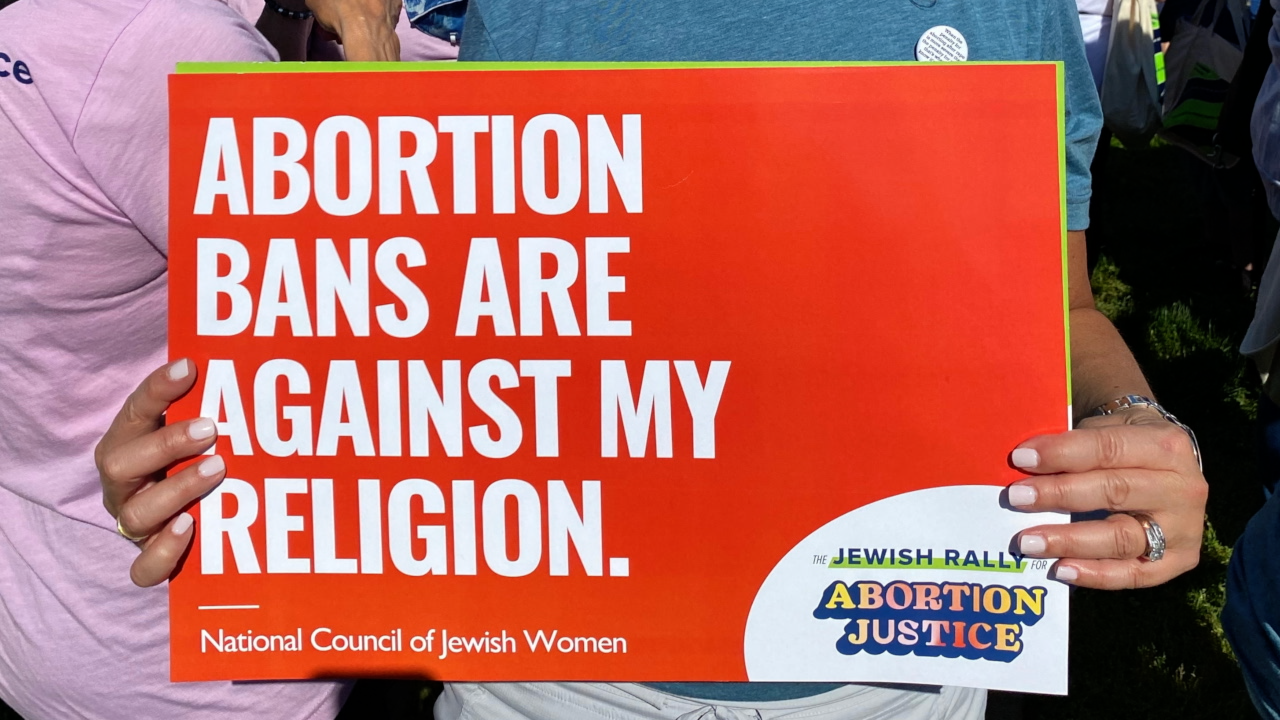
    Members of the Jewish community have spoken out against abortion bans in Ohio, saying it infringes on their religious freedom. Photo by Morgan Trau, WEWS.

    BY:  AND Ohio Capital Journal

    Religious variations abound in the state of Ohio, and some members of different churches are taking what they’ve learned in their lives and through decades of experience into the ballot box as they vote on Issue 1, the reproductive rights constitutional amendment.

    For Catholics like Alexandra Belcher and Jennifer Perry, Issue 1 is a choice between the opinions of their religious leaders and their experiences with bodily autonomy.

    For Perry, a physician assistant from Tiffin, growing up Catholic meant she believed in pro-life messages up until she voted in her first election.

    “I voted Republican because that’s what the religious leaders said supported pro-life values,” Perry said.

    Now that she works in medicine and has gone through multiple complicated pregnancies, Perry developed a perspective built on her experiences and not the values of far-away leaders.

    “My view of what defines pro-life and what defines pro-choice has become just so much broader, and it’s not a black and white issue at all,” Perry told the OCJ.

    With the “narrow” view that life begins at conception, Perry said she felt her belief system did “a disservice” to her in preparing for the future.

    “We weren’t given both sides of the coin,” she said. “We weren’t given both perspectives.”

    Struggling with infertility, and losing a “desperately wanted” child in a second-trimester miscarriage brought her new light on the struggles even individuals who want to become parents must go through.

    “I desperately wanted that child, my husband desperately wanted that child, and I had to go through labor and delivery knowing that child wasn’t going to be ours,” Perry said. “To think that a mother … would have to go through that out-of-state, not with her family and friends or her chosen doctor, that’s just excruciating to me.”

    Perry is still a practicing Catholic, and feels strongly that she and those like her should stay in the church and help bring those perspectives to fellow parishioners, in hopes of bringing change to the opinions of the religion.

    The Catholic Conference of Ohio, which calls itself “the official voice of the Catholic Church in Ohio on matters of public policy,” has taken a strong opposing stance on Issue 1. The conference produced a letter signed by nine leaders in Ohio dioceses including Cincinnati, Cleveland, Toledo, Steubenville, Columbus, Youngstown, Canton and Parma.

    “The Church must not be silent and cannot remain on the sidelines when confronted with such a clear threat to human life,” the letter from Feb. 28 stated.

     COLUMBUS, OH — MAY 14, 2022: Hundreds gather at a rally to support abortion rights less than two weeks after a leaked Supreme Court draft opinion showed a likely reversal of Roe v. Wade, May 14, 2022, at the Ohio Statehouse, Columbus, Ohio. (Photo by Graham Stokes for the Ohio Capital Journal. Republish photo only with original article.) 

    For Cleveland-area pharmacist Alexandra Belcher, she has no problem ignoring the opinions the church has on abortion, but remains open to talking with her friends and fellow parishioners about the nuances of reproductive health.

    “The more I grew up, the more I realized this can not be up to somebody else,” Belcher told the OCJ.

    Belcher went to Catholic school for 12 years, and is still a practicing Catholic, but nothing could have prepared her for her ectopic pregnancy, an unviable pregnancy that can be life-threatening for the pregnant person.

    “In my medical chart, the resolution is coded as an abortion,” she said.

    But that resolution involved medication that was administered in a hospital, so Belcher could be monitored by a doctor.

    “The awful thing about those drugs is that they take you into labor and delivery,” she said. “So all you can hear is crying babies, the song they play (when a baby is born), and I sat there for hours while they made sure everything was going well with my medication.”

    Even after leaving the hospital, Belcher suffered “excruciating” pain, so much so that when she went into labor in her next pregnancy, she was surprised to find how much less severe the pain of childbirth was for her.

    “Nobody is going into a decision to have an abortion joyfully, whatever has happened to get them to the point of an abortion,” Belcher said. “It’s still not a joyful decision.”

    Members of other religions, including faith leaders, are thinking about Issue 1 with a focus on the freedom to decide rather than the wrath of a higher power.

    Rev. Timothy Ahrens showed his support for Issue 1 in an ad by Ohioans United For Reproductive Rights.

    “As a pastor I’ve counseled families on the most important personal decisions, even abortion,” he said in the 30-second ad. “Abortion is a private family decision. Government needs to stay out of family decision making.”

    Ahrens is the senior minister of the First Congregational Church of the United Church of Christ in downtown Columbus, a role he has served in since 2000. He has been a pastor for nearly 40 years.

    The United Church of Christ supports reproductive issues and a woman’s right to have an abortion, according to the denomination’s general synod and statements regarding freedom of choice.

    “The laws of Ohio right now hurt my mother, my sister, my sister-in-law, my wife, my daughters, my daughter-in-laws and my granddaughters,” Ahrens said. “I feel very strongly that the government needs to get out of trying to manage people’s lives in relation to reproductive freedom.”

    Ahrens acknowledged that other Christians denominations disagree with his stance on abortion.

    “Those who stand against abortion do so based on biblical, foundational thoughts,” Ahrens. “I don’t look at what they’re saying as groundless.”

    He mentioned Psalm 139 as a passage that mentions God “knit me together in my mother’s womb.”

    “It never says I knew you at the moment of conception,” Ahrens said. “This has a range of perspectives, if we really sat down and boiled it down to the moment of conception.”

    While it’s clear what most religious denominations think abortion, it’s ultimately up to the individual members of a congregation to cast their ballot on Issue 1.

    “It comes down to how closely people who are part of religious congregations are listening to the cues that they are being given,” said Kim Conger, University of Cincinnati’s director of the masters of public administration, who studies how religious advocacy groups impact politics.

    “There seems to be more variation across different parishes about how strongly a priest is pushing on the idea of not just that abortion is a sin, but voting for issue 1 would be a sin,” Conger said.

    The idea of one religion stepping up to tell individuals what they should believe about reproductive health doesn’t sit well with Belcher or Perry, and as medical professionals, they don’t agree with the state getting involved either.

    “The reasoning is not because it’s in the best interest, or because there is evidence-based medicine, the reasoning is this magical belief that this group of cells is a person who has rights,” Belcher said.

    For Perry, the reproductive debate comes down to American roots in religious freedom and the necessity for separation of church and state.

    “Because we allow for so many different expressions of religion, or at least we’re supposed to, if that starts to crumble, I feel like the fabric or the foundation of what America was build on starts to crumble,” Perry said.

    Watching battles with insurance companies and socio-economic issues for patients having necessary medical treatment, Perry also sees much bigger issues the state could be addressing instead.

    “It’s very hard to be in health care right now, and this is another huge burden you’re placing on these providers,” she said.

    Having faced these moral and professional questions, Perry and Belcher both hope for a future for their children where medical decisions are made between a patient and a medical provider, without the intervention of either the government or their chosen religion.

    “I think that when it comes down to it, if I’m ever faced with the pearly gates, the God that I believe in will understand,” Belcher said.


    Megan Henry
    MEGAN HENRY

    Megan Henry is a reporter for the Ohio Capital Journal and has spent the past five years reporting in Ohio on various topics including education, healthcare, business and crime. She previously worked at The Columbus Dispatch, part of the USA Today Network.

    MORE FROM AUTHOR

    Susan Tebben
    SUSAN TEBBEN

    Susan Tebben is an award-winning journalist with a decade of experience covering Ohio news, including courts and crime, Appalachian social issues, government, education, diversity and culture. She has worked for The Newark Advocate, The Glasgow (KY) Daily Times, The Athens Messenger, and WOUB Public Media. She has also had work featured on National Public Radio.

    MORE FROM AUTHOR

  • Jane Gonzales and Patty Lawrence return and talk about the “new” Issue 1

    Jane Gonzales and Patty Lawrence return and talk about the “new” Issue 1


    “Right to Make Reproductive Decisions Including Abortion”

    by David Miller

    Loveland, Ohio – Jane Gonzales from Loveland and Patty Lawrence from Miami Township returned to the LOVELAND MAGAZINE TV studio last week to talk about current politics and the activities they have been engaged in in recent months in the community.

    They discussed and answered questions about Ohio Issue 1 which will be on the General Election ballot on November 7. Yes, they talked about Issue 1 when they were last in the studio, and that Republican-led measure was soundly defeated.

    This November, Issue 1, which was a citizen-led effort, will ask voters to amend the Ohio Constitution to enshrine a woman’s “Right to Make Reproductive Decisions Including Abortion”.

    In this interview, Gonzales and Lawrence tell viewers what their reaction was when the attempt to make it harder to circulate initiative petitions and would have raised the bar for citizen-led amendments to a 60% threshold failed in the special election in August. Both women campaigned against the change simultaneously while collecting signatures to have the right to make reproductive decisions including abortion on the Fall ballot. They opposed the August Issue 1. They are encouraging a “YES” vote on the citizen-led amendment.

    In this new interview, they discuss what the current Issue 1 will and won’t do and why they are encouraging voters to vote “YES” on the constitutional amendment.

    ____________________

    The amendment as it would be in the Ohio Constitution

    [pdf-embedder url=”https://lovelandmagazine.com/wp-content/uploads/2023/10/The-Right-to-Reproductive-Freedom-with-Protections-for-Health-and-Safety.pdf”]

    ________________

    ISSUE 1 BASICS (Leauge of Women Voters of Ohio)

    WHAT IS ISSUE 1 ABOUT?

    • Issue 1 relates to reproductive health care. Also known as “The Right to Reproductive Freedom with Protections for Health and Safety”, it would amend the Ohio Constitution, if passed by voters in November. 


    WHAT DOES IT MEAN TO VOTE YES ON ISSUE 1?

    • A “yes” vote supports amending the Ohio Constitution to restore the right to an abortion, as well as other reproductive health care such as fertility or miscarriage treatment : 

      • establish a state constitutional right to “make and carry out one’s own reproductive decisions,”including decisions about abortion, contraception, fertility treatment, miscarriage care, and continuing pregnancy; 

      • prohibit the state of Ohio from interfering with this constitutional right, except when the state demonstrates “that it is using the least restrictive means to advance the individual’s health in accordance with widely accepted and evidence-based standards of care;” 

      • allow the state to restrict abortion after fetal viability, defined as “the point in a pregnancy when, in the professional judgment of the pregnant patient’s treating physician, the fetus has a significant likelihood of survival outside the uterus with reasonable measures;” and 

      • prohibit the state of Ohio from banning abortion when, in the professional judgment of a physician, an abortion “is necessary to protect the pregnant patient’s life or health.” 


    WHAT DOES IT MEAN TO VOTE NO ON ISSUE 1? 

    • A “no” vote opposes amending the Ohio Constitution to establish the constitutional right to “make and carry out one’s own reproductive decisions.” This would allow the state to continue to create legislation relating to abortion and other reproductive health actions.


    WHAT HAPPENS IF ISSUE 1 PASSES? 

    • Abortion would go back to being legal up until viability of the fetus — as it had been for nearly half a century since Roe v. Wade.  Access to miscarriage care, to contraception, and to fertility treatments, as well as the right to remain pregnant, would also be protected under this amendment. Under this amendment, the state would be allowed to restrict abortion beyond viability, with exceptions made when a physician deems abortion necessary for the life or health of the pregnant patient.

    ​WHAT HAPPENS IF ISSUE 1 DOES NOT PASS?

    • Laws around abortion and other reproductive health care would continue to be made by state government. 

    • Right now, Ohio has a ban on abortion after the 6th week of pregnancy in place, but this ban has been temporarily blocked by a judge. The judgment blocking the ban has been challenged by the Ohio Attorney General on behalf of the state of Ohio, and is under review with the Ohio Supreme Court. If the Court rules in the state’s favor, the 6 week abortion ban will resume, making abortion after 6 weeks of pregnancy illegal. This includes pregnancies resulting from rape or incest. 


    WHO IS LEADING THE CAMPAIGN TO PASS ISSUE 1? 

    • An organization named OURR – Ohioans United for Reproductive Rights– is heading Issue 1. According to their website, this is a coalition of statewide organizations that includes ACLU of Ohio, Abortion Fund of Ohio, Ohio Physicians for Reproductive Rights, New Voices for Reproductive Justice, Ohio Women’s Alliance, Planned Parenthood Advocates of Ohio, Preterm-Cleveland, Pro-Choice Ohio, and URGE. 


    WHO IS LEADING THE CAMPAIGN OPPOSING ISSUE 1? 

    • An organization named Protect Women Ohio is heading the opposition against Issue 1. According to their website, this is a coalition of people and organizations; no names are identified. 


    WHO ARE SOME SUPPORTERS OF ISSUE 1? 

    • American Association of Obstetricians and Gynecologists (ACOG), Ohio Section

    • National Association of Social Workers 

    • Society for Maternal-Fetal Medicine


    WHO ARE SOME OPPONENTS OF ISSUE 1?

    • Center for Christian Virtue 

    • Ohio Catholic Conference 

    • Ohio Right to Life 

    ABORTION IN OHIO 

    WHAT IS THE CURRENT LEGAL STATUS OF ABORTION IN OHIO? 

    • On June 24, 2023, immediately after the Dobbs ruling, a federal judge lifted an injunction that had been placed on a law that made abortion after 6 weeks illegal in Ohio, including for pregnancies resulting from rape or incest. That law had originally been passed in 2019 but blocked in court because it was unconstitutional according to Roe v. Wade; after Dobbs, the law was no longer unconstitutional. 

    • On September 14, 2023, a different judge blocked the 6 week ban, restoring abortion rights to Ohioans temporarily. Ohio Attorney General Dave Yost, representing the state, has challenged this ruling, and the Ohio Supreme Court is set to hear arguments later this month. If the Court rules in favor of the state, who brought the suit, abortion will again be banned after 6 weeks. 


    WOULD THE AMENDMENT AFFECT ANYTHING OTHER THAN ABORTION?

    • Yes. 

    • In addition to guaranteeing the right to abortion, the amendment would also protect the right to other reproductive health actions such as access to contraception, fertility treatment, and miscarriage care, as well as the right to continue a pregnancy. 

    ISSUE 1: FACTS vs. MISINFORMATION 

    CAN A PREGNANCY BE TERMINATED AT ANY TIME DURING A PREGNANCY? 

    • The amendment maintains the standard set by the 1973 Supreme Court decision Roe v. Wade, which prohibits abortion after viability (which most doctors say is around 24 weeks), except in cases when the patient’s life or physical health would be endangered by maintaining the pregnancy. In those instances, determined by the patient’s physician, abortion would be a protected option.

    • Historically, abortion after viability is very, very rare, with 93.1% of abortions happening before 13 weeks gestation in 2020, and less than 1% over 21 weeks gestation. (CDC). Typically, abortion during this period only happen when there are severe fetal anomalies and/or the patient’s life or physical health is in danger. 


    HOW WOULD THIS AMENDMENT AFFECT PARENTAL RIGHTS? 

    • It wouldn’t. There is nothing in the amendment that changes Ohio laws around parental consent. 

    • Ohio law requires minors under the age of 18 to get consent from at least one parent when seeking an abortion. Minors who believe they are unable to tell a parent must get a court order from a judge through a process called judicial bypass. There is nothing in the amendment that would change this. 

    HOW WOULD THIS AMENDMENT AFFECT GENDER-AFFIRMING CARE? 

    • It doesn’t. There is nothing in the amendment that has anything to do with gender-affirming care.

    ______________________

    Ohio’s county boards of elections have begun distributing ballots to active duty military and overseas voters, officially opening the November 7 general election.


    OCTOBER 31st:  DEADLINE TO REQUEST YOUR MAIL-IN BALLOT


    _______________________


  • Ohio Supreme Court approves abortion rights amendment Ballot Board summary for voters with one tweak

    Ohio Supreme Court approves abortion rights amendment Ballot Board summary for voters with one tweak

    BY: 

    The Ohio Supreme Court has ordered one tweak to summary language approved by Republicans on the Ohio Ballot Board for voters to see in November on a proposed reproductive rights amendment. The split state supreme court rejected using the full text of the proposed amendment and declared that that summary language that voters will see on their ballots is not misleading.

    That summary language was written by the office of Ohio Secretary of State Frank LaRose, a Republican ballot board member who has spoken out against November’s Issue 1 reproductive rights amendment proposal, and campaigned vigorously for August’s Issue 1 proposal to make amendments harder to pass, saying that the Aug. 8 effort was “100% about keeping a radical pro-abortion amendment out of our constitution.” Issue 1 in August was rejected by voters 57% to 43%.

    LaRose said at the Aug. 24 ballot board meeting that he “worked extensively on drafting this” November ballot language.

    Fellow Ohio Ballot Board member, Republican state Sen. Theresa Gavarone, explicitly spoke against the November amendment proposal during that same ballot board meeting where the summary language for voters to see on their ballots was approved by the board in a 3-2 decision.

    The coalition proposing November’s reproductive rights amendment sued to the Ohio Supreme Court claiming that the summary language is deceptive and asking the full amendment text be used instead.

    They argued that the summary makes changes advocates say alter the language in a biased way, such as using “unborn child” rather than the medically accurate term “fetus,” and changing “pregnant patient” to “pregnant woman.” The summary also only lists 1 of 5 protected rights included in the amendment, focusing on abortion and failing to mention contraception, miscarriage care, fertility treatment, and continuing one’s pregnancy.

    Moreover, the abortion rights groups and individuals said the summary actually “inverts” protections that would be given in the amendment by saying the amendment would “always allow an unborn child to be aborted” if a physician determines it necessary. Amendment supporters say the actual language of the amendment “would prohibit such an abortion if the patient objects to it.”

    Finally, the complaint took issue with the summary language saying “citizens of the state of Ohio” would be prohibited from enacting laws regulating abortion in certain ways instead of “the state of Ohio” would be so prohibited.

    The Ohio Supreme Court ruled Tuesday that this last part is the only tweak the Ballot Board must make — they can not use “the citizens of the state of Ohio” instead of “the state of Ohio.”

    ______________

    Proposed amendment: “B. The State shall not, directly or indirectly, burden, penalize, prohibit, interfere with, or discriminate against either: 1. An individual’s voluntary exercise of this right or 2. A person or entity that assists an individual exercising this right, unless the State demonstrates that it is using the least restrictive means to advance the pregnant individual’s health in accordance with widely accepted and evidence-based standards of care. C. As used in this Section: … 2. “State” includes any governmental entity and any political subdivision.”

    The Ohio Ballot Board’s language that needs changed to remove “citizens”: “The proposed amendment would: • Prohibit the citizens of the State of Ohio from directly or indirectly burdening, penalizing, or prohibiting abortion before an unborn child is determined to be viable, unless the State demonstrates that it is using the least restrictive means. • Only allow the citizens of the State of Ohio to prohibit an abortion after an unborn child is determined by a pregnant woman’s treating physician to be viable and only if the physician does not consider the abortion necessary to protect the pregnant woman’s life or health.”

    ______________

    The Ohio Supreme Court wrote they were tasked with determining whether the GOP summary language is “impermissibly argumentative, either in favor of or against the issue.”

    Regarding the Ballot Board summary’s failure to mention 4 of 5 categories included in the reproductive rights amendment proposal, the Republican court majority cited the amendment’s own emphasis on abortion care and said “the omission is not material when considering the amendment as a whole.”

    Regarding the Ohio Ballot Board changing “fetus” to “unborn child” in the summary for voters, the majority said this is not improper persuasion. They did not elucidate an argument but instead quoted precedent from a 2021 court decision: “[I]f ballot language is factually accurate and addresses a subject that is in the proposed amendment itself, it should not be deemed argumentative.”

    The court majority referenced this again later in rejecting that other portions of the summary language are weighted against the proposal.

    ______________

    Proposed Amendment: “A. Every individual has a right to make and carry out one’s own reproductive decisions, including but not limited to decisions on: … 3. continuing one’s own pregnancy; B. The State shall not, directly or indirectly, burden, penalize, prohibit, interfere with, or discriminate against either: 1. An individual’s voluntary exercise of this right, However, abortion may be prohibited after fetal viability. But in no case may such an abortion be prohibited if in the professional judgment of the pregnant patient’s treating physician it is necessary to protect the pregnant patient’s life or health.”

    Ballot Language: “The proposed amendment would: • Prohibit the citizens of the State of Ohio from directly or indirectly burdening, penalizing, or prohibiting abortion before an unborn child is determined to be viable, unless the State demonstrates that it is using the least restrictive means. • Only allow the citizens of the State of Ohio to prohibit an abortion after an unborn child is determined by a pregnant woman’s treating physician to be viable and only if the physician does not consider the abortion necessary to protect the pregnant woman’s life or health; and • Always allow an unborn child to be aborted at any stage of the pregnancy, regardless of viability if, in the treating physician’s determination, the abortion is necessary to protect the pregnant woman’s life or health.”

    ______________

    The court majority wrote, “While (litigants) do not like the way in which the language is phrased, the structure of statements is not improperly argumentative. As stated above, this court will not deem language to be argumentative when it is accurate and addresses a subject in the proposed amendment.”

    Ohio Supreme Court Democrats agreed with ordering the change from “citizens of the state” to “the state,” but panned the approval of the rest of the ballot board’s language.

    Justice Jennifer Brunner, a Democrat, said the Ohio Ballot Board “obfuscated the actual language” of the proposed amendment by “substituting their own language and creating out of whole cloth a veil of deceit and bias in their desire to impose their views on Ohio voters…”

    Democratic Justice Melody Stewart said that the Ohio Ballot Board failed its duty and instead it “crafted partisan ballot language designed to do any number of things, but not simply designed to do its job—that is, inform voters of the substance of the proposed amendment.”

    Democratic Justice Michael Donnelly said of the Ohio Ballot Board that “it’s unfortunate that advocacy seems to have infiltrated a process that is meant to be objective and neutral,” but that he’s confident that voters will be informed about the issue in November.

  • Abortion rights groups ask Ohio Supreme Court to order full amendment text for November ballots

    Abortion rights groups ask Ohio Supreme Court to order full amendment text for November ballots

    “Gavel,” a sculpture by Andrew F. Scott, outside the Supreme Court of Ohio. Credit: Sam Howzit/Creative Commons.

    BY:  Ohio Capital Journal

    In the fight against Ohio Ballot Board language that reproductive rights groups say is deceptive, an attorney has asked the Ohio Supreme Court to order the full text of the proposed amendment to be used on November ballots.

    The Ohio Ballot Board approved language last month for voters to see on their ballots that took out specific details of the amendment, such as protections for miscarriage care and contraception.

    The language was ostensibly meant to summarize Issue 1, a proposed amendment that would add abortion and reproductive rights into the state constitution, but those who created the proposed amendment say the summary approved by the ballot board in a 3-2 vote misleads voters and adds biased terms like “unborn child” instead of the medically accurate term “fetus.”

    In a filing this week, attorney Don McTigue asked the Ohio Supreme Court to send the Ohio Ballot Board back to the drawing board, specifically to “prescribe that the amendment’s full text be used as the ballot language.”

    “The Ballot Board’s prescribed language misleads the voters about ‘what they are being asked to vote on’ and engages in improper ‘persuasive argument … against’ the Amendment,” McTigue wrote, citing previous Ohio Supreme Court languages.

    The summary language has various defects, according to the abortion rights groups, including misleading voters about “what right the amendment would create,” what restrictions the amendment would create, “whether and to what degree” the proposal would continue a pregnancy, a physician’s discretion regarding fetal viability, and “how the amendment would limit state regulation.”

    “Each of these defects violates the constitution and laws of the state of Ohio, and cannot survive under this court’s precedents,” McTigue wrote.

    Along with the alleged defects, the brief says the ballot board’s summary changes language enough to alter the meaning of the amendment and give false information to voters.

    The summary language states that the amendment would “always allow an unborn child to be aborted at any stage of pregnancy, regardless of viability if, in the treating physician’s determination, the abortion is necessary to protect the pregnant woman’s life or health.”

    “To the contrary, if the amendment were adopted, such an abortion would not be allowed insofar as the pregnant patient objected to it,” McTigue wrote. “In that case, the pregnant person would have an individual right to decide to continue [their] own pregnancy.”

    He also argued that the majority that voted for the summary language included two people who have been working against the measure. One of which, state Sen. Theresa Gavarone, took time during the board meeting in which the summary language was considered, to call the amendment “dangerous” and commit to campaigning against the measure.

    “Gavarone attacked the substance of the amendment itself as ‘an abomination,’ and asserted that the amendment entailed an ‘assault on parental rights,” the court filing noted.

    Ohio Secretary of State Frank LaRose, who leads the ballot board, has also been a vocal opponent of the proposed amendment, posting on social media with anti-abortion groups, and working on a failed constitutional amendment to raise the threshold to approve amendments specifically to block the abortion rights measure.

    “This context, together with the ballot language’s length and many defects, makes clear that the board majority’s personal opposition to the amendment infected the ballot board’s exercise of authority,” McTigue told the court.

    The Ohio Attorney General’s Office, who represents the ballot board in legal proceedings, denied wrongdoing by the board in response to the lawsuit.

    Susan Tebben
    SUSAN TEBBEN

    Susan Tebben is an award-winning journalist with a decade of experience covering Ohio news, including courts and crime, Appalachian social issues, government, education, diversity and culture. She has worked for The Newark Advocate, The Glasgow (KY) Daily Times, The Athens Messenger, and WOUB Public Media. She has also had work featured on National Public Radio.

    MORE FROM AUTHOR

  • LaRose pushes unfair, inaccurate language for voters on November Ohio reproductive rights amendment

    LaRose pushes unfair, inaccurate language for voters on November Ohio reproductive rights amendment

    COMMENTARY

    by Marilou Johanek

    Play fair or play dirty. Issue 1 showed Ohio voters how state Republicans play when they can’t persuade. Extremists know most Ohioans support the right to abortion within limits. The outright ban on abortion gerrymandered pols seek is wildly unpopular. Convincing rational minds otherwise is pointless. So Ohio’s GOP overlords cheat to win.

    Lawmakers rushed a game-changing ballot amendment to an August election (in violation of state law) to sabotage the abortion rights amendment in November. Ohio Secretary of State Frank LaRose spearheaded the shady maneuver to cancel self-governance by majority vote — just to keep a majority of Ohio voters from having their say on abortion access as a constitutional right.

    The state’s elections chief actively campaigned to end the only enduring recourse of ordinary citizens to circumvent a crooked government because he didn’t want an abortion rights amendment to pass. Sit with that for a minute. The guy who administers the electoral system in Ohio tried to undercut the electorate.

    That’s how amoral LaRose has become as he angles for attention as the greatest MAGA candidate in the U.S. Senate race. Burnishing his anti-abortion bona fides with the pro-Issue 1 crowd, in partnership with a leading anti-abortion lobbyist, was more important than upholding majoritarian democracy. Stumping for minority rule on the hollow pretense of “protecting” the constitution was a new low for LaRose.

    But the integrity-is-overrated elections boss and Republican kingpins in the Statehouse badly mistook the masses for rubes. All the misleading, fear-mongering, coming-after-your-children TV ads (out-of-state money could buy) didn’t fool an overriding majority of ticked-off Ohio voters who showed up in record numbers to beat back an egregious political power grab on Aug. 8.

    The beaten cheerleader for Issue 1 refused to concede the people had spoken (a Trumpian reflex?) and last week rolled out another snow job to derail the abortion rights amendment through ballot language subterfuge. LaRose chairs the Republican-dominated Ohio Ballot Board that voted along party lines Thursday to approve the summary language voters will read on their November ballot about the proposed abortion amendment.

    Under state law, LaRose could have used the full text of the amendment as written, and attorneys for Ohioans United for Reproductive Rights urged him to so “there can be no dispute about whether legal standards have been satisfied, or whether the condensed text misleads, deceives, or defrauds voters.” Instead, LaRose recast the amendment to purposely mislead and deceive.

    His draft is slanted with such routinely deployed anti-abortion propaganda it could have been dictated, word for word, by Ohio Right to Life President Mike Gonidakis. LaRose’s specious interpretation of the proposed amendment to enshrine reproductive freedom in the state constitution is deliberately deceptive with provocative wording to unfairly prejudice outcome.

    The revisions he engineered on an amendment he campaigned against are so beyond the pale of “fair and accurate,” as the secretary ludicrously declared, that stunned amendment backers filed suit Monday with the state supreme court for fairness and accuracy. LaRose omitted actual provisions of the original amendment.

    He deleted a description of reproductive choices an individual should have the “right to make and carry out” such as “decisions on contraception, fertility treatment, continuing one’s own pregnancy, miscarriage care, and abortion.” LaRose’s altered the language stipulating an individual right to “one’s own reproductive decisions” to just “a right to one’s own reproductive medical treatment, including but not limited to abortion.”

    Perhaps most blatant was the secretary of state’s pointed replacement of the medical term “fetus” throughout the amendment with “unborn child,” employing the same weighted rhetoric seeded over decades by the anti-abortion movement. He also curiously substituted “the citizens of the State of Ohio” for amendment prohibitions specifically targeting “The State,” defined in the language “as any governmental entity and political subdivision.”

    So what was originally worded “The State shall not, directly or indirectly, burden, penalize, prohibit, interfere with, or otherwise discriminate against” Ohioans exercising their reproductive rights became “the citizens of the State of Ohio” prohibited for doing the same. Different meaning. Why?

    Original language allows that “abortion may be prohibited after fetal viability” or when the fetus can survive outside the womb — a standard restriction for decades under Roe. With a six-week ban on hold by the courts, abortion is currently legal in Ohio up to 22 weeks of pregnancy, a measured limitation widely acceptable.

    LaRose flipped that reasonable allowance upside-down with inflammatory assertions that the amendment would “always allow an unborn child to be aborted at any stage of pregnancy, regardless of viability, if, in the treating physician’s determination” the applicable life and health exceptions are met. The glaring prejudicial language and selective editing of the fall abortion amendment to intentionally distort an initiative petition so it fails should infuriate every Ohioan — regardless of their beliefs about abortion.

    Frank LaRose, the public servant responsible for conducting free and fair elections in Ohio is playing dirty to win. It’s wrong. But it’s only the beginning. Issue 1 was a preview of the depths Ohio Republicans will go to when they can’t persuade. They cheat.

    The devious battle to deny abortion access in Ohio, despite the wishes of a majority of voters, will be epic.


    Marilou Johanek
    MARILOU JOHANEK

    Marilou Johanek is a veteran Ohio print and broadcast journalist who has covered state and national politics as a longtime newspaper editorial writer and columnist.

    MORE FROM AUTHOR