Tag: lame duck session

  • Ohio lawmakers working to advance local infrastructure bond issue during lame duck session

    Ohio lawmakers working to advance local infrastructure bond issue during lame duck session

    By:  Ohio Capital Journal

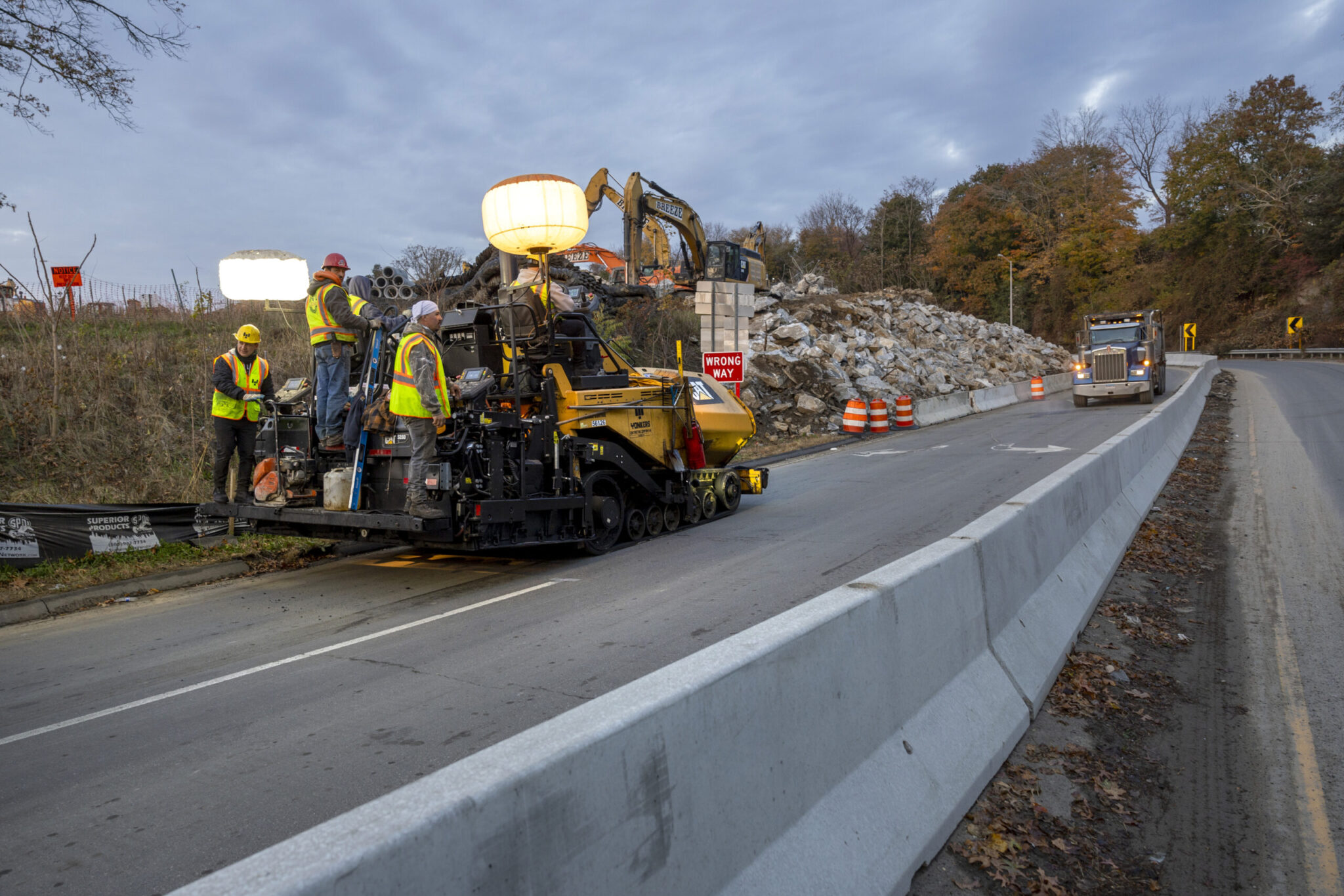
    If all goes to plan, lawmakers will be asking Ohio voters next May to renew a multibillion-dollar fund that helps get shovels in the ground for local public works projects like roads and sewers. The State Capital Improvement Program has been around since the late 1980s and offers competitive grants and loans for local governments’ capital projects; money for the program comes from bonds backed by the general revenue fund.

    The proposal would extend the State Capital Improvement Program for another 10 years by issuing $2.5 billion in new bonds. Voters have renewed the program three times previously in 1995, 2005, and 2014.

    The Senate has already passed its version of the joint resolution to place the measure on the ballot. The House Finance Committee held its first hearing for a companion measure this week.

    GET THE MORNING HEADLINES.

    What the program funds


    To get a sense of scale, Ohio Public Works Commission director Linda Bailiff laid out the scope of physical infrastructure the program helps maintain.

    “I think it’s over 212,000 lane miles that counties townships and municipalities are responsible for,” she said. “There’s 29,000 bridges, there’s 4,400 public water systems, and 1,000 wastewater systems.”

    “And so all of those need attention,” she explained. “Our funds pay for repair, replacement, reconstruction, rehabilitation as well as new (builds) and expansion.”

    Since its inception the State Capital Improvement Program has funded 18,860 projects around Ohio.

    In the Public Works Commission’s latest report, the agency highlights some of the projects. They range from overhauling a major thoroughfare in Columbus or replacing a bridge in Lorain County to improving sidewalks and curb ramps in the village of Willard.

    The Commission also shares a spreadsheet of the 4,000-plus projects the program has supported since 2017. Over that stretch, the program has provided $2.3 billion — $1.5 billion of which came in the form of grants — in support of $5.2 billion-worth of infrastructure improvements around Ohio.

    Mahoning County Engineer, and president of the County Engineers Association of Ohio, Patrick Ginnetti was unequivocal in his praise of the program.

    “I will say, in my opinion, this is the most successful program the state of Ohio has,” he said.

    How it works

    Under the program, Ohio is split up by county into 19 districts. The most populous counties are their own districts, and in more sparsely populated regions several counties are lumped together. To get funding, local governments submit proposals within their district which are then scored based on a district-specific set of categories.

    “Namely health and safety, the priority needs of that particular district, financial considerations, readiness to proceed, the age and condition of the infrastructure,” Bailiff offered as examples.

    Every year district level officials rank their proposals and submit funding recommendations to the Ohio Public Works Commission.

    “As long as everything complies with statute,” Bailiff said, “we go ahead and prepare funding agreements that are released about July 1 each year.”

    Grant applications can get up to 90% of the project cost covered, so local entities still need to pony up a share of funding. Loans can cover the full project cost, and they’re offered interest free.

    Bailiff adds that they’ve got a couple of state-level set aside programs, too. One earmarks $20 million annually for rural villages and townships with a population of less than 5,000. After districts have doled out their award recommendations, they go back through the projects that didn’t get the nod.

    “They select up to five projects that did not get funded at the district, that fit that definition of the village or the rural township,” she explained. “And they submit them to the small government administrator to compete on a statewide basis, so they have a second shot at funding.”

    The Public Works Commission also has a first come first serve program for emergency work.

    How it’s working out

    Ginnetti explained his office, like the offices of county engineers around the state, gets its funding from gas taxes.

    “With the inception of electric cars, hybrids, CNG vehicles, gas tax has been relatively stagnant,” he said, “so our budgets have been stagnant,”

    Ginnetti described the State Capital Improvement Program as a way to “stretch” that budget, and he pointed to his county’s sewer system as an example.

    “We’ll utilize the grant funding and also the revolving loan fund to do what is known as sewer re-lining,” he said. “It’s a nondestructive way to give us additional useful life out of our existing gravity sewer.”

    “Again, where costs are a certain dollar amount,” he explained, “it helps minimize the impact to our operating budget.”

    In the last two years, he said, they’ve paved 25 miles of road, replaced five box culverts and relined 15,000 linear feet of sanitary sewer pipes.

    “And it’s a competitive program,” he stressed, “so it’s not like communities are just given a blank check and they say go do what you want.”

    Put simply, he described, “good projects get funded; projects that may not be as urgent or as critical do not.”

    Ginnetti said his county also got assistance from the emergency funding program after a road subsidence.

    “Had the emergency program not been there,” he said, “that would’ve resulted in a road closure — a lengthy road closure — and we probably would’ve had to sacrifice a paving program or several bridges or box culverts to get the road fixed.”

    “It’s basically life support,” he added, “for all of the municipalities, townships, county government in Ohio to get work done that we wouldn’t be able to do solely on our operating budget.”

    Follow OCJ Reporter Nick Evans on Twitter.

    YOU MAKE OUR WORK POSSIBLE.

    ______________
    Nick Evans
    Nick Evans

    Nick Evans has spent the past seven years reporting for NPR member stations in Florida and Ohio. He got his start in Tallahassee, covering issues like redistricting, same sex marriage and medical marijuana. Since arriving in Columbus in 2018, he has covered everything from city council to football. His work on Ohio politics and local policing have been featured numerous times on NPR.

    Ohio Capital Journal is part of States Newsroom, the nation’s largest state-focused nonprofit news organization.

    MORE FROM AUTHOR

  • Newly elected state school board member calls GOP plan to gut powers ‘Tornado from hell’

    Newly elected state school board member calls GOP plan to gut powers ‘Tornado from hell’

    Seven of the 11 elected seats are now Democratic, stopping supermajority

    BY: MARILOU JOHANEK – Ohio Capital Journal

    “What you’re going to see in the lame duck session is going to be a tornado from hell.”

    – Former state Sen. and now State School Board Member, Teresa Fedor, D-Toledo.

     Former Ohio state Sen. Teresa Fedor, D-Toledo, who won a seat on the State Board of Education in the Nov. 8, 2022 election. Official Statehouse photo.

    Former state Sen. Teresa Fedor got out of the Statehouse before the last vestiges of democratic governance were flattened by a power-hungry party on steroids.

    She knew a cyclone of destructive GOP legislation, super-charged by an unstoppable Republican juggernaut in the General Assembly, would be devastating. It is already bearing down fast on voting rights, citizen ballot initiatives, transgender protections, and Ohio women. 

    But as Fedor bid a bittersweet farewell to a 22-year legislative career after being elected to the State Board of Education, Republican colleagues sent her a parting gift of disrespect.

    Barely a week after Fedor and two other Democratic candidates won seats on the state school board, ousting incumbent GOP extremists on the ballot, Republicans in the Ohio Senate quickly moved to gut board members’ educational oversight responsibilities to almost nothing

    It was an audacious power grab by Republican lawmakers to wrest authority from the state education board on the heels of an election in which voters spoke about what they wanted for their children in education.

    “We’re essentially removing most of the education duties out of the control of the state school board and putting them in the governor’s office,” declared Senate President Matt Huffman, R-Lima, as he unilaterally moved to nullify a democratic election.

    With the super-super Republican majorities Huffman deviously engineered through lawless gerrymandering, he can drop any pretense of honoring the will of the people. Voters don’t matter. Hoarding power does. Sharing power with state board of education members who defeated Republican-backed anti-trans, anti-vax, anti-CRT, anti-anti-racism resolution clowns was nixed even before new members were sworn in. 

    Huffman’s plan is to ram through a bill in the next few weeks that removes all the board’s decision-making on educational matters, from curriculum and textbooks to academic development and planning, and gives that consequential stewardship to a political appointee who answers to the governor who answers to Huffman. See how it works? 

    Senate Bill 178 shrinks the influence of the Ohio Board of Education to a handful of administrative issues outside the classroom. Sponsor state Sen. Bill Reinke, R-Tiffin, stressed the need “for systemic change at the state level (after the Nov. 8 election) to our education system to ensure accountability to taxpayers and for our kids.”

    Fedor rolled her eyes.

    “They’ve been beating that drum for over 30 years. ‘Public schools are failing. We need accountability.’ And where are we on public education? They (Ohio Republicans) have been in control the whole time, except for four years under Strickland. If there’s a failure, it’s a failure on their part,” she said.

    “This is the 25th year of an unconstitutional school funding formula in the state. Republicans failed to the provide equitable and adequate education for the common schools in Ohio for 25 years. They set up a failed charter school system (remember ECOT?) in which tax dollars go into a black hole never to be seen again. They expanded vouchers, the privatization of our public dollars, a bigger black hole. Legally taxpayers don’t have a right to see how that tax money is being spent.”

    Fedor is outraged that Huffman and Co. are subverting the voice of Ohio voters with Senate Bill 178.

    “This just shifts power from the people to an unaccountable cabinet member in the executive branch,” she fumed. “Republicans are creating another level of bureaucracy away from the public” to steamroll their goal of privatizing public institutions without transparency or accountability.

    The incoming state school board member is resigned to what comes next. The Republican storm whipping through the legislature will weaken the Ohio State Board of Education by giving its power to the governor.

    “They’ll have their hearing, maybe two,”Fedor explained. “They may get interested parties into a room and say how can we tweak this so you’ll accept it even if you don’t like it and we can say we worked with you.”

    “They’ll put the language into a substitute bill that no one will see until the last minute before it gets voted on or fold it into a lame duck Christmas tree bill and say they did the public bidding and boast about it. But everyone will know it was a sham. That’s what abuse of power will do.”

    After over two decades in the legislative trenches, Fedor recognizes ruthless. 

    “Ohio Republicans have been waiting in the wings to roll out their extreme agenda because now they have unlimited power in the legislature. Senate Bill 178 cues up the budget debate. If it becomes law, Republicans are then going to pour money into their bureaucratic schemes to privatize public institutions — including the most important one to secure democracy, public education. The select few will benefit but 90% of our children will be left behind.”

    Fedor, who spent 17 years in the classroom, conceded, “I have no power other than my voice and experience and heart.”

    But she is a formidable force in her own right and will fight to be heard over the tornado from hell roaring through the lame duck. 

    “I am never going to give up,” promised the state school board member under siege. “You have to have hope. There’s no other choice.” 

  • Education advocates say Ohio legislature should focus on funding, not regulating curriculum

    Education advocates say Ohio legislature should focus on funding, not regulating curriculum

    Getty Images

    BY: SUSAN TEBBEN – Ohio Capital Journal

    Groups keeping an eye on the Ohio legislature’s handling of education are hoping the General Assembly focuses on funding and appealing to new teachers, rather than bills regulating curriculum and “divisive” issues.

    The Ohio Education Association is continuing it’s push to eliminate mandatory retention from the third-grade reading guarantee, focusing their attention getting through to the state Senate.

    “I’m optimistic, I think now that we’re past election season, we can focus on finding common ground and really making sure that we’re addressing the needs of students,” said Scott DiMauro, head of the OEA.

    The association has already put out a series of recommendations for improving recruitment and retention strategies for teachers, including taking away financial barriers and prioritizing “the need to have a diverse teaching pool to serve all our communities.”

    “I’m encouraged that there have been a lot of productive conversations at the regional level and with policymakers who I think share this concern,” DiMauro said.

    The Ohio Federation of Teachers has also spotlighted the training of teachers and the retention of quality teachers as part of their state priorities.

    “Teachers are still tired and we need to look at how we make the education system work them,” said OFT executive director Melissa Cropper.

    What education policy groups don’t want to see is rushed legislation that flies through the lame duck session without the ability for transparency and accountability. This includes bills that have already been introduced, like House Bill 616, the most recent “divisive concepts” bill brought by state Reps. Jean Schmidt, R-Loveland, and Mike Loychik, R-Bazetta, to regulate the curriculums in schools, including legislating when and how sexual orientation and gender ideology can be included in school lessons.

    But Cropper isn’t as worried about “extremist” bills being pushed through before the end of the year because the Republican majority has increased based on general election results, theoretically giving the GOP no reason to fast-track bills or attach them quickly to other bills.

    “We are certainly opposed to anything being passed during a lame duck session when there’s not time for anything to be vetted,” Cropper said. “But given the results of the election, I don’t think that there’s any urgency on their part to do anything.”

    HB 616 is not currently scheduled to appear in committee this week, as the legislature comes back from its summer recess.

    DiMauro said he’s not sure what the prospects for education policy will be going into the lame duck session, but more than that, he wants to see more focus on “committing resources to a funding plan that primarily fits the needs of students and teachers.”

    “We know that it’s critical for the future of our state … that Ohio is a welcoming place for educators,” DiMauro said.

    Both education leaders were bolstered by the results of the Ohio State Board of Education races that took place on November 8, wherein two incumbents were unseated, and another race put a former Democratic legislator and teacher on the board to replace outgoing member Kirsten Hill.

    “I don’t think these are tiny changes, I think these are huge changes,” Cropper said. “We finally have some more people on (the board) who are there because they want to make this education system work for students and … is not about some culture war agenda.”