Tag: Larry Householder

  • Former associate testifies that ex-Ohio GOP Chair Borges paid to spy on bailout repeal effort

    Former associate testifies that ex-Ohio GOP Chair Borges paid to spy on bailout repeal effort

    BY: MARTY SCHLADEN – Ohio Capital Journal

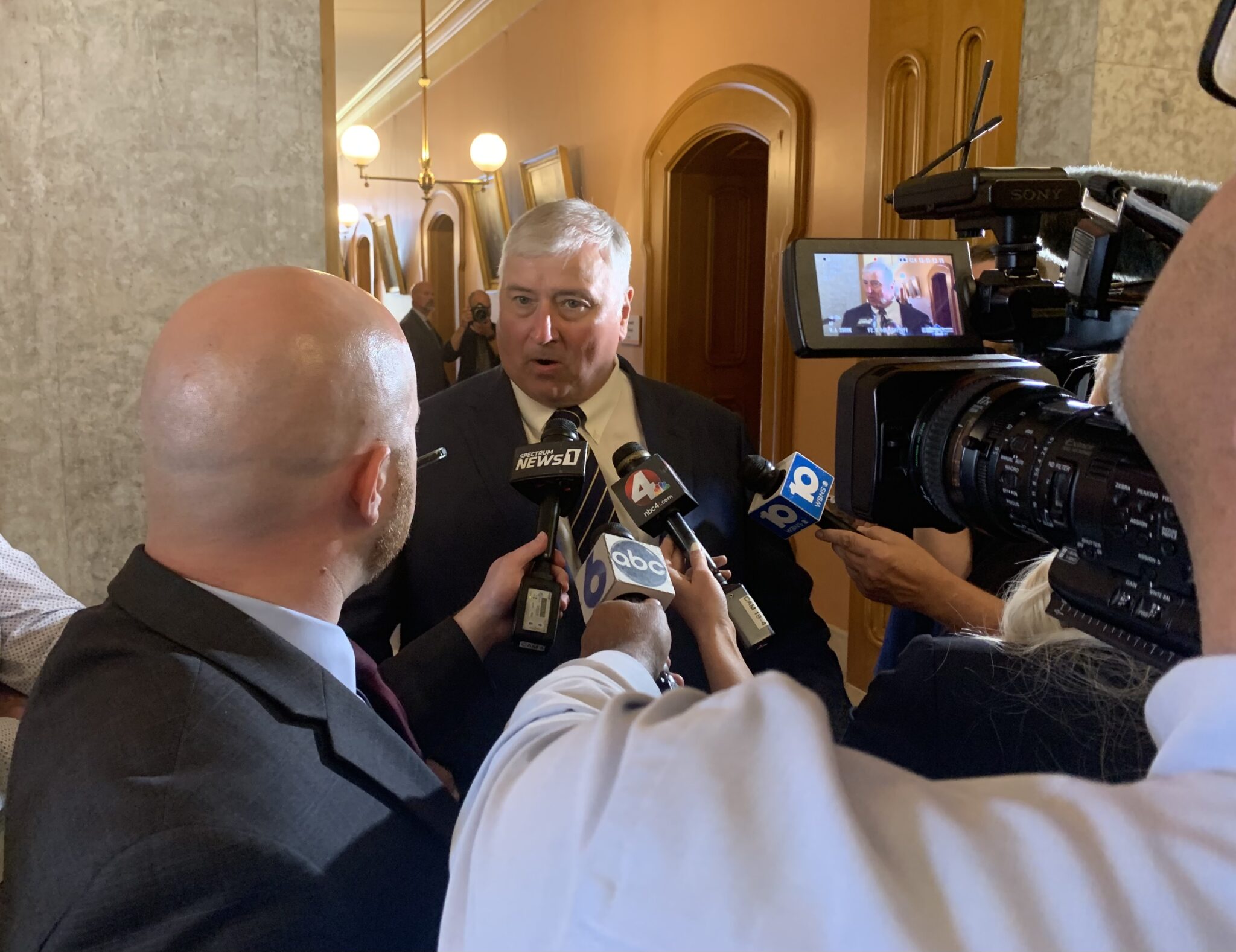
    CINCINNATI — Former Ohio Republican Party Chairman Matt Borges paid $15,000 off the books in 2019, a witness testified Tuesday. It was in an attempt to gather inside information about the campaign to repeal a $1.3 billion utility subsidy that had just been passed by the legislature, a Borges associate said.

    In addition, the chairman of the company that benefited most from the subsidy in an email referred to the scheme as a “black op” and said he was prepared “to do whatever it takes” to defeat the repeal effort, the witness, Juan Cespedes, said. Coincidentally, the chairman, John Kiani, started his career at Enron, a Houston Energy company that collapsed under a wave of unmet contracts and accounting scandals in 2001.

    It was the 11th day in the federal court trial of Borges and former Ohio House Speaker Larry Householder, R-Glenford. Borges is accused of assisting Householder and others in a scheme to use $61 million from Akron-based FirstEnergy to make Householder speaker and pass the massive bailout.

    The bulk of the bailout was intended to benefit money-losing nuclear and coal plants owned by FirstEnergy subsidiary FirstEnergy Solutions. It was going through bankruptcy proceedings and executives with the parent company and the subsidiary desperately wanted the bailout to complete the bankruptcy, spin off FirstEnergy Solutions and possibly sell the nuclear plants.

    Gov. Mike DeWine signed the bailout the same day it passed in 2019, but a repeal effort started amid reports that it was “the worst energy bill of the 21st century.” Not only did it prop up 70-year-old coal plants under the guise of being a “Clean Air Program,” it also gutted the state’s renewable energy standards.

    Borges was part of a team of lobbyists who worked to pass and protect the bailout, House Bill 6. And, because of his long experience in Ohio politics, he was asked to make use of some of his relationships in the effort, Cespedes, another member of the team, testified.

    Cespedes was also charged with racketeering, but he pleaded guilty and is cooperating with prosecutors.

    The off-the-books payment

    One of the primary acts Borges is charged with has to do with a $15,000 payment he made during the repeal effort to Tyler Fehrman, who was helping manage the campaign to gather enough valid signatures to get the repeal on the ballot. 

    Inside information was valuable to the pro-H.B. 6 team because it enabled them to gauge the strategy and likelihood of success of the repeal effort.

    Cespedes testified that he tried to keep the plan to recruit Fehrman from Kiani, the FirstEnergy Solutions chairman whose company financed a big portion of the fight against the repeal. Kiani was a hard-charging executive and Cespedes believed that once he learned of the spying effort, he would press the operatives relentlessly. 

    However, Cespedes said, Borges told Kiani about it, and it seems Cespedes’s worries were well founded.

    In an Aug. 31, 2019 text, Kiani asked “what happened to the black ops?” in a reference that Cespedes said was to the spying effort. Then, in a Sept. 2, 2019 text, Cespedes told Borges that Kiani, “reiterated to do whatever it takes to get this information.”

    It appears that Fehrman was paid, but it’s unclear what he was paid for.

    In taped conversations played earlier in the trial, Borges discussed paying Fehrman, but he claimed to Fehrman that it was for work Fehrman might do some time in the future. But Borges made other statements that seemed to show that he knew the two were doing something wrong.

    “It would be bad for both of us if the story came out,” he told Fehrman in a recording that Fehrman made with the help of the FBI. “But it would be worse for you.”

    On Tuesday, Cespedes testified that he roughed out a budget at the time of the repeal campaign. He made an entry in it to pay $25,000 to an “employee.” Cespedes said the money was intended for Fehrman.

    Asked why he used “employee” to label the entry, Cespedes said, “I wasn’t going to write ‘bribe.’ I wasn’t going to write anything nefarious.”

    Prosecutors displayed a photograph of what they said was a contemporaneous budget that Borges roughed out in a notebook that Cespedes had photographed. Cespedes testified that when he asked Borges why a payment to Fehrman wasn’t in it, Borges “simply said it wasn’t something he wanted to write down.”

    Cespedes testified that Fehrman later went quiet on Borges and Cespedes assumed that their deal had fallen through. But after the repeal campaign had failed, an accounting showed that the $15,000 had been paid, Cespedes said. 

    When he asked Borges about it, “He said, ‘I just wanted to keep him quiet,’” Cespedes testified.

    Earlier in the HB 6 fight, Borges and Cespedes were struck by Kiani’s connections to Enron, which ceased to exist after one of the biggest corporate scandals to that point in American history.

    “The shocking thing last night was learning that Kiani came from Enron,” Borges said in a text.

    Kiani went from there to work as a hedge fund manager and then he made his way onto the FirstEnergy Services board as an activist investor. Cespedes testified that a Kiani aide told him that Kiani would make $100 million from the sale of FirstEnergy Solutions’ nuclear plants. 

    Regardless of whether that’s accurate, Kiani clearly was willing to spend lots of corporate money to win subsidies for them. To fund a statewide, eight-week media campaign for the bailout, bankrupt FirstEnergy Solutions approved a $15 million budget, Cespedes testified.

    That amount would grow after the bill passed and the repeal fight got underway.

    Kiani continues to be executive chairman of Energy Harbor, the new name for FirstEnergy Solutions after it emerged from bankruptcy. His company bio credits him with “the successful operational and financial turnaround of Energy Harbor into a leading, carbon free power infrastructure and energy supply company.”
  • FirstEnergy exec tried to keep DeWine aide’s name off of $10M transaction

    FirstEnergy exec tried to keep DeWine aide’s name off of $10M transaction

    BY: MARTY SCHLADEN – Ohio Capital Journal

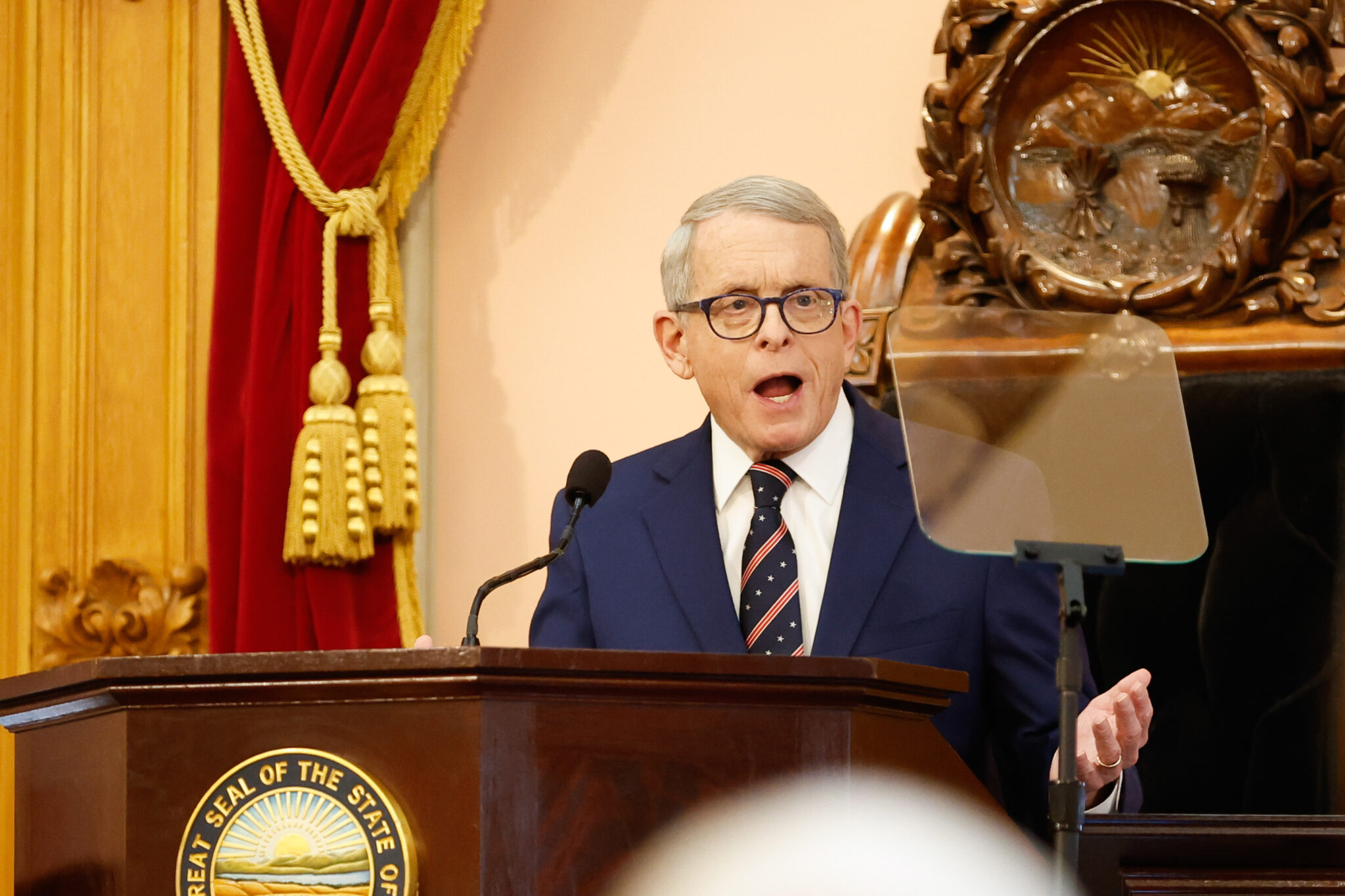
    In October 2019, as a battle raged over an attempt to repeal a $1.3 billion utility bailout, a FirstEnergy executive worked to keep the name of a senior aide to Gov. Mike DeWine off of a $10 million infusion of corporate cash into the fight. 

    The executive, Vice President Michael Dowling, did so even after an assistant told him it would violate IRS rules to not list the DeWine aide on the transaction, according to text messages presented Tuesday in the federal corruption trial of former Ohio House Speaker Larry Householder and lobbyist Matthew Borges. The men are accused of racketeering in a scheme to use $61 million from FirstEnergy in exchange for the massive bailout, most of which went to prop up the company’s failing nuclear and coal plants in order to make them attractive to buyers.

    DeWine has denied involvement in the arrangement even though he met with FirstEnergy executives and visited one of its nuclear plants in 2018 as he was seeking the governorship and FirstEnergy was lavishly funding Householder’s effort to elect sympathetic Republicans who would then vote to make him speaker. For his part, DeWine received $23,000 from the Akron-based utility for his campaign and his inaugural celebration, according to Ohio Citizen Action. He vowed to donate the money to charity following revelations of the scandal.

    The governor appointed as chairman of the Public Utility Commission of Ohio a former FirstEnergy consultant who was paid $4.3 million by the utility just before taking his seat on the commission. Even though he was supposed to be regulating the utility, the official, Sam Randazzo, played a role in writing the bailout legislation, according to documents released by the Ohio House. 

    In early 2019, DeWine also appointed FirstEnergy lobbyist Dan McCarthy to be his legislative affairs director, meaning McCarthy was in charge of representing DeWine’s interests before the General Assembly.

    In early 2017, while McCarthy was still working for FirstEnergy, Householder and his son, along with FirstEnergy CEO Chuck Jones and others, flew corporate jets to Washington, D.C. for fancy dinners and Donald Trump’s inaugural

    Just after that, McCarthy formed a 501(c)(4) group called Partners for Progress. Also known as a “dark money” group, it received $5 million from FirstEnergy within a few weeks of when McCarthy founded it.

    In an affidavit supporting Householder’s arrest, FBI Special Agent Blane Wetzel said Partners for Progress was “designed to conceal the nature, source, ownership, and control of the payments” from FirstEnergy and associated companies. Through the rest of 2018, McCarthy continued as president of Partners for Progress as it pumped FirstEnergy money into a Householder-controlled dark money group and funded the effort to make Householder speaker.

    The following year, McCarthy resigned that role to work for DeWine in the legislature as Householder shepherded the bailout legislation, House Bill 6. When a final version passed in July 2019, DeWine signed it the same day.

    But opponents quickly started a campaign to circulate petitions to put a repeal on the ballot. That prompted FirstEnergy to pump even greater sums into a “decline to sign” campaign aimed at thwarting the petitions.

    It funded xenophobic mailers and broadcast ads claiming without evidence that the repeal effort was a Chinese plot.

    “Who is knocking at your door?” began a mailer read in court Tuesday. “Foreign enemies have infiltrated our energy grid,” it added and said, ominously, that circulators of repeal petitions “are asking for your information.”

    In October 2019, executives with FirstEnergy and its generation-owning subsidiary seemed panicked that the repeal effort might succeed and they were planning to pump $10 million more into the effort to stop it — through Partners for Progress, the dark money group started by McCarthy, who was now a DeWine aide.

    Dowling, the FirstEnergy vice president, seemed to think it wouldn’t be a good look for the name of a DeWine official to show up on paperwork accompanying the huge transaction.

    “Please make sure Dan McCarthy’s name is not on the filing,” Dowling said in a text message to Partners for Progress Treasurer Michael Vanburen that was presented in court Tuesday.

    Vanburen replied that even though McCarthy was no longer president of the dark money group, IRS rules required that his name be on the filing. Dowling didn’t accept that.

    “There must be a creative way to handle this,” he said. “It’s important that (McCarthy’s) name not be listed.”

    Asked if DeWine asked that McCarthy’s name not be used in paperwork regarding the money transfers, Press Secretary Dan Tierney in an email said, “No. Dan McCarthy resigned from Partners for Progress in December 2018. Dowling’s comments, as you have relayed them to me, do not match the timeline of McCarthy’s affiliation with Partners for Progress.”

    DeWine seems to have been in touch with FirstEnergy executives around the time of the repeal effort. Later in October 2019, FirstEnergy CEO Jones texted Vice President Dowling to say, “DeWine’s on board. I talked to him on Wednesday.”

    According to Jones, they talked about whether the repeal HB 6 effort would gather enough valid signatures to get the measure on the ballot.

    “He said their valid rate was less than 30%,” Jones said of DeWine.

    For his part, Tierney said, “The Governor does not have any recollection of such a conversation.”

    In a later text conversation, Jones said he’d received similar assurances from Secretary of State Frank LaRose.

    After arrests were made in the House Bill 6 scandal, DeWine staunchly defended McCarthy and kept him in his administration for more than a year, until Sept. 24, 2021.

    “As far as I know, Dan McCarthy has been well-respected for many, many years, long before he started working for me as our legislative director and I have faith in his integrity,” DeWine said in early 2021 as questions about the role McCarthy’s dark money group played in the bribery and money laundering scandal continued.

    In another trial-related matter, U.S. District Judge Timothy Black on Tuesday said that he had released a second juror, this time for testing positive for COVID. An earlier juror had been released for refusing to wear a mask.

    That brings the number of alternate jurors to two for a trial that is expected to last into early March.

  • Corruption trial texts: OH AG Yost didn’t speak out against bailout because of utility support

    Corruption trial texts: OH AG Yost didn’t speak out against bailout because of utility support

    BY: MARTY SCHLADEN – Ohio Capital Journal

    CINCINNATI — In June of 2019, Ohio Attorney General Dave Yost thought a proposed utility bailout was a bad law, but he didn’t publicly oppose it because of support he’d received from the bailout’s primary beneficiary, FirstEnergy, according to lobbyists’ text messages displayed in court on Friday.

    Prosecutors displayed the messages as part of the racketeering trial of former House Speaker Larry Householder and Matt Borges, a former Ohio Republican Party Chairman who was acting as a lobbyist at the time the utility bailout was debated and passed. They are accused in a scheme to use $61 million to make Householder speaker in 2019 so he could pass and protect a $1.3 billion bailout that mostly went to protect FirstEnergy’s failing nuclear and coal plants.

    At the time of the men’s July 2020 arrest, federal prosecutors said it was likely the biggest bribery and money laundering scheme in Ohio history. Two months later, as he announced a civil suit against FirstEnergy, Yost echoed those sentiments.

    “Corruption doesn’t happen on an industrial scale like this without cash,” he said in a press conference. “And it’s incredibly important at this moment in our state’s history to send a message that the Ohio political system, the Ohio law-making system, the regulatory environment is not for sale. If you shut off the money spigot, the corruption withers.”

    But behind the scenes 15 months earlier — according to text messages between Borges and lobbyist Juan Cespedes — Yost was pulling his punches on the bailout. Borges said Yost was doing so partly because of $24,000 he received from FirstEnergy and Borges in the cycle leading up to the 2018 election and the subsequent legislative session during which the bailout was passed. 

    Cespedes has pleaded guilty in the scandal and is expected to testify soon in the Householder trial.

    After the scandal broke, Yost announced that he would donate his FirstEnergy-related contributions to charity

    But according to Borges, who had run earlier campaigns for Yost, the FirstEnergy money spigot helped guide the attorney general’s conduct as the bailout was making its way through the legislature. Text messages indicate that Borges was assigned to try to enlist Yost’s help with the bailout.

    The legislation, House Bill 6, passed the Ohio House on May 29, 2019, and by the time of the June 26, 2019, text conversation between Borges and Cespedes, opposition to the bailout was growing as it was being debated in the Senate.

    One source of opposition was from outside groups that were planning a ballot initiative to repeal HB 6 if it passed. Borges and Cespedes discussed trying to make it exempt from repeal by treating it as a revenue bill and calling it a tax — based on a $1 subsidy built into the measure. 

    Cespedes asked Borges what the attorney general thought.

    “He’s sympathetic, but he wants to go back and look at the law,” Borges replied.

    As they discussed the matter further, Borges said “Don’t repeat this,” but Yost believed the bailout was a bad law.

    Yost “‘would be out front (in opposition) if not for (FirstEnergy) support and your involvement,’” Borges quoted Yost as saying.

    As attorney general, Yost also would have to approve any repeal language before it went on the ballot. The AG also wanted to help with that if he could, Borges said.

    “If there’s any way the law will allow him to reject the language, he will do it,” Borges texted.

    Yost has been subpoenaed in the case, and his spokeswoman on Friday declined to comment on the text messages.

    “He was subpoenaed to potentially be a witness in this case,” the spokeswoman, Bethany McCorkle, said in an email. “At this time it is inappropriate for him to comment.”

  • Fate of former Ohio House speaker could hinge on whether he took an “official act”

    Fate of former Ohio House speaker could hinge on whether he took an “official act”

    Larry Householder addresses reporters after lawmakers voted to expel him from the General Assembly. He has pleaded not guilty to a racketeering charge and awaits trial. Photo by Jake Zuckerman, OCJ.

    BY: MARTY SCHLADEN – Ohio Capital Journal

    It appears that federal prosecutors have a mountain of evidence they want to present to the jury in their racketeering case against former Ohio House Speaker Larry Householder and former Ohio GOP Chairman Matt Borges. 

    They have emails, text messages, wiretap transcripts, and the testimony of undercover agents and confidential informants. They have so much material that U.S. District Judge Timothy Black said prosecutors and defense attorneys labored mightily before the trial even started to agree on what could be presented to the jury. The process was meant to avoid bogging down what’s already expected to be a six-week ordeal.

    But all that evidence could miss the mark if none of it shows that Householder undertook an “official act” in exchange for all the millions Akron-based FirstEnergy funneled into 501(c)(4) dark money groups to support the effort to elect friendly Republicans who would vote to make Householder speaker. The U.S. Supreme Court overturned a public corruption conviction on that basis just six years ago.

    Householder is accused of masterminding a conspiracy to use $61 million from FirstEnergy and other utilities to make himself speaker and in return ramming through a $1.3 billion ratepayer bailout of failing nuclear and coal plants. His trial began last week, but after two days of testimony it was delayed — first because of weather and then because a juror was diagnosed with COVID.

    But last week, FBI Special Agent Blane Wetzel testified about conduct that made both Householder and FirstEnergy look pretty bad.

    Householder is accused of using about $500,000 from the dark money groups to pay off credit card debt, settle a lawsuit, and repair a Florida home. Meanwhile, FirstEnergy was losing so much money on its nuclear and coal plants that in 2016 it started the process that would send the subsidiary that owned them into bankruptcy.

    But even as the company and Householder were swimming in red ink, he and the company’s CEO flew to Washington, D.C., on private jets in January 2017 for three days of dinners and drinks at some of the city’s swankiest bars and restaurants, Wetzel said. 

    Within two weeks, FirstEnergy money was flowing into Householder-controlled dark-money accounts. In November of 2018, enough Householder-friendly Republicans were elected — many with the help of money from those accounts — to make him speaker the following January. Less than six months later, on May 28, 2019, the House passed its first version of the billion-dollar bailout, House Bill 6. The body passed a final version on July 23, 2019 and Gov. Mike DeWine signed it the same day.

    When former U.S. Attorney David M. DeVillers announced Householder’s arrest almost exactly a year later, he called the scheme with FirstEnergy “likely the largest bribery and money-laundering scheme ever in the state of Ohio.”

    But did Householder undertake an official act in exchange for money corruptly received from FirstEnergy and other Ohio utilities? The answer might not be as straightforward as you think.

    For their part, Householder’s attorneys are arguing that their client was merely raising money like any effective politician would and that he only wanted to subsidize the power plants to save Ohio jobs and the tax bases of school districts.

    In addition, the Supreme Court in 2016 threw out the conviction of former Virginia Gov. Bob McDonnell even though he and his wife took more than $170,000 worth of loans and gifts from a businessman in exchange for hosting him at functions, recommending his product to state agencies, and trying to persuade state universities to study it.

    At issue was whether any of those were “official acts.”

    In that case, Jonnie Williams, CEO of Star Scientific, supported the Virginia Republican’s successful 2009 campaign. Once in office, the gifts really started to flow — including $20,000 worth of designer clothing for McDonnell’s wife, Maureen McDonnell, and a Rolex watch that Maureen gave Bob for Christmas.

    Williams was peddling a compound found in tobacco as a nutritional supplement called Anatabloc. In 2011, the McDonnells hosted an event at the Governor’s Mansion that Williams testified was intended to launch the product. He wanted scientists at the state’s universities to research it, but neither he nor the McDonnells could interest them in the supplement.

    The governor also told the state secretary of administration and the director of the Virginia Department of Human Resources that it would be a good idea for all state employees to take Anatabloc like he was. The officials apparently didn’t take the hint. 

    Investigators caught wind of the McDonnells’ arrangement with Williams and charged them with numerous crimes related to bribery.

    In 2014, they were convicted in federal court and Bob and Maureen were sentenced to two and one year in prison, respectively. They appealed, but the 4th U.S. Circuit Court of Appeals in Richmond upheld the conviction.

    However, when the case made it north to the U.S. Supreme Court, in Washington, D.C., it was overturned. Unanimously.

    Chief Justice John Roberts, the author of the ruling, said that the court took up the case expressly “to clarify the meaning of ‘official act.’” 

    In his trial, “Governor McDonnell had requested the court to further instruct the jury that the ‘fact that an activity is a routine activity, or a ‘settled practice,’ of an office-holder does not alone make it an ‘official act,’ and that ‘merely arranging a meeting, attending an event, hosting a reception, or making a speech are not, standing alone, ‘official acts,’ even if they are settled practices of the official,’ because they ‘are not decisions on matters pending before the government.’” Roberts wrote.

    Instead, McDonnell’s lawyers argued, an official act must be intended to “influence a specific official decision the government actually makes — such as awarding a contract, hiring a government employee, issuing a license, passing a law, or implementing a regulation.”

    In overturning the convictions, the high court agreed, ruling that the McDonnells could still be prosecuted, but the “Government must identify a ‘question, matter, cause, suit, proceeding or controversy’ that ‘may at any time be pending’ or ‘may by law be brought’ before a public official. Second, the Government must prove that the public official made a decision or took an action ‘on’ that question, matter, cause, suit, proceeding, or controversy, or agreed to do so.”

    How much comfort Householder should take from the ruling is uncertain, however. Roberts ended the ruling with what seems to be a warning to politicians thinking of doing shady stuff.

    “There is no doubt that this case is distasteful; it may be worse than that,” he wrote. “But our concern is not with tawdry tales of Ferraris, Rolexes, and ball gowns. It is instead with the broader legal implications of the Government’s boundless interpretation of the federal bribery statute. A more limited interpretation of the term ‘official act’ leaves ample room for prosecuting corruption, while comporting with the text of the statute and the precedent of this Court.”

  • Corruption trial delayed by COVID

    Corruption trial delayed by COVID

    Former Ohio House speaker Larry Householder arrives for day two of his racketeering trial. Photo by Morgan Trau, WEWS.

    BY: MARTY SCHLADEN – Ohio Capital Journal

    CINCINNATI — A federal court trial over allegations of epic public corruption has been interrupted at least until Monday after a juror was diagnosed with COVID on Wednesday.

    “The Court was advised this afternoon that a juror has tested positive for COVID-19,” U.S. District Judge Timothy Black wrote in an order Wednesday evening. “In an effort to ensure everyone’s safety, jury trial will not convene for the duration of the week. The recess is CONTINUED until Monday, 1/30/2023 at 9:30 a.m.”

    In the trial, former Ohio House Speaker Larry Householder and lobbyist Matt Borges are accused of racketeering. 

    Householder is accused of masterminding a scheme in which $61 million — mostly from Akron-based FirstEnergy — was used to help elect Republican lawmakers who would make Householder speaker in 2019. In exchange, prosecutors say, Householder shepherded through a $1.3 billion utility bailout package and then protected it from a ballot initiative intended to repeal the measure.

    Borges is accused of acting corruptly in the successful effort to block the repeal.

    The great majority of the ratepayer money was intended to prop up two failing nuclear plants in Northern Ohio owned by FirstEnergy subsidiary FirstEnergy Services. Some went to “recession proof” coal-fired plants owned by the subsidiary that FirstEnergy management regarded as unsellable. 

    Even though the law was billed as a “clean air” measure, the rest of the package went to subsidize coal plants owned by utilities other than FirstEnergy — including a plant that’s not even in Ohio. Of the three tranches of subsidies, that is the only one that’s still in effect after FirstEnergy entered into a deferred-prosecution agreement.

  • Texts, calendars, emails link DeWine to FirstEnergy’s bribery scandal

    Texts, calendars, emails link DeWine to FirstEnergy’s bribery scandal

    BY: JAKE ZUCKERMAN – Ohio Capital Journal

    Gov. Mike DeWine and his administration played a hands-on role passing an allegedly pay-for-play nuclear bailout and appointing an industry-friendly regulator who has since been accused of taking a $4.3 million bribe, documents and messages show.

    Calendar records show DeWine, a Republican, met repeatedly to discuss energy policy with FirstEnergy Corp. officials and at least once with GOP House Speaker Larry Householder, who has been criminally accused of taking a separate, multimillion-dollar bribe from the company to pass the bailout.

    Despite a cautionary letter from environmental groups and a 198-page dossier from his former campaign staffer warning against the move, DeWine appointed Sam Randazzo in 2019 to the head of the Public Utilities Commission of Ohio. FirstEnergy last summer admitted it paid Randazzo a $4.3 million bribe. Randazzo has not been charged with a crime and denies wrongdoing.

    Newly released text messages show FirstEnergy executives describing an open line with the administration on the selection and inside support from Ohio’s chief executive.

    “When the Gov Elect asked me about attributes, I listed integrity, work ethic, creativity, thick skin, circumspection in public statements,” FirstEnergy’s then CEO texted Randazzo about the open PUCO seat in December 2018, just before DeWine took office.

    “You fit all of those.”

     Former FirstEnergy CEO Charles “Chuck” Jones. Source: FirstEnergy, via Flickr

    In one text, FirstEnergy executive Mike Dowling credits DeWine and Lt. Gov. Jon Husted with performing “battlefield triage” to save Randazzo’s appointment before a key vote. Both DeWine and Husted have previously denied that a redacted version of the text message that appeared in criminal documents referred to them.

    Federal prosecutors accused House Speaker Larry Householder of secretly controlling a nonprofit that took $60 million from FirstEnergy. He allegedly used the money to enrich himself personally and politically and to ensure the passage of House Bill 6, which provided a massive bailout to two nuclear plants owned at the time by FirstEnergy. Householder was charged with racketeering and awaits trial. Two alleged conspirators pleaded guilty.

    FirstEnergy admitted last summer to the $60 million payment as well as a separate $4.3 million bribe to Randazzo just before he started as Ohio’s top utility regulator. The payment topped off $22 million in consulting fees to Randazzo since 2010 from the company.

    Court documents from prosecutors reveal no focus on DeWine, who has not been charged with any crime. However, a review of records turned over in subpoenas, public records requests for his official calendars by the Energy and Policy Institute, text messages attached to regulatory filings, and others show DeWine and his staff repeatedly influencing and shepherding HB 6 into law.

    On the campaign trail in July 2018, DeWine visited one of the nuclear plants that would receive a bailout, his official calendar shows. A month later, he met with FirstEnergy executives at their Akron headquarters. In October of that year, DeWine met with FirstEnergy at a fundraiser for Republican governors.

    FirstEnergy contributed about $1 million in total to DeWine’s campaign, political organizations supporting it, and to another nonprofit supporting his daughter’s campaign for county prosecutor, according to the Dayton Daily News.

    After winning a close race, DeWine, Husted, Jones and Dowling celebrated over dinner at The Athletic Club in Columbus. The next day, Jones sent Randazzo the text message (above) indicating they discussed the open PUCO seat.

    In January of 2019, the FirstEnergy officials texted one another trying to fill not just one but two open PUCO seats, all the while mentioning phone calls with “DeWine guys” about it.

    “That’s their plan but nothing certain until Sam’s [Randazzo’s] meeting [with DeWine],” Jones texted Dowling. “Four people in DeWine world, you, Sam, and I know about this.” The PUCO seats would eventually be filled by Randazzo with another commissioner renewed.

    Dowling relayed to the other two men a message from Josh Rubin — a DeWine 2018 campaign adviser and a FirstEnergy lobbyist. He said once Randazzo takes office, DeWine will “lean on him on everything.”

    Several texts focus on HB 6. The bill (and eventual law) would bail out FirstEnergy’s nuclear plants, subsidize two coal plants owned by other Ohio utility companies, and create a “decoupling” mechanism that effectively put ratepayers on the hook to guarantee certain revenue streams of FirstEnergy’s. Prosecutors estimate the bill as worth about $1.3 billion to the company.

    Two days before the bill was introduced, DeWine’s calendar shows a slot for an “Energy Discussion” at the governor’s residence. Later that month, after the bill was repeatedly criticized during an opponent testimony hearing at the statehouse, DeWine, Husted, Randazzo and various staffers all met up at 5 p.m. for what the governor’s calendar calls a “Nuclear Bailout Bill Discussion.”

    Over the next month, DeWine’s calendars show two entries for energy policy meetings, plus a call with Householder about HB 6, and another call on the bill.

    On June 9, 2019, DeWine showed signs of wavering.

    “Sam, what do we know about whether nuclear plants need this boost?” DeWine, using his personal email, wrote to Randazzo. “One editorial suggested testimony was not conclusive.”

    Dowling paid a visit to the governor’s residence the next day. Randazzo responded to DeWine’s email on June 11, casting doubt on the studies referenced in the editorials.

    On July 1, Dowling texted Jones.

    “Just had a long conversation with JHusted just now,” he said, going on to explain that Husted sought to extend the length of the bailout. “All is well.”

    Court records contain another text from Jones stating that “State Official 2,” later confirmed to be Husted, joined with others in “fighting to the end” for a beefier bailout.

    After a long slog, lawmakers passed HB 6 on July 23, 2019. DeWine signed it into law mere hours later.

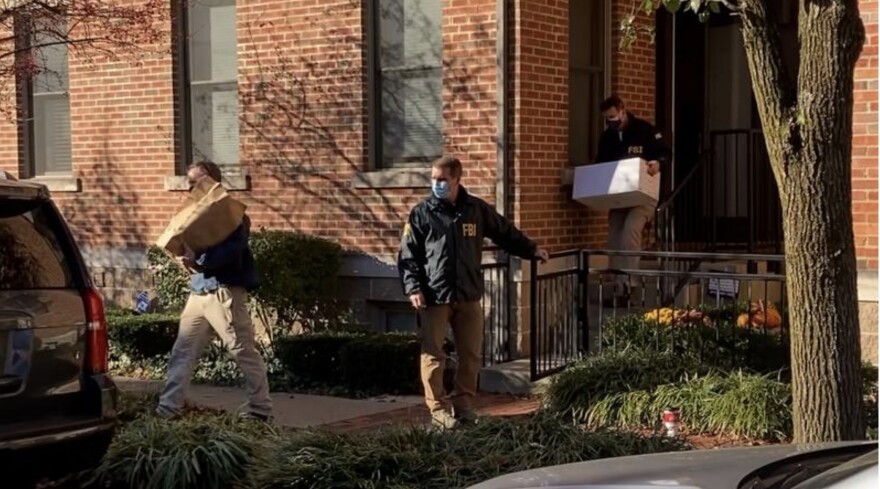
     FBI agents remove boxes of materials from PUCO Chairman Sam Randazzo’s condo in Columbus Nov. 17, 2020. Photo courtesy of Daniel Konik/Statehouse News Bureau.

    Loyalty to staff and HB 6

    As the FBI made its first arrests, DeWine began a pattern of defending HB 6 on the merits and showing unflinching loyalty to his staffers, some of whom have ties to FirstEnergy.

    Householder, his political strategist, a prominent GOP lobbyist, and two FirstEnergy lobbyists were arrested and charged with racketeering in connection with HB 6 on July 21, 2020. The next day, DeWine stood by the law he signed.

    “Because people did bad things does not mean that the policy is not a good policy,” he said.

    He reversed himself the next day and called for a repeal of the bill.

    In October, FirstEnergy fired Jones, Dowling, and fellow executive Dennis Chack as it waged an internal investigation. The company fired another two executives days later “due to inaction and conduct that the Board determined was influenced by the improper tone at the top.”

    At this point, the public remained unaware of the multimillion-dollar financial arrangement between the embattled FirstEnergy and Randazzo. However, on Nov. 16, 2020, FBI agents were seen raiding Randazzo’s condo and removing boxes of material from inside. The next day, FirstEnergy submitted a little-noticed securities filing outlining the $4.3 million payment.

    Despite the images of FBI agents entering Randazzo’s condo, DeWine publicly defended his appointee.

    “We have no indication he’s under investigation or he’s the target of an investigation. We’ll wait until we find additional facts,” he said in a Nov. 17, 2020 news conference. “Look, the FBI many times will indicate if someone is a target. They have not indicated he’s a target. I have no reason to think he’s a target. I don’t know. So, we’re waiting for additional information, quite candidly. I hired him. I think he’s a good person. If there is evidence to the contrary, then we’ll act accordingly, but not going to act without facts.”

    Randazzo would resign three days after that statement.

    Mid-summer 2021, FirstEnergy signed a deferred prosecution agreement with the U.S. Department of Justice. The company agreed to pay a $230 million penalty and cooperate with investigators to avert a charge of honest services wire fraud.

    The agreement contained a lengthy set of facts from the company, stating it paid the $64 million in bribes in exchange for official action from Householder and Randazzo.

    Days after the agreement was announced, DeWine held a press conference on anti-hazing legislation. Reporters asked questions afterward about the agreement, including a line that refers to “State Official 1” and “State Official 2” lobbying to ensure Randazzo’s appointment. DeWine said he’s “not aware” of anyone in his administration, including himself, appearing in the document. Husted, in a statement, said he too “does not believe” he’s referenced in the document.

    Texts obtained by the Ohio Consumers’ Counsel from FirstEnergy and attached to a regulatory filing contain the unredacted version of the text, identifying DeWine and Husted by name.

    In 2017, a lobbyist named Dan McCarthy created a nonprofit entity called Partners for Progress to engage in “advocacy in support of nuclear power,” tax records show. FirstEnergy would later admit to paying $25 million to Partners for Progress, some $15 million of which went to Householder’s nonprofit.

    DeWine hired McCarthy as his legislative director in 2019, around the time McCarthy stepped down from the organization’s board. In February 2021, after media reports identified McCarthy’s role with Partners for Progress, DeWine defended McCarthy.

    “As far as I know, Dan McCarthy has been well-respected for many, many years, long before he started working for me as our legislative director, and I have faith in his integrity,” DeWine said.

    McCarthy resigned in September 2021.

    DeWine response

    In a phone interview, DeWine spokesman Dan Tierney said the OCC-obtained text messages and meetings listed by the Ohio Capital Journal contain no new information.

    The texts, he said, in fact show the lack of a role from DeWine and Husted within the scandal. He said prosecutors have not subpoenaed him or any of his employees.

    “This all along has been a Larry Householder scandal and a FirstEnergy scandal,” he said.

    When asked whether DeWine, a former prosecutor and attorney general, detected any sense of impropriety during all his contacts with Householder and FirstEnergy leading up to the passage of House Bill 6, he declined comment.

    Husted offered a similar comment through a spokeswoman, stating that “there is nothing new here” in the texts, emails and meetings.

    “This kind of advocacy is well within his responsibilities as a public official, and, as we know, the bill was ultimately passed with bipartisan support,” he said.

  • Judge scolds former GOP chairman, forbids him from intimidating whistleblower

    Judge scolds former GOP chairman, forbids him from intimidating whistleblower

    Photo by Getty Images.

    BY: JAKE ZUCKERMAN Ohio Capital Journal

    A federal judge lambasted a suspect in a criminal public corruption case for posting a FBI informant’s social security number and address on the internet.

    U.S. District Judge Timothy Black said he finds it “entirely incredible” that lobbyist and former GOP Chairman Matt Borges accidentally posted the information of the whistleblower online, as Borges claimed.

    “Indeed, page 3 of the file alone includes [the informant’s] name, address, phone number, spouse’s name, spouse’s phone number, and [the informant’s] social security number, all of which are listed in large, bold font, at the very top of the page,” Black said, using the visual emphasis in his court order.

    “It is virtually impossible for anyone to scroll through the file and not see that it contains unredacted personal identifiers.”

    Federal prosecutors have accused Borges of participating in a scheme alongside former GOP House Speaker Larry Householder and three others to take $60 million from FirstEnergy Corp. and enrich themselves while ensuring passage of favorable legislation for the company.

    FirstEnergy has since admitted to giving $60 million to a nonprofit secretly controlled by Householder in exchange for his help passing House Bill 6 in 2019. Borges allegedly used $15,000 of the money to bribe a political operative for inside information about a campaign to overturn the recently-passed legislation via a ballot referendum.

    Borges worked as a lobbyist for a FirstEnergy subsidiary at the time, with deep Republican connections from his time running the state party.

    Prosecutors asked Black earlier this week to modify the conditions of Borges’ bond. They said an FBI agent noticed in June that Borges posted the informant’s employment file online, including his tax documents and photocopies of his social security card and driver’s license. They requested the judge block Borges from posting the information in a continued effort to intimidate a witness.

    In charging documents, the informant was not personally identified. However, consultant Tyler Fehrman has since acknowledged he’s the unnamed whistleblower in media reports.

    Prosecutors called Borges’ actions an “attempt to intimidate and retaliate against” the informant. They requested Black forbid him from posting Fehrman’s sensitive information online.

    Attorneys for Borges said he obtained the employment file via public records request and sharing the personal identifying information online was “inadvertent.”

    Black sided with prosecutors. Besides the financial risks of posting a social security number online, he said, “financial harm is by no means the most severe consequence that could result from publicly exposing and disparaging a confidential government source.”

    According to the prosecution, Borges told Fehrman that if he provided inside information from the campaign, Borges would give him a job or money to pay off his debts. Fehrman —who managed field workers soliciting signatures to put the repeal on the ballot — covertly recorded the conversation.

    “Borges further indicated that others are getting ‘fat’ off the HB 6 issue, so they might as well benefit, too,” prosecutors alleged in court filings.

     Screenshot of a text prosecutors say they obtained from Matt Borges.

    Fehrman declined the bribe, according to prosecutors. Borges, in a text message, responses with an order to “No matter what — don’t ever tell anyone about our conversation from earlier.” At the behest of FBI officers, Fehrman went on to accept the bribes and provide information to Borges, who allegedly shared information with others involved in protecting the newly passed HB 6.

    The file containing Fehrman’s information appeared on a website Borges created to raise funds for his legal defense. Borges, on the site, accuses the prosecutors of running a “politically motivated” prosecution and claims he told the prosecutors to “go f*ck themselves” when offered a plea deal.

  • Utility regulator accused of taking a bribe helped write bill targeting watchdog

    Utility regulator accused of taking a bribe helped write bill targeting watchdog

    FBI agents remove boxes of materials from PUCO Chairman Sam Randazzo’s condo in Columbus Nov. 17, 2020. Photo courtesy of Daniel Konik/Statehouse News Bureau.

    BY: JAKE ZUCKERMAN Ohio Capital Journal

    Ohio’s former top utility regulator, who was accused of taking a $4.3 million bribe, quietly spent months helping write a sweeping energy bill that targeted a state watchdog agency that advocates for Ohio’s residential electric customers, records show.

    Emails that the Public Utilities Commission of Ohio gave in response to two FBI subpoenas show its former chairman, Sam Randazzo, conferred with the bill sponsor and helped draft legislative language. The bill would have limited the reach of the Ohio Consumers’ Counsel and given often-hostile state legislators control of its board.

    The OCC appears at PUCO cases and advocates for residential ratepayers’ interests, which often run counter to those of investor-owned utility companies and industrial-scale energy customers. The agency’s efforts have led to millions in refunds to consumers, including $306 million from FirstEnergy Corp. last year to settle a lawsuit against the company for charging an unlawful profit margin on its customers.

    Akron-based FirstEnergy told prosecutors last summer that it paid a business owned by Randazzo $4.3 million before his 2019 appointment in exchange for “official actions.” The company also said it gave a nonprofit secretly controlled by then-GOP House Speaker Larry Householder $60 million to help pass House Bill 6 — energy legislation worth an estimated $1.3 billion to FirstEnergy. Householder has pleaded not guilty and awaits trial. Randazzo has not been charged with a crime.

    Records released earlier this year showed some of Randazzo’s behind-the-scenes lobbying work on HB 6. The records released last week show his influence spanned further.

    In May 2020, Rep. Nino Vitale, R-Urbana, introduced the text of House Bill 246. The bill would have narrowed the scope of cases the OCC can join and subject the agency to “any reasonable conditions that the commission deems necessary to avoid duplication, repetition or delay.” It also gives state lawmakers appointment power over six of nine seats on the OCC’s board.

    The legislation contained a sweep of other changes as well, including creating new ways for utilities to set their prices, modifying setback rules for wind farms, and allowing the Ohio Power Siting Board to create new setback requirements for solar energy sites.

    In the six months before Vitale unveiled the bill, Randazzo and PUCO staff met with Vitale, drafted elements of the legislation, and helped edit Vitale’s introductory testimony to lawmakers, the subpoenaed emails show. The emails don’t show Randazzo addressing the OCC provisions directly. But in a statement through his attorney, Randazzo equivocated when asked if he drafted or advised on the section.

    “If so but having no recollection of either writing or advising any such language, it would only have been as the result of a request from the legislature,” he said. “It is likely that the utilities had input.”

     Sam Randazzo, then a private sector attorney, testifies before the PUCO in March 2018. Source: The Ohio Channel.

    The PUCO released the emails after the Ohio Capital Journal filed a public records request and an eventual lawsuit seeking them.

    Around Thanksgiving of 2019, Randazzo asked to meet with Maura McClelland, a policy adviser and attorney at the PUCO, to meet and discuss the language of the bill’s “ratemaking piece.”

    HB 246 created a new option for utilities to set prices called “alternative rate plans.” According to nonpartisan analysts with the state Legislative Service Commission, the plans can take into account aspects of fair energy pricing that the current model misses like efforts for energy efficiency or cash flow problems from the companies.

    “In general, alternative rate plans could lead to higher prices paid by ratepayers,” the LSC analysts wrote. “But presumably, PUCO would only approve those higher costs after examining aggregate effects in accomplishing its policy objectives.”

    HB 246 would also allow the PUCO to consolidate parties that it determines have “sufficiently common interests” to speed up cases.

    In a memorandum opposing the bill, the Ohio Manufacturers’ Association said the legislation would block its members from meaningful participation at the PUCO. The manufacturers argued the bill in several areas consistently gives utilities the upper hand over their customers, especially via the ratemaking proposal.

    “The bill is opaque and no clear reasoning exists for why its proposed changes are needed,” the memorandum states.

    Roger Sugarman, an attorney representing Randazzo, said via email that neither Randazzo nor the PUCO were the driving force behind the bill. He said he couldn’t determine if the LSC’s analysis is correct without more details.

    “Without knowing what type of alternative rate plan, or the object of your question and the statutory conditions required to secure PUCO approval, it is not possible to evaluate the LSC analysis,” he said. “In general, rate applications filed by utilities, whether alternative or traditional, lead to higher rates; the question is usually about how much higher.”

    He said some pieces of the bill wouldn’t have affected much change versus current law. Plus, the bill all but died after its first hearing. Randazzo’s time “was occupied by more pressing and important things than HB 246.”

    FBI agents arrested Householder and charged him with racketeering in June 2020. He awaits trial. Agents raided Randazzo’s condo months later. In July 2021, FirstEnergy signed a deferred prosecution agreement with the U.S. Department of Justice. It agreed to pay a $230 million penalty and cooperate with the ongoing investigation into HB 6 to possibly avert a charge of wire fraud.

    In a statement of facts paired with the agreement, FirstEnergy said it paid companies controlled by Randazzo $4.3 million in exchange for official action. The company said it hired Randazzo as a consultant and paid him a total of about $22 million since 2010.

    Before starting in state government, Randazzo represented industrial scale energy users before the PUCO. He spent years fighting against Ohio energy policies that forced utilities to include more renewable energy in their mixes or make their customers’ homes more energy efficient. He also represented subsidiaries of both CenterPoint Energy and Dominion Energy as a lobbyist, as well as a group of citizens opposing a wind farm in Huron County.

    Vitale drew significant media attention via outrageous claims including that Bill Gates invented the novel coronavirus or that Gov. Mike DeWine was bringing “FEMA Concentration Camps” to Ohio in relation to the pandemic. (Randazzo said his position on COVID “pulled in a very direction” than Vitale’s.)

    Vitale also, perhaps more subtly, helped guide HB 6 from legislation to law. He co-sponsored the bill and chaired the House Energy and Natural Resources committee that reviewed it. He first won office with $7,700 in financial backing from Householder’s campaign committee. He voted for HB 6 in 2019 and against repealing it after Householder’s arrest. He was one of 21 lawmakers who voted against expelling Householder from office.

    Vitale didn’t respond to a phone call or emails to his personal and official accounts.

     State Rep. Nino Vitale, R-Urbana. Photo from Ohio House website.

    “As you all know, anyone can be indicted for anything. Anything,” he said in a floor speech last year defending Householder.

    “However, that person deserves to go in front of a jury of their peers and prove their case. They might be guilty, they might not … That’s what makes us different from a communist country.”

    Federal prosecutors alleged that Householder secretly controlled a nonprofit organization that received $60 million from FirstEnergy. He used the money to elect a slate of candidates who would vote him into the House Speaker’s office and in turn support HB 6. He’s also accused of spending the money for personal use. Two alleged conspirators, including Householder’s former political adviser, have pleaded guilty.

    When the anti-OCC bill dropped, few knew or suspected of either Randazzo’s financial ties with FirstEnergy or his lobbying work on the bill. However, after Householder’s arrest and the raid on Randazzo’s home, some raised interest in ensuring the bill’s quick death.

    “This bill is a danger to anyone in Ohio who pays a utility bill and it remains on the Ohio House docket as a direct attack on the OCC and all Ohio residential utility customers,” wrote former Democratic State Senator Leigh Herington in a November 2020 op-ed in the Columbus Dispatch.

    He suggested the legislation was simple retaliation for the OCC’s opposition to House Bill 6 and another bill that allows FirstEnergy a more favorable accounting formula to determine if its collections from customers are “significantly excessive.” (The OCJ previously reported Randazzo lobbied on that legislation as well.)

    Utility companies spend big and wield considerable sway in Ohio politics. As Herington noted, the OCC has seen its size dwindle over the years. Its budget dropped from $9.3 million in 2011 to $5.5 million in 2020.

    The OCC also suggested the bill was retaliatory in nature due to its opposition to HB 6. Vitale’s bill, the agency said in a resolution, would “weaken the independence” of the board as well as its “utility watchdog role.”

    A PUCO spokesman said the emails only show the PUCO working on language related to the agency and the state Power Siting Board. He said he didn’t know why Randazzo and Vitale communicated through personal email accounts.

    “The PUCO does not take a position on proposed legislation,” he said. “We will always be responsive to inquiries from members of the General Assembly as they go through the legislative process.”

  • Utility regulators block watchdog’s requests for info about a buried audit of a $460 million fund

    Utility regulators block watchdog’s requests for info about a buried audit of a $460 million fund

    Photo by Getty Images.

    BY: JAKE ZUCKERMAN – Ohio Capital Journal

    An administrative judge blocked a watchdog’s attempt to obtain an audit that the Ohio utility regulatory agency’s former chairman, who has been accused of taking a $4.3 million bribe, allegedly tried to squash before publication.

    The ruling, released Friday evening, is a setback for the Ohio Consumers’ Counsel, a state funded agency representing residential ratepayers in utility cases. The OCC has pushed for investigations of FirstEnergy, especially since the company admitted to playing a central role in a massive public corruption scandal.

    The OCC asked the Public Utilities Commission of Ohio to grant it a subpoena to obtain a copy of any draft audit into a $458 million charge from FirstEnergy that started in 2017 collected called the “Distribution Modernization Rider.” The OCC also sought to depose an auditor who worked on report.

    The Ohio Supreme Court blocked FirstEnergy from continuing to charge customers for the DMR, two years after it was first applied on monthly bills. The court said the PUCO unlawfully failed to ensure the money is actually spent on modernizing the grid. A subsequent PUCO investigation was inconclusive as to whether the DMR monies were used to fund the bribery operations.

    The Supreme Court’s order questioned the value of leaving intact the audit when it overturned the rider, finding the reviews fail to properly protect ratepayers from the “possible misuse of DMR funds.” Additionally, the justices reasoned that any findings of misuse of the funds would be moot given the court had already blocked the charge and a state law blocked the court from ordering refunds unless PUCO explicitly allows for them, which it did not. The PUCO later nixed the audit, citing the court’s thinking.

    The OCC has previously obtained a text message from FirstEnergy’s CEO referencing former PUCO Chairman Sam Randazzo “burning the DMR final report.”

    The text partially came to light when FirstEnergy entered into a deferred prosecution agreement with the U.S. Department of Justice to possibly avert a charge of wire fraud. The company agreed to pay a $230 million penalty. It also admitted to paying Randazzo $22 million over nine years, including $4.3 million just before he started as PUCO chairman. The company also admitted to a separate $60 million bribery scheme ran through the state Legislature to pass House Bill 6 in 2019.

    Randazzo has not been charged with a crime and has maintained his innocence. The PUCO has received two subpoenas in connection with the investigation.

    PUCO Attorney Examiner Gregory Price denied both the OCC’s requests. He said the facts are clear that no such draft report exists in any form. Additionally, the question of FirstEnergy’s political spending is being “thoroughly addressed” in other PUCO cases.

    Price ruled OCC’s reliance on the Randazzo text shows its “obvious interest in investigating potential wrongdoing” as opposed to matters it “actually has jurisdiction over.”

    In December 2020, about two months after federal agents raided Randazzo’s home, the PUCO opted to resume the audit into the DMR. However, this time it hired Daymark Energy Advisors. That audit, released earlier this year, was inconclusive as to whether the DMR funds were used to fund the HB 6 campaign. FirstEnergy, the auditors said, pooled funds from all its 11 utilities in one pot, creating an “inability” for the auditors to track the funds.

    Price, however, said the final report “appears to fully address whether [FirstEnergy] properly expended the DMR funds.”

    In records the PUCO provided to federal prosecutors, Price is copied onto email threads regarding policy meetings before and after the passage of House Bill 6. As was first reported by Cleveland.com, one email shows Price was invited to one such meeting days before the House passed the bill.

    Other investigations into FirstEnergy, Randazzo and other alleged conspirators continue. Former House Speaker Larry Householder is expected to stand trial on a racketeering charge in connection with the scandal this fall. He recently asked a court to dismiss the charge against him. That motion has not yet received a ruling.

    Meanwhile, FirstEnergy shareholders have filed a class action lawsuit against the company as well.

  • Ratepayers spent $166 million and counting bailing out coal plants under law that passed via bribes

    Ratepayers spent $166 million and counting bailing out coal plants under law that passed via bribes

    BY: JAKE ZUCKERMAN and Ohio Capital Journal

    Despite several plea deals with federal prosecutors regarding bribery on a massive scale to pass legislation providing a windfall to nuclear and coal companies, Ohio utility customers continue to fund bailouts of failing coal-fired power plants in Ohio and Indiana.

    In the first half of 2021, Ohio utility customers paid $51 million to subsidize the plants, which are jointly owned by Ohio utility companies like American Electric Power, Duke Energy, AES Ohio and others. That’s on top of the $115 million ratepayers paid last year, according to data from state utility regulators.

    Sen. Mark Romanchuk, R-Ontario, has spearheaded efforts within the GOP on a piece-by-piece strategy to repeal the remnants of House Bill 6, which codified the coal bailout through 2030.

    HB 6 passed via the muscle of $61 million that utility giant FirstEnergy Corp. paid into an account secretly controlled by House Speaker Larry Householder, R-Glenford. That money funded the bill’s passage and enriched those in on the scheme, according to a statement of facts the company proffered to the U.S. Department of Justice. (Householder has pleaded not guilty to a count of racketeering and awaits trial.)

    Romanchuk said Tuesday he’s facing resistance from his counterparts on the Senate Energy and Public Utilities Committee as far as repealing the coal plant bailouts.

    “You need votes to get it out of committee; the votes probably aren’t there right now,” he said to reporters after a hearing.

     State Sen. Mark Romanchuk, R-Ontario. Official photo.

    “The legislation has some other things in it like refunds that are probably, in the minds of committee members, not what they want to vote for.”

    Earlier this year, representatives of the utilities that comprise the Ohio Valley Electric Corp., which owns the two plants, appeared before the committee to argue in favor of the subsidies.

    Senate Energy Chairman Rob McColley, R-Napoleon, said Tuesday he has no update on timing regarding a vote to repeal the coal bailouts. He said Romanchuk is working behind the scenes to prepare the bill for a vote, but he’s not involved in specific details.

    “You know how I feel about House Bill 6. I voted no because I thought it stunk from the very beginning,” he said. “But at the same time, we’ve got to work this through the committee process and that’s what we’re trying to do.”

    Tuesday’s hearing: solar credits

    The Senate Energy and Public Utilities Committee met Tuesday to consider Senate Bill 118, a Romanchuk bill that would repeal a lesser-discussed piece of HB 6: a $20 million annual credit, funded by utility customers, for certain solar projects.

    Franklin County Common Pleas Judge Chris Brown halted collections over nuclear and solar subsidies under HB 6 via an injunction in December, according to PUCO spokesman Matt Schilling. However, in April, Brown issued a ruling allowing the solar fund collections to begin on Nov. 1, 2021.

    SB 118 has support from opponents of HB 6: the conservative group Americans for Prosperity, the Ohio Manufacturing Association, and the Ohio Consumers Counsel, which represents ratepayers.

    Lobbyists representing OMA and AFP described the credit structure as a form of cronyism, alleging HB 6 was narrowly tailored to ensure the payments made it to a select few solar projects.

    A spokeswoman from the Ohio Air Quality Development Authority, which oversees the solar credit program, confirmed collections from consumers won’t begin until Nov. 1. Five projects in Highland, Brown, Hardin and Vinton counties have been approved to receive payments within the program.

    Householder update

    Householder was arrested and indicted in July 2020. Lawmakers ousted him as Speaker of the House shortly thereafter. He was expelled as a member of the Ohio General Assembly in June of this year.

    He has maintained his innocence throughout. He’s scheduled to appear for a status conference before a federal judge Oct. 5.

    “I have not, not have I ever, taken a bribe or solicited or been solicited for taking a bribe. Never,” Householder said.

    Two alleged Householder co-conspirators — his political strategist Jeff Longstreth and lobbyist Juan Cespedes — pleaded guilty in October 2020 to one count each of racketeering. Neil Clark, a high power GOP lobbyist, was charged as well. He died by suicide earlier this year.

    In July, FirstEnergy admitted in court documents that it paid $61 million into an account that Householder controlled to pass HB 6. The company agreed to pay a $230 million penalty and plead guilty to a charge of wire fraud.

    The documents state the company paid $22 million to Sam Randazzo, an energy lawyer appointed by Gov. Mike DeWine to lead the PUCO, in the decade before his appointment. This includes a $4.3 million payment just before he assumed the post.

    In return, Randazzo allegedly used his chairmanship to shield PUCO from regulatory scrutiny that could cost it hundreds of millions. Randazzo denied any wrongdoing and has not been charged with a crime.