Tag: latest stories

  • Give children the life they deserve: Registration now open for the 18th Annual Paxton’s Grill Golf Outing

    Give children the life they deserve: Registration now open for the 18th Annual Paxton’s Grill Golf Outing

    Promoted Post

    Loveland, Ohio – Registration is now open for the 18th Annual Paxton’s Grill Golf Outing benefiting CancerFree KIDS. “In 2023 we will once again have three days for making a difference in fighting childhood cancer: June 9, June 10 at Hickory Woods Golf Course , and June 12 at The Oasis Golf Club.”

    This year our goal is to break the $100K mark in donations. Help us make that happen!

    Paxton’s Grill

    Click this link to register: https://Paxtonsgolf2023.givesmart.com

    Sponsorship information is also available now – “Join us as partner as we fight childhood cancer”: https://Paxtonsgolf2023.givesmart.com

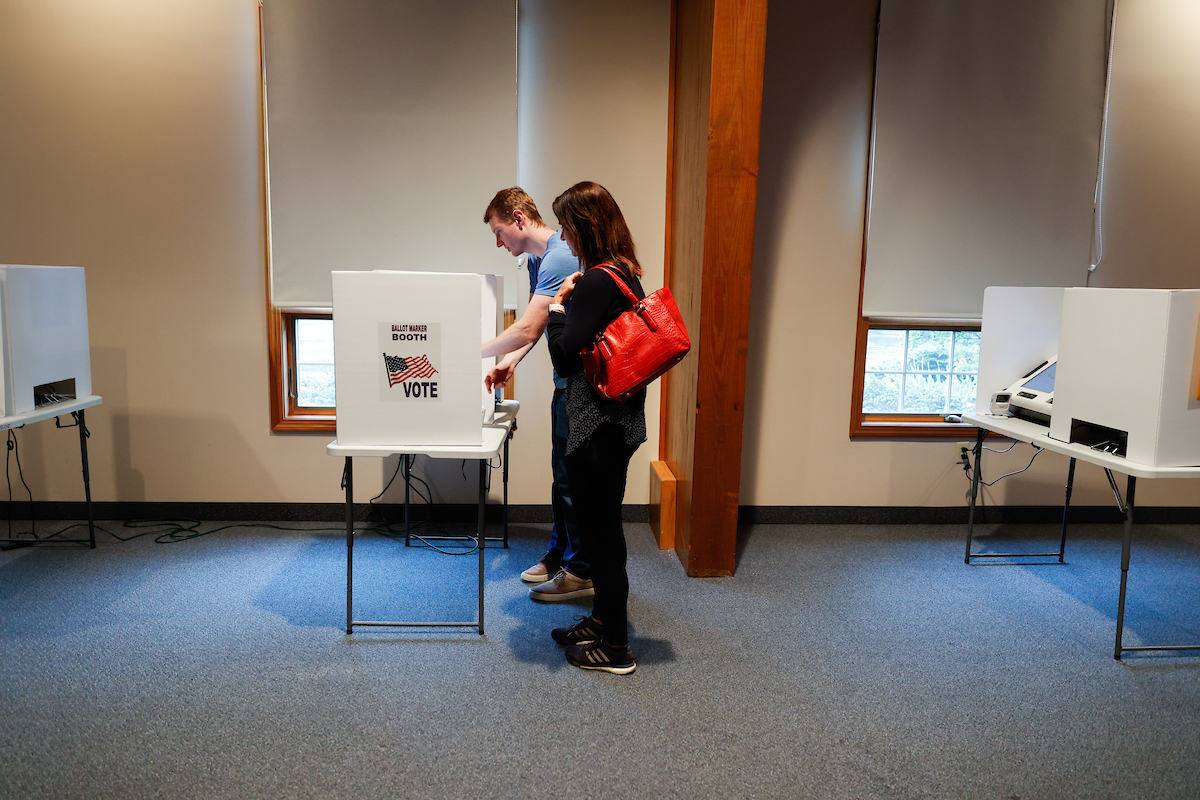
  • New Ohio voter ID law also excludes state veterans’ IDs

    New Ohio voter ID law also excludes state veterans’ IDs

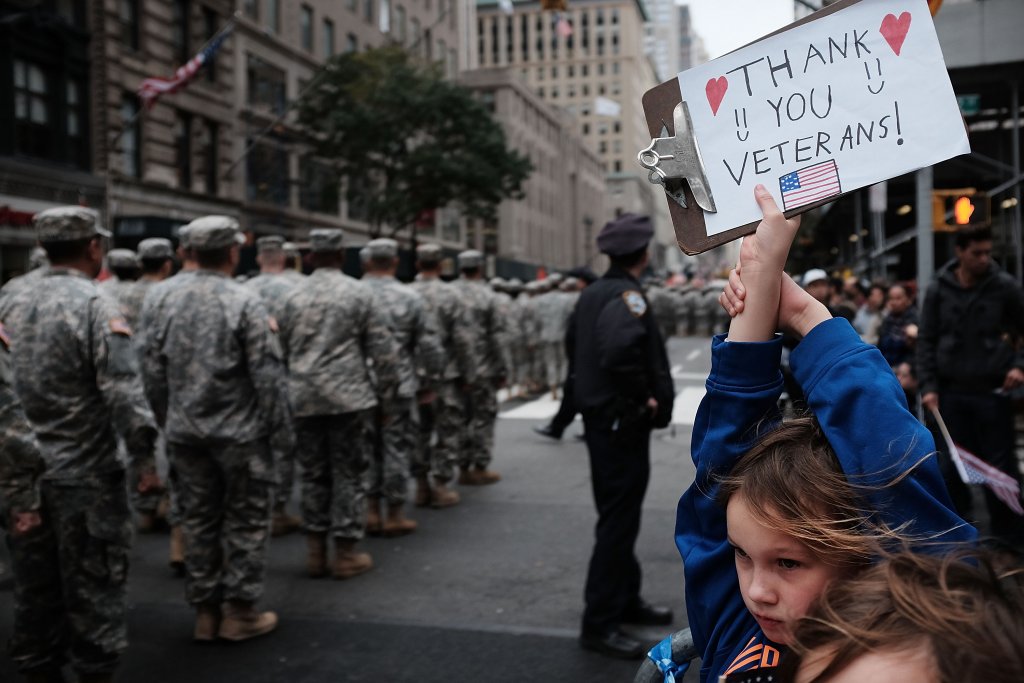
    A Veterans Day parade. (Photo by Spencer Platt/Getty Images.)

    BY: MARTY SCHLADEN Ohio Capital Journal

    Franklin County Recorder Daniel O’Connor is blasting Ohio’s Republican leaders for excluding county-issued veterans’ identification from the list of IDs one can use to vote under the state’s controversial new law.

    Gov. Mike DeWine signed House Bill 458 earlier this month after it was rushed through a lame-duck session by the heavily gerrymandered legislature in December. In previous elections, voters could establish their identities not only with valid drivers’ licenses, but also with documents such as utility bills and the county-issued vets IDs. 

    It might be hard to see significant problems with the old system. Secretary of State Frank LaRose found possible fraud in just one of every 222,000 votes cast in the 2020 election. But the state’s GOP leaders enacted HB 458 anyway, requiring Ohioans to have a driver’s license, state ID, passport or military ID to cast a vote.

    So far, it’s been tricky for researchers to show that strict voter ID laws suppress turnout because of problems with data and methodology. But voting rights advocates say that it only stands to reason that such laws would disproportionately affect the poor and communities of color.

    Those groups are less likely to have driver’s licenses or the documents needed to get one in the first place. And a report last year by the Legal Aid Society of Cleveland showed that a million Ohioans have licenses that are suspended because of debts relating traffic fees and fines and unpaid child support. That’s a number equal to one-eighth of the state’s registered voters.

    Those suspensions fall overwhelmingly on poor urban communities that — perhaps not coincidentally — are much more likely to vote for Democrats.

    In terms of military IDs, HB 458 allows people with federally issued military and veterans’ ID cards to use those to vote. It also allows Ohio National Guard IDs. 

    But it doesn’t appear to allow veterans’ cards that are issued by county recorders’ or veterans’ services offices under a 2016 law. To be issued one, a veteran has to produce a discharge form — DD-214 — and other forms of identification.

    O’Connor spokeswoman Hanna Detwiler said that about 5,000 Franklin County residents have such IDs, but it isn’t clear how many will be disenfranchised under HB 458.

    “I’m not sure how many veterans have our card as their only form of ID,” she said in an email. “But obviously things happen — like losing a wallet — where this might be the only form they have after showing the two additional forms of ID when initially getting the card.”

    Asked about the omission, DeWine Press Secretary Dan Tierney in an email said, “the bill did reduce the number of forms of identification that could be used and instead specified state-issued (and certain federal-issued) photo IDs. The bill provided for the (Bureau of Motor Vehicles) issued state identification cards as the photo IDs available at no cost to Ohio voters.” 

    Tierney added, “My understanding from legislative testimony is that, by far, the most common ID used for voting in Ohio are state-issued drivers’ licenses.”

    O’Connor, the Democratic county recorder, in a statement slammed GOP officials for not publicly announcing that this form of veterans’ ID will no longer be accepted at polling places.

    “It’s bad enough that in the middle of the night, the Ohio legislature decided to target our right to vote,” he said. “But specifically invalidating the free state-issued ID our office provides to retired service members is unacceptable, and I will not stay silent about it.”

  • Dog fountain soon at Kiwanis dog park

    Dog fountain soon at Kiwanis dog park

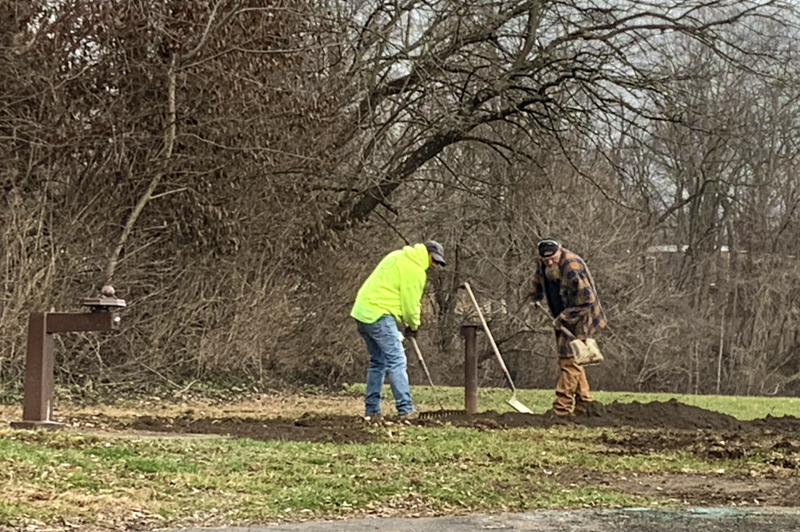
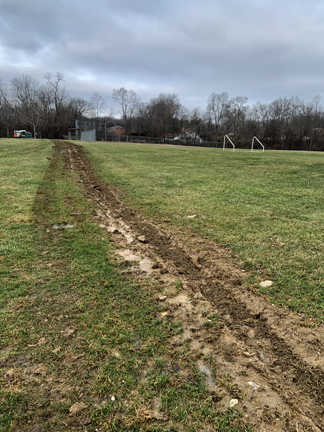
    Loveland, Ohio – A dog water fountain is being installed at the fenced dog park located in Kiwanis Park on Wall Street in the West Loveland Historic District. Work continued today laying the pipe that extends from the ballfield to the dog park at opposite end of the park.

    The Purina Foundation awarded the city $11,545 towards the installation of a dog water fountain to be installed in the Matt Haverkamp Foundation Dog Park.

    The dog park opened in Spring 2022 at 236 Wall Street at the rear of Kiwanis Park.

    The approximately two-acre dog park is located at the rear of Kiwanis Park. The dog park is adjacent to the JT Stottman Ballfield. The park is entirely fenced and features benches for seating.

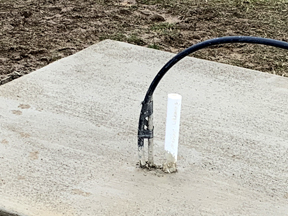
    The concrete pad for a new dog water fountain inside the Haverkamp Foundation Dog Park in Kiwanis Park on Wall Street.

  • Join Great Oaks online on Thursday to learn more about how you can #DiscoverYourGreatness

    Join Great Oaks online on Thursday to learn more about how you can #DiscoverYourGreatness

    Promoted Post

    Tomorrow we’re taking a DEEP DIVE into our high school career programs! Join us online Jan 19 at 7pm to learn more about how you can #DiscoverYourGreatness at Great Oaks in our 30+ career programs.

    We’re taking applications now, so tune into this session to learn how to apply, what to expect in these programs, and ask any questions you have about life at Great Oaks. The event can be found at https://bit.ly/3ZwKfDR

  • Here is a photo sampling of the fierce play you’ve missed

    Here is a photo sampling of the fierce play you’ve missed

    CORRECTION: Indian Hills’ Ella Riggs did not play in the game. I was reading old news that was featured on the team’s web page. Riggs graduated last year.

    by David Miller

    David Miller with his buddy the Loveland Tiger at the Mental Health Awareness Night on January 17th.

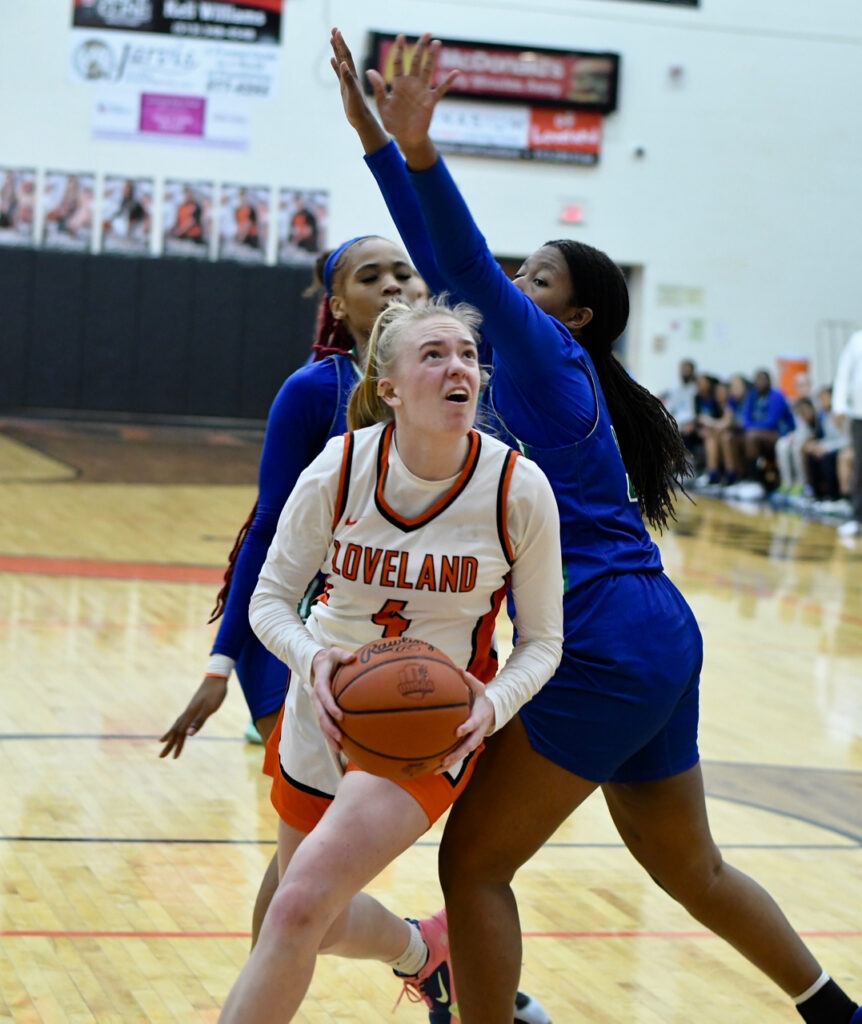
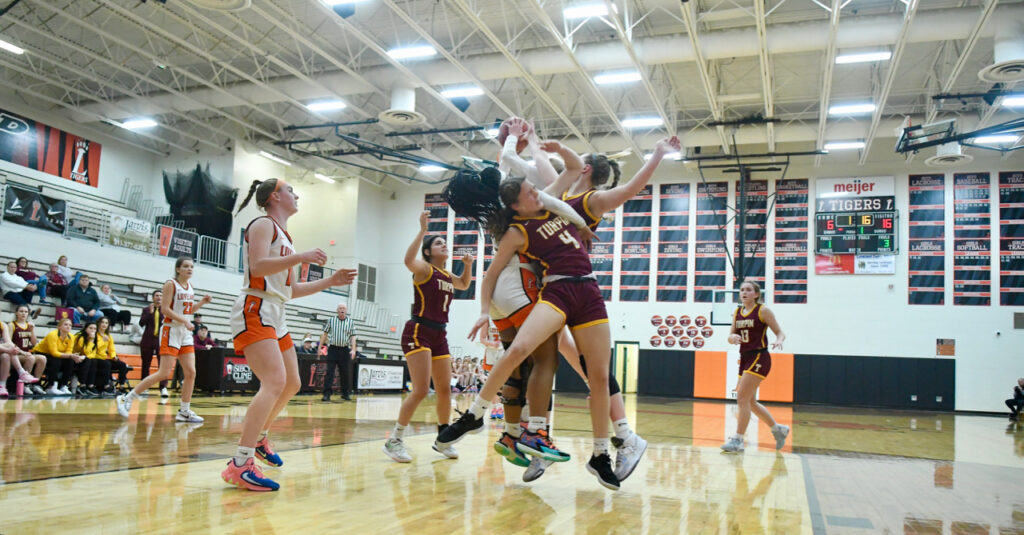
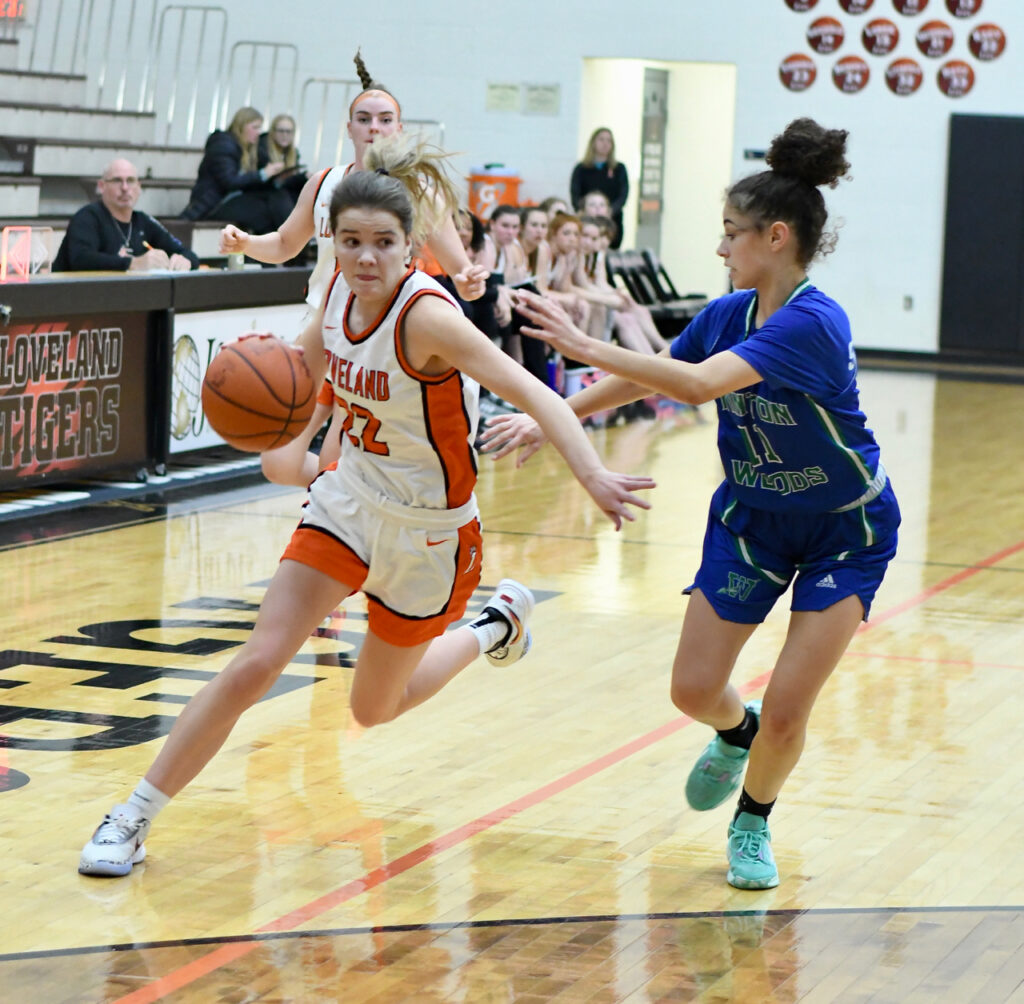
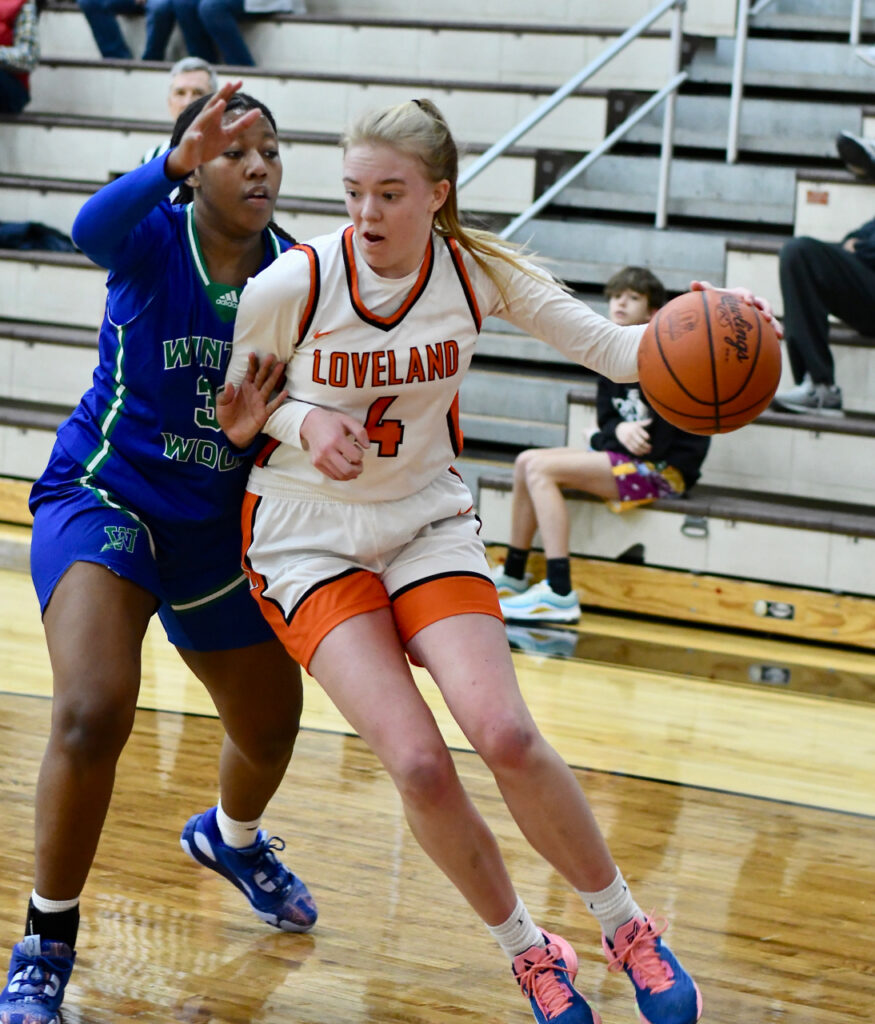
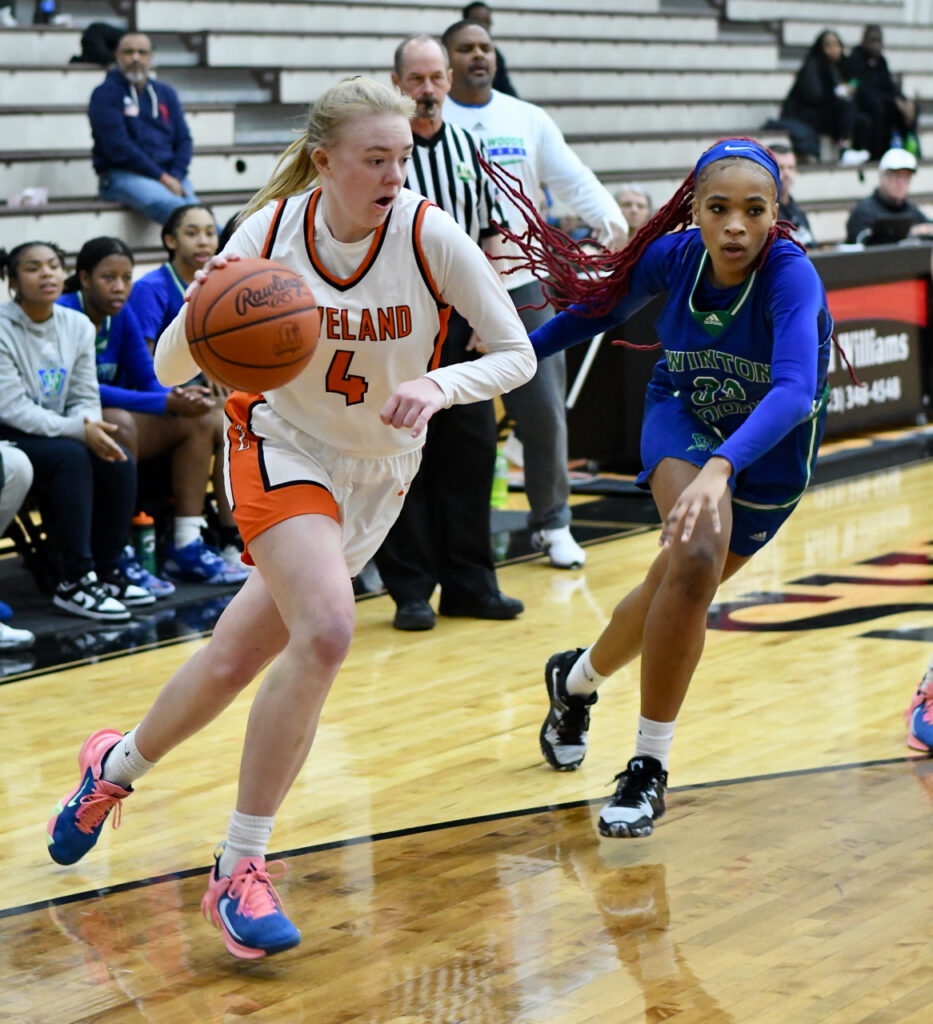
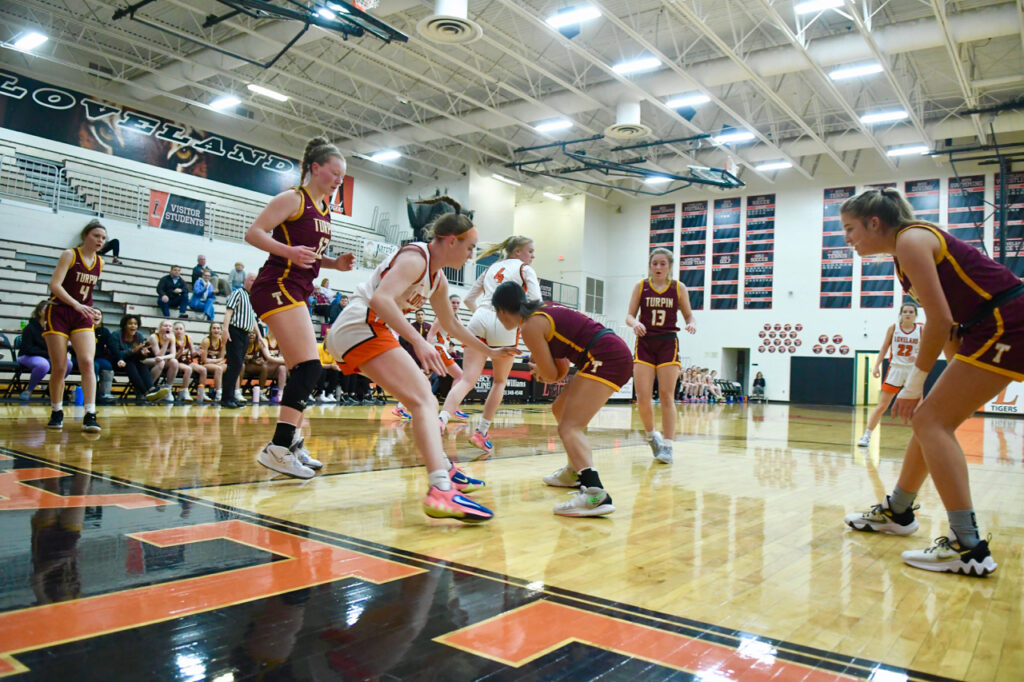
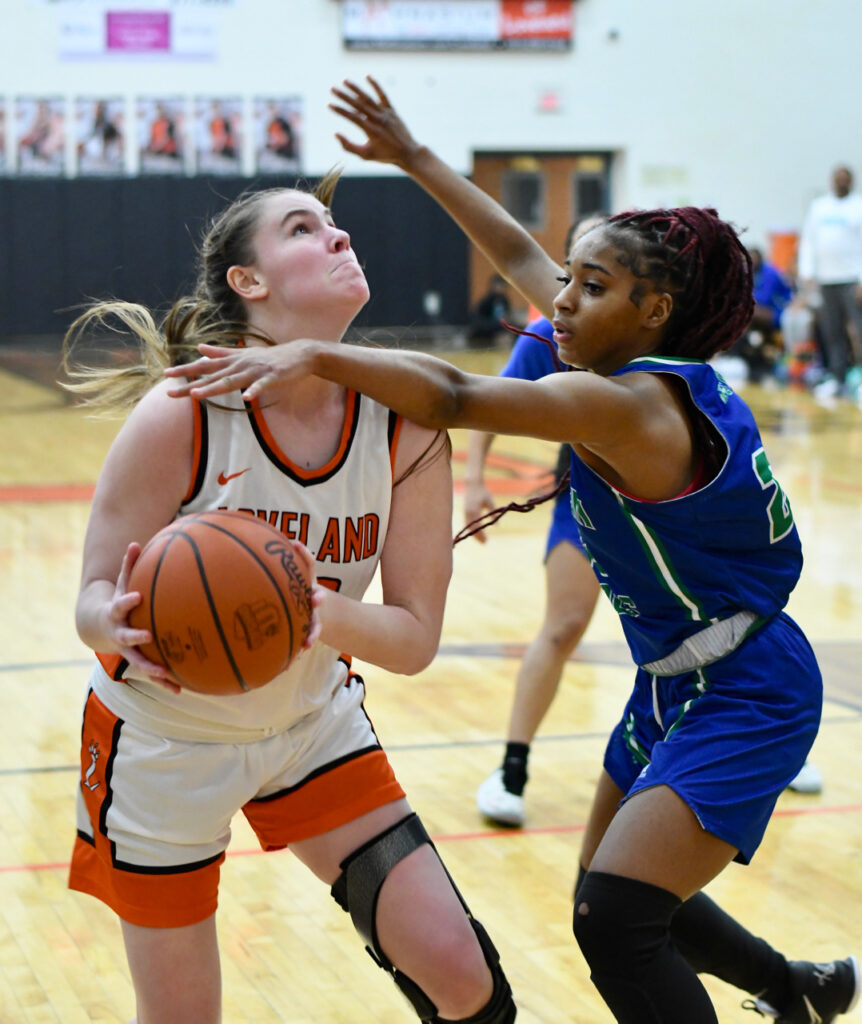
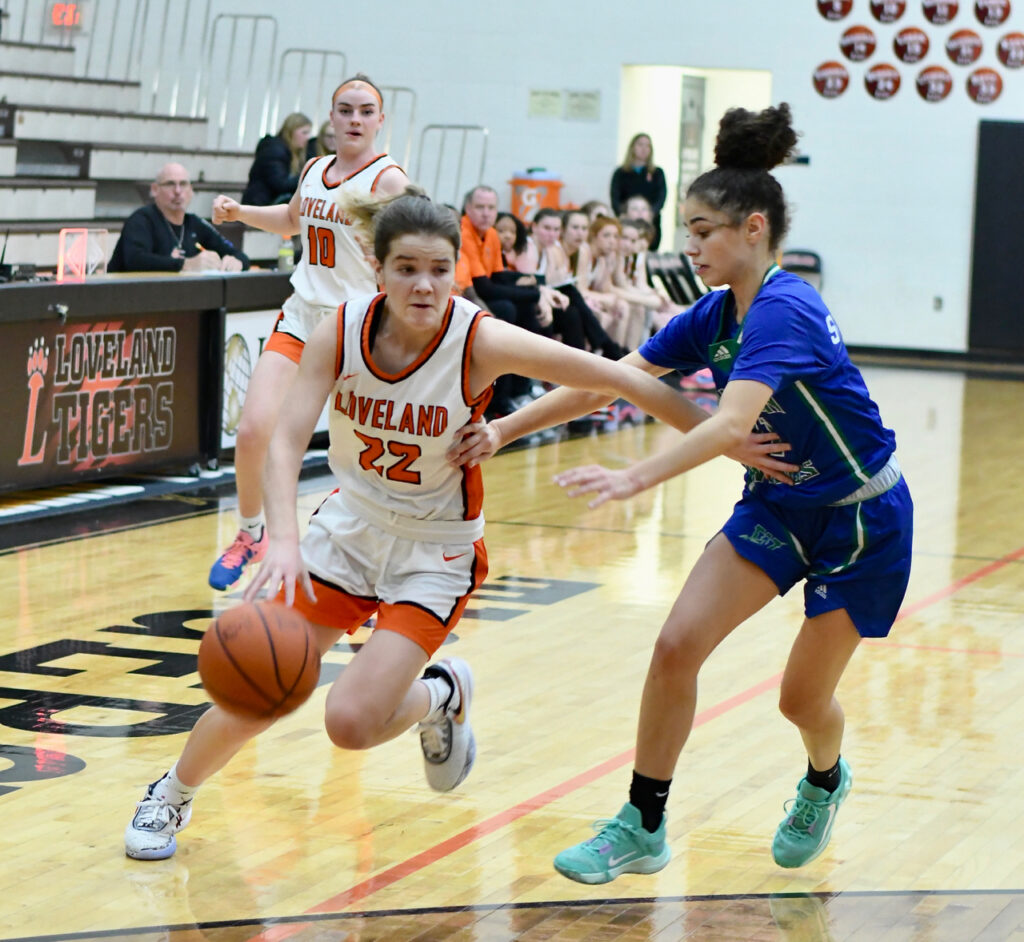
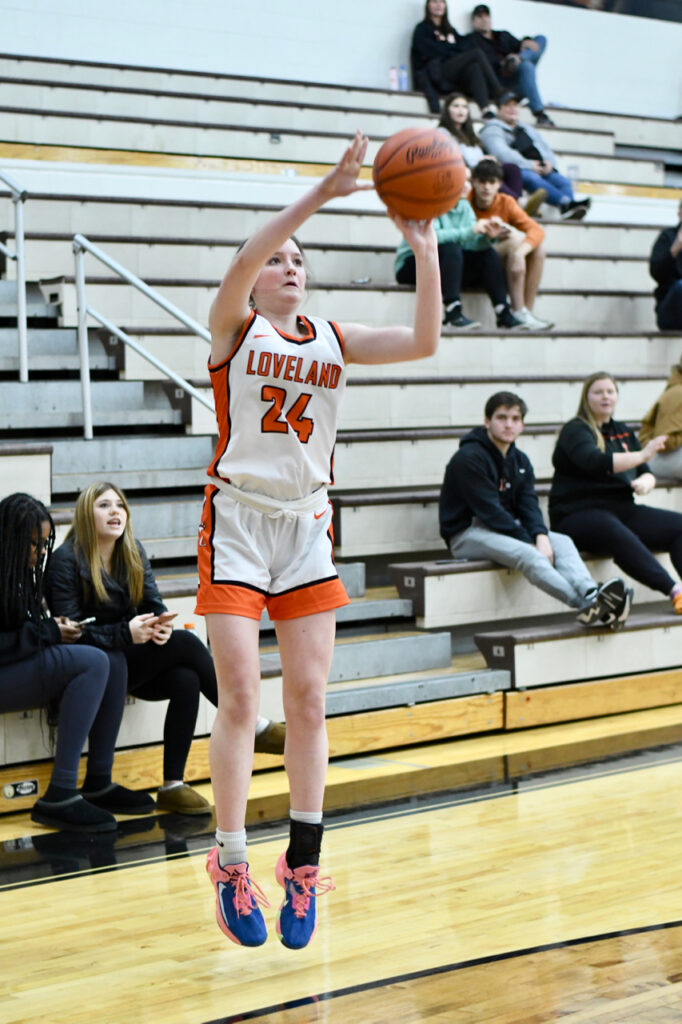
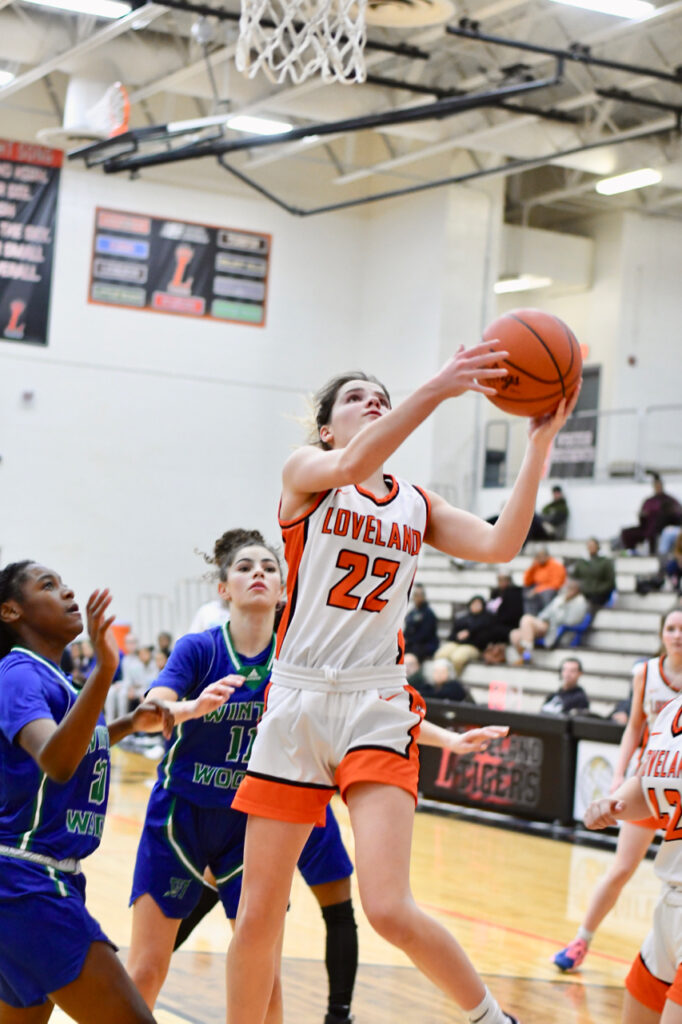
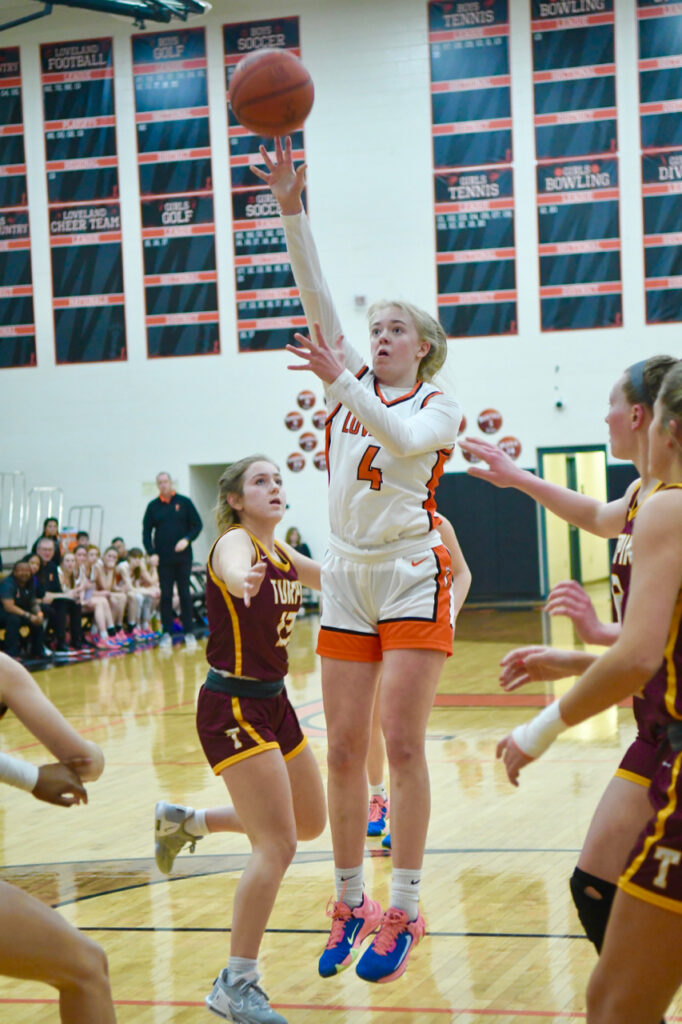
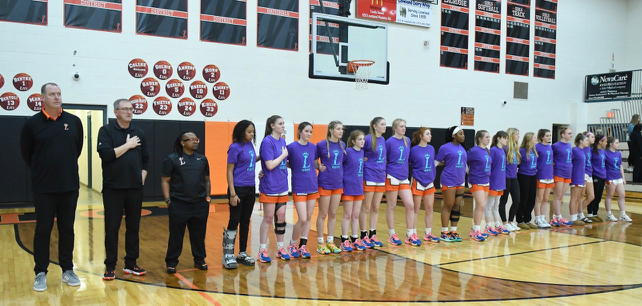
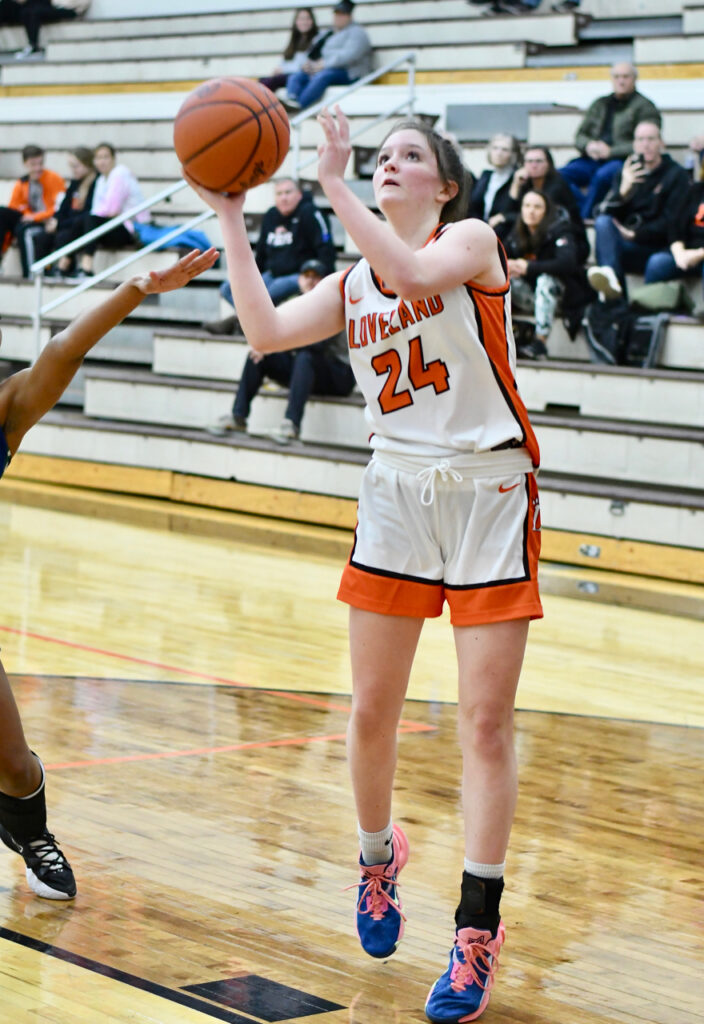
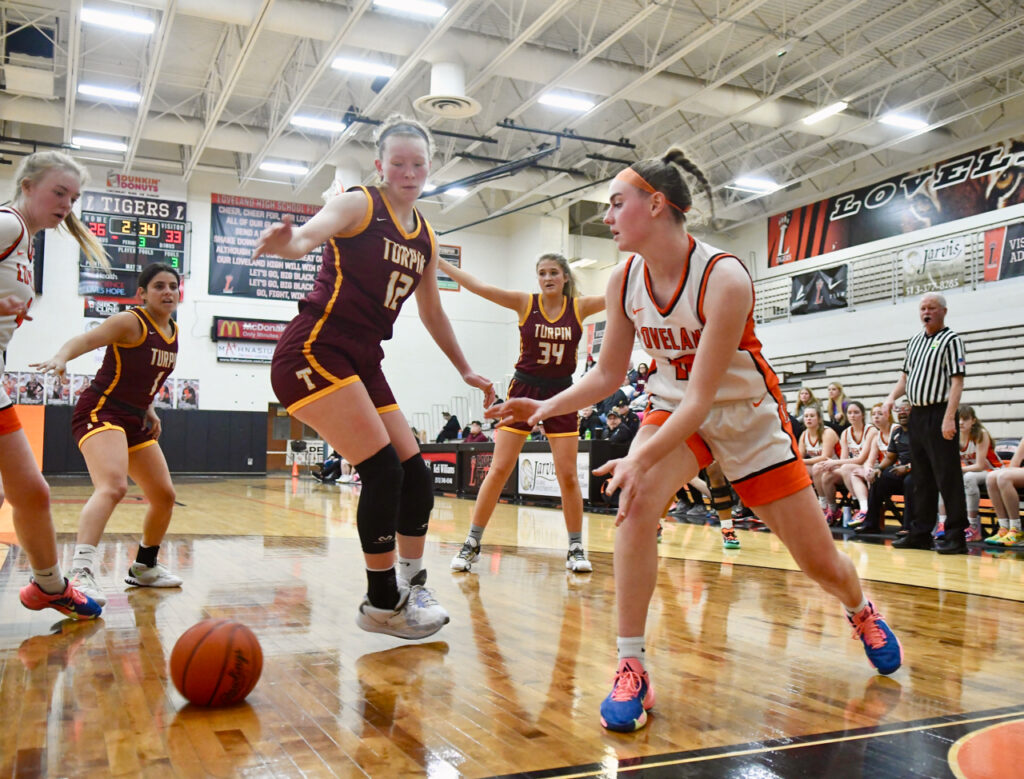
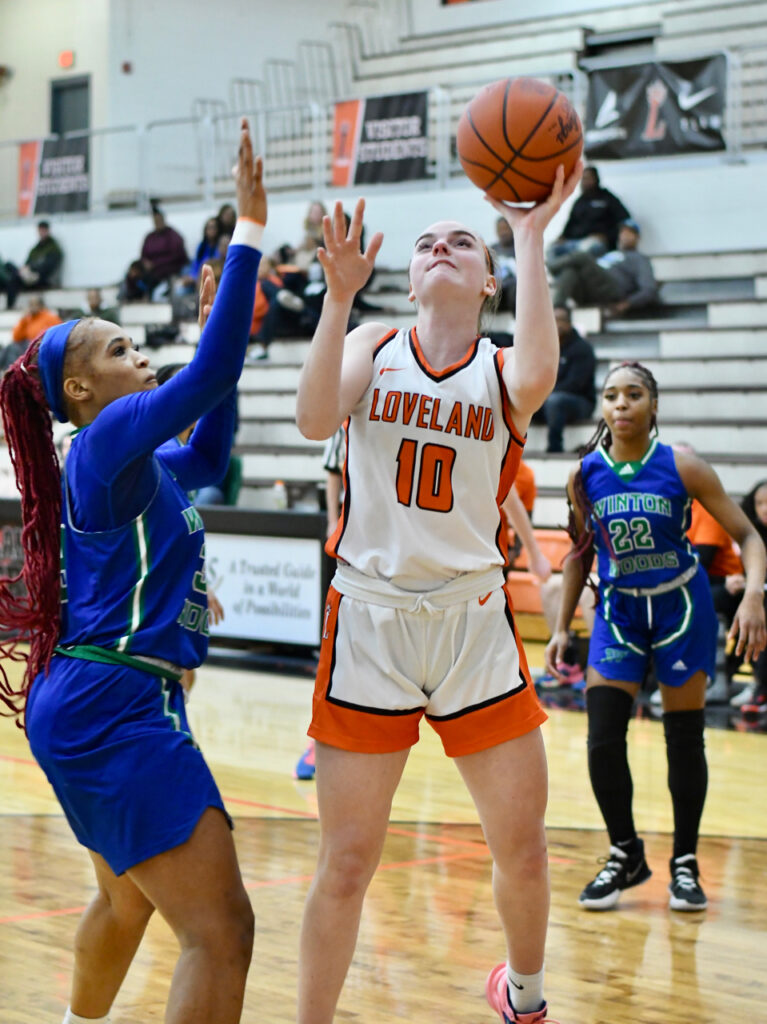
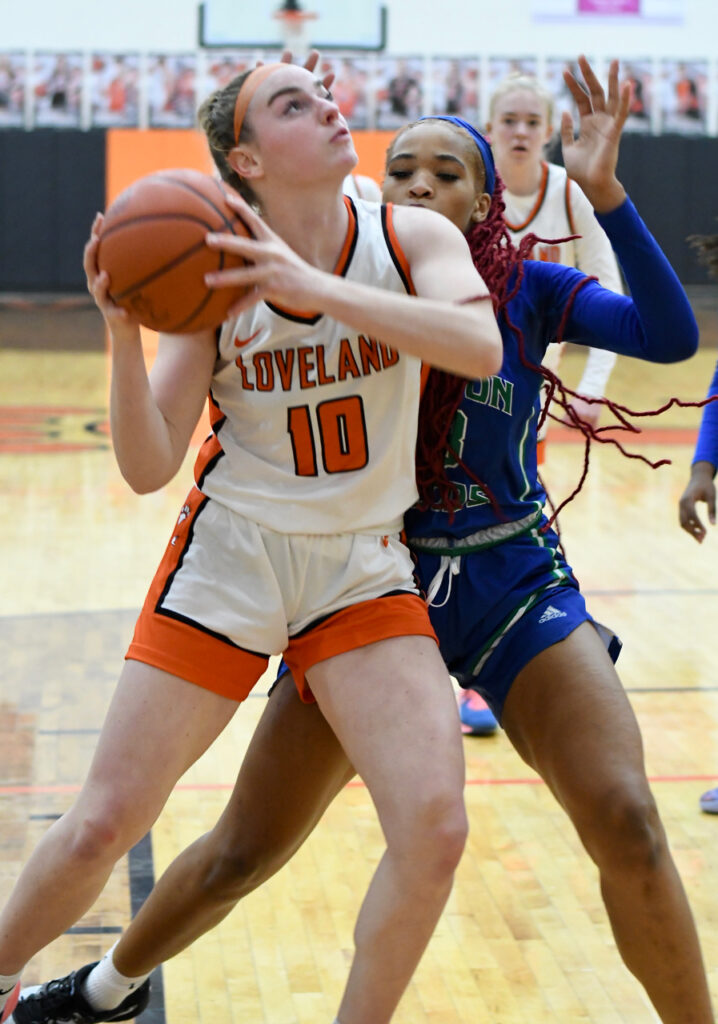
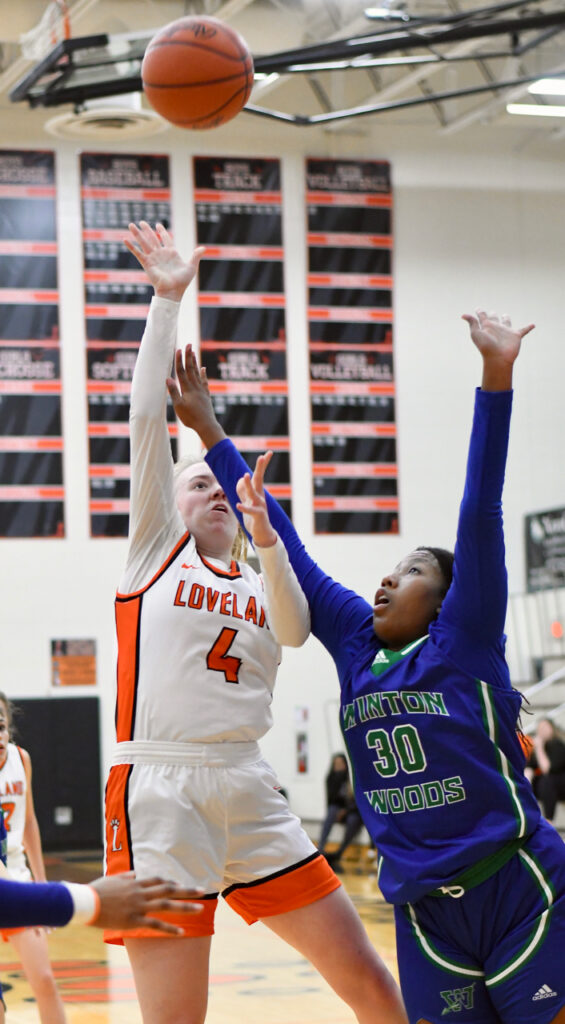
    Loveland, Ohio – Haven’t seen the 2023 “Our Way” edition of Loveland High School Women’s basketball? Here is a photo sampling of the fierce play you’ve missed.

    The Tigers are currently in 3rd place in the tough Eastern Cincinnati Conference with an 8-3, 11-4 record.

    This past Monday they defeated Turpin on the Tiger court 39-36 and overwhelmed the Little Miami Panthers on the road, 54-39 on January 12. At home, on January 10 they defeated Winton Woods 37-36. And, on January 5 defeated Milford on the Tiger court 45-43.

    That’s a 4 game-winning streak and 6 wins in their last 7 games.

    The women travel tonight to nearby Indian Hill to take on their all-time leading scorer, Ella Riggs who on January 7 set the Braves record with 1638 career points. This is a non-conference game against the 5-4, 9-4 Braves, who are on a 8-win and 1-loss streak in the Cincinnati Hills League.

    In the Tiger win over Turpin Olivia Rabe scored 16. At Little Miami, she scored 23 and pulled down 13 rebounds, had 5 assists and steals, and blocked 4 shots. She leads the ECC averaging 3.6 blocks per outing.

    Jose Early scored 13 against Turpin and is second in the ECC with 4.1 assists per game. She is first among ECC opponents with 3 steals per game.

    The scoring was spread out in the Winton Woods game with Katy Wilber, Olivia Raby, and Josie Early scoring 9 each and Sophia Kapszukiewicz adding 7.

    For high school basketball fans, know that this Tiger team is aggressively smart and disciplined under the co-coaching staff of Keith Braswell and Brad Early.

    The next home game for the Tigers is Monday, January 23 vs Anderson, however, Indian Hill High School is a close enough venue, and it will be a short journey to see some incredible athletes tonight. The game time is 7:30.

    Standings 
     CONFERENCEOVERALL
    TEAMSW-LPCTPFPAW-LPCTPFPASTRK
    West Clermont11 – 01.00059.533.117 – 01.00057.933.2W17
    Kings8 – 2.80052.343.911 – 4.73350.940.4L1
    Loveland8 – 3.72745.842.911 – 4.73345.538.7W4
    Walnut Hills7 – 4.63649.042.611 – 5.68850.737.7L1
    Winton Woods6 – 4.60046.438.99 – 6.60046.141.7L2
    Lebanon6 – 5.54549.548.112 – 5.70652.044.4W1
    Milford5 – 6.45550.050.09 – 7.56351.247.6W2
    Turpin2 – 9.18234.748.64 – 12.25035.647.1L6
    Little Miami1 – 10.09136.553.42 – 14.12540.152.9L1
    Anderson0 – 11.00034.955.71 – 16.05935.953.1L16
  • Cindy Zetterberg: Either stop reporting one side of an issue or don’t report anything political at all

    Cindy Zetterberg: Either stop reporting one side of an issue or don’t report anything political at all

    Letter to Editor

    Dear Editor

    I have been a Loveland resident for 32 years and an avid supporter of the Loveland Herald and Loveland Magazine. It has been a delight to read articles about our community, the wonderful things our schools and businesses are doing, and the fabulous events that Loveland has to offer. It has always been a positive form of communication and has rarely shown bias until recently.

    I am saddened that Loveland Magazine has become an ally of the Democratic Party, showing one-sided reporting on abortion to the recent issue of Speaker of the House.

    Loveland has seen division over the recent school levy. Please don’t continue to divide us with political issues. Either stop reporting one side of an issue or don’t report anything political at all.

    Please continue to be a positive, encouraging voice that unites rather than divides.

    Sincerely,
    Cindy Zetterberg

  • In a state with 1M license suspensions, Ohio voter ID law could depress turnout

    In a state with 1M license suspensions, Ohio voter ID law could depress turnout

    New report says debt-related suspensions affect poor and minorities

    BY: MARTY SCHLADEN – Ohio Capital Journal

    When Gov. Mike DeWine last week signed what’s been called the nation’s strictest voter ID law, it raised fears that it would disenfranchise large numbers of voters in poor communities where people are less likely to meet the new requirements.

    Those fears seem to be supported by a September report that estimates 1 million Ohioans have suspended licenses because of debts from things such as a lack of insurance, unpaid fines, and court costs. That’s in a state with 8 million registered voters.

    The analysis, by the Legal Aid Society of Cleveland, said the suspensions by far fall most heavily on impoverished urban communities of color. In other words, debt-related suspensions disproportionately affect some of the communities least likely to vote for the Republican officials who passed and signed the voter ID law.

    DeWine and legislative sponsors sold the state’s controversial law by saying that it would boost public confidence in elections. That confidence, however, has likely been undermined by numerous lies by former President Donald Trump, and by dubious voting claims by Secretary of State Frank LaRoseOhio Auditor Keith Faber, and others.

    Meanwhile, LaRose found the rate of possible fraud in the 2020 Ohio General Election to be a vanishingly small 0.0005%.

    “There is absolutely no evidence that we need a voter ID law to prevent voter fraud,” said Collin Marozzi, deputy policy director of the American Civil Liberties Union of Ohio, which opposes the law.

    Even so, the voter ID law, House Bill 458, makes it considerably harder for many of the poorest to vote in Ohio. While voters previously could use documents such as bank statements and utility bills to establish their identity, they now must have a driver’s license, state ID, passport or military ID to cast a vote.

    Perhaps tellingly, college and university IDs didn’t make the list of acceptable IDs approved by Ohio’s heavily gerrymandered Republican legislature. College students were credited with helping to deliver victories to Democrats in key races around the country in the November election.

    Ohio’s voter ID law is already facing a legal challenge, which remains pending.

    Afflicting the afflicted

    While of questionable necessity, it’s unclear whether voter ID laws suppress turnout among the poor and communities of color as much as some advocates claim. MIT’s ​​Election Data and Science Lab says research into the matter has produced mixed results, citing “deficiencies in data quality and sensitivity of results to choices made in statistical estimation.”

    However, the analysis Legal Aid Society of Cleveland report shows that huge numbers of Ohioans have licenses that are suspended for debt-related reasons — and they face a steep climb in getting their licenses reinstated or to get a state-issued ID.

    “We have many examples of clients who are trapped by debt-related suspensions,” said Anne Sweeney, one of the report’s authors.

    The researchers issued open records requests to the Ohio Bureau of Motor Vehicles to gather data showing that for each year between 2016 and 2020, more than 1 million drivers had licenses suspended because of debts related to traffic fines and fees and unpaid child support. In addition, the average suspended driver has multiple suspensions, with 3 million suspensions a year in the state, the report said.

    “Debt-related suspensions trap drivers with limited resources in a vicious cycle,” the report said. “Fines and fees related to seemingly minor traffic stops can easily spiral into thousands of dollars owed to the State. Drivers unable to pay these debts cannot get their licenses back, which for most Ohioans means they cannot drive to work to earn the money needed to pay down the debt, without risking even more driving restrictions, fines, fees, or even jail.”

    Unsurprisingly, such suspensions are concentrated most heavily in impoverished urban communities of color.

    For example, 53% of the residents in Cleveland’s 44104 zip code live below the federal poverty line, 98% are people of color, and there are 1,535 suspensions per 1,000 people old enough to drive (because a given person can have more than one suspension), the report said. 

    Voters in that zip code likely support Democrats far more than they do Republicans. While DeWine won the 2022 governor’s race by a whopping 25  percentage points statewide, he lost Cuyahoga County by 14 points.

    The Legal Aid Society report was written before DeWine signed the voter ID bill and it focuses on the cycle of debt in which Ohio’s system places ever-greater burdens on people who can’t pay fees and fines related to their driver’s licenses and vehicle registrations.

    “The way it steamrolls is hugely problematic,” Sweeney said as she described how unpaid debts often compound from the hundreds to the thousands of dollars and sometimes into criminal penalties.

    And, she pointed out, most Ohioans with suspended licenses have to choose between quitting their jobs, finding a ride, or driving to them illegally and risking still more fines and fees. All of which can sap a person’s ability to pay the debts he or she already has.

    “For someone who has no way to get to a job, you can’t make payments to get your license back so you can get to the job you do not have,” she said.

    Overall, the analysis said Ohio’s system placed the biggest burden by far on the communities with the least ability to shoulder it. Zip codes with the highest rates of people of color experienced more than 100 times as many suspensions as the areas with the fewest people of color  — 6.9 million versus fewer than 51,000, the report said.

    It added, “Debt-related suspensions cost residents of Ohio’s highest poverty zip codes an average of $7.9 million each year. Debt-related suspensions cost residents of Ohio’s zip codes with the highest percentages of people of color an average of $12 million each year.”

    In all, total outstanding debt across the state each year totals nearly $1 billion, the report said.

    Asked about Ohio’s system that catches up so many Ohioans, DeWine Press Secretary Dan Tierney said, “The General Assembly could certainly debate whether to change the ability of courts to issue such sanctions, I am not aware of any movement to remove these penalties.”

    Are existing reforms adequate?

    Tierney was asked whether the governor was concerned that the Ohio system condemns the state’s poor and communities of color to a debt trap and now — with the voter ID law DeWine just signed — disenfranchisement. He responded by sending an article from The Columbus Dispatch about a state amnesty program that BMV officials say put 100,000 drivers back on the road — or roughly a tenth of the number of Ohioans the Legal Aid Society analysis says have suspended licenses in a given year. 

    In addition, the Legal Aid Society analysis points out, “Drivers are not eligible (for amnesty) until 18 months have passed since the end of their court-ordered suspension and must provide proof of insurance to utilize the program. The BMV automatically notifies eligible drivers of the reduction; drivers eligible for a complete amnesty waiver of reinstatement fees must complete an application and provide proof of qualifying benefits, such as Medicaid or (Supplemental Nutrition Assistance Program benefits.)”

    Sweeney added that producing the documentation required by the amnesty program also is much harder for the poor.

    “Access to documents and identification is a huge problem for our clients all the time,” she said. “The amount of time it takes to navigate the system when you have limited means is inordinately longer.”

    Asked about the limited reach of the program, Tierney said one should “remember that these are court-imposed fees and punishments issued by courts. They amnesty program is intended to help those in specific situations and provide them an opportunity to comply with the court-ordered sanctions on terms that can pay-off the debt and eventually restore license privileges, ultimately bringing these citizens in compliance with the law.”

    While some GOP officials have said the availability of a state ID card will enable Ohioans without valid driver’s license to vote, critics cite several obstacles. One is the just-cited difficulty in getting the needed documents. Another is the fact that one need get them from the BMV — an agency that people with outstanding fines and fees might be reluctant to deal with. And a third is that people struggling just to be able to drive legally might have more pressing things to do than get a state ID so they can vote.

    Marozzi of the ACLU, said that it stands to reason that a disproportionate number of license suspensions are in urban communities of color.

    “It happens most frequently in urban areas that are over-policed,” he said.

    And while DeWine’s spokesman didn’t address whether the new law will take away voting rights from many Ohioans with suspended licenses, Marozzi said, “I think there’s a very good chance that a significant number of Ohioans are going to get disenfranchised because of this bill.”


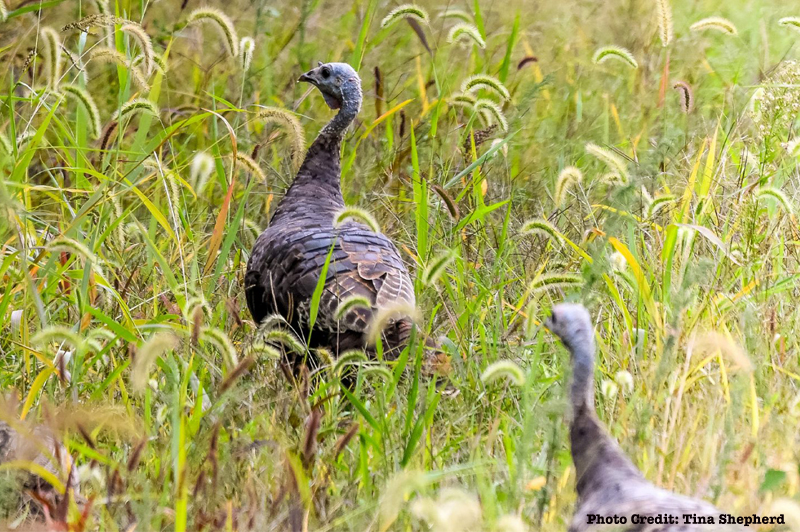
  • Wild Turkey Research Begins in Buckeye State

    Wild Turkey Research Begins in Buckeye State

    “There are growing concerns about the potential impacts regarding the timing of the removal of males during the hunting season…”

    Ryan Boyer, NWTF district biologist for Michigan, Indiana and Ohio.

    The NWTF Ohio State Chapter recently allocated $50,000 to support a new wild turkey research study that seeks to address population declines in the state.

    With increasing concerns over population declines in Ohio, the Ohio Department of Natural Resources and Ohio State University are conducting the first broad-scale study of hen survival in the state in almost two decades. Findings will help researchers and wildlife managers understand how survival rates, harvest rates and reproduction have changed in the last 17 years and what factors may be causing those changes.

    In the early 2000s, researchers determined May 1 to be the median date for which hens begin incubating; however, it’s clear today that incubation start dates vary in different regions of the state. Changing weather and habitat conditions, too, may be impacting the initiation of nest incubation from the median date established in the early 2000s.

    “There are growing concerns about the potential impacts regarding the timing of the removal of males during the hunting season, and therefore it is important to know as precisely as possible when hens begin incubating nests,” said Ryan Boyer, NWTF district biologist for Michigan, Indiana and Ohio. “In many cases, state agencies set their season open dates to coincide closely with the median date for nest incubation initiation, allowing time for hens to be bred and for nesting to begin. Ensuring that season start dates align with nesting chronology greatly reduces the chance of negatively impacting populations by removing males too early.

    “Just like the world around us, wild turkey ecology is dynamic. We are proud to partner with the ODNR and Ohio State University to provide support for this research project and continue to ensure the best-available science is being used in informing management and regulatory decisions.”

    Mark Wiley, ODNR game bird biologist, notes that it is not just timing that can have an effect nesting success, but also changes in habitat.

    “Afforestation (establishment of a forest or stand of trees in an area where there was no previous tree cover) and forest maturation affect habitat quality, which in turn can affect nesting productivity and hen survival,” he said. “A more thorough understanding of hen demographics in relation to changing habitat conditions will improve our ability to successfully manage a dynamic wild turkey population.”

    Beginning in early January and through March, ODNR staff will capture birds using rocket nets. Once captured, researchers and ODNR staff will quickly work to attach leg bands as well as GPS transmitters. The information from the transmitters will be invaluable to researchers.

    “Researchers from OSU will download and monitor turkey location and activity data two to three times per week,” Wiley said. “They will use turkey location and activity data to detect nesting activity, movements and mortality events.”

    The researchers will confirm nesting activity by locating the birds on the ground, and after the incubation period, the team will be able to determine nest fate, hatching rates and causes of nest failure, if it fails.

    Three weeks after a successful hatch, the research team will locate and count the number of poults with each hen. They will also establish an annual survival rate of hens from transmitter data. That data will allow researchers to determine the sources of mortality and investigate the seasonal movements of hens.

    Results of the study will be shared with nearby states that are conducting similar wild turkey research projects, including New Jersey, Pennsylvania and Maryland, and data will be aggregated to provide a larger representation of how climate and habitat changes impact nesting on a landscape scale.

    “The research project is important to all hunters, experienced or new,” said Bill Sulicks, NWTF Ohio State Chapter president. “We are all eager to see the turkey population begin to thrive again as in earlier years.  We believe this study can guide us, in a way, to approach the recent decline, and so in saying this: ‘Once you are aware of a problem, you need to understand how it works, before you can fix it.’”

    Field work, including turkey trapping and telemetry monitoring, will occur throughout this year and 2024 and may continue into 2025. The final project report, thesis and scientific manuscript will be available at the end of the project in 2025.

    About the National Wild Turkey Federation

    Since 1973, the National Wild Turkey Federation has invested over half a billion dollars into wildlife conservation and has conserved or enhanced over 22 million acres of critical wildlife habitat. The organization continues to drive wildlife conservation, forest resiliency and robust recreational opportunities throughout the U.S. by working across boundaries on a landscape scale.

    2023 is the NWTF’s 50th anniversary and an opportunity to propel the organization’s mission into the future while honoring its rich history. For its 50th anniversary, the NWTF has set six ambitious goals: positively impact 1 million acres of wildlife habitat; raise $500,000 for wild turkey research; increase membership to 250,000 members; dedicate $1 million to education and outreach programs; raise $5 million to invest in technology and NWTF’s people; and raise $5 million to build toward a $50 million endowment for the future. Learn how you can help us reach these lofty goals.

  • Ohio coalition moves forward with plans for abortion ballot measure

    Ohio coalition moves forward with plans for abortion ballot measure

    BY: SUSAN TEBBEN – Ohio Capital Journal

    A coalition of reproductive rights groups, along with the ACLU of Ohio say they plan to have a pro-abortion ballot initiative on the Ohio Attorney General’s desk by February.

    Ohioans for Reproductive Freedom announced the plan to do this with the help of a recently hired “general consultant” with experience boosting ballot initiatives on the topic in two other states.

    The coalition – made up of Planned Parenthood Advocates of Ohio, Abortion Fund of Ohio, New Voices for Reproductive Justice, the Ohio Women’s Alliance, Preterm-Cleveland, Pro-Choice Ohio and Unite for Reproductive & Gender Equity (URGE), along with the ACLU of Ohio – said the amendment would “explicitly protect reproductive freedom for all Ohioans.”

    “We are working expeditiously and prudently because we know that skipping steps or rushing the process would be a reckless approach when stakes are so high,” said Erin Scott, co-founder and director of the Ohio Women’s Alliance, in a joint statement of ORP members.

    Mission Control, Inc., was hired by the group to help with the effort, after previously working on ballot initiative campaigns in Kansas and Kentucky, both of which showed voters in support of abortion rights. The company has offices in Washington, D.C., Connecticut, Colorado and California.

    ORP said it has “completed initial language drafting and is now moving into comprehensive qualitative and quantitative research and message testing.”

    Anti-abortion groups were quick to criticize the effort, saying support for the measure wouldn’t come in Ohio.

    “Any attempt to change Ohio’s constitution by these large out-of-state abortion groups will ultimately fail here in Ohio,” said Peter Range, Ohio Right to Life CEO, in a statement.

    The religious lobby group Center for Christian Virtue acknowledged Mission Control’s success in other states, but also said the Ohio effort is “doomed to fail.”
    CCV president Aaron Baer used his statement against the measure to support a joint resolution that would make it harder for the state constitution to be amended by raising the voting threshold to 60%. The measure was HJR 6 in the last General Assembly, and is now being led by state Rep. Brian Stewart, R-Ashville, and state Rep. Derrick Merrin, R-Monclova.

  • Loveland Board elects Lorenz and Eilert

    Loveland Board elects Lorenz and Eilert

    Loveland, Ohio – The Board of Education held its organizational meeting on January 10.

    Dr. Kathy Lorenz was elected to continue as President of the Board
    Jonathan Eilert will serve as Board Vice President this year replacing Kevin Dougherty.