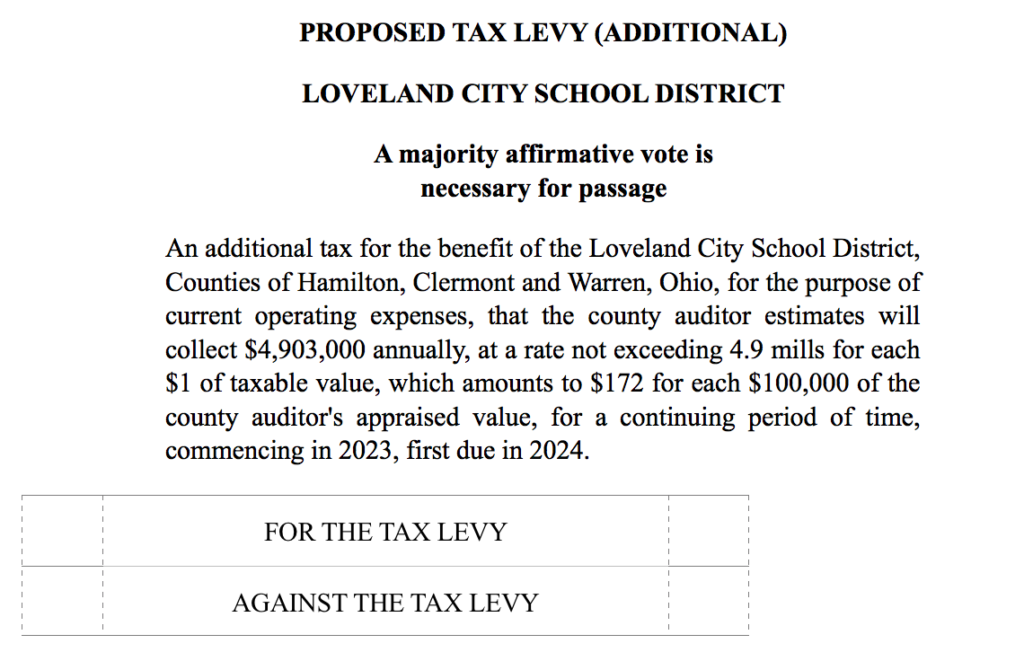
Loveland, Ohio – Last night in a unanimous vote, the Loveland City School District Board of Education voted to place a 4.9 mill operating levy on the May 2nd ballot.
The discussion about the levy begins at the 19:12 minute mark of the meeting video.

News and Events from the Loveland, Ohio Area
Without fear or favor
Since 2004


Loveland, Ohio – Last night in a unanimous vote, the Loveland City School District Board of Education voted to place a 4.9 mill operating levy on the May 2nd ballot.
The discussion about the levy begins at the 19:12 minute mark of the meeting video.

by David Miller
Loveland, Ohio – Emma Steiner said, “My connection to the Leukemia and Lymphoma Society began when a favorite middle school teacher of mine, and now mentor, lost her aunt due to Leukemia.” Steiner is a junior at Loveland High School.
Steiner and Loveland High School juniors, Marcel Mangan, and Orhan Ozbudak are the candidates for Team CoUREage 4.0, a fundraising team raising money for The Leukemia and Lymphoma Society’s Student Visionaries of the Year Campaign. The 2023 campaign runs through March 25th. There are 30 team members.
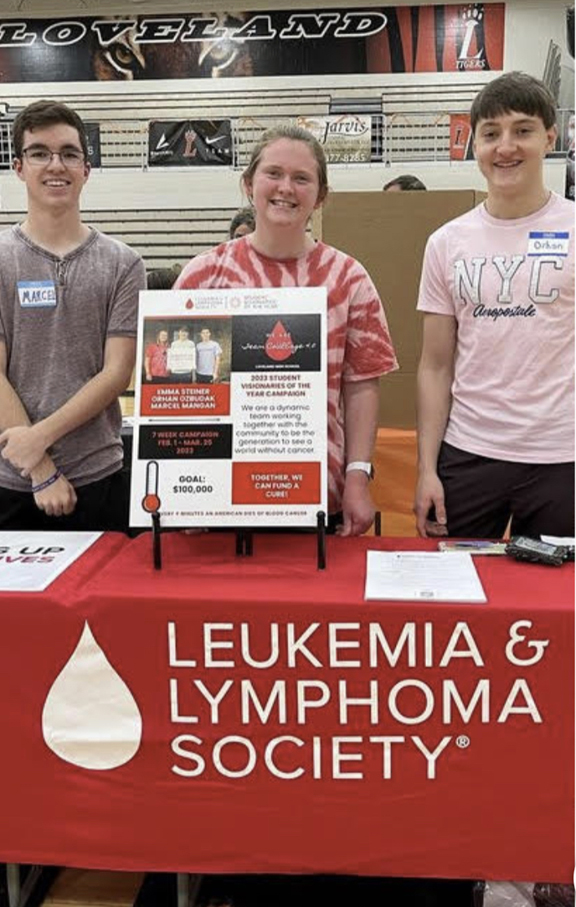
Steiner was asked to join Loveland’s Team CoUREage last year. She said, “While fundraising, I got to hear so many touching stories of people affected by blood cancer.” That was more than enough to make her want to accept the nomination to be a candidate for this year’s campaign. “Although I don’t have a direct connection to blood cancer, my grandpa passed away from cancer last year, and I fight so that other families don’t have to experience what my grandpa went through.”
LLS’s Student Visionaries of the Year campaign is a seven-week competition among high schools across the Cincinnati area. Loveland is one of 15 teams raising money for blood cancer research, advocacy, patient support, and ultimately, a cure. However, it is not just a competition among these 15 teams, rather it is a combined effort to help LLS find a cure.
The trio has built this year’s campaign using the community as their foundation. Since last August, they have been building partnerships with local businesses securing sponsorships, auction items, and organizing events. So far, they have over 10 events planned to help them raise money for the Leukemia and Lymphoma Society.
Visionaries look to the future—and see infinite possibility.
They challenge the status quo—and make the impossible possible. They boldly imagine a better world – and lead the charge to create it.Members of Team CoUREage 4.0 are all Visionaries that are hard at work fundraising for the Leukemia and Lymphoma Society. LLS was built on the same vision – of a better world – one without blood cancers.
Their Loveland goal is to raise $100,000 over the next 7 weeks. They hope to reach it through secured sponsorships with local businesses, community donations, events, t-shirt sales, and the Grand Finale Celebration. One of the biggest ways that the team will fundraise is through donations received by each of their 30 team members.
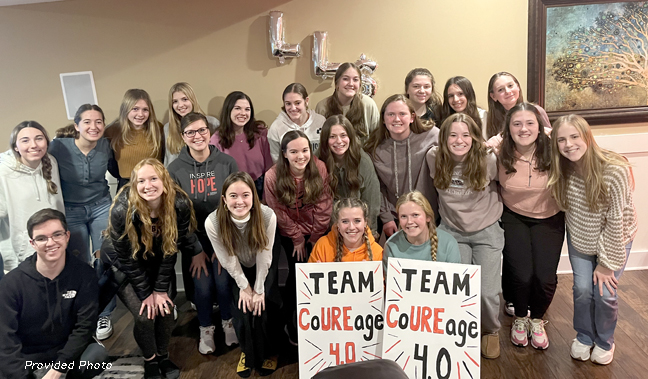
Orhan Ozbudak said, “Throughout my life, I hope to be an avid philanthropist. Ever since my youth, I have participated in many philanthropic events and hope to continue these types of activities into the future. One of my dreams is to create businesses that illuminate warmth and help people.” He added that When Marcel and Emma invited him to join them he knew this was an opportunity to positively impact not only people affected by blood cancer but also the world. “Even though I was hesitant to be a candidate at first, I realized that I am very thankful to participate in the Student Visionaries of the Year Campaign as a candidate.”

The goal is to not only raise money for blood cancer but also to raise awareness in our Loveland community about Leukemia and Lymphoma. “Any donation helps, and brings us closer to our goal,” said Steiner.
Marcel Mangan said, “My connection to LLS began last year when the two past candidates, Grace Dressell and Claire Zeigler, had asked me to be a member of their campaign.” He explained that initially, he was hesitant due to not having a direct connection to leukemia or lymphoma, but after researching the stories of those who have had to deal with these blood cancers he felt it necessary to join. “The most touching story that I heard was about a girl named Emily Love who had been diagnosed with leukemia when she was only 1 years old. Luckily she recovered after 3 years and was able to live a normal life, but sadly those years of her childhood can never be given back to her. After hearing her story I joined the 2022 campaign, and I’ve been a part of it ever since. I just hope that my fundraising can help make a positive impact on those suffering from leukemia or lymphoma.”
Background Info about LLS:

LLS is uniquely able to report on the many advances and accomplishments that have occurred since their founding in 1949. From cutting-edge research and precision medicine innovations to legislative victories that improve access to therapies for cancer patients, LLS plays a leading- and often pioneering- role in the fight against blood cancers. Since 2000, approximately 40 percent of all U.S. Food & Drug Administration (FDA) approved cancer drugs were for blood cancer, and some are now used to treat other forms of cancer and non-malignant diseases. A “win” for blood cancers, therefore, is a win for the cancer community overall.
More
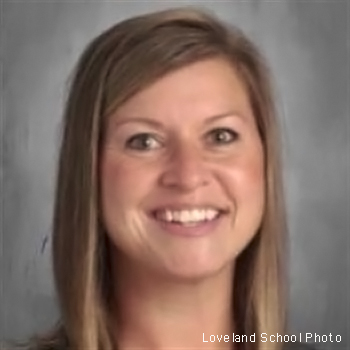
Teacher-mentor, Katie Rose said, “My ‘why’ is my Aunt Tina Eubanks, who died of Acute Myeloid Leukemia only three weeks after being diagnosed at the age of 53.” Rose had been fundraising for LLS through Pennies for Patients with Loveland Middle School Student Council for many years and would always tell people, “You never know when cancer will touch your family”. Another of her aunts is currently battling both lung and liver cancer. Sadly, this cancer diagnosis is her third – lymphoma and rectal cancer being two she defeated. “People often ask why I work so hard to fundraise. The answer is simple. As long as there is breath in my lungs and blood in my veins, I will do whatever it takes to help those who are impacted by cancer.”
Rose who is a Social Studies Teacher at Loveland Middle School said, “Cancer needs to be eradicated and LLS is the organization making the greatest strides in funding research and advancing new drugs to help those in need. I live a life of service, and by teaching my current and former students the importance of giving back and how to raise money for a worthy cause allows me to fulfill my life’s purpose.”
How YOU can support Team CoUREage 4.0
Instagram: @lovelandteamcoureage4.0
Twitter: @teamcoureage4
Orhan Ozbudak said, “I am very appreciative of all the progress we have made and can’t wait to see what our team will accomplish throughout this journey. Hopefully, our efforts will also serve to inspire people to carry on this positivity.”
“Thank you to all of the businesses that are sponsoring our campaign, and thank you to all of the people in Loveland who have shown continuous support for our fundraiser,” said Emma Steiner.
Marcel Mangan summed up the campaign by saying, “Although we hope to raise a large amount of money for the Leukemia and Lymphoma Society, we also hope to spread the importance of LLS throughout Loveland, but also the greater Cincinnati area as a whole.”
| 2/1-2/21 | Buffalo Wild Wings at 11363 Montgomery Rd. 10% giveback on dine-in or carry-out all day if you mention “Team L” |
| EVERY SUNDAY2/5, 2/12, 2/19, 2/26, 3/5, 3/12, 2/19 | Bishop’s Quarter at 212 W Loveland Ave. 10% Giveback |
| 2/8 | Raising Cane’s at 3901 Montgomery Rd., 2 pm-9 PM |
| 2/13 | Cartridge Brewing at 1411 Grandin Rd. 4 pm-10 pm |
| 2/22 | Ramsey’s Trailside at 200 W Loveland Ave. |
| 2/23 | MPH Brewing at 7880 Remington Rd. 4 pm-10 pm. 10% Giveback on food and drink |
| 2/27 | Dewey’s Pizza at 11338 Montgomery Rd. 4 pm-9 pm |
| 3/4 | Athlete Instincts Fitness Fundraiser at 774 Loveland-Miamiville Rd. 10:30 am. $10 to sign up, text Jen Steiner 513-289-6393 to sign up |
| 3/10 | Cappy’s Wine & Spirits at 309 W Loveland Ave. 5 pm-11 pm. LIVE MUSIC starts at 7:30 pm |
| 3/12 | Nisbet Park – Text Jen Steiner 513-289-6393 to sign-up |
| 3/15 | The Work’s Brick Pizza Oven at 20 Grear Millitzer Place. ALL DAY |
Ohio Department of Job and Family Services (ODJFS) Director Matt Damschroder has announced that changes in federal law mean that February will be the last month of emergency Supplemental Nutrition Assistance Program (SNAP) allotments. These are extra monthly payments the federal government created in response to the COVID-19 pandemic. In general, it ensures all households receive the maximum allotment for their household size. Beginning in March, recipients will receive only their one, normal monthly payment.
Here are examples of how the change will impact people:
“Recently passed federal legislation is bringing the temporary SNAP allotment to an end after February,” said Damschroder. “We will be communicating to recipients, county agencies, and our partners such as foodbanks, that normal SNAP payment will resume in March.”
The Supplemental Nutrition Assistance Program is a federally funded program meant to supplement the food budget of families in need so they can purchase healthy food and move towards self-sufficiency.
Eligibility, as well as the normal monthly allotments, vary based on factors such as income and household size.
The Families First Coronavirus Response Act allowed states to request emergency allotments for households participating in SNAP. As a result, ODJFS has been providing emergency allotments to SNAP households since March 2020. Congress recently passed the Consolidated Appropriations Act of 2023, which ended the program.
The federal announcement means the last emergency allotment will be paid in late February, and beginning in March, recipients will receive only their one, normal monthly payment, which is typically loaded onto an electronic benefits card. As this is a federal change, there are no fair hearing rights or fair hearing benefits on the ending of the SNAP emergency allotments.
Recipient can manage their benefits by going to https://benefits.ohio.gov/ or by contacting their county Department of Job and Family Services (JFS).

Loveland, Ohio – The Loveland Board of Education will conduct a regular and work session meeting on Tuesday, January 31 at 6 PM in the Board of Education Offices at 757 South Lebanon Road.
Action Items
Proposal to Proceed to Levy an Additional Tax for Current Operating Expenses – Millage TBD
Discussion Items
New Proposed Courses of Study
The agenda is active on BoardDocs – https://go.boarddocs.com/oh/love/Board.nsf/vpublic?open

BY: SUSAN TEBBEN – Ohio Capital Journal
As policymakers await the newest budget priorities to be laid out by Gov. Mike DeWine, advocates for the state’s children are hoping comprehensive child well-being will be at the top of the list.
The Ohio Children’s Budget Coalition released their policy agenda for the 2024-2025 state budget, which they hope will include whole-child services to address housing, health, child care, economic stability, and adoption of the Fair School Funding Plan, which was only approved for two years of the six-year phase-in so far.
“Children do not come in pieces, and neither should the policies and investments that crucially provide and pave the way for them to grow and flourish into successful adulthood,” said Katherine Ungar, senior policy associate with the Children’s Defense Fund-Ohio.
Recommendations by the OCBC also targeted structural racism, the effects of which “negatively impact child outcomes,” according to the announcement of budget priorities.
“The budget is a moral document that reflects our state’s priorities,” OCBC co-leader and Children’s Defense Fund-Ohio policy associate Matthew Tippit said in a statement.
The policy report also laid out challenges to combatting the teacher shortage the state has suffered from for several years, with the Bureau of Labor Statistics stating 21,000 fewer teachers were employed in K-12 public school in the state from September 2021 to September 2019.
The state has faced recruitment and retention issues, which the coalition attributes to “mounting pressures related to the COVID-19 pandemic, under-resourced schools, politicization of education and lack of respect for educators and the education profession.”
“While a mass exodus of experienced educators from the teaching profession has not yet materialized, it is cause for significant concern when so many are expressing deep frustrations over what they believe is a lack of support and respect for the work they do with students,” the report stated.

The policy recommendations also come on the heels of a recent early childhood dashboard released by the advocacy group Groundwork Ohio. The dashboard has been in the works since 2021 to “help inform policy makers about the realities facing Ohio families with young children.”
Groundwork Ohio president and CEO Shannon Jones said the dashboard “tells us where to focus on making positive change for infants, toddlers and preschoolers.”
The report found that one in five Ohio infants don’t have access to child care or early learning and six in 10 children aren’t ready to attend school based on kindergarten readiness, fourth-grade reading proficiency and eighth-grade math proficiency.
Racial issues appeared as part of Groundwork Ohio’s analysis, with the group finding that infant mortality rates are still above the U.S. average in Ohio “with a large and appalling racial disparity.”
“While there are many ways we can begin to improve outcomes for young children, focusing state efforts on its very youngest citizens is an urgent moral imperative as well as a wise state investment,” according to the report.
The organization was encouraged by state performance in areas like eighth grade math proficiency and improved homeless students and housing cost burdens.
Early investments are needed to benefit Ohio children throughout their lives, the dashboard concluded as state performance compared to the rest of the country was worse in categories such as early intervention service access and young child poverty.
Large disparities were found particularly in Black, Hispanic and Native American/American Indian children living below the poverty level.
The state has also worsened in terms of kindergarten literacy, chronic absenteeism and special needs preschools, according to the dashboard.

by David Miller
Loveland, Ohio – You can be part of and show your support for Loveland Tiger student-athletes at their Winter Athletic Signing Day at the high school on Wednesday, February 2 at 2:50 PM, in the Main Gym.
Congratulations to the following Student-Athletes, who have committed to play their sport at the collegiate level:
Ethan Freeland -Football at Georgetown College
Noah Kline -Football at Valparaiso University
Victoria Blum -Cheer at Mount St. Joseph University
Tyler Huff -Baseball at University of Northwestern Ohio
Jared Werling -Baseball at University of South Carolina-Lancaster
Emma Kist -Archery at Lindsey Wilson College
Parker Braddock -Archery at Lindsey Wilson College
Josh Dues -Lacrosse at Concordia University Ann Arbor


BY: ADAM GOLDSTEIN – Ohio Capital Journal
WASHINGTON – A panel of policymakers and educators, including author Dave Eggers and former U.S. Secretary of Education Arne Duncan, gathered at the U.S. Capitol on Wednesday to promote the American Teacher Act.
The bill, if passed, would authorize the federal government to create four-year grants for states to enact and enforce minimum school teacher salary requirements of $60,000 or more. The program would start in fiscal 2024. It would not mandate teacher raises.
“We’re here today to advocate for our teachers, our educators, our saving grace that rescues families and our children every day,” said Rep. Frederica Wilson, D-Florida, sponsor of the bill and a former school teacher. “We want our teachers to be paid a livable wage. A wage that is fair, a wage that is commensurate with today’s economy.”
Rep. Wilson introduced the American Teacher Act in the House of Representatives on Dec. 14, and is expected to re-introduce it in this Congress, though it’s likely to run into opposition from Republicans who control the chamber.
The legislation states that 15% of the four-year federal grants could support state-level educational agencies, while the remaining 85% must go directly to a state’s local school districts.
The bill includes a cost-of-living adjustment that would peg teacher salaries to inflation, along with a clause allowing for a national awareness campaign on the importance and work of teachers.
Phelton Moss, a senior policy adviser to Wilson, said that the bill also incorporates a maintenance-of-effort provision that requires states not to pull back on their commitment to a $60,000 minimum salary, if they are to keep their funding. Additional language inside the bill would ensure states prioritize Title I schools and districts in distributing funds.
In the 2020-2021 school year, public school teachers made $61,600 while working 52 hours per week, on average. Yet there is significant variation in teacher salary between states.
Mississippi, the lowest-paying state for teachers in the 2020-2021 school year, paid an average of $46,862, according to the National Education Association. Meanwhile, in New York, the average teacher salary sat at $90,222.
Wilson commended the dedication of school teachers during the COVID-19 pandemic, who taught online or went door-to-door to instruct students who lacked access to technology.
”It was during this time that the world finally saw what we’d known for years, that teachers are heroes,” she said. “They deserve a livable, competitive salary that accurately reflects the importance of their role in society.”
Wilson said that 1 in 5 teachers across the country currently works a second job to supplement their income, and over 9,000 districts across the country pay teachers less than $40,000 per year.
She said this lack of adequate pay is largely contributing to some reports of a teacher shortage affecting school districts.
“We should be embarrassed,” Wilson said. “The teacher shortage is among the most pressing threats to education access today. And we must address it. Our classrooms are at stake, our children are at stake, and the future of our country is at stake.”
Ellen Sherratt of the Teacher Salary Project said that over her 20 years of experience as an economist analyzing teacher salaries and shortages, the pay gap and morale of teachers is the worst it has ever been.
Last fall, the Economic Policy Institute performed an analysis of teacher pay trends from 1970 to 2021, and found that teachers earn 23.5% less on average compared to their peers of similar educational backgrounds.
Sherratt also said that 62% of parents surveyed in a PDK poll on public schools last year said they did not want their child to go into teaching, with low pay the top-listed reason.
Rodney Robinson, the 2019 National Teacher of the Year, estimated that roughly 50% of the Ubers and Lyfts he takes during the week are driven by schoolteachers. The Richmond, Virginia resident added that one of these Uber drivers was a former teacher in Alabama. The driver was studying to be a principal, and had to quit his job as a teacher to pay for school.
“We really need to re-examine what we are doing as a country,” Robinson said. “If teachers — who are our most prized possessions, who raise the next generation — have to quit or take on another job just to make ends meet.”
Nicholas Ferroni, a history teacher at Union High School in Union, New Jersey, added that teaching is one of the few jobs in which people can have the greatest impact on the greatest number of people. Ferroni lamented the fact that teachers have to use GoFundMe to “beg for supplies.”
“I’m just here because I don’t want to marry rich, become an administrator, or switch jobs,” Ferroni said. “I do want to stay in the classroom.”
Duncan, the former education secretary, said the impacts of a good teacher are not just test scores and graduation rates, but financial security. He said that an economic analysis from Raj Chetty showed that one good middle-school teacher raised the lifetime earnings of a given class by $250,000.
“So you think about putting two good teachers back-to-back, or three good teachers back-to-back,” Duncan said. “What does that do for young people in perpetuity?”
Duncan also spoke to the institutional barriers to socioeconomic equity that high-quality education can surmount.
“No kid grows up wanting to be poor,” Duncan said. “The only way I know how to break the cycles of poverty and create upward mobility is to create opportunity. Getting great teachers where we need them most is critically important.”
Robinson said the bill could reduce barriers for people of color in entering the profession, and eroding the national achievement gap.
“People don’t understand the extra burden for people of color to take on more student loan debt,” Robinson said. “We know having educators of color, teachers that look like their students, is the most important thing to lowering that achievement gap and increasing graduation rates.”
“By increasing teacher salaries, we can make a dedication to increasing diversity in the teacher workforce.”
Moss said that there are still details yet to be finalized in the teacher salary bill, including the concrete definition of “teacher” and provisions for veteran educators.
Robinson added that he sees this bill inevitably facing resistance, yet that blowback should not deter its supporters.
“You know, pious D.C.,” Robinson said. “‘How are we gonna pay for this? How are we gonna do this?’”
“How can we afford not to pay for this? This is an issue of national security.”
Duncan challenged claims from some teachers that the American Teachers Act represents federal overreach. “Education is the ultimate bipartisan issue,” Duncan said. “This is nation-building. Our teacher workforce in our country is the best offense for our nation.”
Robinson added that the bill will put pressure on states to raise and maintain wages even after the grant is over, as they face competition from other states paying teachers more, who leave to work in a higher-paying community.
After the roundtable, Eggers talked about the “uninterrupted string of extraordinary teachers” in his education during an interview with States Newsroom. The author said that he still sends his books in manuscript form to a former high school English teacher, Peter Ferry, who is one of his first readers.
“Every single study that has ever tested what’s the most important thing in a student’s education — it’s not the color of the paint on the walls, or the facilities,” Eggers said. “The very most important thing is the teachers. It’s a school. It has to be teachers first.”
The author emphasized that if the pay schedule for teachers rises, talent will enter and stay in the profession, and the nation will grow to recognize the value of what teachers bring to the table.
“We know there’s a crisis,” Eggers said. “ We have hundreds of thousands of empty classrooms. We have schools that only have one or two qualified teachers. This is maybe the most urgent moment in the last 150 years. And so there isn’t any other option. We have to start somewhere.”

BY: MARTY SCHLADEN – Ohio Capital Journal
CINCINNATI — A federal court trial over allegations of epic public corruption has been interrupted at least until Monday after a juror was diagnosed with COVID on Wednesday.
“The Court was advised this afternoon that a juror has tested positive for COVID-19,” U.S. District Judge Timothy Black wrote in an order Wednesday evening. “In an effort to ensure everyone’s safety, jury trial will not convene for the duration of the week. The recess is CONTINUED until Monday, 1/30/2023 at 9:30 a.m.”
In the trial, former Ohio House Speaker Larry Householder and lobbyist Matt Borges are accused of racketeering.
Householder is accused of masterminding a scheme in which $61 million — mostly from Akron-based FirstEnergy — was used to help elect Republican lawmakers who would make Householder speaker in 2019. In exchange, prosecutors say, Householder shepherded through a $1.3 billion utility bailout package and then protected it from a ballot initiative intended to repeal the measure.
Borges is accused of acting corruptly in the successful effort to block the repeal.
The great majority of the ratepayer money was intended to prop up two failing nuclear plants in Northern Ohio owned by FirstEnergy subsidiary FirstEnergy Services. Some went to “recession proof” coal-fired plants owned by the subsidiary that FirstEnergy management regarded as unsellable.
Even though the law was billed as a “clean air” measure, the rest of the package went to subsidize coal plants owned by utilities other than FirstEnergy — including a plant that’s not even in Ohio. Of the three tranches of subsidies, that is the only one that’s still in effect after FirstEnergy entered into a deferred-prosecution agreement.


As an Edward Jones financial advisor, I believe it’s important to invest my time to understand what you’re working toward before you invest your money. It’s also important to understand the level of risk you’re comfortable accepting when investing so we can balance it with the steps necessary to reach your long-term goals.
Whether you’re planning for retirement, saving for college for children or grandchildren, or just trying to protect the financial future of the ones you care for the most, we can work together to develop specific strategies to help you achieve your goals. We can also monitor your progress to help make sure you stay on track or determine if any adjustments need to be made. Throughout it all, we’re dedicated to providing you top-notch client service.
But we’re not alone. Thousands of people and advanced technology support our office so we can help ensure you receive the most current and comprehensive guidance. In addition, we welcome the opportunity to work with your attorney, accountant and other trusted professionals to deliver a comprehensive strategy that leverages everyone’s expertise. Working together, we can help you develop a complete, tailored strategy to help you achieve your financial goals.

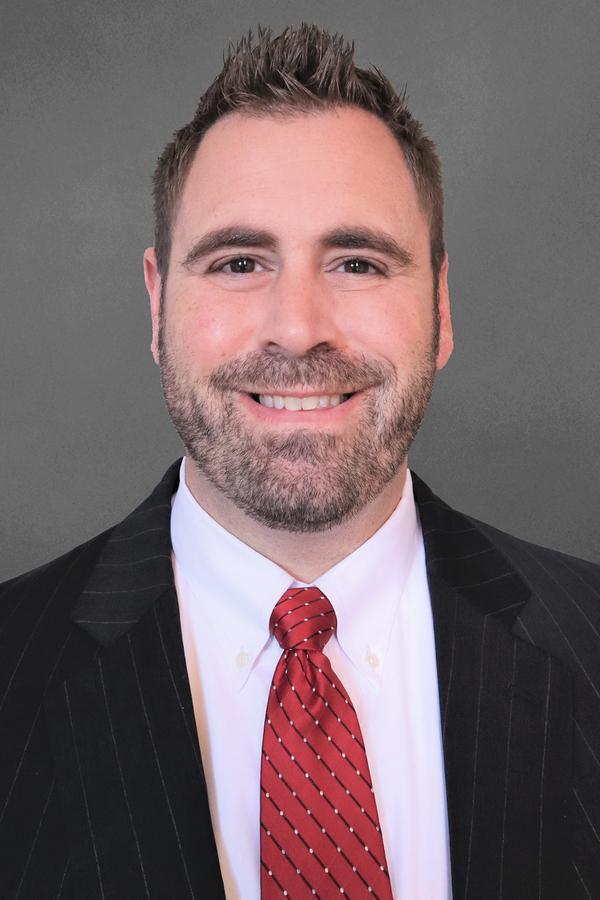
At Edward Jones, we offer the investments, services and tools our clients need to work toward their financial future. In addition, the firm has thousands of professionals and advanced technology supporting our branch offices to help clients reach their long-term financial goals.
Making strong connections while serving others has been a hallmark and great joy in my career journey. Many years of my professional career were spent as an elementary teacher, elementary assistant principal and elementary principal in Carmel, Indiana. As a former educator and leader, I understand the importance of personal connection and the impact understanding can have in working collaborative partnerships. At Edward Jones, we take the time to understand what’s important to you, using an established process to build personalized strategies to help meet your goals and partner with you to make adjustments and help you stay on track. Throughout it all, we’re dedicated to providing you top-notch client service.
In this ever-changing world, it’s important to have a financial team dedicated to serving you and leveraging advanced digital tools to better personalize your path! As a former leader in the Ed-Tech sphere, I have a passion for leveraging digital tools for advanced analysis and strong communication.
In my free time, I love spending time with my family (wife and two boys), serving in my church, serving my community, reading, traveling, sports, football (I played in college) and all things BBQ!
Give me a call today. I would love to find out what’s important to you and use our disciplined process to help you achieve your goals!
505 West Loveland Ave
Loveland, OH 45140
Jeffrey or Christopher at (513) 697-6111
Fax Jeffrey or Christopher at (888) 472-0834
| Weekday | Availability |
|---|---|
| Mon | 08:30AM – 05:00PM |
| Tue | 08:30AM – 05:00PM |
| Wed | 08:30AM – 05:00PM |
| Thu | 08:30AM – 05:00PM |
| Fri | 08:30AM – 05:00PM |
| Sat | Closed |
| Sun | Closed |

Loveland, Ohio – The Loveland, Ohio non-profit “Ben Morrison Fund” and Tori Morrison have announced the date of the 2023 2nd Annual Ben’s Birthday Bash will be February 19th, 2023.
The Ben Morrison Fund was recently honored by the Little Miami River Chamber Alliance as their “Hometown Hero”.
The event will take place at the Fowling Warehouse and will feature tournament-style fowling, BBQ provided by JD’s Meat Shack, and the auctioning of the fan-favorite “Liquor Trove.”
All proceeds will go directly to helping young people struggling with mental health crises, normalizing conversations about mental health, and building hope. Every year the Ben Morrison Fund gives scholarships to graduating Loveland seniors and works to erase the stigma of mental health struggles in honor and in the memory of their son Ben.
“We are so grateful for the support we receive to strengthen our efforts to help erase the stigma of mental health struggles and to help those struggling to move forward,” says Tori Morrison, President of the Ben Morrison Fund and Ben’s mom. “This event is particularly special to me as it celebrates Ben’s life as well as his lasting legacy of helping others. It’s a lot of fun, we hope you will come join us!”

Ben’s Birthday Bash will take place February 19th from noon until 3 PM at the Fowling Warehouse in Cincinnati. $20 Tickets can be purchased in advance at benmorrisonfund.org or at the door. Participation in the tournament is $5. Lunch will be provided.
“We are so grateful for our sponsors, volunteers, and our incredible community for their continuous support as we work to make a lasting difference in helping young people continue their story,” said Stacey Lund, Vice President of the Ben Morrison Fund.
To learn more about the Ben Morrison Fund or to donate, visit benmorrisonfund.org. You can also follow us on Facebook, Instagram and Twitter.