Tag: latest stories

  • The bedeviling details: Roe decision leaves Ohio health providers scrambling

    The bedeviling details: Roe decision leaves Ohio health providers scrambling

    BY: MARTY SCHLADEN – Ohio Capital Journal

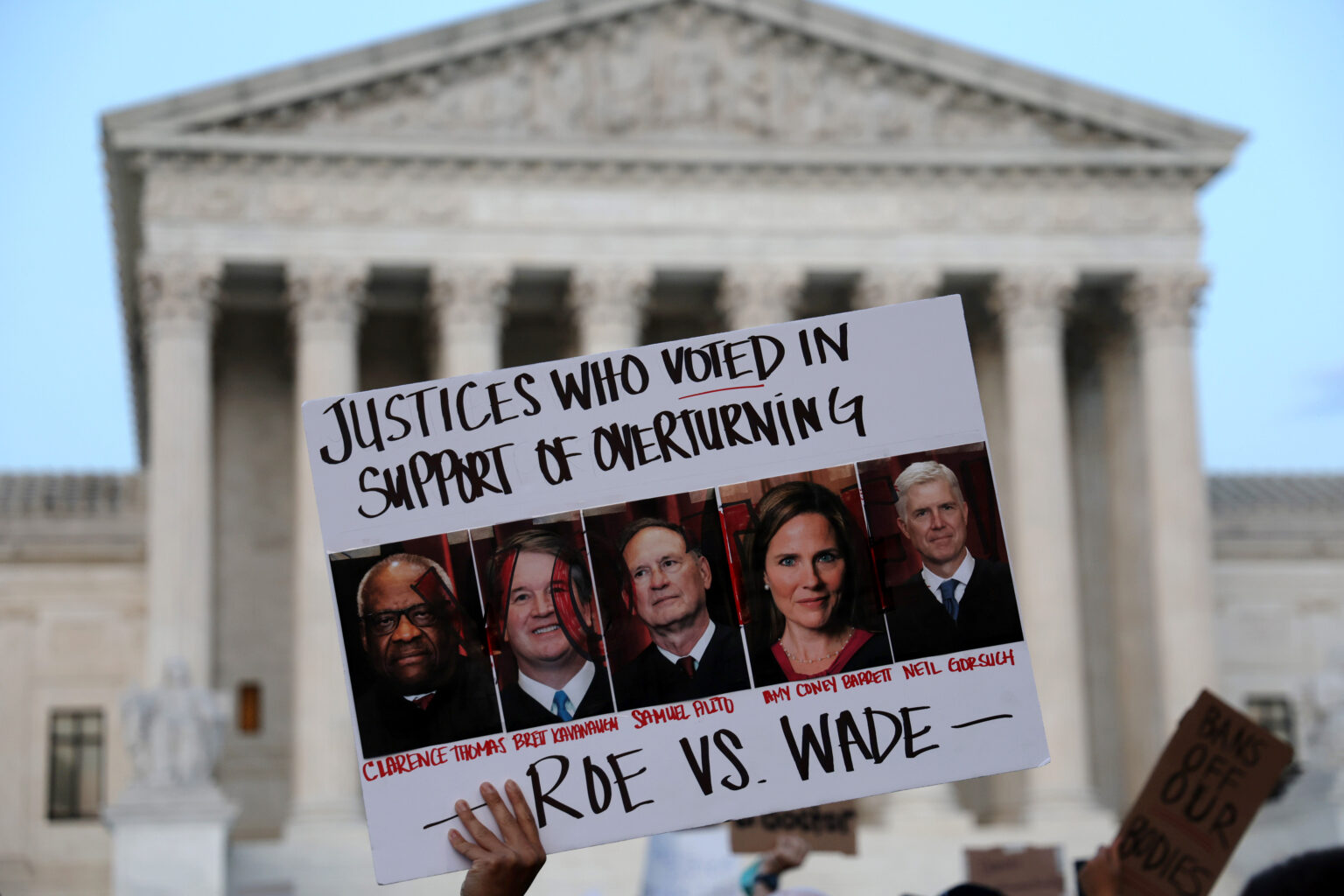
    Abortion foes celebrated victory in a 50-year fight on June 24, when the U.S. Supreme Court overturned Roe v Wade and allowed states to severely restrict — or even eliminate — women’s access to abortion. But for those who care for pregnant women, the ideological victory posed a swarm of burdensome questions they haven’t begun to answer.

    Jason Sayat, a Central Ohio OB-GYN, said the Friday the decision came down started as any other. He and his colleagues juggled a full office load with duties in the labor-and-delivery ward. 

    “Then we were hit with the information that Roe v Wade was reversed,” he said, describing how through the rest of the day they dealt with not just patients’ medical conditions, but also their fears about what the cancellation of a constitutional right to abortion meant for them.

    Within hours, the confusion increased when Attorney General Dave Yost filed a motion to lift an injunction against a 2019 Ohio law prohibiting abortions after six weeks of pregnancy — a point at which as many as a third of women don’t even know they’re pregnant

    Sayat said “it really put things dramatically and quickly into focus in terms of how these restrictions were well in place within hours.”

    The six-week ban is far from the only abortion restriction that could be coming down the pike in Ohio. One lawmaker says she has the votes and support of Gov. Mike DeWine to ban almost all abortions, even in the case of rape or incest.

    The flurry of anti-abortion laws and proposals has Ohio’s major health systems on their heels. 

    Individual practitioners such as Sayat, who declined to name his employer, are saying they need to know that Ohio health systems will have their backs in the months ahead. But he said that as of last week, “we’re still waiting for directives.”

    He explained that while the political debate over abortion tends toward the simplistic, caring for pregnant women in the real world is anything but.

    For example, Ohio’s six-week law allows later abortions if there’s a “medically diagnosed condition that so complicates the pregnancy of the woman as to directly or indirectly cause the substantial and irreversible impairment of a major bodily function.” But who determines whether those conditions have been met? The Department of Health? The police?

    “What this has all come down to is the violation or disruption of personal medical decision-making between the decisions of the patient and their trusted health care team or physician,” Sayat said. “It’s so individualized and complex that laws like this can’t apply to that. It’s not as black-and-white.”

    And, he said, in situations where continuing a pregnancy is incompatible with the health of the mother, doctors and patients need to be able to make decisions “without fear of reprimand or imprisonment on felonious charges.”

    The American Medical Association didn’t mince words in the wake of the Supreme Court decision overturning Roe v Wade.

    The organization “is deeply disturbed by the U.S. Supreme Court’s decision to overturn nearly a half century of precedent protecting patients’ right to critical reproductive health care — representing an egregious allowance of government intrusion into the medical examination room, a direct attack on the practice of medicine and the patient-physician relationship, and a brazen violation of patients’ rights to evidence-based reproductive health services,” AMA President Jack Resneck Jr. said the day of the decision. “States that end legal abortion will not end abortion—they will end safe abortion, risking devastating consequences, including patients’ lives.”

    Ohio’s major hospital systems — operating in a state dominated by anti-abortion officeholders — have been much more cautious in their public statements. 

    The Capital Journal last week asked them four questions:

    • Will your organization provide out-of-state abortion care to your employees should they need it?
    • Will it defend practitioners making medically sound decisions — for example, terminating a pregnancy to protect the mother — to the fullest extent should they be accused of violating current or future restrictions on abortion in Ohio?
    • Are you concerned that current or future restrictions might make it more difficult to attract and retain talented practitioners?
    • Does your organization believe that, in restricting abortion, lawmakers and the courts are inserting their religious beliefs into the doctor-patient relationship?

    Many responded by saying they don’t have any answers yet. Tausha Moore of Toledo-based ProMedica gave a typical response.

    “Regarding your inquiry, we are in the process of evaluating recent changes to better understand the impact they will have on health care in the communities we serve,” she said in an email.

    Marti Leitch of Ohio State’s Wexner Medical Center made a similar statement.

    “Ohio State is closely examining the decision from the Supreme Court and changes in state law,” she said. “If necessary, the medical center and College of Medicine will make adjustments to be in compliance with the law.”

    Dorsena Drakeford of Cleveland’s MetroHealth also said her system is also reviewing the situation.

    Amanda Nageleisen of the University of Cincinnati Health System also said it was continuing to review the situation, but “We remain deeply committed to the sanctity of the patient-health care provider relationship and will balance patients’ and health care providers’ interests in accordance with all federal and state laws.”

    It appears that a big question the state’s hospital systems are grappling with involves ending pregnancies when they’re deemed medically necessary.

    “While OhioHealth hospitals and clinics have not and do not provide elective termination procedures, we acknowledge that there are times when the life and safety of a patient may be threatened by acute medical complications, even early in pregnancy,” spokeswoman Stephanie Stanavich said in an email. “We will continue to offer care to our patients within the confines of any new regulatory landscape and always within the best practice standards of care.”

    As the big hospital systems formulate their policies, Sayat, the OB-GYN, said he hopes they keep practitioners in mind.

    “I think that the biggest part is that we as providers need to feel supported and feel like we have the resources to navigate the complexity of scenarios we’re presented with,” he said.


  • Today is the 4th of July, and each stripe and every star is there, messy as it is

    Today is the 4th of July, and each stripe and every star is there, messy as it is

    I smiled and thanked him. “Not sure how long it will last this time,” I said, “but we’ll see.”

    by Stefanie Badders Laufersweiler

    “Patriotism” has taken on so many different and sometimes wildly varying meanings and interpretations that even the word itself feels divisive, a point of constant contention. A contest rather than a coming together. Who is truly a patriot and who isn’t? Are you patriotic enough, or at all? Do your views, does your existence, insult the very idea of patriotism?

    I wish we could throw out the word and find another.

    It feels loaded, weaponized, and as worn out as this flag that someone painted at the edge of our dock. A few flags have come and gone in that same spot over the years. Fresh paint from some well-meaning fellow lake-goer always gives way to waves and wind that batter the concrete over time. But, someone always repaints it, eventually.

    Today is the 4th of July, and some (like me) woke up not really feeling it. For those reeling from recent events (take your pick), it feels disingenuous right now to celebrate independence, unity and democracy as they relate to America. For others, it feels more celebratory this year; for some, it may feel the same way it does pretty much every year. And we all manage to offend each other with our individual takes, long after the fireworks and barbecues are over.

    I still love this country, even when it’s hard. Even when I believe we have endless work to do to make it a better place. Even when it doesn’t feel all that united. Even when the weight of our differences, our inequities and our struggles feels incredibly heavy. Because, perpetually, underneath all of that is hope.

    I still love this country, even when it’s hard.

    Hope is what powers and empowers us. To keep trying, and talking. To show up always, or anyway. To set boundaries, but still leave a door cracked. To appreciate what’s been done that we can be proud of, while acknowledging there’s still much more to do, because this country is, if anything, a work in progress.

    Today I walked down to the dock with some brushes and got to work repainting that worn-out flag. I didn’t do it perfectly; the stars barely resemble stars, and the stripes run into each other in places. But each stripe and every star is there, messy as it is. It got me wondering who painted it in the first place, and who repainted it after that.

    As I packed up my painting supplies, I wished a father and his son good luck as their fishing lines hung over rail.

    “It looks great,” the dad told me, eyeing the fresh paint. “It’s needed to be done for a while.”

    I smiled and thanked him. “Not sure how long it will last this time,” I said, “but we’ll see.”

  • Loveland Area lawmaker says baby born of rape, incest ‘still has the right to life’

    Loveland Area lawmaker says baby born of rape, incest ‘still has the right to life’

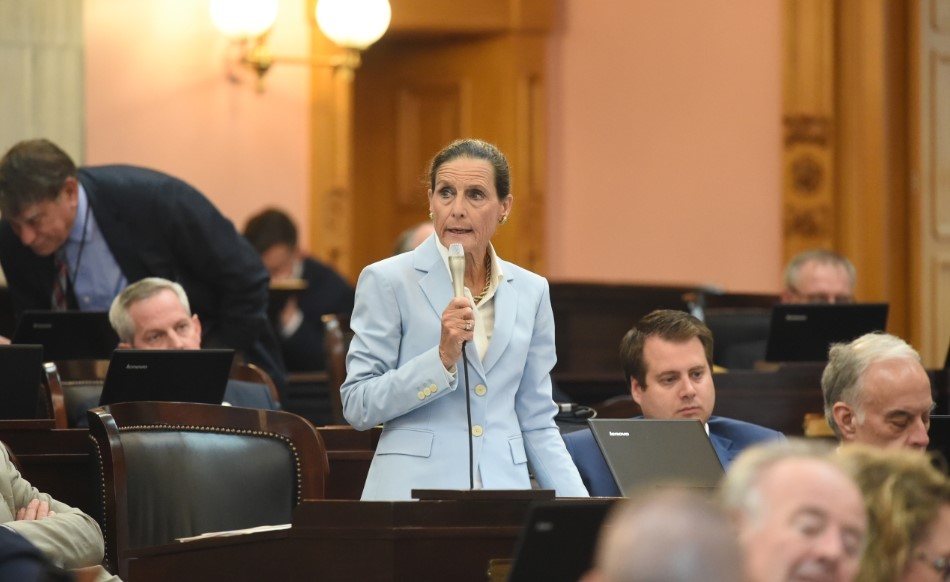
    State Rep. Jean Schmidt speaks on the floor of the Ohio House. Photo from the Ohio House website.

    BY: JAKE ZUCKERMAN –  Ohio Capital Journal

    The sponsor of legislation that would ban nearly all abortions in Ohio said babies conceived via rape or incest still have a right to life.

    Rep. Jean Schmidt, a Loveland area Republican, said on conservative talk radio earlier this week that her bill is likely to pass in the legislative session after the November elections.

    “I do believe we have the votes in both chambers, and we have the full support of the governor on this bill,” she said.

    The bill also creates a new misdemeanor crime of “promoting” abortion, for those who make, sell or distribute drugs or devices used to perform illegal abortions. Schmidt said in the interview this could be used to target some of the companies (including in Ohio) that have announced they will cover costs of employee travel to seek an abortion as needed.

    When pressed by 700WLW host Bill Cunningham on whether Ohio should pass legislation banning birth control pills or condoms, she said she’ll listen to both sides of the debate.

    House Bill 598, which Schmidt introduced, would ban most abortion in Ohio. Current Ohio law allows for abortions up to six weeks after a woman’s last period. The proposed legislation does not provide exceptions for pregnancies conceived by rape or incest.

    Providing any abortion under the bill could lead to a fourth degree felony charge. The law allows the accused to mount a defense, however, if they only did so to save the life of the mother. That physician would need to provide written certification of the woman’s medical need along with that of another physician from a separate practice.

    Likewise, the legislation requires at least two physicians present during the abortion: one to perform the abortion in the manner that provides the “best opportunity for the unborn child to survive,” and another to care for the fetus.

    Schmidt drew national attention in April when she referred to a hypothetical 13-year-old’s pregnancy spawned by rape as an “opportunity.” Her recent comments, however, come after the U.S. Supreme Court last week overturned a landmark 1973 ruling that established a constitutional right to abortion. That decision wiped out the federal protection and returned control over abortion to the states.

    A spokesman for Gov. Mike DeWine did not dispute Schmidt’s characterization of DeWine’s support for her bill, and noted that the governor has previously expressed support for conceptually similar legislation. Senate President Matt Huffman, R-Lima, said this week he expects an abortion ban of some sort to pass in late 2022.

    Schmidt’s remarks indicate no signs of a softened position, and a sense of opportunity after the removal of a major roadblock to restrictive abortion laws. They, and Cunningham’s questions, have been edited here for length and clarity.

    Cunningham: What about rape and incest [as a potential exception to a ban on abortion]?

    Schmidt: “Rape and incest is an ugly, ugly, ugly act of violence, and that woman is truly harmed and scarred, and those wounds will never go away and we need to make sure that she has all of the love and help and support. But to end the pregnancy of the child is not going to erase those wounds or those scars. That child still has the right to life.”

    So, as a leader in the House of Representatives, you would not vote to ban birth control pills in Ohio?

    “You know, that’s another issue for another day, and I’m going to have to listen to both sides of that debate. But right now, what I’m really concerned about is the life of the child, and the fact that we have the opportunity in Ohio to protect it from its conception until its natural death. That’s what I’m most excited about.”

    Would you vote against gay marriage in Ohio?

    “You know, Bill, that’s another decision for another day. The issue right now is abortion, and that’s one I want to make sure sees its end in Ohio in a very quick fashion.”

    [Cunningham for 90 seconds talks about various alternatives to surgical abortion, ending in a statement that companies are starting to “pay” their employees $4,000 to travel to more liberal states that allow them to obtain an abortion and other “workarounds”.]

    Do you know what I’m saying?

    “If those companies want to do that, they better make sure that they’re complying with the laws of the states that allow them to do that. Because in House Bill 598, it says anybody that promotes an abortion will be under the issues of criminal activity. They might have a problem with sending somebody outside the state with a paycheck in hand, because that would be – in some legal eyes – promoting abortion.”

    Follow OCJ reporter Jake Zuckerman on Twitter.

  • Feeling the pain at the pump for the 4th of July weekend?

    Feeling the pain at the pump for the 4th of July weekend?

    Promoted Post

    Maybe this #NationalTireSafetyWeek tip today will help!

    #DYK whether your tires are properly inflated greatly affects your vehicle’s gas mileage? Over (and under) inflated tires require your vehicle to use more fuel to make the wheels go-round, which then lowers your fuel economy.

    If your tires are in need of some help, stop into your local Tuffy shop and we’ll make sure you start the weekend off strong!💪

    Tuffy Tire & Auto Service (Cincinnati 9401 Fields-Ertel)

    c

  • “Red, white and nope: How to help your pets deal with summer fireworks”

    “Red, white and nope: How to help your pets deal with summer fireworks”

    Here is an interesting and most useful story published by Tana Weingartner with 91.7 WVXU.

    “It’s that time of the summer when people who love fireworks revel in lighting up the night sky — and people with pets sensitive to the loud booms fret over how to handle their anxious animals.

    WVXU asked CARE Center Medical Director Dr. Rachel Halpin for tips on how to help pets during the Fourth of July holiday. She says one of the biggest issues is dogs getting scared and running away.” Read complete story at 91.7 WVXU…

  • New truck for Miami Township Fire & EMS

    New truck for Miami Township Fire & EMS

    Miami Township, Ohio – Miami Township Fire & EMS just recently announced information about their new E-ONE Fire Truck.

    • E-One Custom Typhoon Chassis with seating for 6

    • Cummins L9 450 HP Engine

    Hale Products 1500 GPM Pump

    • Class1 2.1A Smart Foam system

    • 470 Gallon Water / 30-gallon Foam

    • Heavy-Duty Extruded Aluminum Side Stacker Body

    • Full Height Split Depth Driver Side Compartments

    • Officer Side Compartments with Side Stacker hose storage

    • HR 100 ladder with 750 lb tip load, pre-piped waterway

    • Advanced Aerial Control System

    • Smart Power 6kw hydraulic generator, 150′ cord reel

    HiViz LED Lighting FireTech scene lights

    Whelen Engineering Company, Inc. LED Warning Lights, Whelen Electronic Siren

    • Federal Q2B siren

    • Side view cameras, back up camera, turntable positioning cameras

  • ‘Unequivocal nightmare:’ OB/GYNs fear uncertainty, health care delays post-Roe

    ‘Unequivocal nightmare:’ OB/GYNs fear uncertainty, health care delays post-Roe

    A medical exam room. File photo from MaxPixels.net.

    BY: SUSAN TEBBEN – Ohio Capital Journal

    Doctors fighting to keep their patients alive are worried about new abortion-related paperwork and legal advice that would hold up necessary care for their patients.

    Consulting lawyers and keeping complicated documentation is a part of life now that the U.S. Supreme Court overturned Roe v. Wade and Ohio put a six-week abortion ban in place.

    “If (patients) are in the midst of a pregnancy loss and a heartbeat is present… we then have to do the same paperwork for someone who was having an elective termination (abortion),” said Dr. Amy Burkett, an OB/GYN hospitalist in Northeast Ohio.

    Doctors face potential criminal charges and risks to their medical licenses because of what they say are unclear regulations and specifications on abortion. Beyond that, the changes to the health care landscape nationally and in Ohio create an environment where doctors who know a pregnancy isn’t viable may have to watch a parent carry the pregnancy anyway.

    “Being forced to go down the path is just an unequivocal nightmare, especially if you think of someone going through an entire pregnancy against their will when they know the fetus is going to die,” said Dr. David Hackney, maternal fetal medicine specialist in the Cleveland area, and chair of the American College of Obstetrics and Gynecologist’s Ohio chapter.

    Hackney, who works with high risk pregnancies and diagnoses birth defects, said abortion bans can increase the complication rate in pregnancies merely by increasing the number of pregnancies coming to term.

    As Roe v. Wade was overturned Friday and Ohio implemented its six-week abortion ban, Hackney was on call, and went to sleep that night unsure how he would proceed with medical care the next day.

    “It’s a Friday night, and all of a sudden the legal ground has changed entirely beneath my feet,” Hackney said.

    With cases that can include time-sensitive care and bleeding that must be dealt with urgently, Hackney said not having a plan in place can cause distractions with dangerous impacts on infant and parent health. That plan may now have to include referrals to other health systems, and even other states for legal options.

    “When it comes to a lot of these legal issues, the most important thing to have is a plan before something awful happens,” Hackney said. “We are even now still working out the details and trying to figure out processes.”

    Abortion bans could have impacts on pregnancy-related procedures that have nothing to do with abortion as well, according to doctors. Dr. Tom Burwinkel, a reproductive endocrinologist who also works on in-vitro fertilization, says bills like HB 598 — a proposed complete abortion ban in Ohio — could cause legal confusion and liabilities for facilities storing embryos or working with those embryos.

    Because the bill, which is currently sitting in a House committee, says an “unborn child” is defined at the time of fertilization, embryos that are damaged even accidentally or through natural occurrences in the IVF process could be held against the doctors conducting the work.

    “If we have embryos stored and something happens to the liquid nitrogen tanks, are the physicians and the people that own the facilities on the hook for the loss of thousands of embryos?” Burwinkle posed.

    Though IVF isn’t impacted by the six-week abortion ban, Burwinkle worries about the future of the IVF field and other pregnancy medicine, as laws and bills in the state focus on ideological ideas of life rather than the medicine involved.

    “Obviously the legislature wants to take things a step further … and that’s somebody imposing their religious beliefs on others. I thought this country was founded on religious freedoms,” Burwinkle said.

    Comments made by U.S. Supreme Court Justice Clarence Thomas in support of overturning Roe v. Wade are giving physicians further reason to be concerned about the future of gynecology, especially contraceptives.

    Burkett said it’s important for the public to understand that contraceptives are not considered abortion medication, even as legislation might couple things like Plan B with abortion-inducing drugs, and misinformation exists coupling IUDs with abortion.

    “IUDs are not considered abortion medications,” Burkett said. “Plan B is also not considered an abortion medication. Neither are medically considered abortifacients.”

    Misinformation about contraceptives does not just impact the public who may not have done enough research, but a part of legislation sponsored by non-medical professionals who may not be listening to the medical community. Hackney said ACOG representatives are always willing to serve as a resource for legislators.

    “In general, most of this legislation happens without meaningful, or certainly not with mainstream medical input,” Hackney said.

    Follow OCJ Reporter Susan Tebben on Twitter.

  • Millions of Ohioans facing home gas and electric rate hikes

    Millions of Ohioans facing home gas and electric rate hikes

    Duke’s parent company made $820 million in profit in the first quarter of 2022 after netting about $3.6 billion last year. It paid its shareholders $3.1 billion in dividends in 2021 and paid its CEO $16.4 million in salary.

    BY: JAKE ZUCKERMAN Ohio Capital Journal

    Ohio utility companies have asked state regulators for permission to raise home gas, electric and water costs on more than 2.75 million Ohio customers.

    Those charges could be spread between customers of Columbia Gas, AES Ohio, Duke Energy, and Aqua Ohio. The utilities, all investor-owned, are collectively asking for another $400 million in annual charges.

    Any base rate increases require the approval of the Public Utilities Commission of Ohio, which is headed by five commissioners chosen by the governor for five-year terms. The PUCO’s staff review the companies’ requests and pose recommendations to the commissioners, who decide what the utilities can ultimately charge their customers.

    The utilities’ requests come in an inflationary period — consumer prices are up 8.6% over the year ending May 2022 and unleaded gas costs just below $5 per gallon. Last week, the head of the U.S. Federal Reserve said a recession is a possibility.

    “It is bad timing for utilities to be seeking rate increases at the PUCO, with consumers already hurting from soaring energy prices and inflation,” said Bruce Weston, executive director of the Ohio Consumers’ Counsel, a state agency that represents residential ratepayers in PUCO cases.

    “Ohio should lead with its heart and keep Ohioans connected to their utility services.”

    They also come at a turbulent time for the commission. Its former chairman resigned in 2020 after FBI agents were seen raiding his home. Last summer, the utility FirstEnergy Corp. alleged in court documents that it paid him a $4.3 million bribe for regulatory favors. He has denied wrongdoing and has not been charged. The U.S. Department of Justice twice subpoenaed the PUCO last year for records related to the case.

    Two commissioners previously worked for the companies they now regulate. Commissioner Dan Conway previously represented American Electric Power as an attorney in private practice. Commissioner Lawrence Friedeman has worked for IGS Energy, Vectren Energy Delivery of Ohio, Columbia Gas Services, and the Ohio Gas Association.

    Thus far, the PUCO staff has recommended granting slimmed-down versions of rate hike requests from Columbia Gas, Duke and Aqua Ohio. The AES case awaits a key ruling from a PUCO judge. None of the four has reached a final decision.

    A rate freeze would be very bad for customers. It would be damaging to the company’s credit ratings and make it difficult, if not impossible, for the company to provide reliable service.

    – AES Ohio attorney at a PUCO hearing last month

    Columbia Gas

    Columbia Gas asked the PUCO to allow a $221 million annual rate increase for its natural gas distribution service. This would take the form of a fixed fee increase, up from $16.75 per month to $46.31. According to analysis from the Ohio Consumers’ Counsel, that could increase to an $80 fixed cost per month in five years.

    PUCO staff identified some evidence of the company padding its costs in their report. When PUCO staff reviewed Columbia’s cost data provided by the utility to justify the hike, they found the company included $304,000 in costs for a workout facility and locker rooms at its downtown headquarters. The report also found an instance where the Columbia acquired five “thermal cameras” for COVID-19 temperature checks, each at a cost of $14,995. PUCO staff called the spending “significantly excessive” compared to a handheld thermometer.

    The PUCO staff recommended the commissioners approve a more modest base distribution revenue increase of between $35 million and $58 million per year. The OCC urged the PUCO to go even lower, proposing a $9.8 million increase.

    The proposed increase was the subject of a handful of sparsely attended public hearings last month. Evidentiary hearings start next month. They’ll be followed by a round of briefings before a final decision, according to a PUCO spokesman.

    NiSource, the utility’s parent company, made $431 million in profits in the first quarter of 2021. Last year, it paid its CEO $6.6 million, and paid its shareholders $345 million in dividends.

    Company spokesman Eric Hardgrove declined to answer specific questions about the gym or the thermometers.

    “Columbia is committed to our customers and the communities we proudly serve,” he said. “To continue to provide safe, affordable and reliable natural gas service, we must continue to invest in our system to upgrade aging infrastructure, just as investments are made in bridges, roads and other infrastructure in our cities, towns and communities. In addition, Columbia offers a wide variety of energy assistance, energy efficiency, payment plans, and PIPP to help customers afford their utility bills.”

    Duke Energy

    Duke Energy, which services 700,000 customers around Cincinnati, proposed raising both its electric rates and its gas rates. (It has comparatively few gas customers).

    On the electric side, the company requested a 10% base distribution revenue increase, which comes out to about $55 million per year.

    According to the OCC, this means a typical residential customer will see a monthly base distribution charge increase from about $37 to $49, costing roughly $144 per year.

    PUCO staff recommended a more modest increase of about .33% to 3%, or about $2 million and $15 million.

    On the gas side, Duke also filed a pre-application with the PUCO to raise its natural gas rates. However, this is in its early procedural stages and wouldn’t take effect until at least 2023.

    For electric costs, the PUCO is holding public hearings next month before an evidentiary hearing, which could take a week or so. Then comes a round of court filings and a commission decision. A PUCO spokesman guessed a decision could come mid-fall at the earliest.

    The utility’s parent company made $820 million in profit in the first quarter of 2022 after netting about $3.6 billion last year. It paid its shareholders $3.1 billion in dividends in 2021 and paid its CEO $16.4 million in salary.

    Company spokeswoman Sally Thelen said Duke is making smart investments to provide “safer and more reliable and secure” energy to customers while “diligently lowering operation and maintenance” costs. She said Duke is allowed to earn a fair return on its investments.

    “We know how vital electricity is to our customers, communities and region, and that energy is a significant monthly expense for our customers,” she said. “We also know that higher bills are never embraced. That’s why we continue to work hard to keep our costs down. We remain committed to helping our customers who may be experiencing financial hardship and struggling to pay their everyday expenses and energy bills. Duke Energy continues to support its customers, and connect them with available assistance and offer tools and programs – including flexible payment plans – to help manage their energy bills.”

    AES Ohio

    AES Ohio — formerly known as Dayton Power and Light, which serves 527,000 western Ohio customers — asked for a 49% base distribution revenue increase worth about $121 million per year.

    According to the OCC, this would raise an average customer’s bill by about $13.42 per month.

    The utility’s parent company, AES, has faltered compared to its peer companies, reporting a $409 million net loss in 2021, as it paid its CEO $14 million in salary. Addressing the PUCO, AES Ohio’s CEO testified to the company’s “very fragile” financial condition, according to the Dayton Daily News.

    In July 2021, the PUCO staff initially recommended a rate increase to boost AES’ base distribution revenues by at least $61 million. However, staff have since sided with arguments raised by the OCC and said the company’s 2009 agreement with the commission blocks the company from raising its rates.

    The question was put before a PUCO judge at a hearing last month. Jeff Sharkey, an attorney representing AES Ohio, made several arguments against the existence of a rate freeze, including that state law doesn’t give the PUCO the power to order one in the first place. He said the utility has already struggled with reliability. A failure to increase its revenue could harm its credit rating, which threatens the company’s service.

    “A rate freeze would be very bad for customers,” he said, according to a transcript of the hearing.

    “It would be damaging to the company’s credit ratings and make it difficult, if not impossible, for the company to provide reliable service.”

    The case awaits a final decision from the PUCO. Company spokeswoman Mary Ann Kabel defended the rate increase request, stating it covers the cost of grid investments.

    “Since our last distribution rate case in 2015, the updated distribution base rates would allow us to recover for investments required and are already completed as a result of the devastating 2019 Memorial Day tornadoes,” she said. “It also allows us to continue performing important activities, such as enhanced tree trimming to reduce the likelihood and length of outages. Over the years, AES Ohio has taken the necessary steps to keep rates reasonable through efficient distribution operations to meet the growing needs of our customers. Today and with the proposed increase we continue to have with the lowest distribution rates of the investor-owned electric utilities in Ohio.”

    Aqua Ohio

    Aqua Ohio, a subsidiary of Essential Utilities, provides treated water for about 150,000 Ohioans. It proposed to the PUCO a base distribution revenue increase of about $8.3 million (12%). Staff counter-proposed a $2.3 million to $4.1 million revenue increase.

    The application is still pending review.

    An unopposed settlement agreement was filed this month by all parties to the case. That settlement awaits approval from the commission. It calls for a rate hike, though less than the company originally requested. It also calls on the company to fund a $20,000 account annually via its shareholders as a bill-pay assistance program for low income customers, and to start disclosing the number of residential service disconnections per year.

    Aqua Ohio’s parent company, Essential Utilities, made nearly $200 million in profits last quarter and $432 million in profits in 2021. Spokesman Jeff La Rue defended the proposed rate increase.

    “Aqua has invested more than $147 million in water since our last rate case,” he said. “That investment is important to ensure safe and reliable services as well as regulatory and environmental compliance. Our rate case is an attempt to recover a portion of that investment.”

  • Columbus city attorney, Cuyahoga County prosecutor pledge not to enforce abortion bans

    Columbus city attorney, Cuyahoga County prosecutor pledge not to enforce abortion bans

    BY: SUSAN TEBBEN –  Ohio Capital Journal

    Local legal officials say they and other city attorneys and county prosecutors in the U.S. will not make abortion ban enforcement a priority.

    Zach Klein, city attorney for the city of Columbus, and Cuyahoga County Prosecutor Michael O’Malley signed on with more than 60 other prosecutors throughout the country, pledging not to use their offices’ resources to enforce abortion bans.

    “We will continue to use our prosecutorial discretion to put the safety and security of Columbus residents first by allocating our resources to target the most serious crimes facing our community,” Klein wrote in a statement.

    The city attorney’s office does not prosecute felony offenses, of which most abortion-related charges would be. Those would fall under the Franklin County Prosecutor’s Office.

    However, legislation currently being considered by the Ohio legislature could include misdemeanor charges, such as a charge of “promoting” abortion, and the city attorney plans to keep from using his resources on those charges as well, a spokesperson for Klein said on Tuesday.

    “The announcement that the City Attorney’s Office will not prosecute abortions shows women, health care providers and residents where we stand should these cases come before us,” said communications director Pete Shipley.

    Franklin County Prosecutor Gary Tyack did not respond to requests for comment as to whether or not he supported the letter. Republican Hamilton County Prosecutor Joe Deters has indicated he would enforce the ban.

    The letter, which was created on June 24 and is still being updated with more attorneys signatures as of Tuesday, says the attorneys “cannot stand by and allow members of our community to live in fear of the ramifications of this deeply troubling decision.”

    “Laws that revictimize and retraumatize victims go against our obligation as prosecutors to protect and seek justice on behalf of all members of our community, including those who are often the most vulnerable and least empowered,” the letter states.

    Though the attorneys didn’t all agree on a moral level about abortion, they agreed individual beliefs shouldn’t dictate the justice system.

    “But we stand together in our firm belief that prosecutors have a responsibility to refrain from using limited criminal legal system resources to criminalize personal medical decisions,” the letter stated.

    Currently in Ohio, abortion is legal up to six-weeks of pregnancy. Legal ramifications of the law are focused on the medical professionals conducting abortions, not on those receiving the abortions. Criminal and civil penalties could be leveled against doctors.

    A bill that sits in the legislature awaiting committee passage would ban abortion entirely, with no exception for rape or incest, and create penalties for “promotion” of abortion as well.

    RELATED: Ohio Attorney General Dave Yost has six-week abortion ban put into effect

    RELATED: A weekend of protests in Columbus following Dobbs decision

    COLUMBUS, OH — JUNE 24: Rebecca Molnar of Hilliard (left) acknowledges support from a passing car from a small group of protesters gathering after the Supreme Court announced the reversal of Roe v. Wade, June 24, 2022, at the Ohio Statehouse, Columbus, Ohio. (Photo by Graham Stokes for the Ohio Capital Journal.)

    COLUMBUS, OH — JUNE 24: Christy Hahn of Columbus holds up her sign to passing cars from a small group of protesters gathering after the Supreme Court announced the reversal of Roe v. Wade, June 24, 2022, at the Ohio Statehouse, Columbus, Ohio. Hahn, who has three daughters and six grandchildren, said it was important to come out to protest because “the court is eating away women’s rights bit by bit.” (Photo by Graham Stokes)

    COLUMBUS, OH — JUNE 24: A young woman who chose not to give her name joins a small group of protesters gathering after the Supreme Court announced the reversal of Roe v. Wade, June 24, 2022, at the Ohio Statehouse, Columbus, Ohio. When asked why it was important to come out a companion answered “because today the constitutional rights were take away from 50% for the population.” (Photo by Graham Stokes)

    COLUMBUS, OH — JUNE 24: Rebecca Molnar of Hilliard joins a small group of protesters gathering after the Supreme Court announced the reversal of Roe v. Wade, June 24, 2022, at the Ohio Statehouse, Columbus, Ohio. (Photo by Graham Stokes)

    COLUMBUS, OH — JUNE 24: A sign on a statue announces a rally for later in the day after the Supreme Court announced the reversal of Roe v. Wade, June 24, 2022, at the Ohio Statehouse, Columbus, Ohio. The statue of an adult female figure of Peace, a palm of peace grasped in her hand, draws a little girl close to herself to confide that the greatness of the nation is in her peaceful pursuits. (Photo by Graham Stokes)

    COLUMBUS, OH — JUNE 24: Christy Hahn of Columbus (left) gives a thumbs up to a passing car from a small group of protesters gathering after the Supreme Court announced the reversal of Roe v. Wade, June 24, 2022, at the Ohio Statehouse, Columbus, Ohio. Hahn, who has three daughters and six grandchildren, said it was important to come out to protest because “the court is eating away women’s rights bit by bit.” (Photo by Graham Stokes)

    COLUMBUS, OH — JUNE 24: Rebecca Molnar of Hilliard (center) signals to a passing car from a small group of protesters gathering after the Supreme Court announced the reversal of Roe v. Wade, June 24, 2022, at the Ohio Statehouse, Columbus, Ohio. (Photo by Graham Stokes)

    COLUMBUS, OH — JUNE 24: An abortion rights supporter joins a small group of protesters gathering after the Supreme Court announced the reversal of Roe v. Wade, June 24, 2022, at the Ohio Statehouse, Columbus, Ohio. (Photo by Graham Stokes)

    COLUMBUS, OH — JUNE 24: A small group of supporters of abortion rights gathering after the Supreme Court announced the reversal of Roe v. Wade confronts a counter protester, June 24, 2022, at the Ohio Statehouse, Columbus, Ohio. (Photo by Graham Stokes)

    COLUMBUS, OH — JUNE 24: A small group of supporters of abortion rights gathering after the Supreme Court announced the reversal of Roe v. Wade, June 24, 2022, at the Ohio Statehouse, Columbus, Ohio. (Photo by Graham Stokes)

    Protesters gathered at the statehouse to voice opposition to the Dobbs decision overturning Roe v. Wade. (photo by Nick Evans)

    Tim Ryan addressing the crowd outside the statehouse. (photo by Nick Evans)

    Ohio U.S. Sen. Sherrod Brown speaks at a rally for abortion rights at the Ohio Statehouse. Photo by Nick Evans, OCJ.