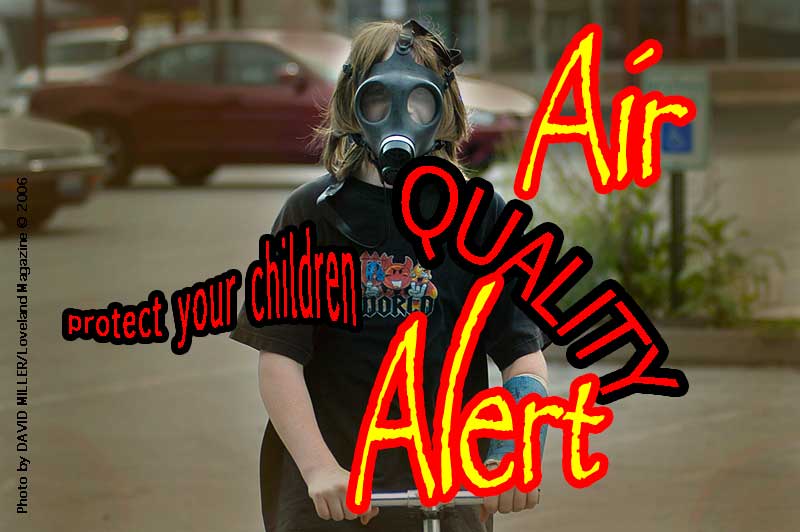
Loveland, Ohio – The Southwest Ohio Air Quality Agency has announced an Air Quality Alert for the Loveland Area, including Butler, Clermont, Hamilton and Warren counties in Ohio and Boone, Campbell and Kenton counties in Kentucky.
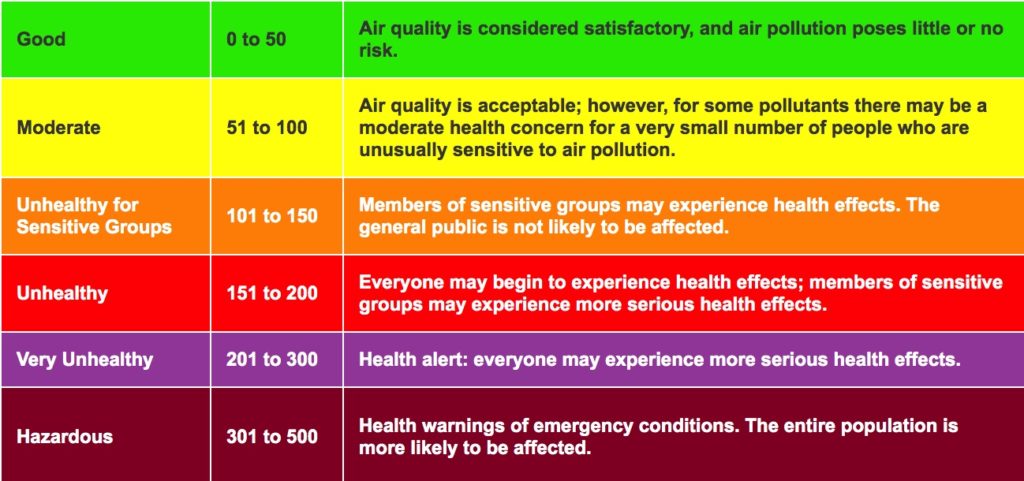
The air quality index is predicted to be 101 on Tuesday which is “Unhealthy for Sensitive Groups”.
Active children and adults, and people with respiratory diseases, such as asthma, should be avoiding all outdoor exertion; everyone else, especially children, should limit outdoor exertion.
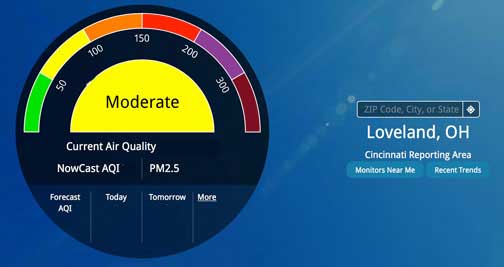
You can track the air quality in real-time by clicking the image below.
Do Your Share! Take these precautions:
• Take the bus, carpool, bike or walk instead of driving • Refuel your vehicle after 8 p.m.; do not top off when refueling and tighten the gas cap • Avoid idling your vehicle • Combine trips or eliminate unnecessary vehicle trips • Keep your vehicle maintained with properly inflated tires and timely oil changes • Avoid use of gasoline-powered lawn equipment on Air Quality Alert days • Avoid use of oil-based paints and stains on Air Quality Alert days • Never burn leaves or other yard trimmings • Always burn clean, seasoned wood in outdoor fire pits, fireplaces and wood stoves • Do not use fire pits or fireplaces for non-essential home heating on Air Quality Alert days • Conserve electricity
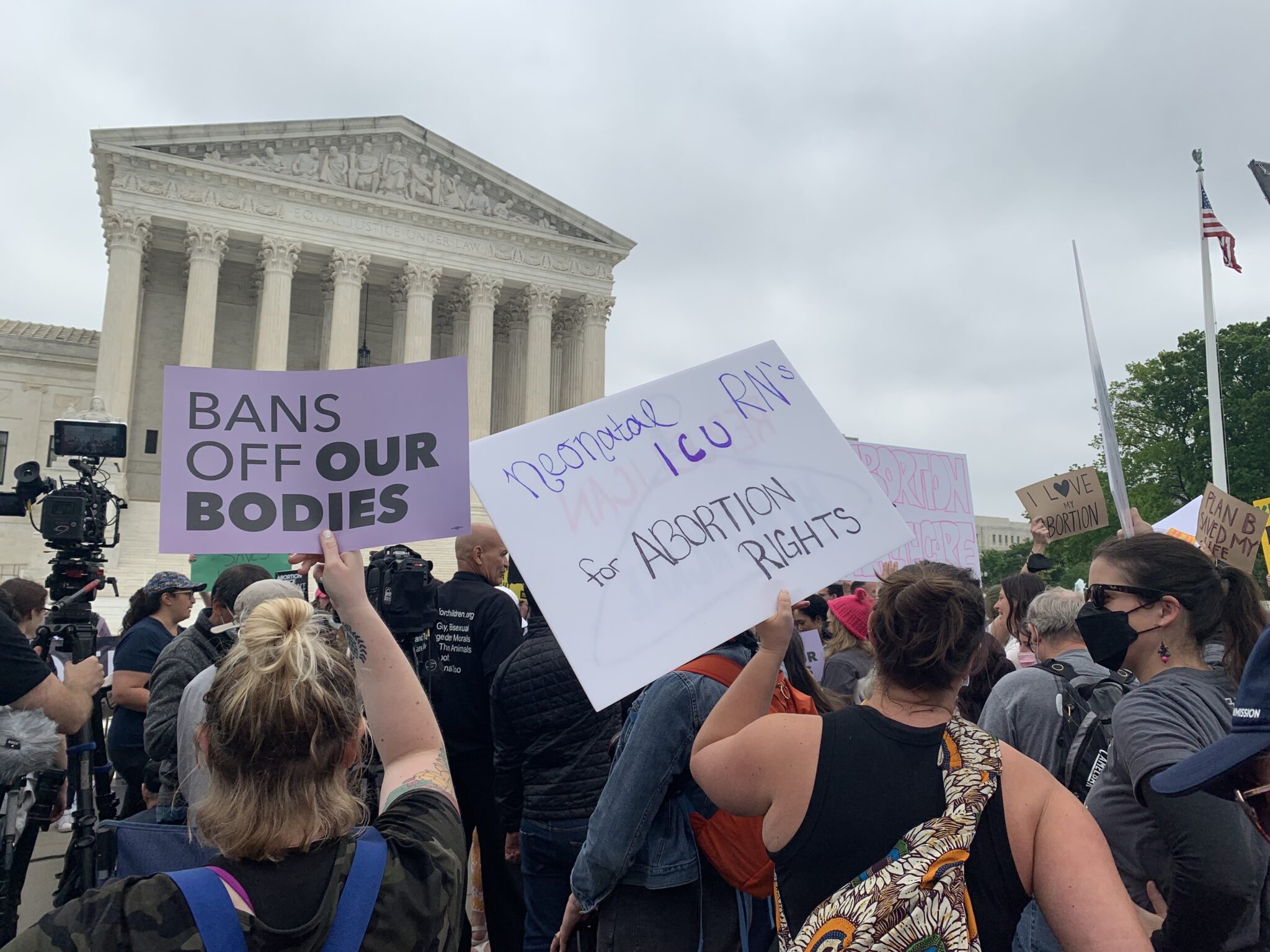
As Ohio Attorney General Dave Yost filed court motions to enact Ohio’s six-week abortion ban, a motley bunch of protesters gathered near the Ohio Statehouse on Friday in a tiny sliver of shade cast by the William McKinley statue.
They held signs declaring “abortion is healthcare” or “abortion is a human right.” Another read “our democracy, it is broken.”
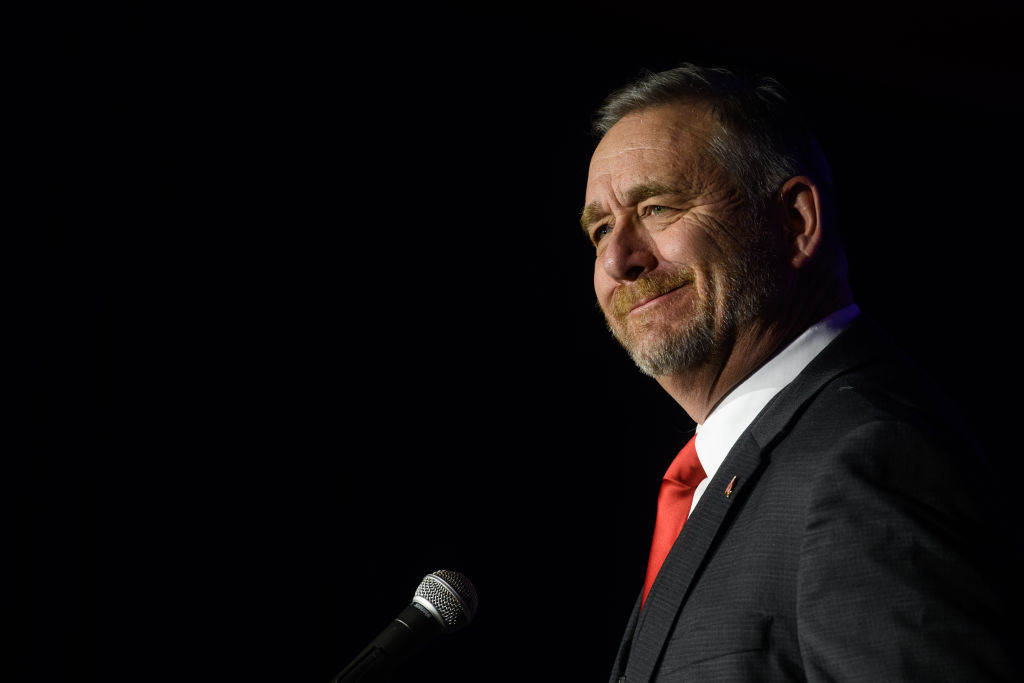
Ohio Attorney General Dave Yost. (Photo by Justin Merriman/Getty Images)
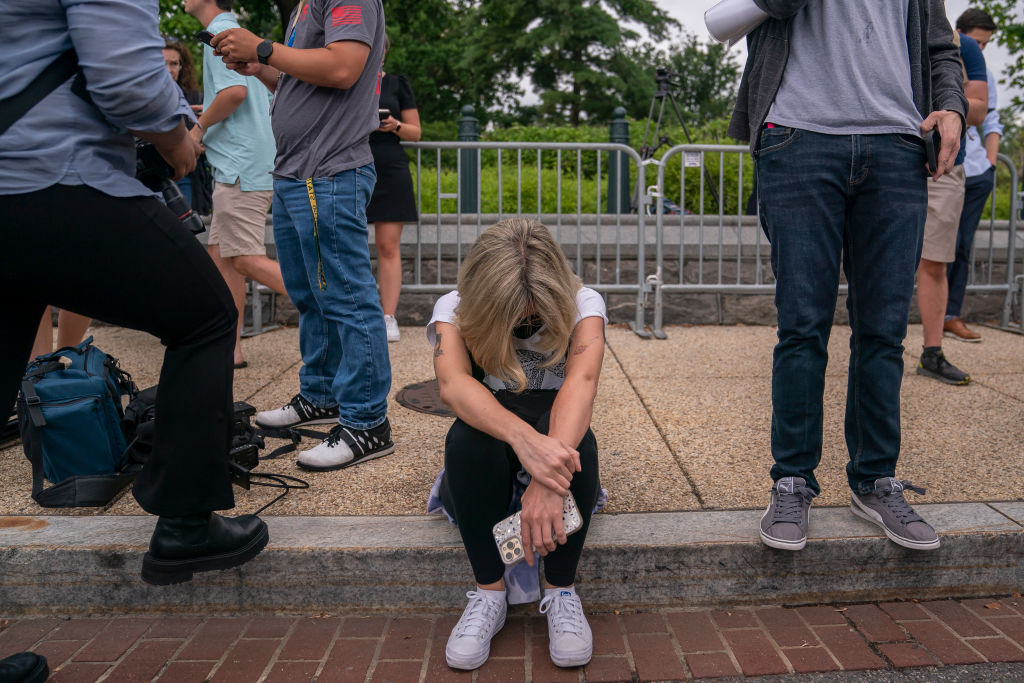
Cheri Wells stood next to her one-year-old daughter, Lux, who was strapped into a stroller.
“I brought my daughter down here because this absolutely has everything to do with her, too,” she said.
“It’s taking away her rights to overturn Roe vs. Wade, as well,” she said. “I mean, it’s all about controlling women, period.”
Advocates surge ahead
Advocacy groups and leaders for and against abortion spoke out on the U.S. Supreme Court’s ruling overturning the nationwide right to abortion included in Roe v. Wade.
Religious and anti-abortion groups praised the decision that overturned abortion legalization that had been in place since the early 1970s, and continued their push for prohibitions in Ohio.
“Ohio Right to Life encourages our pro-life legislative majorities and Governor DeWine to be ambitious and end abortion once and for all in our great state,” said anti-abortion lobby Ohio Right to Life’s president Michael Gonidakis.
The anti-abortion groups have state leaders on their side, as Gov. Mike DeWine promised backing for the six-week ban that has been tied up in federal court, and Attorney General Yost put the wheels in motion for that ban to become effective.
In a motion filed less than an hour after the Dobbs decision was released by the U.S. Supreme Court, Yost’s office asked to dissolve the injunction that kept the state abortion ban from going into effect in 2019 when it was passed by the Ohio General Assembly.
“Because there exists no just reason for delay, defendants respectfully request this court immediately dissolve the preliminary injunction and dismiss this case,” Yost wrote in the motion to the U.S. District Court for the Southern District of Ohio.
Later Friday night, a court granted the motion, and Gov. Mike DeWine signed an executive order permitting the Ohio Department of Health to set rules for the law.
Those in the pro-abortion realm are not sitting on their laurels after the much-anticipated decision came through.
In a Friday afternoon press call, members of Planned Parenthood of Ohio said while the ruling had been expected, even before a draft opinion leaked to the public, the results were no less devastating.
“Ohioans should not have to figure out how to safely provide health care for themselves,” said Iris Harvey, president and CEO of Planned Parenthood of Greater Ohio. “It’s an attack on your rights, an attack on your privacy and your freedom.”
Though abortion is now legal at six weeks rather than 20 weeks after a missed period, pro-abortion advocates maintained a message that until a court rules or another ban is put in place, abortion is still legal in the state of Ohio.
Case Western Reserve University law professor Jessie Hill, who has worked on cases defending reproductive rights, said there “are still legal moves to be made” and lawyers intend to continue pursuing options.
One way in which Hill said abortion advocates can move forward is by giving advice that is protected under the First Amendment.
“The state can not, as a general matter, ban truthful, factual information,” Hill said.
Working within the state’s legal system is also in the playbook to keep abortion legal.
“Our in-state strategy ensures that we protect the Ohio Supreme Court, which has been a backstop for securing reproductive justice,” said Rhiannon Carnes, co-founder and co-executive director of the Ohio Women’s Alliance Action Fund.
The group is working with partners to “implement harm reduction measures to ensure that people who need an abortion can obtain the essential health care they deserve,” according to a statement by the OWA. A “voter education plan is also” being launched as the August 2 primary and November general election approach.
“We are all coming together to build independent political power against those stigmatizing abortion and forcing their political objective on our lives and bodies,” Carnes said in the statement.
One Small Step
In the Ladies Gallery at the Ohio Statehouse, a group of anti-abortion activists held a press conference to applaud the Dobbs decision. The room, set aside to honor the achievements of women in Ohio politics, regularly hosts events of all kinds, but the setting wasn’t lost on the speakers.
Beth Vanderkooi of Greater Columbus Right to Life described abortion as a “systemic injustice” meant to discriminate against women.
“True advocates for women’s rights would work together to bring down these injustices rather than tell women that their path to equality, to liberty and to freedom, rests on the dismembered bodies of their dead children,” she said.
The organizers sought to cast Friday’s decision as a watershed achievement for civil rights, comparing it to the reversal of Dredd Scott and Plessy and invoking the words of Martin Luther King, Jr. They also propped it up as a landmark historical event on the order of the moon landing or D-Day.
“It’s one small step for babies,” Created Equal vice president Seth Drayer insisted, “one massive leap for humankind, because Dr. King famously said that injustice anywhere is a threat to justice everywhere.”
While abortion advocates prepare for their next moves, Created Equal’s president Mark Harrington said their fight was far from over. Invoking Winston Churchill, he called the Dobbs decision “the end of the beginning.”
That posture certainly means advocating for greater restrictions or even the elimination of abortion at the state level, but given Justice Clarence Thomas’ suggestion that the court should next revisit rulings on the legality of same-sex marriage and relationships, as well as contraceptives, some worry the right to an abortion is far from the only one under threat.
Despite promising continued action, Harrington distanced his organization from Thomas’ remarks.
“The idea that one justice which we may or may not agree with on these other issues, says that from the bench in his opinion, doesn’t really matter unless the court actually has a case,” Harrington said. “And there’s no future that I can see where that’s actually going to occur in the short term.”
While Harrington and others who spent years fighting abortion look to the future with the wind in their sails, people like Cheri Wells are looking ahead with uncertainty. The leak of Justice Samuel Alito’s draft opinion in Dobbs may have undercut the shock of the decision, but the despair is just as deep.
“For some reason, in the back of my mind,” she said, “I thought someone was gonna save us.”
Now that Roe v. Wade has been overturned by the U.S. Supreme Court, the Ohio legislature is set up to move forward with abortion bans in the state.
The U.S. Supreme Court ruled Friday morning that “The Constitution does not confer a right to abortion; Roe and Casey are overruled; and the authority to regulate abortion is returned to the people and their elected representatives.”
Legislative leaders said they were prepared to wait until the decision was released before moving forward with legislation to eliminate abortion services. As of Friday night, abortion is legal in Ohio up to six weeks into a pregnancy.
“The most important thing that Ohioans need to know today is that abortion is still legal in Ohio,” said Kellie Copeland, executive director of Pro-Choice Ohio. “There are nine clinics across the state and several in neighboring states that can safely and legally provide abortion care for patients. Today’s ruling is devastating, but it is not the end.”
Gov. Mike DeWine agreed that it would be “prudent” to wait until the Dobbs decision was made, and implement the previously-passed six-week abortion ban before moving on to new legislation.
“While noting those conditions, the Governor has expressed support for additional legislation depending on the details of the Dobbs decision,” a spokesperson for DeWine told the OCJ.
The Ohio Policy Evaluation Network, a group of researchers working with The Ohio State University, the University of Cincinnati and Case Western Reserve University, said in a fact-sheet that it expects Ohio to ask for immediate implementation of the six-week abortion ban enacted in 2019.
The ban does not include exceptions for rape or incest, and only allows doctors to present an “affirmative defense,” legal arguments that could only come into play after a doctor has been charged with an offense, if the life of the pregnant person was at risk at the time of the abortion. The defense only works if the abortion happened in a hospital, and does not allow for risks that involve mental health.
Columbus-area OB/GYN Dr. Anita Somani said a ban at six weeks could eliminate the chance of an abortion before a pregnant person is aware of the pregnancy.
“If you don’t know you’re six-weeks pregnant, and you find out at eight or 10 weeks, then you have to look at going to a neighboring state,” Somani said. “At that point, you have to have money and time, as a patient, when you may have other children or just can’t afford it.”
The most recent abortion trigger ban, House Bill 598, was introduced by state Rep. Jean Schmidt, R-Loveland, would make abortion a fourth-degree felony, and promotion of abortion a misdemeanor offense.
The charges are targeted at the medical professionals providing the abortions, and provides no exemptions for cases of incest or rape. “Affirmative defenses” would be allowed in cases where the pregnancy presented a serious risk to the pregnant person.
Civil lawsuits could also be filed against physicians who perform abortions under the bill, and medical licenses could be at risk.
Senate President Matt Huffman celebrated the decision as “a long overdue turning point in our nation’s history.”
“I look forward to reviewing the specific details in the opinion, so that as we move forward, any legislation we pass in the Ohio Senate follows the guidance of the court, protecting life, and upholding the Constitution,” Huffman said.
House Speaker Bob Cupp said in a Friday statement that the “process of reviewing the decision is underway, including what steps should be taken at the state level and the timeline for doing so.”
“We will be working closely with Governor DeWine, Attorney General Dave Yost and our colleagues in the Ohio Senate on this matter,” Cupp’s statement read.
DeWine has been consistently pro-life in his support of legislation and funding choices, including an executive order that allocated $3 million in Temporary Assistance for Needy Families (TANF) dollars to organizations who assisted pregnant Ohioans without promoting abortion as an option.
Attorney General Dave Yost said the decision “returns abortion policy to the place it has always belonged: to the elected policy branches of government.”
“Roe was poorly reasoned, a doctrine of shifting sands that invited perpetual litigation,” Yost said in a statement.
Meanwhile, the impacts of abortion bans in the state could create significant health care barriers and increased transportation costs to access care, according to researchers. These impacts could disproportionately impact low-income communities and people of color.
Iris Harvey, CEO and president of Planned Parenthood of Greater Ohio, said the Supreme Court decision will give politicians power over Ohio bodies, including how they receive care.
“This dangerous and chilling decision can have devastating consequences in Ohio, forcing people to travel hundreds, sometimes thousands, of miles for care or remain pregnant,” Harvey said in a statement.
by Tom Scovanner – On behalf of the Grailville Land Preservation Group
Imagine a place just outside of Loveland Ohio that serves as a foundation for an economy powered by outdoor recreation. Loveland has an opportunity to create a place that will be a beacon of hope and peace, a place where everyone in the community feels welcome and connected, coupled with the opportunity to experience the mental and physical health benefits of being in nature and the sacredness of the land. According to the Trust for Public Land, ‘Quality parks and green space are a fundamental requirement for sustaining healthy, equitable, resilient communities.’
Drees Homes had hoped to develop 111 acres owned by The Grail since the early 1940’s into a 209-unit housing development. This rural oasis just outside of Loveland has been a ‘sacred space for women who value peace and care of the earth’ according to The Grail’s website.
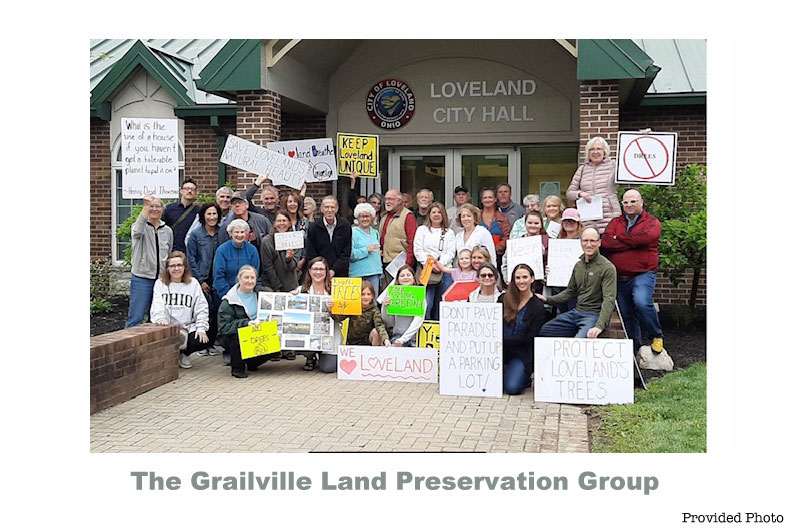
When members of the community learned of the Drees proposal, an organic, grassroots organization of smart, engaged, well informed and dedicated people went to work to protect the land. We, the Grailville Land Preservation Group are environmentalists, naturalists, neighbors, lawyers, mothers, fathers and children, Grail members, community leaders and organizers, farmers, business owners, people of faith, historians, and past Grail participants. While our group is diverse, what brings us together is a visceral desire to protect the land from development.
We first needed to prevent Drees from getting a zoning change from the current zoning of Residential Low-Density, 1 acre lots. While Drees states that they intended to “maximize green space” in actuality, Drees’ objective was to build as many houses as possible on the land. Looking at the topography, some 37 acres are undevelopable; Add in roads and other infrastructure, less than 70 acres are developable for housing. On those 70 acres, Drees wanted to build 209 houses, more than triple the density currently allowed.
The standing room only crowds at the two Planning and Zoning meetings saw over 20 people speaking against the proposal at each meeting and only one person speaking in favor. Many issues were presented by those who spoke, including the need to maintain greenspace, preserving the unique historic site, demolition of historic buildings, concerns about increased traffic, demands on Loveland’s infrastructure and the costs of the necessary improvements. Others spoke about the negative revenue stream to the city caused by the increased populations and adding students to the school district already using portable classrooms.
Loveland is on the verge of approving a new comprehensive master plan for the city which stipulates it should ‘continue to aggressively preserve land for open space to ensure that our community remains a green haven for our residents and wildlife.’ We agree and desire to partner with like-minded people to accomplish this goal.
Yes, Corporate Grail and Drees wanted to change the zoning to build a large compressed housing development because they would both make more money, but the community said no and many individual members of the Grail agreed.
The members of the Grailville Land Preservation Group have no motives other than honoring the legacy of the Grail and stewarding this land into the future in a way that preserves it for the benefit of all. We hope to have the opportunity to partner with the Grail to find an alternate path for the Grail land, one that incorporates many of the values that the Grail taught.
The real story that needs to be told is that everyday citizens living in and around Loveland spoke up to preserve the land and at least for now, preservation triumphed over development.
Tom Scovanner
On behalf of the Grailville Land Preservation Group
To reach out to help protect this sacred land, you can contact us on the Nextdoor app under the group ‘Grailville Land Preservation Group’ or follow our blog at grailvillesacredpathways.substack.com
EDITOR’S NOTE: After the Loveland Planning and Zoning Commission denied the request by Drees to rezone the property they were going to buy from the Grail the contract between the two parties was not extended. ([Complete Video] Rezoning of Grailville denied)
• Take the bus, carpool, bike or walk instead of driving • Refuel your vehicle after 8 p.m.; do not top off when refueling and tighten the gas cap • Avoid idling your vehicle • Combine trips or eliminate unnecessary vehicle trips • Keep your vehicle maintained with properly inflated tires and timely oil changes • Avoid use of gasoline-powered lawn equipment on Air Quality Alert days • Avoid use of oil-based paints and stains on Air Quality Alert days • Never burn leaves or other yard trimmings • Always burn clean, seasoned wood in outdoor fire pits, fireplaces and wood stoves • Do not use fire pits or fireplaces for non-essential home heating on Air Quality Alert days • Conserve electricity
CDC Recommends COVID-19 Vaccines for Young Children
On Saturday, CDC Director Rochelle P. Walensky, M.D., M.P.H., endorsed the Advisory Committee on Immunization Practices’ (ACIP) recommendation that all children 6 months through 5 years of age should receive a COVID-19 vaccine. This expands eligibility for vaccination to nearly 20 million additional children and means that all Americans ages 6 months and older are now eligible for vaccination.
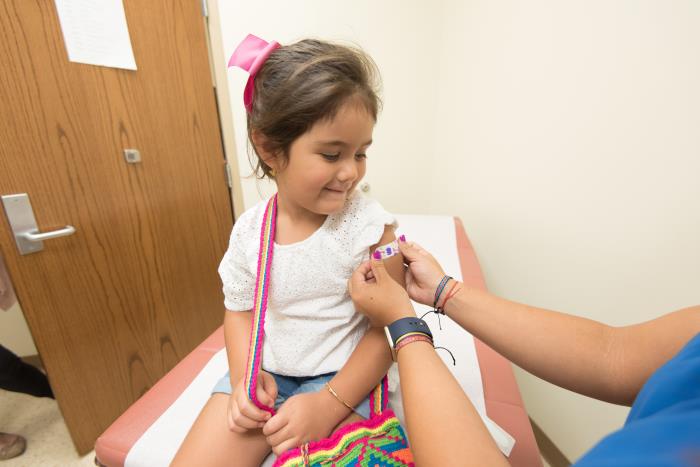
Parents and caregivers can now get their children 6 months through 5 years of age vaccinated with the Pfizer-BioNTech or Moderna vaccines to better protect them from COVID-19. All children, including children who have already had COVID-19, should get vaccinated.
COVID-19 vaccines have undergone—and will continue to undergo—the most intensive safety monitoring in U.S. history. Parents and caregivers can play an active role in monitoring the safety of these vaccines by signing their children up for v-safe – personalized and confidential health check-ins via text messages and web surveys where they can easily share with CDC how a child feels after getting a COVID-19 vaccine.
Distribution of pediatric vaccinations for these younger children has started across the country, and will be available at thousands of pediatric practices, pharmacies, Federally Qualified Health Centers, local health departments, clinics, and other locations this week. Children in this younger age group can be vaccinated with whichever vaccine is available (either Moderna or Pfizer-BioNTech). Parents can reach out to their doctor, nurse, local pharmacy, or health department, or visit vaccines.gov to see where vaccines for children are available.
“Together, with science leading the charge, we have taken another important step forward in our nation’s fight against COVID-19. We know millions of parents and caregivers are eager to get their young children vaccinated, and with today’s decision, they can. I encourage parents and caregivers with questions to talk to their doctor, nurse, or local pharmacist to learn more about the benefits of vaccinations and the importance of protecting their children by getting them vaccinated,” said CDC Director Dr. Rochelle P. Walensky.
Ohio educators say burnout is real, but with pending legislation regulating lesson-plan choices and security roles in schools, they feel “demoralized” as well.
A national survey showed 44% of K-12 teachers in the U.S. “always” or “very often” feel burned out, a stat that has surpassed other industries.
The Gallup poll showed more than 4 in 10 K-12 workers felt that way, topping college/university employees, retail workers and the government/public policy industry in the survey, conducted in February but released this week.
Researchers found that K-12 workers have “consistently” been leaders in burn-out in the country, but the COVID-19 pandemic “exacerbated existing challenges,” while also introducing new ones.
Female teachers reporter higher burnout levels than male teachers, at a split of 55% to 44%.
“The result is a workforce that is burned out and unfortunately leaving the profession at a high rate,” according to the Gallup poll.
Those who teach in Ohio agree that the increased workload has taken its toll, but to also see mounting legislation regulating their careers and what they see as a continued lack of appropriate support from the state adds a new amount of weight to educators’ shoulders.
“When you talk about burnout, you’re talking about when you’ve extinguished a flame,” said Wendi Davis, band director and music teacher at Cory-Rawson Local Schools in northwest Ohio. “Teachers, they love what they do, and when they’re put in situations like what they’re dealing with right now, it’s more demoralization than burnout.”
Teachers have had to don ever-multiplying caps: as teachers, as standardized test guides, as social workers and as guidance counselors. Faced with all those issues already, teachers then faced a pandemic, according to Shari Obrenski, president of the Cleveland Teachers Union.
“What the pandemic did was essentially lay bare all of the problems that existed in education,” Obrenski said. “More and more is being put on (a teacher’s) plate and nothing is being taken off.”
That is, the teachers that are still there. Cleveland is short about 200 teachers going into the new school year, not to mention the ongoing shortage of substitute teachers, in the hundreds as well.
“And we’re not as bad off as other districts,” Obrenski said.
As school districts struggle to recruit and retain teachers and substitute teachers, teachers also struggle to be heard in their own districts and in their state government.
“Teachers need to be empowered at the local level by their administrators,” Davis said. “They need to have a voice at the table.”
Paying teachers more and funding schools in a way that supports the role they play is definitely a need, according to Obrenski, but so, too, is respecting teachers as professionals in order to keep them in schools.
“Something that is really important is a teacher’s voice in decision-making; Having teachers be part of the solution instead of condemning them as part of the problem,” Obrenski said.
WASHINGTON — The U.S. Food and Drug Administration on Friday authorized emergency use of two COVID-19 vaccines for children under 5, moving the country one step closer to having shots for all age groups.
The decision leaves just one hurdle, a recommendation from the Centers for Disease Control and Prevention, before parents can begin getting babies and toddlers vaccinated against the virus. That CDC decision was expected this weekend.
“As we have seen with older age groups, we expect that the vaccines for younger children will provide protection from the most severe outcomes of COVID-19, such as hospitalization and death,” FDA Commissioner Robert M. Califf said in a statement.
“Those trusted with the care of children can have confidence in the safety and effectiveness of these COVID-19 vaccines and can be assured that the agency was thorough in its evaluation of the data.”
The FDA’s decision to grant emergency use requests for a two-dose Moderna shot and a three-dose Pfizer vaccine came two days after its outside panel of advisers unanimously voted on Wednesday to recommend use of the two vaccines.
White House COVID-19 Response Coordinator Ashish Jha said earlier this month that the federal government would begin shipping the vaccines to states as soon as the FDA granted the emergency use authorization.
He expects shots can begin next week as long as the CDC issues its recommendation over the weekend.
The Biden administration made 10 million doses of vaccine for kids under 5 available for states during a two-week pre-ordering period that closed Tuesday.
States, tribes, territories, pharmacies and other federal partners ordered 2.5 million Pfizer doses, about 50% of those available, and 1.3 million Moderna doses, about 25%, according to a spokesperson for the U.S. Department of Health and Human Services.
“Jurisdictions will have an opportunity to order additional doses if and when the vaccines are authorized by FDA and recommended by CDC,” an HHS spokesperson said in a statement.
Florida vaccination distribution in question
Florida remains the only state not to have placed any pre-orders.
White House press secretary Karine Jean-Pierre said Thursday that some pharmacies and community health centers in the state would have COVID-19 vaccines for kids under 5 through federal distribution. But those options are limited for parents wishing to vaccinate their kids, she said.
“By being the only state, this is Florida, not pre-ordering … pediatricians, for example, in Florida will not have immediate ready access to vaccines,” Jean-Pierre said.
“Some pharmacies and community health centers in the state get access through federal distribution channels, but those options are limited for parents. We encouraged Florida on several occasions to order vaccines. We’ve been aware of this, and we will continue to do so.”
Florida not pre-ordering, Jean-Pierre said, will “make it harder” for parents to get their children vaccinated.
“That’s why we continued to, on several occasions, encourage Florida to do this,” she said.
The Florida Department of Health said in a statement Thursday that its officials have “made it clear to the federal government that states do not need to be involved in the convoluted vaccine distribution process, especially when the federal government has a track record of developing inconsistent and unsustainable COVID-19 policies.”
“Doctors can order vaccines if they are in need, and there are currently no orders in the Department’s ordering system for the COVID-19 vaccine for this age group,” the statement continued.
Florida Gov. Ron DeSantis said Thursday that “there’s not going to be any state programs,” to vaccinate babies and toddlers against COVID-19.
“That’s not something that we think is appropriate and so that’s not what we’re going to be utilizing our resources in that regard,” DeSantis said.
Loveland, Ohio – Below is the partial draft of the minutes of the Loveland School Board meeting that was held last night. The Board authorized a “Resolution of Necessity” to request that the Hamilton County Auditor certify the projected revenues for a 4.90 Mill levy for the General Election on November 8.
Members Eileen Washburn. Eric Schwetschenau, Kevin. Dougherty, and Jonathan Eilert voted, “Yes”. Kathryn Lorenz did not attend the meeting.
This is the first of the two votes needed for the Board to place the operating levy on the ballot.
The Board of Education of the Loveland City School District, Counties of Hamilton, Clermont and Warren, Ohio, met in regular session at 6:00 P.M, on the 16th day of June, 2022, at the LMS/LIS Media Center, 757 S. Lebanon Road, Loveland, Ohio, with the following members present:
Mr. Kevin Dougherty Rev. Jonathan Eilert Dr. Eric Schwetschenau
Mrs. Eileen Washburn
The following members were absent: Dr. Kathryn Lorenz
Mrs. Washburn moved the adoption of the following resolution:
LOVELAND CITY SCHOOL DISTRICT
RESOLUTION NO. 22-69
RESOLUTION DECLARING THE NECESSITY OF LEVYING AN ADDITIONAL TAX FOR CURRENT OPERATING EXPENSES IN EXCESS OF THE TENMILL LIMITATION AND REQUESTING THE COUNTY AUDITOR TO CERTIFY MATTERS IN CONNECTION THEREWITH.
WHEREAS, this Board of Education of the Loveland City School District (the “Board of Education”) anticipates levying an additional tax in excess of the ten-mill limitation as described herein;
WHEREAS, pursuant to Section 5705.03 of the Ohio Revised Code, this Board of Education is required to certify to the County Auditor a resolution requesting the County Auditor to certify certain matters in connection with such a tax levy;
NOW THEREFORE BE IT RESOLVED by the Board of Education of Loveland City School District, Counties of Hamilton, Clermont and Warren, Ohio:
That pursuant to the provisions of Section 5705.21 of the Ohio Revised Code, it is necessary that an additional tax be levied in excess of the tenmill limitation for the benefit of the Loveland City School District (the “School District”), for the purpose of current operating expenses at a rate not exceeding four and nine-tenths (4.9) mills for each one dollar ($1.00) of valuation, which amounts to forty-nine cents ($0.49) for each one hundred dollars ($100.00) of valuation, for a continuing period of time.
That the question of the passage of said tax levy shall be submitted to the electors of the School District at an election to be held on November 8, 2022. If approved by the electors of the School District, said tax levy shall first be placed upon the 2022 tax list and duplicate, for first collection in calendar year 2023 for a continuing period of time. The tax shall be levied upon the entire territory of the School District and the ballot measure shall be submitted to the entire territory of the School District. The School District has territory in Hamilton County, Clermont County and Warren County, Ohio.
That pursuant to Section 5705.03 of the Ohio Revised Code, the County Auditor is hereby requested to certify to this Board of Education the total current tax valuation of the School District and the dollar amount of revenue that would be generated by the number of mills specified in Section 1 hereof, and the Treasurer of this Board of Education be and is hereby directed to certify forthwith a copy of this resolution to the County Auditor at the earliest possible time so that said County Auditor may certify such matters in accordance with such Section 5705.03 of the Ohio Revised Code.
That it is found and determined that all formal actions of this Board of Education concerning and relating to the adoption of this resolution were adopted in an open meeting of this Board of Education, and that all deliberations of this Board of Education, and of any of its committees that resulted in such formal action, were in meetings open to the public, in compliance with all legal requirements, including Section 121.22 of the Ohio Revised Code, and the rules of this Board of Education adopted in accordance therewith.
Dr. Schwetschenau seconded the motion, and the roll being called upon the question of adoption of the resolution the vote resulted as follows:
AYE: Mrs. Washburn, Dr. Schwetschenau, Mr. Dougherty, Rev. Eilert
NAY:
ADOPTED this 16th day of June, 2022.
Robert Giuffre’, Interim Treasurer
CERTIFICATE
The undersigned hereby certifies that the text of the foregoing resolution is taken and copied from the record of proceedings of a meeting of the Board of Education of the Loveland City School District held on June 16, 2022. The undersigned further certifies that the same has been compared by me with said record and it is a true and correct copy thereof, together with a true and correct copy of excerpts from the minutes of said meeting to the extent pertinent to the consideration and adoption of said resolution.
Robert Giuffre’, Interim Treasurer
RECEIPT
The undersigned hereby acknowledges this day receipt of a certified copy of the foregoing resolution.
County Auditor, Hamilton County, Ohio
Date: June ___, 2022
CERTIFICATE OF COUNTY AUDITOR
Pursuant to a resolution of the Board of Education of the Loveland City School District, adopted on June 16, 2022, the undersigned county auditor of Hamilton County, Ohio hereby certifies that the total current tax valuation of such school district is $___________________, and that the dollar amount of revenue that would be generated by four and nine-tenths (4.9) mills per year as specified in such resolution is $___________________ per year, assuming that the tax valuation of such school district remains the same throughout the life of the levy.