Loveland, Ohio – The police department announced on Wednesday that Alicia Kenny was found safe and unharmed and is currently in the care of her family members. The department said on Facebook, “The Loveland Police Department would like to thank our law enforcement partners the Ohio Bureau Of Criminal Investigations and the Hamilton County Sheriff’s Office for their extensive assistance with resources and agents, as well as help from the community. The involved law enforcement agencies worked long hours in challenging weather conditions to bring Alicia home.”
A “Critical Missing Person” alert was issued by the department on June 13 concerning Kenny.
Loveland, Ohio – Public Works crews will be conducting a brush pick-up beginning Monday, June 20. They advise, “In an effort to help expedite the process, please have the brush at the curb by Monday morning.”
Public Works will be making one pass through the city.
Standard brush guidelines apply which are:
Brush must be placed at the curb or edge of roadway. Do not place brush in the roadway, gutter, ditches, or on sidewalks.
Do not block fire hydrants.
Limbs cannot exceed 10 inches in diameter at the cut section.
Limbs should be placed at the curb with the cut section facing the street and all limbs should be facing the same direction. This makes it easier and faster to handle.
No leaves, pine needles, grass clippings, bamboo, ornamental grass, or other yard waste will be collected.
Small twigs and sticks should be bundled with twine in bundles 12 inches in diameter. Twigs or sticks can also be placed in a container at the curb, but no other yard waste should be in the containers. No loose piles of sticks and debris, please.
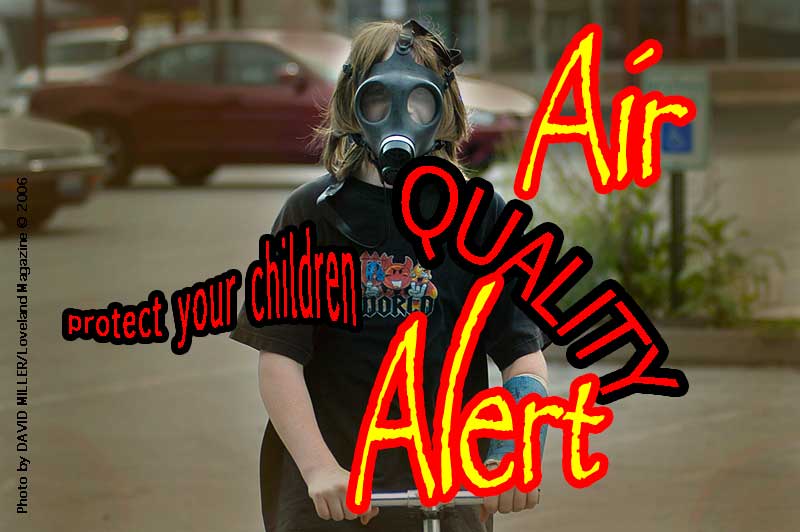
Loveland, Ohio – The Southwest Ohio Air Quality Agency has extended an Air Quality Alert for the Loveland Area, including Butler, Clermont, Hamilton and Warren counties in Ohio and Boone, Campbell and Kenton counties in Kentucky.
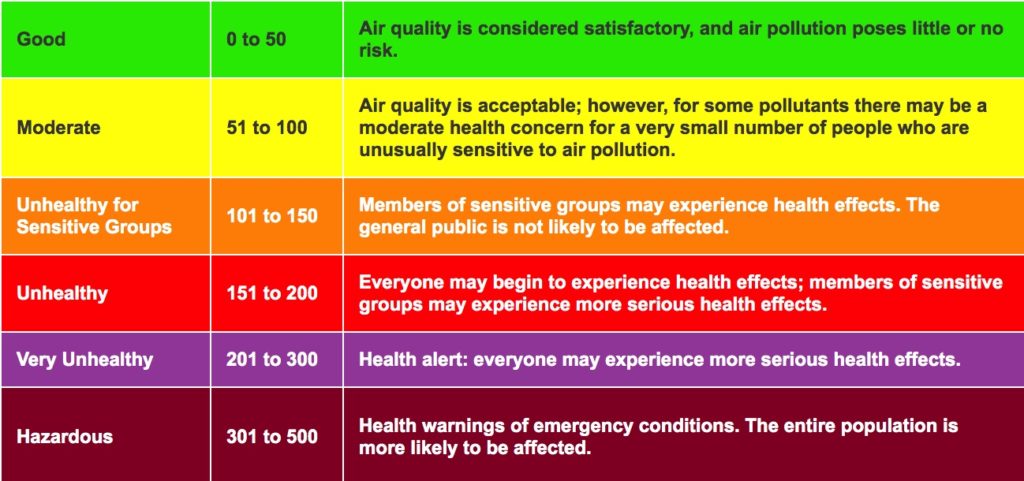
The air quality index is predicted to be 115 on Wednesday which is “Unhealthy for Sensitive Groups”.
Active children and adults, and people with respiratory diseases, such as asthma, should be avoiding all outdoor exertion; everyone else, especially children, should limit outdoor exertion.
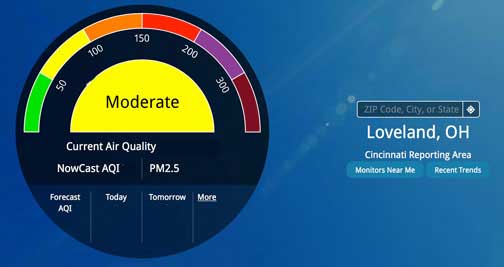
You can track the air quality in real-time by clicking the image below.
Do Your Share! Take these precautions:
• Take the bus, carpool, bike or walk instead of driving • Refuel your vehicle after 8 p.m.; do not top off when refueling and tighten the gas cap • Avoid idling your vehicle • Combine trips or eliminate unnecessary vehicle trips • Keep your vehicle maintained with properly inflated tires and timely oil changes • Avoid use of gasoline-powered lawn equipment on Air Quality Alert days • Avoid use of oil-based paints and stains on Air Quality Alert days • Never burn leaves or other yard trimmings • Always burn clean, seasoned wood in outdoor fire pits, fireplaces and wood stoves • Do not use fire pits or fireplaces for non-essential home heating on Air Quality Alert days • Conserve electricity
Loveland, Ohio – The Loveland Symmes Fire Department has designated Loveland High School, 11801 Rich Road, as a cooling center. The site will be open all night. Enter door number 12.
Pets are permitted if they are restrained.
The school is open for residents from Symmes, Loveland, and Miami Township. No one in need will be turned away.
You can sleep there if need be. No cots are provided, you will have to bring your sleeping bags and pillows.
Loveland, Ohio – The Southwest Ohio Air Quality Agency has issued an Air Quality Alert for the Loveland Area, including Butler, Clermont, Hamilton and Warren counties in Ohio and Boone, Campbell and Kenton counties in Kentucky.
The air quality index is predicted to be 105 which is “Unhealthy for Sensitive Groups”.
Active children and adults, and people with respiratory diseases, such as asthma, should be avoiding all outdoor exertion; everyone else, especially children, should limit outdoor exertion.
You can track the air quality in real-time by clicking the image below.
Do Your Share! Take these precautions:
• Take the bus, carpool, bike or walk instead of driving • Refuel your vehicle after 8 p.m.; do not top off when refueling and tighten the gas cap • Avoid idling your vehicle • Combine trips or eliminate unnecessary vehicle trips • Keep your vehicle maintained with properly inflated tires and timely oil changes • Avoid use of gasoline-powered lawn equipment on Air Quality Alert days • Avoid use of oil-based paints and stains on Air Quality Alert days • Never burn leaves or other yard trimmings • Always burn clean, seasoned wood in outdoor fire pits, fireplaces and wood stoves • Do not use fire pits or fireplaces for non-essential home heating on Air Quality Alert days • Conserve electricity
“Due to unforeseen circumstances, the Tuesday, June 14, 2022 business meeting of the Loveland City School District Board of Education has been canceled. The new meeting date is Thursday, June 16, 2022, at 6 pm in the Loveland Intermediate School Media Center.”
Loveland, Ohio – The Loveland Board of Education announced at its March 22 Regular Session that it would have a Special Meeting on June 14, at 6 PM in the Loveland Middle/Intermediate School Media Center.
The agenda for this rescheduled regular meeting is available on BoardDocs.
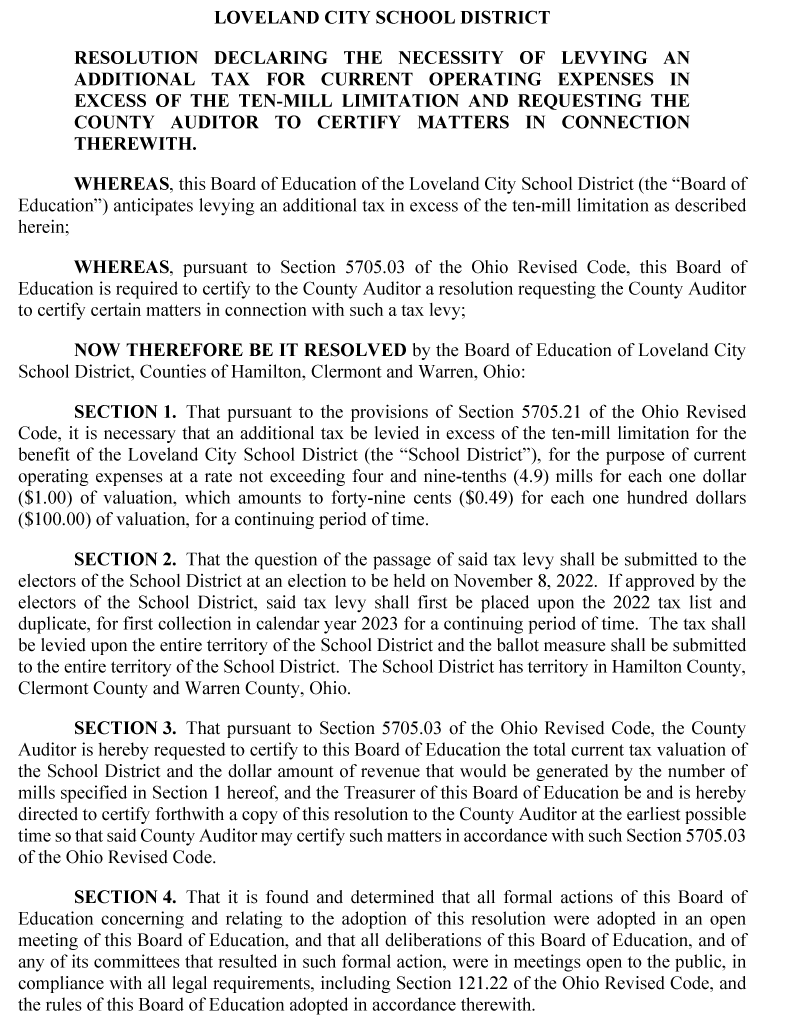
The Board may authorize a Resolution of Necessity to Request Hamilton County Auditor Certification of projected Revenues for a 4.90 Mill Levy for the General Election on November 8.
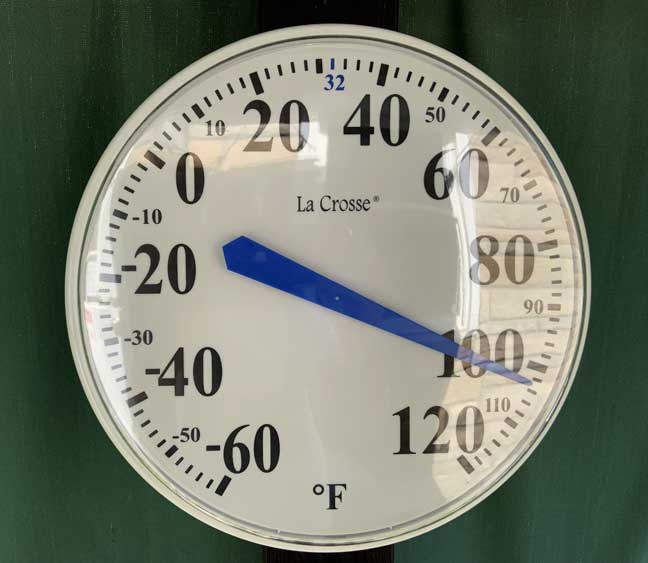
Loveland, Ohio – With sunny skies and temperatures expected to be in the mid-90s Tuesday through Thursday and likely associated dangerous levels of ground-level ozone (Smog), we’ve once again loaded our Ozone Alert widget to our homepage.
Loveland Magazine will continue providing our readers with information when air pollution alerts are issued for our area and this widget on our home page will allow readers the real-time information they need.
When alerts are issued for our local area we will provide tips you can use to do your share to avoid adding to the dangerous levels of Ozone both at home and at work.
Click below to give the widget a spin today:
Active hildren and the elderly are especially affected by high levels of Ozone that causes respiratory harm.
Ozone worsens asthma and COPD, and can cause early death from both short-term and long-term exposure.
Ozone can cause cardiovascular harm (e.g., heart attacks, strokes, heart disease, congestive heart failure) and may cause harm to the central nervous system. It may also cause reproductive and developmental harm.
Because children are so active during the Summer months and their lungs are still developing they are at particular risk when Ozone levels are elevated.
It may be hard to imagine that pollution could be invisible, but ozone begins that way. As ozone concentrates and mixes with other pollutants, we often call it by its older, more common name—smog. It is currently one of the least well-controlled pollutants in the United States.1 And it is also one of the most dangerous.
Scientists have studied the effects of ozone on health for decades. Hundreds of studies have confirmed that ozone harms people at levels currently found in the United States. In the last decade, we have learned that it can also be deadly.https://www.youtube.com/embed/7c2w1eATkro?rel=0
Breathing in ozone is like getting a sunburn on your lungs.
What Is Ozone?
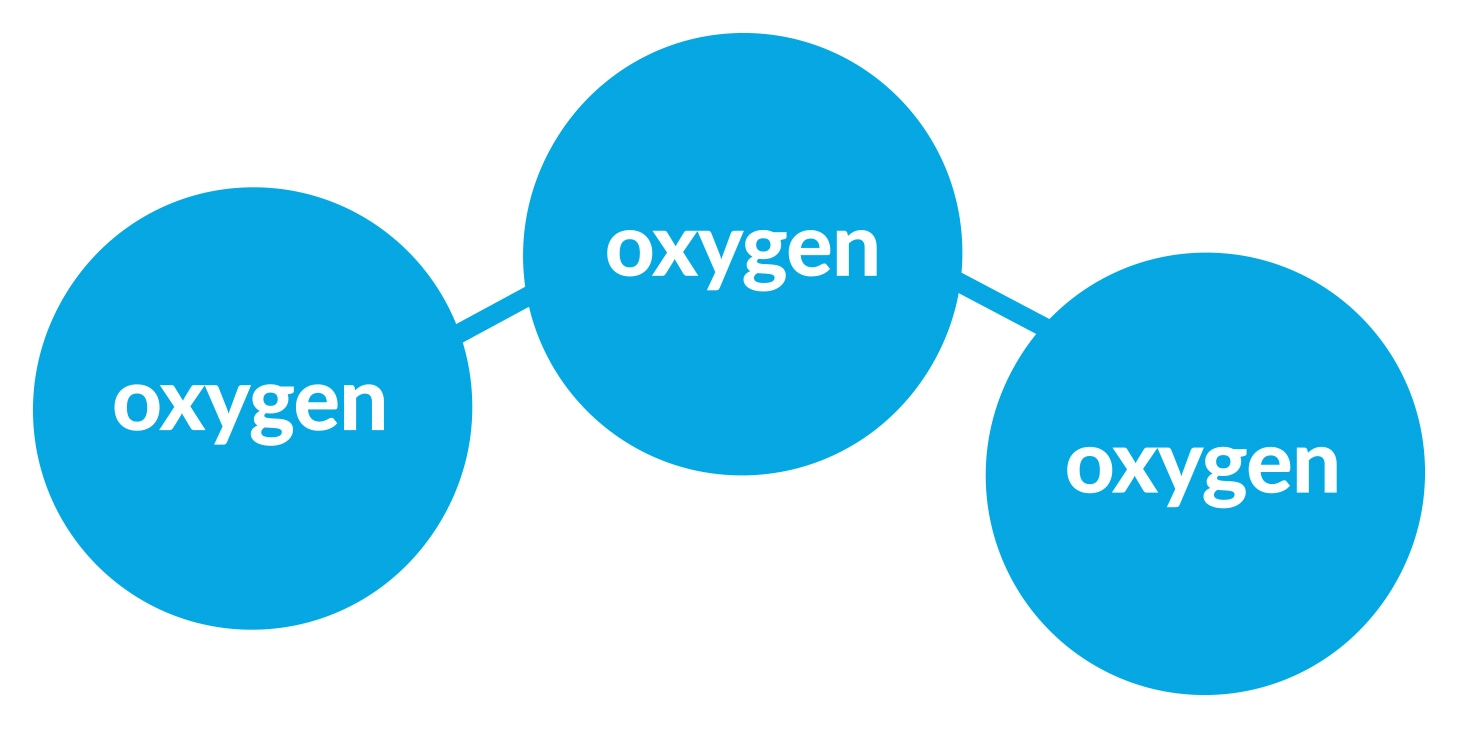
Ozone (O3) is a gas molecule composed of three oxygen atoms. Often called “smog,” ozone is harmful to breathe. Ozone aggressively attacks lung tissue by reacting chemically with it. When ozone is present, there are other harmful pollutants created by the same processes that make ozone.
The ozone layer found high in the upper atmosphere (the stratosphere) shields us from much of the sun’s ultraviolet radiation. However, ozone air pollution at ground level where we can breathe it (in the troposphere) causes serious health problems.
Where Does Ozone Come From?
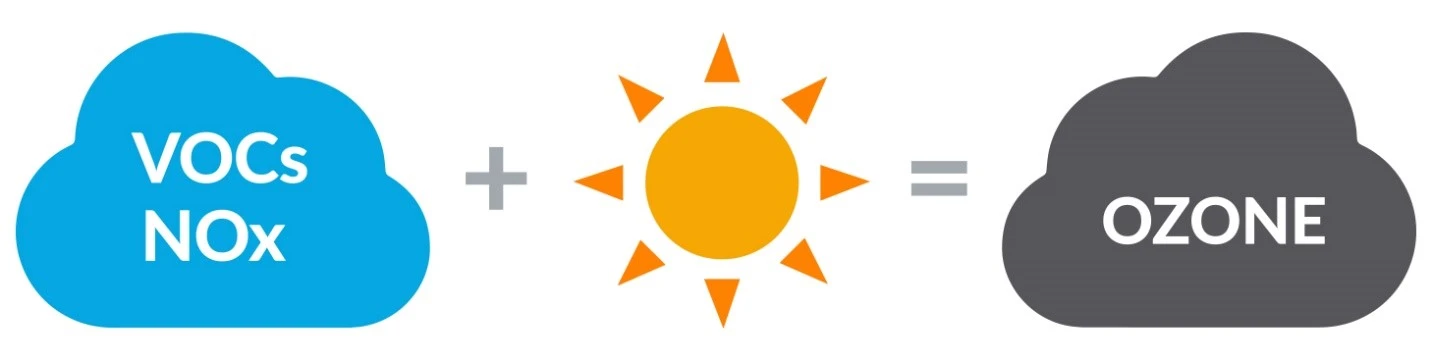
Ozone develops in the atmosphere from gases that come out of tailpipes, smokestacks and many other sources. When these gases come in contact with sunlight, they react and form ozone smog.
The essential raw ingredients for ozone are nitrogen oxides (NOx) and volatile organic compounds (VOCs). They are produced primarily when fossil fuels like gasoline, oil or coal are burned or when some chemicals, like solvents, evaporate. NOx is emitted from power plants, motor vehicles and other sources of high-heat combustion. VOCs are emitted from motor vehicles, chemical plants, refineries, factories, gas stations, paint and other sources.2
If the ingredients are present under the right conditions, they react to form ozone. Sunlight is key. And because the reaction takes place in the atmosphere, the ozone often shows up downwind of the sources of the original gases. In addition, winds can carry ozone far from where it formed, even internationally across borders and across the oceans.
You may have wondered why “ozone action day” warnings are sometimes followed by recommendations to avoid activities such as mowing your lawn or driving your car. Lawn mower exhaust and gasoline vapors contain nitrogen oxides (NOx) and volatile organic compounds (VOCs) that are key to the formation of ozone in the presence of heat and sunlight.
Who Is at Risk from Breathing Ozone?
Anyone who spends time outdoors where ozone pollution levels are high may be at risk. Four groups of people are especially vulnerable to the effects of breathing ozone:
children and teens;3
anyone 65 and older;4
people with existing lung diseases, such as asthma and chronic obstructive pulmonary disease (also known as COPD, which includes emphysema and chronic bronchitis5; and
people who work or exercise outdoors.6
In addition, some evidence suggests that other groups—including women, people who suffer from obesity and people with low incomes—may also face higher risk from ozone.7 More research is needed to confirm these findings.
The impact on your health can depend on many factors, however. For example, the risks are greater if ozone levels are higher, if you are breathing faster because you’re working or exercising outdoors or if you spend more time outdoors.
Again, the impact of even short-term exposure to ozone pollution on healthy adults was demonstrated in the Galveston lifeguard study. In addition to the harmful effects of particle pollution, lifeguards had greater obstruction of their airways at the end of the day when ozone levels were high.8
How Ozone Pollution Harms Your Health
Premature death. Breathing ozone can shorten your life. Strong evidence exists of the deadly impact of ozone from large studies conducted in cities across the U.S., in Europe and in Asia. Researchers repeatedly found that the risk of premature death increased with higher levels of ozone.9 Newer research has confirmed that ozone increased the risk of premature death even when other pollutants also are present.10
Immediate breathing problems. Many areas in the United States produce enough ozone during the summer months to cause health problems that can be felt right away. Immediate problems—in addition to increased risk of premature death—include:
shortness of breath, wheezing and coughing;
asthma attacks;
increased risk of respiratory infections;
increased susceptibility to pulmonary inflammation; and
increased need for people with lung diseases, like asthma or chronic obstructive pulmonary disease (COPD), to receive medical treatment and to go to the hospital.3,4,5
Long-term exposure risks. New studies warn of serious effects from breathing ozone over longer periods. With more long-term data, scientists are finding that long-term exposure—that is, for periods longer than eight hours, including days, months or years—may increase the risk of early death.
Examining the records from a long-term national database, researchers found a higher risk of death from respiratory diseases associated with increases in ozone.14
New York researchers looking at hospital records for children’s asthma found that the risk of admission to hospitals for asthma increased with chronic exposure to ozone. Younger children and children from low-income families were more likely than other children to need hospital admissions even during the same time periods.15
California researchers analyzing data from their long-term Southern California Children’s Health Study found that some children with certain genes were more likely to develop asthma as adolescents in response to the variations in ozone levels in their communities.16
Studies link lower birth weight and decreased lung function in newborns to ozone levels in their community.17 This research provides increasing evidence that ozone may harm newborns.
Breathing other pollutants in the air may make your lungs more responsive to ozone—and breathing ozone may increase your body’s response to other pollutants. For example, research warns that breathing sulfur dioxide and nitrogen oxide—two pollutants common in the eastern U.S.—can make the lungs react more strongly than just breathing ozone alone. Breathing ozone may also increase the response to allergens in people with allergies. A large study published in 2009 found that children were more likely to suffer from hay fever and respiratory allergies when ozone and PM2.5 levels were high.18
Research shows lower levels of ozone cause harm. EPA released their latest complete review of the current research on ozone pollution in February 2013.19 EPA had engaged a panel of expert scientists, the Clean Air Scientific Advisory Committee, to help them assess the evidence that was brought together by EPA; in particular, they examined research published between 2006 and 2012. The experts on the committee and EPA concluded that ozone pollution posed multiple, serious threats to health. Their findings are highlighted in the box below. Based on that review, EPA strengthened the official limit on ozone, called the National Ambient Air Quality Standard, in 2015.
However, new research provides evidence that ozone can cause serious harm even at much lower levels. In a 2017 scientific paper, researchers provided further evidence in a nationwide study that older adults faced a higher risk of premature death even when levels of ozone pollution remained well below the current national standard.20
EPA Concludes Ozone Pollution Poses Serious Health Threats (2013)
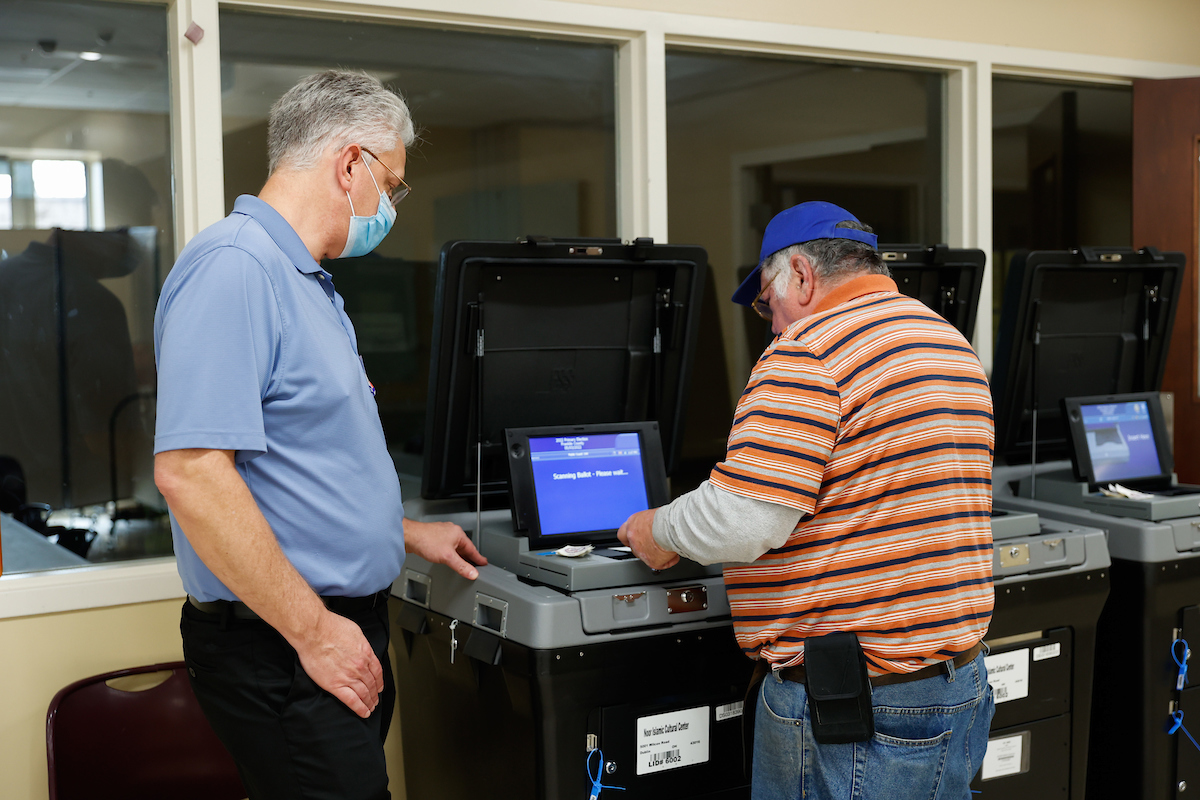
A group of election precinct officials have sent a letter to the Ohio Secretary of State say they “cannot defend democracy” when the Ohio Redistricting Commission, including Secretary of State Frank LaRose, aren’t doing the same, they say.
Election workers in 23 counties signed on to a letter asking the commission and LaRose to heed their warnings that the maps adopted by the commission and pushed along by a federal court are unconstitutional, and therefore would push precinct workers to be a part of elections “when the outcomes of those elections have already been predetermined by politicians who manipulated districts to prevent fair competition.”
“As precinct election officials, we cannot in good faith participate in a primary election on August 2 if it proceeds with unconstitutionally gerrymandered districts, and we advise our fellow poll workers to not be made complicit in illegitimate elections,” the letter stated.
The officials said they are continuing to collect signatures on the letter, and cite Ohio Attorney General Dave Yost in arguing more time exists for the General Assembly to change election dates and methods before the November general election.
The Ohio Redistricting Commission has also been given a June 3 deadline by the Ohio Supreme Court to resubmit a legislative district plan, after finding the maps adopted invalid for the second time.
Loveland, Ohio – Current Loveland High School District Director of Student Athletics Brian Conatser will move into the role of LHS Assistant Principal beginning in the 2022-2023 school year. Conatser will take over as Assistant Principal as Eric Fry moves to a similar position at Oak Hills High School.
“I am excited and grateful for the opportunity to serve Loveland City School District in a new capacity. We have an incredible student body, staff, and community, and I am very fortunate to have experienced this as a Loveland classroom teacher, coach, Athletic Director, and now as an Assistant Principal. I look forward to the new challenge and am thrilled to continue to be a part of an amazing district,” Conatser said.
Conatser has served as the District Director of Student Athletics for four years. He was Loveland’s Assistant Director of Student Athletics for two years and spent 15 years as a science teacher and coach at Loveland and Sycamore High Schools.
A search will now begin for the next Athletic Director.
In the meantime, it has also just been announced that Clay George, the current Assistant Athletic Director will be leaving to become the head athletic director at Ansonia JH/HS.