Tag: latest stories

  • “Tornado Watch” vs “Tornado Warning.”

    “Tornado Watch” vs “Tornado Warning.”

    Tornado season in Ohio typically lasts from April through July. It may be important that everyone understand the difference between a “tornado watch” and a “tornado warning.”

    Tornado Watch: Tornadoes are possible. Remain alert for approaching storms. Stay tuned to NOAA Weather Radio, commercial radio or television for information.

    Tornado Warning: A tornado has been sighted or indicated by weather radar. Take shelter immediately.

    Information provided by Clermont County.

    Read more about “Preparing for a Tornado” from www.ready.gov.

  • How to: Surviving your first year of college

    How to: Surviving your first year of college

    Olivia Rohling

    by Olivia Rohling

    As of April 29th my freshman year of college officially came to a close. I have compiled a list of handy dandy advice for the typical freshman that I’d like to share. First, I want to start off with a little background.

    As a senior in high school, I was so incredibly excited to start my college career. I was excited for the dorm experience, to have a roommate, and meet girls on my floor during move in and all that. Friends the year ahead of me looked to be having an amazing time in college and I hoped the same for me.

    My freshman year did not start off the way I would have hoped. I didn’t hit it off with my roommate and in fact she moved out a few months into the semester. All the doors in my hall were always kept shut despite me keeping mine open in hopes of meeting other people, and I didn’t have the luck of being a part of one of those friend groups that form the first few weeks of the semester. I was so overwhelmed with the whole college experience that I didn’t join any clubs, and I didn’t have the money to join a sorority. Everyone always talked about college being the best four years of your life, but as I sat in my dorm nearly every day in tears, I very quickly did not believe anyone who said this. So, take it from me, the girl whose college experience started out being pretty less than desirable and the girl who just wanted to drop out.

    1. Join a learning community if your school offers them! – Joining a learning community was one of the better decisions I made as a freshman. You get put in a learning community class that essentially teaches you how to be a freshman and you have all the same classes as the other students in the community so faces become familiar. The first few friends I made were from my learning community and I still talk to some of them. The learning community leader can also be an incredible role model and someone you can ask questions to about certain classes and college life in general. Join a learning community.
    2. Get a darn planner. – College is different than high school in the sense that syllabi are thrown at you the first week of class and you are then responsible for knowing all the important dates and deadlines. Get a planner. Put those dates in there and color-code them by class. Thank me later.
    3. Check your email frequently, and it wouldn’t be a bad idea to have your email go to your phone as well. Some professors can and do cancel class at the last minute and you’ll want to be in the know.
    4. Save yourself the embarrassment and don’t ask your professor to go to the bathroom in the middle of class. Just get up and go.
    5. Seniors can be your friend! They aren’t scary. – Yes they’re seniors, but get this: They’re also humans. You can find some really nice ones. Bonus points if you find one within your same major who can help you with what classes to take with what professor. Don’t be afraid to reach out. The whole reason I ended up writing for a publication, didn’t spend all of homecoming weekend and my birthday alone in my dorm, and didn’t transfer schools was because of simple kindness shown to me by a senior who took me under her wing.
    6. DO NOT live on a floor above the 2nd floor if your building doesn’t have an elevator. Move in and out is guaranteed to be hell otherwise.
    7. FOR MOVING IN AND OUT: BAGS NOT BOXES!
    8. Kind of a given but walk your schedule a day or two before, so you know where you are going! Your GPS is going to be an even better friend to you than it was in high school.
    9. At some schools, breakfast isn’t offered through the dining halls, but that doesn’t mean you should skip it! Buy some instant oatmeal or at the very least some breakfast bars.
    10. Literally no one will judge you and literally no one cares if you are eating alone in the dining hall.
    11. Syllabus week is going to be very overwhelming so be prepared. You can take things one day at a time and still be in the know about upcoming assignments and due dates.
    12. Sometimes you’ll be more productive if you’re doing work some place other than your dorm. Do some exploring in the library or find a coffee shop you can claim as your workspace.
    13. End every email with “thank you.”
    14. As far as shower caddies go, don’t get a bulky hard plastic one. Get one like this.
    15. For laundry, get a hamper that has straps on it. Like this. You’ll want this, especially if you go against tip number 6.
    16. GET AND USE SHOWER SHOES.
    17. Research your professors on ratemyproffesor.com before making your schedule
    18. There’s no need to buy a brand-new textbook, renting or buying used will work just fine
    19. Ctrl + F. Enough said.
    20. Take a deep breath and take it one day at a time. You got this!
  • GOP passes bill aiming to root out ‘suspected’ transgender female athletes with genital inspection

    GOP passes bill aiming to root out ‘suspected’ transgender female athletes with genital inspection

    BY: MORGAN TRAU –  Ohio Capital Journal

    The following article was originally published on News5Cleveland.com and is published in the Ohio Capital Journal under a content-sharing agreement. Unlike other OCJ articles, it is not available for free republication by other news outlets as it is owned by WEWS in Cleveland.

    House Republican lawmakers in Ohio passed a bill at 11:15 p.m. Wednesday night that would ban transgender girls and women from participating in high school and college athletics. It also comes with a “verification process” of checking the genitals of those “accused” of being trans.

    “I struggle to understand why we keep discussing bills focusing on children’s genitals.”

    Rep. Dr. Beth Liston

    The ‘Save Women’s Sports Act,’ or House Bill 61, wasn’t supposed to be on the schedule for legislators originally. However, at the last minute, Republican representatives added the language to a completely different bill.

    Read on at Ohio Capital Journal…

  • [Video] SVI refurbs Loveland Symmes Fire Department’s heavy rescue truck

    [Video] SVI refurbs Loveland Symmes Fire Department’s heavy rescue truck

    Loveland, Ohio – Here’s a look at work recently completed for the Loveland Symmes Fire Department. The department contacted SVI Refurb to repurpose and rechassis its high-mileage technical rescue into a multi-purpose Heavy Rescue on a new Sutphen chassis with a refurbished body. SVI used the truck’s existing crane to remove the apparatus’ own body before eliminating the under-utilized crane from the truck.

  • Dorian LaCourse, 66, of Milford a former Ohio police chief sentenced for illegally trafficking 200 fully automatic machine guns

    Dorian LaCourse, 66, of Milford a former Ohio police chief sentenced for illegally trafficking 200 fully automatic machine guns

    INDIANAPOLIS – Dorian LaCourse, 66, of Milford, Ohio, was sentenced on June 2 to 3 years’ probation, including 6 months home detention for conspiracy and making false statements. LaCourse is the former Chief of Police in the Village of Addyston, Ohio. Two federally licensed firearms dealers in Indiana were his coconspirators, Johnathan Marcum, 34, of Laurel, Indiana, and Christopher Petty, 58, of Lawrenceburg, Indiana, previously pleaded guilty in separate cases to participating in the same conspiracy and will be sentenced later this year.

    According to court documents, LaCourse, Marcum, and Petty, illegally exploited a law enforcement exception to the federal ban on the possession or transfer of fully automatic machine guns. As Chief of Police, LaCourse signed multiple “demonstration letters” falsely stating that the Village of Addyston Police Department was interested in purchasing various types of machine guns, including military-grade weapons, and asking that Marcum and or Petty give the demonstration. Marcum and Petty then sent the letters to the Bureau of Alcohol, Tobacco, Firearms, and Explosives (ATF) to obtain the weapons. Addyston is a village in southwestern Ohio of approximately 1,000 residents. LaCourse was the village’s only full-time police officer.

    LaCourse also placed direct orders for German-made machine guns that were purported to be paid for by the Police Department. In fact, the purchases were fully funded by Marcum and Petty and intended to bypass restrictions on the importation of such weapons by anyone other than the police or the military.

    The conspirators purchased or caused the importation of approximately 200 fully automatic machine guns. LaCourse received over $11,500 from the gun dealers for his role in the scheme.

    The Addyston Police Department was never authorized to purchase any of the machine guns, and the Indiana gun dealers never provided any demonstrations of machine guns to the police department. Instead, the gun dealers resold the machine guns at a significant profit. In some instances, a gun dealer resold illegally acquired machine guns for five or six times the purchase price. The conspirators purchased or caused the importation of approximately 200 fully automatic machine guns. LaCourse received over $11,500 from the gun dealers for his role in the scheme.

    “Law enforcement officers are sworn to protect our communities and uphold the law, and the public has a right to expect police powers are used for the public good,” stated Zachary A. Myers, United States Attorney for the Southern District of Indiana. “Instead, the defendant sold his badge to facilitate a criminal machine gun trafficking conspiracy. With heartbreaking regularity, we see the carnage that criminals can inflict on our communities with weapons of war. Today’s sentence demonstrates that officers who violate the public’s trust with utter disregard for the public’s safety will be held accountable.”

    “LaCourse committed an egregious betrayal of the public’s trust by engaging in this machine gun trafficking scheme,” stated Travis S. Riddle, Acting Special Agent in Charge of ATF’s Columbus Field Division. “I hope that this sentence serves as an example to anyone else out there who might be tempted to betray their oath of office and their responsibility to their community.”

    The ATF investigated the case. The sentence was imposed by U.S. District Judge Sarah Evans Barker. As part of the sentence, Judge Barker ordered that the defendant pay a $11,800 fine. Over 100 illegally obtained machine guns, 52,500 rounds of ammunition, and over $6,000 in proceeds of the crime seized from LaCourse’s office desk will be forfeited to the United States.

  • Clermont County announces Water Resources plans with many improvements

    Clermont County announces Water Resources plans with many improvements

    Clermont County, Ohio – Clermont County Water Resources’ 5-year Capital Improvement Plan calls for 63 waterworks projects totaling $42 million and 55 wastewater projects estimated at $72.7 million.

    Water Resources Director Lyle Bloom reviewed the plan with the Board of County Commissioners on May 9. Commissioners approved the plan May 11.

    Waterworks projects include 32 water main replacements ($25 million), eight water storage tank rehabilitation/removals ($4.3 million), eight water treatment plan renovations/upgrades ($4.7 million) and eight new water main extensions ($5.4 million).

    Funding for the waterworks portion of the plan includes $3.4 million in American Rescue Plan Act (ARPA) funds and $813,000 in Ohio Public Works Commission (OPWC) money.

    Wastewater projects include 14 sewer replacements ($25.1 million), 12 lift station upgrades/eliminations ($9.8 million), nine wastewater treatment plant projects ($19.1 million) and 13 new sanitary sewer main extensions ($16.4 million). Funding for the wastewater part of the plan includes $4.8 million in ARPA funds, $3 million in U.S. Department of Agriculture funds and $864,000 in OPWC money.

    2022 Wastewater Capital Improvement – Project Summary

    2022 Water Capital Improvement – Project Summary

  • Rich Road Closure

    Rich Road Closure

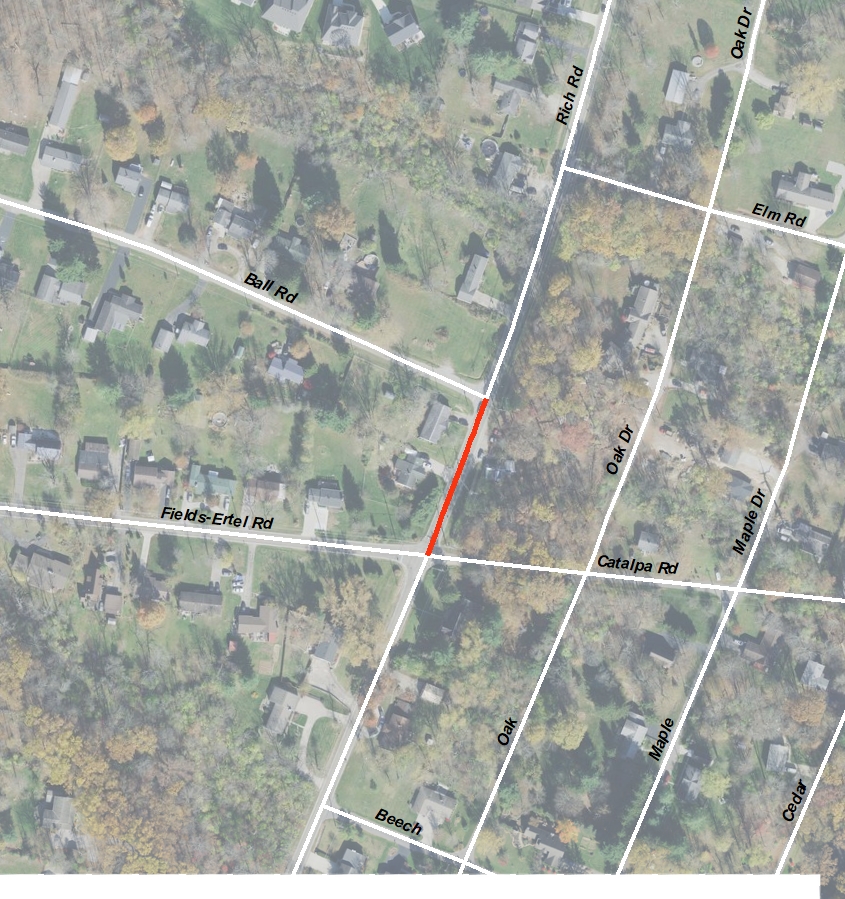
    Deerfield Township, Ohio – Weather permitting Rich Road between Fields Ertel Road and Ball Road will be closed for pavement repairs from June 6th through 8th, starting at 8 AM on June 6th until completion. Below is a map that shows the location of the roadwork.

  • Jean Schmidt’s newest ‘divisive concepts’ bill enters Ohio House

    Jean Schmidt’s newest ‘divisive concepts’ bill enters Ohio House

    Prohibits all Ohio schools from “teaching or providing training that promotes or endorses divisive or inherently racist concepts.”

    BY: SUSAN TEBBEN –  Ohio Capital Journal

    The newest bill to regulate school curriculums and keep out what legislators see as “divisive concepts” entered the Ohio House on Tuesday.

    State Reps. Jean Schmidt, R-Loveland, and Mike Loychik, R-Bazetta, brought House Bill 616 to the State and Local Committee, which prohibits all Ohio schools from “teaching or providing training that promotes or endorses divisive or inherently racist concepts.”

    Though the co-sponsors said they want to deputize the State Board of Education with making decisions about what those concepts would be, the bill includes “critical race theory,” a misnomer used by conservatives to refer to the teaching of race in American history, and name the “1619 Project,” a New York Times project that laid out the chronology of slavery and racism, as concepts that would be prohibited under the bill.

    “Diversity, equity and inclusion learning outcomes” (DEI) are also named as “divisive or inherently racist concepts” under the bill. When asked to explain DEI and why it’s being prohibited, Loychik connected DEI to “critical race theory,” saying the two are connected based on research he and Schmidt had made.

    “The word ‘critical race theory’ was not very well accepted at that point in time, so it was re-developed into DEI – diversity, equity and inclusion – and based off our research, like I said before, it’s very, very similar to the teachings under critical race theory,” Loychik told the committee.

    DEI trainings have been used in schools to train employees about learning disparities that can happen in education.

    The well-known conservative public policy think tank The Heritage Foundation connects CRT and DEI, saying diversity trainings “pressure employees to become activists or to discuss controversial topics in the workplace.”

    Part of the bill prohibits teaching kindergartners about topics related to gender.

    “It ensures that sexual orientation and gender ideology are not taught in kindergarten through third grade,” Loychik said. “Starting in fourth grade it must be age appropriate.”

    Loychik has made his feelings on gender in schools clear through posts on his Twitter, in which he said “the left thinks a 6-year-old should be able to change their gender but an 18-year-old shouldn’t be able to buy a firearm,” and asks for support not to allow “teaching transgenderism or allowing teachers to discuss their sex life with kindergarteners.”

    Under the newest bill, the State Board of Education would also be required to “establish a procedure by which individuals may file complaints against a teacher, school, administrator, or school district superintendent alleging a violation of the bill’s prohibitions and to adopt rules to govern the implementation of and monitor compliance with the bill’s provisions,” according to Legislative Service Commission analysis of the bill.

    Democratic committee members pushed back on the bill’s language, decrying it as “censorship” and questioning the vague language used, and the state board of education’s role in defining the off-limits topics in school curricula.

    “That’s the responsibility of legislators to define these terms,” said state Rep. Mike Skindell, D-Lakewood.

    The co-sponsors said they would be willing to consider amendments to the bill, but said the focus of the bill is on curriculum, not disciplinary regulations or hallway disagreements.

    Loychik said the school district’s role would be to address disciplinary problems, and “hall monitors” could deal with school-day disagreements regarding “divisive concepts.”

    Schmidt said “invited guests,” such as state legislators, would be allowed to “talk about what they want to talk about,” because it’s not a part of the curriculum, answering a question from state Rep. Tavia Galonski, D-Akron.

    “There is a lot to discuss in the schools, and by no means would any kind of prohibition or any type of censorship be the answer for it,” Galonski said.

    Education groups like Honesty for Ohio Education have criticized the bill as a “nationally coordinated educational gag order.”

    This is the third “divisive concepts” bill to come through the Ohio legislature, with the last bill receiving heavy criticism after one of the co-sponsors said equal time should be given on both sides of Holocaust lessons. Neither bill has passed through the General Assembly.

  • After Uvalde massacre, Ohio GOP hurtles toward arming state’s teachers

    After Uvalde massacre, Ohio GOP hurtles toward arming state’s teachers

    BY: JAKE ZUCKERMAN Ohio Capital Journal

    The Ohio Senate advanced fast-tracked legislation Tuesday that would allow local boards of education to permit teachers to carry guns in classrooms.

    Passage would eviscerate current law in Ohio that allows teachers to arm themselves only after completing more than 700 hours of police training and receiving approval from their local school board.

    Under House Bill 99 — which was largely rewritten and unveiled at the hearing — a school board could allow teachers to arm themselves. The latest version doesn’t specify any minimum amount of training hours, although it states that four hours must be “scenario-based or simulated training exercises.” Instead, it says teachers would need to undergo “initial instruction and training” to carry a weapon that “shall not exceed” 24 hours. From there, the teacher would need annual recertification training which “shall not exceed” eight hours.

    A local board of education would need to opt in to allow its teachers to arm themselves. That board could choose to mandate additional training, but it wouldn’t be required. The training required in the legislation includes the “scenario-based” training, “tactical live firearms training,” and “realistic urban training.”

    Earlier versions of the bill established a minimum of 20 hours of training, plus concealed carry training (another eight hours). It also called for more specific, somewhat warrior-like training requirements.

    “On signal, take a flanking step while drawing and fire three rounds into the preferred area. Upon completion, take appropriate post-shooting actions,” reads a training requirement of the House-passed version of the bill. “The distance from the target shall be thirty feet, the time allowed shall be eight seconds, and the number of rounds allowed shall be three.”

    The Senate committee vote comes on the heels of the May 24 shooting in Uvalde, Texas, in which a teenager purchased two assault style rifles that he used to kill 19 young children and two teachers. Seventeen others were wounded.

    At Tuesday’s hearing, two men spoke in support of the bill. The rest of the four hours were occupied by dozens of teachers, teachers’ union officials, anti-gun violence activists, and a Fraternal Order of Police lobbyist, all testifying in opposition.

    The teachers who testified argued it’s unrealistic to think an educator would react prudently and fire accurately at a shooter in a chaotic and precarious situation after mere hours of training. They’d need to execute keen marksmanship in a fraught situation to avoid hitting their own students. Several noted the bill makes no consideration as to how teachers must store the weapon, which could yield a flood of gun violence of its own.

    At times, Sen. Frank Hoagland, a Republican who chairs the committee that reviewed the bill, struggled to rein in the testy crowd. After hearing the hours of testimony in opposition to the bill, Republican Senators passed it regardless. The vote was a flex of political power, and drew shouts of “Shame! Shame!” from the crowd.

    Hoagland, and Sen. Terry Johnson, the number two Republican on the committee, both declined interview requests after the hearing. The legislation will likely go to the Senate floor for a vote Wednesday. The House could, in theory, accept the Senate’s changes on the same day and send the bill to Gov. Mike DeWine.

    Republicans in the Ohio House passed HB 99 earlier this year on a 59-33 vote (Republican Rep. Gayle Manning joined Democrats in opposition). Tuesday’s vote came in lieu of the typical process of holding several hearings on a bill before a roll call. Several speakers said they were unable to procure a copy of the latest version of the bill before Tuesday’s hearing.

    As of 2019, 18 states allow anyone with permission from school authority to carry a weapon, according to the National Conference of State Legislatures.

    The idea, which gained popularity after a spate of school shootings in the U.S., is broadly unpopular with educators. In a 2019 national survey of 2,926 teachers, more than 95% indicated they don’t believe teachers should carry a gun in the classroom. Even among the 16% of respondents who were gun owners, only 11.5% of them said being armed while teaching should be a part of teacher’s duties. Gallup polling from 2018 found 73% of teachers oppose the idea.

    More Ohioans died from guns last year than any year on record from the Ohio Department of Health’s data warehouse. Earlier this year, analysis in the New England Journal of Medicine found that firearms have overtaken vehicle crashes as the leading cause of death for American children, teens and young adults.

    In the gun friendly and Republican-dominated legislature, the policy response has included eliminating training and background check requirements to carry a concealed weapon; and eliminating a duty to retreat before responding to a perceived attack with deadly force.

    At Tuesday’s hearing, Rob Sexton, a lobbyist with the Buckeye Firearms Association, argued in support of the bill. He said it gives students a “fighting chance” in the face of a shooter. Rep. Thomas Hall, R-Madison Twp., who sponsored the bill, told Senators at a previous hearing the legislation is about clearing up Ohio law.

    “I’m not here to argue whether or not guns should be in schools,” he said. “I’m here to help clarify a gray area in law that will give schools the tools to protect their students if they wish to utilize them.”


  • Lawmakers propose new ‘self-defense’ high school graduation requirement

    Lawmakers propose new ‘self-defense’ high school graduation requirement

    State Rep. Tom Young, R-Washington Township.

    BY: NICK EVANS –  Ohio Capital Journal

    New legislation from Ohio state Reps. Tom Young, R-Washington Township, and Andrea White, R-Kettering, would require next year’s class of high school freshmen to take a course on recognizing and responding to threatening situations in order to graduate. The idea for the so-called “Student Protection Act” came from a number of recent high school graduates as part of an extracurricular project.

    Abby Purdy described how the proposal came from conversations she had with fellow Olentangy High School students Sydney Schultz and Vaidehi Patel about walking to their cars after work in the dark.

    “Everyone had very similar fears, and it kind of just sprouted from there,” Purdy explained. “We had a survey and many of the responses conveyed the same fears and we felt that self-defense would be the best way to help people feel that they have the tools to protect themselves.”

    Patel, Purdy and Schultz repeatedly invoked the idea of self-defense, as did the bill’s sponsors, but that’s a bit of a misnomer. Speaking afterward, Young acknowledged they struggled with how best to describe the course’s aims, but he was clear they’re not envisioning some sort of martial arts training.

    “No, this is not Tae Kwon Do, throwing people across a mat or anything like that,” he explained. “It’s raising an awareness on how to prevent and then respond to an aggressive situation — mentally, and perhaps a way to get out of a situation.”

    Rep. White emphasized the importance of teaching students how to respond to bullying and assault.

    “These behaviors should never be tolerated or allowed to go unreported,” she said. “And reinforcing this message with our young people while equipping them with the defensive tactics and proactive strategies that they can use to help protect themselves and avoid dangerous situations is critical.”

    Although the measure isn’t explicitly meant to teach students how to respond to a school shooting, last week’s shooting at an elementary school in Uvalde, Texas looms large. Young offered hopes that the coursework they’re proposing might discourage violence indirectly.

    “I would hope that this would not only raise awareness to prevent things happening to yourself and how to de-escalate, but also hopefully being aware of their classmates or somebody who’s struggling, that it opens up a dialog.”

    Young and White want districts to bring in school resource officers or certified self-defense instructors to provide demonstrations of self-defense. The legislation is silent, however, on who qualifies as an outside instructor or what form their demonstrations should take. Because the course will be part of the health class, teachers will also have to complete a course in self-defense training, but it’s up to the districts to determine which programs qualify.