Returning from summer break, the Ohio legislature could review two GOP-led pieces of legislation that would place health mandates on patients considering abortions.
One of the bills, recently introduced by state Rep. Jennifer Gross, would require physicians to dictate the results of a mandated ultrasound and also provide information about a link between breast cancer that has been disproven by multiple medical organizations.
Patients already have to meet with a physician 24 hours before an abortion, but under this bill, along with hearing about the medical risks of the procedure and the probably gestational age, a patient would be told “the possible increased risk of breast cancer that is associated with women who have undergone an abortion,” along with the “short-term and long-term risk of psychological or emotional harm” from choosing to have an abortion.
Multiple organizations, including the American Cancer Society, the American College of Gynecologists and the Susan G. Komen Breast Cancer Foundation have denied the link, citing research studies on the relationship between breast cancer and abortion.
The American Cancer Society said these research studies “have not found a cause-and-effect relationship between abortion and breast cancer.”
The Gross bill has not been assigned to a committee for consideration, but it has several sponsors, all Republican.
Meanwhile, a separate bill seeking to notify abortion patients of possible risks was introduced during the legislature’s summer break, and has been assigned to the House Health Committee.
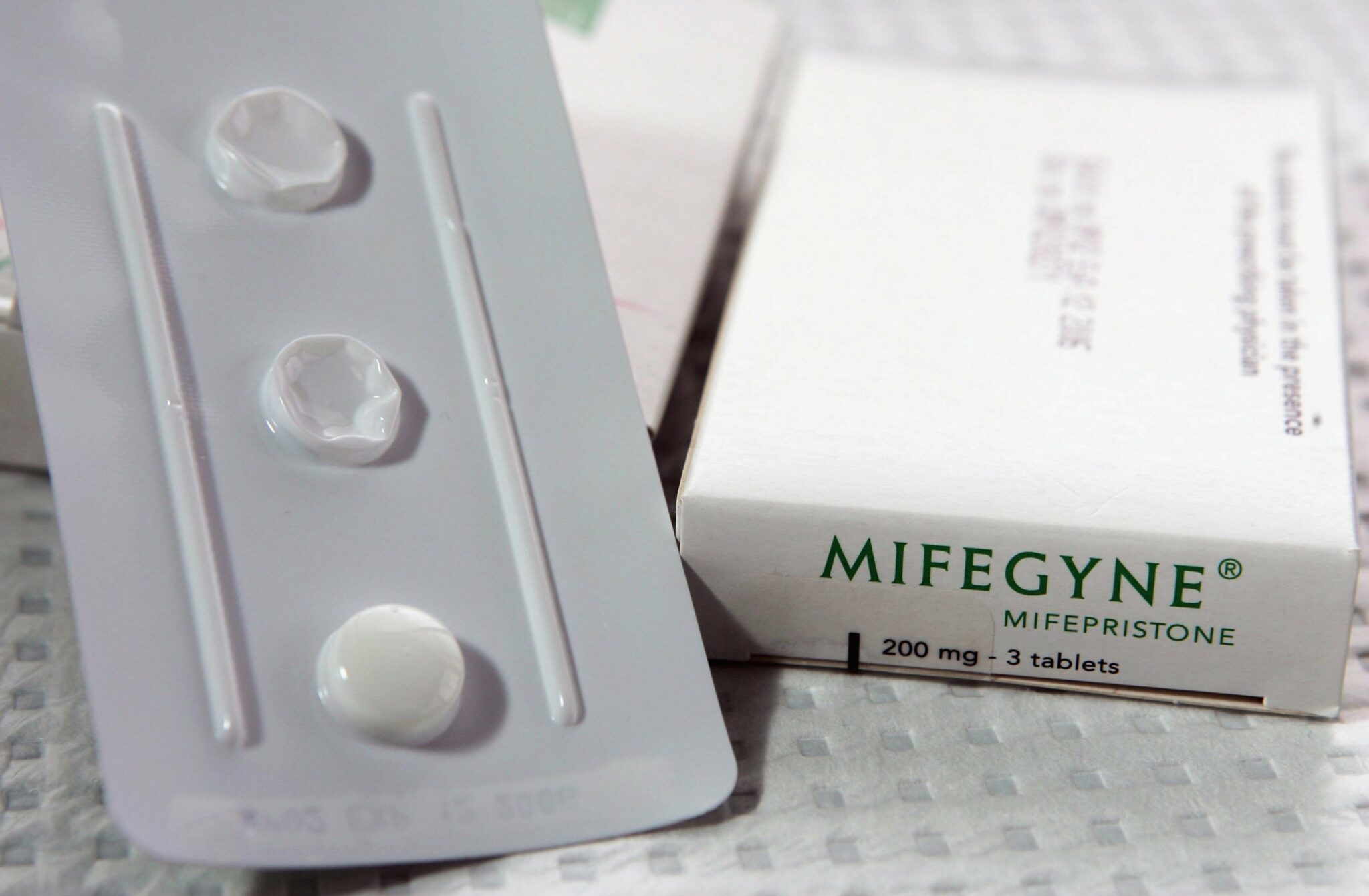
House Bill 378 was introduced in July by state Reps. Kyle Koehler, R-Springfield, and Sarah Fowler Arthur, R-Ashtabula, and specifically targets medication abortion, which is done through a two-pill regimen, rather than surgery.
The bill would require medical professionals to explain a controversial and medically unproven method of “reversing” the abortion by not taking the second of the two-pill regimen and giving additional progesterone to counteract the first pill.
The American College of Obstetricians and Gynecologists said claims about the “reversal” method “are not based in science and do not meet clinical standards.”
The bill is a reintroduction of a similar one that passed the Senate in 2019, but didn’t make it through the House.
Abortion is legal in the state of Ohio up to 20 weeks gestation.
Susan Tebben is an award-winning journalist with a decade of experience covering Ohio news, including courts and crime, Appalachian social issues, government, education, diversity and culture. She has worked for The Newark Advocate, The Glasgow Daily Times, The Athens Messenger, and WOUB Public Media. She has also had work featured on National Public Radio.
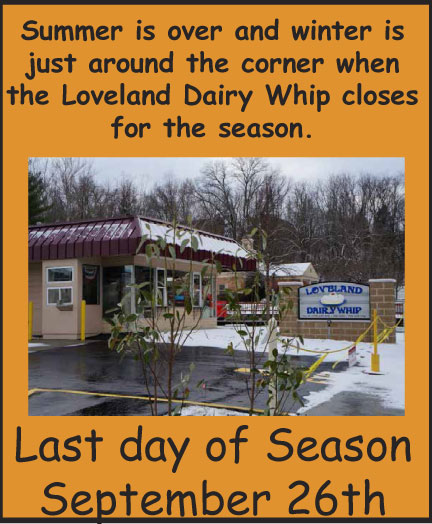
Loveland, Ohio – Today Rick Morgan informed Loveland Magazine of the unbelievably sad news that the last day you can buy a whippy-dip at the Loveland Dairy Whip is this Sunday, September 26 when they will shutter for the season.
Rick Morgan
Haven’t heard about their history and such? Watch this interview Cassie Mattia did with Rick mid-Summer.
Loveland, Ohio – The Loveland Tigers hosted the Milford Eagles on Friday, 9-17-21. Here are highlight photos including a parachute landing, game action, and featuring the Marching Band and Color Guard. Milford defeated Loveland 48-34 and the Milford/Miami Victory Bell went home with the Eagles for another season.
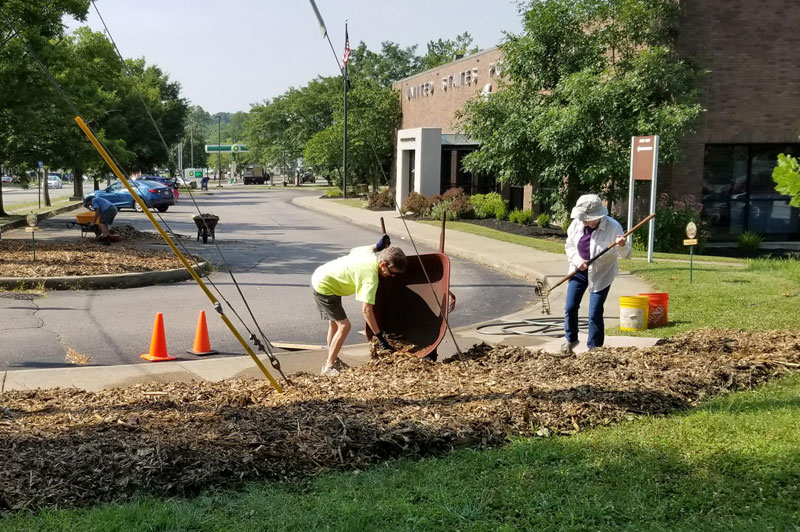
We’re laying the groundwork for pollinator gardens! Next spring these mulched areas will be planted with native flower seedlings that will benefit pollinators and beautify the community.
In 2017, the U.S. Postal Service recognized the beauty and importance of pollinators with their Protect Pollinators stamps. Now, with the help of volunteers, the Loveland Post Office is putting that concept into action by turning swaths of grass, with their constant need for mowing, into flower gardens and reforested meadow areas.
Natural areas provide many benefits over mowed grass. The Loveland Post Office will see lower labor and fuel costs, while also reducing their carbon footprint. The gardens will provide food and habitat for pollinators (to whom we owe our very existence). And the community gets to enjoy the beauty of colorful flowers every time they drive past the Post Office. Now that’s an all-round Win-Win!
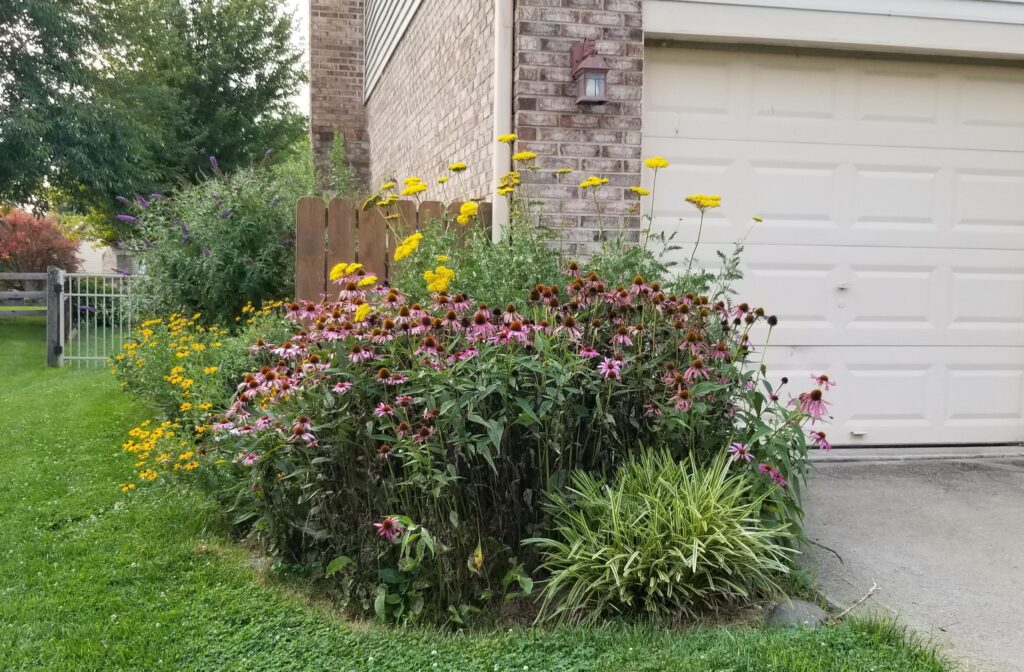
Small pollinator gardens provide much-needed habitat islands.
Did you know that insects pollinate 80% of the world’s plants, including 90 different food crops? One out of every 3 or 4 bites of food we eat is pollinated by an assortment of bees, beetles, moths, wasps, and butterflies. WOW — These small creatures, so often taken for granted, are vitally important to human survival! Unfortunately, many pollinators are threatened for a variety of reasons: habitat loss, fragmented habitat (with huge gaps between habitat ‘islands’), non-native plants that fail to serve pollinator needs, and (worst of all) the use of pesticides and herbicides on our lawns and landscapes. Pollinators need our help, and the Loveland Post Office is stepping up-to-the-plate.
What about those “Naturalized Area” signs you see? They identify areas where young trees and shrubs will be planted this fall. Initially, those areas will resemble meadows, but once the plants mature they will become a natural woodland. Trees are crucial for pollinator survival because they bloom so early in the spring, long before summer flowers ‘break bud’. Have you ever noticed reddish clusters on the bare branches of a maple tree in early spring? Those are tiny flowers that are buzzing with bees — if only you could get close enough to see them.
Small pollinator gardens provide much-needed habitat islands.
This pollinator garden project is a unique collaboration between the Post Office, community volunteers, and Loveland High School Transition Program students. Community volunteers are currently prepping the garden beds by spreading a thick layer of mulch over cardboard, to eliminate the grass without using herbicides. Seeds are being gathered from locally grown, native flowers, to ensure those seeds are pesticide-free. (Did you know commercially available seeds are often coated with pesticides that can make their way into the nectar which can sicken, or even kill, pollinators?) The high school students will grow the flowers from the seeds being collected now, and the flower seedlings will be planted at the Post Office next spring. This terrific partnership is a wonderful example of Loveland’s abundant community spirit!
Small pollinator gardens provide much-needed habitat islands.
The Post Office gardens and naturalized areas will provide a much-needed pollinator habitat, but to survive and thrive pollinators require many such ‘habitat islands’ scattered widely across a community. So, why not create your own pollinator garden? Whether large or small, every garden has a huge impact on the well-being of our pollinators. Just be sure to buy native plants that are organically grown, avoid the use of pesticides and herbicides, and include a few old logs, or attractive pieces of driftwood, for nesting purposes (yes, bees need nesting places, too).
If you have any questions, comments, or want to get involved, send an email to Cindy Kessler at ckessler@fuse.net.
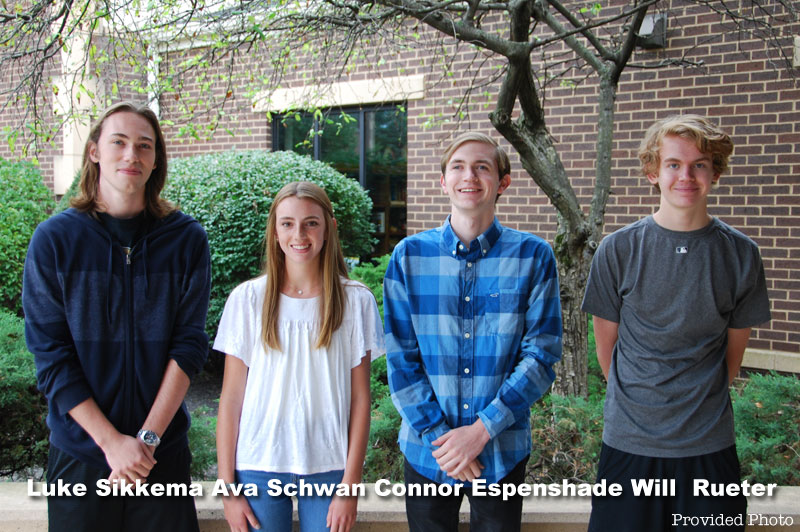
Computer science…engineering…policy…business…communications…chemistry. These are the fields of study five Cincinnati Area National Merit Semifinalists hope to enter when they attend college next year.
“It’s no secret that Country Day is academically rigorous and that certainly helped me prepare for the test, but being such a small school we also get more individualized attention from our teachers and that is invaluable,” said Loveland resident Margaret Sprigg-Dudley ’22.
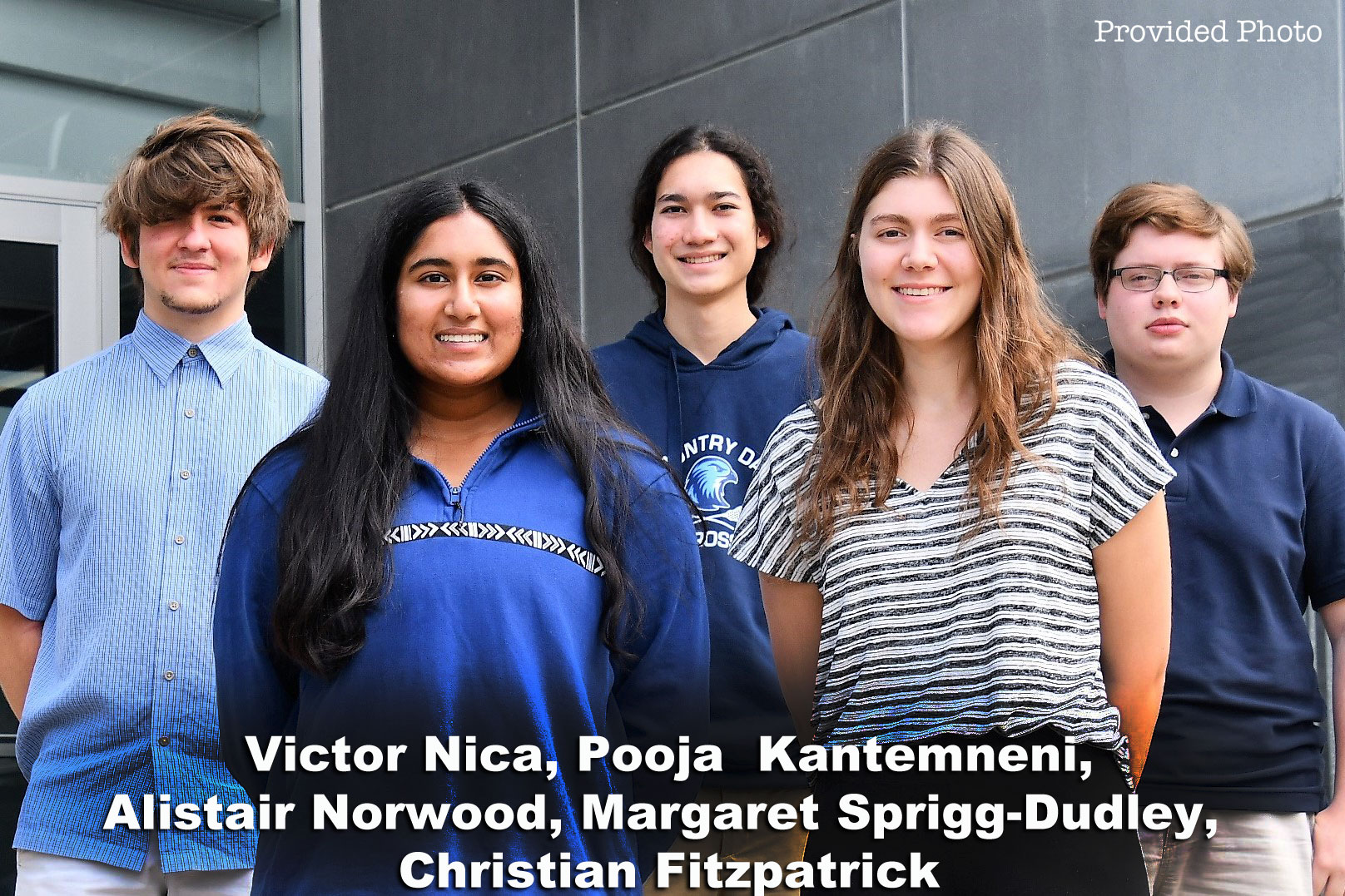
Cincinnati Country Day School seniors Christian Fitzpatrick (Kenwood), Pooja Kantemneni (Mason), Victor Nica (Anderson), Alistair Norwood (Coldstream), and Margaret Sprigg-Dudley (Loveland) were recently named among the approximately 16,000 Semifinalists in the 2022 National Merit Scholarship Program.
These academically talented high school seniors have an opportunity to continue in the competition for approximately 7,600 National Merit scholarships worth more than $31 million that will be offered in the spring.
Christian Fitzpatrick ’22 added, “The quality of teachers is also really important. If you have quality teachers that go beyond the required material like we do here [at Country Day] I’m sure that increases the likelihood that you would be prepared for something like standardized testing.”
Over 1.5 million juniors in about 21,000 high schools entered the 2022 National Merit Scholarship Program. The nationwide pool of Semifinalists, representing less than one percent of U.S. high school seniors, includes the highest-scoring entrants in each state.
To be considered for a Merit Scholarship award, Semifinalists must fulfill several requirements to advance to the Finalist level of the competition. Over 90% of the Semifinalists are expected to attain Finalist standing, and about half of the Finalists will win a National Merit Scholarship, earning the Merit Scholar title.
These academically talented high school seniors now have an opportunity to continue in the competition for some 7,500 National Merit Scholarships worth nearly $30 million that will be offered next spring. To be considered for a Merit Scholarship award, Semifinalists must fulfill several requirements to advance to the Finalist level of the competition. About 95 percent of the Semifinalists are expected to attain Finalist standing, and approximately half of the Finalists will win a National Merit Scholarship, earning the Merit Scholar title.
High school juniors entered the 2022 National Merit Scholarship Program by taking the 2020 Preliminary SAT/National Merit Scholarship Qualifying Test (PSAT/NMSQT), which served as an initial screen of program entrants. The nationwide pool of Semifinalists, representing less than one percent of U.S. high school seniors, includes the highest scoring entrants in each state. The number of Semifinalists in a state is proportional to the state’s percentage of the national total of graduating seniors.
To become a Finalist, the Semifinalist and a high school official must submit a detailed scholarship application, in which they provide information about the Semifinalist’s academic record, participation in school and community activities, demonstrated leadership abilities, employment, and honors and rewards received. A Semifinalist must have an outstanding academic record throughout high school, be endorsed and recommended by a high school official, write an essay, and earn SAT or ACT scores that confirm the student’s earlier performance on the qualifying test.
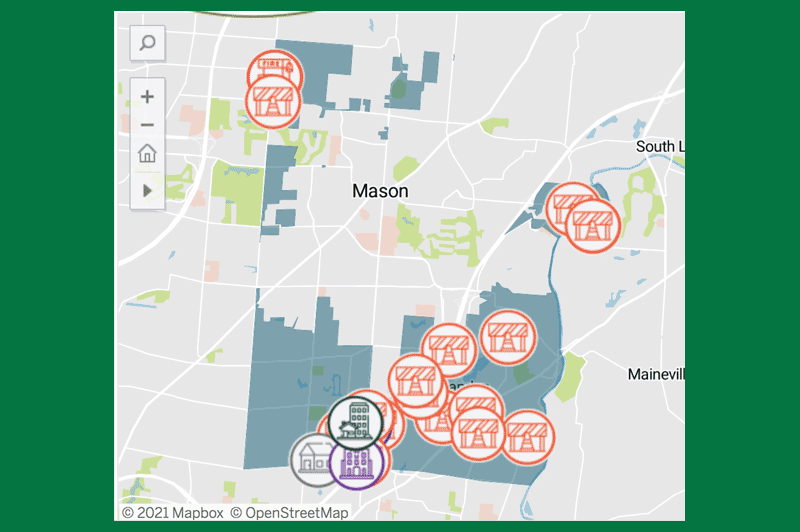
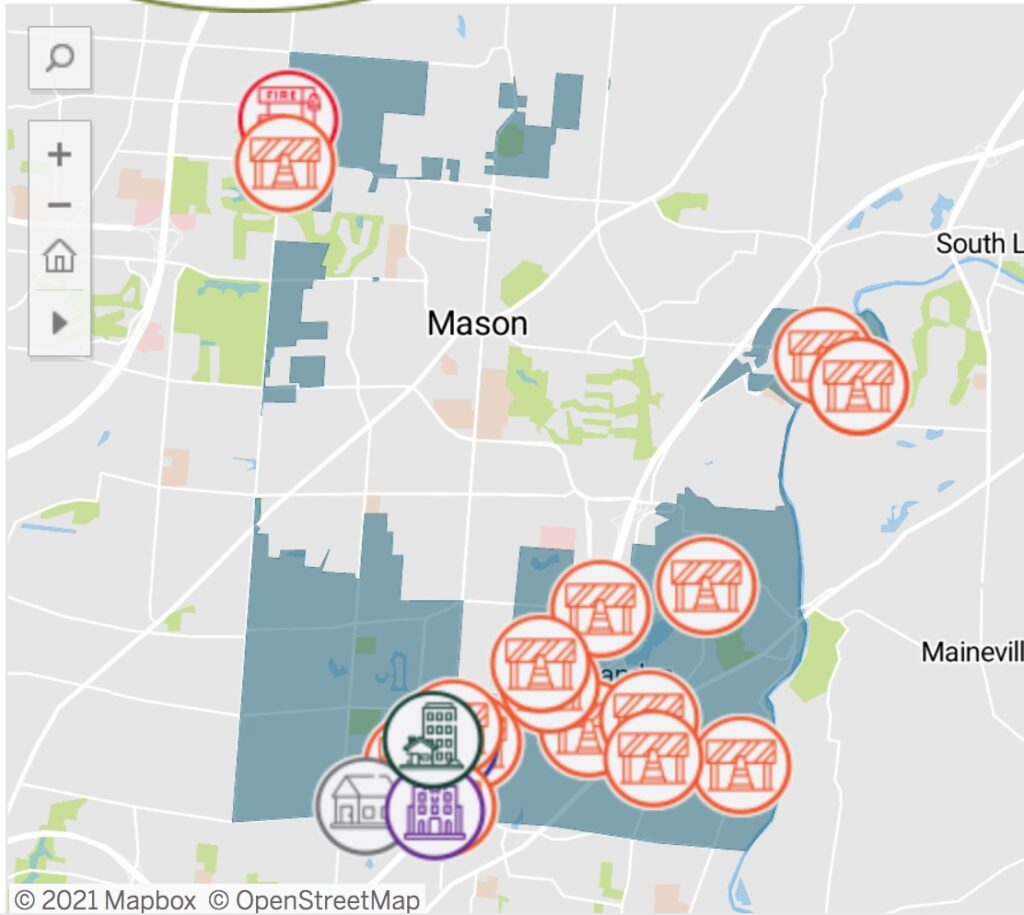
Deerfield Township, Ohio – Below is a map showing major economic development and infrastructure projects that have been recently completed, under construction, or planned.
Click on the map below to go to an interactive map of each project…
Click on this map to go to see the interactive map of each project
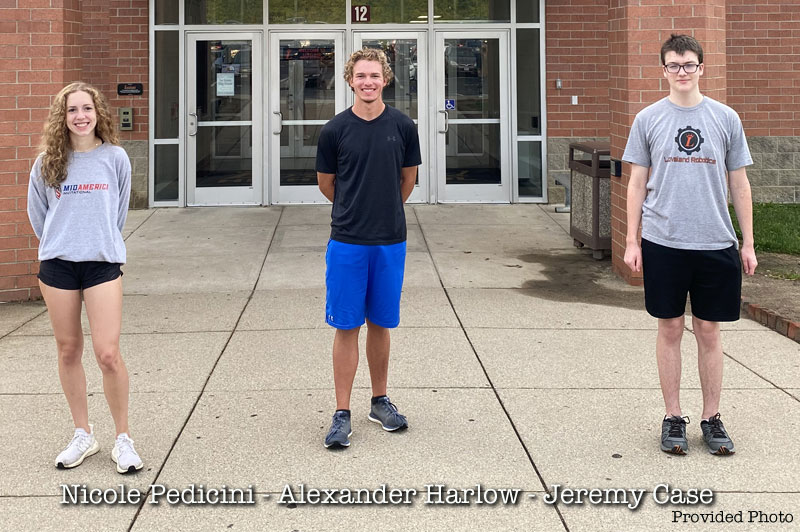
Loveland, Ohio – Jeremy Case, Alexander Harlow, and Nicole Pedicini, members of the Loveland High School Class of 2022, are National Merit Semifinalists.
The three Seniors will have an opportunity to continue in the National Merit Competition.
The National Merit Scholarship Program honors the nation’s scholastic champions and encourages the pursuit of academic excellence. The semifinalists represent less than 1% of high school seniors and are the highest-scoring in each state on the 2020 Preliminary SAT/National Merit Scholarship Qualifying Test. Students from across the country who are recognized will now compete for about 7,500 scholarships worth nearly $30 million.
The Ohio Children’s Hospitals Association made a direct appeal on Tuesday, September 14 to school superintendents to require masks for staff and students during the current surge of the coronavirus.
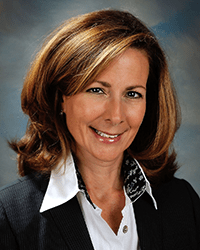
Patty Manning, MD, is the Chief of Staff at Cincinnati Children’s Hospital Medical Center (Photo by CCHMC)
Patty Manning, MD, Chief of Staff, Cincinnati Children’s Hospital Medical Center said, “Our inpatient numbers are the highest they’ve been. Our ICUs are caring for more patients than there’s ever been. More children are on ventilators than there has ever been. There are more children than ever entering our emergency departments and our urgent care centers. That impacts the care of all children, not just those that are COVID-19 positive.”
The plea was made during a virtual meeting with superintendents and the clinical leadership from six Ohio children’s hospitals including Dayton Children’s Hospital, ProMedica Russell J. Ebeid Children’s Hospital, Cincinnati Children’s Hospital Medical Center, Nationwide Children’s Hospital, Akron Children’s Hospital, and University Hospitals Rainbow Babies & Children’s Hospital.
“The data are now clear that there is a higher level of COVID-19 in school districts where masks are not required,” said Governor DeWine. “If we want our schools to stay open, the best way to do that is for those 12 and over to get vaccinated. But because those under 12 are still too young to be vaccinated, we need students who come in to school to wear a mask until we get through this.”
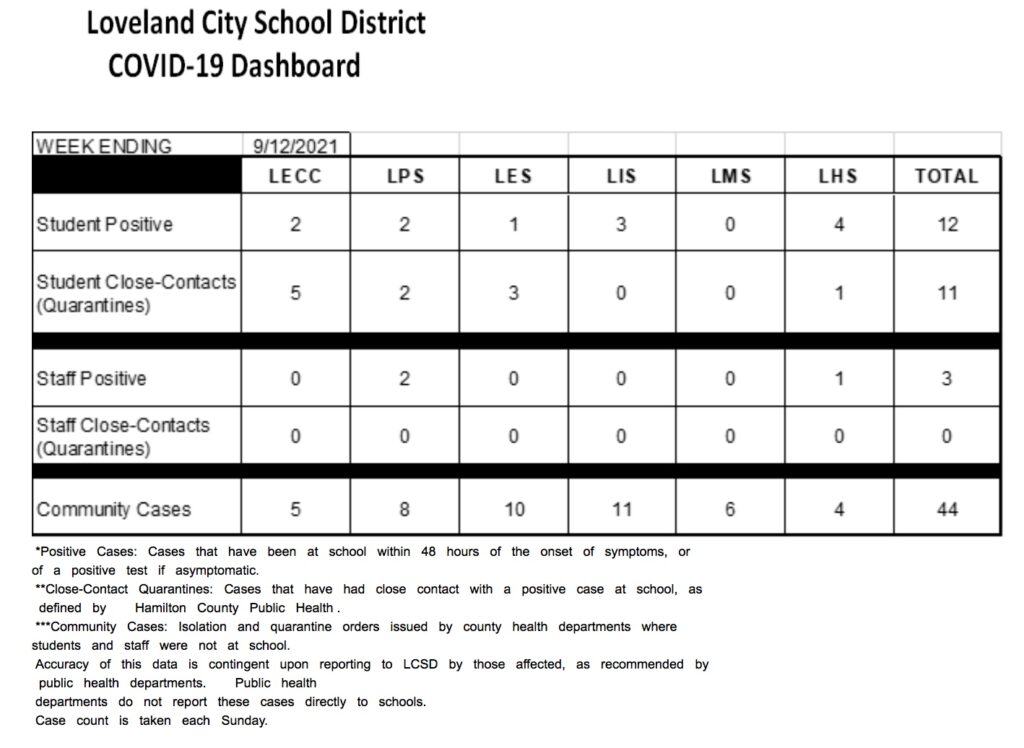
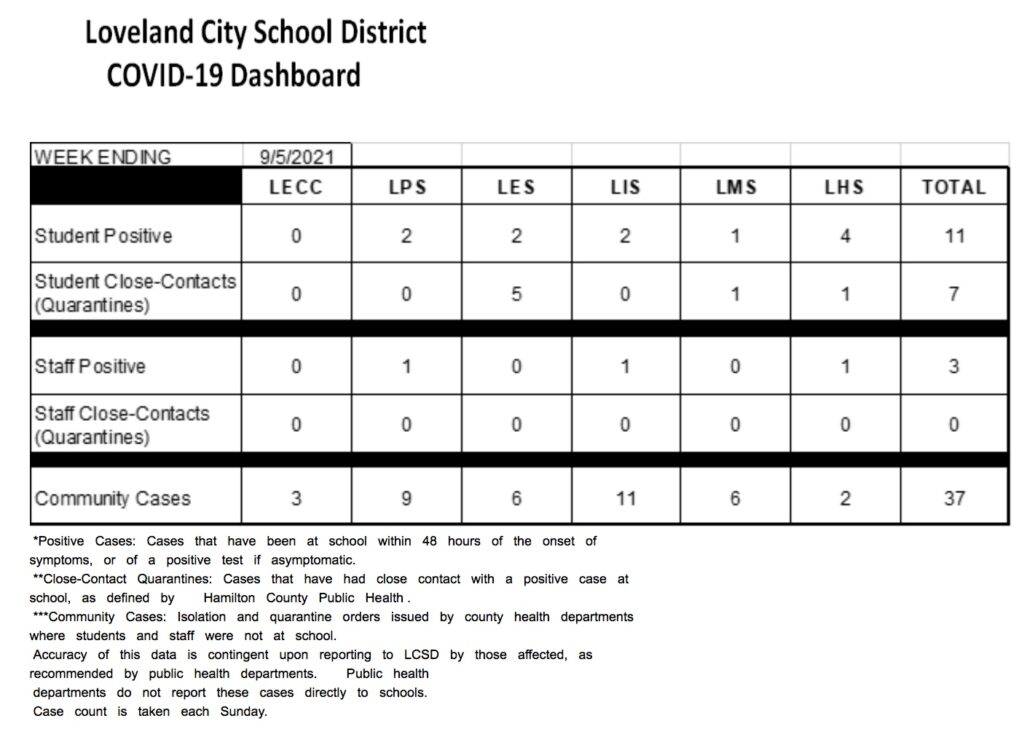
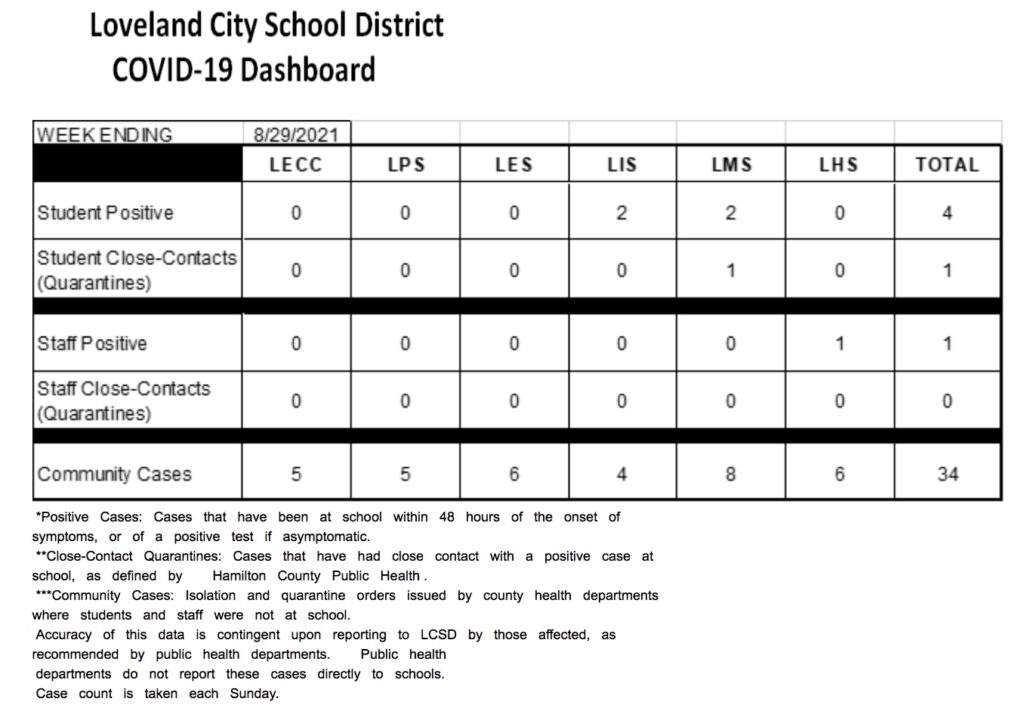
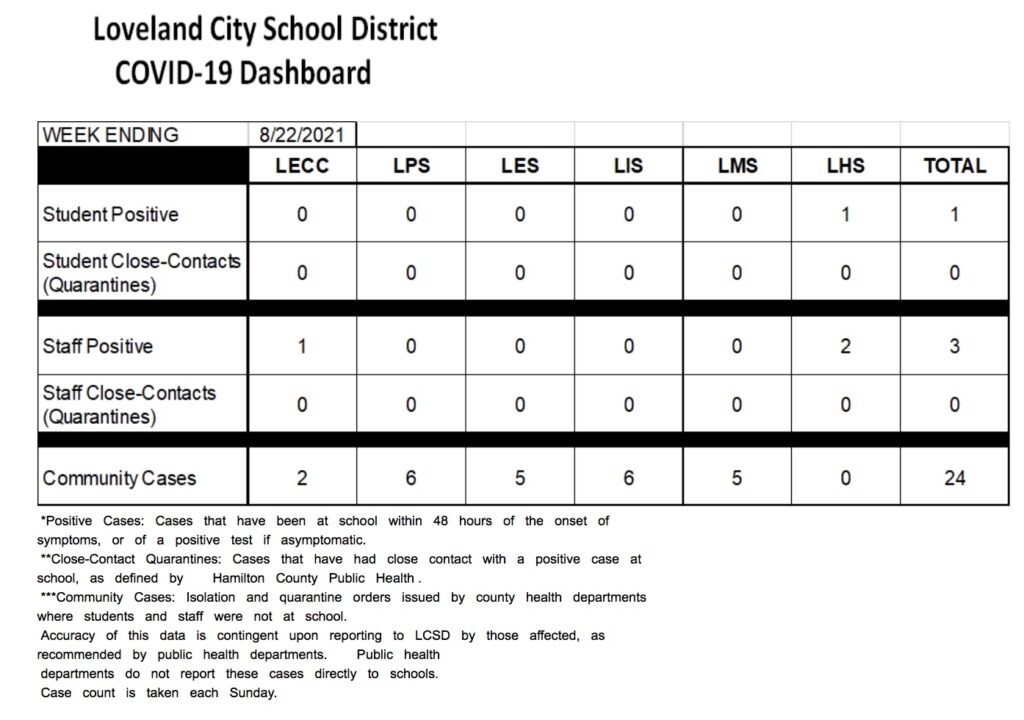
The current policy of the Loveland City School District is that students in grades PreK-6 are required to wear a mask indoors. Students in grades 7-12 do not have to wear face coverings. All others, while in the buildings must wear masks.
Efforts to reach Loveland Superintendant Mike Broadwater via email, asking him if he attended the virtual meeting and had any comment about it have not been successful securing an email response.
In the background of this urgent plea is that State Reps. Jean Schmidt (R-Loveland/Miami Township) announced on August 25 she has introduced House Bill 400, which would prohibit public schools from mandating students to wear a mask. The bill introduction comes as statewide concerns from parents have heightened as several public schools, including the Loveland District have implemented school mask mandates for some of their students.
Data that support this appeal according to a new release from the Ohio Children’s Hospitals Association include:
Since August 15, 2021, there have been 29,823 Ohio school-aged kids ages 5 to 17 with confirmed and probable cases of COVID-19.
Cases among this age group increased 198 percent from the week of August 15th as compared to the week ending September 4.
As reported yesterday by the American Academy of Pediatrics, COVID-19 cases among children have increased 240 percent nationally since early July when the Delta variant began to surge. During that same period in Ohio, there has been a 2000 percent increase in cases among Ohio children.
COVID-19 cases are increasing at nearly twice the rate among school-aged kids as compared to the rest of the population. This past week Ohio saw a 44 percent increase among school-aged children and only a 17 percent increase among the rest of the population.
Over the two-week period ending September 4, 2021, there was an average of 909 cases per 100,000 school-aged Ohio kids versus 561 cases per 100,000 people comprising the rest of the population.
The 16 days with the highest number of cases per day throughout the entire pandemic for kids aged 5 to 17 in Ohio have all been in the last 19 days. This includes every day except the three days of the Labor Day weekend.
In Ohio school districts where masks are optional, among school-aged kids, there are both higher case rates per 100,000 at 945.7 and a greater week-over-week increase in cases. School districts where masks are optional have seen a 54 percent week-over-week increase compared to a 34 percent increase in school districts where masks are either required for all or required for some (usually K-8th grade).
Nick Lashutka, President and CEO of the Ohio Children’s Hospital Association “This is a perfect storm, and it’s impacting kids like it hasn’t before. It’s a combination driven by COVID-19 cases increasing, primarily driven by the Delta variant, increasing respiratory illnesses, more mental health challenges, and staffing challenges. Everyone can agree that our number one goal is to keep children in schools five days a week, and that’s what we shared with the state’s superintendents today.”
Debbie Feldman, President and CEO of Dayton Children’s Hospitals “Ohio is truly blessed to have some of the best children’s hospitals in the country. We pride ourselves on meeting the needs of our kids. Our commitment is really threatened right now. For a long time, COVID-19 was perceived as a disease that didn’t impact children. That’s not the case anymore. Today, 25 percent of COVID-19 cases are in kids. We’re feeling that in our children’s hospitals.”
Paula Grieb, DNP, RN, Chief Nursing Officer, ProMedica Russell J. Ebeid Children’s Hospital “In the city of Toledo and at Ebeid Children’s Hospital, we’ve seen significant in-patient and out-patient volumes, and we’ve seen a significant increase in kids with respiratory illnesses. We had a significant event occur last night in Lucas County. That means if a rescue squad responded to a 911 call and picked up a patient to take them to a hospital that was on EMS bypass, that rescue squad would not be allowed to stop at that hospital. The county EMS system would have to dispatch each call one at a time. That means a patient wouldn’t necessarily go to the hospital closest to them or best-suited to take care of the patients’ needs.”
Rustin Morse, MD, CEO, Nationwide Children’s Hospital “We are in uncharted territory. Not just in children’s hospitals, but adult hospitals as well. The infrastructure is strained like it hasn’t been before. We are asking people to get vaccinated if they aren’t already, and we are asking them to wear masks.”
Patty Manning, MD, Chief of Staff, Cincinnati Children’s Hospital Medical Center
“Our inpatient numbers are the highest they’ve been. Our ICUs are caring for more patients than there’s ever been. More children are on ventilators than there has ever been. There are more children than ever entering our emergency departments and our urgent care centers. That impacts the care of all children, not just those that are COVID-19 positive.”



 is an award-winning journalist with a decade of experience covering Ohio news, including courts and crime, Appalachian social issues, government, education, diversity and culture. She has worked for The Newark Advocate, The Glasgow Daily Times, The Athens Messenger, and WOUB Public Media. She has also had work featured on National Public Radio.

![[Photos] Under the Friday Night Lights](https://lovelandmagazine.com/wp-content/uploads/2021/09/colorguard-video-1-1-scaled.jpg)



![[Watch video] Ohio Children’s Hospital leaders briefing for school administrators – September 14, 2021](https://lovelandmagazine.com/wp-content/uploads/2021/09/Childrens-Hospitals-Association-video.jpg)