The Ohio Senate passed an overhaul of the state Department of Education and Board of Education on Wednesday with heavy criticism for what bill supporters say has been years of dysfunction.
The measure passed 22-7, and now moves on for House consideration.
Ohio Senate President Matt Huffman. Official photo.
Senate President Matt Huffman came down from the dais just to support the measure, which renames the education department to include a workforce element and pares down the roles of the state board of education. It was just passed out of committee the day before, against objections from education advocates.
Huffman called out the Ohio Department of Education for what he called a lack of accountability.
“Most of us don’t have contact with the people at the Ohio Department of Education, and there’s a good reason for that: They don’t work for us, they work for the state Board of Education,” Huffman said in a Wednesday floor speech.
In particular, Huffman said there is a certain “malevolence” within the education department when it comes to school choice and EdChoice private school voucher program processes.
He believes that discord won’t happen if the department leadership is moved within the executive branch’s purview.
“If this is a cabinet-level position, under the governor … there is going to be a response to this body and the members of the House, the elected representatives of the people,” Huffman said. “Because governors have an incentive to respond to the legislature.”
Democrats stood in opposition not to changes to the state’s education system, but how the changes are being made.
State Sen. Vernon Sykes, D-Akron, a member of the Senate Primary and Secondary Education Committee from which the bill originated, said school governance has been debated “almost the whole time that I’ve been a member of the General Assembly.”
Is change needed? He says yes.
“I believe we need to review and revise our education governance structure, but we need an intensive and extensive review, giving all stakeholders adequate opportunity to consider proposals and to give input,” Sykes told his fellow Senate members.
Responding to criticism that the bill is happening too fast for a proper review, state Sen. Andrew Brenner, R-Delaware, said the bill was crafted over “months” and attempts to make changes have happened multiple times over the years, including the institution of academic distress commissions. Many of the problems, such as decreases in reading comprehension test scores and a lack of an official state superintendent for public instruction, have been years in the making.
Without immediate action, students will continue to lose learning time and Ohio’s workforce will not be prepared for the new opportunities coming from places like Intel.
“If kids aren’t literate, they’re not going to be able to do those jobs,” Brenner said.
Two Republicans, state Sens. Kristina Roegner and Niraj Antani, voted against the measure, but did not make comments during the session.
State Representatives will need to move fast to get the measure passed by the end of the year, which also marks the end of the 134th General Assembly. If it doesn’t pass, the effort starts over at the beginning of the year.
House Speaker Bob Cupp said he has yet to look at the bill or discuss it with House colleagues, according to Huffman.
“We talked generally about it and I expressed the fact that I’m in favor of it and Governor (Mike) DeWine expressed that also,” Huffman said after the Senate vote.
The Senate president said he does think there is support for it already in the House, but if it doesn’t pass, that won’t spell the end of the matter.
“I’d like to move that this year and if, for whatever reason, that doesn’t happen in the House, it’ll be coming right back in February,” Huffman said after the Senate vote.
After the vote, groups on either side of the education debate spoke out on the measure.
Public school education coalition Honesty for Ohio Education panned the fast-tracked vote.
“Instead of collaborating with policymakers, the Department of Education, educators, administrators, and communities to build a sustainable solution that would address these very complicated issues, lawmakers are prioritizing a solution that creates more problems than it solves,” said coalition director Cynthia Peeples.
The Buckeye Institute, a think tank that supported the bill in committee, said passage of the bill was an opportunity for Ohio.
“By reforming the State Board of Education and the Ohio Department of Education, Senate Bill 178 will better align education with the needs of employers and help overcome historic learning loss in the wake of the pandemic,” said Greg Lawson, research fellow for the institute.
A spokesperson for the Ohio Department of Education declined to comment on the statements made Wednesday in the Senate or on the bill itself.
Today, the U.S. Food and Drug Administration amended the emergency use authorizations (EUAs) of the updated (bivalent) Moderna and Pfizer-BioNTech COVID-19 vaccines to include use in children down to 6 months of age.
“More children now have the opportunity to update their protection against COVID-19 with a bivalent COVID-19 vaccine, and we encourage parents and caregivers of those eligible to consider doing so – especially as we head into the holidays and winter months where more time will be spent indoors,” said FDA Commissioner Robert M. Califf, M.D. “As this virus has changed, and immunity from previous COVID-19 vaccination wanes, the more people who keep up to date on COVID-19 vaccinations, the more benefit there will be for individuals, families and public health by helping prevent severe illnesses, hospitalizations, and deaths.”
What parents and caregivers need to know:
Children 6 months through 5 years of age who received the original (monovalent) Moderna COVID-19 Vaccine are now eligible to receive a single booster of the updated (bivalent) Moderna COVID-19 Vaccine two months after completing a primary series with the monovalent Moderna COVID-19 Vaccine.
Children 6 months through 4 years of age who have not yet begun their three-dose primary series of the Pfizer-BioNTech COVID-19 Vaccine or have not yet received the third dose of their primary series will now receive the updated (bivalent) Pfizer-BioNTech COVID-19 vaccine as the third dose in their primary series following two doses of the original (monovalent) Pfizer-BioNTech COVID-19 Vaccine.
Children 6 months through 4 years of age who have already completed their three-dose primary series with the original (monovalent) Pfizer-BioNTech COVID-19 Vaccine will not be eligible for a booster dose of an updated bivalent vaccine at this time. Children in this age group who already completed their primary series would still be expected to have protection against the most serious outcomes from the currently circulating omicron variant. The data to support giving an updated bivalent booster dose for these children are expected in January. The agency is committed to evaluating those data as quickly as possible.
The Moderna and Pfizer-BioNTech bivalent COVID-19 vaccines include an mRNA component corresponding to the original strain to provide an immune response that is broadly protective against COVID-19 and an mRNA component corresponding to the omicron variant BA.4 and BA.5 lineages to provide better protection against COVID-19 caused by the omicron variant.
Individuals who receive the updated (bivalent) vaccines may experience similar side effects reported by individuals who received previous doses of the original (monovalent) mRNA COVID-19 vaccines.
The fact sheets for both bivalent COVID-19 vaccines for recipients and caregivers and for healthcare providers include information about the potential side effects, as well as the risks of myocarditis and pericarditis.
“Vaccines remain the best defense against the most devastating consequences of disease caused by the currently circulating omicron variant, such as hospitalization and death. Based on available data, the updated, bivalent vaccines are expected to provide increased protection against COVID-19,” said Peter Marks, M.D., Ph.D., director of the FDA’s Center for Biologics Evaluation and Research. “Parents and caregivers can be assured that the FDA has taken a great deal of care in our review, and we encourage parents of children of any age who are eligible for primary vaccination or a bivalent COVID-19 vaccine booster dose to consider seeking vaccination now as it can potentially help protect them from COVID-19 during a time when cases are increasing.”
Moderna COVID-19 Vaccine, Bivalent
The monovalent Moderna COVID-19 Vaccine is authorized as a two-dose primary series in individuals six months of age and older and as a third primary series dose for individuals 6 months of age and older who have been determined to have certain kinds of immunocompromise. With today’s authorization, the Moderna COVID-19 Vaccine, Bivalent is now authorized for administration in individuals 6 months through 5 years of age as a single booster dose at least 2 months after completion of primary vaccination with the monovalent Moderna COVID-19 Vaccine. The Moderna COVID-19 Vaccine, Bivalent is also authorized for use in individuals 6 years and older as a single booster dose at least two months after completion of either primary vaccination with any authorized or approved COVID-19 vaccine, or receipt of the most recent booster dose with any authorized or approved monovalent COVID-19 vaccine.
For the authorization of a single booster dose of the Moderna COVID-19 Vaccine, Bivalent for children 6 months through 5 years of age, the FDA relied on immune response data that it had previously evaluated from a clinical study in adults of a booster dose of Moderna’s investigational bivalent COVID-19 vaccine that contained a component corresponding to the original strain of SARS-CoV-2 and a component corresponding to the omicron lineage BA.1.
In addition, the FDA conducted an analysis of data from a clinical study that compared the immune response among 56 study participants 17 months through 5 years of age who received a single booster dose of monovalent Moderna COVID-19 Vaccine at least six months after completion of a two-dose primary series of the vaccine to the immune response among approximately 300 study participants 18 through 25 years of age who had received a two-dose primary series of monovalent Moderna COVID-19 Vaccine in a previous study which determined the vaccine to be effective in preventing COVID-19. The immune response to the booster dose of monovalent Moderna COVID-19 Vaccine in the 17 months through 5 years age group was comparable to the immune response to the two-dose primary series in the adult participants.
The safety of a single booster dose of the Moderna COVID-19 Vaccine, Bivalent for children 6 months through 5 years of age is supported by safety data from a clinical study which evaluated a booster dose of Moderna’s investigational bivalent COVID-19 vaccine (original and omicron BA.1), safety data from clinical trials which evaluated primary and booster vaccination with the monovalent Moderna COVID-19 Vaccine, and postmarketing safety data with the monovalent Moderna COVID-19 Vaccine and Moderna COVID-19 Vaccine, Bivalent.
In one clinical study, the safety of a single booster dose of monovalent Moderna COVID-19 Vaccine was evaluated in 145 clinical study participants 6 months through 5 years of age who received a booster dose of monovalent Moderna COVID-19 Vaccine at least six months after completion of the monovalent Moderna COVID-19 Vaccine two-dose primary series. The most commonly reported side effects after a booster dose of the monovalent Moderna COVID-19 Vaccine across this age group included pain, redness and swelling at the injection site, swelling/tenderness of the lymph nodes of the injected arm or thigh, and fever. In clinical study participants 17 months through 36 months of age, other commonly reported side effects included irritability/crying, sleepiness, and loss of appetite. In clinical trial participants 37 months through 5 years of age, other commonly reported side effects included fatigue, headache, muscle pain, joint pain, chills, and nausea/vomiting.
The data accrued with the investigational Moderna bivalent COVID-19 vaccine (original and omicron BA.1) and with the monovalent Moderna COVID-19 Vaccine are relevant to the Moderna COVID-19 Vaccine, Bivalent because these vaccines are manufactured using the same process.
Pfizer-BioNTech COVID-19 Vaccine, Bivalent
With today’s authorization, children 6 months through 4 years of age who have not yet received the third dose of the three-dose primary series with the monovalent Pfizer-BioNTech COVID-19 Vaccine will now receive the Pfizer-BioNTech COVID-19 Vaccine, Bivalent as the third dose of the primary series. The Pfizer-BioNTech COVID-19 Vaccine, Bivalent is also authorized for administration in individuals 5 years of age and older as a single booster dose at least two months after completion of either primary vaccination with any authorized or approved COVID-19 vaccine, or receipt of the most recent booster dose with any authorized or approved monovalent COVID-19 vaccine.
With today’s action, the monovalent Pfizer-BioNTech COVID-19 Vaccine is no longer authorized for use as the third dose of the three-dose primary series in children 6 months through 4 years of age. The monovalent Pfizer-BioNTech COVID-19 Vaccine remains authorized for administration as the first two doses of the three-dose primary series in individuals 6 months through 4 years of age, as a two-dose primary series for individuals 5 years of age and older, and as a third primary series dose for individuals 5 years of age and older who have been determined to have certain kinds of immunocompromise.
The authorization of the Pfizer-BioNTech COVID-19 Vaccine, Bivalent for administration as the third dose of a three-dose primary series following two doses of the monovalent Pfizer-BioNTech COVID-19 Vaccine in children 6 months through 4 years of age is supported by the FDA’s previous analyses of the effectiveness of primary vaccination with the monovalent Pfizer-BioNTech COVID-19 Vaccine in individuals 16 years of age and older and individuals 6 months through 4 years of age, and previous analyses of immune response data in adults greater than 55 years of age who had received a two-dose primary series and one booster dose with the monovalent Pfizer-BioNTech COVID-19 Vaccine and a second booster dose with the investigational Pfizer-BioNTech bivalent COVID-19 vaccine (original and omicron BA.1).
The safety of the Pfizer-BioNTech COVID-19 Vaccine, Bivalent for administration as the third dose of a three-dose primary series following two doses of the monovalent Pfizer-BioNTech COVID-19 Vaccine in children 6 months through 4 years of age is based on safety data from a clinical study which evaluated a booster dose of Pfizer-BioNTech’s investigational bivalent COVID-19 vaccine (original and omicron BA.1) in individuals greater than 55 years of age, safety data from clinical trials which evaluated primary vaccination in individuals 6 months of age and older with the monovalent Pfizer-BioNTech COVID-19 Vaccine, safety data from clinical trials which evaluated booster vaccination in individuals 5 years of age and older with the monovalent Pfizer-BioNTech COVID-19 Vaccine and postmarketing safety data with the monovalent Pfizer-BioNTech COVID-19 Vaccine and the Pfizer-BioNTech COVID-19 Vaccine, Bivalent.
The data accrued with the investigational Pfizer-BioNTech bivalent COVID-19 vaccine (original and omicron BA.1) and with the monovalent Pfizer-BioNTech COVID-19 Vaccine are relevant to the Pfizer-BioNTech COVID 19 Vaccine, Bivalent because these vaccines are manufactured using the same process.
The amendments to the EUAs were issued to Moderna TX Inc. and Pfizer Inc.
The virus that causes COVID-19 changes over time. Keep your protection against COVID-19 up to date by getting a bivalent COVID-19 vaccine booster dose.
The bivalent COVID-19 vaccines include a component of the original virus strain to provide broad protection against COVID-19 and a component of the omicron variant to provide better protection against COVID-19 caused by the omicron variant. These are called bivalent COVID-19 vaccines because they contain these two components. A bivalent COVID-19 vaccine may also be referred to as “updated” COVID-19 vaccine booster dose.
COVID-19 vaccines can help protect against severe illness, hospitalization and death from COVID-19. As the virus changes and your immunity naturally decreases over time, you may lose some of that protection.
Search in your zip code to find a location where a bivalent COVID-19 vaccine booster dose is available near you.
What bivalent COVID-19 vaccines has FDA authorized for use as a booster dose?
Video: Why should I get the updated COVID-19 vaccine now? [1:35]
The FDA authorized bivalent formulations of the Moderna and Pfizer-BioNTech COVID-19 vaccines for use as a single booster dose.
The Moderna COVID-19 Vaccine, Bivalent is authorized for use as single booster dose in children 6 months through 5 years of age at least two months after completion of a primary series with the monovalent Moderna COVID-19 Vaccine. It is also authorized for use as a single booster dose in individuals 6 years of age and older at least two months after completion of either primary vaccination with any authorized or approved COVID-19 vaccine, or receipt of the most recent booster dose with any authorized or approved monovalent COVID-19 vaccine.
The Pfizer-BioNTech COVID-19 Vaccine, Bivalent is authorized for use as a single booster dose in individuals 5 years of age and older at least two months after completion of either primary vaccination with any authorized or approved COVID-19 vaccine or receipt of the most recent booster dose with any authorized or approved monovalent COVID-19 vaccine.
Am I eligible for an updated (bivalent) COVID-19 vaccine booster?
Eligibility for a booster depends on:
Your age
When you completed your primary vaccination OR
When received your most recent booster dose of a monovalent COVID-19 vaccine
If eligible, consider getting a bivalent COVID-19 vaccine booster dose.
Video: Are the new bivalent COVID-19 vaccines safe? [1:57]
A single booster dose with an updated bivalent COVID-19 vaccine provides broad protection against COVID-19 and is expected to provide better protection against COVID-19 caused by the currently circulating Omicron variant.
The Loveland Board of Education will conduct a special meeting on Thursday, December 10th, 2022, at 8:00 AM in the Board of Education Offices at 757 South Lebanon Rd, Loveland, Ohio 45140, for the purpose of considering the following agenda items:

Action Items
Request to file Modified Tax Budget – Action
Board 2023 Calendar – Potential Action after discussion

Discussion Items
District Finances
Board Officers and Administrative Committees
Board Appointees to Loveland City Committees
Board Meeting Processes, Recordings and Minutes
By-Laws


	The agenda is active on BoardDocs - https://go.boarddocs.com/oh/love/Board.nsf/vpublic?open


Pursuant to Board Policy 0169.1, there will be no Public Participation at this Special Meeting.
Loveland, Ohio – Tigers Incorporated, Loveland Spirit Club, and Jarvis Global Investments have launched the second annual “3’s For LIFE” Fundraiser.
This community outreach program will take place from December 3rd to February 2nd benefiting the Loveland LIFE Food Pantry. Jarvis Global Investments will donate twelve canned goods to the LIFE Food Pantry for every three-point shot made at Loveland High School’s Men’s and Women’s home basketball games.
The two Tigers Inc. students on the lead, Elly Steinbrunner and Brady Steiner, have secured a five hundred dollar donation from Meijer which will also be given to the LIFE Food Pantry.
Throughout the fundraiser, donation boxes will be set up at Loveland Biggby Coffee (732 Middleton Way), to collect food donations from community members.
If you’d like to help the cause you can donate canned food items, or venmo @Tigers-Inc and donate monetarily! All donations will go directly to the food pantry in the form of canned goods.
To stay up to date with the progress of the fundraiser visit Loveland Spirit Club on instagram @lovelandspiritclub or twitter @TigerSpiritClu1.”
Loveland School Treasurer Rob Giuffre – Photo Provided
Loveland, Ohio – Andrew Setters the Loveland City School District Director of Communication and Community Engagement sent this message to Loveland Magazine saying, “I’ve included the Superintendent’s Message from our December Community Newsletter below. It has a pretty clear message about the district’s five-year forecast and the financial decision-making that will need to take place in the months ahead.”
Setters added, “We’ve gotten good feedback on this, and I thought it might be of interest to your readers.”
Superintendent’s Message

Loveland Tiger Community,

Treasurer Rob Giuffre presented the five-year forecast during our Board of Education Meeting on November 15. You can view it under “important documents” on the Treasurer’s webpage by following this link. Watch the discussion around the Five Year Forecast at the two hours and thirty-five-minute mark of the Board Meeting recording by following this link.

The Five Year Forecast is a tool to allow school districts and communities to plan for future needs by looking at our projected financial situation over the next five years. It’s a lengthy document, but the most relevant information is on page three. It shows that we are in deficit spending for the current fiscal year by $3.7 million and projects a $3.8 million deficit in the following fiscal year.

Deficit spending means the district is spending more money than we receive from local, state, and federal tax revenue. The district is making up that deficit by using our cash reserves. Because we only get tax revenue deposits twice a year, those cash reserves are necessary to pay bills, payroll, and other expenses.

There are two paths ahead - a reduction in expenses or an increase in revenue. Salaries and benefits make up 86% of our costs, so a reduction in expenses means a decrease in staff positions. Because the district already implemented staff reductions in 2020, it will be difficult to make additional cuts without impacting educational opportunities for students. Increasing revenue means asking voters for additional funding through a levy.

Loveland City School District receives very little state funding compared to other districts around Ohio, and we do not expect the situation to improve. The state funding model is expected to eliminate more funding for suburban districts like Loveland in the future. The district’s financial situation cannot wait for help from state lawmakers who have been unable to fix the unconstitutional school funding system for decades.

In the weeks ahead, the Treasurer and I will look at options to present to the Board of Education as they consider which path to take.

If you have any questions, please contact me: broadwmi@lovelandschools.org

Go Tigers!

Mike Broadwater

Superintendent

Loveland City Schools
Loveland, Ohio – This Saturday you can bid on some beautiful Christmas Trees crafted by the artists at the Loveland Art Studios on Main and decorate your home if your bid wins.
Win or lose, you’ve taken a chance that 80% of your winning bid will go to help those Loveland Area residents served by the Loveland Inter-Faith Effort (LIFE) food pantry.
You can bowse and bid through Saturday from 11 AM until 4 PM.
The Winter Art Show and open studios are Saturday evening December 10, and the Silent Auction will continue until 9 PM.
The Bobby Sharp Trio will perform Saturday during the Winter Art Show.
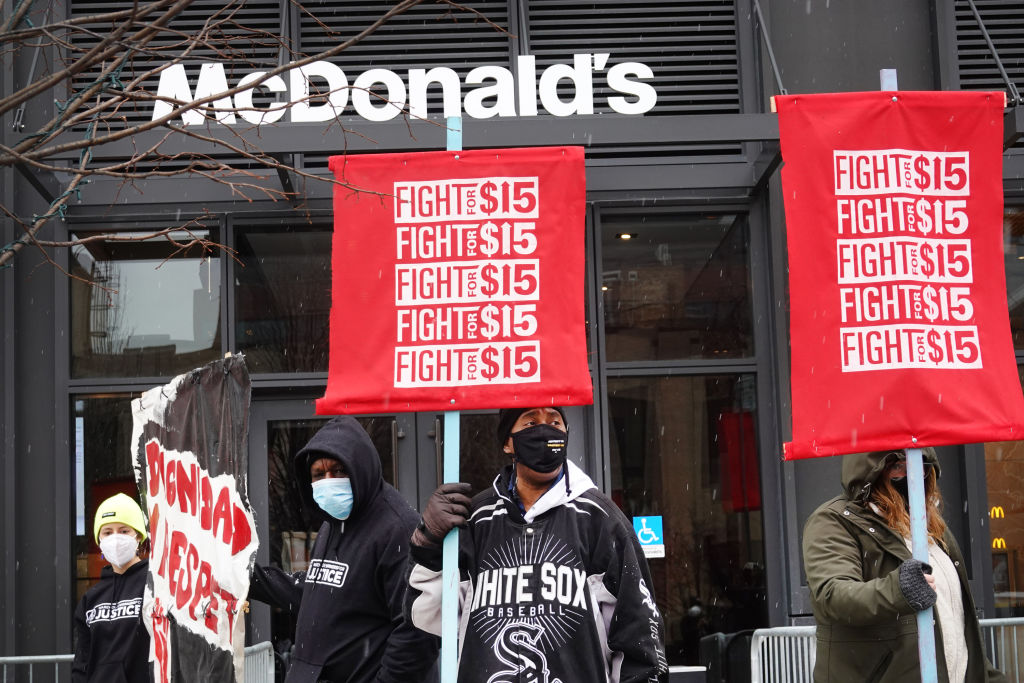
A new push for a $15 minimum wage was introduced in the Ohio House, attempting to speed up the progress of a constitutional amendment passed nearly two decades ago.
Democratic state Reps. Dontavius Jarrells and Brigid Kelly said their new bill not only addresses criticisms of quick implementation of a minimum wage increase, but also make a difference for struggling Ohioans.
“We heard concerns of colleagues and made a longer runway for the increases,” Kelly told the House committee on Commerce and Labor. “But the longer we wait to act, the less impactful this action will be.”
House Bill 69 would phase in those increases to reach $15 per hour by 2027.
Since the bill never received a hearing after it was initially filed in February of 2021, an amendment would be needed to change the language, which set the first increase to happen on Jan. 1, 2022.
The sponsors pointed to a constitutional amendment passed in 2006 that raised minimum wage in Ohio yearly with the rate of inflation. With inflation at the highest level since the Reagan administration, the minimum wage starting January 2023 will be $10.10 per hour, and $5.05 for tipped employees.
“The bottom line is this: When people have more money in their pockets, they spend it and they spend it in businesses and communities all across Ohio,” Kelly said.
Jarrells said he receives calls to his office often talking about hard decisions families in Ohio are making, like putting food on the table in lieu of needed medications, because affording both isn’t an option.
“When we think about the impact of just not thinking critically about how do we make sure salary or wages match our productivity, there are families who simply are going without,” Jarrells said.
Debate in the committee centered around whether adding more money would solve problems, namely bringing people back to the workforce.
State Rep. Don Jones, R-Freeport, argued that some businesses are offering more than $15 per hour, or at least increasing pay, and still aren’t able to bring more employees in. He said the issue was the workforce, not the wage.
“We can sit here and raise the minimum wage to $15 an hour, and people are going to want $20,” Jones said.
He used the example of a McDonald’s offering $13 an hour, though he didn’t specify whether the job was full-time or part-time.
Kelly said though food serve and retail workers are among those struggling to pay bills because of low wages or low hours, the problem extends to other categories of workers, like home health services. She and Jarrells agreed that while they see wage as a fixable issue on its own, there’s no reason not to work on both wage and workforce.
“We can think about what we would like aspirationally to be true, or we can think about what people are experiencing right now, which a lot of time is multiple part-time jobs, no benefits, challenges with transportation, challenges with housing security, and also working with governmental agencies to get benefits that aren’t necessarily aligned with one another,” Kelly said.
The bill is flanked by a proposed ballot initiative, which would bring the minimum wage to $15 per hour in 2028.
But if neither the bill — which faces a Republican supermajority and a quick timeline with the General Assembly set to end Dec. 31 — nor the ballot initiative are successful, that doesn’t mean more legislative measures aren’t on the horizon. Kelly expressed confidence that Jarrells would continue the efforts in the next General Assembly.
“We can continue to ignore it at our own peril, but Ohioans deserve better, they’ve earned and deserve a raise,” Kelly said.
Loveland, Ohio – The photos taken by David Miller in this movie were from last Friday evening as darkness fell over Loveland’s Downtown Historic District.
Many photos were taken with a selective camera focus to bring to light, uncover, and detect the kaleidoscope of many colors.
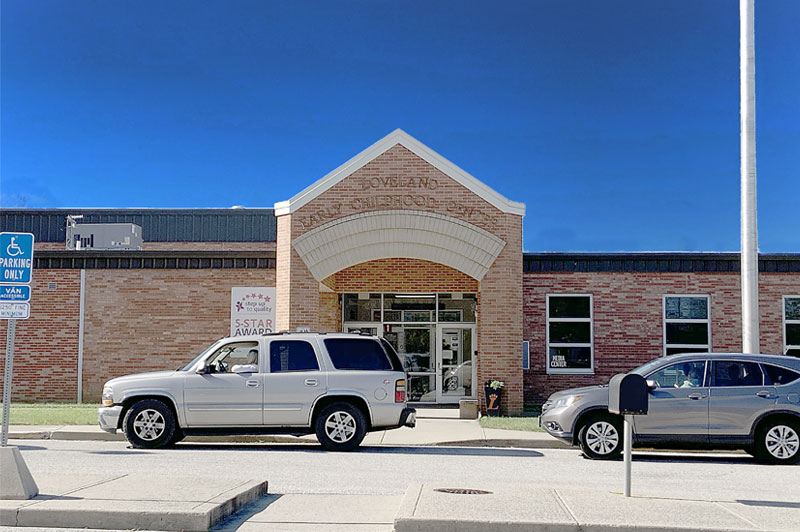
Applications are due no later than January 13, 2023, and should be turned in directly to Penny Dippold at the Loveland Early Childhood Center.
The completed application can be mailed (6740 Loveland-Miamiville Rd., Loveland, Ohio 45140), faxed (513-677-7960), or emailed to dippolpe@lovelandschools.org.
Parents will be notified if their child is selected for the program by early February 2023.
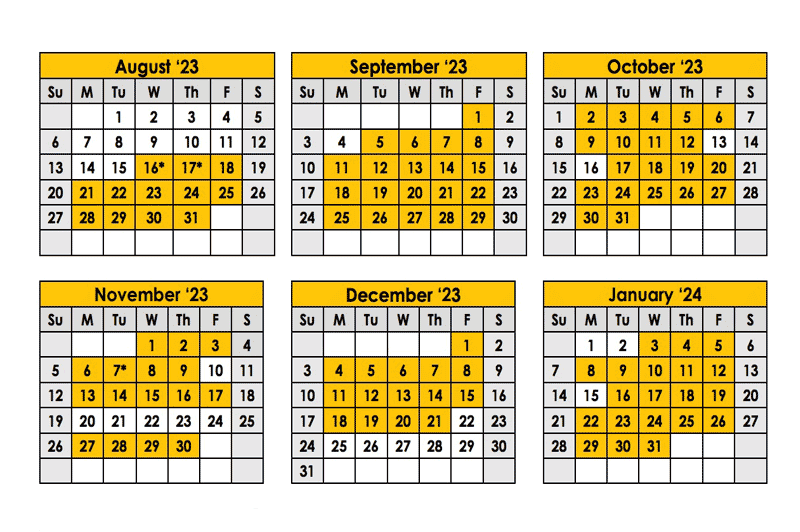
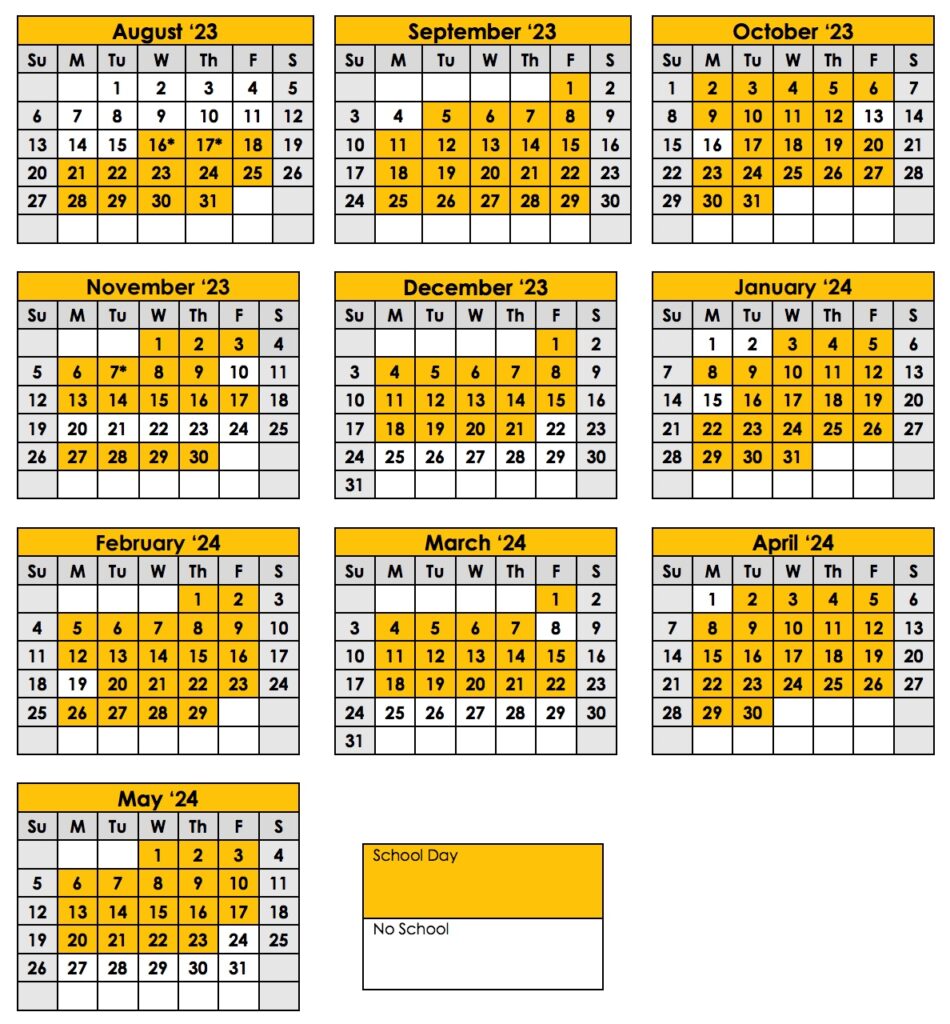
Wednesday, August 16, 2023 – First Day for Students with Last Names A-L Thursday, August 17, 2023 – First Day for Students with Last Names M-Z Monday, September 4, 2023 – No School – Labor Day Thursday, October 12, 2023 – Last Day of the First Quarter Friday, October 13, 2023 – No School – Inservice Day Monday, October 16, 2023 – No School – Inservice Day Tuesday, November 7, 2023 – No School PK-4 – Election Day Friday, November 10, 2023 – No School – Veterans Day (observed) Monday, November 20, 2023 – No School – Fall Break Begins Monday, November 27, 2023 – Students Return – Fall Break Ends Thursday, December 21, 2023 – Last Day of the Second Quarter Friday, December 22, 2023 – No School – Winter Break Begins Wednesday, January 3, 2024 – Students Return – Winter Break Ends Monday, January 15, 2024 – No School – Martin Luther King Jr. Day Monday, February 19, 2024 – No School – Presidents Day Thursday, March 7, 2024 – Last Day of the Third Quarter Friday, March 8, 2024 – No School – Inservice Day Monday, March 25, 2024 – No School – Spring Break Begins Tuesday, April 2, 2024 – Students Return to School – Spring Break Ends Thursday, May 23, 2024 – Last Day of School /Last Day of the Fourth Quarter