Tag: local news

  • Paying the disabled like everyone else would reduce poverty, economists say

    Paying the disabled like everyone else would reduce poverty, economists say

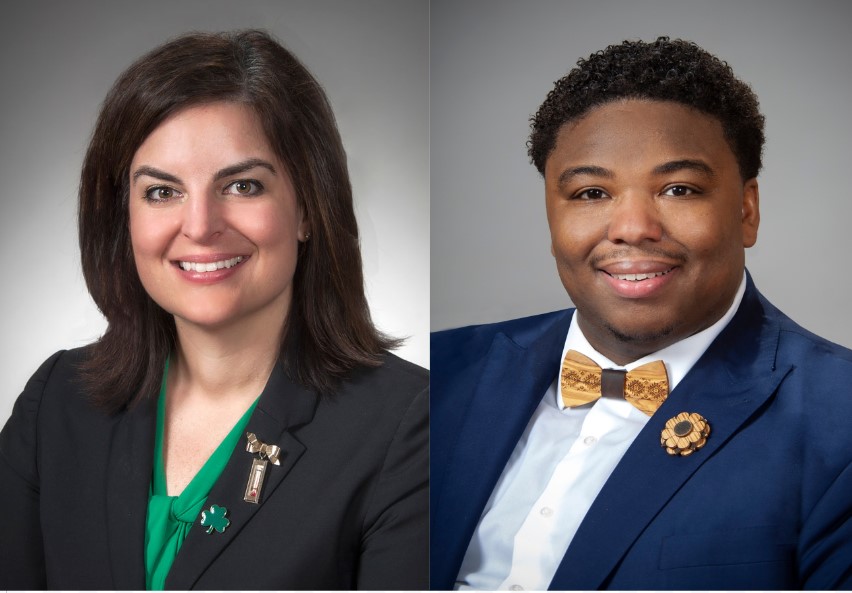
    Ohio Reps. Brigid Kelly, D-Cincinnati, and Dontavius Jerrells, D-Columbus. Official photos.

    BY: MARTY SCHLADEN – Ohio Capital Journal

    Ohio’s minimum wage is set to increase in January from $9.30 an hour to $10.10, but unless the law changes the disabled will be left far behind.

    They can currently earn the state’s “subminimum” wage of $4.25 an hour and can be paid substantially less than that, NBC 4 reported. Now Ohio Reps. Brigid Kelly, D-Cincinnati, and Dontavius Jerrells, D-Columbus want to raise it to where it will be for most other workers.

    That would lift some people out of poverty, a majority of a panel of Ohio economists said earlier this week. But a majority was also uncertain whether it would be an overall help to the state economy.

    In a survey conducted by Scioto Analysis, 12 of 18 economists said the measure would reduce poverty. Three disagreed and three were uncertain or had no opinion.

    Four economists agreed that paying the disabled the regular minimum wage would be good for the overall economy. Four disagreed and 10 were either uncertain or had no opinion.

    In the comments that accompany the survey, Youngstown State University economist Albert Sumell said increasing minimum wages for the disabled is no silver bullet, but it would be beneficial.

    “The effect will be modest but clearly some individuals with disabilities would benefit,” he said.

    On the other hand, Kent State University economist Curtis Reynolds questioned whether subminimum wages were what prompted some employers to hire disabled workers in the first place.

    “The challenge, of course, is whether individuals will still have job opportunities at the higher wage,” wrote Reynolds, who said he was uncertain about the effect of raising the wages. “If yes, then the higher minimum wage would reduce poverty. If not, then it will not reduce poverty. I am not sure which will happen for this population (which has not been studied as much in research on minimum wage policies).”

    The economists’ uncertainty about whether raising minimum wages for the disabled would grow the economy was even more pronounced. Some of the uncertainty stemmed from the relatively small number of disabled workers and how little minimum-wage workers of any group earn.

    But some of the economists argued that there are other reasons for undertaking the increase.

    “I think the main goal of minimum wages is to create equitable growth and dignity for workers,” wrote Jonathan Andreas of Bluffton University. “I’d be in favor of more equity and dignity even if it caused a little less growth, but the research on minimum wages generally finds that it doesn’t cause problems so it looks like a way to increase equity without hurting growth. I’ve never seen research about the minimum wage for people with disabilities so I haven’t seen enough information to know.”

    Follow Marty Schladen on Twitter.

  • Mahi Sheth wants you to meet Loveland’s new Chief of law enforcement

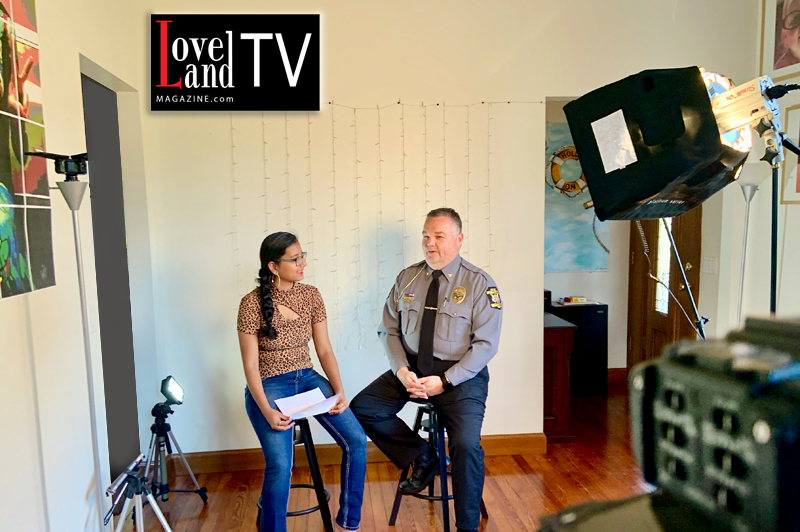
    Mahi Sheth wants you to meet Loveland’s new Chief of law enforcement

    by David Miller

    Loveland, Ohio – On Saturday, Loveland Chief of Police Michael Gabrielson generously gave us some time and visited the LOVELAND MAGAZINE TV studio to be interviewed by Reporter Mahi Sheth.

    Sheth asked the Chief about his childhood, educational background, what led him to his career in law enforcement, and what was his toughest case as an undercover cop.

    Also:

    Sheth: “What should a police officer do no matter what?

    Gabrielson: “We give officers two badges, one for their chest and one for their hat. One badge is for their…”

    Her final question was a personal one as she is interested in becoming an FBI agent.


  • Make it a Halloween that’s Inclusive of  Everyone

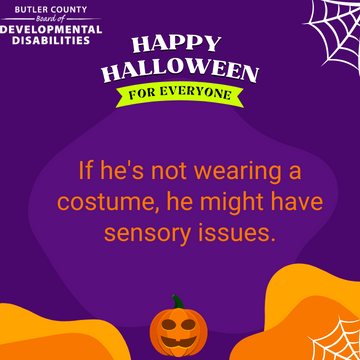
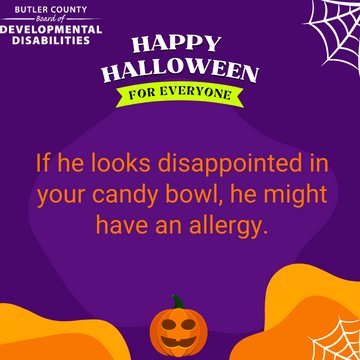
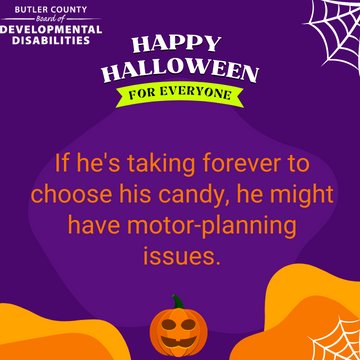
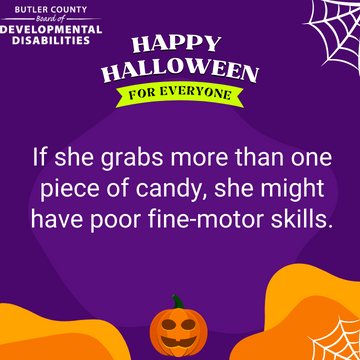
    Make it a Halloween that’s Inclusive of Everyone

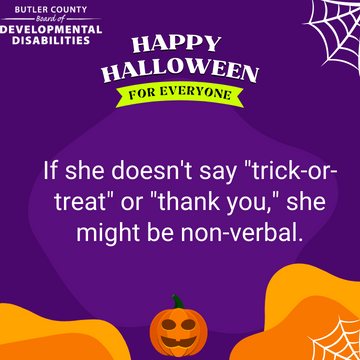
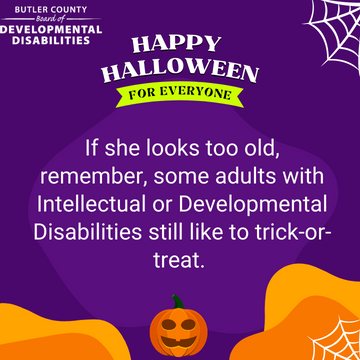
    These kind and thoughtful messages were a collaborative project by Patricia Dawson and Cassie Mattia at the Butler County Department of Developmental Disabilities.

    They said, “Halloween is nearly here and we want you to be prepared for our “ghouls and goblins” on Trick-or-Treat night! Be sure to look over our ‘Happy Halloween for EVERYONE’ guide so those with developmental disabilities can have a fun-filled night of Trick-or-Treating too!

  • [PSA] How to vote in Ohio if you have a disability

    [PSA] How to vote in Ohio if you have a disability

    Contact an ADA Coordinator

    APPLICATION FOR ABSENT VOTER’S BALLOT BY A VOTER WITH A DISABILITY & REQUEST TO USE REMOTE BALLOT MARKING SYSTEM

    RESOURCES FOR OHIO VOTERS WITH DISABILITIES

    COUNTY BOARDS OF ELECTIONS DIRECTORY

    Certain individuals with a personal illness, physical disability, or infirmity may be eligible to have a provisional ballot delivered to them. Please see Directive 2016-41 for more information(opens in a new window).


    MYTH: PEOPLE WITH DISABILITIES CANNOT BRING SOMEONE WITH THEM TO HELP THEM VOTE.

    TRUTH:
    If you cannot mark your ballot or if you need assistance because of your disability, you may bring someone with you to help you vote, or you may ask for assistance from precinct election officials. You may ask anyone to help you vote, except for the following people:

    • Your employer
    • An agent of your employer
    • An agent of your union
    • Any candidate whose name appears on the ballot in your precinct.

    You may also get help in marking your ballot from precinct election officials from two different political parties. By law, no one who helps you vote can tell you how to mark your ballot or provide information to others about how you voted. (R.C. 3505.24(opens in a new window))

    MYTH: ABSENTEE BALLOTS DO NOT GET COUNTED.

    TRUTH:
    All absentee ballots that are received on time and meet Ohio’s legal requirements will be counted and included in the official election returns.

    MYTH: ONLY DESIGNATED POLLING LOCATIONS ARE ACCESSIBLE.

    TRUTH:
    In Ohio, all voting locations must be made accessible for people with disabilities. Under state and federal law, voters with disabilities must be given the same opportunity for access and participation as any other voter.

    The Americans with Disabilities Act (ADA) protects people with disabilities from receiving unequal treatment within state and local government services, programs, and activities. (ADA, Title II)  This law protects your right to vote by making sure that voters with disabilities have access to:

    • Accessible parking
    • An accessible route to the  entrance
    • An accessible entrance
    • An accessible route  to the voting area
    • Voting procedures
    • Voting machines

    The Help American Vote Act (HAVA) protects the right of people with disabilities to vote by making sure that:

    • Voting locations are easy to get to and to use.
    • People who are blind or have problems seeing get the help they need.
    • Voting is private and personal.
    • Each polling location has an accessible voting machine.

    Ohio law protects your right to vote by requiring:

    • Voting locations to be free of any barriers to entrances or exits.
    • Voting locations to have ramps, wide doors, and accessible parking.

    MYTH: PEOPLE WHO HAVE A GUARDIAN ARE NOT ALLOWED TO VOTE.

    TRUTH:
    Having a guardian does not take away a person’s right to vote. As long as you meet eligibility requirements and have not been declared incompetent for voting purposes by a probate court, you are qualified to register and vote.

    MYTH: NURSING HOME RESIDENTS ARE NOT ALLOWED TO VOTE.

    TRUTH:
    If a person has a disability and is confined to a public or private institution, the county board of elections can deliver a ballot to them. Two election officials of different political parties will deliver the ballot and return the ballot to the board of elections. Voting with a mail-in absentee ballot is also an option. Contact your local board of elections to receive details regarding their process.

    MYTH: VOTERS NEED TO HAVE A REASON TO VOTE ABSENTEE BY MAIL OR ABSENTEE IN-PERSON.

    TRUTH:
    In Ohio, voters do not need to state a reason to vote absentee. Absentee voting is an option for all Ohio registered voters. A ballot can be requested by mail or voted in person at a county board of elections or the designated early voting location.

    MYTH: POLLING LOCATIONS DO NOT HAVE ACCESSIBLE VOTING MACHINES.

    TRUTH:
    The Help America Vote Act requires each polling location to have one voting machine that is accessible for people with disabilities, including non-visual accessibility for the blind and visually-impaired.

    In Ohio, every polling location is required to have a voting machine that is accessible to individuals with disabilities. These machines include features like audio ballots, Braille touch pads, large print/zoom features, and height and tilt adjustments on the screens. When you arrive at your polling location, please let the poll workers know if you would like to use the ADA compliant voting machines.

    MYTH: A DRIVER’S LICENSE IS REQUIRED TO VOTE.

    TRUTH:
    All voters must bring acceptable identification to the polls in order to verify identity. Acceptable identification includes a current and valid photo identification; military identification; or a copy of a current (within the last 12 months) utility bill (including cell phone bill), bank statement, government check, paycheck, or other government document, other than a voter registration acknowledgement notification mailed by the board of elections, that shows the voter’s name and current address.

    MYTH: I CANNOT USE A “POWER OF ATTORNEY.”

    TRUTH: Even though a “Power of Attorney” cannot sign your name to your voter registration, if by reason of disability you are unable to physically sign your name or affix your mark to the application, you may appoint an “attorney-in-fact” in accordance with the specific requirements of R.C. 3501.382. Your attorney-in-fact then may sign a voter registration application on your behalf, but only at your direction and in your presence. Contact your county board of elections or the Secretary of State’s office for the proper forms necessary to designate an “attorney-in-fact” for this purpose.

    MYTH: I CANNOT REGISTER IF I DO NOT HAVE A TRADITIONAL SIGNATURE.

    TRUTH: If you are unable to sign your own name and have no other legal mark, make an “X,” if possible, on the application signature line. The person who witnessed you making that mark must write his or her name beneath the signature line.

    If you are unable to make an “X,” you must indicate in some manner to the person assisting you that you want to register to vote. The person registering you must sign the application form and attest that you indicated that you want to register to vote.

    Generally, signing or affixing a signature to an election-related document requires a person’s written, cursive-style legal mark written in that person’s own hand. However, a voter with a disability may personally affix his or her signature through the use of a reasonable accommodation, including the use of assistive technology or an augmentative device such as a signature stamp. See R.C. 3501.011, 3501.382(F) and related OAG 2015-012.

    MYTH: I MAY NOT UTILIZE CURBSIDE VOTING.

    TRUTH: At any polling place that is exempt from the accessibility requirements, if you have a disability and are  unable to enter the polling place, you may vote curbside. Two precinct election officials from the major political parties will bring a ballot to you. You may sit in your car and vote, or you may vote at the door of the building.

  • “Special paper.” Ohio Auditor floats theory of election fraud

    “Special paper.” Ohio Auditor floats theory of election fraud

    BY: MARTY SCHLADEN – Ohio Capital Journal

    Ohio Auditor Keith Faber last Tuesday told members of the Westerville Tea Party that it was unlikely that widespread fraud occurs in Ohio elections.

    But that didn’t stop him from holding out a sinister possibility: that the Cuyahoga County Board of Elections might be diverting special voting-machine paper to other states where unscrupulous elements might use them to produce unsolicited, fraudulent ballots.

    For his part, the director of the board of elections there said his office was doing no such thing and that the state auditor’s office had never contacted his agency about the matter.

    With Republicans holding all statewide offices except the U.S. Senate seat occupied by Sherrod Brown, a Democrat, officials like Faber are in a tight spot when it comes to election fraud.

    Former President Donald Trump continues to falsely claim that he was cheated out of the presidency in 2020 by a rigged election. And now, other Republican candidates are mimicking his past behavior by refusing to say whether they’ll accept the results if they lose on Nov. 8.

    Experts say such talk is crippling our democracy by undermining faith in its most basic process. Indeed, about 70% of Republicans believe the 2020 presidential election was rigged despite Trump’s epic failure to produce any evidence of that.

    So Ohio’s elected Republicans have a base that’s deeply skeptical of elections at the same time that those officials are running them. 

    Secretary of State Frank LaRose, the official responsible for administering elections, has hyped the possibility of cheating while simultaneously touting how extremely rare it’s been in elections he’s run. In February, LaRose slammed the media for supposedly downplaying voter fraud just after he found just the possibility of one fraudulent vote for every 222,000 cast in Ohio in 2020.

    Faber, the state auditor, seemed to be trying to take a similar tack last week when a member of the Tea Party audience asked him if he audited elections.

    According to an audio recording of the session, Faber said that it was the job of the secretary of state to audit elections, but the state auditor could look at other things handled by county boards of election, such as their money. He added that his office investigated some of those matters in the wake of the 2020 election.

    Faber told the crowd that while he believes it’s hard to cheat in Ohio elections, that might not be the case elsewhere.

    “What I found out is the paper, the paper we use to vote in Ohio, OK, is special paper,” he said. “You need special paper to run the machines. But there really wasn’t ever any inventory done on the paper, OK? And so that supply if you audit that, we’re going to start doing a count. If you ordered 100 (thousand) sheets of paper and you only voted 20,000 people, you better have 80,000 sheets left.”

    He added, “And so we started asking those questions. And I wasn’t really worried because of the difficulty in Ohio of creating extra fake ballots because of the controls. But there was nothing to say the Cuyahoga County Board of Elections who ordered a million sheets of paper didn’t somehow quietly drop off 50,000 of them over here in (another state.) Because the paper is the same from machine to machine and state to state and so we started asking those questions. And I talked to a number of people at local boards of elections and said if you’re going to cheat, what would you do? And so we started looking at that. So the short answer is no. I don’t audit the election.” 

    Faber’s office was asked if it will audit voting-machine paper used in the Nov. 8 election, and if it did, whether it would do so in all 88 Ohio counties. 

    “The Auditor of State’s Office regularly audits all of Ohio’s counties for fiscal and operational controls,” the emailed reply said. “These engagements include boards of elections. These most recent audits included an examination, after consultation with the Secretary of State’s Office, of a number of board of elections’ required policies and procedures. While no significant findings were issued, a number of minor discrepancies were identified at boards of elections across Ohio. Those discrepancies and the Auditor’s recommendations to address them are included in counties’ publicly accessible audit reports.”

    Faber’s staff was also asked whether he had any reason to suspect that Cuyahoga County — the most racially and ethnically diverse in Ohio — had or was planning to sneak voting-machine paper out of state for use in fraudulent voting.

    The communications staff didn’t address that question. Nor did it address whether there was any evidence that the kind of voting fraud Faber described had ever been done anywhere in the United States.

    Anthony Perlatti, director of Cuyahoga County Board of Elections, said in a phone interview Tuesday that his office isn’t handing ballot paper in the way Faber described. He said his agency uses a third-party vendor to print ballots.

    “In terms of having piles and piles of blank ballot stock at our offices, we don’t have that,” he said, explaining that the vendor prints off of massive rolls of paper. “I’ve never heard of people sending blank ballot stock elsewhere for people to try to manufacture ballots. It doesn’t make any sense to me. We definitely don’t do it in Cuyahoga County.”

    Perlatti added that his agency keeps track of the ballots it handles.

    “We send (the already-printed ballots) out to the polling locations,” he said. “When they come back, we do an inventory of what have that is unused and what we haven that is used, so this doesn’t really make a whole lost of sense to me.”

    Asked if Faber’s office contacted the Cuyahoga County Board of Elections to learn how it uses ballot stock, Perlatti said, “No. We really, from an elections standpoint, we really don’t have much interaction at all with the auditor’s office. The auditor’s office comes in more so with county in general on things like payroll and county procurement.”

    Faber’s office did say that the state auditor believed the 2020 presidential election was on the up and up. Faber “has consistently stated that Ohio’s elections are some of the best run in the country and that Joe Biden is the President of the United States,” his office said.

    To the Ohio Democratic Party, Faber’s statements to the Westerville Tea Party amounted to pandering.

    “Add Keith Faber to the list of GOP politicians who are pandering to MAGA Republicans and dabbling in conspiracy theories in order to further their own political ambitions,” spokesman Matt Keyes said in an email. “Keith Faber knows better, but is more focused on shamefully clinging to power than being honest with the voters of Ohio.” 

    Trump-driven falsehoods about election integrity have led to widespread attacks on election workers, including “terroristic threats.” But Perlatti said that elections officials are “unique people.”

    “We have tremendous pride in our work,” he said. “We have tremendous integrity in what we do. We know that we’re doing the right thing and doing it with the product we produce, which is an accurate, correct, open, accessible, fair election which is one of the fundamental things that this country is based upon.”

    Follow Marty Schladen on Twitter.

  • Prescription Drug Take Back Day Saturday October 29

    Prescription Drug Take Back Day Saturday October 29

    Loveland Safety Center

    126 South Lebanon Rd, Loveland, OH 45140

    The Next National Prescription Drug Take Back Day is October 29, 2022, 10 AM to 2 PM

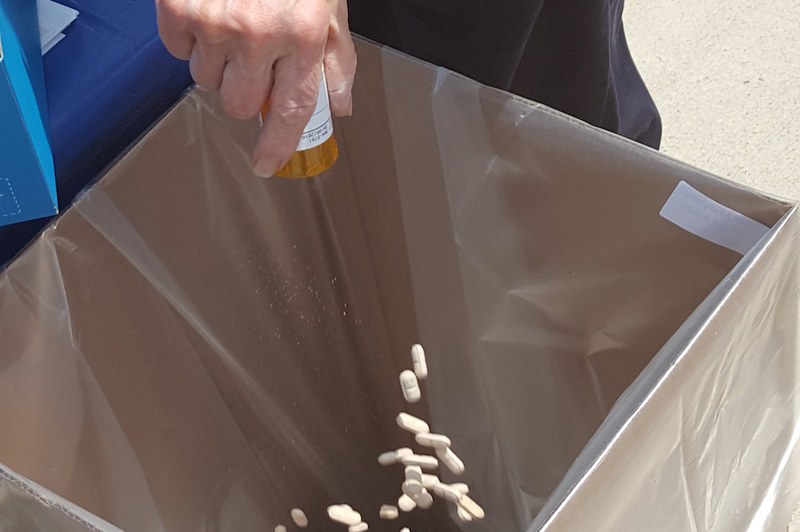
    Loveland, Ohio – The National Prescription Drug Take Back Day aims to provide a safe, convenient, and responsible means of disposing of prescription drugs, while also educating the general public about the potential for abuse of medications.

    According to the 2015 National Survey on Drug Use and Health, an estimated 6.4 million Americans abuse controlled prescription drugs each year. Most abused prescription drugs are obtained from family and friends, many times from the home medicine cabinet. Having unused medicine at home also increases the risk of accidental drug poisoning, especially among children.

    Misuse of prescription drugs can also lead people down a path to heroin addiction. That makes it even more critical to properly dispose of unused drugs.

    If you have leftover prescriptions:

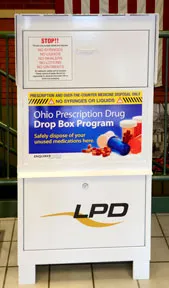
    • Safely dispose of the medications using a prescription drug drop box. To find a location near you use the link below.
    • Scratch out all identifying information on the vial to make it unreadable to protect your privacy.
    • Do not flush medicines down the sink or toilet unless the label or patient information that accompanied the medicine specifically instructs you to do so.

    Search for another site near you…

  • Share your ideas to help craft youth mental health strategies

    Share your ideas to help craft youth mental health strategies

    Improving mental health and well-being for young people is a top priority in Interact for Health’s new strategic plan, guiding our work for 2023-2027. They believe tackling such a complex problem starts by listening to those closest to the problem and co-creating solutions with community members and partners. As such, they want to learn from community partners about efforts currently underway, key challenges and opportunities to work together to accelerate progress.
    If your organization works to improve the mental health of young people ages 0-24 in our 20-county region, they hope you will take 30 minutes to complete the Youth Mental Health Partner Survey. To encourage participation, they will randomly select 10 eligible organizations that complete the survey for a $5,000 contribution. View the raffle guidelines.
    Interact for Health will use this survey to identify potential partners for future funding opportunities, convening learning networks, and mobilizing advocacy. They will also share key findings so that they can better understand the scope of current efforts.  If you have any questions, please contact Ross Meyer, Vice President of Strategy.
    The deadline for submission is 5 p.m. Friday, Nov. 4.
    TAKE THE SURVEY
  • Webinar Series: Suicide Prevention and First Responders

    Webinar Series: Suicide Prevention and First Responders

    First responders, including paramedics, EMTs, firefighters, and police officers, are at special risk for suicide due to their exposure to trauma as well as other factors that are matter-of-course for this work.

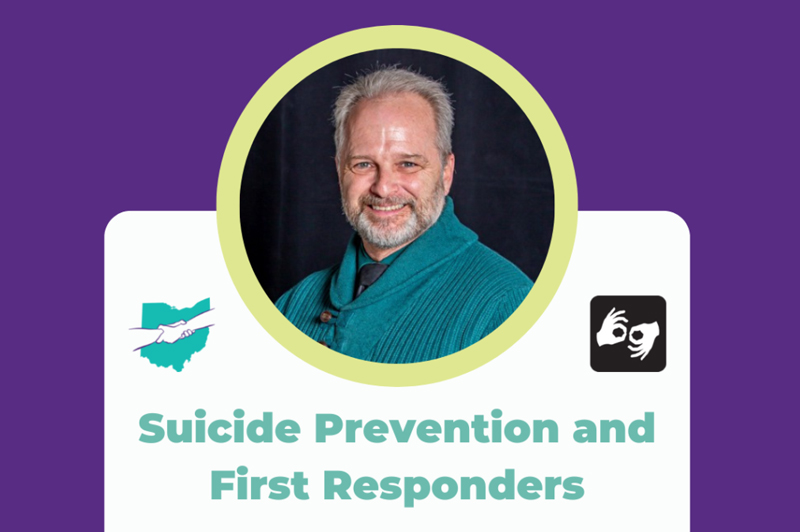
    Join Steven M. Click, Director of the Ohio Office of First Responder Wellness in the Ohio Department of Public Safety, to learn why it can be difficult to engage first responders in suicide prevention efforts, tips to bypass barriers, and upcoming opportunities to support first responder suicide prevention activities in your community.

    American Sign Language interpretation will be available for the live and recorded presentation.

    Learning objectives: After participating in this webinar, attendees will be able to

    1. Explain why first responders are uniquely vulnerable to suicide,
    2. Recognize protective factors that reduce the likelihood of first responders dying by suicide,
    3. Identify strategies for engaging first responders in effective suicide prevention activities.

    Registration is free for OSPF members and $25 for non-members. Continuing education will be provided for prevention, addiction counseling, social work, marriage and family counseling, and psychologists.

  • Breeze Airways promises “Seriously Nice” nonstop flights from CVG

    Breeze Airways promises “Seriously Nice” nonstop flights from CVG

    Promotional fares starting from $39* and $99* –-

    Cincinnati, Ohio – Breeze Airways, the “Seriously Nice” low-fare airline founded by aviation entrepreneur David Neeleman, announced Wednesday that it will bring service to Cincinnati/Northern Kentucky International Airport (CVG) with nonstop flights to Charleston and San Francisco, starting February 8, 2023. Introductory fares for the new flights are $39* and $99* one way, respectively.

    From Cincinnati, OH:

    • Charleston, SC** (Wednesdays and Saturdays, starting February 8, Nice from $39* one way; Nicer from $79*; Nicest from $89*);
    • San Francisco, CA** (Wednesdays and Saturdays, starting February 8, Nice from $99* one way; Nicer from $179*; Nicest from $199*).

    “Our strategy over the last several years has been to further diversify airline options for local travelers,” said Candace McGraw, chief executive officer, CVG. “We welcome Breeze to the region and are excited for our community to experience their Seriously Nice™ flights to Charleston and San Francisco – two business and leisure travel hot spots. We look forward to working with Breeze and growing their network here at CVG.”

    “Breeze is always looking for opportunities to bring our fast, efficient, and affordable air service between underserved city pairs — and Cincinnati is a great fit,” said Tom Doxey, Breeze Airways’ President. “Connecting northern Kentucky, southern Ohio and southern Indiana with South Carolina and northern California, as well as our Seriously Nice™ product, will bring affordability, convenience, and ease to Guests in the Cincinnati Tri-State area. And this is just the beginning. We’ll add more flights and destinations if these sell as well as we expect.”

    Guests on Breeze may choose from three price bundles that are offered as ‘Nice’, ‘Nicer’, and ‘Nicest’. Nice and Nicer bundles are across Breeze’s fleet of Embraer 195 e-jets and Airbus A220s, while Nicest – including a First Class seat – is only available on the A220s. Guests may also choose a Nice or Nicer bundle and add a First Class seat as well.  Breeze has ordered 80 brand new Airbus A220-300 aircraft, with options for 40 more.   

    Graphical user interface, application, table

Description automatically generated Seat pitch for a Standard Economy seat is 30 inches on the A220s and 31 inches on the E-195s, while seat pitch for Extra Legroom is 32 inches on the A220s and between 34 and 39 inches on the E-195s, depending on the row selected. First Class seats feature 39-inches of seat pitch, 20.5-inches of seat width, and special features, such as a footrest, for added comfort. All seats on Breeze’s Airbus fleet are fitted with in-seat AC power and USB/C ports.    

     Breeze doesn’t charge change or cancellation fees up to 15 minutes prior to departure and offers other benefits such as free family seating and a la carte pricing.

    Flights are now on sale at www.flybreeze.com and via the Breeze app. 

                                                                           ###

    *  Introductory fares promotion is only available when booking a new reservation and on select routes. Supply is limited. No advance purchase requirement applies. Promotion must be purchased by October 24, 2022 (11:59 pm ET) for travel by May 16, 2023. Price, rules and routes displayed includes taxes & government fees. Prices, rules, routes, and schedules are subject to change without notice. Restrictions and blackout dates may apply. 

    ** Route operated by A220 aircraft

    About Breeze Airways
    Breeze Airways began service in May 2021 from 16 destinations primarily in the east and southeast of the United States. One year later, it was ranked as the No. 2 U.S. best domestic airline of 2021 by Travel + Leisure World’s Best Awards. In 2022, Breeze expanded west across the U.S., including coast-to-coast flights, and now offers 102 nonstop routes between 34 cities in 19 states. Founded by aviation entrepreneur David Neeleman, Breeze operates a fleet of Embraer 190/195 and Airbus A220-300 aircraft, with a focus on providing efficient and affordable flights between secondary airports, bypassing hubs for shorter travel times. With seamless booking, no change or cancellation fees, up to 24-months of reusable flight credit and customized flight features – including complimentary family seating – delivered via a sleek and simple app, Breeze makes it easy to buy and easy to fly. Flights are on sale at flybreeze.com and via the Breeze app.

  • Coats for Kids: Warm winter gear for children in Loveland

    Coats for Kids: Warm winter gear for children in Loveland

    Loveland, Ohio – Allison Spitzley, a junior at Loveland High School, is working on her Girl Scout Gold Award project, which is creating the annual program, Coats for Kids. The goal of this program, which is through the LIFE Food Pantry, is to provide children of LIFE clients with warm winter gear.

    They are collecting donations of new or gently used coats, hats, mittens/gloves, scarves, socks, and winter boots for all ages (infant – adult).

    For more information about this program, you can go to lifefoodpantry.org/coats-for-kids/.

    There are three ways to donate to this program: purchasing items from the Amazon wishlist: https://www.amazon.com/hz/wishlist/ls/216U8YQ2XE547?ref_=wl_share 

    Please note that the shipping option of Chris Spitzley/Coats for Kids needs to be selected; dropping items off at the LIFE Food Pantry, or there will be an item dropoff at Prince of Peace on November 5th from 10 AM until Noon. 

    Sponsorships are available. Donations can be made to LIFE Food Pantry please specify that it is for the Coats for Kids program. Businesses contributing to the banner will be thanked on LIFE’s website. Donations can be made to LIFE Food Pantry please specify that it is for the “Coats for Kids” program.

    Today, approximately 10.5% of Loveland’s population is under the poverty line. Studies show nearly 60% of Americans will directly experience poverty at some point during their adulthood. That means that these families are having to make tough choices on which necessities are needed the most – rent, utilities, food, clothing. All kids should have a carefree childhood and not have to worry about how to stay warm during the winter. Giving a child a brand new winter gear instills confidence and improves their overall wellness to help them thrive and achieve their goals.

    How to be part of the team:
    If you are interested in joining the team to lead a collection in your neighborhood, please reach out to Allison at allison.spitzley@gmail.com

    When to donate:
    Donations will be accepted at any time at LIFE Food Pantry and at other locations from October 16th through November 6th.

    How to donate:
    In October, items can be dropped off at the following locations:
    • Loveland Music Academy
    • Prince of Peace
    • Epiphany United Methodist Church
    • Congregation Beth Adam
    • Loveland United Methodist

    What to donate:
    Visit our Amazon Wishlist here to purchase items online and click here to check out our tally of items collected !