
Tag: local news

  • A greater vision for the intrinsic beauty of the Grailville land

    A greater vision for the intrinsic beauty of the Grailville land

    by Elizabeth Robinson

    Dear Fellow Lovelanders,

    I want to speak to you about vision and make sure you are aware of an important ongoing process before the Loveland Planning and Zoning Board and Loveland City Council. Drees Homes is requesting a change in the current low-density zoning status on 110 lovely acres of green unspoiled land, with historic buildings, currently owned by Grailville (The Grail). This land sits between where East Loveland Avenue turns into O’Bannonville Road and Rte 48. Drees desires this zoning status change to put 209 homes on this green space.

    The Grail Mission and Vision Statement speaks of Care for The Earth. This has always been vital to Grailville/The Grail in its history and practice. Grail members including myself are expressing significant and ongoing distaste that the Grail is seriously considering divesting itself of this land to Drees to build another subdivision in our town.

    There are important long-term practical reasons why many Loveland residents have spoken AGAINST enabling a zoning status change proposed by Drees to build 209 homes. They include, among others, an overcapacity school system, aggravating already clogged traffic and infrastructure concerns including sewer and water. (Please reference the below open letter to Loveland residents by Elizabeth Murphy for more details on these pressing issues)

    I want to concentrate here on a compelling and magnanimous (great of mind or heart) vision of protection from development such as the proposed Drees subdivision. Standing up for a NO vote on this zoning status change from low density is a very important first step.

    If the Grail is determined to divest itself of this land, are we as citizens willing to stand up for a vision that will honor the cultural and spiritual history of the Grail on this land, and also stand up for the inestimable value of added community green space which will do so much more than another subdivision to keep Loveland a treasured place to live into the future?

    I wonder: If Loveland has the foresight to reject this proposed Drees zoning change, would The Grail accept significantly less money from the city or other entity committed to a higher vision that cares for the earth and the people of Loveland?

    I have lived in Loveland all my life and our Loveland Bike Trail was just such a vision. There were many who could not see the immensely positive difference this green path of natural beauty that intersects our town and all enjoy, would make for the future of Loveland. It is with gratitude we now look back and honor those who had vision and were tenacious, so we could see the flowering of that vision.

    Today Loveland is thriving. With that has come some of the problems of success mentioned earlier such as traffic and stress on infrastructure. We can make decisions now that see another subdivision that destroys precious green space and exacerbates traffic and stressed infrastructure will not be a decision that is truly good for the future of Loveland.

    Loveland citizens will thank us years from now if we reserve green and natural places for the good of all, as did those bike trail visionaries.

    I ask the Loveland Planning and Zoning Commission and Loveland City Council to reject this Drees proposed zoning change. Reject it not only on very real practical matters such as traffic and infrastructure, but to support a greater vision of the intrinsic beauty and value added of green spaces for Lovelanders into the future.

    Sincerely,

    Elizabeth Robinson

    East Loveland Avenue


     April 11, 2022
    
    Dear Fellow Loveland Residents,
    
    It is important that you are aware of a process which is now ongoing involving 110 acres of Grailville land between Rt.48 and O’Bannonville Rd. Loveland City Council and the Zoning Board will have to make a decision on the Drees Homes’ request for a change in the zoning status to allow them to build 209 homes on that land.
    
    The iniPal public hearing drew a standing room only crowd. Everyone who spoke, with the excepPon of the Drees representaPves, requested that the Zoning Board say NO to the Drees proposal. There are important long-term reasons why it is best for our community that the Drees proposal does not go forward.
    
    We all know the traffic situaPon in downtown is bad now. The construcPon of a large subdivision on this Grail land will iniPally cause several years of construcPon trucks and dirt funneling into town from Rt.48 and O’Bannonville Rd. As the houses are built and sold regular traffic of several thousand car “trips” through town will phase in. This will never stop.
    
    Our school system is currently overflowing recommended capacity. Extra trailers are needed for space. It is esPmated that 4-5 addiPonal classrooms of children are likely to be added by this subdivision. We are all painfully aware of the costs that would be incurred to build new schools, as well as the stresses on children and teachers involved in overcrowding. Again, once this increase is allowed to happen it is unlikely to be reversed.
    
    There are also serious general infrastructure issues relaPng to water. The Loveland water system is a series of wells which when run at high demand can drop the water table in a significant way. One must ask at what point will this become a problem. Water pressure has at Pmes been an issue and more homes drawing water cannot but aggravate this.
    
    The other end of this problem is the management of the addiPonal sewage. The sewer line under East Loveland Ave. is outdated, fragile, and it is quesPonable whether it is adequate to handle a large new neighborhood. The receiving Polk Run sewage treatment plant has no more room to expand. There has been no confirmaPon of sewer availability, capacity, or access compliant with MSD standards. Will the City of Loveland be put in a posiPon of providing this infrastructure at Loveland residents' expense? With the Liale Miami River so nearby it is crucial that there be no chance of contaminaPon.
    Natural rainwater run-off must also be considered. The land from White Pillars on slopes to the northwest. The homes along O’Bannonville Rd. are all in the path of this natural drainage and vulnerable to surface flows or overflowing of Bares Run Creek in Pmes of heavy rain. The new roads and houses will eliminate acreage which currently absorbs the rainwater and so more will conPnue on downhill.
    
    The final thing I need to speak of is the special quality of this parPcular piece of land. For about 80 years women of The Grail have lived or worked there. They have tended the land, holding it, knowing the sacred nature of this place. As the Grail has shared access to their land with others
    for walking and connecPng with nature, many have become aware of the spiritual calm which it provides. In today’s world we need this more than ever.
    
    In conclusion, I would encourage everyone who feels that we do not need another big subdivision on this Grailville land, with all the negaPve side-effects, to please make your views known. Aaend the public meePngs (the next is on May 4), write or call members of the Zoning Board and City Council. In our country we have government of ciPzens for ciPzens. Our officials have a duty of honor to listen to the members of the community which they serve. They are us; and therefore, we must speak so they may be guided.
    
    Sincerely, 
    
    Elizabeth Murphy - Fallis Road Loveland OH
    

    The Grailville Archive

    Because posterity may wish to know.

  • Nine rare cancers tied to burn pit exposure added to VA benefits list

    Nine rare cancers tied to burn pit exposure added to VA benefits list

    BY: JENNIFER SHUTT Ohio Capital Journal

    WASHINGTON — The U.S. Department of Veterans Affairs is adding nine rare respiratory cancers linked to burn pit exposure to the list of illnesses eligible for disability and health benefits.

    President Joe Biden, who has said his son Beau Biden’s exposure to toxic fumes from the pits could have led to his death, announced the policy change Monday, saying in a statement he hopes to avoid repeating mistakes of the past.

    “We learned a horrible lesson after Vietnam, when the harmful effects of exposure to Agent Orange sometimes took years to manifest, and too many veterans were left unable to access the care they needed,” Biden said. “I refuse to repeat that mistake when it comes to the veterans of our wars in Iraq and Afghanistan.”

    The VA said Monday that it will begin processing disability compensation claims for former U.S. military members who were in Southwest Asia from Aug. 2, 1990, to the present or in Afghanistan, Djibouti, Syria, or Uzbekistan from Sept. 19, 2001, to the present.

    The cancers include squamous cell carcinoma of the larynx, squamous cell carcinoma of the trachea, adenocarcinoma of the trachea, salivary gland-type tumors of the trachea, adenosquamous carcinoma of the lung, large cell carcinoma of the lung, salivary gland-type tumors of the lung, sarcomatoid carcinoma of the lung and typical and atypical carcinoid of the lung.

    The VA said it plans to contact veterans who fall under the new rule, which will be published on Tuesday, or survivors, to tell them how to apply for benefits.

    Veterans or survivors who had prior claims denied can file a supplemental claim for benefits, according to the VA announcement.

    VA Secretary Denis McDonough said in a statement the change in policy will ensure “veterans who suffer from these rare respiratory cancers will finally get” the health care and benefits they “deserve, without having to prove causality between their service and their condition.”

    The VA said “a focused review of scientific and medical evidence” determined that “there is biological plausibility between airborne hazards and carcinogenesis of the respiratory tract — and the unique circumstances of these rare cancers warrant a presumption of service connection.”

    Biden originally announced the VA would add nine cancers to the eligibility list during his State of the Union address in March. 

    At the time, Biden said burn pits — which incinerated medical and hazard material, jet fuel and other substances — were one of the many dangers U.S. soldiers faced during deployments.

    “When they came home, many of the world’s fittest and best trained warriors were never the same,” Biden said during his speech. “Headaches. Numbness. Dizziness. A cancer that would put them in a flag-draped coffin.”

    Biden, in his State of the Union address and his statement Monday, called on Congress to “pass bipartisan legislation to comprehensively address toxic exposures and further deliver the vital benefits our veterans have earned.”

    The U.S. Senate unanimously approved a bipartisan bill from Montana Democratic Sen. Jon Tester and Kansas GOP Sen. Jerry Moran in mid-February that is the first of three pieces of legislation meant to address health care needs linked to burn pits.

    When announcing the $1 billion legislation in early February, Moran said that 3.5 million combat veterans have experienced some level of toxic exposure since 9/11.

    “This is the first step on a continuum of trying to make certain that those who experienced toxic exposure, and as a result are suffering in their health and well-being, receive medical benefits,” Moran said at the time.

    The U.S. House voted 256-174 in early March to approve a separate bill that would be much larger in scope and price.

    That legislation, referred to as the Promise to Address Comprehensive Toxics or PACT Act, would cost about $280 billion during the next decade.

    House Majority Leader Steny Hoyer, a Maryland Democrat, said during floor debate the legislation would “expand veterans’ health care access and benefits to address the effects of these toxic exposures that occurred during their military service.”

    “We asked our veterans to go to battle for America, and they answered that call,” Hoyer said. “When they return home, veterans should not have to go to battle against red tape to receive the medical treatment and benefits they have earned through their service.”

  • West Chester Nutrition Club ‘Revolutionizes’ Health and Wellness

    West Chester Nutrition Club ‘Revolutionizes’ Health and Wellness

    From popping flavors to colorful drinks, this nutrition club truly is a revolution!

    Divyana Bose

    by Divyana Bose

    In the city of West Chester, Ohio, a tea and protein shake shop named the REvolution Nutrition Club opened its doors in January 2018. From fruity and refreshing teas to smooth and rich shakes, each drink is made with the intention of improving health.

    REvolution Nutrition Club has over 40 shakes on their menu that are not only high in protein but are also low in carbs, sugar, and calories! Flavors like the Brownie Madness, Snickers, and Cake Batter keep REvolution Nutrition’s customers coming back time and time again. In addition to the nutritious shakes, the shop also carries high energy teas that are packed with antioxidants, vitamins, and Guarana, which improves mental concentration. Some of the most popular tea flavors include The Blue Lagoon and the Kingsgate Punch.

    REvolution owner, Kiera Abrego, customizes each one of the shakes and teas she serves her customers according to their nutritional needs and goals. Each REvolution product uses nutrition to improve both the fitness level and overall health of each customer.

    Kingsgate Punch Tea Energy Bomb

    “My personal goal this year is to serve as many teas and shakes as possible as breakfast and lunch meal replacements,” Abrego said. “I also strive to make this business just a great atmosphere that is safe, fun, and inviting.”

    The REvolution Nutrition Club gains most of its “first-time” customers through social media as Abrego believes it is the best way to market what the club has to offer. The community has also greatly contributed to REvolution’s growth in sales according to Abrego.

    “Advertising comes from community interactions and communication,” Abrego said. “It is not only the social media factor but the positive word of mouth that gets around about my small business.”

    To reward REvolution Nutrition Club’s loyal customers, Abrego developed a customer referral program in order to spread the word about the products her club has to offer and to give back to those who have supported the products the club serves. If a customer promotes REvolution through social media or refers someone to try out the club, that customer receives a free tea or shake! 

    “The community itself passes on invitations and referrals as we utilize social media to the best of our ability,” Abrego said. “The program consists of coupons to come in and try our products and try new and improved healthy drinks.”

    REvolution continues to progress as a small business, but (like many businesses during COVID-19) did experience some struggles. Luckily Abrego had such a loyal customer base that her nutrition club was able to make it through tough times, bouncing back successfully!

    “The largest impact on REvolution was that we were not able to be the bright and shiny part of someone’s day like we normally were,” Abrego said. “Relationships that we continued to build throughout the community had to be put on hold during this time and it was extremely difficult.” 

    Blue Lagoon Tea Energy Bomb

    REvolution rose above the COVID-19 challenges and continues to grow as a business to this day! Abrego said new and improved drinks are constantly being made every month due to the influx of new customers this year. 

    “We do monthly features that normally take place around the holidays or special events,” Abrego said. “The drink features typically end up becoming a fan favorite and bring in even more customers!”

    A personal preference of mine is the Blue Lagoon, the blue raspberry blend and standout color are just too hard to resist. Not to mention the energy boost I get in the day from just a few sips of this is amazing. Along with the blue lagoon, the Kingsgate punch is a close second with the bright red flavorful tea punching my palette with cherry and fruit punch all in one. In my eyes, these teas are perfect for a Summer refreshment and a perfect pick-me-up.

    Five to ten years from now and with these never-ending flavors, Abrego plans to keep her business running and make her customers content. Her hopes are for her business to grow and expand not only in the social media market but through the community as well.

    Cinnamon Toast Crunch Shake

    “My goal is to be within the basis of one-hundred healthy and nutritious breakfast shakes with every breakfast and lunch meal replacement,” Abrego said. “We thrive off of person-to-person marketing and my desire is for my business to continue being the inviting and fun atmosphere for all.”

    Hoping for a bright future ahead, Abrego’s past with bringing about the business has not been the easiest especially due to COVID-19. She started the business in 2018 and took ownership of the business through her personal wellness coach and over time lost a substantial amount of weight, meeting her weight loss goal. 

    “I decided to take on the Herbalife business full time because I instantly fell in love with the products and results,” Abrego said. “My husband was the confirmer as well when he fell in love with the shakes we offer and I knew I had to be a part of this.” 

    “We are truly a REVolution with these beverages that make staying healthy and sustaining energy possible,” Abrego said. “Our drinks can hopefully branch out to every community and  will bring in more customers to try them.”

    Abrego recommends for first-timers the Special Tea category from the REVolution menu since it has the most subtle energy level out of the three energy categories. The Tropical lemonade though in the Boosted category is her personal favorite with blends of strawberry and lemonade coming together with a little more energy added to it. Out of the shakedown category though, Abrego recommends the Cinnamon Toast crunch blend with 24 grams of plant-based protein, only two-hundred and thirty calories, and thirteen grams of net carbs. Not to mention, there are only nine grams of sugar in every shake! There are four separate categories in the “Shake down” category itself such as the Chocolate Sensations for the chocolate lovers, Sweet Tooth, Fan favorites, and Fruity Licious.

    Along with the luscious flavors, the name REVolution says it all. Abrego said that these products truly stand out and benefit health or weight loss goals, which is where the name stemmed from. 


        Contact Info: 

    Email: revolutionnutrition45069@gmail.com

    FaceBook

    Hours: 8 AM- 2 PM

    Address: 7324 Kingsgate Way, West Chester, OH 45069

  • [Grailville Archive] The Very Unpleasant Thing: That God Can Ask Everything of us Sometimes

    [Grailville Archive] The Very Unpleasant Thing: That God Can Ask Everything of us Sometimes

    David Miller is the Publisher and Editor of Loveland Magazine

    by David Miller

    The statue that wasn’t to be seen in Loveland

    Loveland, Ohio – In December of 2011, I hadn’t seen the statute of Abraham and Isaac by Trina Paulus since it was first brought back to Grailville, carefully on the bed of a pickup truck. I was invited to be there when the statute was returned to Grailville for safekeeping. So jumped at the chance to be there when she saw it again for the first time in many years. Seeing it for the first time, placed temporarily under a gazebo behind the House of Joy, it was in my opinion the most significant piece of art I had ever seen in Loveland, and I believe, still so.

    We met Trina with our video camera for an interview by Alana Johnson, an artist in her own right, at Grailville and went in Alana’s car from the House of Joy to another house on the Grailville property, one across the road – to see if we could find it. This video was shot on December 9, 2011.

    It is wretched, distressing, tragic – and beautiful.

    At the time of my first seeing Abraham and Isaac, I begged the Grailville folks to let me help them find a place where the father and son could be publicly displayed, however, they determined it too controversial to do so. I think if I remember correctly, it was only “appropriate for mature audiences” and no one in Loveland was mature enough to see the old testament story depicted so threateningly and savagely real.

    Relistening to Paulus talk about her Abraham and Isaac and the essence of what she was conveying through the work of her sculpting hands and spiritual heart, is still is heartbreaking that the human soul was meant to struggle to understand such a contemptible subject.

    They were right of course because seeing the statute naked, absent Trina Paulus telling the story, is utterly perilous.

    At the time, I wrote, “The Abraham and Isaac statue is a poignant and significant piece of art. It is wretched, distressing, tragic – and beautiful. It has been stored temporarily for several years just outside of Loveland. Loveland Magazine Reporter Alana Johnson went with Paulus to an unlit garage at the Grailville Conference and Retreat Center Wednesday morning to see it. Paulus hadn’t seen her statue for several years.”

    “Johnson, kicking aside weeds at the door, struggling to operate the key, brushing away cobwebs, and in the darkness, her eyes needed a few seconds to dilate… ‘Aah. Oh. Ooh,” each second, as more is revealed. “That’s incredible. It’s incredible.”

    During Johnson’s interview, Paulus said, “Over here you will see a hand with the knife in it… and over here… you’ll see the hand with his son. I’ve done a lot of thinking about this over the years – the great Christian mystery of the crucifixion and the resurrection and… The very unpleasant thing is that God can ask everything of us sometimes… The whole mystery of why we die, and why we die so miserably sometimes… In our time it’s a very unpopular story.

    View Loveland Magazine’s other stories in our Graville Archive:

    Because posterity may wish to know.

  • Loveland participating in Drug “TakeBack” Day on Saturday

    Loveland participating in Drug “TakeBack” Day on Saturday

    Safely Dispose of Expired/Unused Prescriptions

    Local communities, including Loveland, are participating in the DEA’s National Take Back Day: Saturday, April 30, from 10 AM until 2 PM.

    Loveland’s location is at the Safety Service Center located at 126 South Lebanon Road.

    Search for other locations near you:

  • How much a map costs: one law firm accounts for 1/3 of redistricting expenses

    How much a map costs: one law firm accounts for 1/3 of redistricting expenses

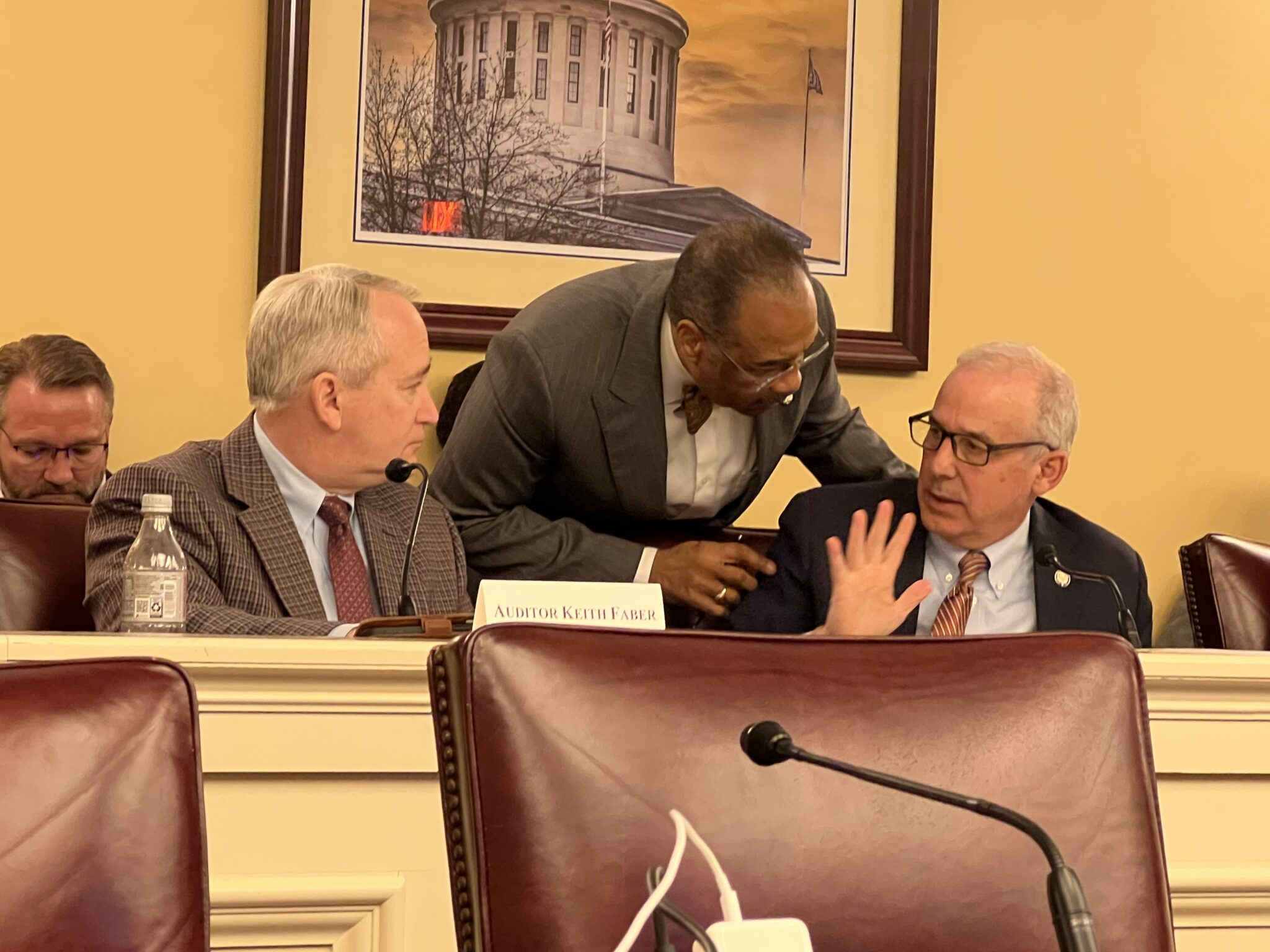
    Ohio Redistricting Commission co-chair state Sen. Vernon Sykes talks to Senate President Matt Huffman during Sunday’s meeting of the ORC. The commission ended up throwing out independent mapmaker work and adopting a slightly revised version of the third map, already rejected by the Ohio Supreme Court. (Photo: Susan Tebben, OCJ)

    BY: NICK EVANS – Ohio Capital Journal

    As lawmakers consider their next move on redistricting, the overall cost has ballooned to nearly $1.8 million, according to an accounting through April 19 provided by the Legislative Services Commission.

    The bulk of that expense has been charged to the Legislative Task Force on Redistricting, which has accounted for $983,283 going back to August of 2019. Their biggest single line item was a $282,271 expenditure to Ohio University, the school tasked with preparing census data for mapmakers. All told, the school received $427,597 for its efforts.

    The second biggest line item charged to the Legislative Task Force was $103,000 to the law firm Nelson Mullins Riley & Scarborough. GOP lawmakers hired two Nelson Mullins attorneys, Thomas Farr and Phillip Strach, at a total cost of $114,500 to advise the General Assembly on redistricting. Farr and Strach made a name for themselves in part by defending North Carolina’s racially gerrymandered maps in court.

    That advice might be expensive, but their representation costs more. Once the maps were challenged in court, Senate President Matt Huffman and House Speaker Bob Cupp again turned to Nelson Mullins to serve as their defense team. So far, they’ve run up nearly $475,000 in attorneys’ fees.

    Between the firm’s work as special counsel advising mapmakers and its work unsuccessfully defending those maps in court, Nelson Mullins has earned $589,512.62 — roughly a third of the total cost of redistricting already, with more billable hours to come.

    And that’s not the only firm making money representing the Republican leaders — Taft, Stettinius & Hollister has made $30,986 representing Huffman and Cupp. In addition, a different law firm, Organ Law, has brought in $68,022 representing the Ohio Redistricting Commission.

    Across the aisle, meanwhile, the law firm Ice Miller has raked in $174,792 representing Democratic members of the Commission, Sen. Vernon Sykes and House minority leader Allison Russo.

    In all, Ohio has spent nearly $750,000 on litigation through April 19.

    The $1.8 million accounting provided by the Legislative Services Commission could be far from the end of redistricting’s expenses. Late last month Republican members of the Ohio Redistricting commission decided to ignore the proposals offered by a pair of independent mapmakers they brought in to draft boundaries. That episode cost the state $89,000, but the invoice from only one of the mapmakers is reflected in the current accounting.

    Similarly, there are more bills coming on the legal front. The most recent invoice is dated April 11 — four days before the state supreme court tossed lawmakers’ fourth try at drawing legislative boundaries.

  • Easter Weekend Food Drive is a Hopping Success!

    Easter Weekend Food Drive is a Hopping Success!

    Cassie Mattia
    Photo by Adam Ploof

    by Cassie Mattia

    Loveland, Ohio – The Easter Weekend Food Drive proved nothing is sweeter than Loveland, Ohio!

    On Saturday, April 16th in the heart of Downtown Loveland under the historic clock tower we kicked off our first ever Easter Weekend Food Drive benefiting LIFE Food Pantry! I had wanted to lend my time and energy to the LIFE Food Pantry for months, so when LIFE communicated that they were in desperate need of food and that food drives were the best way to gather that much-needed food I knew that this was my chance to give back to a community that had supported me throughout my time with Loveland Magazine.  

    Once I decided that I was going to organize a food drive I immediately reached out to the Little Miami River Chamber Alliance all-star duo CeeCee Collins and Meredith Taylor. They almost instantly agreed to help with the food drive as they both said that there was nothing more fulfilling than giving back to the community. I was overjoyed by their response and shortly after began working on the logistics.

    I knew that I wanted the food drive to be on a day where there would be a lot of foot traffic on the Loveland Bike Trail but also envisioned doing it on a day that meant something. After brainstorming with CeeCee and Meredith, we landed on having the food drive on Easter Weekend! Having the food drive during Easter Weekend to me meant that I could help families less fortunate have the opportunity to celebrate Easter like my family and I had been lucky enough to do for the past several decades. 

    One of the biggest deciding factors in having a food drive during this particular time of year was because LIFE Food Pantry is almost always in desperate need of food donations due to a slower rate of donations coming in. To put it in perspective, just by holding this one food drive on Easter Weekend, we not only helped provide “staples” and everyday necessities to local families that then freed up money in their budgets so that they could celebrate a holiday like Easter, we also gave these same local families the opportunity to buy Easter candy for their baskets, decorate eggs, enjoy a beautiful Easter brunch, and hunt for chocolate bunnies on Easter morning! That thought alone made the Easter Weekend Food Drive that much more special to me.

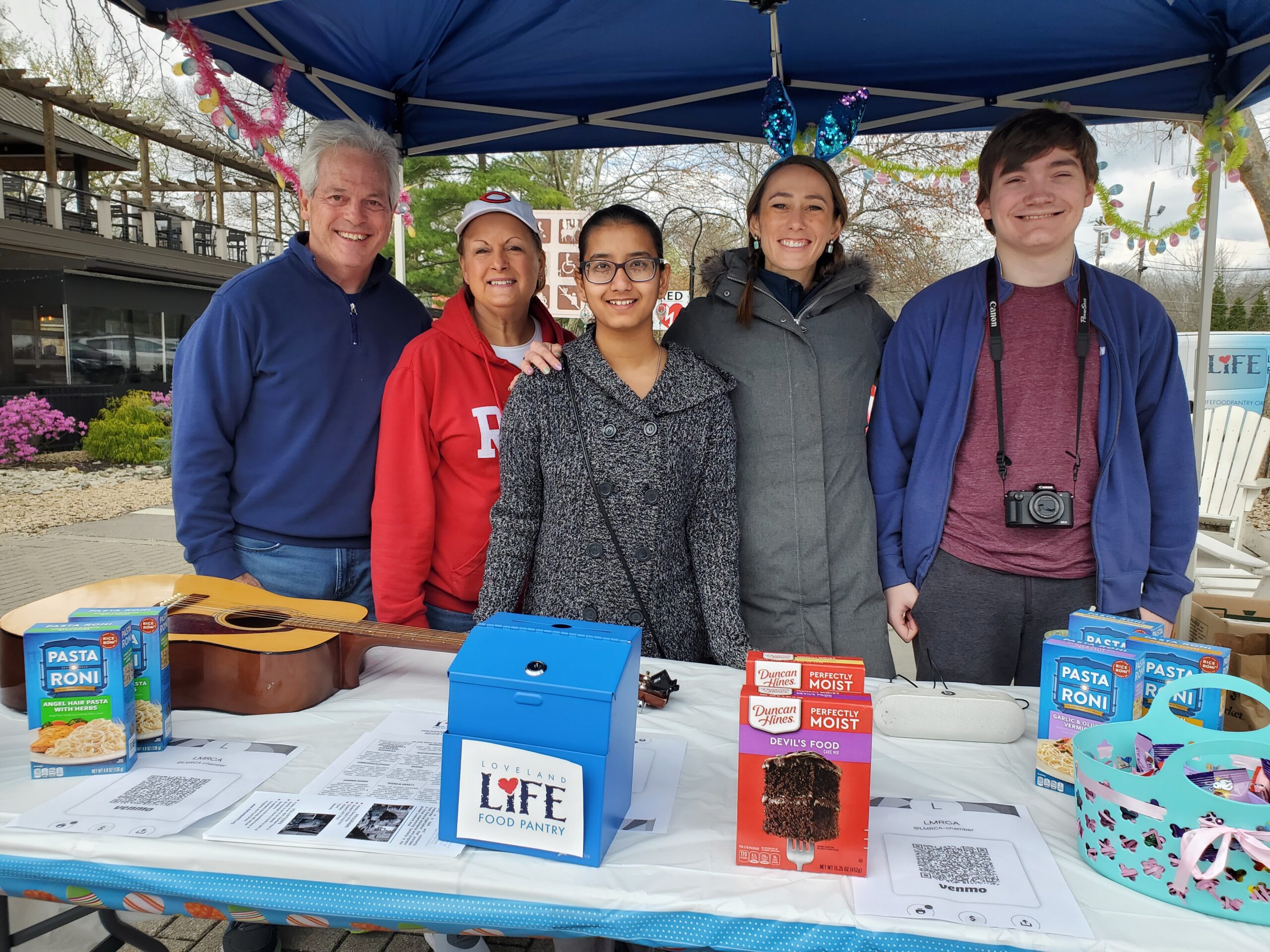
    After weeks of planning, passing out flyers around town, gathering Easter decorations, stuffing Easter eggs with candy, finalizing details with local restaurants and LIFE Food Pantry, writing food drive stories in Loveland Magazine, and spreading the word on social media, the day of the Easter Weekend Food Drive finally came! We set up our beautifully decorated Easter tent under the historic clock tower in Downtown Loveland and prepared for a fun-filled day of giving back.

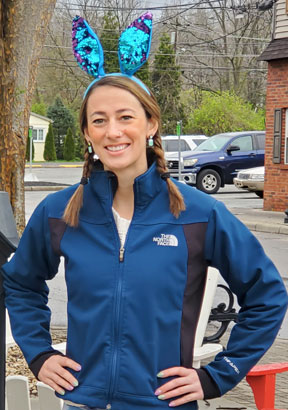
    The food drive kicked off at 10 am and almost immediately we began getting food, cash, and Venmo donations. For each donation, we received we made sure to express our gratitude followed by an Easter egg filled with candy! Parents and their children loved that we were celebrating giving back by wearing bunny ears and giving out Easter eggs! The day itself couldn’t have gone any better.

    The Easter Weekend Food Drive wrapped up at 5 pm and as we were cleaning up the overwhelming feeling of love and gratitude touched us all. Those feelings alone were enough for me to agree to make the Easter Weekend Food Drive an annual event! 

    The Easter Weekend Food Drive collected $290 dollars in Venmo and cash donations and over 75 pounds of food for the LIFE Food Pantry. Needless to say, the food drive was an absolute success!

    There were so many individuals and local businesses that helped make the Easter Weekend Food Drive possible and I want to take the time now to express how thankful I am:

    • Thanks to CeeCee Collins and Meredith Taylor from the Little Miami River Chamber Alliance for all of your help and guidance in organizing my first food drive!
    • Thanks to David Miller for helping spread the word and volunteering your time at the food drive!
    • Thanks to Loveland Magazine Interns Mahi Sheth and Sean Behling for taking time out of your day to volunteer at the food drive!
    • Thanks to Ramsey’s Trailside and Paxton’s Grill for letting us use your carry-out spots for easy access to our donation van!
    • Thanks to all the downtown Loveland businesses for being so supportive of this food drive by hanging up our flyers and spreading the word!
    • Thanks to the Works Pizza for being a donation drop-off spot!
    • Thanks to the City of Loveland’s Krista Rose and Publisher of Loveland Lifestyle Magazine Emily Barlow for helping spread the word about the food drive on your platforms!
    • Thanks to Nancy and Jay Grant for volunteering your time at the food drive!
    • Thanks to LIFE Food Pantry and Linda Bergholtz for directing us on how to run a great food drive!
    • Last but not certainly least, thanks to the wonderful people that came out and donated food or money to the Easter Weekend Food Drive! You are directly responsible for making a difference in many local families’ lives!

    Enjoy the slideshow of the photos I, Sean Behling, Adam Ploof, and David Miller took at the Easter Weekend Food Drive!

    If you would like to help the pantry by volunteering, holding your own food drive or would like to donate dollars, please visit their WEB SITE. If you are in need of food or financial assistance you will learn about that also.

    For Loveland event updates and coverage, stay tuned to the Loveland Salad With ME, Cassie Mattia!

  • [Photo Albumn] Cincinnati’s Plum Street Temple is a “splendid and exotic building”

    [Photo Albumn] Cincinnati’s Plum Street Temple is a “splendid and exotic building”

    by David Miller

    Cincinnati, Ohio – I went to the Isaac M. Wise Temple at the corner of Eighth and Plum Streets in Cincinnati for my grandson’s bar mitzvah. While formal photos were being taken of the rest of the family, I peeked into every corner on every floor where a door was unlocked. Extraordinary is that everything has been so beautifully cared for and pampered over since its construction.

    All the below descriptions are from the web page https://www.wisetemple.org/about/our-history/history-of-plum-street-temple/ .

    The building is used nearly every week for Sabbath services, programs lifecycle events, and other religious functions.

    The Plum Street Temple was dedicated on Friday, August 24, 1866. As a daily paper writes at the time, “Cincinnati never before has seen so much grandeur pressed into so small a space.”

    The building has been carefully preserved, with original flooring, pews and pulpit furnishings all still in use. Its chandeliers and candelabra, formerly gaslight, are now electrical, but still the original fixtures. The original pipe organ, a unique historical instrument built by the Cincinnati firm Koehnken and Company, is still in place and was restored as the Rockwern Organ in 2005.

    Designated a national historic landmark and placed on the Department of the Interior’s National Register of Historic Places in 1975, it was recognized then as a “splendid and exotic building.” A restoration in 1994-1995 gave a renewed sense of vitality and sparkle to the building, which looks much the same now as when it was built over 130 years ago.

    Here are the photos I took that day and below is a video published by the Wise Temple that will tell you more about the history of the building and its people.

  • LGBTQ community, people of color in the crosshairs of banned book movement

    LGBTQ community, people of color in the crosshairs of banned book movement

    A display of banned books at the San Jose Public Library (Photo courtesy of San Jose Public Library via Flickr | CC-BY-SA 2.0).

    BY: ARIANA FIGUEROA – Ohio Capital Journal

    Students in one Pennsylvania school district were not allowed to read a biography of the first Black President, Barack Obama. (The ban was reversed following student protests.)

    In some Tennessee classrooms, a nonfiction comic book about the atrocities of the Holocaust is banned.

    And one school district in Wisconsin banned from libraries a picture book about a gay rights activist who was assassinated.

    In the last nine months, hundreds of books across dozens of states are being banned at an alarming rate. A majority of the bans feature books written by authors who are people of color, LGBTQ+, Black and Indigenous, and feature characters from marginalized groups.

    And now, state Republicans lawmakers are joining the movement, spurred by ultra conservative groups, to ban books from public schools and libraries.

    This year in Arizona, state Republicans put forth a measure that would ban schools from teaching or directing students to study any material that is “sexually explicit.” In Florida, Gov. Ron DeSantis recently signed a bill to allow parents greater opportunity to review, and potentially object to, school library books that they find “inappropriate.”

    And in Idaho, state House Republicans passed a bill that would allow librarians to be prosecuted for allowing minors to check out material deemed harmful.

    Some of the states with the most aggressive book bans include Texas with 713 bans, Pennsylvania with 456 bans and Florida with 204 bans.

    Deborah Caldwell-Stone, the director of the American Library Association’s Office for Intellectual Freedom, said book bans the last 10 years have dealt “with the lives of LGBTQIA persons, either reflecting their experiences, or talking about issues of concern to the LGBTQIA community.”

    She said those bans have ranged from picture books depicting same-sex couples to young adult books talking about gender identities.

    Caldwell-Stone said, “the one thing that has interrupted this” trend of banning books centered around LGBTQ+ themes comes after the 2020 murder of George Floyd by Minnesota police officer Derek Chauvin.

    “There was an increased number of challenges to books dealing with race and racism that accelerated when we started seeing complaints from organized groups about critical race theory,” she said.

    “And so when I say critical race theory, I’m not using it in the sense that it actually should be used, which is to describe a graduate level academic analysis of law and political systems, but this use of it to describe books and materials that offer alternative perspectives on American history that reflect the lives of Black persons and their experience of slavery, their experiences with police violence, and so we’ve seen a rising number of challenges to those books.”

    Some of those groups that have challenged school boards include Moms for Liberty, an organization that has strong GOP ties and has local chapters that “target local school board meetings, school board members, administrators, and teachers” to push right-wing policies, as reported by Media Matters. Moms for Liberty has more than 100 local chapters across 35 states.

    “We’re seeing nationally organized groups create local chapters, and use social media to amplify their demands,” Caldwell-Stone said. “They will tell you that they’re asserting parental rights to direct their children’s education, but the impact of their activities is to deny other parents the right to make decisions about their own children’s education, and particularly for older adolescents denying the First Amendment rights and agency for elder adolescents to read and access the materials they find important for their lives.”

    Congressional Democrats have also raised concerns about the increase in book bans across the country. At a recent hearing, Maryland Democrat Rep. Jamie Raskin, cited a report by PEN America — an organization that advocates for the protection of free speech — that found from July 2021 to the end of March this year, more than 1,500 books were banned in 86 school districts in 26 states.

    Ruby Bridges, a civil rights icon who was the first Black child to desegregate an all-white Louisiana school, was a key witness at the hearing. Children’s books about her story – “Brand New School, Brave New Ruby,” and “The Story of Ruby Bridges” – have been banned from classrooms in Pennsylvania.

    “The truth is that rarely do children of color or immigrants see themselves in these textbooks we are forced to use,” Bridges told lawmakers. “I write because I want them to understand the contributions their ancestors have made to our great country, whether that contribution was made as slaves or volunteers.”

    Banning books is not a new thing, and since the 1980s, the American Libraries Association has celebrated those books that are taken off the shelves for its yearly “Banned Books Week.”

    Books have been banned for racist depictions or language, such as “Huckleberry Finn” by Mark Twain and “Of Mice and Men” by John Steinbeck because of its racial slurs. And in 2021, Dr. Seuss Enterprises announced it would no longer reprint six Dr. Seuss books, including “And to Think That I Saw It on Mulberry Street,” and “If I Ran the Zoo.”

    “These books portray people in ways that are hurtful and wrong,” Dr. Seuss Enterprises said in a statement.

    But the uptick and rate at which books are now being challenged and banned in schools, has alarmed many freedom of speech advocates such as Jonathan Friedman, the Director of PEN’s Free Expression and Education program, and author of the report Raskin referred to during a House hearing.

    “It’s not just a parent getting angry about a book in a one off fashion,” he said in an interview with States Newsroom.

    Friedman said some parents or local activists will submit hundreds of books to be challenged and removed off shelves.

    “It’s happening all over, so it’s not just one part of the country. A list of books that might be deemed illicit by a group of parents in one state is being used in other states as well,” he said.

    Friedman said he’s noticed most of the escalation of book banning happened in the fall of 2021, and pointed to a large swath of book bans that started in Leander, a school district in Texas.

    “I think a lot of the energy around that (trend), set off of anti-mask energy, and you know, sort of frustrations of a pandemic,” Friedman said.

    During a school board meeting, a parent read an excerpt of “Out of Darkness” by Ashley Hope Pérez that has a euphemism for anal sex that is historically accurate for the time the book takes place in, which is the 1930s.

    That book was one of 120 that students could choose from based off of an optional curriculum, such as a book club.

    “And in response, the district suspended the entire curriculum and launched a review, a kind of book by book review, much of it seemingly developing on the fly,” he said. “So they went through a year-long process, but some have serious questions about how much that process was conducted in a way that was fair.”

    Banning books in the classroom is an issue the Supreme Court took up in 1982 in Island Trees School District v. Pico. In a 5-4 decision, the Court ruled in the student’s favor, affirming that the First Amendment limits the power of junior high and high school administrative officials to remove books from school libraries based on the books’ content.

    But in that court decision, because “given the sensibilities of young people” schools were given discretion to remove books that were deemed “pervasively vulgar,” or “educationally unsuitable,”Caldwell-Stone said.

    “Because the court really didn’t define these terms, they become a kind of magic word,” she said. “If we say those magic words that will make it legal for us to remove this book when, in fact, the actual motivation behind removing the book is because the book is about two gay teens finding each other and falling in love.”


    Ohio HB 616: This type of legislation and mentality must be…