Loveland, Ohio – On January 28th the Loveland City Council voted to send a resolution to the National Park Service in support of the Buckeye Trail becoming a National Scenic Trail. The Loveland Bike Trail is part of the Buckeye Trail that runs through Historic Downtown Loveland. The Loveland trail runs adjacent to the State and National Scenic Little Miami River and is officially called the Little Miami Scenic Trail and is part of Little Miami State Park.
The National Park Service is conducting a feasibility study to determine if the Buckeye Trail should be designated as a National Scenic Trail. It spans 1,454 miles, connecting 47 counties and over 100 communities across Ohio, including Loveland.
In introducing the resolution, Clerk of Council Misty Clark said, “If designated, it would join an elite group of just 11 National Scenic Trails, and it would become the fifth largest in the nation. It would also be the only loop trail and the first to receive this designation since 2009. Clark added that the designation would bring “significant benefits, including increased federal support, enhanced visibility, and expanded opportunities for community and economic development throughout Ohio.”
The study was approved with bipartisan support Congress. In 2022 Congress directed the Secretary of the Interior to study the feasibility and suitability of designating the Buckeye Trail as a National Scenic Trail.
A roll call vote was taken at the Loveland council meeting and the resolution was adopted by a vote of 7-0.
The action by City Council came after Loveland Magazine Editor David Miller sent an email to City Manager Dave Kennedy alerting him of the opportunity.
About the Buckeye TrailSince its establishment in 1959, the Buckeye Trail has grown from a 500-mile route into the nation’s largest loop trail, closing the loop in Cuyahoga Valley National Park in 1980. Free and open to all, 1,454 miles of the Buckeye Trail pass through 21 designated Buckeye Trail Towns and landmarks such as Wayne National Forest, Serpent Mound, and Fort Ancient, a UNESCO World Heritage Site. The Buckeye Trail is within 90 minutes of every Ohioan, providing an accessible connection to Ohio’s Great Outdoors and showcasing the state’s scenic and historical diversity. buckeyetrail.org
About the Buckeye Trail Association
Established in 1959, the Buckeye Trail Association builds, maintains, preserves, and promotes Ohio’s Buckeye Trail as a sustainable resource connecting people to the state’s scenic and historical diversity. The BTA inspires conservation and outdoor recreation across the state. buckeyetrail.org
Loveland, Ohio – After being notified by Loveland Magazine and being encouraged to lend support to an initiative of the National Park Service that the Loveland Bike Trail could become part of National Scenic Trail, Loveland City Council is considering sending this resolution to the Park Service.
I am writing to express my deep concern regarding the recent decision by Loveland City to deny the validity of case #2024-03: 200 Railroad Avenue HPPC Appeal based upon a 3rd party filing by a concerned Loveland resident. (Demolition of home in Loveland Historic District causing uproar)
Ironically, as we debate the future of historic buildings and the little yellow house on Railroad Avenue, a ten year anniversary of the groundbreaking on Loveland Station Apartments approaches (November 12, 2014).
Just barely a decade ago, Loveland residents woke up to a massive three-story apartment complex near the train crossing in our historic two-story whistle stop town, constructed even at the expense of losing our iconic train whistle. Transparency was nowhere to be found, and residents were left angered and baffled how it happened. Some even called to tear the buildings down.
As elected officials, Loveland City Council members are entrusted with the responsibility of representing the interests of all Loveland residents, especially when they show up at public meetings. We vote for them; at the very least, we expect transparent processes.
We asked only for an appeal to a zoning decision to demolish this historic house in question. Yet the City, under solicitor Joe Braun, denied several concerned citizens at the scheduled public appeal meeting an opportunity to contribute factual evidence as to the historic value of the home. From our perspective, the process failed.
It is crucial that our elected officials remain responsive to the concerns of their constituents. By actively listening to the community and considering their input on historical and architectural significance of buildings to the city, the City Council can make informed decisions that benefit both present and future generations. But they didn’t listen at all.
The City’s decision to allow the appeal to precede so far as to set a specific date for the appeal review and then, at that meeting, subsequently invalidate the appeal on technical grounds was not only unfair but suggests strategic timing to obstruct an open process.
This action effectively limited the opportunity for other residents to submit further appeals prior to the deadline, undermining the very essence of a transparent and democratic processes.
Residents showed up prepared because they believe the 200 Railroad Avenue building is a significant piece of Loveland’s history. Indeed, it was acknowledged by Council Member Neal Oury at the October 22nd Loveland City Council meeting that the original brick structure remains standing and sound.
In fact, it is the only remaining brick structure just a few yards from the Little Miami Railroad tracks on Railroad Avenue.
Residents who showed up to the appeal meeting wanted to know what we’re demolishing of our remaining history as a whistle stop town. They want thoughtful deliberation as part of a transparent process. Instead, the City appeared non-responsive.
It is essential that the City conducts public meetings in a fair and impartial manner. By disregarding the concerns of residents and limiting public participation in a zoning appeal process, the City has once more set itself up for hard questions reminiscent of seven years past.
This public doubt stems from the Loveland Station Apartments development followed by the era of Mayor Mark Fitzgerald and the attempt to replace the current Loveland City Hall with a FOUR story, multipurpose building in a public-private deal, as much as we would like to forget. Residents were angry, yes, and the city hall project was kicked aside—for now.
The maneuver to deny the appeal on October 30th, while deft, was strangely reminiscent of 2017 when failure of transparent process went so far that (then) resident Neal Oury called for a public recall of mayor Fitzgerald before announcing his own candidacy for a Loveland City Council seat. But it didn’t stop there. Transparent process failed so miserably that in 2017, a resident filed a sunshine lawsuit against the City of Loveland.
How can we take a step back?
A better way forward than denying the appeal process would have included 1) any council members with longterm friendship with the owner or developer recuse himself from votes on the question of demolition, and 2) residents given an actual opportunity to present their research findings at a newly scheduled Zoning Appeals Meeting.
Why not slow down and get it right? I urge the City Council to not dig in but instead to reverse its decision to deny the appeal on October 30th before razing the historic house.
Moving forward, I hope this latest pubic disappointment serves as a reminder to Council to prioritize transparency and open communication with residents, especially when making special zoning decisions that involve any plans for multi-unit buildings. (Six, three-story apartments proposed adjacent to Nisbet Park on Loveland Bike Trail)
By fostering a more inclusive and participatory decision-making process, Loveland City Council can better ensure that residents remain mutually supportive of their many hours of earnest public service.
Kris Hansen had never before spoken publicly about what happened in 3M’s environmental lab — until now.
How 3M Executives Convinced a Scientist the Forever Chemicals She Found in Human Blood Were Safe
Decades ago, Kris Hansen showed 3M that its PFAS chemicals were in people’s bodies. Her bosses halted her work. As the EPA now forces the removal of the chemicals from drinking water, she wrestles with the secrets that 3M kept from her and the world.
Re-published here in Loveland Magazine with the permission of ProPublicia and the New Yorker magazine. Video files added by Loveland Magazine.
_________________
Kris Hansen had never before spoken publicly about what happened in 3M’s environmental lab — until now.
Kris Hansen had worked as a chemist at the 3M Corporation for about a year when her boss, an affable senior scientist named Jim Johnson, gave her a strange assignment. 3M had invented Scotch Tape and Post-it notes; it sold everything from sandpaper to kitchen sponges. But on this day, in 1997, Johnson wanted Hansen to test human blood for chemical contamination.
Several of 3M’s most successful products contained man-made compounds called fluorochemicals. In a spray called Scotchgard, fluorochemicals protected leather and fabric from stains. In a coating known as Scotchban, they prevented food packaging from getting soggy. In a soapy foam used by firefighters, they helped extinguish jet-fuel fires. Johnson explained to Hansen that one of the company’s fluorochemicals, PFOS — short for perfluorooctanesulfonic acid — often found its way into the bodies of 3M factory workers. Although he said that they were unharmed, he had recently hired an outside lab to measure the levels in their blood. The lab had just reported something odd, however. For the sake of comparison, it had tested blood samples from the American Red Cross, which came from the general population and should have been free of fluorochemicals. Instead, it kept finding a contaminant in the blood.
Johnson asked Hansen to figure out whether the lab had made a mistake. Detecting trace levels of chemicals was her specialty: She had recently written a doctoral dissertation about tiny particles in the atmosphere. Hansen’s team of lab technicians and junior scientists fetched a blood sample from a lab-supply company and prepped it for analysis. Then Hansen switched on an oven-size box known as a mass spectrometer, which weighs molecules so that scientists can identify them.
As the lab equipment hummed around her, Hansen loaded a sample into the machine. A graph appeared on the mass spectrometer’s display; it suggested that there was a compound in the blood that could be PFOS. That’s weird, Hansen thought. Why would a chemical produced by 3M show up in people who had never worked for the company?
Hansen didn’t want to share her results until she was certain that they were correct, so she and her team spent several weeks analyzing more blood, often in time-consuming overnight tests. All the samples appeared to be contaminated. When Hansen used a more precise method, liquid chromatography, the results left little doubt that the chemical in the Red Cross blood was PFOS.
Hansen now felt obligated to update her boss. Johnson was a towering, bearded man, and she liked him: He seemed to trust her expertise, and he found something to laugh about in most conversations. But, when she shared her findings, his response was cryptic. “This changes everything,” he said. Before she could ask him what he meant, he went into his office and closed the door.
This was not the first time that Hansen had found a chemical where it didn’t belong. A wiry woman who grew up skiing competitively, Hansen had always liked to spend time outdoors; for her chemistry thesis at Williams College, she had kayaked around the former site of an electric company on the Hoosic River, collecting crayfish and testing them for industrial pollutants called polychlorinated biphenyls, or PCBs. Her research, which showed that a drainage ditch at the site was leaking the chemicals, prompted a news story and contributed to a cleanup effort overseen by the Massachusetts Department of Environmental Protection. At 3M, Hansen assumed that her bosses would respond to her findings with the same kind of diligence and care.
Hansen stayed near Johnson’s office for the rest of the day, anxiously waiting for him to react to her research. He never did. In the days that followed, Hansen sensed that Johnson had notified some of his superiors. She remembers his boss, Dale Bacon, a paunchy fellow with gray hair, stopping by her desk and suggesting that she had made a mistake. “I don’t think so,” she told him. In subsequent weeks, Hansen and her team ordered fresh blood samples from every supplier that 3M worked with. Each of the samples tested positive for PFOS.
3M Global Headquarters in Maplewood, Minnesota
In the middle of this testing, Johnson suddenly announced that he would be taking early retirement. After he packed up his office and left, Hansen felt adrift. She was so new to corporate life that her office clothes — pleated pants and dress shirts — still felt like a costume. Johnson had always guided her research, and he hadn’t told Hansen what she should do next. She reminded herself of what he had said — that the chemical wasn’t harmful in factory workers. But she couldn’t be sure that it was harmless. She knew that PCBs, for example, were mass-produced for years before studies showed that they accumulate in the food chain and cause a range of health issues, including damage to the brain. The most reliable way to gauge the safety of chemicals is to study them over time, in animals and, if possible, in humans.
What Hansen didn’t know was that 3M had already conducted animal studies — two decades earlier. They had shown PFOS to be toxic, yet the results remained secret, even to many at the company. In one early experiment, conducted in the late ’70s, a group of 3M scientists fed PFOS to rats on a daily basis. Starting at the second-lowest dose that the scientists tested, about 10 milligrams for every kilogram of body weight, the rats showed signs of possible harm to their livers, and half of them died. At higher doses, every rat died. Soon afterward, 3M scientists found that a relatively low daily dose, 4.5 milligrams for every kilogram of body weight, could kill a monkey within weeks. (Based on this result, the chemical would currently fall into the highest of five toxicity levels recognized by the United Nations.) This daily dose of PFOS was orders of magnitude greater than the amount that the average person would ingest, but it was still relatively low — roughly comparable to the dose of aspirin in a standard tablet.
In 1979, an internal company report deemed PFOS “certainly more toxic than anticipated” and recommended longer-term studies. That year, 3M executives flew to San Francisco to consult Harold Hodge, a respected toxicologist. They told Hodge only part of what they knew: that PFOS had sickened and even killed laboratory animals and had caused liver abnormalities in factory workers. According to a 3M document that was marked “CONFIDENTIAL,” Hodge urged the executives to study whether the company’s fluorochemicals caused reproductive issues or cancer. After reviewing more data, he told one of them to find out whether the chemicals were present “in man,” and he added, “If the levels are high and widespread and the half-life is long, we could have a serious problem.” Yet Hodge’s warning was omitted from official meeting notes, and the company’s fluorochemical production increased over time.
Hansen’s bosses never told her that PFOS was toxic. In the weeks after Johnson left 3M, however, she felt that she was under a new level of scrutiny. One of her superiors suggested that her equipment might be contaminated, so she cleaned the mass spectrometer and then the entire lab. Her results didn’t change. Another encouraged her to repeatedly analyze her syringes, bags and test tubes, in case they had tainted the blood. (They had not.) Her managers were less concerned about PFOS, it seemed to Hansen, than about the chance that she was wrong.
Sometimes Hansen doubted herself. She was 28 and had only recently earned her Ph.D. But she continued her experiments, if only to respond to the questions of her managers. 3M bought three additional mass spectrometers, which each cost more than a car, and Hansen used them to test more blood samples. In late 1997, her new boss, Bacon, even had her fly out to the company that manufactured the machines, so that she could repeat her tests there. She studied the blood of hundreds of people from more than a dozen blood banks in various states. Each sample contained PFOS. The chemical seemed to be everywhere.
When 3M was founded, in 1902, it was known as the Minnesota Mining and Manufacturing Company. After its mining operations flopped, the company pivoted to sandpaper and then to a series of clever inventions aimed at improving everyday life. An early employee noticed that autoworkers were struggling to paint two-tone cars, which were popular at the time; he eventually invented masking tape, using crêpe paper and cabinetmaker’s glue. Another 3M employee created Post-it notes to help him bookmark passages in his church hymnal. An official history of 3M, published for the company’s 100th anniversary, celebrated its “tolerance for tinkerers.”
Fluorochemicals had their origins in the American effort to build the atomic bomb. During the Second World War, scientists for the Manhattan Project developed one of the first safe processes for bonding carbon to fluorine, a dangerously reactive element that experts had nicknamed “the wildest hellcat” of chemistry. After the war, 3M hired some Manhattan Project chemists and began mass-producing chains of carbon atoms bonded to fluorine atoms. The resulting chemicals proved to be astonishingly versatile, in part because they resist oil, water and heat. They are also incredibly long-lasting, earning them the moniker “forever chemicals.”
In the early ’50s, 3M began selling one of its fluorochemicals, PFOA, to the chemical company DuPont for use in Teflon. Then, a couple of years later, a dollop of fluorochemical goo landed on a 3M employee’s tennis shoe, where it proved impervious to stains and impossible to wipe off. 3M now had the idea for Scotchgard and Scotchban. By the time Hansen was in elementary school, in the ’70s, both products were ubiquitous. Restaurants served French fries in Scotchban-treated packaging. Hansen’s mother sprayed Scotchgard on the living-room couch.
Hansen grew up in Lake Elmo, Minnesota, not far from 3M’s headquarters. Her father was one of the company’s star engineers and was even inducted into its hall of fame in 1979; he had helped to create Scotch-Brite scouring pads and Coban wrap, a soft alternative to sticky bandages. Once, he molded some fibers into cups, thinking that they might make a good bra. They turned out to be miserably uncomfortable, so he and his colleagues placed them over their mouths, giving the company the inspiration for its signature N95 mask.
First image: Lake Elmo, Minnesota, the town not far from 3M headquarters where Kris Hansen grew up. Second image: Family photos of Paul Hansen, Kris’ father, at 3M functions over the years.
Hansen never intended to follow her father to the company. She spent her childhood summers catching turtles and leopard frogs at the lake and hoped to have a career in environmental conservation. Her first job after earning her chemistry Ph.D. was on a boat, which took her to remote parts of the Pacific Ocean. But the voyage left her so seasick that she lost 20 pounds, and she soon retreated to Minnesota. In 1996, at her father’s suggestion, Hansen applied for a position in 3M’s environmental lab.
After Hansen started her PFOS research, her relationships with some colleagues seemed to deteriorate. One afternoon in 1998, a trim 3M epidemiologist named Geary Olsen arrived with several vials of blood and asked her to test them. The next morning, she read the results to him and several colleagues — positive for PFOS. As Hansen remembers it, Olsen looked triumphant. “Those samples came from my horse,” he said — and his horse certainly wasn’t eating at McDonald’s or trotting on Scotchgarded carpets. Hansen felt that he was trying to humiliate her. (Olsen did not respond to requests for comment.) What Hansen wanted to know was how PFOS was making its way into animals.
She found an answer in data from lab rats, which also appeared to have fluorochemicals in their blood. Rats that had more fish meal in their diets, she discovered, tended to have higher levels of PFOS, suggesting that the chemical had spread through the food chain and perhaps through water. In male lab rats, PFOS levels rose with age, indicating that the chemical accumulated in the body. But, curiously, in female rats the levels sometimes fell. Hansen was unsettled when toxicology reports indicated why: Mother rats seemed to be offloading the chemical to their pups. Exposure to PFOS could begin before birth.
Another study confirmed that Scotchban and Scotchgard were sources of the chemical. PFOS wasn’t an official ingredient in either product, but both contained other fluorochemicals that, the study showed, broke down into PFOS in the bodies of lab rats. Hansen and her team ultimately found PFOS in eagles, chickens, rabbits, cows, pigs and other animals. They also found 14 additional fluorochemicals in human blood, including several produced by 3M. Some were present in wastewater from a 3M factory.
At one point, Hansen told her father, Paul, that she was frustrated by the way senior colleagues kept questioning her work. Paul had recently retired, but he had confidence in 3M’s top executives, and he suggested that she take her findings directly to them. But as a relatively new employee — and one of the few women scientists at a company of about 75,000 people — Hansen found the idea preposterous. When Paul offered to talk to some of 3M’s executives himself, she was mortified at the idea of her father interceding.
Hansen knew that if she could find a blood sample that didn’t contain PFOS then she might be able to convince her colleagues that the other samples did. She and her team began to study historical blood from the early decades of PFOS production. They soon found the chemical in blood from a 1969-71 Michigan breast cancer study. Then they ran an overnight test on blood that had been collected in rural China during the ’80s and ’90s. If any place were PFOS-free, she figured, it would be somewhere remote, where 3M products weren’t in widespread use.
The next morning, anxious to see the results, Hansen arrived at the lab before anyone else. For the first time since she had begun testing blood, some of the samples showed no trace of PFOS. She was so struck that she called her husband. There was nothing wrong with her equipment or methodology; PFOS, a man-made chemical produced by her employer, really was in human blood, practically everywhere. Hansen’s team found it in Swedish blood samples from 1957 and 1971. After that, her lab analyzed blood that had been collected before 3M created PFOS. It tested negative. Apparently, fluorochemicals had entered human blood after the company started selling products that contained them. They had leached out of 3M’s sprays, coatings and factories — and into all of us.
That summer, an in-house librarian at 3M delivered a surprising article to Hansen’s office mailbox. It had been written in 1981 by 3M scientists, and it described a method for measuring fluorine in blood, indicating that even back then the company was testing for fluorochemicals. One scientist mentioned in the article, Richard Newmark, still worked for 3M, in a low-lying structure nicknamed the “nerdy building.” Hansen arranged to meet with him there.
Newmark, a collegial man with a compact build, told Hansen that, more than 20 years before, two academic scientists, Donald Taves and Warren Guy, had discovered a fluorochemical in human blood. They had wondered whether Scotchgard might be its source, so they approached 3M. Newmark told her that his subsequent experiments had confirmed their suspicions — the chemical was PFOS — but 3M lawyers had urged his lab not to admit it.
As Hansen wrote all this down in a notebook, she felt anger rising inside her. Why had so many colleagues doubted the soundness of her results if earlier 3M experiments had already proved the same thing? After the meeting, she hurried back to the lab to find Bacon. “He knew!” she told him.
Bacon’s face remained expressionless. He told Hansen to type up her notes for him. She remembers him telling her not to email them. (In response to questions about Hansen’s account, Bacon said that he didn’t remember specifics. When I called Newmark, he told me that he could not remember her or anything about PFOS. “It’s been a very long time, and I’m in my mid-80s, and just do not remember stuff that well,” he said.)
A few months later, in early 1999, Bacon invited Hansen to an extraordinary meeting: She would have the chance to present her findings to 3M’s CEO, Livio D. DeSimone. Hansen spent several days rehearsing while driving and making dinner. On the day of the meeting, she took an elevator up to the executive suite; her stomach turned as a secretary pointed her to a conference room. Men in suits sat around a long table. Her boss, Bacon, was there. DeSimone, a portly man with white hair, sat at the head of the table.
A photo that Kris Hansen saved shows her father, Paul, with 3M CEO Livio D. DeSimone.
Almost as soon as Hansen placed her first transparency on the projector, the attendees began interrogating her: Why did she do this research? Who directed her to do it? Whom did she inform of the results? The executives seemed to view her diligence as a betrayal: Her data could be damaging to the company. She remembers defending herself, mentioning Newmark’s similar work in the ’70s and trying, unsuccessfully, to direct the conversation back to her research. While the executives talked over her, Hansen noticed that DeSimone’s eyes had closed and that his chin was resting on his dress shirt. The CEO appeared to have fallen asleep. (DeSimone died in 2017. A company spokesperson did not answer my questions about the meeting.)
After that meeting, Hansen remembers learning from Bacon that her job would be changing. She would only be allowed to do experiments that a supervisor had specifically requested, and she was to share her data with only that person. She would spend most of her time analyzing samples for studies that other employees were conducting, and she should not ask questions about what the results meant. Several members of her team were also being reassigned. Bacon explained that a different scientist at 3M would lead research into PFOS going forward. Hansen felt that she was being punished and struggled not to cry.
Even as Hansen was being sidelined, the results of her research were quietly making their way into the files of the Environmental Protection Agency. Since the ’70s, federal law has required that companies tell the EPA about any evidence indicating that a company’s products present “a substantial risk of injury to health or the environment.” In May 1998, 3M officials notified the agency, without informing Hansen, that the company had measured PFOS in blood samples from around the U.S. — a clear reference to Hansen’s work. It did not mention its animal research from the ’70s, and it said that the chemical caused “no adverse effects” at the levels the company had measured in its workers. A year later, 3M sent the EPA another letter, again without telling Hansen. This time, it informed the agency about the 14 other fluorochemicals, several of them made by 3M, that Hansen’s team had detected in human blood. The company reiterated that it did not believe that its products presented a substantial risk to human health.
Hansen recalls that in the summer of 1999, at an annual picnic that her parents hosted for 3M scientists, she was grilling corn when one of the creators of Scotchgard, a gray-haired man in glasses, confronted her. He accused her of trying to tear down the work of her colleagues. Did it make her feel powerful ruining other people’s careers? he asked. Hansen didn’t know how to respond, and he walked away.
Several of Hansen’s superiors had stopped greeting her in the hallways. When she presented a poster of her research at a 3M event, nobody asked her about it. She lost her appetite, and her pleated pants grew baggy. She started to worry that an angry co-worker might confront or even harm her in the company’s dark parking lot. She got into the habit of calling her husband before walking to her car.
A year after Hansen’s meeting with the CEO, 3M, under pressure from the EPA, made a very costly decision: It was going to discontinue its entire portfolio of PFOS-related chemicals. In May 2000, for the first time, 3M officials revealed to the press that it had detected the chemical in blood banks. One executive claimed that the discovery was a “complete surprise.” The company’s medical director told The New York Times, “This isn’t a health issue now, and it won’t be a health issue.” But the newspaper also quoted a professor of toxicology. “The real issue is this stuff accumulates,” the professor said. “No chemical is totally innocuous, and it seems inconceivable that anything that accumulates would not eventually become toxic.”
Hansen was now pregnant with twins. Although she was heartened by 3M’s announcement — she saw it as evidence that her work had forced the company to act — she was also ready to leave the environmental lab, where she felt marginalized. After giving birth, she joined 3M’s medical devices team. But first, she decided to have one last blood sample tested for PFOS: her own. The results showed one of the lowest readings she’d seen in human blood. Immediately, she thought of the rats that had passed the chemical on to their pups.
Hansen told me that, for the next 19 years, she avoided the subject of fluorochemicals with the same intensity with which she had once pursued it. She focused on raising her kids and coaching a cross-country ski team; she worked a variety of jobs at 3M, none related to fluorochemicals. In 2002, when 3M announced that it would be replacing PFOS with another fluorochemical, PFBS, Hansen knew that it, too, would remain in the environment indefinitely. Still, she decided not to involve herself. She skipped over articles about the chemicals in scientific journals and newspapers, where they were starting to be linked to possible developmental, immune system and liver problems. (In 2006, after the EPA accused 3M of violating the Toxic Substances Control Act, in part by repeatedly failing to disclose the harms of fluorochemicals promptly, the company agreed to pay a small penalty of $1.5 million, without admitting wrongdoing.)
During that time, forever chemicals gained a new scientific name — per- and polyfluoroalkyl substances, or PFAS, an acronym that is vexingly similar to the specific fluorochemical PFOS. A swath of 150 square miles around 3M’s headquarters was found to be polluted with PFAS; scientists discovered PFOS and PFBS in local fish and various fluorochemicals in water that roughly 125,000 Minnesotans drank. Hansen’s husband, Peter, told me that, when friends asked Hansen about PFAS, she would change the subject. Still, she repeatedly told him — and herself — that the chemicals were safe.
First image: Hansen. Second image: A sign warns against consuming fish from Eagle Point Lake in Lake Elmo Park Reserve because of PFAS contamination.
In the 2016 book “Secrecy at Work,” two management theorists, Jana Costas and Christopher Grey, argue that there is nothing inherently wrong or harmful about keeping secrets. Trade secrets, for example, are protected by federal and state law on the grounds that they promote innovation and contribute to the economy. The authors draw on a large body of sociological research to illustrate the many ways that information can be concealed. An organization can compartmentalize a secret by slicing it into smaller components, preventing any one person from piecing together the whole. Managers who don’t want to disclose sensitive information may employ “stone-faced silence.” Secret-keepers can form a kind of tribe, dependent on one another’s continued discretion; in this way, even the existence of a secret can be kept secret. Such techniques become pernicious, Costas and Grey write, when a company keeps a dark secret, a secret about wrongdoing.
Certain unpredictable events — a leak, a lawsuit, a news story — can start to unspool a secret. In the case of forever chemicals, the unspooling began on a cattle farm. In 1998, a West Virginia farmer told a lawyer, Robert Bilott, that wastewater from a DuPont site seemed to be poisoning his cows: They had started to foam at the mouth, their teeth grew black and more than a hundred eventually fell over and died. Bilott sued and obtained tens of thousands of internal documents, which helped push forever chemicals into the public consciousness. The documents revealed that the farm’s water contained PFOA, the fluorochemical that DuPont had bought from 3M, and that both companies had long understood it to be toxic. (The lawsuit, which ended in a settlement, was dramatized in the film “Dark Waters,” starring Mark Ruffalo as Bilott.) Bilott later sued 3M over contamination in Minnesota, but the judge prohibited discussion of health repercussions; a jury ultimately decided in 3M’s favor. Finally, in 2010, the Minnesota attorney general’s office filed its own suit, alleging that 3M had harmed the environment and polluted drinking water. The company paid $850 million in a settlement, without an admission of fault or liability. The AG also released thousands more internal 3M records to the public.
The AG’s records helped me report a series of stories for The Intercept about forever chemicals. Much of my reporting, which started in 2015, focused on what 3M and DuPont knew, even as they continued to produce PFAS. But, as I reported on the cover-up, I wondered what it meant for a sprawling multinational company to know that its products were dangerous. Who knew? How much, exactly, did they know? And how had the company kept its secret? For many years, no one inside 3M would agree to speak with me.
Then, in 2021, John Oliver did a segment on his comedy news show, “Last Week Tonight,” about forever chemicals. The segment, which mentioned my reporting, said that they could cause cancer, immune-system issues and other problems. “The world is basically soaked in the Devil’s piss right now,” Oliver said. “And not in a remotely hot way.” One of Hansen’s former professors sent her the segment, and Hansen watched it at her kitchen table — a moment that would eventually lead her to me.
(This video contains mature language some may find offensive)
“This actually made me sad as there are so many inaccuracies,” Hansen wrote to her professor in response. But, when the professor asked her what was incorrect, Hansen didn’t know what to say. For the first time, she Googled the health effects of PFOS.
Hansen was deeply troubled by what she read. One paper, published in 2012 in the Journal of the American Medical Association, found that, in children, as PFOS levels rose so did the chance that vaccines were ineffective. Children with high levels of PFOS and other fluorochemicals were more likely to experience fevers, according to a 2016 study. Other research linked the chemicals to increased rates of infectious diseases, food allergies and asthma in children. Dozens of scientific papers had found that, in adults, even very low levels of PFOS could interfere with hormones, fertility, liver and thyroid function, cholesterol levels and fetal development. Even PFBS, the chemical that 3M chose as a replacement for PFOS, caused developmental and reproductive irregularities in animals, according to the Minnesota Department of Health.
Reading these studies, Hansen felt a paradoxical kind of relief: As bad as PFOS seemed to be, at least independent scientists were studying it. But she also felt enraged at the company and at herself. For years, she had repeated the company’s claim that PFOS was not harmful. “I’m not proud of that,” she told me. She felt “dirty” for ever collecting a 3M paycheck. When she read the documents released by the Minnesota AG, she was horrified by how much the company had known and how little it had told her. She found records of studies that she had conducted, as well as the typed notes from her meeting with Newmark.
In October 2022, after Hansen had been at 3M for 26 years, her job was eliminated, and she chose not to apply for a new one. Three months later, she wrote me an email, offering to speak about what she had witnessed inside the company. “If you’d be interested in talking further, please let me know,” she wrote. The next day, we had the first of dozens of conversations.
When Hansen first told me about her experiences, I felt conflicted. Her work seemed to have helped force 3M to stop making a number of toxic chemicals, but I kept thinking about the 20 years in which she had kept quiet. During my first visit to Hansen’s home, in February 2023, we sat in her kitchen, eating bread that her husband had just baked. She showed me pictures of her father and shared a color-coded timeline of 3M’s history with forever chemicals. On a bitterly cold walk in a local park, we tried to figure out if any of her colleagues, besides Newmark, had known that PFOS was in everyone’s blood. She often sprinkled her stories with such Midwesternisms as “holy buckets!”
Hansen at her home in Minnesota
During my second trip, this past August, I asked her why, as a scientist who was trained to ask questions, she hadn’t been more skeptical of claims that PFOS was harmless. In the awkward silence that followed, I looked out the window at some hummingbirds.
Hansen’s superiors had given her the same explanation that they gave journalists, she finally said — that factory workers were fine, so people with lower levels would be, too. Her specialty was the detection of chemicals, not their harms. “You’ve got literally the medical director of 3M saying, ‘We studied this, there are no effects,’” she told me. “I wasn’t about to challenge that.” Her income had helped to support a family of five. Perhaps, I wondered aloud, she hadn’t really wanted to know whether her company was poisoning the public.
To my surprise, Hansen readily agreed. “It almost would have been too much to bear at the time,” she told me. 3M had successfully compartmentalized its secret; Hansen had only seen one slice. (When I sent the company detailed questions about Hansen’s account, a spokesperson responded without answering most of them or mentioning Hansen by name.)
Recently, I thought back on Taves and Guy, the academic scientists who, in the ’70s, came so close to proving that 3M’s chemicals were accumulating in humans. Taves is 97, but when I called him he told me that he still remembers clearly when company representatives visited his lab at the University of Rochester. “They wanted to know everything about what we were doing,” he told me. But the exchange was not reciprocal. “I soon found out that they weren’t going to tell me anything.” 3M never confirmed to Taves or Guy, who was a postdoctoral student at the time, that its fluorochemicals were in human blood. “I’m sort of kicking myself for not having followed up on this more, but I didn’t have any research money,” Guy told me. He eventually became a dentist to support his wife and family. (He died this year at 81.) Taves, too, left the field, to become a psychiatrist, and the trail ended there.
Last year, while reading about the thousands of PFAS-related lawsuits that 3M was facing, I was intrigued to learn that one of them, filed by cities and towns with polluted water, had produced a new set of internal 3M documents. When I requested several from the plaintiff’s legal team, I saw two names that I recognized. In a document from 1991, a 3M scientist talked about using a mass spectrometer — the same tool that Hansen would use years later — to devise a technique for measuring PFOS in biological fluid. The author was Jim Johnson — and he had sent the report to his boss, Dale Bacon.
This revelation made me gasp. Johnson had been Hansen’s first boss and had instigated her research into PFOS. Bacon had questioned her findings and ultimately told her to stop her work. (In a sworn deposition, Bacon said that by the ’80s he had heard, during a water-cooler chat with a colleague, that Taves and Guy had found PFOS in human blood.) What I couldn’t understand was why Johnson would ask Hansen to investigate something that he had already studied himself — and then act surprised by the results.
Jim Johnson, who is now an 81-year-old widower, lives with several dogs in a pale-yellow house in North Dakota. When I first called him, he said that he had begun researching PFOS in the ’70s. “I did a lot of the very original work on it,” he told me. He said that when he saw the chemical’s structure he understood “within 20 minutes” that it would not break down in nature. Shortly thereafter, one of his experiments revealed that PFOS was binding to proteins in the body, causing the chemical to accumulate over time. He told me that he also looked for PFOS in an informal test of blood from the general population, around the late ’70s, and was not surprised when he found it there.
Johnson initially cited “480 pounds of dog” as a reason that I shouldn’t visit him, but he later relented. When I arrived, on a chilly day in November, we spent a few minutes standing outside his house, watching Snozzle, Sadie and Junkyard press their slobbery snouts against his living room window. Then we decamped to the nearest IHOP. Johnson, who was dressed in jeans and a flannel shirt, was so tall that he couldn’t comfortably fit into a booth. We sat at a table and ordered two bottomless coffees.
In an experiment in the early ’80s, Johnson fed a component of Scotchban to rats and found that PFOS accumulated in their livers, a result that suggested how the chemical would behave in humans. When I asked why that mattered to the company, he took a sip of coffee and said, “It meant they were screwed.”
At the time, Johnson said, he didn’t think PFOS caused significant health problems. Still, he told me, “it was obviously bad,” because man-made compounds from household products didn’t belong in the human body. He said that he argued against using fluorochemicals in toothpaste and diapers. Contractors working for 3M had shaved rabbits, he said, and smeared them with the company’s fluorochemicals to see if PFOS showed up in their bodies. “They’d send me the livers and, yup, there it was,” he told me. “I killed a lot of rabbits.” But he considered his efforts largely futile. “These idiots were already putting it in food packaging,” he said.
Johnson told me, with seeming pride, that one reason he didn’t do more was that he was a “loyal soldier,” committed to protecting 3M from liability. Some of his assignments had come directly from company lawyers, he added, and he couldn’t discuss them with me. “I didn’t even report it to my boss, or anybody,” he said. “There are some things you take to your grave.” At one point, he also told me that, if he were asked to testify in a PFOS-related lawsuit, he would probably be of little help. “I’m an old man, and so I think they would find that I got extremely forgetful all of a sudden,” he said, and chuckled.
Out the windows of IHOP, I watched a light dusting of snow fall on the parking lot. In Johnson’s telling, a tacit rule prevailed at 3M: Not all questions needed to be asked, or answered. His realization that PFOS was in the general public’s blood “wasn’t something anyone cared to hear,” he said. He wasn’t, for instance, putting his research on posters and expecting a warm reception. Over the years, he tried to convince several executives to stop making PFOS altogether, he told me, but they had good reason not to. “These people were selling fluorochemicals,” he said. He retired as the second-highest-ranked scientist in his division, but he claimed that important business decisions were out of his control. “It wasn’t for me to jump up and start saying, ‘This is bullshit!’” he said, and he was “not really too interested in getting my butt fired.” And so his portion of 3M’s secret stayed in a compartment, both known and not known.
3M is among the largest employers in Minnesota.
Johnson said that he eventually tired of arguing with the few colleagues with whom he could speak openly about PFOS. “It was time,” he said. So he hired an outside lab to look for the chemical in the blood of 3M workers, knowing that it would also test blood bank samples for comparison — the first domino in a chain that would ultimately take the compound off the market. Oddly, he compared the head of the lab to a vending machine. “He gave me what I paid for,” Johnson said. “I knew what would happen.” Then Johnson tasked Hansen with something that he had long avoided: going beyond his initial experiments and meticulously documenting the chemical’s ubiquity. While Hansen took the heat, he took early retirement.
Johnson described Hansen as though she were a vending machine, too. “She did what she was supposed to do with the tools I left her,” he said.
I pointed out that Hansen had suffered professionally and personally, and that she now feels those experiences tainted her career. “I didn’t say I was a nice guy,” Johnson replied, and laughed. After four hours, we were nearing the bottom of our bottomless coffees.
Johnson has strayed from evidence-based science in recent years. He now believes, for instance, that the theory of evolution is wrong, and that COVID-19 vaccines cause “turbo-cancers.” But his account of what happened at 3M closely matched Hansen’s, and when I asked him about meetings and experiments described in court documents he remembered them clearly.
When I called Hansen about my conversation with Johnson, she grew angrier than I’d ever heard her. “He knew the whole time!” she said. Then she had to get off the phone for an appointment. “So glad I’m going to see my therapist,” she added, and hung up.
I once thought of secrets as discrete, explosive truths that a heroic person could suddenly reveal. In the 1983 film “Silkwood,” which is based on real events, Karen Silkwood, a worker at a plutonium plant, assembles a thick folder documenting her employer’s shoddy safety practices; while driving to share them with a reporter, she dies in a mysterious one-car crash. In another adaptation of a true story, the 2015 film “Spotlight,” a source delivers a box of critical documents to The Boston Globe, helping the paper to publish an investigation into child sexual abuse within the Catholic Church. Talking to Hansen and Johnson, though, I saw that the truth can come out piecemeal over many years, and that the same people who keep secrets can help divulge them. Some slices of 3M’s secret are only now coming to light, and others may never come out.
Between 1951 and 2000, 3M produced at least 100 million pounds of PFOS and chemicals that degrade into PFOS. This is roughly the weight of the Titanic. After the late ’70s, when 3M scientists established that the chemical was toxic in animals and was accumulating in humans, it produced millions of pounds per year. Scientists are still struggling to grasp all the biological consequences. They have learned, just as Johnson did decades ago, that proteins in the body bind to PFOS. It enters our cells and organs, where even tiny amounts can cause stress and interfere with basic biological functions. It contributes to diseases that take many years to develop; at the time of a diagnosis, one’s PFOS level may have fallen, making it difficult to establish causation with any certainty.
The other day, I called Brad Creacey, who became an Air Force firefighter in the ’70s at the age of 18. He told me that several times a year, for practice, he and his comrades put on rubber boots and heavy silver uniforms that looked like spacesuits. Then a “torch man,” holding a stick tipped with a burning rag, ignited jet fuel that had been poured into an open-air pit. To extinguish the 100-foot-tall flames, Creacey and his colleagues sprayed them with aqueous film-forming foam, or AFFF. 3M manufactured it from several forever chemicals, including PFOS.
Creacey remembers that AFFF felt slick and sudsy, almost like soap, and dried out the skin on his hands until it cracked. To celebrate his last day on a military base in Germany, his friends dumped a ceremonial bucket on him. Only later, after working with firefighting foam at an airport in Monterey, California, did he start to wonder if a string of ailments — cysts on his liver, a nodule near his thyroid — were connected to the foam. He had high cholesterol, which diet and exercise were unable to change. Then he was diagnosed with thyroid cancer. “It makes me feel like I was a lab rat, like we were all disposable,” Creacey told me. “I’ve lost faith in human beings.”
To celebrate Air Force firefighter Brad Creacey’s last day on a military base in Germany, his friends doused him with a bucket of the same aqueous film-forming foam they used to extinguish fires. Later, Creacey wondered if a string of ailments was connected to his many years of contact with the foam.Credit:Courtesy of Brad Creacey
It may be tempting to think of Creacey and his peers as unwitting research subjects; indeed, recent studies show that PFOS is associated with an increased risk of thyroid cancer and, in Air Force servicemen, an elevated risk of testicular cancer. But it is probably more accurate to say that we are all part of the experiment. Average levels of PFOS are falling, but nearly all people have at least one forever chemical in their blood, according to the Centers for Disease Control and Prevention. “When you have a contaminated site, you can clean it up,” Elsie Sunderland, an environmental chemist at Harvard University, told me. “When you ubiquitously introduce a toxicant at a global scale, so that it’s detectable in everyone … we’re reducing public health on an incredibly large scale.” Once everyone’s blood is contaminated, there is no control group with which to compare, making it difficult to establish responsibility.
New health effects continue to be discovered. Researchers have found that exposure to PFAS during pregnancy can lead to developmental delays in children. Numerous recent studies have linked the chemicals to diabetes and obesity. This year, a study discovered 13 forever chemicals, including PFOS, in weeks-old fetuses from terminated pregnancies and linked the chemicals to biomarkers associated with liver problems. A team of New York University researchers estimated in 2018 that the costs of just two forever chemicals, PFOA and PFOS — in terms of disease burden, disability and health-care expenses — amounted to as much as $62 billion in a single year. This exceeds the current market value of 3M.
Philippe Grandjean, a physician who helped discover that PFAS harm the immune system, believes that anyone exposed to these chemicals — essentially everyone — may have an elevated risk of cancer. Our immune systems often find and kill abnormal cells before they turn into tumors. “PFAS interfere with the immune system, and likely also this critical function,” he told me. Grandjean, who served as an expert witness in the Minnesota AG’s case, has studied many environmental contaminants, including mercury. The impact of PFAS was so much more extreme, he said, that one of his colleagues initially thought it was the result of nuclear radiation.
In April, the EPA took two historic steps to reduce exposure to PFAS. It said that PFOS and PFOA are “likely to cause cancer” and that no level of either chemical is considered safe; it deemed them hazardous substances under the Superfund law, increasing the government’s power to force polluters to clean them up. The agency also set limits for six PFAS in drinking water. In a few years, when the EPA begins enforcing the new regulations, local utilities will be required to test their water and remove any amount of PFOS or PFOA which exceeds four parts per trillion — the equivalent of one drop dissolved in several Olympic swimming pools. 3M has produced enough PFOS and chemicals that degrade into PFOS to exceed this level in all of the freshwater on earth. Meanwhile, many other PFAS continue to be used, and companies are still developing new ones. Thousands of the compounds have been produced; the Department of Defense still depends on many for use in explosives, semiconductors, cleaning fluids and batteries. PFAS can be found in nonstick cookware, guitar strings, dental floss, makeup, hand sanitizer, brake fluid, ski wax, fishing lines and countless other products.
In a statement, a 3M spokesperson told me that the company “is proactively managing PFAS,” and that 3M’s approach to the chemicals has evolved along with “the science and technology of PFAS, societal and regulatory expectations, and our expectations of ourselves.” He directed me to a fact sheet about their continued importance in society. “These substances are critical to multiple industries — including the cars we drive, planes we fly, computers and smart phones we use to stay connected, and more,” the fact sheet read.
Recently, 3M settled the lawsuit filed by cities and towns with polluted water. It will pay up to $12.5 billion to cover the costs of filtering out PFAS, depending on how many water systems need the chemicals removed. The settlement, however, doesn’t approach the scale of the problem. At least 45% of U.S. tap water is estimated to contain one or more forever chemicals, and one drinking water expert told me that the cost of removing them all would likely reach $100 billion.
In 2022, 3M said that it would stop making PFAS and would “work to discontinue the use of PFAS across its product portfolio,” by the end of 2025 — a pledge that it called “another example of how we are positioning 3M for continued sustainable growth.” But it acknowledged that more than 16,000 of its products still contained PFAS. Direct sales of the chemicals were generating $1.3 billion annually. 3M’s regulatory filings also allow for the possibility that a full phaseout won’t happen — for example, if 3M fails to find substitutes. “We are continuing to make progress on our announcement to exit PFAS manufacturing,” 3M’s spokesperson told me. The company and its scientists have not admitted wrongdoing or faced criminal liability for producing forever chemicals or for concealing their harms.
A photo of the Hansens: Paul, Kris and her mother, Nancy
Hansen often wonders what her father would say about 3M if he were still alive. A few years ago, he began to show signs of dementia, which worsened during the COVID-19 pandemic. Every time Hansen explained to him that a novel coronavirus was sickening people around the world, he asked how he might contribute — forgetting that the N95 mask he helped to create was already protecting millions of people from infection. When he died, in January 2021, Hansen noticed some Coban wrap on his arm. It was shielding his delicate skin from tears, just as he had designed it to. “He invented that,” Hansen told the hospice nurse, who smiled politely.
After she left 3M, Hansen began volunteering at a local nature preserve, where she works to clear paths and protect native plants. Last August, she took me there, and we walked to a creek where she often spends time. The water is home to three species of trout, she told me. It is also polluted by forever chemicals that 3M once dumped upstream.
For most of our hike, a thick wall of flowers — purple joe-pye weed and goldenrod — made it impossible to see the creek bank. Then we came to a wooden bench. I climbed on top of it and looked down on the creek. As I listened to the gurgling of water and the buzzing of insects, I thought I understood why Hansen liked to come here. It was too late to save the creek from pollution; 3M’s chemicals could be there for thousands of years to come. Hansen just wanted to appreciate what was left and to leave the place a little better than she’d found it.
The conservancy where Kris Hansen began volunteering after leaving 3M. The creek is polluted with forever chemicals that 3M once dumped upstream.
Sharon Lerner covers health and the environment. Previously, as an investigative reporter at The Intercept, she focused on failures of the environmental regulatory process as well as biosafety and pandemic profiteering.
Loveland, Ohio – On Tuesday, the Loveland City Council held its annual organizational meeting to administer oaths of office. Kathy Bailey, Andy Bateman, and Brian Goodyear who were successful in being elected to four-year terms in November took the oath of office. This is Goodyear’s first term as a council member.
After the swearing-in ceremony, the council elected among themselves the persons who will serve as mayor and vice-mayor. Bailey was elected to continue the role of Mayor and Ted Phelps retained his position as Vice-Mayor.
City Council now consists of the three members sworn into office on Tuesday plus John Hart, Neal Oury, Ted Phelps, and Kip Ping who will complete the remaining two years of their previously elected terms. Kent Blair chose not to run for reelection.
Loveland City Council
(3 to be elected) Vote tally from all counties.
√Kathy Bailey – 2843
√ Andy Bateman – 2468
√ Brian Goodyear – 2224
Deidre Hazelbaker – 1741
Meet Your Council Members
(Bios provided from City of Loveland Website)
Mayor Kathy Bailey
Kathy Bailey was first elected to City Council in 2015, re-elected in 2019, and re-elected in 2023. Kathy was appointed Mayor in 2017 and continues to serve in this capacity. Throughout her terms on City Council, Kathy has served as the city’s alternate representative to the Board of Education. She was a member of the City Council Employee Evaluation Committee and the Law & Ordinance Committee. Kathy is currently a member of the Loveland Community Improvement Corporation. In addition to her duties to the city, Kathy has been serving as the President of the Clermont County Mayor’s Association since 2020.
Kathy was born in Cincinnati and grew up in the Indian Hill/Montgomery area. She earned a Bachelor of Arts degree from Miami University and a law degree from the University of Cincinnati. Kathy’s full-time career is as Chief Assistant Prosecuting Attorney of the Civil Division of the Hamilton County Prosecutor’s Office, where she has worked since 1990.
Kathy and her husband Bob married in 1991 and moved to Loveland in 1995. They raised their son Bobby and triplet daughters Katelyn, Kimberly, and Kristen in Loveland. All four attended Loveland City Schools, and all still live in or near Loveland. In her free time, Kathy enjoys spending time with family, friends, and her doggies. Her hobbies include golfing, sand volleyball, and reading, especially historical fiction.
Kathy said she heeds the advice her mother gave her after being elected to City Council: “Do what you believe to be right. No matter what the naysayers say, always listen because you can always learn something, but in the end follow your heart and do what you believe is best for the city.” Kathy went on to say that “Loveland has a bright future and she was grateful to be part of it.” Loveland is a city she “truly loves and is humbled, honored, and proud to serve its residents.”
Council member and Vice Mayor Ted Phelps is serving his third term on Loveland City Council. He was first elected to Council in 2013, was re-elected in 2017, and returned in 2021.
Ted is an attorney at the Cincinnati law firm of Rendigs, Fry, Kiely & Dennis, LLP, where he has practiced for over 25 years.
Ted’s family includes his wife, Anne, and two adult children, Caroline and Roger. Ted’s hobbies include travel, music, and NHL hockey. He is devoted to his church, North Cincinnati Community Church, where he serves as a Deacon.
“I appreciate the voter’s confidence to elect me to a third term and look forward to continue to make Loveland a unique and attractive place to live, work and enjoy,” he said. Ted considers himself a public servant and not a politician. He promises to work hard to make Loveland a community that we can all be proud to call home.
Andy Bateman first was elected to Loveland City Council in November 2019, following an unsuccessful campaign bid in 2017. He was re-elected in 2023. He has served on the city’s Public Relations & Communications Committee, the Tree & Environment Committee, the Station 63 Relocation Committee, and currently serves on the Historic Preservation & Planning Commission, the Planning & Zoning Commission, and as the liaison to the Loveland City School District.
A graduate of Loveland High School, Andy moved to the area as a youth in 1993 from Bedford, New Hampshire, prior to spending his childhood in Grand Blanc, Michigan. Upon graduation, he attended Ohio University in Athens, Ohio, where he received a BS in Communication with minors in English and History. In late 2003, with an assist from his brother Ryan, he landed a bartending job at Paxton’s Grill in downtown Loveland. Out of the necessity to eke out a living slinging burgers and beers, a romance blossomed between Andy and the City of Loveland.
Just a few years later, while working next door at The Works Pizza, an even greater love story was about to unfold, between Andy and his future wife Rachel, herself the first front-of-house employee of the pizzeria within the Samuel Hannaford designed building. After a decade of growth together, Andy and Rachel were married in 2018 and welcomed their daughter Acadia into their family, which also includes Rachel’s son Nathaniel, a 2017 graduate of Loveland’s Live Oaks program.
Professionally, Andy has worn many hats, but all of them share a common thread which ties back to his education in communication and more specifically production. Whether providing AV support at downtown conference venues, broadcasting horse racing at River Downs, or producing webinars and podcasts for the Human Capital Institute, Andy lives at the intersection of planning and performance. A strong organizational background in logistics and manufacturing has led Andy to thrive at his current role as Marketing & Innovation Manager at Eurostampa North America, where he oversees the R&D and sales support for three North American business units all focusing on premium label printing for the wine and spirits sector.
Loveland as a community has been there for Andy many times since first walking the halls of (then) Loveland-Hurst Middle School. His first friend group from marching band and drama showed the kindness inherent within the community. His co-workers from the neighborhood restaurants instilled a sense of pride in the hard work of building a reputation, when Downtown Loveland was laying the groundwork for the local gem it has become. And, today, his neighbors and community-advocates that share in his desire to contribute to the future, demonstrate that the only requirement for service is a willingness to serve. For as long as Andy is entrusted with a seat at the table, he will continue to be listening for Loveland.
(No official portrait is yet available for Brian Goodyear)
Councilmember Brian Goodyear
Brian Goodyear was elected to Loveland City Council in 2023.
Brian earned a Bachelor of Arts degree in Government from Centre College in Danville, Kentucky, and a Juris Doctor from the University of Cincinnati College of Law.
Brian and his wife Melissa, who were married in 2008, moved to Loveland in 2016. They greatly enjoy spending time with their granddaughter, Theodora.
Brian has been an attorney for 25 years and has worked as an Assistant Prosecuting Attorney for 22 years. For the last 18 years, Brian has been employed by the Hamilton County Prosecutor’s Office and is currently a Chief Assistant Prosecuting Attorney assigned as a supervisor in the Felony Trial Division. In his free time, Brian enjoys camping, traveling, and spending time with family and friends.
When Brian and his family moved to Loveland, they fell in love with the city and knew that this was their home. As a result, Brian wanted to become actively involved in the community, which is why he applied for membership on one of City Council’s volunteer committees. He was appointed to the Law and Ordinance Committee in 2021, and his service on this committee sparked a desire to do more. This is why, in 2023, Brian decided to run for a seat on Loveland City Council.
“I am truly humbled and honored that the residents of Loveland placed their confidence in me and elected me to City Council,” he said. “I take seriously my responsibility to act as their representative, and I look forward to working with the community to continue to move Loveland forward in a positive direction for all residents.”
Council Member John Hart was elected to Loveland City Council in 2021.
John holds a Bachelor of Science degree in Secondary Education from Ohio University, as well as a Master of Science Degree in Educational Leadership from the University of Dayton. John has also done a substantial amount of post graduate work in the area of Educational Leadership.
John has lived in Loveland with his family for 10 years. John has been married to his wife, Randi, for 16 years. Together they have two children, Austin and Quinn.
John is an administrator in the Loveland City School District and has been employed by Loveland City Schools since 2015. Prior to coming to Loveland, John held teaching positions at Middletown City Schools and Springfield City Schools. John has coached football and wrestling at the high school and junior high levels for the past 18 years. John’s hobbies include golf, hiking/backpacking, and watching football and baseball. John loves to spend time with family and finds his greatest joy in watching his children and wife do what they love to do.
“I ran for City Council because I fell in love with the City of Loveland the moment we moved here and wanted to be actively involved in making sure that this is a great place for families to grow and thrive,” he said.
John has been active in the city through committee work on the Recreation Board and Comprehensive Master Planning Committee, prior to running for Council. He enjoyed that work so much, he felt compelled to take the next step of running for Council: “I love to talk to community members about their wishes, wants, and needs for the City of Loveland. I look forward to continued conversations with community members and working to be a trusted voice for residents.”
Neal is a lifelong resident of Loveland, graduating from Loveland Hurst High School in 1975. Neal lives in the house he constructed in 1986. His property overlooks the city that he has witnessed change from a small farming community to a dynamic, vibrant, attractive community and a destination place with a downtown entertainment district.
Neal is retired after being self-employed in the construction, remodeling and property management business for more than 38 years. Neal and his wife Lynn married in 1983, and they have two grown children and one grandchild. Neal pursues his passion and creativity in woodworking. He also enjoys camping, kayaking and fishing.
Neal says that he is looking forward to serving on Loveland City Council.
Kip Ping was elected to Loveland City Council in 2021. He recently served on the city’s Charter Review Commission and the Law & Ordinance Committee. In the early 1990s, he also served on the city’s Tree & Environment Committee.
Kip married his high school sweetheart in 1986 after a whirlwind romance of a little over four years. They moved from their hometown of Bismarck, Illinois, to Portsmouth, Virginia, after Kip graduated from the University of Illinois and lived there while Kip worked for the Navy. They settled in the Loveland area in 1989 in order to move back closer to family in Illinois. Kip and Teresa have two children, Abby and Levi, who are graduates of Loveland City Schools and the University of Cincinnati. They have one grandson, Luke, who is the son of Abby and her husband Matt.
Professionally, Kip is a registered or licensed professional/structural engineer in 36 states and is licensed with the National Council of Examiners for Engineering and Surveying (NCEES) as a model law professional engineer and model law structural engineer. He started a structural engineering firm, Pinnacle Engineering, Inc., in 1996 and remains the majority shareholder and president of the firm. In addition to running his firm and working as a structural engineer, Kip makes active use of his engineering skill by volunteering. He was with Ohio Task Force One (one of the FEMA certified urban search and rescue teams for the US) as a structural engineer when he was young enough to do it and is currently a member of several professional organizations including the Structural Engineers Association of Ohio, where he served many years as an officer and member of the board of directors. Kip is currently volunteering with the Arizona State Board of Technical Registration on their Enforcement Advisory Committee, where he assists in evaluating technical matters with regard to structural engineering. He is also on the American Society of Civil Engineers committee for ASCE7, the engineering standard used throughout the US for calculating wind, snow, seismic and other loads that act on buildings.
Kip has been a member of the Loveland Heights Church of Christ since moving to the area and is heavily involved with the church, serving as an elder since 2012 and treasurer since 1996. In addition to working with the church, he enjoys reading US history, woodworking, using his construction skills to help friends with home projects, and running.
Kip is grateful to the residents of Loveland for affording him the opportunity to work for them: “It has been a pleasure getting to know many residents during my campaign, and I am honored that they have chosen me as their representative on Council. I will do my best to serve with integrity and continue on the path that has made me love living in this community for the last 30+ years.”
Loveland, Ohio – Here are the un-official results from the General Election held on November 7, 2023. Loveland School Board and Loveland City Council results are a tabulation from Clermont, Hamilton, and Warren Counties. The School District and the City are within all three counties.
Most recent update: Wednesday, November 8, 2023 at 5:15 PM
(100% Precincts Reporting)
________________
Loveland City Council
(3 to be elected) Vote tally from all counties.
√Kathy Bailey – 2843
√ Andy Bateman – 2468
√ Brian Goodyear – 2224
Deidre Hazelbaker – 1741
Loveland School Board
(2 to be elected) Vote tally from all counties.
Linda J. Cecil – 3776
√ Christina Jeranek – 6047
√ Lynn M. Mangan – 6684
Robert Vanover – 2421
Ohio ISSUE 1
A Self-Executing Amendment Relating to Abortion and Other Reproductive Decisions Proposed Constitutional Amendment
√ YES – 2,186,962 (56.62%)
NO – 1,675,728 (43.38%)
Ohio ISSUE 2
To Commercialize, Regulate, Legalize, and Tax the Adult Use of Cannabis Proposed Law
√ YES – 2,183,734 (56.97%)
NO – 1,649,339 (43.03%)
Statewide results are unofficial until the Secretary of State certifies the results of the election. The official canvass is completed approximately three weeks after the conclusion of the election, and results will be released following the office’s review of the county boards of elections’ official canvass reports.
Hamilton County Issue 19
PROPOSED TAX LEVY (RENEWAL) (zoological park services)
√ For – 190,508 (68.50%)
Against- 87,600 (31.50%)
Hamilton County Issue 20
PROPOSED TAX LEVY (RENEWAL AND INCREASE) HAMILTON COUNTY (Cincinnati and Hamilton County Public Library)
√ For – 156,797 (56.53%)
Against – 120,590 (43.47%)
Warren County Career Center
√ For – 31,628 (51.68%)
Against – 29,571 (48.32%)
Milford Exempted Village School District Tax Levy
For – 7,955 (42.73 %)
√ Against – 10,663 (57.27%)
Clermont County Board of Developmental Disabilities Tax Levy
Loveland, Ohio – Save these dates for the upcoming Candidate Forums. These forums will be for the Loveland School Board (10/18) and the Loveland City Council (10/19). Both are at 7 PM in the Loveland Middle School cafeteria.
The forums will be presented by the Little Miami River Chamber Alliance.
Voters will be able to submit questions (each candidate will have an opportunity to answer in a 2-minute time frame. There is no guarantee all questions will be asked. Questions will be addressed to the entire candidate pool, not directed toward one individual.
The intent of these forums is to provide the community the opportunity to ask questions and make an informed choice when voting.
David Miller is the Managing Editor of Loveland Magazine
by David Miller
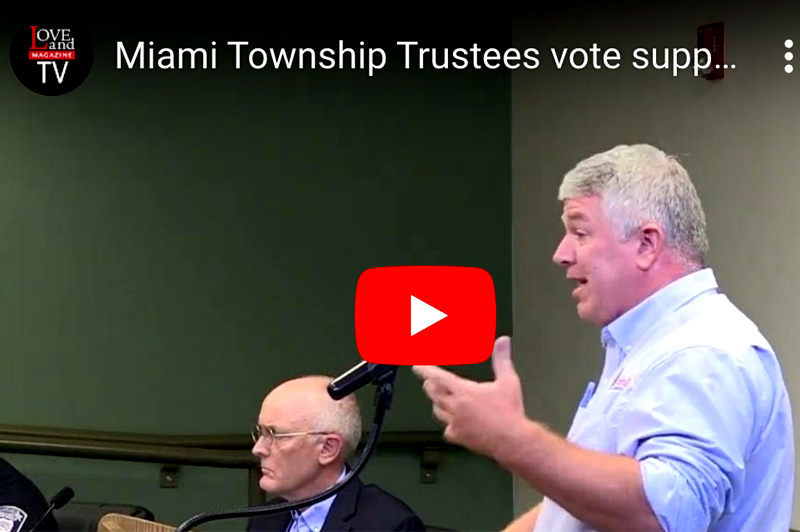
Miami Township and Loveland, Ohio – “The members of the Grail Land Preservation Group in attendance were excited by the unanimous support of the Miami Township Trustees. The opportunity for open green space to be protected in perpetuity has been a desire for many group members,” said Loveland resident Sharon Scovanner.
The quest to get formal support from three government jurisdictions moved to step two last evening when the Miami Township Board of Trustees voted unanimously to give their stamp of approval. Andy Dickerinson with The Cardinal Land Conservancy, based in Miami Township, appeared at the township meeting to explain the proposal and answer any questions. His appearance was probably unnecessary as both Ken Tracy and Mary Makley Wolff, as well as Township Administrator Jeff Wright spoke enthusiastically about the Grailville land remaining greenspace.
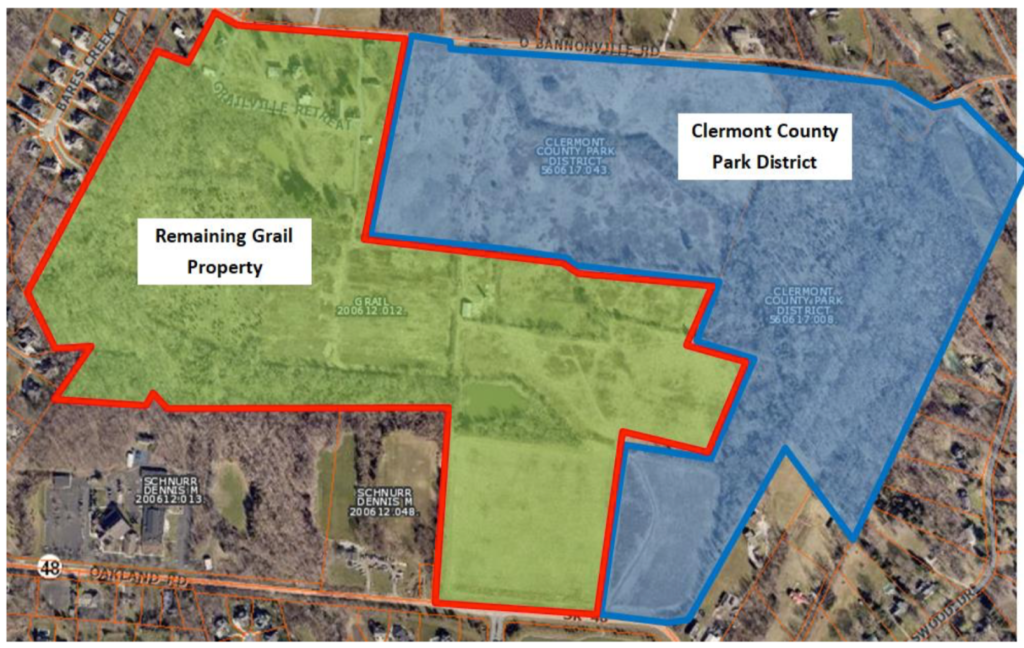
The Cardinal Land Conservancy and many Loveland and Miami Township residents are asking local governments to lend their support to a plan that could save 89 acres at Grailville as dedicated green space in perpetuity. Dickerson, on behalf of the Conservancy, is requesting votes of support for a grant application that would be submitted to the Clean Ohio Conservation Fund, to purchase 89 acres of the Grail property.
This is the site where Drees Homes was denied the zoning change they requested in 2022 after local residents filled Planning and Zoning chambers to urge that the site be protected. The Kentucky home builder had requested the land become a Special Planning District which could have allowed 209 homes on the site. The same parcel is also where the Loveland City School District proposed building a campus until the funding they wanted was denied by voters in 2019. The site is bounded by O’Bannonville Road and State Route 48 (Oakland Road).
After the re-zoning Drees requested was denied, local Grail members and other local residents coalesced to find the solution. The Grailville Land Preservation Group worked together to stop the zoning change Drees wanted.
If the grant application is successful, the 89 acres of land would be deeded as dedicated green space in perpetuity. The proposed purchase by the conservancy would be adjacent to the 100-acre Clermont County Park District property, which was also acquired from the Grail using Clean Ohio funding.
Scovanner added, “It has always been our hope that the land will be preserved to respect not only the legacy of the Grail and their members past and present, but to also be a gift to future generations. We appreciate our partnership with Cardinal and look forward to garnering support from the Clermont County Commissioners as the next step in the process.”
In this LOVELAND MAGAZINE TV video, Andy Dickerson explains the details of the grant and what he was asking the Miami Township Trustees to do.
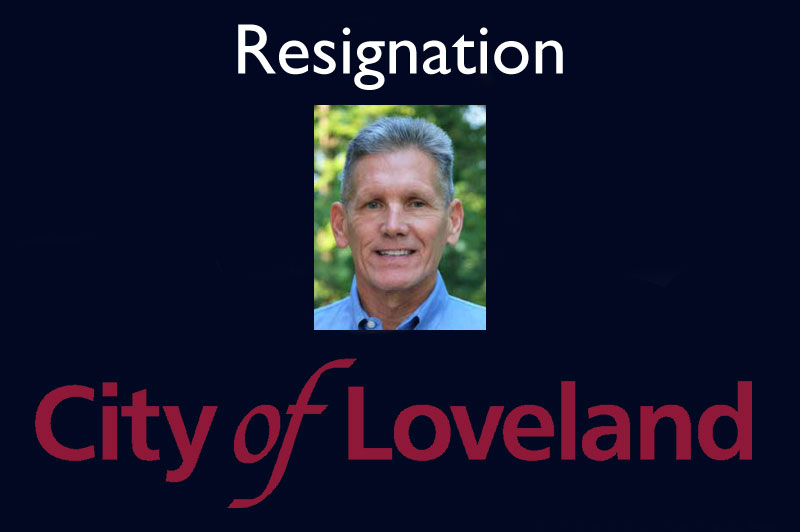
Loveland, Ohio – Tim Butler, whose term was to expire on December 1, 2025, has sent a resignation letter to City Hall. Citing personal reasons, his last day as a member of the Loveland Council was on May 9.
I want to speak to you about vision and make sure you are aware of an important ongoing process before the Loveland Planning and Zoning Board and Loveland City Council. Drees Homes is requesting a change in the current low-density zoning status on 110 lovely acres of green unspoiled land, with historic buildings, currently owned by Grailville (The Grail). This land sits between where East Loveland Avenue turns into O’Bannonville Road and Rte 48. Drees desires this zoning status change to put 209 homes on this green space.
The Grail Mission and Vision Statement speaks of Care for The Earth. This has always been vital to Grailville/The Grail in its history and practice. Grail members including myself are expressing significant and ongoing distaste that the Grail is seriously considering divesting itself of this land to Drees to build another subdivision in our town.
There are important long-term practical reasons why many Loveland residents have spoken AGAINST enabling a zoning status change proposed by Drees to build 209 homes. They include, among others, an overcapacity school system, aggravating already clogged traffic and infrastructure concerns including sewer and water. (Please reference the below open letter to Loveland residents by Elizabeth Murphy for more details on these pressing issues)
I want to concentrate here on a compelling and magnanimous (great of mind or heart) vision of protection from development such as the proposed Drees subdivision. Standing up for a NO vote on this zoning status change from low density is a very important first step.
If the Grail is determined to divest itself of this land, are we as citizens willing to stand up for a vision that will honor the cultural and spiritual history of the Grail on this land, and also stand up for the inestimable value of added community green space which will do so much more than another subdivision to keep Loveland a treasured place to live into the future?
I wonder: If Loveland has the foresight to reject this proposed Drees zoning change, would The Grail accept significantly less money from the city or other entity committed to a higher vision that cares for the earth and the people of Loveland?
I have lived in Loveland all my life and our Loveland Bike Trail was just such a vision. There were many who could not see the immensely positive difference this green path of natural beauty that intersects our town and all enjoy, would make for the future of Loveland. It is with gratitude we now look back and honor those who had vision and were tenacious, so we could see the flowering of that vision.
Today Loveland is thriving. With that has come some of the problems of success mentioned earlier such as traffic and stress on infrastructure. We can make decisions now that see another subdivision that destroys precious green space and exacerbates traffic and stressed infrastructure will not be a decision that is truly good for the future of Loveland.
Loveland citizens will thank us years from now if we reserve green and natural places for the good of all, as did those bike trail visionaries.
I ask the Loveland Planning and Zoning Commission and Loveland City Council to reject this Drees proposed zoning change. Reject it not only on very real practical matters such as traffic and infrastructure, but to support a greater vision of the intrinsic beauty and value added of green spaces for Lovelanders into the future.
Sincerely,
Elizabeth Robinson
East Loveland Avenue
 April 11, 2022

Dear Fellow Loveland Residents,

It is important that you are aware of a process which is now ongoing involving 110 acres of Grailville land between Rt.48 and O’Bannonville Rd. Loveland City Council and the Zoning Board will have to make a decision on the Drees Homes’ request for a change in the zoning status to allow them to build 209 homes on that land.

The iniPal public hearing drew a standing room only crowd. Everyone who spoke, with the excepPon of the Drees representaPves, requested that the Zoning Board say NO to the Drees proposal. There are important long-term reasons why it is best for our community that the Drees proposal does not go forward.

We all know the traffic situaPon in downtown is bad now. The construcPon of a large subdivision on this Grail land will iniPally cause several years of construcPon trucks and dirt funneling into town from Rt.48 and O’Bannonville Rd. As the houses are built and sold regular traffic of several thousand car “trips” through town will phase in. This will never stop.

Our school system is currently overflowing recommended capacity. Extra trailers are needed for space. It is esPmated that 4-5 addiPonal classrooms of children are likely to be added by this subdivision. We are all painfully aware of the costs that would be incurred to build new schools, as well as the stresses on children and teachers involved in overcrowding. Again, once this increase is allowed to happen it is unlikely to be reversed.

There are also serious general infrastructure issues relaPng to water. The Loveland water system is a series of wells which when run at high demand can drop the water table in a significant way. One must ask at what point will this become a problem. Water pressure has at Pmes been an issue and more homes drawing water cannot but aggravate this.

The other end of this problem is the management of the addiPonal sewage. The sewer line under East Loveland Ave. is outdated, fragile, and it is quesPonable whether it is adequate to handle a large new neighborhood. The receiving Polk Run sewage treatment plant has no more room to expand. There has been no confirmaPon of sewer availability, capacity, or access compliant with MSD standards. Will the City of Loveland be put in a posiPon of providing this infrastructure at Loveland residents' expense? With the Liale Miami River so nearby it is crucial that there be no chance of contaminaPon.
Natural rainwater run-off must also be considered. The land from White Pillars on slopes to the northwest. The homes along O’Bannonville Rd. are all in the path of this natural drainage and vulnerable to surface flows or overflowing of Bares Run Creek in Pmes of heavy rain. The new roads and houses will eliminate acreage which currently absorbs the rainwater and so more will conPnue on downhill.

The final thing I need to speak of is the special quality of this parPcular piece of land. For about 80 years women of The Grail have lived or worked there. They have tended the land, holding it, knowing the sacred nature of this place. As the Grail has shared access to their land with others
for walking and connecPng with nature, many have become aware of the spiritual calm which it provides. In today’s world we need this more than ever.

In conclusion, I would encourage everyone who feels that we do not need another big subdivision on this Grailville land, with all the negaPve side-effects, to please make your views known. Aaend the public meePngs (the next is on May 4), write or call members of the Zoning Board and City Council. In our country we have government of ciPzens for ciPzens. Our officials have a duty of honor to listen to the members of the community which they serve. They are us; and therefore, we must speak so they may be guided.

Sincerely,

Elizabeth Murphy - Fallis Road Loveland OH



 In introducing the resolution, Clerk of Council Misty Clark said, “If designated, it would join an elite group of just 11 National Scenic Trails, and it would become the fifth largest in the nation. It would also be the only loop trail and the first to receive this designation since 2009. Clark added that the designation would bring “significant benefits, including increased federal support, enhanced visibility, and expanded opportunities for community and economic development throughout Ohio.”














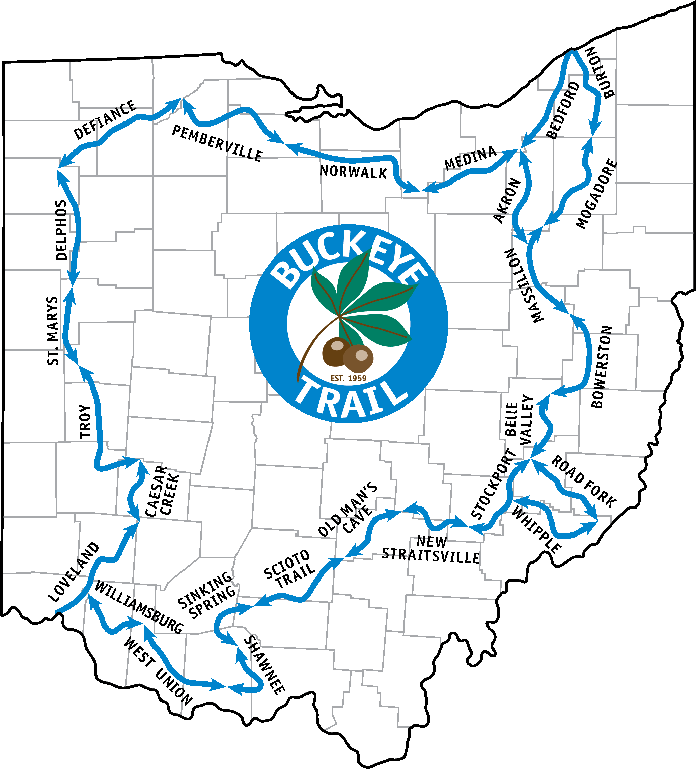 Since its establishment in 1959, the Buckeye Trail has grown from a 500-mile route into the nation’s largest loop trail, closing the loop in Cuyahoga Valley National Park in 1980. Free and open to all, 1,454 miles of the Buckeye Trail pass through 21 designated Buckeye Trail Towns and landmarks such as Wayne National Forest, Serpent Mound, and Fort Ancient, a UNESCO World Heritage Site. The Buckeye Trail is within 90 minutes of every Ohioan, providing an accessible connection to Ohio’s Great Outdoors and showcasing the state’s scenic and historical diversity. buckeyetrail.org
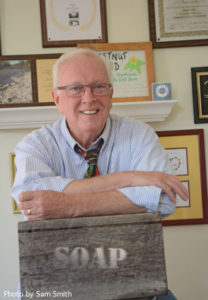 by David Miller
 Residents showed up prepared because they believe the 200 Railroad Avenue building is a significant piece of Loveland’s history. Indeed, it was acknowledged by Council Member Neal Oury at the October 22nd Loveland City Council meeting that the original brick structure remains standing and sound.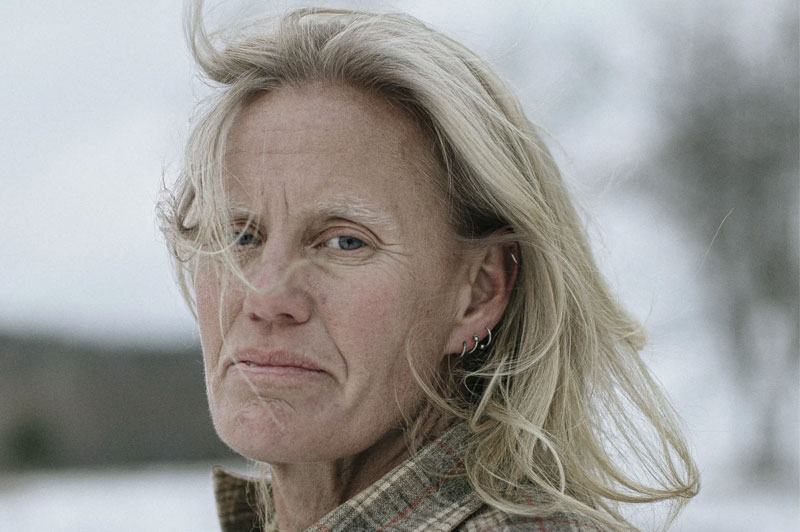

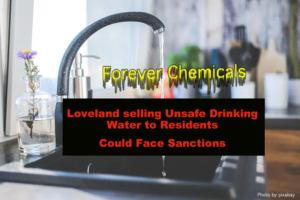




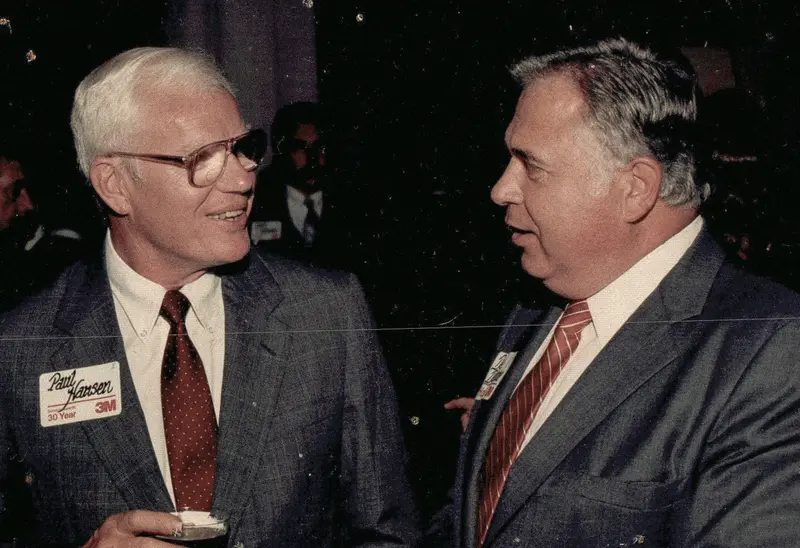





 Sharon Lerner
 (No official portrait is yet available for Brian Goodyear)