Loveland, Ohio – The LIFE Food Pantry campaign is now live and runs through May 20th. They are encouraging the community, businesses and individuals, to give a financial donation through PayPal or Venmo to help them serve their clients.
Services provided by LIFE go beyond just food – here are a few examples:
LIFE helps with emergency financial assistance, including rent, utilities, auto repair, prescription medications and more. In 2022, 208 families helped totaling $40,000
Back to school backpack program, filled with necessary supplies
Holiday food bags for November and December holidays
Holiday giving shop with clothing, gifts, etc., for client families
Student weekend bags filled with healthy food
Tiger pantry at the Loveland High School, with food and personal supplies
Client bags specifically for senior citizens
Pantry pals, who shop for and deliver to clients who are unable to come into the pantry
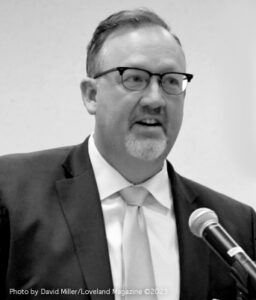
Superintendent Mike Broadwater (Loveland Magazine file photo)
Loveland, Ohio – The Loveland City School District will hold a Town Hall Meeting on Tuesday, April 25, at 6 PM in the Media Center at Loveland Intermediate School. In his April 19 “Schools Update” Superintendent Mike Broadwater said, “The purpose of this Town Hall is to provide a forum for our Loveland City Schools community to ask questions about the upcoming 4.9 mill operating levy on the ballot on May 2.”
The Town Hall will include the Superintendent, Treasurer Rob Giuffre’ and two members of the Board of Education. It will not be an official meeting of the Board. The Superintendent’s newsletter did not specify which board members will participate in the discussions.
Only in-person attendees can participate with questions or comments. After the meeting, the live stream recording will be available on the Board of Education YouTube channel.
During the Town Hall, Broadwater said, “We will work to take questions or comments from as many participants as possible to foster conversation around these important issues.”
An overwhelming majority of a panel of Ohio economists believes that a flat-tax proposal pending in the Ohio House would worsen economic inequality, according to a survey that was published Monday.
Most of the 22 who responded also didn’t think that the proposal would spur economic growth.
Meanwhile, Republican members of the state House of Representatives are pushing a measure that would require everyone to pay state income tax at the same rate regardless of their income. It’s more fair, the pitch goes, because people making more money would pay proportionately more in income taxes than those making less.
But critics point out that taxes on income are far from the only way people pay to support state and local government. And other taxes — such as those on sales and gasoline — are charged without regard to whether an Ohioan makes $2.7 million a year or $27,000.
When one takes all of those taxes into consideration, poorer Ohioans pay out nearly twice as much of their income in state and local taxes as the richest, the Institute on Taxation and Economic Policy reported.
In 2018, the poorest 20% paid 12.3% of their income in such taxes as the richest 1%, who paid just 6.5%, the institute reported.
Eighteen of the 22 who responded said that the 2.5% flat income tax proposed in House Bill 1 would exacerbate inequality. Only one disagreed and the other three were uncertain.
“A flat tax is a regressive tax in which low-income taxpayers carry a disproportionate share of the tax burden,” independent economist Kay Strong wrote in the comments section of the survey. “Further squeezing those least able to cover daily living expenses qualifies as truly draconian.”
To some, the matter was self-evident.
“This will so obviously increase inequality that it’s not even worth debating,” wrote Paul Holmes of Ashland University.
A few other economists resorted to snark.
“Giving $11,000 to high-income earners and $3 to low-income earners is an efficient way to increase inequality,” wrote Michael Myler of the University of Mount Union.
In addition to falling more heavily on poorer Ohioans, an analysis by Policy Matters Ohio indicated that HB 1 would punch big holes in funding for local government, libraries, and schools. The loss of such services will also worsen economic inequality, some of the economists said.
“The benefits will flow to higher income individuals but the spending cuts will hurt lower income individuals,” Bob Gitter of Ohio Wesleyan University said.
There was less certainty about whether the flat tax would help grow the economy, but 12 of the 22 economists said it wouldn’t. Eight were uncertain and just two said they believed it would help expand the state economy.
“Public services and goods are an important part of the necessary infrastructure to grow an economy,” Rachel Wilson of Wittenberg University said. “Cutting state income taxes will reduce the public infrastructure. Our current tax rate is very competitive with other states and doesn’t need to be reduced.”
Conversely, David Brasington of the University of Cincinnati said the flat tax would force local governments to be more efficient and thus spur economic growth.
“It will make local public services rely more on local taxation, and attract people and new businesses to the best-run municipalities,” he said.
_______________________________
MARTY SCHLADEN
Marty Schladen has been a reporter for decades, working in Indiana, Texas and other places before returning to his native Ohio to work at The Columbus Dispatch in 2017. He’s won state and national journalism awards for investigations into utility regulation, public corruption, the environment, prescription drug spending and other matters.
Dr. Dewey Cornell, Professor at the University of Virginia and developer of the Comprehensive School Threat Assessment Guidelines, (CSTAG), will present on School Threat Assessment as a Safe Fair, and Effective Practice in Ohio Schools, which will describe how to implement best practices and resolve student threats, while maintaining a fair and equitable manner.
Tuesday, July 25, 2 p.m.
Dr. Amanda Nickerson, Professor and Director of the Alberti Center for Bullying Abuse Prevention at the University at Buffalo, the State University of New York, will speak about Bullying Prevention and Intervention, including solutions, strategies, and resources to promote a safe school climate.
Wednesday, July 26, 9 a.m.
Sgt. William Chapman, a member of the Newtown, Conn. police department, uses his experiences as a Sandy Hook first responder and School Resource Officer to help school districts and law enforcement to develop best practices and will present on Navigating the Unthinkable: A First Responder’s Perspective.
Wednesday, July 26, 2:45 p.m.
Dr. Scott Poland, Professor and Director of the Suicide and Violence Prevention Office at Nova Southeastern University, will discuss School Crisis and Liability, including issues involving obtaining parental consent, failure to notify parents, and legal consequences of inadequate threat assessments in schools.
The MISSION of the Ohio School Safety Center (OSSC) is to support all Ohio schools and first responders in preventing, preparing for, and responding to threats and acts of violence, including self-harm, through a holistic, solutions-based approach to improving school safety. Using a cross-disciplinary approach, the OSSC will provide resources to schools to enhance their strategies for safety, security, and emergency plan development.
Our goal is total commitment in supporting all schools in ensuring the safety of students, employees, and visitors through effective policies and procedures, training, and community and interagency involvement.
There are four main components to our goal:
Prevention/Mitigation: Schools can take action to increase the safety and wellbeing of their staff and students. To create a safe and supportive learning environment, schools may institute policies, positive behavior intervention supports, and prevention programs to improve the culture and climate of their building.
Preparedness: School leaders should be equipped with all the vital resources, information, and expectations to create a comprehensive safety plan and response protocols for any emergency situation, including natural disasters, violent incidents, and terrorist acts – before, during, and after the event.
Response: Assisting schools with the development of their all-hazards response plan is a key element of our goal. Safety and well-being in an emergency depends on how prepared students and staff are and on how everyone responds to a crisis. By being able to act responsibly and safely, school administrators will be able to protect students, staff and facilities. Our office will strive towards ensuring updates on school safety regulations, directives, policy, and deadlines will be communicated on a regular basis so schools can revise and implement the most current criterion and respond accordingly.
Recovery: The primary objective of recovery is to provide a caring and supportive school environment so that staff and students can return to teaching and learning as quickly as possible. Creating a system of supports with community social service agencies and local first responders can reinforce the cycle of safety planning and restore the social, emotional and environmental needs of students and staff.
Loveland Schools are worth fighting for! Keeping our school district strong in turn will keep our beloved Loveland community thriving, protect our home values and make our neighborhoods enticing to outside buyers. We, as proud Lovelanders, will stand behind the #yesforloveland movement. This is our family’s story and why we are so passionate about supporting the Loveland School District.
Our family relocated from Orlando, Florida to Cincinnati in the summer of 2016. This change was met with a lot of resistance by myself and our girls, who were 12 and 8 at the time. We were faced with leaving the community we loved and the only home our girls had ever known. Getting the move right was essential, to set our family unit up for success in our new home. Where did we start? The area school districts.
In Orlando, our girls had grown into a young school district and a developing area, with one elementary and middle school to choose from. After 10 years in the area, our school district had grown to encompass three elementary schools, two middle schools, and a new high school. My husband and I sat on community growth committees, held school PTA board positions, and volunteered countless hours in the classroom, at fundraisers and community events. We assisted in the effort to make our neighborhood one of the best in the Orange County School District. We knew what a successful educational community looked like and we felt it was essential to make the right choice for the future of our girls in our relocation.
In researching the Cincinnati area, we toured every surrounding school district. The final school on our list was Loveland. We feared that the opportunities and programs would be lacking, as it was a smaller school district. Boy, were we wrong.
In Loveland, we were greeted by enthusiastic administration and teachers who took the time to talk directly to our girls and answer their questions. We had top-notch tours and even had a sit-down meeting with the superintendent, assistant superintendent, and the person who would be our daughter’s high school counselor. The girls instantly felt like they would feel safe and welcomed in the Loveland schools. The district’s forward thinking mindset, focus on growth, and developing a well rounded, competitive student was supremely impressive.
We knew Loveland was the right choice when we left that meeting. Not only were there educational opportunities here, including a thriving gifted program and course options such as foreign language and college prep courses, but the district had top-notch music and arts programs which were of very high importance to both our girls. Loveland was providing music programs from the elementary level up. The high school arts programs were known as some of the best in the Cincinnati area. These opportunities solidified our decision.
We wanted to get a sense of the Loveland community as well. We explored the quaint downtown, enjoyed the local restaurants, and toured a dozen homes before we ended up buying in a beautiful, homey neighborhood where we were instantly greeted by welcoming neighbors. We had found our home and a place where we felt confident our girls would thrive and above all, be happy. And they have flourished here. Each of our girls had different needs in the classroom and they were both met with phenomenal teachers and support. They each threw themselves into drama, music, and show choir. They were exposed to and tried new things including runners club, intramural sports, student government, and volunteerism.
Our oldest has now graduated and was set up to enter college with 32 hours of college credit classes allowing her to easily double major in two rigorous programs. The Loveland High School experience gave her the tools to enter into the world confident and prepared. Anna was exposed to a broad range of activities, including music, art, student media, Showchoir, and student leadership groups in addition to a multitude of course options from financial planning to AP and College Credit Plus opportunities. And she took advantage of it all. She had a remarkable high school experience and was set up to get into highly competitive college programs.
Our youngest is now a junior and is in the college preparation stage. While her high school experience began during the COVID-19 pandemic, she continues to have a wonderful high school life in her classes and extracurriculars including athletics, music, and show choir. We are so thankful for her dedicated school counselors and teachers and for the arts programs that have given her hope and comfort in spite of the challenges of these last couple of years due to the pandemic and unfortunate cuts in the Loveland schools. She has grown immensely into a hard-working student, performer, athlete, and a Tiger through and through. At Loveland, Avery has learned resilience through compassionate district leaders, teachers and mentors.
Even while navigating the challenges of failed levies, Loveland has kept excellence and the dedication to their students at the forefront. No matter what challenges the district may face, the foundation of community and excellence prevails. The opportunity for students to experience a vast, well-rounded education is there. But the reality is that many of those beloved, winning programs our children have been blessed with are now on the chopping block.
We have hope that the community will step up and value the importance of a strong school district and how important it is to set our children up for future success.
Our children in the younger grades should have the same opportunities to enter their years after high school prepared, motivated, and competitive. It’s up to each of us to fight for our schools and to keep Loveland thriving.
We are Lovelanders now and we won’t give up on our schools or this community. I hope you will join in the fight to keep Loveland strong and get out and vote #yesforloveland.
____________________________________
Kim and Dan Colletto live in the Miami Trails Neighborhood
Ellen Main, is a stay-at-home mom of two boys in Loveland Schools: one kindergartener and one first grader. Her family lives in the Belle Meade subdivision.
by Ellen Main
Loveland City School District has an operating levy on the May 2 ballot this year. Because Loveland has not passed a school levy in nine years, they are in desperate need of these funds to maintain their current high quality of education. If the levy is not passed, they will move towards State minimum services. Our students and future students deserve better than this. As a mom of two young Loveland students, I am witness to the outstanding and dedicated faculty, staff, and administration in our community. My experience at a recent school event illustrates this perfectly.
Waiting anxiously for the show to begin, I looked around at all the other parents, siblings, grandparents, and other family members sitting in the Loveland Primary School gym and thought how grateful I am to live in this community. After the heartwarming show, during which the look of pride on my son’s face almost made me tear up, we walked through a gallery of children’s art—vibrant paintings, oil pastel drawings, and construction paper weavings covered the hallways from floor to ceiling. My son showed such confidence in finding his art on the walls and explaining it to his family. Then, he led us to his classroom (Ms. Miller, Room 9), where he showed us two beautiful books, one created by him (about koalas) and one created by his classmate, a biography about what makes my son special (my son created one about his classmate too). He proudly showed us all his work, which had an Australian theme (each class had a different country). All of this thanks to the hard work, energy and creativity of Lauren Alten (music teacher) and Kayla McClary (art teacher) as well as the classroom teachers, custodians, administration—too many people to mention.
The “Around the World” Showcase is an example of what makes Loveland Schools such a special place to be. Music, theatre, art, athletics, physical education, robotics and so many other programs we may take for granted won’t be possible much longer if we don’t pass a school levy. Think about the most memorable and important moments of your elementary and secondary education—most likely they were made possible because of school levies being passed.
I was lucky enough to have some extraordinary teachers in the Perrysburg School District in Northwest Ohio. My most memorable experiences had to do with music and theatre, which would not have been available without teachers having the freedom to use their creativity to benefit students both in the classroom and through extracurricular activities. Maybe yours have to do with sports, science club, art, student government, none of which would be possible without our talented educators, who would slowly be cut due to lack of funds. We cannot deny future generations these experiences.
Right now, the employees at Loveland Schools are doing amazing work despite not having the money—92 percent of all Ohio school districts receive more money per student yet we are in the top 2 percent in the state on the Ohio Department of Education scorecard. We cannot keep the talented and hard-working people we have in Loveland Schools now if they feel stressed that they may lose their jobs or if the class sizes are so big they are spending all of their time managing student behavior rather than teaching.
With the passing of the levy on May 2, we can keep not only our schools strong but our community as well. Voting yes for Loveland Schools on May 2 is a vote for our students and future students and also for the well-being of our entire community.
The Oho Statehouse, Columbus, Ohio. (Photo by Graham Stokes for the Ohio Capital Journal. Republish photo only with original story.)
The way that the law is written would only complicate the state’s school-funding woes, take money from libraries, and increase property taxes for farmers and homeowners, it added.
It sounds fair. If everybody paid income taxes at the same rate, the rich would pay more because of their higher incomes and the poor would pay less because they make less in the first place.
But an Ohio proposal to enact such a “flat” state income tax ignores a host of other taxes, said a progressive public policy think tank. And the way that the law is written would only complicate the state’s school-funding woes, take money from libraries, and increase property taxes for farmers and homeowners, it added.
“One of the myths that we have to dispel is that flat taxes make things fair,” said Guillermo Bervejillo, a state policy fellow at Policy Matters Ohio. “It’s quite the opposite. One of the things people forget when they talk about income taxes is that there’s a whole array of state taxes.”
Bervejillo was speaking in reference to House Bill 1, which, as the bill number implies, is a top priority of the Ohio House’s Republican leadership. A spokesperson for that leadership didn’t respond to questions about the many criticisms that Policy Matters made of the bill.
One is that many economists have long argued that so-called “flat” income taxes add to the overall tax burden shouldered by the poor and act as yet another means of lightning that of the wealthy.
“There’s use taxes, sales taxes, excise taxes, taxes that are generally focused around consumption and use,” Bervejillo said.
Graphic from the Center on Budget and Policy Priorities.
He explained that those kinds of taxes are the same for everybody, no matter her or his income. Buy a $100 pair of shoes in Ohio and you pay $5.75 in state sales tax regardless of whether you make $100 in a minute or in a whole day of work.
“You can only buy so much toilet paper,” Bervejillo said, explaining why sales and excise taxes fall more heavily on the poor. “You can only drive so many miles.”
The cumulative impact of those taxes is that the poor pay much more as a percentage of their income in state and local taxes than do the rich.
“On average, the lowest-income 20% of taxpayers face a state and local tax rate more than 50% higher than the top 1% of households,” the Institute on Taxation and Economic Policy said in a report, Who Pays? “The nationwide average effective state and local tax rate is 11.4% for the lowest-income 20% of individuals and families, 9.9% for the middle 20 percent, and 7.4 percent for the top 1%.”
Federal and state income taxes are the few exceptions that were originally structured to be “progressive.” In other words, they were intended to fall most heavily on those with the greatest ability to pay.
And it’s true that if you take those and all other taxes into account, the richest Americans pay a bigger portion of their incomes out in taxes than poorer Americans. But the spread isn’t very wide.
In 2019, the poorest 20% of Americans paid 20.2% of their incomes in taxes, while the richest 1% paid 33.7%, the Institute on Taxation and Economic Policy reported.
But in Ohio if you take just state and local taxes into account, the script is flipped. In 2018, the poorest 20% paid almost twice as much of their income in such taxes — 12.3% — as the richest 1%, who paid just 6.5% of their lavish incomes in state and local taxes, the institute reported.
And if Ohio were to enact a flat income tax, it would come on the heels of other measures in which the state has foregone large sources of revenue largely to the benefit of the wealthy.
Ohio is giving up about $1 billion a year on a tax break for limited liability corporations. It was sold as a way to incentivize mom-and-pop businesses, but a 2017 analysis by the Ohio Legislative Service Commission found that as much as $450 million of that annual benefit was going to the highest 0.5% of Ohio wage earners.
Meanwhile, there’s been no evidence that the cut improved Ohio’s jobs picture. It was 39th among states for job growth in February 2003 — well before the LLC tax cut was implemented, according to data compiled by Arizona State University’s Seidman Institute. By last month, Ohio ranked 46th in year-over-year job growth.
And former Gov. John Kasich created JobsOhio by diverting funds from the state liquor monopoly. It’s spent more than $1 billion on things like incentives for wealthy businesses to locate to Ohio, but the agency has struggled to show that those expenditures have made much of a difference to the state’s jobs picture.
But aside from fairness, Policy Matters raised another objection to HB 1 — it’s not paid for. Working from a fiscal analysis of the bill by the Legislative Services Commission, the group found that after the initial phase-in:
Property taxes on farmers and homeowners would increase at least $600 million a year because of “changes in the bill and the operation of Ohio’s existing property tax limit, known as House Bill 920.”
Schools, libraries and local governments would lose hundreds of millions of dollars a year.
There would be $780 million in annual net losses to the state that are not paid for in the bill.
Bervejillo said it’s not hard to understand why pain would spread to large swaths of Ohioans from the flat-tax proposal.
“At the end of the day, there’s only two things you can do when you cut taxes on the wealthy,” he said. “You can either cut services — and who depends more on services than low-income people? Or you increase sales and use taxes and gas taxes and cigarette taxes that fall disproportionately on low-income and working-class Ohioans.”
_________________________________
MARTY SCHLADEN
Marty Schladen has been a reporter for decades, working in Indiana, Texas and other places before returning to his native Ohio to work at The Columbus Dispatch in 2017. He’s won state and national journalism awards for investigations into utility regulation, public corruption, the environment, prescription drug spending and other matters.
Drew Plitt has been with the Arlington Renegades since day one, but his past success is what has brought him here to the XFL as one of the few rookie quarterbacks.
High School Football Experience
Photo by The Enquirer
Plitt went to high school in Loveland, Ohio where he played quarterback for the Tigers. His biggest achievement at Loveland was leading the school to the 2013 Division II state title which was the school’s first state championship ever. In 2015, he threw for over 1,400 yards with 15 passing touchdowns and three rushing touchdowns in ten games. He was the team captain and was honorable mention all-district as a senior.
“Drew’s quarterback style and talent will allow him to be crazy successful there. Ball State is getting a championship, high character quarterback. Ball State loves his talent and style, his leadership and quarterback intangibles.”
Loveland Head Football Coach Fred Cranford via Cincinnati.com
Ball State Experience
Photo by Mike DiNovoUSA TODAY Sports
In his first year in college back in 2016, Plitt was redshirted for the season as a freshman. The next year in 2017, he started the season as the fourth quarterback on the depth chart. Due to injuries to the quarterback position, Plitt was forced into action and played in the last five games of the season starting three of them. He finished his first season with 430 passing yards and three touchdowns along with three interceptions. Plitt also ran for 29 yards and one touchdown in the season.
[vc_row][vc_column width=”2/3″][vc_column_text]Loveland, Ohio – The Loveland City School District is asking voters to approve an additional 4.9 mills permanent operating levy that will be on the May 2nd ballot.
Your voter registration and updated Information Form must be postmarked by the voter registration deadline, the 30th day before the election, to be eligible to vote in that election.
April 3rd is your deadline.
Absentee voting begins April 4th.
If you register in person or online, you must do so by the 30th day before the election. You, or another person acting on your behalf, also may deliver your application to your Board of Election offices.
What are the qualifications to register and vote in Ohio?
If you meet all the following requirements, you are qualified to register to vote in Ohio:
You are a citizen of the United States
You will be at least 18 years old on or before the day of the next general election
You will be a resident of Ohio for at least 30 days immediately before the election in which you want to vote
You are not incarcerated (in prison or jail) for a felony conviction
You have not been declared incompetent for voting purposes by a probate court
You have not been permanently disenfranchised for violating the election laws
You are eligible to vote in elections held in your voting precinct 30 days after you are duly registered to vote in this state. Your Board of Elections office will mail you a notice of your voting location. If you do not receive a timely notice, contact them.
7 PROPOSED TAX LEVY (ADDITIONAL) LOVELAND CITY SCHOOL DISTRICT
A majority affirmative vote is necessary for passage.
An additional tax for the benefit of Loveland City School District for the purpose of current operating expenses that the county auditor estimates will collect $4,903,000 annually, at a rate not exceeding 4.9 mills for each $1 of taxable value, which amounts to $172 for each $100,000 of the county auditor’s appraised value, for a continuing period of time, commencing in 2023, first due in calendar year 2024.
Loveland, Ohio – Loveland Schools begin their Spring Break this Friday afternoon March 31, and classes will resume on Monday, April 10.[/vc_column_text][/vc_column][vc_column width=”1/3″][vc_widget_sidebar sidebar_id=”td-default”][/vc_column][/vc_row]




 DONATE NOW

 MARTY SCHLADEN
 Dr. Dewey Cornell, Professor at the University of Virginia and developer of the Comprehensive School Threat Assessment Guidelines, (CSTAG), will present on School Threat Assessment as a Safe Fair, and Effective Practice in Ohio Schools, which will describe how to implement best practices and resolve student threats, while maintaining a fair and equitable manner.
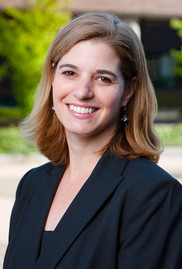 Dr. Amanda Nickerson, Professor and Director of the Alberti Center for Bullying Abuse Prevention at the University at Buffalo, the State University of New York, will speak about Bullying Prevention and Intervention, including solutions, strategies, and resources to promote a safe school climate.
 Sgt. William Chapman, a member of the Newtown, Conn. police department, uses his experiences as a Sandy Hook first responder and School Resource Officer to help school districts and law enforcement to develop best practices and will present on Navigating the Unthinkable: A First Responder’s Perspective.
 olence Prevention Office at Nova Southeastern University, will discuss School Crisis and Liability, including issues involving obtaining parental consent, failure to notify parents, and legal consequences of inadequate threat assessments in schools.

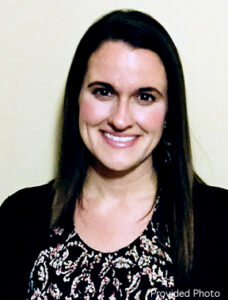
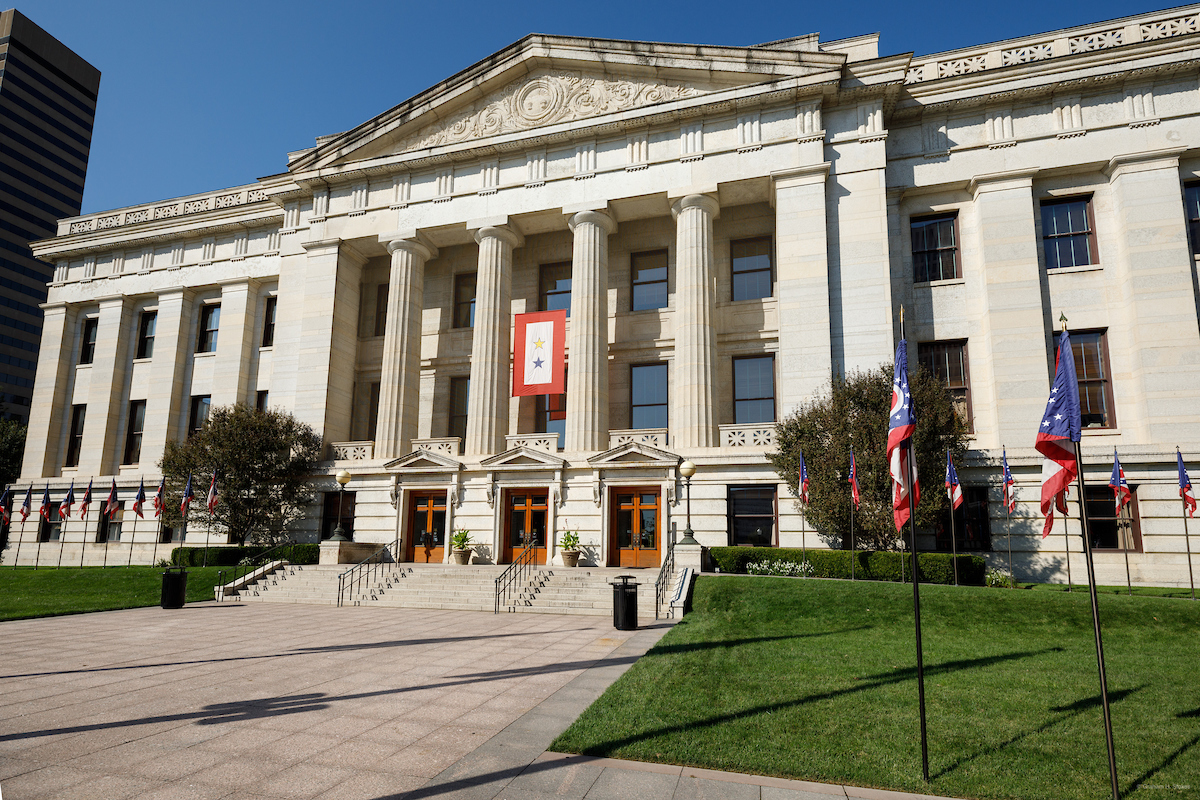



 Photo by The Enquirer