David Miller is the Publisher of Loveland Magazine
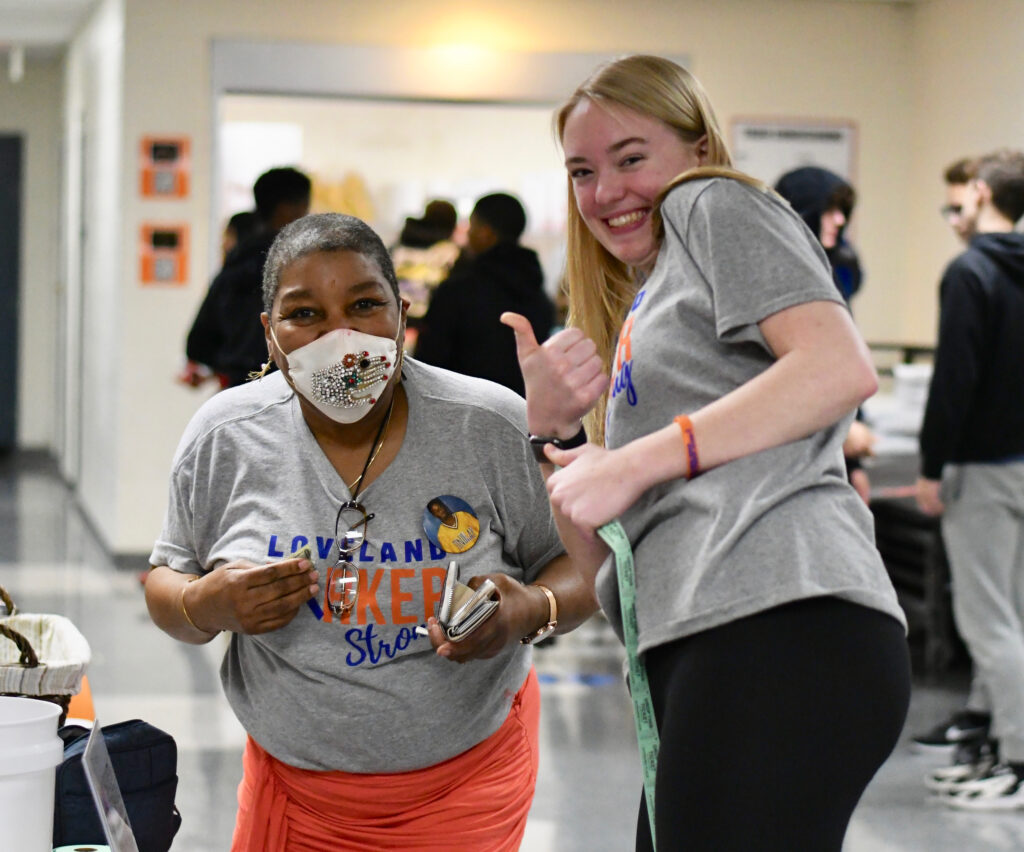
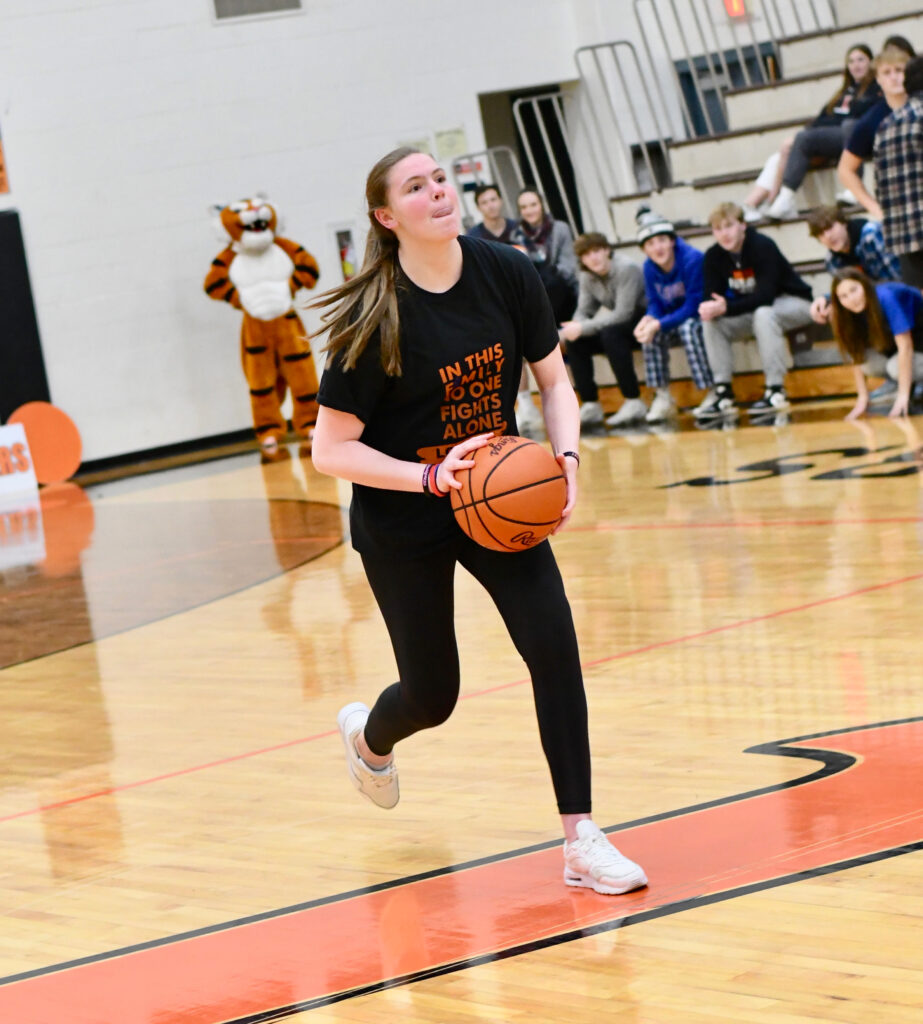
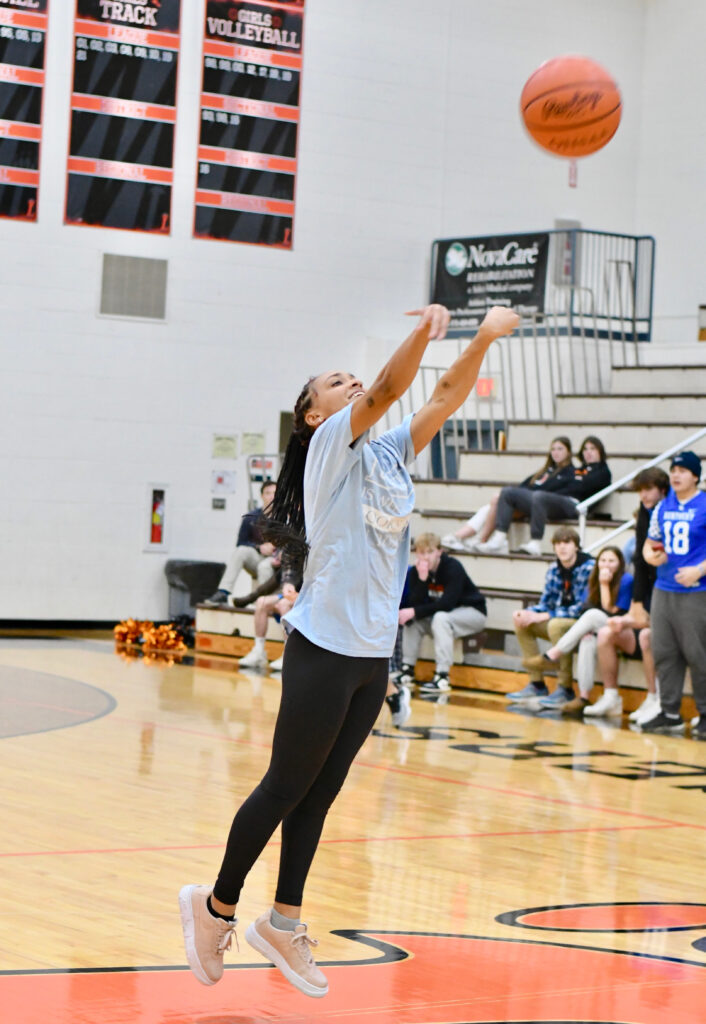
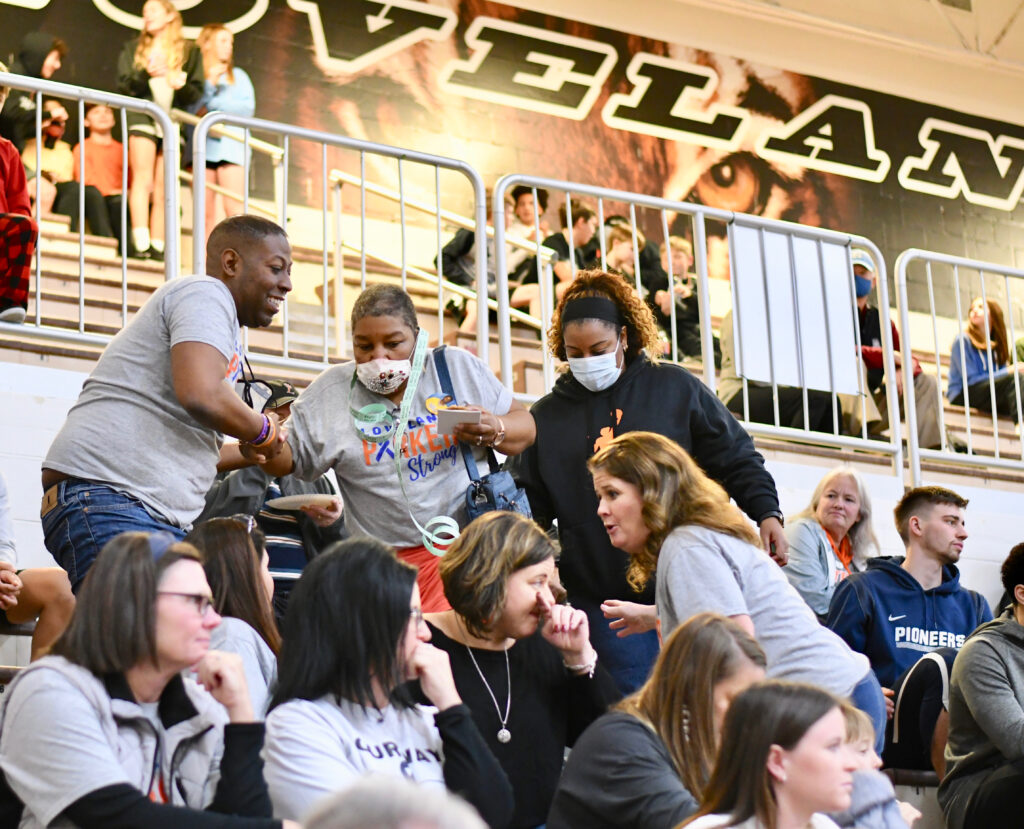
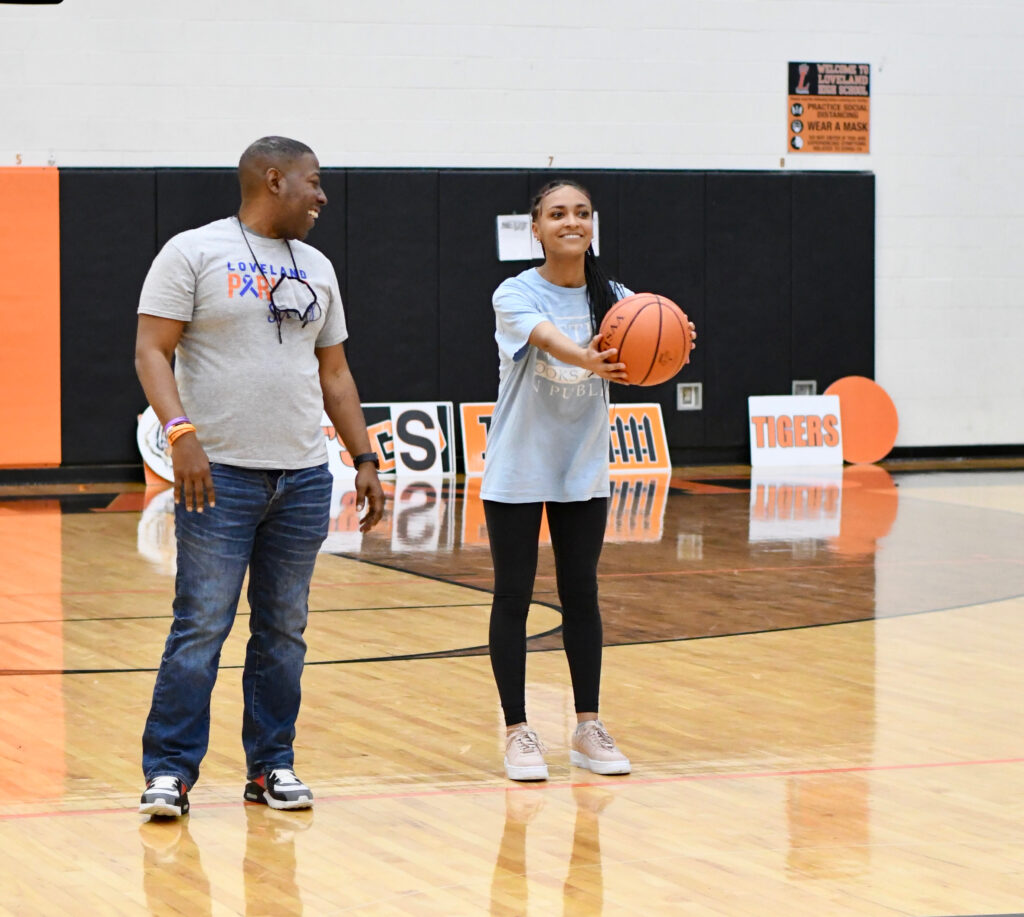
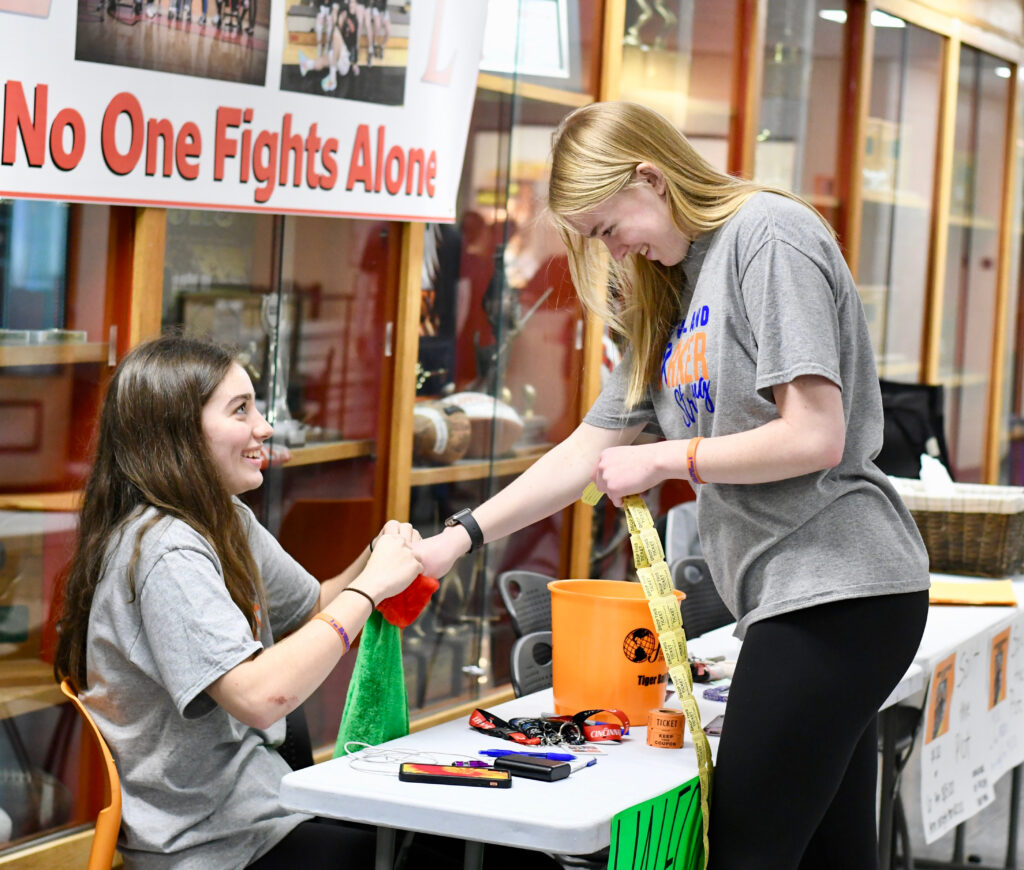
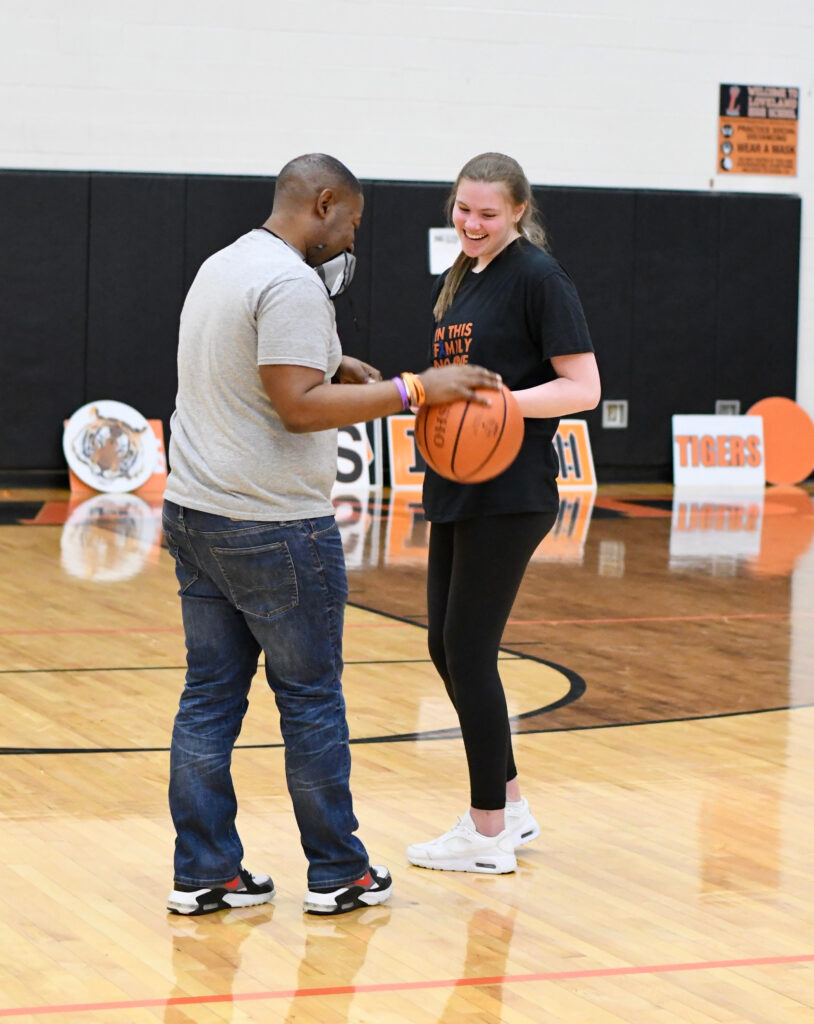
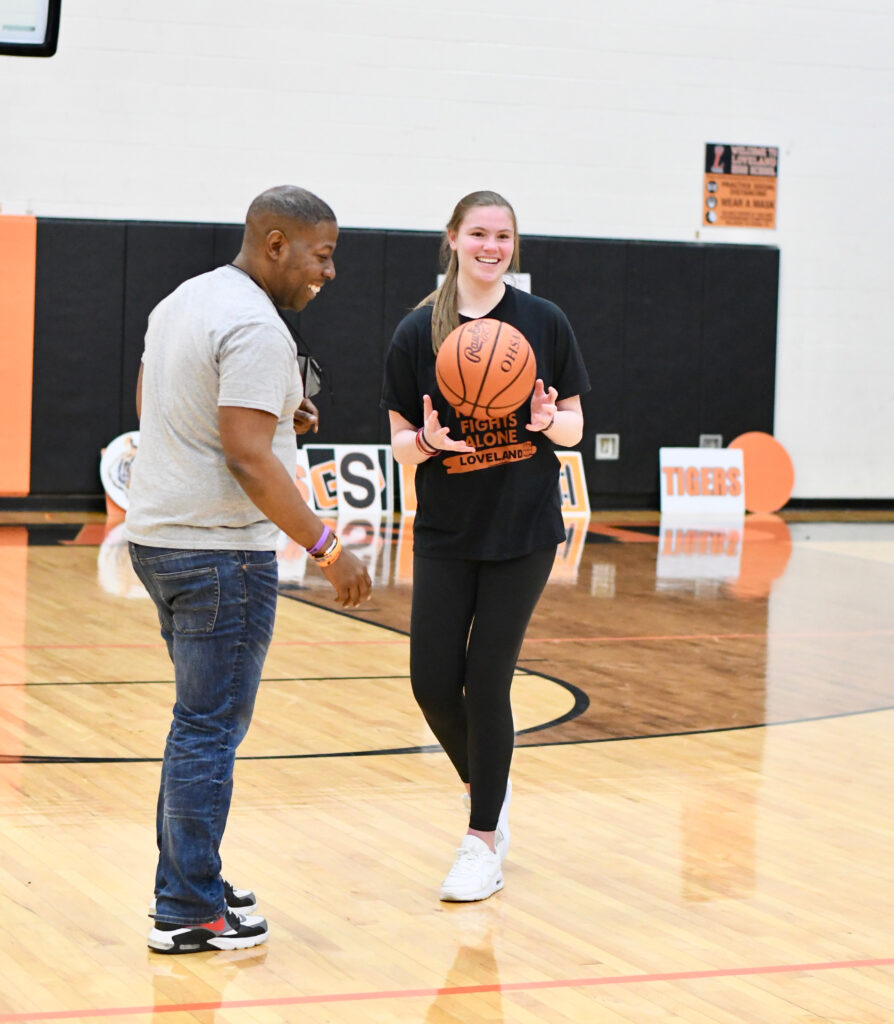
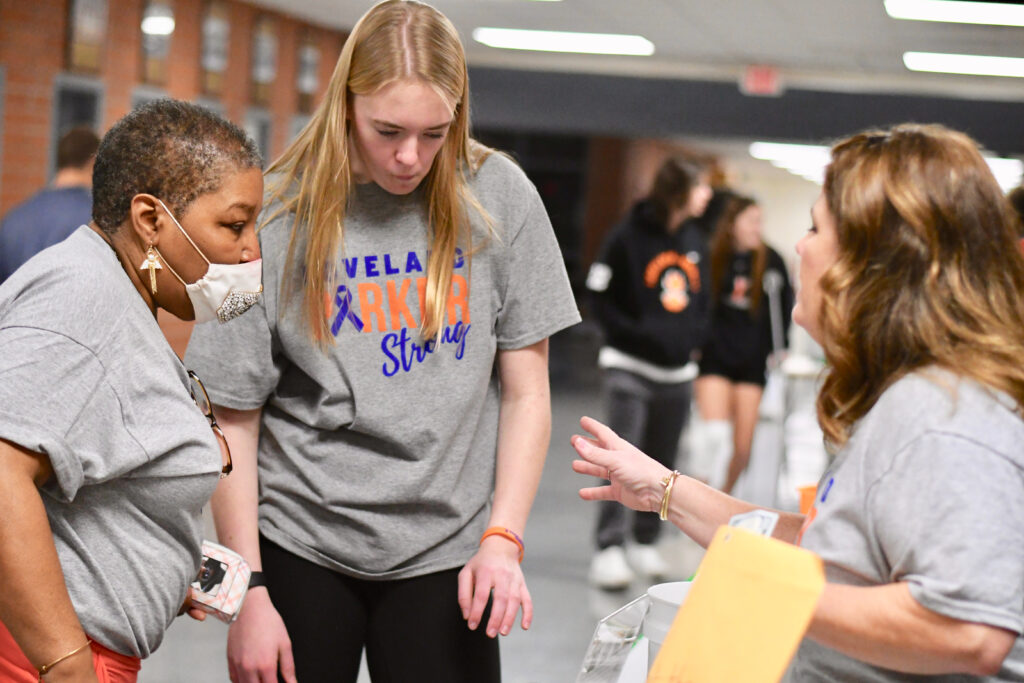
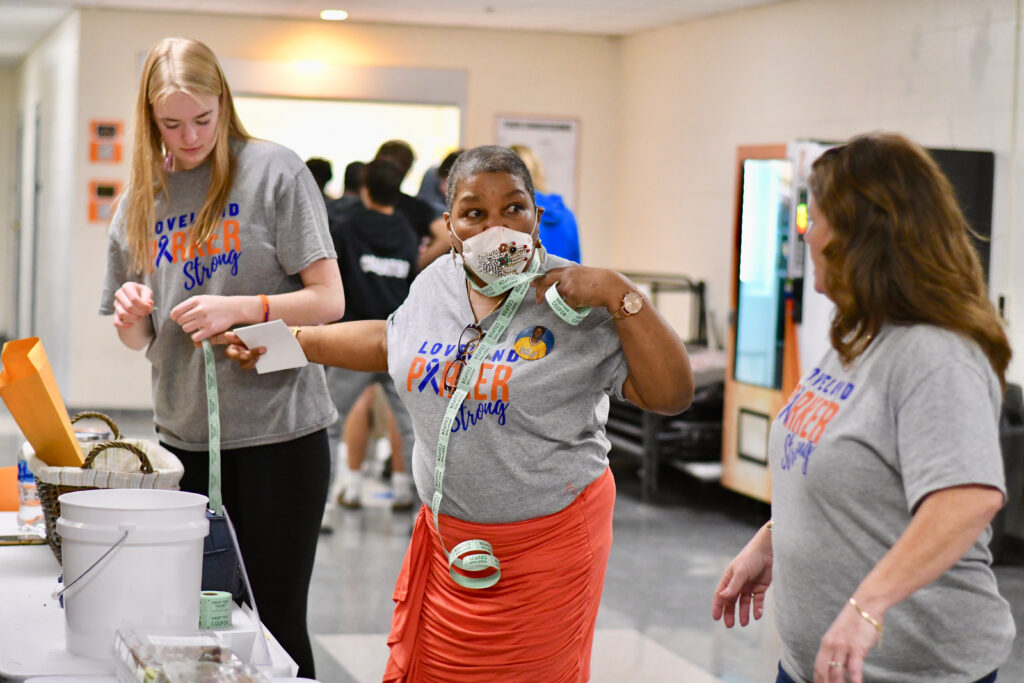
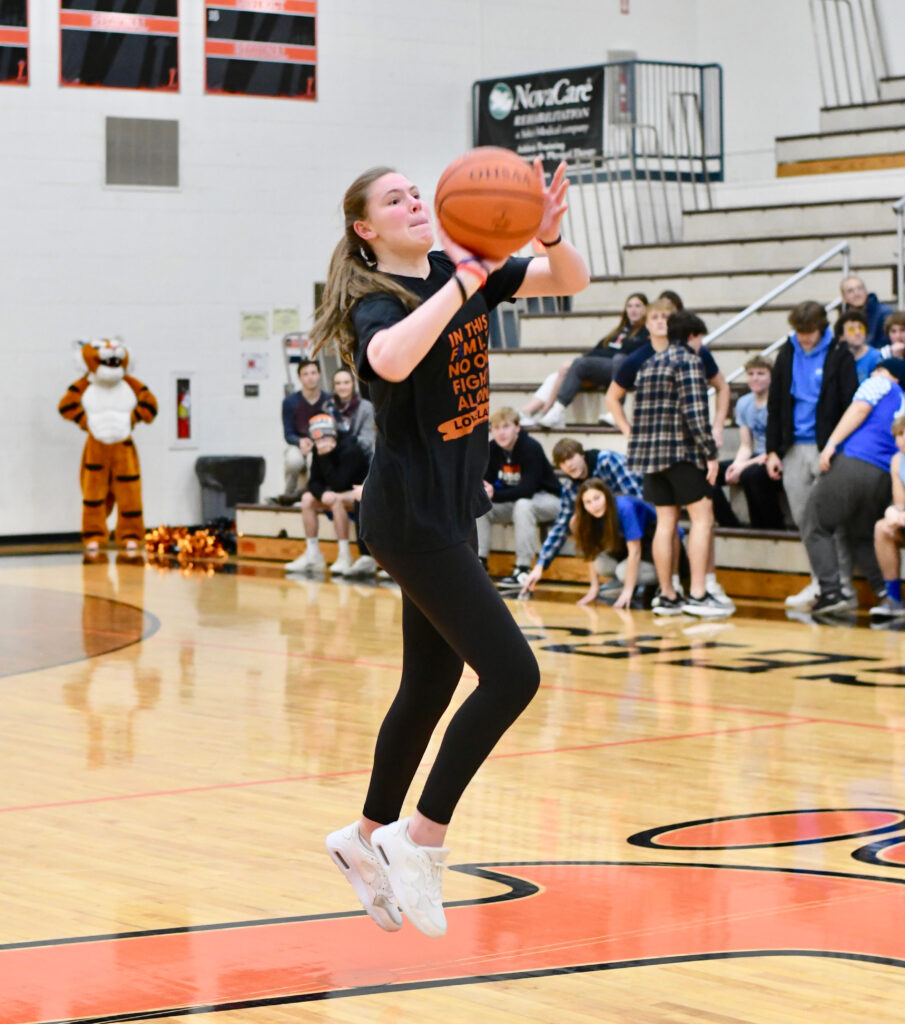
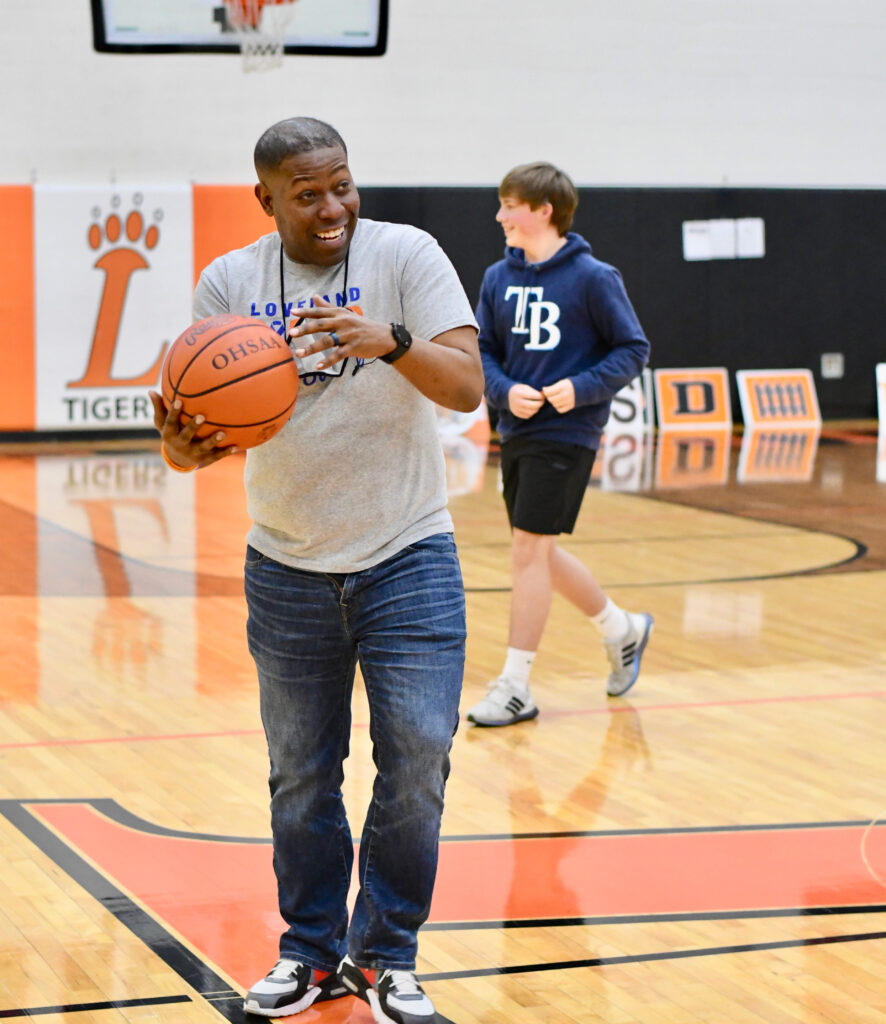
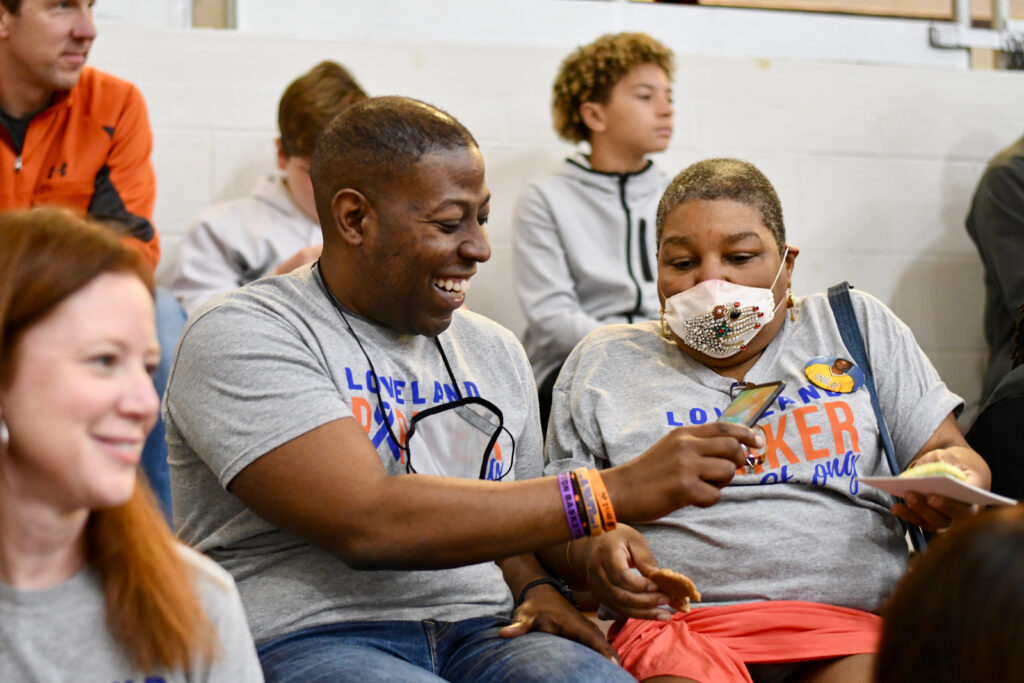
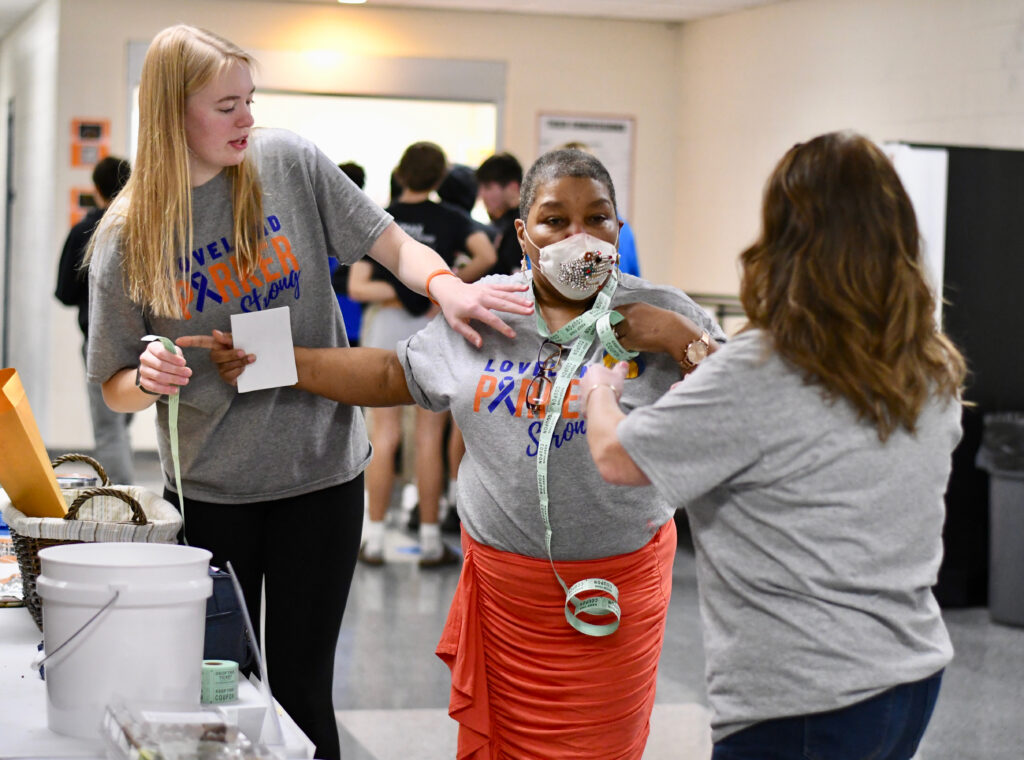
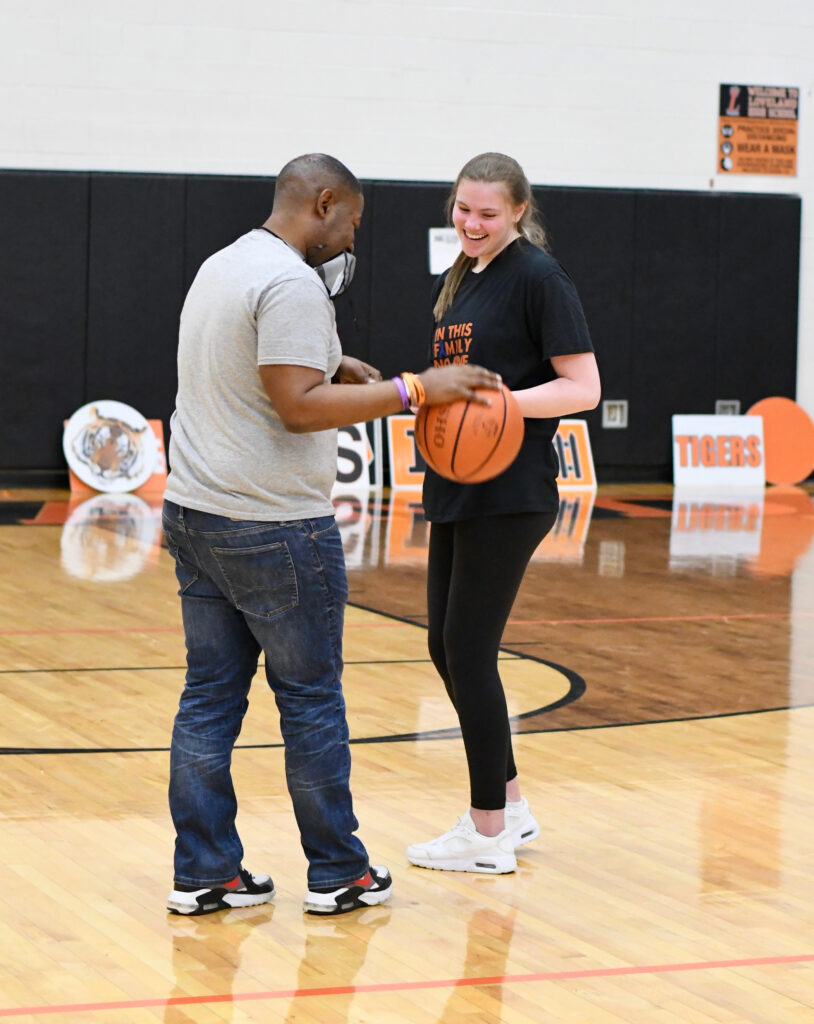
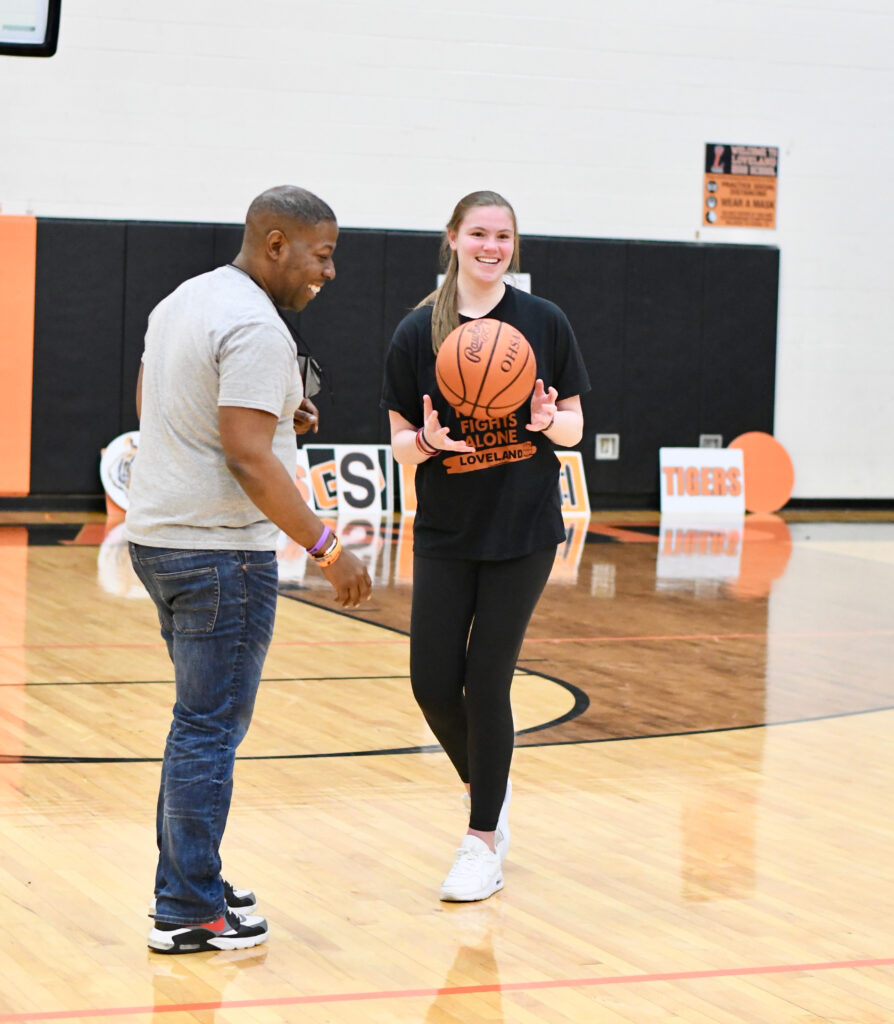
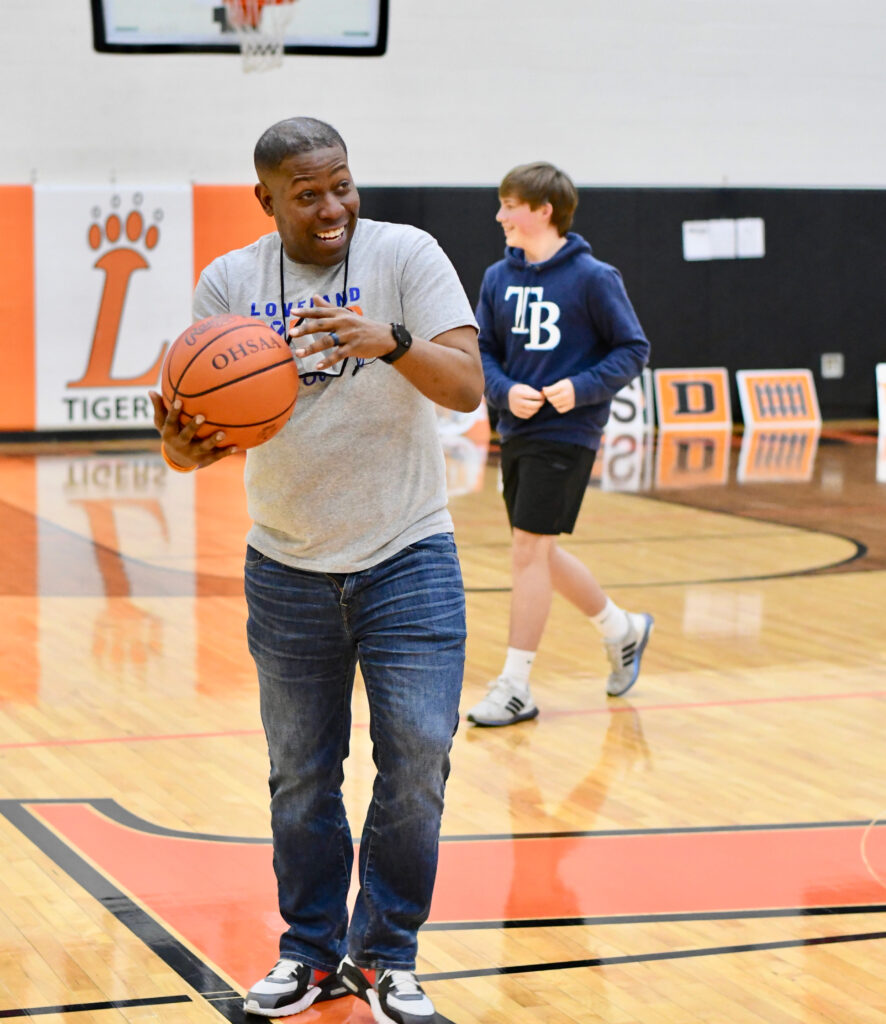
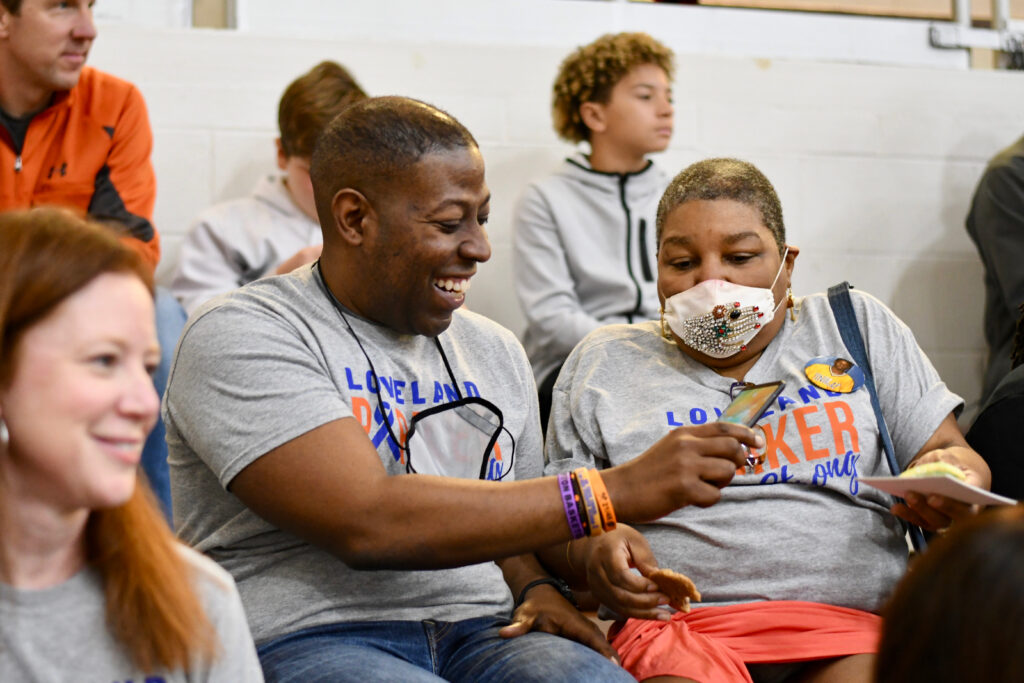
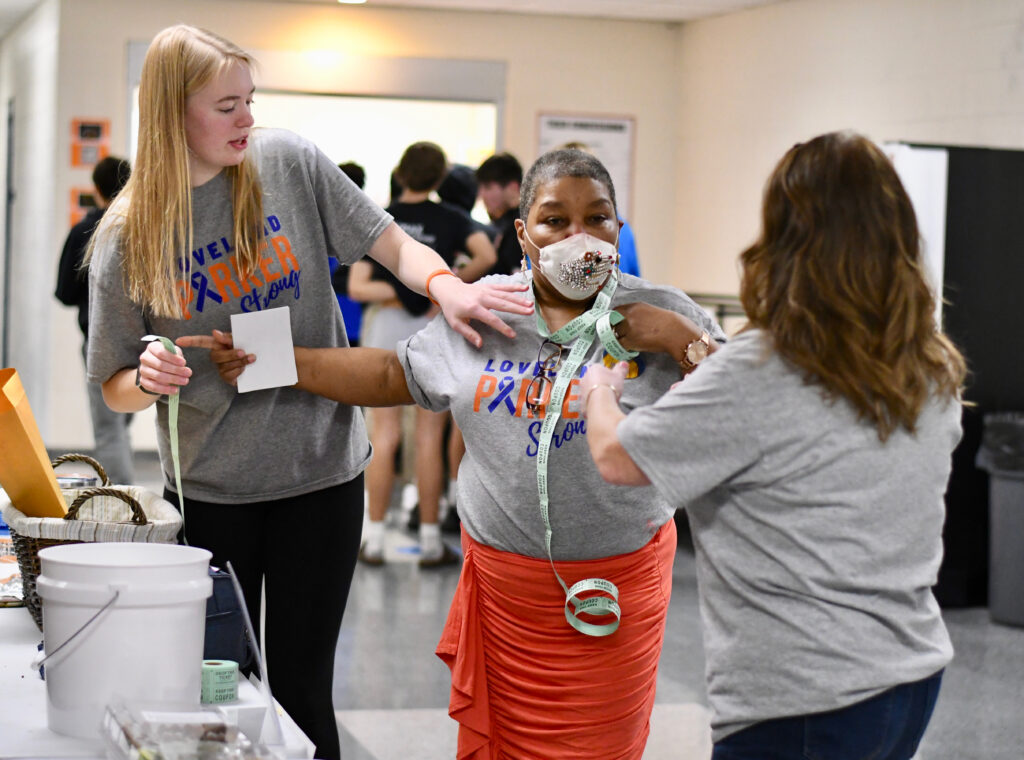
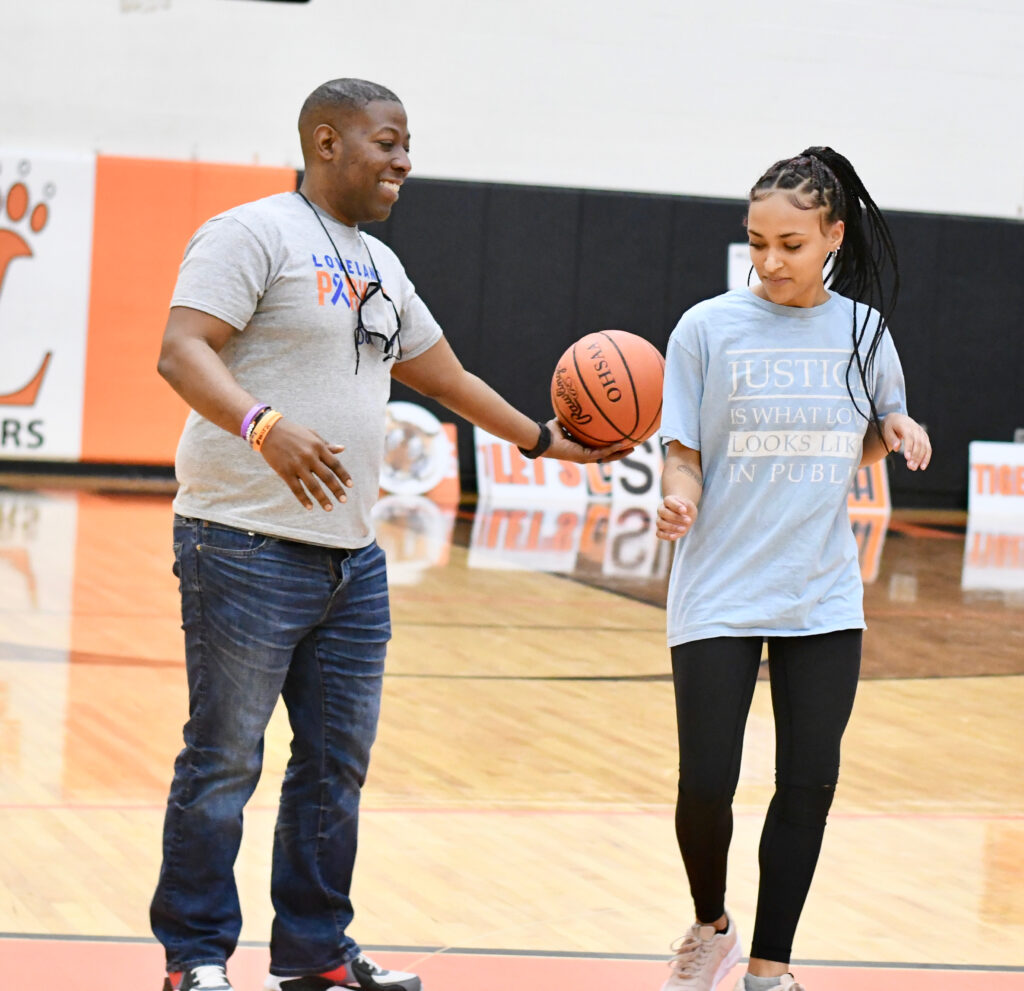
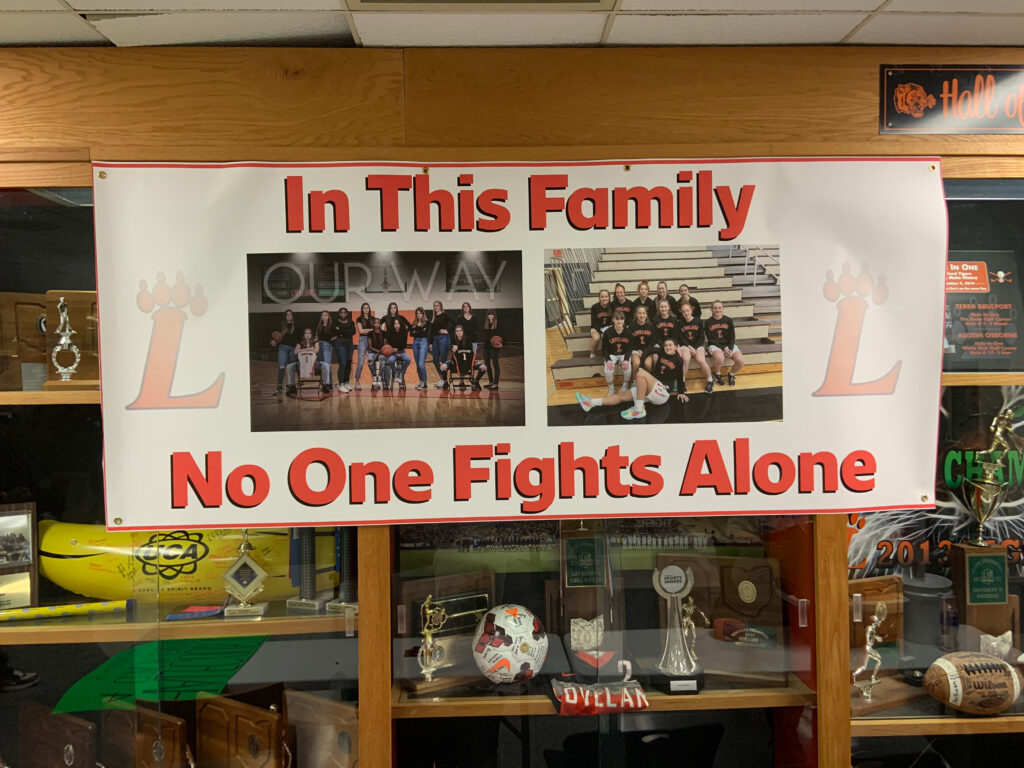
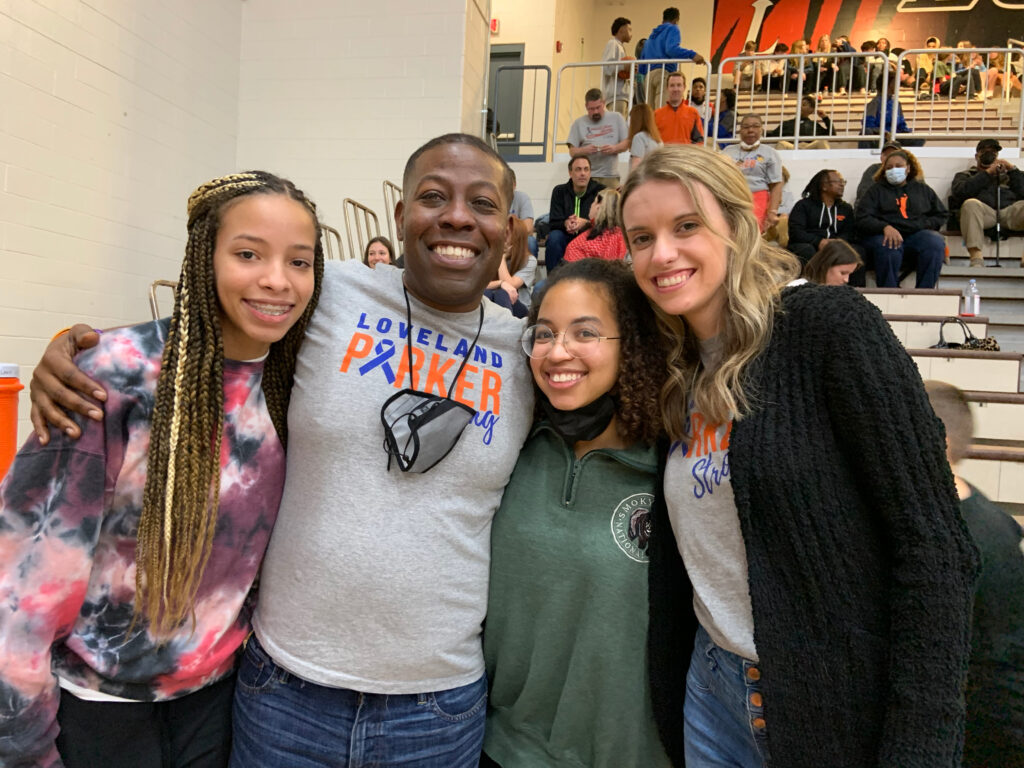
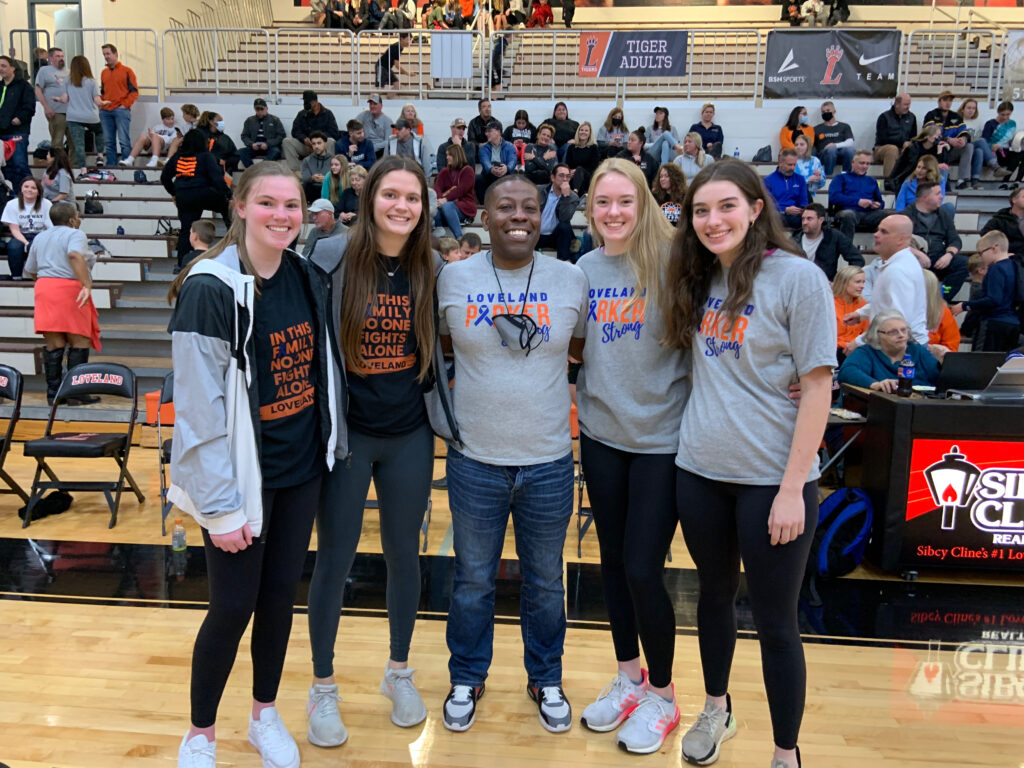
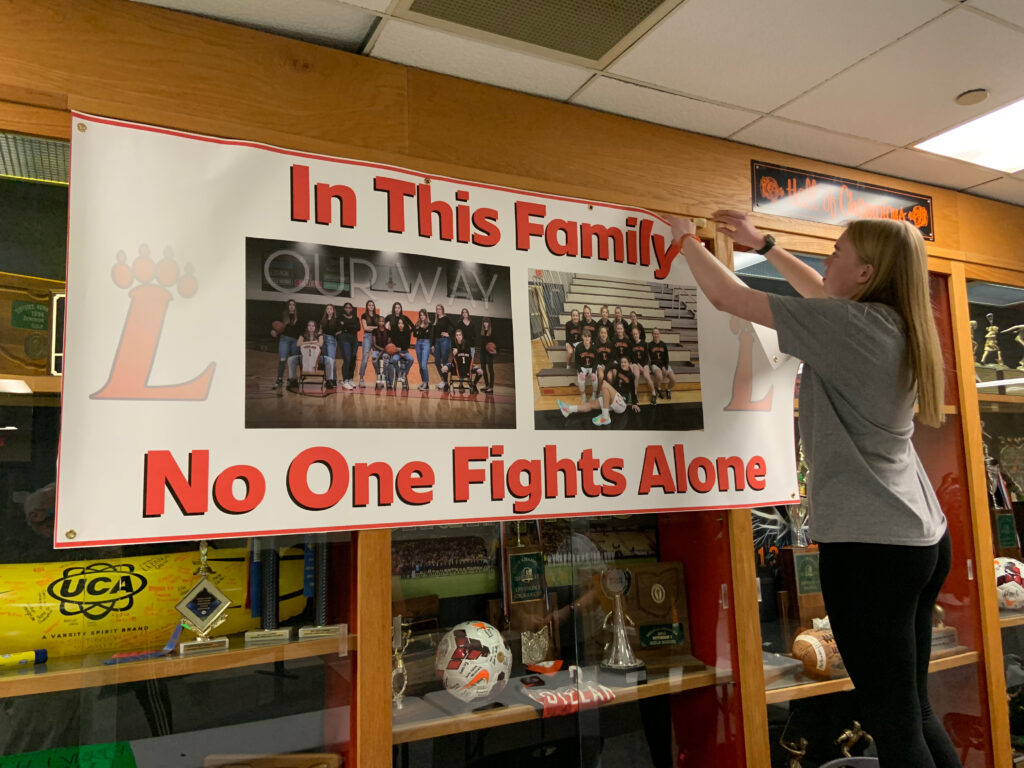
Loveland, Ohio– In this LOVELAND MAGAZINE TV video, you will get a feel for what it was like to be in the Loveland High School gym Friday night as Loveland Women’s Head Basketball Coach Darnell Parker received a community hug on the eve of his leaving for the Cleveland Clinic for cancer surgery.
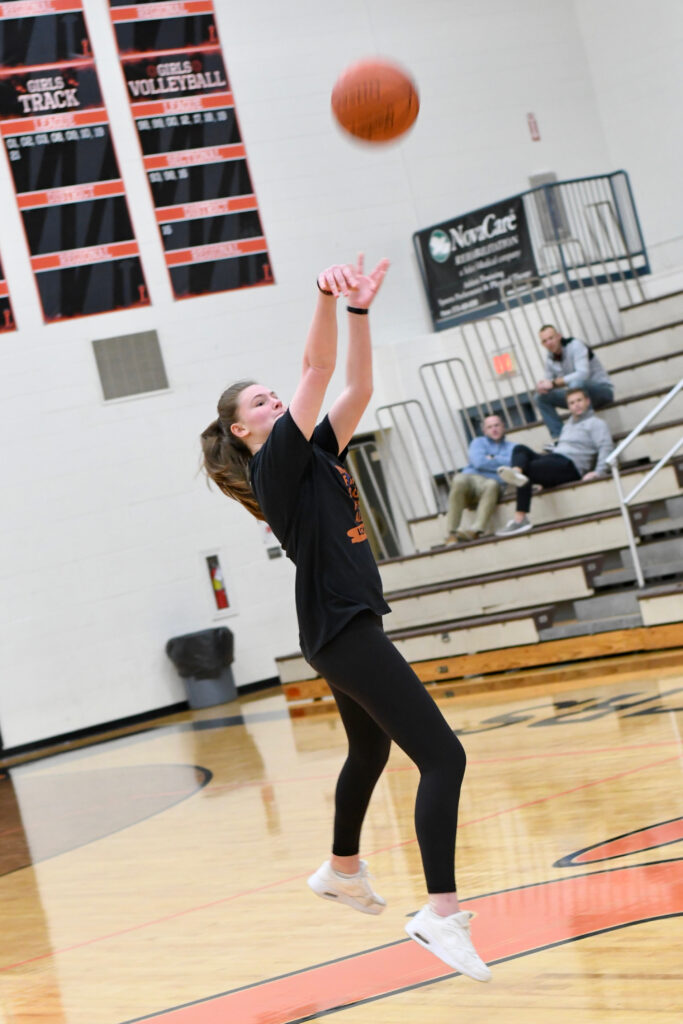
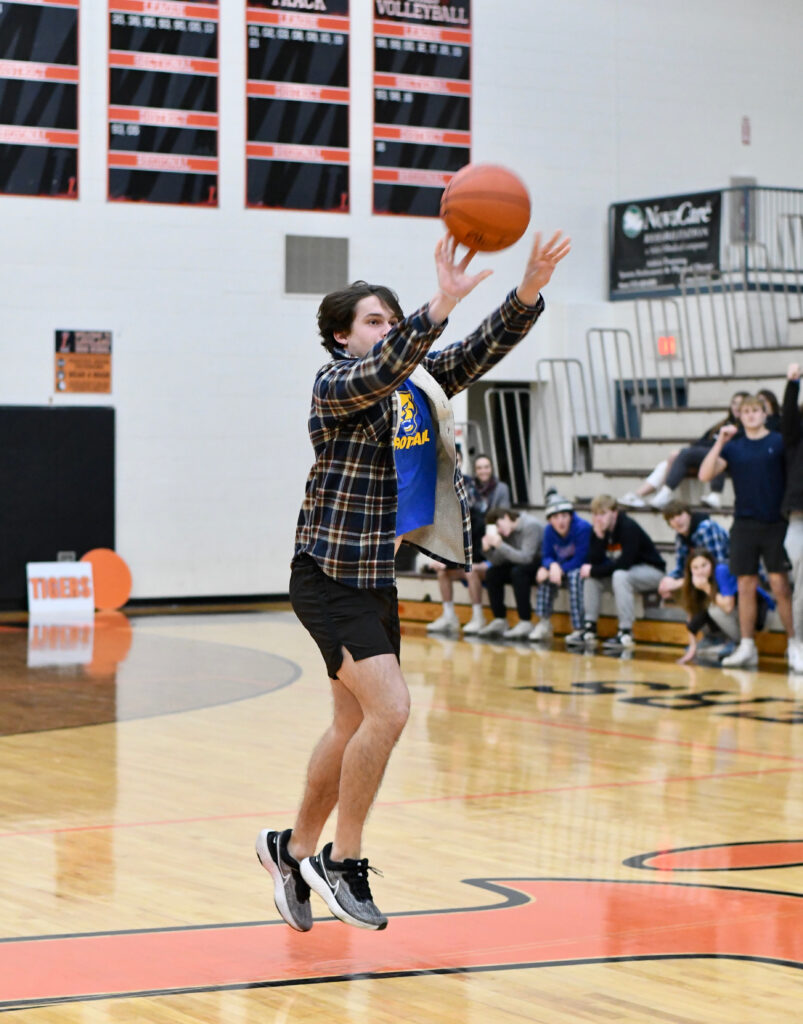
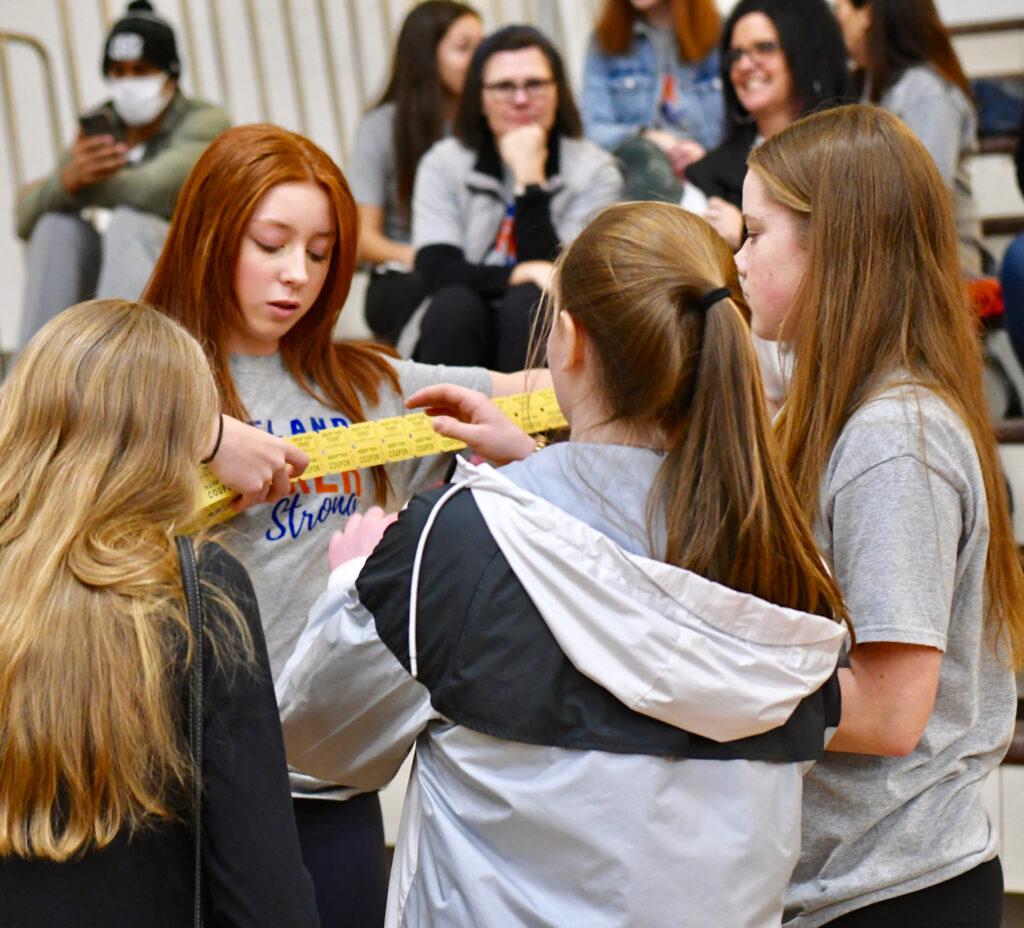
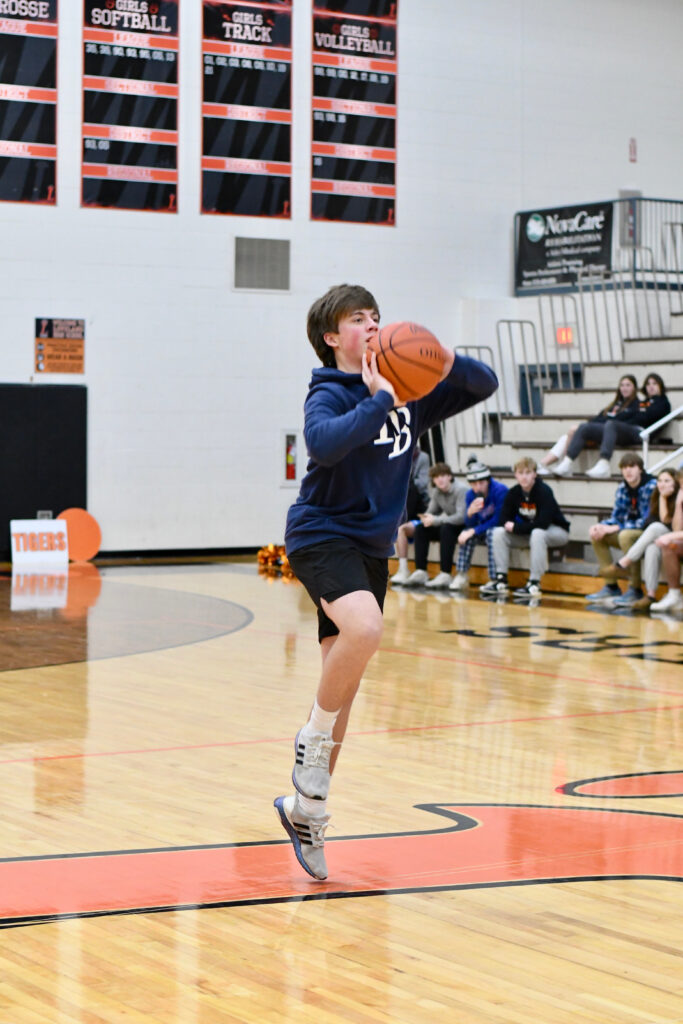
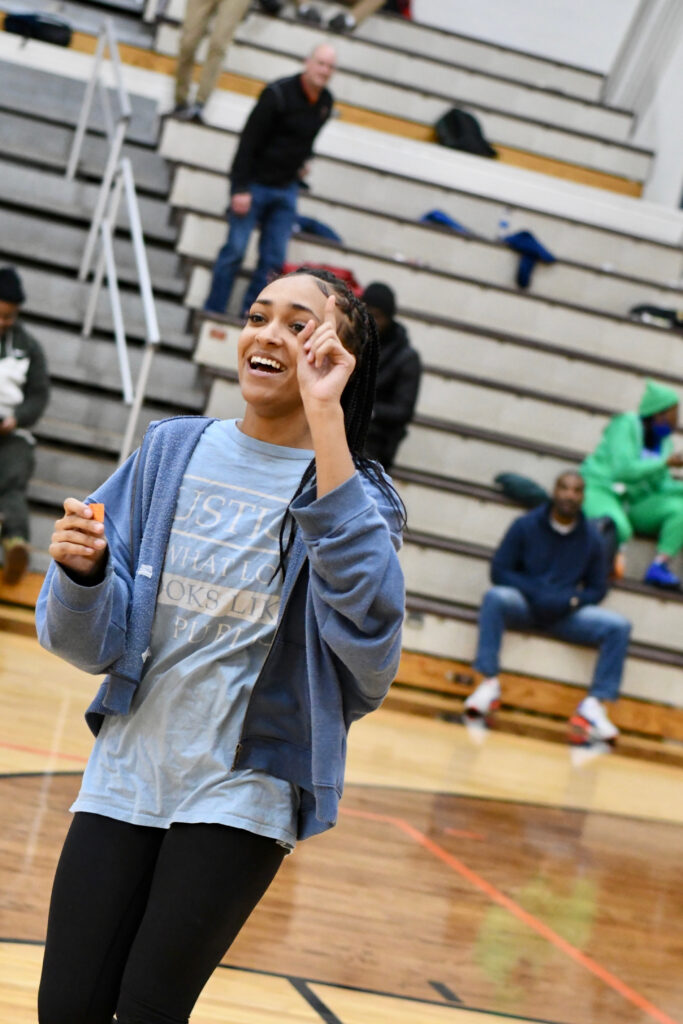
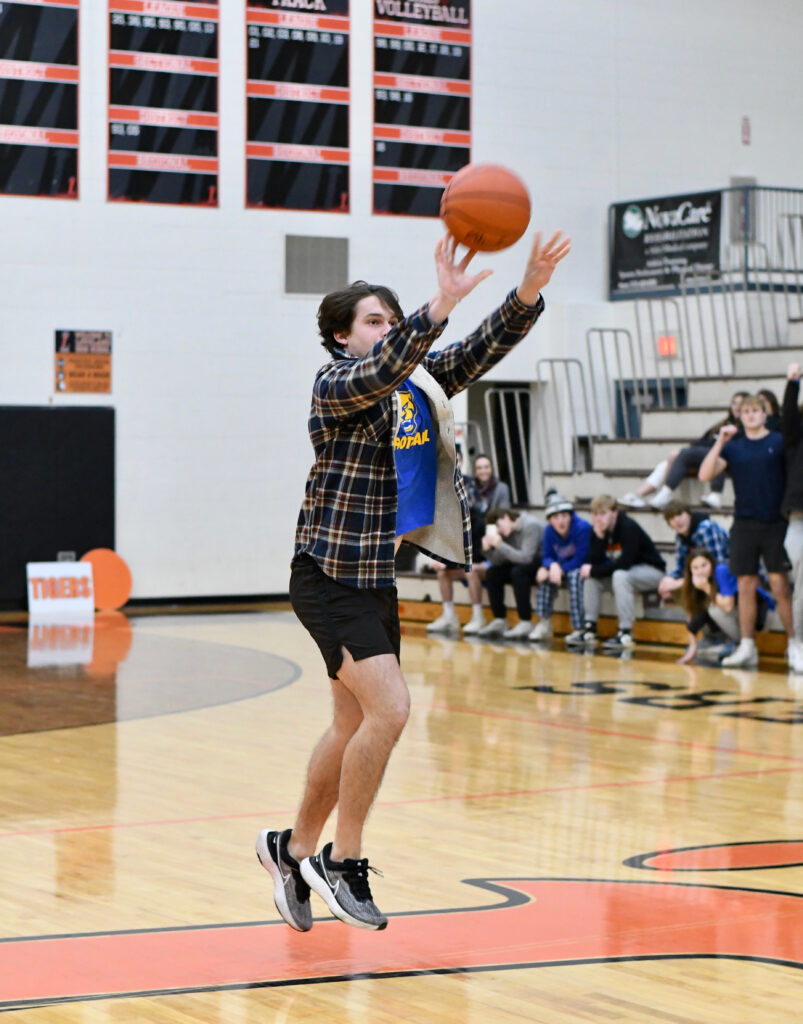
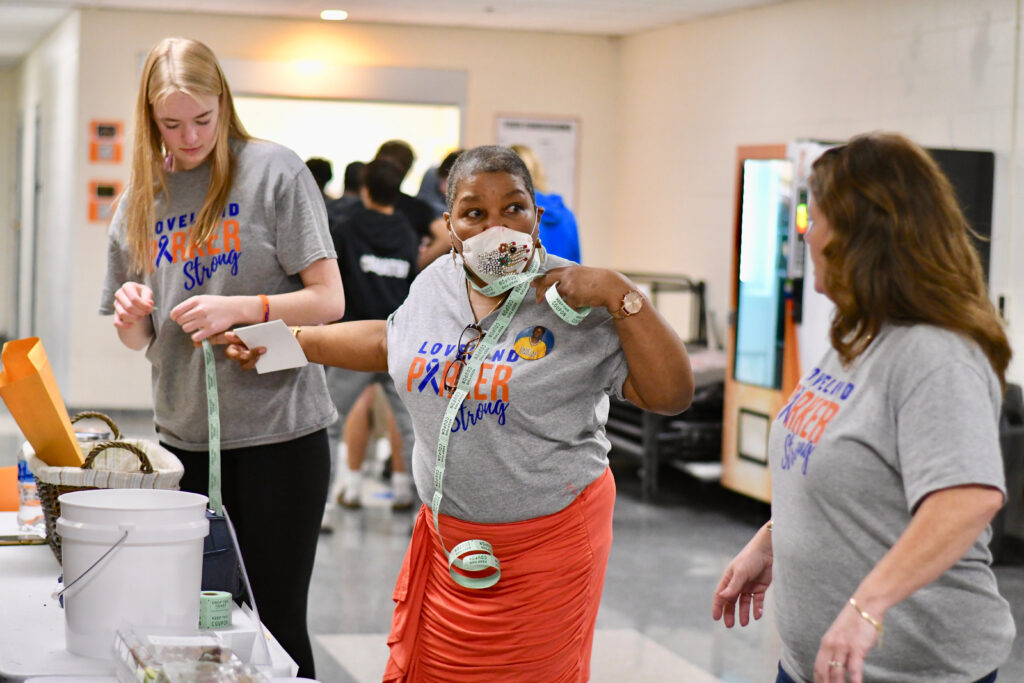
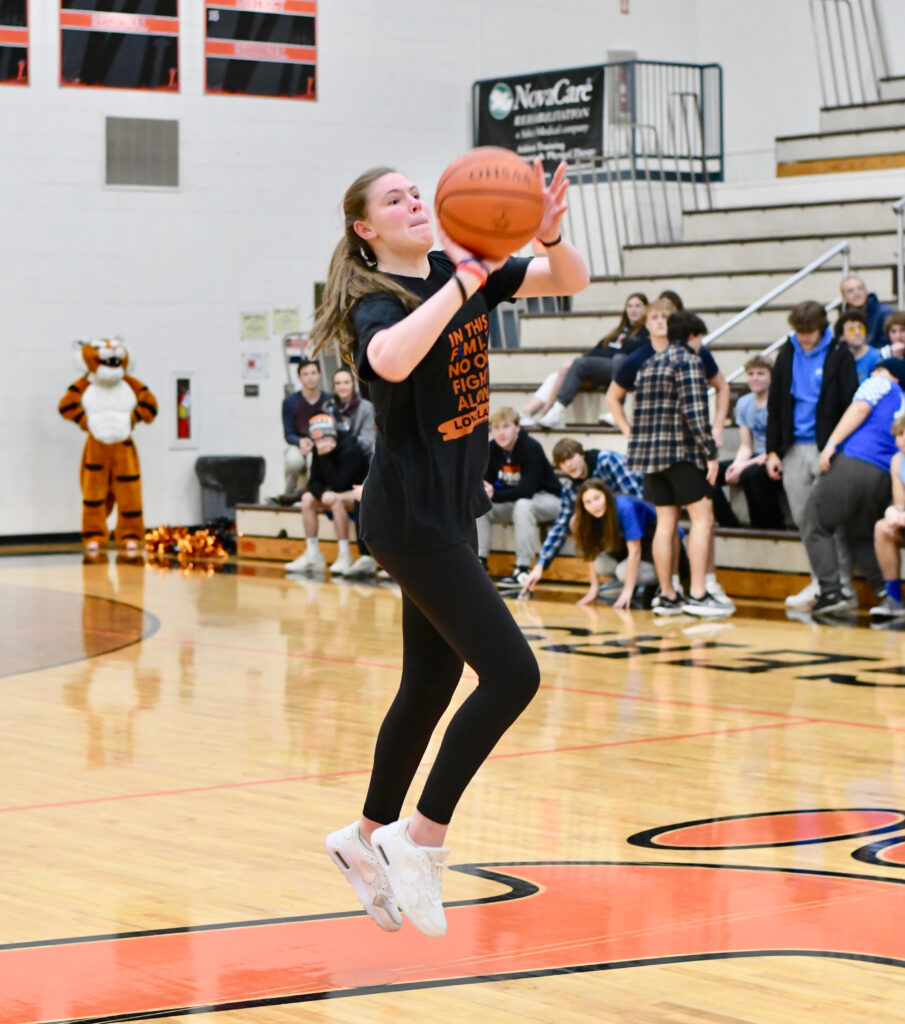
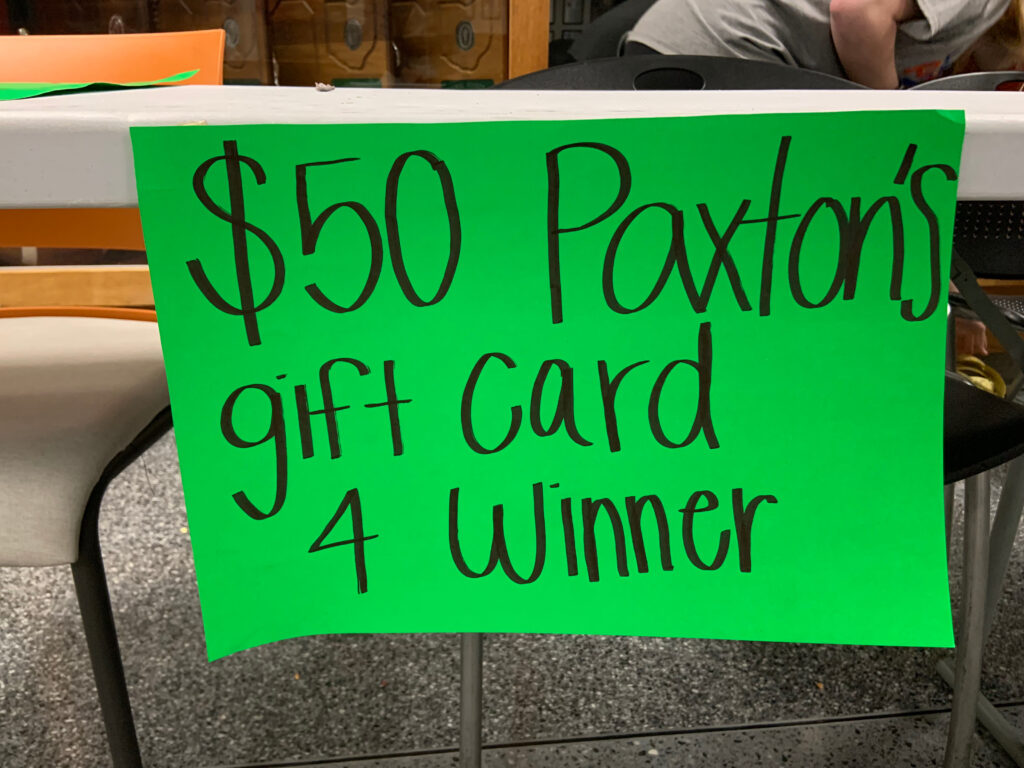
His team and their parents gave him an emotional sendoff as well as raised dollars to help pay his hospital bills with a split-the-pot raffle and half-court shots.
Coach Parker sends along his greetings and thanks in a brief interview and basketball mom Jessica Early talks about the evening’s event.
The popular coach will undergo surgery to remove cancer in both his Liver and Colon.
Couldn’t make it to the game… visit the GoFundMe page and give to this worthy cause so our beloved friend with his young family can afford the expenses of their journey to Cleveland and their cancer cure journey.
David Miller is the Publisher of Loveland Magazine
by David Miller
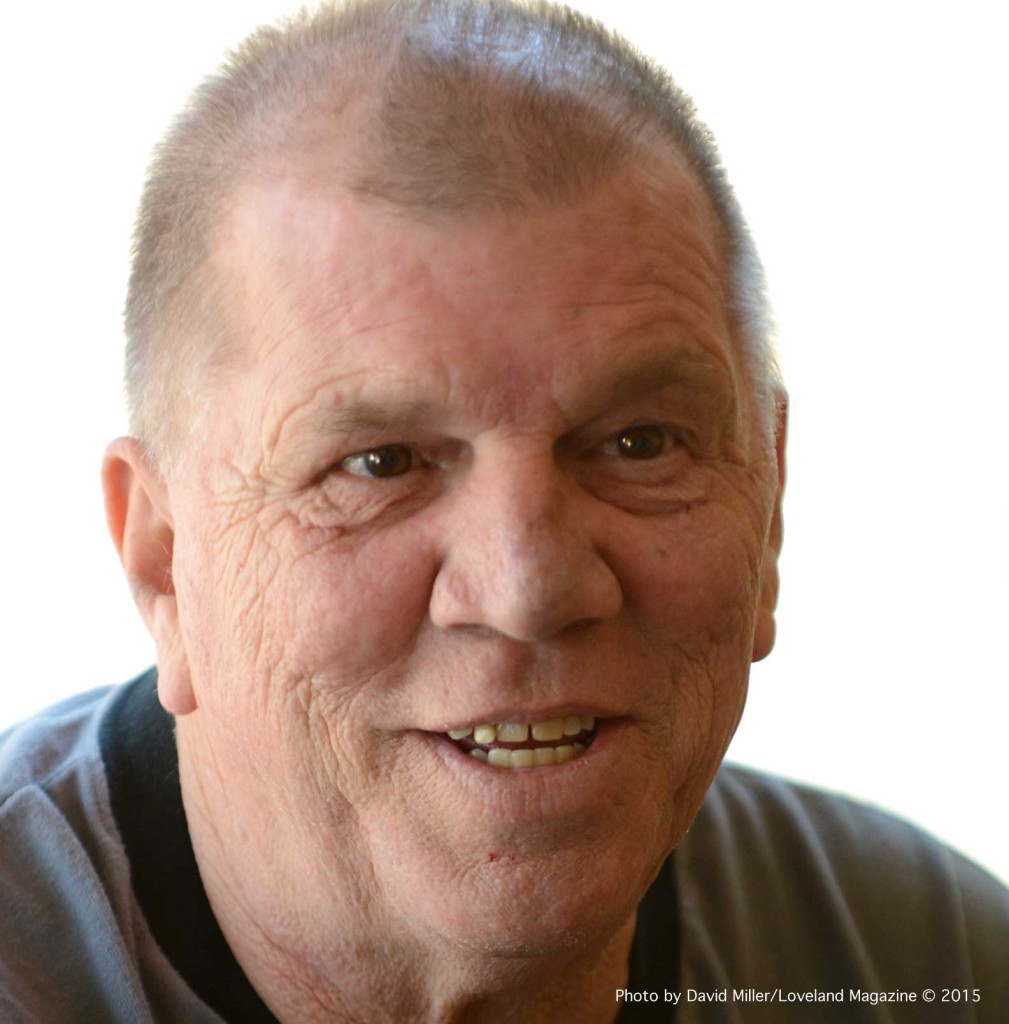
Loveland, Ohio – In a brief video interview this week, I asked Stan McCoy to tell viewers something I had heard him repeat many times over the years about his expectations for the Loveland students he taught and coached. He responded, “If you look in the mirror you can’t lie to yourself.” He explains further in the interview what his simple message is.
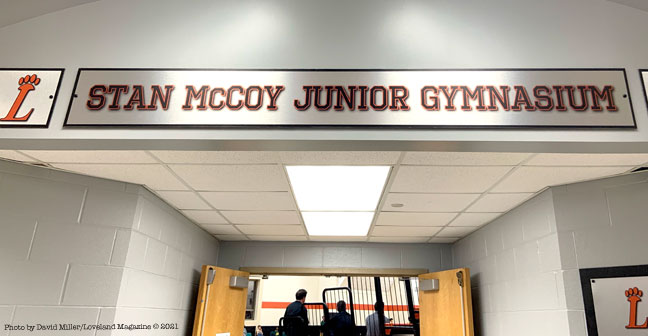
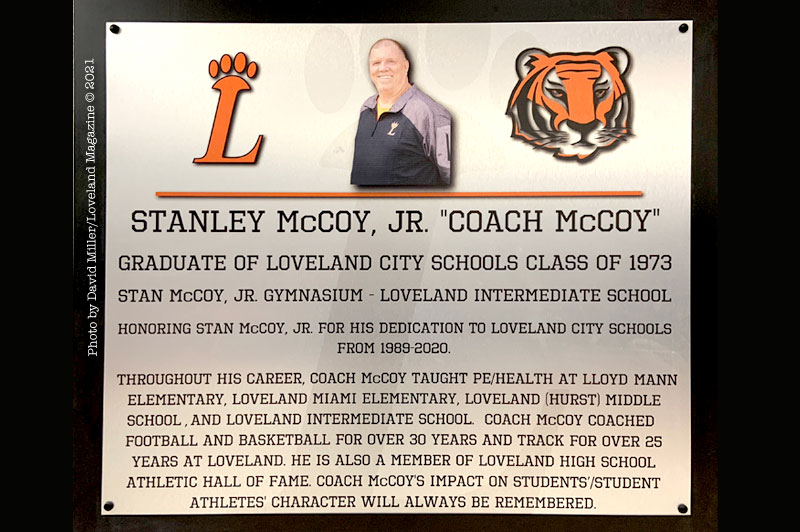
On Monday afternoon, December 13, the gymnasium at the Loveland Intermediate School (LIS) was named in honor of retired teacher and coach Stan McCoy Jr.
McCoy served the Loveland City Schools community for decades and the community came to the gym to cheer him on as he received this special honor.
It’s now the Stan McCoy Junior Gymnasium.
This approximately 5′ square sign is now outside the entrance to the Loveland Intermediate School Gym. A similar sign is down the hallway at the Loveland Middle School gym that honors Stan McCoy’s father, Stan McCoy Sr.
The Loveland City School District invited the community to a special event on Monday, December 13 at Loveland Intermediate School for a ceremony honoring McCoy Jr.
The naming ceremony took place between basketball games in the gym.
Barbara Orsinelli who taught physical education with Stan also speaks on camera about working with him for seventeen years. Cam Louder, now a student at Xavier University also appears on camera speaking about what Stan meant to him during his younger years attending Loveland schools.
The LIS Gym will carry the McCoy name, just as the Loveland Middle School Gym is named in honor of his father, the late Stan McCoy Sr.
McCoy is a graduate of Xavier University. He was a physical education teacher at Loveland Schools for nearly 30 years. He has coached eighth-grade football, seventh and eighth-grade basketball, and track and field. McCoy is part of a family that has Loveland Tiger pride extending back three generations.
Stan McCoy, Jr.
McCoy once held the Loveland basketball season and career record for the most assists in 1970 through 1973. He had quite a career playing Xavier basketball back in his college days. He was head coach, Tay Baker’s first recruit.
In December of 2020, McCoy received the Community Service Award from the City Recreation Commission that is named after his father. The “Stan McCoy Sr. Award” is presented annually, with the criteria that nominees be “persons of quality and integrity, who with love and enthusiasm for the Loveland area, have worked to sustain and improve the community.”
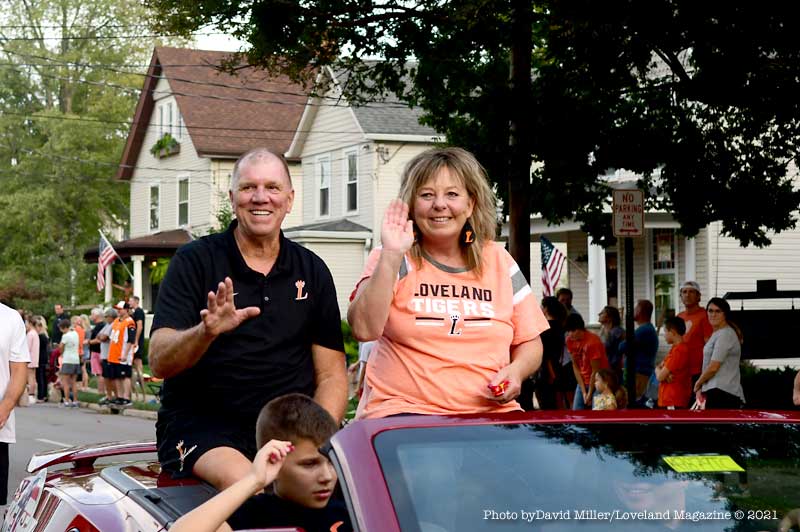
This past September, McCoy was the Grand Marshall of Loveland’s Homecoming Parade.
He grew up in Loveland with his mother and father and three athletic sisters. McCoy has told Loveland Magazine that he was inspired by his father Stan McCoy Sr, also a Loveland High School athlete who graduated in 1943, who later became a history and physical education teacher at Loveland High School, as well as the head football coach, athletic director, assistant principal, and assistant superintendent.
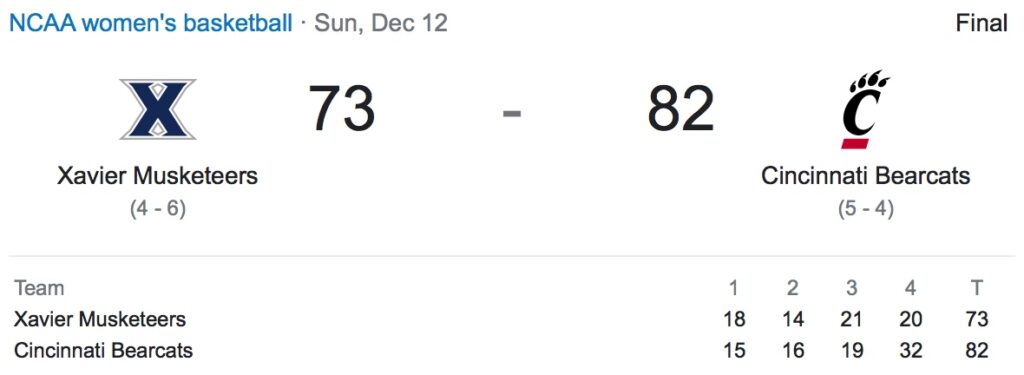
The UC Women’s Basketball team grabbed a huge victory on Saturday beating the Xavier Muskateers, 82-73, in the 2021 Skyline Chili Crosstown Shootout at Fifth Third Back Arena. This was the 43rd time Cincinnati and Xavier competed for the Kendle cup (the Crosstown Shootout trophy) making the Bearcats 26-17 in the rivalry series. Head Coach Michelle Clark-Heard is now 3-0 against Xavier since taking the head coach position. After the win on Saturday, UC is now 5-4 in the American Athletic Conference (AAC).
Former Loveland High School (LHS) stand-out student-athlete Jillian Hayes has not only helped the Bearcats grab some big wins already this year, but is also making a name for herself in the AAC and the world of women’s college basketball! Hayes’ senior year at LHS was one for the books as she averaged 18.3 points, 9.6 rebounds, 1.5 blocks, 2 assists, and 3.1 steals per game. With those stats, Hayes was named the 2019-2020 Eastern Cincinnati Conference Women’s Basketball Athlete of the Year, 1st Team All-ECC, and LHS’s All-Time Leading Scorer (1,412), and Leading Rebounder (778). She also led the Loveland Tigers to back-to-back ECC Titles and an OHSAA Sectional Title in 2020.
Hayes not only succeeded on the basketball court at LHS she also achieved top honors in the classroom receiving an Academic Pin for her G.P.A, and recognition for her leadership and sportsmanship earning her The Principal’s Award-Outstanding Female and the OHSAA Archie Griffin Sportsmanship Award.
Going into her Freshman season with the UC Bearcats Women’s Basketball Team, Hayes was selected as the No. 116 prospect in the 2020 class by the Collegiate Girls Basketball Report and was ranked as a 4-star recruit by Prospects Nation. Hayes definitely did not disappoint her Freshman year with the Bearcats despite the COVID-19 obstacles averaging 7.6 points, 5.3 rebounds, 2.7 assists, 1.4 steals, and 1.1 blocks earning her a spot on the AAC All-Freshman Team. Hayes not only had 20 starts her Freshman season she also placed 1st among the AAC Freshman class in blocks (1.1), 2nd in defensive rebounds (4.4), and 3rd in minutes played (32.3) and assists (2.7). Hayes led the Bearcats team in steals (34) and ranked 3rd in points (182), rebounds (126), and blocks (26).
Since graduating from LHS, Hayes has had a couple of big goals in mind one being to make it to the NCAA Tournament. Thus far in her sophomore season as a team captain, she has made it very clear as to what her personal and team goals are as she has already put up double digits in points in 4 games this season. Check out Hayes’ top games thus far in her sophomore season!
December 1st against Central Michigan (Win 59-54) – 23 points, 5 rebounds, 9/15 FG
November 27th against OSU (Loss 50-86) 16 points, 5 rebounds, 1 block, and 1 steal
November 16th against Ohio Win 62-73, 17 points, 5 rebounds, 2 blocks, and 2 steals
November 10th against Alabama A&M Win 73-60, 17 points, 9 rebounds, 2 blocks, and 2 steals
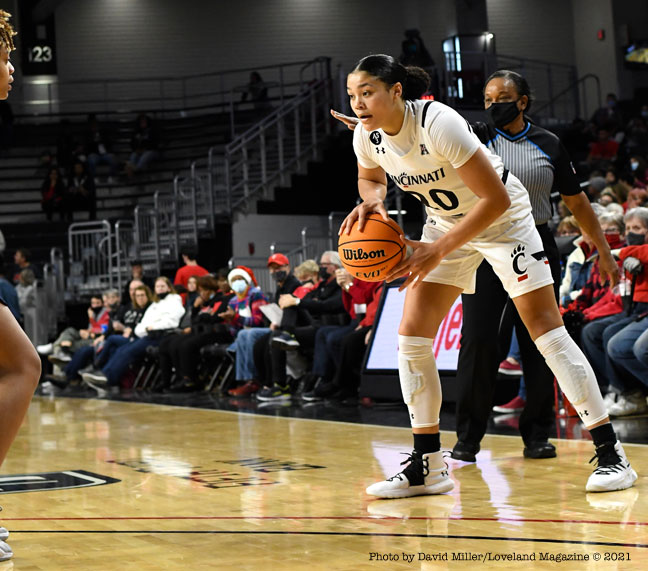
Here at Loveland Magazine we love celebrating the successes of former LHS graduates, so we decided to take a trip down to Cincinnati to watch Hayes compete in the 2021 Skyline Chili Crosstown Shootout. Wow were we impressed with Hayes’s ability to be a leader and produce stats that led the Bearcats to an 82-73 victory!
Hayes ended the game with 9 points, 7 rebounds, 3 steals, and 4 assists, most of the stats coming in the final 4 minutes of the game, as she said, “I knew I had to turn it on and produce to get us a win!” At the half, Xavier was up 32-31, due mostly to the Bearcats 14 turnovers and 32.4 Field Goal percentage. Xavier also outrebounded the Bearcats 27-18.
Once the 2nd half of the Crosstown Shootout began Hayes and the Bearcats began to outperform Xavier. In the 4th quarter alone Cincinnati outscored Xavier, 32-20, and made 60% of their shots raising their total field goal percentage for the game to 42.4%! Cincinnati’s bench also stepped it up towards the end of the game accumulating 43 points compared to Xavier’s 9 points.
Securing the Kendle Cup wasn’t the only milestone for the Bearcats as they also had their highest-scoring game of the season, tied their season-best for 3-point shots made (6), and had 4 Bearcats for the 2nd time this season score in the double digits. Hayes said she hopes this momentum continues right into the NCAA tournament, which has been a goal of hers since she committed to playing basketball at Cincinnati.
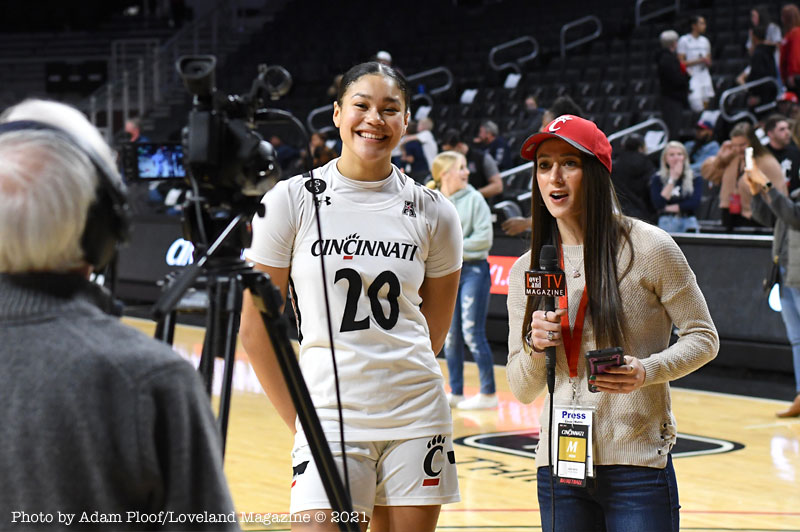
After the Bearcats claimed the Kendle Cup once again, Loveland Magazine TV got the opportunity to interview Jillian Hayes post-game to talk about the victory, her role as a team captain, and what she believes UC will achieve this season! So without further ado, we bring to you several exclusive Crosstown Shootout videos and a one-on-one interview with UC Bearcat Sophomore Jillian Hayes!
In September, Stan McCoy, Jr. was the Grand Marshall of Loveland’s Homecoming Parade.
Loveland, Ohio – The Loveland City School District has invited the community to a special event on Monday, December 13 at Loveland Intermediate School for a ceremony honoring retired teacher and coach Stan McCoy Jr.
During the ceremony, the Loveland Intermediate School (LIS) gymnasium will be named in his honor.
McCoy served the Loveland City Schools community for decades and the community is welcome to cheer him on as he receives this special honor.
The naming ceremony will take place between basketball games, in the LIS gym on Monday around 5:45 PM.
Stan McCoy, Jr.
The LIS Gym will carry the McCoy name, just as the Loveland Middle School Gym is named in honor of his father, the late Stan McCoy Sr.
McCoy is a graduate of Xavier University. He was a physical education teacher at Loveland Schools for nearly 30 years. He has coached eighth grade football, seventh and eighth-grade basketball, and track and field. McCoy is part of a family that has Loveland Tiger pride extending back three generations.
McCoy once held the Loveland basketball season and career record for the most assists in 1970 through 1973. He had quite a career playing Xavier basketball back in his college days. He was head coach, Tay Baker’s first recruit.
In December of 2020 McCoy received the Community Service Award from the City Recreation Commission that is named after his father. The “Stan McCoy Sr. Award” is presented annually, with the criteria that nominees be “persons of quality and integrity, who with love and enthusiasm for the Loveland area, have worked to sustain and improve the community.”
In September, McCoy was the Grand Marshall of Loveland’s Homecoming Parade.
He grew up in Loveland with his mother and father and three athletic sisters. McCoy has told Loveland Magazine that he was inspired by his father Stan McCoy Sr, also a Loveland High School athlete who graduated in 1943, who later became a history and physical education teacher at Loveland High School, as well as the head football coach, athletic director, assistant principal, and assistant superintendent.
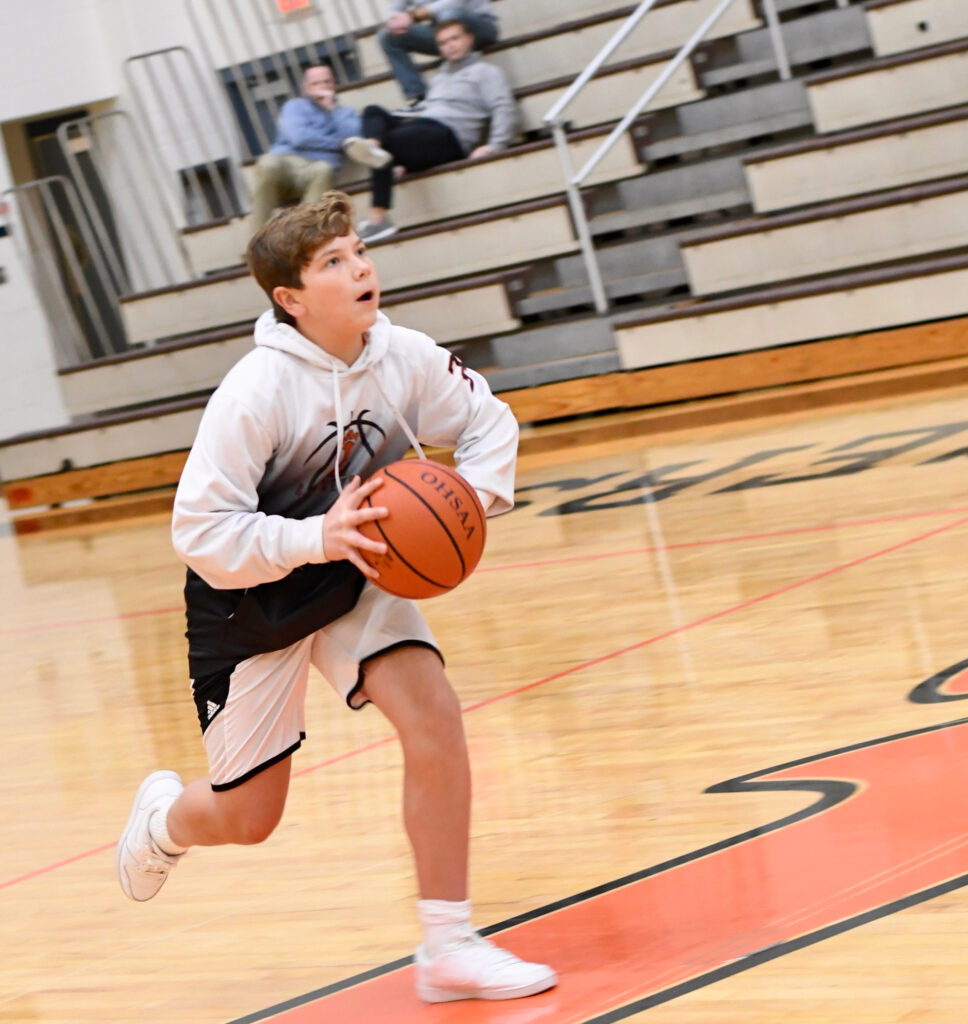
Loveland, Ohio – The Loveland High School Women’s and Men’s varsity basketball teams are into their 2nd and 3rd weeks of their season.
The Women are currently 3-2 (3-1) and host Winton Woods 5-1 (3-1) tonight at 7:30 in their Chuck Schmidt Gymnasium. Josie Early is the Tiger’s leading scorer averaging 10.4 points/game followed by Olivia Raby with a 9.6 average. The women are fresh off three last-minute victories – Kings in overtime 47-46, West Clermont 33-30, and last Saturday, Walnut Hills 39-36.
The Men 3-1 (1-1) traveled to Kings last night and brought home a 68-60 victory provided by the hot 3-pt shooting of Jack Sauer who shot 6 for 7 from behind the arc, and Ben Kirlin who was 4 for 7. Sauer finished with 19, followed by Dylan Schwinn with 18, and Kirlin with 15. They play next this Friday at home against West Clermont 0-1 (0-1).
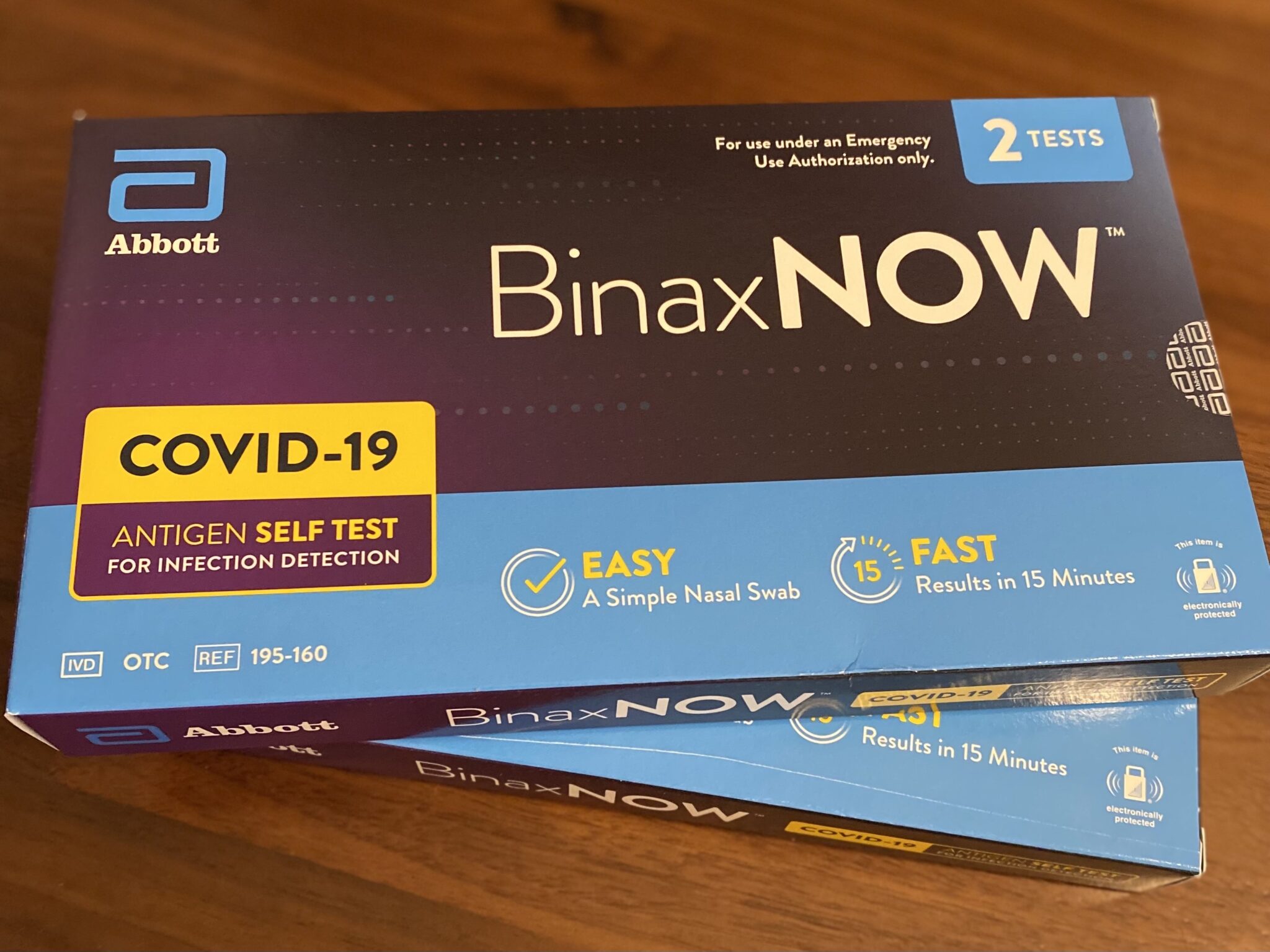
An at-home COVID-19 test kit. Photo by Laura Olson, States Newsroom.
Washington, D.C. – State health officials on Thursday welcomed the Biden administration’s plan to require private health insurers to reimburse Americans for the cost of rapid, at-home COVID-19 tests — though the officials also raised questions about whether the process will be burdensome.
Making those tests more accessible will allow Americans to get results quickly and in the privacy of their own homes. That change may encourage more people to swab their nose when they first notice potential symptoms, experts from the Association of State and Territorial Health Officials told reporters.
“In this next phase of the pandemic, rapid access to rapid testing will be key,” said Dr. Nirav Shah, director of Maine’s Centers for Disease Control and Prevention, adding that it can help to combat potential surges and to pinpoint infections quickly so antiviral treatments can be used.
But several challenges could limit the impact of the cost reduction.
That includes lingering problems with sufficient supplies, uncertainty about the details of the reimbursement process, and questions about any potential effect on the data that’s reaching state and local health departments about infections in their communities.
Official guidance in January
Under the proposal that President Joe Biden announced Thursday, three federal departments — Health and Human Services, Labor and the Treasury — will issue official guidance by Jan. 15 that will detail what exactly private insurers must cover when it comes to rapid COVID-19 tests.
Those insurers already are required to pay for the PCR tests that must be sent to a laboratory for processing and take longer for results.
The upcoming change requiring insurance coverage of rapid, at-home tests, won’t be retroactive. That means Americans who have been shelling out roughly $25 for a package containing two of the popular Abbott BinaxNOW rapid tests can’t submit receipts for tests they’ve already purchased.
Other details of that requirement were unclear Thursday, including if there will be any limitations on the number of at-home tests that must be covered.
While the Biden administration has sought to reduce supply bottlenecks in producing those tests, Shah said some states are still having difficulty acquiring large volumes of the Abbott at-home tests.
That brand, which has been found to be highly accurate, has been relied on heavily even as more options have come on the market. Part of that demand comes from familiarity: Those administering tests in large settings have become familiar with their use.
What if you test positive?
Another challenge with increasing the use of at-home tests will be ensuring that individuals know what to do if they test positive.
Michael Fraser, ASTHO’s chief executive officer, said state health officials have been discussing whether those at-home tests should include an insert to help explain who to call and other next steps, so that contact tracing can occur.
“There is some concern that with the increase in at-home testing, getting those results reported to state health departments might be difficult, because the result doesn’t automatically go to public health authorities,” Fraser said.
However, there won’t be many results to get to state and local health officials if Americans with private insurance balk at fronting the money for tests while they await reimbursement.
Shah said a more accessible model would be to have individuals show their insurance card at a pharmacy as they would when getting a flu shot or picking up a prescription, rather than being charged at the register.
Having to pay for the tests, then wait for repayment, “introduces an access challenge for a lot of folks,” he said.
The Biden administration also plans to boost the number of free at-home tests distributed at community health centers and rural clinics, though those are intended to aid those who are not covered by private insurance.
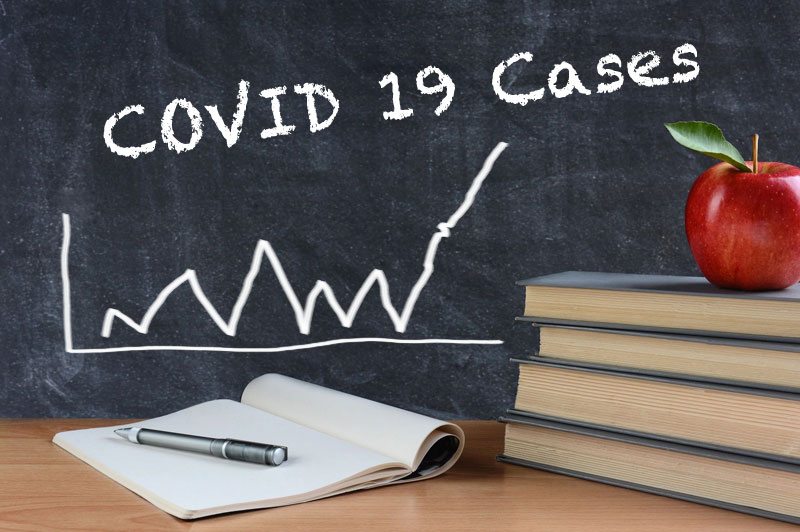
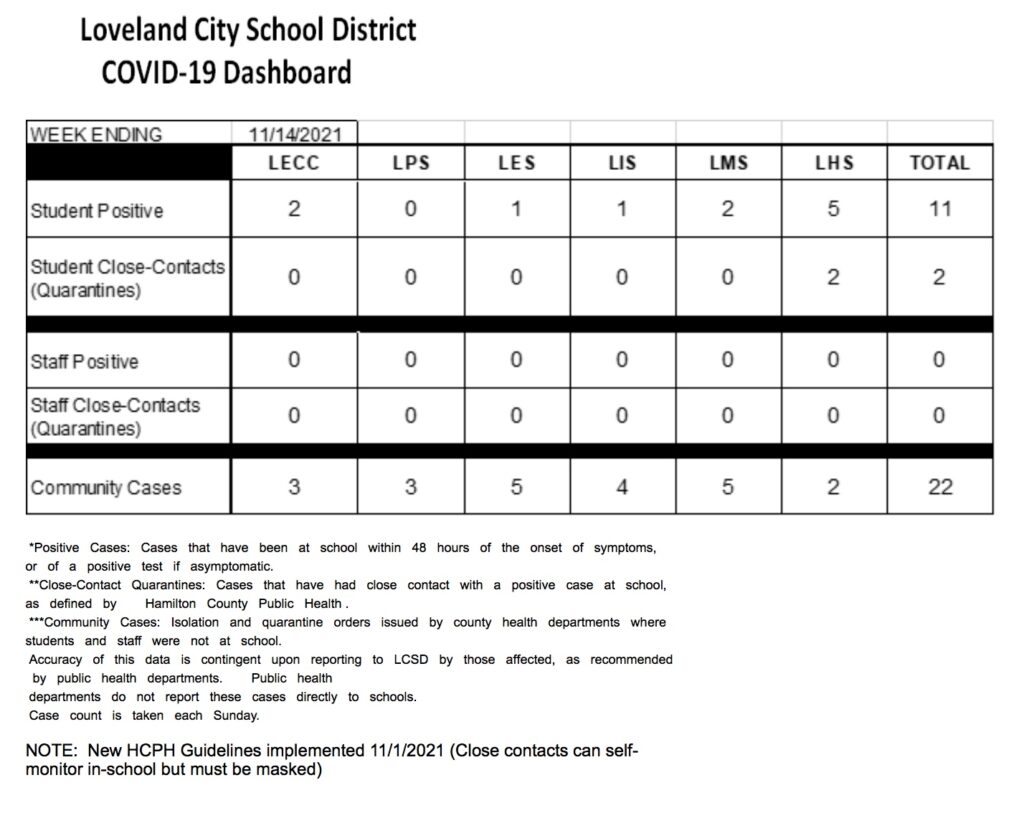
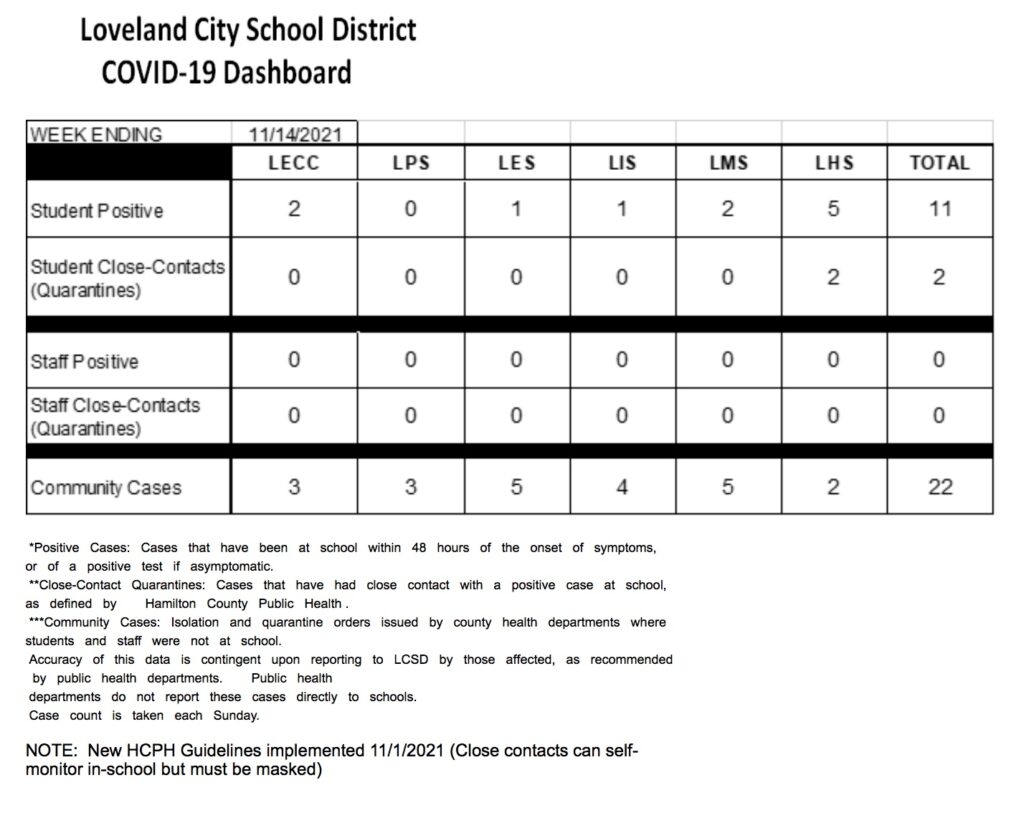
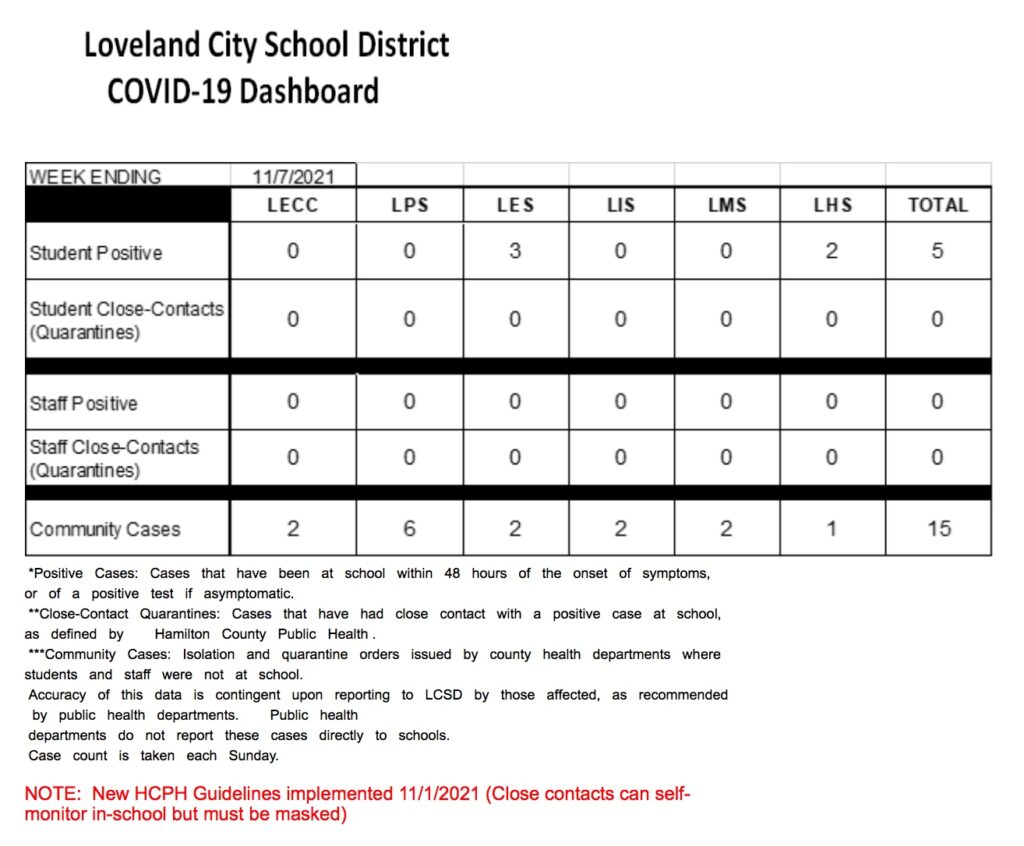
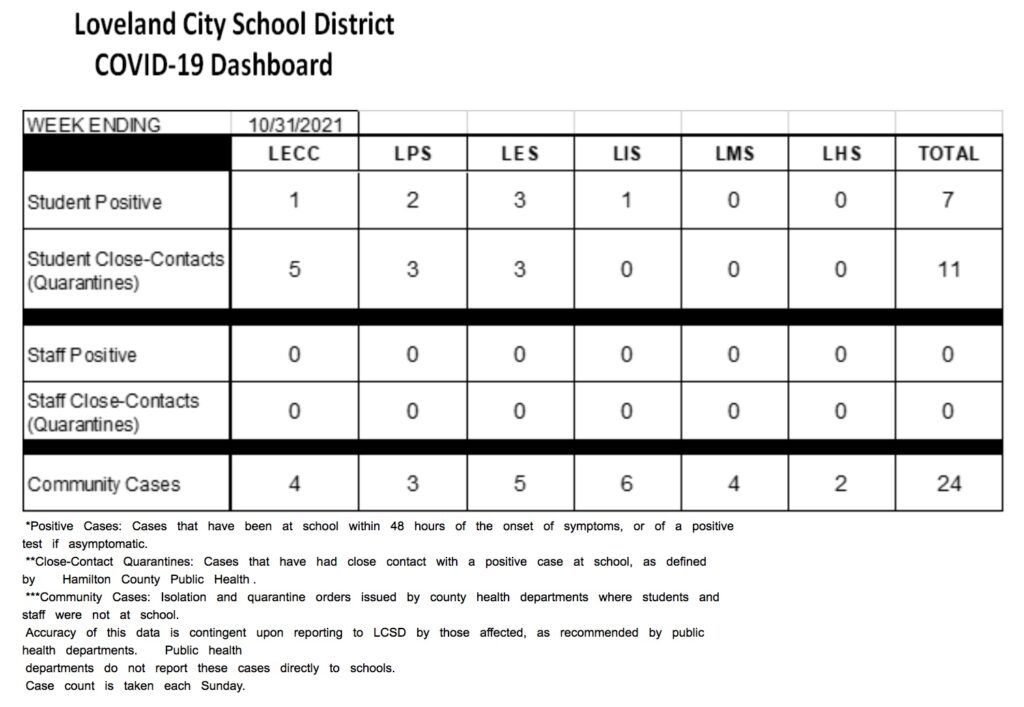
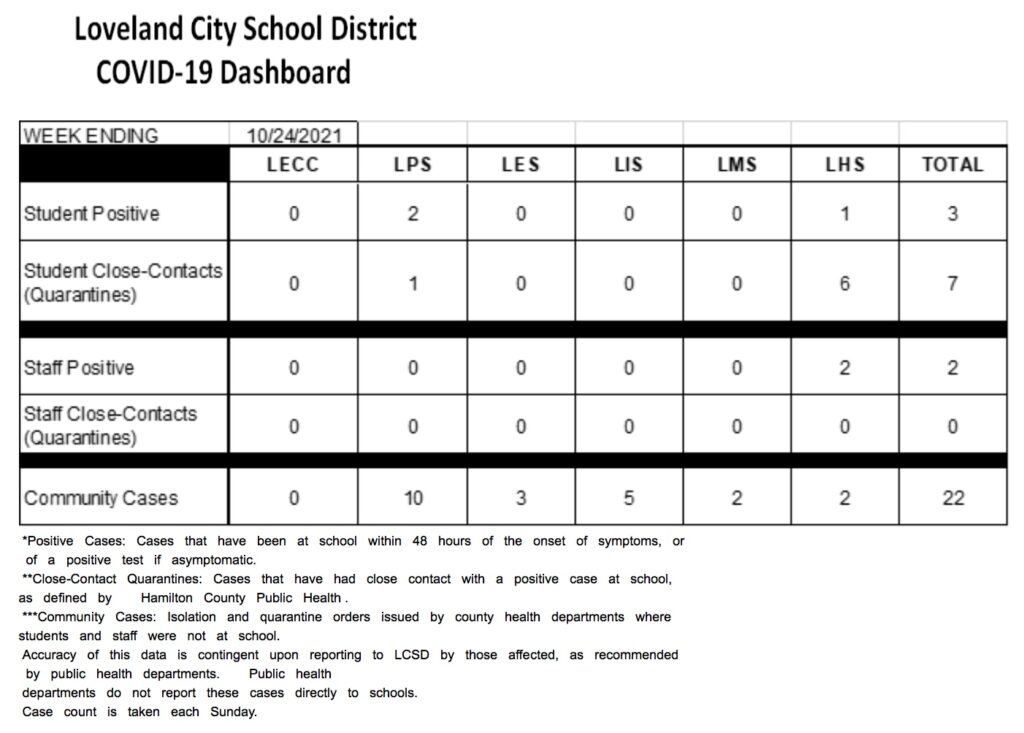
We are pleased people are now researching the Pandemic and how local newspapers survived. Some didn’t. Loveland Magazine did survive, and it was pure everyday persistence, sacrifice, and a dedication to staying alive (literally), and as a local Newspaper. We were early declared “Essential Workers” however that declaration did not provide us anything as the designation was quickly ignored at every level of government when they dolled out relief dollars and the help they could have provided. We stood in line with everyone else at the chance to apply for PPE funds, etc., and at times we were at the back of the lines for eligibility. We were still standing when our own City bought new high-tech water fountains with the COVID relief funds they received. Much of what you read here though is how we did it. What this story misses is an incredible effort it took for local papers in smaller communities to find accurate specific COVID 19 data in a hometown like ours that is in three counties with each county reporting in different formats and on different days of the week.
But how did so many local news organizations – especially newspapers – manage to survive the pandemic? Weeklies beefed up their daily online news coverage, business models were blown up and existing rationales for why journalism matters became more than theoretical to rural journalists.
Their determination to survive and serve as a public health lifeline for their communities fueled an oral history project that my colleague Teri Finnemanand I conducted, interviewing 28 journalists across seven states in the middle of the country. We learned how locally owned and family-owned newspapers made it through COVID-19.
“There’ve been times that we’ve had to reach out to mayors and different cities and communities across the state … to make sure that … they knew that [journalists] were deemed essential workers,” said Ashley Wimberley, executive director of the Arkansas Press Association. That label exempted news workers from stay-at-home orders and designated them as critically needed by their communities.
Oral history grabs the first impressions of history for those living now, looking back at what just happened. It helps people understand the present and how to move forward, out of a crisis. But it also records events for scholars and citizens in the future.
“Always remember that when you’re putting those stories in your newspaper, that you are printing your community’s history,” Amy Johnson, the publisher of the Springview Herald in Nebraska, told us.
Benny Polacca of the Osage News in Oklahoma told us something similar: He encouraged journalists covering some future pandemic to “do your due diligence in order to come to some type of understanding, some type of argument, some type of focus, if you were going to be reporting or researching the time of COVID-19.”
Often, it’s journalism on the coasts that gets the attention of researchers. The New York Times, The Washington Post, the Los Angeles Times – these big news organizations are written about constantly.
By talking to journalists in North Dakota, South Dakota, Nebraska, Kansas, Oklahoma, Arkansas and Louisiana, our project pushed back against this tendency to ignore the middle of the nation and its important journalism. As a kind of new essential worker, journalists found themselves in charge of explaining complicated guidance from state and local officials about COVID-19, how schools would work and where to get help.
“I hope that, through this, that our role as journalism, they [the public] realize how important it is that the information we put out, you know, how it affects them every day,” Johnson said.
Kansas Press Association Executive Director Emily Bradbury had a message for these journalists who were working for news organizations increasingly threatened with being shut down: “I want them to know that in the midst of an emergency, in the midst of what can seem like a hopeless situation, when they look at their financials, that what they’re doing is important. And what they’re doing matters, and that no one else can do what they do, and they look out for their communities like no one else.”
Emily Bradbury, Kansas Press Association Executive Director, tells reporters that ‘what they’re doing is important. And what they’re doing matters…and they look out for their communities like no one else.’ Will Mari and Teri Finneman, Author provided photo.
Loans, side hustles and deals
Reporters and editors found new ways of paying the bills. That meant accepting government subsidies in the form of Paycheck Protection Program loans. It meant, for some, going door to door and asking readers to subscribe, or keep subscribing. It meant consolidating newspapers, putting out more online editions, or taking pay cuts.
“People just don’t understand. It costs a lot of money and time to do this, and I just wish we – there was more value or people appreciate it or understood the value and the cost of really providing this service,” said Bonita Gooch, the publisher of The Community Voice, a Black newspaper based in Wichita, Kansas.
Some publishers took on side hustles to bring in revenue, creating ad copy for local business or doing marketing work.
At The Kingfisher Times & Free Press in Oklahoma, for example, Christine Reid, the paper’s editor, created ads for a local vocational-technical school. “I’ve also tried to use that as an avenue to … generate more ads for the newspaper,” Reid said.
Local publishers did whatever it took to stay afloat. As some of our initial findings have shown, that showed both opportunity and hesitancy about change.
“We’re gonna have to rely less on advertising revenue and more on subscription revenue, and so we’ve got to make sure we’re offering a unique product that they want to pay for,” said Letti Lister, the president and publisher of the Black Hills Pioneer in Spearfish, South Dakota.
We saw tentative signs of hope, as journalists got financial and moral support from their readers during a fraught election. “If anything, it’s rallied the troops, if you will, in our community because they trust us, they know that we’re going to report the news in a timely manner and keep the public up to date,” said Amy Wobbema, publisher of the New Rockford Transcript in North Dakota. Arguably most coverage was calm and steady.
But there was still hesitancy over what newspapers had to do to adapt. Some journalists are uncomfortable with receiving government funding and would rather rely on community support.
As South Dakota Newspaper Association Executive Director Dave Bordewyk put it: “Sort of, ‘Look, contribute to our newspaper … because if you value that importance of local news and journalism, then we need your support beyond just subscribing to the newspaper or advertising, which has gone away.’”
“That’s what we hope. What I hope comes out of this is that readers can understand that, and can … have a renewed value on what that [local] publication has done for their community during this pandemic,” Bradbury told us.


![[Video] Hugs for Coach Parker Night at Loveland High School](https://lovelandmagazine.com/wp-content/uploads/2021/12/parker-hug-night.jpg)


![[VIDEO] It’s now the Stan McCoy Junior Gymnasium – “If you look in the mirror you can’t lie to yourself.”](https://lovelandmagazine.com/wp-content/uploads/2021/12/feature-mccoy-family.jpg)

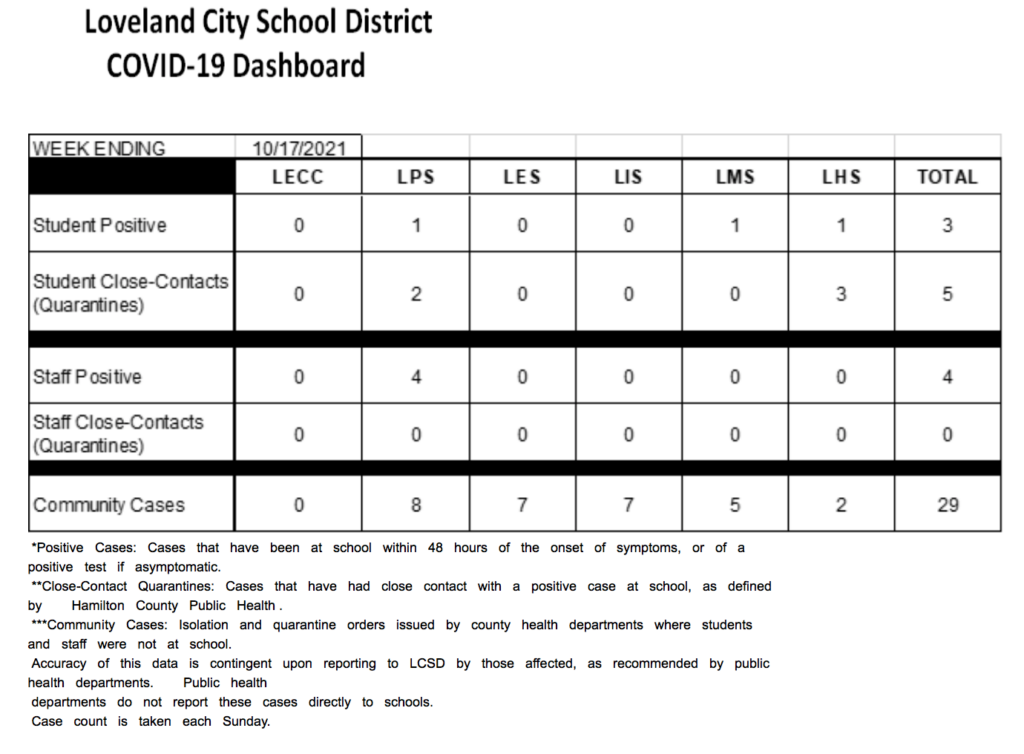
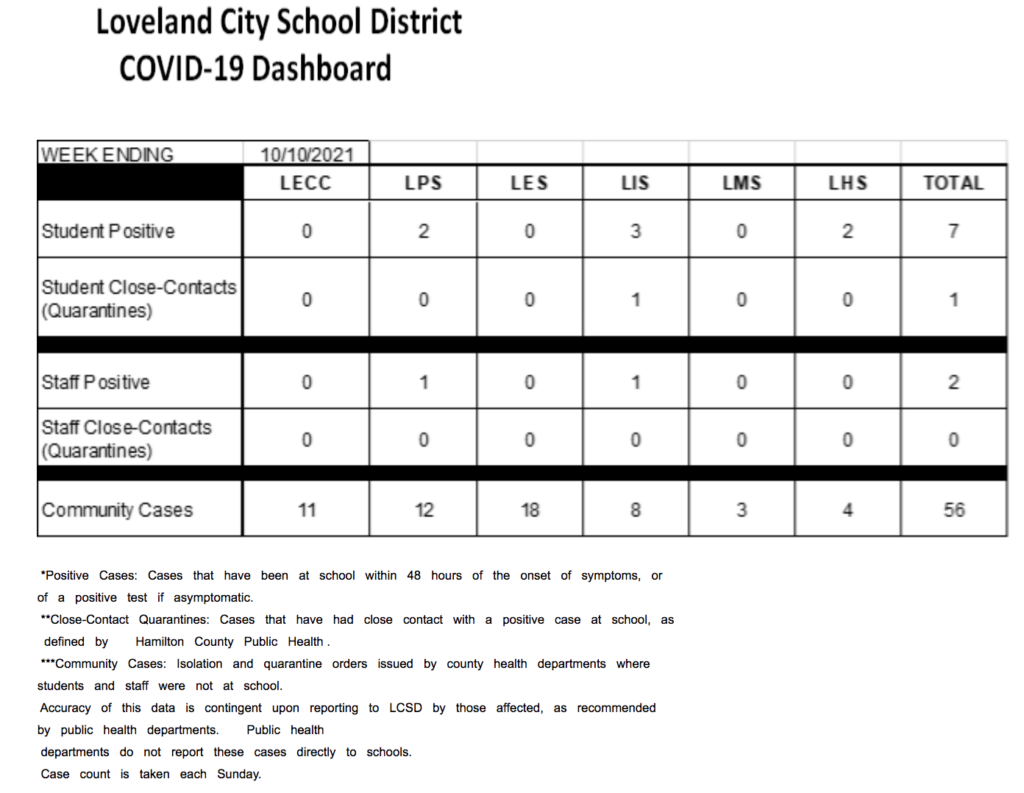
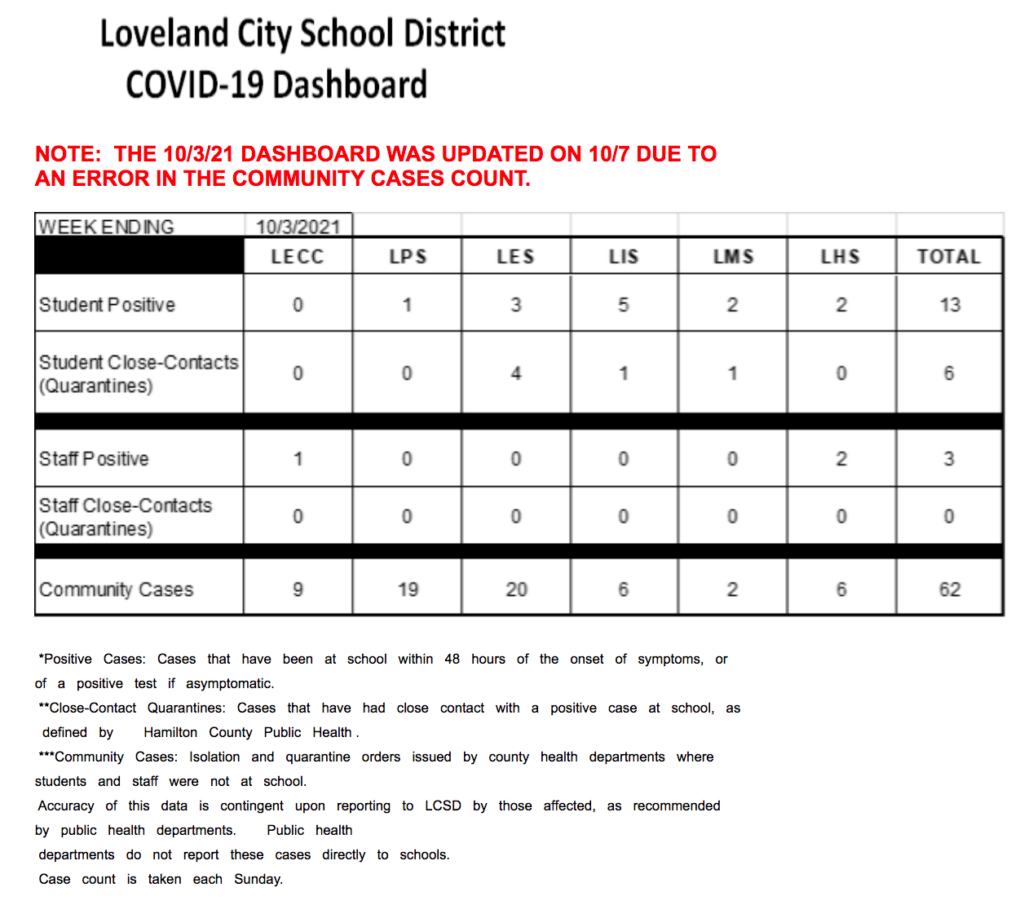
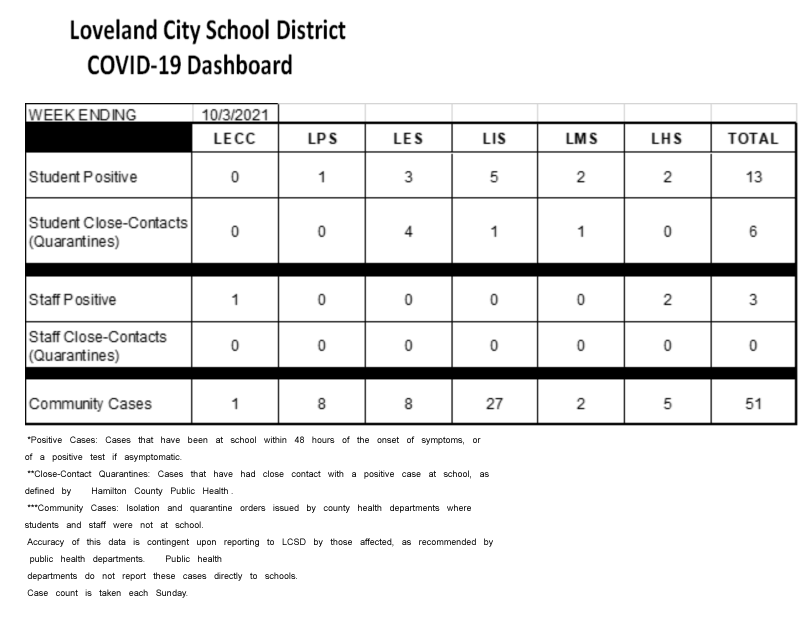


![[Highlight Reel] LHS Women’s and Men’s basketball](https://lovelandmagazine.com/wp-content/uploads/2021/12/basketball-reel-feature.jpg)