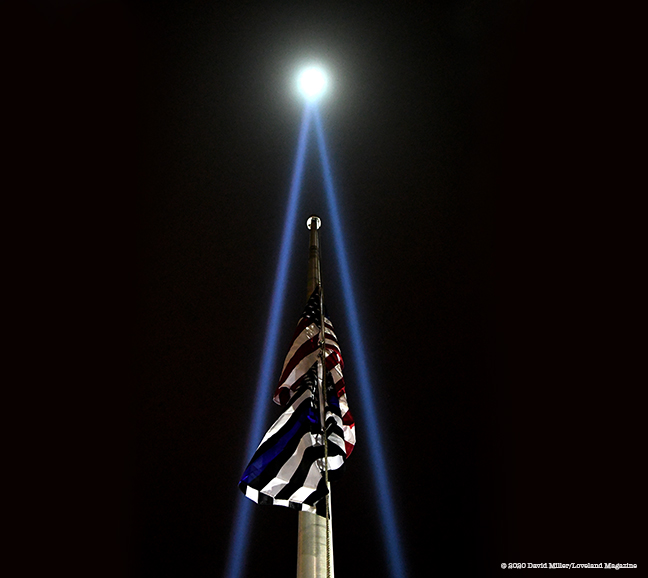
Loveland, Ohio – This photo was taken at the Loveland Police and Fire Memorial in Historic Downtown last night. An event was hosted by the Loveland/Symmes Fire Department to honor all who died in a series of four coordinated terrorist attacks by the Islamic terrorist group al-Qaeda against the United States on the morning of Tuesday, September 11, 2001.
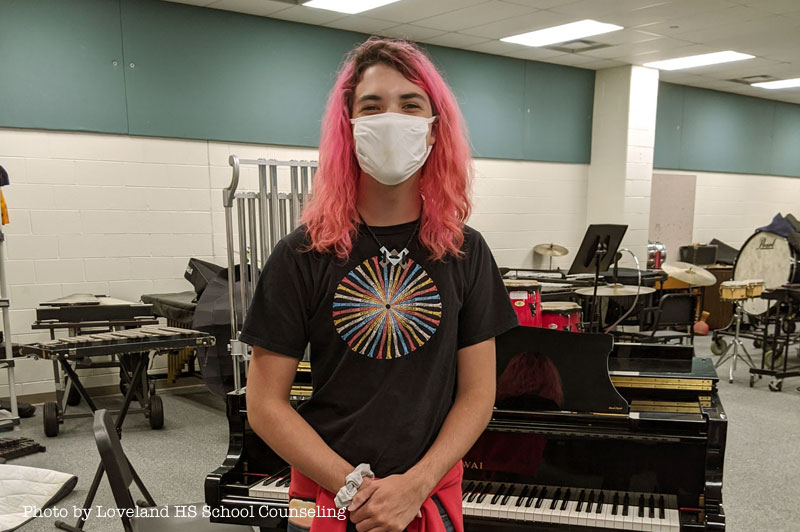
Loveland, Ohio – Congratulations to Loveland High School’s Bea Aldrich on earning the status of National Merit Semi-finalist!
These academically talented high school seniors now have an opportunity to continue in the competition for some 7,600 National Merit Scholarships worth more than $30 million that will be offered next spring. To be considered for a Merit Scholarship award, Semifinalists must fulfill several requirements to advance to the Finalist level of the competition. Over 90 percent of the Semifinalists are expected to attain Finalist standing, and more than half of the Finalists will win a National Merit Scholarship, earning the Merit Scholar title.
Over 1.5 million juniors in about 21,000 high schools entered the 2021 National Merit Scholarship Program by taking the 2019 Preliminary SAT/National Merit Scholarship Qualifying Test (PSAT/NMSQT), which served as an initial screen of program entrants. The nationwide pool of Semifinalists, representing less than one percent of U.S. high school seniors, includes the highest scoring entrants in each state. The number of Semifinalists in a state is proportional to the state’s percentage of the national total of graduating seniors.
To become a Finalist, the Semifinalist and a high school official must submit a detailed scholarship application, in which they provide information about the Semifinalist’s academic record, participation in school and community activities, demonstrated leadership abilities, employment, and honors and rewards received. A Semifinalist must have an outstanding academic record throughout high school, be endorsed and recommended by a high school official, and write an essay.
Loveland, Ohio – The Center for Disease Control says, “Getting a flu vaccine is more important than ever during 2020-2021 to protect yourself, your family and your community from flu.”
A flu vaccine this season can also help reduce the burden on our healthcare systems responding to the COVID-19 pandemic and save medical resources for care of COVID-19 patients.
Area residents who do not have a primary care physician can find a place to get a seasonal flu vaccine (and other vaccines) at VaccineFinder.org.
What vaccines do I need?
We all need vaccines throughout our lives to help protect against serious diseases. CDC and other medical experts update vaccine recommendations every year based on the latest research and science. Vaccination is a critical step in protecting those that are most vulnerable to illness – infants and young children, the elderly, and those with chronic conditions and weakened systems.
Visit the CDC website to take the child or adult vaccine recommendation quiz. Visit the CDC travel website for vaccine recommendations based on the country you intend to visit.
What is the difference between Influenza (Flu) and COVID-19?
Influenza (Flu) and COVID-19 are both contagious respiratory illnesses, but they are caused by different viruses. COVID-19 is caused by infection with a new coronavirus (called SARS-CoV-2) and flu is caused by infection with influenza viruses. Because some of the symptoms of flu and COVID-19 are similar, it may be hard to tell the difference between them based on symptoms alone, and testing may be needed to help confirm a diagnosis. Flu and COVID-19 share many characteristics, but there are some key differences between the two.Read on at CDC…
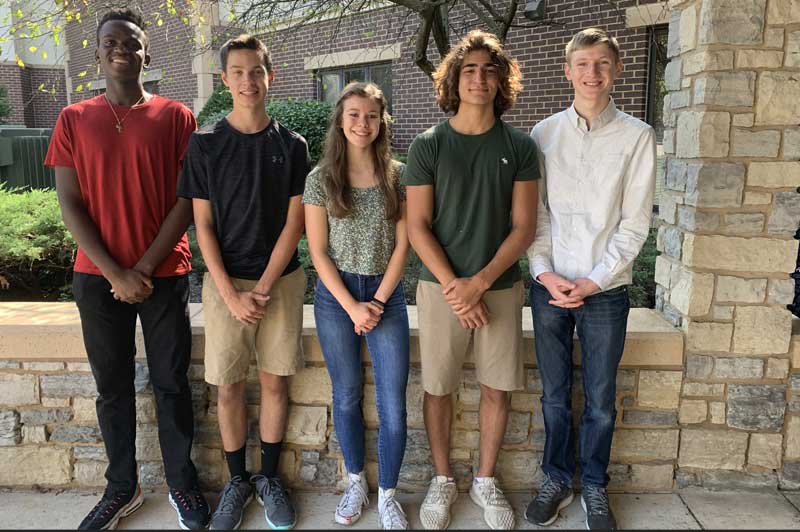
Matthew Onadeko, Adam Jutt, Megan Stotz, Scott Burk, Christopher Swedes(Provided Photo)
Symmes Township, Ohio – Dr. Dean Nicholas, Assistant Head of School of Cincinnati Hills Christian Academy, announced that Scott Burk (of Loveland), Adam Jutt (of Mason), Matthew Onadeko (of Mason), Christopher Swedes (of Loveland), and Megan Stotz (of Mason) have been named National Merit Semifinalists. A certificate from the National Merit Scholarship Cooperation will be presented to these students at CHCA’s Academic Awards Night in May 2020.
These academically talented high school seniors now have an opportunity to continue in the competition for some 7,600 National Merit Scholarships worth more than $30 million that will be offered next spring. To be considered for a Merit Scholarship award, Semifinalists must fulfill several requirements to advance to the Finalist level of the competition. Over 90 percent of the Semifinalists are expected to attain Finalist standing, and more than half of the Finalists will win a National Merit Scholarship, earning the Merit Scholar title.
Over 1.5 million juniors in about 21,000 high schools entered the 2021 National Merit Scholarship Program by taking the 2019 Preliminary SAT/National Merit Scholarship Qualifying Test (PSAT/NMSQT), which served as an initial screen of program entrants. The nationwide pool of Semifinalists, representing less than one percent of U.S. high school seniors, includes the highest scoring entrants in each state. The number of Semifinalists in a state is proportional to the state’s percentage of the national total of graduating seniors.
To become a Finalist, the Semifinalist and a high school official must submit a detailed scholarship application, in which they provide information about the Semifinalist’s academic record, participation in school and community activities, demonstrated leadership abilities, employment, and honors and rewards received. A Semifinalist must have an outstanding academic record throughout high school, be endorsed and recommended by a high school official, and write an essay.
“We are so excited to announce these students as National Merit Semifinalists,” shared Nicholas. “They are not only excellent students and scholars, but well-rounded examples of everything we aspire to be at CHCA. As students, musicians, athletes, servant leaders, and peoples of faith, they move us forward as a community!”
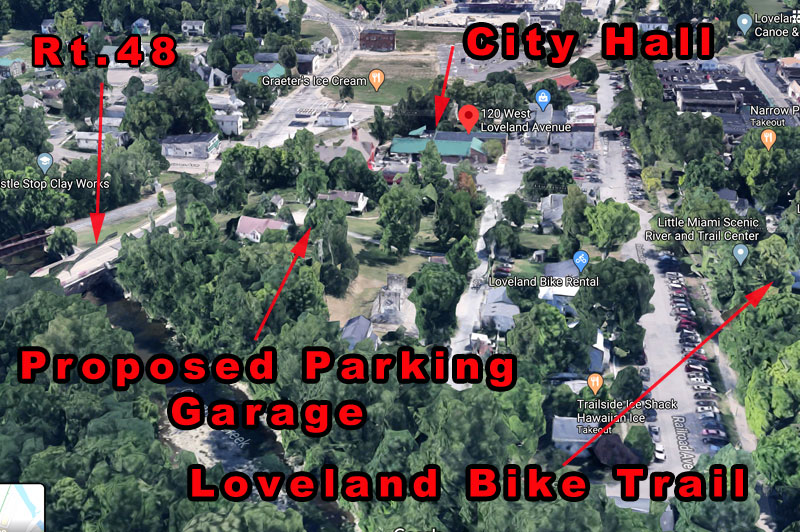
Loveland, Ohio – City Manager Dave Kennedy announced last Friday that the city received notification that it’s Appalachian Regional Commission (ARC) pre-application for $250,000 of grant funding for the downtown parking garage, was ranked as the #1 priority project within the Ohio Valley Regional Development Commission. With this ranking, the city has been invited to submit a full application.
Previously, the city’s grant application for the downtown parking facility was submitted to the Economic Development Administration (EDA). The total amount requested was $2,831,835.
On August 25, Kennedy recommended that Council authorize staff to move forward with a downtown parking fee study at a cost of $16,000. The study would inventory existing parking and the proposed parking facility. He noted that Desman Design Management would use the occupancy counts to identify peak parking needs for weekdays and then evaluate the differences in seasonal variations, summer, and weekend demands. They will identify and recommend street and lots for paid parking and recommend parking rates. The payment was approved by Council.
Read more about the planned parking garage in Historic Downtown Loveland:
Loveland, Ohio – The murderous 9/11 attack by terrorists against the United States will be remembered this Friday at 8 PM at the Police and Fire Memorial in Historic Downtown.
Two searchlights will be lit at dusk and a fireworks display will follow the ceremony.
The Police and Fire Memorial is located at 200 Harrison Avenue, in the same block as Nisbet Park along the Loveland Bike Trail.
In September of 2004, Vernon Michael, and son Don, place the 9/11 Memorial into the concrete foundation at the Loveland Police and Fire Memorial. Michael’s Pre-Cast Concrete manufactured the pedestal to the design specifications of David Camele (with tape measure). Sitting atop of the concrete base is a distorted and rusty piece of structural steel brought to Loveland from the scrap pile of the World Trade Center. Camele designed the memorial so the steel would “bleed rust” onto the fabricated concrete base. Camele, a Loveland resident also designed the Loveland Veterans’ Memorial in the West Loveland Historic District and the Joy of Youth Statute at the entrance to Loveland High School.
The September 11 attacks were a series of four coordinated terrorist attacks by the Islamic terrorist group al-Qaeda against the United States on the morning of Tuesday, September 11, 2001.
The guest speaker is Ret. Lt Bruce Hoffbauer who is the 2020 Republican candidate for Hamilton County Sheriff.
The evening is hosted by the Loveland Symmes Fire Department.
Along with diseases known to increase risk, the CDC lists 12 other conditions that “might” increase the risk of people who have them. These include other massively common conditions like hypertension, liver disease, pregnancy, smoking and others.
The underlying health conditions that lay a path for severe COVID-19 complications are widespread in Ohio, potentially affecting as much as half the population, according to experts, state data and government research.
Take obesity: Ohio Department of Health 2017 survey data estimates that 34% of Ohioans are obese. Similarly, more than 74,000 Ohioans were diagnosed with cancer that same year.
Dr. Peter Pronovost (Photo by University Hospitals)
“The statistics are about 60% of the public has one or more chronic diseases,” said Dr. Peter Pronovost, a University Hospitals physician. “Four in 10 have two or more diseases.”
The ubiquity of chronic disease in Ohio complicates any policy response when there’s no easy-to-draw line between people at low-risk for COVID-19 and those at higher risk levels.
It also illuminates the reality of a “herd immunity” strategy, as reportedlyoffered by an influential adviser to President Donald Trump.This would entail allowing the virus to run its course through the population unimpeded, purportedly allowing healthier people to develop antibodies at a large enough volume to break down chains of transmission.
The CDC listseight diseases known to increase risk of severe illness from COVID-19. The list, coupled with data from theOhio Annual Cancer Report, Behavioral Risk Factor Surveillance Systemannual report from 2018, and other state and federal sources, shows how deep chronic disease runs in the Buckeye state.
Cancer: 74,000 cases diagnosed in 2017
Chronic kidney disease: About 15% of U.S. adults have chronic kidney disease, per the CDC
COPD (chronic obstructive pulmonary disease): 8.3% of Ohio adults have COPD
Immunocompromised state from solid organ transplant:1,916 Ohioans received organ transplants in 2019
Obesity: 34% of Ohio adults are obese. An additional 34% are overweight
Dr. Nirav Vakharia (Photo by the Cleveland Clinic)
“When we go beyond age as a risk factor … if we’re just thinking about these chronic diseases, they’re so prevalent, it’s hard to isolate a young, healthy cohort,” said Dr. Nirav Vakharia, a physician from the Cleveland Clinic.
Health care groups in Ohio are undertaking different efforts to help residents with some of these conditions to stay at home.
LifeCare Alliance, an in-home health care agency, has seen a spike in the number of meals it has delivered to the homes of its diabetic patients since the pandemic began.
“If you have diabetes, the chances of you having a mild case of the coronavirus is much less — you’re gonna have a harder case, because your immune system just can’t fight it off,” said CEO Charles Gehring. “Patients have been scared to death by coronavirus.”
Similarly, Pronovost, the chief clinical transformation officer with University Hospitals, said the health care network recently accelerated its efforts to provide proactive care for people with chronic diseases.
He said staff is reaching out to patients to ensure they’re properly managing and controlling their diseases, like keeping insulin or blood pressure at healthy levels.
“The idea is we want to make sure chronic disease people are doing all they can to avoid being hospitalized and avoid needing to go to the [emergency room],” he said.
Early data shows the network reduced hospital admissions of certain chronic disease patients by 28%, and emergency visits by 79%, he said.
“The idea is we want to make sure chronic disease people are doing all they can to avoid being hospitalized and avoid needing to go to the [emergency room],” he said.
Along with diseases known to increase risk, the CDC lists 12 conditions that “might” increase the risk of people who have them. These include other massively common conditions like hypertension, liver disease, pregnancy, smoking and others.
As of Wednesday, COVID-19 has killed 4,176 Ohioans. The virus has infected nearly 120,000 state residents and put more than 13,500 in the hospital.
Jake Zuckerman is a statehouse reporter. He spent three years chronicling the West Virginia Legislature for The Charleston Gazette-Mail after covering cops and courts for The Northern Virginia Daily.
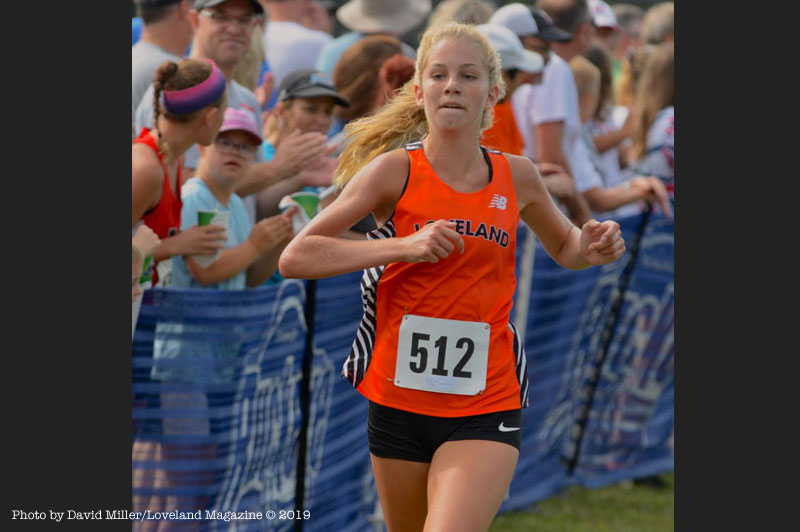
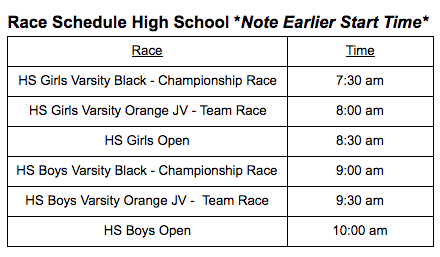
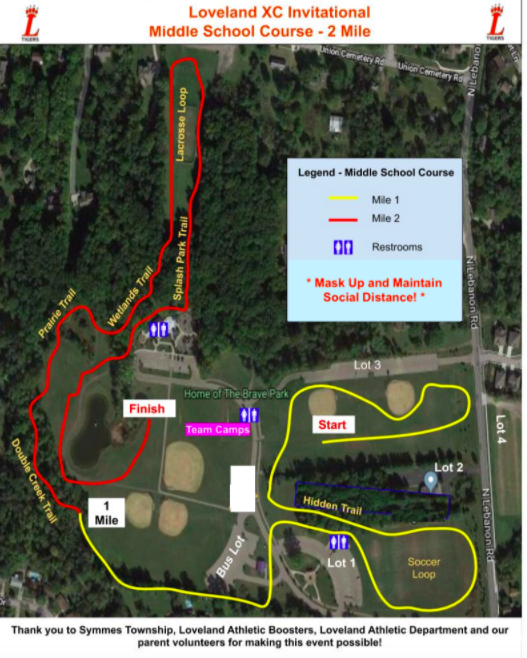
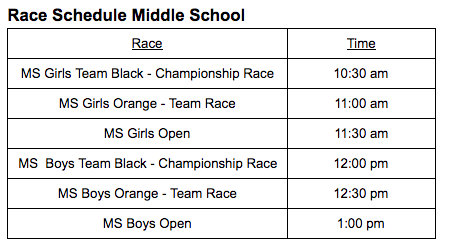
Symmes Township, Ohio – Since spectators are limited to parents/guardians of senior runners, here is how you can keep up with the race and even watch a live-stream.
This is not a decision that we have taken lightly. The purpose of limiting spectators is to ensure that we meet all guidelines in place.
In evaluating our options for the event the choices were to cancel the event or to limit spectators.
We chose to limit spectators to give the runners an opportunity to compete!
We want to give our runners every opportunity to have a complete season. We also want our senior parents/guardians to have the opportunity to see their athlete on the course at least one last time!
We are doing several things to help alleviate the disappointment for parents and families.
In early September, former Bengals tight end Tyler Eifert announced that he would choose to honor the memory of David Dorn, a retired St. Louis police captain who was killed in June of this year.
Christopher Ball is a longtime Loveland resident and an attorney
Eifert was selected by the Bengals in the first round of the 2013 NFL Draft and played his first seven seasons in Cincinnati. He recently signed a 2-year $9.5 million deal with the Jacksonville Jaguars, where he hopes to make a comeback after several injury-plagued seasons with the Bengals.
The NFL’s new stance is a stark reversal from its prior positions. In 2016 the league refused to allow Dallas Cowboys players to wear decals to honor five police officers killed by a sniper in downtown Dallas. Even Jerry Jones, the owner of the Cowboys, felt that allowing players to put unique messages on their helmets or wear pink to honor cancer survivors, would open “Pandora’s Box’ that would be difficult to ultimately control. In 2013 Bears wide receiver Brandon Marshall was fined for wearing green shoes to highlight issues surrounding mental health.
Whatever you may think of his opinions, Colin Kaepernick’s visible on-field protests against systemic racism and police violence are unquestionably a large part of the reason that he is no longer playing football. Prior to 2020, it was clear that the National Football League was doing all that it could to keep politics, protests, and uniform variance out of its brand.
Now that has all changed.
Roger Goodell has admitted that both he and the league were wrong for not listening to protesting players sooner. The new decal initiative is the National Football League’s attempt to, at least in part, allow its players to express their non-football opinions on the field, while they are at work, doing their jobs. While the new rules were ultimately put in place to allow players to place decals on their helmets “bearing names or initials of victims of systemic racism and police violence” Eifert’s choice sends a different message, one very similar to those of the 2016 Dallas Cowboys. Eifert himself has a long history of supporting military and first responders during his career, and so his choice to honor David Dorn is not surprising.
What will be interesting to see is whether the league will allow him to wear a decal honoring Dorn even though, by most standards, the slain police captain is not a “victim of systemic racism or police violence.” Early reports suggest that the players will be allowed to pick from an approved list of names, with options such as George Floyd, Breonna Taylor, and Ahmaud Arbery. While the NFL has not officially released its policy on decals, nor have they provided the complete list of names from which its players can choose, Eifert’s decision to honor Dorn is one that will no doubt spark debate on the boundaries of the NFL’s new policy.
Whether it opens Pandora’s box, as Jerry Jones once feared, is yet to be seen.
Loveland, Ohio – The Loveland High School football team, cheerleaders, marching band, and color guard kicked, shouted, and marched into their season opener last Friday hosting the Turpin Spartans at Tiger Stadium.
The Spartans held the Tigers scoreless through the four quarters and put 30 on the scoreboard.
Turpin led Loveland with 453 total yards vs. Loveland’s 243. The Tigers had 83 ground yards vs 284 for the Spartans.
Senior Calvin Cloud started the season at quarterback for the Tigers and with 9/22 attempts totaled 154 yards in the air. Cloud also ran the ball 18 times for 61-yards to lead his team in rushing.
Junior wide-receiver Ethan Lund had 85 receiving yards with his 4 receptions. Senior wide-receiver Tyler Lake had caught one pass for 32 yards.
Tonight will be another home game when West Clermont comes visiting. The Wolves lost at Lebanon in their season opener 21-13.
Only parents of the student participants are allowed to attend the game.
You can WATCH the Tiger vs Spartans game on the Athletic Booster’s FaceBook livestream.
Visit https://www.facebook.com/LABTigers to see if the game is live-streamed tonight. The Athletic Boosters will be working hard to make it happen.
WEEK ONE ECC RESULTS
Anderson outlasts Little Miami 50-40 Lebanon beats West Clermont 21-13 Milford defeats Oak Hills 28-24 Winton Woods downs Edgewood 34-0 Turpin over Loveland 30-0
Kings postponed
WEEK TWO MATCH-UPS
West Clermont at Loveland Milford at Turpin Lebanon at Winton Woods Riverside at Kings 5 pm Kings at Anderson (Saturday)
Click on the first photo to see them all full size…
Loveland Cross-country teams returning to the school













 Christopher Ball is a longtime Loveland resident and an attorney

![[Photo Album] Friday night football, marching band, and color guard](https://lovelandmagazine.com/wp-content/uploads/2020/09/color-guard-turpin-.jpg)


