Tag: Loveland Magazine

  • Why Arcade Fire’s “The Suburbs” is all That and a Bag of Chips!

    Why Arcade Fire’s “The Suburbs” is all That and a Bag of Chips!

    The tattoo on my left forearm is inspired by the 15th song on the album, “Sprawl II (Mountains Beyond Mountains).”
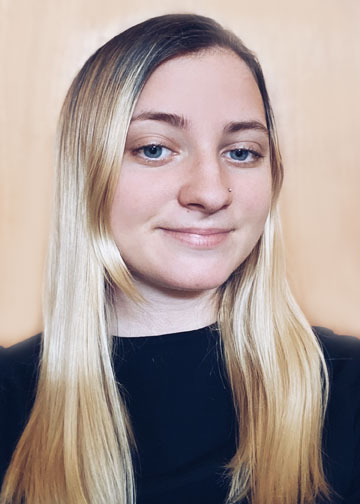
    Olivia Rohling

    by Olivia Rohling

    We all have a favorite album. You know the one I’m talking about. It’s that one album that you can listen to for days on end and never get sick of it. For me, that album is Arcade Fire’s The Suburbs. 

    This is the third album released by the Canadian Indie-rock band, following Funeral (2004) and Neon Bible (2007). Arcade Fire is made up of husband-and-wife duo Win Butler and Régine Chassagne, Win’s younger brother, William Butler, Richard Reed Parry, Tim Kingsbury, and Jeremy Gara. 

    The Suburbs speaks to what it’s like growing up living in suburbia, and how comforting yet isolating that feeling can be. 

    “Will and I were born in a really small town in Northern California, kind of near the Nevada border,” Win Butler said in an  NPR interview, “Like you know maybe 50 people on the side of a mountain. We moved to the suburbs of Houston when we were young.” 

    Arcade Fire’s The Suburbs is the third album released by the Canadian Indie-rock band, following Funeral (2004) and Neon Bible (2007.) Image courtesy of The Alternative.

    The album begins with the song, “The Suburbs,” which talks all about suburban living. Key lyrics such as, “In the suburbs, I learned to drive,” and “But in my dreams, we’re still screaming and running through the yard,” allow the listener a chance to feel what it’s like to live a “suburban” lifestyle. Not to mention the ending of “The Suburbs” blends seamlessly into the beginning of the next song, “Ready to Start” which is just plain awesome sauce! The song is sure to give your eardrums butterflies!

    Many songs on the album seem to purposely blend into one another. “Empty Room” blends into “City with No Children,” “Half Light I” blends into “Half Light II (No Celebration),” “Month of May” blends into “Wasted Hours,” and “We Used to Wait” blends into “Sprawl I (Flatland).” Talk about satisfying! The album is so well done that you won’t get sick of listening to all 5,316 minutes of it over and over again like I continue to do to this day (thanks, Spotify Wrapped)! 

    “Sprawl II (Mountains Beyond Mountains)” is my personal favorite song on the album. My proof of loving the song is located right on my left arm where I have a tattoo that says, “Mountains Beyond Mountains.” The song really is just that good! Arcade Fire’s Régine Chassagne is Haitian, so the band strategically used the term “Mountains Beyond Mountains” because it comes from a Haitian proverb that means “beyond mountains, there are more mountains.” I look at the Haitian term on my arm and it always gives me the feeling that opportunities are inexhaustible and when you surmount one great obstacle in your life you merely gain a clearer view of the next one. 

    In “Sprawl ll,” Régine sings “Sometimes I wonder if the world’s so small, can we ever get away from the Sprawl?” This lyric goes back to the theme of growing up in suburban sprawl and wondering if there is more to life than suburbia. 

    If you would like to not only listen but feel the meaning of “Sprawl ll (Mountains Beyond Mountains)” you can listen to the band’s 2011 Coachella performance of this song below. Disclaimer: every time I watch this performance it brings me tears!

    The Suburbs by Arcade Fire puts suburban living into music form and does so in a way that will make you want to get up and dance! That, my friends, is why this album really is all that and a bag of chips. 

    My top three favorites songs from The Suburbs:

    1. “Sprawl II (Mountains Beyond Mountains)” 
    2. “Deep Blue”
    3. “Modern Man”
    Click this image to hear samples of my three favorite songs on the album.
  • Donating at Hoxworth is pretty easy and there is a critical need! Please watch this video

    Donating at Hoxworth is pretty easy and there is a critical need! Please watch this video

    Nervous about donating blood? There are a lot of myths and misconceptions out there, let’s dispel some of those rumors with a quick fact check!

    The Critical Need

    Hoxworth Blood Center is in need of Type A and O blood, and platelet donors! If you are eligible to give, please schedule your next donation as soon as possible by calling us at (513) 451-0910 or visiting the Hoxworth HomePage

  • U.S. Senate backs shift to permanent daylight saving time

    U.S. Senate backs shift to permanent daylight saving time

    BY: ARIANA FIGUEROA – Ohio Capital Journal

    WASHINGTON — The U.S. Senate with little debate on Tuesday unanimously supported a permanent change to daylight saving time, several days after Americans once again went through the hated “spring forward” ritual of changing their clocks.

    If the bill, the Sunshine Protection Act, clears the House, it would mean most states would stay on daylight saving time throughout the year — giving them an extra hour of sunlight in the evening.

    “Just this past weekend, we all went through that biannual ritual of changing the clock back and forth and the disruption that comes with it,” Florida Sen. Marco Rubio, the Republican who sponsored the bill, said on the Senate floor. “One has to ask themselves, why do we keep doing this?”

    Rubio said that he believed a majority of Americans want to do away with the time switch and would prefer an extra hour of daylight, especially during the winter months. The Senate agreed under a process known as unanimous consent.

    The bill, if signed into law, would not go into effect until 2023, to give airlines and other companies time to adjust. A White House spokesperson did not respond to a question about President Joe Biden’s position on daylight saving time.

    The House held a hearing last week at which a panel of experts debated the health, energy and economic impacts of changing clocks twice a year. While lawmakers on the panel couldn’t decide which time to switch to permanently, they all agreed that the United States should stick to one or the other.

    It turns out daylight saving time is a shared mission among Florida lawmakers. U.S. Rep. Vern Buchanan, a Florida Republican, introduced the House version of the bill, H.R. 69. He wrote on Twitter that he is drafting a letter to House Speaker Nancy Pelosi, asking to bring his bill to the floor for an immediate vote.

    States have moved to pass or enact measures in favor of year-round daylight saving time, but without congressional approval, they can’t adopt those changes.

    Iowa’s state House recently passed a bill that would put the state on daylight saving time, pending federal action.

    Two states have passed measures to stay on standard time — Arizona and Hawaii. Both congressional bills would allow states to stay on standard time if they adopted the time change before the Sunshine Protection Act went into effect.

    Daylight saving time was used as an energy-saving measure during various points in U.S. history, such as World War I and World War II, and has become a permanent fixture since the energy crisis of the 1970s.

    This is not the first time the U.S. has moved to make daylight saving time permanent. On Dec. 14, 1973, Congress voted to put the U.S. on daylight saving time for two years. While 79% of Americans approved of the change in December of that year, within three months, approval fell to 42%, according to the New York Times.

    The biggest concern stemmed from children going to school in the dark, which soon proved to be dangerous as more children were reported to be hit by early-morning drivers.

    Shortly after President Richard Nixon resigned, Congress passed a bill that would restore standard time, which was then signed by President Gerald Ford.

    Daylight saving time this year ends on Nov. 6.

  • Ohio State Leaders Must Allow Voter Education Collaboration

    Ohio State Leaders Must Allow Voter Education Collaboration

    CLEVELAND — In response to the Ohio Supreme Court’s rejection of the third proposed state map due to partisan gerrymandering, All Voting is Local Ohio State Director Kayla Griffin released the following statement: 

    Background: At the moment, state and local officials are preparing for a May 3 primary. On its face, Revised Code § 3501.054, known as the collaboration ban, purports to bar any public official responsible for administering or conducting an election from collaborating with any nongovernmental entity on activities related to voter registration, education, poll worker recruitment, or similar election-related activities.

    As there are no solidified maps at this time, elections officials are facing uncertainty while preparing for the upcoming primary, which is leaving voters in limbo. We are urging Senate President Matt Huffman and the Ohio Senate to allow elections officials and community groups to collaborate on voter education by repealing the collaboration ban immediately. Election officials and nongovernmental entities must not be held back from working together to mitigate the impact upon voters brought on due to the delay in finalizing congressional and state maps.  

    Voters all across the state could face last-minute poll consolidations, changes, and/or closures. As districts change, they will have little, if any, time to figure out what candidates are on the ballot. Our leaders and elections officials must allow for an all-hands-on-deck approach for accurate and fair preparation. This will only be possible if elections officials and community groups — including faith, service, and civic groups — are allowed to work together towards educating voters on last-minute changes and keeping voters up to date on information they may need to ensure they can accurately and fairly cast their ballot. 

  • Ohio city sues Netflix and Hulu for piece of streaming pie

    Ohio city sues Netflix and Hulu for piece of streaming pie

    BY: JAKE ZUCKERMAN – Ohio Capital Journal

    A small, Cleveland suburb has filed a lawsuit against Netflix and Hulu, trying to force the streaming companies to pay a franchise fee typically applied to cable providers.

    The lawsuit is part of a growing national trend of cities in at least 13 states, often pinched by shrinking budgets, targeting the nascent streaming industry for new tax revenues.

    The city’s suit is filed under a state law written and passed in 2007 — when Netflix was mostly mailing its customers DVDs and Hulu had yet to launch.

    Maple Heights, population 23,000, filed a class action suit in federal court in August 2020. Its claim is simple: Streaming services like Netflix and Hulu provide content that reaches customers through DSL and fiber optic cable lines along public rights of way, just like cable providers do.

    Those cable providers must pay a tax of up to 5% of their gross revenue in an area as a “video service provider” fee. If cable companies must pay, Maple Heights argued, then so should Netflix and Hulu. The lawsuit comes as customers increasingly bail on cable and opt for streaming — a trend that’s costing cities money.

    Both Dish Network — which owns both cable and streaming companies — and Ohio Attorney General Dave Yost have filed legal arguments supporting Netflix and Hulu. In July, U.S. District Judge James S. Gwin sent two certified questions to the Ohio Supreme Court to answer:

    • Are Netflix and Hulu “video service providers” under Ohio law?
    • Can Maple Heights bring the lawsuit in the first place?

    The Supreme Court is scheduled to hear arguments in the case next month.

    In 2007, bipartisan state legislators passed a law centralizing franchising rights at the state level instead of local. The law defined video service as “the provision of video programming over wires or cables located at least in part in public rights-of-way.” However, it excludes video programming provided solely via a service that offers content “over the public internet.”

    Both the streaming companies emphasized they don’t have any hardware in Ohio, and the law exempts internet companies anyways.

    “Netflix has no wires, cables, or other infrastructure in any Ohio public rights of way,” the company’s lawyers wrote.

    Additionally, the 2007 said a company must provide “video programming” — Netflix argues it doesn’t. Its lawyers said ‘programming’ necessarily means prescheduled shows and movies, as opposed to Netflix’s on-demand content.

    Maple Heights said the content Netflix provides is not only comparable to broadcast television, but “indistinguishable.”

    The city argued the “public internet” exemption referred to internet service providers, not streaming services. And content behind a paywall, it said, isn’t public. As far as hardware: The law only requires the companies to use cables — not build or own them, the argument said.

    “Indeed, [Netflix and Hulu’s] ability to deliver their content — and, in turn, operate their enormously profitable businesses — depends wholly on the quality and strength of these wireline facilities,” lawyers for Maple Heights wrote.

    A Netflix spokeswoman declined to comment. Hulu did not respond to inquiries. Maple Heights Mayor Annette Blackwell and a lawyer representing the city didn’t respond to inquiries.

    Mixed success 

    More and more cities, all with similar laws levying fees on cable companies who rely on the use of public rights of way, have filed similar lawsuits over the past two years.

    A count from Bloomberg Law, current as of October 2021, identified 13 such lawsuits around the country. Four have been dismissed. Most the others are mired in procedural battles, including plaintiffs seeking to keep the cases in state court and the streaming companies seeking to transfer them to federal court.

    In Ohio, cities’ share of state tax collections has dwindled. In 2020, the local government fund, split among cities and townships, received $377 million. In 2010, it was $612 million. In 2000, the fund was $675 million, plus another $95 million in a similar account.

    The Ohio Municipal League, which typically advocates for more local government funding, didn’t respond to inquiries about the case, nor did the Ohio Chamber of Commerce.

    Public Knowledge, a Washington D.C.-based think thank focused on tech policy, argued the state interest in franchise fees from cable companies don’t apply to streaming companies.

    Cord-cutters disgorged cities of franchise fee revenues, its lawyers argued, putting the cities in a pickle. But expanding the tax to include streaming services will hike costs for customers and stifle competition from potential competitors.

  • Sen. Brown statement following address from Ukraine President Zelenskyy

    Sen. Brown statement following address from Ukraine President Zelenskyy

    WASHINGTON, D.C. – U.S. Senator Sherrod Brown (D-OH) released the below statement following Ukraine President Volodymyr Zelenskyy’s address to the U.S. Congress.

    “Today President Zelenskyy made it clear that Ukraine needs more resources to defend itself and its freedom, and that’s what the U.S. is providing. President Biden is announcing dramatic new military assistance for Ukraine today, and I will continue working with the president to ensure Ukrainians are armed with effective military tools – including those designed to strengthen their air defenses – and are supported by strong sanctions, without needlessly escalating Putin’s war. I also share President Zelenskyy’s call for corporations to join this fight – no one should be profiting off of this invasion, from Big Oil to corporations that continue to do business in Putin’s backyard. President Zelenskyy and his people are fighting for the values Americans all share – freedom, democracy, the right to determine their own destiny – and we must all continue to stand united with them.”


    Ukrainian President Zelensky Addresses Congress

    In a virtual address to Congress, Ukrainian President Volodymyr Zelensky pleaded for the U.S. to support a no-fly zone over his country. President Zelensky also asked the U.S. to provide fighter jets, anti-aircraft weapons, and other military aid to help Ukraine defend itself against the Russian invasion. He played a graphic video of civilians killed and injured by Russian bombs and artillery barrages during his remarks. U.S. lawmakers gave him a standing ovation at the end of his address.

  • Dress for Success Cincinnati now at Loveland’s Care Center

    Dress for Success Cincinnati now at Loveland’s Care Center

    Loveland, Ohio – Dress for Success Cincinnati has announced that The Care Center of Loveland is their new satellite location for the StyleHER program.

    For the past 15 years, the Care Center has been assisting families by helping them remove the barriers and build the resources needed to thrive in life. Located at 11020 South Lebanon Road in Loveland, The Care Center will now be offering DFSC styling services to residents of the Loveland and neighboring communities.

    According to Data USA, the largest demographic living in poverty in Loveland is currently women ages 25-34. The hope is that through this partnership, they will be able to tend to that community of women living at or below the poverty line and offer them services that will nurture their employment mobility and help them to thrive.

    A strong supporter of this mission is Greg Knake, Executive Director of The Care Center, who recognized the opportunity for Dress for Success Cincinnati and The Care Center to help more women through a partnership early on.

    “Our mission is about helping people thrive in life, and one critical way we do that is by helping them reenter the workforce,” Knake said. “We also have a high value for not trying to recreate the wheel, and we instantly identified that Dress for Success Cincinnati already had a model that was successful. It is a perfect fit to incorporate Dress for Success Cincinnati’s services in what we do.” 

    Through this act of ‘not trying to recreate the wheel’ they have formed a partnership that can utilize the successes of both organizations to further benefit women. The Care Center of Loveland is a state-of-the-art resource center offering beneficial services such as childcare and transportation that help to eliminate major barriers that stand in the way of women receiving this support.

    As childcare is a service that is not currently offered by Dress for Success Cincinnati, they can now offer it to their clients at The Care Center’s location. Not only have they expanded the range of women they are able to serve but have expanded the accessibility for women to utilize the services as well.

    “We want to be a resource for people who want to take advantage of Dress for Success Cincinnati’s resource but may not have the reliable transportation to access the Norwood location,” Knake said. “We are excited to offer Dress for Success Cincinnati’s resources in areas like Milford, Goshen, and Loveland.”

    In addition to offering DFSC styling services at The Care Center, the new satellite location will also offer similar career assistance to that of Dress for Success Cincinnati’s Norwood office. Just as the DFSC office has partnered with Cincinnati Works to provide help with resume building, job searching, and more via an on-site Cincinnati Works representative, The Care Center will offer the same opportunity for clients.

    “We also offer career development resources through Cincinnati works and even work with the same Cincinnati works representative,” Knake said. “So, clients will have that same opportunity when they come here to be styled.”

    Dress for Success Cincinnati said that they are thrilled to launch this new satellite location and to be working with Knake and his team at The Care Center to offer their services, along with the added benefits that come from this new location to more women in surrounding areas.

    To learn more about The Care Center or schedule your styling appointment, visit The Care Center’s website here.

  • Watch swearing-in of two new city employees: Shaun Tringelof and Angela Walls

    Watch swearing-in of two new city employees: Shaun Tringelof and Angela Walls

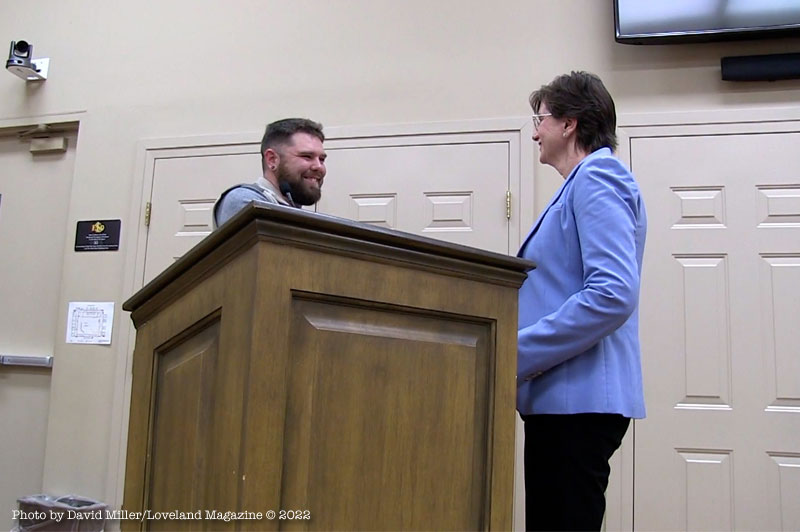
    Loveland, Ohio – In this LOVELAND MAGAZINE TV video which is sponsored by the Move2Team.com you can watch the swearing-in of two new city employees at the March 8 City Council meeting.

    Shaun Tringelof joins the City of Loveland’s Public Works department as a Maintenance Worker. He has eight years of experience in the construction industry and is a graduate of Loveland High School.

    Angela Walls joins City Hall staff as the Assistant Finance Director. She previously worked for Loveland City Schools, among other finance positions. She has been a resident of Loveland for the past 15 years.

  • Don Tassone: Thank you for letting your readers know about my new book

    Don Tassone: Thank you for letting your readers know about my new book

    Dear Editor:

    Thank you for letting your readers know about my new book, Collected Stories, which will be published on March 21.

    I’ve dedicated this book to my beautiful granddaughter Alice, who has Down syndrome.  All proceeds will go to the National Down Syndrome Society, the leading human rights organization for those who, like Alice, have been given an extra chromosome.

    I hope people enjoy the 50 diverse stories in this special collection, which will be available on Amazon.

    Don Tassone

    Loveland

  • GOP redistricting attorneys ask court to make decision on congressional map after 2022 election

    GOP redistricting attorneys ask court to make decision on congressional map after 2022 election

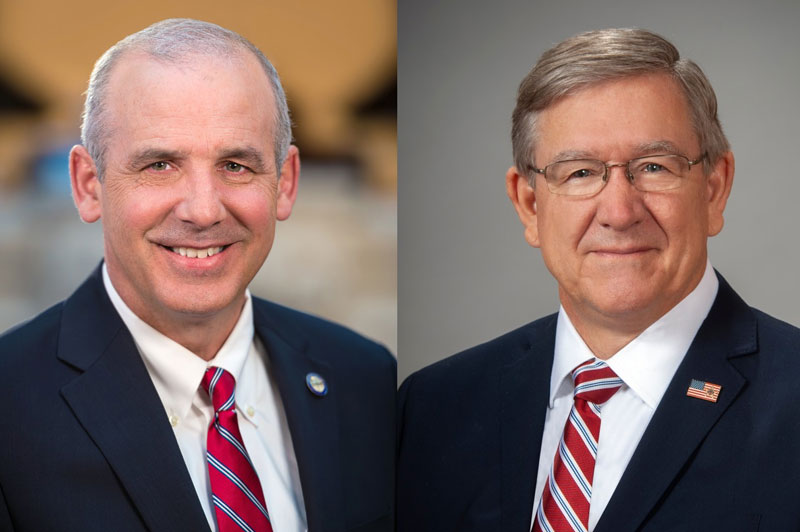
    Ohio Senate President Matt Huffman and Ohio House Speaker Bob Cupp, both Lima Republicans. Official photos.

    BY: SUSAN TEBBEN – Ohio Capital Journal


    Legislative leaders and the state’s chief elections officer dug their heels in on continuing on with the May primary election, even as Ohio groups seek invalidation of the latest congressional redistricting map.

    Secretary of State Frank LaRose, Senate President Matt Huffman and House Speaker Bob Cupp have responded to requests by the League of Women Voters and a group of Ohio citizens represented by the National Redistricting Action Fund that the Ohio Supreme Court invalidated the newest congressional district map.

    Huffman and Cupp submitted their response together, starting by saying the Ohio Redistricting Commission “does not exist to simply rubberstamp redistricting plans favored by (court challengers).”

    “It is entitled to exercise reasonable discretion in balancing the highly complex factors that go into congressional redistricting,” attorneys for Cupp and Huffman wrote.

    While also arguing that the congressional map passed at the beginning of March is constitutional, Cupp and Huffman’s attorneys took the stance that the commission is the only authority in map-making in the state.

    The LWV and NRAF had differing opinions on next steps if the court invalidated the map, with the NRAF asking the court to take over, but the LWV saying the map should be sent back to the courts for very specific revisions.

    The legislative leaders argued that the Ohio Redistricting Commission is a “creature of the Ohio Constitution,” but with duties provided to it “independent of any other branch of government in Ohio.”

    “It is the commission and the general assembly who solely possess the legislative authority to create legislative and congressional districts,” attorneys wrote.

    It’s not fair, nor is it in line with the law, to compare the commission-adopted map to other maps that may have been submitted to the commission, but were never brought up for a vote or formally considered, Cupp and Huffman state in their court filing.

    In their objections to the map, challengers had offered up maps from Stanford and Harvard political science professors as models for a replacement map.

    Republican leaders flatly disagreed with the idea.

    “It is now plainer than ever that it is dangerous and disingenuous to base Ohio constitutional law and the voting rights of millions of citizens on this untested and contradictory evidence conceived of by paid-for-hire mathematicians and social scientists,” Cupp and Huffman argued.

    LaRose echoed the comments made in Cupp and Huffman’s filings that the map is constitutional and “needs no revision.”

    But if the court rejected the map, LaRose said, it does not have the power to “unilaterally implement its own congressional district plan.”

    “Again, Secretary LaRose will administer the 2022 congressional primary and general elections in accordance with a constitutional congressional district plan,” attorneys for LaRose wrote.

    In this vein, Cupp and Huffman’s attorneys asked that the court “defer any action” on the congressional map until after the 2022 election.

    They blamed the new state redistricting process, along with “significant logistical challenges” and even the U.S. Census delays brought on by the COVID-19 pandemic for exacerbating an “already challenging scenario” and leading to the adoption of the new congressional plan only days before the candidate filing period for the May 3 primary.

    The Ohio Supreme Court is considering court challenges for not only the congressional map, but also the legislative maps. The ORC adopted the maps one week after the court-ordered February 17 deadline, risking contempt charges.