by David Miller, Loveland Magazine’s Managing Editor
Loveland, Ohio – “I am super excited about this sip and shop and I know it will be a great event to support Loveland Schools and these small businesses,” said Loveland High School Senior Kate Krabacher.
Kate is a student at Loveland High School and is a member of Tigers Inc. Kate said that she and Tigers Inc are excited to be co-hosting the “Sip and Shop: Mother’s Day Edition” with Lemons and Limes Boutique owner, Wendy Knight. The event will be on April 22nd from 11 AM until 4 PM at the Landing Event Center on the bank of the Scenic Little Miami River in Historic Downtown.
Lemons and Limes is a local small business boutique with locations in Loveland and Mason. Tigers Inc is a nonprofit organization run by a selective group of business-oriented student leaders at Loveland High School.
Kate is also an intern at Lemons and Limes and Wendy said she has been in charge, from “start to finish” of the planning for the Mother’s Day event from day one. Kate reached out to business vendors in the area and persuaded them to be involved, and purchase a space at this event. Wendy said that one of the most important things she wants the community to know is that this is “truly a student led event”
The venue will be set up as a small business market and each vendor will have their own space for a pop-up shop or display.
Last year the event was run by an employee at the Landing Event Center, but she is no longer there, so Tigers Inc took on the responsibility of organizing the event with Wendy at Lemons and Limes.
Kate said that it was a great success last year for all vendors and they are hoping to grow the attendance, even more, this year.
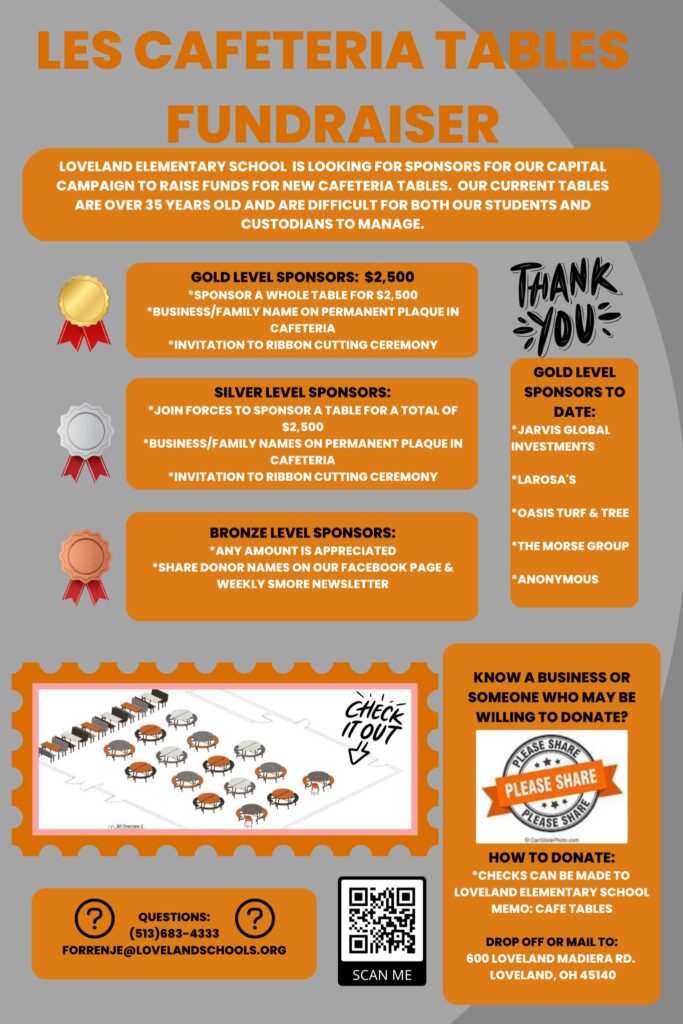
Besides supporting Tigers Inc, this year, the event is supporting a Loveland Elementary School Capital Campaign to fund new tables for the LES cafeteria.
Wendy said that shopping at the Sip and Shop is an excellent opportunity to support local small businesses by buying Mother’s Day gifts, birthday presents, something for yourself, or a graduation gift. She said there will be many items to buy for men and boys as well.
There will be a map provided to attendees that will encourage shoppers to visit the other shops in Historic Downtown and Wendy encourages shoppers to buy a meal at a local restaurant.
The fashion show will feature local “elite celebrity” models you will recognize, teachers, school administrators, and local moms and students. Most of the fashions come from the selection of clothing and accessories found at Lemons and Limes.
Learn more about Kate and Wendy and their excitement about “Sip and Shop: Mother’s Day Edition” in this newest episode of LOVELAND MAGAZINE TV.
Please “Like” and become a “Subscriber” to our YouTube Channel!
Do you want to join the fun and become a vendor? Email Wendy or Kate.
Ellen Main, is a stay-at-home mom of two boys in Loveland Schools: one kindergartener and one first grader. Her family lives in the Belle Meade subdivision.
by Ellen Main
Loveland City School District has an operating levy on the May 2 ballot this year. Because Loveland has not passed a school levy in nine years, they are in desperate need of these funds to maintain their current high quality of education. If the levy is not passed, they will move towards State minimum services. Our students and future students deserve better than this. As a mom of two young Loveland students, I am witness to the outstanding and dedicated faculty, staff, and administration in our community. My experience at a recent school event illustrates this perfectly.
Waiting anxiously for the show to begin, I looked around at all the other parents, siblings, grandparents, and other family members sitting in the Loveland Primary School gym and thought how grateful I am to live in this community. After the heartwarming show, during which the look of pride on my son’s face almost made me tear up, we walked through a gallery of children’s art—vibrant paintings, oil pastel drawings, and construction paper weavings covered the hallways from floor to ceiling. My son showed such confidence in finding his art on the walls and explaining it to his family. Then, he led us to his classroom (Ms. Miller, Room 9), where he showed us two beautiful books, one created by him (about koalas) and one created by his classmate, a biography about what makes my son special (my son created one about his classmate too). He proudly showed us all his work, which had an Australian theme (each class had a different country). All of this thanks to the hard work, energy and creativity of Lauren Alten (music teacher) and Kayla McClary (art teacher) as well as the classroom teachers, custodians, administration—too many people to mention.
The “Around the World” Showcase is an example of what makes Loveland Schools such a special place to be. Music, theatre, art, athletics, physical education, robotics and so many other programs we may take for granted won’t be possible much longer if we don’t pass a school levy. Think about the most memorable and important moments of your elementary and secondary education—most likely they were made possible because of school levies being passed.
I was lucky enough to have some extraordinary teachers in the Perrysburg School District in Northwest Ohio. My most memorable experiences had to do with music and theatre, which would not have been available without teachers having the freedom to use their creativity to benefit students both in the classroom and through extracurricular activities. Maybe yours have to do with sports, science club, art, student government, none of which would be possible without our talented educators, who would slowly be cut due to lack of funds. We cannot deny future generations these experiences.
Right now, the employees at Loveland Schools are doing amazing work despite not having the money—92 percent of all Ohio school districts receive more money per student yet we are in the top 2 percent in the state on the Ohio Department of Education scorecard. We cannot keep the talented and hard-working people we have in Loveland Schools now if they feel stressed that they may lose their jobs or if the class sizes are so big they are spending all of their time managing student behavior rather than teaching.
With the passing of the levy on May 2, we can keep not only our schools strong but our community as well. Voting yes for Loveland Schools on May 2 is a vote for our students and future students and also for the well-being of our entire community.
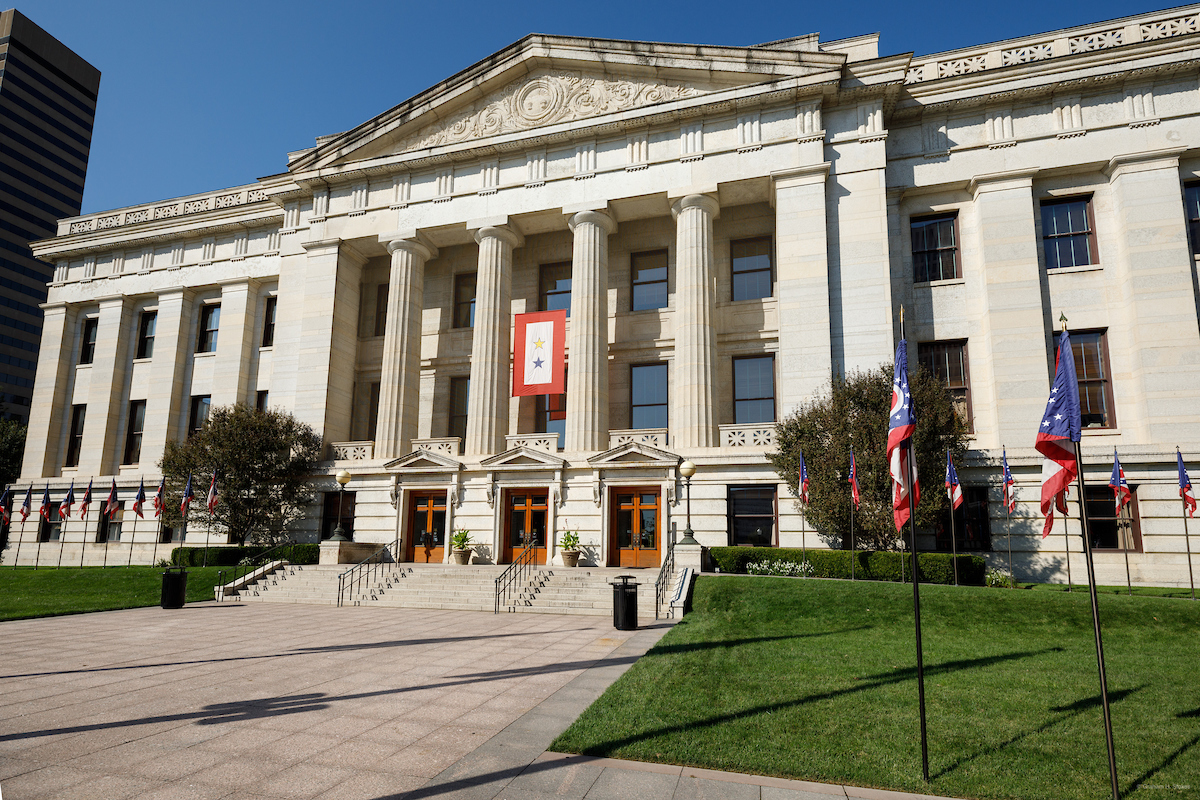
The Oho Statehouse, Columbus, Ohio. (Photo by Graham Stokes for the Ohio Capital Journal. Republish photo only with original story.)
The way that the law is written would only complicate the state’s school-funding woes, take money from libraries, and increase property taxes for farmers and homeowners, it added.
It sounds fair. If everybody paid income taxes at the same rate, the rich would pay more because of their higher incomes and the poor would pay less because they make less in the first place.
But an Ohio proposal to enact such a “flat” state income tax ignores a host of other taxes, said a progressive public policy think tank. And the way that the law is written would only complicate the state’s school-funding woes, take money from libraries, and increase property taxes for farmers and homeowners, it added.
“One of the myths that we have to dispel is that flat taxes make things fair,” said Guillermo Bervejillo, a state policy fellow at Policy Matters Ohio. “It’s quite the opposite. One of the things people forget when they talk about income taxes is that there’s a whole array of state taxes.”
Bervejillo was speaking in reference to House Bill 1, which, as the bill number implies, is a top priority of the Ohio House’s Republican leadership. A spokesperson for that leadership didn’t respond to questions about the many criticisms that Policy Matters made of the bill.
One is that many economists have long argued that so-called “flat” income taxes add to the overall tax burden shouldered by the poor and act as yet another means of lightning that of the wealthy.
“There’s use taxes, sales taxes, excise taxes, taxes that are generally focused around consumption and use,” Bervejillo said.
Graphic from the Center on Budget and Policy Priorities.
He explained that those kinds of taxes are the same for everybody, no matter her or his income. Buy a $100 pair of shoes in Ohio and you pay $5.75 in state sales tax regardless of whether you make $100 in a minute or in a whole day of work.
“You can only buy so much toilet paper,” Bervejillo said, explaining why sales and excise taxes fall more heavily on the poor. “You can only drive so many miles.”
The cumulative impact of those taxes is that the poor pay much more as a percentage of their income in state and local taxes than do the rich.
“On average, the lowest-income 20% of taxpayers face a state and local tax rate more than 50% higher than the top 1% of households,” the Institute on Taxation and Economic Policy said in a report, Who Pays? “The nationwide average effective state and local tax rate is 11.4% for the lowest-income 20% of individuals and families, 9.9% for the middle 20 percent, and 7.4 percent for the top 1%.”
Federal and state income taxes are the few exceptions that were originally structured to be “progressive.” In other words, they were intended to fall most heavily on those with the greatest ability to pay.
And it’s true that if you take those and all other taxes into account, the richest Americans pay a bigger portion of their incomes out in taxes than poorer Americans. But the spread isn’t very wide.
In 2019, the poorest 20% of Americans paid 20.2% of their incomes in taxes, while the richest 1% paid 33.7%, the Institute on Taxation and Economic Policy reported.
But in Ohio if you take just state and local taxes into account, the script is flipped. In 2018, the poorest 20% paid almost twice as much of their income in such taxes — 12.3% — as the richest 1%, who paid just 6.5% of their lavish incomes in state and local taxes, the institute reported.
And if Ohio were to enact a flat income tax, it would come on the heels of other measures in which the state has foregone large sources of revenue largely to the benefit of the wealthy.
Ohio is giving up about $1 billion a year on a tax break for limited liability corporations. It was sold as a way to incentivize mom-and-pop businesses, but a 2017 analysis by the Ohio Legislative Service Commission found that as much as $450 million of that annual benefit was going to the highest 0.5% of Ohio wage earners.
Meanwhile, there’s been no evidence that the cut improved Ohio’s jobs picture. It was 39th among states for job growth in February 2003 — well before the LLC tax cut was implemented, according to data compiled by Arizona State University’s Seidman Institute. By last month, Ohio ranked 46th in year-over-year job growth.
And former Gov. John Kasich created JobsOhio by diverting funds from the state liquor monopoly. It’s spent more than $1 billion on things like incentives for wealthy businesses to locate to Ohio, but the agency has struggled to show that those expenditures have made much of a difference to the state’s jobs picture.
But aside from fairness, Policy Matters raised another objection to HB 1 — it’s not paid for. Working from a fiscal analysis of the bill by the Legislative Services Commission, the group found that after the initial phase-in:
Property taxes on farmers and homeowners would increase at least $600 million a year because of “changes in the bill and the operation of Ohio’s existing property tax limit, known as House Bill 920.”
Schools, libraries and local governments would lose hundreds of millions of dollars a year.
There would be $780 million in annual net losses to the state that are not paid for in the bill.
Bervejillo said it’s not hard to understand why pain would spread to large swaths of Ohioans from the flat-tax proposal.
“At the end of the day, there’s only two things you can do when you cut taxes on the wealthy,” he said. “You can either cut services — and who depends more on services than low-income people? Or you increase sales and use taxes and gas taxes and cigarette taxes that fall disproportionately on low-income and working-class Ohioans.”
_________________________________
MARTY SCHLADEN
Marty Schladen has been a reporter for decades, working in Indiana, Texas and other places before returning to his native Ohio to work at The Columbus Dispatch in 2017. He’s won state and national journalism awards for investigations into utility regulation, public corruption, the environment, prescription drug spending and other matters.
[vc_row][vc_column width=”2/3″][vc_column_text]Loveland, Ohio – The Loveland City School District is asking voters to approve an additional 4.9 mills permanent operating levy that will be on the May 2nd ballot.
Your voter registration and updated Information Form must be postmarked by the voter registration deadline, the 30th day before the election, to be eligible to vote in that election.
April 3rd is your deadline.
Absentee voting begins April 4th.
If you register in person or online, you must do so by the 30th day before the election. You, or another person acting on your behalf, also may deliver your application to your Board of Election offices.
What are the qualifications to register and vote in Ohio?
If you meet all the following requirements, you are qualified to register to vote in Ohio:
You are a citizen of the United States
You will be at least 18 years old on or before the day of the next general election
You will be a resident of Ohio for at least 30 days immediately before the election in which you want to vote
You are not incarcerated (in prison or jail) for a felony conviction
You have not been declared incompetent for voting purposes by a probate court
You have not been permanently disenfranchised for violating the election laws
You are eligible to vote in elections held in your voting precinct 30 days after you are duly registered to vote in this state. Your Board of Elections office will mail you a notice of your voting location. If you do not receive a timely notice, contact them.
7 PROPOSED TAX LEVY (ADDITIONAL) LOVELAND CITY SCHOOL DISTRICT
A majority affirmative vote is necessary for passage.
An additional tax for the benefit of Loveland City School District for the purpose of current operating expenses that the county auditor estimates will collect $4,903,000 annually, at a rate not exceeding 4.9 mills for each $1 of taxable value, which amounts to $172 for each $100,000 of the county auditor’s appraised value, for a continuing period of time, commencing in 2023, first due in calendar year 2024.
Loveland, Ohio – Loveland Schools begin their Spring Break this Friday afternoon March 31, and classes will resume on Monday, April 10.[/vc_column_text][/vc_column][vc_column width=”1/3″][vc_widget_sidebar sidebar_id=”td-default”][/vc_column][/vc_row]
Loveland, Ohio – We published our results as soon as the three counties Loveland is in, Clermont, Hamilton, and Warren reported their “Unofficial” counts and when 100% of precinct votes had been tabulated by each county BOE.
These results are, as of 12:10 AM Wednesday, November 9.
The results below are the “Unofficial” count. There will still be outstanding ballots left to be counted. Absentee ballots must be postmarked by the 7th and received by the BOE’s no later than November 18.
The Official Count occurs between 11 and 21 days after election day.
The election must be “certified” by November 29th and this will include all election-day ballots, on-time ballots not yet counted, and all valid provisional ballots.
Loveland, Ohio – The Loveland Tigers were not short of achievements this spring sports season, bringing in multiple awards for the school.
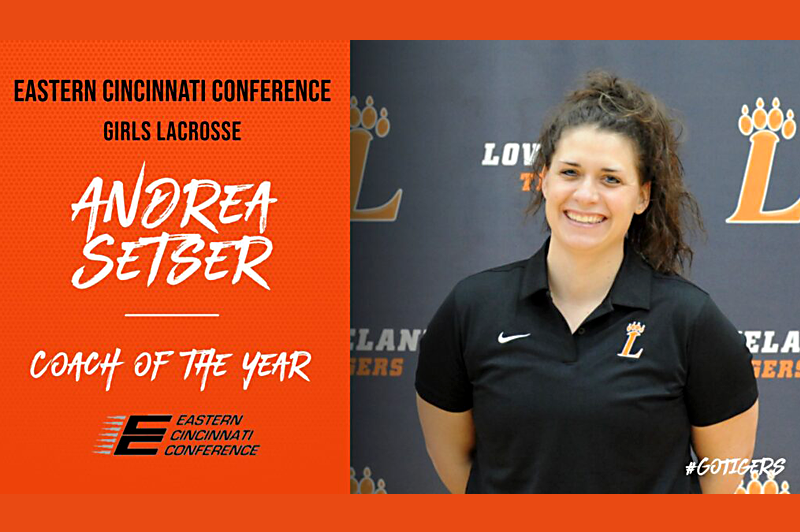
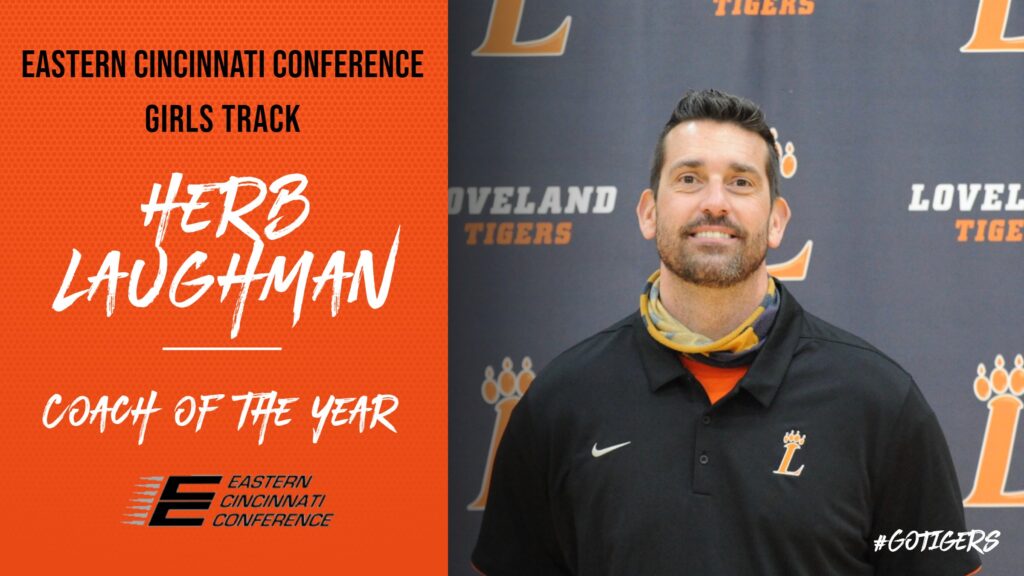
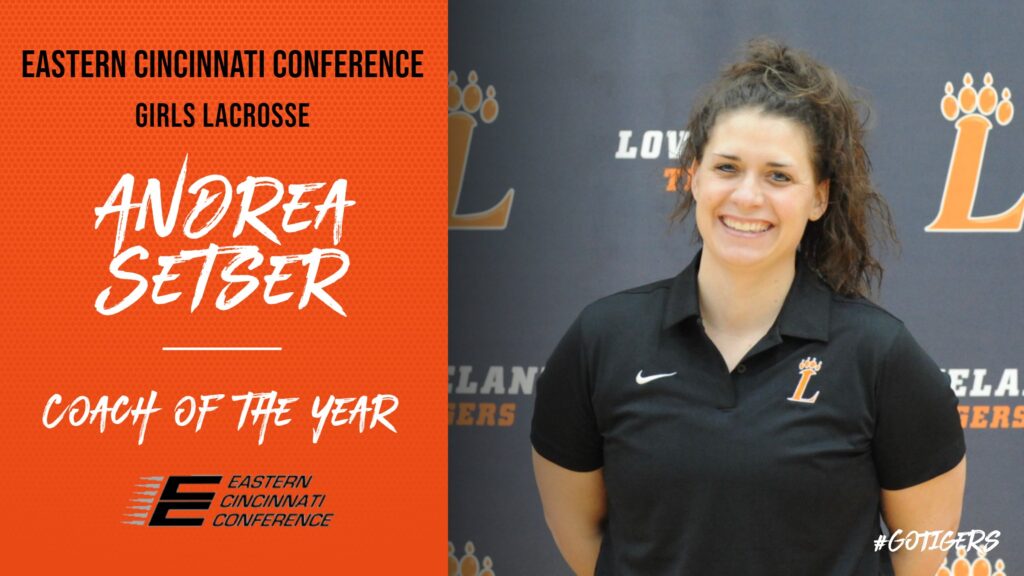
Coach Andrea Setser was named the Eastern Cincinnati Conference (ECC) Coach of the Year on her first year of coaching for the lacrosse team. Coach Herb Laughman was named ECC Coach of the Year for women’s track, while Coach Jim Vanatsky was named ECC Coach of the Year for men’s track.
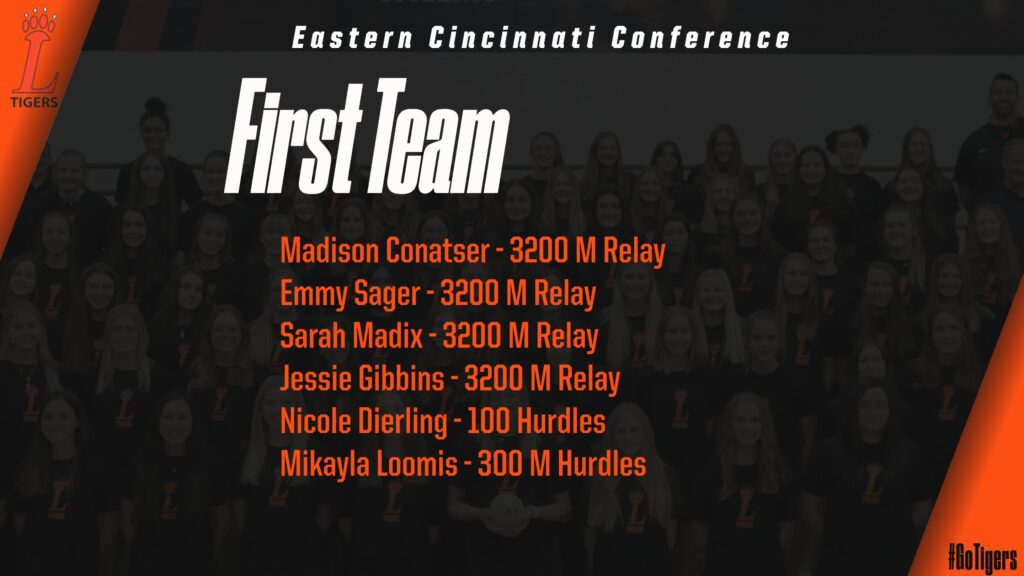
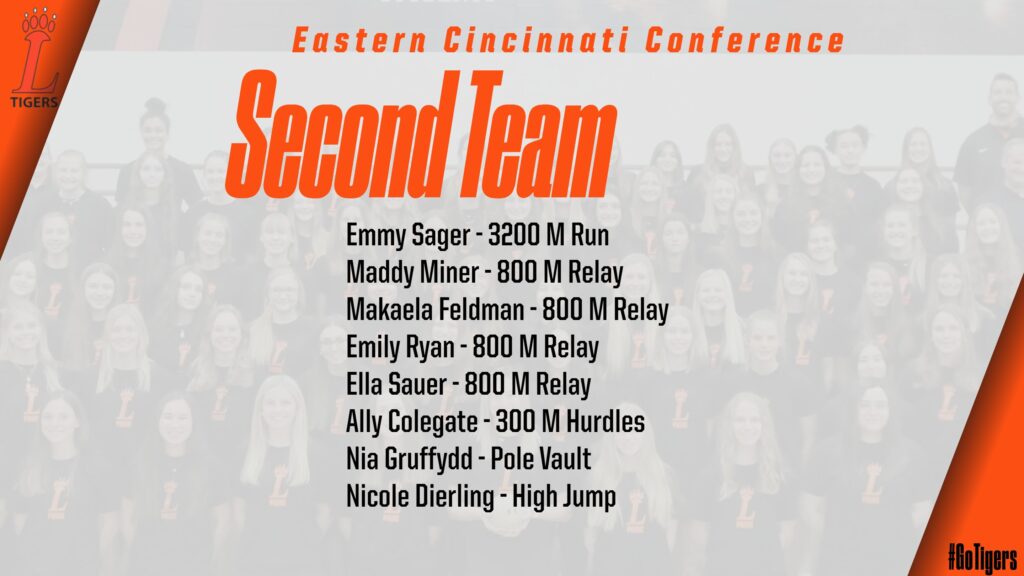
6 women on the Loveland Women’s Track team made ECC First Team All-Conference, and 8 more women were Second Team All-Conference. 11 men on the Loveland Men’s Track team made ECC First Team All-Conference, and 9 more men were Second Team All-Conference.
First Team All-Conference winners for the men’s team include Brady Steiner (10), J.P. Tew (11), Ajay Stutz (12), Ryan Chevalier (11), Trey Powell (11), Aaron Morton (12), Max Flanders (12), Dylan Schwinn (10), Aaron Schuetter (11), Jesse Jenkins (12), and Ryan Hetzel (12). First Team All-Conference winners for the women’s team include Madison Conatser (10), Emmy Sager (11), Sarah Madix (11), Jessie Gibbins (11), Nicole Dierling (11), and Mikayla Loomis (11).
On the baseball team, Jake Zicka (12) received the All-Conference Second Team award, and teammate Connor Wessel (11) received the ECC All-Conference Honorable Mention award.
Men’s Lacrosse had 8 award winners. Zach Mulligan (11), Scott Phelan (12), Ethan Lund (11), Jackson Noe (11), and Will Westermeyer (11) received the All-Conference First Team awards. Honorable mentions included Breckin Sharkey (12), Weston Manske (12), and Roman Wilburn (11).
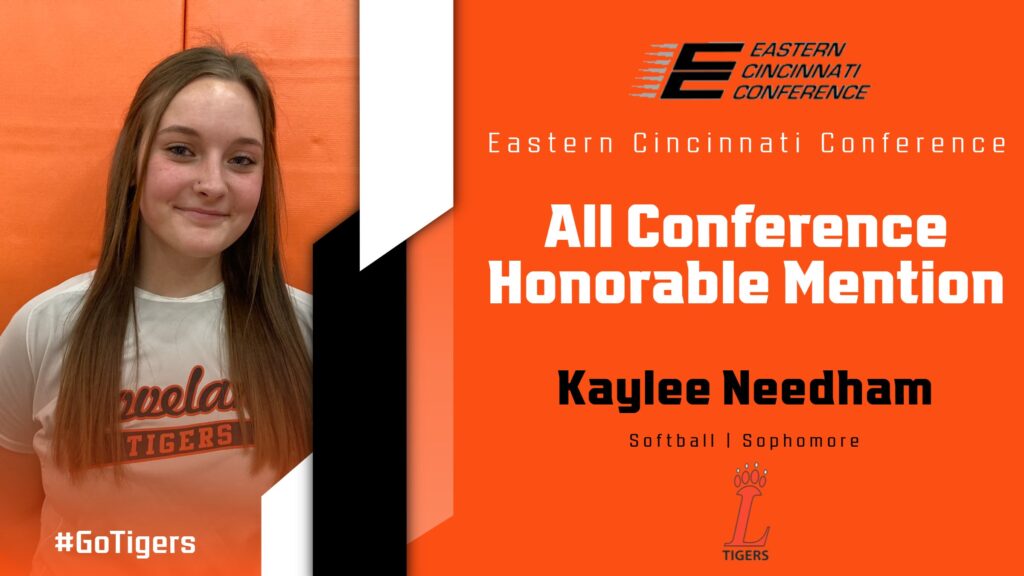
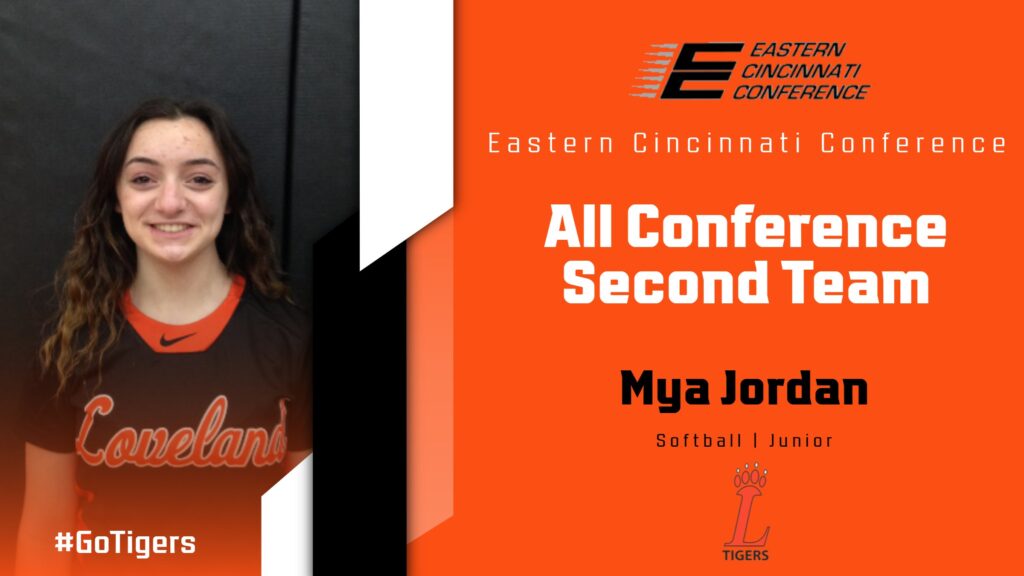
On the softball team, Jerrah Harcourt (12) received the All Conference Second Team award along with Mya Jordan (11). Kaylee Needham (10) received the honorable mention.
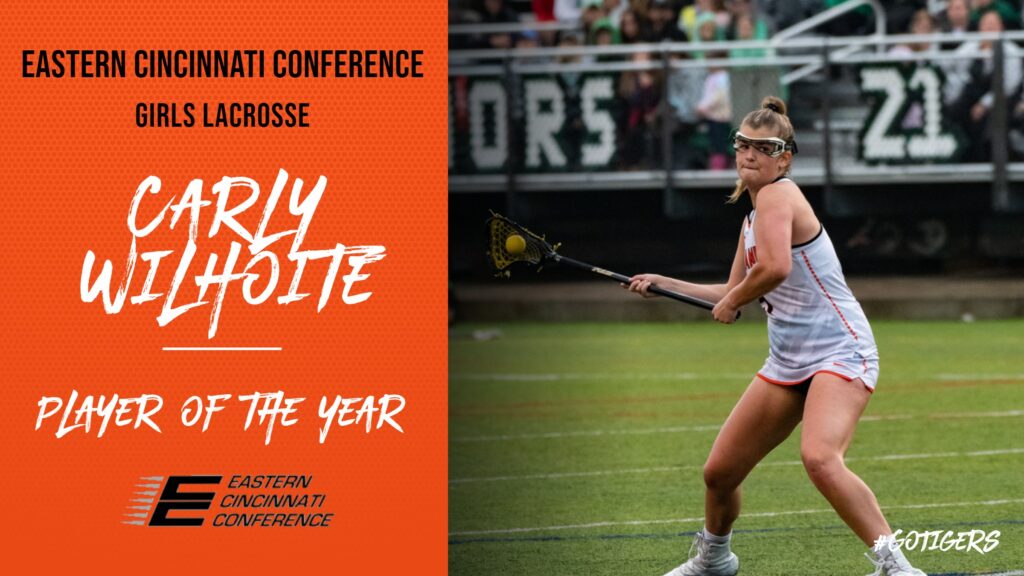
Women’s Lacrosse had many great achievements including Carly Wilhoite (12) being named the ECC Player of the Year. As mentioned, Coach Andrea Setser was named ECC Coach of the Year on her first year of coaching for the lacrosse team. ECC All Conference First Team winners included Hanna Wenger (12), Josey Storm (12), and Maggie Nance (12). Abbie Miller (12), Allie Despotakis (10), and Katie Beasley (11) were all named All-Conference Second Team. Skylar Mosconi (12) won the honorable mention.
Loveland Men’s Volleyball also received a few awards with Tyler Miller-Bross (12) winning the All-Conference First Team award and Eric Keldsen (12), Stone Thole (12), and Mason Mueller (12) winning honorable mentions.
Overall, in ending the school year, Loveland was second place behind Turpin in the All Sports Trophy by 1.3 points. Loveland scored a 74 in the fall, 61.5 in the winter, and a 54.5 in the spring for a total of 190. Way to go Tigers!
Loveland, Ohio – The emphasis of Loveland’s camps will be learning the fundamentals of each sport and having fun. We believe that in order to reach your full potential as a future Tiger you must have a solid foundation of fundamentals. Campers will be given a variety of individual methods of practicing that will enable all to practice at home on their own. We hope you first and foremost have an enjoyable experience. Go Tigers!
Please register all campers for the grade they will be entering for the 2021-2022 school year (Spring Camps will be for the 2020-2021 year).Please Pre-register for all camps!Walk-up registration is available if there is space available.Camps are rain or shine.
A true story by a Loveland resident presented by Loveland Magazine in collaboration with the Loveland Diversity Advisory Board. Contact them if you’ve a story to share.
The family in this story has chosen to remain anonymous for fear of retaliation against their children.
You may want to read Part I first or re-read it to remember the story we are telling.
Part I of II
As the years passed our family had more brushes with racism and the talks my husband and I had with our sons became, both by choice and necessity, more regular. As they grew from children into tweens and teens, we had to remind them that in the eyes of others they were no longer perceived to be cute, unthreatening little boys. For a Black child, that shift in perception can be the difference between life and death. While their Caucasian friends were in the habit of wearing the hoods of their sweatshirts over their heads when walking around town, their dad and I recognized the danger inherent in this scenario for boys of color. And that was just the beginning. Every news story became another talk we had to have.
Still, despite the increasing frequency of our family talks and growing awareness of society’s bigotry, one can never quite be prepared when racism rears its ugly head.
She wanted to go to the park. My daughter, only five, was not yet included in these family conversations. The innocence my sons were cruelly stripped of that final day of school was still intact in her, as evidenced by her bright eyes, sweet giggles, and the ambient toothy grin she had for everyone she met. Like so many moms that day, I tied her soft brown curls in a ponytail, gave her breakfast and got her dressed before setting out for our walk to the park, just around the corner from our house. It was an unremarkable walk, one we’d taken a thousand times.
Upon arrival we encountered several boys. They appeared to be aged 12 or 13, and like so many boys their age they were roughhousing, laughing, and hollering. I half-smiled and shook my head remembering how boys that age could be, before turning my attention back to my little girl.
The rowdiness didn’t bother us, but I winced as one spewed a series of obscenities, hoping my daughter’s attention was focused on the playground and not the words her young ears were hearing. A quick glance around showed no parents or elder siblings in attendance and so apparently, as tween boys are apt to do, they were in relishing their temporary emancipation, saying things they knew better than to say.
They’ll stop this behavior now that I’m here. Kids don’t act like this in front of adults, I deduced. I’ll just keep her on the far side of the park where she’s less likely to hear them.
“ Mommy!” I was jerked back into reality by my daughter’s excitement. “Can you help me get up there?” she asked, motioning to the play structure.
I had done it a thousand times. I’d fit my hands around her waist, giving her a boost. I’d watch as her small hands smoothly and confidently scaled the rungs. But before I could lift her I heard a mocking shout coming from the direction of the boys.
“Why are YOU calling HER that? She’s not YOUR mom,” he chortled.
Now is the part of the story where I let you, the reader, know that I am, in fact, Caucasian. My husband is Black and, thus, our childrens’ richly hued complexions do not match mine. And while there has been more than one instance where children (and the occasional adult) are curious about how one pale-skinned mother comes to have three darker-skinned children, the tone in this boy’s voice told me this was not childhood confusion.
This was antagonistic.
This was unmistakable cruelty.
My daughter let go of the play structure, whipping her head around to face me. Loose curls softly grazed her cheek. We locked eyes. On her face was an eerily familiar expression. It was one I’d seen years earlier and in many nightmares since. It was the same look my sons had given me on the last day of school.
That last day of school.
“Have a good summer, you N——s!”
The feeling came rushing back, the unadulterated terror where my stomach flips, my heart drops, my breath quickens, and I can feel the color draining from my face.
Oh, not again.
“Mommy?” my daughter looked at me, baffled.
“Stop calling her your mom!” The boy scoffed. “She can’t be your mom. She’s white!” The boy sneered at us, before glancing at his buddies with a snicker and a smile, seeking approval for what he must have thought were his superior skills of observation. One of his friends joined in on the cackling. The other stood silently, head down.
The old adage of “sticks and stones” isn’t always accurate. One look at my daughter’s collapsed expression told me these words, while not breaking her proverbial bones, threatened to break her spirit.
“Don’t you talk to my daughter that way,” I snapped. “I am her mother.”
“Mom–”
“She’s not your mom! SHE”S NOT YOUR MOM! She’s white!”
Laughter. Jeers.
I walked toward the boys slowly, the soft earth yielding beneath my sandaled feet.
Imagine, for a moment, you are standing in my shoes.
What do you do in a situation like this? Do you unleash your wrath on someone else’s kids? Do you completely lose your composure in front of your daughter who is already visibly shaken? Or do you ignore such a blatant and dangerous transgression? And where did these kids learn this behavior anyway? Why would they think this sort of racially-charged rhetoric is acceptable? What emboldened them, still children, to speak this way around me, an adult? And of all places for this to happen, why did it have to be on a playground, a place of childhood innocence? A magical place meant to foster youthful wonder and unbridled imagination?
The questions rang in my ears while a whirlwind of emotions bubbled to the surface. Though seemingly intertwined, my feelings were in direct juxtaposition with each other. I felt sorrow, but also anger. Despair, but also rage.
“You know,” I began, measuring my words carefully, “I wish your moms were here so they could see how you’re behaving.”
I didn’t know what else to say. I still don’t. Would you?
I took my daughter’s small hand and led her out of the park, back to our house, back to the embrace of the four walls that felt comforting and familiar. The sun swelled in the sky, casting shadows as it fought to rise above the clouds.
As we walked, my daughter begged insistently for answers.
“Mommy, why are those boys saying you’re not my mommy?” The loose brown curls now stuck to her face, plastered in place by tears. “You are my mommy, right? You’re my mommy?”
Explaining a nuanced topic like racism to my school-aged sons felt like too soon and even then I felt guilty somehow. Like I hadn’t broached the subject enough and had somehow failed them. But my daughter was five. How do I explain this situation to a five year-old? And why should I have to? I resented those boys. I resented the situation. I resented everything that put me in the position of having to reassure a five year-old little girl that I am her mother, to explain why she and I look different, and to address how that will be an issue for her in the future.
If I have learned anything from the events involving my children it’s that everyone, regardless of the color of their skin, needs to be having conversations about race with their families. These talks, whether organic and casual in nature or full-fledged sitdown discussions, must happen regularly. Not only that, but the topic needs to be addressed in a manner that honors and celebrates our differences while still acknowledging our similarities. And because so much of racism is learned behavior, modeling acceptable treatment of others can’t start and end when the conversations do. It isn’t the sole responsibility of families of color to teach their kids about prejudice and racism; Eradicating hatred is a group effort that has to include everyone to be successful.
I have replayed that day in my mind a thousand times.
Fortunately, in the years since, my daughter’s memory of the incident has somewhat faded. I’m thankful that she doesn’t have to carry that burden around anymore, a veritable boulder on her tiny back.
But I carry it everyday.
I carry it when I see the news.
I carry it when I think of my own school experience. The cruel taunts of classmates calling me a “N—-rlover” leave me wondering what onslaught the teen years have in store for my own children.
I carry it when I see comments on social media that assert prejudice does not exist in Loveland, or does not exist in Loveland today, or does not exist with “my child.”
I carry it when I’m sitting on my porch watching my daughter play and from a yard within earshot I hear someone commenting on the election. Well I hope all those dumb Black people are happy now that they got what they wanted.
Racism is here, in Loveland, whether we want to admit it or not. It’s here today and everyday, and it’s all around us whether we want to admit it to others or to ourselves.
But what gives me hope is that once we acknowledge the issue, we can unburden ourselves of this unnecessary weight. By taking that first step, we can commit to doing better. We can do what is needed to learn and to grow, and we can do that learning and growing together. I hope that by sharing my family’s experiences others will be empowered to take that first step.
In Part I of this Diversity Story, we see that the trouble was only beginning.
Read our first installment of a true story by a Loveland resident presented by Loveland Magazine in collaboration with the Loveland Diversity Advisory Board
For engaging story times on diversity (including race) for young learners, join the Loveland Diversity Advisory Board and the Cincinnati Hamilton County Library the 2nd Monday of every month for Bedtime Book Talks.
Support for those feeling fearful, vulnerable, or uncomfortable upon reading these accounts:


![“Sip and Shop: Mother’s Day Edition” [Video Interview]](https://lovelandmagazine.com/wp-content/uploads/2023/04/kate-wendy-feature-2-feature.jpg)


 Tigers Inc on Facebook.
 Learn more about Lemons and Limes Boutique.
 The Landing Event Center on Facebook.