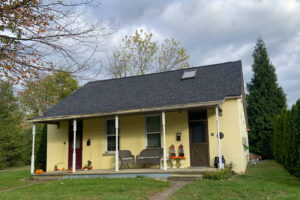
I am writing to express my deep concern regarding the recent decision by Loveland City to deny the validity of case #2024-03: 200 Railroad Avenue HPPC Appeal based upon a 3rd party filing by a concerned Loveland resident. (Demolition of home in Loveland Historic District causing uproar)
Ironically, as we debate the future of historic buildings and the little yellow house on Railroad Avenue, a ten year anniversary of the groundbreaking on Loveland Station Apartments approaches (November 12, 2014).
Just barely a decade ago, Loveland residents woke up to a massive three-story apartment complex near the train crossing in our historic two-story whistle stop town, constructed even at the expense of losing our iconic train whistle. Transparency was nowhere to be found, and residents were left angered and baffled how it happened. Some even called to tear the buildings down.
As elected officials, Loveland City Council members are entrusted with the responsibility of representing the interests of all Loveland residents, especially when they show up at public meetings. We vote for them; at the very least, we expect transparent processes.
We asked only for an appeal to a zoning decision to demolish this historic house in question. Yet the City, under solicitor Joe Braun, denied several concerned citizens at the scheduled public appeal meeting an opportunity to contribute factual evidence as to the historic value of the home. From our perspective, the process failed.
It is crucial that our elected officials remain responsive to the concerns of their constituents. By actively listening to the community and considering their input on historical and architectural significance of buildings to the city, the City Council can make informed decisions that benefit both present and future generations. But they didn’t listen at all.
The City’s decision to allow the appeal to precede so far as to set a specific date for the appeal review and then, at that meeting, subsequently invalidate the appeal on technical grounds was not only unfair but suggests strategic timing to obstruct an open process.
This action effectively limited the opportunity for other residents to submit further appeals prior to the deadline, undermining the very essence of a transparent and democratic processes.
Residents showed up prepared because they believe the 200 Railroad Avenue building is a significant piece of Loveland’s history. Indeed, it was acknowledged by Council Member Neal Oury at the October 22nd Loveland City Council meeting that the original brick structure remains standing and sound.
In fact, it is the only remaining brick structure just a few yards from the Little Miami Railroad tracks on Railroad Avenue.
Residents who showed up to the appeal meeting wanted to know what we’re demolishing of our remaining history as a whistle stop town. They want thoughtful deliberation as part of a transparent process. Instead, the City appeared non-responsive.
It is essential that the City conducts public meetings in a fair and impartial manner. By disregarding the concerns of residents and limiting public participation in a zoning appeal process, the City has once more set itself up for hard questions reminiscent of seven years past.
This public doubt stems from the Loveland Station Apartments development followed by the era of Mayor Mark Fitzgerald and the attempt to replace the current Loveland City Hall with a FOUR story, multipurpose building in a public-private deal, as much as we would like to forget. Residents were angry, yes, and the city hall project was kicked aside—for now.
The maneuver to deny the appeal on October 30th, while deft, was strangely reminiscent of 2017 when failure of transparent process went so far that (then) resident Neal Oury called for a public recall of mayor Fitzgerald before announcing his own candidacy for a Loveland City Council seat. But it didn’t stop there. Transparent process failed so miserably that in 2017, a resident filed a sunshine lawsuit against the City of Loveland.
How can we take a step back?
A better way forward than denying the appeal process would have included 1) any council members with longterm friendship with the owner or developer recuse himself from votes on the question of demolition, and 2) residents given an actual opportunity to present their research findings at a newly scheduled Zoning Appeals Meeting.
Why not slow down and get it right? I urge the City Council to not dig in but instead to reverse its decision to deny the appeal on October 30th before razing the historic house.
Moving forward, I hope this latest pubic disappointment serves as a reminder to Council to prioritize transparency and open communication with residents, especially when making special zoning decisions that involve any plans for multi-unit buildings. (Six, three-story apartments proposed adjacent to Nisbet Park on Loveland Bike Trail)
By fostering a more inclusive and participatory decision-making process, Loveland City Council can better ensure that residents remain mutually supportive of their many hours of earnest public service.
When we first heard about the City of Loveland raising water rates only one of our brows raised, but on closer examination, real-life experiences, and asking questions of Loveland’s City Council Members we went full brow.
Below you will find the questions we asked all seven council members in an email on December 29. Two elected officials, Kip Ping and Andy Bateman, out of the seven responded. We decided to re-send our questions to the remaining five council members, Mayor Kathy Baily, Vice-Mayor Ted Phelps, Kent Blair, Neal Oury, and John Hart, on January 11 to ensure they received them and we received no responses, not even an acknowledgment that they received our questions. All seven members voted for the new water fee.
For publication:

You recently voted for a flat rate increase for water customers. Loveland Magazine is following up on a recent story we published about the increase (Early holiday presents for Loveland homeowners – It’s coal under the tree). Would you kindly respond to these questions/propositions?

It seems you determined the amount you wanted to collect for the infrastructure repairs was $450,000 in year one and to achieve your goal you simply divided that number by the number of units you could bill and are charging a flat rate to all.

The flat rate appears to apply equally to single-family homes, each apartment in a complex, and commercial and industrial users.

The total you determined to need in year one is $450.00.00 and that was divided by 5,000 (estimated number of units).

$450,000 ÷ 5,000 = $90/year

$90 ÷ 12 = $7.50/month/unit

Correct?

It also seems you already know the actual number of gallons of water each unit consumes each month or year. Would not a rather easy math calculation determine each unit's impact on the distribution system based on actual usage?

Why was the rate increase/unit not based on actual gallons consumed?

There seems to have been no consideration based on income, disability of a user, being a senior citizen, or being a retiree on a fixed income.

There seems to have been no consideration based on an individual's commendable water conservation efforts.

You have implemented a proportional rate increase — one that takes the same amount from all income groups regardless of their ability to pay. It is a regressive rate — a rate that takes a larger percentage from low-income groups than from high-income groups.

Why was a progressive rate not used that would charge more for high-income groups than for low-income groups?

Thank you in advance for responding with your thoughts and answers.

Best regards,

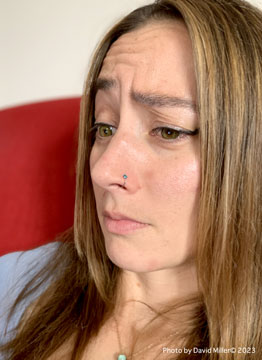
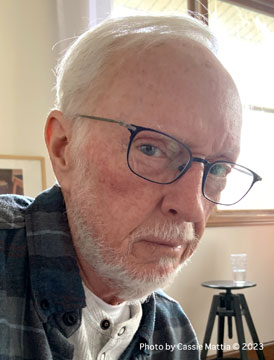
David Miller and Cassie Mattia
Cassie Mattia Responds
I have now been a resident in Downtown Loveland at the Loveland Station Apartments for 5 years. To be quite honest, the inflation I have seen citywide and nationally has been shocking.
The city of Loveland announcing a water increase was just the icing on the cake after being alerted that I would have another rent increase as well. My boyfriend and I have worked very hard to get to the point we are at in our lives financially and in our careers, but with all the increases in the city of Loveland, I have had to take on the burden of once again working multiple jobs just to afford to live comfortably in Loveland.
I never would have thought after securing my dream job as the Public Relations Coordinator at the Butler County Board of Developmental Disabilities that I would ever have to go back to working multiple jobs, but that is now a reality I have to accept.
When will enough be enough for my generation? When will we have to stop living paycheck to paycheck even though we were told growing up that getting a college degree would prevent us from experiencing that? When will we be able to buy a home and stop getting hit with rent and utility inflation? I will admit I am one of those people that is money motivated so I am always striving to see how much more I can build my savings, but I think one of the biggest reasons I am that way is that I don’t want live paycheck to paycheck. I want to build a great life for my family, but at age 33 with a great financially stable career that I have worked oh so hard for, why should I still have to live to work?
Council members, Kip Ping and Andy Bateman took the time to respond to our questions about the city of Loveland water rate increase, which David and I both greatly appreciate.
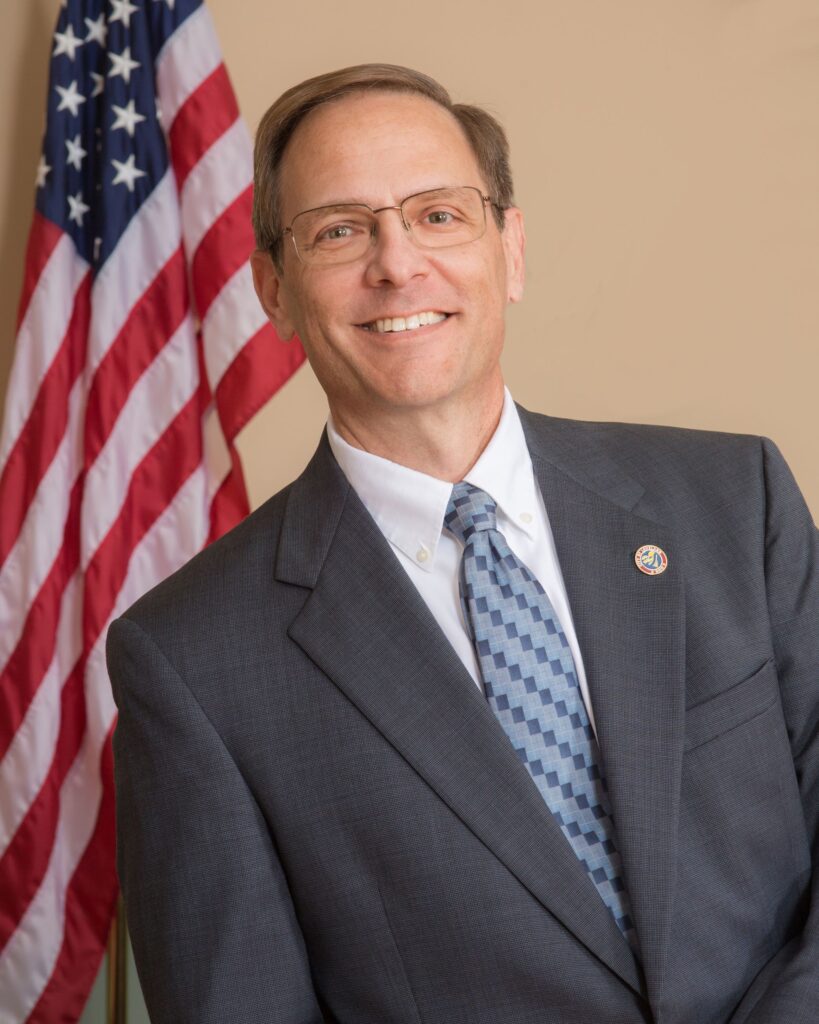
Councilman Kip Ping
Good afternoon David and Cassie,

Thank you for your inquiry. This is an important issue as it is vital that we plan for the future maintenance of our water system rather than waiting until we are in a crisis such as we have seen recently with some other cities. In the past there has been a practice in Loveland of borrowing money to repair the water infrastructure. We are fortunate that much of our water system is newer, so this has not necessarily been an inappropriate approach, but as the system ages it makes less and less sense to continue this way. Even if nothing else were at issue, letting the debt service get out of hand is not a direction we want to take. The new fee will allow a more proactive response which will eventually draw down that debt service and put Loveland in a better position in the long term. While we know of no imminent issues with the system, we do know that each year it gets a little older and prudent planning demands that we address this before it becomes a critical issue. With this in mind, Council made what I think was the correct move in putting this fee in place, all the while knowing that it would not be a popular thing to do.

I agree that the current fee does nothing to promote conservation or reward it, however, the current billing model already does that via the charge for both water and sewer in the usage part of the equation. The new fee is limited to use for maintenance of the actual lines, and conserving water does not affect the cost burden that must be considered for this. We must pay the same for a mile of pipe regardless of how much water goes through it. The system thus becomes more expensive per gallon as water use is decreased.  Keeping these charges separate allows rates to reflect usage costs and the fee to reflect the maintenance cost.

I appreciate your concern for those of modest means and agree that we need to be thoughtful about the impact of this fee on them. Your desire to use a usage based rate to protect these people, though, seems to be built on the presumption that the groups you mention would by necessity have low usage.  I’m not convinced that is the case. I am personally aware of a family on a fixed income who uses more water than my wife and I, though we have substantially more means than they. Putting this in as a usage fee would result in them having a higher bill than my wife and I on top of the already higher consumption fee they pay. This would be the opposite outcome of what you are trying to achieve with the usage method. I am not arguing that this one specific example can be extrapolated to the entire community and would be valid in every case, however, I am arguing that your presumption that water usage is directly proportional to income is not valid in all cases either. Any comparison of empty-nesters in our more affluent neighborhoods like Sentry Hill versus families in less affluent areas like the Heights would likely show that usage is not going to substantially change the extra cost on the bill.

Another aspect of this issue is that of access to usage. Utilities are different than other forms of consumption because of the way the good is distributed. History on these issues has shown that because of this difference there have been some unique problems with regard to fairness. Electric utilities, for example, wanted to charge the farmer more than the city dweller because he used less electricity but required more infrastructure to get the electricity to his farm. This would have resulted in rural consumers being charged more in fees for less in consumption (assuming they could afford the fees). The government by prohibiting this practice dictated to the utilities that having users spread equally the cost of the delivery system was more fair than basing the fee on the cost to the system to each user even though it meant urban users paid more than rural users relative to the demands on the system. Again, I am not arguing that this is applicable to all or even the majority of our water system users, but it does show that there are many factors in the equation when one considers the notion of fairness.

As with any collection of public funds, there will be some that fair more poorly than others. Regardless of the system used, there will be exceptions that we can find and argue as unfair to certain people. Our effort can therefore only be to minimize those situations to the extent possible.  While we may not have chosen the system you feel is best, I assure you that thought was given to the fairness of this fee and how to minimize its impact on the system’s users.  That said, as the subject of taxes and fees is one that is of upmost importance to all taxpayers, I have copied City Manager Kennedy on this email and will follow up with him next week to see if there is any data available that has been inadvertently overlooked and would support your assertion that usage is proportional to income. In the absence of data showing that correlation, I do not foresee changing the fee structure.

Sincerely,
Kip Ping
Cassie Mattia’s Response Continues…
Mr. Ping made some very great points in his email and I of course can understand the thought process behind implementing the water increase citywide. I will admit I am not as educated as Mr. Ping is in regards to the city’s water infrastructure and what the future could hold as the city’s water system “ages,” but I will say that I am a little confused as to why homeowners in Loveland are experiencing on average a 3% increase ($1.50 per month) in their water rate while all those living in apartments within the Downtown Loveland area were informed that there would be a gradual increase over the next few years and the increase in 2023 would start at $7.50 per month tagged onto our bills. We were told the increase would eventually amount to an extra $10 on our bills.
This is not only confusing to those that received this notice but also makes no sense considering someone owning a home would obviously consume more water than a person living in an apartment. The city’s press release vs. what we apartment renters received contradicts one another.
As a Loveland community member, I would love some answers as to why as a renter I’m being penalized not only with another huge rent increase but now a substantial water increase. Within my apartment, I use very minimal utilities in general, but with this $7.50 increase and what my water bill typically sits at, that will put my water at a 5% increase. I am confused as to why this increase is different for renters in the city. We are already paying on average $1,800 for rent (side note we can’t buy a home due to astronomical interest rates and down payments, especially in this area) and up to a 10% increase in other vital bills that have to do with being a renter. We are also A VERY LARGE part of Loveland’s economy and community. I need answers.
Mr. Ping did bring up an excellent point in regard to “access to usage.” He said, ” Electric utilities, for example, wanted to charge the farmer more than the city dweller because he used less electricity but required more infrastructure to get the electricity to his farm. This would have resulted in rural consumers being charged more in fees for less in consumption (assuming they could afford the fees). The government by prohibiting this practice dictated to the utilities that having users spread equally the cost of the delivery system was fairer than basing the fee on the cost of the system to each user even though it meant urban users paid more than rural users relative to the demands on the system.”
With that said, it makes even less sense as to why apartment renters in Loveland are experiencing such a severe increase compared to homeowners when it comes to water rates.
As I mentioned previously, I am absolutely not an expert on city utilities and the ins and outs of the water infrastructure. I am simply a concerned Loveland citizen that will always speak up when things seem in disarray within our community! I can only hope that those in positions of power locally and nationally will begin to look at the issues brought forth by those brutally affected by greed and inflation and begin making decisions that benefit my generation. We will not survive without the support of our local and national governments.
Council Member Andy Bateman’s response:
Councilman Andy Bateman
David,

First, I stand by City Manager David Kennedy’s explanation of the water main replacement fee, during his presentation to council, and in the Nov 29, 2022 press release. Second, I implicitly rely on staff expertise regarding the methodology used to determine the proposal.

Prior to the Ordinance 2022-115, the city’s water maintenance program; too reliant on loans and grants, more reactive than proactive, had, in the view of many on city staff and committees, become unsustainable. Collecting a maximum of $114 annually from each account ensures a dedicated source of revenue to apply toward ongoing replacement of 76 miles of water main. Rather than wait for funding stars to align, or allocate fund dollars to debt service, the WMR fee gives staff an opportunity to be strategic and comprehensive in their planned replacement over the long term.

Serious considerations of various socio-economic factors within the service population veers into the semantics of fairness and equity and given the history of deferred maintenance of the city’s water system, I feel that a proposed solution was overdue, and voted in favor of the legislation.

This is not to say that I am completely unfeeling toward those in a position in which this fee holds a greater financial impact. Certainly, in this inflated economy, the cost of everything gives us all pause. But without this fee structure in place, the city’s water customers could be subject to water rate increases, variable month to month, to fund more immediate water main replacements, acting as a funding band-aid for one council to pass to another down the line as we have been doing.

This council voted for more sustainable infrastructure which delivers its most basic and fundamental services. With that action comes a request that each customer pays its share toward preventative maintenance of that system, and in essentially creating a layer of protection for the future of Loveland’s municipal water service.

Thank you for reaching out and I am available if you have any follow-up questions.

Sincerely,
Andy Bateman
David Miller Responds
I reject out hand Mr. Bateman’s assertion that our concerns are mere, “semantics of fairness and equity.”
I reemphasize my initial concerns.
There seems to have been no consideration based on income, disability of a user, being a senior citizen, or being a retiree on a fixed income. There seems to have been no consideration based on an individual’s commendable water conservation efforts. City Council has implemented a proportional rate increase — one that takes the same amount from all income groups and water users regardless of their ability to pay. It is a regressive rate that takes a more significant percentage from low-income groups and low water users than from high-consuming individuals or corporations. Why was a progressive rate not used that would charge more for high-income individuals and corporate users than for low-income individuals and those who consume less water?
Within this period, any member of our Council should have foreseen that the Loveland Board of Education was heading back to the ballot with a new tax request and indeed they have voted to place a 4.9 mill operating levy on this May’s ballot. The residents of Loveland will be asked to raise their tax rate for the District to receive more dollars for operating expenses and the only way to do so is to ask residents to tax themselves. I believe this action by Loveland Council will subtract from the possible “Yes” votes who would otherwise allow the school children to have more dollars spent on their education.
With disregard for seniors on a fixed income and amid the recent uproar and now three consecutive defeats of Loveland City School District levies over those concerns, our City Council has pulled out the proverbial rug from under the feet of our children.
Concerns over inflation, rising home ownership costs, and seniors being forced from their Loveland homes have been the most cited reasons for the school not receiving the added operating funds they requested from voters.
The flat-rate, permanent water fee will increase the cost to own a home in Loveland by $90/year immediately, and $114/year beginning in 2025.
There is a genuine disconnect between City Hall and the Loveland Schools, the needs of our children, senior citizens, the disabled, those on fixed incomes, millennials, and gen Z.
Even forgetting the concern of the inequity of the water fee, voters don’t forget these things when going to the polls with a yes or no choice of raising their taxes.
Mayor Kathy Baily – No responseVice-Mayor Ted Phelps – No ResponseCouncilman Kent Blair – No responseCouncilman John Hart – No ResponseCouncilman Neal Oury – No Response
Loveland Magazine writer, Cassie Mattia lives in Historic Downtown Loveland
by Cassie Mattia
Loveland, Ohio – Families and friends came together to celebrate one of Loveland’s largest family events of the year, The Independence Day Celebration, in Loveland’s Historic Districts. The weather was a little unwilling to start off the evening, but as the clouds finally opened up and the sunshine cast down it rays, Loveland was ready to celebrate America’s birthday!
The Red, White and Blue festivities kicked off at 4 PM at the famous Loveland Tower Clock with performances by Inquire Without. Directly across the street, kids and adults lined the sidewalk to watch the Cincinnati Circus Stunt Show.
The stunt show duo provided families and friends with excellent 4th of July entertainment as they hula-hooped fire, twirled and flipped through the air using ariel ribbons and took a spin through the “Wheel of Death!” The Circus duo performed every hour throughout the evening switching up their routine to keep the audience engaged. Right next to the Cincinnati Circus Stunt show at City Hall, “N.E.S.T” created a “Family Fun Zone,” that featured family-friendly activities such as sack races, water balloon toss, hula hoop contests, three-legged races, patriotic crafts, watermelon seed spitting competition, and an apple pie baking contest!
The 4th of July spirit spread down the Little Miami Bike Trail to Nisbet Park as the Independence Day Parade hour drew nearer and nearer! Kids were spotted all over enjoying the “Kid Zone,” which included Cool Critter’s Outreach, Heavenward Farms Pony Rides, Foam Dance Party, Disney Characters, a Bounce House, Inflatable Games, Face Painting, Balloon Artists, Branches Church Photo Booth, and several food trucks. Families enjoyed everything from sprinkled ice cream cones at the Loveland Dairy Whip mobile truck, to warm, buttery pretzels from PretzelFuls, to good old fashion Farmhouse Lemonade.
Did I mention Bite Me Gourmet Corndogs was there as well serving up some unique corndog combinations?! In addition to the food trucks that camped out in Nisbet Park, there were also several other food trucks that offered some excellent summer cook-out food selections. Chocolate Freaking Bacon served up plenty of bacon at the Loveland Tower Clock, The Beerded Pig Food Truck of Ohio handed out their award-winning bbq combinations at Cappy’s, AJ’s Cheesesteaks sliced up some delicious sandwiches at Cindy’s, and The Italian Truck gave their guests the full Italian experience, street food style, at Narrow Path Brewing.
With food and drinks comes music and Loveland’s musical entertainment selections did not fail to do what they do best….ENTERTAIN! Cappy’s featured Rooster Ridge, Lyle’s Bikes, Brews & BBQ hosted Jason Ritchie and Frank Grasso, and Bishop’s Quarter featured DJ MoCool.
As the time drew closer to 7 PM, families and friends selected their favorite spots so that they could get the ultimate view of the parade! American flags hung high and the crowd showed off their best 4th of July wear as the sound of the Loveland-Symmes Fire Department truck rung throughout the streets, officially kicking off the 2019 Independence Day Parade. The parade featured dedicated Loveland community members, such as the Valentine Ladies, Loveland City School students in their most festive 4th of July gear and of course the Grand Marshall, Pat Furterer. Both Loveland Canoe and Kayak and The Loveland Museum Center made an appearance in the parade sporting their Red, White, and Blue as well as the Cincy River Rats and Spring Master’s Tumbling.
Those gathered in the West Loveland Historic District were cooled off in a “Wet Zone” provided by spray from the Loveland/Symmes Fire Department trucks
As the parade proceeded down Loveland Madeira Road into the West Loveland Historic District, and into the heart of Downtown, children lined the street with bags waiting for those who were in the parade to throw their candy! The Loveland Police Department, as well as many beautifully decorated floats representing organizations such as the Showboat Cloggers, Loveland United Methodist Church, Saint Columban Council 13813, and the Lawn Rangers of Chatham Woods, waved to the community. After the parade came to an end, families and neighbors gathered around the Loveland Tower Clock for a performance by The Whammies.
At 10 PM, Rozzi’s Fireworks rose above the river for the annual firework show for an excited crowd covered in Red, White, and Blue! Families and friends claimed their favorite viewing spots with blankets and lawn chairs all throughout Loveland. People were seen watching the unbelievable fireworks on the gigantic hill behind Loveland Station Apartments, on the Col. Thomas Paxton Bridge over Little Miami River and throughout downtown’s parks! People gathered at Loveland High School and friend’s homes in the West Loveland Historic District. Children and adults alike ‘oohed’ and ‘aahed’ as the fireworks lit up the sky and the City of Loveland. The fireworks ended with some very unique Independence Day themes. Everyone who attended the fireworks was not disappointed! After the fireworks, families and friends could not stop talking about how impressed they were with the show. It just proved to be the perfect ending to another successful Independence Day Celebration in Loveland!
If you missed out on the Independence Day Parade don’t worry, Loveland Magazine was lucky enough to capture some amazing moments from the event. Click the album below to see if we captured you and your family enjoying the holiday!
If you see value in having a hometown newspaper with Loveland News in it and are enjoying seeing your neighbors and friends featured in interviews, videos, and stories, please show your appreciation by clicking the button below.



 Residents showed up prepared because they believe the 200 Railroad Avenue building is a significant piece of Loveland’s history. Indeed, it was acknowledged by Council Member Neal Oury at the October 22nd Loveland City Council meeting that the original brick structure remains standing and sound.