

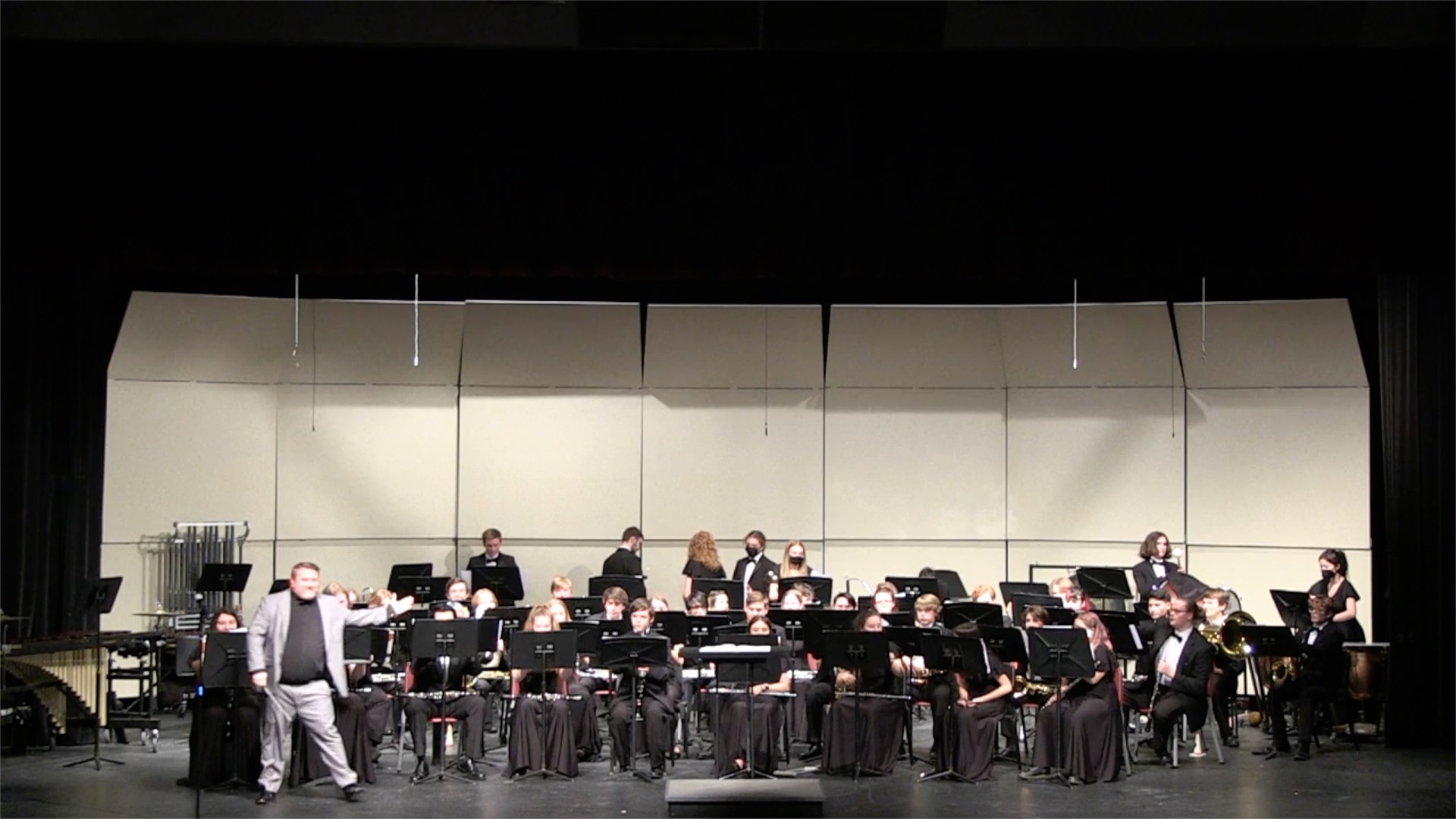
Loveland, Ohio – On Thursday, February 24 the Loveland High School Symphonic Band played Cajun Folk Songs (Frank Ticheli) during their Mid-Winter Concert.
Tag: loveland tigers
-

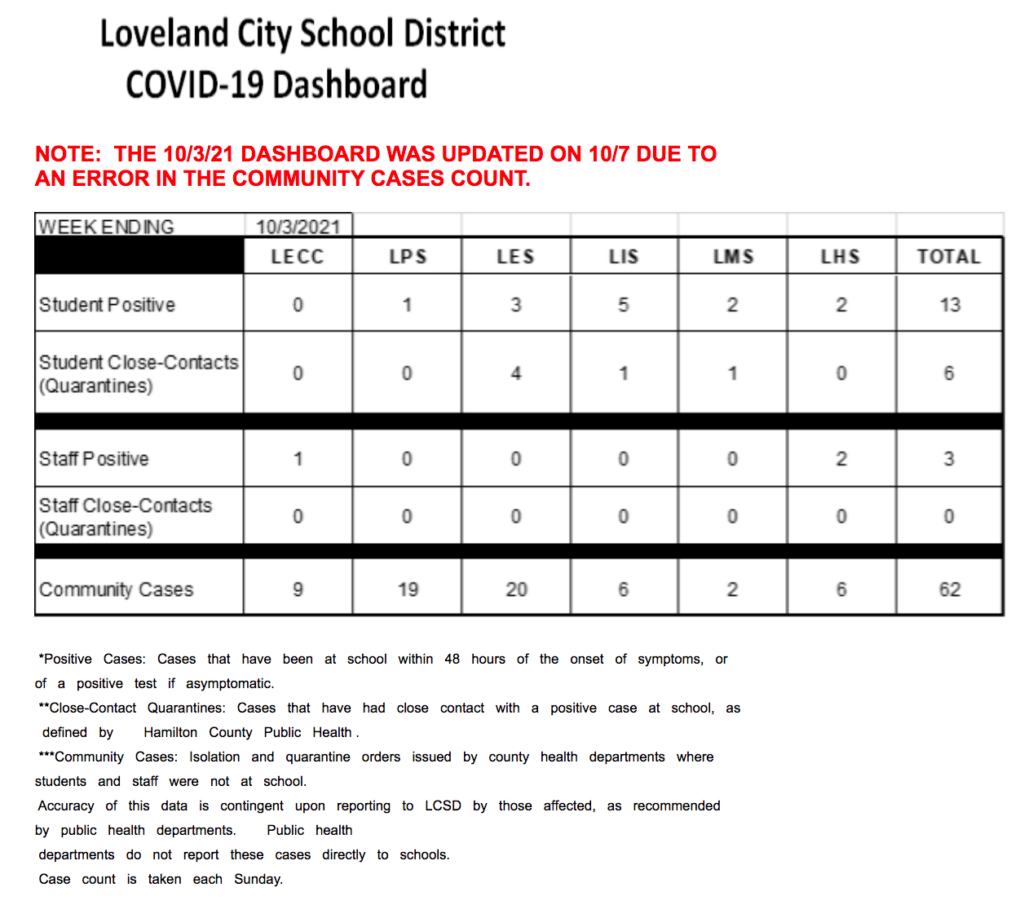
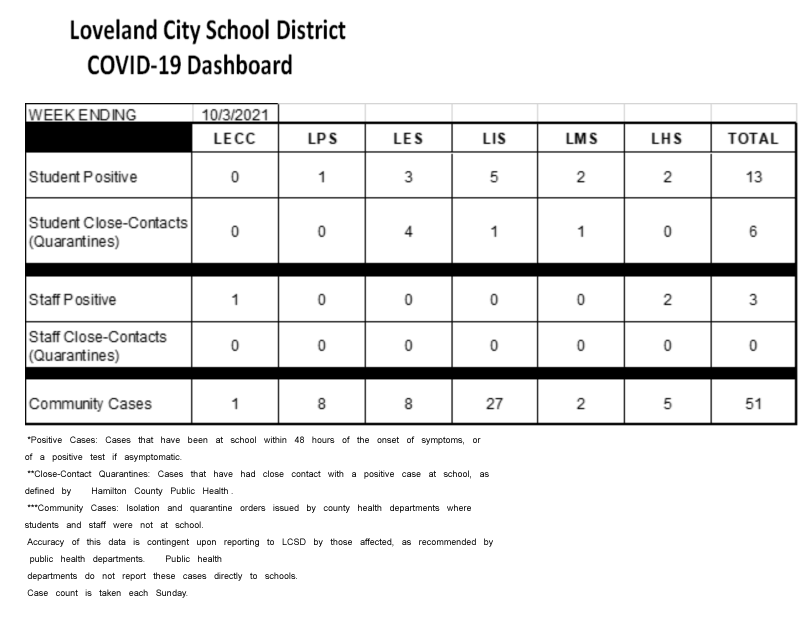
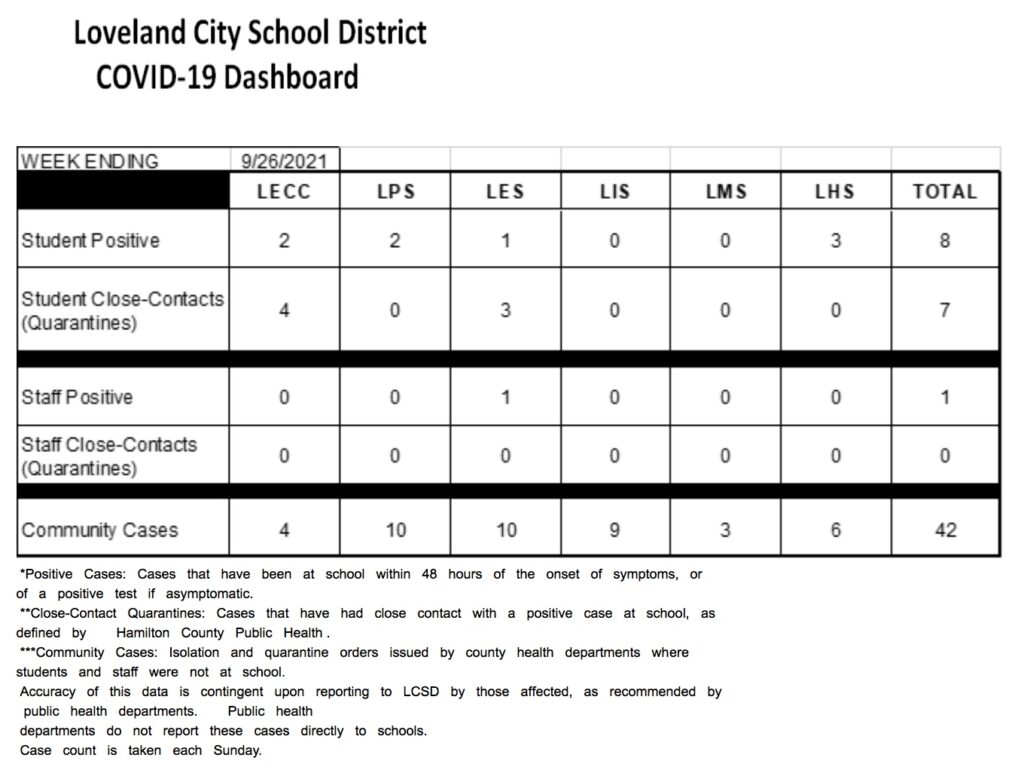
Loveland Schools Covid-19 Dashboard for March 6, 2022
Loveland, Ohio – At the beginning of each week, the Loveland City School District releases its latest Covid 19 Dashboard.
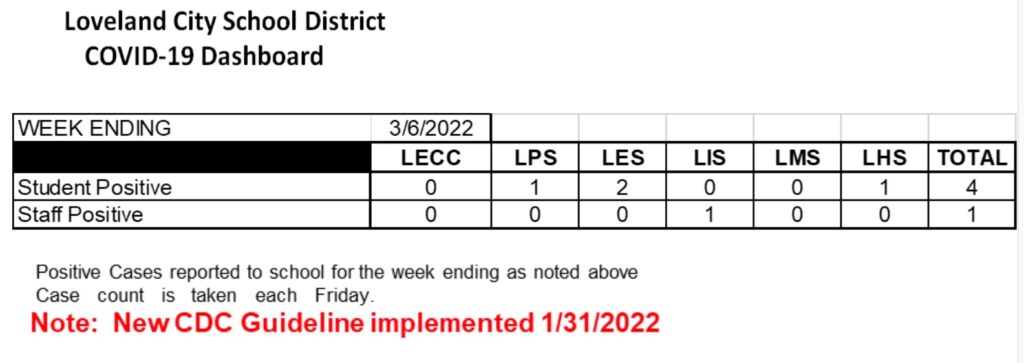
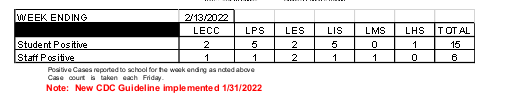
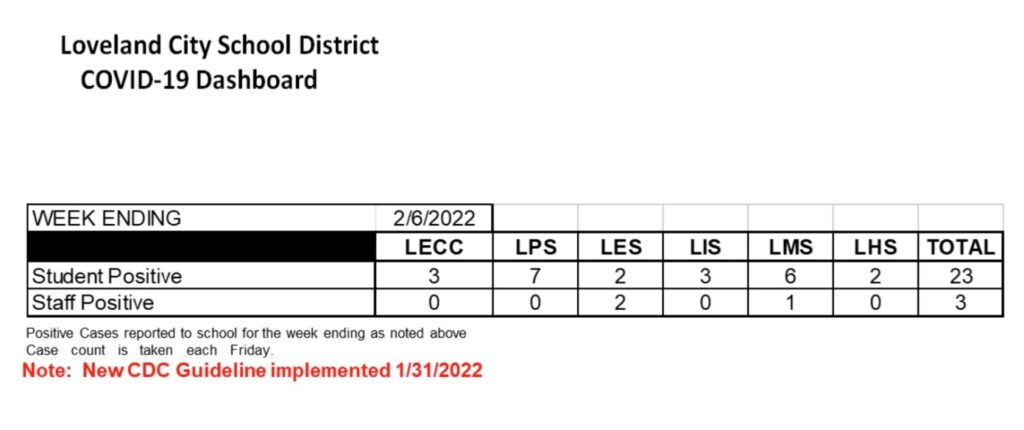
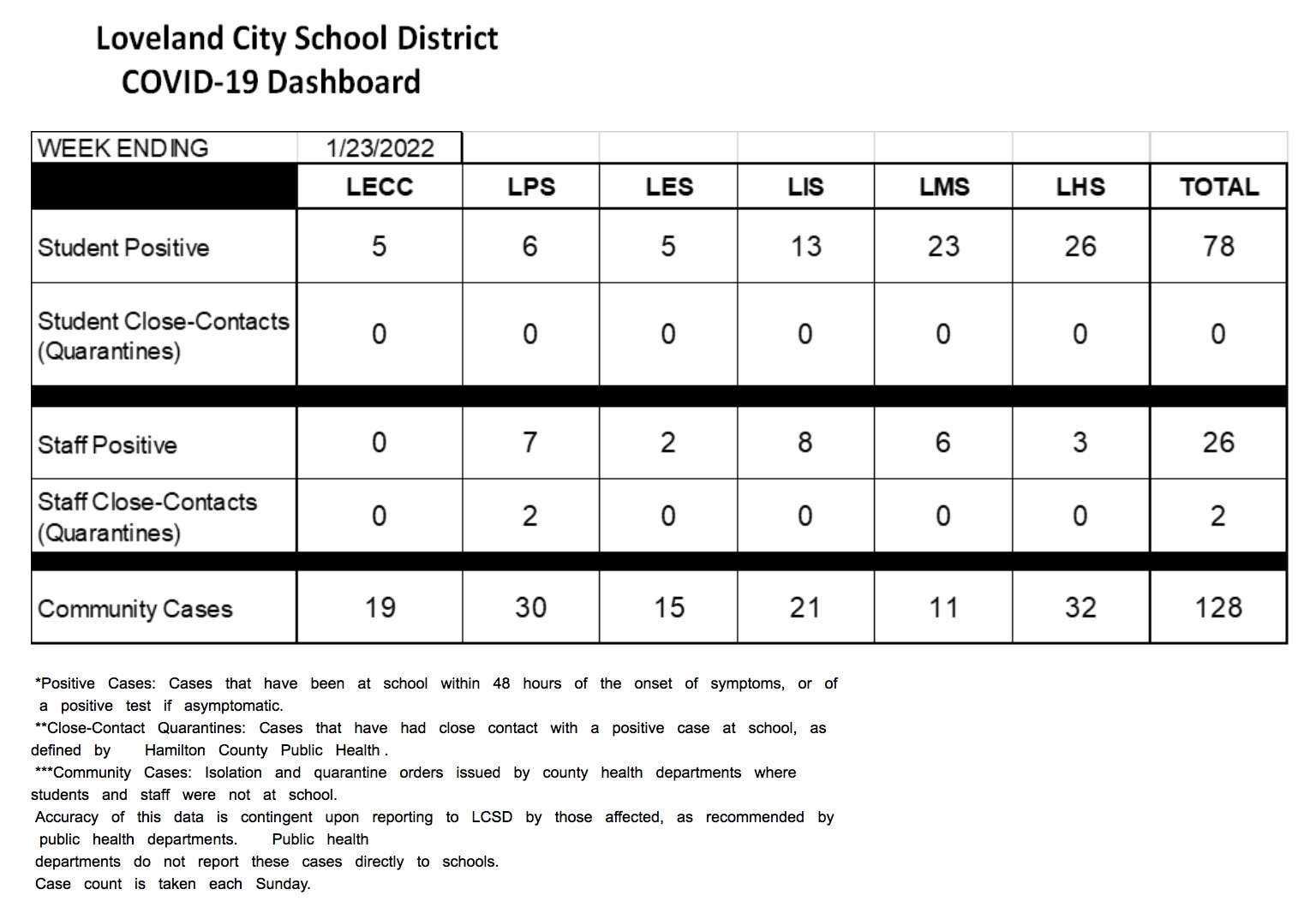
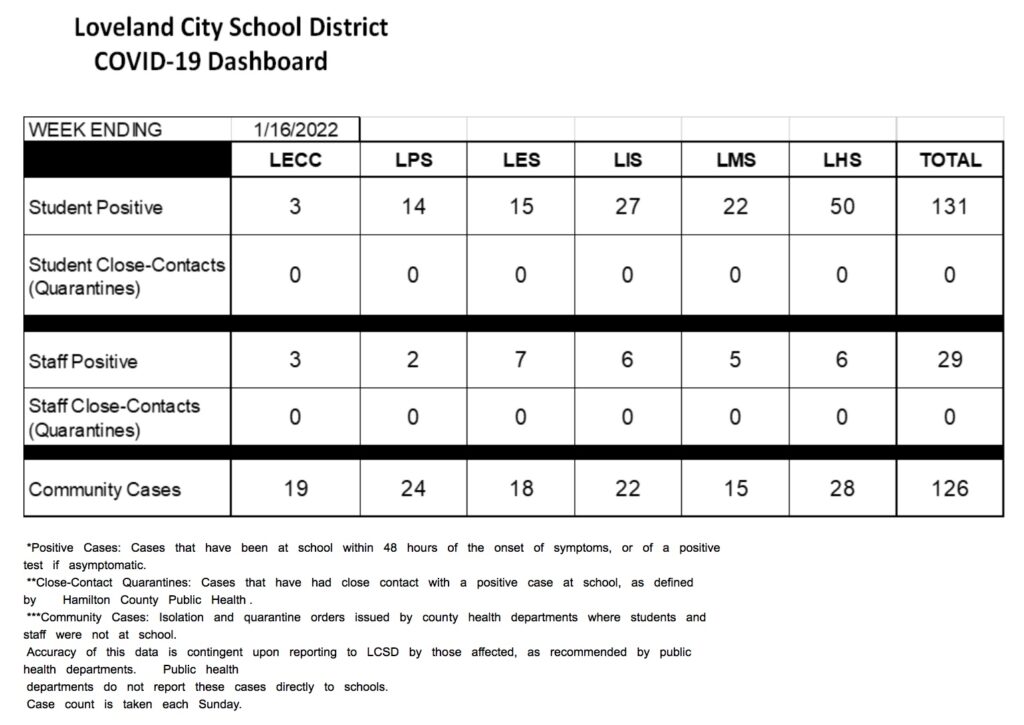
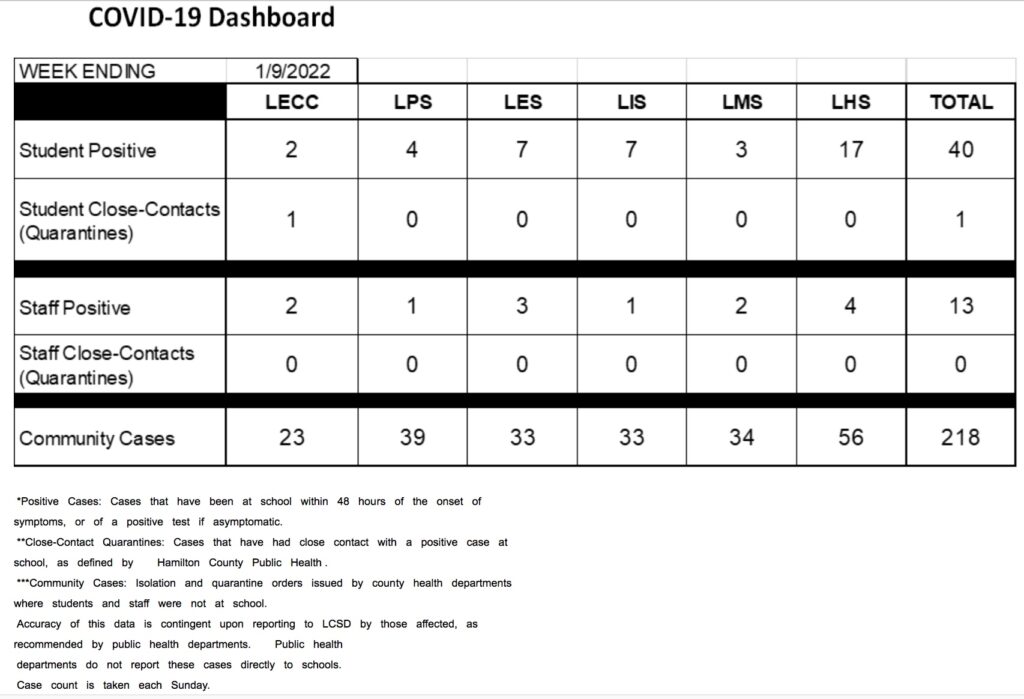
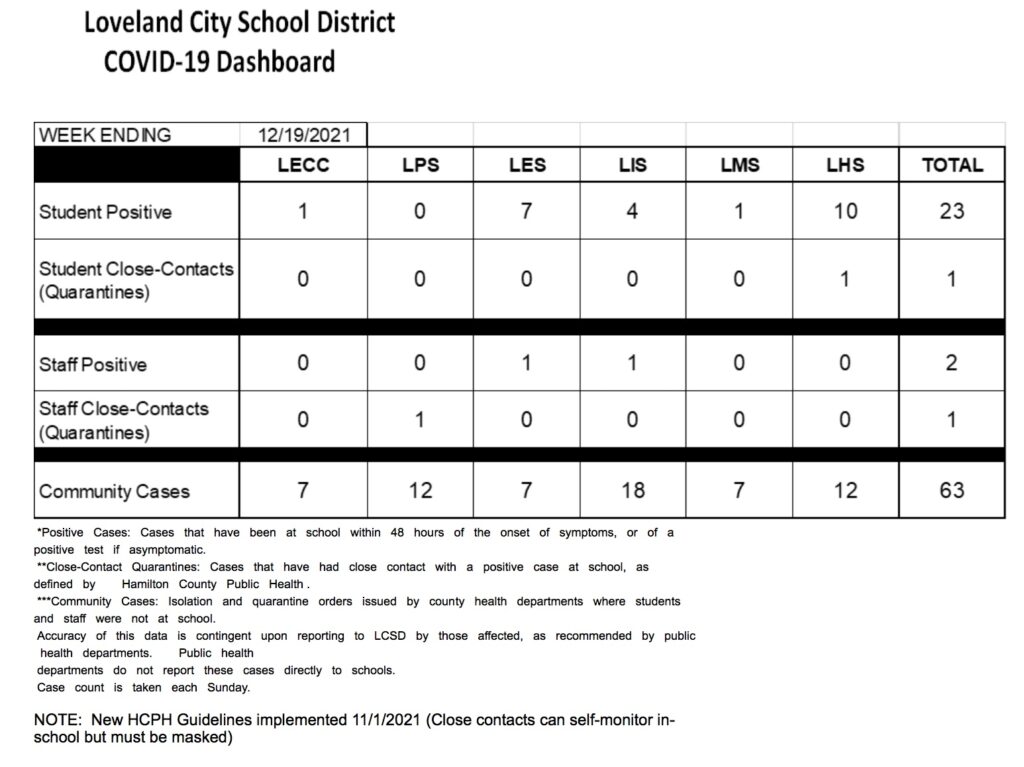
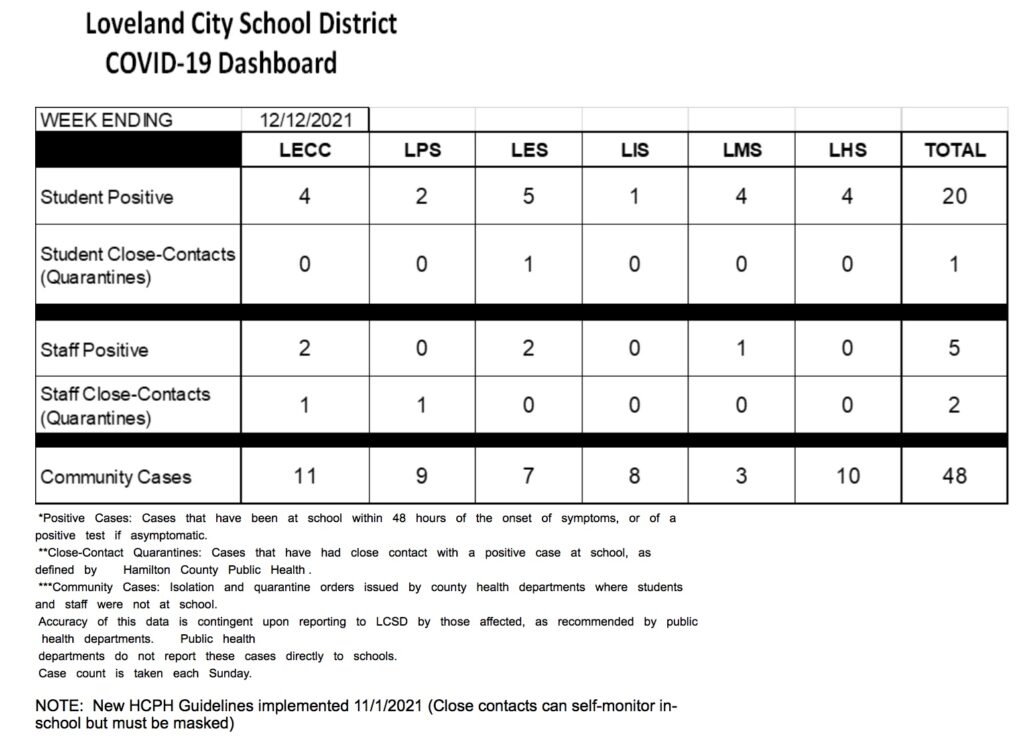
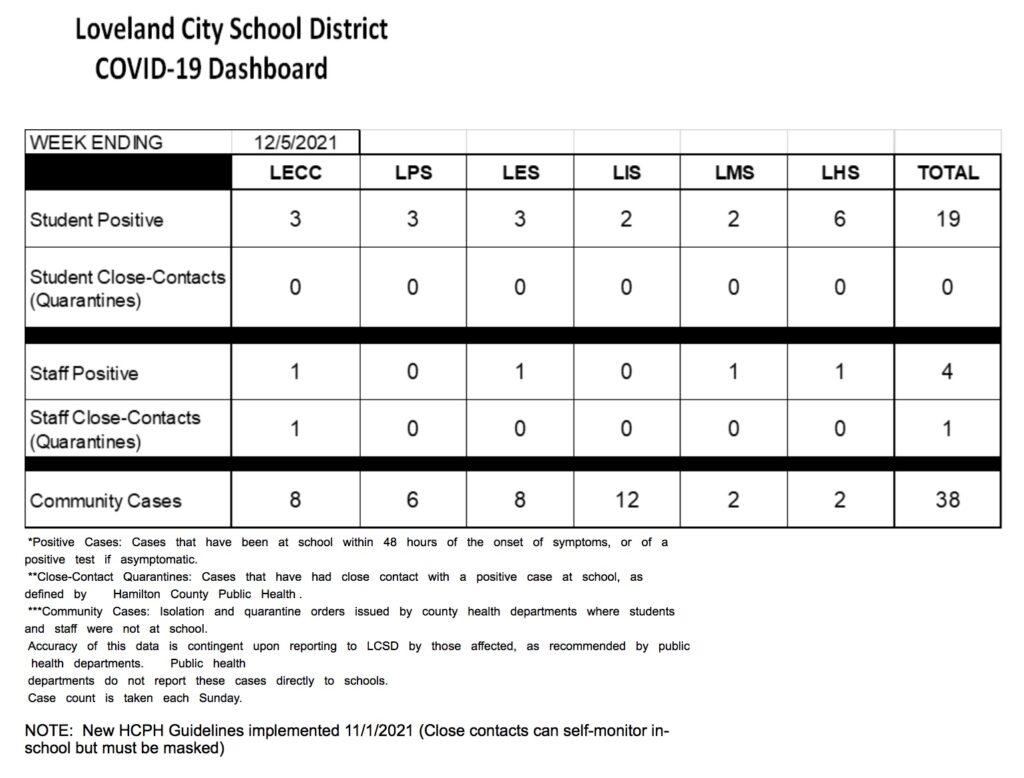
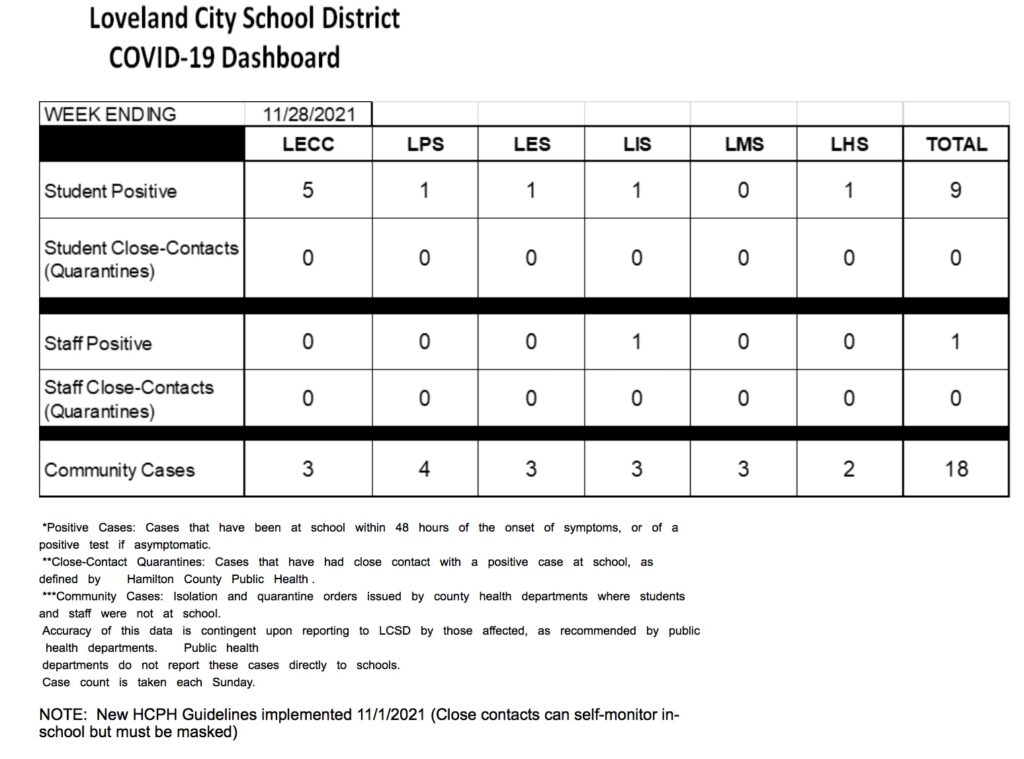
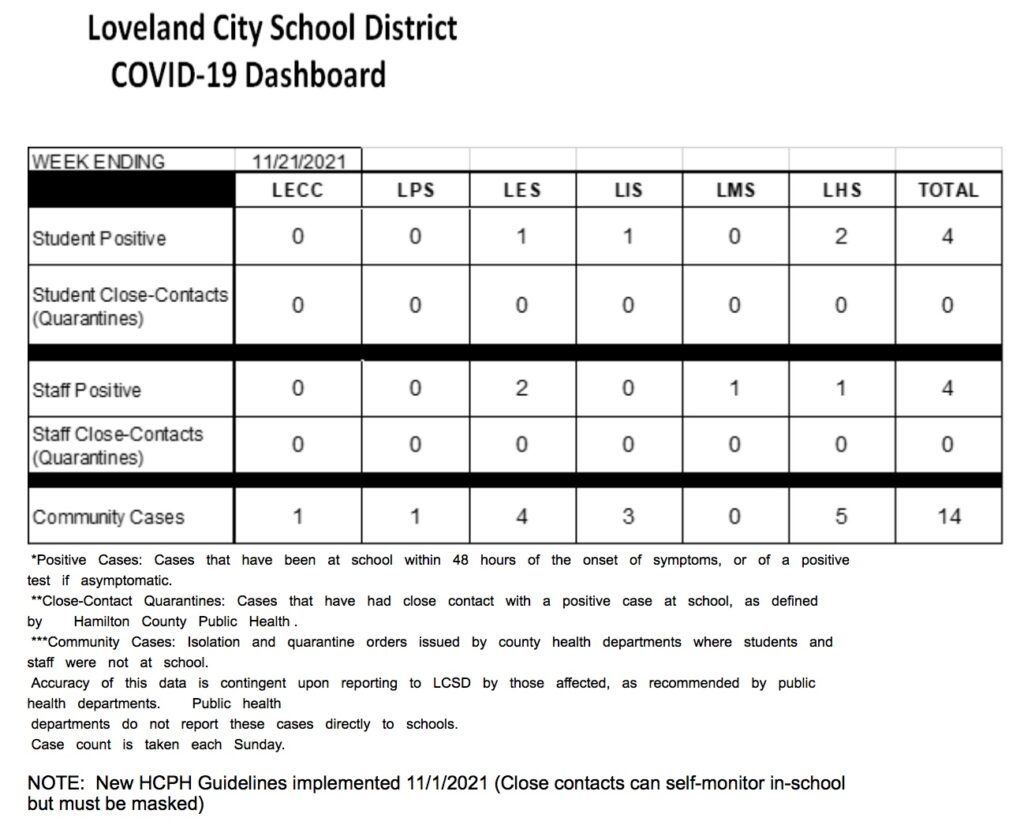
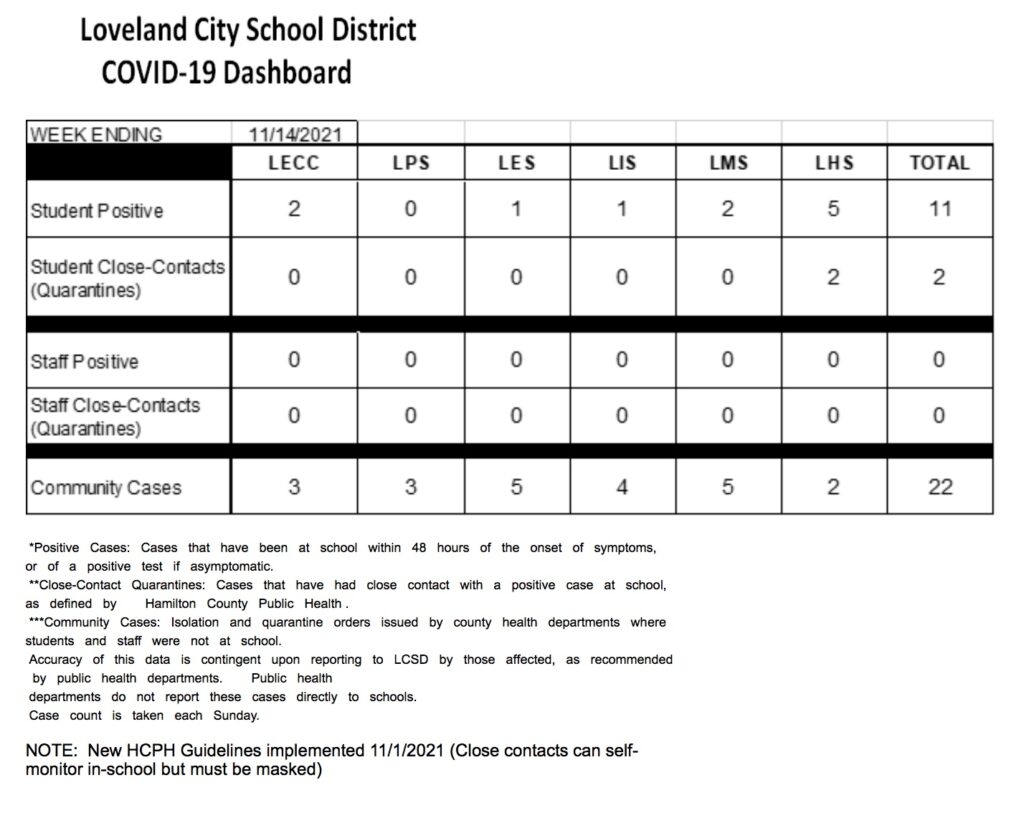
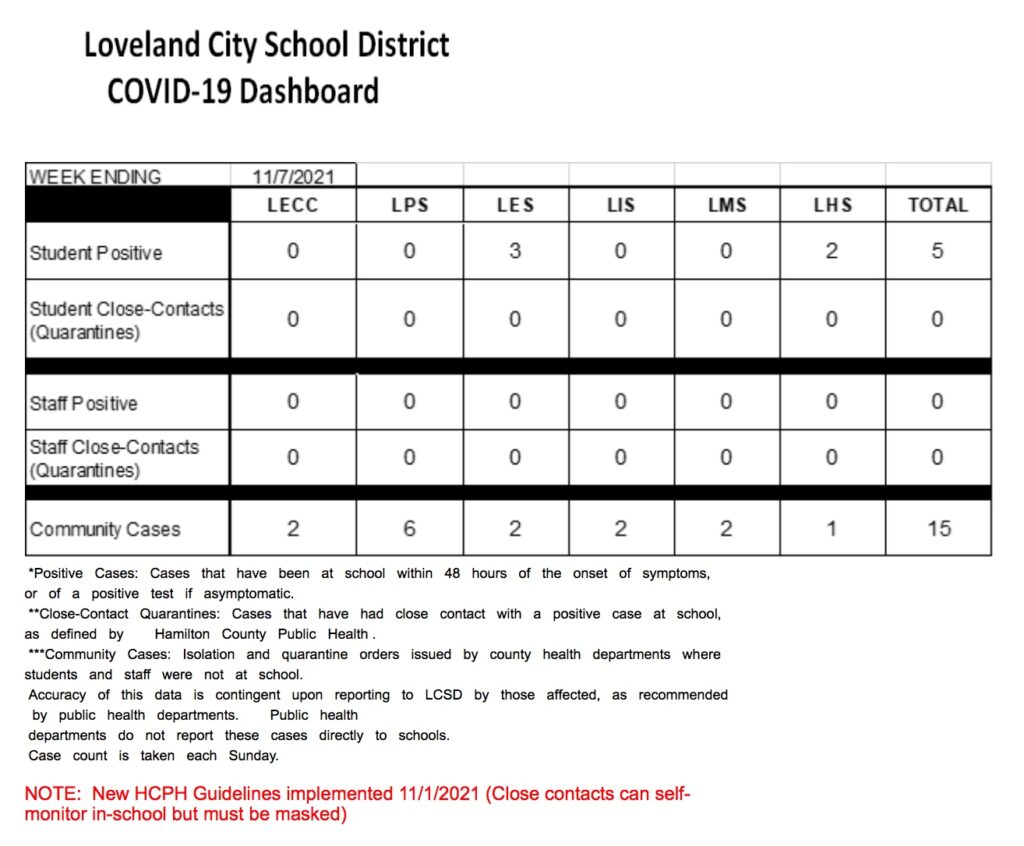
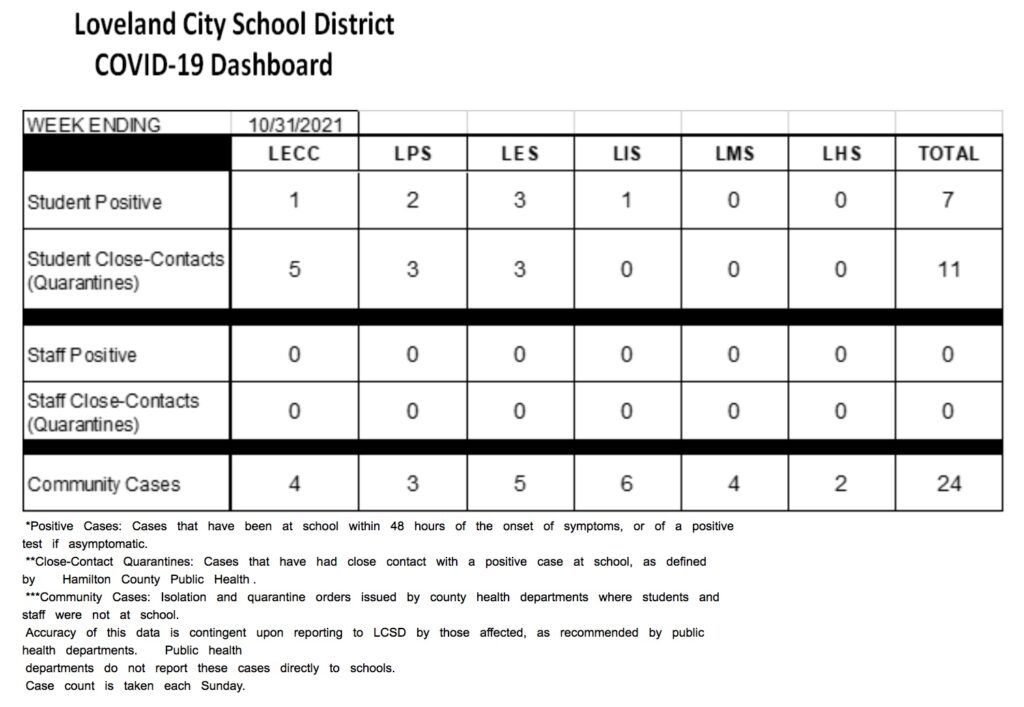
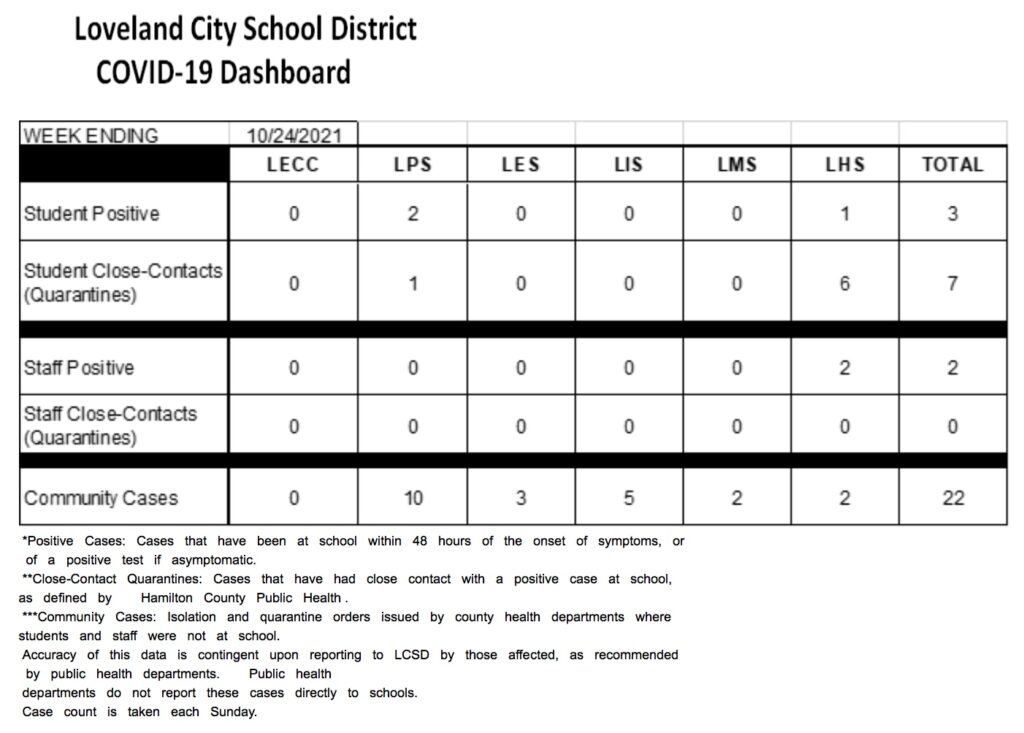
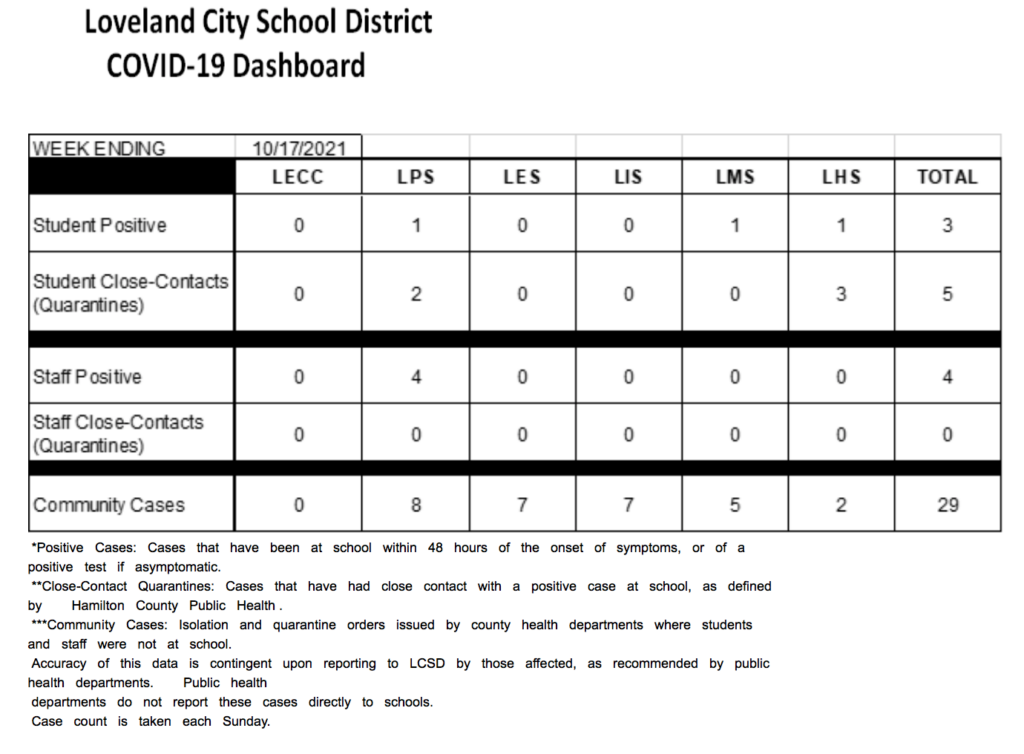
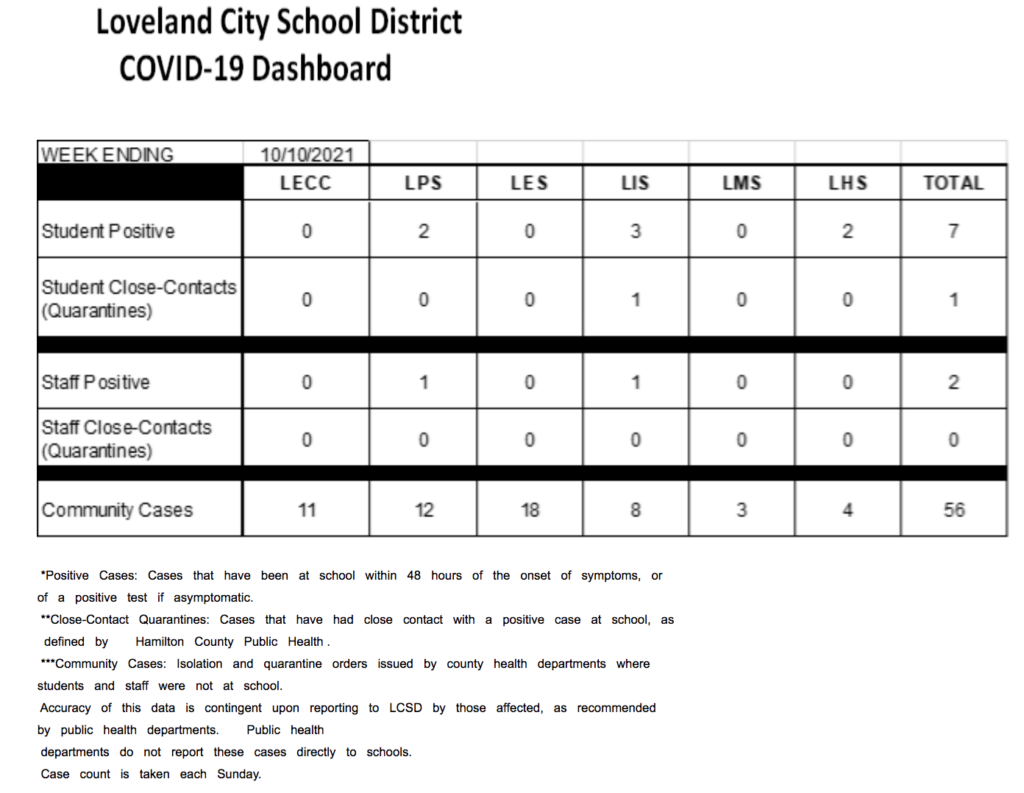
Note the correction to the 10/3/ report and that community cases increased from 51 to 62.


-
![[VIDEO] Meet Dave, Jessie, and Murphy at Loveland’s new Dog Park](https://lovelandmagazine.com/wp-content/uploads/2022/03/feature-Dave-McGaughy.jpg)
[VIDEO] Meet Dave, Jessie, and Murphy at Loveland’s new Dog Park
by David Miller

Loveland Magazine Publisher and Editor David Miller Loveland, Ohio – It was a chance encounter meeting Dave McGaughy, Jessie, and Murphy at Kiwanis Park Friday morning as I was heading back to the office from the bank. Instead of turning left into the Farm, I thought, “Oh, I wonder if they are installing the fencing in the new dog park,” I thought if the fence installers were there working it would make for a follow-up to the story I wrote last week announcing the dog play area. (Loveland’s first dog park coming soon to the West Loveland Historic District) I turned right – into Kiwanis Park in the West Loveland Historic District.
The original story I wrote two weeks ago announcing that Loveland would soon open its first dog park was very popular with readers so I knew they were excited about the park and would be interested in reading about any progress about when it would open. Instead of installers, I encountered Dave, Jessie, and Murphy heading into the now completely fenced-in dog park.
Dave, it turns out is quite the expert on dog parks and told me all about the local ones, from Miami Township to Mason. He went into detail about what he thinks makes a good one and talked about some in Florida he visits.
Dave declared the Kiwanis Park dog park the best he’s ever taken “his boys” to and was interested to know how he could volunteer to help maintain it. He has experience volunteering at other dog parks.
Dave lives just outside of Loveland in Goshen Township and was very pleased that the “best” place to take his dogs was so close to home. Dave is a retired custodian at the Loveland Primary/Elementary Campus.
Read more about the new dog park: Loveland’s first dog park coming soon to the West Loveland Historic District
-

Latin Jazz at LHS on March 11th
Loveland, Ohio – On Friday, March 11 the Loveland Band Program is appearing live at Loveland High School for a night of Latin Jazz Music for a dinner concert. Tahona Kitchen + Bar is catering the dinner.
The LHS Lab Jazz Band, LHS Jazz Orchestra, and the Middle School Stage Band will be performing Latin standards.
Tickets can be purchased at: Lovelandshowchoirs.seatyourself.biz
Seating and dinner begin at 6 PM and the concert starts at 7.
Dinner and Concert is $20
Concert Only is $10

-
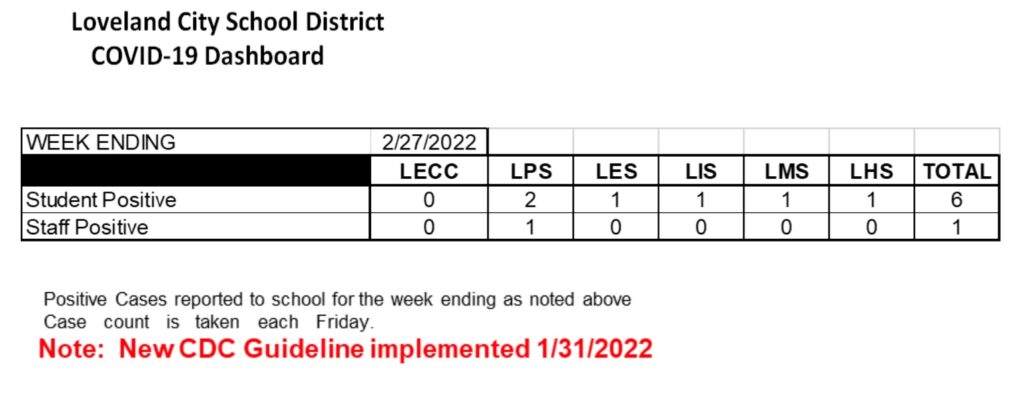
Loveland Schools Covid-19 Dashboard for February 27, 2022
Loveland, Ohio – At the beginning of each week, the Loveland City School District releases its latest Covid 19 Dashboard.
Note the correction to the 10/3/ report and that community cases increased from 51 to 62.
-
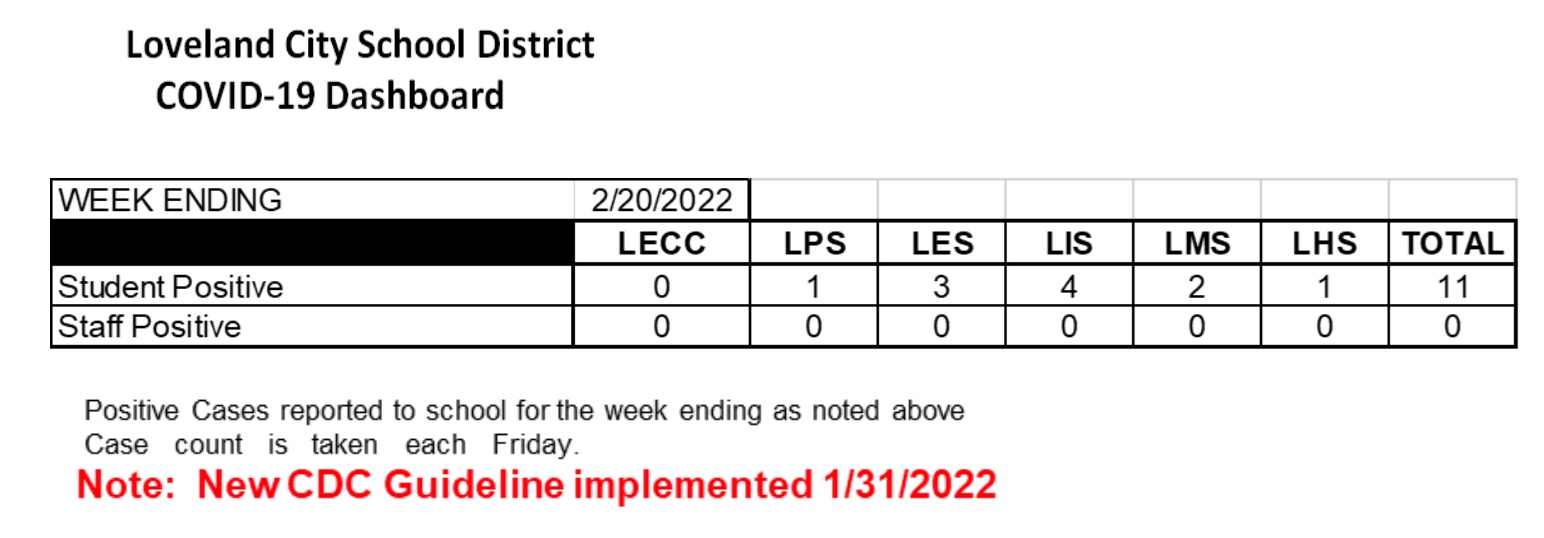
Loveland Schools Covid-19 Dashboard for February 20, 2022
Loveland, Ohio – At the beginning of each week, the Loveland City School District releases its latest Covid 19 Dashboard.
Note the correction to the 10/3/ report and that community cases increased from 51 to 62.
-

Revised Intentional Grounding, Chop Block Rules Headline 2022 High School Football Rules Changes
by Nate Perry,
Indianapolis – A new rules exception that allows a passer to intentionally throw an incomplete forward pass for the purpose of conserving yardage, and the redefining of the term “chop block” – both of which are intended to minimize risk of injury – are the two most notable rules changes coming to high school football for the 2022 season.
These changes stand out among the seven total recommendations brought forth by the National Federation of State High School Associations (NFHS) Football Rules Committee, which held its annual rules meeting January 23-25 at the Conrad Hotel in downtown Indianapolis.
The NFHS Board of Directors subsequently approved all seven of the committee’s suggestions. “With this year’s rules changes, the committee once again showed its focus on minimizing risk in high school football,” said Bob Colgate, NFHS Director of Sports and Sports Medicine and liaison to the NFHS Football Rules Committee. “By expanding the parameters for a legal forward pass and redefining the chop block so it can be more easily officiated by game officials, the committee has taken measures to mitigate two potentially risky situations within the game.”
Rule 7-5-2 EXCEPTION 2 now permits a player to purposefully throw an incomplete forward pass without warranting an intentional grounding penalty provided the passer is outside of “the pocket” (lateral boundary of the free-blocking zone) and the pass reaches the neutral zone or the extension of the neutral zone beyond the sideline. “The question (with this rule) has always been, ‘if the defense makes a good play, are we bailing out the offense by letting the quarterback throw the ball away?’” said Richard McWhirter, Chair of the NFHS Football Rules Committee and Assistant Executive Director of the Tennessee Secondary School Athletic Association. “This year, I think the committee felt the wellbeing of the passers and not subjecting them to extra hits was worth changing the rule.”
An alteration to Rule 2-3-8 addressed the new definition of a chop block, which is now described as “a combination block by two or more teammates against an opponent other than the runner, with or without delay, where one of the blocks is below the waist and one of the blocks is above the waist.” Previously, the defensive player’s knee was used to determine the high and low components of a chop block. “This is going to strengthen the rule and it’s also going to help the game officials,” said McWhirter. “I think they’re going to be able to enforce this rule better than they have in the past because determining ‘below the knee’ and ‘above the knee’ is tough to do. I think it’s really going to improve the game.”
Players will be able to wear the number 0 as a jersey number starting in 2022, as the range of acceptable numbers listed in Rule 1-4-3 was expanded from 1-99 to 0-99. However, any number preceded by the digit zero will be illegal.
State associations now have the option to extend sideline team boxes beyond their traditional 50-yard expanse (between the 25-yard-lines) as long as both teams are allowed to use the same dimensions. This new NOTE attached to Rule 1-2-3g also gives state associations the freedom to decide which individuals can access the extended area.
Two minor changes involving game clock and play clock procedures were made to Rules 3-4-7 and 3-6-1a(1)e EXCEPTIONS, respectively. In Rule 3-4-7, any foul committed within the last two minutes of either half will automatically result in the offended team’s option to start the game clock on the snap. Prior to this change, the offended team was required to accept its opponent’s penalty in order to gain control of the game clock.
The committee edited the EXCEPTIONS to Rule 3-6-1a(1)e, which clarify the necessary conditions for an abbreviated 25-second play clock after a stoppage in play. This rule now includes an exception for Rule 3-5-7i, mandating that a 40-second play clock be employed following a foul committed only by the defensive team.
The final rule change for 2022 is an alteration to Rule 1-3-3 regarding game equipment. Any game official – not just the referee – may order the ball changed between downs.
The NFHS Football Rules Committee is composed of one representative from each of the NFHS member state associations that use NFHS football rules, along with a representative from the NFHS Coaches Association, NFHS Officials Association and NFHS Sports Medicine Advisory Committee.
A complete listing of the football rules changes will be available on the NFHS website at www.nfhs.org. Click on “Activities & Sports” at the top of the home page and select “Football.”
According to the most recent NFHS High School Athletics Participation Survey, 11-player football is the most popular high school sport for boys with 1,006,013 participants in 14,247 schools nationwide. In addition, there were 31,221 boys who participated in 6-, 8- and 9-player football, along with 2,604 girls in all four versions of the game for a grand total of 1,039,828.
This press release was written by Nate Perry, coordinator of media relations at the National Federation of State High School Associations (NFHS).
-
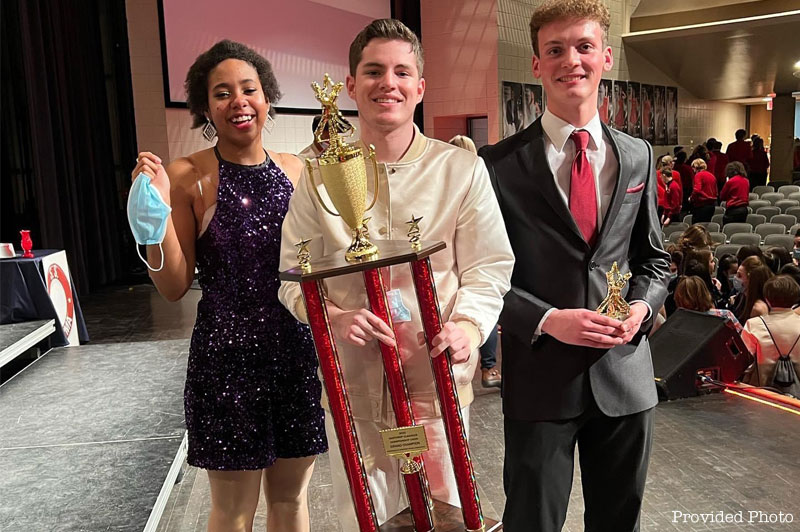
Loveland Show Choirs bring home trophies from Northrop Classic in Indiana
Loveland, Ohio – On February 5, the Loveland Show Choirs performed at the Northrop Classique in Indiana and LHS’s “By Request” won Grand Champions and Best Choreography. The all-female group “Allure” won First Runner-Up and Best Choreography.
Avery Coletto and Abby Rudy were selected to be “Outstanding Performers” and Director, Shawn Miller was named “Outstanding Music Educator”.
-
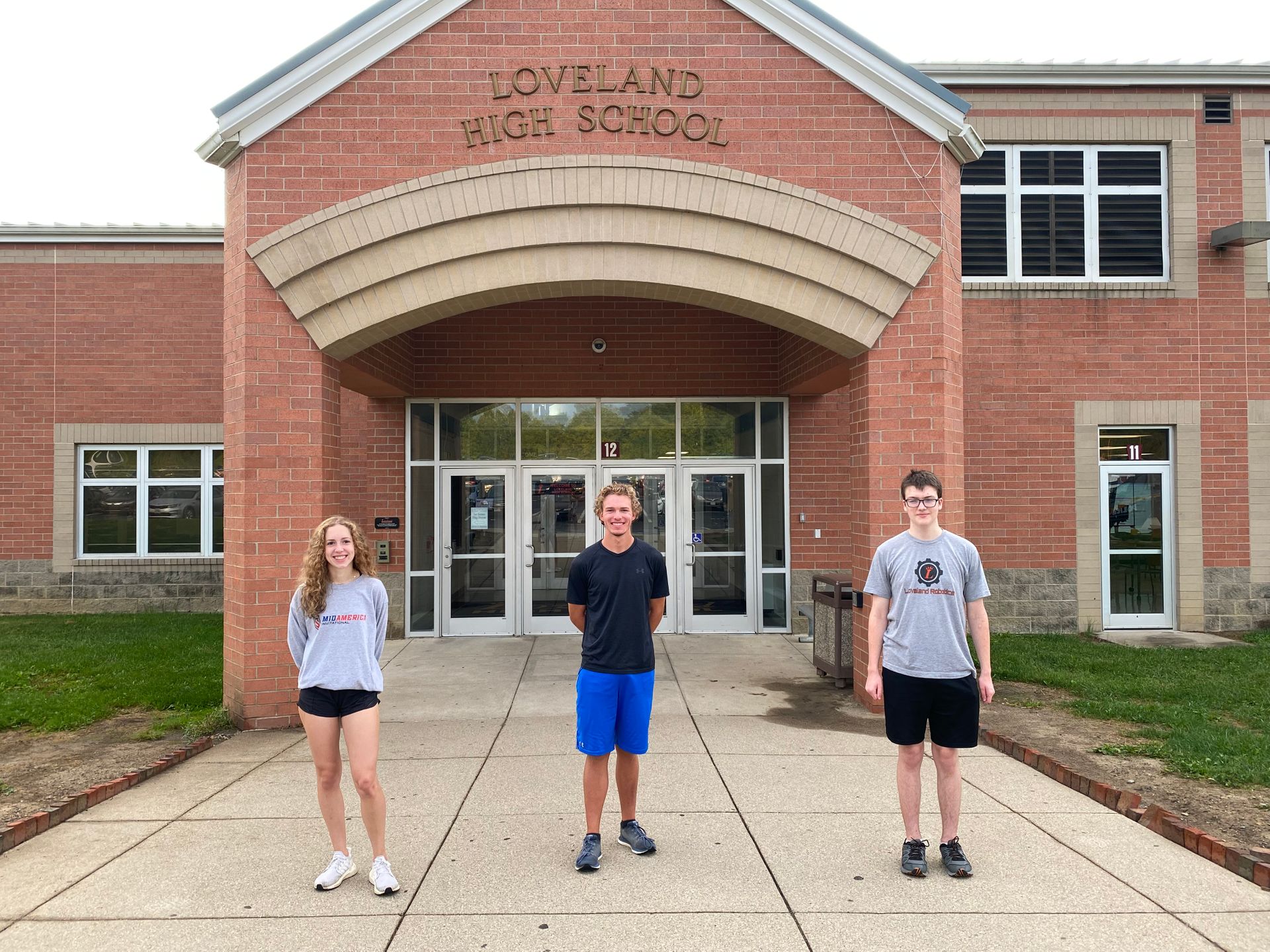
Jeremy Case, Alexander Harlow, and Nicole Pedicini are National Merit Scholarship Finalists
Photo by Loveland Schools
Loveland, Ohio – Loveland High School Seniors Jeremy Case, Alexander Harlow, and Nicole Pedicini have been named National Merit Scholarship Finalists. They are among about 15,000 students across the country to receive this honor and are waiting to learn if they will become one of the 7,500 National Merit Scholarship recipients.
-

Ohio House considers bill for students to use public school money on private schools
Stock photo from Getty Images.
BY SUSAN TEBBEN – Ohio Capital Journal
After what sponsors say was a year of work to “find the right approach,” a new version of a bill that would attach school funding to each student was introduced Tuesday in the Ohio House.
The Ohio House Finance Committee heard about House Bill 290, which would create an “opt-in” approach to private school scholarship funding, and allow students to take funding that would normally go to the public school districts with them as they opt for a private school option.
“The primary education option would remain the local assigned public school,” state Rep. Riordan McClain, R-Upper Sandusky, told the committee.
Under the bill, if a family chooses to go the private school route, an educational savings account would be created for the child, and the state’s share of educational funding would be deposited there “for the parents to find the right educational path for their child,” according to McClain.
The program would have an annual disbursement of $5,500 for K-8 students, and $7,500 for high school students, identical to the funding model of the EdChoice private school voucher program in the state.
Private school groups, along with the religious freedom lobby the Center for Christian Virtue, have put their support behind the bill saying it allows parents to choose the education they want for their children.
The so-called “backpack bill” has been criticized by public education officials as yet another siphoning of funds away from public schools, which they say does not create the “thorough and efficient” system of schooling required of the state by the constitution.
“HB 290 would force local communities to rely even more heavily on local property taxes to fund schools for the 90% of Ohio children who attend public schools,” said Ohio Education Association president Scott DiMauro.
Federal education dollars and individual school district levy dollars would not be attached to the child under the bill, only the state share of instruction, typically shelled out to districts as a blanket sum.
Bill sponsors McClain and state Rep. Marilyn John, R-Richland County, acknowledged financial analysis of the bill is still ongoing, but said the bill shouldn’t be considered anti-public schools legislation.
“Rather, it is a pro-child, pro-parent, pro-family bill which empowers parents and families to make a choice that is in the best interest of their child,” John said.
Representatives who led the most recent charge for the Fair School Funding plan, the new overhaul of the state educational funding system, wondered why the bill was introduced before the impact of the overhaul could be assessed.
“When we have not fully fixed our public school funding, and we’ve known that we’ve had over 26 years of not constitutionally funding it … to open up a process to take more money out of the public schools without even giving them a chance,” said state Rep. Bride Rose Sweeney, D-Cleveland. “Let’s get to that six-year phase-in, really see if that system works.”
McClain said they don’t expect a mass exodus to private schools if their funding plan is passed, and even see it as a plan that could work alongside the public school funding overhaul.
Still, having the option to move to private schools could “create a competitive market” for children and parents to make educational decisions.
The committee will hear opponent and proponent testimony in future hearings on the bill.