Tag: loveland

  • Tee shirt fundraiser and “Meal Train” for Loveland bus driver Laura Kissick

    Tee shirt fundraiser and “Meal Train” for Loveland bus driver Laura Kissick

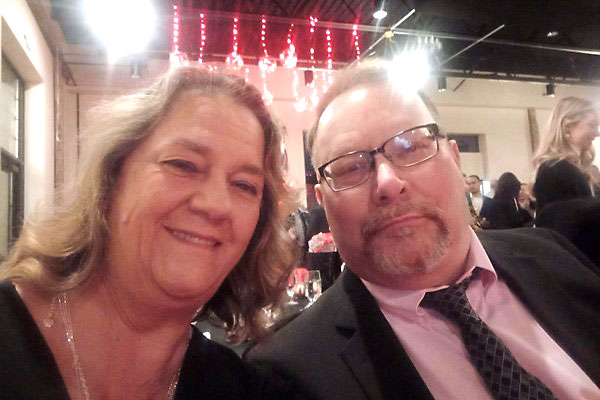
    Loveland, Ohio – Loveland resident Alicia Blum has asked that Loveland Magazine share this information about Loveland school bus driver Laura Kissick who is fighting cancer.

    Laura’s support squad has set up a tee shirt fundraiser through RP Diamond and also set up a “meal train” asking for help.

    Meal Train for Laura and Ron Kissick


  • [VIDEO] Sir Harry Striber was in Historic Downtown Loveland on his way to work

    [VIDEO] Sir Harry Striber was in Historic Downtown Loveland on his way to work

    by David Miller

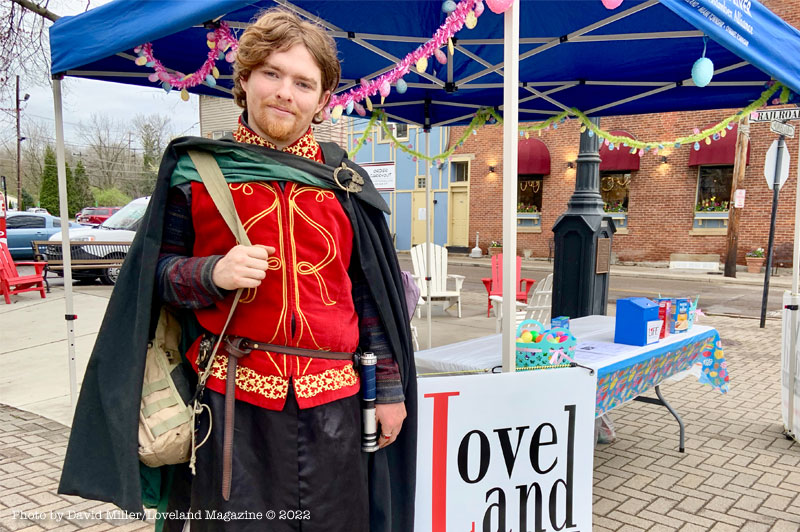
    Loveland, Ohio – Sir Harry Striber stopped in Historic Downtown Loveland last Saturday morning while walking the 2.5 miles to the Loveland Castle Museum where he gives guided tours.

    “The Historic Loveland Castle & Museum Chateau Laroche was built as an expression and reminder of the simple strength and rugged grandeur of the mighty men who lived when Knighthood was in flower. It was their knightly zeal for honor, valor, and manly purity that lifted mankind out of the moral midnight of the dark ages and started it towards the gray dawn of human hope. Present human decadence proves a need for similar action. Already the ancient organization of Knights has been re-activated to save society. Any man of high ideas who wish to help save civilization is invited to become a member of the Knights of the Golden Trail, whose only vows are the Ten Commandments. Chateau Laroche is the World headquarters and Residence of the K.O.G.T.”

  • Update on Loveland Bike Trail closure at Grandin Road

    Update on Loveland Bike Trail closure at Grandin Road

    Warren County, Ohio – Starting May 9th approximately 1,000 ft. in each direction of the Grandin Road intersection, the Little Miami Scenic Trail will be closed for construction for the duration of 2022. According to the Warren County Engineer, “There will be no posted detour because there is no complete off-road alternative”.

    For more information: Warren County Construction Projects (arcgis.com)

    King Avenue Bridge improvement will close portion of the Loveland Bike Trail…

  • Skimmers found on gas pumps at Mobil station in Historic Downtown

    Skimmers found on gas pumps at Mobil station in Historic Downtown

    by David Miller

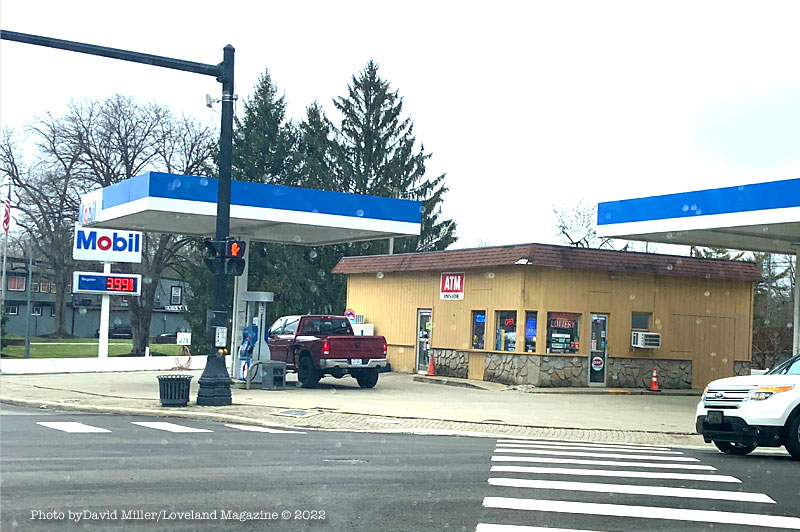
    Loveland, Ohio – According to the Loveland Police Department, skimmers were found on gasoline pumps at the Mobil gas station at 106 West Loveland Avenue. A short time after the initial investigation by the local police, the United States Secret Service responded to the scene.

    The Department said on FaceBook, “If you feel you have been impacted by the skimmers placed at the Mobil gas station, please contact Officer Michael Wright at the Loveland Police Department.” His telephone number is 513-677-7000.

  • LOVELAND MAGAZINE TV:  Loveland Magazine & Chamber present checks to LIFE Food Pantry

    LOVELAND MAGAZINE TV: Loveland Magazine & Chamber present checks to LIFE Food Pantry

    by David Miller

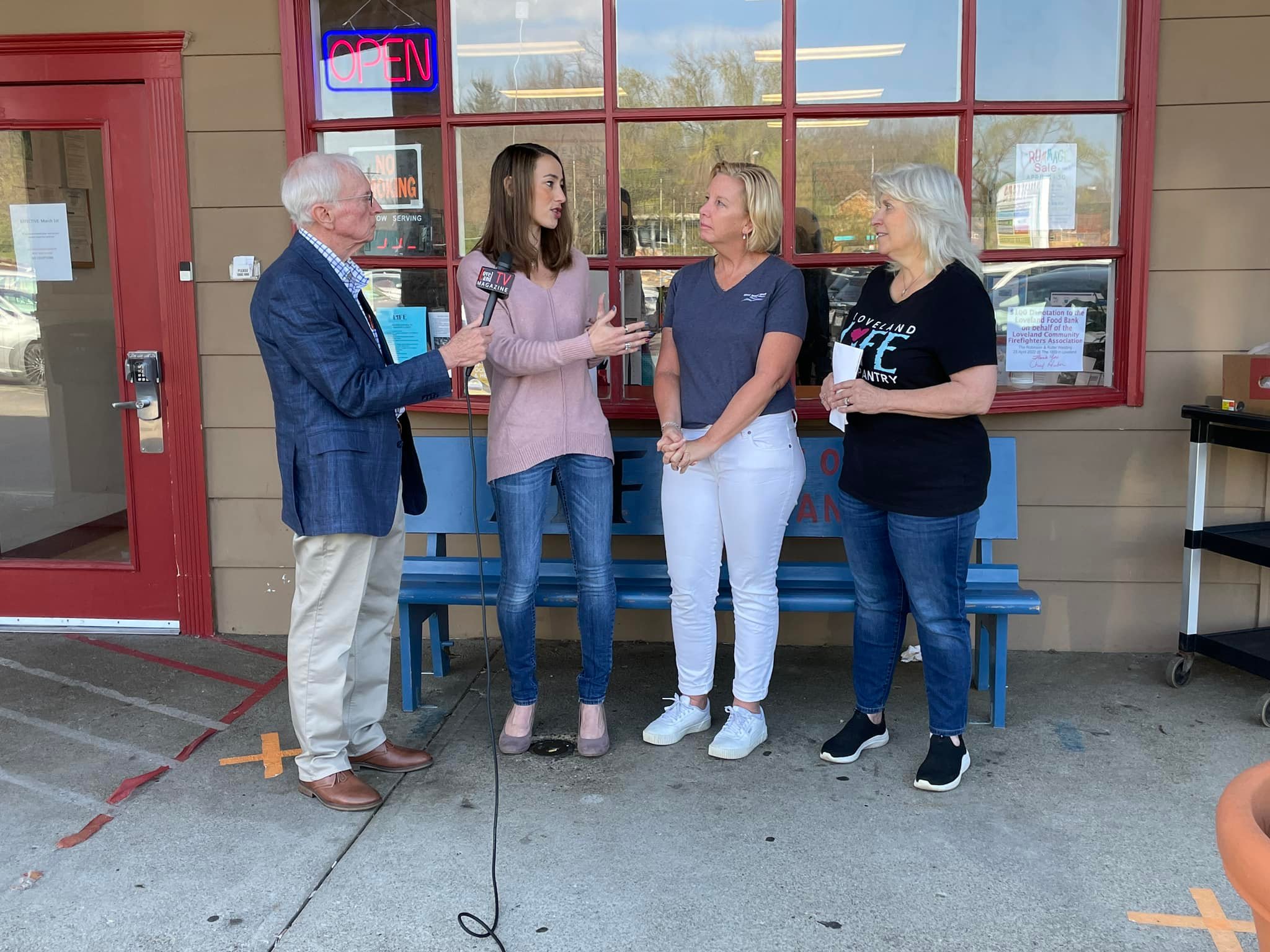
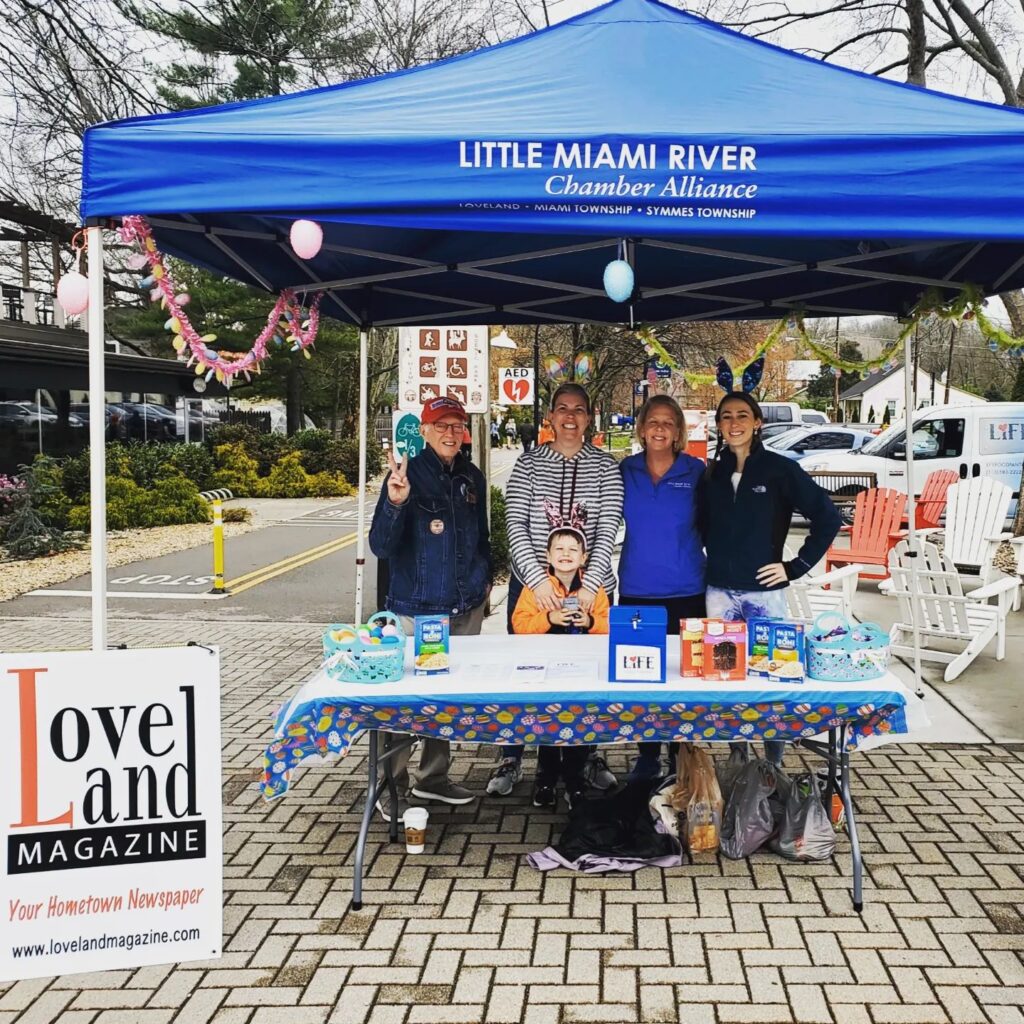
    Loveland, Ohio – Last Friday, April 22, Cassie Mattia and myself, along with CeeCee Collins and Meridith Taylor with the Little Miami River Chamber Alliance went to the LIFE Food Pantry to present checks. We were greeted by Pantry Executive Director, Linda Bergholz.

    CeeCee presented a check that represented all the VENMO donations that were collected during our Easter Weekend Food Drive. Cassie, who had the vision of holding the food drive on Easter Eve presented a matching check from Loveland Magazine.

    The Food Drive was held under the Town Clock in Historic Downtown Loveland.

    David Miller, Meridith Taylor (with son), CeeCee Collins, and Cassie Mattia under the Town Clock in Historic Downtown at the start of the Easter Weekend Food Drive.

    The Pantry said that as a result of seeing about the Loveland Magazine and Chamber food drive a neighborhood was inspired to do their own. Linda said the current need for food by folks in the community is “enormous”.

    This LOVELAND MAGAZINE TV video is of the reception we received at the Pantry. It tells the story of how Cassie was led to organize the food drive, how the Chamber so enthusiastically agreed to partner with her, and Linda talks about how the Pantry serves the community and how you can help them. Cassie talks about how easy it is to organize a food drive.

    If you feel inspired to make a dollar donation to the Pantry right this moment, please do so with this PayPal link where you can also use your credit card. Or write a check today and mail it to LIFE Food Pantry, 541 Loveland-Madeira Road, Loveland, Ohio 45140.

    Read more about the food drive and our thanks to all who helped and donated to make it a hopping success!

    DONATE TO LIFE FOOD PANTRY

    or click here to find out how to get involved!

    LIFE FOOD PANTRY: THIS WEEK’S PRIMARY NEEDS

    Apple Sauce, Beef Stew, Canned Carrots, Cooking Oil, Flour, Hearty Soups (Progresso Chicken Noodle especially), Jello gelatin and pudding, Manwich, Canned mixed vegetables, Canned Pineapple, Pinto beans, Stuffing Mix, Paper Towels. Granulated Sugar, Tuna, Ensure, and Depends (Womens M,L, XL)

    WANT TO HOST A FOOD DRIVE?

    Create an event to help those in need! Click Here

    VOLUNTEER OPPORTUNITIES

    There are so many ways to get involved! Click Here

    RECEIVE FOOD OR ASSISTANCE

    To receive food from LIFE, come to our pantry during regular hours and you will be provided groceries on that first visit.

    Partnership Benefits

    By choosing to partner with LIFE your business will not only provide assistance to the community but LIFE will proudly spread the word about your generosity. See the chart to review all of the benefits our partners will receive.

  • Loveland High School’s Evan Osgood receives $25,000 National Honor Society scholarship

    Loveland High School’s Evan Osgood receives $25,000 National Honor Society scholarship

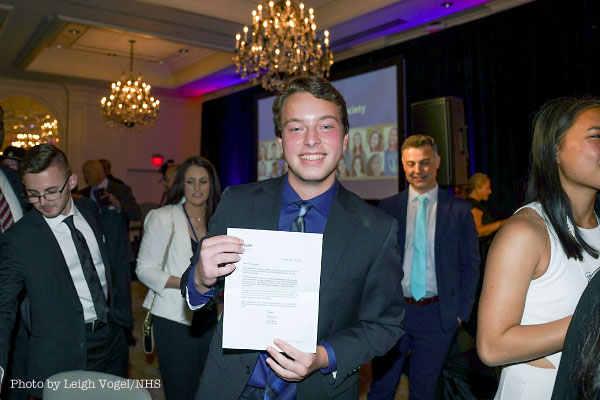
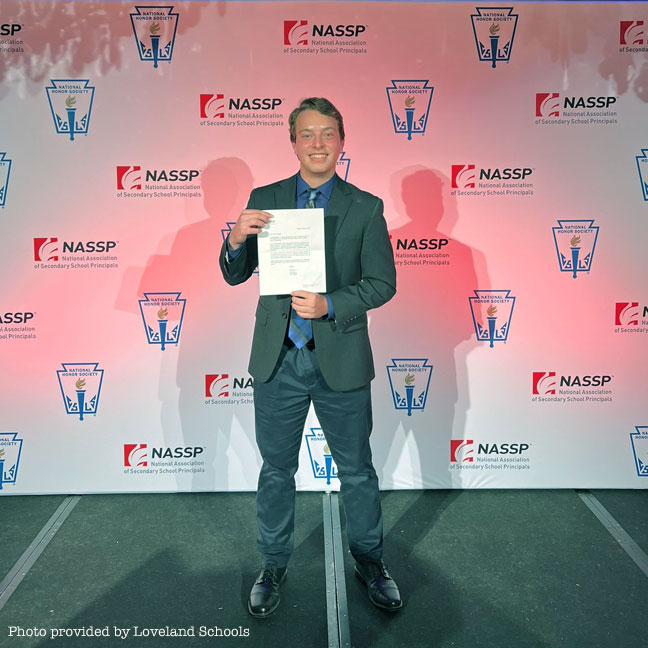
    Washington, DC – “This is the honor of a lifetime,” said Evan Osgood, who was awarded the $25,000 top prize by the National Association of Secondary School Principals. “Meeting the other finalists and learning their stories this weekend reinvigorated for me the power of our generation. We can do anything,” said Evan Osgood in a press release issued by the organization.

    Loveland High School’s Evan Osgood was named the winner of the 2022 National Honor Society Scholarship during an awards ceremony in Washington D.C. on Monday evening. He was chosen from nearly 10,000 applicants, and as the winner, he received a $25,000 National Honor Society scholarship.

    “We are incredibly proud of Evan for receiving this honor. He is truly a remarkable young man, and his dedication to others, along with his hard work, will take him on to great things. Congratulations to the entire Osgood family on this accomplishment,” said Superintendent Mike Broadwater in a press release. 

    As a national finalist for the award, Osgood was invited to attend the National Association of Secondary School Principals (NASSP) Trailblazing Leadership Week, which he attended with his family and Loveland High School Principal Adam Reed. 

    Osgood was recognized for his work during the pandemic creating the nonprofit SOSforPPE, to make and ship protective equipment, along with his creation of STEMsfForYouth, a nonprofit committed to improving access to STEM education. 

    Read these past Loveland Magazine stories about Evan Osgood:

    Local Teen Evan Osgood Awarded for his Dedication to Giving Back…


    Loveland High School student Evan Osgood creates non-profit to get help…


    LMS Student Evan Osgood on center stage at premier education conference

  • Questions arise about possible Native American remains and “Mound” at site of proposed Parking Garage in the Historic District

    Questions arise about possible Native American remains and “Mound” at site of proposed Parking Garage in the Historic District

    *Please read this CORRECTION to this story.

    The hillside in Loveland’s downtown where a highly contested proposed parking garage may be built

    “It is not known whether the ‘mound’ remains or is an Indian mound, but it is possible.” – Hamilton County Community Development

    David Miller is the Publisher and Editor of Loveland Magazine

    by David Miller

    Loveland, Ohio – The possibility of Native Americans’ remains under the site of a proposed parking garage on a hill in “Historic Downtown” may give a new connotation beyond the history of White settlers and developers of the area.

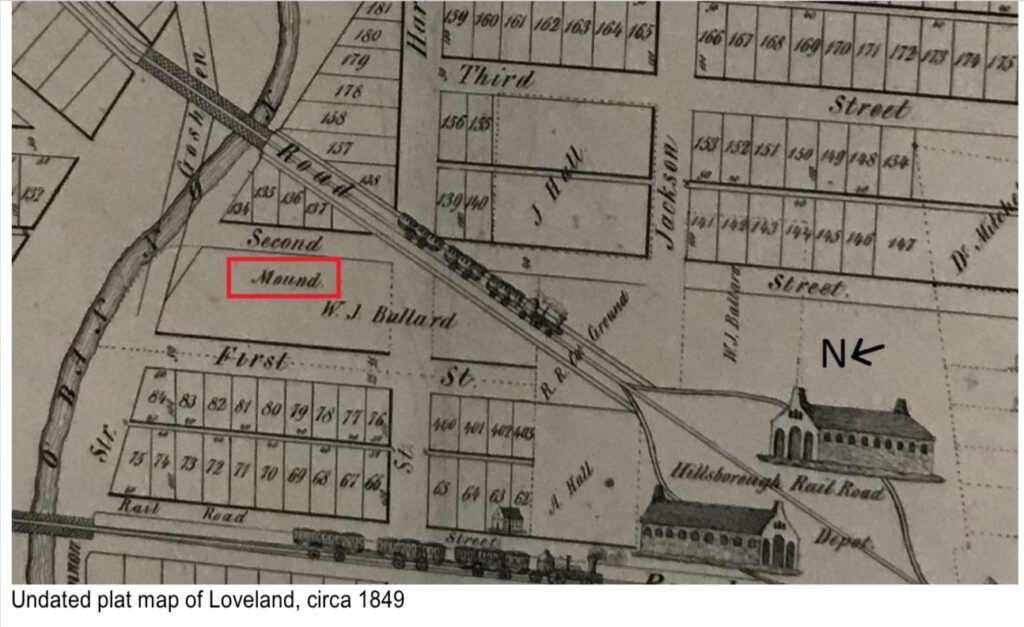
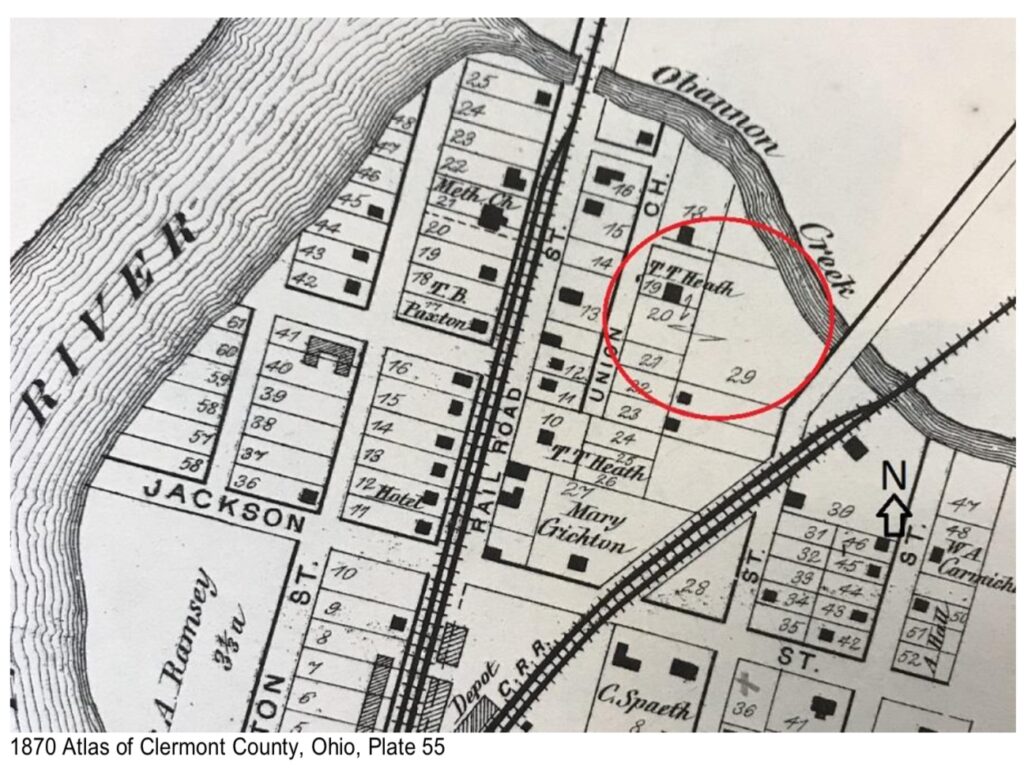
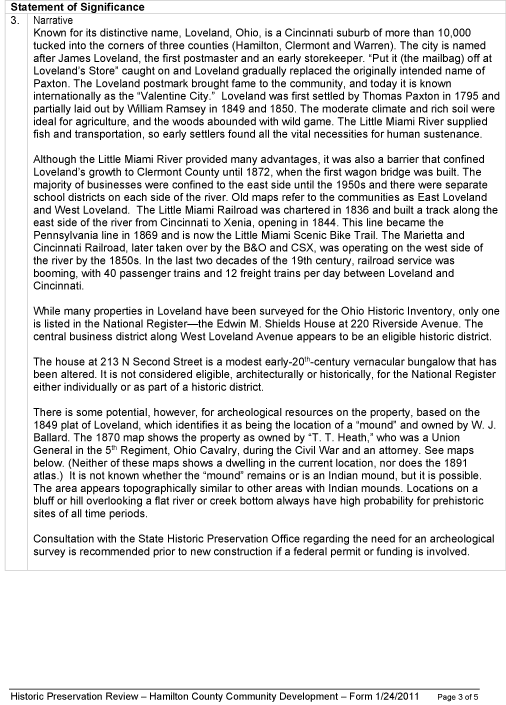
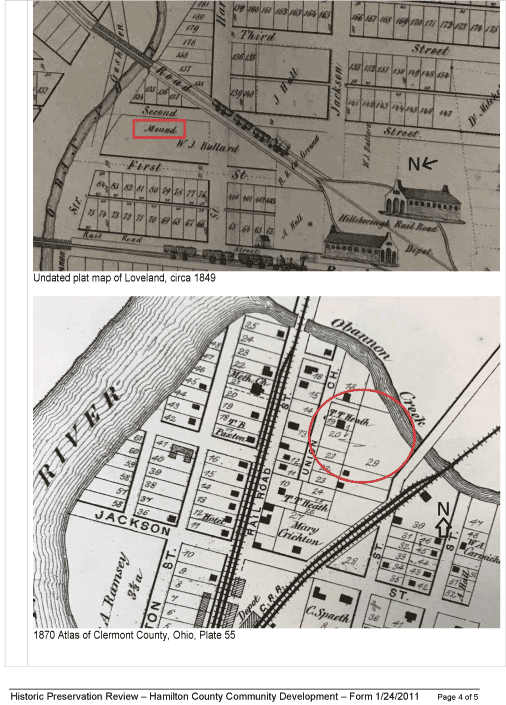
    At Monday’s City Council meeting, both Lauren Enda and Tom Scovanner reported that they have come into possession of a 2019 report by a preservation consultant that was commissioned by Hamilton County. The report says there is some potential for “archaeological resources” on the property. The report was based on an 1848 map of Loveland. The consultant said the map identifies a “mound” at the location. The report was commissioned because Loveland was seeking federal dollars to demolish two houses on the site and the money Loveland was seeking, was ultimately federal dollars. According to Enda and Scovanner, the report concluded that there was no historical significance to the houses so the City was given a green light to proceed with removing them.

    However, after the houses were removed, the City proceeded to do excavation on the hillside to make a temporary overflow parking lot to mitigate parking congestion in “Historic” downtown apparently without the knowledge of the reported mound that may contain the remains of American Indians who once lived on the bank of O’Bannon Creek which abuts the hillside. O’Bannon Creek enters the Little Miami River a few hundred feet downstream.

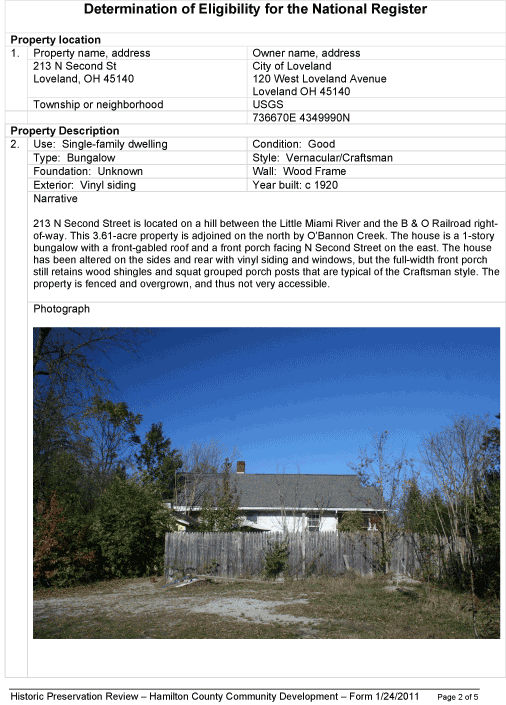
    The proposed garage site is 213 North Second Street (Parcel 200602.029).

    Enda says that as soon as she received the report she immediately put in a call to City Manager Dave Kennedy who could not be reached. She then sent the report to both Kennedy and Councilmember Andy Bateman on April 8. She sent it to Bateman because he is the council’s representative on the City Historical Preservation and Planning Commission (HPPC). Bateman is a sitting member of the Commission.

    Enda’s presumption was that Bateman would forward the report to all of the HPPC members, however, the report was not brought up or discussed at their next meeting. She had asked Bateman in an email, “Please share with the other members as I do not have their addresses.” She said on Monday that she was surprised that it was not discussed at the HPPC meeting.

    After Enda and Scovanner gave speeches during the open forum at Monday’s council meeting, there was also no discussion between Council and the City Manager. She said on Monday that she did not hear back from either Kennedy or Bateman after she sent them the report. *

    City Manager Kennedy told Loveland Magazine via email that he first knew of the report when Enda sent it to him on April 8 at 2 PM. He said that subsequently, the Ohio Historic Preservation Office contacted him and they are scheduling a time to discuss the matter.

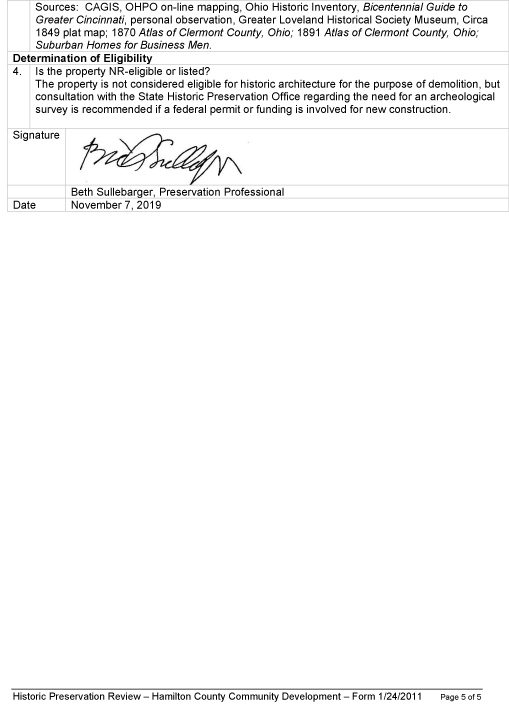
    The Hamilton County Community Development Historic Preservation Review worksheet says, “It is not known whether the ‘mound’ remains or is an Indian mound, but it is possible. The area appears topographically similar to other areas with Indian mounds. Locations on a bluff or hill overlooking a flat river or creek bottom always have high probability for prehistoric sites of all time periods.” It concludes, “The property is not considered eligible for historic architecture for the purpose of demolition, but consultation with the State Historic Preservation Office regarding the need for an archeological survey is recommended if a federal permit or funding is involved for new construction.”

    Enda said at the council meeting that according to Loveland’s Director of Finance, Mark Medlar, Loveland taxpayers have already spent $980,000 on purchasing the site, demolition, and design engineering for the “multi-million dollar” proposed garage.

    Enda wants Council to commission an archaeological survey of the property which she says is the recommendation of the Ohio History Connection. The Ohio History Connection was formerly the Ohio Historical Society and carries out history services for Ohio and its citizens focused on preserving and sharing the state’s history. This includes housing the state historic preservation office, the official state archives, local history office and managing more than 50 sites and museums across Ohio.

    Enda was contacted by the Greater Cincinnati Native American Coalition, who in turn have reached out to other Native American organizations such as the National Congress of the American Indians in Washington, DC. During the council meeting, Scovanner read a letter from the Cincinnati organization.

    Enda has advocated for months for residents to be given the chance to vote the proposed parking garage up or down at the ballot box.

    She says that if there are Indian remains at the site they should be treated with respect and dignity.

  • A judge ordered Dewitt McDonald released last month, so why is he still in prison?

    A judge ordered Dewitt McDonald released last month, so why is he still in prison?

    Getty Images.

    BY: NICK EVANS – Ohio Capital Journal

    Right now, Dewitt McDonald is sitting in prison at Richland Correctional Institution even though late last month a judge ordered his release.

    McDonald’s case goes back to a 1994 drive-by shooting in Sandusky that left one woman dead. Prosecutors claimed McDonald was in the car, and they charged him with aiding and abetting the crime. McDonald has maintained his innocence.

    A jury nevertheless convicted McDonald in 1995 and he was sentenced to life with no eligibility of parole for 20 years.

    “Dewitt McDonald has now been incarcerated 27 going on 28 years without even one hearing giving him access to parole,” his attorney Kimberley Corral explained.

    And therein lies the controversy that led to Erie County Judge Tygh Tone issuing a March 29 writ of habeas corpus to McDonald. That order directed officials to release McDonald from prison. Attorney General Dave Yost’s office is appealing to keep him behind bars, and sued Judge Tone in a state appeals court for good measure.

    The state’s aggressive pursuit of the case is notable given the underlying facts of the case. In his federal filings for relief, McDonald’s attorneys raise a number of reasons they say to doubt McDonald’s guilt. It’s not clear, they argue, that he was in the car at the time of the shooting or even that bullets fired from the car killed the victim, Vivian Johnson. Prosecutors secured McDonald’s conviction largely on the testimony of a woman named Krista Harris.

    During the first grand jury hearing, Harris said McDonald was with her at the time of the shooting, and the grand jury didn’t recommend charges. Before the second grand jury, her story flipped and they returned an indictment.

    A few years later though, she told state investigators that county prosecutor Kevin Baxter had coerced her into providing false testimony in McDonald’s case and one other by threatening her with criminal charges. She also alleged Baxter coerced her into an ongoing non-consensual sexual relationship. Baxter’s brother Edward corroborated Harris’ story. Baxter himself denied it.

    Yost’s office declined to comment on McDonald’s case, “given the pending litigation in the Erie County Court of Common Pleas, the 6th Circuit Court of Appeals and the Ohio Supreme Court.”

    The state’s central argument for why McDonald hadn’t gotten a parole hearing comes down to arithmetic. The Ohio Department of Rehabilitation and Corrections contends McDonald won’t be eligible for a parole hearing until he’s served 36 years, because they’re stacking the terms for other offenses on top of the 20 years listed in his sentencing documents.

    “So, all of the sudden, his term is 36 to life,” Corral said, “which was just a decision by an administrative agency. It was not supported by any court order.”

    After she filed a motion to clarify, the court came down on the side of McDonald — he should be eligible for a parole hearing after 20 years. That was in November of 2020. The state’s subsequent appeals to the circuit and supreme court were unsuccessful. In December last year, McDonald still hadn’t gotten a parole hearing, so Judge Tone issued another order, this time directing the parole board to hear his case “immediately.”

    Instead, the state pushed the court to dismiss McDonald’s appeals. Two months later Judge Tone issued the order to release McDonald.

    In the current appeal, Yost’s office contends the habeas order is invalid because it originated in Erie County rather than Richland County where he was incarcerated. In response, Corral agrees that state law requires a habeas claim be filed where an inmate is held, but said that McDonald was being held in the Erie County jail at the time she filed. The state argues back that he was only in Erie County temporarily for a court hearing. They also contend the case can’t be transferred to Richland County.

    “If you follow the state’s logic,” Corral argued, “the state has the sole authority to move prisoners around from county to county. They could defeat every single habeas ever filed by just moving someone after the litigation is complete.”

    “That can’t possibly be the procedure intended by the legislature, and that’s not what courts have held in the past,” she continued.

    As it stands, McDonald’s case is a mess.

    The circuit court, faced with the state’s appeal of Judge Tone’s habeas decision and a writ of prohibition against the judge, sidestepped the matter and sent the case back to the trial court for the Tone to explain his decision or rescind it. Meanwhile McDonald’s defense has appealed to the state supreme court.

  • A greater vision for the intrinsic beauty of the Grailville land

    A greater vision for the intrinsic beauty of the Grailville land

    by Elizabeth Robinson

    Dear Fellow Lovelanders,

    I want to speak to you about vision and make sure you are aware of an important ongoing process before the Loveland Planning and Zoning Board and Loveland City Council. Drees Homes is requesting a change in the current low-density zoning status on 110 lovely acres of green unspoiled land, with historic buildings, currently owned by Grailville (The Grail). This land sits between where East Loveland Avenue turns into O’Bannonville Road and Rte 48. Drees desires this zoning status change to put 209 homes on this green space.

    The Grail Mission and Vision Statement speaks of Care for The Earth. This has always been vital to Grailville/The Grail in its history and practice. Grail members including myself are expressing significant and ongoing distaste that the Grail is seriously considering divesting itself of this land to Drees to build another subdivision in our town.

    There are important long-term practical reasons why many Loveland residents have spoken AGAINST enabling a zoning status change proposed by Drees to build 209 homes. They include, among others, an overcapacity school system, aggravating already clogged traffic and infrastructure concerns including sewer and water. (Please reference the below open letter to Loveland residents by Elizabeth Murphy for more details on these pressing issues)

    I want to concentrate here on a compelling and magnanimous (great of mind or heart) vision of protection from development such as the proposed Drees subdivision. Standing up for a NO vote on this zoning status change from low density is a very important first step.

    If the Grail is determined to divest itself of this land, are we as citizens willing to stand up for a vision that will honor the cultural and spiritual history of the Grail on this land, and also stand up for the inestimable value of added community green space which will do so much more than another subdivision to keep Loveland a treasured place to live into the future?

    I wonder: If Loveland has the foresight to reject this proposed Drees zoning change, would The Grail accept significantly less money from the city or other entity committed to a higher vision that cares for the earth and the people of Loveland?

    I have lived in Loveland all my life and our Loveland Bike Trail was just such a vision. There were many who could not see the immensely positive difference this green path of natural beauty that intersects our town and all enjoy, would make for the future of Loveland. It is with gratitude we now look back and honor those who had vision and were tenacious, so we could see the flowering of that vision.

    Today Loveland is thriving. With that has come some of the problems of success mentioned earlier such as traffic and stress on infrastructure. We can make decisions now that see another subdivision that destroys precious green space and exacerbates traffic and stressed infrastructure will not be a decision that is truly good for the future of Loveland.

    Loveland citizens will thank us years from now if we reserve green and natural places for the good of all, as did those bike trail visionaries.

    I ask the Loveland Planning and Zoning Commission and Loveland City Council to reject this Drees proposed zoning change. Reject it not only on very real practical matters such as traffic and infrastructure, but to support a greater vision of the intrinsic beauty and value added of green spaces for Lovelanders into the future.

    Sincerely,

    Elizabeth Robinson

    East Loveland Avenue


     April 11, 2022
    
    Dear Fellow Loveland Residents,
    
    It is important that you are aware of a process which is now ongoing involving 110 acres of Grailville land between Rt.48 and O’Bannonville Rd. Loveland City Council and the Zoning Board will have to make a decision on the Drees Homes’ request for a change in the zoning status to allow them to build 209 homes on that land.
    
    The iniPal public hearing drew a standing room only crowd. Everyone who spoke, with the excepPon of the Drees representaPves, requested that the Zoning Board say NO to the Drees proposal. There are important long-term reasons why it is best for our community that the Drees proposal does not go forward.
    
    We all know the traffic situaPon in downtown is bad now. The construcPon of a large subdivision on this Grail land will iniPally cause several years of construcPon trucks and dirt funneling into town from Rt.48 and O’Bannonville Rd. As the houses are built and sold regular traffic of several thousand car “trips” through town will phase in. This will never stop.
    
    Our school system is currently overflowing recommended capacity. Extra trailers are needed for space. It is esPmated that 4-5 addiPonal classrooms of children are likely to be added by this subdivision. We are all painfully aware of the costs that would be incurred to build new schools, as well as the stresses on children and teachers involved in overcrowding. Again, once this increase is allowed to happen it is unlikely to be reversed.
    
    There are also serious general infrastructure issues relaPng to water. The Loveland water system is a series of wells which when run at high demand can drop the water table in a significant way. One must ask at what point will this become a problem. Water pressure has at Pmes been an issue and more homes drawing water cannot but aggravate this.
    
    The other end of this problem is the management of the addiPonal sewage. The sewer line under East Loveland Ave. is outdated, fragile, and it is quesPonable whether it is adequate to handle a large new neighborhood. The receiving Polk Run sewage treatment plant has no more room to expand. There has been no confirmaPon of sewer availability, capacity, or access compliant with MSD standards. Will the City of Loveland be put in a posiPon of providing this infrastructure at Loveland residents' expense? With the Liale Miami River so nearby it is crucial that there be no chance of contaminaPon.
    Natural rainwater run-off must also be considered. The land from White Pillars on slopes to the northwest. The homes along O’Bannonville Rd. are all in the path of this natural drainage and vulnerable to surface flows or overflowing of Bares Run Creek in Pmes of heavy rain. The new roads and houses will eliminate acreage which currently absorbs the rainwater and so more will conPnue on downhill.
    
    The final thing I need to speak of is the special quality of this parPcular piece of land. For about 80 years women of The Grail have lived or worked there. They have tended the land, holding it, knowing the sacred nature of this place. As the Grail has shared access to their land with others
    for walking and connecPng with nature, many have become aware of the spiritual calm which it provides. In today’s world we need this more than ever.
    
    In conclusion, I would encourage everyone who feels that we do not need another big subdivision on this Grailville land, with all the negaPve side-effects, to please make your views known. Aaend the public meePngs (the next is on May 4), write or call members of the Zoning Board and City Council. In our country we have government of ciPzens for ciPzens. Our officials have a duty of honor to listen to the members of the community which they serve. They are us; and therefore, we must speak so they may be guided.
    
    Sincerely, 
    
    Elizabeth Murphy - Fallis Road Loveland OH
    

    The Grailville Archive

    Because posterity may wish to know.

  • Nine rare cancers tied to burn pit exposure added to VA benefits list

    Nine rare cancers tied to burn pit exposure added to VA benefits list

    BY: JENNIFER SHUTT Ohio Capital Journal

    WASHINGTON — The U.S. Department of Veterans Affairs is adding nine rare respiratory cancers linked to burn pit exposure to the list of illnesses eligible for disability and health benefits.

    President Joe Biden, who has said his son Beau Biden’s exposure to toxic fumes from the pits could have led to his death, announced the policy change Monday, saying in a statement he hopes to avoid repeating mistakes of the past.

    “We learned a horrible lesson after Vietnam, when the harmful effects of exposure to Agent Orange sometimes took years to manifest, and too many veterans were left unable to access the care they needed,” Biden said. “I refuse to repeat that mistake when it comes to the veterans of our wars in Iraq and Afghanistan.”

    The VA said Monday that it will begin processing disability compensation claims for former U.S. military members who were in Southwest Asia from Aug. 2, 1990, to the present or in Afghanistan, Djibouti, Syria, or Uzbekistan from Sept. 19, 2001, to the present.

    The cancers include squamous cell carcinoma of the larynx, squamous cell carcinoma of the trachea, adenocarcinoma of the trachea, salivary gland-type tumors of the trachea, adenosquamous carcinoma of the lung, large cell carcinoma of the lung, salivary gland-type tumors of the lung, sarcomatoid carcinoma of the lung and typical and atypical carcinoid of the lung.

    The VA said it plans to contact veterans who fall under the new rule, which will be published on Tuesday, or survivors, to tell them how to apply for benefits.

    Veterans or survivors who had prior claims denied can file a supplemental claim for benefits, according to the VA announcement.

    VA Secretary Denis McDonough said in a statement the change in policy will ensure “veterans who suffer from these rare respiratory cancers will finally get” the health care and benefits they “deserve, without having to prove causality between their service and their condition.”

    The VA said “a focused review of scientific and medical evidence” determined that “there is biological plausibility between airborne hazards and carcinogenesis of the respiratory tract — and the unique circumstances of these rare cancers warrant a presumption of service connection.”

    Biden originally announced the VA would add nine cancers to the eligibility list during his State of the Union address in March. 

    At the time, Biden said burn pits — which incinerated medical and hazard material, jet fuel and other substances — were one of the many dangers U.S. soldiers faced during deployments.

    “When they came home, many of the world’s fittest and best trained warriors were never the same,” Biden said during his speech. “Headaches. Numbness. Dizziness. A cancer that would put them in a flag-draped coffin.”

    Biden, in his State of the Union address and his statement Monday, called on Congress to “pass bipartisan legislation to comprehensively address toxic exposures and further deliver the vital benefits our veterans have earned.”

    The U.S. Senate unanimously approved a bipartisan bill from Montana Democratic Sen. Jon Tester and Kansas GOP Sen. Jerry Moran in mid-February that is the first of three pieces of legislation meant to address health care needs linked to burn pits.

    When announcing the $1 billion legislation in early February, Moran said that 3.5 million combat veterans have experienced some level of toxic exposure since 9/11.

    “This is the first step on a continuum of trying to make certain that those who experienced toxic exposure, and as a result are suffering in their health and well-being, receive medical benefits,” Moran said at the time.

    The U.S. House voted 256-174 in early March to approve a separate bill that would be much larger in scope and price.

    That legislation, referred to as the Promise to Address Comprehensive Toxics or PACT Act, would cost about $280 billion during the next decade.

    House Majority Leader Steny Hoyer, a Maryland Democrat, said during floor debate the legislation would “expand veterans’ health care access and benefits to address the effects of these toxic exposures that occurred during their military service.”

    “We asked our veterans to go to battle for America, and they answered that call,” Hoyer said. “When they return home, veterans should not have to go to battle against red tape to receive the medical treatment and benefits they have earned through their service.”