Tag: loveland

  • Loveland Art Studios on Main “Standing with Ukraine” with open-house fundraiser and donation drive

    Loveland Art Studios on Main “Standing with Ukraine” with open-house fundraiser and donation drive

    Open Reception

    This Saturday, April 23, 7-9 PM

    by David Miller

    Loveland, Ohio – Artists at the Loveland Art Studios on Main are participating in a fundraiser and donation drive for Ukraine called WE STAND WITH UKRAINE. 

    Donations are being collected that support Matthew 25: Ministries’ Ukrainian relief efforts. 

    Resident artists have created paintings depicting their response to Putin’s war against the Ukrainian people.

    Portions of all paintings sold will go directly to Matthew 25: Ministries’ Ukrainian relief efforts.

    The public is invited to the free wine & hors d’oeuvre reception this Saturday, April 23, 7 until 9 PM, at the Loveland Art Studios on Main, 529 Main Street, Loveland, OH  45140. (The building is located on the street directly across from the Loveland Post Office.)

    Guests will meet many of the artists and view the artwork for sale. Guests are also encouraged to bring a donation for Ukraine. (Matthew 25:Ministries especially needs medical supplies and paper products.

    The Loveland artists are collecting donations for Ukraine through Sunday, April 24. The artwork will be displayed in the gallery through April 30. See sample works below. 

    Cincinnati Brush & Palette artists are also holding a fundraiser for Ukraine. Their closing reception is this Sunday, April 24, 1-4 PM, at the Painted River Art Studio in Milford.

  • [Video Archive) Bruce Maegly conducts Middle School Stage Band at the end of his teaching career

    [Video Archive) Bruce Maegly conducts Middle School Stage Band at the end of his teaching career

    by David Miller

    Loveland, Ohio – Watch this LOVELAND MAGAZINE TV VIDEO that was shot in the Spring of 2014 in the waning hours of Bruce Maegly’s teaching career. Maegly and the Middle School Stage Band entertained the young students at the Loveland Early Childhood Center just before his retirement. Maegly was one of the most all-time beloved Loveland school teachers who retired that week after 35 years.

    He was the founder of the Loveland Middle School Stage Band.

    Bruce Maegly

    The Stage Band started the first year Maegly taught in Loveland when he was approached by then, principal, Jack Wood about playing for a basketball tournament they were hosting at the old middle school. “So, I put up a sign on the bulletin board inviting people to come in,” Maegly said. They started by learning three pieces of music for the tournament and played three pieces over and over all day long. “The night of our performance someone came up and said, ‘Hey. What’s this group called.” Maegly’s answer was, “Uh… I don’t know…. Uh… The Stage Band.” He explained it was because that is where they were playing, “On a stage.” And, that’s how it started forty-one years ago and it’s still going on. Later, former Loveland High School principal, Tom Hausterman invited Maegly to start what would become the Jazz Band. Two years later there were two jazz bands at the high school.

    In 2012, Maegly was honored by the Hamilton County Education Foundation as a Teacher of the Year. At the time of the award, Loveland Middle School Principal, Chris Burke said, “Very few teachers have the ability to impact as many lives as Bruce Maegly does on a regular basis. Bruce leads hundreds of students on a daily basis to grow and achieve success. Teaching multiple periods of large group bands, in two different buildings, Mr. Maegly has the ability to reach more students on a daily basis than just about anyone in our district. When you add the fact that he expertly and skillfully engages these groups every day it not only makes him deserving of this reward but invaluable to Loveland.”

    c

    Goodbye Mr. Maegly from Loveland Magazine on Vimeo.

  • Apex Sock Monkey delivers new signs just in time for Easter

    Apex Sock Monkey delivers new signs just in time for Easter

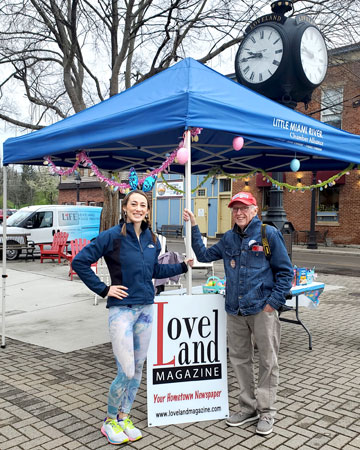
    Cassie Mattia and David Miller at the Easter Food Drive.

    Promoted Post

    Loveland, Ohio – We wanted some shiny, bright new signs for our office and to have at our Easter Food Drive. Apex Imprinted Sportswear and Promotional Specialities delivered the signs days before the event even though we didn’t give them much notice.

    Apex is conveniently located in the West Loveland Historic District with plenty of free private parking at the rear of their office at 523 West Loveland Avenue. Give them a call at 513-677-0700 or shoot them an email at apexloveland1@gmail.com.

    At Apex, they provide assistance with theme creativity, layout and design, and the finest imprinted and embroidered items. They have access to over 600,000 promotional products and are dedicated to finding the ideal product for your promotional need.

  • Butler County Board of Developmental Disabilities teams up with local service providers in presentation to State officials

    Butler County Board of Developmental Disabilities teams up with local service providers in presentation to State officials

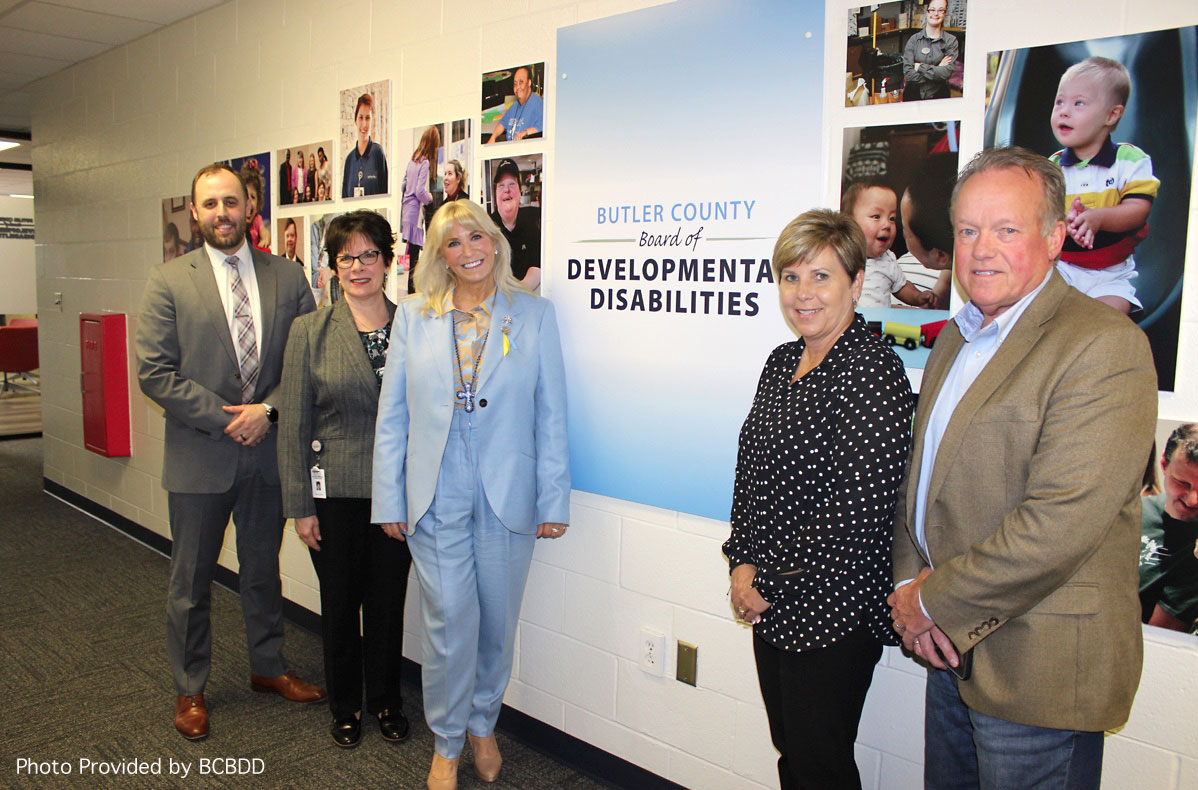
    Representative Sara Carruthers (center) and Senator George Lang (not pictured) met with Butler County Board of Developmental Disabilities Superintendent, Lisa Guliano (center left) as well as Erich Bitter from the Ohio Association of County Boards of DD (left); Deb Lyle, Administrator of Graceworks Enhanced Living (center right); and Mark Schlater, CEO of Toward Independence (right).

    Carruthers and Lang learned about the important work being done by provider agencies like Graceworks Enhanced Living and Toward Independence – both of which provide direct care for people with developmental disabilities and are currently struggling to fill empty positions. Carruthers and Lang offered their full support to helping improve the situation for DSPs identifying the need for a long-term plan.

    Butler County, Ohio – “We need to let people know that this is a very noble career,” State Representative Sara Carruthers said after learning about how vital Direct Support Professionals (DSP) are to those with developmental disabilities

    On Friday, April 15th, the Butler County Board of Developmental Disabilities (BCBDD) Superintendent Lisa Guliano, the Ohio Association of County Boards (OACB) Government Relations Director Erich Bittner, Graceworks Enhanced Living Administrator Deb Lyle, and Toward Independence’s CEO Mark Schlater met with Ohio Senator George Lang and Ohio Representative Sara Carruthers to discuss how to improve the Developmental Disabilities (DD) system and create a structurally sound future for DSPs.

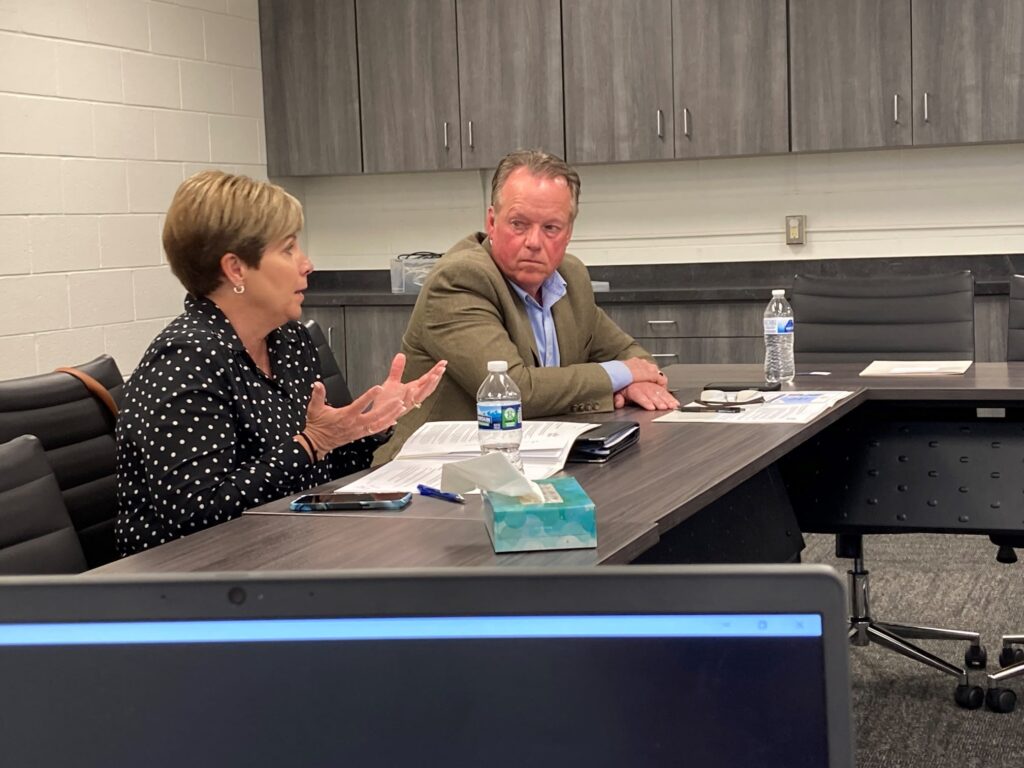
    Deb Lyle, Administrator of Graceworks Enhanced Living and Mark Schlater, CEO of Toward Independence.

    DSPs are caregivers who work directly with people with developmental disabilities, providing the care and support needed for everyday life. Many provider agencies in Butler County and throughout Ohio are struggling to fill DSP positions. 

    Both Bittner and Guliano presented three of what they considered 2022 legislative priorities with support from Lyle and Schlater. “When the dust all clears we still have to find a way,” Schlater said when explaining why he believed the DD system needed help providing DSPs with more incentives and security. Guliano supported Schlater by emphasizing that because the number of people needing services continues to grow, the number of DSPs and funding needs to do the same.

    Senator Lang and Representative Carruthers fully agreed with Bittner, Schlater, Lyle, and Guliano and offered their full support. 

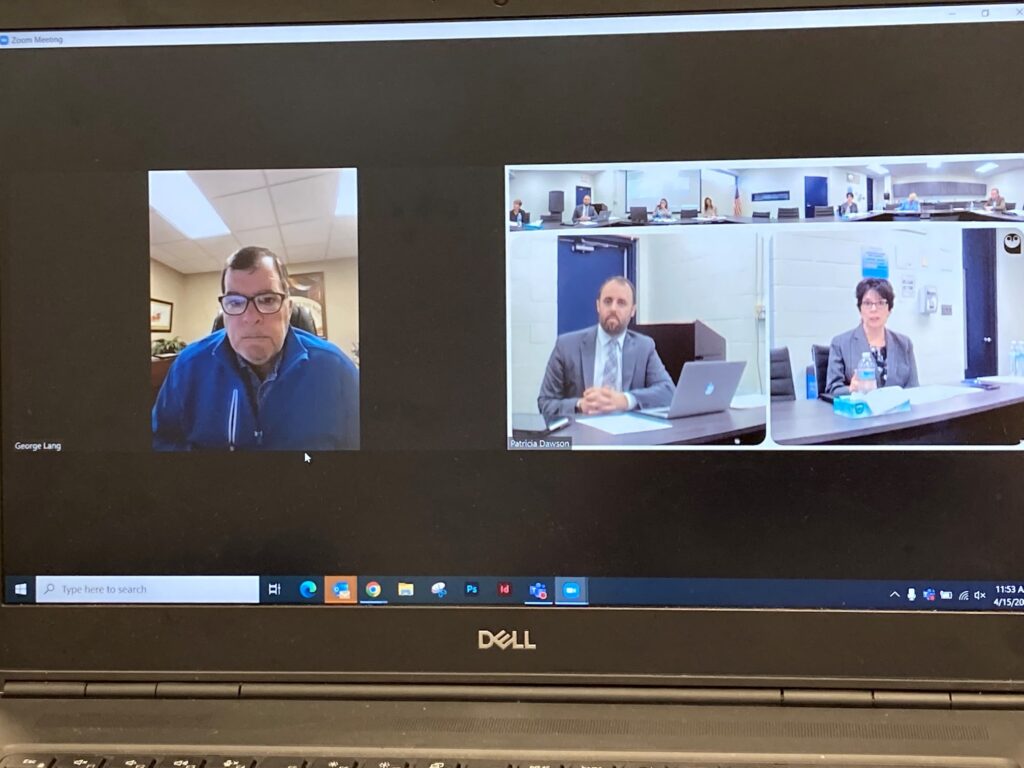
    Ohio House Representative George Lang (left) participated in the meeting with the Butler County Board of Developmental Disabilities via Zoom.

    “I intimately understand the great work you do and I will do whatever I can to solve this issue. We have to figure out how to press reset and come up with a long-term plan,” Senator Lang said.

    “I think the answer is reconfiguring the model and system,” Carruthers said, “Maybe work in an inflation adjustment and target the most important jobs affected. I think we start at the elementary level.”

    Bittner also brought forth in the meeting the idea of providing more flexibility for Ohio public meetings and modernizing purchasing authority for County Boards of DD. Both Lang and Carruthers supported the ideas presented and again emphasized that they would support the DD system in any way they could. “Just so you know you are getting someone with unstoppable forces,” Lang said making the entire conference room burst into laughter.

    The OACB and BCBDD have high hopes after meeting with Lang and Carruthers, who both sit on the budget committee. 

  • Ohio Supreme Court rejects legislative maps, sets fifth redistricting deadline

    Ohio Supreme Court rejects legislative maps, sets fifth redistricting deadline

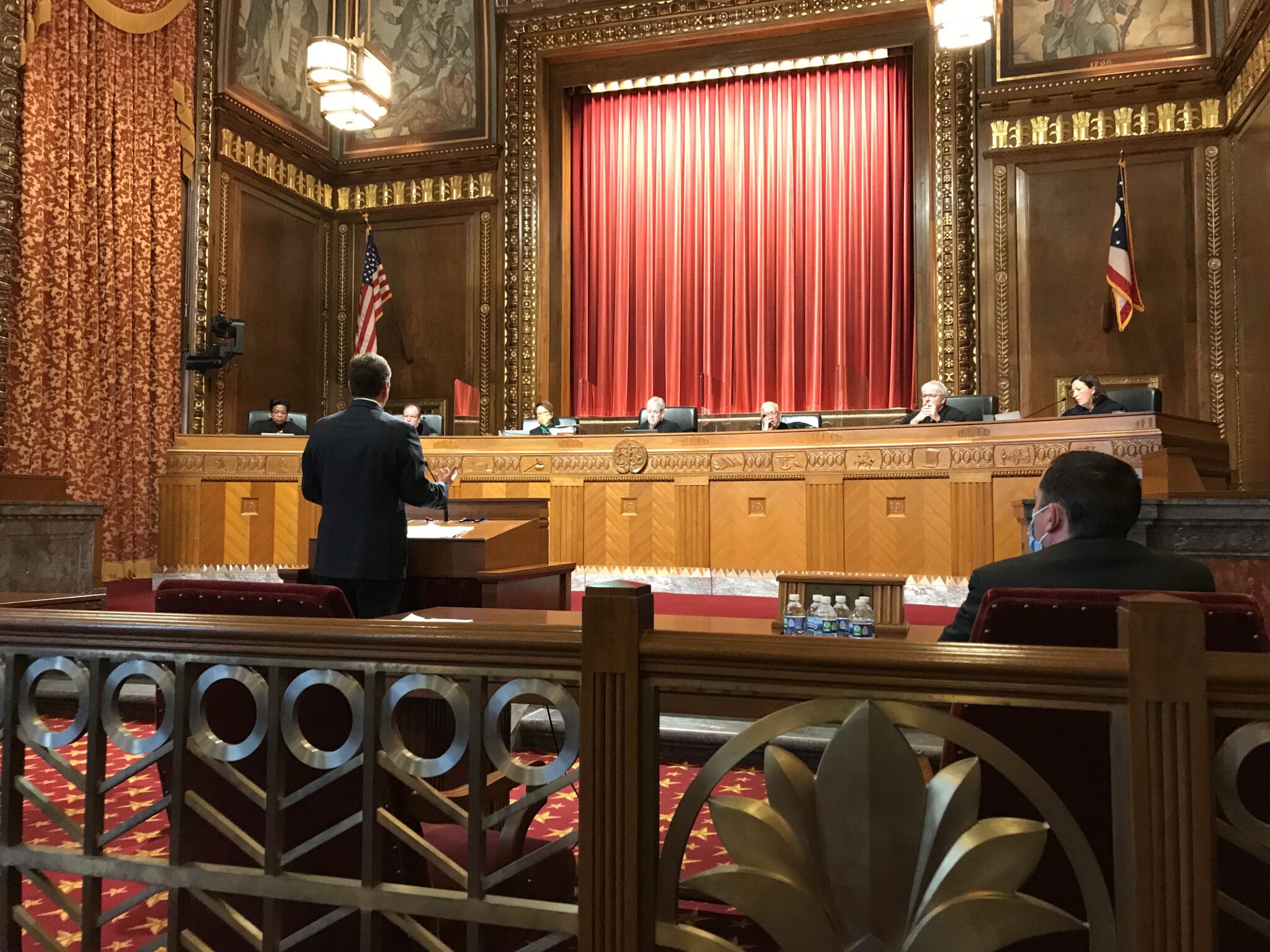
    Attorney Phillip Strach speaks before the Ohio Supreme Court in December, arguing for the constitutionality of legislative district maps. The court heard arguments on three cases asking it to reject the maps approved in September. (Photo: Susan Tebben, OCJ)

    Commission members won’t be held in contempt

    BY: SUSAN TEBBEN – Ohio Capital Journal

    The Ohio Supreme Court turned away a fourth set of redistricting plans from the Ohio Redistricting Commission in a 4-3 decision on Thursday, but left the responsibility with the commission to redraw the maps yet again.

    In a separate announcement, the court also denied requests to hold commissioners in contempt of court for violating court orders. Justice Patrick DeWine, son of governor and commission member Mike DeWine, recused himself from the contempt proceedings, but not from the redistricting rulings.

    The fourth set of maps was similar to the third maps, as admitted by Senate President Matt Huffman, the member of the commission who proposed they be adopted by the ORC at the end of March.

    The supreme court spelled out in its Thursday ruling the way in which objections to the maps showed “beyond a reasonable doubt” that the plan once again violated the constitutional regulations surrounding redistricting, but they didn’t order any other remedies offered by the map challengers, which included taking the map-drawing power away from the ORC.

    The commission started off on the right foot this time, the justices in the majority said, when they “began to heed our suggestions” given in the previous map rejection, which advised the commission to hire independent mapdrawers, hold near-daily meetings, and give mapdrawers “a neutral set of instructions” that they would use to publicly draw maps.

    In the week leading up to the March 28 deadline for the most recent maps, the commission hired Dr. Douglas Johnson, as proposed by the GOP, and Dr. Michael McDonald, as proposed by the Democrats. The two were paid at a rate of $450 per hour, with a cap set at $49,000 each.

    The commission also partnered with the Ohio Channel to set up a room with cameras showing Johnson and McDonald working, and the computers on which they were collecting data and drawing district lines. The commission met several times during that week to answer questions from the mapmakers and give them instructions, up until the day of the deadline.

    On that day, Huffman made a move to bypass the Johnson/McDonald maps because he said time was running short, too short for the commission members to offer amendments and make changes by the deadline.

    The best option, he then said, was to make a few changes to the previously rejected map, and submit it to the court, with the argument that it was better to get a map in on time than to wait for the mapmakers to be done with their map and possibly go past the March 28 date set by the court.

    To do so, he tasked Blake Springhetti, a House GOP staffer who had worked on the previous maps, to make the changes that night.

    “The evidence suggests that Springhetti … modified the second revised plan in one afternoon to produce the (fourth map),” the majority justices wrote in their rejection of the most recent maps.

    Broken ‘parachute’

    Despite the fact that the court told the commission to come up with an “entirely new” map this time, the court said the commission acted as though a tweaked version of an invalidated plan was a “parachute” to get it over the finish line. They also said there was evidence of efforts to block McDonald and Johnson from finishing their maps.

    “The timeline of events demonstrates convincingly that the commission — or at least some members of the commission — when faced with one or more plans that closely matched constitutional requirements in the form of Dr. McDonald’s and Dr. Johnson’s plans, reverted to partisan considerations when time was running short, even though the potential for successful completion was high,” the majority justices wrote.

    “Particularly problematic,” those justices said, was Huffman’s “last-minute insistence” that the mapmakers consider the addresses of incumbent House and Senate members in their district drawing, which the court said “pulled the rug out from under the independent map drawers.”

    In throwing forth the revised version of the third plan, commission members sent the court “a nearly identical one-sided distribution of toss-up districts,” the court rules. The number of toss-up districts — those districts whose partisan “advantage” is less than 2 percentage points — went from 26 to 23 from the third maps to the fourth. The fact remained, though, that all the toss-up districts were considered “Democratic-leaning” in the GOP analysis of the maps, and none were similarly toss-ups for Republican districts.

    “Senate President Huffman and House Speaker Cupp point out that the (fourth plan) improves upon the (third plan),” court justices noted. “While this may be true, the improvement falls short of landing in constitutional territory.”

    The court is now giving the commission until 9 a.m. on May 6 to come up with an “entirely new” plan. They again pushed for transparency and public viewing of the process. They also retained jurisdiction on the map, meaning they hold on to the authority to reject or approve the map as they have in previous instances.  This wasn’t the case in the congressional maps, forcing challengers of that map to file brand new lawsuits to fight against what they see as gerrymandered federal districts.

    Adopting another new plan…again

    The majority justices, while acknowledging that they do not have the power to adopt a map of their own, suggested a more “efficient way” of moving forward with a new plan.

    “No matter what the primary date is to be, time is of the essence,” the justices wrote. “With time in mind, it appears that the most efficient way for the commission to proceed may well be to continue working with Dr. McDonald and Dr. Johnson to complete the plan on which they have made considerable progress — if they are willing and available and if the commission has the authority to timely retain them for additional work.”

    The court argued that “by certain measure” the Johnson/McDonald plan “is on track to being constitutionally compliant.”

    Seemingly responding to sticking points that came up along the way, the court’s majority gave new guidance on adopting a new legislative plan.

    During the late hours of March 28, Cupp and Huffman both argued the commission couldn’t push past the deadline because the court had said it would not allow any other extensions of time. The court was more specific this time in saying no request for extension of time could be filed for objections to the adopted maps.

    The commission, however, could file a motion for an extension to their time with the secretary of state if they can prove it is needed.

    Justices also took time in their decision to argue against a federal intervention in state redistricting, something being discussed by a three-judge panel in U.S. District Court. Those judges are considering a lawsuit by Ohio voters asking that the federal court decide on a map for the state to use, under the argument that voters are losing their constitutional right to do so without a map to establish candidate districts.

    “While the process has proved challenging for the commission, as evidenced by four legislative plans falling short of (the constitution’s) requirements, the difficulty of the task is not a reason for federal-court intervention,” the majority of supreme court justices wrote.

    Dissents

    The three votes against rejecting the maps came from expected sources: Justices Sharon Kennedy, Patrick DeWine and Patrick Fischer, all of whom voted against rejection in the last three court decisions.

    Kennedy, who is running for chief justice in this year’s election, used her Thursday dissent to again discredit the majority opinion for overuse of judicial power. She criticized the justices who rejected the last three maps for moving constitutional goalposts and abusing their power in previous dissents over redistricting.

    “The majority’s continued denial of the limitation of this court’s power may end up costing the taxpayers millions of dollars,” Kennedy wrote in her dissent to the newest ruling. “Money that is being consumed by the never-ending cycle of map drawing, litigation, and now, two primaries, one on May 3 and the other perhaps on Aug. 2, all ordained by the majority’s overreach.”

    Justice Patrick DeWine claimed the majority had “long ago forsaken any concern about the actual words of the Constitution – it simply demands a General Assembly-district plan that achieves its policy goals.”

    “With each iteration of these cases, it becomes more evident that a rogue majority is simply exercising raw political power,” Justice DeWine wrote in his own dissent. “No one should be deceived.”

    The justice goes on to say the authors of the constitutional amendment overhauling redistricting “were overly optimistic,” and the threat of a four-year map instead of 10-year map “was not the stick it was thought to be” to incentivize bipartisan work.

    Whatever the reason for the “mess” redistricting has become, Patrick DeWine said court overreach is not the solution.

    “(The court’s job) is not to impose extraconstitutional standards on the commission in an attempt to achieve political outcomes that the court finds desirable,” DeWine wrote.


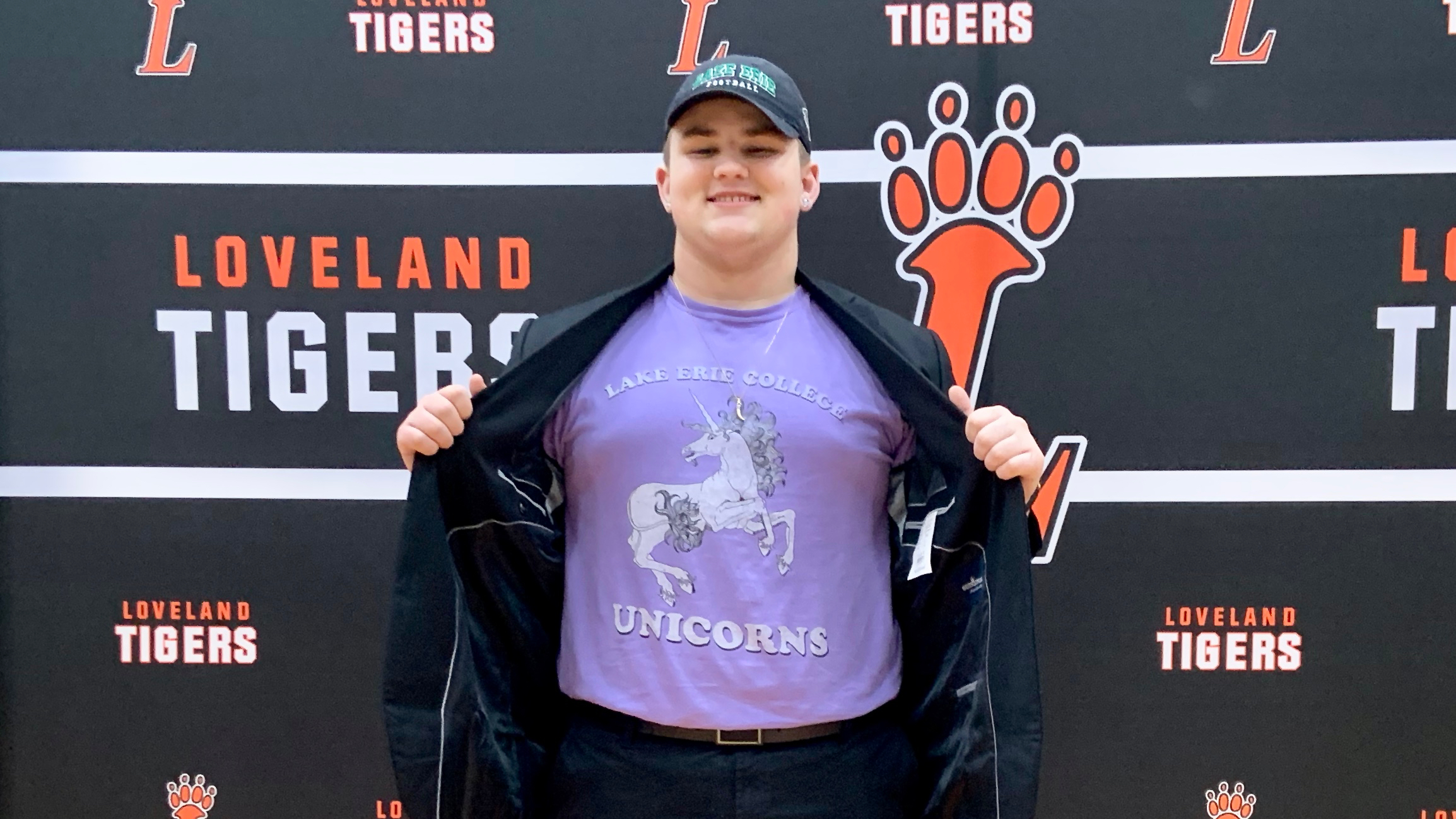
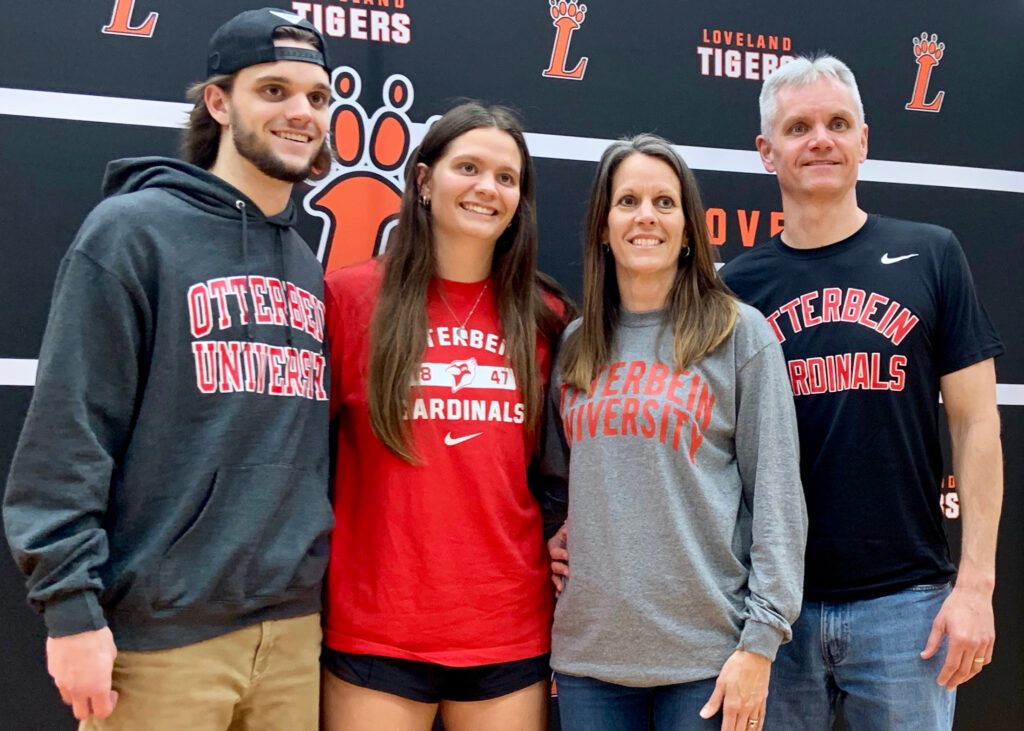
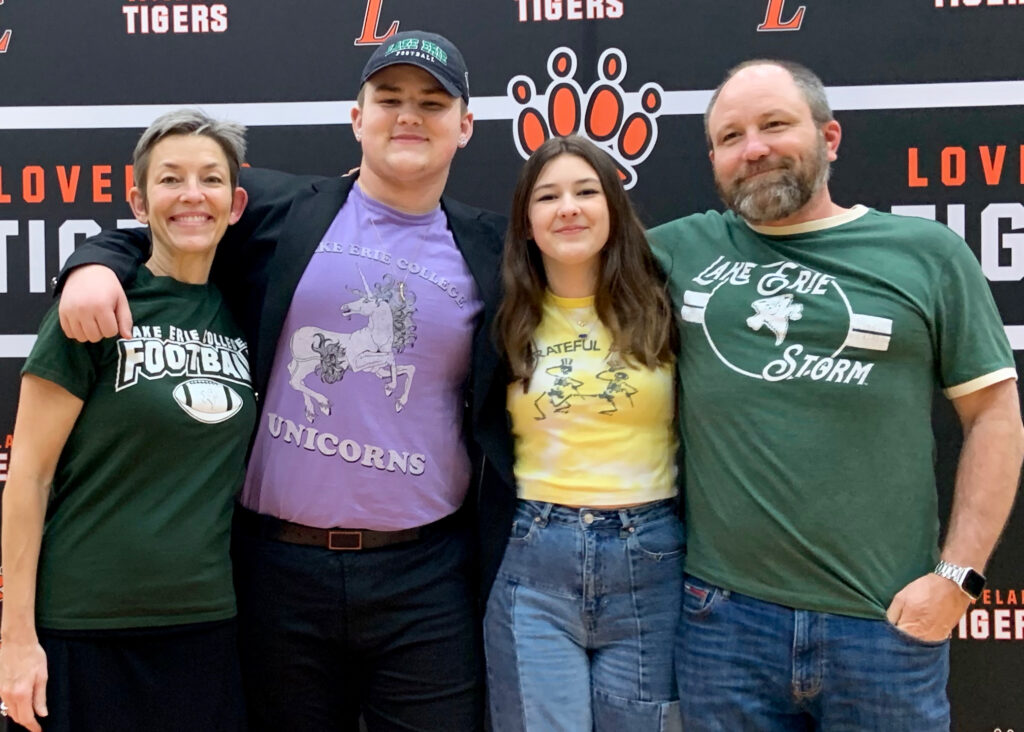
  • [Video] Spring National Signing Day at Loveland High School

    [Video] Spring National Signing Day at Loveland High School

    by David Miller

    Loveland, Ohio – It was Spring National Signing Day on Wednesday at Loveland High School. Congratulations to the following Student-Athletes, who have committed to play their sport at the collegiate level.


  • Chamber President releases results of parking garage survey

    Chamber President releases results of parking garage survey

    by David Miller

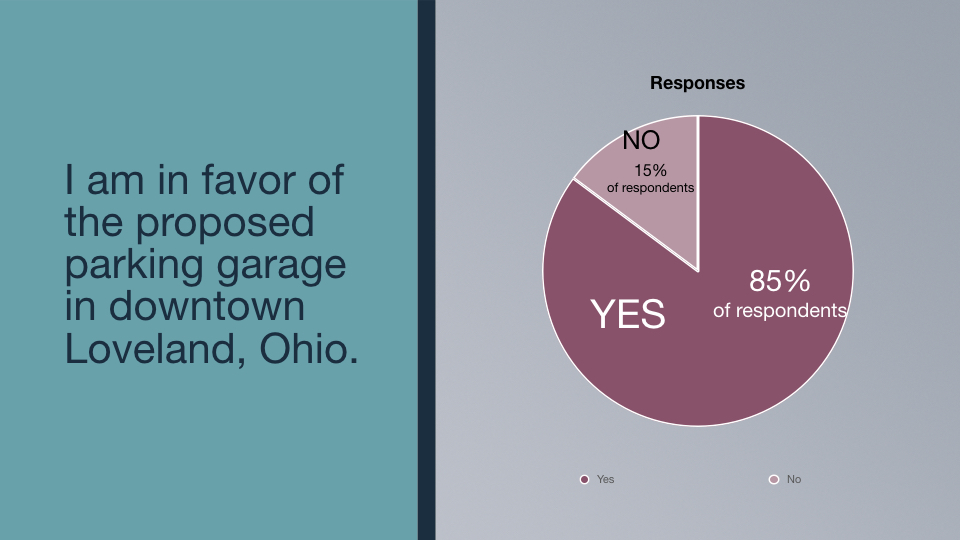
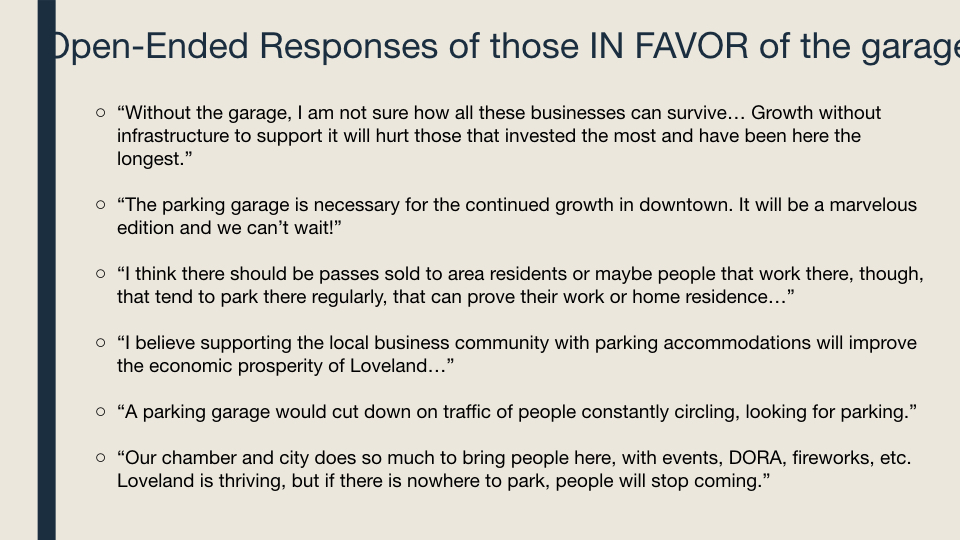
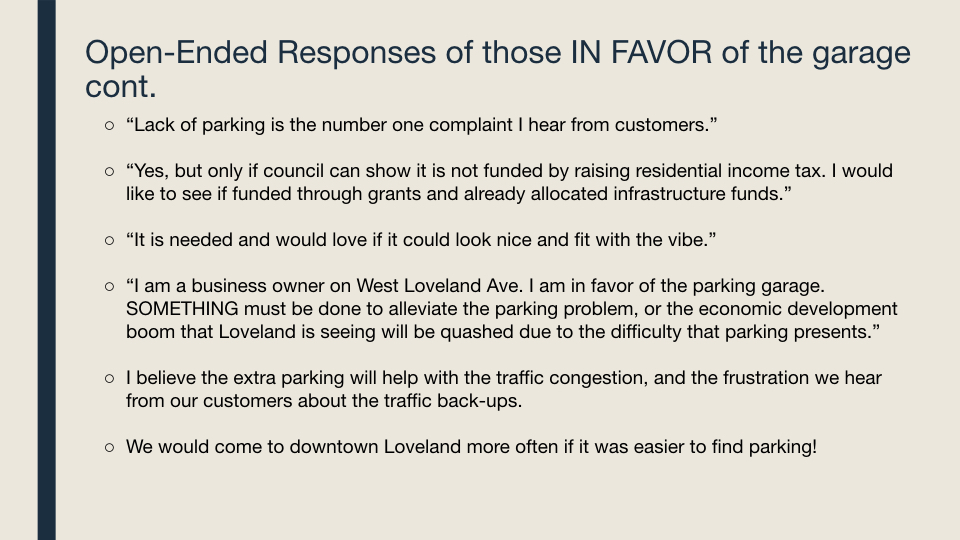
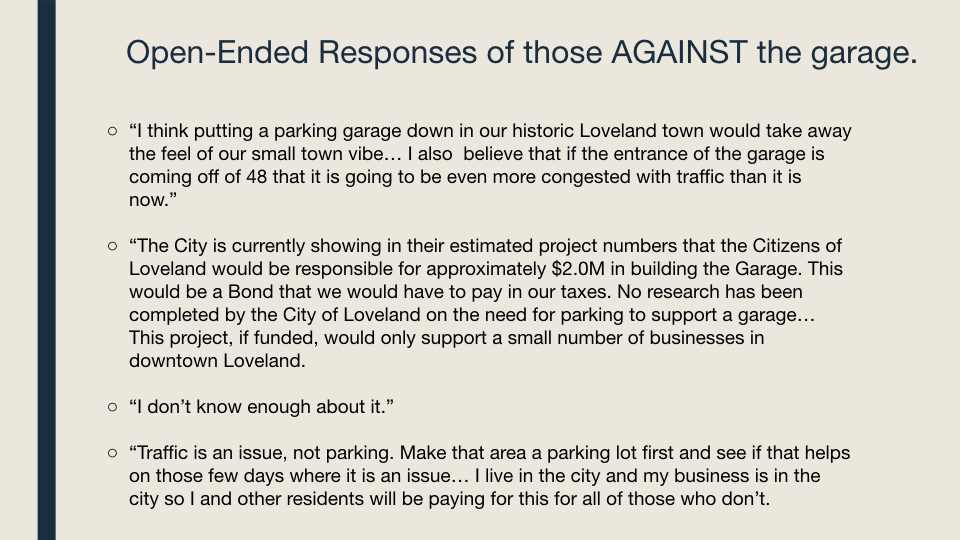
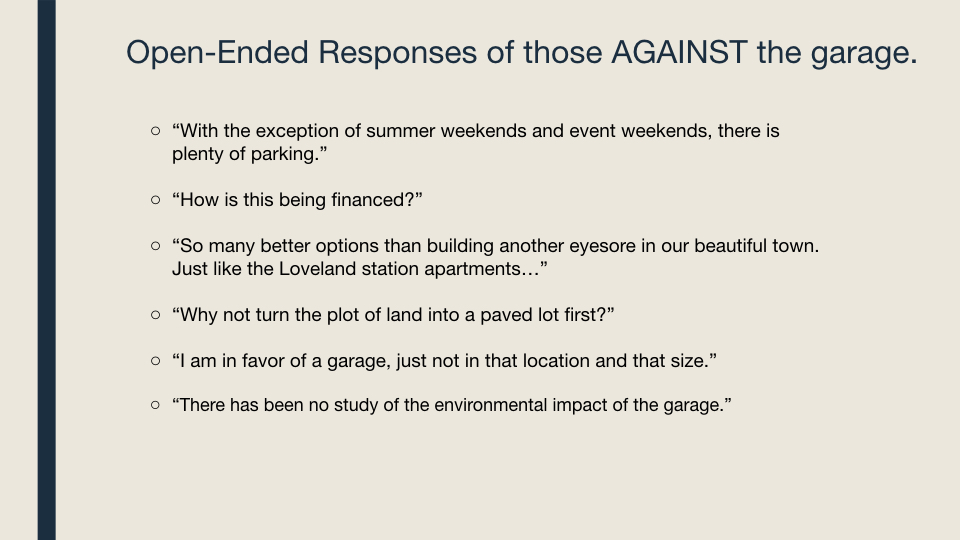
    Loveland, Ohio – At Tuesday’s council meeting CeeCee Collins released the results of a parking garage survey recently conducted by the Little Miami River Chamber Alliance. Collins is the President of the Chamber.

  • Governor DeWine signs executive order defining antisemitism

    Governor DeWine signs executive order defining antisemitism

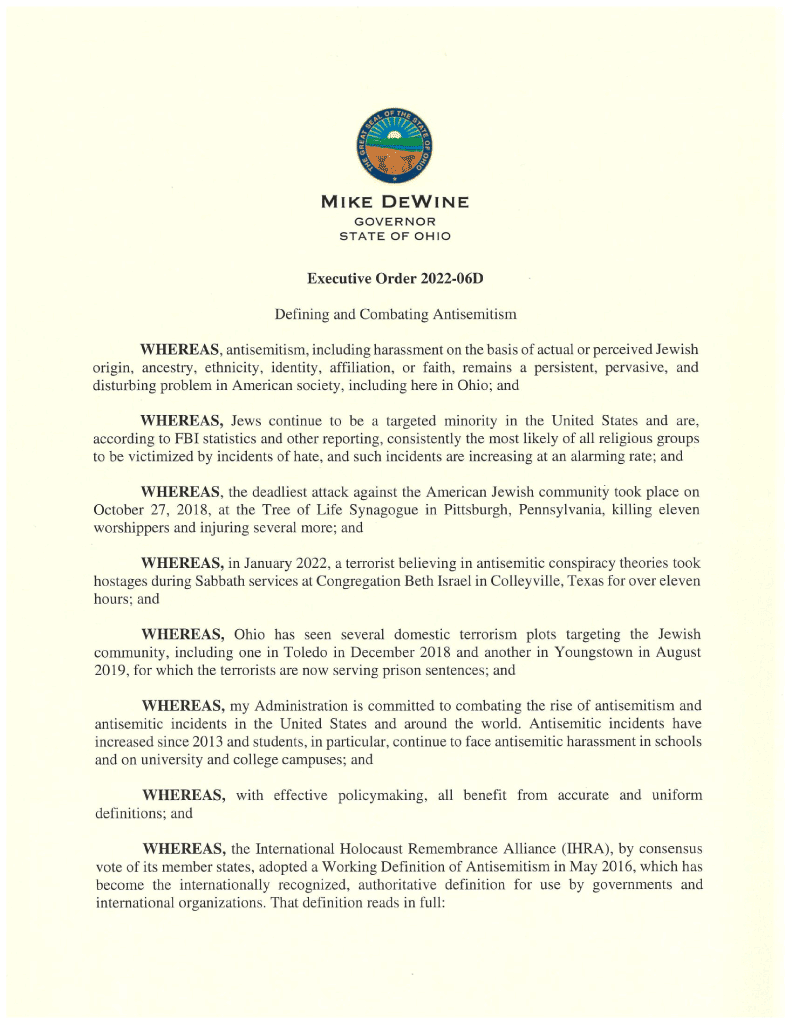
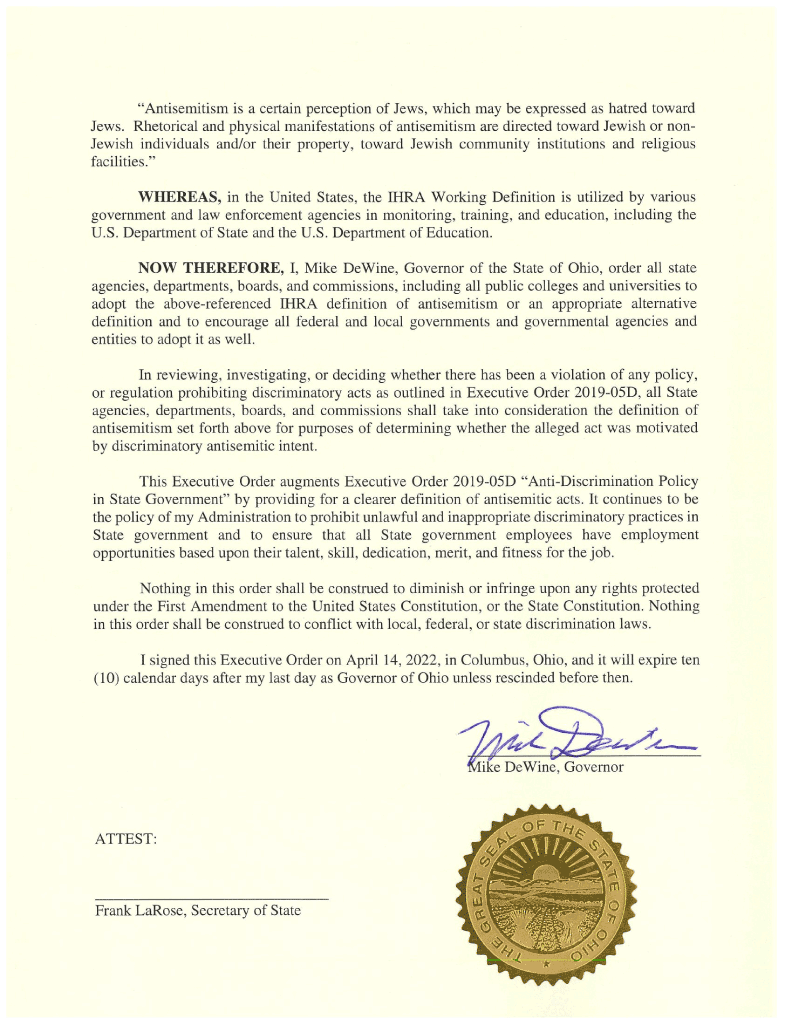
    Columbus, Ohio – Ohio Governor Mike DeWine today signed Executive Order 2022-06D to further define antisemitism using the International Holocaust Remembrance Alliance’s working definition, and require all state agencies, departments, boards, commissions, and public colleges and universities to adopt the definition, as well.

    “Antisemitism remains a persistent, pervasive, and disturbing problem in American society, including in Ohio,” according to a statement from DeWine’s office.

    Right-Click these images to open in a new tab or window and see a larger view.

  • Common Cause Ohio: “State Supreme Court Rules State Legislative Maps Drawn to Unduly Favor Party in Power”

    Common Cause Ohio: “State Supreme Court Rules State Legislative Maps Drawn to Unduly Favor Party in Power”

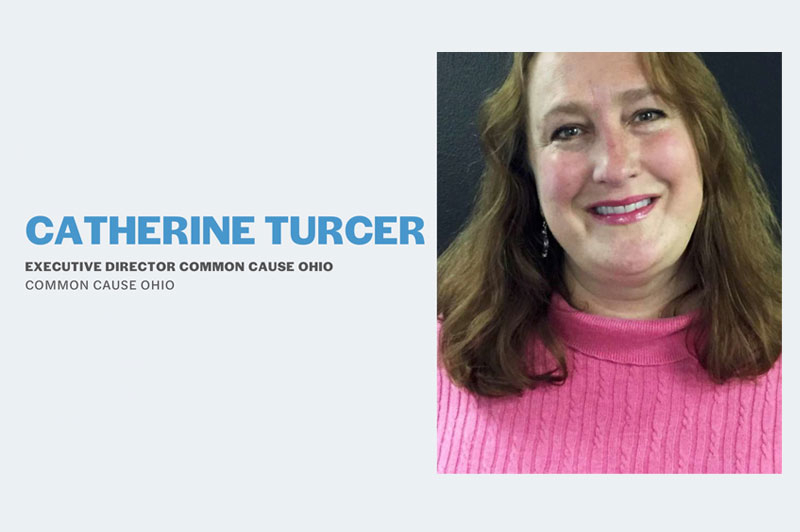
    The statement of Catherine Turcer, Common Cause Ohio Executive Director that was released today.


    Earlier today, the Ohio State Supreme Court struck down gerrymandered Ohio House and Senate maps for an astonishing fourth time. The court’s decision is no surprise since these maps were nearly identical to the previous set of Ohio General Assembly maps that had already been ruled unconstitutional by the court.

    The now-struck-down fourth Ohio House and Senate maps were created not by the Commission or the independent mappers, but by the GOP majority of the Ohio Redistricting Commission (Governor DeWine, Secretary of State LaRose, Speaker Cupp, and Sen. Pres. Huffman) in a secret process that directly contravened the court’s directive to work in a transparent and bipartisan fashion. The maps were produced just hours before the March 28 deadline in a bait-and-switch maneuver that killed the independent mappers’ district plans and sabotaged the first transparent redistricting process in the state.
    Ohio voters are tired of being manipulated. It is time for the Ohio Redistricting Commission to take the orders from the Ohio Supreme Court seriously. We have been waiting for fair districts since 2015—when the new rules for mapmaking were overwhelmingly approved by voters. Ohio voters repudiated gerrymandering and put good rules in the Ohio Constitution to ensure fair maps going forward. We expect the members of the Ohio Redistricting Commission to abide by those rules, follow the Ohio Constitution, and obey the orders of the Ohio Supreme Court. The sooner the majority members of the Commission get to work and do their jobs as required, the sooner this redistricting nightmare will draw to a close, and Ohioans will finally be able to vote using the fair maps they need and deserve. 


  • COVID-19 is causing more type 1 diabetes in kids, who will be saddled with high insulin prices

    COVID-19 is causing more type 1 diabetes in kids, who will be saddled with high insulin prices

    Commentary

    by Jennifer Schuerman – Ohio Capital Journal

    As nurses, my husband and I witnessed truly awful and devastating things treating patients on the frontlines of this pandemic. Hundreds of thousands of Americans have died, while the millions who survived, now faced with disability, are left to grapple with the harsh realities of long COVID-19.

    Among those millions of people living with long-term health impacts is our son Carter.

    Four days before the COVID-19 vaccine was available for kids under 12, my 11-year-old son Carter tested positive for COVID-19. He had the common symptoms for the first few days, but as those subsided, I began noticing new ones like extreme thirst and frequent urination. In my gut, I knew it was diabetes. And sure enough, a mother always knows: Twelve days after his COVID-positive test, Carter was officially diagnosed with Type 1 diabetes.

    In less than a month, everything about our lives changed. We don’t have any family history of any type of diabetes, so Carter’s diagnosis came out of nowhere, and we were not prepared. Our days now revolve around his blood sugar levels. Meal times are planned around insulin doses, mornings and evenings have a new medicine routine. Even as nurses, my husband and I could have never anticipated the severity of impact this diagnosis would have on our family.

    I hear fellow nurses say there are more kids coming into the hospital and leaving with a diabetes diagnosis. Many of the newly diagnosed diabetics often had a recent COVID-19 infection. When a recent CDC report found children under 18 infected with COVID-19 are 2.66 times more likely to develop diabetes, it only confirmed the trend I witnessed in my hospital.

    Carter was prescribed two different kinds of insulin, Humalog and Basaglar. Only a couple months into his treatment, our insurance decided it would no longer cover Humalog beginning in January of this year. We had just enough to last us through March. We cannot afford the out-of-pocket costs to keep Carter on the same kind of insulin, so we will need to switch him to a new kind of insulin before his body has even adapted to the current regimen.

    We lose sight of the human cost when we ignore insulin price gouging. At the end of the day, we are putting a price on human life — on a child’s life.

    I realize we are extremely lucky to have health insurance that keeps insulin costs manageable for our family. Since becoming part of the diabetes community, I’ve learned how rare it is to have sufficient insurance coverage and be able to afford insulin at all. As I read the heart-breaking posts from parents pleading for insulin donations in online communities, I think about how one unfortunate diagnosis can send a family to economic ruin through no fault of their own.

    So, when the House passed the Affordable Insulin Now Act last week, I felt like Congress finally listened to the pleas of Americans with diabetes. The bill will cap insulin copays at $35 a month — reducing insulin costs by hundreds each year. In America, around 1 in 4 diabetics have rationed their insulin due to high costs. With nearly 60% of Americans under 17 having been infected with COVID-19, some of them may develop type 1 diabetes. It is more important than ever to do something about insulin prices.

    By lowering the price of insulin and passing other federal prescription drug reforms, we can help existing diabetics and prevent newly diagnosed diabetics, especially kids, from being forced to ration life-saving medication.

    I couldn’t imagine going through this emotional journey with the added stress of not being able to afford the one thing you need to keep your child alive. Type 1 diabetes is a lifelong condition; my son will never escape this. It’s not his fault he caught COVID-19. It’s not his fault that COVID-19 may have caused his diabetes. But he will be forever burdened by the price of insulin.

    We are fortunate to be able to afford Carter’s insulin and supplies. But what about the families who aren’t so lucky? What happens to all of the kids who will eventually age off of their parents’ insurance, and their plans barely cover insulin? We lose sight of the human cost when we ignore insulin price gouging. At the end of the day, we are putting a price on human life — on a child’s life.

    I would do whatever I could to get my child what he needs. I would give up my house, I would give up everything to keep him alive. I don’t know any parent who wouldn’t do the same. Our leaders in Congress must do everything they can, so people with diabetes and their caretakers aren’t left with such impossible choices. Now, it’s up to our representatives in the Senate to stand with parents like me and stop hiding behind the donations of pharmaceutical companies.

    This commentary was first published in the Arizona Mirror.