Tag: loveland

  • Both FirstEnergy and its shareholders seek secrecy around company’s bribes

    Both FirstEnergy and its shareholders seek secrecy around company’s bribes

    BY: JAKE ZUCKERMAN – Ohio Capital Journal

    Both FirstEnergy Corp. and its shareholders argued to a federal judge that they shouldn’t be forced to publicly disclose which executives ordered the payment of political bribes that the company admitted to in a related criminal case.

    The two parties are awaiting judicial approval of a proposed settlement from a derivative lawsuit filed by FirstEnergy’s shareholders. The settlement would call for FirstEnergy’s insurers to pay the company $180 million for damages incurred via the company’s role in what prosecutors have described as the largest public corruption manifestation in state history.

    In an agreement with prosecutors reached in July 2021, FirstEnergy as a company admitted to a $60 million bribery scheme anchored by the then-Speaker of the Ohio House, and another $4.3 million bribe to Ohio’s then top utility regulator.

    The statement of facts in that agreement, however, anonymizes the FirstEnergy officials involved in the scandal. The agreement also called for FirstEnergy to pay a $230 million penalty and cooperate with investigators to possibly avert a charge of wire fraud against the company.

    Delaying any possible approval in the shareholder’s derivative case, U.S. District Judge John A. Adams asked the shareholders’ attorneys last week to state who at FirstEnergy ordered the bribe payments,

    Jeroen van Kwawegen, an attorney representing the plaintiffs, demurred and didn’t answer the question, prompting Adams to cut short the hearing. Adams then issued an order calling for any “interested parties” to either provide an answer to his question or offer a good reason why they can’t divulge the information. He threatened the lawyers with contempt and possible expulsion from the case for failure to answer.

    The shareholders, in arguments submitted Wednesday, offered to privately tell the judge who at FirstEnergy ordered the bribes. They said they couldn’t do so publicly because doing so would breach confidentiality rules associated with discovery (the pre-trial evidence exchanging process) and mediation.

    The shareholders’ lawyers said their obligations are to their clients and to FirstEnergy itself — not the public.

    “Such public disclosure could also be harmful to FirstEnergy considering the myriad related criminal and civil proceedings, the ongoing regulatory investigations, and the securities class action pending in the Southern District of Ohio where FirstEnergy is a defendant,” they wrote.

    Kwawegen attached emails attached to the filing showing he asked lawyers FirstEnergy and its former executives if they’d agree to voluntarily disclose some of the information. He was rejected by the company, its former CEO Chuck Jones, Dennis Chack, and Mike Dowling (whose lawyer said they are not inclined to provide a “blanket waiver” but asked for specifics). Jones, Chack and Dowling were all fired in October 2020 amid an internal investigation.

    FirstEnergy made similar arguments. The lawsuit and settlement, its lawyers said, are aimed to recover for harm done to the company because of its actions. Any public accountability, they argued, “risks harm to the interests of FirstEnergy and its stockholders, which is exactly the opposite of what a derivative litigation is supposed to do.”

    Notably silent on the issue: federal prosecutors. They didn’t weigh in either way before the court. A spokeswoman for U.S. Attorney for the Southern District of Ohio Kenneth Parker didn’t respond to an inquiry.

    The derivative lawsuit traces back to the passage of House Bill 6 in 2019. The energy overhaul legislation, among other provisions, provided a massive bailout of two nuclear power plants owned at the time by a FirstEnergy subsidiary. Federal prosecutors said the legislation was worth $1.3 billion to the company.

    To ensure it passed and thwart a referendum attempt to repeal it, FirstEnergy admitted to providing $60 million to a nonprofit secretly controlled by then House Speaker Larry Householder, R-Glenford. Householder allegedly used the funds to elect a slate of candidates that would support his bid to become the House Speaker, engineer the bill’s passage, thwart a repeal effort, and enrich himself personally. He has pleaded not guilty and awaits trial, scheduled for January 2023.

    FirstEnergy also admitted to secretly paying $4.3 million to energy attorney Sam Randazzo just before Gov. Mike DeWine named him chairman of the Public Utilities Commission of Ohio. Randazzo has not been accused of a crime and has denied wrongdoing.


  • PERMITLESS CARRY, A TOP NRA PRIORITY, ADVANCING ACROSS Ohio and COUNTRY DESPITE WIDESPREAD OPPOSITION

    PERMITLESS CARRY, A TOP NRA PRIORITY, ADVANCING ACROSS Ohio and COUNTRY DESPITE WIDESPREAD OPPOSITION

    If the gun lobby gets its way, more than half the country will have permitless carry laws in place by the end of 2022.

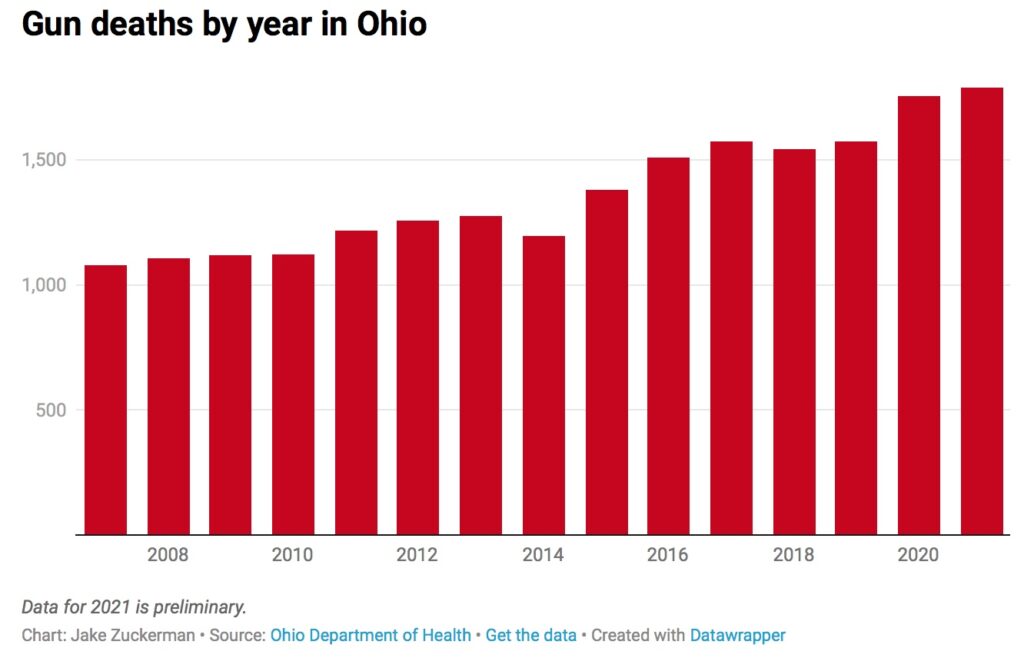
    Just in the past week, Ohio Governor Mike DeWine and Alabama Governor Kay Ivey sided with the gun lobby and signed new permitless carry bills into law, ignoring widespread opposition from law enforcement, community leaders, and their constituents.

    DeWine signs law removing training, background check, permitting requirement to conceal…

    These laws are dangerous, and for obvious reasons. Permitless carry laws allow people to carry concealed handguns in public without a permit, without training, and without a background check. Even far-right extremists and white supremacists.

    Give to Everytown and Help Defeat the Gun Lobby’s Extremism

    Everytown for Gun Safety has a plan to end gun violence and urgently needs your help to stop permitless carry from building momentum before more of these laws are enacted. Donate to help us stop dangerous new gun laws and fuel our fight to end gun violence.

    DONATE
  • GOP believes John Wilkes Booth was participating in “legitimate political discourse”?

    GOP believes John Wilkes Booth was participating in “legitimate political discourse”?

    by Mark P. Painter

    As of February 2022, it is now official and incontrovertible: the Republican Party is the party of sedition.

    The official governing board, the Republican National Committee declared that January 6, 2021, rioters who attacked the Capitol were “ordinary citizens engaged in legitimate political discourse.”  So the rebels and thugs breaking into our Capitol, by hitting, choking, and smashing police officers in the head with fire extinguishers, shouting “Hang Mike Pence,” were engaging in the same activities as a high-school debate club.

    These “ordinary citizens” had just been whipped into insurrection by the Big Lie—by Donald Trump, the execrable Jim Jordan, and others who wanted the mob to forcibly stop congress from doing its duty to certify the results of an election that Trump’s own Department of Homeland Security called “the most secure in American history.” 

    We have since learned that the insurrection was planned.  Not a “demonstration” that went too far, but an attempted coup. The plan was to intimidate Mike Pence to refuse to certify the duly elected electors, have the Republican House pick bogus electors from states that voted for Biden, and keep Trump in office.  

    Fortunately, this scheme was devised by idiots like Rudy Giuliani, Jim Jordan, and Sidney Powell.

    But even that brain trust came closer than it should have.  Mike Pence, knowing that he had no power to do what Trump insisted, held firm.  After four years of groveling at Trump’s feet, treason was a bridge too far—he followed the law.  But later in the day, the sedition caucus of 147 Republicans in Congress, sadly including our own Steve Chabot, voted to overturn a free and fair election.

    Most sane Republicans were shocked.  

    But in the year since the insurrection, when even more proof of the plot has come out, the Republican leadership has continued to insist, against all evidence, that the 2020 election was stolen—Big Lie One. 

    Now we have Big Lie Two—that the rioters’ coup attempt was just a bunch of Rotarians visiting the Capitol.

    Surely, most Republican office holders are not so stupid as to believe either lie themselves.  But they still parrot it to the gullible.  Because these people know better, they are both liars and hypocrites.  

    The GOP I proudly was a part of for over four decades has become not the party of Lincoln, freedom and civil rights—but of voter suppression and outright racism; not of Teddy Roosevelt, national parks and trustbusting—but of slashing taxes on billionaires; not of William Howard Taft, Robert A. Taft, and principled conservatism—but of worship of an authoritarian sociopath of no beliefs except in his own rantings of the day; not of Dwight Eisenhower, Stan Aronoff, John Rhodes, and effective bipartisanship—but of hate and disruption; and the party of sane and measured foreign policy has become I know not what.  

    Until about last week, some of us thought that possibly, just possibly, the GOP could be saved.  Perhaps when Trump and his ilk were gone, sanity could be restored.  But when Mitch McConnell said of the GOP Big Lies, “We saw it happen. It was a violent insurrection for the purpose of trying to prevent the peaceful transfer of power after a legitimately certified election, from one administration to the next. That’s what it was,” he was not praised and honored for defending truth.  He was excoriated by most other Republicans for contradicting the Big Lies.

    If there was a time when the GOP breathed its last dying breath, this was it.  The Republican Party became the Big Lies Sedition Party, mandating that its members believe the obvious lies.  (I would term it Treason Party, meaning the common definition, but someone will counter that the Constitution has a specific definition.) 

    There is no hope for resurrection.  Everyone associated with the present GOP who has supported what the party has become must be driven from office.  A new party must be formed, based on some of principles above.  Trump may comment from prison for countless felonies.

    GOP delenda est.  What’s to be done with the ashes I must leave to others.

  • Why Arcade Fire’s “The Suburbs” is all That and a Bag of Chips!

    Why Arcade Fire’s “The Suburbs” is all That and a Bag of Chips!

    The tattoo on my left forearm is inspired by the 15th song on the album, “Sprawl II (Mountains Beyond Mountains).”
    Olivia Rohling

    by Olivia Rohling

    We all have a favorite album. You know the one I’m talking about. It’s that one album that you can listen to for days on end and never get sick of it. For me, that album is Arcade Fire’s The Suburbs. 

    This is the third album released by the Canadian Indie-rock band, following Funeral (2004) and Neon Bible (2007). Arcade Fire is made up of husband-and-wife duo Win Butler and Régine Chassagne, Win’s younger brother, William Butler, Richard Reed Parry, Tim Kingsbury, and Jeremy Gara. 

    The Suburbs speaks to what it’s like growing up living in suburbia, and how comforting yet isolating that feeling can be. 

    “Will and I were born in a really small town in Northern California, kind of near the Nevada border,” Win Butler said in an  NPR interview, “Like you know maybe 50 people on the side of a mountain. We moved to the suburbs of Houston when we were young.” 

    Arcade Fire’s The Suburbs is the third album released by the Canadian Indie-rock band, following Funeral (2004) and Neon Bible (2007.) Image courtesy of The Alternative.

    The album begins with the song, “The Suburbs,” which talks all about suburban living. Key lyrics such as, “In the suburbs, I learned to drive,” and “But in my dreams, we’re still screaming and running through the yard,” allow the listener a chance to feel what it’s like to live a “suburban” lifestyle. Not to mention the ending of “The Suburbs” blends seamlessly into the beginning of the next song, “Ready to Start” which is just plain awesome sauce! The song is sure to give your eardrums butterflies!

    Many songs on the album seem to purposely blend into one another. “Empty Room” blends into “City with No Children,” “Half Light I” blends into “Half Light II (No Celebration),” “Month of May” blends into “Wasted Hours,” and “We Used to Wait” blends into “Sprawl I (Flatland).” Talk about satisfying! The album is so well done that you won’t get sick of listening to all 5,316 minutes of it over and over again like I continue to do to this day (thanks, Spotify Wrapped)! 

    “Sprawl II (Mountains Beyond Mountains)” is my personal favorite song on the album. My proof of loving the song is located right on my left arm where I have a tattoo that says, “Mountains Beyond Mountains.” The song really is just that good! Arcade Fire’s Régine Chassagne is Haitian, so the band strategically used the term “Mountains Beyond Mountains” because it comes from a Haitian proverb that means “beyond mountains, there are more mountains.” I look at the Haitian term on my arm and it always gives me the feeling that opportunities are inexhaustible and when you surmount one great obstacle in your life you merely gain a clearer view of the next one. 

    In “Sprawl ll,” Régine sings “Sometimes I wonder if the world’s so small, can we ever get away from the Sprawl?” This lyric goes back to the theme of growing up in suburban sprawl and wondering if there is more to life than suburbia. 

    If you would like to not only listen but feel the meaning of “Sprawl ll (Mountains Beyond Mountains)” you can listen to the band’s 2011 Coachella performance of this song below. Disclaimer: every time I watch this performance it brings me tears!

    The Suburbs by Arcade Fire puts suburban living into music form and does so in a way that will make you want to get up and dance! That, my friends, is why this album really is all that and a bag of chips. 

    My top three favorites songs from The Suburbs:

    1. “Sprawl II (Mountains Beyond Mountains)” 
    2. “Deep Blue”
    3. “Modern Man”
    Click this image to hear samples of my three favorite songs on the album.
  • Donating at Hoxworth is pretty easy and there is a critical need! Please watch this video

    Donating at Hoxworth is pretty easy and there is a critical need! Please watch this video

    Nervous about donating blood? There are a lot of myths and misconceptions out there, let’s dispel some of those rumors with a quick fact check!

    The Critical Need

    Hoxworth Blood Center is in need of Type A and O blood, and platelet donors! If you are eligible to give, please schedule your next donation as soon as possible by calling us at (513) 451-0910 or visiting the Hoxworth HomePage

  • U.S. Senate backs shift to permanent daylight saving time

    U.S. Senate backs shift to permanent daylight saving time

    BY: ARIANA FIGUEROA – Ohio Capital Journal

    WASHINGTON — The U.S. Senate with little debate on Tuesday unanimously supported a permanent change to daylight saving time, several days after Americans once again went through the hated “spring forward” ritual of changing their clocks.

    If the bill, the Sunshine Protection Act, clears the House, it would mean most states would stay on daylight saving time throughout the year — giving them an extra hour of sunlight in the evening.

    “Just this past weekend, we all went through that biannual ritual of changing the clock back and forth and the disruption that comes with it,” Florida Sen. Marco Rubio, the Republican who sponsored the bill, said on the Senate floor. “One has to ask themselves, why do we keep doing this?”

    Rubio said that he believed a majority of Americans want to do away with the time switch and would prefer an extra hour of daylight, especially during the winter months. The Senate agreed under a process known as unanimous consent.

    The bill, if signed into law, would not go into effect until 2023, to give airlines and other companies time to adjust. A White House spokesperson did not respond to a question about President Joe Biden’s position on daylight saving time.

    The House held a hearing last week at which a panel of experts debated the health, energy and economic impacts of changing clocks twice a year. While lawmakers on the panel couldn’t decide which time to switch to permanently, they all agreed that the United States should stick to one or the other.

    It turns out daylight saving time is a shared mission among Florida lawmakers. U.S. Rep. Vern Buchanan, a Florida Republican, introduced the House version of the bill, H.R. 69. He wrote on Twitter that he is drafting a letter to House Speaker Nancy Pelosi, asking to bring his bill to the floor for an immediate vote.

    States have moved to pass or enact measures in favor of year-round daylight saving time, but without congressional approval, they can’t adopt those changes.

    Iowa’s state House recently passed a bill that would put the state on daylight saving time, pending federal action.

    Two states have passed measures to stay on standard time — Arizona and Hawaii. Both congressional bills would allow states to stay on standard time if they adopted the time change before the Sunshine Protection Act went into effect.

    Daylight saving time was used as an energy-saving measure during various points in U.S. history, such as World War I and World War II, and has become a permanent fixture since the energy crisis of the 1970s.

    This is not the first time the U.S. has moved to make daylight saving time permanent. On Dec. 14, 1973, Congress voted to put the U.S. on daylight saving time for two years. While 79% of Americans approved of the change in December of that year, within three months, approval fell to 42%, according to the New York Times.

    The biggest concern stemmed from children going to school in the dark, which soon proved to be dangerous as more children were reported to be hit by early-morning drivers.

    Shortly after President Richard Nixon resigned, Congress passed a bill that would restore standard time, which was then signed by President Gerald Ford.

    Daylight saving time this year ends on Nov. 6.

  • Ohio State Leaders Must Allow Voter Education Collaboration

    Ohio State Leaders Must Allow Voter Education Collaboration

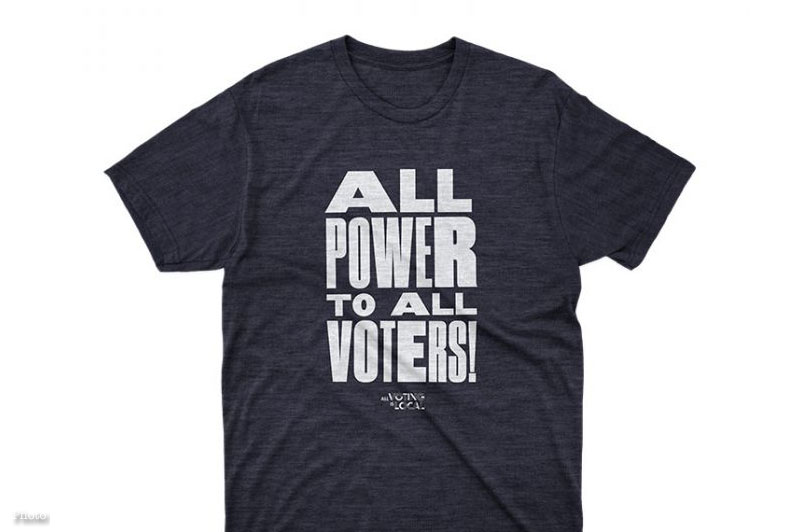
    CLEVELAND — In response to the Ohio Supreme Court’s rejection of the third proposed state map due to partisan gerrymandering, All Voting is Local Ohio State Director Kayla Griffin released the following statement: 

    Background: At the moment, state and local officials are preparing for a May 3 primary. On its face, Revised Code § 3501.054, known as the collaboration ban, purports to bar any public official responsible for administering or conducting an election from collaborating with any nongovernmental entity on activities related to voter registration, education, poll worker recruitment, or similar election-related activities.

    As there are no solidified maps at this time, elections officials are facing uncertainty while preparing for the upcoming primary, which is leaving voters in limbo. We are urging Senate President Matt Huffman and the Ohio Senate to allow elections officials and community groups to collaborate on voter education by repealing the collaboration ban immediately. Election officials and nongovernmental entities must not be held back from working together to mitigate the impact upon voters brought on due to the delay in finalizing congressional and state maps.  

    Voters all across the state could face last-minute poll consolidations, changes, and/or closures. As districts change, they will have little, if any, time to figure out what candidates are on the ballot. Our leaders and elections officials must allow for an all-hands-on-deck approach for accurate and fair preparation. This will only be possible if elections officials and community groups — including faith, service, and civic groups — are allowed to work together towards educating voters on last-minute changes and keeping voters up to date on information they may need to ensure they can accurately and fairly cast their ballot. 

  • Ohio city sues Netflix and Hulu for piece of streaming pie

    Ohio city sues Netflix and Hulu for piece of streaming pie

    BY: JAKE ZUCKERMAN – Ohio Capital Journal

    A small, Cleveland suburb has filed a lawsuit against Netflix and Hulu, trying to force the streaming companies to pay a franchise fee typically applied to cable providers.

    The lawsuit is part of a growing national trend of cities in at least 13 states, often pinched by shrinking budgets, targeting the nascent streaming industry for new tax revenues.

    The city’s suit is filed under a state law written and passed in 2007 — when Netflix was mostly mailing its customers DVDs and Hulu had yet to launch.

    Maple Heights, population 23,000, filed a class action suit in federal court in August 2020. Its claim is simple: Streaming services like Netflix and Hulu provide content that reaches customers through DSL and fiber optic cable lines along public rights of way, just like cable providers do.

    Those cable providers must pay a tax of up to 5% of their gross revenue in an area as a “video service provider” fee. If cable companies must pay, Maple Heights argued, then so should Netflix and Hulu. The lawsuit comes as customers increasingly bail on cable and opt for streaming — a trend that’s costing cities money.

    Both Dish Network — which owns both cable and streaming companies — and Ohio Attorney General Dave Yost have filed legal arguments supporting Netflix and Hulu. In July, U.S. District Judge James S. Gwin sent two certified questions to the Ohio Supreme Court to answer:

    • Are Netflix and Hulu “video service providers” under Ohio law?
    • Can Maple Heights bring the lawsuit in the first place?

    The Supreme Court is scheduled to hear arguments in the case next month.

    In 2007, bipartisan state legislators passed a law centralizing franchising rights at the state level instead of local. The law defined video service as “the provision of video programming over wires or cables located at least in part in public rights-of-way.” However, it excludes video programming provided solely via a service that offers content “over the public internet.”

    Both the streaming companies emphasized they don’t have any hardware in Ohio, and the law exempts internet companies anyways.

    “Netflix has no wires, cables, or other infrastructure in any Ohio public rights of way,” the company’s lawyers wrote.

    Additionally, the 2007 said a company must provide “video programming” — Netflix argues it doesn’t. Its lawyers said ‘programming’ necessarily means prescheduled shows and movies, as opposed to Netflix’s on-demand content.

    Maple Heights said the content Netflix provides is not only comparable to broadcast television, but “indistinguishable.”

    The city argued the “public internet” exemption referred to internet service providers, not streaming services. And content behind a paywall, it said, isn’t public. As far as hardware: The law only requires the companies to use cables — not build or own them, the argument said.

    “Indeed, [Netflix and Hulu’s] ability to deliver their content — and, in turn, operate their enormously profitable businesses — depends wholly on the quality and strength of these wireline facilities,” lawyers for Maple Heights wrote.

    A Netflix spokeswoman declined to comment. Hulu did not respond to inquiries. Maple Heights Mayor Annette Blackwell and a lawyer representing the city didn’t respond to inquiries.

    Mixed success 

    More and more cities, all with similar laws levying fees on cable companies who rely on the use of public rights of way, have filed similar lawsuits over the past two years.

    A count from Bloomberg Law, current as of October 2021, identified 13 such lawsuits around the country. Four have been dismissed. Most the others are mired in procedural battles, including plaintiffs seeking to keep the cases in state court and the streaming companies seeking to transfer them to federal court.

    In Ohio, cities’ share of state tax collections has dwindled. In 2020, the local government fund, split among cities and townships, received $377 million. In 2010, it was $612 million. In 2000, the fund was $675 million, plus another $95 million in a similar account.

    The Ohio Municipal League, which typically advocates for more local government funding, didn’t respond to inquiries about the case, nor did the Ohio Chamber of Commerce.

    Public Knowledge, a Washington D.C.-based think thank focused on tech policy, argued the state interest in franchise fees from cable companies don’t apply to streaming companies.

    Cord-cutters disgorged cities of franchise fee revenues, its lawyers argued, putting the cities in a pickle. But expanding the tax to include streaming services will hike costs for customers and stifle competition from potential competitors.

  • Sen. Brown statement following address from Ukraine President Zelenskyy

    Sen. Brown statement following address from Ukraine President Zelenskyy

    WASHINGTON, D.C. – U.S. Senator Sherrod Brown (D-OH) released the below statement following Ukraine President Volodymyr Zelenskyy’s address to the U.S. Congress.

    “Today President Zelenskyy made it clear that Ukraine needs more resources to defend itself and its freedom, and that’s what the U.S. is providing. President Biden is announcing dramatic new military assistance for Ukraine today, and I will continue working with the president to ensure Ukrainians are armed with effective military tools – including those designed to strengthen their air defenses – and are supported by strong sanctions, without needlessly escalating Putin’s war. I also share President Zelenskyy’s call for corporations to join this fight – no one should be profiting off of this invasion, from Big Oil to corporations that continue to do business in Putin’s backyard. President Zelenskyy and his people are fighting for the values Americans all share – freedom, democracy, the right to determine their own destiny – and we must all continue to stand united with them.”


    Ukrainian President Zelensky Addresses Congress

    In a virtual address to Congress, Ukrainian President Volodymyr Zelensky pleaded for the U.S. to support a no-fly zone over his country. President Zelensky also asked the U.S. to provide fighter jets, anti-aircraft weapons, and other military aid to help Ukraine defend itself against the Russian invasion. He played a graphic video of civilians killed and injured by Russian bombs and artillery barrages during his remarks. U.S. lawmakers gave him a standing ovation at the end of his address.

  • Dress for Success Cincinnati now at Loveland’s Care Center

    Dress for Success Cincinnati now at Loveland’s Care Center

    Loveland, Ohio – Dress for Success Cincinnati has announced that The Care Center of Loveland is their new satellite location for the StyleHER program.

    For the past 15 years, the Care Center has been assisting families by helping them remove the barriers and build the resources needed to thrive in life. Located at 11020 South Lebanon Road in Loveland, The Care Center will now be offering DFSC styling services to residents of the Loveland and neighboring communities.

    According to Data USA, the largest demographic living in poverty in Loveland is currently women ages 25-34. The hope is that through this partnership, they will be able to tend to that community of women living at or below the poverty line and offer them services that will nurture their employment mobility and help them to thrive.

    A strong supporter of this mission is Greg Knake, Executive Director of The Care Center, who recognized the opportunity for Dress for Success Cincinnati and The Care Center to help more women through a partnership early on.

    “Our mission is about helping people thrive in life, and one critical way we do that is by helping them reenter the workforce,” Knake said. “We also have a high value for not trying to recreate the wheel, and we instantly identified that Dress for Success Cincinnati already had a model that was successful. It is a perfect fit to incorporate Dress for Success Cincinnati’s services in what we do.” 

    Through this act of ‘not trying to recreate the wheel’ they have formed a partnership that can utilize the successes of both organizations to further benefit women. The Care Center of Loveland is a state-of-the-art resource center offering beneficial services such as childcare and transportation that help to eliminate major barriers that stand in the way of women receiving this support.

    As childcare is a service that is not currently offered by Dress for Success Cincinnati, they can now offer it to their clients at The Care Center’s location. Not only have they expanded the range of women they are able to serve but have expanded the accessibility for women to utilize the services as well.

    “We want to be a resource for people who want to take advantage of Dress for Success Cincinnati’s resource but may not have the reliable transportation to access the Norwood location,” Knake said. “We are excited to offer Dress for Success Cincinnati’s resources in areas like Milford, Goshen, and Loveland.”

    In addition to offering DFSC styling services at The Care Center, the new satellite location will also offer similar career assistance to that of Dress for Success Cincinnati’s Norwood office. Just as the DFSC office has partnered with Cincinnati Works to provide help with resume building, job searching, and more via an on-site Cincinnati Works representative, The Care Center will offer the same opportunity for clients.

    “We also offer career development resources through Cincinnati works and even work with the same Cincinnati works representative,” Knake said. “So, clients will have that same opportunity when they come here to be styled.”

    Dress for Success Cincinnati said that they are thrilled to launch this new satellite location and to be working with Knake and his team at The Care Center to offer their services, along with the added benefits that come from this new location to more women in surrounding areas.

    To learn more about The Care Center or schedule your styling appointment, visit The Care Center’s website here.