Tag: loveland

  • Commentary by Rob Moore: Making it harder to be a substitute teacher might not do what you think

    Commentary by Rob Moore: Making it harder to be a substitute teacher might not do what you think

    COMMENTARY

    by Rob Moore

    On Monday, Representatives Adam Bird and Don Jones introduced Ohio House Bill 583, legislation to tighten regulations on educator licensing for substitute teachers. The bill increases the educational threshold for substitute teachers from a more broad requirement of a “post-secondary” degree to a more specific “bachelor’s” degree while creating some exceptions to this rule.

    The exceptions the bill puts forth are mainly age-related: allowing people with associate’s degrees and at least 21 years since birth to be a long-term substitute teacher, allowing people who served in the military and who have elapsed 21 years since birth to be a long-term substitute teacher, allowing people with sufficient bachelor’s degree coursework and who have spent 21 years on earth to be a substitute teacher. The bill also allows people who have spent five years as an educational assistant to be a long-term substitute.

    The bill also authorizes the state board of education to create rules for issuing educator licenses for people who do not hold bachelor’s degrees that can be used for a year.

    While the section that allows the state board of education to set rules for temporary licenses could result in a loosening of licensing requirements, overall the bill represents a tightening of licensing requirements for substitute teachers. Rather than just requiring a post-secondary degree, which could include associate’s or other non-bachelor’s degrees, the new bill raises the requirement for substitute teacher licensure to those who hold bachelor’s degrees then carves out specific exceptions for people without bachelor’s degrees.

    Increasing requirements for substitute licensure could have a few different impacts. The central goal is likely to improve quality of education provided by substitute teachers. Presumably, someone with a bachelor’s degree can provide better quality education than someone without one, with obvious exceptions, for example people without bachelor’s degrees who are trained in education compared to people with bachelor’s degrees in other fields. 

    Unfortunately, little evidence exists to confirm to us that degree attainment will lead to better teachers. While there is limited evidence that having a math or science degree may help with math or science teaching, degree attainment overall has not been definitively linked to better outcomes for students. If we can’t find this evidence for teachers, we should be even more dubious about a supposed connection between degree attainment and student outcomes for substitute teachers.

    On top of this, the bill will likely have labor market impacts for educators. Tightening requirements for substitute teachers will decrease the supply of qualified substitute teachers, which will drive up the wage needed to attract them as schools vie for a shrinking pool of substitutes. This effect could be stronger than it would be for teachers since substitutes are often actively considering competing offers from different schools, thus making their options more competitive than teachers.

    On top of this, making it harder to hire substitutes could create perverse incentives for schools. If substitute teachers are more scarce or expensive, it could cause administrators to limit the ability of teachers to take sick days or otherwise take time off.

    While raising the bar for substitute teachers makes intuitive sense, interventions like this need to be based on evidence, and the evidence of the impact of degree attainment on substitute teachers is basically nonexistent. We can hope that if substitute teachers are required to have higher educational attainment than before, that we would at least build in funds to assess the intervention after it is implemented.
  • COVID vaccination hits record lull in Ohio; less than 2 in 3 are vaccinated

    COVID vaccination hits record lull in Ohio; less than 2 in 3 are vaccinated

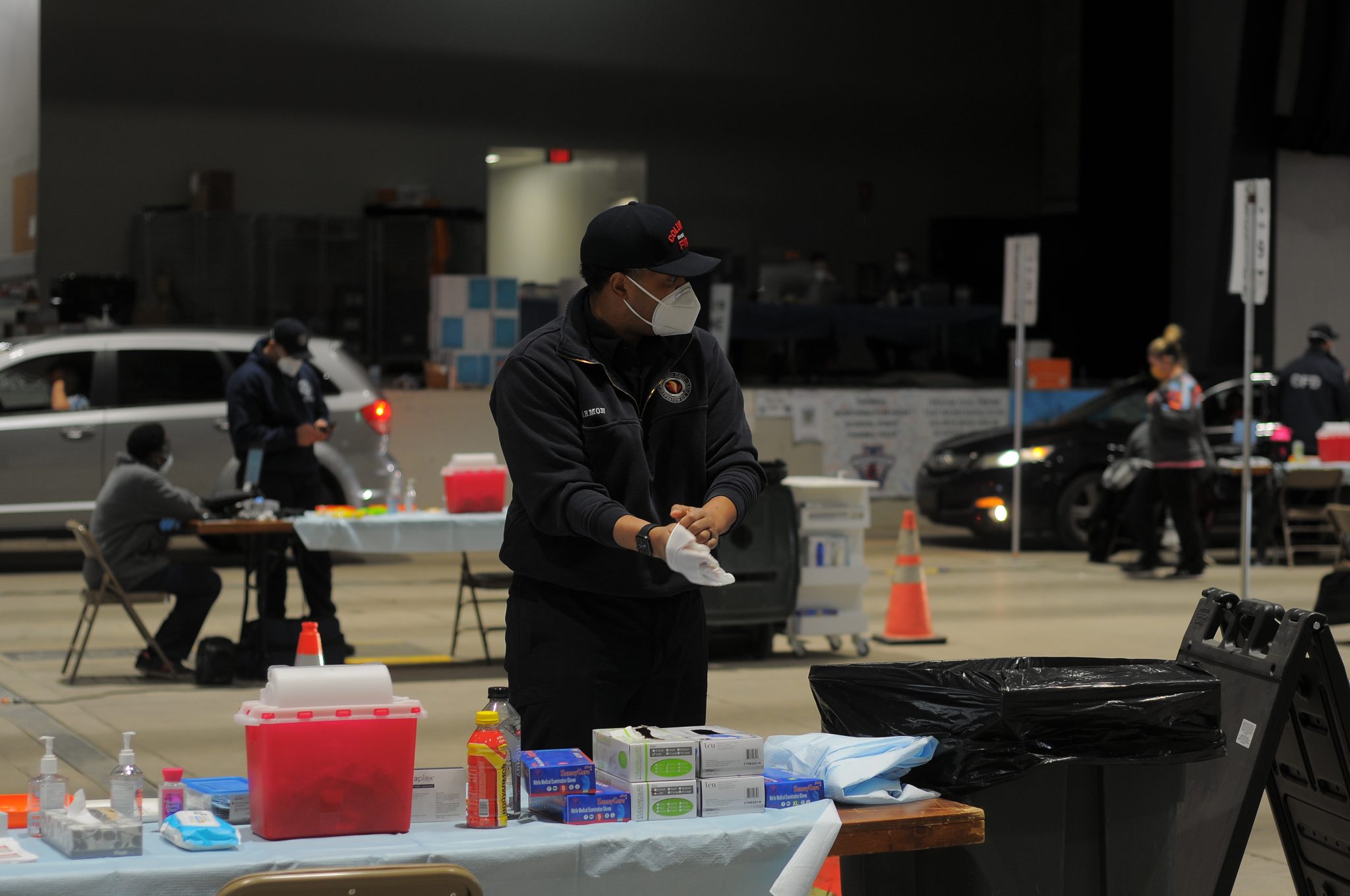
     A Columbus Fire Department member dons gloves while working at a mass vaccination site at the Celeste Center in Columbus. Photo by Jake Zuckerman, Ohio Capital Journal.

    BY: JAKE ZUCKERMAN – Ohio Capital Journal

    Ohio’s COVID-19 vaccination campaign has hit a new lull after two months of record low numbers of residents getting vaccinated.

    While the concept of diminishing marginal returns would suggest this is to be expected, Ohio remains under-vaccinated on a national and international scale. Just 62% of state residents are vaccine-started, and 57% are vaccine completed.

    Ranked by state, Ohio is the 8th least vaccine-started in the nation and the 17th least fully-vaccinated, according to data from The New York Times. Americans nationally, despite widespread access to vaccines, are about 76% vaccine-started. That’s below a list of countries both wealthy and poor including Cuba (94%), Chile (93%), Canada (86%) and Vietnam (81%), according to Our World in Data, a global, public dataset tracking the pandemic. Ohio is about as vaccine-started as Pakistan (63%).

    While COVID-19 cases, hospitalizations and deaths are significantly down from the winter surge, vaccination is still key for the present and future. It provides powerful, direct protection to the recipient. It also, when enough people in a community are vaccinated, provides indirect protection for those who aren’t vaccinated or have weaker immune systems.

    The consequences of the low vaccination rate are simple and lethal. About 22,000 Ohioans have died of COVID-19 since Jan. 1, 2021. About 95% of them were unvaccinated. In the same period, 64,000 Ohioans were hospitalized with the disease. About 93.5% of them were unvaccinated.

    At the more local level, more than half of Ohio’s 88 counties harbor populations where less than 1 in 2 residents are vaccinated, according to an analysis of state data. These counties tend to be more rural and Appalachian.

    Like other frontiers of the pandemic, vaccination became mired in partisan politics with real human consequences. On average, former President Donald Trump won 53% of the vote share statewide in the 2020 elections. But in Ohio counties that are less than 50% vaccinated, Trump won on average 74% of the votes.

    While COVID-19 deaths concentrated in populous, urban centers early in the pandemic, the paradigm shifted after vaccines became available, according to the Pew Research Center. By late 2021, death rates in the counties Trump won most decisively were about four times those of President Joe Biden’s winningest counties.

    On a statewide basis, older Ohioans are vaccinated at significantly higher rates than their younger counterparts. For instance, those 65 and older are between 80% and 85% vaccinated. Those aged 20 to 49 are between 51% and 63% vaccinated.

     Source: Ohio Department of Health. Graph by Jake Zuckerman.

    Ohio schools require vaccination as a term of enrollment against a broad spectrum of infectious diseases like measles and chicken pox, yielding immunization coverage between about 75% to 95% depending on the disease.

    However, the conservative state legislature has signaled an unlikeliness to mandate coronavirus vaccination.

    Republicans in both chambers of the General Assembly passed legislation in 2021 blocking schools and colleges from mandating receipt of COVID-19 vaccines that are only federally approved on an emergency basis. Both the Moderna and Pfizer vaccine have since received full federal approval.

    The Ohio House passed legislation prohibiting a wide range of employers, businesses and schools from requiring receipt of any vaccine, not just the COVID-19 vaccine. The Senate has not voted on the bill.

  • Saluting Loveland Magazine Equal Co-Owner on International Women’s Day

    Saluting Loveland Magazine Equal Co-Owner on International Women’s Day

    Imagine a gender equal world. A world free of bias, stereotypes and discrimination. A world that’s diverse, equitable, and inclusive. A world where difference is valued and celebrated. Together we can forge women’s equality. Collectively we can all #BreakTheBias.

    David Miller is the Founder of Loveland Magazine

    by David Miller

    Cassie Mattia as a six-year-old had a passion to be a writer. Her love for the written word along with pursuing and achieving college degrees in Journalism, Business, and English led her to reach yet another milestone on June 25, 2021; when she became an “Equal Co-Owner” of Loveland Magazine.

    No business has ever been so fortunate as to have Cassie Mattia knock on their door and say, “I’d like to work for you.”

    Cassie is now an equal Co-Owner of the newspaper, Associate Editor, and Director of Marketing. Her positive can-do attitude intelligence, and hard work guide every decision we now make.

    Loveland Magazine hopes to always thrive in and contribute to a nurturing environment for Loveland, one of equality and empathy. Cassie Mattia’s love for our community and its people will certainly keep us moving in that direction. Her positivity and compassion are contagious.

    Thank you Cassie for propelling us into the future as we head into our 18th year. Our future is awfully bright with you here helping to lead us, and there aren’t adequate words to express my gratitude.

  • Loveland’s Brush Collection

    Loveland’s Brush Collection

    Loveland, Ohio – The 2022 spring brush pickup program will begin on Monday, March 21. Brush must be placed in the grass near the roadside no later than Sunday night, March 20.

    Note these Guidelines:

    The following are guidelines established for the brush pick-up program:

    • Brush must be placed at the curb or edge of roadway. Do not place brush in the roadway, gutter, ditches, or on sidewalks. Do not block fire hydrants.
    • Limbs cannot exceed 10 inches in diameter at the cut section.
    • Limbs should be placed at the curb with the cut section facing the street and all limbs should be facing the same direction. This makes it easier and faster to handle.
    • No leaves, pine needles, grass clippings, or other yard waste will be collected.
    • Small twigs and sticks should be bundled with twine in bundles 12 inches in diameter. Twigs or sticks can also be placed in a container at the curb, but no other yard waste should be in the containers. Please, no loose piles of sticks and debris.

    You may also view Illustrated Brush Pick-Up Instructions (PDF) or our how-to video.

    Additional Notes:

    • Any material not meeting these requirements cannot be collected and will be left at the curb.
    • Outside the regular pick-up schedule, residents are encouraged to come to City Hall to get a free voucher to drop off any yard waste to Evans Landscaping.
    • Wood chips will be available again this year. Anyone in the City who would like a full load of wood chips should call 513-707-6115.
  • Planning and Zoning Commission to hear from public on re-zoning Grailville

    Planning and Zoning Commission to hear from public on re-zoning Grailville

    Loveland, Ohio – A public hearing by the Loveland Planning and Zoning Commission on the Drees Homes request to re-zone the Grailville property has been rescheduled to Thursday, March 17th at 7 PM. The meeting will be held in the Council Chamber at City Hall, 120 West Loveland Avenue.

    The proposed development of the Grailville site by the Drees Company includes 74 patio homes and 135 traditional-style homes totaling 209 lots. The land is situated between O’Bannonville Road and State Route 48 in Clermont County. The site is approximately 111 acres.

    House of Joy photo © 2005 by David Miller

    Grailville’s Iconic House of Joy in 2009 and two days ago on Sunday, March 6, 2022

    (Move slider left and right to compare images.)

    Read background:

    Drees submits application for 209 homes at Grailville

  • City Council set for emergency vote on purchase of Mobil Gas Station in Historic Downtown

    City Council set for emergency vote on purchase of Mobil Gas Station in Historic Downtown

    by David Miller

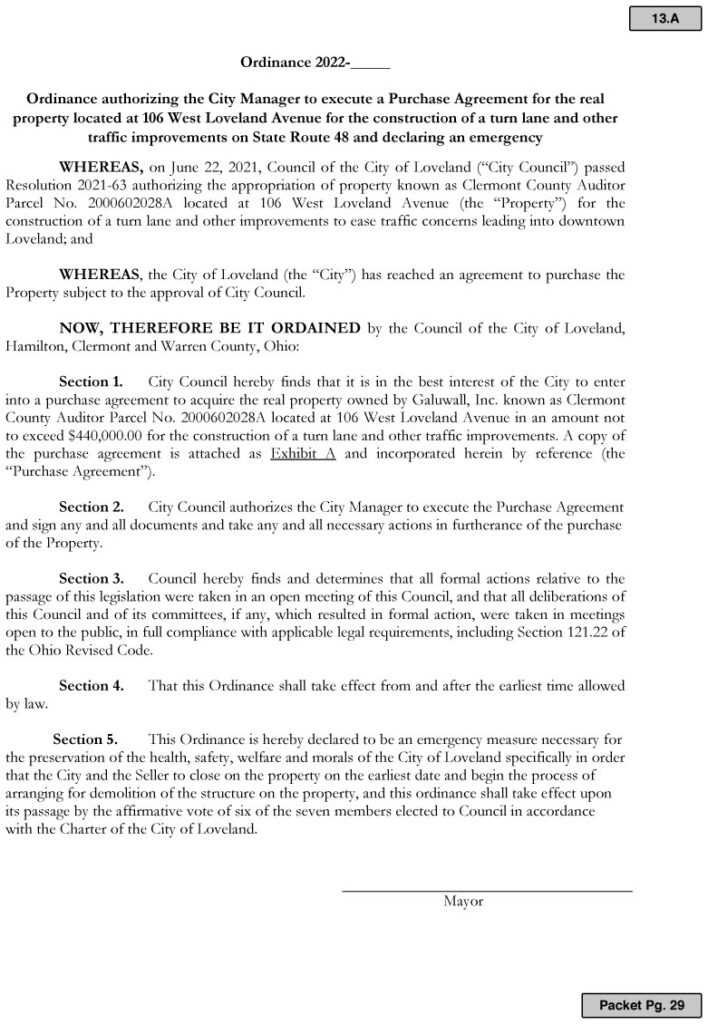
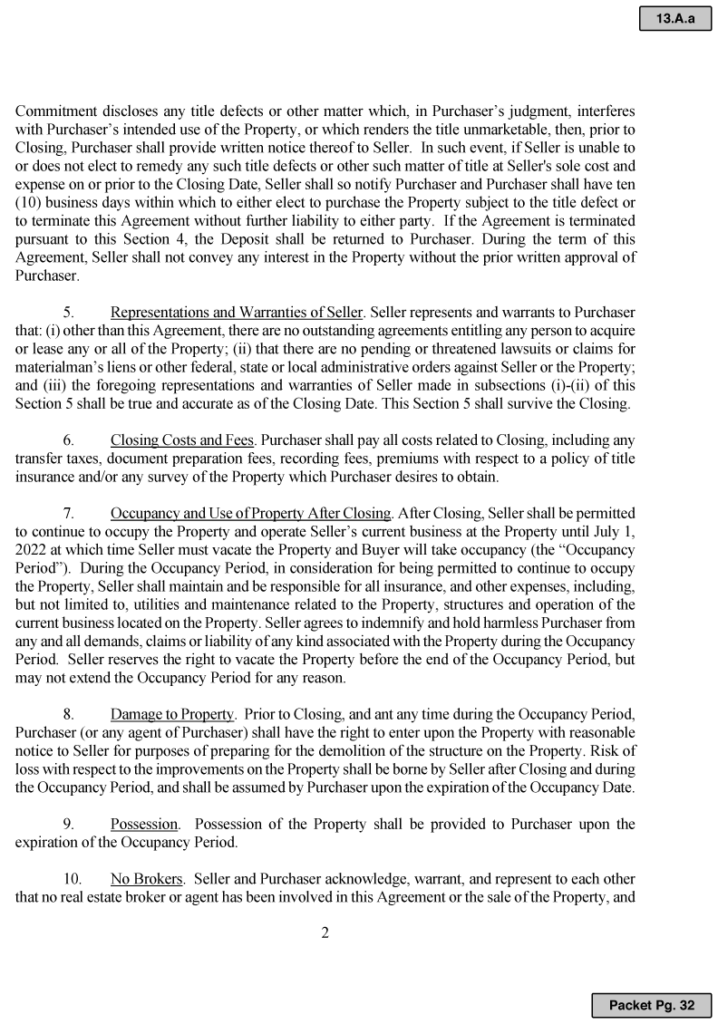
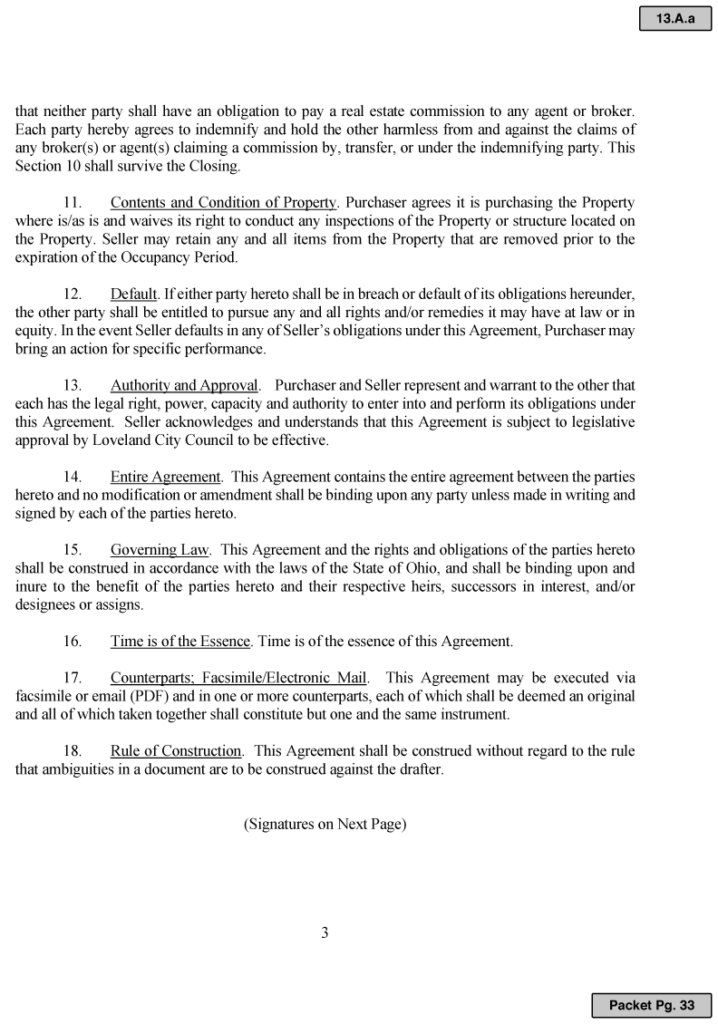
    Loveland, Ohio – At Tuesday’s meeting, Council will hear the first reading of an ordinance to purchase the Mobil Gas Station at the corner of West Loveland and State Route 48.

    The ordinance will authorize the City Manager to execute a purchase agreement for the property located at 106 West Loveland Avenue for the construction of a turn lane and other traffic improvements on State Route 48 – “and declaring an emergency”.

    The ordinance says the final purchase is not to exceed $440,000.00.

  • Fire Department Safety Campaign in Symmes Township

    Fire Department Safety Campaign in Symmes Township

    Symmes Township – The Loveland Symmes Fire Department will be going door-to-door from March through August to promote the importance of smoke detectors. Residents can have their smoke detectors tested, batteries replaced, or receive a new smoke detector at no cost.

    The Fire Department will also be installing smoke detectors for the hearing impaired.

    Funding for this project is through a FEMA Fire Prevention grant. If you are not home when they stop by, they will leave a note at your door and come back at a later time.

  • Loveland High School Wind Ensemble performs The Children’s March – “Over the hills and far away” 

    Loveland High School Wind Ensemble performs The Children’s March – “Over the hills and far away” 

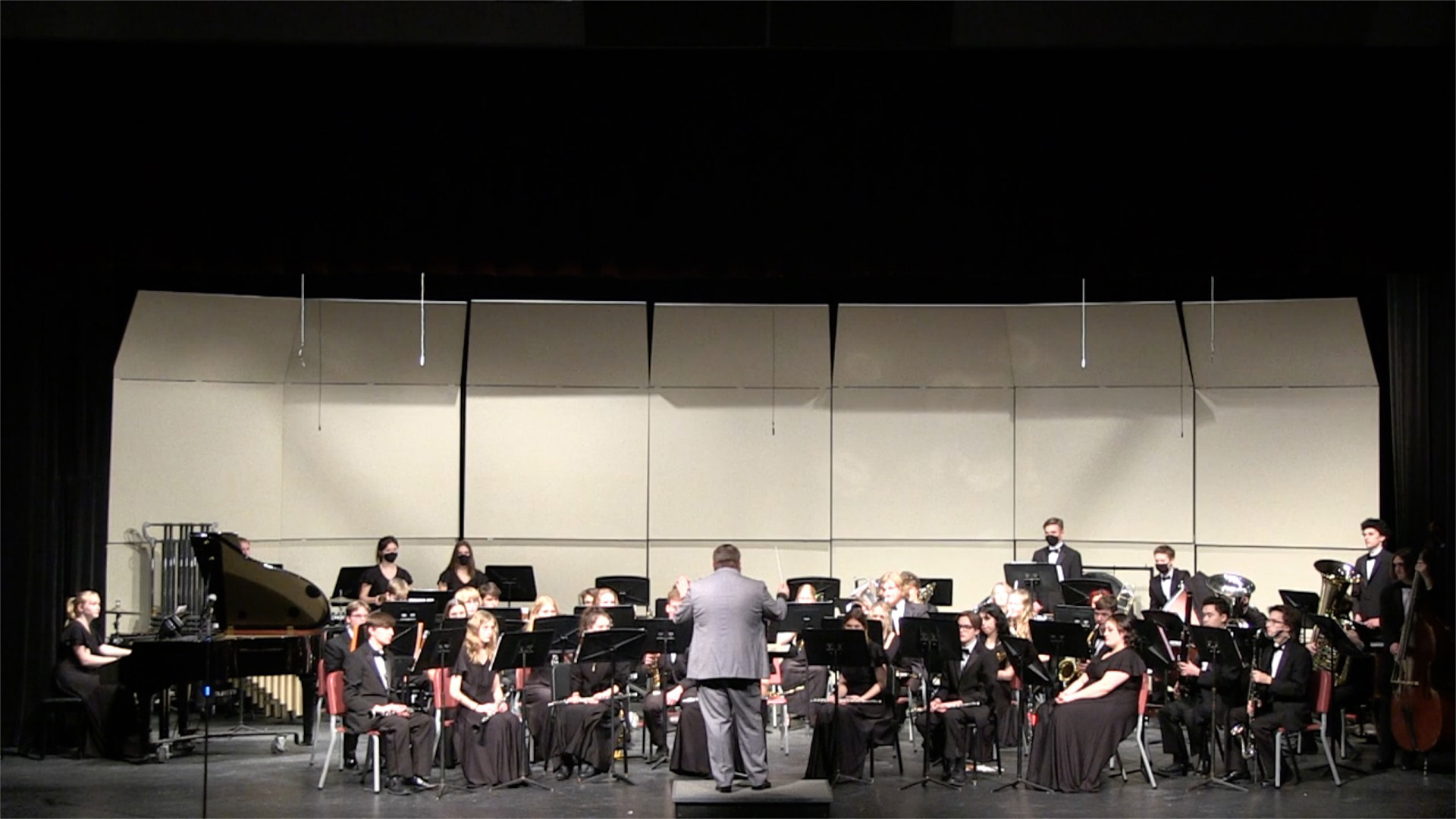
    Loveland, Ohio – On Thursday, February 24 the Loveland High Wind Ensemble played The Children’s March – “Over the hills and far away” (Percy Grainger) during their Mid-Winter Concert.

  • Daylight Saving Time Starts March 13

    Daylight Saving Time Starts March 13

    Loveland, Ohio – When local standard time is about to reach Sunday, March 13, at 2 AM clocks are turned forward 1 hour to Sunday, March 13, at 3 AM local daylight time instead.

    Sunrise and sunset will be 1 hour later on Mar 13. There will be more light in the evening.

  • Loveland High School Symphonic Band performs Cajun Folk Songs

    Loveland High School Symphonic Band performs Cajun Folk Songs

    Loveland, Ohio – On Thursday, February 24 the Loveland High School Symphonic Band played Cajun Folk Songs (Frank Ticheli) during their Mid-Winter Concert.