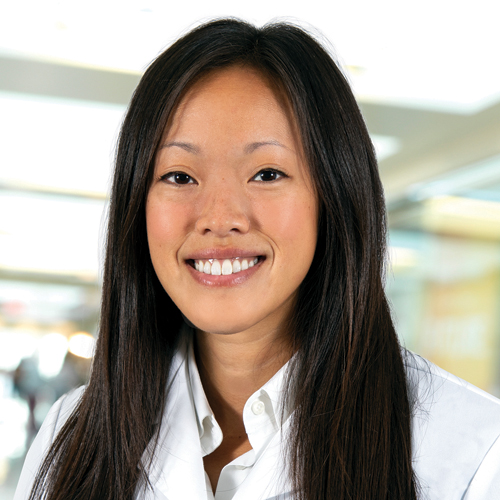
Esther Cheng, MD, The Christ Hospital Physicians – Ear, Nose & Throat
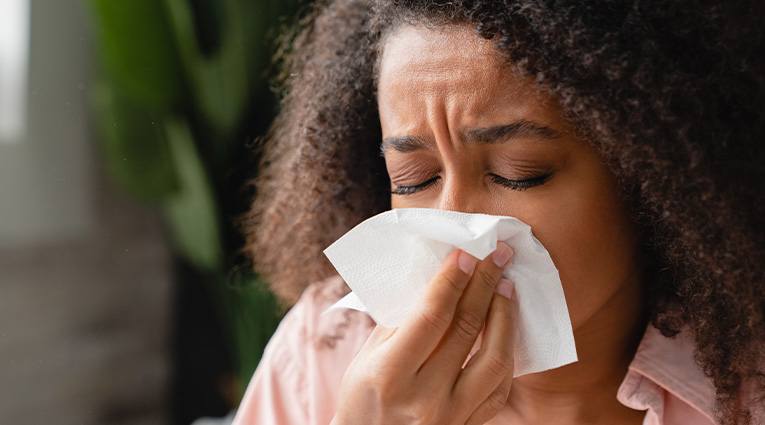
With spring in the air, if you have seasonal allergies, your sneezing and runny nose will appear soon—if they haven’t already. That means it’s time to find an effective treatment to reduce your symptoms and improve your quality of life.
If over-the-counter medications don’t work for you, sublingual allergy immunotherapy drops may be the answer you’re looking for, says Esther Cheng, MD, an otolaryngologist with The Christ Hospital Physicians – Ear, Nose and Throat. This new therapy can potentially give you long-term allergy relief.
“If the regular allergy medicines or treatments your primary care physician recommends aren’t working and your symptoms are persistent, you need to seek specialty care,” she says. “Sublingual allergy immunotherapy drops are an alternative to classic allergy shots. They offer symptom relief with more comfort and convenience.”
Esther Cheng, MD, holds several professional memberships such as the American Academy of Otolaryngology – Head and Neck Surgery, the American Head and Neck Society, the American Academy of Facial Plastic and Reconstructive Surgery, and the Triological Society. Her areas of interest include head and neck cancer, transoral robotic surgery, head and neck reconstruction, thyroid surgery, nasal/sinus disorders and surgery, and salivary gland tumors.
Hamilton County, Ohio – Hamilton County Board of Health completed its annual reorganization at its April 11 meeting, electing Elizabeth Kelly, MD of Cincinnati as president of the board and Dan Meloy of Colerain Township as vice president.
The five-member Board of Health is the governing body of Hamilton County Public Health. In addition to Kelly and Meloy, board members include Tracey A. Puthoff, Esq. of Anderson, Jim Brett of Whitewater Township, and Mark Rippe of Sycamore Township. The Board has the authority to adopt public health rules and regulations, which have the same status as law, and to enact policies within Hamilton County Public Health’s jurisdiction, including all of Loveland. The Loveland City School District also recognizes the Hamilton County Health District as its guiding agency.
The Board of Health’s regular meeting schedule through March, 2023 will be on the second Monday of each month at 4 PM at Hamilton County Public Health, 250 William Howard Taft, Cincinnati, OH 45219. All meetings are open to the public.
For more information about the Hamilton County Board of Health, including minutes of Board of Health meetings, visit www.hamiltoncountyhealth.org.
Ohio Governor Mike DeWine announced today that he has ordered the mobilization of an additional 1,250 members of the Ohio National Guard to support hospitals with the most critical needs across the state. The mobilization comes on the same day the state set an all-time high for the total number of COVID-19 hospitalizations during the pandemic.
The Ohio Hospital Association reported today that 5,356 people are currently hospitalized with COVID-19. One in four patients are COVID-19 positive. This surpasses the previous hospitalizations record of 5,308 on Dec. 15, 2020. Of today’s hospitalizations, 1,228 patients are in the ICU, which is approaching the record high of 1,318 ICU patients reported on Dec. 15, 2020.
While Southwest Ohio is not seeing the same volume of patients as northern parts of the state, Richard P. Lofgren, MD, President and Chief Executive Officer, UC Health, expressed concerns about the surge in cases making its way across the entire state during the coming weeks.
Ohio National Guard Deployment As hospitals struggle with staffing to support the surge in COVID-19 patients, Governor DeWine announced during a press conference today, that he has asked Major General John C. Harris, Jr., Adjutant General, Ohio National Guard, to mobilize an additional 1,250 members of the Ohio National Guard, bringing the total deployment of National Guard members working with Ohio’s healthcare systems to 2,300 members.
“This is not something we take lightly… We are asking them to leave their families, their jobs and homes. This is a huge sacrifice,” Governor DeWine said.
Governor DeWine previously authorized the deployment of 1,050 Ohio National Guard members on Friday, Dec. 17. Major General Harris said the Ohio National Guard’s goal is to augment hospitals’ medical staff and wraparound services. Teams including nurses and medics will provide clinical care and non-medical teams will offer support services such as food service, patient transportation within facilities, and administrative support.
Approximately 460 Guard members are deployed in the Cleveland area; more than 160 in the Toledo area; about 100 in Columbus area. Smaller numbers of the Guard will be deployed in the coming days in Mansfield, Dayton, and Lima to support hospitals. Guard personnel are also supporting testing sites in Cleveland and Akron.
“The National Guard has been indispensable,” said Robert Wyllie, MD, Chief Medical Operations Officer, Cleveland Clinic.
The Ohio Department of Health and the Ohio Hospital Association are working daily with Ohio hospitals to assess staffing needs to determine the most appropriate support from the Ohio National Guard.
“Everybody agreed when the decision was made to send in the National Guard to our hospitals … All the way through this, we are going to be guided by where they are needed most today. It should give people confidence that everybody is on the same page here. Let’s deploy them where they are needed the most,” Governor DeWine said.
Hospitals Hospitals have been taking extraordinary measures to manage this COVID-19 surge, including postponing elective surgeries, while battling staffing shortages as a result of COVID-19 infection or exposure, and burnout.
The northern parts of Ohio have been particularly hard hit, especially the greater Cleveland area, where one in three patients are COVID-19 positive, including ICU patients, according to OHA data.
“The hospital systems are under significant stress in Northern Ohio,” Dr. Wyllie said. “We are running 2,000 tests a day. Let me tell you about those tests: 36% of the people going into the Walker Center for testing are testing positive for COVID.”
The state’s strategic hospital zone and region structure has allowed hospitals to work together with neighboring hospitals to balance the load of patients. This structure continues to be vital as cases and hospitalizations dramatically rise statewide and staffing remains a significant concern.
While Southwest Ohio is not seeing the same volume of patients as northern parts of the state, Richard P. Lofgren, MD, President and Chief Executive Officer, UC Health, expressed concerns about the surge in cases making its way across the entire state during the coming weeks.
“Unfortunately, the pandemic is not over … we are seeing more cases now than we have ever seen along the way,” he said. “Now, the spread of Omicron is adding fuel to this raging fire. One of the things that I want to make sure that people understand, is that this not only affects the care of people with COVID, but also affects people who don’t have COVID. It squeezes out our ability to take care of patients with other life-serious or life-threatening problems, such as heart attacks and strokes.”
Governor DeWine also spoke with Jennifer Hollis, a critical care nurse at OhioHealth Riverside Methodist Hospital in Columbus, about her experience in the hospital.
“I just want everybody to be able to walk a mile in my shoes and kind of understand as a critical care nurse, what I am seeing when I am coming into work. It is beyond difficult,” Hollis said. “Our beds are full. There is nowhere else to go, and we are just as short-staffed as everyone else is seeing as well … We are tired, we are frustrated, and we want the best for all of our patients.”
Hollis urged Ohioans to get vaccinated to protect themselves, their loved ones, and their communities. “I’ll continue to fight for you, when you won’t fight for yourself. Please get vaccinated. Quarantine if you are symptomatic. Get tested,” she said.
Vaccination, prevention Governor DeWine emphasized that the COVID-19 vaccines remain a powerful tool to keep people out of the hospital. Since June 1, 2021, there have been 35,962 admissions, and 92.5% of those have been among people who are not fully vaccinated.
Now more than ever, it’s critical to follow prevention strategies including getting vaccinated, getting a booster shot if eligible, wearing face masks, washing your hands frequently, getting tested, and staying home if sick, even if symptoms are mild.
“We are looking now at an impact of COVID-19 that is unlike anything we’ve seen before in this pandemic,” said Bruce Vanderhoff, MD, MBA, Director, Ohio Department of Health. “We have access to a powerful tool that can really shield us from the worst outcomes of COVID-19, and that is vaccination.”
As of today, more than 6.9 million Ohioans have received at least their first dose of a COVID-19 vaccine. That’s 63% of those Ohioans eligible (ages 5 and older). More than 2.6 million have received an additional dose, or a booster dose.
Masking in Schools Today, the Ohio Hospital Association also distributed a letter from the Ohio Hospital Association and Ohio Children’s Hospital Association to Ohio school superintendents, administrators and school board members encouraging them to implement a masking requirement when students return from the holiday break. A masking requirement in schools will help limit community spread of COVID-19 and keep students in school, the letter said.
Holidays Dr. Vanderhoff encouraged Ohioans to celebrate safely this holiday weekend so we can all have a healthy start to 2022. “As we get ready to ring in a new year, please, think about the steps you can take to prevent COVID-19 spread before you gather. Keeping vaccinations up to date, appropriate testing, staying home if you feel the least bit sick, masking especially in crowded indoor environments, proper ventilation, and regular handwashing can all help prevent the spread of COVID-19, flu, and other illnesses this season,” he said.
“This investment in cardiac care will be a game changer for the region,” said Stephen Lewis, MD, Cardiovascular System Chief. “Patients needing hospital care in the future will increasingly require a multidisciplinary team approach as age and acuity increases, and the TriHealth Heart Hospital will be perfectly positioned to make this innovative care model a reality.”
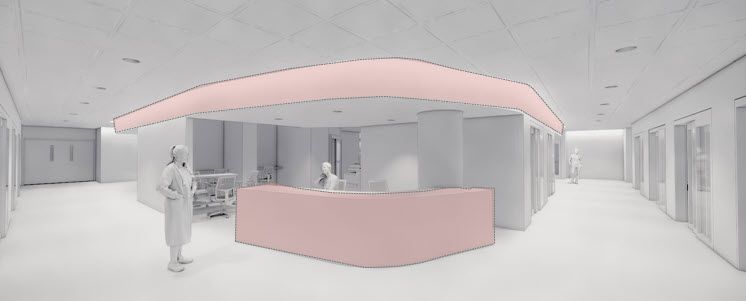
TriHealth will break ground on the new TriHealth Heart Hospital on the Bethesda North campus on February 25, 2021. The project is being made possible by a $10 million gift to the Bethesda Foundation by Harold and Eugenia Thomas – the second time the Thomases have donated that amount for a major TriHealth project.
The Heart Hospital is the culmination of TriHealth’s vision and strategy to develop the region’s destination cardiac program, which begin three years ago when TriHealth brought its two cardiac surgery programs – at Good Samaritan Hospital and Bethesda North Hospital – under one roof.
The project will add another 40,000 square feet of clinical space to the Bethesda North Campus and will modernize another 80,000 square feet of existing space. Construction of the first phase is expected to take 18 months to complete, with an anticipated grand opening in the Summer of 2022.
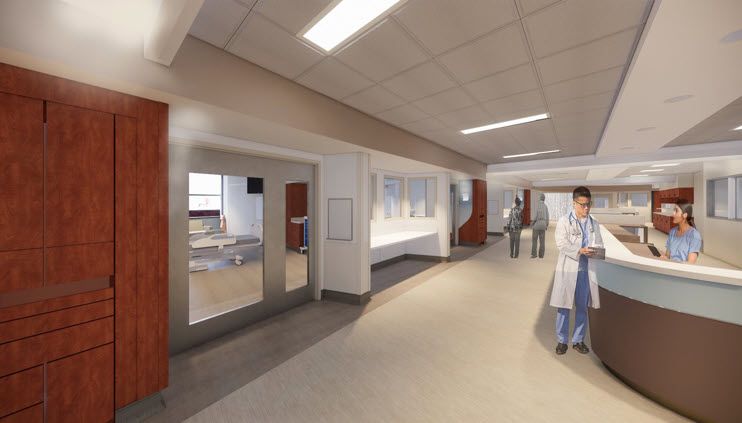
The TriHealth Heart Hospital will increase capacity for all cardiac services. This includes adding to the number of procedural labs (cardiac catheterization, vascular, interventional radiology, and neurosurgery and Electrophysiology) and associated pre- and post-procedural space.
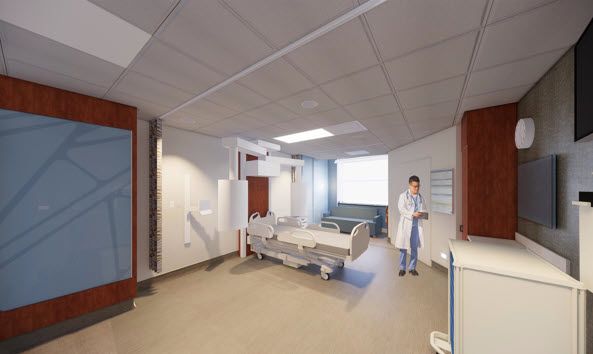
The number of beds in the cardiovascular intensive care unit will also be increased and rooms will be modernized. Another hybrid operating room will be built to accommodate multidisciplinary procedures addressing structural heart conditions, atrial fibrillation, and stroke.
The Heart Hospital will be home to TriHealth’s new Advanced Heart Failure Center and left ventricular assist device (LVAD) program.
“This historic project is yet another milestone in TriHealth’s evolution into a truly integrated health care system—capable of managing and improving the health our community–by delivering one extraordinary standard of quality, safety, service and value across the full continuum of our six hospitals, 14 major ambulatory campuses, and more than 140 sites of care,” said TriHealth President and Chief Executive Officer Mark C. Clement. “The impact on outcomes has already become evident, as the newly combined TriHealth Cardiac Surgery Program on the campus of Bethesda North was the only program in the region to earn a 3-Star Rating – the highest quality rating – from The Society of Thoracic Surgeons (STS) last year, placing it among the top 10% of cardiac surgery programs nationally for mortality and clinical outcomes.”
While Good Samaritan Hospital continues to provide a full array of services to the community, including cardiology, the consolidation of the cardiac surgery program has enabled TriHealth to establish similar destination “Centers of Excellence” at Good Samaritan – such as neurosurgery, stroke care and women’s health services.
The Harold & Eugenia Thomas Comprehensive Care Center on the campus of Bethesda North Hospital, which was enabled by a $10 million donation from the Thomases, opened in January 2020.
“This transformational gift was born out of the success of the Thomas Comprehensive Care Center, which was opened last year, and the Thomases’ desire to help improve health care throughout the Cincinnati region,” said Bethesda Foundation President Andy Swallow. “We are deeply grateful for their support of TriHealth and the Bethesda North campus, and for their commitment to the health and well-being of our community.”
Maryland pauses team-related activities; the game was set to be played at College Park, Md., on Saturday
by Cassie Mattia
Cassie Mattia is the Associate Editor of Loveland Magazine and lives in Historic Downtown Loveland.
Columbus, Ohio – COVID-19 has yet again claimed another college sporting event as the football game between No. 3 Ohio State University and the University of Maryland, which was scheduled for tomorrow at 3 p.m. in College Park, Md., televised on the Big Ten Network, has been canceled. The game will not be rescheduled.
Earlier this week the University of Maryland put out a press release saying that they would be hitting the pause button on all team activities because of the rise in COVID-19 cases. Maryland’s press release said that “the joint decision to pause football activities and cancel Saturday’s game was made by Director of Athletics Damon Evans and University of Maryland President Darryll Pines, following a recommendation from University health officials, and in consultation with the Big Ten Conference.”
According to the Maryland press release, during the past seven days, eight Maryland Football players have tested positive for COVID-19. Maryland Athletics released a testing update stating that between September 30th and November 10th 1,510 on-campus PCR screening tests were conducted for student-athletes in all sports. 10 student-athletes tested positive.
The Big Ten Conference started testing football student-athletes on September 30th and the men’s and women’s basketball team on October 26th. All other student-athletes will continue to be tested weekly.
For the latest sports updates stay tuned the Sports 411 with me, Cassie Mattia!
Hoxworth Blood Center is anticipating a significant increase in demand for platelet transfusions to support the treatment of local cancer patients.
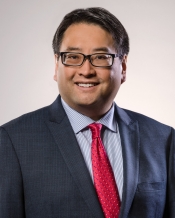
by David Oh, MD,
As the Chief Medical Officer for Hoxworth Blood Center, University of Cincinnati, I appreciate this opportunity to notify the community of the current critical need for platelet donors.
A single donor can help two to three different recipients.
Over the next several days, Hoxworth Blood Center is anticipating a significant increase in demand for platelet transfusions to support the treatment of local cancer patients. In addition to this expected increased demand for platelets, our ability to provide platelets normally derived from whole blood donations has been crippled due to the unavailability of the only blood bag manufactured for this process due to a national recall. This bag shortage means that we need to collect many more platelet products from single individual donors through a process called apheresis using an automated collection machine to meet the demand of local patients.Automated platelet collection allows us to collect apheresis platelet products from a single donor that can help two to three different recipients, but the donation time is longer than for whole blood donation.
Collecting, manufacturing, and distributing platelets for our community is our responsibility as Hoxworth Blood Center. Our past and current donors have been incredible in helping us meet the need for blood products, but we need to recruit new blood donors – especially platelet donors – now to help us through this current period as well as going forward into the future.
Not everyone who is eligible to donate whole blood is able to donate platelets.
Not everyone who is eligible to donate whole blood is able to donate platelets. Unfortunately, women who have been pregnant may not be eligible to donate platelets. Donors must also meet certain height and weight requirements. Find out by calling Hoxworth at 513-451-0910. Platelet donations take approximately 1.5 hours to complete and you will be eligible to donate again in 14 days; in fact, platelet donors can donate up to 24 times a year! If you are interested in seeing if you qualify as a new platelet
David Oh, MD is the Chief Medical Officer, Hoxworth Blood Center
donor, please call us at 513-451-0910.If you have previously donated platelets, we urge you to make an appointment at your earliest convenience. (Appointments are especially important for platelet donations.)
There is no substitute for human blood products at this time. Platelets, red cells, and plasma intended for patient transfusion cannot be manufactured. Lives in the Tri-State depend on the generosity of 40 volunteer platelet donors each and every day. Please consider joining these community heroes by donating platelets if you are eligible. The lives you save are close to home.







 by David Oh, MD,