Tag: mental health

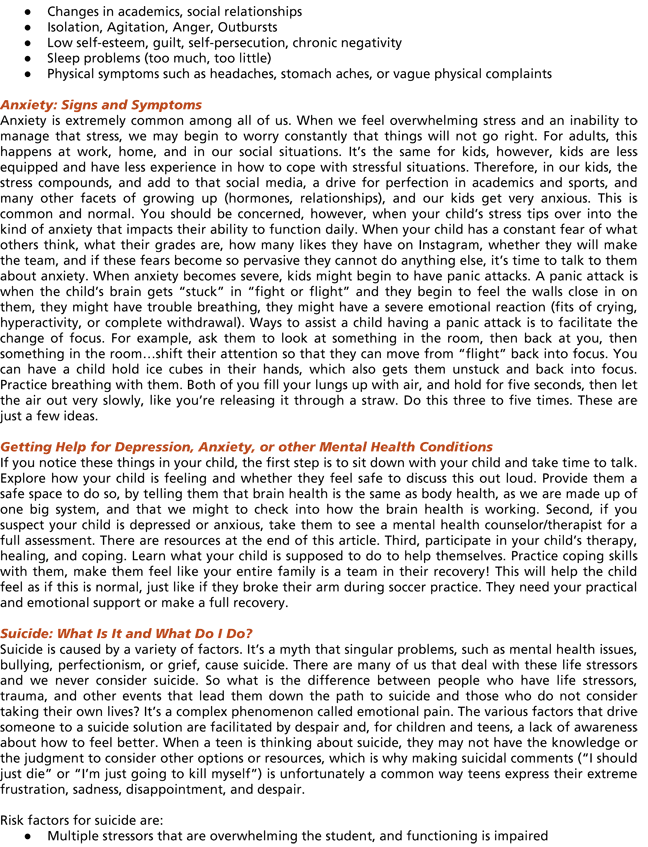
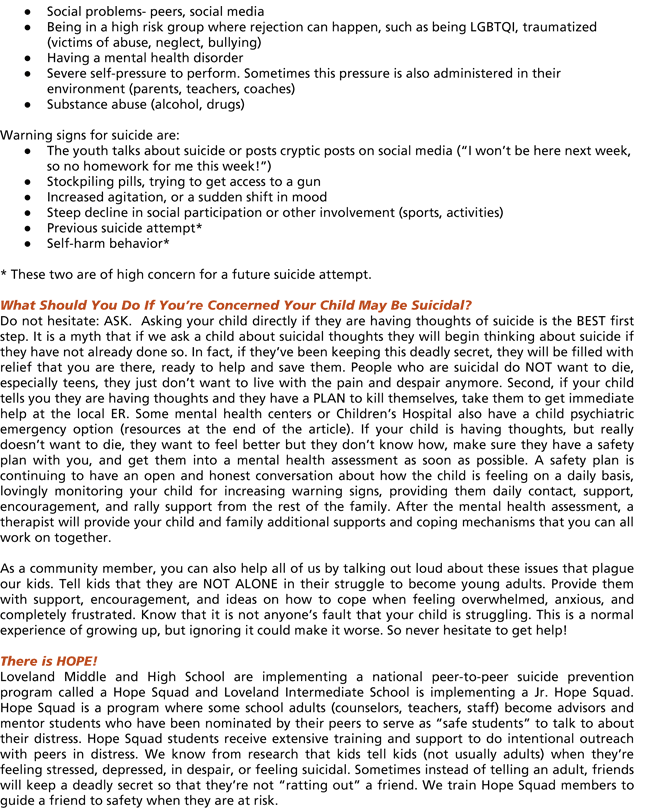
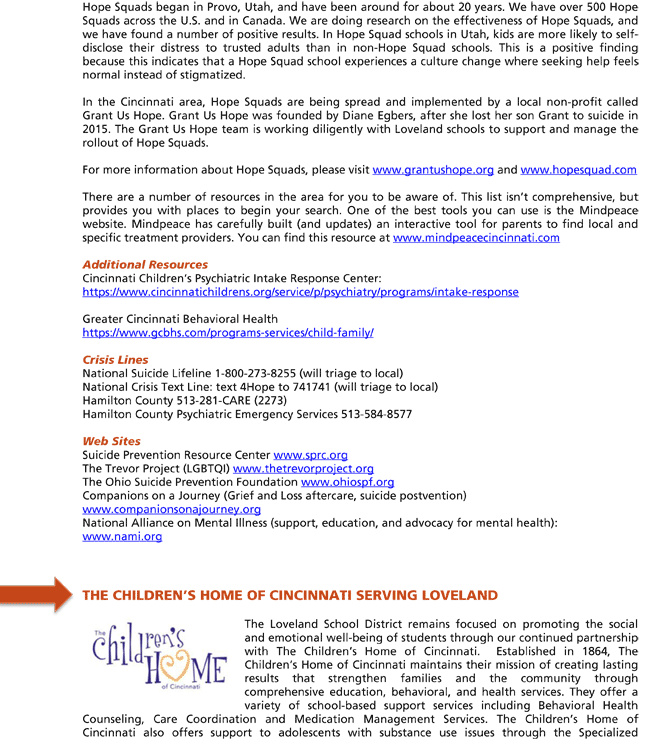
  • [Resources] Teen mental health and suicide from your M/INT Parent Teacher Student Association

    [Resources] Teen mental health and suicide from your M/INT Parent Teacher Student Association

    The newsletter was written by Jennifer Wright-Berryman, Ph.D., MSW and Suicidologist.

    (This is a re-print of a story Loveland Magazine ran in March of 2019)


    The M/INT PTSA regularly posts resource information (articles, web sites, etc.) to their Facebook page (LovelandMINTPTSA) and Web Site.

  • Calls to Clermont County 528-SAVE crisis hotline increase

    Calls to Clermont County 528-SAVE crisis hotline increase

    Help is available 24/7 through the Clermont County Crisis Hotline at 528-SAVE (7283).  The Hotline is staffed by trained and licensed mental health providers who can assist with connection to needed services.  There is also a crisis text line that can be accessed 24/7.  Text the keyword “4hope” to 741 741.

    Ongoing stress due to the pandemic has contributed to increased calls to the Clermont County 528-SAVE Crisis Hotline over the past several months. The Clermont County Crisis Hotline has seen a 21-percent increase in the number of calls in the fiscal year that ended June 30, 2020, as compared to the previous 12 months. The hotline has also seen an increase in the number of suicidal/crisis calls.

    “The long-term impact of the COVID-19 pandemic is starting to take its toll,” said Lee Ann Watson, associate director, Clermont County Mental Health & Recovery Board. “This has been a challenging time for nearly everyone, especially those with possible underlying behavioral health concerns.”

    Clermont County has the second-highest suicide rate in Southwest Ohio and is 13th in the state per 100,000 for suicide deaths. Fortunately, there has not been an increase in suicide deaths in 2020.  People appear to be reaching out for help more than in previous years.  But there is still a reason for concern. While the suicide deaths have decreased in 2020, one death by suicide is too many.

    Watson asks people to recognize warning signs and know how to reach out for help.  It is important to know the warning signs and the resources to seek help because likely people who are depressed and at risk for suicide are not often motivated to seek help. Losses such as the end of a relationship, death of a loved one, or loss of employment, all of which are situations that can be occurring during COVID-19, can increase the risk for depression.

    Common Warning Signs of Acute Suicide Risk

    The following are not always communicated directly or outwardly:

    • Threatening to hurt or kill him or herself, or talking of wanting to hurt or kill him/herself; and or,
    • Looking for ways to kill him/herself by seeking access to firearms, available pills, or other means; and/or,
    • Talking or writing about death, dying or suicide, when these actions are out of the ordinary.

    Additional Warning Signs:

    • Increased substance (alcohol or drug) use
    • No reason for living; no sense of purpose in life
    • Anxiety, agitation, unable to sleep or sleeping all of the time
    • Feeling trapped – like there’s no way out
    • Hopelessness
    • Withdrawal from friends, family, and society
    • Rage, uncontrolled anger, seeking revenge
    • Acting reckless or engaging in risky activities, seemingly without thinking
    • Dramatic mood changes
    • Giving away prized possessions or seeking long-term care for pets

    (Source: American Association of Suicidology)

    Help is available 24/7 through the Clermont County Crisis Hotline at 528-SAVE (7283).  The Hotline is staffed by trained and licensed mental health providers who can assist with connection to needed services.  There is also a crisis text line that can be accessed 24/7.  Text the keyword “4hope” to 741 741.   

    High-risk groups: Men, those 65 and older
    Middle-aged men and individuals over the age of 65 comprise high-risk groups in Clermont County, similar to national trends. Men have always had a higher rate of suicide death than females, but the number of males dying from suicide has significantly increased. During 2019, 37-percent of the suicide deaths were men between the ages of 40-59.  This is a 100-percent increase in the number of deaths in 2019 of this age group compared to 2018.  In 2020, 88 percent of the suicide deaths were men.  Of those, 23 percent were aged 40-49, and 26 percent were aged 60-69.

    While it is often difficult for men to reach out for help, it is important for men to remember that now more than ever “it is ok not to be ok” and that feeling overwhelmed is not a sign of weakness.  Seeking help is a sign of strength.  Mental health professionals are available to assist with the specific needs and concerns of men.  Further, a 2019 study published in the Journal of Mental Health found that receiving support from a trusted and respected friend can be an effective suicide prevention strategy for men. Forming connections with other people who are going through the same thing can also be helpful.

    The Clermont County Suicide Prevention Coalition is working to decrease suicide in our County through increasing knowledge of warning signs, and availability of treatment. If you are interested in joining the Coalition, please contact Lee Ann Watson at (513) 732-5400.

    Number of overdose deaths decline; meth use increases

    With regard to unintentional fatal overdose deaths, Clermont County has seen a decrease in deaths over the past three years.

    The decrease in deaths can be partially attributed to the widespread distribution of Naloxone to county residents. While the overdose deaths have decreased, nonfatal overdoses are still occurring in Clermont County, albeit less than in previous years.

    Regarding non-fatal overdoses, the County was ranked 16th in the state in 2019 for the number of Naloxone administrations (387 doses; Ohio EMS, 2019). This ranking is based on the number of administrations, not by population. For the first three quarters in 2020, Clermont is ranked 17th in the state for the number of Naloxone administrations (315; Ohio EMS, 2020). The number of administrations is underreported since not all the EMS departments in Clermont County report the use of Naloxone, and the figures do not include the Naloxone utilized by law enforcement.

    Clermont County saw a surge in nonfatal overdoses in the summer months of 2020, but the overdoses have now decreased to lower than in the previous year.  There continue to be “hot spots” in Clermont County where overdoses are occurring:  Union Township; New Richmond and Felicity.

    The use of stimulants, particularly methamphetamine, has substantially increased in Clermont County. The degree of complexity related to stimulant misuse has impacted the county. A large portion of the homicides in 2019 was related to stimulant misuse. Individuals on meth can have extreme paranoia and often aggressive behavior, and difficult to engage in treatment.

    The CCMHRB’s substance use disorder treatment provider has seen an increase in treatment admissions for stimulant misuse in the last year (14 percent), and the local hospital also reports an increase in the rate of admissions to the Emergency Department (ED) and the behavioral health unit due to meth misuse.

    Individuals who are brought into the ED under the influence of meth most often have to be admitted to the behavioral health unit. Those stays are often long since it is taking several days for the individual to clear.

    Clermont County Children’s Protective Services has also reported a substantial increase in the number of children in custody due to stimulant use disorders. In 2019, more than 30 percent of the cases were related to methamphetamine.  The number of cases has increased in 2020 as reported by CPS.

    Stimulant misuse differs greatly from opioid misuse.  Due to the nature of the drug, individuals actively using stimulants are often not able to engage in discussions related to treatment, and therefore outreach to attempt to engage them in treatment is not successful as it has been for individuals using opioids.  Further, many individuals with a stimulant use disorder do not believe they have an addiction, and therefore do not voluntarily enroll in treatment.  The CCMHRB’s contract substance use disorder treatment provider reports that in 2019, 21 percent of clients identified stimulants as their primary drug of choice, while 34 percent identified opioids as their primary drug of choice.


  • Continuing business closures in Ohio

    Continuing business closures in Ohio

    The following businesses and operations remain closed as of May 15, 2020, as part of Ohio’s plan to prevent the spread of COVID-19:

    • K-12 schools.
    • Childcare services (permitted to reopen May 31).
    • Restaurants and bars dine-in service.
      • Carry-out and delivery services are permitted.
      • Outdoor dining is permitted.
      • Dine-in service permitted May 21.
    • Older adult day care services and senior centers.
    • Adult day support or vocational habilitation services in congregate settings.
    • Rooming and boarding houses, and workers’ camps.
    • Entertainment/recreation/gymnasium sites.
      • Includes, but is not limited to:
        • All places of public amusement, whether indoors or outdoors, such as:
          • Laser tag facilities, roller skating rinks, ice skating rinks, arcades, indoor miniature golf facilities, bowling alleys, indoor trampoline parks, indoor water parks, arcades, and adult and child skill or chance game facilities remain closed.
          • Gambling industries. (Horse racing is permitted without spectators May 22.)
          • Auditoriums, stadiums, arenas.
          • Movie theatres, performance theatres, and concert and music halls.
          • Public recreation centers and indoor sports facilities.
          • Parades, fairs, festivals, and carnivals.
          • Amusement parks, theme parks, outdoor water parks, children’s play centers, playgrounds, and funplexes.
          • Aquariums, zoos, museums, historical sites, and similar institutions.
          • Country clubs and social clubs.
    • Spectator sports, recreational sports tournaments and organized recreational sports leagues. (Non-contact and limited-contact sports leagues are permitted to reopen May 26.)
    • Health clubs, fitness centers, workout facilities, gyms, and yoga studios (permitted to reopen May 26).
    • Swimming pools, whether public or private, except swimming pools for single households. (Public pools and club pools regulated by local health departments are permitted to reopen May 26.)
    • Residential and day camps.
    • Campgrounds, including recreational camps and recreational vehicle (RV) parks (permitted to reopen May 21).
      • Excludes people living in campground RVs with no other viable place of residence.
      • Excludes people living in cabins, mobile homes, or other fixed structures that are meant for single families and where preexisting residential activity already has been established. (E.g., for people who have part-time preestablished residences at campgrounds for the summer months.)

    For answers to your COVID-19 questions, call 1-833-4-ASK-ODH (1-833-427-5634).


    Your mental health is just as important as your physical health. If you or a loved one are experiencing anxiety related to the coronavirus pandemic, help is available 24 hours a day, seven days a week. Call the COVID-19 CareLine at 1-800-720-9616.

  • Dr. Crouse on safety updates by Loveland City School District

    Dr. Crouse on safety updates by Loveland City School District

    by Dr. Amy Crouse,

    Part of being ready for school means making sure buildings and staff are prepared for what the new year holds. Over the summer, the Loveland City School District, like many other districts in our area, took several measures to improve safety and security for students and staff.

    In Loveland, these safety updates include improved rapid room number identification on all exterior windows to assist first responders. We have also equipped all classrooms with an additional locking device. We have implemented the Raptor visitor management system, an on-the-spot legal identification sign-in software for all visitors – including parents – to our buildings. Using a legal form of identification, the Raptor system checks the visitor’s name and date of birth against a national database of registered sex offenders, and ensures that such individuals do not enter the school campuses without our knowledge.

    A well-informed staff and student body is our first step toward the goal of a safe and secure campus. As part of our safety education, the district implements a schedule for practice of the ALICE model (Alert, Lockdown, Inform, Counter, Evacuate) for active shooter civilian response. The students at Loveland High School (LHS) have already attended an ALICE safety presentation this school year, focusing on the response in the event of a crisis situation. Several opportunities for follow-up presentations and training are scheduled for this year and will be accompanied by class discussions.

    We have implemented the Raptor visitor management system, an on-the-spot legal identification sign-in software for all visitors – including parents – to our buildings. Using a legal form of identification, the Raptor system checks the visitor’s name and date of birth against a national database of registered sex offenders, and ensures that such individuals do not enter the school campuses without our knowledge.

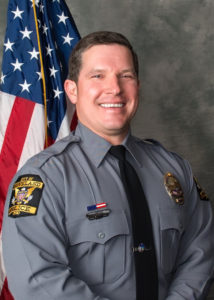
    Officer Jesse Moore is now a full-time, on-site school resource officer (SRO) at Loveland High School.

    In partnership with the Loveland Police, we are also very excited to have been afforded the opportunity to add Officer Jesse Moore as an on-site, full-time school resource officer (SRO) at LHS. In addition to being available for the overall safety for students, staff and visitors on the LHS campus, Officer Moore will provide educational programs for students in areas such as social media awareness, Fourth Amendment rights, and general laws and driving regulations. With a unique ability to build positive relationships, he will also play an important role as a mentor for our high school students. Mr.Barnes, a retired policer officer, will continue to serve Loveland Middle School and Loveland Intermediate School as SRO. Mr. Almond also returns to support the safety of students at LHS. We are grateful to have the support of the Loveland Police and know this positively impacts the experience our students have in our schools and community.


    Mental health and safety are also high priorities at Loveland. The district has entered a partnership with the Cincinnati nonprofit Grant Us Hope to implement Hope Squada school-based, peer-to-peer suicide prevention program empowering students and staff with knowledge to identify at-risk behaviors for suicide, as well as encouraging peers to seek help from a trusted adult. Advisor training, general staff training and student ambassador identification/training in Loveland will be completed this fall, with an anticipated launch of Hope Squad in January of 2019.

    I am immensely grateful for the implementation of these safety measures and for the ongoing assessments and long-term planning by the Loveland District Safety Committee. Our work is continuous to ensure that we always strive for the most trusted and integrated school safety technologies to keep our Tigers safe. Comprehensive facility upgrades will be needed before we can approach some aspects of safety and security in our buildings, and they will be addressed in the Loveland City School District facilities master planning process as it unfolds over the coming months. As always, my number one priority as superintendent of Loveland City Schools is to provide a safe and nurturing environment to prepare each student for tomorrow, today.

    In Service to Our Tigers.

    Dr. Amy Crouse is Loveland City School District Superintendent


      Loveland chiropractor Douglas Portmann, DC at Wards Corner Chiropractic & Sports Rehab is one of the best chiropractors in the Loveland area,


  • School safety training grants available for schools in Ohio

    School safety training grants available for schools in Ohio

    Schools will have the flexibility to use these grants for things like training for school resource officers, safety and security materials, and programs to identify and help students who may be struggling with their mental health.

    Ohio Attorney General Mike DeWine has announced that he is awarding $12 million in grants to help enhance safety and security at schools across the state.

    All of Ohio’s public schools, chartered nonpublic schools, and schools operated by county boards of developmental disabilities will receive the greater of $2,500 or $5.65 per student to spend toward school safety programs and training.

    “Schools will have the flexibility to use these grants for things like training for school resource officers, safety and security materials, and programs to identify and help students who may be struggling with their mental health,” said DeWine

    The grants are funded with appropriations made by the Ohio legislature as part of House Bill 318. The bill, which was sponsored by state representatives Sarah LaTourette (R-Chesterland) and John Patterson (D-Jefferson), appointed the Ohio Attorney General’s Office to develop the school safety training grant program in consultation with the Ohio Department of Education and the Ohio Department of Mental Health and Addiction Services.

    The law requires that participating schools and county boards work with law enforcement in their jurisdictions to determine the best use of the grant funding.

    A full list of grant awards can be found on the Ohio Attorney General’s website.

    Other Resourses

    • Active Shooter Response: An Educator’s Guide: This 25-part video series was produced by the Attorney General’s Ohio Peace Officer Training Academy (OPOTA) to aid educators in preparing for and reacting to a potentially violent school incident, such as a school shooting. The brief videos are an update to the training offered by OPOTA beginning in 2013 that provided guidance to nearly 15,000 educators on how to intervene with students who could pose a danger and how to respond in a crisis situation.
    • Emergency Management Plan Aerial Photographs: Special agents with the Attorney General’s Ohio Bureau of Criminal Investigation (BCI) are available to take free aerial photographs of school buildings for inclusion in school emergency management plans. BCI currently has six drones that are used primarily to document crime scenes and assist in missing persons cases, but BCI is offering to use its drones to take aerial photos of school campuses to help law enforcement plan for and respond to an emergency. School administrators, in coordination with local law enforcement, can request photographs by calling 855-BCI-OHIO (855-224-6446).

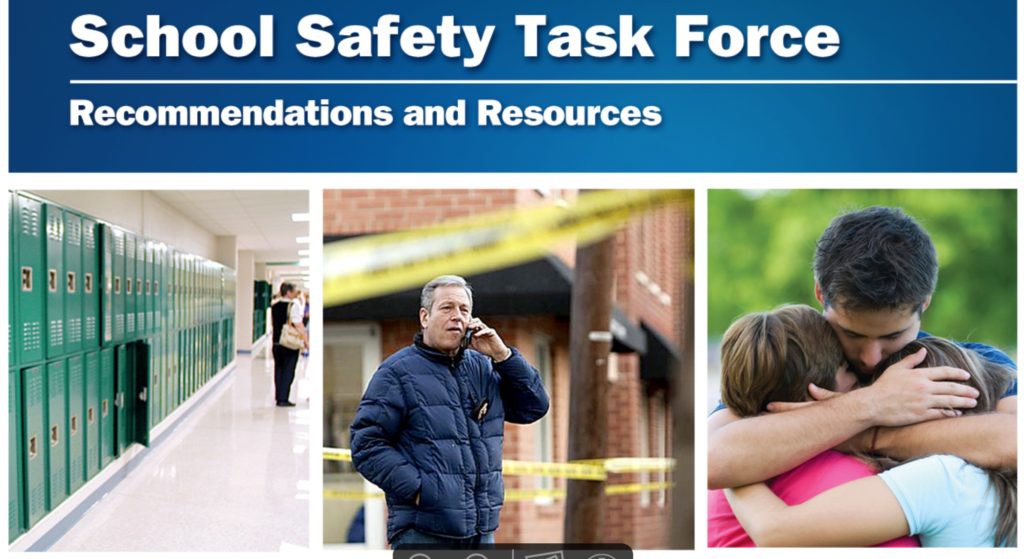
    Attorney General DeWine also worked with schools across the state to achieve greater compliance on school safety plans and convened a School Safety Task Force that issued dozens of school safety recommendations. The task force recognized that mental health awareness was essential for schools to identify and intervene with students who may be at risk.

  • #TigerCare: Summer support for students

    #TigerCare: Summer support for students

    There are many students who require summer support.

    By Eric Dool,

    How will my student’s mental-health needs be met when school is not is session?

    As summer vacation has arrived, thoughts for most naturally turn to rest, time with friends and family, travel, summer projects, professional development and so forth. For some, however, an extended break from school can lead to significant anxiety. Will my son or daughter retain the knowledge and skills needed to be successful at the start of next year? What can I do to better prepare my child for the increasing rigor faced as they progress from grade to grade?  How will my student’s mental-health needs be met when school is not is session? As has become quite clear through research and practical application, there are many students who require summer supports in order to continue to access, participate and progress at school, year to year. That being said, Tiger Care is not something that can end in May and begin in September – it MUST be on-going.

    Tiger Care is not something that can end in May and begin in September – it MUST be on-going.

    For Loveland City Schools, targeted Care supports are an essential part of how we do business. It is an extension of our practices throughout the school year. As such, in addition to the multitude of athletic, art, and enrichment opportunities we make available to students, Loveland offers more-intensive intervention supports for smaller groups of students, frequently in collaboration with well-known community providers. Three examples include: mental-health services through The Children’s Home of Cincinnati (CHOC); an ADHD Summer Treatment Program through the Cincinnati Children’s Hospital Medical Center (CCHMC); and Extended School Year (ESY) services for identified students with educational disabilities.

    Loveland offers more-intensive intervention supports for smaller groups of students.

    In March, I noted the on-going relationship Loveland has had with The Children’s Home of Cincinnati in providing mental-health services to students, inclusive of individual and family therapy, case management, and medication management services. For students involved, CHOC services will continue on-site throughout the summer – with little to no disruption in service. Arrangements for services are being handled through CHOC.

    In exchange for hosting the program in Loveland, a handful of Loveland students will be able to attend for free, or at a reduced cost for families.

    Loveland additionally will for the first time be partnering with the Cincinnati Children’s Hospital Medical Center to host their annual ADHD Summer Treatment Program. This intensive, seven-week-long program has proven to be highly effective in meeting the needs of some students with ADHD, and has been offered through CCHMC for several years at Xavier University through parent payment and minimal scholarship assistance. In exchange for hosting the program in Loveland, a handful of Loveland students will be able to attend for free, or at a reduced cost for families. School teams have worked to identify possible candidates for this program.

    And finally, approximately 120 students with educational disabilities will receive varied Extended School Year (ESY) summer services to prevent excessive loss of knowledge and skills during the summer months, loss typically taking excessively long periods of time to recoup in the fall. These services have been offered through Loveland for several years in a summer-school-like fashion, focused on intensive reading, mathematics, functional living, communication and sensory needs. For a few students, more individualized supports are provided.

    Eric Dool (dooler@lovelandschools.org) is Director of Student Services for the Loveland City School District

    In summary, Loveland recognizes its role in continuing to provide Care during extended absences from school. To that end, we recognize that it is our responsibility to work with families and community resources to ensure that all Tigers return to school in August ready to learn.


  • Suicide Prevention Lifelines

    Suicide Prevention Lifelines

    We can all help prevent suicide. The Lifeline provides 24/7, free and confidential support for people in distress, prevention and crisis resources for you or your loved ones, and best practices for professionals.

    You can #BeThe1To help someone in crisis.

    You don’t have to be a mental health professional to help someone in your life that may be struggling. Learn the Lifeline’s 5 steps that you can use to help a loved one that may be in crisis.

    LEARN MORE


    Counseling and Psychological Services

    • CAPS 24 hour Consultation and Crisis Helpline:  Evenings, weekends, and other times when we are closed, you may call our direct number at 513-556-0648 and press 1, to speak with a counselor 24/7.  For more information on services for students in crisis
    • National Suicide Prevention Lifeline: 1-800-273-TALK (8255)
    • NAMI: National Alliance on Mental Illness is the largest grassroots mental health organization dedicated to improving the lives of individuals with mental health concerns.  www.nami.org

      Suicide Prevention Phone Apps

      lifeboy
      • LifeBuoy – This unique app is designed specifically to assist suicide survivors after a recent attempt.  It offers a daily mood diary, suggestions for decreasing social isolation, and other ways to monitor increased warning signs of suicidality. (iP)
      Hope box
      • Virtual Hope Box – This app provides help with emotional regulation and coping with stress via personalized supportive audio, video, pictures, games, mindfullness exercises, positive messages and activity planning, inspirational quotes, coping statements, and other tools. (iP,A)
      R and J
      • ReliefLink – This award-winning suicide prevention app assists users with tracking daily mood/thoughts, creating a safety plan, locating the nearest hospitals, and obtaining quick-access to coping methods. (iP)
      ask a friend

      National Hotlines

      • A Friend Asks – This app offers tips for getting help for a friend (or yourself).  Helpful information includes what to do RIGHT NOW as well as what NOT to do. (iP,A)
      suicide prevention line
      Trevor
  • #TigerCare: Hope Squad comes to Loveland Schools

    #TigerCare: Hope Squad comes to Loveland Schools

    By Eric Dool, Loveland Director of Student Services

    It is built into our district goals: Tiger Care. When considering all that Care could embody for our students, resilience – the capacity to recover quickly from difficulties; toughness, and self-efficacy – one’s belief in one’s ability to succeed in specific situations or accomplish a task, stand out as being of paramount importance in preparing our children for life’s challenges. Unfortunately, for some students, a lack of resilience and self-efficacy, combined with episodic and/or long-term mental-health needs, results in suicidal ideation. The reality is frightening, and has touched every single school throughout the nation. However, we are not without hope.

    Loveland is truly blessed with a wealth of caring staff and mental-health supports to meet the ongoing needs of our students. Yet, when considering the danger posed by suicidal thought, even those supports do not feel like enough.

    Loveland is truly blessed with a wealth of caring staff and mental-health supports to meet the ongoing needs of our students. Yet, when considering the danger posed by suicidal thought, even those supports do not feel like enough. We must do more. We will do more. To that end, over the next several months, Loveland will be embarking upon a partnership with Grant Us Hope (https://www.grantushope.org/) and Hope Squad (https://hopesquad.com/) to provide our students with the tools needed to join us on the front line in doing all that we can to identify and intervene with suicidal thought and behavior.

    Hope Squads – are trained to identify suicide warning signs in their peers, and to alert adults to those signs.

    Grant Us Hope, the official Hope Squad Founding Agency of Ohio, has partnered with Hope Squad’s founder, Dr. Greg Hudnall, to bring the model to the Greater Cincinnati region, and eventually the entire state. Building upon a researched-based model, student groups – or Hope Squads – are trained to identify suicide warning signs in their peers, and to alert adults to those signs. District staff are also trained in the model, and serve in the capacity of organizing and guiding as advisors. To be clear, Hope Squad members are empowered to seek help and save a life; Hope Squad members are not taught to act as counselors. This group of students will be educated on how to recognize signs of suicide contemplation, and how to properly and respectfully report this to an adult.

    This group of students will be educated on how to recognize signs of suicide contemplation, and how to properly and respectfully report this to an adult.

    In May, school counselors from Loveland Intermediate School, Loveland Middle School, and Loveland High School will receive training to equip them with the skills to serve as advisors. Staff training, parent meetings, and student selection and training will follow in the late fall of 2018. Hope Squad will then launch as an official Tiger Care program in January 2019.

    If you have any questions about Loveland’s participation in this program, I invite you to contact me directly.

    Eric Dool dooler@lovelandschools.org

    Director of Student Services
    Loveland City School District


    Wildflower House — where women & girls bloom!

  • Loveland Educating Against Alcohol and Drugs presents adults only, “Right Under Your Nose”

    Loveland Educating Against Alcohol and Drugs presents adults only, “Right Under Your Nose”

    Tiger parents encouraged to attend the March 11 event

    Loveland, Ohio – Loveland Educating Against Alcohol and Drugs (LEAAD) presents Right Under Your Nose Sunday, March 11, at Prince of Peace Church. Designed as an educational opportunity for adults only, Right Under Your Nose uncovers the hidden dangers that students face on a daily basis, including: substance abuse, violence, juvenile crime, technology, and risky behaviors. Doors will open at 4:30 PM for adults to tour a mock teenager’s bedroom, visit an artifact table, and meet with community resources including drug addiction professionals, mental health counselors and preventative programs. The Right Under Your Nose presentation will start at 5:30 PM.


    “If you were unable to attend the presentation in 2016, now is your chance!” said Loveland Middle School Assistant Principal Jayson Bruce, who serves on the executive committee of LEAAD. “However, if you did see it the first time, a lot has changed, and this experience would be worth your time.”

    To date, LEAAD has presented the Right Under Your Nose program to more than 1,000 adults – including sessions at several local school districts, Cincinnati Children’s Hospital and Changing the Future of Children of Addicted Parents Conference.    

    “I am beyond ecstatic with what we have been able to accomplish with Right Under Your Nose,” said Bruce. “The conversations that parents are having with their children because of this program is so important. If we can help one parent or one young adult, then all of this is well worth it.”  

    Included in the Right Under Your Nose presentation is a mother’s heartbreaking story of how drug addiction ultimately took her son. Beth Renner hopes that by sharing her story, she can help one parent or one child that is struggling themselves. The night will conclude with a Q & A session.

  • Clermont County Community Alternative Sentencing Center will soon admit women

    Clermont County Community Alternative Sentencing Center will soon admit women

    Bativia, Ohio – Clermont County Commissioners approved on July 12 the expansion of the Community Alternative Sentencing Center (CASC) to serve women. The CASC, which has been open since September 2015 under the management of Greater Cincinnati Behavioral Health Systems, provides an alternative to jail for misdemeanants who are convicted of drug- or alcohol-related crimes.

    Clermont County will start admitting women to the CASC as of Sept. 1.

    Now, thanks to a grant from the federal 21st Century Cures Act, Clermont County will start admitting women to the CASC as of Sept. 1, said BCC President David Uible. “This will allow us to address a gap in our attempts to address this crisis. We have wanted to offer this treatment alternative to women, and the grant will allow us to do so.”

    Under the Cures Act, $26 million was allocated to the State of Ohio to fight the opioid epidemic. Clermont County, as one of the top 15 counties in the state most affected by the crisis, was given priority in the grant process, according to Karen Scherra, Executive Director of the Clermont County Mental Health & Recovery Board (CCMHRB), who led the application for the grant.

    CCMHRB is receiving approximately $418,000 in the first year of the grant and up to $700,000 in the second year, which is being provided to the County to fund the CASC program. By the second year, the county hopes to serve up to 25 women in the pod. Medication-assisted treatment will be emphasized, Scherra said.

    The CASC, which operates in a wing of the County Jail, will operate its women’s pod completely separated from the men’s.

    The CASC, which operates in a wing of the County Jail, will operate its women’s pod completely separated from the men’s. The new staff will include an admissions coordinator, three counselors, three aides, a part-time employment specialist, and a recovery coach. It will also include dedicated hours from a physician and nurse.

    The Community Alternative Sentencing Center – the only one in the State of Ohio – is a voluntary program. Municipal Court judges refer misdemeanants to the CASC if they think they will be good candidates for treatment as opposed to incarceration. Since it began operating under the management of Greater Cincinnati Behavioral Health, the CASC has admitted 378 men. Of those 307 have successfully completed the program, with many transitioning into continued services and supports in the community.


    Rick Ogden Heating & Air Conditioning

    Installation and maintenance of heating and cooling systems in Loveland, Ohio Rick Ogden Heating & Air Conditioning is a family owned company.