Tag: mental health

  • Clermont County Mental Health & Recovery Board Offers Funding Opportunities

    Clermont County Mental Health & Recovery Board Offers Funding Opportunities

    Batavia, Ohio – In an effort to foster activities that promote improved mental health and prevent addiction, or the harm associated with addiction, the Clermont County Mental Health and Recovery Board is has announced an opportunity for funding.

    The Board is looking for innovative projects that will positively affect mental health and/or prevent addiction, or harm associated with addiction, for any age group.

    Up to $30,000 is available for programs serving Clermont County residents. The maximum funding per project is $3,000. The grant period is July 1, 2025 through June 30, 2026.

    Any organized group in Clermont County – with the exception of the contract agencies of the Mental Health and Recovery Board – can apply for funding. Previously funded applicants are eligible to reapply. Applicants must have a financial structure in place to account for the awarded funds. Funds may not be used to cover ongoing operating expenses or to purchase equipment such as iPads, iPods, tablets, or other electronic items. The funds can be used for materials, supplies, and/or food for activities planned.

    To apply, submit a brief proposal that includes:

    • Name
    • Address
    • Email address
    • Phone number of the contact person
    • Description of the activity/purpose for which the grant will be used
    • Explanation of how the activity will promote positive mental health and/or prevent addiction
    • Description of what activity the mini grant will fund if used with other monies
    • Date(s) of activity
    • Amount of the funding request

    Note: Any prevention activities must be evidence-based in order to be eligible for funding.

    For additional information, such as a budget template and scoring criteria, please email Cindy Knoblauch at cknoblauch@ccmhrb.org.

    Proposals must be submitted no later than Friday, May 16, 2025.

    Send applications by USPS or email to Mini Grant Project, c/o Cindy Knoblauch.

    Mailing address:

    Clermont County Mental Health and Recovery Board

    2337 Clermont Center Drive, Batavia, OH 45103

    Email address: cknoblauch@ccmhrb.org

    In 2024, the Clermont County Mental Health and Recovery Board funded a total of fourteen (14) mini grants to nine (9) separate organizations. Seven (7) schools in Clermont County received grants that assisted in initiating activities that helped children stay drug-free, established mentoring programs, or promoted mental health well-being. In addition, grants were awarded to other agencies providing services directed to community members, such as Bluebird Bus of Hope and St. Vincent de Paul.

    Any group receiving funding is required to submit a report to the Mental Health and Recovery Board on its efforts and resulting outcomes following completion of the activity. A final accounting of expenditures and receipts must be submitted within 60 days of the end of the activity. All unused funds must be returned to the Mental Health and Recovery Board.

    It is possible that mini grants may not be available in the future or that a project funded once may not receive funds a second time, so mini grants should be viewed as one-time only funds.

    For questions about applying for these grants, call the Clermont County Mental Health and Recovery Board at (513)732-5400 or email Cindy Knoblauch at cknoblauch@ccmhrb.org.
  • Living or visiting Loveland can be a Naturally Healthy 2025

    Living or visiting Loveland can be a Naturally Healthy 2025

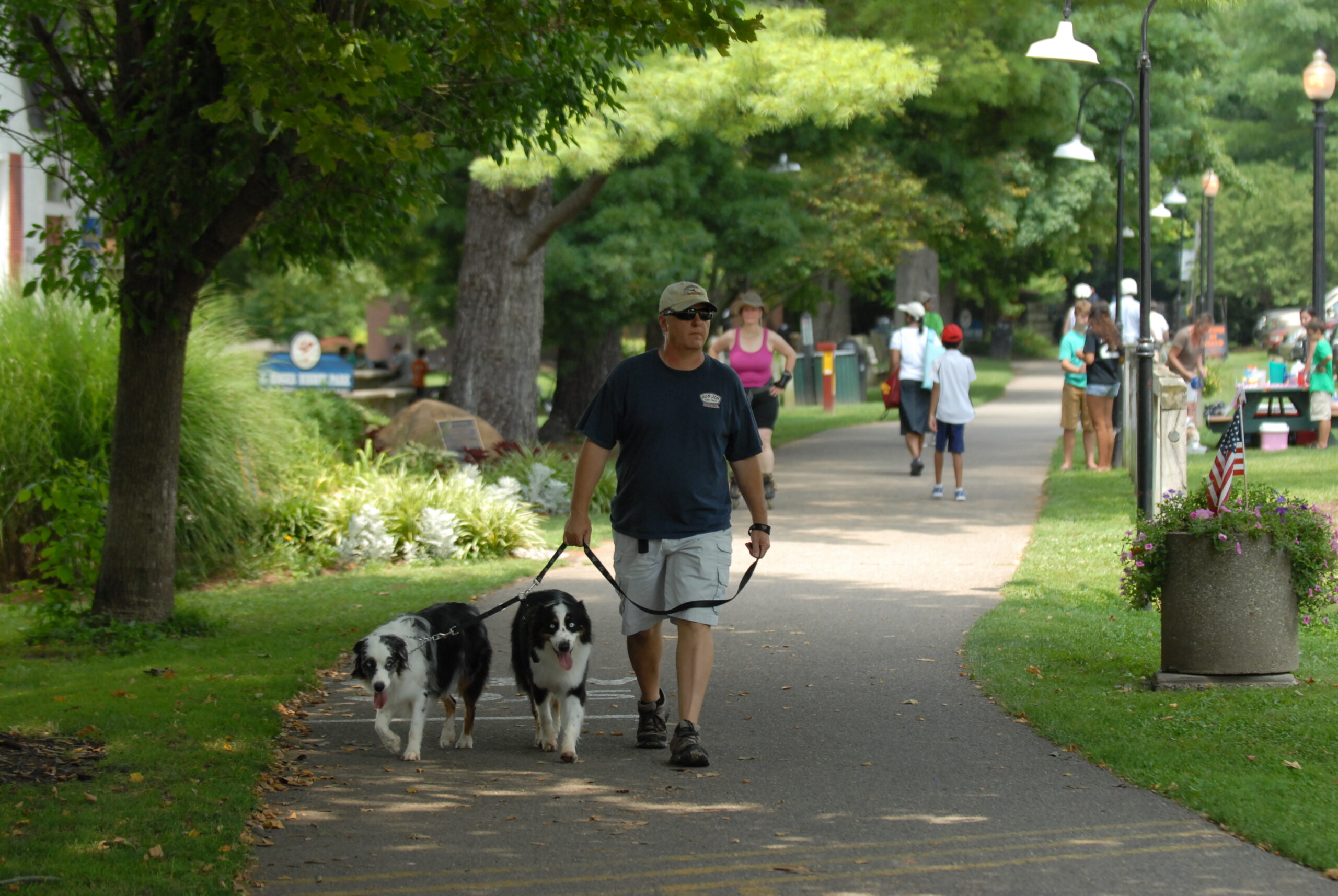
    The Loveland Bike Trail in Loveland’s Historic District

    Photo © David Miller 2025

    by Julie Watson

    Just over half of us have made New Year’s resolutions. The most common ones revolve around physical and mental wellbeing.  Topics like exercise, fitness, and losing weight weigh heavy on our minds. Just as important are issues such as socializing, de-stressing, finding life’s balance, inner peace and others that fall under the mantle of mental health.

    Living in or visiting Loveland, Ohio can mean you are in the perfect place to help you live up to the promises you’ve made to yourself on January 1st.

    If you’ve made a personal health related resolution or goal for 2025, there is a simple and free way to accomplish what you’ve set out to do. I’m talking about nature.

    Research shows that spending even short amounts of time in nature can have positive effects on both mental and physical health. The American Psychological Association purports that spending time in nature can improve mood, and attention while at the same time lowering stress levels. They even claim reduced risk of psychiatric disorders and increased empathy and cooperation. Studies show that exposure to green spaces like parks and trails can increase cognitive development and promote self-control.

    Photo by David Miller © 2025

    Hiking, walking, kayaking, canoeing, and jogging are great ways to get some exercise while spending time outdoors. Don’t forget about taking in deep breaths of fresh air which promotes better sleep.

    So how much time do we need to spend in nature to start seeing benefits? One study found that two hours of nature exposure per week led to significant upticks in both mental and physical health. The best part is that the breakdown of those two hours didn’t matter. In other words, the benefits are the same whether the two hours were spent in one block of time or several shorter blocks of time.

    Rafting on the State and National Scenic Little Miami River in the heart of Downtown Loveland. Photo by David Miller © 2025

    Southwest Ohio residents have easy access to many free, fine parks and trails. Check out city, county, and state parks (https://ohiodnr.gov) as well as The Loveland Bike Trail (The Loveland Bike Trail Map Home – The Loveland Bike Trail Map). This trail is paved and offers users over 70 miles of safe exercise. It also connects the Ohio to Erie Trail which connects the Ohio River to Lake Erie. Lake Isabella is a Hamilton County park right on the outskirts of Loveland. Lake Isabella is a quiet 74-acre park on the bank of the State and National Scenic Little Miami River.

    As you can see, opportunities to reach your health and fitness goals for 2025 are plentiful. So, get out into nature for a better you.

    Some tips for enjoying all the benefits that nature can offer this winter:

    • Be sure to check the weather forecast.

    • Dress appropriately. Light thin layers that can be removed as you warm up are best.

    • When temperatures dip, keep sensitive skin like fingers and ears covered.

    • Wear good shoes or boots to keep your feet supported and dry.

    • Beware of snow and ice. Slow down. Invest in walking cleats that slip on over shoes or boots (think Yaktrax).

    • If there is snow and the sun is out, wear polarized sunglasses to help you see while preventing snow blindness.

    • Drink plenty of liquids. It’s easy to get dehydrated in the winter so be sure to drink enough.

    • Prevent chapped lips and hands by using lip balm and lotions that contain sunblock.

    • When possible, go with a friend, not only for safety reasons, but also for accountability.

    • Be sure your cell phone is fully charged. Cold air causes batteries to drain more quickly.

  • [A Holiday Toolkit] Supporting Mental and Behavioral Health During the Holiday Season

    [A Holiday Toolkit] Supporting Mental and Behavioral Health During the Holiday Season

    A message from OneOhio Recovery Foundation and Substance Abuse and Mental Health Services Administration

    Your presence can be a present for someone this season. Support and following up with loved ones are just some of the actions we can all take to help others who may be in crisis.
    Helping someone with mental health, drug, or alcohol use can be hard. If someone in your life is struggling, having a supportive conversation can be a big step for both of you. You can’t force someone to get care, so, the best thing you can do for a person is to be there for them and listen without judgment.

    If you or someone you know is struggling or in crisis, help is available. Call or text 988 or chat 988lifeline.org. You’ll be able to speak with a trained crisis counselor any time of day or night.

    Holiday Stress – Coping Tips

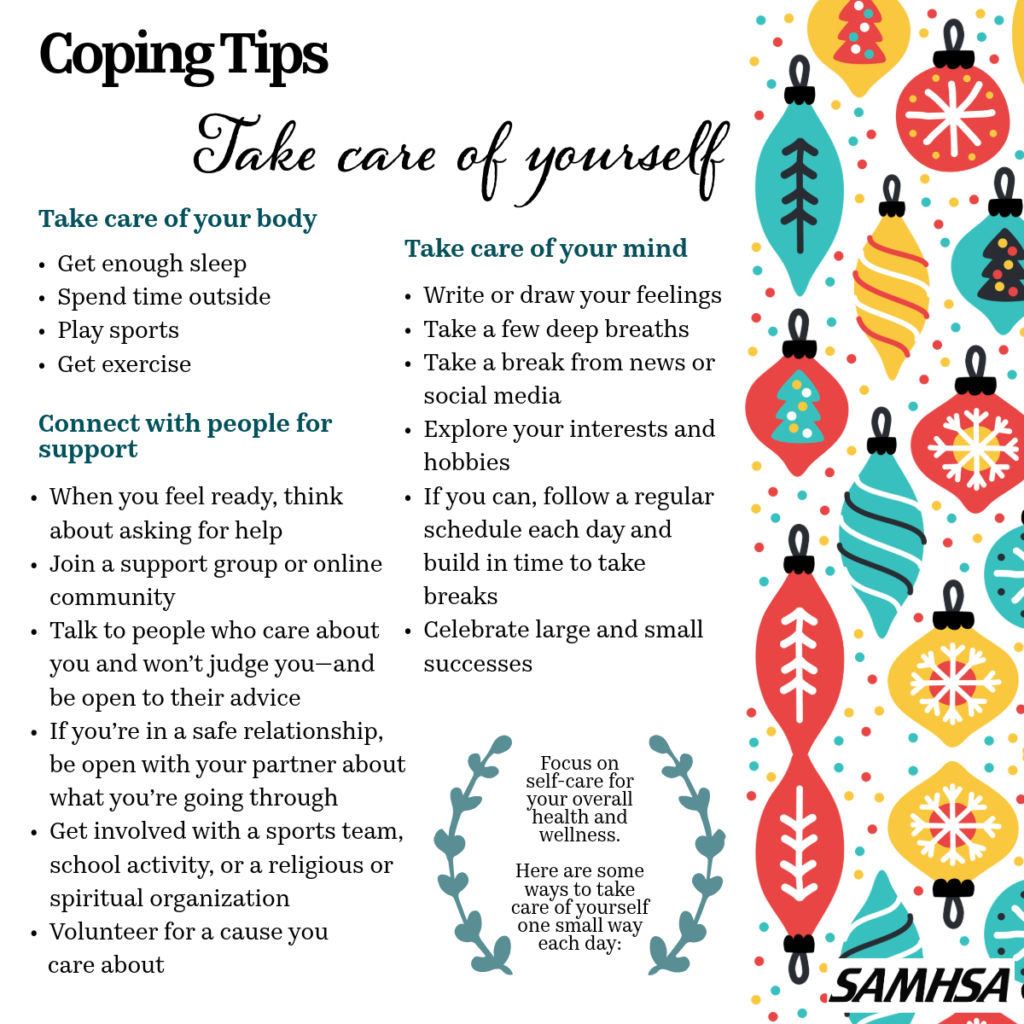
    Is the holiday stress getting to you? Believe in the magic of #SelfCare. It’s ok to focus on yourself, your self-care, and your overall health and wellness this season.

    How to Cope

    Has it gotten harder to get through each day? If you’re having issues with mental health, drugs, or alcohol or waiting for treatment to start, here are some small steps you can take.

    Reach out if you’re in crisis

    If you or someone you know is struggling or in crisis, help is available. Call or text 988 or chat 988lifeline.org. You’ll be able to speak with a trained crisis counselor any time of day or night.

    Accept where you are now

    Know that where you are is okay. Healing isn’t a straight line—there will be ups and downs along the way. Speak to yourself with kindness, as though you’re speaking to a friend.

    Try some of the things below to help your body and mind. Taking care of yourself is healing yourself. Self-care is different for everyone, so you may have to try a few things before finding what works for you.

    Take care of your body

    • Get enough sleep—if you can, stick to a regular schedule
    • If it’s safe, spend time outside
    • Play sports you enjoy or other types of exercise—even if it’s just stretching or walking

    Take care of your mind

    • Write or draw your feelings
    • Take a few deep breaths to calm your mind and slow your heart rate
    • Take a break from news or social media if it causes you stress
    • Explore your interests and hobbies
    • If you can, follow a regular schedule each day and build in time to take breaks
    • Celebrate large and small successes

    Connect with people for support

    • When you feel ready, think about asking for help
    • Join a support group or connect with an online community that’s a safe space
    • Talk to people who care about you and won’t judge you—and be open to their advice
    • If you’re in a safe relationship, be open with your partner about what you’re going through
    • Get involved with a sports team, school activity, or a religious or spiritual organization
    • Volunteer for a cause you care about

    If you find yourself in crisis — or you just need to talk to someone — call or text 988 for help.

    If you’ve experienced a traumatic event or disaster, find additional coping tips.

    Loneliness and Grief

    It’s OK not to feel merry and bright. This season can bring up feelings of loneliness and grief. Hope, help and healing are within reach. Reach out to someone to speak about what’s weighing on you.
    Coping with Bereavement and Grief

    Bereavement and grief are individual, yet universal experiences that nearly everyone faces within their lifetime. Everyone experiences loss in their own personal way. Many can navigate grief with the support of those who are already in their lives, but others may need more help. There are resources and organizations available to ensure individuals receive the appropriate care they need. The type of support required can be influenced by the nature and timing of the loss, the specific resources available, and many other factors.

    Understanding Bereavement and Grief

    In the simplest of terms, bereavement is a period of grief and mourning after a loss, while grief is a person’s emotional response to a loss. Below are more comprehensive definitions based on the opinions of several experts in the field.

    Bereavement

    The overarching experience of coping with loss and change. It is the emotional and psychological condition experienced after a loss, typically due to death, but it can also apply to non-death-related losses. Bereavement often encompasses both inward and outward expressions of grief and the cultural, social, and personal practices that help individuals process and adjust to the loss, often through rituals and support from loved ones. It usually involves a period of grieving.

    Grief

    The emotional, mental, and/or physical response to a loss, often due to death but also encompassing other life changes, such as the end of relationships, loss of identity, or illness. Sometimes people experience periods of grief in anticipation to a loss. Grief is deeply personal and can occur differently in everyone, shaped by the nature of the relationship, the degrees of support, circumstances of the loss, cultural influences, and individual coping mechanisms as well as other considerations. While it can be an intense experience, it is considered a natural human reaction to loss that generally subsides over time for most people.

    Additional definitions provided by the National Cancer Institute and the American Psychological Association for bereavement and grief.

    Examples of how grief can be expressed:

    • Sadness
    • Anger
    • Guilt
    • Confusion
    • Relief
    • Anxiety
    • Numbness
    • Helplessness
    • Fatigue
    • Loss of appetite
    • Sleep disturbances
    • And many more…

    Strategies for coping with grief and loss:

    • Support from friends, family, and/or other known community members
    • Cultural, social, religious, faith, or other beliefs or rituals
    • Local or virtual grief support groups
    • Community-based or virtual grief counseling services
    • Grief peer support services
    • Artistic expression
    • Physical movement and exercise
    • Outreach to a mental health professional

    Prolonged Grief Disorder (PGD)

    Although most people experience periods of grief and bereavement after the death of an individual without long-term mental health concerns, some may experience symptoms that could benefit from additional help. In 2022, the American Psychiatric Association added Prolonged Grief Disorder (PGD) to the DSM-5-TR after clearly distinguishing PGD as its own distinct diagnosis. Major features of the criteria for PGD include, but are not limited to:

    • Intense yearning or thoughts about the deceased
    • Significant and persistent degree of distress
    • Significant decrease in functioning
    • Symptoms that last more than one year in adults and six months in children and youth

    PGD is only one form of grief that can cause extraordinary challenges for individuals. People can also experience other difficult grief reactions. People who are, or think they are, experiencing PGD or are having an especially hard time processing their grief, may seek clinical care, such as individual or group psychotherapy to support them through their loss. Many may also find other supports, such as grief peer support, helpful with this experience.

    Alcohol, Substance Use, and Recovery

    Has it gotten harder to get through each day? If you’re having issues with mental health, drugs, or alcohol or waiting for treatment to start, here are some small steps you can take.

    Reach out if you’re in crisis

    If you or someone you know is struggling or in crisis, help is available. Call or text 988 or chat 988lifeline.org. You’ll be able to speak with a trained crisis counselor any time of day or night.

    Accept where you are now

    Know that where you are is okay. Healing isn’t a straight line—there will be ups and downs along the way. Speak to yourself with kindness, as though you’re speaking to a friend.

    Try some of the things below to help your body and mind. Taking care of yourself is healing yourself. Self-care is different for everyone, so you may have to try a few things before finding what works for you.

    Take care of your body

    • Get enough sleep—if you can, stick to a regular schedule
    • If it’s safe, spend time outside
    • Play sports you enjoy or other types of exercise—even if it’s just stretching or walking

    Take care of your mind

    • Write or draw your feelings
    • Take a few deep breaths to calm your mind and slow your heart rate
    • Take a break from news or social media if it causes you stress
    • Explore your interests and hobbies
    • If you can, follow a regular schedule each day and build in time to take breaks
    • Celebrate large and small successes

    Connect with people for support

    • When you feel ready, think about asking for help
    • Join a support group or connect with an online community that’s a safe space
    • Talk to people who care about you and won’t judge you—and be open to their advice
    • If you’re in a safe relationship, be open with your partner about what you’re going through
    • Get involved with a sports team, school activity, or a religious or spiritual organization
    • Volunteer for a cause you care about

    If you find yourself in crisis — or you just need to talk to someone — call or text 988 for help.

    If you’ve experienced a traumatic event or disaster, find additional coping tips.

    Seasonal Affective Disorder (SAD)

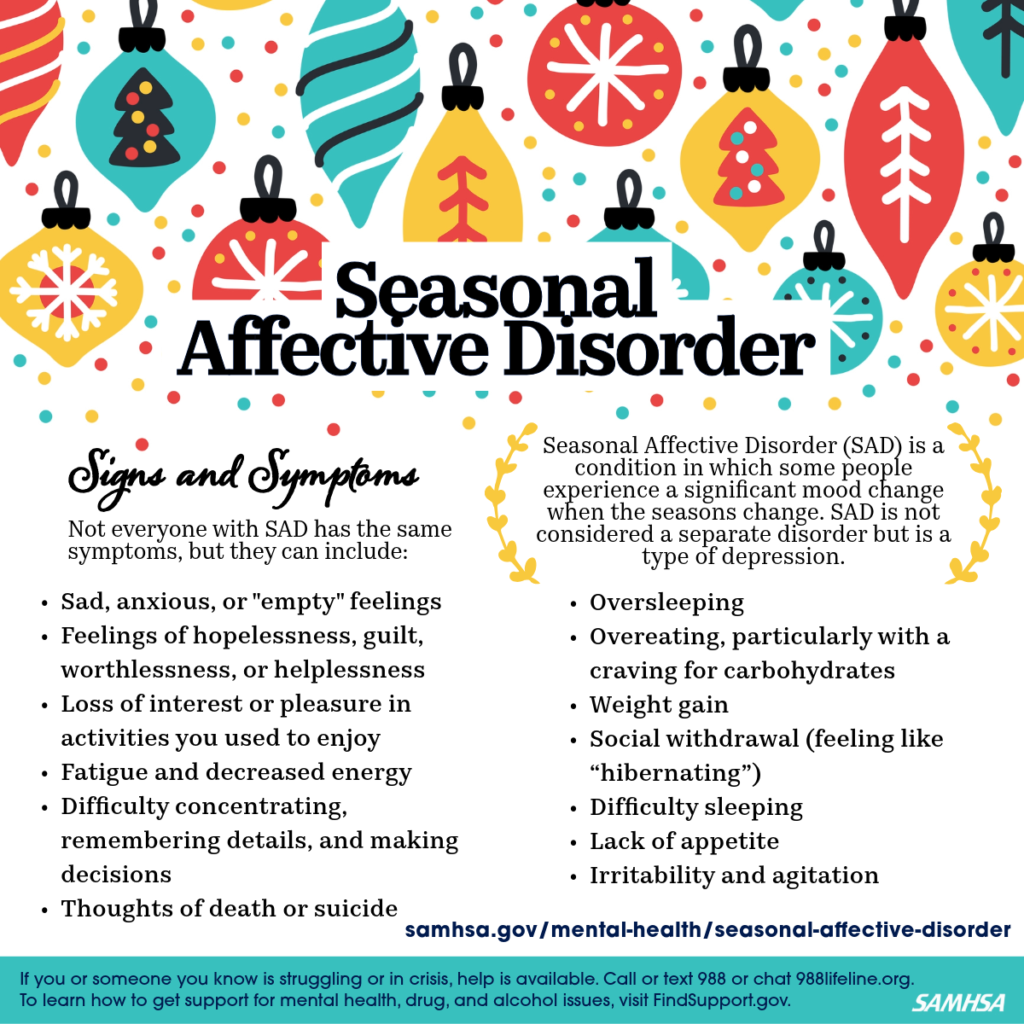
    Is the weather outside frightful? For some, the shorter days and colder temperatures can bring on symptoms of a type of depression. Is it just the ‘winter blues’ or seasonal affective disorder (SAD)? Seasonal affective disorder, or SAD, is a condition in which some people experience a significant mood change when the seasons change. SAD is not considered a separate disorder but is a type of depression.

    Causes

    Seasonal Affective Disorder (SAD) is triggered by changes in seasons. This form of depression usually occurs during the fall and winter months when there is less sunlight, and the days get shorter. SAD usually lifts during the spring and summer months.

    Symptoms

    Not everyone with SAD has the same symptoms, but they can include:

    • Sad, anxious, or “empty” feelings
    • Feelings of hopelessness, guilt, worthlessness, or helplessness
    • Loss of interest or pleasure in activities you used to enjoy
    • Fatigue and decreased energy
    • Difficulty concentrating, remembering details, and making decisions
    • Thoughts of death or suicide
    • Oversleeping
    • Overeating, particularly with a craving for carbohydrates
    • Weight gain
    • Social withdrawal (feeling like “hibernating”)
    • Difficulty sleeping
    • Lack of appetite
    • Irritability and agitation

    Testing for SAD

    Talk to your health care provider or mental health specialist if you are concerned and think you may be suffering from SAD.

    Get Help

    SAD may be effectively treated with a specific type of light therapy for many. Antidepressant medicines and talk therapy may also be needed reduce SAD symptoms, either alone or combined with light therapy. Additionally, vitamin D supplements may improve symptoms.

    Learn how to talk about mental health to help you speak to a loved one who you may think is experiencing any mental health concerns.


  • Ohio suicides went up in 2022, according to new report from Ohio Department of Health

    Ohio suicides went up in 2022, according to new report from Ohio Department of Health

    (Photo by Quentin Young/Colorado Newsline.)

    BY:  Ohio Capital Journal

    This story is about suicide. If you or someone you know needs support now, call, text or chat the 988 Lifeline.

    The number of Ohioans who died by suicide increased by 2% in 2022, according to new data from the Ohio Department of Health.

    There were 1,797 suicide deaths in Ohio in 2022 — the 13th-leading cause of death in Ohio, according to ODH’s Suicide Demographics and Trends 2022 report. Suicide was the second-leading cause of death among Ohioans ages 10-14 and 20-34 that year.

    Demographics

    Males accounted for 80% of Ohio suicide deaths and Ohioans between the ages of 35-44 had the highest rate of suicide deaths.

    Firearms accounted for more than half of all suicide deaths — 64% of male suicide deaths and 36% of female suicide deaths.

    Breaking it down by sex, males 75 and older had the highest rate of suicide deaths and females ages 25-34 had the highest rate of suicide deaths.

    Black non-Hispanics saw the the largest increases in rates of suicide deaths (16%) from 2021 to 2022. White non-Hispanics had both the highest rate of suicide deaths (16.1%) and the total number of suicide deaths (1,525).

    Vinton County had the highest suicide death rate (38.8 per 100,000) and Mercer County had the lowest rate (9.4 per 100,000). Franklin County had the most suicide deaths with 168, Cuyahoga County had the second most with 163 and Hamilton County had the third most with 136.

    Thirteen of the 15 counties with the highest suicide death rates were rural.

    988 Suicide and Crisis Line

    The National Suicide Prevention Lifeline moved to the 988 Suicide & Crisis Lifeline two years ago and since then Ohio 19’s call centers have responded to nearly 340,000 calls, texts and chats — an average of more than 14,000 contacts each month.

    “988 is saving lives,” Gov. Mike DeWine said in a statement. “The lifeline is providing free, around-the-clock support to Ohioans in crisis by connecting them with someone to talk to for help at the moment it’s needed most.”

    Ohioans facing a mental health or addiction crisis and their families members can call or text 988 or chat 988Lifeline.org to get connected to a trained call specialist who can help.

    “988 is confidential and functions as a crucial gateway to crisis support within our communities,” Ohio Department of Mental Health and Addiction Services Director LeeAnne Cornyn said in a statement. “Our hope is that reaching out to 988 in a behavioral health crisis becomes as natural to Ohioans as dialing 911 in other types of emergencies.”

    There have been an average of 9,804 calls from Ohio area codes; 2,686 texts received per month and an average of 1,652 chats per month.

    Cities across Ohio are trying to raise awareness of 988.

    The City of Columbus Department of Public Utilities put up more than a dozen signs about 988 throughout the city. Some of the police departments in Huron County have added 988 decals to their cars. Heidelberg University rented three billboards about 988 to inform students at the private college in Seneca County.

    “Any person or organization that puts effort toward building awareness about 988 is helping save lives,” Ohio’s 988 Administrator Doug Jackson said in a statement.

    Follow OCJ Reporter Megan Henry on Twitter.


    Megan Henry
    MEGAN HENRY

    Megan Henry is a reporter for the Ohio Capital Journal and has spent the past five years reporting in Ohio on various topics including education, healthcare, business and crime. She previously worked at The Columbus Dispatch, part of the USA Today Network.

    Ohio Capital Journal is part of States Newsroom, the nation’s largest state-focused nonprofit news organization.

    MORE FROM AUTHOR

  • Bring your full self to work

    Bring your full self to work

    by CeeCee Collins,

    This article addresses strategies to bring your full self to work including your mental health. I understand that some people may be willing to share more of themselves and their lives than others. Perhaps sharing some of who you are will allow your supervisor and coworkers to understand you better. This will provide you with a greater opportunity to reach your full potential.

    We have some excellent mental self-care businesses in our area. Hope Restored and Self Care Counseling are right in the Loveland area. The chamber has information on how to reach out to these businesses if you are interested.

    A few pointers when addressing mental health in the workplace whether it is your mental health or a co workers:

    • be professional
    • be clear and concise
    • be sensitive

    In addition to the professional business resources I mentioned above. Our area has a plethora of non-profits that share mental health resources in our schools, community and businesses.

    Please consider sharing (professionally) with your place or work if you are going through a difficult time, chances are you aren’t the only one.

    Enjoy your Spring!

    __________

    CeeCee Collins is President of the Little Miami River Chamber Alliance.

    She was born and raised in Beavercreek, Ohio, CeeCee Collins attended Carroll High School and has been a swimmer her entire life. She received her undergraduate degree at Xavier University where she also participated on the swim team for four years. She graduated from college in 1989 and began working at USA Today Newspaper as a Regional Marketing Manager. After marrying James Collins IV, they moved to Tampa, FL where she worked for the Tampa Metropolitan Area YMCA for 6 years as an Executive Director.

    CeeCee and her family moved back to the tri-state area after her second child’s birth. She continued to work for the Greater Cincinnati YMCA for 10 years part-time. CeeCee then pursued full-time work and became the Development Director at Ohio Valley Voices for 6 years. Throughout her years at the YMCA and Ohio Valley Voices she was active in the Little Miami River Chamber Alliance (formerly the Loveland Area Chamber of Commerce). She became the President of the Chamber in 2013.

    CeeCee continues to enjoy working at the chamber and keeping up with her three children.  She and Jim live in Miami Township.

  • Mental Health Awareness Basketball Games at Loveland High School

    Mental Health Awareness Basketball Games at Loveland High School

    Loveland, Ohio – The Loveland High School Hope Squad will host its 2nd annual Mental Health Awareness Basketball Games on Thursday, January 11 (Women vs. Winton Woods) and Friday, January 12 (Men vs. Winton Woods).

    Local organizations will be at the games to share important mental health resources with our community. They are asking all fans to wear purple and teal to the games, and they are again selling t-shirts in support of suicide prevention and mental health awareness. Follow this link to purchase shirts in adult and youth sizes.

    The online store will close on December 15.

    A $2 donation per shirt will go to the Loveland Hope Squads.

  • [VIDEO INTERVIEW] Ben’s Way a new initiative of the Ben Morrison Fund

    [VIDEO INTERVIEW] Ben’s Way a new initiative of the Ben Morrison Fund

    David Miller is the Managing Editor of Loveland Magazine

    Listen to the emotional account as Tori Morrison tells you how she finally summed up the emotional courage to meet the man who received Ben’s liver and kidneys

    by David Miller

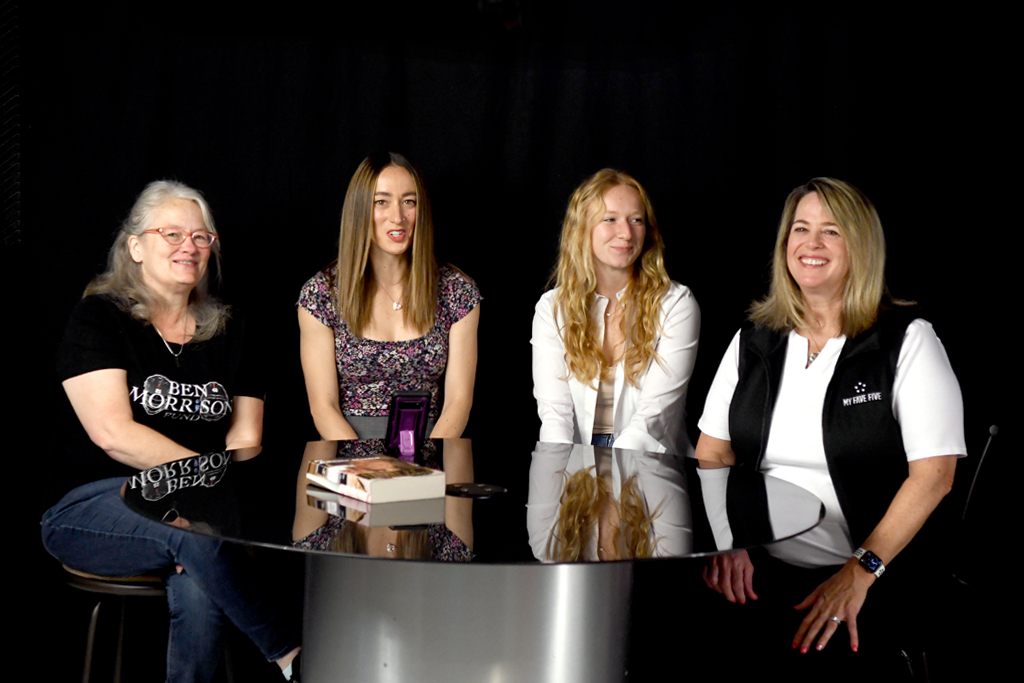
    On September 22, Tori Morrison and Kate Jackson came to the LOVELAND MAGAZINE TV studio at the Simpson Farmhouse to talk about a new initiative of the Ben Morrison Fund. Morrison is the President and Treasurer of the Fund and Jackson is a member of the Board.

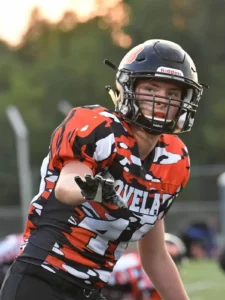
    The fund was established after Morrison lost her son Ben and his battle with his hidden mental health problems. Ben took his life by suicide in 2021. To honor Ben and help erase the stigma of pain and struggles with mental health, the fund was established to fight for others and fight against that stigma to help make sure no one feels alone.

    __________________

    “Ben’s continuing legacy will not be one of loss, but as a lifesaver through organ donation, as a loyal friend and stalwart teammate and a man of deep compassion for others.  His legacy will go on through the Ben Morrison Fund and through those of us who serve that cause and carry him with us to take care to light the way out of darkness for others and spark hope to always continue your story.”

    __________________

    The Ben Morrison Memorial Fund is committed to providing scholarships to graduating seniors from Loveland High School. They are dedicated to erasing the stigma of mental health struggles, opening conversations, and offering lifelines to help save the lives of young people in crisis.

    The Ben Morrison Memorial Fund is a 501(c)(3) nonprofit organization.

    In this interview, my guests will tell you about Ben and the life of giving and kindness he led, most of it not obvious to his mother Tori. She tells how “onery” Ben could be, typical of teenagers not allowing parents to know their true selves.

    Tori tells you that when Ben got his driver’s license she encouraged him to sign up to be an organ donor and asked him if he would. Ben would never answer her, his cantankerous nature was a tease. Tori and Ben’s father never knew he had signed the form until in the hospital after Ben took his life they asked them if it would be OK to harvest some of Ben’s organs. Realizing then that to their surprise Ben wanted that too, without hesitation they agreed.

    Listen as Tori reveals for the first time how the donor process works and how she became emotionally strong enough to agree to meet the man who received Ben’s liver and kidneys.

    Tori has now determined, because of the suggestion by Kate, that the current Loveland High School students don’t know what attributes Ben had that so enamored his class and teammates to him, and Ben’s Way would be a good vehicle to keep his legacy alive.

    • Ben spoke up for others.

    • He was unselfish.

    • A leader, and protector.

    • A young person who led by example and modeled hard work and resilience.

    • Ben treated others with acceptance, kindness, and encouragement.

    These attributes were revealed to them through the applications and actual words of the students who applied for the 21 scholarships the fund has awarded. Kate tells a story about being inspired after witnessing a young student one day that reminded her of Ben in the kind way he was treating a “special needs” child. Kate says, “Well number one, this is something Ben would do, and number two, this child should be recognized for doing something so positive in a world that’s not always so positive.” The child had done something, Ben’s way.

    Watch Tori and Kate tell you how Ben’s Way will transform life and lives at Loveland High School.

    __________________

    Ben may have been one of those unrecognized/uncounted victims of the COVID-19 Pandemic

    Covid was hard for Ben, as for all those seniors. He didn’t get his final lacrosse season, prom, graduation, or grad parties, and life changed in so many ways.  He didn’t know what his next chapter should be. But later that year, he decided to become a Firefighter and go to community college. He didn’t get to start those chapters. For some reason we will never know, maybe a bad day, a moment of self-doubt, an offhand comment that cut too deep, some inner turmoil or unspoken conflict, our Ben, a boy who never expressed depression nor showed signs of any form of struggle with mental illness, was suddenly and without explanation gone from our lives forever.

    __________________

    Kate Jackson was a football “Team Mom” and her son was a teammate of Ben when they played for Loveland High School. Ben also competed in lacrosse. Jackson said, “Ben was an important part of my son’s life and an important part of my life and Tori became likewise an important part of my life.”

    ______________

    Become a Ben’s Way Sponsor

    As a sponsor of Ben’s Way, you will help us bring this initiative to more schools. Students that are chosen will receive a $25 gift card.

    if you would like to sponsor Ben’s Way at a school, or you would like to bring Ben’s Way to your school, please send an email to BensWayInitiative@gmail.com

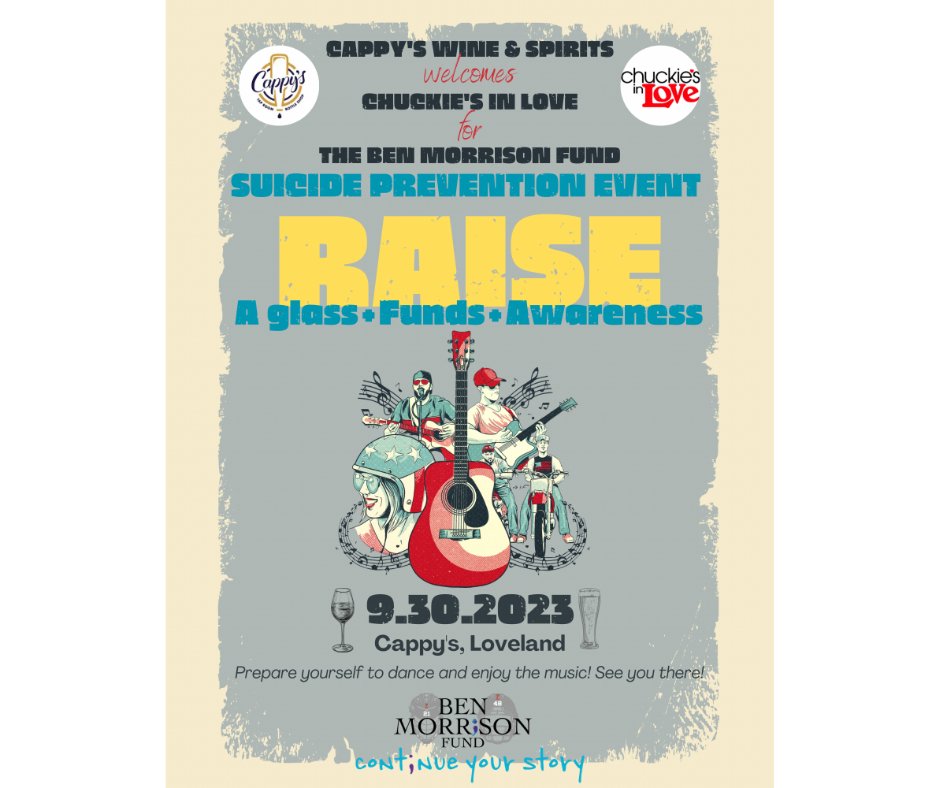
    On Saturday, September 29 Cappy’s Wine and Spirits is hosting a fundraiser for the Ben Morrison Fund featuring the Chuckies in Love band playing the “ultimate throwback tunes, bringing you the iconic sounds of the 70s & 80s”.

    Watch Chuckies in Love…

    Become a Ben’s Way Sponsor

    As a sponsor of Ben’s Way, you will help us bring this initiative to more schools. Students that are chosen will receive a $25 gift card.

    if you would like to sponsor Ben’s Way at a school, or you would like to bring Ben’s Way to your school, please send an email to BensWayInitiative@gmail.com

    Follow the Ben Morrison Memorial Fund on Facebook

  • $7,000 Available for Students with Disabilities for 2023 fall term

    $7,000 Available for Students with Disabilities for 2023 fall term

    Getty Image

    Opportunities for Ohioans with Disabilities (OOD) will help students with disabilities invest in their futures and pursue their passions. The OOD Education Support Funds are a financial investment in students with disabilities on their educational journey.

    Why does continued education matter? According to OOD there is “overwhelming evidence that individuals with a degree, certification, apprenticeship, or other credentials have more career options and greater lifetime earning potential than those without.”

    Overview

    All eligible college and nontraditional students with disabilities will receive up to $7,000 while participating in OOD services, to be used for tuition or educational expenses during the 2023 fall term.

    This includes students with physical, hearing, vision, learning, mental health, and sensory disabilities who are participating in colleges, trade schools, apprenticeships, and credentialing programs.

    These are funds only for individuals with disabilities receiving OOD services that are in addition to any scholarship funds students may be receiving.

    Application

    The process begins with an application for services. Visit OODWorks.com to get started, or call an OOD location near you.

    A team member will reach out to schedule an in-person or online appointment with you to finalize your application and answer any questions.

    Eligibility

    After completing the application process, OOD will review everything to ensure you qualify for OOD services. Then you’ll get a call from OOD to see if you’re eligible.

    To take advantage of the OOD Education Support Funds, individuals must be 1) eligible for vocational rehabilitation services and 2) participating in a college, trade school, apprenticeship, or other credentialing program.

    Planning

    Once approved for OOD services, a vocational rehabilitation counselor can work with you to take advantage of all OOD has to offer students with disabilities.

    OOD helps students with disabilities explore potential careers, benefit from assistive technology, learn how to build effective resumes, prepare for interviews, find a job that fits their interests and talents, and other related assistance.

    OOD’s business relations team also connects students to internship and permanent employment opportunities.

    Spread the word to students with disabilities.

  • “Table of Discussions” Brings Prevention, Healing, and Hope for Mental Health Awareness Month

    “Table of Discussions” Brings Prevention, Healing, and Hope for Mental Health Awareness Month

    Cassie Mattia

    Loveland, Ohio – “Don’t be afraid to put yourself first sometimes and get the help you need if it’s needed,” mental health advocate, Elly Steinbrunner said when asked what encouraging message, she wanted to send to those struggling with their mental health.

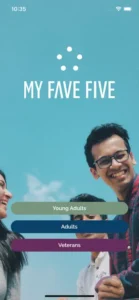
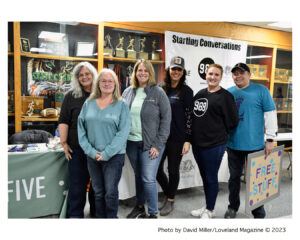
    On my latest episode of “Table of Discussions” I invited Gina Marek, creator of the Fave Five App, Tori Morrison, who started a non-profit called the Ben Morrison Memorial Fund, and Elly Steinbrunner, a former member of the Loveland Hope Squad to my table to talk about Mental Health Awareness Month.

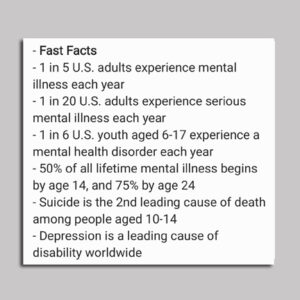
    During the episode, Gina and Tori talk about how losing their sons to suicide encouraged them to advocate and educate those in the community about mental health. In this Loveland Magazine TV interview, both Gina and Tori offers advice about suicide prevention, eliminating the stigma of depression, and mental illness. Since the conception of the Fave Five app and the Ben Morrison Memorial Fund, Gina and Tori have been able to provide a wealth of information for parents, caregivers, and peers.

    Elly, who recently graduated from Loveland High School, shared her perspective on why mental health struggles are climbing so rapidly among her generation and how being a member of the Loveland High School Hope Squad allowed her to not only help so many young people, but also educate her peers about mental health.

    Join me, Gina Marek, Tori Morrison, and Elly Steinbrunner as we talk about Mental Health Awareness on my latest episode of “Table of Discussions! Watch as these three impactful women offer life-saving tips to those families and youth struggling with the mental health crisis.

    “It’s totally free, no-nonsense, and took less than three minutes to start adding my trusted friends who I would want to contact if I needed help. The people in my life who I would trust with my life,” Loveland Magazine Managing Editor David Miller said after downloading Gina Marek’s My Fave Five app to his iPhone.The Ben Morrison Fund

    The Ben Morrison Memorial Fund is committed to providing scholarships to graduating seniors from Loveland High School. We are dedicated to erasing the stigma of mental health struggles, opening conversations, and offering lifelines to help save lives of young people in crisis.

    The Ben Morrison Memorial Fund is at 501(c)(3) non-profit organization. Fed id 86-2896878. 

    Visit “The Ben Morrison Fund” on Facebook.

    My Fave Five – the Mobile App

    The MY FAVE FIVE Mobile App helps you identify, connect, and build relationships with trusted people in your life.

    Get the APP TODAY to set up your personalized network of support or offer it to someone and be one of their FAVES – just one is a GIFT!

    Visit “My Fave Five” on Facebook.

    Loveland Hope Squad

    The HOPE Squad program is a school-based peer support team that partners with local mental health agencies. Peers select students who are trustworthy and caring individuals to join the Hope Squad. Squad members are trained to watch for at-risk students, provide friendship, identify suicide-warning signs, and seek help from adults.

    HOPE Squad members are NOT taught to act as counselors but are educated on recognizing suicide warning signs and how to properly and respectfully report concerns to an adult. Once invited to be a HOPE Squad member, students must get a permission form signed by their parents and go through training.

    Goal:

    Hope Squads seek to reduce self-destructive behavior and youth suicide by training, building, and creating change in schools and communities.

    Objectives:

    Train:

    1. Hope Squads will train students and staff in schools to recognize suicide-warning signs and act upon those warnings to break the code of silence.

    2. Hope Squads will train students and staff to identify adolescents with undetected, untreated, or emerging mental disorders.

    Build:

    1. Hope Squads will build positive relationships among peers and faculty in schools to facilitate acceptance for students seeking help.

    2. Hope Squads will build strong relationships with local mental health agencies and communities while educating students, parents, and school staff about available community mental health resources.

    Change:

    1. Hope Squads will work to change the school culture regarding suicide by reducing stigmas about suicide and mental health.

    2. Hope Squads will work to change community perceptions of mental health by creating awareness about suicide and the tools available to prevent suicide.

    __________________________

    Call or text the Suicide & Crisis Lifeline (para ayuda en español, llame al 988)

    __________________________

    Sunday, August 6
    1:30 PM @ Hickory Woods Golf Course
    Lunch at the turn and dinner will be provided.
    We look forward to seeing you again this year.

    Please email teamforben@gmail.com for additional sponsorship opportunities or any questions you may have.

    Loveland High School Hope Squad takes lead role in creating mural

    [Photos] The theme was “Teal Out” for My Fave Five, The Ben Morrison Fund, and Loveland High School’s Hope Squad

    Columnist Cassie Mattia is a resident of Historic Downtown Loveland and the Public Relations Coordinator at Butler County Board of DD. Cassie was awarded the Little Miami River Chamber Alliance 2021 Young Business Professional of the Year. She is the President and Publisher of Loveland Magazine.

    Watch Cassie’s previous Table of Discussions episodes!


  • Loveland’s “Ben Morrison Fund” announces 2nd Annual Ben’s Birthday Bash

    Loveland’s “Ben Morrison Fund” announces 2nd Annual Ben’s Birthday Bash

    Loveland, Ohio – The Loveland, Ohio non-profit “Ben Morrison Fund” and Tori Morrison have announced the date of the 2023 2nd Annual Ben’s Birthday Bash will be February 19th, 2023.  

    The Ben Morrison Fund was recently honored by the Little Miami River Chamber Alliance as their “Hometown Hero”.

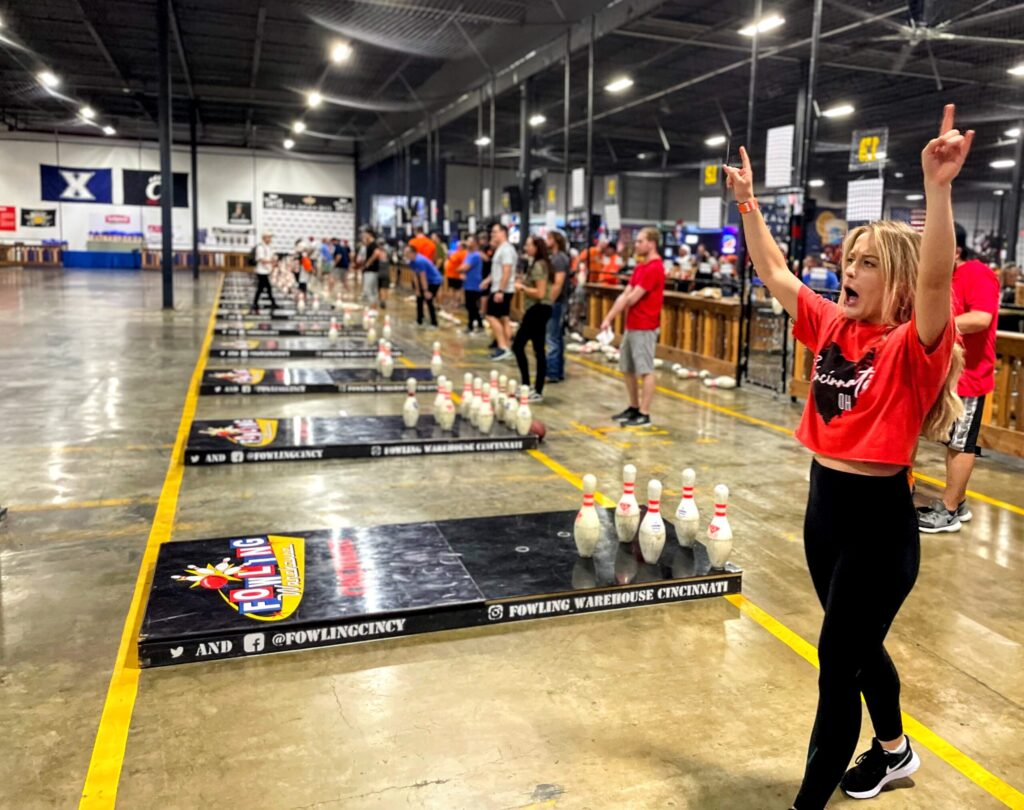
    The event will take place at the Fowling Warehouse and will feature tournament-style fowling, BBQ provided by JD’s Meat Shack, and the auctioning of the fan-favorite “Liquor Trove.”  

    All proceeds will go directly to helping young people struggling with mental health crises, normalizing conversations about mental health, and building hope. Every year the Ben Morrison Fund gives scholarships to graduating Loveland seniors and works to erase the stigma of mental health struggles in honor and in the memory of their son Ben.

    “We are so grateful for the support we receive to strengthen our efforts to help erase the stigma of mental health struggles and to help those struggling to move forward,” says Tori Morrison, President of the Ben Morrison Fund and Ben’s mom. “This event is particularly special to me as it celebrates Ben’s life as well as his lasting legacy of helping others.  It’s a lot of fun, we hope you will come join us!”

    Ben’s Birthday Bash will take place February 19th from noon until 3 PM at the Fowling Warehouse in Cincinnati. $20 Tickets can be purchased in advance at benmorrisonfund.org or at the door. Participation in the tournament is $5. Lunch will be provided. 

    “We are so grateful for our sponsors, volunteers, and our incredible community for their continuous support as we work to make a lasting difference in helping young people continue their story,” said Stacey Lund, Vice President of the Ben Morrison Fund. 

    To learn more about the Ben Morrison Fund or to donate, visit benmorrisonfund.org. You can also follow us on Facebook, Instagram and Twitter.