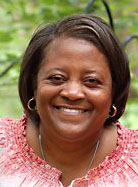
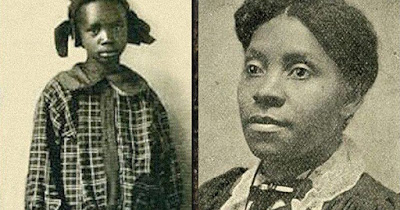
Do you know, “Sarah Rector was born in 1902 in Taft, Oklahoma. She came from very humble beginnings, but later became the wealthiest Black girl in the country at the young age of 11. Her family were African American members of the Muscogee Creek Nation in Indian Territory.”
Miami Township, Clermont County – The Township has issued a Snow Emergency. It says, “To assist the Service Department with their snow removal efforts, no vehicles shall be parked on any snow emergency route. Drivers are discouraged from being on roadways unless they have emergency reasons.”
The Snow Emergency will remain in place until the Township declares otherwise.
For additional information, contact Administrator Jeff Wright at 513-248-3725 or via email at jeff.wright@miamitwpoh.gov
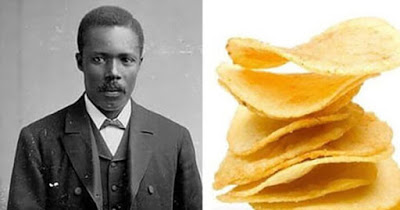
Do you know that “There are a few stories about the invention of the potato chip, but the most reliable ones all center around George Crum, a famous Black chef in the 19th century who served the wealthiest Americans and eventually opened his own wildly successful restaurant.”
Do you know that the #HarlemRenaissance was an intellectual and cultural revival of African American music, dance, art, fashion, literature, theater and politics centered in Harlem, Manhattan, New York City, spanning the 1920s and 1930s. Also known as: New Negro Movement.
Do you know that David Kenyon of Company 21, an all-African-American firehouse in Chicago “had an epiphany” and they thought the idea crazy—until they saw that Company 21 was often the first to arrive on scene?
Wolff, a Miami Township trustee, for the past six years has served as director of the Coalition for a Drug Free Clermont County.
“I’m proud of the work we are doing building the coalition in Clermont County, including getting funding for years 1-5 and now 6-10,” Wolff said. “And now I’m looking forward to helping build a robust statewide suicide prevention coalition.”
Wolff sees parallels between her work for the drug free coalition and the suicide prevention foundation.
“We want to make sure our communities are responding as best as they can, now that we are in the COVID-19 era,” Wolff said. “It’s such a rough time for people with the isolation associated with the pandemic.” Strong communities have strong community-level prevention activities and policies happening everywhere.
For example, Wolff said teens are getting shamed if they test positive and cause a whole team to quarantine. They can find themselves under attack on social media.
“We know social media is both good and bad,” Wolff said. “It provides connection, but cyber-bullying and too much screen time make a problem worse.”
Her main focus at first in the new job includes: Seeking grants for capacity building and furthering a partnership with the Voinovich School at Ohio University and Ohio Mental Health and Addiction Services to build an understanding of how to build a coalition. She will assist OU and local staff in building an advocacy group among coalitions to see if policy or law changes need amending so more people may be helped.
With assistance, 30 partners across the state had developed the first Statewide suicide prevention plan. The plan focuses on prevention, intervention, and “postvention.”
Postvention involves helping survivors or family members who lost someone.
“We’re really good immediately after a tragedy,” Wolff said. “It’s the weeks and months later when people have stopped bringing the casseroles and the survivor or family member has to grapple with this alone that provides the biggest challenges.”
The plan identified three key groups with the strongest need: veterans, older male adults, and youth.
“But we want to build a network inclusive of everybody,” Wolff said “I’m really looking forward to it. It builds off of work have done with the drug prevention coalition. We all need to be prevention people: Faith community, law enforcement, educators…. We’ve got to share the message of being healthy and safe.”
For those interested in helping locally with either the Coalition for a Drug Free Clermont County or the Clermont County Suicide Prevention Coalition contact Lee Ann Watson, associate director of the Clermont County Mental Health and Recovery Board at 732-5200.
Miami Township, Ohio – Loveland Magazine has confirmed today that Grailville and the Drees Company have signed a purchase agreement for development of 110 acres on the south side of their property located on O’Bannonville Road east of downtown Loveland.
In March of 2019 the Loveland Board of Education entered into a contract for an option to purchase the real estate, however, last January after voters said they were not willing to put up the money, the Board voted to cancel the contract. The Board had hoped to use the land for the construction of a new campus with three school buildings hoping the schools would open in September of 2022.
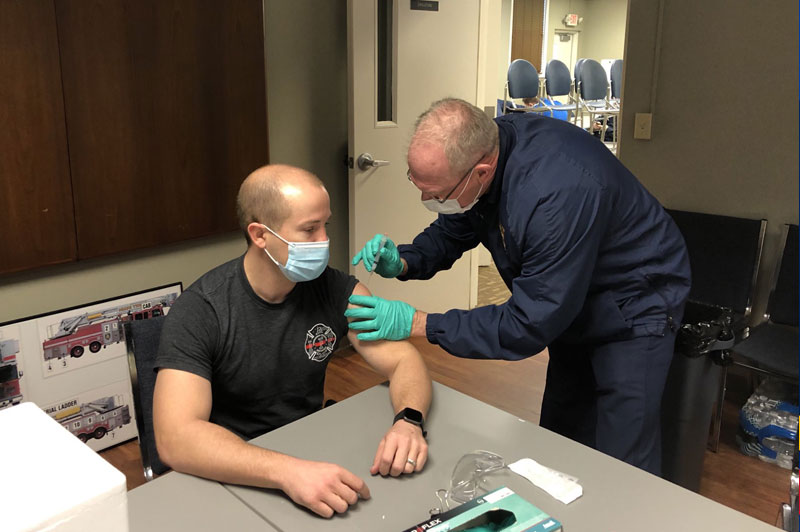
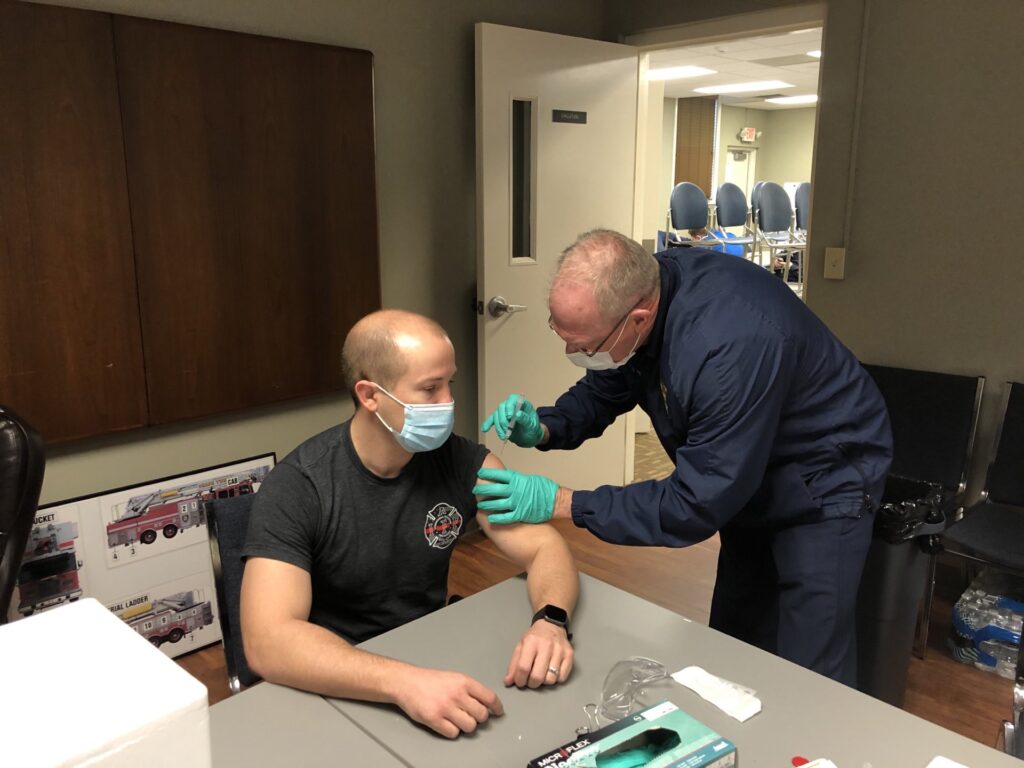
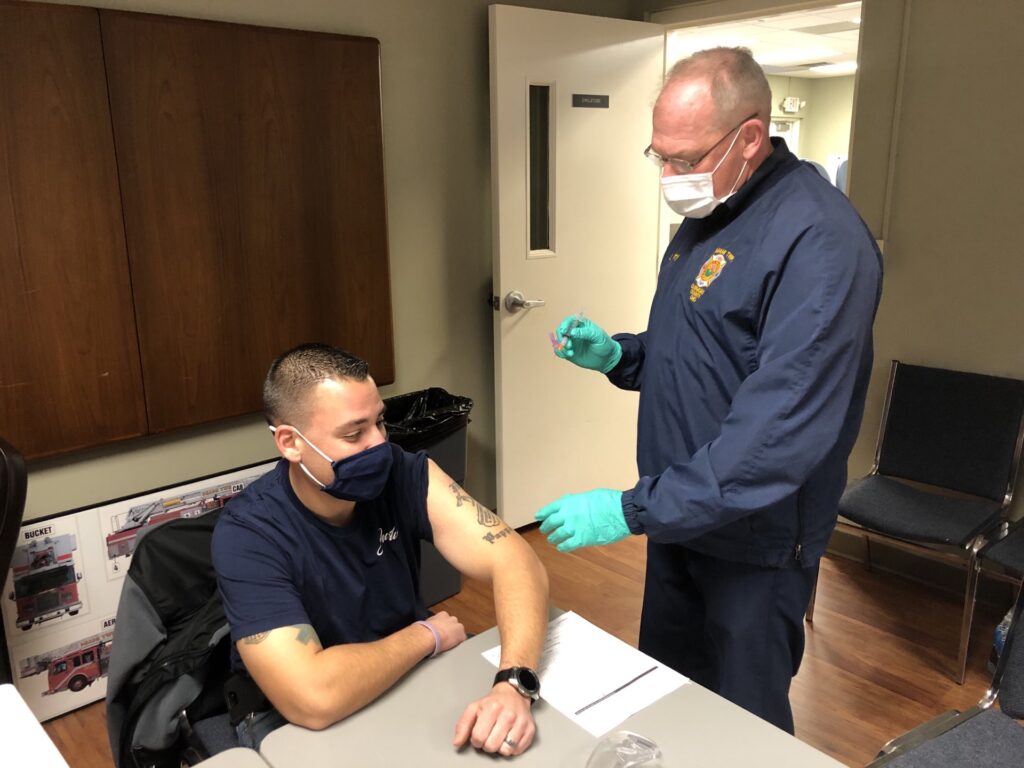
Miami Township’s first responders have begun receiving the vaccine (Photos from MiamiTwp FireEMS)
David Miller
by David Miller
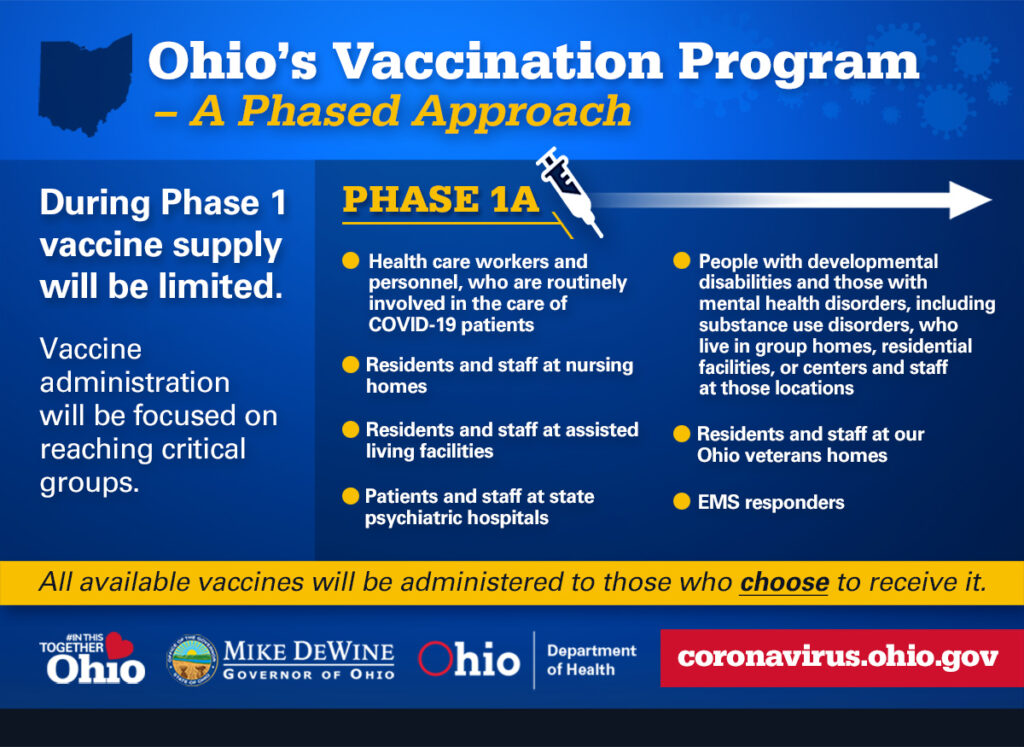
Loveland, Ohio – Becca Doris told Loveland Magazine yesterday that currently, Ohio is in Phase 1A of the COVID 19 vaccine distribution. She said Phase 1A prioritizes healthcare workers, EMS first responders, and individuals living in congregate care settings as well as the staff that works there. Doris is a Community Outreach Specialist for the Hamilton County Emergency Management & Homeland Security Agency (HCEMHSA).
Phase 1A
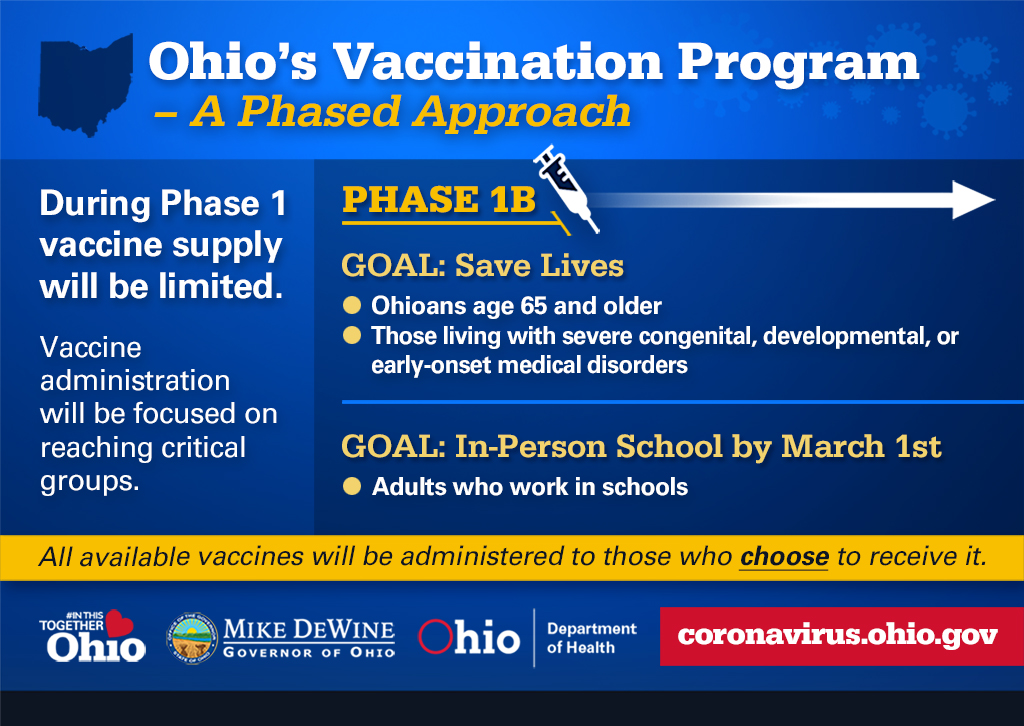
On December 23rd, Governor DeWine announced the next category of people eligible to be vaccinated during Phase 1B, which will include, “Ohioans age 65 and older, employees at schools that want to go back or remain educating in person, and people with severe congenital, developmental, or early-onset medical disorders that make them particularly vulnerable.”
Phase 1B
Doris said that there is no official start date for Phase 1B, though in his announcement the Governor estimated that the Phase 1B rollout would occur in mid-January.
The New York Times (NYT) reported on December 11 that Gov. Mike DeWine said he tentatively expected 561,000 doses of the two vaccines spread over several early shipments. State officials have now confirmed to the Times that 98,475 doses of vaccine had been received. The state announced that 11,700 people had gotten one dose as of Dec. 23.
According to a New York Times database of Wednesday morning, there have been at least 682,570 cases and 8,722 deaths in Ohio since the beginning of the pandemic, with 67.1 being the daily average death rate.
Hamilton County Health said on December 26, that they are in the early stages of COVID 19 vaccine distribution and, “doses will be available in limited supply for specific critical populations. Vaccines are not yet available for all Ohioans.” As of yesterday, 6,643 people have received the first dose of a vaccine in the County.
Clermont County Public Health said on Tuesday, “Yesterday was an exciting day and a great way to end the year. We gave out all of our first shipment of COVID-19 vaccine to our Fire and EMS jurisdictions who then vaccinated their staff members.” As of yesterday, 1,276 people have received the first dose of a vaccine in the County.
In Warren County, as of yesterday, 1,534 people have received the first dose of a vaccine.
The NYT reporting shows that 162.6 is the daily average of new cases in Warren County for the last 7 days and 1.4 deaths is the daily average, 402 new cases in Hamilton and 0.4 deaths are the daily average, and 150.4 in Clermont and 0.1 deaths is the daily average.
As of yesterday, Statewide, there have been 71,625 vaccinations started (0.61% of the Ohio population).
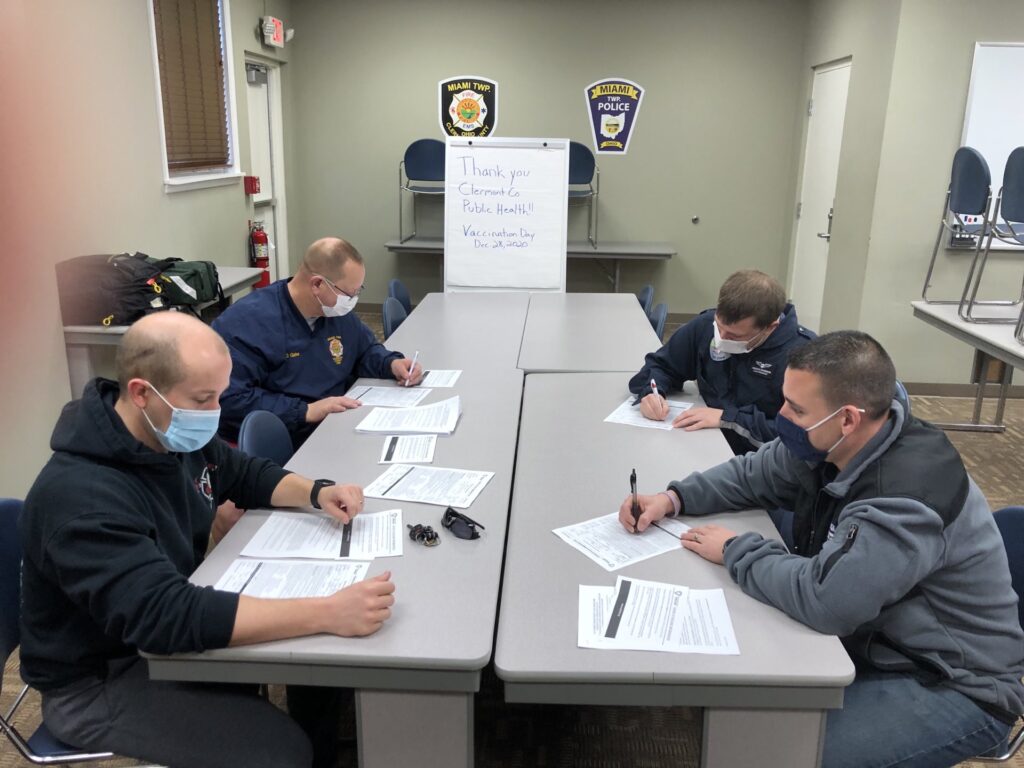
Miami Township’s first responders have begun receiving the vaccine. On Monday, 32 employees were vaccinated. (Photos from MiamiTwp FireEMS)
The Loveland-Symmes Fire Department’s first responders were to receive vaccinations on Tuesday or Wednesday of this week from the Hamilton County Health District according to Chief Ottto Huber.
Deputy Chief Michael Books said, “We will be receiving our vaccine in a series, so that not all members are vaccinated at once, since there is not enough vaccine to go around at first. It appears that we will be receiving the Moderna vaccine, but could be Pfizer on the day of vaccination.”
Books was asked to give an estimate of how many people the department has come in contact with who had or they suspected of having COVID 19 since the pandemic started. He responded, ” Unfortunately, I cannot give you a number of people that the department has come in contact with that are COVID related, due to HIPAA. However, our department as well as most departments treat every patient that we come in contact with as a potential COVID patient, for their protection as well as the crews.”
Earlier this month, the Trump administration said they planned to have 20 million doses of the vaccine distributed by New Years Eve. However, data provided by the CDC shows just over 11.4 million doses have been distributed and only 2.1 million people have received their first dose.
President-Elect Joe Biden said on Tuesday, “At the current pace, it’s gonna take years, not months, to vaccinate the American people.”
Vaccine recipients who receive the COVID-19 vaccine must get a second dose several weeks later to receive full protection. The recommended interval for Pfizer-BioNTech vaccine is 21 days. The recommended interval for Moderna vaccine is 28 days. These recommended intervals, with a standard four-day grace period, should be followed as closely as possible to receive full protection, according to the Centers for Disease Control and Prevention (CDC). If the intervals are exceeded, the second dose should be administered at the earliest opportunity. Doses would not need to be repeated due to a longer interval, meaning you do not have to start over, according to CDC guidance. Providers should exercise extra care in ensuring that a patient’s second dose is from the same manufacturer as the first dose, as they are not interchangeable.
The CDC has created COVID-19 vaccination record cards, which are included in the vaccine ancillary kits that ship with the vaccine. Vaccination record cards must be signed and completed by healthcare staff to include vaccine manufacturer, vaccine lot number, location of vaccination, and date. Providers should instruct patients to bring the card with them when they receive the second dose. Additionally, providers should encourage patients to use their smartphone to take a picture of their vaccination record card in case the patient misplaces the record card after receiving the first dose.
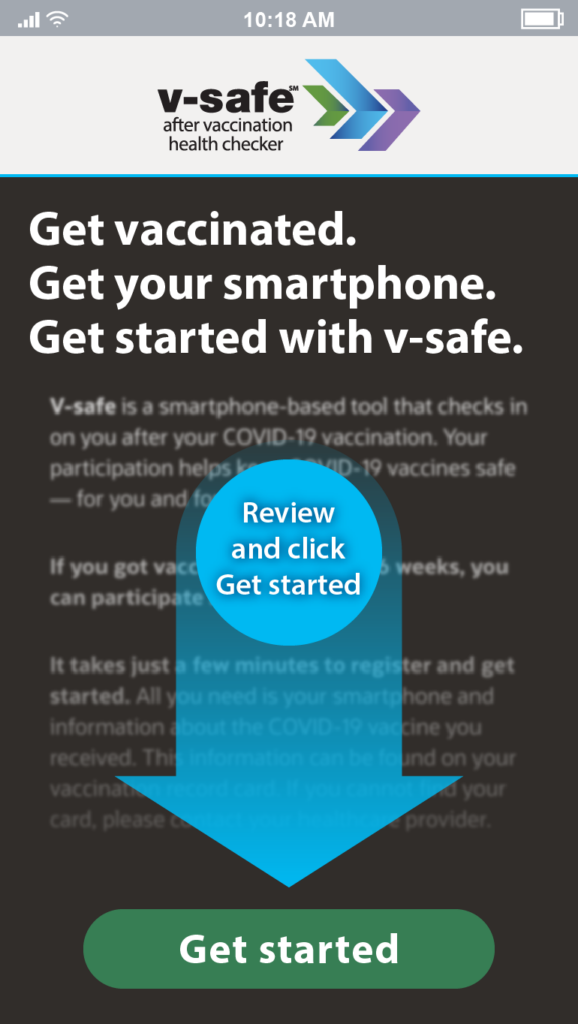
You should schedule your second dose appointment during the first vaccination. The CDC has asked providers to share information with vaccine recipients about the CDC’s V-safe smartphone-based post-vaccination tool that patients could choose to use for reminders and health check-ins.
At this time, in the Loveland area, we are a few months away from the vaccine being widely available. Hamilton County and officials statewide are currently developing plans for when the vaccine will be more readily available to the public and what the best process is for future eligible populations.
Where and When?
Doris said, “Right now, there are no public announcements on where and when residents can expect to get the vaccine as the information can change depending on multiple factors, including supply levels and if additional vaccines currently in development are approved for use by the FDA.”
As the COVID-19 vaccine becomes more widely available in Hamilton County, HCEMHSA will be sharing this information with the media and the public via the County’s weekly COVID-19 briefing, social media, and other platforms.
“Residents should know that there are actions they can take to make sure they get the latest COVID-19/vaccine information,” said Doris. “This includes signing up for COVID-19 alerts within our opt-in emergency notification system, Alert Hamilton County, which we have used at various times throughout the pandemic to communicate important information to the public. We are currently developing plans to utilize this system to communicate vaccine information as well.” Residents are encouraged to sign up for these alerts, as well as other alerts (tornado warning, flash flood warning, etc.) at https://alerthc.org/ to stay informed.
Additionally, residents can visit Hamilton County Public Health’s website at https://www.hamiltoncountyhealth.org/covid19/ for more information on COVID-19 and to take a vaccine priority survey that Hamilton County Public Health will use to prioritize vaccine distribution.
The Ohio Department of Health COVID-19 Vaccination Dashboard displays the most recent data reported to the Ohio Department of Health (ODH) regarding the number of individuals that have started and completed the COVID-19 vaccination series by various demographics and county of residence.