Tag: Miami University

  • Music business students develop Gen Z marketing campaigns for Loveland record label

    Music business students develop Gen Z marketing campaigns for Loveland record label

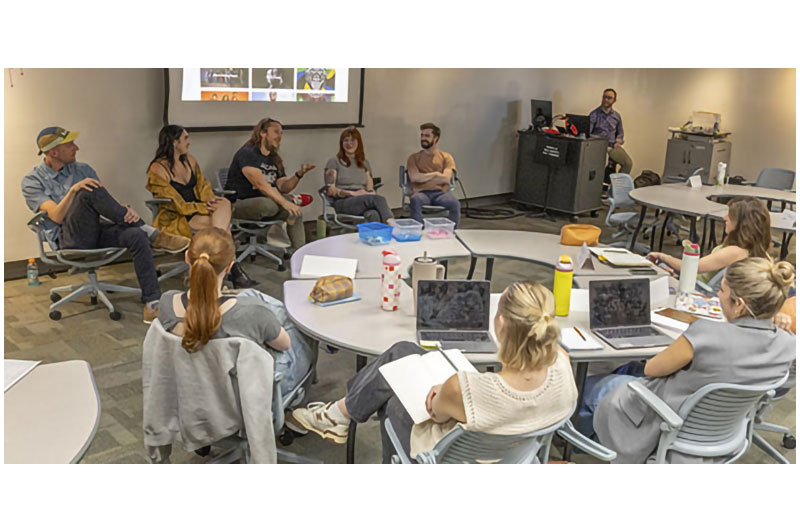
    Members of Colemine Records meet with Miami University students. Miami students in Intro to Music Business and Record Labels and Music Publishing Operations classes learn the ins and outs of the music industry while working directly with label executives.

    Students across two classes collaborated with Colemine Records to create research-based marketing strategies for the label’s upcoming album release


    Loveland, Ohio – What does it take to launch a successful album? A lot of talent, even more luck, and the right team of in-the-know marketers, like the students in Miami’s music business courses.

    Across two classes – Intro to Music Business and Record Labels and Music Publishing Operations – students in Willie Caldwell’s lectures learn the ins and outs of the music industry while working directly with label executives.

    The collaboration began when Caldwell, an adjunct instructor in Arts Management and Arts Entrepreneurship, was researching the regional music scene to learn more about the local music venues and record labels. Terry Cole’s name stood out in his search.

    Cole is the founder of Colemine Records, which is housed above the label’s shop, Plaid Room Records in Historic Downtown Loveland, Ohio. As the story goes, he cooked up the idea for Colemine Records in 2007 and drew the logo on the back of a Subway napkin right here in Oxford – while he was a graduate student at Miami.

    Together, Colemine executives and Caldwell workshopped a collaboration. Cole visited one of Caldwell’s classes to guest lecture on the industry, which Caldwell said was very well received by his student, but they had sights on a bigger partnership.

    “They were interested in better understanding Gen Z’s new music discovery habits,” Caldwell said. “So what if we target the Miami student population? How do they discover new music? Where’s it coming from? What are their listening habits?”

    Caldwell and his class generated a survey that was sent out campus-wide before students left for spring break. They received over 300 responses in just two weeks’ time and ended up with a solid pool of data for further research.

    Kendra Morris

    With that baseline, the class could use the data to inform their next stage in the Colemine Records collaboration. The students were charged with creating an artist release campaign that would engage Gen Z listeners for the launch of artist Kendra Morris’ upcoming album.

    The students had the opportunity to interview Morris to learn more about her and her artistic style, and then they combined that information with the survey results to build out their projects.

    “It’s just a really cool opportunity where we were able to connect with the largest independent label out of Southwest Ohio and get access to a signed artist that is underneath them,” Caldwell said. “(Students) got to put their creativity to work and actually come up with some campaign ideas for her release.”

    The entire collaboration culminated in a visit from the Colemine Records executive team, which led a panel for music industry questions. As part of their final exam for the class, the student groups set their campaign pitches to Colemine Records.

    Morris and Colemine Records executives latched on to student-generated ideas circling around social media livestream and broadcasting features that would help promote Morris’ upcoming release.

    “We absolutely loved this collaboration and continue to explore possibilities for future engagements between the Arts Management and Arts Entrepreneurship program and Colemine Records,” Caldwell said.

    For Ian Dilenschneider, this collaboration was one of his last hurdles to graduate with a degree in Music Technology – one he’s glad he got to be involved with.

    “As a graduating senior hoping to go into the music industry – especially the indie scene – it was immensely helpful to have this opportunity,” Dilenschneider said. “The chance to talk to the label felt like I was taking my first steps as a professional artist.”

    Terry Cole

    Working with Colemine Records executives on this project pushed the course beyond the norm of textbook work, according to senior music technology major Isa Riddle. She said she was truly inspired by the executives when they spoke to her class.

    “I couldn’t be more grateful for the opportunity,” Riddle said. “As someone who wants to pursue a career in the music industry, all of the work we’ve done has helped me build confidence in myself to start enacting some of my plans!”

    With the success of the project, the Arts Management and Arts Entrepreneurship program plans to continue working with Colemine Records in the fall and will be introducing a new course, Live Music and Touring, alongside Intro to Music Business and Record Labels and Music Publishing Operations.

  • Lafayette’s role in the American Revolution as partisanship surrounds the teaching of American history

    Lafayette’s role in the American Revolution as partisanship surrounds the teaching of American history

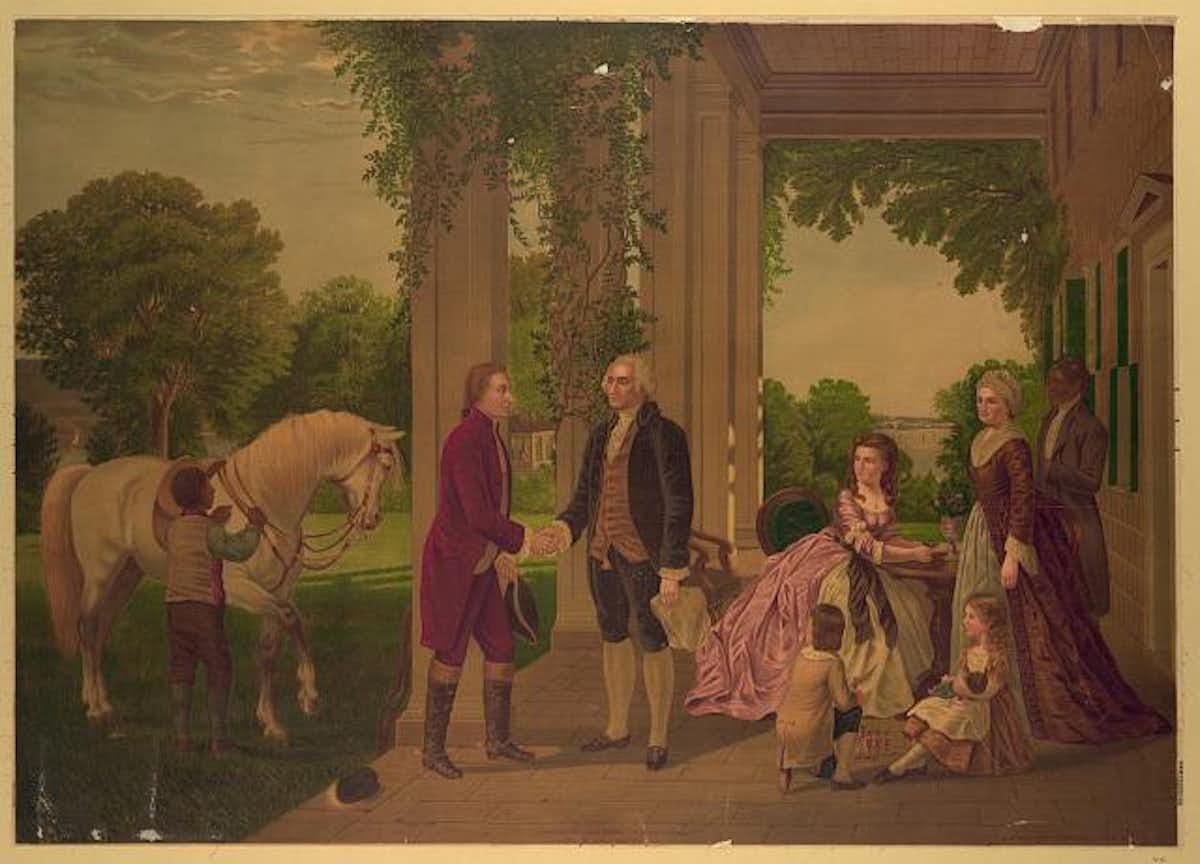
    ‘The reception of Lafayette at Mount Vernon, home of Washington,’ painted by Herman Bencke around 1875. Bencke & Scott/Library of Congress

    Matthew Smith is a visiting associate professor of history Miami University

    by Matthew Smith

    America is nearing the 250th anniversary of its revolutionary birth, the Declaration of Independence. July 4, 2026, will mark a milestone – and a time for reflection.

    Yet as fascination with America’s founding endures, controversy colors how the revolution is taught across the United States. From contested efforts by The New York Times “1619 Project” to put slavery at the center of America’s story, to attempts to limit teaching about race and racism, partisanship surrounds the teaching of American history. Anniversaries can inspire public passion, but they can also open old wounds.

    As an American historian and a naturalized citizen of the United States, I regard the American Revolution with both personal and professional interest. The fact that I grew up in the United Kingdom amuses my students to no end whenever we discuss the Revolutionary War. Sometimes, in my British-accented English, I remind them I did not personally grow up with King George. Teaching history is encouraging students to think critically about the past without dictating what emotions they should feel – patriotic or otherwise.

    Sadly, in the U.S., the sort of objective historical knowledge once taken for granted now appears to be waning. According to the National Assessment of Educational Progress, just 13% of eighth graders in 2023 ranked “proficient” in American history. A 2010 survey found that 26% of adults could not identify from whom America declared its independence, with China, Mexico and France among the responses.

    America divorcing France would have been news to Gilbert du Motier, better known as the Marquis de Lafayette. His commitment to the new country not only helped secure its independence, but it also helped solidify American identity decades later.

    Key alliance

    A privileged aristocrat who served in both the American and French revolutions, Lafayette went to war at age 19. Commissioning and equipping his own expedition across the Atlantic in 1777, he fought in many battles against the British, including decisive action at Yorktown. Earning George Washington’s confidence, Lafayette attained the rank of major general in the Continental Army.


    A painting of two men in jackets, breeches and stockings greeting each other on a porch as women look on.

    ‘The reception of Lafayette at Mount Vernon, home of Washington,’ painted by Herman Bencke around 1875. Bencke & Scott/Library of Congress


    Lafayette’s enrollment in the U.S. military predated the 1778 alliance between his home country and the United States. Eventually, France’s alliance turned the tide against Great Britain on land and at sea. By the war’s end, the French had supplied some 12,000 soldiers, 22,000 sailors and dozens of warships to the American cause, plus huge financial resources. When Lafayette volunteered, however, he was one of just a few foreign volunteers – and the most acclaimed.

    “Nowadays,” as historian Sarah Vowell conceded, Americans think of Lafayette as “a place, not a person.” But an abundance of cities, counties and thoroughfares named after the revolutionary hero attest to his former celebrity. During World War I, U.S. troops sailed to France under the slogan “Lafayette here we come,” promising to repay America’s debt of gratitude to France.

    A growing country

    Older Americans may recall the U.S. bicentennial of 1976, marked with much pageantry and even a state visit by Queen Elizabeth II. America’s semicentennial, however – the 50th anniversary of independence – played a far greater role shaping the idea of America in the minds of its citizens.

    Lafayette starred in the buildup to this 1826 commemoration, the first of its kind at the national level. President James Monroe, a fellow veteran of the War of Independence, invited Lafayette to be “the guest of America,” honored as the last living major general of the Continental Army. Beginning in July 1824, at the age of 66, Lafayette embarked on a triumphal tour of all 24 states then comprising the union – nearly double the original 13.


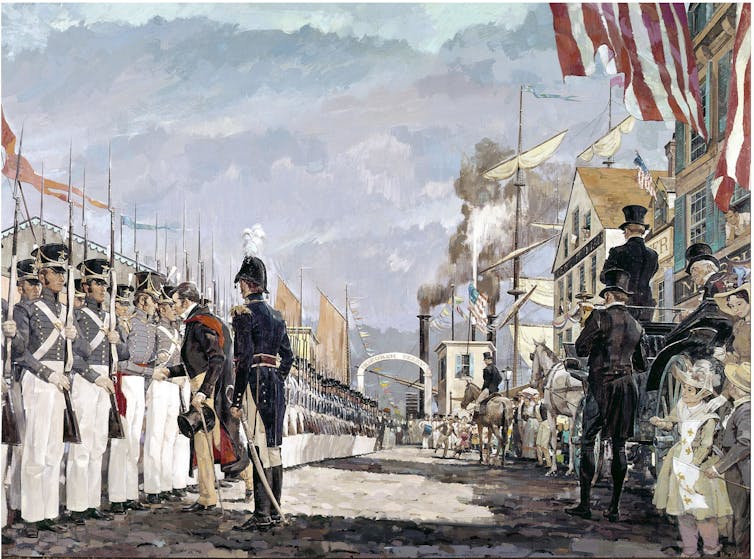
    A line of men in uniform stand in formation on a street as onlookers stand nearby.
    Lafayette greeting members of the National Guard upon his arrival in New York in 1825, painted by Ken Riley. The National Guard/Flickr via Wikimedia Commons


    As Lafayette headed west, borne by horse-drawn carriage, steamboat and canal barge, he journeyed across a changing America. Nowhere was America’s economic and demographic growth more evident than Cincinnati, where a crowd of 50,000 welcomed Lafayette in May 1825. Once a small frontier town, Cincinnati was growing faster than any comparably sized city in the nation: Its population increased from around 15,000 to roughly 115,000 in the quarter century following Lafayette’s visit.

    He addressed his audience with emotion: “The highest reward that can be bestowed on a revolutionary veteran is to welcome him with a sight of the blessings which have issued from our struggle for independence, freedom and equal rights.”

    Lafayette gave human face to America’s national commemoration. He granted citizens of frontier states like Ohio – hitherto excluded from the revolutionary narrative – license to celebrate themselves. High turnouts in western stops such as Cincinnati reflected enthusiasm for grand spectacles. They also reflected the growth of America’s print media, which had advertised his visit, and improved transportation in formerly remote regions of the country.

    Lafayette’s tour culminated with a September 1825 state banquet in Washington, D.C., hosted by the new president, John Quincy Adams. Adams – the son of America’s second president, John Adams – praised “that tie of love, stronger than death,” connecting Lafayette “for the endless ages of time, with the name of Washington.”

    Rose-colored glasses

    The enthusiasm that welcomed Lafayette 200 years ago was authentic. But like all good history lessons, Lafayette’s legacy is open to interpretation.

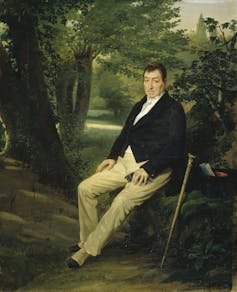
    A seated, brown-haired man in a suit jacket and khaki-colored pants sits in a glen with his cane beside him.
    ‘Portrait of Lafayette as an Old Man,’ painted by Louise-Adéone Drölling around 1830. Musée de l’Armée via Wikimedia Commons


    His grand tour cemented the myth of “the Era of Good Feelings”: a golden age of American political harmony. In reality, the seeds of America’s civil war were already evident. Missouri’s 1820 admission to the union threatened the country’s precarious balance between states that opposed slavery and states that allowed it – a crisis Thomas Jefferson warned was “a fire bell in the night.”

    Likewise, Lafayette’s lionization in the western United States coincided with the ongoing forced removal of Indigenous people. Ohio, for example, forcibly removed its last Native American tribe in 1843.

    Despite the uses and abuses of historical memory and the aversion of modern historians toward hero-worship, Lafayette remains a charismatic figure – a “citizen of two worlds” who championed both abolitionism and women’s rights. I believe his fading public memory indicates a troubling amnesia. America’s anniversary offers the opportunity to reconsider his legacy, alongside revolutionary stories of Americans from all walks of life.

    As Lafayette wrote home following the British army’s surrender in 1781: “Humanity has won its battle. Liberty now has a country.”

    _________________

    Published June 9, 2025 by The Conversation.

  • Beyond the backlash: What evidence shows about the economic impact of DEI

    Beyond the backlash: What evidence shows about the economic impact of DEI

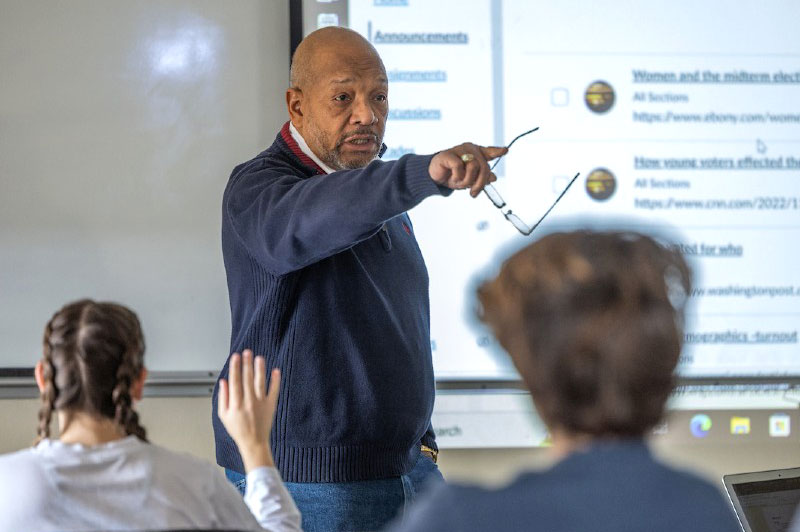
    Photo of Rodney Coates by Miami University

    by Rodney Coates,

    Few issues in the U.S. today are as controversial as diversity, equity and inclusion – commonly referred to as DEI.

    Although the term didn’t come into common usage until the 21st century, DEI is best understood as the latest stage in a long American project. Its egalitarian principles are seen in America’s founding documents, and its roots lie in landmark 20th-century efforts such as the 1964 Civil Rights Act and affirmative action policies, as well as movements for racial justice, gender equitydisability rightsveterans and immigrants.

    These movements sought to expand who gets to participate in economic, educational and civic life. DEI programs, in many ways, are their legacy.

    Critics argue that DEI is antidemocratic, that it fosters ideological conformity and that it leads to discriminatory initiatives, which they say disadvantage white people and undermine meritocracy. Those defending DEI argue just the opposite: that it encourages critical thinking and promotes democracy − and that attacks on DEI amount to a retreat from long-standing civil rights law.

    Yet missing from much of the debate is a crucial question: What are the tangible costs and benefits of DEI? Who benefits, who doesn’t, and what are the broader effects on society and the economy?

    As a sociologist, I believe any productive conversation about DEI should be rooted in evidence, not ideology. So let’s look at the research.

    Who gains from DEI?

    In the corporate world, DEI initiatives are intended to promote diversity, and research consistently shows that diversity is good for business. Companies with more diverse teams tend to perform better across several key metrics, including revenueprofitability and worker satisfaction.

    Businesses with diverse workforces also have an edge in innovationrecruitment and competitiveness, research shows. The general trend holds for many types of diversity, including agerace and ethnicity, and gender.

    A focus on diversity can also offer profit opportunities for businesses seeking new markets. Two-thirds of American consumers consider diversity when making their shopping choices, a 2021 survey found. So-called “inclusive consumers” tend to be female, younger and more ethnically and racially diverse. Ignoring their values can be costly: When Target backed away from its DEI efforts, the resulting backlash contributed to a sales decline.

    But DEI goes beyond corporate policy. At its core, it’s about expanding access to opportunities for groups historically excluded from full participation in American life. From this broader perspective, many 20th-century reforms can be seen as part of the DEI arc.

    Consider higher education. Many elite U.S. universities refused to admit women until well into the 1960s and 1970s. Columbia, the last Ivy League university to go co-ed, started admitting women in 1982. Since the advent of affirmative action, women haven’t just closed the gender gap in higher education – they outpace men in college completion across all racial groups. DEI policies have particularly benefited women, especially white women, by expanding workforce access.

    Similarly, the push to desegregate American universities was followed by an explosion in the number of Black college students – a number that has increased by 125% since the 1970s, twice the national rate. With college gates open to more people than ever, overall enrollment at U.S. colleges has quadrupled since 1965. While there are many reasons for this, expanding opportunity no doubt plays a role. And a better-educated population has had significant implications for productivity and economic growth.

    The 1965 Immigration Act also exemplifies DEI’s impact. It abolished racial and national quotas, enabling the immigration of more diverse populations, including from AsiaAfricasouthern and eastern Europe and Latin America. Many of these immigrants were highly educated, and their presence has boosted U.S. productivity and innovation.

    Ultimately, the U.S. economy is more profitable and productive as a result of immigrants.

    What does DEI cost?

    While DEI generates returns for many businesses and institutions, it does come with costs. In 2020, corporate America spent an estimated US$7.5 billion on DEI programs. And in 2023, the federal government spent more than $100 million on DEI, including $38.7 million by the Department of Health and Human Services and another $86.5 million by the Department of Defense.

    The government will no doubt be spending less on DEI in 2025. One of President Donald Trump’s first acts in his second term was to sign an executive order banning DEI practices in federal agencies – one of several anti-DEI executive orders currently facing legal challengesMore than 30 states have also introduced or enacted bills to limit or entirely restrict DEI in recent years. Central to many of these policies is the belief that diversity lowers standards, replacing meritocracy with mediocrity.

    But a large body of research disputes this claim. For example, a 2023 McKinsey & Company report found that companies with higher levels of gender and ethnic diversity will likely financially outperform those with the least diversity by at least 39%. Similarly, concerns that DEI in science and technology education leads to lowering standards aren’t backed up by scholarship. Instead, scholars are increasingly pointing out that disparities in performance are linked to built-in biases in courses themselves.

    That said, legal concerns about DEI are rising. The Equal Employment Opportunity Commission and Department of Justice have recently warned employers that some DEI programs may violate Title VII of the Civil Rights Act of 1964. Anecdotal evidence suggests that reverse discrimination claims, particularly from white men, are increasing, and legal experts expect the Supreme Court to lower the burden of proof needed by complainants for such cases.

    The issue remains legally unsettled. But while the cases work their way through the courts, women and people of color will continue to shoulder much of the unpaid volunteer work that powers corporate DEI initiatives. This pattern raises important equity concerns within DEI itself.

    What lies ahead for DEI?

    People’s fears of DEI are partly rooted in demographic anxiety. Since the U.S. Census Bureau projected in 2008 that non-Hispanic white people would become a minority in the U.S by the year 2042, nationwide news coverage has amplified white fears of displacement.

    Research indicates many white men experience this change as a crisis of identity and masculinity, particularly amid economic shifts such as the decline of blue-collar work. This perception aligns with research showing that white Americans are more likely to believe DEI policies disadvantage white men than white women.

    At the same time, in spite of DEI initiatives, women and people of color are most likely to be underemployed and living in poverty regardless of how much education they attain. The gender wage gap remains stark: In 2023, women working full time earned a median weekly salary of $1,005 compared with $1,202 for men − just 83.6% of what men earned. Over a 40-year career, that adds up to hundreds of thousands of dollars in lost earnings. For Black and Latina women, the disparities are even worse, with one source estimating lifetime losses at $976,800 and $1.2 million, respectively.

    Racism, too, carries an economic toll. A 2020 analysis from Citi found that systemic racism has cost the U.S. economy $16 trillion since 2000. The same analysis found that addressing these disparities could have boosted Black wages by $2.7 trillion, added up to $113 billion in lifetime earnings through higher college enrollment, and generated $13 trillion in business revenue, creating 6.1 million jobs annually.

    In a moment of backlash and uncertainty, I believe DEI remains a vital if imperfect tool in the American experiment of inclusion. Rather than abandon it, the challenge now, from my perspective, is how to refine it: grounding efforts not in slogans or fear, but in fairness and evidence.

    Rodney Coates is a Professor at Miami University in Oxford, Ohio.

    Rodney Coates has research and teaching expertise in critical pedagogy, critical race theory, race and ethnic relations, stratification, human rights and social justice, educational sociology, political processes, urban sociology, political sociology, and public sociology.

    Teaching, Research, and Other Activities

    Rodney D. Coates is a public sociologist engaged in critical race, social justice, social movements, social policy, and practice. For Coates, being a public sociologist means that the work he does must have an impact in the wider communities — both within and external to the university.

    He has conducted bias training for school districts and municipalities, police, and universities. He works with local communities, corporations, and Miami University to establish pathways to progress for under-represented students in such fields as STEM, business, and law.

    At Miami University he was the driving force for the creation of the Miami-Cincinnati Scholars program which provides full scholarships for underrepresented students going into STEM.

    As a public intellectual he is frequently featured in both national and local press to include NBC and NPR. He is a published poet, essayist, and editorialist. His sunset photos have been featured as the covers of several books, multiple exhibits. These photos have also been the basis for the HOPE endowed scholarship at Miami University for underrepresented students.

    He has developed and taught a wide assortment of courses such as Introduction to Critical Race and Ethnic StudiesIntroduction to Social JusticeCritical Race and Post-Colonial StructuresCivil Rights and Social Movements, and Human Rights and Social Movements. His course on globalization, social justice, and human rights, which links universities from around the globe (to include the United Kingdom, Moscow, Milano, Italy, Spain, British Columbia) has received several awards and been featured in published articles.

    Coates developed a summer bridge program for scholar-athletes in their freshman year. This course, treating the athletes as if they were honors students, sets the expectations and curriculum to challenge them to perform way above what they believe they could ever accomplish. Increasing gpa and graduation rates have increased each year the program has been offered.

    His books have won awards and charted new territory. He and co-authors are revising their SAGE-published The Matrix of Race: Social Construction, Intersectionality, and Inequality, having sold over 4,000 copies in its first four years since publication. It is currently being revised for the 3rd edition, slated for publication in January 2025. Coates has a record of scholarship that spans three decades and includes numerous published peer-reviewed articles, books, book chapters, and collections.

    Coates is a recipient of the 2021 College of Arts and Science’s Distinguished Educator Award. His award presentation, “Critical Race Theory and the Search for Truth,” is available for viewing.

    Education

    • Ph.D., Sociology, University of Chicago

  • Miami U. Board of Trustees approves site for the design phase of an event district with multipurpose arena

    Miami U. Board of Trustees approves site for the design phase of an event district with multipurpose arena

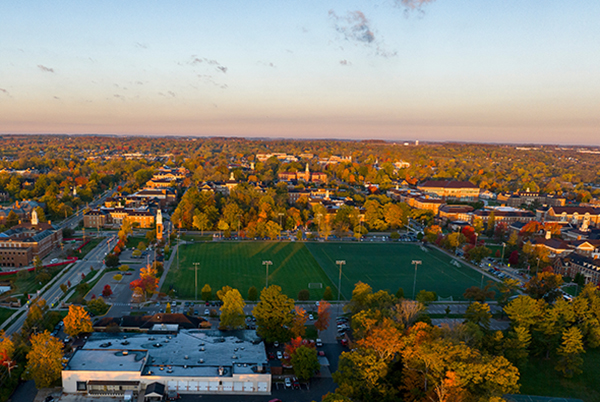
    Cook Field, with Cole Service Building in the foreground, State Route 73 at left, Farmer School of Business at right (drone image by Jeff Sabo)

    Cook Field site chosen

    Oxford, Ohio – During its Feb. 28 meeting, the Miami University Board of Trustees approved the site location to continue the initial concept and design phase for a potential new multipurpose arena on its Oxford campus at Cook Field.

    Miami University Director of Athletics David Sayler provided an update on the project and delivered the site recommendation made by a committee of university faculty, staff, and alumni. Sayler spoke about the need for a new multipurpose arena and the current vision for the site, noting that the project is still in the exploratory phase.

    “Our focus will be to make this a student-centered project first and foremost,” Sayler said. “That will drive the design and amenity choices.”

    A press release said, “That to best support student-athletes, the proposed arena would include more facilities than currently exist at Millett Hall, including two basketball practice courts and a volleyball arena. It is also expected to include additional revenue generation opportunities that Millett Hall cannot accommodate.”

    Senior Vice President of Finance and Business Services and CFO David Creamer shared some preliminary projected costs for the proposed new multipurpose arena and related projects. Cost of construction of the arena and practice facilities are expected to not exceed $187.7 million. Given the preliminary nature of the project, the estimate includes contingency and escalation costs for inflation during the period of design according to the press release.

    “This is the marquee athletic project of our billion-dollar fundraising campaign, ‘For Love. For Honor. For those who will.’” said Brad Bundy, vice president for Advancement. “All along, our thinking on this, should the project move forward, is to significantly fund it with philanthropy. We are confident there is appetite to do so given initial donor and alumni excitement and feedback.”

    Creamer said that building a new arena at the Cook Field site also allows the university to invest a projected $9.9 million-$13 million in Miami’s intramural recreation space, which would be relocated to the south lawn area of Millett. Much of these costs will be offset by other projects already funded and philanthropic gifts. Additionally, in support of the university’s commitment of carbon neutrality by 2040, geothermal wells are being installed in the Millett Hall south lawn area. These wells will prevent building construction on the ground above them, however provide a setting for recreation and intramural fields.

    “We want to create something very special for our students at the Millett Hall location, with their input and involvement,” Sayler said.

    Built in 1968, Millett Hall originally housed one varsity sport in men’s basketball. Volleyball and women’s basketball were both added in 1974. It would cost at least $130 million to repair Millett (which has $85 million in deferred maintenance) and add practice facilities (estimated at $50 million). An additional investment would be needed to make renovations, bring up to current code, and add amenities expected in modern facilities.

    A new multipurpose arena would address space limitations and systems operations and maintenance challenges at Millett Hall, as well as “modernize the fan experience”.

    “This will create a new and vibrant space for people to come together and support Miami in many different ways,” Sayler said. “We also have an opportunity to hold even more events in a new facility, including ones that are not athletics related, and the arena can serve as an anchor piece of an events district that drives economic development within Oxford.”

    According to the statement, the location of the site will allow the multipurpose arena to facilitate concurrent, student-related activities and other campus events, such as commencements, concerts, creative arts performances, career fairs, and more.

    The site also has a large footprint with abundant space and gives the ability to add additional facilities, including connection to potential future hotel and/or restaurants. Its location at the intersection of State Route 73 and U.S. 27 would allow for improved control of traffic flow and direct entrance and exit from State Route 73, limiting traffic congestion on campus.

    There is no timetable currently on the construction of a new multipurpose arena.

    “As innovative, student-first ideas and programming move forward from the MiamiTHRIVE strategic planning process, Miami is prioritizing these and other projects that directly benefit students and the community by supporting a vibrant and reinvigorated campus experience, as well as those that strengthen the local economy,” President Gregory Crawford said.

    Established in 1809, Miami University is located in Oxford, Ohio, with regional campuses in Hamilton and Middletown, a learning center in West Chester, and a European study center in Luxembourg.
  • Groundbreaking Quantum Computing major approved by Miami University Board of Trustees

    Groundbreaking Quantum Computing major approved by Miami University Board of Trustees

    Next step is approval by Ohio Department of Higher Education

    Oxford, Ohio – During its regular meeting on Friday, Dec. 13, the Miami University Board of Trustees approved the new Quantum Computing major, the first of its kind for an Ohio institution.

    Following approvals from University Senate and the Board of Trustees, the next step is approval from the Ohio Department of Higher Education.

    “It is with great enthusiasm that we successfully complete another phase in the approval process for our Bachelor of Science in Quantum Computing degree,” Miami President Gregory Crawford said. “This has been developed with great input from researchers from Cleveland Clinic and members of the industry, and we look forward to delivering an innovative and comprehensive curriculum and continuing to build partnerships within quantum computing.”

    The Quantum Computing degree is expected to launch in August 2025 and is believed to be not only the first in Ohio, but the first of its type nationwide to focus on the software aspects of quantum computing.

    Beena Sukumaran, the Dinesh & Ila Paliwal Dean of the College of Engineering and Computing, said the groundbreaking Quantum Computing degree program would equip graduates with the knowledge and skills to navigate this exciting and growing field.

    “By offering a unique blend of disruptive computing skills as applied to a specific application area, including the health sciences, this degree program is poised to create a new generation of trailblazers that can apply advanced computational skills to solve the world’s most challenging problems,” Sukumaran said.

    Quantum computing is a multidisciplinary field which combines properties of mathematics, computer science, and physics. Quantum computers are able to solve complex problems faster than a classical computer by determining several solutions in parallel rather than sequentially.

    By developing Ohio’s first specialized degree program, Miami will provide research experiences in quantum computing that will cultivate the scientific and entrepreneurial talent needed to create companies, elevate businesses, and advance organizations that leverage quantum computing.

    A new generation of students will obtain expertise across a spectrum of computing platforms, from classical systems to advanced high-performance and quantum computing techniques (i.e., disruptive computing). The new degree will keep Ohio at the forefront of the quantum computing industry, establish a quantum computing pipeline in the state, and attract, retain, and anchor quantum computing talent in Ohio.

    “Quantum technology is a rapidly expanding market globally,” President Crawford said. “Miami’s bachelor’s degree in Quantum Computing will help address workforce needs in Ohio as well as provide economic resilience through innovation in quantum technology.”

  • ‘It’s become a tradition’ for Coates and Miami RedHawks

    ‘It’s become a tradition’ for Coates and Miami RedHawks

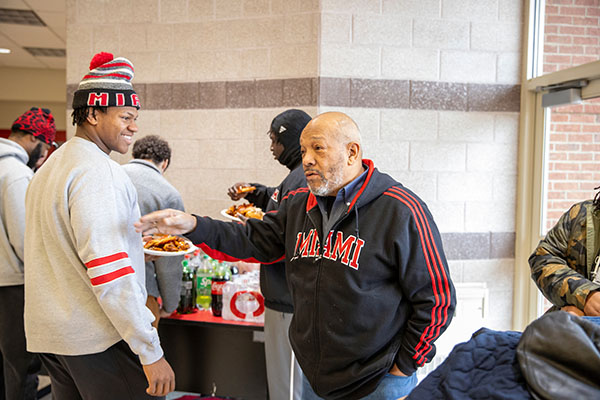
    Rodney Coates, right, talks with members of the Miami University football program on Wednesday, Dec. 11, during a luncheon at the Gross Student-Athlete Development Center organized by Coates to celebrate Miami’s bowl berth. The luncheon has become an annual tradition.

    Oxford, Ohio/Miami University – As members of the Miami University football team filed into – and later out of – the Gross Student-Athlete Development Center on Wednesday afternoon, many offered handshakes and words of appreciation to Rodney Coates.

    The thanks weren’t only for the meal provided, an annual tradition Coates first organized about a decade ago to celebrate when the RedHawks earn a bowl bid, but also for the role Coates plays each year.

    Coates, professor of Global and Intercultural Studies, teaches as part of the Summer Bridge Program, which helps many student-athletes prepare for the academic experience.

    “It’s above and beyond to feed us for a bowl game, but really more so than that what we appreciate is Dr. Coates’ relationship,” said Chuck Martin, head coach of Miami football. “It’s very unique. He’s helped our kids so many different ways. He really helps our kids get ready for college.

    “I couldn’t put a price tag on what he does for our kids.”

    A former Miami football player inspired the initial lunch. The player had a long-term spinal injury, and that resonated with Coates.

    “I said, ‘We need to celebrate it. Not wait for things to happen,’” Coates said. “Let’s make it something really special where Miami comes together to say thank you for what you’ve done. That’s how it started.”

    Coates has taught at Miami since 1990. He received the Distinguished Educator Award from the College of Arts and Science in 2021, as well as the President’s Medal that year.

    Coates has worked with the Summer Bridge Program for more than a decade.

    “Professor Coates is incredibly supportive of our outstanding student-athletes here at Miami,” Miami President Gregory Crawford said. “He works tirelessly with our student-athletes both in and outside the classroom. His December football luncheon is a cherished tradition, celebrating their success and showing our gratitude for all they contribute to Miami and our community.”

    After winning eight games this season and advancing to the Mid-American Conference championship game, the RedHawks will play Colorado State in the Snoop Dogg Arizona Bowl presented by Gin & Juice By Dre and Snoop on Dec. 28 in Tucson, Arizona.

    Kickoff is 4:30 PM at Arizona Stadium. The game will be broadcast on The CW Network.

    This is the fifth straight bowl appearance for the RedHawks and eighth in the last nine years, which has meant several Coates luncheons for many players.

    “As soon as I hear about it, it’s circled on the calendar,” said John Young, a senior offensive lineman.

    “It’s a way for all of us at the end of the year to get together for a couple of last meals,” added senior offensive lineman Reid Holskey. “It’s kind of good to have these moments with the guys who are here right now.”

    David Sayler, Miami’s director of athletics, called the luncheon “a bonding moment.”

    “It’s really nice for the football student-athletes to see deans, the President’s Office, and everybody else who supports it helping provide food for them,” Sayler said. “It’s really a nice gesture and doesn’t go unappreciated by the players.”

    Dec. 28 marks the 16th overall bowl appearance for Miami, beginning with the 1948 Sun Bowl (a 13-12 victory over Texas Tech).

    The last five years have included stops in the LendingTree Bowl (2020), the Frisco Football Classic (2021), the HomeTown Lenders Bahamas Bowl (2022), and the Avocados from Mexico Cure Bowl (2023).

    During that stretch, Martin became Miami’s all-time winningest coach.

    “We’ve done this a few times now,” Coates said. “It’s become a tradition amongst them (the team) too.”

    Established in 1809, Miami University is located in Oxford, Ohio, with regional campuses in Hamilton and Middletown, a learning center in West Chester, and a European study center in Luxembourg.

  • How the first Pilgrims and the Puritans differed in their views on religion and respect for Native Americans

    How the first Pilgrims and the Puritans differed in their views on religion and respect for Native Americans

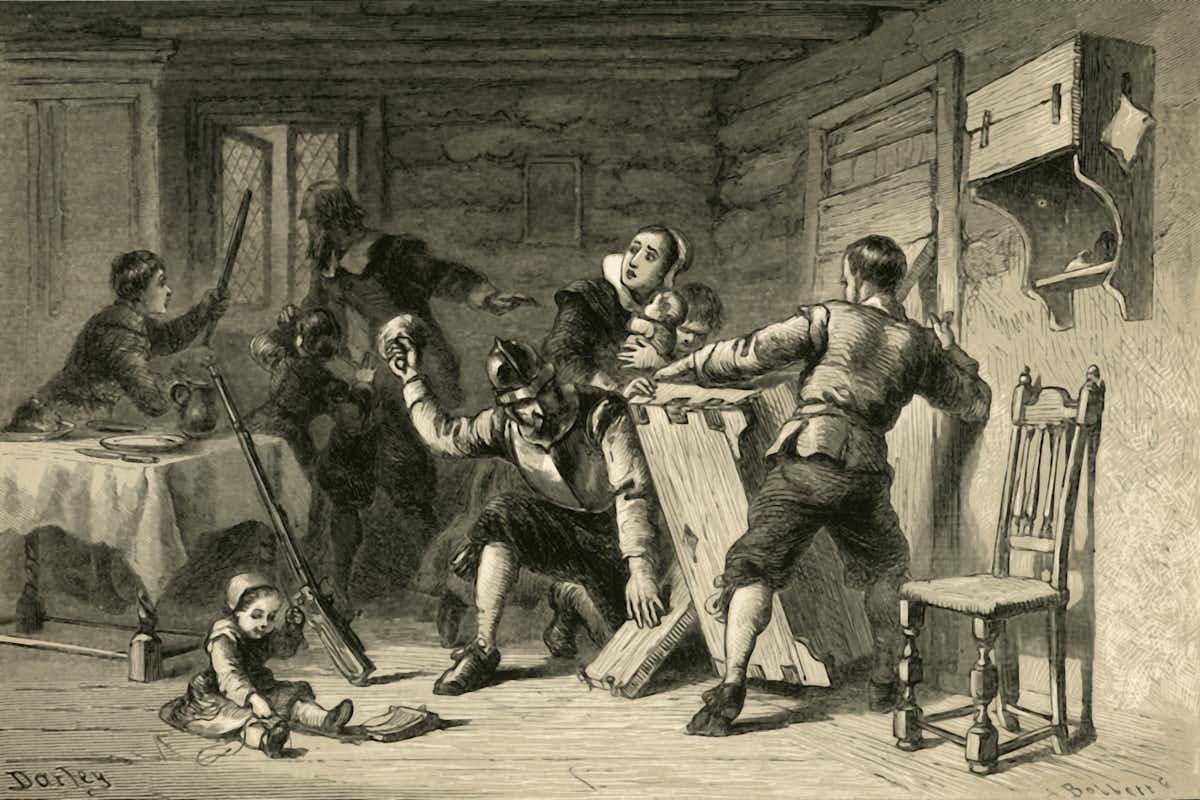
    Puritans barricading their house against Indians. Artist Albert Bobbett. The Print Collector/ Hudson Archives via Getty Images

    by Michael Carrafiello, professor of History, Miami University

    Every November, numerous articles recount the arrival of 17th-century English Pilgrims and Puritans and their quest for religious freedom. Stories are told about the founding of Massachusetts Bay Colony and the celebration of the first Thanksgiving feast.

    In the popular mind, the two groups are synonymous. In the story of the quintessential American holiday, they have become inseparable protagonists in the story of the origins.

    But as a scholar of both English and American history, I know there are significant differences between the two groups. Nowhere is this more telling than in their respective religious beliefs and treatment of Native Americans.

    Where did the Pilgrims come from?

    Pilgrims arose from the English Puritan movement that originated in the 1570s. Puritans wanted the English Protestant Reformation to go further. They wished to rid the Church of England of “popish” – that is, Catholic – elements like bishops and kneeling at services.

    Each Puritan congregation made its own covenant with God and answered only to the Almighty. Puritans looked for evidence of a “godly life,” meaning evidence of their own prosperous and virtuous lives that would assure them of eternal salvation. They saw worldly success as a sign, though not necessarily a guarantee, of eventual entrance into heaven.

    After 1605, some Puritans became what scholar Nathaniel Philbrick calls “Puritans with a vengeance.” They embraced “extreme separatism,” removing themselves from England and its corrupt church.

    These Puritans would soon become “Pilgrims” – literally meaning that they would be prepared to travel to distant lands to worship as they pleased.

    In 1608, a group of 100 Pilgrims sailed to Leiden, Holland and became a separate church living and worshipping by themselves.

    They were not satisfied in Leiden. Believing Holland also to be sinful and ungodly, they decided in 1620 to venture to the New World in a leaky vessel called the Mayflower. Fewer than 40 Pilgrims joined 65 nonbelievers, whom the Pilgrims dubbed “strangers,” in making the arduous journey to what would be called Plymouth Colony.

    Hardship, survival and Thanksgiving in America

    Most Americans know that more than half of the Mayflower’s passengers died the first harsh winter of 1620-21. The fragile colony survived only with the assistance of Native Americans – most famously Squanto. To commemorate, not celebrate, their survival, Pilgrims joined Native Americans in a grand meal during the autumn of 1621.

    But for the Pilgrims, what we today know as Thanksgiving was not a feast; rather, it was a spiritual devotion. Thanksgiving was a solemn and not a celebratory occasion. It was not a holiday.

    Still, Plymouth was dominated by the 65 strangers, who were largely disinterested in what Pilgrims saw as urgent questions of their own eternal salvation.

    There were few Protestant clerics among the Pilgrims, and in few short years, they found themselves to be what historian Mark Peterson calls “spiritual orphans.” Lay Pilgrims like William Brewster conducted services, but they were unable to administer Puritan sacraments.

    Pilgrims and Native Americans in the 1620s

    At the same time, Pilgrims did not actively seek the conversion of Native Americans. According to scholars like Philbrick, English author Rebecca Fraser and Peterson, the Pilgrims appreciated and respected the intellect and common humanity of Native Americans.

    An early example of Pilgrim respect for the humanity of Native Americans came from the pen of Edward Winslow. Winslow was one of the chief Pilgrim founders of Plymouth. In 1622, just two years after the Pilgrims’ arrival, he published in the mother country the first book about life in New England, “Mourt’s Relation.”

    While opining that Native Americans “are a people without any religion or knowledge of God,” he nevertheless praised them for being “very trusty, quick of apprehension, ripe witted, just.”

    Winslow added that “we have found the Indians very faithful in their covenant of peace with us; very loving. … we often go to them, and they come to us; some of us have been fifty miles by land in the country with them.”

    In Winslow’s second published book, “Good Newes from New England (1624),” he recounted at length nursing the Wampanoag leader Massasoit as he lay dying, even to the point of spoon-feeding him chicken broth.Fraser calls this episode “very tender.”

    The Puritan exodus from England

    A sketch illustrating a few men and women in a room which has a chair and a table. One man is trying to put up a barricade and another is pointing a stick threateningly.
    Puritans barricading their house against Indians. Artist Albert Bobbett. The Print Collector/ Hudson Archives via Getty Images


    The thousands of non-Pilgrim Puritans who remained behind and struggled in England would not share Winslow’s views. They were more concerned with what they saw as their own divine mission in America.

    After 1628, dominant Puritan ministers clashed openly with the English Church and, more ominously, with King Charles I and Bishop of London – later Archbishop of Canterbury – William Laud.

    So, hundreds and then thousands of Puritans made the momentous decision to leave England behind and follow the tiny band of Pilgrims to America. These Puritans never considered themselves separatists, though. Following what they were confident would be the ultimate triumph of the Puritans who remained in the mother country, they would return to help govern England.

    The American Puritans of the 1630s and beyond were more ardent, and nervous about salvation, than the Pilgrims of the 1620s. Puritans tightly regulated both church and society and demanded proof of godly status, meaning evidence of a prosperous and virtuous life leading to eternal salvation. They were also acutely aware of that divine-sent mission to the New World.

    Puritans believed they must seek out and convert Native Americans so as to “raise them to godliness.” Tens of thousands of Puritans therefore poured into Massachusetts Bay Colony in what became known as the “Great Migration.” By 1645, they already surrounded and would in time absorb the remnants of Plymouth Colony.

    Puritans and Native Americans in the 1630s and beyond

    Dominated by hundreds of Puritan clergy, Massachusetts Bay Colony was all about emigration, expansion and evangelization during this period.

    As early as 1651, Puritan evangelists like Thomas Mayhew had converted 199 Native Americans labeled by the Puritans as “praying Indians.”

    For those Native Americans who converted to Christianity and prayed with the Puritans, there existed an uneasy harmony with Europeans. For those who resisted what the Puritans saw as “God’s mission,” there was harsh treatment – and often death.

    But even for those who succumbed to the Puritans’ evangelization, their culture and destiny changed dramatically and unalterably.

    War with Native Americans

    A devastating outcome of Puritan cultural dominance and prejudice was King Philip’s War in 1675-76. Massachusetts Bay Colony feared that Wampanoag chief Metacom – labeled by Puritans “King Philip” – planned to attack English settlements throughout New England in retaliation for the murder of “praying Indian” John Sassamon.

    That suspicion mushroomed into a 14-month, all-out war between colonists and Native Americans over land, religion and control of the region’s economy. The conflict would prove to be one of the bloodiest per capita in all of American history.

    By September 1676, thousands of Native Americans had been killed, with hundreds of others sold into servitude and slavery. King Philip’s War set an ominous precedent for Anglo-Native American relations throughout most of North America for centuries to come.

    The Pilgrims’ true legacy

    So, Puritans and Pilgrims came out of the same religious culture of 1570s England. They diverged in the early 1600s, but wound up 70 years later being one and the same in the New World.

    In between, Pilgrim separatists sailed to Plymouth, survived a terrible first winter and convened a robust harvest-time meal with Native Americans. Traditionally, the Thanksgiving holiday calls to mind those first settlers’ courage and tenacity.

    However, the humanity that Pilgrims like Edward Winslow showed toward the Native Americans they encountered was lamentably and tragically not shared by the Puritan colonists who followed them. Therefore, the ultimate legacy of Thanksgiving is and will remain mixed.

  • Miami University students conduct survey of Ohio voters

    Miami University students conduct survey of Ohio voters

    Oxford, Ohio (Nov. 1, 2024) – Miami University students fielded a survey of Ohio voters from Oct. 28-30. The results show tight races. Donald Trump leads Kamala Harris 49% to 46% among registered voters in the presidential race, while Sherrod Brown leads Bernie Moreno 48% to 46% in the senate race. Issue 1 also remains close with the Yes vote leading the No vote 46% to 45% with a large number of voters (9%) reporting that they are still not sure. The margin of error (which does not account for error from sampling coverage or survey language) is 5%.

    DonkeyHotey’s photos on Fiicker

    The survey was fielded by the students using a text-to-web modality. The students texted a random sample of registered voters in Ohio. The results were weighted to Ohio registered voters using education (3 categories) by sex, race (white/non-white) by sex, age (3 categories), vote history, and party registration. The latter two variables were taken from L2 voter file data.

    The tables below show the results for all registered voters and then the subset of voters that reported that they either had already voted or definitely would vote.

    The survey was supported by the Menard Family Center for Democracy and the Center for Career Exploration and Success at Miami University.

    Issue 1 Reg Voters Screened: Will Vote
    Yes 46% 46%
    No 45% 44%
    Not Sure 9% 9%
    N 853 844
    MoE 5% 5%


    President Reg Voters Screened: Will Vote
    Donald J. Trump (Republican) 49% 50%
    Kamala Harris (Democratic) 46% 47%
    I’m not sure 3% 2%
    Chase Oliver (Libertarian) <1% <1%
    Robert J Kennedy Jr. <1% <1%
    Jill Stein <1% <1%
    N 859 851
    MoE 5% 5%


    Senate Reg Voters Screened: Will Vote
    Sherrod Brown (Democratic) 48% 48%
    Bernie Moreno (Republican) 46% 47%
    Don Kissick (Libertarian) 3% 3%
    I’m not sure 2% 2%
    Other <1% <1%
    N 857 849
    MoE 5% 5%
  • Hundreds of Ohio college students protest Israel-Hamas war

    Hundreds of Ohio college students protest Israel-Hamas war

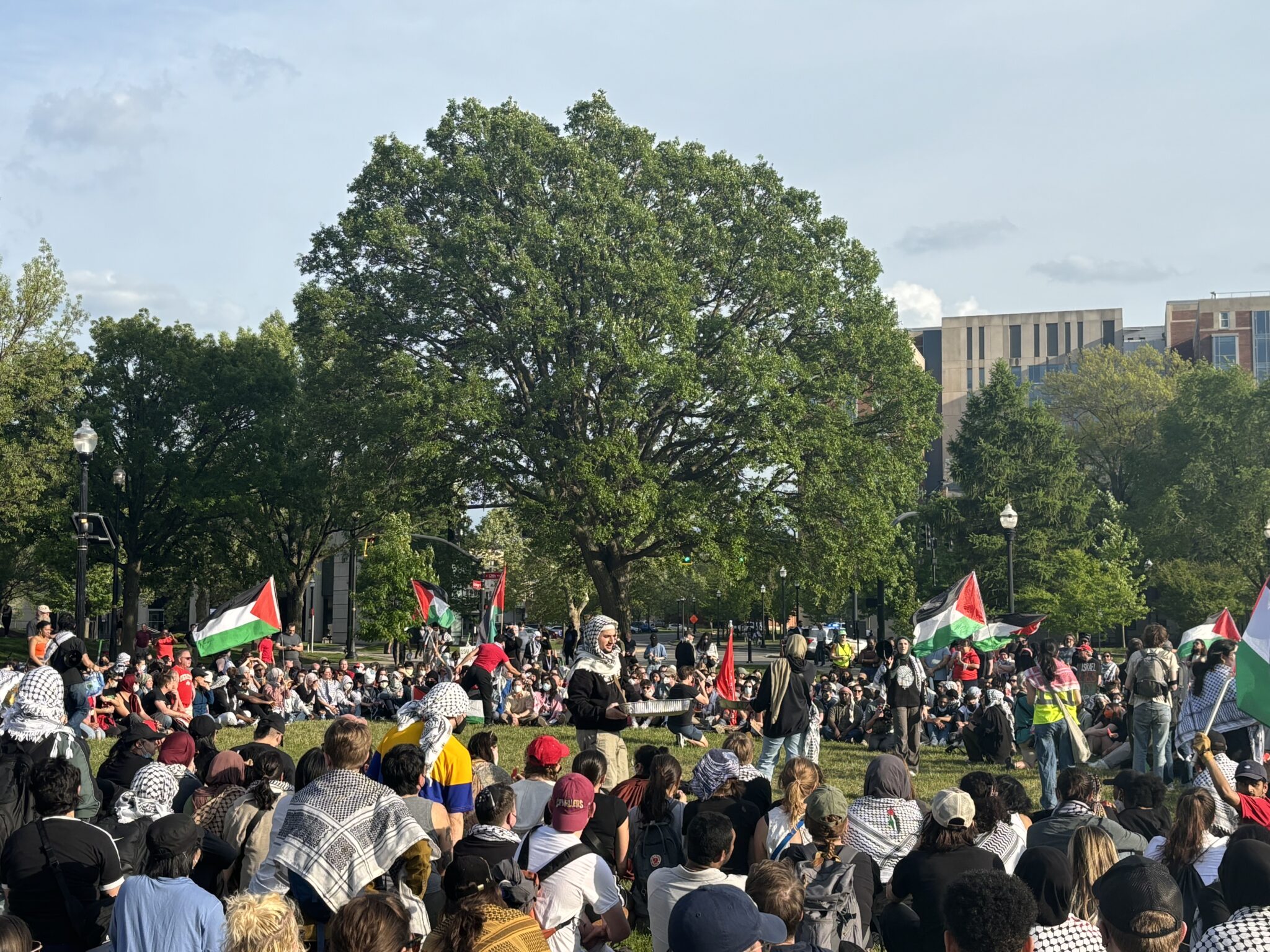
     Hundreds of Ohio State University students, faculty and community members protested the ongoing Israel-Hamas war in Gaza on May 1, 2024. (Photo by Megan Henry, Ohio Capital Journal.)

    Ohio State University, Case Western Reserve University, Oberlin College, Ohio University, Miami University and Denison University have all had campus protests the past couple of weeks.

    BY:  Ohio Capital Journal

    Ohio colleges and universities have been the site of recent protests over the Israel-Hamas war in Gaza.

    Ohio State University, Case Western Reserve University, Oberlin College, Ohio University, Miami University and Denison University have all had campus protests the past couple of weeks as the semester winds downs.

    Kent State University has a protest planned for Saturday — which also happens to be the 54th anniversary of when the Ohio National Guard shot and killed four students on campus who were protesting the Vietnam War.

    Protesters are calling for universities to divest their finances from companies and institutions with connections to Israel, transparency over their financial investments and an immediate ceasefire in Palestine.

    However, Ohio law stands in the way of some of their demands. Ohio Revised Code Section 9.76 prohibits state agencies like universities from contracting with companies that are boycotting or disinvesting from Israel.

    Former Ohio lawmaker Kirk Schuring introduced the bill in 2016 and then-Gov. John Kasich signed it into law later that year. The law was then amended in 2022.

    Protests at colleges and universities have ramped up across the nation after more than a hundred protesters at Columbia University were arrested after setting up an encampment on April 18. The University of Southern California canceled its commencement ceremony over safety concerns due to recent protests.

    More than 34,000 people have been killed and more than 77,000 have been injured in Gaza since the Israeli invasion after a Hamas-led attack in October that killed nearly 1,200 people in Israel, according to Al Jazeera. Women and children make up nearly three-fourths of those who have been killed in Gaza, according to an update by Gaza’s Government Media Office.

    President Joe Biden said he respects the rights of people to express their opinions during the campus protests, but said it must be done without violence or destruction.

    “Violent protest is not protected,” he said in a speech Thursday morning. “Peaceful protest is. It’s against the law when violence occurs. Destroying property is not a peaceful protest. It’s against the law. Vandalism, trespassing, breaking windows, shutting down campus, forcing the cancellation of classes and graduation. None of this is a peaceful protest. … To dissent is essential to democracy. But dissent must never lead to disorder, or to denying the rights of others so students can finish a semester and their college education.”

    Ohio State University

    Hundreds of Ohio State students and faculty as well as community members peacefully protested Wednesday night on the South Oval.

    A chorus of chants rang out throughout the protest:

    “From the river, to the sea, Palestine will be free.” 

    “From the river, to the sea, Palestine will live forever.” 

    “Ohio wants divestment now.” 

    “Divestment is our demand. No more bloodshed on our hands.” 

    “Disclose. Divest. We will not stop, we will not rest.”

    There were no encampments erected on the South Oval. Ohio State University Police were present as well as Ohio State Highway Patrol cars. An electronic sign near the South Oval read “no overnight events permitted … to include encampments.”

    Protesters voluntarily dispersed after a few hours and no arrests were made — a stark contrast to last week when 41 people were arrested at various campus protests. Nineteen of those arrested were Ohio State students, one was an Ohio State staff member and the rest were not affiliated with the university.

    Tent camping is not permitted on the lawn of the Oval without prior approval, according to Ohio State’s space rules.

    “Encampments are not allowed on campus regardless of the reason for them,” Ohio State University President Ted Carter wrote in a campus-wide letter after last week’s protests. “They create the need for around-the-clock safety and security resources, which takes these resources away from the rest of our community.”

    “As a public university, demonstrations, protests and disagreement regularly occur on our campus — so much so that we have trained staff and public safety professionals on-site for student demonstrations for safety and to support everyone’s right to engage in these activities,” Carter went on to write in his letter. “Sadly, in recent days, I have watched significant safety issues be created by encampments on other campuses across our nation. These situations have caused in-person learning and commencement ceremonies to be canceled. Ohio State’s campus will not be overtaken in this manner.”

    Ohio House Speaker Jason Stephens, R-Kitts Hill, said he supports Carter’s actions.

    “There’s always a challenge whenever you have protests and whatnot,” Stephens said when asked about last week’s arrests at Ohio State. “But, again, I think it’s important for the safety of everyone at a campus that the rules be followed.”

    Case Western Reserve University

    There have been no arrests so far at any protests at Case Western Reserve University in Cleveland, but about 20 protesters were detained and released from police custody Monday morning, a university spokesperson said.

    The private university originally put a 8 p.m. curfew in place, but has allowed students to camp on the university’s Kelvin Smith Library Oval Monday, Tuesday and Wednesday nights, a university spokesperson said.

    Oberlin College

    More than 100 students at Oberlin College in Lorain County protested Monday night and no arrests were made.

    “Oberlin supports the right of our students to gather and demonstrate peacefully,” the university said in a statement. “Oberlin expects all who participate to conduct themselves in ways that are respectful of others, that do not disrupt the day-to-day activities of the school and that uphold our shared values: respect for each other and our community.”

    Miami University

    Miami University Students for Justice in Palestine organized a walkout on April 19 to support the protesters who were arrested at Columbia University and a march is planned for Thursday night.

    Denison University

    No arrests were made when about 100 students and faculty members protested Tuesday at Denison University in Granville.

    Ohio University

    About 100-125 people attended a protest at Ohio University Wednesday night where people chanted up and down the escalators at Baker Center. No one was arrested.

    Ohio State University protest photo gallery

    Follow OCJ Reporter Megan Henry on Twitter.


    Megan Henry
    MEGAN HENRY

    Megan Henry is a reporter for the Ohio Capital Journal and has spent the past five years reporting in Ohio on various topics including education, healthcare, business and crime. She previously worked at The Columbus Dispatch, part of the USA Today Network.

    Ohio Capital Journal is part of States Newsroom, the nation’s largest state-focused nonprofit news organization.

    MORE FROM AUTHOR

  • Hearts Afire Weekend returns to Loveland, Ohio February 9th through 11th

    Hearts Afire Weekend returns to Loveland, Ohio February 9th through 11th

    Hearts Afire Weekend Returns to City of Loveland

    Sparks will fly Feb. 9-11, 2024

    View activities taking place across the city. Select the square icon in the top left-hand corner of the map to filter by day.


    Loveland, OhioThe City of Loveland has announced dates for its third annual Hearts Afire Weekend, February 9-11.

    The 2024 Hearts Afire Weekend will take place the weekend before Valentine’s Day. Most activities will take place on Saturday.

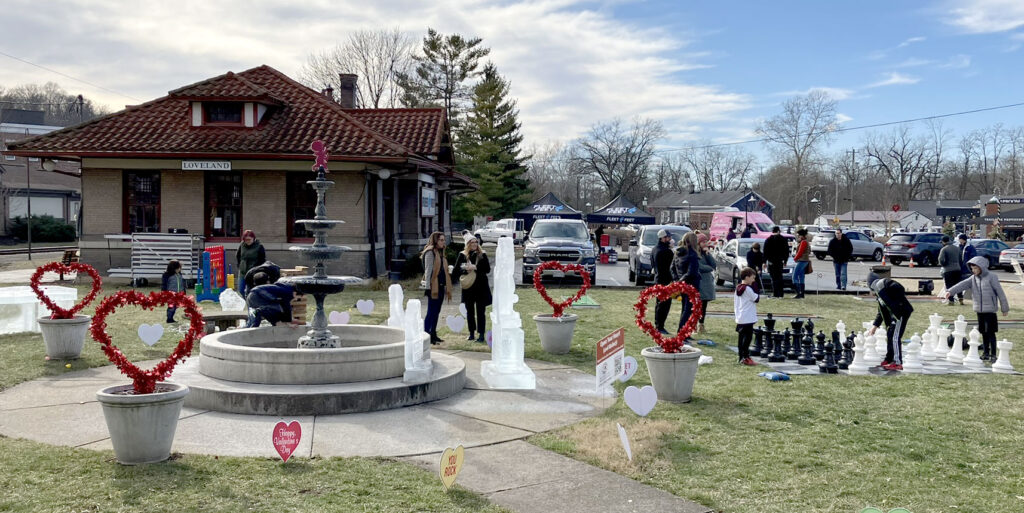
    The weekend will feature live ice carving, outdoor decorations, a Valentine’s pageant, fireworks, carriage rides, and fire twirlers. The popular ice sculpture walking tour will return featuring unique designs for photo ops.

    Photo by City of Loveland

    Local businesses in the city’s Historic Downtown will bring the heat with shopping and dining specials, as well as unique activities and open houses. Some of the weekend fun includes:

    • “Galentine” night
    • Valentine-themed variety show
    • Chasing Cupid 5K
    • Dance lessons
    • Taylor Swift-themed brunch
    Finn Perry was Mr. Cupid in 2023 (Photo by City of Loveland)

    In the spirit of love, the event will give back to the community. The city is partnering with the Loveland Stage Company, which is raising money to replace its theater’s HVAC system. On Feb. 9 and 10, the theater will host Crushin It, a Valentine-themed variety show. All proceeds will go toward the HVAC fundraiser.

    Additionally, the city is hosting a Hearts Afire Valentine Pageant at the Loveland Stage Company on Saturday for children ages 1-4. The pageant will be judged by the Loveland Valentine Ladies, a local group of women known for their community service. All proceeds will go to the Loveland Stage Company’s HVAC system.