Tag: Mike DeWine

  • Governor DeWine Authorizes Emergency Ban of Nine Synthetic Opioids

    Governor DeWine Authorizes Emergency Ban of Nine Synthetic Opioids

    Ohio Governor Mike DeWine signed an executive order today authorizing the Ohio Board of Pharmacy to immediately classify nine synthetic opioids as Schedule I controlled substances, effectively banning their sale and use in the state.

    These nine synthetic opioids are known as nitazenes. Initially developed decades ago as potential alternatives for morphine that were never approved for medical use, new nitazene compounds are increasingly being found in the illicit drug supply in Ohio.

    These nitazenes are often more potent than other Schedule I opioids like heroin or fentanyl and present an elevated risk of negative outcomes caused by unintentional drug poisonings, including death.

    “These are extremely dangerous substances being designed by clandestine chemists in an attempt to skirt the law while keeping them highly addictive,” said Governor DeWine. “My administration is doing everything in our power to rapidly detect and schedule these types of compounds to ensure that law enforcement has the tools they need to prosecute those who make and sell these potentially lethal substances to the fullest extent of the law.”

    Executive Order 2024-06D

    The emergency order was prompted by intelligence gathered as part of an early detection process developed by the Ohio Narcotics Intelligence Center (ONIC), in partnership with RecoveryOhio, the Ohio Board of Pharmacy, and a network of forensic toxicologists and chemists known as the Emerging Drug Scientific Working Group (EDSWG). The early detection process, which includes the proactive collection of reports from Ohio’s criminal justice system and forensic labs, allows ONIC to identify, analyze, and triage information on emerging drugs that are not controlled substances.

    Frequently mixed with other controlled substances, including other opioids such as already scheduled nitazenes or fentanyl and stimulants such as cocaine or methamphetamine, each of these nine nitazene compounds have been identified by Ohio crime labs, confirming their presence in the state. Further evidence from the dark web compiled by ONIC demonstrates the availability and interest in nitazene compounds for illicit use.

    Nitazene compounds are becoming increasingly involved in overdose deaths in Ohio. As recently as 2020, just three overdose deaths involving nitazene compounds were confirmed and reported to the Ohio Department of Health (ODH). However, a significant jump occurred in 2021 and 2022, which saw an average of 57 such deaths per year. Although 2023 data is not yet complete, ODH has recorded 77 nitazene-involved overdose deaths for the year – and this number only represents confirmed cases. Due to under reporting, the true number of overdose deaths involving nitazene compounds is expected to be much higher.

    Synthetic opioids are the primary cause of deaths related to unintentional drug poisonings in the United States. Nitazene compounds contribute to those poisonings. In multiple unintentional drug poisonings, nitazenes have been the only compounds identified as a contributing factor.

    The executive order suspends the normal rulemaking process to allow the Ohio Board of Pharmacy to immediately classify these nine nitazene compounds as Schedule I controlled substances, making the sale and trafficking of these compounds a criminal offense. For more information regarding this emergency action, visit Pharmacy.Ohio.gov/Nitazenes.

    These nitazene compounds are the latest to be banned under the DeWine Administration. Armed with ONIC’s early detection intelligence, the Ohio Board of Pharmacy has now emergency scheduled a total of 17 nitazene compounds since 2020.

    Additionally, last year, Governor DeWine signed an executive order to classify xylazine as a Schedule III controlled substance, making Ohio one of the first states in the nation to schedule xylazine as a controlled substance drug.

    If you believe you or someone else is in immediate danger of a drug overdose, call 911 immediately.

    Like other synthetic opioids, overdoses involving nitazene compounds can be reversed using naloxone.

    Naloxone should always be administered anytime an overdose is suspected, even if the overdose is believed to be caused by nitazenes. Multiple doses of naloxone may be needed to reverse an overdose involving synthetic opioids.

    For more information about obtaining free naloxone, visit: Naloxone.Ohio.gov.
  • Ohio Gov. Mike DeWine vetoes bill that would’ve banned gender-affirming care for trans youth

    Ohio Gov. Mike DeWine vetoes bill that would’ve banned gender-affirming care for trans youth

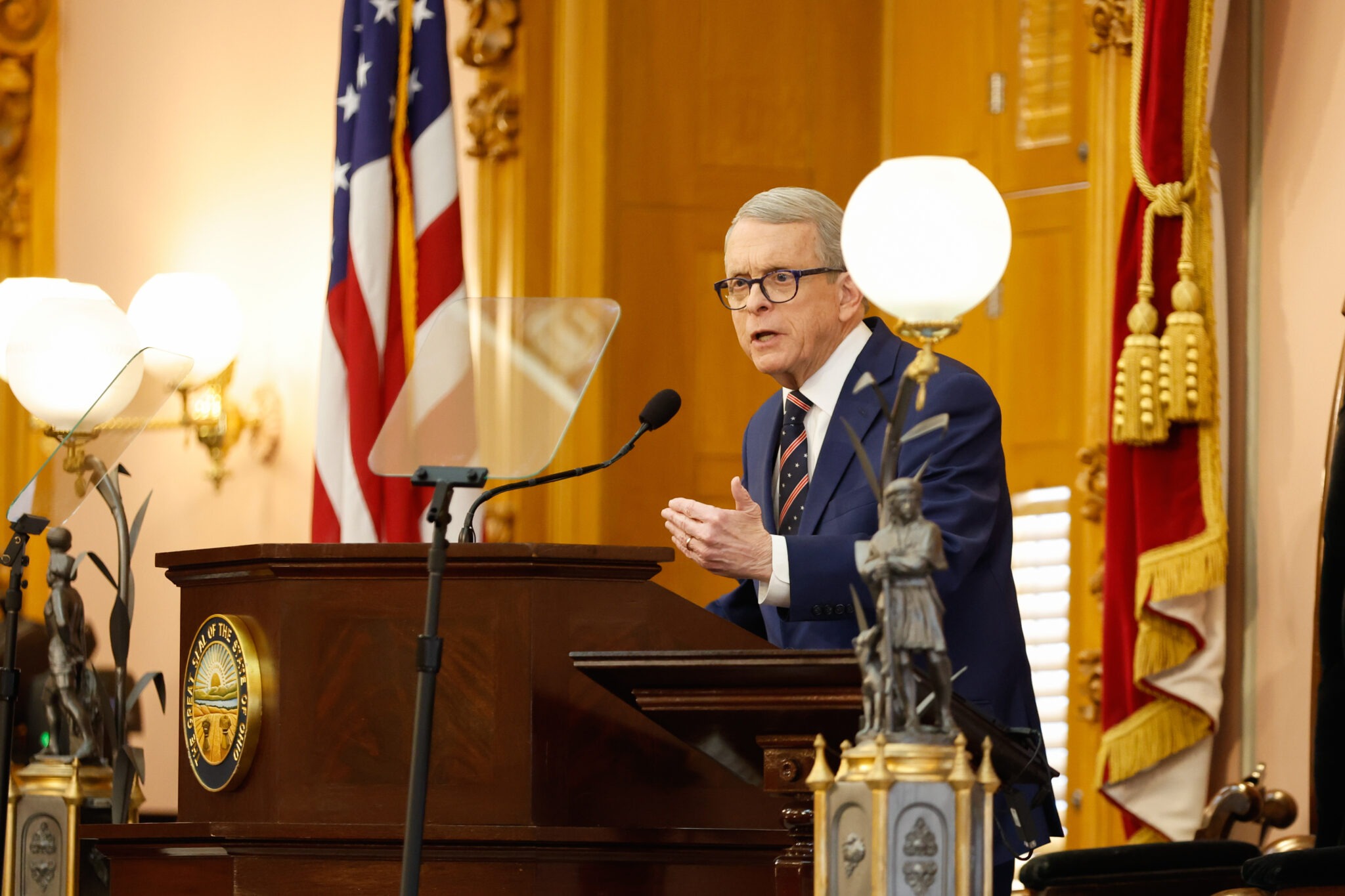
    JANUARY 31: Ohio Governor Mike DeWine gives the State of the State Address, January 31, 2023, in the House Chamber at the Statehouse in Columbus, Ohio. (Photo by Graham Stokes for Ohio Capital Journal. Republish photo only with original story.)

    BY:  Ohio Capital Journal

    Republican Ohio Gov. Mike DeWine has vetoed legislation that would have prohibited transgender youth from accessing gender-affirming care. His veto shoots down the controversial bill, which would also stop middle and high school trans students from participating in athletics with cisgender peers.

    He announced the decision in a press conference Friday morning, the last day that he was allowed to veto it.

    DeWine said he listened to the bill’s sponsor and also listened to physicians at the five children’s hospitals in Ohio. He said he listened to families of youth, some who had negative experiences and detransitioned, as well as those who said gender-affirming treatment saved their child’s life.

    “They told me their child is alive only because they received care,” he said, adding that he thinks people on both sides truly believe they are trying to protect youth.

    While the law would impact only a very small number of children, the consequences of the bill would be profound, DeWine said.

    “Ultimately, I believe this is about protecting human life,” he said. Both parents of trans kids and adults who received care told him that the care saved their lives.

    “These are gut-wrenching decisions that should be made my parents and should be informed by teams of doctors who are advising them. These are parents who have watched their children suffer for years, and have real concerns their children would not survive without it… Families are basing their decisions on the best medical advice they can get.”

    While he vetoed the bill, DeWine said he would pursue administrative rules to help address several concerns, including the banning of gender-affirming surgery on minors (which currently is not practiced in Ohio). He also is looking at administrative rules to collect data, and to combat clinics that might pop up to try to perform ideologically-driven care, which he said was a concern from both sides of the issue.

    What happens now?

    Trans youth, LGBTQ+ rights advocates and doctors are rejoicing at the decision.

    However, the lawmakers against the bill have another option to take away rights for trans children: The House and the Senate can override the governor on his veto. There may be an effort to do this, but it is possible it doesn’t have enough votes, according to one Republican lawmaker who originally voted in favor of the bill.

    A three-fifths vote of the members of the House and Senate is necessary to override the governor’s veto — meaning 60 representatives and 20 senators. The bill passed forward with 64 representatives originally (62 after amendments) and 24 senators. Only three Republicans have publicly been against the bill. When it was passing the House, Republican state Reps. Jamie Callender and Brett Hillyer voted against it. In the Senate, state Sen. Nathan Manning voted against it. All the GOP no votes came from Northeast Ohio lawmakers.

    In a one-on-one interview with Statehouse reporter Morgan Trau just a week before his decision, DeWine explained the research he was doing into H.B. 68.

    Morgan Trau: “Are you going to sign [H.B. 68]?”

    Governor DeWine: “Well, this is something that I’m really thinking a lot about… So I went to children’s hospital here in Columbus; I went to the children’s hospital in Akron and children’s hospital in Cincinnati — just to see how they do it, what kind of care they give to these young people. But I’ve also talked to opponents who don’t think that kind of care is appropriate… I’ve also talked to families who have told me that care is just vitally important and save their child’s life. So I’m trying to weigh all this and trying to get as much information together.”

    Morgan Trau: “You’ve always been somebody to care about children, but also parental rights. How would you reckon with signing this?”

    Governor DeWine: “I really don’t want to get too deeply into this… We’ve got to get this — I have to get this right… There’s a lot of testimony in the Statehouse that you covered and I want to look at that testimony — both pro and con.”


    Morgan Trau
    MORGAN TRAU

    Morgan Trau is a political reporter and multimedia journalist based out of the WEWS Columbus Bureau. A graduate of Syracuse University’s S.I. Newhouse School of Public Communications, Trau has previously worked as an investigative, political and fact-checking reporter in Grand Rapids, Mich. at WZZM-TV; a reporter and MMJ in Spokane, Wash. at KREM-TV and has interned at 60 Minutes and worked for CBS Interactive and PBS NewsHour.

    MORE FROM AUTHOR

  • Ohio Gov. Mike DeWine and Lt. Gov. Jon Husted subpoenaed in civil suit over bailout scandal

    Ohio Gov. Mike DeWine and Lt. Gov. Jon Husted subpoenaed in civil suit over bailout scandal

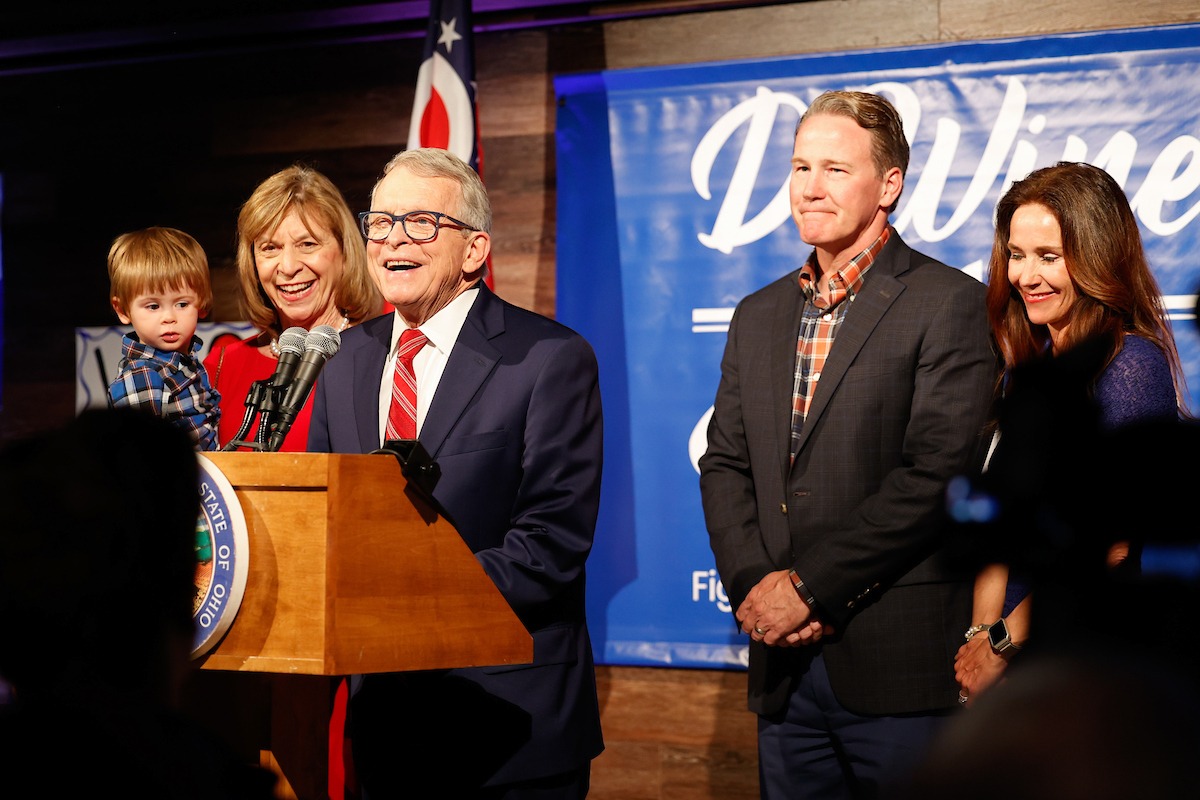
    COLUMBUS, OH — MAY 03: Ohio Gov. Mike DeWine joined on stage by First Lady Fran DeWine, grandson Calvin, Lt. Gov. Jon Husted and Second Lady Tina Husted to celebrate DeWine winning the Republican Party nomination for governor in the Ohio primary election, May 3, 2022, at the DeWine-Husted campaign headquarters, Columbus, Ohio. (Photo by Graham Stokes for the Ohio Capital Journal. Republish photo only with original article.)

    BY:  

    Plaintiffs in a civil suit related to a massive bribery and money-laundering scandal have subpoenaed documents from Ohio Gov. Mike DeWine and they’re scheduling a sworn deposition with Lt. Gov. Jon Husted.

    There have been four criminal convictions so far in the scandal and U.S. Attorney Kenneth L. Parker has said the investigation is continuing. However, there is no indication that DeWine or Husted is an object of it.

    Even so, members of the DeWine-Husted administration were significant players in the scandal and DeWine’s nominee to head up the Public Utilities Commission of Ohio could be a target of the probe.

    The demands for documents and testimony come in a class-action suit that big investors in Akron-based FirstEnergy filed against the company over its involvement in the scheme. Between 2017 and 2020, the company paid out more than $60 million to gain a $1.3 billion ratepayer bailout that was mostly intended to prop up two failing nuclear plants in Northern Ohio.

    Among those already convicted are former Ohio House Speaker Larry Householder, R-Glenford, who was sentenced to 20 years in prison for his role in what federal authorities said might be the biggest bribery and money-laundering scheme in Ohio history. Former state Republican Chairman Matt Borges in June was sentenced to five years for his role.

    However, others who played prominent roles in the scandal are yet to be charged.

    They include former FirstEnergy CEO Chuck Jones and former Vice President Michael Dowling, who directed the money to make Householder speaker in 2018 and then pass and and protect House Bill 6, the corrupt bailout legislation. They also include Sam Randazzo, DeWine’s first nominee to chair the Public Utilities Commission of Ohio.

    Jones, Dowling and Randazzo deny wrongdoing, but in a deferred prosecution agreement, FirstEnergy said Jones and Dowling paid Randazzo a $4.3 million bribe just as DeWine was selecting Randazzo to be FirstEnergy’s top regulator. In that post, Randazzo helped write the corrupt bailout bill and he helped FirstEnergy avoid a scheduled audit known as a “rate case” that was slated for 2024.

    Large investors such as pension and investment funds are suing FirstEnergy over the scandal, arguing that the company violated securities laws by not disclosing its reckless conduct. And then, when the feds made arrests in July 2020, its stock value plummeted — as did their investments.

    The plaintiffs in the civil case have been battling with Randazzo — who is not a defendant — since April over whether he has complied with judges’ orders to produce documents relevant to the $4.3 million in FirstEnergy money he received just before he began regulating the company.

    A magistrate judge and a special master in the case have consistently rebuked Randazzo for not cooperating more fully, with the most recent instance coming last week. Randazzo appealed up the food chain, asking Magistrate Judge Kimberly Jolson not to hold him to a disclosure order from the special master, Shawn K. Judge.

    The plaintiffs in the civil case asked Jolson to make Randazzo comply with Judge’s order to cough up more information. As part of the filing, they provided a table of depositions they’ve scheduled or are in the process of scheduling. To prepare for some, they presumably could use the information and documents they’re demanding of Randazzo.

    One deposition they’re scheduling is of Randazzo himself, which has a “target period” of March 4 to March 29.

    Another is of Husted, the lieutenant governor, which has a target period of Feb. 28 to March 19. Dave Anderson of the Energy and Policy Institute first flagged the document that listed Husted’s deposition.

    Hayley Carducci, Husted’s spokeswoman, on Tuesday said Husted is cooperating.

    “We’re aware of the civil investor lawsuit against First Energy,” she said in an email. “The Lt. Governor has already provided public records pertaining to this, and we will continue to comply as we have done in the past. There’s no new information to disclose.”

    As with Randazzo, Husted is not a defendant in the civil case.

    DeWine also has recently received a subpoena for documents in the civil case.

    “We’re reviewing it with counsel for what can be provided,” Press Secretary Dan Tierney said in an interview. “Our office is subject to the public records act and in a sense this is no different.”

    Tierney pointed out a distinction between the class-action suit and the case which has already convicted Householder and Borges and proceedings that could charge others.

    “This is a civil case and anybody has a right to bring a civil case if they want,” Tierney said of the proceeding in which the governor’s documents had been subpoenaed. “The civil process is where people say they’ve been damaged and they want the court to award damages. That is far different than the criminal case in which the federal government said public integrity laws had been violated.”

    He added, “It still remains in the criminal case that nobody in our office or the lieutenant governor’s office has been questioned or subpoenaed or had any legal filings like that.”

    Even in the absence of such requests, DeWine and his administration were involved several ways in the drafting and passage of the corrupt utility bailout:

    • He nominated Randazzo to head up the PUCO a day after it was publicly revealed that FirstEnergy had paid a group controlled by Randazzo millions of dollars over the years. “Forced DeWine/Husted to perform battlefield triage,” FirstEnergy CEO Jones said in a text message to Dowling. “It’s a rough game.”
    • While he was still a FirstEnergy lobbyist, Dan McCarthy set up Partners for Progress, a 501(c)(4) “dark money” group through which Jones, Dowling and others funneled millions into the conspiracy. DeWine hired McCarthy as his legislative affairs director and kept him in that post for a year after Householder and the others were arrested.
    • HB 6, the bailout legislation, was highly controversial as Householder jammed it through the legislature, other lawmakers testified at his trial. Even so, DeWine signed it the day it passed and when Householder was arrested, the governor’s first position was to keep the law in place — and part of it still is. DeWine reversed himself a day later, calling to repeal and replace the subsidies.

    Morgan Trau contributed to this report.


    Marty Schladen
    MARTY SCHLADEN

    Marty Schladen has been a reporter for decades, working in Indiana, Texas and other places before returning to his native Ohio to work at The Columbus Dispatch in 2017. He’s won state and national journalism awards for investigations into utility regulation, public corruption, the environment, prescription drug spending and other matters.

    MORE FROM AUTHOR

  • Ohio Republicans’ attempted erasure of a 10-year-old rape victim is incredibly sick and disturbed

    Ohio Republicans’ attempted erasure of a 10-year-old rape victim is incredibly sick and disturbed

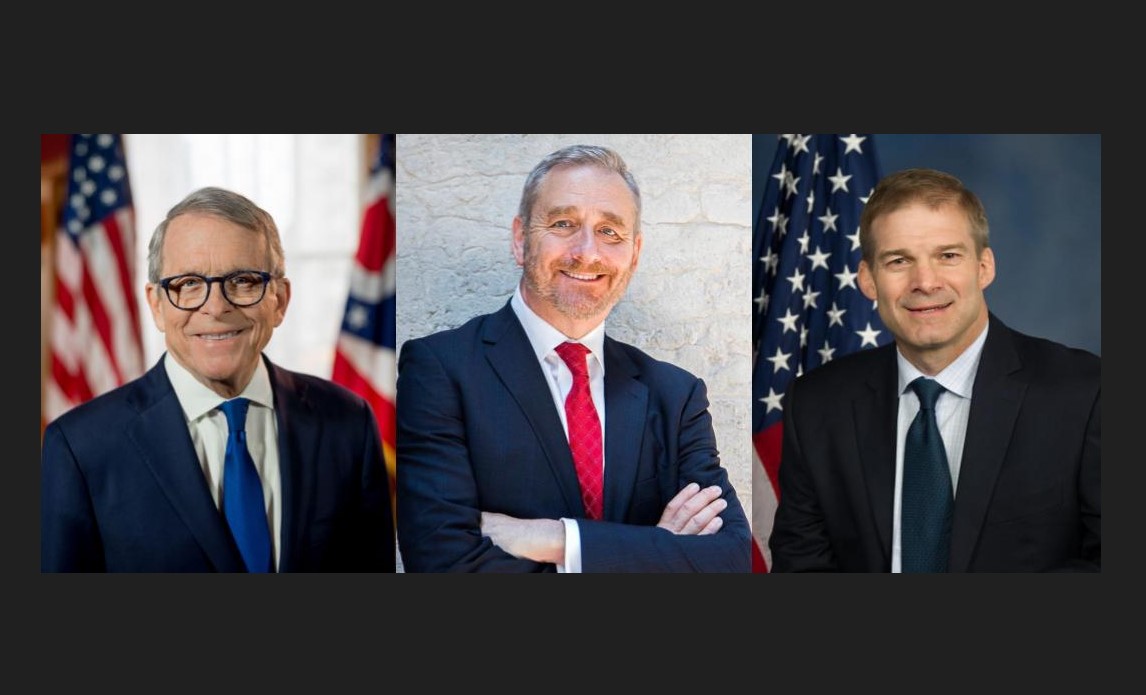
     Left to right: Republican Ohio Gov. Mike DeWine, Republican Ohio Attorney General Dave Yost, and Republican U.S. Congressman Jim Jordan. Official photos.
    Ohio Capital Journal Editor-in-Chief David DeWitt

    A Guest Column by David Dewitt

    The first and most important thing to recognize right now is that a heinous, violent crime was committed on a 10-year-old Ohio child, and thankfully justice has now found the alleged perpetrator.

    Columbus man was indicted Wednesday in a case that made national and international headlines about 10-year-old girl who had to travel to Indiana for an abortion after Ohio’s abortion ban went into effect following the U.S. Supreme Court overturning Roe v. Wade.

    The story is horrifying and tragic. She has experienced enormous trauma. My heart breaks for her, and I’m very grateful to all the hard-working professionals out there providing her and her family assistance in what must be a truly awful time.

    Republican Ohio Gov. Mike DeWine and his spokesman responded to the story by ignoring questions about whether children should be forced to have their rapists’ babies. Then DeWine allies contacted members of the press, asking how sure they were that the case of the pregnant 10-year-old even happened.

    The Washington Post, the conservative Daily Caller and other media outlets published stories saying that the case was unverified. The Wall Street Journal Editorial page suggested the story was a “fanciful tale.” The National Review’s Michael Brendan Dougherty referred to the case as “a fictive abortion and a fictive rape.”

    Republican Ohio Attorney General Dave Yost went on Fox News Monday to raise further doubts. He said he works closely with law enforcement authorities and he’d gotten “not a whisper” about the case.

    Hamilton County Republican Party Chair Alex Triantafilou on Twitter called the case, “A garbage lie that a simple google search confirms is debunked.”

    State Rep. Brian Stewart tweeted the Washington Post story saying he “wouldn’t trust an abortionist to tell me whether the sky is blue.”

    Ohio U.S. Rep. Jim Jordan tweeted, “Another lie. Anyone surprised?

    None of them had the patience to verify for themselves with certainty the truth of the matter before going public on a massive, self-serving scale.

    The propaganda erasing this 10-year-old’s existence was so swift it spread out over right-wing social media like a blanket. Those advocating the truth of her story — privately already confirmed for some of us, and crushing to hear about — were subjected to wild-eyed mockery and ridicule.

    It’s incredibly disturbing that the default position of so many sick and twisted people — including Ohio’s most prominent Republican elected officials — is to very vocally and very publicly question whether the rape and impregnation of a 10-year-old child ever happened.

    DeWine, Yost, and other Ohio Republicans hurt a traumatized child once by forcing her to flee the state in order to receive health care; then they hurt her again by peddling propaganda erasing her; now they’re hurting her a third time by refusing to acknowledge and apologize for their actions.

    This case was never implausible. In 2020, the most recent year for which statistics are available, 52 girls aged 14 and younger had abortions in Ohio, according to the state department of health. A review of just the city of Columbus’ police log since March 15 uncovered 59 reports of sexual assaults of girls 15 and younger that, based on the information available, could have resulted in pregnancy.

    Nevertheless, the wheels and integrity of local journalism spun and uncovered the truth, with the Columbus Dispatch breaking the news of confirmation of the case.

    But after the confirmation broke Wednesday, DeWine’s spokesman, Dan Tierney, again refused to comment on whether child rape victims should be forced to carry their pregnancies to term.

    Ten-year-olds who become pregnant are by definition rape victims. But Ohio’s abortion law signed by DeWine doesn’t make exceptions for rape and incest.

    Yost’s office didn’t respond Wednesday when asked whether he believes child rape victims should be forced to carry pregnancies, nor whether it was important to believe stories about sexual violence. Instead he put out a statement applauding the arrest.

    Yost offered no correction, no apology, and showed no contrition for going on national television to try to erase the lived experience of a child rape victim.

    They behave on a base level so repugnant and removed from the general good-heartedness of most Ohioans it’s almost unfathomable.

    “Apologize for what? Questioning a newspaper story?” Yost, Ohio’s top law enforcement officer, said about a case in his own county.

    DeWine, Yost, and other Ohio Republicans hurt a traumatized child once by forcing her to flee the state in order to receive health care; then they hurt her again by peddling propaganda erasing her; now they’re hurting her a third time by refusing to acknowledge and apologize for their actions.

    These powerful Ohio Republican politicians have thoroughly and completely shed themselves of any sense of shame or conscience.

    They’re disgusting and disgraceful; callous, careless and cruel.

    This is a matter of basic human decency, good faith and sensitivity on the most fundamental level of society.

    If they are willing to try to erase the traumatic story of a 10-year-old rape victim, whose pain and suffering will they not try to ignore and erase?

    They behave on a base level so repugnant and removed from the general good-heartedness of most Ohioans it’s almost unfathomable.

    I honestly don’t know how they sleep at night, or look at themselves in the mirror in the morning.

  • DeWine signs bill to temporarily ban school COVID-19 vaccine mandates

    DeWine signs bill to temporarily ban school COVID-19 vaccine mandates

    By Jake Zuckerman and Ohio Capital Journal

    His signature on the bill seems to violate his pledge to veto any legislation that would “discourage vaccination.”

    Columbus, Ohio – Ohio Gov. Mike DeWine signed legislation Wednesday that could block schools from mandating vaccination against COVID-19 for the fall.

    In the dying moments of the final legislative session before a summer recess, lawmakers tacked the vaccine provision as an amendment onto an unrelated bill regarding educational opportunities for military children. The amendment:

    • Forbids public K-12 schools and colleges from requiring any vaccine that has not yet received “full approval” from the U.S. Food and Drug Administration.
    • Forbids the schools from “discriminating” against anyone who has not been vaccinated, which includes infection control provisions like masks and social distancing.
    • Does not apply to hospitals or health care facilities operated by or affiliated with universities.

    It passed on party lines in both chambers, with Republicans in support and Democrats in opposition.

    All three vaccines available for use against COVID-19 are approved under an “emergency use authorization.” The FDA uses this streamlined regulatory process for drugs and vaccines that can be used against an ongoing emergency such as the pandemic, which has killed more than 608,000 Americans to date. The regulators issued the temporary authorization after reviewing clinical trial data on tens of thousands of recipients. The FDA, along with the Centers for Disease Control and Prevention (CDC), continues to monitor safety and efficacy profiles of all three vaccines.

    DeWine announced his approval of the bill without any public comment or fanfare. His signature on the bill seems to violate his pledge to veto any legislation that would “discourage vaccination.”

    Dan Tierney, a spokesman for the governor, played up the bill’s original aims in an email and said DeWine expects looming regulatory approval to nix the issue.

    “The primary purpose of the bill was to enhance educational opportunities for children in military families — a worthy goal,” he said. “The provision you are referring to is limited to vaccines that do not have full FDA approval. We are confident that these vaccines, proven repeatedly to be very safe and very effective, will be approved by the FDA, thus rendering this issue moot.”

    Passage comes amid an ongoing clash between DeWine and fellow Republicans in the legislature regarding public health policy. Earlier this year, lawmakers overrode DeWine’s veto on a broad weakening of state public health laws.

    Meanwhile, Republicans in the House Health Committee are considering legislation that would weaken state vaccination laws and prevent employers, nursing homes, hospitals, colleges and more from requiring vaccination of students and employees. DeWine has said he would veto the bill if it made it to his desk.

    During a hearing on that bill, lawmakers — many of whom have announced their refusal to seek vaccination against COVID-19 and aligned themselves with anti-vaccination activists — invited testimony from a discredited doctor who has claimed vaccines are a “depopulation” and “mass destruction” tool.

    DeWine’s signature furthers an emerging anti-vaccination push from Republican-controlled state legislatures. For instance, the Tennessee Department of Health halted all adolescent vaccine outreach and forced out its top vaccine official this monthunder pressure from Republican lawmakers, according to recent reporting from The Tennessean. Florida Gov. Ron DeSantis recently signed legislation to ban “vaccine passports,”which do not exist in most areas of the country but would theoretically be used by institutions to validate people’s vaccination status.

    Under the new Ohio law signed by DeWine on Wednesday, schools can still technically require immunization against COVID-19 once the federal regulators issue a full-blown authorization. However, Ohio is one of about a dozen states that allows exemptions to school immunization requirements for “reasons of conscience” — something of a catchall term.

    The new law’s sponsors, state Reps. Andrea White, R-Kettering, and Brian Lampton, R-Beavercreek, issued a lengthy statement regarding the help the bill will deliver for military children. They briefly addressed the vaccination issue.

    “By prohibiting our educational institutions from requiring vaccines that are not fully approved by the FDA, we are ensuring that safety is at the forefront of our priorities,” they said.

    The sponsors did not answer whether this means they consider the vaccines to be unsafe.

    Two Democrats on the House Health Committee issued a statement Wednesday evening criticizing the new law, saying it puts “political self-interests” ahead of good health policy.

    “With the arrival of the delta variant, this country is still in the midst of a dangerous pandemic and unvaccinated individuals are at highest risk,” said Rep. Allison Russo, D-Columbus.

    “Public schools and universities deserve to have the flexibility to either require COVID-19 vaccines or establish mitigation procedures they deem appropriate for the circumstances in their communities. Instead, this bill further undermines trust in science and a vaccine that has saved the lives of thousands of Ohioans.”

    This article was updated to reflect the legislation only applies to public schools and universities.

  • DeWine reminds unvaccinated Ohioans to continue wearing masks

    DeWine reminds unvaccinated Ohioans to continue wearing masks

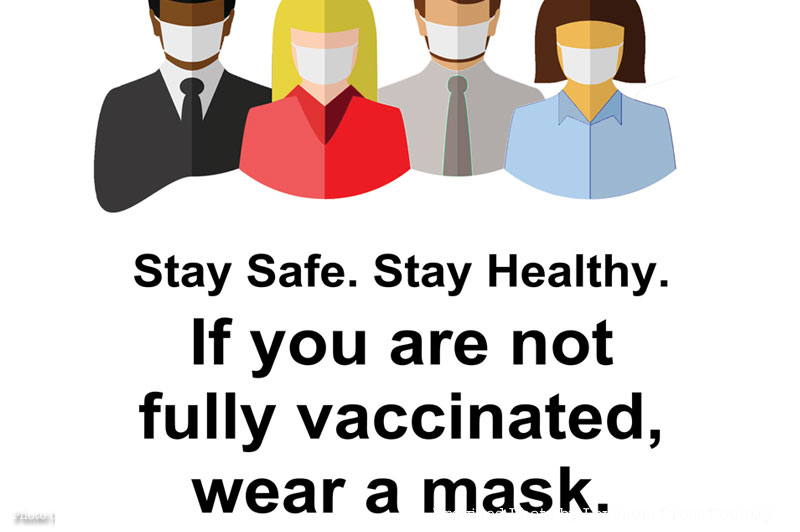
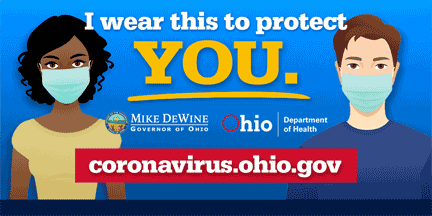
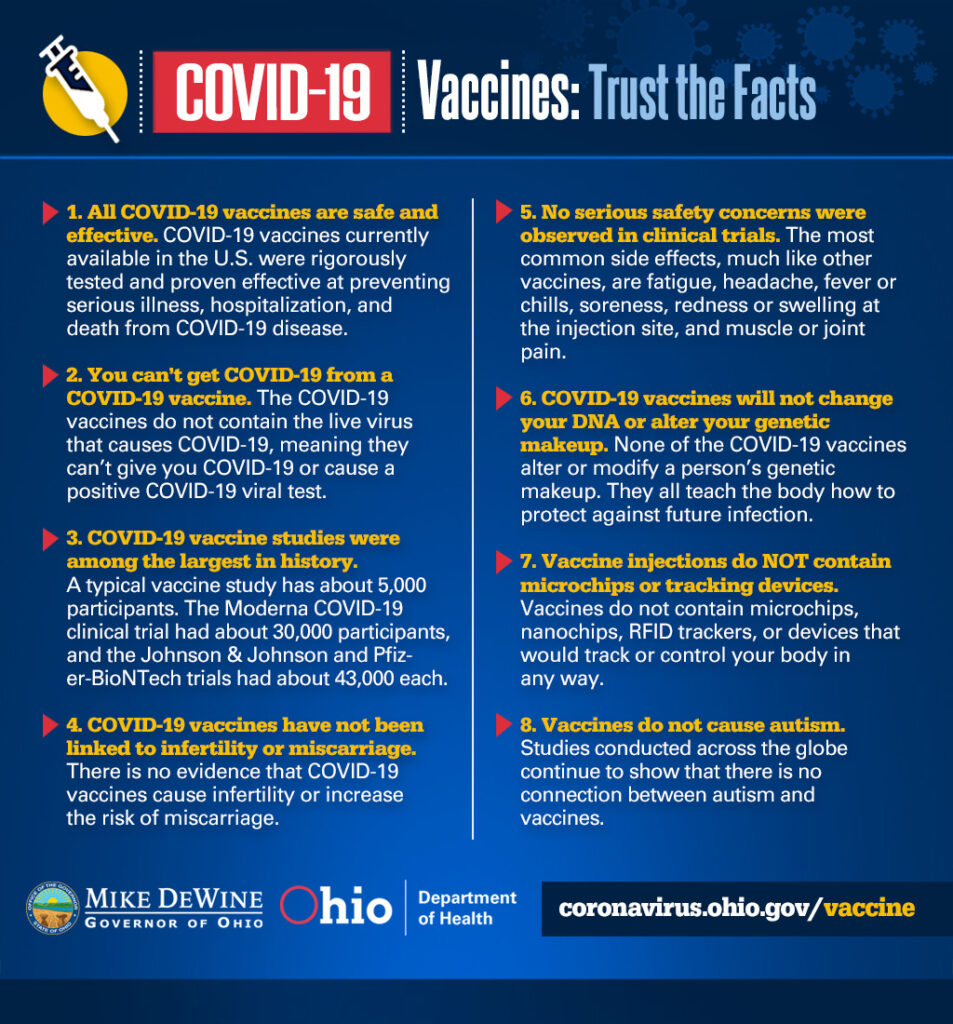
    Columbus and Loveland, Ohio – Ohio Governor Mike DeWine today reminded Ohioans of the importance of getting vaccinated against COVID-19 and for those that are not fully-vaccinated to wear masks indoors, as statewide mask mandates lift tomorrow.

    “Ohioans have done a great job during the pandemic. And, with more than 5 million Ohioans who have received at least the first dose of the COVID-19 vaccine, we are getting back to living the lives we want. However, it is important that we all still remember that there are a significant number of Ohioans who remain unvaccinated and are at-risk, including everyone under the age of 12. It’s important that those not fully vaccinated continue to wear masks indoors and follow other preventative measures to keep themselves as healthy as possible,” said Governor Mike DeWine.

    More than 5.3 million Ohioans have received their first vaccinations and 4.6 million have completed the vaccination series.

    An individual is considered fully vaccinated two weeks after their second dose of Pfizer or Moderna COVID-19 vaccines or two weeks after the single dose of the Johnson & Johnson vaccine.

    For businesses and organizations looking to update signage in their facilities, appropriate signs are available at coronavirus.ohio.gov.

    Ohioans can find the vaccination site nearest them at gettheshot.coronavirus.ohio.gov.

    American Flag Over Blue Paper Texture Background
  • State COVID-19 Update: Nursing Home Visitation, Statewide Case Rate, Rapid Testing, County Fairs

    State COVID-19 Update: Nursing Home Visitation, Statewide Case Rate, Rapid Testing, County Fairs

    Ohio Governor Mike DeWine and Lt. Governor Jon Husted today provided the following updates on Ohio’s response to the COVID-19 pandemic. 

    NURSING HOME VISITATION

    Governor DeWine today discussed the new federal regulations for nursing home visitation, as well as Ohio’s Vaccine Maintenance Program. The visitation guidelines, issued by the Centers for Medicare and Medicaid Services (CMS) indicate visitation should be happening in nursing homes. There are a few specific exceptions that would limit visitation, such as outbreaks in the facility or an extreme number of cases in the community.  Full information on the federal nursing home visitation guidance is available at cms.gov

    Additionally, Governor DeWine highlighted the progress being made by Ohio’s Vaccine Maintenance Program for nursing homes and assisted living facilities. Ohio’s Vaccine Maintenance Program ensures new nursing home residents and employees, and established residents and employees who previously decided not to receive a vaccine, can still choose to receive one. Governor DeWine emphasized the importance of every nursing home resident receiving a vaccine. 

    Long-term care facility visitation status is available on the dashboard at coronavirus.ohio.gov.

    STATEWIDE CASE RATE

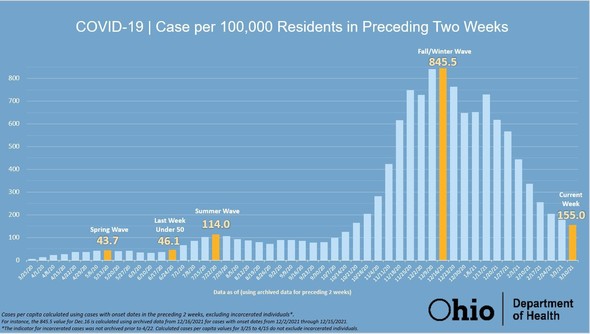
    Governor DeWine announced that, statewide, Ohio is currently at a rate of 155 cases of COVID-19 per 100,000 people during the past two weeks. Last week, statewide data put Ohio at 180 cases per 100,000 people. 

    “In Ohio, we are still at a very elevated level of cases, but today’s health data is certainly trending in the right direction,” said Governor DeWine. 

    In an evening address last week, Governor DeWine announced that when Ohio reached 50 cases per 100,000 people for two weeks, all health orders will be lifted. 

    The Ohio Department of Health will update this data each Thursday.

    March 11

    RAPID TESTING 

    Governor DeWine today detailed four initiatives that are making rapid COVID-19 tests more accessible to Ohioans:

    • Federal Qualified Health Centers
      • The state’s ongoing partnership with federally qualified health centers has led to the availability of over 150,000 rapid tests at community health centers. These centers have professionals on-hand to administer the tests free of charge.
    • Local Health Departments
      • Local health departments have partnered with their communities to make at-home testing available to schools, nonprofit organizations, and first responders.
    • Public Libraries
      • The state has recently partnered with public libraries to make at-home tests available to more Ohio communities. During the first two weeks, Ohio has partnering with 120 libraries.
    • K-12 Schools
      • A new partnership launched today will bring 200,000 at-home tests to Educational Service Centers. To increase confidence and safety in schools, Governor DeWine encourages school districts to take advantage of this resource and develop aggressive testing plans.

    Between libraries and local health departments, at-home testing is accessible in 76 of Ohio’s 88 counties. Some of these areas had disproportionate access to testing earlier in the COVID-19 pandemic.

    GUIDANCE ON FAIRS

    Governor DeWine announced that the Ohio Department of Health issued a revised order that allows for the reopening of all fair activities if certain health conditions are met. The updated order includes compliance with the statewide mask order and social distancing. Additionally, there will be a 25 percent maximum for indoor grandstand capacity and a 30 percent maximum for outdoor grandstand capacity. 

    Additionally, the Ohio Department of Health will issue updated order and guidance regarding festivals, parades, proms, and spring sports. For spring sports, students will not be required to quarantine because they have an incidental exposure to COVID-19 in a classroom unless symptoms develop. 

    These orders and guidance will be forthcoming from the Ohio Department of Health.

    LETTER ADDRESSING PUA FRAUD

    Governor DeWine and Lt. Governor today sent a letter to President Joe Biden urging the development of a national, coordinated response to ongoing, widespread fraud attempts being committed through the unemployment system, specifically the federal Pandemic Unemployment Assistance (PUA) Program.

    See below for an excerpt from the letter:

    “We urge you to immediately develop a national, coordinated response to this ongoing attempt to defraud the American people and our national and state governments. While states are doing everything they can to administer the federal programs while maintaining system integrity, a state-by-stare response is proving inadequate. This is not an Ohio problem — it’s a national problem that requires a national solution.”

    CURRENT CASE DATA

    In total, there are 984,934 confirmed and probable cases of COVID-19 reported in Ohio and 17,825 COVID-19 deaths. A total of 51,323 people have been hospitalized throughout the pandemic, including 7,255 admissions to intensive care units. In-depth data can be accessed by visiting coronavirus.ohio.gov

    Video of today’s full update, including versions with foreign language translation, can be viewed on the Ohio Channel’s YouTube page

    For more information on Ohio’s response to COVID-19, visit coronavirus.ohio.gov or call 1-833-4-ASK-ODH.

  • DeWine relaxes guidance for COVID 19 classroom quarantine

    DeWine relaxes guidance for COVID 19 classroom quarantine

    “Students and teachers exposed to a COVID-positive person in school are no longer required to quarantine as long as the exposure occurred in a classroom setting and all students/teachers were wearing masks and following other appropriate protocols.”

    by David Miller

    Loveland, Ohio – Governor Mike DeWine announced Wednesday that Ohio is changing its guidance regarding quarantines following an in-classroom exposure in K-12 schools. The Ohio Department of Health said, “Moving forward, students and teachers exposed to a COVID-positive person in school are no longer required to quarantine as long as the exposure occurred in a classroom setting and all students/teachers were wearing masks and following other appropriate protocols.”

    The change follows an evaluation of virus spread in Ohio schools conducted by researchers with the Ohio Schools COVID-19 Evaluation Team. Preliminary results of the evaluation found no discernable difference in the risk of contracting the coronavirus between those in close contact with a COVID-positive person in the classroom and those who were farther away.  

    Loveland Magazine has reached out to Loveland Superintendent, Dr. Amy Crouse and the District health team to inquire whether the District will adopt DeWine’s newest protocol, however, neither are available for immediate response. (Thank you for your email. Our offices are closed through Sunday, January 3, 2021.  I am out of the office with limited access to email.)

    Loveland school students return to the classroom on Monday, January 4.

    “This evaluation confirms for us that Ohio’s classrooms are a safe place for our students and that the commitment our schools have made to keeping kids safe in the classroom is working,” said DeWine.

    Schools should continue to require quarantines for exposed students in situations where masking and distancing protocols were not followed. The updated quarantine guidance does not apply to after-school activities, including sports, according to the new guidelines.

    The Centers for Disease Control and Prevention announced in early December new quarantine guidelines for people who were exposed to coronavirus, reducing the length of time from 14 days to 10 days without symptoms or seven days with no symptoms and a negative test. The Loveland School District announced on December 4 that they would implement these less stringent quarantine requirements.

    Meanwhile: The Associated Press reports that California has the nation’s 2nd confirmed case of a new and apparently more contagious variant of the coronavirus. Read on…

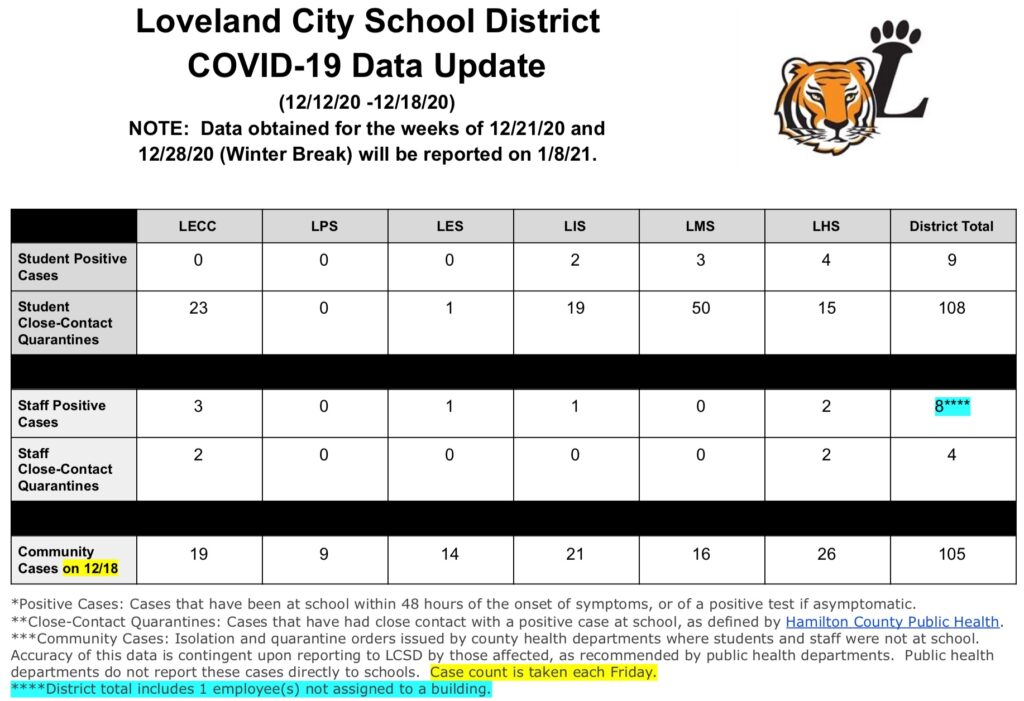
    Here is the last Covid 19 Dashboard that was published by the District (12/12/20 -12/18/20) right after classes dismissed for Winter Break:


    Statewide Curfew extended for another three weeks

    The Ohio Department of Health is extending the 10 PM to 5 AM statewide curfew for another three weeks until January 23. Governor Mike DeWine said, “This is b/c we don’t yet know what effect the holidays may have on our hospitals and health care systems, so we must continue to be cautious.”

  • Governor DeWine signs Ohio Certificate of Ascertainment

    Governor DeWine signs Ohio Certificate of Ascertainment

    Columbus, Ohio – Ohio Governor Mike DeWine today signed Ohio’s Certificate of Ascertainment, which identifies the appointed electors and final vote count in Ohio for each candidate in the U.S. Presidential Election held on November 3, 2020.

    Ohio’s Certificate of Ascertainment shows the most popular votes went to Donald J. Trump and Michael R. Pence.

    “As Chief Executive of the State of Ohio, I certified today the Certificate of Ascertainment, which is a part of the electoral process in our state,” said Ohio Governor Mike DeWine. “I want to thank Ohio voters for exercising their right to vote, as well as all of our poll workers, local election officials, and Ohio Secretary of State Frank LaRose for a smooth democratic election process in Ohio.”

    The Certificate of Ascertainment is the legal document that links the popular vote in Ohio to the electoral process. Federal law requires the Chief Executive of each state to certify the Certificate of Ascertainment.

    The State meetings of the electors will be held on December 14, 2020. At the meetings, the electors vote for President and Vice President.

    Under Ohio law, the candidate with the most popular votes in Ohio receives all 18 of Ohio’s electoral college votes, which will be cast by these electors:

    • Ken Blackwell
    • Bonnie Ward
    • Barbara Clark
    • Keith Cheney
    • Mark Wagoner
    • Dave Johnson
    • Joy Padgett
    • Patti Alderson
    • Steve Loomis
    • Rob Scott
    • Patricia Weber
    • Robert Paduchik
    • Karen Arshinkoff
    • James Wert
    • Jim Canepa
    • Jane Timken
    • Darrell Scott
    • Madison Gesiotto
  • Trump swipe at DeWine follows year of campaign support, and COVID-19 praise

    Trump swipe at DeWine follows year of campaign support, and COVID-19 praise

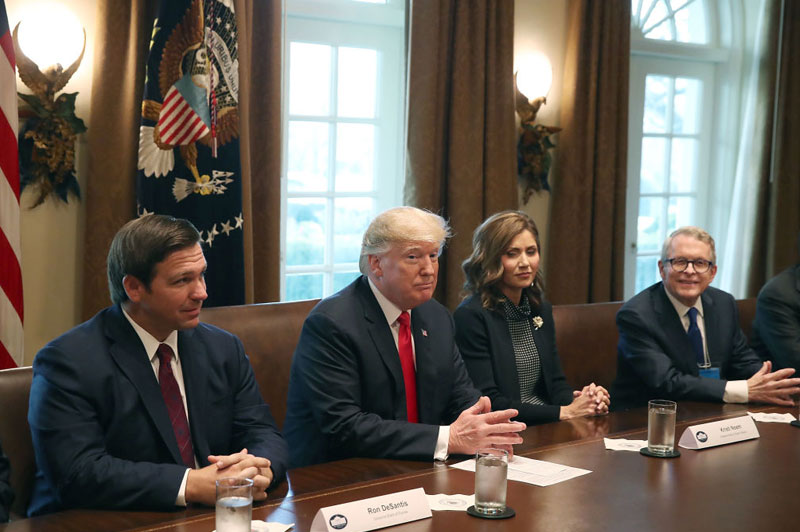
    President Donald Trump meeting with governors, including Ohio Gov. Mike DeWine. Photo by Mark Wilson/Getty Images.


    By Tyler Buchanan

    A year of Gov. Mike DeWine defending the president’s pandemic response and supporting his reelection effort was undone by a brief acknowledgment of reality on cable TV.

    To President Donald Trump, one comment is all it takes for someone to go from political ally to persona non grata.

    On Sunday, DeWine said on CNN that Trump has a right to legally challenge the 2020 election result, but should begin working toward a transition for President-elect Joe Biden. That clip was aired Monday morning on Fox News, a network Trump frequently watches at the White House, leading the president to target DeWine’s own reelection hopes in 2022:

    This tweet to the president’s 89 million followers bookends a year in which DeWine has consistently praised Trump and frequently dodged questions related to the president’s handling of the pandemic.

    DeWine’s office issued this statement in response to the president’s tweet: “I have always had a great working relationship with the President. I am proud to have served as President Trump’s Campaign Co-Chairman in Ohio where we won by the largest margin of any swing state in the country. And I intend to run a winning campaign for governor in 2022.”

    DeWine served as an honorary co-chair to Trump’s campaign in Ohio and recorded a video in support of Trump for the 2020 Republican National Convention. His lieutenant governor, Jon Husted, spoke at a Trump rally in September in favor of the president’s reelection — though the crowd of Trump supporters booed Husted for promoting mask-wearing to prevent COVID-19 spread. 

    While DeWine has emphasized the need for masks and social distancing, Trump has often undercut this public health message by hosting large campaign rallies and downplaying the effectiveness of face coverings.

    DeWine has sidestepped questions from reporters about these contradicting messages, instead choosing to praise the White House for its conference calls with governors and for its work in helping develop a vaccine. 

    The Trump tweet came anyway. 

    The president’s suggestion of a Republican primary comes as DeWine faces increasingly sharp attacks from seemingly all sides regarding his handling of the COVID-19 pandemic. Democratic leaders, who have generally been supportive of the Republican governor and the Ohio Department of Health, want him to take more aggressive steps to slow the spread as Ohio sees record numbers of infections and hospitalizations.

    Republican legislators have dialed up their own criticism of their party’s leader, insisting DeWine should refrain from issuing any further health orders such as business shutdowns.

    DeWine earned very high marks from the general public early in the pandemic for his aggressive response in partnership with then-Ohio Department of Health Director Dr. Amy Acton. That support led to widespread cooperation in the early weeks as the two enacted business closures and a stay-at-home order.

    Support for DeWine has gradually waned in the months since, though a Great Lakes poll in September found a majority of Ohioans still viewed DeWine’s coronavirus response favorably.

    Hours after Trump’s tweet, DeWine did receive a compliment from President-elect Joe Biden at a Monday afternoon press conference. Biden referred to DeWine as a leader in having “stepped up” to issue a mask mandate in Ohio.

    Outside of the electoral ramifications of Trump’s tweet, the public sentiment over the Ohio pandemic approach may impact DeWine’s ability to amass future cooperation for any health orders still to come.

    DeWine has hinted that orders pertaining to bars, restaurants and social gatherings could come as soon as this week. 

    The governor spent early Monday in West Virginia speaking to TV stations which broadcast to the southern and eastern portions of Ohio. DeWine has offered region-specific messages to Ohioans about the virus spike and how residents can slow the spread in their areas.

    With this year’s election now over, some Ohio Republicans have begun turning their attention to 2022. Among them is Jim Renacci, a former Congressman from Medina County and fervent Trump supporter who ran for governor against DeWine in 2017. Renacci quit the Republican primary to instead campaign for U.S. Senate against Democratic incumbent Sherrod Brown, who defeated Renacci in the 2018 General Election.

    State Rep. Jena Powell, R-Arcanum, has offered a similar view.

    “The solution today is taking away (DeWine’s) emergency powers,” Powell wrote on Facebook after the governor’s statewide address on Nov. 11. “The solution in two years is to not re-elect Mike DeWine.”

    Powell shared Trump’s tweet in agreement.

    “Even President Donald J. Trump knows Governor Mike DeWine is doing a terrible job,” she posted. “Ohio needs conservative leadership that actually represent the people first.”

    Some Ohio Democrats see the Trump tweet as a political lesson.

    U.S. Sen. Rob Portman, R-Ohio, is another Republican facing reelection in 2022. He has not yet acknowledged the presidential election result.