Tag: Mike DeWine

  • Where Ohio’s GOP leaders are on the outcome of the election

    Where Ohio’s GOP leaders are on the outcome of the election

    By Marty Schladen – November 9, 2020 (Ohio Capital Journal)

    Some, but not all, Ohio Republican officials on Monday appeared to be distancing themselves from Donald Trump’s unsubstantiated claims that the Nov. 3 election is being stolen from him.

    Trump racked up early leads — particularly in some battleground states where Republican lawmakers refused to allow early processing of mail-in votes. A massive portion of the electorate was expected to take advantage of mail-in voting because of the coronavirus pandemic and some states, such as Ohio, were ready to start processing them weeks before Election Day.

    Also, Trump for months has been discouraging his supporters from voting by mail. So it was widely expected in states like Pennsylvania, Michigan and Wisconsin that most of the early results to come in would be from Election Day voting and would heavily favor Trump. Those would be followed by mail-in ballots heavily favoring former Vice President Joe Biden and would take days to count.

    That’s just what happened, and by late Saturday morning all major U.S. news organizations judged that Biden had built an insurmountable lead in Pennsylvania and projected him to be the winner of the election.

    By Monday afternoon Trump’s allies were talking about legal challenges to the vote in several states, but the Washington Post reported that there appeared to be no central strategy. Meanwhile, many others called on Trump to stop undermining the public faith in the electoral process and concede.

    “We all knew the counting process was going to take longer than usual this year because of the once-in-a-lifetime pandemic and higher voter turnout,” U.S. Sen Sherrod Brown, a Democrat, said over the weekend. “Counting votes and making sure every voice is heard is not fraud — it’s democracy at work. The President’s attacks on our democratic process are dangerous, but we will count every single vote.”
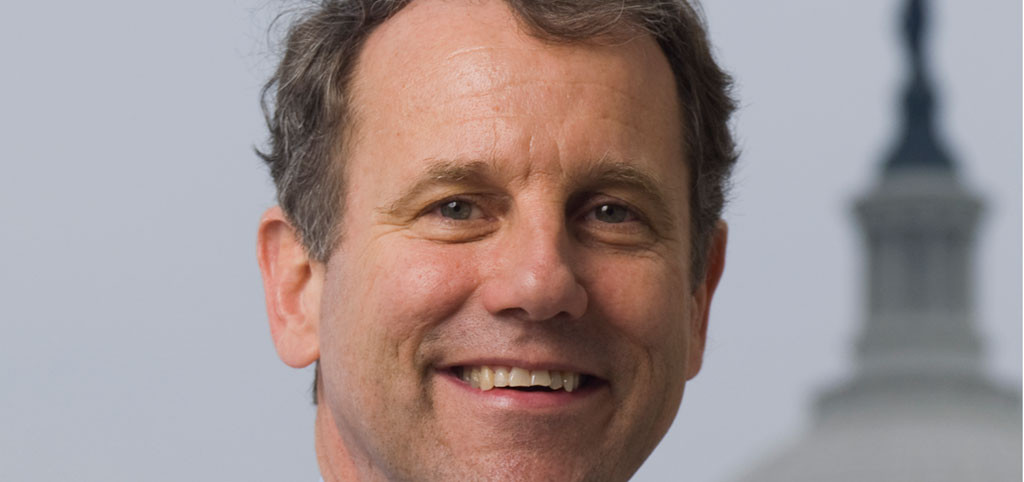
    U.S. Sen Sherrod Brown

    On Sunday, former President George W. Bush became the most prominent Republican to essentially declare the election over when he congratulated Biden.

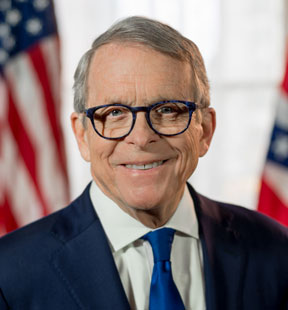
    Early Monday afternoon, Ohio Gov. Mike DeWine, also a Republican, congratulated Biden, although he said Trump has every right to go to court if he wishes.

    “I congratulate Vice-President Biden,” DeWine said in a statement. “It would appear that President Trump’s legal team will be filing legal actions. The President’s lawyers have every right to present evidence in court on any legal issues or irregularities involving the election, and the courts are the proper place to hear evidence on these issues.  When lawsuits have concluded and election results are certified, it is important for all Americans to honor the outcome.”

    The office of Ohio’s top elections official, Secretary of State Frank LaRose, was more direct when asked if LaRose believed Biden had won.

    “Yes, he does,” his spokeswoman, Maggie Sheehan, said in an email.

    She pointed to an Oct. 6 statement LaRose had made on Fox News.

    “When the results on election night say one thing and then when the results change over the ensuing several weeks, that’s not a sign that something nefarious is happening,” he said. “In fact, quite the contrary. It’s a sign that the legal process is being allowed to play itself out so that every legally cast vote can be tabulated. That’s exactly what we need to do.”

    Meanwhile another Ohio Republican, Attorney General Dave Yost, is following Trump into court. Politico reported Monday that Yost’s office had filed a friend-of-the-court brief with the U.S. Supreme Court challenging a three-day extension for ballots to be received in Pennsylvania. That is one of the matters Trump and his allies are litigating.

    Attorney General Dave Yost

    Yost’s office didn’t respond when asked if the attorney general believed Biden had won the election. But Georgetown University Law Professor Josh Chafetz tweeted that the Supreme Court effort was pointless.

    Yost released a statement saying that the legal action transcends pollitics.

    “This constitutional question will come up again in future elections,” it quoted him as saying. “It is in the best interest of all Ohioans — all of America — to gain a definitive answer, regardless of politics.”

    The office of U.S. Sen. Rob Portman didn’t immediately respond when asked if he believed that Biden had won the election. But over the weekend, Portman refused to criticize Trump for appearing in the White House East Room early Wednesday morning to declare himself the winner.
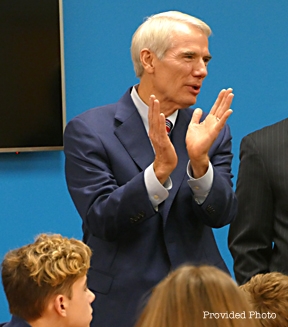
    U.S. Sen. Rob Portman

    His office referenced a series of tweets posted on Friday that didn’t address whether it was right for a president to call himself the winner of an election in which vast numbers of votes hadn’t been counted.

    The office of Ohio Auditor Keith Faber, an ardent Trump supporter, didn’t respond when asked if he believed Biden had won the election.

    Ohio Treasurer Robert Sprague didn’t answer whether he thought Biden had won, but he urged patience.

    “While news organizations make projections, they do not determine the winner of the Presidential election — the people do,” he said in a statement issued by his office. “That’s why it’s important to allow the elections departments of all 50 states to continue completing their certification processes so the 2020 election can be finalized properly and in accordance with the states’ laws. This process takes time, and it’s in the best interest of our republic to ensure it’s done right, rather than done fast.”


    Marty Schladen

    Marty Schladen has been a reporter for decades, working in Indiana, Texas and other places before returning to his native Ohio to work at The Columbus Dispatch in 2017. He’s won state and national journalism awards for investigations into utility regulation, public corruption, the environment, prescription drug spending and other matters.


  • DeWine hires attorney with thin public health background to lead health department

    DeWine hires attorney with thin public health background to lead health department

    By Jake Zuckerman

    Columbus, Ohio – Gov. Mike DeWine hired an attorney to lead the Ohio Department of Health on Thursday, a position that has remained vacant for the past five months of the pandemic.

    Stephanie McCloud, who currently runs the Ohio Bureau of Workers’ Compensation, will take over a position that has been filled on only an interim basis since Dr. Amy Acton stepped down in June.

    She will now oversee the quickly worsening COVID-19 pandemic, as measured by spiking case counts, rising positivity rates, a swelling active hospitalization count, and an ever-ascending death toll.

    McCloud’s hire is a pivot from the physicians who previously held the post like Acton or Dr. Joan Duwve, who was set to replace Acton but quit the job in September before she officially started. DeWine has said in the past he specifically wanted a medical doctor to fill the post.

    “When I was elected governor, I knew that I wanted a Director of Health with a strong public health background, someone who had a passion for public health, and someone who could talk to Ohio citizens in a candid way about health issues,” DeWine said in June.

    An about page on the BWC website lists McCloud’s backgrounds in insurance administration and the law, but nothing specifically relating to public health or infectious disease control.

    1993 state law requires the ODH director to be either a physician or a person who has had “significant experience in the public health profession.”

    Dan Tierney, a DeWine spokesman, said McCloud’s work at BWC, which consists in part of evaluating claims of work-related health care claims and finding ways to prevent workplace health issues, meets the terms of the statute.

    He also emphasized DeWine’s related announcement of hiring a new chief medical officer, Dr. Bruce Vanderhoff, and related moves from lower-profile COVID-19 response staff.

    “There’s multiple people who need to lead on this,” he said.

    McCloud has valuable experience in management but nothing as it relates to public health, according to Micah Berman, a professor of public Health Law at Ohio State University.

    “To me, this is indicative of the lack of respect — or understanding — of public health as a field of expertise,” he said. “The Director of Health should have expertise in public health — not just in health care or another health related field.”

    The position has proven difficult to fill since Acton left. Acton had been the public face of Ohio’s public COVID-19 response to the newly emergent coronavirus, which included delaying a primary election, closing schools and businesses, and beginning to phase in a mask mandate.

    However, Acton faced tremendous public backlash. Protesters gathered and called her out by name in rallies in front of the Capitol and outside her Franklin County home. Some of them carried guns. At least two people hoisted anti-Semitic signs at both locations.

    Even after she stepped down, businesses and individuals challenging various COVID-19 health orders have named Acton as a defendant and issued summons seeking to drag her back into the fights. She described to The New Yorker hearing a conservative talk radio host in Ohio say if his key adviser quit during a crisis, he’d want to punch him in the face.

    In September, DeWine announced that Duwve would fill in where Acton left off. However, just hours after DeWine announced her hiring, Duwve declined the job.

    Duwve cited harassment of Acton as a reason for turning it down.

    Announcing Duwve’s hire, DeWine boasted of her “extensive experience in public health” in both government service and academia.

    The medical community has started to shine light on increasing backlash against public health officials navigating pandemics with no fixed playbook.

    An August viewpoint article with the Journal of American Medicine cited Acton and dog-whistle anti-Semitic remarks thrown her way by a state politician in its argument for more cover for health officials from political leaders.

    “The present harassment of health officials for proposing or taking steps to protect communities from COVID-19 is extraordinary in its scope and nature, use of social media, and danger to the ongoing pandemic response,” it states. “It reflects misunderstanding of the pandemic, biases in human risk perception, and a general decline in public civility.”

    Pages: 1 2

  • Ohio Department of Education and Governor’s Office of Workforce Transformation announce Innovative Workforce Incentive Program

    Ohio Department of Education and Governor’s Office of Workforce Transformation announce Innovative Workforce Incentive Program

    Columbus, Ohio – The Governor’s Office of Workforce Transformation and the Ohio Department of Education today

    $34 Million Available Over Two Years

    announced the list of industry-recognized credentials eligible for $34 million under the new Innovative Workforce Incentive Program. Ohio Governor Mike DeWine and the Ohio General Assembly developed the program to create more opportunities for students to earn in-demand, industry-recognized credentials.

    The program includes $9 million in the state’s two-year budget for grants to assist school districts, community schools, joint vocational schools, and STEM schools in establishing credential programs to prepare students for careers in priority industry sectors. Schools can begin applying for a share of the funding via the state’s Comprehensive Continuous Improvement Plan grant application process on December 19, 2019.

    School districts are also eligible to receive a share of $25 million over the current state budget to encourage the start of additional credential programs. Under this program, schools can receive $1,250 for each qualifying credential earned by students.

    “When Ohio students graduate high school, they should be college or career ready,” said Governor DeWine. “This program helps schools expand credentialing opportunities and ensures potential employers that students have the skills they need to succeed in high-wage, in-demand fields.”

    Lieutenant Governor Jon Husted

    “We must prepare Ohio’s workforce to earn the skills they need to succeed in an increasingly tech-infused economy, and we need to seize the opportunity to do so before they graduate from high school. Today’s announcement reinforces the administration’s commitment to providing more opportunities for Ohioans to earn in-demand, industry-recognized credentials, offering a pathway to better paying and higher quality career options,” said Lieutenant Governor Jon Husted who serves as Director of the Governor’s Office of Workforce Transformation.

    Paolo DeMaria, state superintendent of public instruction

    “Today’s students are tomorrow’s workforce,” said Paolo DeMaria, state superintendent of public instruction. “We are committed to supporting students in acquiring relevant, marketable skills that empower them to achieve success in Ohio’s emerging and priority industries. Innovative Workforce Incentive Program Funds will make it possible for schools to develop the programs students need to earn in-demand credentials.”

    The Innovative Workforce Incentive Program aligns with Ohio’s five-year strategic plan for education, Each Child, Our Future. The plan states that each child will see the relevance of his or her learning, be exposed to practical, real-world work settings, and begin defining his or her future during high school.

    Industry-recognized credentials are an innovative approach to ensuring that high school inspires students to identify paths to future success. Such credentials also offer students many ways to demonstrate the knowledge and skills needed for high school graduation and beyond. Credentials also benefit employers by validating the knowledge and skills of potential employees.

    More information about the Innovative Workforce Incentive Program, including the qualifying industry-recognized credentials is available here.

    Find more information on high school industry-recognized credentials here.

  • Governor Mike DeWine announces home visitation pilot program for children

    Governor Mike DeWine announces home visitation pilot program for children

    Ohio Governor Mike DeWine

    Columbus, Ohio – Ohio Governor Mike DeWine has released recommendations from the Governor’s Advisory Committee on Home Visitation about how to increase the state’s investment in proven home visitation programs and announced a new pilot program to expand home visiting programs.

    “Evidence-based home visiting programs help give children the best possible start in life and increasing participation can help lower infant mortality rates, increase kindergarten readiness and improve parenting skills,” said Governor DeWine. “Strong children grow into strong adults, so an investment in these proven programs is an investment in our state’s future.”

    The advisory committee, formed the day after Governor DeWine took office, is made up of leaders from the Ohio Children’s Hospital Association, home visiting programs, and area health officials. The group met six times to form this collaborative report that makes 20 recommendations aimed at tripling the number of families served through evidence-based home visiting.

    The recommendations include:

    • Make race and ethnicity foundational elements of the state’s infant mortality efforts.
    • Expand and streamline eligibility requirements so more at-risk families can be served.
    • Create a central point of intake for all home visiting programs.
    • Create a central data warehouse for all home visiting programs.
    • Promote collaboration among healthcare payers, children’s hospitals, birthing hospitals, and other community-based providers.
    • Leverage the Medicaid program to reimburse for eligible services in a more cost-effective manner.
    • Align the Department of Medicaid infant mortality reduction funds to complement the Help Me Grow program.
    • Increase the frequency of the Ohio Department of Health incentive payments.

    The entire report can be found on the governor’s website at www.Governor.Ohio.gov.

    To implement these recommendations, Governor DeWine will be asking the legislature to double the funding of Ohio’s home visiting programs, investing an additional $50 million over the biennium into evidence-based home visiting programs, bringing the total state funding for home visiting to $90 million over two years.

    To help triple participation in home visiting programs, Governor DeWine also announced the formation of a pilot program, Pay for Success, a public-private partnership aimed at increasing the availability of, and participation in, home visiting programs.

    Participating communities fundraise to contribute the upfront capital for the programs and then receive incentive payments from the Ohio Department of Health based on a custom Outcomes Rate Card, to be released in the coming weeks, every time a participating family meets a performance metric. Once communities reach goals set by the Ohio Department of Health, they will receive enhanced payments for their success.

    “This innovative approach is one way to encourage expansion of these programs. Working together communities can invest in their own success.” said Governor DeWine. “By leveraging private dollars, we can work to address some of our most pressing health needs.”


  • School districts may apply for trauma-informed care training

    School districts may apply for trauma-informed care training

    Attorney General DeWine Announces Initiative to Help Child Victims of Crime

    Columbus, Ohio —Ohio Attorney General Mike DeWine today announced a new initiative to help child victims of crime. Funded by grants from the federal Victims of Crime Act, DeWine is setting aside at least $25 million to fund children’s programs.

    “It is critical that crime victims have access to comprehensive care and services, and that includes services for our youngest, most vulnerable victims,” DeWine said. “We want to help ensure that kids who experience trauma receive the care they need.”

    DeWine called on organizations across the state to submit innovative ideas for programs in areas such as:

    • Providing comprehensive services to child victims of physical or sexual abuse.
    • Addressing mental health issues in children who have experienced trauma.
    • Providing trauma-informed care training to interested Ohio schools.
    • Helping children whose families are struggling with substance abuse.
    • Researching the impact of child abuse, neglect, and other adverse childhood experiences.
    • Locating safe, trauma-informed living environments for children.

    Organizations should contact the Ohio Attorney General’s Office to learn more about VOCA grants or to submit a proposal.


    The federal Victims of Crime Act (VOCA), signed into law in 1984, established an account known as the Crime Victims Fund, which is financed by federal settlements, fines, and penalties. States apply each year for the federal grant and then award VOCA funds to eligible public and nonprofit organizations.

    In Ohio, the Attorney General is responsible for administering the state’s VOCA grants. The state was awarded $117 million for fiscal year 2018-2019, an increase of more than $30 million from the previous year.


  • Attorney General DeWine statement on Senate passage of Cybersecurity Bill

    Attorney General DeWine statement on Senate passage of Cybersecurity Bill

    Columbus, Ohio – Ohio Attorney General Mike DeWine today released the following statement regarding the Senate passage of Senate Bill 220, the Data Protection Act sponsored by State Senators Bob Hackett (R-London) and Kevin Bacon (R-Westerville):

    “This commonsense legislation would be a win-win for both Ohio business owners and Ohio consumers,” said Attorney General DeWine. “Encouraging businesses to take the appropriate steps to protect their customers’ personal information could avoid costly data breaches for companies and give customers peace of mind that their personal information is protected.”

    The Data Protection Act is the first piece of legislation introduced as a result of Ohio Attorney General Mike DeWine’s CyberOhio Initiative. The measure would encourage businesses to voluntarily adopt strong cybersecurity controls to protect consumer data. The legislation identifies ten different industry-recognized cybersecurity frameworks on which businesses can base their security programs. 

    Launched in September 2016, the goal of CyberOhio is to help foster a legal, technical, and collaborative cybersecurity environment to help Ohio businesses thrive. In addition to promoting legislation, other parts of the initiative include training opportunities for businesses, development of cybersecurity workforce personnel, and expansion of the Ohio Attorney Generals’ Identity Theft Unit.

    The bill will now go to the Ohio House of Representatives for consideration.

    The text of Senate Bill 220is available at www.legislature.ohio.gov. More information about the Attorney General’s CyberOhio initiativecan be found on www.OhioAttorneyGeneral.gov.


  • As Sunshine Week begins, Attorney General DeWine releases updated ‘Yellow Book’

    As Sunshine Week begins, Attorney General DeWine releases updated ‘Yellow Book’

    Columbus, Ohio – Ohio Attorney General Mike DeWine has released the 2018 edition of Ohio Sunshine Laws: An Open Government Resource Manual. The release of the manual, commonly referred to as the “Yellow Book,” coincides with the beginning of National Sunshine Week.

    Ohio Attorney General Mike DeWine has released the 2018 edition of Ohio Sunshine Laws

    “By providing elected officials, public employees, and Ohio citizens with information about public records and compliance, we help ensure accountability and transparency in the conduct of public business.,” said Attorney General DeWine. 

    The Sunshine Laws Manual provides summaries of Revised Code provisions and case law regarding the Ohio Public Records Act and Open Meetings Act. The 2018 edition includes updates on recent open government legal decisions and law changes. The electronic edition, which can be accessed at www.OhioAttorneyGeneral.gov/YellowBook, includes clickable   bookmarks to allow readers to quickly jump to the topic in which they are interested as well as hyperlinked court cases to allow readers to quickly access court decisions.. 

    Sunshine Laws Training, which is available to the public

    The Ohio Attorney General’s Public Records Unit also offers Online Sunshine Laws Training, which is available to the public and can be accessed at https://SunshineLaw.OhioAttorneyGeneral.gov/. The Online Sunshine Laws Training contains thirteen separate lessons plus an introduction video featuring the Attorney General. Each lesson combines a video instruction with quiz questions covering important topics under the Ohio Public Records Act or Ohio Open Meetings Act. Topics cover the length and breadth of the Ohio Sunshine Laws, from defining a public record to appropriate redactions before release. To complete the training, users must watch each video lesson in its entirety, correctly answer the quiz questions concerning the material covered, and fill out an evaluation providing feedback on the quality of the training.

    The training lessons can be completed at the user’s own pace, and the entire three-hour training does not need to be completed in a single sitting.

    The training lessons can be completed at the user’s own pace, and the entire three-hour training does not need to be completed in a single sitting. Users are able to return to the videos they have completed if a specific topic is of particular interest. The online training is approved for CLE credit, as are live Sunshine Laws trainings, and can be completed at home or in the office.

    The Ohio Attorney General’s Public Records Unit conducts Sunshine Laws Trainings at dozens of locations around Ohio. The training on Ohio’s Public Records Act is required for local public officials or their designee at least once per elected term and also includes training on the Open Meetings Act. These trainings are also open to the public and media. A list of trainings can be found at www.OhioAttorneyGeneral.gov/SunshineLawTraining.


    513-683-1052
    215 Loveland-Madeira Rd

    Loveland, Ohio 45140