
Tag: milford

  • Local Conservation of the National Wild & Scenic Little Miami River

    Local Conservation of the National Wild & Scenic Little Miami River

    by Joe Timmerman

    Few leaves are still falling off trees and down the ever-running water of the National Wild and Scenic Little Miami River, where they float through five counties and 111 miles of southwest Ohio, into the Ohio River and toward the Mississippi before eventually finding their way into the Gulf of Mexico. Today, these 111 miles of Little Miami River are the cleanest that they have been in the last 40 years, and as the world may seem largely disconnected due to the coronavirus pandemic, a connection between people over time is helping to create the river’s lasting sustainability. 

    An aerial view of the National Wild and Scenic Little Miami River in Maineville, Ohio, on Dec. 3, 2020. (Photo © 2021 Joe Timmerman/Loveland Magazine)

    Since the end of the last Ice Age before this land was known as America, humans have lived along the Little Miami River and enjoyed the resources it provides — drinking the water alongside its banks while hunting for fish within, using the clay to build pottery or structures, and floating on the surface in kayaks or canoes like the leaves still do today. In that time, the river has seen many seasons of change, from shifts in human culture alongside its banks through community development to biological diversities in its rich, natural environment, according to the Little Miami Ecology and History report.
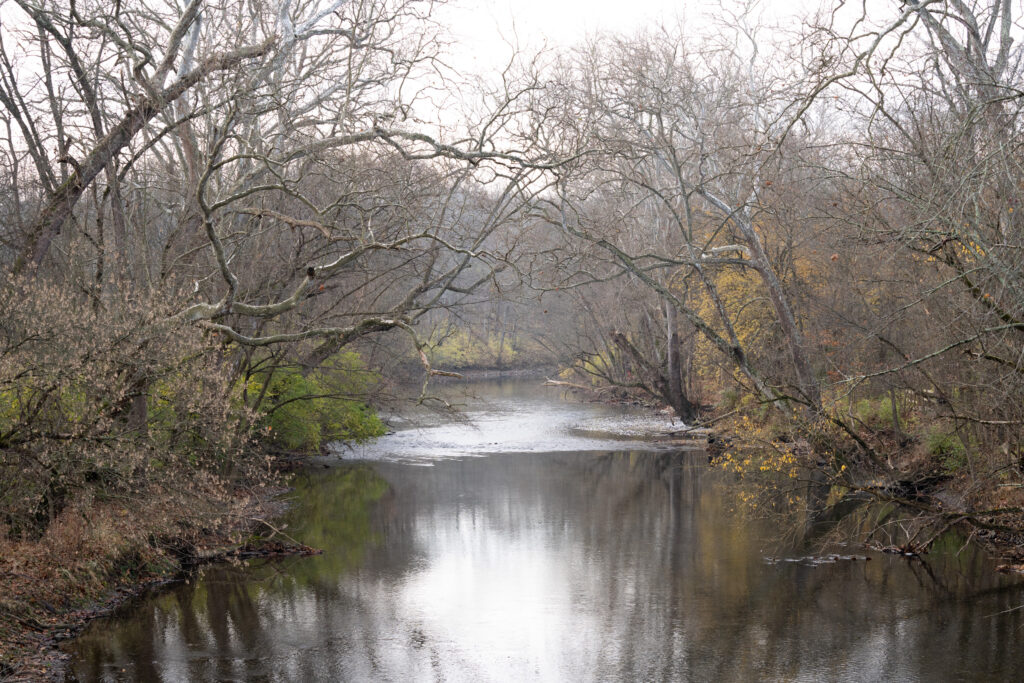
    The Little Miami River at Narrows Reserve Nature Center in Greene County, Ohio, near Beavercreek, on Sunday, Nov. 14, 2020. (Photo © 2021 Joe Timmerman/Loveland Magazine)

    When the Little Miami was designated as Ohio’s first State Scenic River and included in the National Wild and Scenic River System in 1973, according to the Ohio Department of Natural Resources, locals had already been active in its conservation and return to sustainability for more than half a decade. The Little Miami Conservancy (LMC), a non-profit organization fueled by passion for the protection of the river, led the effort in Washington to recognize the importance of protecting the Little Miami River as not only a local hidden gem, but as a national treasure.
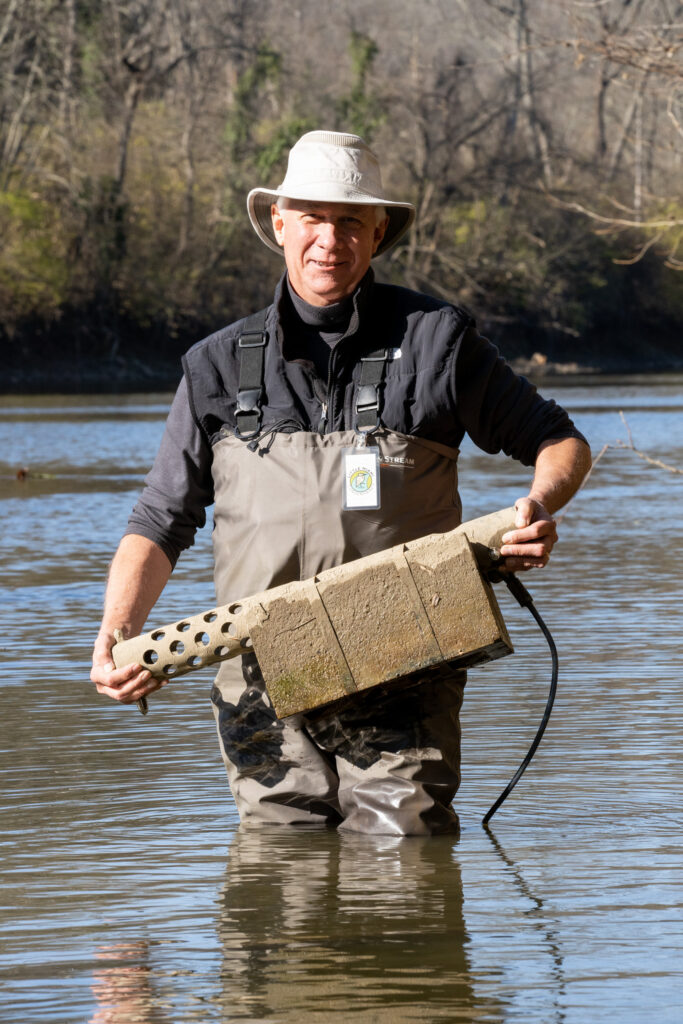
    Eric Partee, executive director of the Little Miami Conservancy, holds one of nine water quality sondes that are found all along the length of the river, this one in Milford, Ohio, on Tuesday, Nov. 16, 2020. “96% of the river is in full attainment with exceptional habitat quality, it’s just in fantastic condition. The challenge is to keep it that way,” Partee said. (Photo © 2021 Joe Timmerman/Loveland Magazine)

    The lower section of the river runs right through the heart of Loveland, Ohio, where LMC and its current executive director, Eric Partee, is based. Partee’s passion roots from the original director of the conservancy, Glenn Thompson, who in 1967 embodied the idea that their effort isn’t about one single person, but rather about everyone coming together to save the river. 

    “Someday, a corridor of green will stretch from one end of the river to the other. Individuals and families will enjoy peace and quiet and restoration of spirit that comes with clean water, birds, and trees,” a quote from Glenn Thompson that Partee believes the conservancy has lived up to.

    Since its origin, the conservancy has worked with agencies like the Ohio Environmental Protection Agency (OEPA), who records the condition of the Little Miami River every 10 years by sampling fish life. In the 1980s, only 4% of the Little Miami River was in full attainment of water quality health, but in recent years, the chart has flipped, and as of 2007, the river is at 96% attainment of health, according to OEPA research.
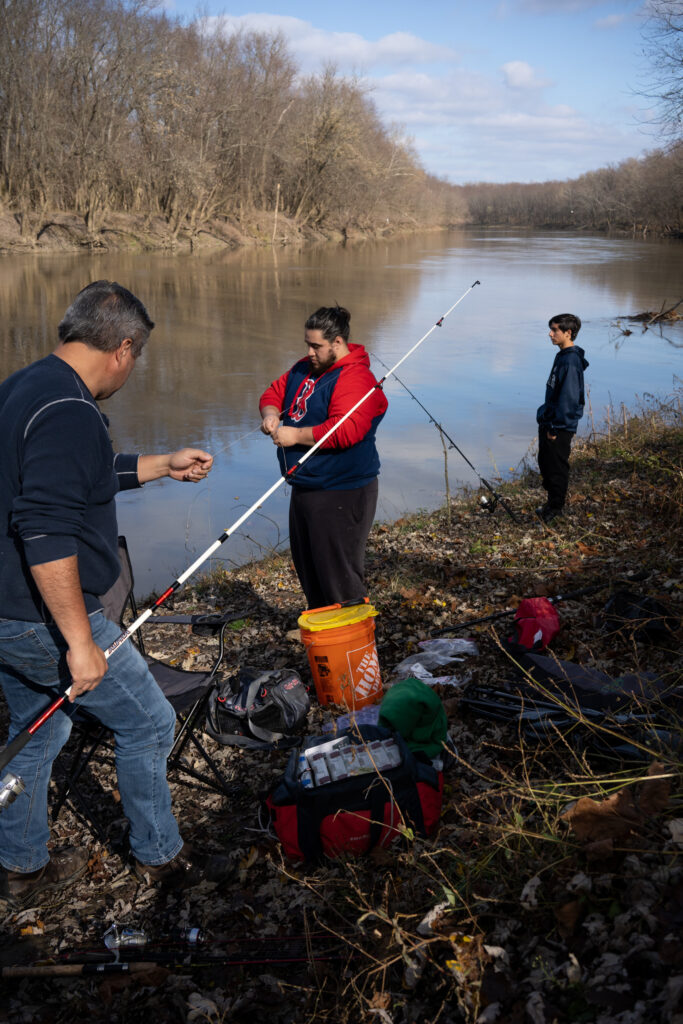
    Kenny Boykin (center) baits his hook at Magrish Nature Preserve just north of the Ohio River on Friday, Nov. 27, 2020. (Photo © 2021 Joe Timmerman/Loveland Magazine)

    “As early as the turn of the century, this river was very well polluted. (There were) a lot of deformed fish, it was not anything close to exceptional,” Partee said in an interview. “It took a lot of discussion, a little bit of arm twisting, and some local funding to fund improvements to the sewage treatment plants to ratchet down on phosphorus, which was the main culprit … when we got the treatment plants to ratchet down on that, biology basically turned around on a dime —from terrible to exceptional.”

    Bubbles float and fall rapidly surrounding a dissolved oxygen analyzer in a section of the WRRF in Beavercreek, Ohio, on Saturday, Nov. 14, 2020. Measuring dissolved oxygen is one way to determine water quality in water, especially in rivers that contain natural life. (Photo © 2021 Joe Timmerman/Loveland Magazine)

    To make sure the river stays healthy, LMC introduced a set of equipment called YSI Water Quality Sondes, which monitor dissolved oxygen in nine locations throughout the length of the entire Little Miami, according to Partee. Each system monitors oxygen every 15 minutes, allowing for constant awareness of river health to prevent a reversion of quality. The conservancy also takes prides in their work on forest restoration through buying riverfront properties, planting trees, removing invasive species, and working collectively to clean up trash in the effort to grow closer to the initial goal of a corridor of green along the riverbank. 
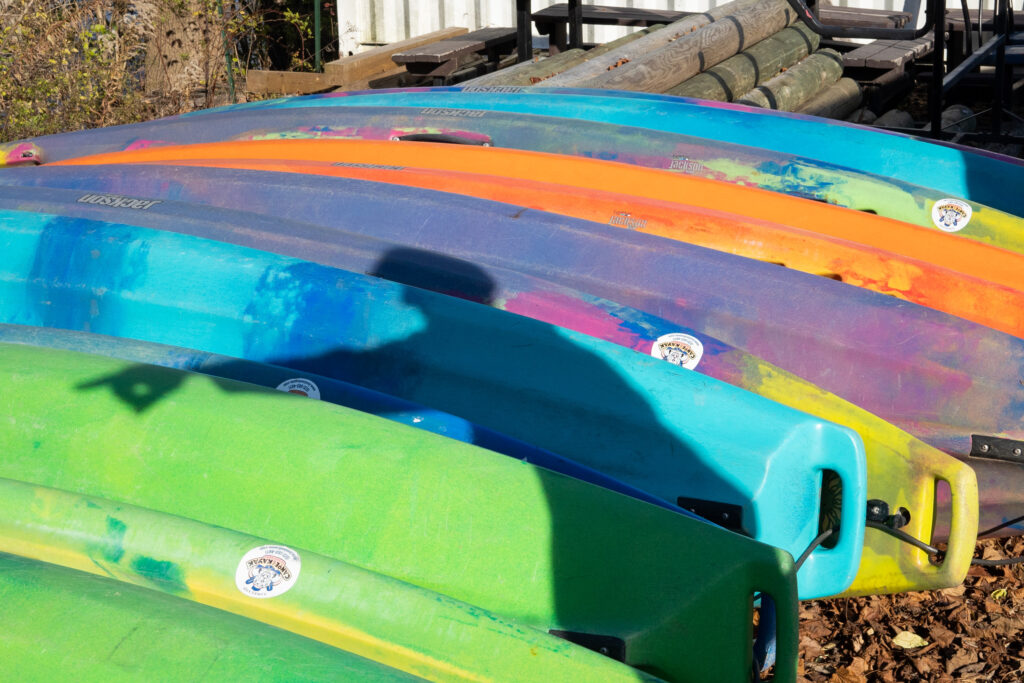
    Mark Bersani, owner of Loveland Canoe and Kayak, points to plants beyond stacks of kayaks along his riverfront property where his business and home sits next to the Little Miami River in Loveland, Ohio, on Friday, Nov. 19, 2020. (Photo © 2021 Joe Timmerman/Loveland Magazine)

    A short walk from the doors of the conservancy is the Loveland Canoe and Kayak Livery, owned by Mark and Robyn Bersani, which is just one of the many businesses along the Little Miami River that rely on its health as their main resource for income. The Bersanis work closely with the conservancy each year by offering and volunteering for cleanups as well as generous donations. This year, along with two other liveries including Rivers Edge and Scenic River, their combined donation to the Little Miami Conservancy’s effort was $56,000, according to Bersani.
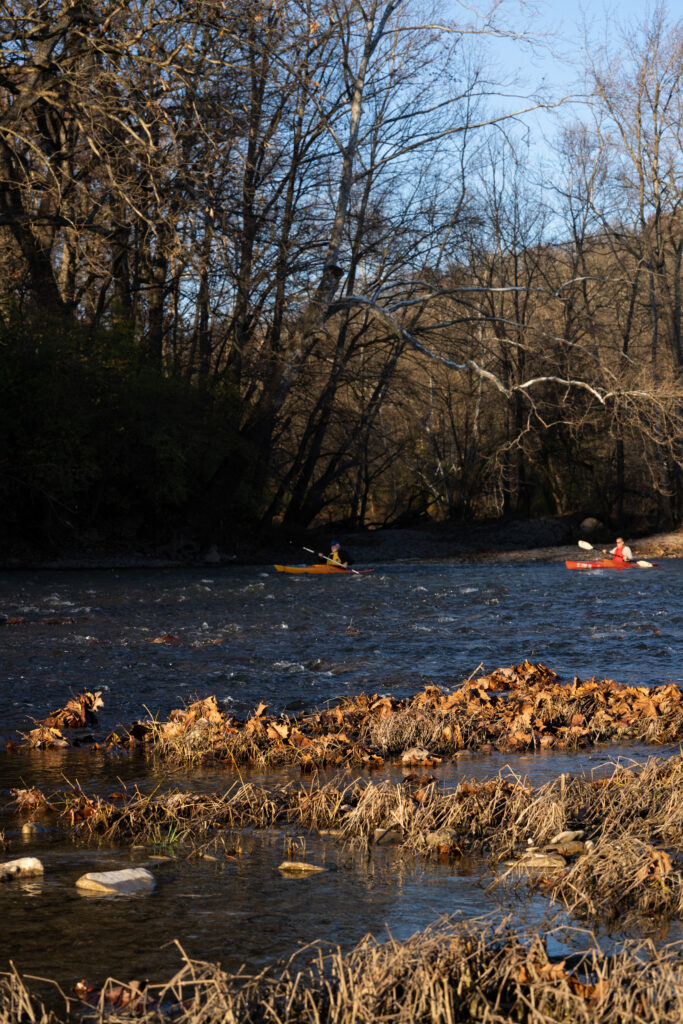
    Kayakers float down the Little Miami River in Loveland, Ohio on Thursday, Nov. 12, 2020. The Little Miami is popular for its kayaking and fishing. (Photo © 2021 Joe Timmerman/Loveland Magazine)

    “We’re involved from a grassroots portion, to actually helping with cleanups, to keeping an eye on the river, as well as donating and continuing to fund the good work that they do,” Bersani said in an interview. “It comes down to the people that live along the river, people that visit the river, the people in the community, if the river is going to stay clean. This river is very natural, it looks like it did 300 years ago … it is vital that the citizens all realize they have a role in this.”

    Up the road at Loveland High School, Amy Aspenwall, an AP environmental science teacher teaches teenagers the importance of environmental awareness through hands-on experiences in places like the Little Miami River. 
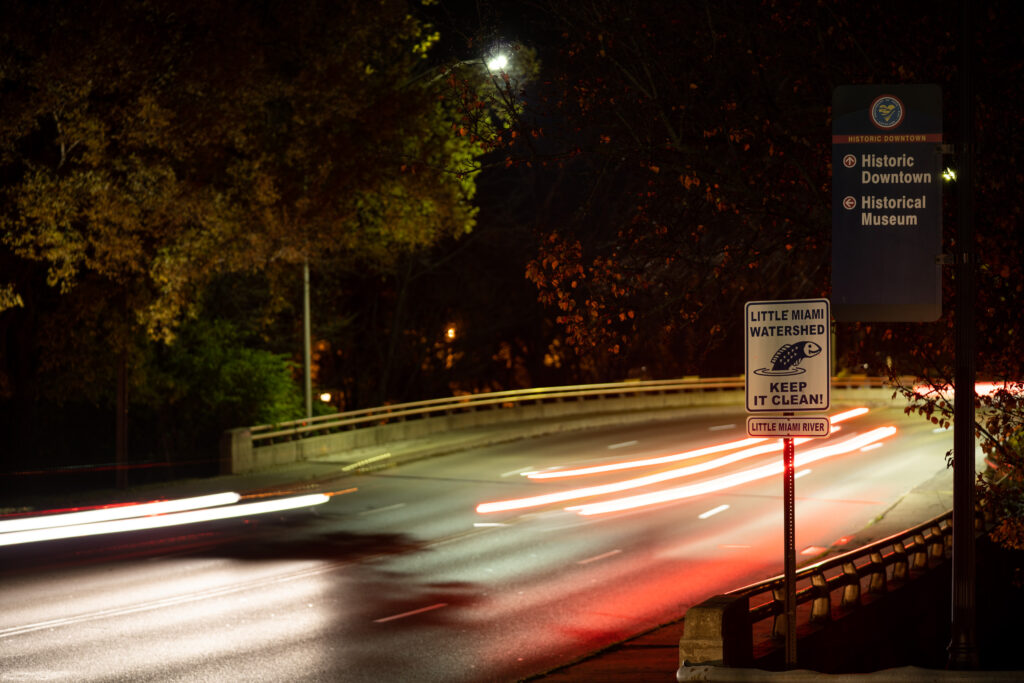
    Perhaps half of the students attending Loveland High School cross over the Little Miami State and National Scenic Little Miami on their way to school each morning.

    A sign in Hamilton County reads, “Little Miami Watershed, Keep It Clean!” as cars cross the bridge above the Little Miami River and into Historic Downtown Loveland on Thursday, Nov. 11, 2020. (Photo © 2021 Joe Timmerman/Loveland Magazine)

    In an interview over Zoom, Aspenwall talked about the importance of students getting out into nature to actually see how humans fit in the environment, because “if you don’t see it, it’s really not your problem,” Aspenwall said. From understanding food waste to the water drinking system to sewer treatment facilities, her goal is to allow students the opportunity to realize a sense of civic responsibility. 

    “It’s important for students to start to think of themselves as a bigger picture rather than just someone following teacher instructions,” Aspenwall said. “I want them to start thinking on their own and realize how powerful they are as a consumer.” 
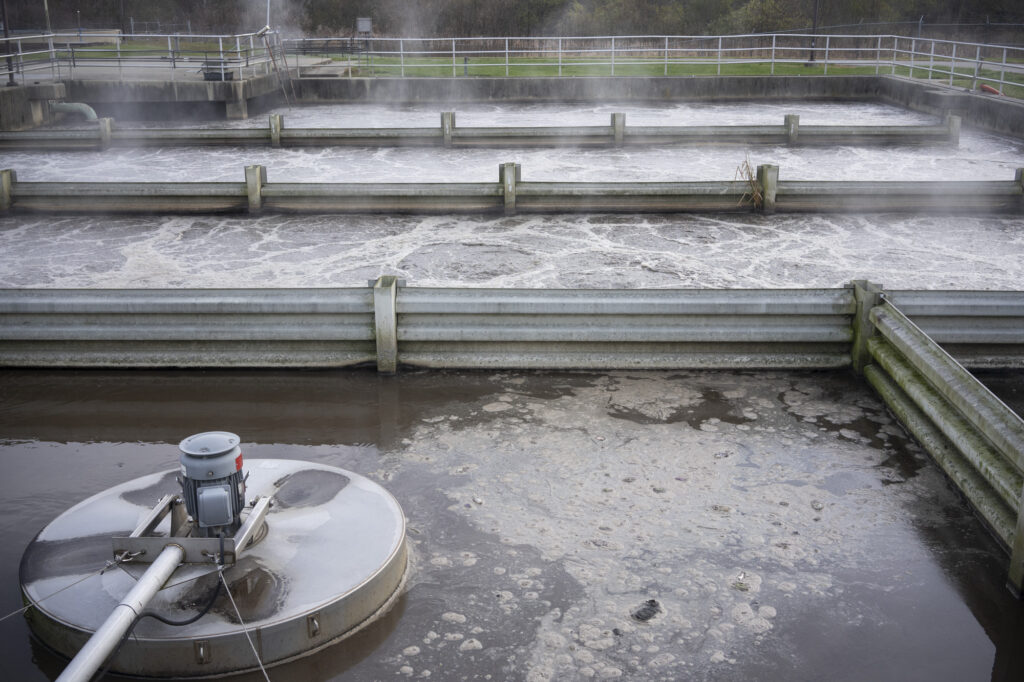
    Steam rises above a section of the WRRF, Water Resource Recovery Facility, in Beavercreek, Ohio, on Sunday, Nov. 14, 2020. The upper Little Miami River water runs through Beavercreek’s WRRF, which discharges 8.5 million gallons of water per day, according to the OEPA. (Photo © 2021 Joe Timmerman/Loveland Magazine)

    Although the Little Miami River is of “exceptional quality,” according to a 2010 water quality monitoring report by the OEPA, “the tributaries were generally of a lower quality.” 

    Michelle Waller, an environmental specialist in the Division of Surface Water at OEPA, discussed the difficulties the river has faced through poor nutrients entering the river due to excess phosphorus from treatment plants and still faces through agricultural runoff from farms, in an interview over Zoom.
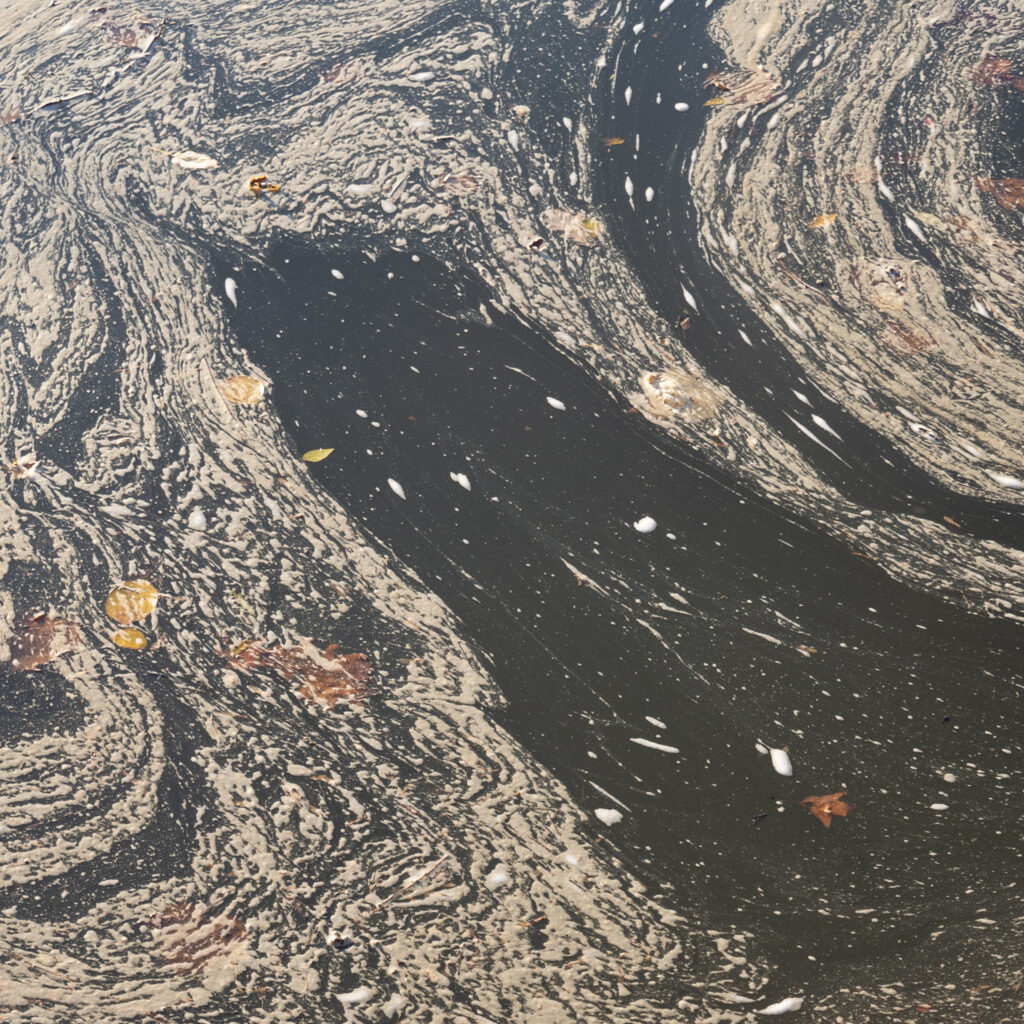
    Particles of sediment floats on the surface of the Little Miami River near a bank in Loveland, Ohio, on Thursday, Nov. 12, 2020. Runoff is one of the biggest threats to the Little Miami River, usually from agriculture, which makes up nearly half of the lower Little Miami’s watershed. (Photo © 2021 Joe Timmerman/Loveland Magazine)

    Waller said that placing phosphorus limits on the main stem’s water treatment plants in recent years proved to show major improvements in river nutrients after the OEPA performed sampling, but other negative sources are out of their reach. “We do not have authority over agriculture the way we do with what we call point sources, the treatment plants,” Waller said. “We try to work with local Soil and Water Conservation Districts, they try to get the word out about good farming practices … but there is no real regulatory authority which is a really big problem.” 

    Tree branches are reflected in a section of the Water Resource Recovery Facility, WRRF, in Beavercreek, Ohio, on Sunday, Nov. 14, 2020. (Photo © 2021 Joe Timmerman/Loveland Magazine)

    The majority of land along the Little Miami River is agricultural, unlike other major rivers in Ohio that have industry running alongside their waters. And just like the branches of community that have come together to help preserve the river, many tributary streams and creeks branch out from the Little Miami, though those tributaries can be overlooked. 
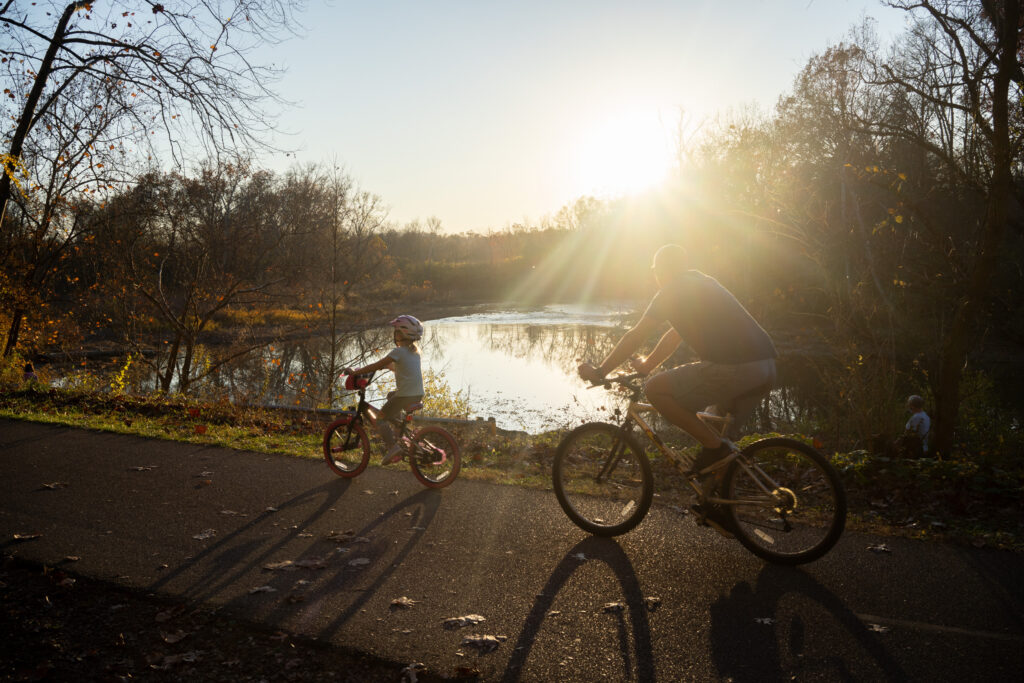
    People bike on a section of the Loveland Bike Trail alongside the Little Miami River in Loveland, Ohio, on Monday, Nov. 8, 2020. (Photo © 2021 Joe Timmerman/Loveland Magazine)

    As most organizations, including the OEPA and LMC, focus their efforts on upholding the exceptional quality of the main stem of the Little Miami River, there is still work to be done in the tributaries. Partee talked about how there just isn’t enough time for LMC to visit every tributary and talk to every landowner. However, near Beaver Creek in Greene County, there is an organization called the Beaver Creek Wetlands Association, which has adopted that very issue. “I think that’s probably the best future for the watershed, to have local citizens dealing with multiple tributaries and try to restore or protect it,” said Partee. 

    Between the shared relationships of the Little Miami Conservancy, OEPA, local government officials, developers, landowners, non-profits, teachers, and local business owners, a community has come together and worked toward the common effort to make a positive, sustainable change in the health of the river. 
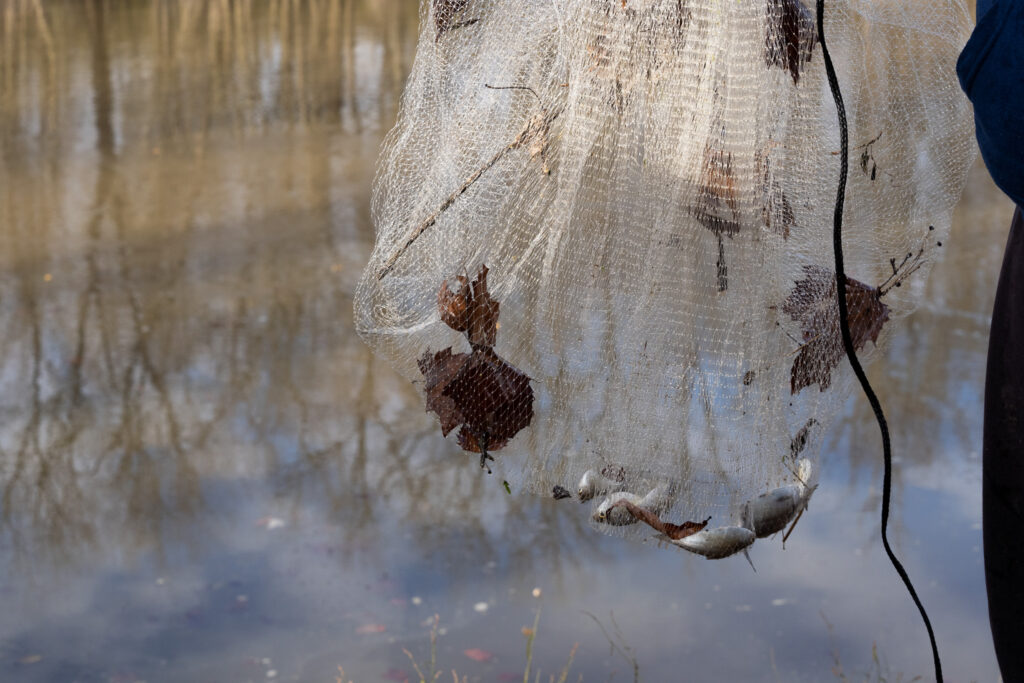
    Kenny Boykin carries a net with a couple bait fish he plans to use to catch catfish in the Little Miami River at Magrish Nature Preserve just north of the Ohio River on Friday, Nov. 27, 2020. (Photo © 2021 Joe Timmerman/Loveland Magazine)

    The timelessness of the Little Miami River will carry on as long as its water continues to run. And as it always has been, it’s still up to the people alongside the riverbank to make sure that the water runs clean for generations to come. As the late author Nelson Henderson said, and Eric Partee paraphrased when we talked together, “The true meaning of life is to plant trees, under whose shade you do not expect to sit.”
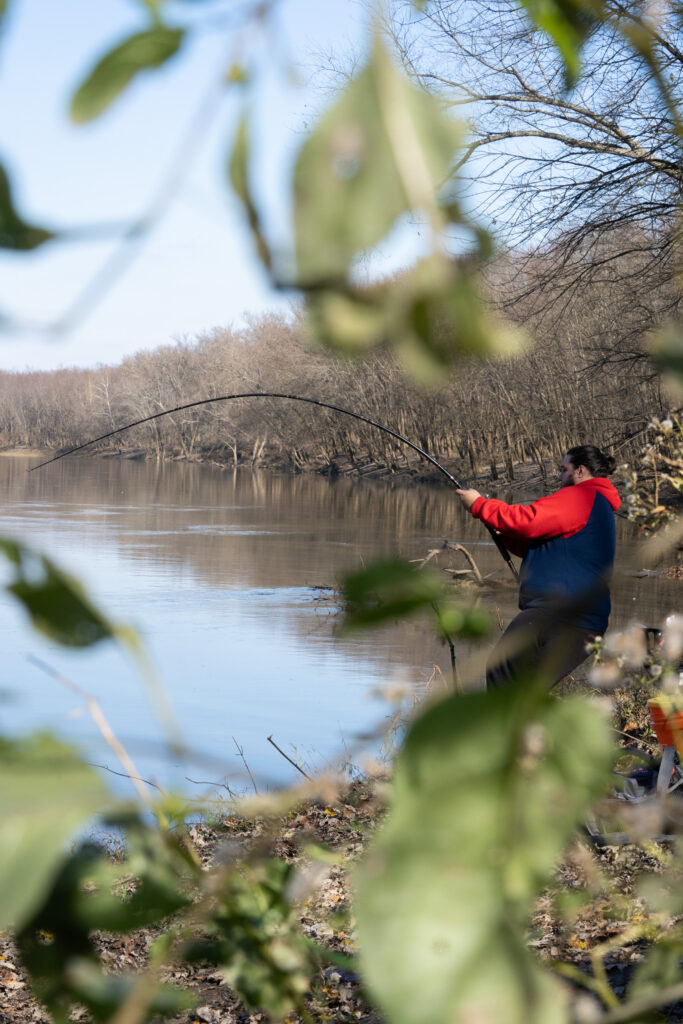
    Kenny Boykin struggles to pull his cast back in after the hook got stuck in the bottom of the river at Magrish Nature Preserve just north of the Ohio River on Friday, Nov. 27, 2020. (Photo © 2021 Joe Timmerman/Loveland Magazine)

    Note: The next OEPA Little Miami River Watershed TMDL Report will be produced and published by 2022, according to the last OEPA TMDL report

    Sunlight breaks through the river’s surface in an underwater view of the Little Miami River near Nisbet Park in Loveland, Ohio on Thursday, Nov. 12, 2020. (Photo © 2021 Joe Timmerman/Loveland Magazine)

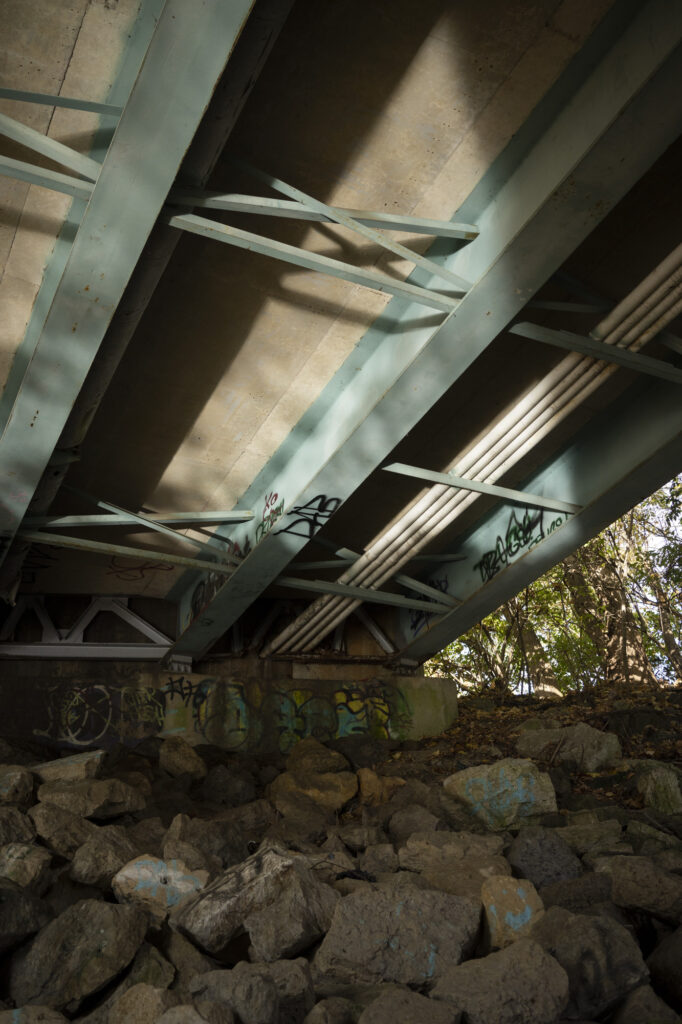
    Currents of the Little Miami River from sunlight reflect onto the bridge that connects Hamilton County and Clermont County in Loveland, Ohio, on Tuesday, Nov. 10, 2020. (Photo © 2021 Joe Timmerman/Loveland Magazine)
  • Milford High School closes until November 16

    Milford High School closes until November 16

    News up-date from the Milford School District

    IMPORTANT INFORMATION FOR MILFORD HIGH SCHOOL FAMILIES!

    Beginning tomorrow, Friday, November 6, Milford High School will move to a remote model.

    Students will return to the building Monday, November 16.

    This means students will learn from home and will follow their school schedule at home.

    Staff will be working in the building and providing live virtual instruction to students.

    Athletics, fine arts, and extracurriculars are cancelled November 6 through November 15.

    We are making this change to remote learning for the high school due to the large number of staff out on quarantine or absent due to illness. We are unable to find enough substitutes to cover for teacher absences. We also have a large number of students in quarantine.

    We are NOT moving the entire district to Plan B (remote learning) because we are only seeing an upward movement of cases combined with staff coverage issues at the High School and at Meadowview Elementary at this time. (Yesterday we cancelled classes for the third and fourth grade at Meadowview Elementary until November 16 out of an abundance of caution because there were students and staff in those grade levels who tested positive for COVID-19.)

    We examine the data each and every day to make the best decisions for our students and staff. Our goal is to keep students learning in person in school safely for as long as possible.

  • Milford cancels some classes after multiple students and staff test positive for COVID-19

    Milford cancels some classes after multiple students and staff test positive for COVID-19

    Milford, Ohio – Milford has canceled classes at their Meadowview Elementary for 3rd and 4th grade until next Monday.

    The District currently lists 441 students and staff as quarantined both from contact within and outside of the schools.

    Below is their announcement:


    Out of an abundance of caution, we made the decision to cancel classes for Meadowview Elementary School’s third and fourth grade. The third and fourth graders will learn remotely the rest of this week and through next week. They will return to school Monday, November 16.

    We decided to close the third and fourth grade classrooms because there have been multiple students and staff in those grade levels who have tested positive for COVID-19. At this time there is not a need to close the rest of the building. We are monitoring student and staff health closely.

    Our COVID-19 dashboard is continually updated to reflect current positive cases district-wide and to show the numbers of students in quarantine. (The COVID-19 dashboard is on our website: https://www.milfordschools.org/…/r…/covid-case-reporting-61/)

    We have seen an increase in cases over the weekend to now. We have a relatively large number of students who are currently quarantined. The majority of the quarantined high school students listed in the chart are quarantined due to exposure from a teammate on an athletic team. There are also students and staff district wide who are under quarantine from exposure not related to school; for example, exposure to a positive close contact who is a family member.

  • Overnight closures planned for S.R. 28 Bypass

    Overnight closures planned for S.R. 28 Bypass

    Miami Township, Ohio – Overnight closures will be effect later this month on the State Route 28 bypass in Milford as part of a bridge deck replacement project on Happy Hollow Road over the bypass.

    On Monday, Sept. 14, Bypass S.R. 28 will be closed in the eastbound direction during the overnight hours, and on Tuesday, Sept. 15, the bypass will be closed in the westbound direction while crews install beams on the Happy Hollow bridge.

    The closures will be in effect from 10 PM each night to 5 AM the following day.

    During periods of closure, traffic will be detoured by way of Business S.R. 28.

    In addition, Happy Hollow Road will be subject to intermittent periods of short-term, 15-minute closure during both nights. At all other times, traffic will be maintained in one lane at the overpass bridge with temporary signals.

    A contract was awarded to Sunesis Construction Company for approximately $1.9 million to rehab the bridge, and completion is scheduled for late spring of 2021.

    For additional information regarding ongoing traffic, construction and weather-related information across the state, visit www.OHGO.com.

    OHGO.com logo

    Know Before You Go!

    For more detailed traffic information, and to get personalized traffic alerts for your commute, download the OHGO app or visit OHGO.com.

  • Life lesson for Delaney!

    Life lesson for Delaney!

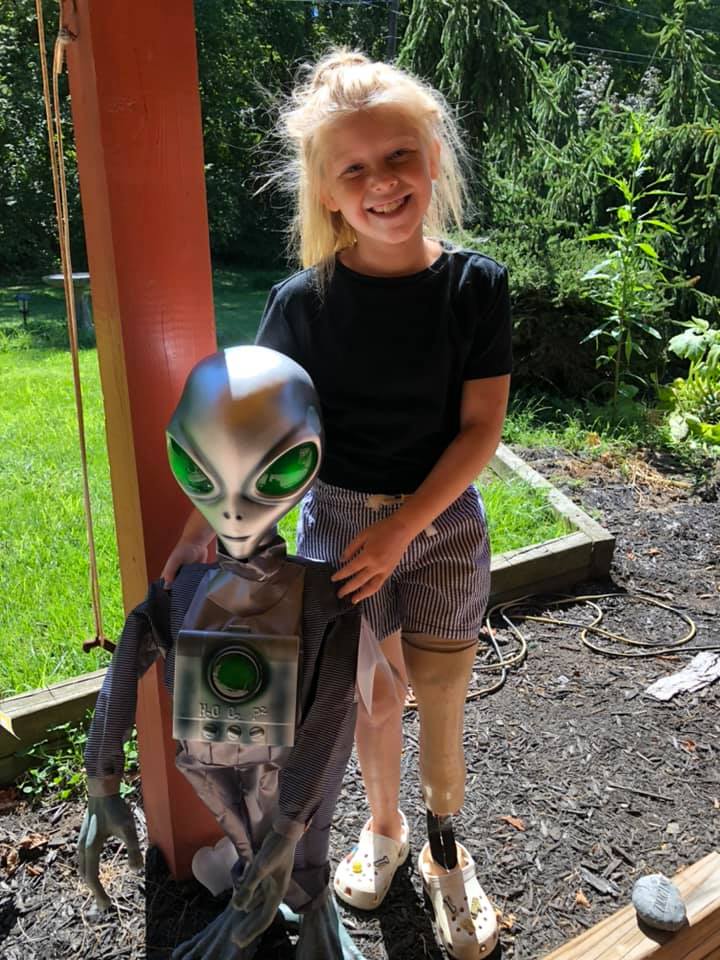
    Milford, Ohio – “Life lesson for Delaney today,” is how her mom Gina Rohdenburg explains the thoughtfulness of her six-year-old daughter Delaney, a Loveland student.

    Photos by Gina Rohdenburg

    The two found a lot of cash on the ground at Home Depot. “Yes, $420 on the ground,” Gina said. Mom and daughter went to the car, counted it and Gina asked Delaney what they should do.

    They decided to go to the help desk and tell them they found money. Gina gave them her name and number and asked them if anyone calls to ask them how much they lost. She also asked them not to give out her number, but for Home Depot to call her.

    Gina received a call about two hours later and the store indeed received a call and the man on the other end of the phone knew it was $100’s and 50’s but didn’t know the exact amount.

    “He knew enough,” Gina said. “I told them we would bring it back as soon as we could.”

    When Gina and Delaney arrived at the store, the woman at Home Depot told them the man was “so grateful” that they were giving it back. “I explained it was a good lesson for my daughter to always do the right thing,” said Gina.

    “She then told my daughter to go pick out anything from the Halloween section on them. Well done Home Depot in Milford! What a great way to show my daughter she did the right thing. We now have a dancing alien and she loves it,” said Gina.

    When people began to ask Gina what they would name the alien, she suggested, “Depot or Dinero.”


    Read more about how Delaney is part of Loveland’s DNA…

  • Milford principal tests positive for COVID 19

    Milford principal tests positive for COVID 19

    Milford, Ohio – The Principal of Pattison Elementary School has tested positive for COVID 19 and is in quarantine. Tiffany Selm, according to an email sent to parents of the school felt ill on Friday August 21 and was tested over the weekend. She has not been back to the school since Friday according to a message from Superintendent, John Spieser.

    She is quarantined by the Clermont County health department until at least September 1.

    Potential exposure time was between Wednesday, August 19 through Friday, August 21 and Spieser said that it is not believed that any students or parents were exposed.

    Pattison is scheduled to open on Monday August 31 and Dan Yeager, the District Director of Fine Arts and Extracurriculars will be acting principal until Selm returns.

    School office employees were in close contact with Selm and did not work Monday through Wednesday. Spieser said that because school staff are considered “critical infrastructure” they were allowed to return to work Thursday but can not travel except to and from work.

    Questions and concerns have been directed to District Nurse Patty Price. price_p@milfordschools.org, (513) 576-2214, or by calling the Clermont County Health Department at (513) 735-8400.


  • Milford Schools delay opening

    Milford Schools delay opening

    Milford, Ohio – On August 21, Milford School Superintendent John Spieser announced that the District needed to delay the start of the school year for one week. The first day of school for all Milford students (either learning In-Person or in Eagle Online) will be Monday, August 31.

    In announcing the delay, Spieser said, “We know this delay will be an inconvenience for our families. However, it is the right thing to do at this time for our students and our staff. Our entire staff has been working diligently to open school, but with the challenges COVID presents, some things have proven to need more time than estimated. Things we thought would come together have not yet, and we need the additional time.”

    Spieser said that giving school staff an extra week to prepare will help “tremendously”. “An extra week will give us more time to finalize student schedules.

    Elementary children, both for In-Person and Eagle Online, received their teacher assignments last week. Junior High and High School students, both for In-Person and Eagle Online, will receive their schedules this weekend.

    Spieser said that the delay will also give the Transportation Department more time to finalize routes.

    Once parents finalized their decision August 7, the District originally implemented a “freeze period” until the end of the first two weeks of school, not allowing any switches between learning plans. Yet, to accommodate the various needs of families, they did allow parents to switch their children from attending in person to attending online. Spieser said, “We over burdened ourselves by the number of requests we committed to accommodate, which then impacted teacher assignments and student schedules significantly. We can no longer accommodate requests to switch from in person to online until September 14.”

    This delay does not impact extra-curricular or athletics; those will continue as scheduled.

    The first day of school was originally scheduled for Monday, August 24.

    Parents/students have the choice between In-Person Learning and Eagle Online Learning. Students who are learning In-Person are learning in the buildings daily with safety protocols in place. Students who are learning in Eagle Online do not attend in-person, they learn through our online program delivered by Milford teachers.

  • Milford’s Historical Society cancels Annual Art Affaire for 2020

    Milford’s Historical Society cancels Annual Art Affaire for 2020

    Milford, Ohio – The Greater Milford Area Historical Society (GMAHS) has announced the cancellation of its 15th Annual Art Affaire due to the Coronavirus/COVID-19 pandemic. The Art Affaire, an art and fine craft show, is a primary fundraiser for the Society held yearly on the fourth Saturday of September along Main Street (U.S. Route 50) in Milford, Ohio.

    “This was a difficult decision,” says Donna Amann, GMAHS administrator, “however, the health and safety of everyone involved – artists, attendees, event sponsors, food vendors, GMAHS staff and volunteers, and Milford’s Main Street businesses – cannot be overstated. We felt this was the only viable solution for 2020.”

    Art Affaire is a significant source of income for GMAHS, and it is a much-anticipated event for the City of Milford. The committee explored several alternatives before making the cancellation decision, but it could not offer a solution that would ensure its ability to meet state, city and festival COVID-19 guidelines.

    “While we are cancelling the event for this year,” comments Martha Kleinfelter, chair, Art Affaire committee, “we plan to bring Art Affaire back in 2021. We have already set our December planning meeting to get that ball rolling. Additionally, the cancellation will allow our loyal sponsors more time to rebuild, after many suffered financial set-backs due to the pandemic. Under the current circumstances, we felt the decision to cancel would be best for all who participate in Art Affaire.”

    About Art Affaire

    Art Affaire is a juried, outdoor art and fine craft show held on Main Street in historic Milford, Ohio and is a key fundraiser for the Greater Milford Area Historical Society (GMAHS). Initiated in 2005, Art Affaire has significantly grown each year and now features over 115 artists, live music and entertainment and food. Art Affaire, which is free and open to the public, is held annually the fourth Saturday in September. For more information, visit www.MilfordHistory.net or www.Facebook.com/artaffaire.


    About Greater Milford Area Historical Society

    The Greater Milford Area Historical Society, Inc. (a 501c3, non-profit) was founded in 1967 with the purpose of emphasizing the history of Milford. A small historic museum was started at 114 Main Street. In 1983, the Society relocated to its present location, Promont, located at 906 Main Street, Milford, Ohio. Promont was the home of John M. Pattison, 43rd Governor of Ohio and the only governor from Clermont County. In addition to improvements to the Museum, the Society has expanded its historical programs and collaborative initiatives in the community; and, also broadened its scope to include Miami Township. The GMAHS is especially proud of its Partners-in-Education programs in the Milford schools, an award winning effort of the Society’s volunteers; the project to record oral histories of local residents; genealogy services; and, its annual Art Affaire, Milford’s premier art and fine craft show. For more information, visit www.MilfordHistory.net or follow GMAHS on Facebook at www.facebook.com/milfordohiohistoricalsociety.

  • Milford’s Historical Society cancels annual Art Affaire for 2020

    Milford’s Historical Society cancels annual Art Affaire for 2020

    Milford, Ohio – The Greater Milford Area Historical Society (GMAHS) has announced the cancellation of its 15th Annual Art Affaire due to the Coronavirus/COVID-19 pandemic. Art Affaire, an art and fine craft show, is a primary fundraiser for the Society held yearly on the fourth Saturday of September along Main Street (U.S. Route 50) in Milford, Ohio.

    “This was a difficult decision,” said Donna Amann, GMAHS administrator, “however, the health and safety of everyone involved – artists, attendees, event sponsors, food vendors, GMAHS staff and volunteers, and Milford’s Main Street businesses – cannot be overstated. We felt this was the only viable solution for 2020.”

    Amann added that the Art Affaire is a significant source of income for GMAHS, and it is a much-anticipated event for the City of Milford. She said that the committee explored several alternatives before making the cancellation decision, but it could not offer a solution that would ensure its ability to meet state, city, and festival COVID-19 guidelines.

    “While we are canceling the event for this year,” comments Martha Kleinfelter, chair, Art Affaire committee, “we plan to bring Art Affaire back in 2021.” Kleinfelter said that they have already set a December planning meeting to get that ball rolling. “Additionally, the cancellation will allow our loyal sponsors more time to rebuild, after many suffered financial set-backs due to the pandemic. Under the current circumstances, we felt the decision to cancel would be best for all who participate in Art Affaire,” said Kleinfelter.


  • Milford Schools will have new start & dismissal times next year

    Milford Schools will have new start & dismissal times next year

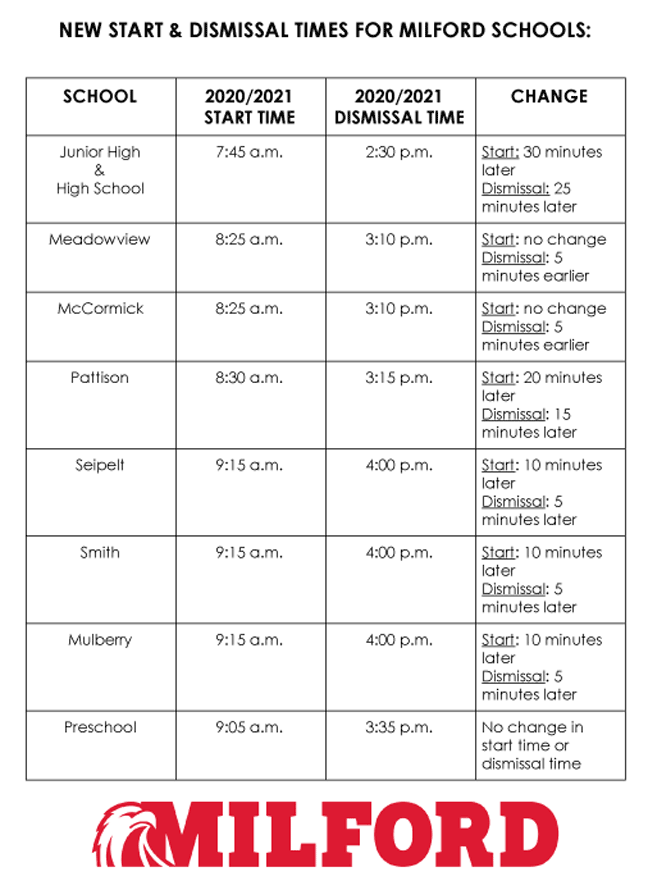
    Milford, Ohio – Last week Milford’s Board of Education approved new start and dismissal times for all of of Milford’s School buildings.

    Why are start times changing? 

    Teens typically go to bed later as they get older, but have to get up earlier to go to school. Research shows that teens require a minimum of 8 to 10 hours of sleep, with an optimum minimum of 9 and a quarter hours of sleep each night. However, surveys have shown that teens are only getting about seven hours of sleep per night or less. Sleep deprivation is a problem for teens: sleep deprivation increases the risk of injuries in sports, and increases the risks of hypertension, obesity, and depression. Research shows us the benefits of a good night’s sleep include: improved memory and learning, improved attention, emotional regulation, better weight control, and improved mental health.

    Why are the time changes not the same for each elementary building? 

    We currently operate our transportation routes on a three-tier system. Our junior high and high school routes are first, followed by two different elementary building routes. After working with a transportation consultant to look at routing our buses, it was determined that we could only start the junior high and high school later if the gap between those routes and the elementary routes remained. To maintain the cost-efficiency of a three-tier busing system, the elementary times had to be adjusted as well. Our elementary buildings have had three staggered start times, and that will continue with this new schedule to ensure efficiency. 

    Why change the start times now?

    Milford Junior High and Milford High School currently begin at 7:15 AM. Research shows that the optimum start time is 8:30 AM Pushing back the start time for our junior high and high schools means shifting the transportations schedules district-wide for eight of our school buildings K-12. Three years ago, our administrative team began investigating ways to delay start times while also being fiscally responsible. A phase-in approach to push back start times incrementally was suggested. The result is that, for the 2020/2021 school year, the junior high and high school will begin half an hour later, and the elementary buildings will shift five to 10 minutes earlier or later. Even these small adjustments will have a positive impact on students and minimum impact on district finances. 

    Why do the elementary building start times have to change to accommodate a later start time at the junior high and high school?

    In order to start the junior high and high school later, transportation routes will need to be adjusted. Buses will transport our secondary students later, therefore will be picking up and transporting our elementary students later. 

    Will the start times change again in the future?

    Research shows us that the optimum start time for junior high and high school is 8:30 AM. We would like to eventually reach the later start time of 8:30 AM and will continue to study that feasibility while also ensuring fiscal responsibility. Even this small adjustment of a half an hour later start time for our junior high and high school will have a positive impact on our teenage students. In addition, these new start times will ensure that our junior and high school students will be getting on the bus or driving to school during daylight hours for most of the school year.

    During last week’s meeting, Board President Chris Hamm said implementing the new start times now is a good first step. “We know this isn’t the finish line, but this is a very good start,” Mr. Hamm said. “We don’t know yet what next school year will look like, but we have to make plans as if we’re starting the year up normally and make contingency plans if we don’t.”