Tag: ODH

  • Ohio Reports First Human Case of Bird Flu

    Ohio Reports First Human Case of Bird Flu

    USDA Photo

    • This story was updated at 7:37 PM (2/12/25) after receiving more appropriate guidance for those who work with poultry.

    Loveland, Ohio – The Ohio Department of Health (ODH) is reporting the state’s first probable human case of influenza A(H5), also known as Highly Pathogenic Avian Influenza (HPAI), or bird flu. An adult male Mercer County farm worker who was in contact with deceased commercial poultry was infected with the virus.

    The Centers for Disease Control and Prevention (CDC) considers the current risk of bird flu for the general public to be low. However, people with close and prolonged, unprotected contact with infected birds are at greater risk.

    ODH Guidance for the General Public

    ODH reports that the risk of acquiring bird flu to the general U.S. population is low. “The best way to prevent bird flu is to avoid exposure whenever possible. As a general precaution, whenever possible, people should avoid direct contact with wild birds or sick or dead poultry or other animals.”

    They recommend that you contact your local health department or local veterinarian for further guidance before you approach sick or dead poultry or wild birds.

    ODH Guidance for Those Who Work With Birds

    Commercial poultry owners should practice good biosecurity and prevent contact between their poultry and wild birds, specifically migratory waterfowl.

    Avoid handling sick birds or other animals and immediately report unusual signs of disease or unexpected deaths to Ohio Poultry Association at (614) 882-6111 or the Ohio Department of Agriculture at (614) 728-6220 or after hours at (888) 456-3405.

    According to the Ohio Department of Agriculture, best biosecurity practices for commercial poultry owners include:

    •   Prevent Contact with wild birds and waterfowl. Keep birds indoors when possible. Add wildlife management practices around your farm. hpaifactsheet_wildlife-biosecurity.pdf (usda.gov)

    •   Keep visitors to a minimum. Only allow those who care for your poultry to have contact with them and make sure they follow biosecurity principles.

    •   Wash your hands before and after contact with live poultry. Use soap and water. If using a hand sanitizer, first remove manure, feathers, and other materials from your hands.

    •   Provide disposable boot covers (preferred) and/or disinfectant footbaths for anyone having contact with your flock. If using a footbath, remove all droppings, mud or debris from boots and shoes using a long-handled brush BEFORE stepping in. Always keep it clean.

    •   Establish a rodent and pest control program. Deliver, store, and maintain feed, ingredients, bedding and litter to limit exposure to and contamination from wild animals.

    •   Use drinking water sourced from a contained supply (well or municipal system). Do not use surface water for drinking or cleaning.

    •   Clean and disinfect tools and equipment before moving them to a new poultry facility. Trucks, tractors, tools and equipment should be cleaned and disinfected prior to exiting the property. Do not move or reuse anything that cannot be cleaned.

    •   Look for signs of illness. Monitor egg production and death loss, discoloration and/or swelling of legs, wattles and combs, labored breathing, reduced feed/water consumption.

    More information about best biosecurity practices can be found on both the Ohio Department of Health (ODH) and Ohio Department of Agriculture (ODA) websites.

    ODH Provided Background on Bird Flu Cases in Humans

    Nationally, there have been 68 confirmed human cases of HPAI in 11 states since the beginning of 2024, which included one death in Louisiana. All but three of these cases involved exposures related to commercial agriculture and related operations or wild birds. In Ohio, one dairy herd and numerous poultry flocks have been infected since the outbreak began in 2022.

    There are no known cases of human-to-human transmission.

    “While the risk to Ohioans is low, the best way to prevent bird flu is to avoid unprotected exposures to sick or dead birds or to their environment,” said ODH Director Bruce Vanderhoff, MD, MBA. “People should avoid direct contact with poultry or wild birds and take proper precautions, including reaching out for guidance regarding personal protection and safe handling, if you must be around sick or dead birds.”

    “Ohio is experiencing the largest outbreak of positive detections in commercial poultry to date, which requires critical action from our department and our federal partners, to contain and prevent the spread of disease,” said ODA Director Brian Baldridge. “As we continue to respond to these incidents, our staff on site continues to educate farmers and their workers on best biosecurity practices. We strongly encourage all Ohio farmers to use good biosecurity to help keep disease away from the farm.”

    Additional ODH Information

    It is safe to eat properly cooked poultry and pasteurized dairy products. Generally, people should follow food safety practices – poultry, eggs, and beef should be cooked to a safe internal temperature to kill bacteria and viruses. The CDC’s safer foods table contains a complete list of safe internal temperatures.

    If people have been exposed to a sick or dead bird, they should monitor themselves for any new respiratory symptoms and contact their healthcare provider or local health department should they develop symptoms. Ohioans can report sick or dead wild birds to the Ohio Department of Natural Resources (ODNR) at 1-800-WILDLIFE and sick or dead poultry to the ODA at 614-728-6220.

    Source: CDC
    Source: CDC

    More information on HPAI can be found on both the ODH and ODA websites.
  • COVID-19 Information Moving to ODH, DataOhio Websites

    COVID-19 Information Moving to ODH, DataOhio Websites

    Ohio Department of Health (ODH) Director Bruce Vanderhoff, M.D., MBA, has announced that all COVID-19 information from coronavirus.ohio.gov is moving to the ODH website. All COVID-19 statistics and weekly reports are moving to the DataOhio COVID-19 reporting page. Visitors to coronavirus.ohio.org will be automatically redirected to the ODH website.

    After the federal government declared the COVID-19 public health emergency in January, 2020, ODH launched coronavirus.ohio.gov to serve as a clearinghouse for information.

    When the federal government declared an end to the public health emergency in May of this year, ODH began planning to transition from that website to a series of pages on the ODH and DataOhio websites.
    “The Ohio Department of Health remains committed to monitoring and sharing key data regarding COVID-19,” Dr. Vanderhoff said. “Indeed, COVID-19 remains a major driver of respiratory illness along with other viruses like influenza and RSV for which important information is also available on our website.”

    The new site contains links to the COVID-19 statistics and dashboards that will continue to be updated weekly, as well as the latest guidance on prevention, testing, treatment, and vaccines. That information will continue to be updated, as well.

  • Monkeypox is spreading but the Ohio Department of Health hasn’t spread the message

    Monkeypox is spreading but the Ohio Department of Health hasn’t spread the message

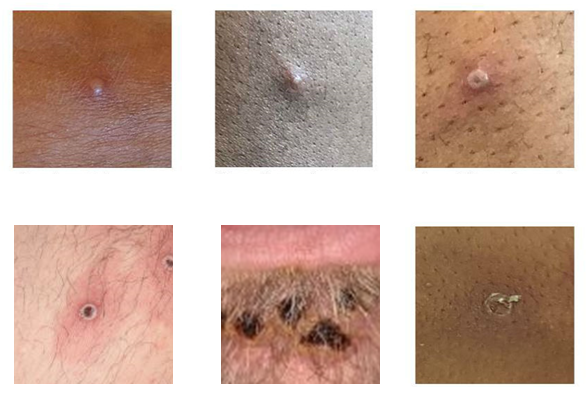
    The monkeypox virus causes lesions that can resemble sores from acne, an ingrown hair or other viruses. They are infectious until the scab is fully healed. (UK Health Security Agency/CDC).

    A Guest Column by Kenyon Farrow

    It may come as a surprise to most people in Ohio that in addition to dealing with the ongoing problem of COVID-19 ebbs and flows of infections and variants, we actually have an entirely different infectious disease to be concerned about: monkeypox. And the Ohio Department of Health (ODH) has done very little else to engage the public in any detail about the virus, how it’s spread, any plans to scale up testing and when the state might be able to access the vaccines that are approved to prevent contracting the virus.

    So far, all we’ve gotten is one press release announcing the first suspected case of monkeypox in the state. On June 13, the Ohio Department of Health issued a press release announcing this case, with messaging from ODH Director Dr. Bruce Vanderhoff, that seemed to downplay the threat monkeypox could play to the health of Ohioans. 

    “What I want to emphasize strongly is that monkeypox does not spread easily between people, and so the risk to Ohioans generally is very low,” he said. 

    Dr. Vanderhoff is correct in one sense. Monkeypox, compared to airborne virus like COVID-19, is less efficient in spreading from person to person. But it does spread through physical contact with someone who has contracted the virus — and that contact can be sexual contact, but also kissing, cuddling, bodily fluids and any contact where you could come into contact with the lesions that most often accompany an infection, and without testing can sometimes be mistaken for other diseases like herpes or congenital syphilis. And while monkeypox is rarely fatal, it is an extremely excruciating illness for those who contract it. Furthermore, it is more dangerous for infants and children, and pregnant people. 

    Since June 13, when the ODH first announced a suspected case, we now have 3 documented cases, according to the Centers for Disease Control & Prevention. While this number may seem low and like nothing most Ohioans should worry about, the truth is we actually do not have an accurate count to know whether monkeypox is spreading here, and how rapidly. 

    The ODH has not launched any public education materials in the form of televised or radio public service announcements, social media posts, press conferences or outreach efforts so most Ohioans would know about the virus, how its spread, and how to protect themselves. ODH has not announced any places around the state where one can get tested for monkeypox if you suspect you may have it. 

    And even if monkeypox cases here are currently few in number, they may not stay that way. Unlike COVID-19 where summertime has typically meant lower transmission rates because people are outdoors more and have windows open to allow clean air to circulate, there are more events where people come into close contact with one another. Airports and flights are packed. Summer is full of music festivals, county fairs, amusement parks and all sorts of events where people are often in close contact. Prisons and jails, due to medical neglect, overcrowding and unsanitary conditions created by lack of care, can also become a venue through which monkeypox could spread in and out of carceral settings. 

    Furthermore, monkeypox seems to be spreading rapidly in most American cities among LGBTQ people, particularly gay/bisexual men. June was Pride Month and every corner of the state has had pride festivals last month (and folks from Ohio, including myself, who’ve traveled to pride festivals in other cities and back) how do we actually know whether we have more cases without doing the proper public education and outreach campaigns connected to an infrastructure to offer testing to people who think they’ve been exposed?  

    JYNNEOS (also known as Imvamune or Imvanex) is a 2-dose vaccine for monkeypox currently in limited supply in the U.S., and according to the U.S. Health and Human Service’s (HHS) Office of the Assistant Secretary of Preparedness & Response, only 4 doses (enough for 2 people to be fully vaccinated against monkeypox) have been distributed to Ohio until more doses can be secured and imported later this year. 

    But will ODH or Gov. Mike DeWine advocate for Ohioans to get access to this vaccine once more doses become available? And will the set up a monkeypox testing and distribution plan?

    I certainly hope so. But in the current political climate, it would not shock me if yet again good public health policy is taking a back seat to politics, endangering the lives of Ohioans in the process. The Ohio GOP’s in the last few years has passed anti-LGBTQ legislation, further criminalized abortion after the Supreme Court decision overturning Roe v. Wade, and their 2021 bill to dismantle the authority of the ODH to be able to issue and enforce measures to protect Ohioans during public health emergencies, all add up to ways in which ODH may have been the victim of state capture by personal and political interests that have zero to do with the stated mission of the organization. 

    One only need to look at what happened a month prior to the June notice on the first possible monkeypox case in Ohio—two ODH staffers (who were in the sexually transmitted infections prevention department) were fired or resigned because they included information about an upcoming training for medical providers on how to prescribe a medication used for women experiencing miscarriages or for abortions up to 10 weeks (which was 6 weeks before the U.S. Supreme Court decision to overturn Roe v. Wade) in an e-newsletter (first reported by Ohio Capital Journal on June 22). 

    The OCJ piece also noted that ODH’s HR department also took issue with the newsletters promotion of “National Masturbation Month; Honor Our LGBT Elders Day; International Day Against Homophobia, Pansexual and Panromantic Visibility Day; SLAM (Sexuality, Liberators, and Movers); Black and Blue – Suicide in our own Leather, Kink and Queer Communities; and National Condom Month.” 

    How is the STI prevention program at ODH supposed to do prevention work without taking advantage of these anniversaries to get the public’s attention? Is this the reason why they’ve been so lackadaisical about monkeypox virus education, outreach and testing? 

    To be sure, no one was looking for a monkeypox outbreak in 2022. As someone who’s worked in public health on infectious diseases as a policy advocate and journalist for more than two decades, this wasn’t on my radar either. But that’s the thing with infectious disease — they take advantage of human frailty and ignorance. And just when you least expect it, they’ve find a way to grow and to thrive. And ignorance on a virus and how to prevent it, and government negligence in creating educational, outreach, testing and vaccination opportunities become ways that diseases spread. 

    So knowing this, one would expect our state health department leadership to take more of an active role publicly to get ahead of what could be a real public health catastrophe. I hope they choose public health over politics. 

  • Starting Monday masks optional for all students and no more contact tracing in Loveland City School District

    Starting Monday masks optional for all students and no more contact tracing in Loveland City School District

    by David Miller

    Loveland, Ohio – Beginning Monday, Loveland City Schools will implement a “mask-optional” policy for all students in grades PreK-12. The exception to this policy is for students in the HeadStart PreK program, which is set by federal guidelines.

    Also on Monday, the District will be updating its COVID protocols to align with new guidance from the Ohio Department of Health (ODH) which you can read below. Dr. Bruce Vanderhoff from ODH has said that schools are no longer required to do contact tracing. 

    HERE is the January 23 COVID 19 Dashboard from the District. New case counts won’t be issued again until this Monday afternoon.

    Going forward, the only time District staff will do contact tracing is when it is requested by Hamilton County Public Health or ODH because of an outbreak or cluster of COVID cases in one of our buildings.

    Masks will still be required on all school buses. Masking will continue to be “recommended” in school buildings.

    Announcing the new policies in the District newsletter, Superintendent Mike Broadwater said, “I’ve heard from so many of you over the last few months, respectfully sharing your thoughts on the issue of masks. I know that some families will see this as a welcome change, and others will hear this news with concern. I’m hopeful that within a few days of being fully mask-optional, those concerns will melt away as we see more smiling faces in our buildings.”


    To: Local Health Departments and K-12 School Superintendents
    From: Dr. Bruce Vanderhoff, MD, MBA, Director, Ohio Department of Health
    Date: Jan. 26, 2022

    Subject: Contact Tracing and Case Investigation Statement

    As COVID-19 has evolved, public health mitigation strategies have had to adjust periodically to address new challenges. The quick spread of the Omicron variant and its rapid clinical course have made universal contact tracing, case investigation and exposure notification impractical when combined with newly reduced timelines for quarantine and isolation.

    Therefore, effective immediately:

    • The Ohio Department of Health recommends that local health departments (LHDs) shift from universal contact tracing, case investigation and exposure notification to a cluster or outbreak-based model. This strategy prioritizes people in high-risk settings, such as congregate residential settings (e.g., shelters, correctional facilities, and nursing homes) or for certain circumstances such as outbreaks or clusters in specific settings or in relation to initial cases or clusters associated with new variants, as appropriate.

    • Schools may discontinue universal contact tracing but are expected to assist LHDs with contact tracing, case investigation and exposure notification related to outbreaks or clusters in schools as determined by the LHD. K-12 schools should continue to follow ODH’s protocol, “Mask to Stay, Test to Play,” and allow asymptomatic students to attend school while wearing a mask if they have been exposed to someone with COVID-19. The best place for kids is in school, in-person, full-time.

    • ODH also will change the school case reporting cadence to weekly. Schools should report positive student and staff cases to their LHDs by close of business on Fridays. LHDs will continue to report on the same weekly cadence. This schedule will begin on Friday, Feb. 4. ODH will continue to evaluate related school reporting requirements.

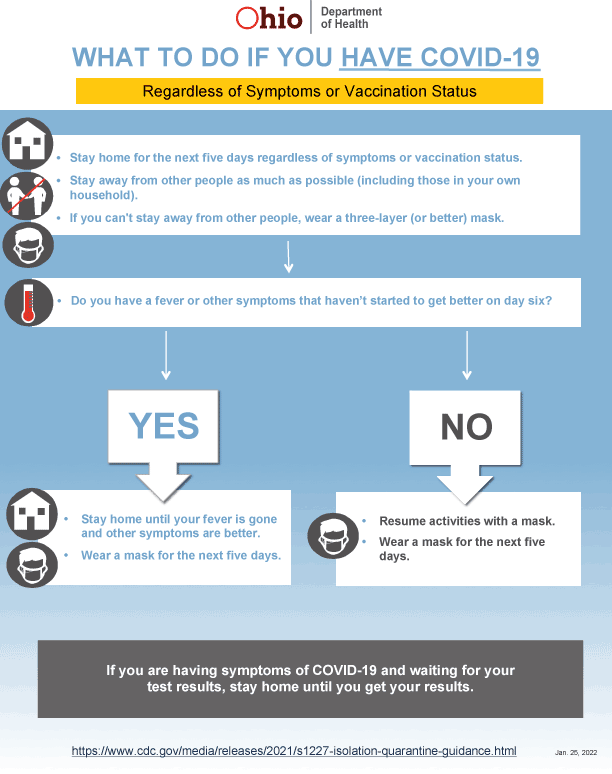
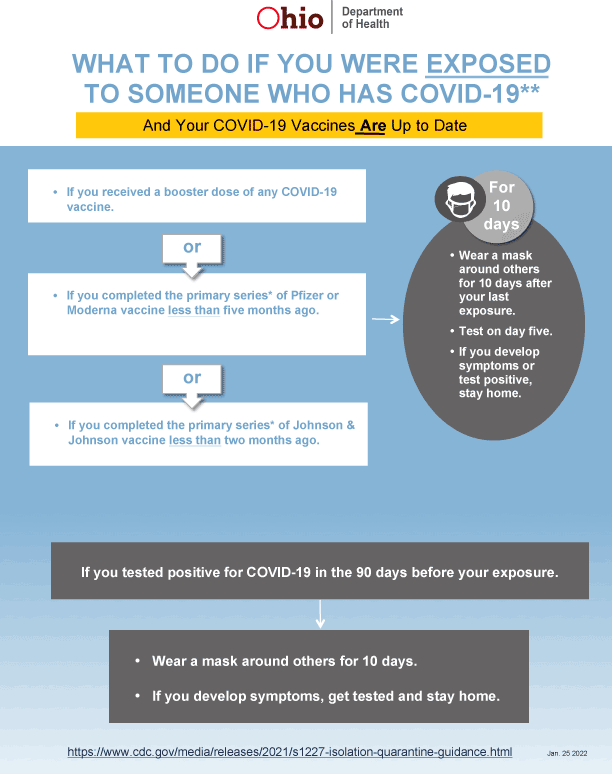
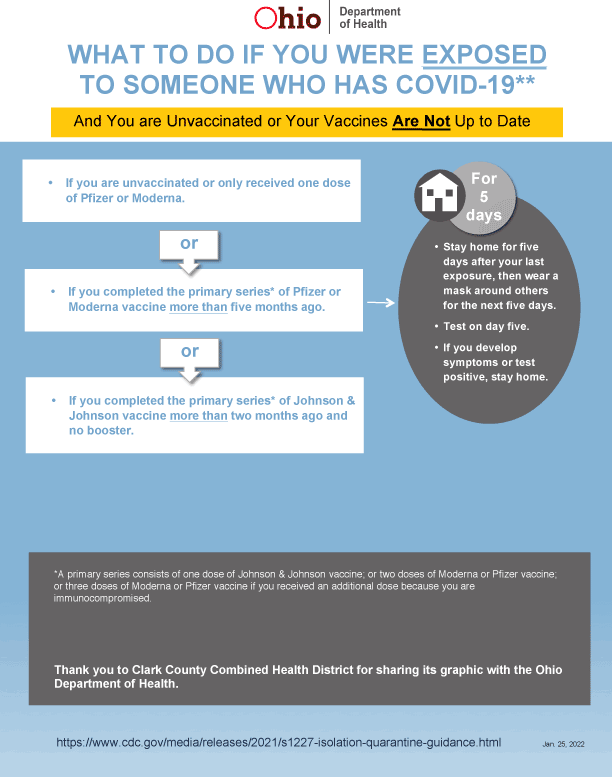
    LHDs should continue providing education and messaging to the general public about steps to take after exposure or a positive test. The attached flow chart may be shared with the public to explain how they should proceed after testing positive for COVID-19 or being exposed to someone who has COVID-19.

    This is also a good time to remind the public of mitigation strategies that work against transmission of COVID-19 and other infectious diseases:

    • Please encourage people to stay up to date with COVID-19 vaccinations, including booster doses. COVID-19 vaccines and boosters are the best prevention tool we have against severe illness and death.

    • Reinforce the importance of mask wearing, physical distancing, improving ventilation, hand washing, cough etiquette, testing, and staying home if you are sick.


    The flow chart

  • Hamilton County Public Health responds to request for back to school info

    Hamilton County Public Health responds to request for back to school info

    “It is strongly recommended that schools implement masking.”

    Loveland, Ohio – When asked, this morning to provide Loveland Magazine with the current Board of Health guidance for covid 19 protocol for K-12 schools “Mike Samet, the Public Information Officer for Hamilton County Public Health responded, “We are following the Ohio Dept. of Health guidelines (attached) until we develop our own, if necessary.”

    The current Loveland school protocol reads in part, “…the Board will follow any mandates set forth by the Ohio Governor, Ohio State Health Department, Hamilton County Health Department, and Ohio Department of Education, (“Directing Entities”) as it relates to protecting the health of students, staff and visitors.”

    There will be no remote learning opportunities (Remote Academy) for Loveland teachers or students as all school buildings will return to full capacity in-person classes in August.

    Samet referred Loveland Magazine to the Ohio Dept. of Health (ODH) guidelines which are currently Hamilton County Health Department’s as well.

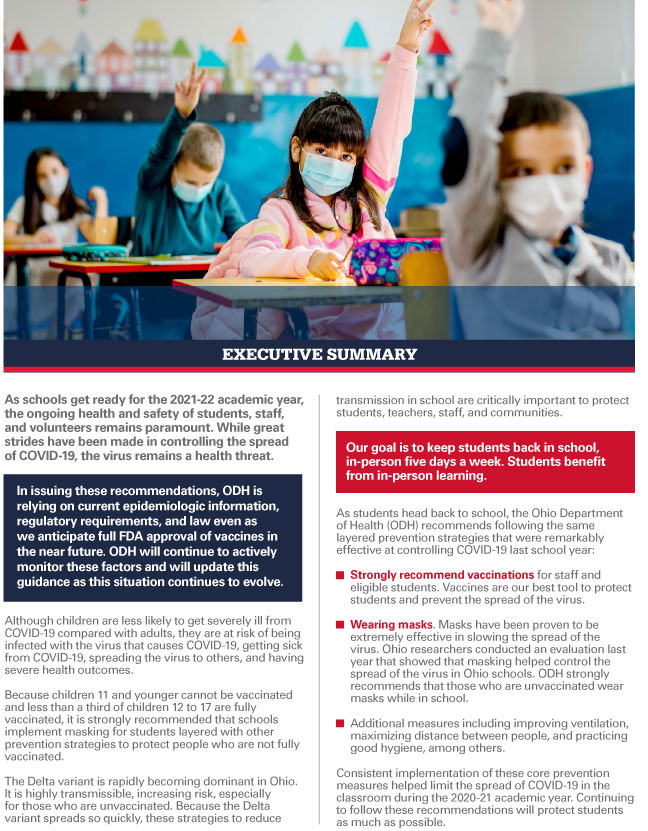
    The ODH guidelines begin with this opening introduction:

    As schools get ready for the 2021-22 academic year, the ongoing health and safety of students, staff, and volunteers remains paramount. While great strides have been made in controlling the spread of COVID-19, the virus remains a health threat. 

    Although children are less likely to get severely ill from COVID-19 compared with adults, they are at risk of being infected with the virus that causes COVID-19, getting sick from COVID-19, spreading the virus to others, and having severe health outcomes. 

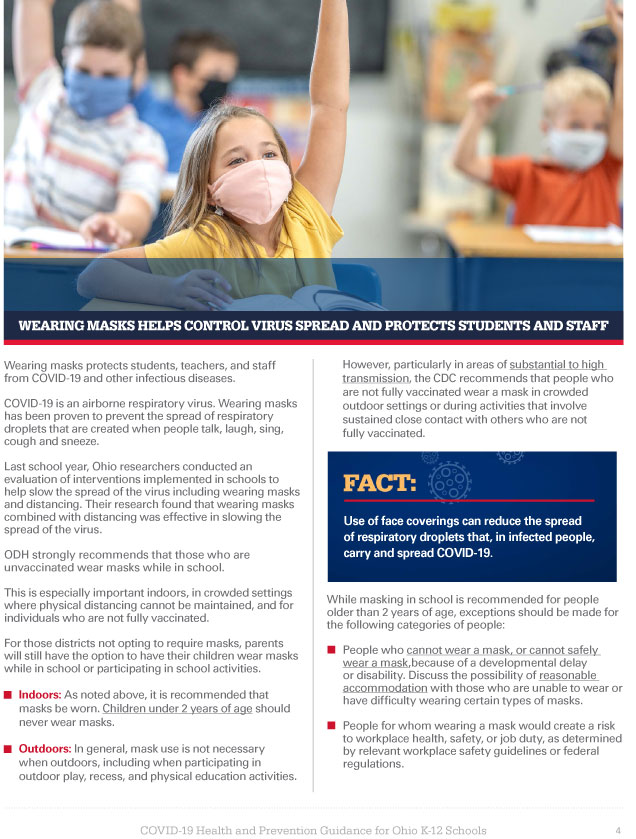
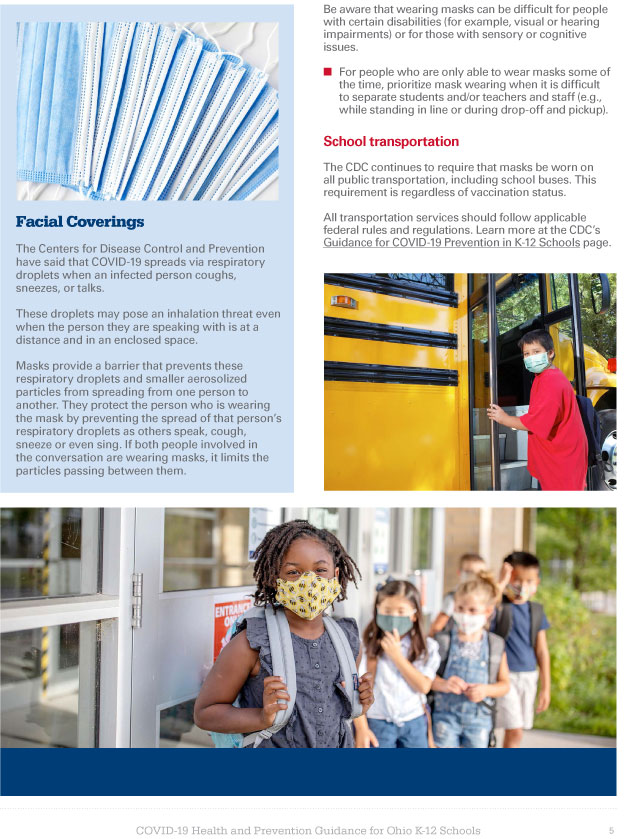
    Because children 11 and younger cannot be vaccinated and less than a third of children 12 to 17 are fully vaccinated, it is strongly recommended that schools implement masking for students layered with other prevention strategies to protect people who are not fully vaccinated. 

    The Delta variant is rapidly becoming dominant in Ohio. It is highly transmissible, increasing risk, especially for those who are unvaccinated. Because the Delta variant spreads so quickly, these strategies to reduce transmission in school are critically important to protect students, teachers, staff, and communities.

    As students head back to school, the Ohio Department of Health (ODH) recommends following the same layered prevention strategies that were remarkably effective at controlling COVID-19 last school year: 

    Strongly recommend vaccinations for staff and eligible students. Vaccines are our best tool to protect students and prevent the spread of the virus. 

    Wearing masks. Masks have been proven to be extremely effective in slowing the spread of the virus. Ohio researchers conducted an evaluation last year that showed that masking helped control the spread of the virus in Ohio schools. ODH strongly recommends that those who are unvaccinated wear masks while in school. 

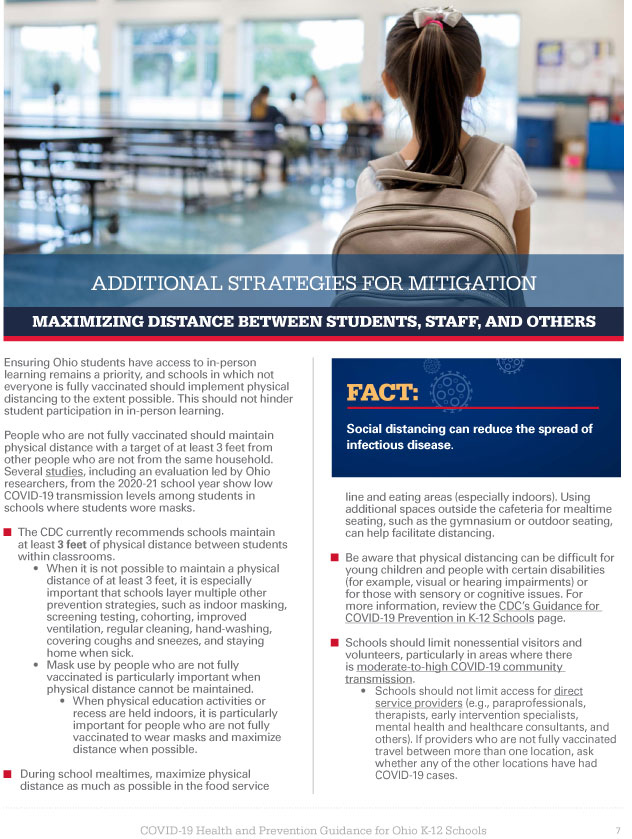
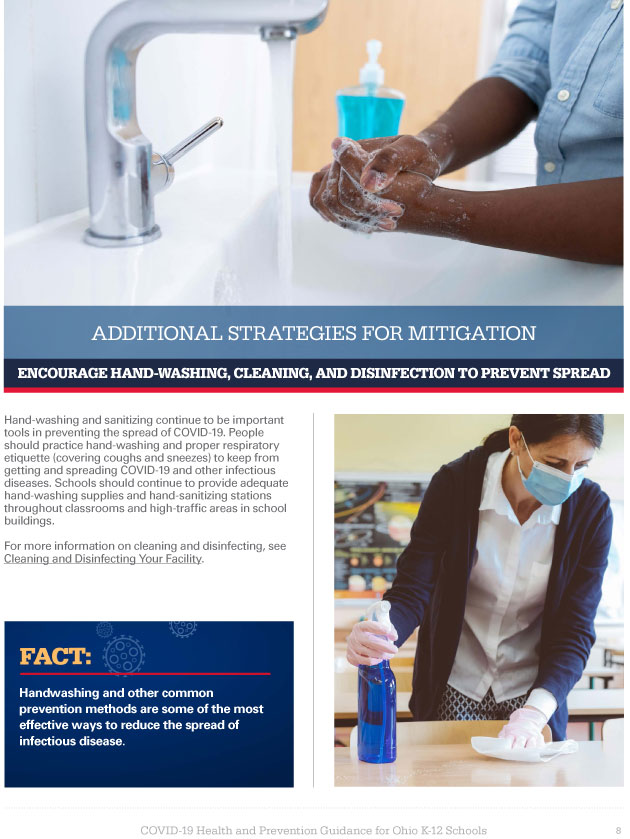
    Additional measures including improving ventilation, maximizing distance between people, and practicing good hygiene, among others. 

    Consistent implementation of these core prevention measures helped limit the spread of COVID-19 in the classroom during the 2020-21 academic year. Continuing to follow these recommendations will protect students as much as possible. 

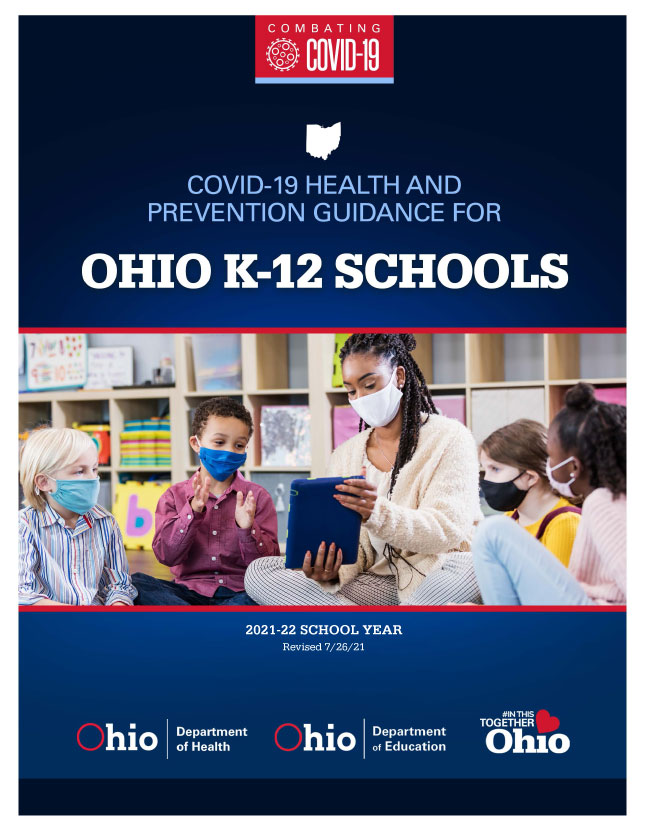
    Below is the full ODH document:

  • State COVID-19 Update: Nursing Home Visitation, Statewide Case Rate, Rapid Testing, County Fairs

    State COVID-19 Update: Nursing Home Visitation, Statewide Case Rate, Rapid Testing, County Fairs

    Ohio Governor Mike DeWine and Lt. Governor Jon Husted today provided the following updates on Ohio’s response to the COVID-19 pandemic. 

    NURSING HOME VISITATION

    Governor DeWine today discussed the new federal regulations for nursing home visitation, as well as Ohio’s Vaccine Maintenance Program. The visitation guidelines, issued by the Centers for Medicare and Medicaid Services (CMS) indicate visitation should be happening in nursing homes. There are a few specific exceptions that would limit visitation, such as outbreaks in the facility or an extreme number of cases in the community.  Full information on the federal nursing home visitation guidance is available at cms.gov

    Additionally, Governor DeWine highlighted the progress being made by Ohio’s Vaccine Maintenance Program for nursing homes and assisted living facilities. Ohio’s Vaccine Maintenance Program ensures new nursing home residents and employees, and established residents and employees who previously decided not to receive a vaccine, can still choose to receive one. Governor DeWine emphasized the importance of every nursing home resident receiving a vaccine. 

    Long-term care facility visitation status is available on the dashboard at coronavirus.ohio.gov.

    STATEWIDE CASE RATE

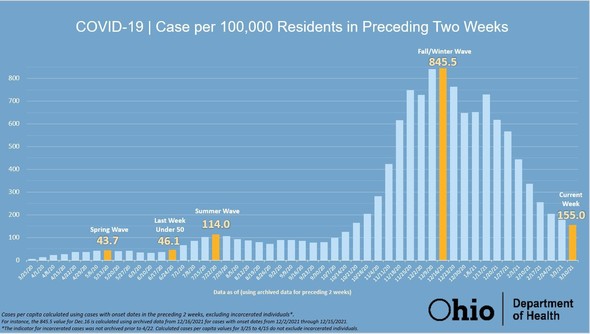
    Governor DeWine announced that, statewide, Ohio is currently at a rate of 155 cases of COVID-19 per 100,000 people during the past two weeks. Last week, statewide data put Ohio at 180 cases per 100,000 people. 

    “In Ohio, we are still at a very elevated level of cases, but today’s health data is certainly trending in the right direction,” said Governor DeWine. 

    In an evening address last week, Governor DeWine announced that when Ohio reached 50 cases per 100,000 people for two weeks, all health orders will be lifted. 

    The Ohio Department of Health will update this data each Thursday.

    March 11

    RAPID TESTING 

    Governor DeWine today detailed four initiatives that are making rapid COVID-19 tests more accessible to Ohioans:

    • Federal Qualified Health Centers
      • The state’s ongoing partnership with federally qualified health centers has led to the availability of over 150,000 rapid tests at community health centers. These centers have professionals on-hand to administer the tests free of charge.
    • Local Health Departments
      • Local health departments have partnered with their communities to make at-home testing available to schools, nonprofit organizations, and first responders.
    • Public Libraries
      • The state has recently partnered with public libraries to make at-home tests available to more Ohio communities. During the first two weeks, Ohio has partnering with 120 libraries.
    • K-12 Schools
      • A new partnership launched today will bring 200,000 at-home tests to Educational Service Centers. To increase confidence and safety in schools, Governor DeWine encourages school districts to take advantage of this resource and develop aggressive testing plans.

    Between libraries and local health departments, at-home testing is accessible in 76 of Ohio’s 88 counties. Some of these areas had disproportionate access to testing earlier in the COVID-19 pandemic.

    GUIDANCE ON FAIRS

    Governor DeWine announced that the Ohio Department of Health issued a revised order that allows for the reopening of all fair activities if certain health conditions are met. The updated order includes compliance with the statewide mask order and social distancing. Additionally, there will be a 25 percent maximum for indoor grandstand capacity and a 30 percent maximum for outdoor grandstand capacity. 

    Additionally, the Ohio Department of Health will issue updated order and guidance regarding festivals, parades, proms, and spring sports. For spring sports, students will not be required to quarantine because they have an incidental exposure to COVID-19 in a classroom unless symptoms develop. 

    These orders and guidance will be forthcoming from the Ohio Department of Health.

    LETTER ADDRESSING PUA FRAUD

    Governor DeWine and Lt. Governor today sent a letter to President Joe Biden urging the development of a national, coordinated response to ongoing, widespread fraud attempts being committed through the unemployment system, specifically the federal Pandemic Unemployment Assistance (PUA) Program.

    See below for an excerpt from the letter:

    “We urge you to immediately develop a national, coordinated response to this ongoing attempt to defraud the American people and our national and state governments. While states are doing everything they can to administer the federal programs while maintaining system integrity, a state-by-stare response is proving inadequate. This is not an Ohio problem — it’s a national problem that requires a national solution.”

    CURRENT CASE DATA

    In total, there are 984,934 confirmed and probable cases of COVID-19 reported in Ohio and 17,825 COVID-19 deaths. A total of 51,323 people have been hospitalized throughout the pandemic, including 7,255 admissions to intensive care units. In-depth data can be accessed by visiting coronavirus.ohio.gov

    Video of today’s full update, including versions with foreign language translation, can be viewed on the Ohio Channel’s YouTube page

    For more information on Ohio’s response to COVID-19, visit coronavirus.ohio.gov or call 1-833-4-ASK-ODH.

  • Along with health department, state auditor missed 4,000 COVID-19 deaths during

    Along with health department, state auditor missed 4,000 COVID-19 deaths during

    Ohio Auditor of State Keith Faber. (Official photo)

    The precise nature of Faber’s audit remains shrouded in mystery

    By Jake Zuckerman and Ohio Capital Journal

    The Ohio State Auditor’s months-long investigation into the state health department’s COVID-19 data practices failed to detect the 4,000 newly discovered COVID-19 deaths announced by the Ohio Department of Health last week.

    Auditor Keith Faber’s staff have declined to fully explain how they missed the deaths — which sprung Ohio’s death toll from about 12,000 to 16,000 — or what specifically auditors are investigating.

    Both ODH and Faber’s auditors alike missed a broad swath of pandemic mortality as Ohio, like every other U.S. state, looked for an appropriate policy response for an infectious disease that principally spreads through person-to-person interaction.

    The health department said it first identified a death data problem Feb. 2 before identifying and announcing the finding Feb. 10. Faber’s staff learned about the 4,000 newly discovered deaths that day.

    Faber spokeswoman Allie Dumski claimed last week that the federal Health Insurance Portability and Accountability Act prevented auditors from accessing one of the two databases ODH uses to track COVID-19 deaths.

    She later clarified ODH denied “full access” to the database — the Ohio Disease Reporting System (ODRS). She said auditors “would not have been able to identify this miscount” without full access to the database, i.e. the identities of COVID-19 cases.

    “As part of our audit, we requested full access to the ODRS database and ODH refused that, citing HIPAA and additional conditions of confidentiality related to the data set,” she said.

    ODH Communications Director Arundi Venkayya said the health department cooperated in full with state auditors.

    “ODH provided full access to the ODRS database in the form of a CSV file that was downloaded to ODH computers prior to the Auditor’s onsite visit,” she said.

    Faber’s staff, according to Venkayya, relayed to ODH that this format would be acceptable.

    Upon request, Venkayya also shared emails from state auditors who were seemingly pleased with the data ODH shared.

    “We have had very good cooperation in completing the data analysis component of the audit and, if we’ve not already finished, we were working on finishing up the death certificate examination,” wrote Betsy Bashore, a Faber staffer, in a Jan. 11 email about the audit.

    “As part of our audit process, we typically meet with our client agency to discuss findings to date. We had delayed this with the transition but really would like to get one scheduled as soon as possible. These usually involve leadership and department heads, particularly those people we have interacted with over the past 4 months.”

    Faber did not respond to repeated interview requests over the last week.

    Dumski, responding to the ODH emails, said auditors received anonymized data to protect individual identities. This would have prevented auditors from reconciling ODRS data with death certificate data to uncover the uncounted deaths, she said.

    ODH Director Stephanie McCloud said last week the department started missing most of the 4,000 newly discovered deaths when a November death surge took off. The error, she said, traces back to a single employee’s failure to reconcile the ODRS data with a separate set of death certificate data.

    ODH posts the ODRS data — stitched together from reports from labs, health departments, hospitals and care providers — on its website. It also regularly reconciles it with death certificate data, which is more accurate but less timely than the disease database.

    As the death surge took off, cases started getting missed by this lone employee who failed to notify his superiors, McCloud said.

    Since the news broke, an epidemiology investigator with the department resigned, and the ODH Bureau of Infectious Diseases chief was reassigned.

    The precise nature of Faber’s audit remains shrouded in mystery.

    He announced the probe in July, stating auditors would “examine case numbers of COVID-19.” Confirming the accuracy of the data, he said, will provide “valuable feedback to key policy makers and increased confidence for all Ohioans on how to best mitigate the spread and impact of this virus.”

    The news came amid rumors, amplified by conservatives in media and politics, that health departments were inflating COVID-19 data for political gain. The Ohio House went as far as to pass a “Truth in COVID-19 Statistics” bill. No evidence has been presented to suggest ODH’s data is somehow fraudulent.

    An online survey on the auditor’s website fielded documentation that would indicate an overcount of COVID-19 infections, as opposed to an undercount of deaths. The survey sought respondents who received “test results that were later reversed” or “results for tests the individual did not take.”

    Faber touted the audit at a rally for then-President Donald Trump, who regularly downplayed COVID-19 and claimed its death toll is “exaggerated,” and at a political fundraiser this summer as well.

    His office denied a public records request for survey data and supporting documentation. However, a spokeswoman said if there were any “alarming” findings, auditors would work with ODH to address the issue immediately for the benefit of public health.

    The survey closed Jan. 23. The audit is slated for release in March.

  • Judge blasts COVID-19 lawsuit against health department as “incomprehensible”

    Judge blasts COVID-19 lawsuit against health department as “incomprehensible”

    By Jake Zuckerman and Ohio Capital Journal

    A federal judge expressed tremendous skepticism of a lawsuit alleging “absolute tyranny” of the Ohio Department of Health’s response to the COVID-19 pandemic, deeming the plaintiff’s arguments nearly “incomprehensible.”

    U.S. District Judge James G. Carr didn’t rule on ODH’s motion to dismiss the suit, which was filed by a self-described citizens group called Ohio Stands Up.

    However, Carr wrote in an order Tuesday that the plaintiffs didn’t satisfy a basic rule of courtroom procedure requiring them to clearly state what their legal problem is and what they want the court to do about it.

    Carr ordered plaintiffs to show cause for why he shouldn’t dismiss the lawsuit for failing to meet the basic minimum legal standard for a civil complaint.

    He described Ohio Stands Up’s arguments as “a jumble of alleged facts, conclusory and speculative assertions, personal and third-party allegations, opinions, and articles of dubious provenance and admissibility.”

    Ohio Stands Up, Carr wrote, created an “impenetrable thicket of often conclusory and speculative assertions, allegations, contentions, innuendo, and legal arguments and citations.”

    While he did not dismiss the case, he blasted the hundreds of pages of disorganized criticism the plaintiffs leveled against ODH and ordered them to make a case for why the suit shouldn’t be dismissed.

    “It’s simply not my job to try to discern from plaintiffs’ scattered, off-loaded stack of contentions and claims to envision what sort of plausible legal edifice a capable legal architect might erect,” he said.

    The lawsuit itself is rich in conspiracy theory and distortion, baselessly alleging COVID-19, which has killed more than 466,000 Americans since the pandemic started, is no different than the flu, which kills about 35,000 Americans per year.

    It claims the government is disseminating misleading information to fear-monger. The suit claims the true death count of COVID-19 (as of an October filing) is 15,000 — there is no evidence suggesting this is true. It makes similarly apocryphal claims about masks and their efficacy, the origins of COVID-19, and others.

    Earlier reporting from the Ohio Capital Journal identified several ties between Ohio Stands Up and Health Freedom Ohio, an anti-vaccine advocacy group.

    The lawsuit is the first on record for, Tom Renz, lead counsel for Ohio Stands Up. His co-counsel, Robert Gargasz, lost election in November for Lorain County prosecutor after calling for “Marxist anarchists” and “communists” to be shot and “stacked like cordwood.”

    Since filing the ODH suit, Ohio Stands Up has filed another lawsuit against the U.S. Department of Health and Human Services, the CDC, and the National Center for Health Statistics. Renz, Gargasz, and N. Ana Garner, a New Mexico attorney, are representing the group.

    Ohio Stands Up crowdsourced legal funds for its lawsuits. A GoFundMe page lists$120,000 in donations for the suit from 1,600 donors.

    Both Renz and an Ohio Department of Health spokeswoman did not respond to inquiries.

  • Unfinished business: 5 legislative priorities in Ohio pushed to 2021

    Unfinished business: 5 legislative priorities in Ohio pushed to 2021

    By Tyler Buchanan and Ohio Capital Journal

    Columbus, Ohio – The 133rd Ohio General Assembly wrapped up its term with a flurry of lame-duck activity last week, closing out a challenging year of legislating amid a global pandemic. 

    Lawmakers hurried to get priority bills passed and sent to Gov. Mike DeWine’s desk for a signature before the two-year term ended. There were, however, a number of major legislative projects that did not get passed.

    Here are some of the priorities falling to the 134th General Assembly, which starts in January:

    What to do with House Bill 6?

    After months of deliberation about House Bill 6, lawmakers have decided to punt any repeal or replacement effort to 2021.

    HB 6 is the $1.3 billion nuclear bailout bill at the center of what has been called the largest corruption scheme in state history. 

    In the days after Speaker Larry Householder and four other political operatives were arrested in July, one thing was clear: Ohio lawmakers needed to do something about the tainted bill. 

    DeWine, who signed the bill into law in 2019, called for its repeal. Householder was removed as House Speaker. His replacement, Rep. Robert Cupp, R-Lima, said one of the first priorities of his speakership would be addressing HB 6. 

    Davis Bees Nuclear Power Station with electricity pylons, Ohio. Getty images.

    Cupp did create a new “House Select Committee on Energy Policy and Oversight,” which met nine times between September and December to hear testimony on various attempts to repeal HB 6.

    Members could not come to an agreement on how to best approach HB 6; some wanted a full repeal, others wanted only certain portions replaced and a few defended the whole bill as being good public policy, even if it did come about through sordid means. 

    Two of those involved have already pleaded guilty in federal court; the cases against Householder and two others are ongoing.

    Householder was reelected to another term and it remains to be seen if the chamber will take a vote in 2021 to expel him. When Cupp was elected as speaker in July, he indicated such a vote would wait until after the new term starts.

    School spending reform will take more time

    The Ohio Supreme Court ruled the state’s school funding model was unconstitutional back in 1997. Decades later, lawmakers are still working to figure out a constitutional and equitable substitute.

    A bipartisan funding overhaul passed the House in early December, but did not make it through the Senate. 

    Sen. Matt Dolan, R-Chagrin Falls, who chairs the Senate Finance Committee, wrote in a December letter “there is not enough time in the legislative session for the Senate to have the in-depth hearings this bill deserves.” Dolan suggested the new formula could be passed as a piece of the next state budget, which will be decided in the first half of 2021.

    Republicans still concerned about pandemic authority

    For all the condemnation leveled against Ohio’s pandemic response by Republican lawmakers in 2020, the legislature achieved little this year in the way of curbing the government’s executive powers.

    Between May and December, Republicans introduced numerous bills targeting the pandemic authority of the governor and the Ohio Department of Health (ODH). Only a few of them passed, and DeWine followed through on a pledge to veto any bill restricting ODH’s ability to issue health orders meant to stem the spread of COVID-19.

    DeWine vetoed a bill over the summer which would have reduced the penalties for violating a public health order. Lawmakers did not seek a veto override. 

    Gov. Mike DeWine is pictured during his statewide address on Wednesday, Nov. 11. Photo courtesy Ohio Channel.

    More recently, DeWine vetoed a bill to prevent ODH from issuing widespread quarantine orders (it also would’ve given lawmakers authority to vote down any public health orders). Despite protests and pressure from conservative lawmakers to override the veto, such a vote was not taken during the lame-duck session.

    Late in the term, lawmakers debated efforts to make future health orders more fair to business owners, should they be necessary. At other points this year, legislators said they wanted to address the state’s pandemic authority for future crises beyond the coronavirus. Those efforts may come up again in 2021.

    Campaign finance and election reform

    These were two hotly-debated topics this year in large part because of the presidential election cycle and the House Bill 6 scandal.

    As the Ohio Capital Journal has reported, lawmakers proposed a wide array of improvements to the state’s election system over the past term — from automated voter registration to online absentee ballot requests. Some legislators expressed worry about approving reforms during an election year, which may provide an opportunity for reforms to be heard during an “off year” like 2021. 

    The HB6 scandal involved allegations of bribery money being funneled through “dark money” groups in order to influence Ohio elections and public policy. These groups are registered nonprofits which are not required to disclose who funds them. 

    Ohio Secretary of State Frank LaRose, whose office oversees campaign finance in the state, came out in favor of improved transparency when it comes to “dark money groups.” He supported legislative efforts which followed Householder’s arrests to require such groups to publicly disclose their financial activity. 

    Secretary of State Frank LaRose is flanked by state Reps. Gayle Manning and Jessica Miranda during a press conference in support of HB 737.

    A bipartisan bill proposing reforms to the state’s campaign finance system did not receive a hearing in 2020, but these efforts may carry over to the new term.

    Split opinions on criminal justice reform

    There was much attention paid to the legislature’s work to reform the Ohio criminal justice system, with plenty of disagreements leading to mixed results.

    Lawmakers passed Senate Bill 1, which expands access to drug treatment programs in lieu of convictions and broadens the description for criminal records that may be sealed. 

    A separate bill to reclassify low-level drug offenses from felonies to misdemeanors passed the Senate last June, but was not taken up for a vote during the House’s lame-duck session. The bill sought to divert drug offenders into treatment rather than criminal punishment.

    Despite bipartisan support in the Statehouse and among civil rights groups, the bill remained controversial among law enforcement groups and prosecutors. The Ohio State Bar Association came out against the bill, arguing in testimony that some drug offenders “must have serious consequences hanging over their heads like the threat of a felony and prison time” in order to commit to a treatment program. 

    Rep. Bill Seitz, R-Green Twp., a supporter of the bill who will serve as Majority Floor Leader next term, told The Cincinnati Enquirer that work will continue in 2021 on criminal justice reform.

  • Ohio Department of Health stresses that teens and young adults are crucial in fight against COVID-19

    Ohio Department of Health stresses that teens and young adults are crucial in fight against COVID-19

    Columbus, Ohio – Lance D. Himes, interim director of the Ohio Department of Health (ODH), is calling on Ohio teens and young adults to take precautions to protect themselves and others against the dangers of COVID-19.

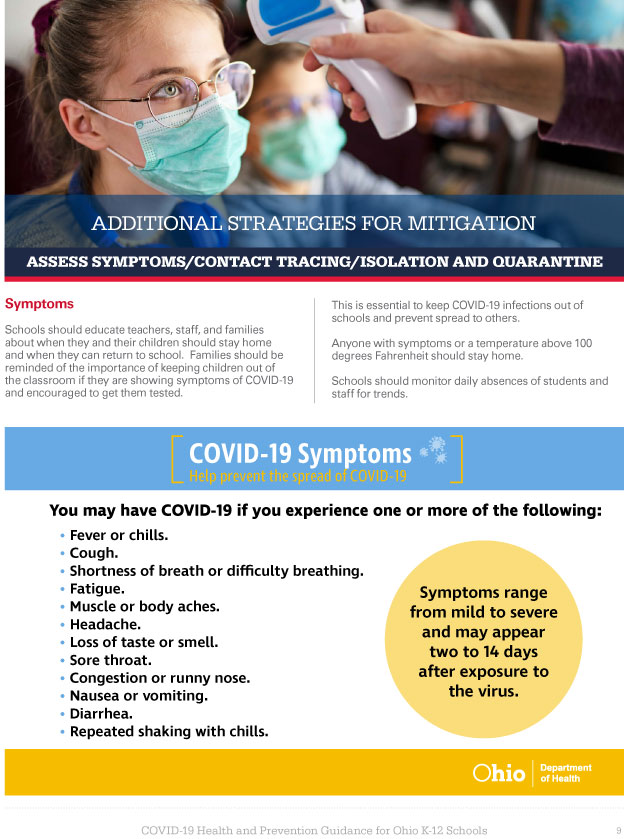
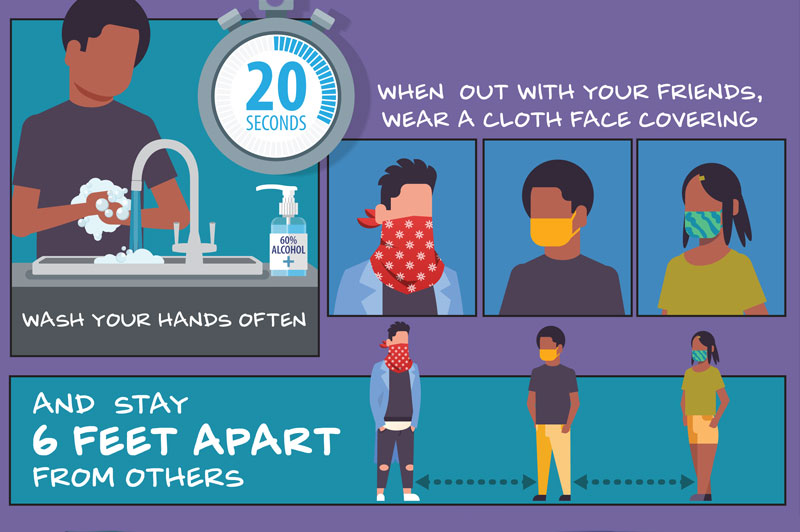
    Himes said it is essential that young people stay home and away from others if they are sick, adhere to 6-foot social distancing, and wear facial coverings when they go out. Avoid gathering in large crowds, huddling in groups, and sharing hugs or drinks.

    “Young people have given up a great deal since this pandemic first hit and are eager to get back to normal,” Himes said. “I thank them for their sacrifices and urge them to create a new normal in which they find ways to safely socialize, wear masks, keep a safe distance, and look out for one another.”

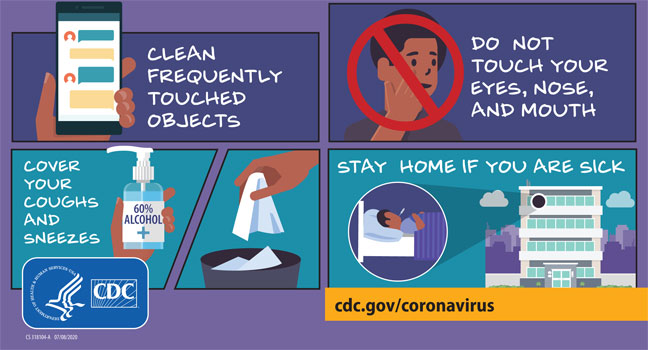
    ODH has prepared guidelines for parents and others for talking with young people about COVID-19. The guidelines include tips for preventing the spread and navigating new social norms. The Centers for Disease Control and Prevention also has produced a series of fact sheets for young adults:

    The average age of people with COVID-19 in Ohio has been steadily decreasing, showing that more and more young people are being exposed, and have become ill. Even those who don’t experience symptoms or only mild ones can unknowingly carry the disease and pass it to parents, grandparents, or other family and friends who may become seriously ill.

    “Teens and young people must do everything in their power to protect themselves, their families and friends, and all Ohioans against this very real and very serious threat,” Himes said.

    Taking steps to prevent COVID-19 also shows appreciation and offers protection for essential workers who provide healthcare and deliver food, packages, and other items. Further, reducing the spread of the pandemic is critical to prevent hospitals from becoming overcrowded. Overcrowded hospitals and overburdened healthcare workers make it more difficult to care for patients in critical need—a grandparent suffering from COVID-19, an aunt having complications delivering a baby, a father with chest pain, or a friend hurt in a car crash.

    “Teens and young people must do everything in their power to protect themselves, their families and friends, and all Ohioans against this very real and very serious threat,” Himes said. “You will save lives, prevent suffering, and help tame a pandemic that places all of us at risk.”