Tag: Ohio Capital Journal

  • Gov. DeWine signs off on using unclaimed funds for Browns stadium, future Ohio projects

    Gov. DeWine signs off on using unclaimed funds for Browns stadium, future Ohio projects

    By:  Ohio Capital Journal

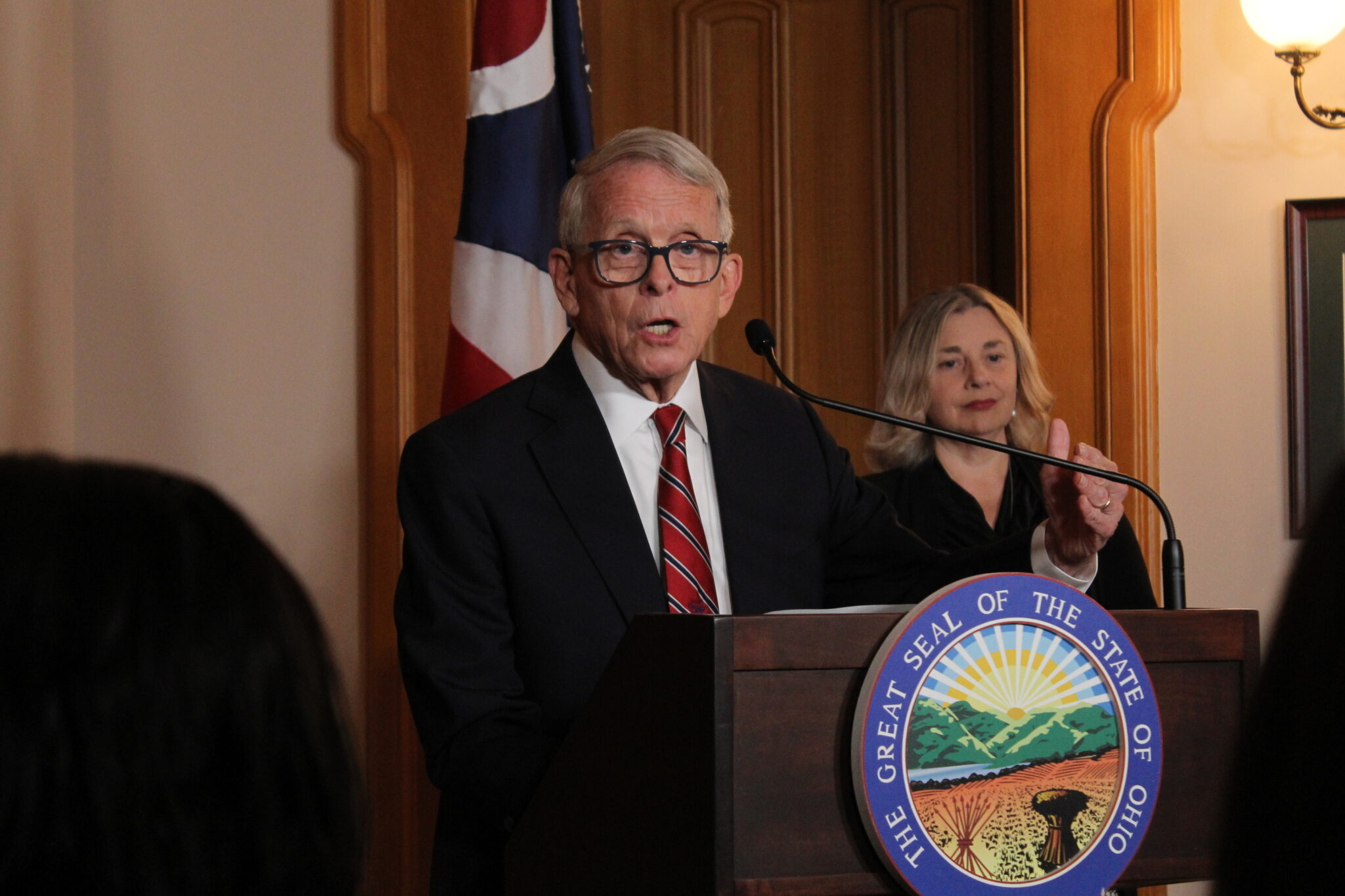
    With his signature late Monday night, Ohio Gov. Mike DeWine has allowed a controversial funding plan for a new Cleveland Browns stadium to go forward. The state will tap its multi-billion-dollar pool of unclaimed funds — money which belongs to ordinary Ohioans — to pay for the Browns’ stadium and other sports and cultural facilities in the future.

    Shortly before DeWine signed the budget, Attorney General Dave Yost urged him to veto the provision. Yost argued taking money from Ohioans to fund a privately owned stadium is “poor policy.” Two former Democratic lawmakers who threatened a class action lawsuit last week, said they’re going forward.

    GET THE MORNING HEADLINES.


    DeWine did, however, make one minor tweak to the funding mechanism. The initial program set a $500 million threshold. Projects beyond that amount were eligible for up to 25% of the cost in state funds, but those costing less were only eligible for 15% in state funds.

    The governor argued that cost floor “would have the perverse incentive of encouraging projects to become unnecessarily more expensive simply to meet a threshold for state funding.” Instead, all projects will be capped at a 25% state share.

    Why let it go forward?

    Although the governor declined to veto the use of unclaimed funds, he didn’t completely embrace the approach.

    “Well, as you know, that was not my first choice, I had another way of doing it,” DeWine told reporters Tuesday. The governor’s opening bid would’ve increased taxes on sports betting to fund new facilities. “But, you know, governors don’t get everything they want. Nobody gets everything they want.”

    He explained that even if “we’re all invested in our own ideas,” he took a step back and focused on his priorities.

    “To me, the biggest objectives were no taxpayers’ dollars used for this, in the sense of nothing coming out of general fund — nothing competing against education,” DeWine explained, “and it couldn’t just be about the Browns, it had to be universal.”

    “When you get the two prime objectives,” DeWine added, “it seems to me it’s time to say, ‘Yeah, I’m achieving what I wanted to achieve.’”

    In a social media post, Browns team owners Jimmy and Dee Haslam praised DeWine for approving the plan and promised to deliver a “transformative project” that will create a “generational impact.”

    Still, DeWine’s own comments underscore how fine a line he’s walking. The new fund will be built exclusively on taxpayers’ dollars in the form of old deposits or reimbursements that state officials are holding until claimed. The governor stresses that “stadiums should not compete with mental health. Stadiums should not compete with education.” By sidestepping the general fund, the budget avoids those tradeoffs.

    But it’s a distinction that might not make a difference to average Ohioans.

    The National Association of State Treasurers — officials typically tasked with unclaimed funds oversight — is explicit in its stance that a state’s role is merely custodial, and citizens’ right to recover property should be maintained in perpetuity.

    Ohio’s new budget gives claimants a 10-year grace period, but following that, all assets left in the unclaimed funds trust for more than 10 years will get transferred to the stadium and cultural facilities fund.


    The criticism

    Ohio’s unclaimed funds trust is worth close to $5 billion, and much of that money has been parked there for well over a decade. But simply taking those dollars, particularly to benefit a billionaire professional team owner, didn’t sit well with lawmakers on both sides of the aisle.

    In his letter to DeWine, Yost acknowledged some states have instituted similar transfers, but he expressed discomfort unclaimed dollars becoming state dollars in just 10 years.

    “This timeline makes Ohio an outlier nationally,” Yost wrote, “and risks inadvertently harming taxpayers unaware they have money in the state’s unclaimed funds.”

    In a reference to the Ohio constitution’s eminent domain provisions, he argued “the statutory taking of public funds without clear public benefit is poor policy.” State Supreme Court precedent in cases like Norwood v. Horney holds that governments must demonstrate a public benefit to take private property.

    “Billionaires should finance their own stadiums—full stop,” Yost added. “The $600 million handout for a single professional sports facility raises serious concerns about fiscal sustainability and fairness.”

    Ohio’s former Attorney General Marc Dann, and former state Rep. Jeff Crossman, both Democrats, visited the statehouse as lawmakers were getting ready to vote on the budget. They warned that if lawmakers went forward, they would file a class action lawsuit.

    Tuesday morning, Crossman said, “If Governor DeWine and the legislative majority think they can betray Ohioans’ constitutional property rights without a fight — they’re dead wrong.”

    “They’re getting the lawsuit they clearly invited,” he added, “and just like the case decided yesterday on (Pandemic Unemployment Assistance) benefits, we intend to win. Because when the state breaks the law, someone has to stand up for the people of Ohio”.

    The governor himself appeared resigned to a fight in court. In bit of homespun storytelling, DeWine recalled being a young lawyer arguing with an older judge in Green County.

    “He looked at me and said, Mister DeWine, that’s why God made the Court of Appeals,” DeWine said. “And so, you know, when don’t people don’t like things, they can go to court, and that’s what we have in our system.”

    Follow Ohio Capital Journal Reporter Nick Evans on X or on Bluesky.


    Nick Evans
    Nick Evans

    Nick Evans has spent the past seven years reporting for NPR member stations in Florida and Ohio. He got his start in Tallahassee, covering issues like redistricting, same sex marriage and medical marijuana. Since arriving in Columbus in 2018, he has covered everything from city council to football. His work on Ohio politics and local policing have been featured numerous times on NPR.

    Ohio Capital Journal is part of States Newsroom, the nation’s largest state-focused nonprofit news organization.

    MORE FROM AUTHOR


  • Ohio and national government watchdogs warn GOP trying to engineer a more favorable midterm map

    Ohio and national government watchdogs warn GOP trying to engineer a more favorable midterm map

    By:  Ohio Capital Journal

    Good government leaders in Ohio and around the country are worried about state lawmakers attempting to ‘bake in’ 2026 election results long before voters head to the polls. Between new rounds of redistricting and even more restrictive voting legislation, Republican state lawmakers seem poised to engineer an easier path for their party’s candidates, they say.

    “I think Ohio has become something of a test subject state for seeing just how far a super majority can chip away at access to the ballot and our rights to direct democracy,” Kelley Dufour from Common Cause Ohio said.

    GET THE MORNING HEADLINES.


    With Republicans notching several wins in 2024, the “sensationalized” version of voter restriction rhetoric has taken something of a back seat, Dufour said.

    “But forces are still working behind the scenes, right? At an administrative death by 1,000 cuts,” she said. “It’s a quieter process, but it’s significantly harmful to voters.”

    One example is a sharp uptick in provisional voting.

    In 2024, Dufour explained, 34,000 had to vote provisionally — roughly 40% more than in the last presidential election.

    Meanwhile, Ohio lawmakers are considering new measures that would require proof of citizenship to register and open the door to challenging a voters’ citizenship status on Election Day itself.

    Proof of citizenship would require voters gathering birth certificates, divorce records, name-change records, or other paperwork.

    This has already presented difficulties, for instance, for some trying to obtain a National I.D. card for air travel.

    How it plays out on the map

    But the “cherry on top,” Dufour said, is redistricting. Ohio could see a major shakeup to its congressional map ahead of next year’s midterms because lawmakers here are legally required to draft a new map.

    Right now, Ohio has 15 districts with five represented by Democrats and 10 represented by Republicans, or 33% to 66%.

    Midterm elections typically serve as a kind of referendum on a new presidential administration. Historically it has not been kind to the president’s party. That’s particularly concerning in the U.S. House, where Republicans are clinging to a thin 220-2012 majority.

    Redistricting in GOP-controlled states like Ohio and Texas could turn that vulnerability into an advantage.

    Common Cause Texas Executive Director Anthony Gutierrez explained, in his state, the governor has already announced a special session in July.

    The governor hasn’t shared what will be on the agenda, but at a recent press conference the state’s lieutenant governor was enthusiastic about the idea.

    “He was asked about redistricting, and he said that he does think that if there’s any opportunity for Republicans in Texas to pick up some seats, that he does think that they should do it,” Gutierrez said, “So, nothing confirmed, but senior Republicans who probably have some insight into what’s going on, have been giving indications that they do think this is going to happen.”

    In Ohio, lawmakers have to come up with a new map because the last one was approved along party lines.

    The General Assembly has until the end of September to come up with a map but has shown little inclination to do so thus far. If lawmakers don’t act, that would put the task back in the hands of the seven-member Ohio Redistricting Commission.

    “Currently, we have five Democrats and 10 Republicans that Ohio sends to D.C.,” Dufour said. “The map-making process could eliminate a few Democratic-leaning districts.”

    What that might look like in Ohio

    Ohio Republican U.S. Sen. Bernie Moreno is eager to see it happen. Moreno told Punchbowl News he thinks the GOP will pick up two additional seats and that Republicans controlling 12 of 15 districts — 80% of the delegation — “reflects the state.”

    Moreno reasoned there’s “a recognition” that big cities like Cincinnati, Columbus, and Cleveland will be represented by Democrats.

    Moreno won his statewide race with just 50.09% of the vote, a far cry from the 80% share he thinks Republicans should control in the U.S. House. In addition to losing the three Cs, Moreno lost counties anchored by Toledo, Akron, Dayton, and Athens.

    Sitting in the crosshairs of Ohio’s redistricting effort are Ohio Democratic U.S. Reps. Marcy Kaptur and Emilia Sykes. Kaptur’s Toledo-area district and Sykes’ Akron-based seat are the two most closely divided districts in the state.

    Both lawmakers have drawn familiar challengers. Republican former State Rep. Derek Merrin has joined a crowded primary field for a rematch against Kaptur. State Rep. Josh Williams, R-Sylvania Twp., has thrown his hat in the ring, too.

    In Sykes’ district, her 2024 opponent, Republican former state Rep. Kevin Coughlin, is running to face her again, as well.

    In both contests, even minor tweaks to the map could have a significant impact on the outcome. Sykes only beat Coughlin by about two points. Kaptur’s margin was even tighter. She beat Merrin by just 2,382 votes — less than a percentage point.

    Follow Ohio Capital Journal Reporter Nick Evans on X or on Bluesky.


    Nick Evans
    Nick Evans

    Nick Evans has spent the past seven years reporting for NPR member stations in Florida and Ohio. He got his start in Tallahassee, covering issues like redistricting, same sex marriage and medical marijuana. Since arriving in Columbus in 2018, he has covered everything from city council to football. His work on Ohio politics and local policing have been featured numerous times on NPR.

    Ohio Capital Journal is part of States Newsroom, the nation’s largest state-focused nonprofit news organization.

    MORE FROM AUTHOR

  • Opponents of new Ohio higher education law don’t have enough signatures to get a referendum

    Opponents of new Ohio higher education law don’t have enough signatures to get a referendum

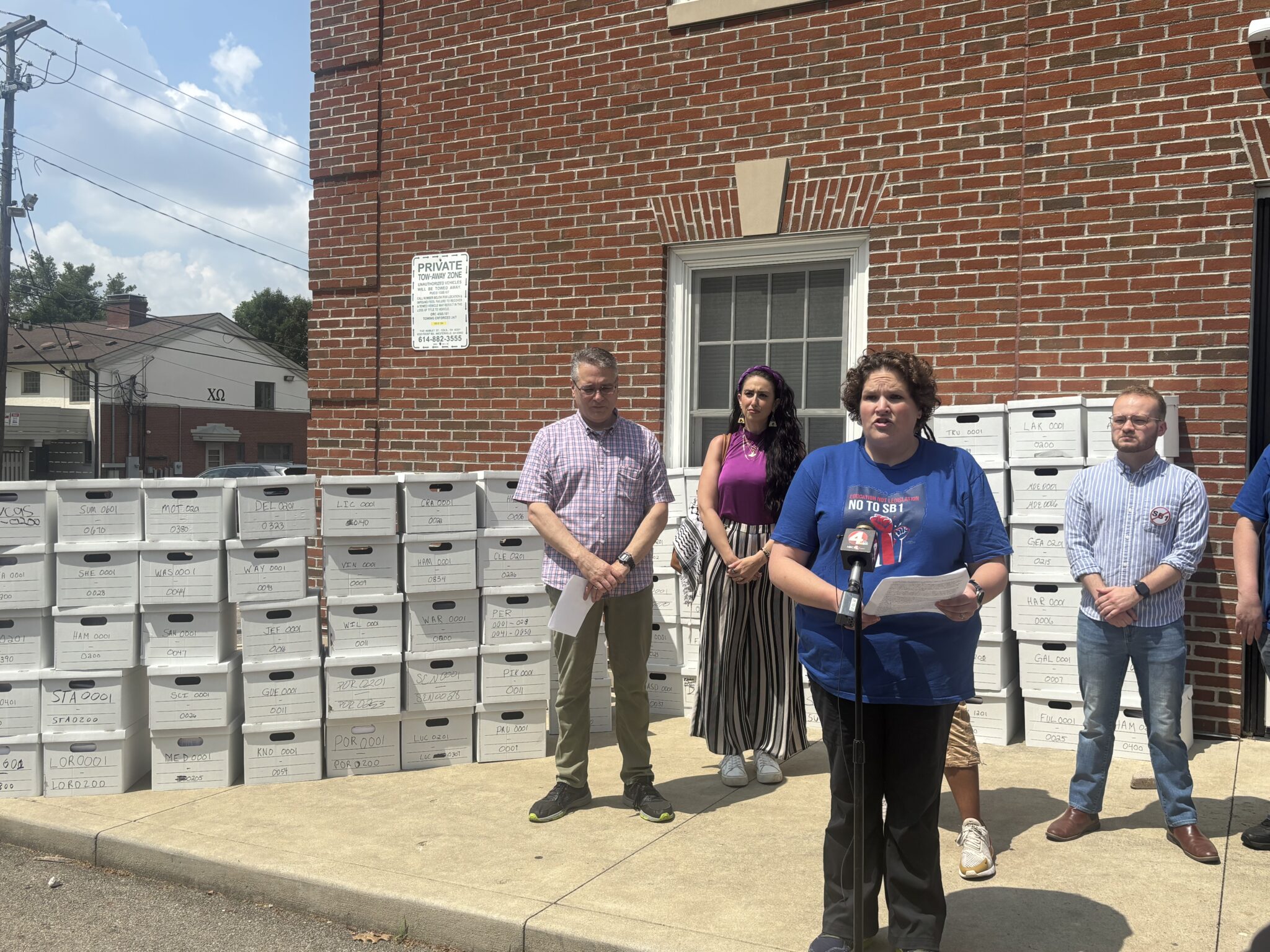
    Amanda Fehlbaum, one of three Youngstown State University faculty members who tried to get referendum on the Nov. 4 ballot to stop Senate Bill 1, spoke at a press conference on June 26. (Photo by Megan Henry, Ohio Capital Journal).

    By:  Ohio Capital Journal

    Opponents of Ohio Republican lawmakers’ higher education overhaul that bans diversity efforts and faculty strikes, and sets rules around classroom discussion, have failed to collect enough signatures to put a referendum on the ballot this year to block it.

    Members of the Youngstown State University’s chapter of the Ohio Education Association tried to get a referendum on the Nov. 4 ballot to stop Ohio Senate Bill 1, but said they ultimately ran out of time.

    GET THE MORNING HEADLINES.


    “Over the course of the last few days, we were collecting over 4,000 signatures a day, and that momentum was only increasing,” said Youngstown State’s Ohio Education Association President Mark Vopat. “It was only because we ran out of time that we weren’t able to get the required signatures. … I believe that if we’d had just a little bit more time, we could have gotten those numbers.”

    They needed to collect about 248,092 signatures from at least 44 of Ohio’s 88 counties — 6% of the total vote cast for governor during the last gubernatorial election.

    Instead, they collected nearly 195,000 signatures and met the signature requirements in at least 33 counties, said Amanda Fehlbaum, a Youngstown State faculty member who helped champion efforts to get a referendum.

    The plan was to submit the collected signatures to Ohio Secretary of State Frank LaRose on Thursday for him to verify the signatures. This was the deadline to submit signatures since the law goes into effect Friday.

    The new law creates post-tenure reviews, puts diversity scholarships at risk, sets rules around classroom discussion, and creates a retrenchment provision that blocks unions from negotiating on tenure, among other things. The law affects Ohio’s public universities and community colleges.

    “One thing is clear in all of this, the people do not want politicians making decisions about higher education,” Fehlbaum said. “The people do not like this legislation.”

    S.B. 1 quickly passed through the legislature earlier this year and Ohio Gov. Mike DeWine signed the bill into law on March 28.

    Fehlbaum said she thought another group “with infrastructure and funding” would come forward to challenge S.B. 1 after DeWine signed it into law, but that never happened so they decided to go the referendum route.

    Vopat and Fehlbaum along with fellow Youngstown State faculty member Cryshanna Jackson Leftwich started the referendum process in mid-April and Ohio Attorney General Dave Yost and the Ohio Secretary of State’s office gave them approval to start collecting signatures May 5.

    “I do think we could have pulled this off had we not wasted two weeks waiting on another group or groups to come forward,” Fehlbaum said.

    Vopat agrees they would have been able to get enough signatures if they had started the referendum process immediately after DeWine signed the bill into law.

    “That might have also given us the extra time we needed,” he said.

    The three Youngstown State faculty members said they are figuring out next steps and considering efforts to potentially try to get on the ballot in 2026.

    “This is not the end for us,” Jackson Leftwich said. “I want people to know that we’re going to use this momentum.”

    More than 1,700 people volunteered to collect signatures across the state. They ended up raising more than $43,000 in small dollar donations with $1,000 being their largest donation, Fehlbaum said.

    “I cannot underscore how much we did not have money,” she said. “We did not have paid consultants. We did not have paid petitioners. None of us are getting paid. …  There’s no dark money here.”

    But they said it ultimately came down to a lack of time, not a shortage of money.

    “I would love to take these boxes of petitions and put them on Jerry Cirino’s front door as a visible symbol of how detested this legislation is by the people,” Fehlbaum said. “We’re instead going to spend some of our remaining campaign funds on a shredding service so that information voters shared with us will not be mishandled.”

    Cirino is the Republican Ohio state senator who introduced S.B. 1.

    Some of Ohio’s public universities have started making decisions because of the new law. Ohio University announced it will close the Pride Center, the Women’s Center, and the Multicultural Center.

    The University of Toledo is suspending nine undergraduate programs. Kent State University is closing its LGBTQ+ Center, Women’s Center, and Student Multicultural Center.

    Referendums are rare and the last one that passed in Ohio was when voters overturned an anti-collective bargaining law in 2011.

    Follow Capital Journal Reporter Megan Henry on Bluesky.c


    Megan Henry
    Megan Henry

    Megan Henry is a reporter for the Ohio Capital Journal and has spent the past five years reporting in Ohio on various topics including education, healthcare, business and crime. She previously worked at The Columbus Dispatch, part of the USA Today Network.

    Ohio Capital Journal is part of States Newsroom, the nation’s largest state-focused nonprofit news organization.

    MORE FROM AUTHOR

  • As pharmacies close, Ohio Chamber blasted for siding with middlemen

    As pharmacies close, Ohio Chamber blasted for siding with middlemen

    By:  Ohio Capital Journal

    Owners of small pharmacies — many themselves members of local chambers of commerce — are accusing the Ohio Chamber of Commerce of siding with huge corporate middlemen who are driving them out of business.

    That undermines Ohioans’ health and costs the state’s businesses and taxpayers far more in the long run, the pharmacists say.

    Pharmacies of all sizes are battling with drug middlemen known as pharmacy benefit managers, or PBMs, over provisions in the state budget governing how prescription drugs are priced and how pharmacies are paid for dispensing them.

    Measures intended to help pharmacies were built into the Ohio House version of the state operating budget, stripped out by the Ohio Senate, and are now in the hands of a conference committee working against a June 30 deadline.

    Ohio and other states have been hemorrhaging pharmacies for years, and at an accelerating pace. Last year, Ohio lost 215 pharmacies and the total number dropped below 2,000 for the first time in memory, according to an online tracker launched by the Ohio Board of Pharmacy.

    That creates serious health concerns, especially in underserved areas where many face health and transportation challenges. The loss of a community’s sole pharmacy can make it nearly impossible for some to get their medicine or professional advice about how to manage their diabetes or blood pressure.

    Closures of isolated pharmacies creates deserts, and they’re growing. In Meigs County in Southeastern Ohio, for example, nearly 40% of the census tracts are part of what the pharmacy board calls pharmacy deserts.

    “As more pharmacies close in Ohio, we’re going to see poorer health — we’re not going to see positive outcomes,” said Denise Conway, owner of Conway’s Danville Pharmacy. “We’re going to see more ER visits. It’s just going to cost employers more.”

    CVS in 2017 bought and closed the Lonsinger’s, the sole pharmacy in Danville, leaving the nearest one in Mount Vernon, 12 miles away.

    “One man broke down crying,” librarian Betty Carpenter in 2019 told The Columbus Dispatch about an elderly resident. “He said, ‘I can’t walk to Mount Vernon.’ He could walk to Lonsinger’s.”

    Also in 2019, Conway and her husband bought a Danville building and opened a pharmacy there while Knox County opened a health clinic on the premises. It was a rare example of a health care desert restored to life. Other Ohio communities aren’t likely to be so fortunate.

    YOU MAKE OUR WORK POSSIBLE.


    “We’re down to about 300 independents,” said Dave Burke, a pharmacist, former state senator and executive director of the Ohio Pharmacists Association. “We’re really afraid as an organization that people are going to lose access to care. Care that keeps them out of the hospital. Care that shortens their stay in the hospital. And care that keeps them employed.”

    Burke and many other pharmacists blame the rush of closures on the conduct of the big PBMs, the middlemen that are part of giant corporations. They decide on behalf of insurers what drugs are covered, and they decide how much to reimburse pharmacies for the drugs they dispense.

    The three biggest PBMs — CVS Caremark, OptumRX and Express Scripts — control nearly 80% of the covered prescriptions in the United States.

    Critics say that enables them to extract huge, non-transparent discounts from drugmakers. They say it also enables them to force pharmacies into disadvantageous, take-it-or-leave-it contracts. Critics say that reimbursements under them are low and that they impose arbitrary rules and fees.

    Each of the big-three PBMs is part of a vertically integrated, Fortune 15 health conglomerate. Each of those also owns a top-10 health insurer.

    In addition, CVS owns the largest retail pharmacy chain and they all own mail-order pharmacies. So the big three get to decide how much to reimburse their own pharmacies as well as those of their competitors.

    Pharmacists and their advocates say the disputed language in the state budget would end those conflicts and rectify many problems.

    It would prohibit PBMs from imposing rules (and subsequently charging fees) that go beyond those of the Ohio Board of Pharmacy. It would end the murky system of reimbursements by requiring PBMs to pay pharmacies the prices listed in a public database — the National Average Drug Acquisition Cost, or NADAC, survey.

    And it would require PBMs to pay pharmacies roughly $10 for each prescription they dispense. With the NADAC reimbursement meant to ensure pharmacies break even on the drugs, the dispensing fees are meant to cover overhead such as payroll, supplies, rent, and insurance.

    “By definition the calculation is break-even,” Burke said. “You are paying (Medicaid’s) post-rebate cost of the drug. The only way to cover the bottle, the cost of the lid, the bag, the heat, the lights, the payroll is the dispensing fee.”

    The provisions that the state Senate stripped out of its budget version mirror reforms the Ohio Department of Medicaid undertook in 2022.

    Following concerns among pharmacists and investigations by a newspaper and the state auditor, the department mounted its own probe of drug transactions. It learned that in 2017, two PBMs — CVS Caremark and OptumRx — billed the state $224 million more for drugs than they paid the pharmacies that had bought and dispensed them.

    The Medicaid department fired the PBMs, created its own, single PBM, based reimbursements on the NADAC survey and started paying pharmacists a $10 per-prescription dispensing fee.

    Despite the higher reimbursements and dispensing fees, an analysis released earlier this year found that the new arrangement saved the state $140 million. That led many to conclude that the middlemen were skimming a hefty portion of the money flowing through the system.

    Even so, applying the same rules to non-Medicaid transactions would “harm small businesses and their employees,” said Rick Carfagna, a former state representative who is now the senior vice president of government affairs at the Ohio Chamber of Commerce.

    “PBMs are business-to-business entities, and they exist only because a company or health plan hires them,” Carfagna said in an email. “When you increase dispensing fees on a per-prescription basis, you’re impacting the ability of employers, including small businesses, local governments and labor organizations, to balance their budgets by controlling their health care costs. These increased fees eventually find their way downstream, in whole or in part, to all of those employers utilizing PBMs.”

    Carfagna didn’t respond directly when asked whether Ohio’s independent and small-chain pharmacies are themselves small businesses that have been rapidly disappearing.

    Conway, who is herself chair-elect of the Knox County Chamber of Commerce, said Carfagna and the Ohio Chamber used deceptive language in fighting for the PBMs.

    “The Ohio Chamber in their testimony called the dispense fee a tax,” she said. “It’s by no means a tax. It’s the cost of running a business. A dispense fee has always been built into the model of reimbursing a pharmacy. You can’t put a zero there. It’s the cost of running a business.”

    Burke, executive director of the Ohio Pharmacists Association, said the Ohio Chamber’s position also ignores that Ohio Medicaid saved money when it increased dispensing fees and switched to a transparent system of reimbursements. Several other states, most recently Minnesota, have adopted similar arrangements.

    “Every state that has gone to a transparent model hasn’t gone back to the traditional one,” Burke said. “They’re saving money and they’re not going back.”


    Marty Schladen
    Marty Schladen

    Marty Schladen has been a reporter for decades, working in Indiana, Texas and other places before returning to his native Ohio to work at The Columbus Dispatch in 2017. He’s won state and national journalism awards for investigations into utility regulation, public corruption, the environment, prescription drug spending and other matters.

    Ohio Capital Journal is part of States Newsroom, the nation’s largest state-focused nonprofit news organization.

    MORE FROM AUTHOR

  • ‘We are going to push pause’ on Ohio marijuana legislation, says Republican lawmaker

    ‘We are going to push pause’ on Ohio marijuana legislation, says Republican lawmaker

    By:  Ohio Capital Journal

    Ohio lawmakers will likely go on summer break without making any changes to the state’s marijuana law, a Republican state representative said Tuesday.

    For the second week in a row, Ohio Senate Bill 56 was up for a possible vote out of the Ohio House Judiciary Committee, but both times the vote did not take place.

    Once the bill is voted out of committee, it can be brought to the House floor for a vote. The Senate passed the bill in February.

    GET THE MORNING HEADLINES.


    Last week, the bill was removed from the committee agenda and this week the committee meeting — which only had S.B. 56 on the agenda — was canceled.

    “We are going to push pause,” state Rep. Brian Stewart, R-Ashville, said when asked about the marijuana bill. “We’re going to take the summer and come back and potentially take another crack at it.”

    Ohio House Speaker Matt Huffman, R-Lima, said the Senate raised more than a dozen issues related to S.B. 56 last week.

    “I just told my caucus, ‘We’re not going to just say, OK, because we’re so anxious to pass the marijuana bill, which I’d like to get it done, but we’re not going to give up House priorities to do that,’” he said last week.

    The lawmakers are currently working on the state’s two-year operating budget, which Ohio Gov. Mike DeWine must sign before July 1. The lawmakers will go on summer break after the budget is finished.

    S.B. 56 would reduce the THC levels in adult-use marijuana extracts from a maximum of 90% down to a maximum of 70%, limit the number of active dispensaries to 400 and prohibit smoking in most public places.

    It would keep Ohio’s home grow the same at a limit of six plants per person and 12 plants per residence. State Sen. Steve Huffman, R-Tipp City, introduced the bill in January and the bill originally would have limited Ohio’s home grow from 12 plants down to six.

    Ohioans passed a citizen-initiated law to legalize recreational marijuana in 2023 with 57% of the vote, and sales started in August 2024. Ohio lawmakers can change the law since it passed as a citizen initiative not a constitutional amendment.

    “The people of Ohio spoke very clearly on this issue,” said Ohio House Minority Leader Dani Isaacsohn, D-Cincinnati. “They knew what they were voting on, and they voted to pass adult-use cannabis recreationally here in the state of Ohio.”

    Intoxicating hemp products

    The House has made significant changes to S.B. 56, most notably adding regulations to intoxicating hemp products.

    As the bill currently stands, only a licensed marijuana dispensary would be able to sell intoxicating hemp products that have been tested and complied with packaging, labeling and advertising requirements.

    The Ohio Department of Commerce would regulate intoxicating hemp products and drinkable cannabinoid products. Grocery stores, carryout stores, bars, and restaurants would continue to be able to sell drinkable cannabinoid products.

    Isaacsohn agrees there should be regulations around intoxicating hemp products, but wants it to happen through a “clean bill.”

    “It is so tied up in trying to overturn the will of the voters,” he said. “If we had a clean bill to fairly regulate intoxicating hemp, we could have voted on it months ago, years ago. … There are so many common sense things that we agree on, and when the majority brings forward a clean bill, we would be happy to vote for it.”

     Flowers of hemp plants that contain less that 0.3 percent tetrahydrocannabinol (THC) the primary psychoactive substance in marijuana. (Photo by Graham Stokes for Ohio Capital Journal. Republish photo only with original article.) 

    The 2018 Farm Bill says hemp can be grown legally if it contains less than 0.3% THC.

    State Rep. D.J. Swearingen, R-Huron, was planning on introducing amendments to the bill’s hemp provisions during Tuesday’s committee meeting, but that didn’t happen since the meeting was canceled.

    The American Republic Policy worked with Swearingen on the amendments which would have allowed licensed hemp companies in Ohio to continue to operate their retail stores and create a unified regulatory framework for hemp and marijuana products, said Dakota Sawyer of American Republic Policy.

    “The same regulations that would apply to marijuana under the Ohio administration code would apply to hemp products as well,” he said. “We are ensuring that we do not have state-sanctioned monopolies in the state of Ohio, that federally legal hemp products can be accessed through independent businesses, and that they would not be forced to go into dispensaries.”

    Sawyer said forcing hemp products into only dispensaries would eliminate market competition.

    “We want to ensure that there are options out for people, to ensure that they are able to purchase what they love, what they would want … and to ensure that we do not have state-sanctioned monopolies,” he said.

    State Rep. Jennifer Gross, R-West Chester, said 3,000 hemp businesses would close if S.B. 56 passes as it currently stands — with hemp products only being sold in dispensaries.

    “We need to reward the good actors,”  she said. “We need to ID check our hemp products when it is consumable. We also need to allow these businesses to stay open.”

    Wesley Bryant, company owner of 420 Craft Beverages in Cleveland, said he already does many of the things that are outlined in the proposed amendment.

    “Every square inch of my facility is fully covered by cameras,” he said. “We have a full track and traceability of everything that comes into my facility. We even go so far as to double check IDs. And my doors stay locked throughout the day. You have to be buzzed in order to enter the facility.”

    DeWine and various lawmakers have expressed safety concerns for children when it comes to hemp products, but Sawyer said the average age of an Ohio hemp customer is 40 years old.

    “It’s not geared towards children,” Sawyer said. “What some legislators have done is created this mystical boogeyman that says that all these hemp people are doing all these crazy things that are attracting minors. And essentially we’re saying, let’s punish the bad actors that are doing that, but let’s not punish the good guys for that.”

    But Adrienne Robbin, deputy executive director of Ohio Cannabis Coalition (OHCANN), said Ohio children are being put at risk by intoxicating hemp products.

    “It’s a sad day for all Ohioans that we’re going to continue to see these illicit products be sold in our state over the summer,” she said. “These products are being marketed to (children) specifically,” she said. “I think the hemp industry is really good at pulling a few good actors out and highlighting them, but the reality is, the majority of these products are illicit.”

    Sawyer said he would prefer to see the legislation as two separate bills — one with marijuana regulations and a separate one with hemp regulations.

    “Marijuana and hemp are totally separate in terms of the industry and products,” he said.

    Follow Capital Journal Reporter Megan Henry on Bluesky.


    Megan Henry
    Megan Henry

    Megan Henry is a reporter for the Ohio Capital Journal and has spent the past five years reporting in Ohio on various topics including education, healthcare, business and crime. She previously worked at The Columbus Dispatch, part of the USA Today Network.

    Ohio Capital Journal is part of States Newsroom, the nation’s largest state-focused nonprofit news organization.

    MORE FROM AUTHOR


  • Ohio House Democrats elect Cincinnati Rep. Dani Isaacsohn as next leader

    Ohio House Democrats elect Cincinnati Rep. Dani Isaacsohn as next leader

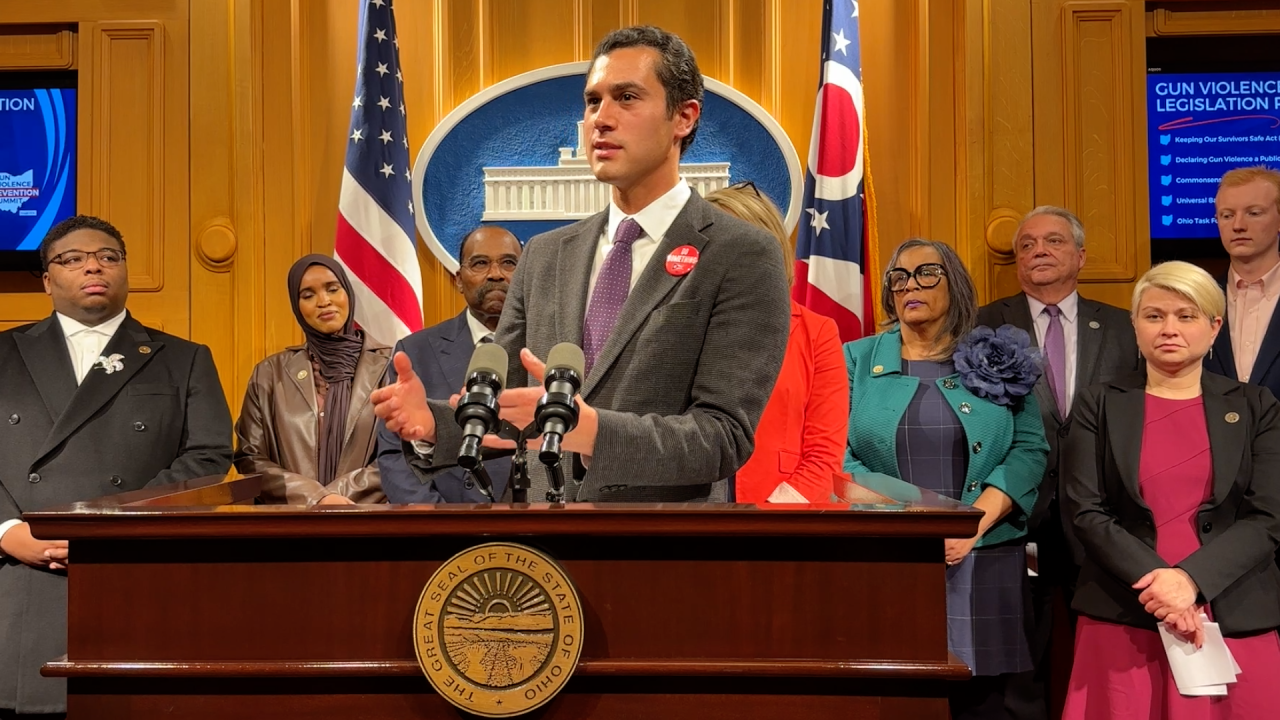
    Ohio State Rep. Dani Isaacsohn (D-Cincinnati) speaking at a press conference about gun safety legislation. (Photo by Morgan Trau, WEWS.)

    By:  Ohio Capital Journal

    Ohio House Democrats have elected Dani Isaacsohn, a Cincinnati lawyer, as their next minority leader. A full chamber vote is scheduled for Wednesday to make him official. Read on…


    Morgan Trau
    Morgan Trau

    Morgan Trau is a political reporter and multimedia journalist based out of the WEWS Columbus Bureau. A graduate of Syracuse University’s S.I. Newhouse School of Public Communications, Trau has previously worked as an investigative, political and fact-checking reporter in Grand Rapids, Mich. at WZZM-TV; a reporter and MMJ in Spokane, Wash. at KREM-TV and has interned at 60 Minutes and worked for CBS Interactive and PBS NewsHour.

    MORE FROM AUTHOR

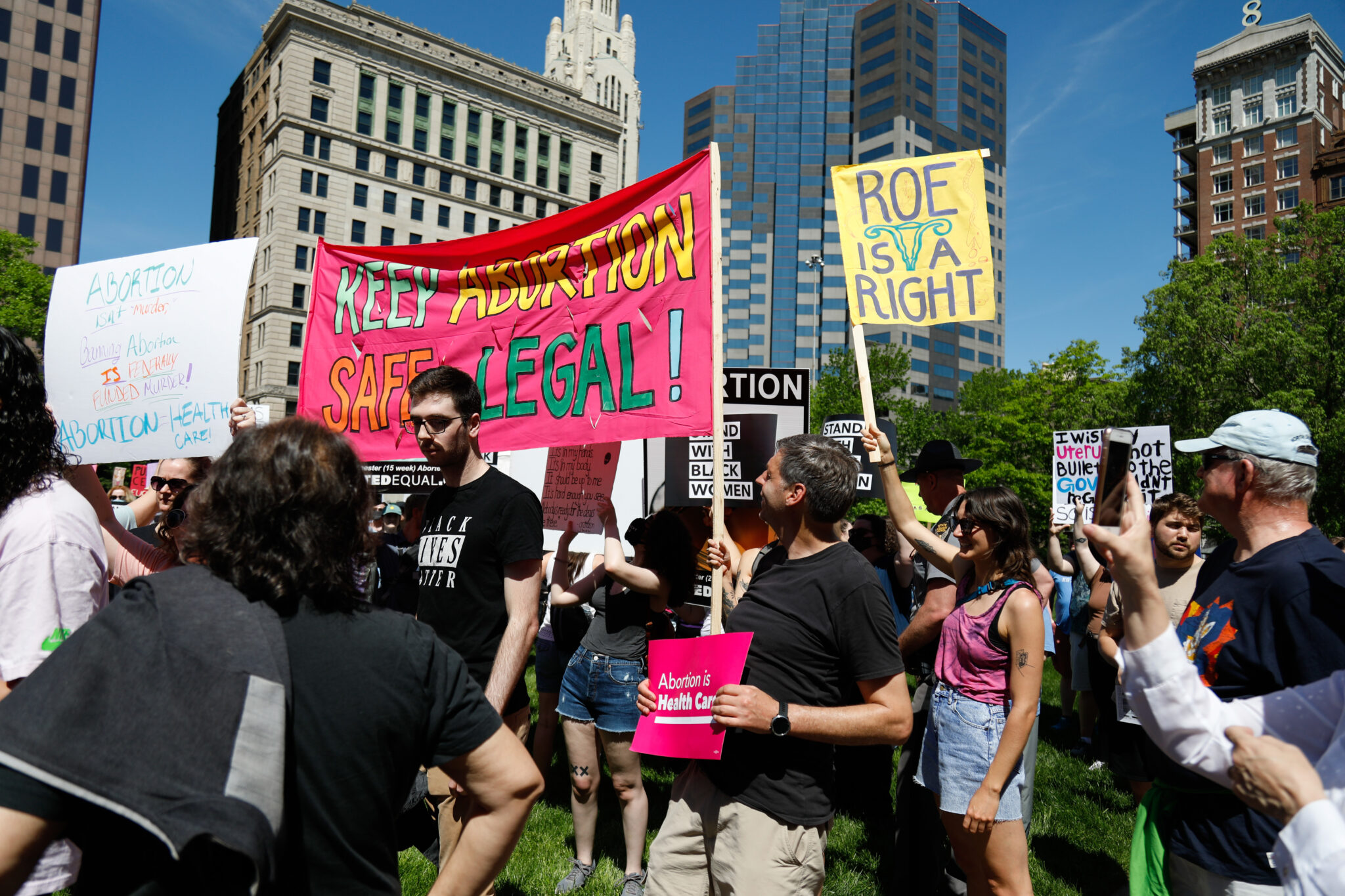
  • Ohio’s pro-abortion rights groups plan fights against total abortion ban bill

    Ohio’s pro-abortion rights groups plan fights against total abortion ban bill

    By:  Ohio Capital Journal

    Pro-abortion rights advocates are taking a proposed total abortion ban in Ohio to heart. Noting the celebration of Juneteenth and Black emancipation, they say the use of the 14th Amendment to try to exert state control over individual freedom and bodily autonomy is vile.

    The new bill a pair of freshman Republican House lawmakers are planning to introduce would ban abortion and criminalize it, along with in-vitro fertilization and certain types of contraception. The measure’s filing was first reported by WEWS.

    The bill is meant as a direct challenge to the state reproductive rights amendment passed by 57% of Ohio voters in 2023.

    Bill supporters say the current constitutional amendment that enshrined reproductive rights into the Ohio Constitution “should be treated as null and void” because, they claim, it violates the equal protection clause of the 14th Amendment “by denying pre-born persons the right to life.”

    The 14th Amendment of the U.S. Constitution protects citizenship and due process, along with equal protection under the law.

    “In appealing to the 14th Amendment, the Ohio Prenatal Equal Protection Act appeals to a higher law; the U.S. Constitution,” the anti-abortion group End Abortion Ohio, who is leading the charge on the bill, said in a statement.

    Austin Biegel, a member of End Abortion Ohio, argued that yes, the bill would go against the majority public opinion of Ohioans, but he justified it by arguing that slavery was once also supported and legal in the U.S.

    Lexi Dotson-Dufault, executive director of the resource and referral service Abortion Fund Ohio, called the use of the 14th Amendment as part of an abortion ban bill “vile.”

    “A bill that bans abortion while citing the 14th Amendment misuses a civil rights protection to justify state control over our marginalized community members, especially Black people,” Dotson-Dufault said.

    A report from the National Partnership for Women & Families in May of last year found that state abortion bans “exacerbate the existing Black maternal mortality crisis,” and “threaten” 7 million Black women nationwide.

    The study found that mothers who can’t access abortion care see negative impacts to their “economic security and development of their existing children.”

    ‘Canary in the coal mine’

    Dotson-Dufault and Ohio Women’s Alliance Deputy Director Jordyn Close believe Republican legislators are emboldened to attempt anti-abortion measures in part because of a Missouri Supreme Court ruling that reinstated a “de facto abortion ban” in May, lifting an injunction that had blocked abortion restrictions.

     Lexi Dotson-Dufault, executive director of Abortion Fund Ohio. Photo courtesy of Lexi Doston-Dufault. 

    The decision came months after that state also approved an amendment to its constitution that protected reproductive rights.

    The pro-abortion rights advocates see no legal standing for the new abortion ban bill, but they also see abortion rights as “the canary in the coal mine when it comes to … rights being stripped away from people.”

    “I don’t think that this bill has any legs to stand on, but I do think that it’s very important to highlight just how gross it is that they would even try it,” Close said. “Because if it’s not this bill, it will be another one introduced in the next session … it just continues because they do not respect Ohioans.”

    Ohio’s constitutional amendment, passed in 2023, protects abortion and other types of reproductive health like fertility treatments and miscarriage care, but more than 30 other regulations still sit on the books in Ohio law.

    Those statutes would have to be undone one by one, even though state courts have blocked some of the laws, as well as a six-week abortion ban that was on the books before Roe v. Wade was overturned by the U.S. Supreme Court.

    But Republicans in the state legislature are also trying to double-down on such regulations.

    State Reps. Mike Odioso and Josh Williams have already filed House Bill 347, a bill which targets informed consent, requiring that 24 hours before an abortion doctors provide not only “medically accurate information that a reasonable patient would consider material to the decision of whether to undergo the elective abortion” — which abortion providers have said they are already required to do — but also “alternatives to abortion, including adoption and parenting.”

    H.B. 347 also puts into law medically controversial and unproven language that “it may be possible to reverse the effects of the abortion-inducing drug” if a medication abortion is taking place.

    This isn’t the first time Ohio lawmakers have attempted to include this language in state law.

    The bill also requires a physician to notify the pregnant person, except in the case of rape or incest, “that the unborn child’s father has a child support obligation, even if the father has offered to pay for the elective abortion.”

    According to a recent midyear analysis from the Guttmacher Institute, 13 states have total abortion bans on the books, with another 28 that have bans between six weeks of gestation and “viability.”

    Ohio’s constitutional amendment places abortion legality at viability, as determined by an individual’s physician.

    The institute’s report also said the first half of 2025 has given rise to anti-abortion state lawmakers who “have continued to push the envelope toward pregnancy criminalization, restrictions on bodily autonomy and laws that recognize fetal and embryonic personhood,” while also reducing funding for resources like sex education.

     Jordyn Close, deputy director of Ohio Women’s Alliance. (Photo by Graham Stokes for Ohio Capital Journal. Republish photo only with original article.) 

    The state-level action comes as the Trump administration spent its first few months in office revoking Biden-era executive orders on abortion, including patient privacy protections, and rolling back guidance on access to emergency abortion care under the federal Emergency Medical Treatment and Labor Act.

    President Donald Trump also pardoned nearly two dozen people convicted under a federal law that bans threats, physical obstruction or force at the entrances to reproductive health clinics.

    The language of that federal law for which Trump issued pardons also bars interference, injury or intimidation for any exercise of First Amendment religious freedom, including at places of worship.

    Efforts to slash federal funding have also touched reproductive health, with cuts to Title X, which funds “family planning” grants and other reproductive health services for low-income individuals, including many services in Ohio.

    Pro-abortion rights groups have already started their fight against the total abortion ban bill with a demonstration on Wednesday that interrupted an anti-abortion gathering in the Statehouse.

    They want to spend more time not only raising their voices in the halls of the legislature, but also educating the voters going into 2026 elections.

    “Even though we had a moment of victory in 2023, the fight is far from over,” Close said. “We have to look toward the next electoral (cycle) to protect our courts, because inevitably when we have these showdowns in the state legislature, the courts is where everything ends up.”

    A spokesperson for Oho House Speaker Matt Huffman said Huffman’s focus remains on the state operating budget until its July 1 deadline, and had no other information on the bill’s introduction or timeline.

    A request for comment from Senate President Rob McColley on whether he would consider such a bill went unanswered on Wednesday.

    Back in November 2024, just before he began his tenure as Senate president, McColley told the Capital Journal “the inaction on the issue kind of speaks for itself,” referring to any effort to undermine the constitutional amendment. He also said since the issue had passed the year before, “there really hasn’t been a lot of discussion about it.”

    “I think, by and large, people realize Ohioans spoke, and that’s the way it is right now,” McColley said then.

    The Ohio Democratic Party said they were staunchly against the abortion ban measure, questioning the priorities of state Republicans, and saying the party with the Statehouse supermajority is attempting to “drag our state into the past.”

    “Ohio women would die under this cruel, disastrous legislation,” said Ohio Democratic Party Chair Kathleen Clyde.


    Susan Tebben
    Susan Tebben

    Susan Tebben is an award-winning journalist with a decade of experience covering Ohio news, including courts and crime, Appalachian social issues, government, education, diversity and culture. She has worked for The Newark Advocate, The Glasgow (KY) Daily Times, The Athens Messenger, and WOUB Public Media. She has also had work featured on National Public Radio.

    Ohio Capital Journal is part of States Newsroom, the nation’s largest state-focused nonprofit news organization.

    MORE FROM AUTHOR

  • Republican proposals will devastate poor Ohioans, analyses, advocates say

    Republican proposals will devastate poor Ohioans, analyses, advocates say

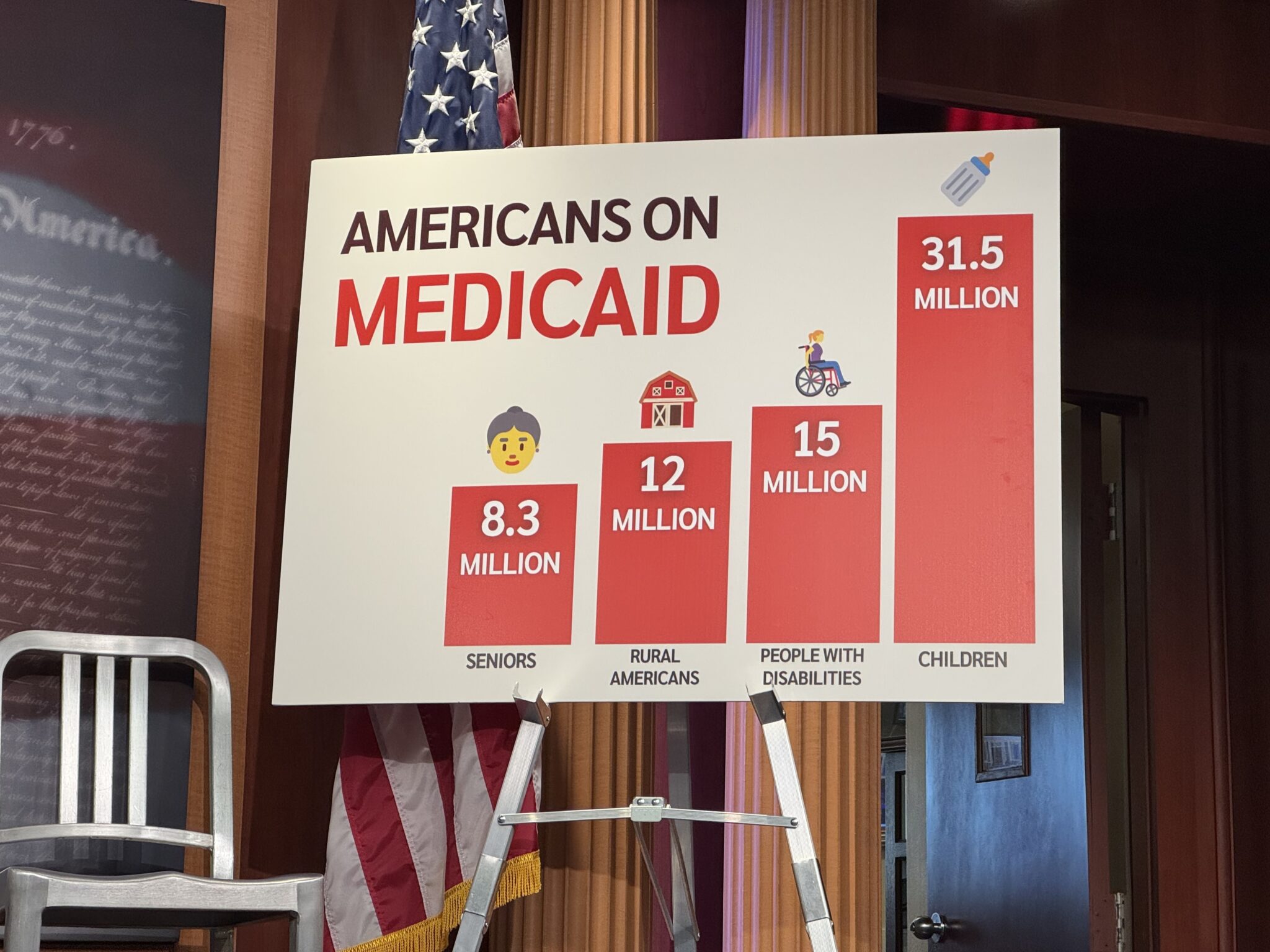
    Medicaid sign at a press conference. (Photo by Shauneen Miranda/States Newsroom)

    By:  – Ohio Capital Journal

    A raft of proposals coming from Republican lawmakers in Washington, D.C. and Columbus will slash health care and other vital programs for the poor in rural Ohio and in its cities, recent analyses say.

    An advocacy group is trying to pressure the state’s Republican U.S. senators to vote against it.

    Republican lawmakers in D.C. and Columbus are hashing out budgets. As they do, they’re looking for ways to cut spending to finance tax cuts weighted heavily toward the wealthy.

    The reconciliation bill — President Donald Trump’s “One Big Beautiful Bill” — passed by the U.S. House of Representatives would provide about would cut taxes by more than $3 trillion and give 70% of the money to the richest 10% according to the nonpartisan Congressional Budget Office.

    At the state level, Policy Matters Ohio said that a flat-tax proposal passed by the Ohio Senate would cost the state $1.1 billion a year and give 96% of the benefit to the state’s top 20% of income earners.

    Some Republicans at both levels also have plans to make deep cuts to the social safety net.

    The Robert Wood Johnson Foundation and the Urban Institute last week published an issue brief saying that cuts to Medicaid and the Affordable Care Act marketplace would result in a $1 trillion loss in health spending for poor and working people. Ohio alone would lose $31 billion as part of that, the analysis said.

    The Medicaid cuts would cost Ohio’s hospitals $9.5 billion — and they’d have to shoulder more uncompensated care as more Ohioans would become uninsured. The Congressional Budget Office estimates that the One Big Beautiful Bill Act would create 16 million more uninsured Americans by 2034.

    “The Medicaid cuts Congress is considering would be the largest funding reduction in the program’s history, and it is hard to overstate just how devastating the impacts would be,” Katherine Hempstead of the Robert Wood Johnson Foundation said in a written statement. “Such drastic changes to Medicaid financing would have ripple effects that go well beyond people covered by the program, further squeezing hospitals, limiting access to care for entire communities, and destabilizing state and local economies.”

    Significant federal funding cuts to Medicaid would be particularly hard on Ohioans. Gov. Mike DeWine’s proposed budget has a provision that would end the state’s 11-year-old Medicaid expansion. That would cost 770,000 Ohioans — most of whom are working — their health coverage.

    The Commonwealth Fund in May said the Buckeye State would be one of the five hardest hit by the proposed cuts. And they would come at a critical time, the organization said in a report released Wednesday.

    Ohio ranked 30th overall for health system performance. It scored particularly badly in terms of infant mortality, preventable hospitalizations, and mortality disparities between Black and other Ohioans.

    Not only would Republican spending proposals slash health funding for lower-income Americans, it would decimate food assistance for the poorest.

    “The House-passed Republican reconciliation plan would cut nearly $300 billion from the Supplemental Nutrition Assistance Program (SNAP) through 2034, based on Congressional Budget Office (CBO) estimates — by far the largest cut to SNAP in history,” the Center on Budget and Policy Priorities wrote in May.

    “As a result of these cuts and other policies in the legislation — which are being used to pay partly for trillions in tax cuts skewed to the wealthy — millions of people would lose some or all of the food assistance they need to afford groceries, when many low-income households are struggling to afford the high cost of food and other basic needs.”

    If those proposed cuts become reality, Ohio’s foodbanks won’t able to ameliorate the hunger they create, the executive director of the Ohio Association of Foodbanks said earlier this month.

    GET THE MORNING HEADLINES.


    Tax cuts weighted toward the wealthiest and cuts in benefits to the most vulnerable have the group Families Over Billionaires trying to put pressure on Republican senators to vote no on the One Big Beautiful Bill Act. As part of a seven-state, $5 million buy, a commercial went up in Ohio this week.

    “We sent Senators (Bernie) Moreno and (Jon) Husted to Washington to lower costs,” the narrator says. “So now that they’re in charge, what are they doing about it? They’re kicking 16 million people off of health care, taking food from 18 million kids, and driving costs through the roof for 80 million families. All to give the super-rich a $250,000 tax cut while your costs go up. They pay less and you pay more. That’s the billionaire tax scam. Tell your senators to vote no.”

    The Congressional Budget Office estimated that 16 million would lose health coverage under the Republican plan. The Urban Institute estimates that 18.3 million children would lose food assistance. Economists widely expect Trump’s tariffs — taxes on imports — to cause significant inflation. The Center on Budget and Policy Priorities estimates that the 1% of wealthiest households would get an average annual tax cut of $250,000.


    Marty Schladen
    Marty Schladen

    Marty Schladen has been a reporter for decades, working in Indiana, Texas and other places before returning to his native Ohio to work at The Columbus Dispatch in 2017. He’s won state and national journalism awards for investigations into utility regulation, public corruption, the environment, prescription drug spending and other matters.

    Ohio Capital Journal is part of States Newsroom, the nation’s largest state-focused nonprofit news organization.

    MORE FROM AUTHOR

  • Ohio lawmakers are trying once again to remove slavery from state’s constitution

    Ohio lawmakers are trying once again to remove slavery from state’s constitution

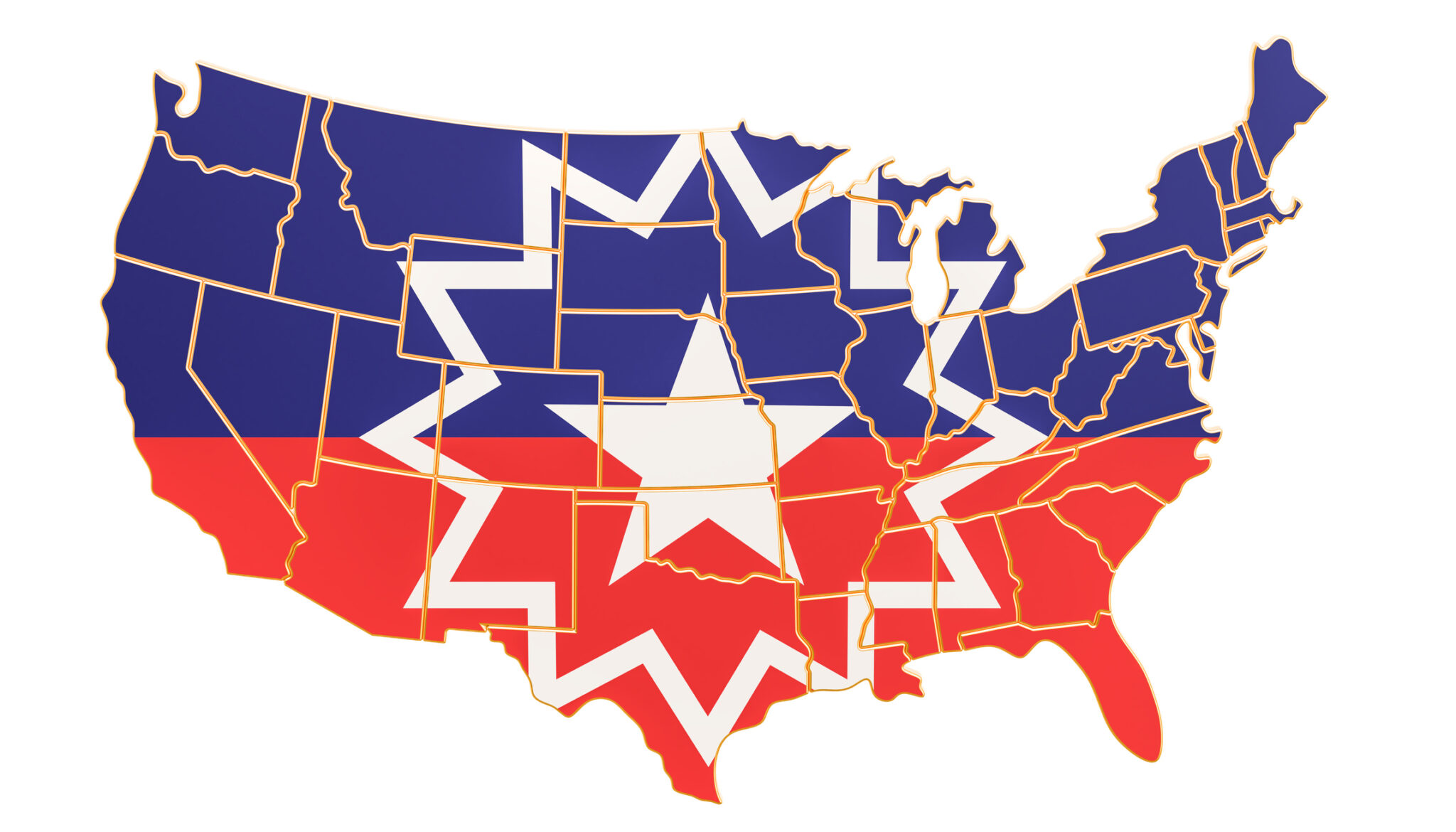
    Juneteenth flag. (Getty images)

    By:  Ohio Capital Journal

    Ohio Democratic lawmakers want to eradicate slavery from the Ohio Constitution.

    State Reps. Dontavius Jarrells, D-Columbus, and Veronica Sims, D-Akron, are working on a joint resolution that would remove slavery from the state’s foundational document.

    “This isn’t political,” Jarrells said Wednesday during an Ohio Legislative Black Caucus press conference. “This isn’t personal. This is a moral overdue journey to change our constitution once and for all. Other states have already done it. We simply want Ohio to live up to this promise of freedom.”

    GET THE MORNING HEADLINES.


    The 13th Amendment to the U.S. Constitution abolished slavery and involuntary servitude, except as punishment for being convicted of a crime. The Ohio Constitution currently says “There shall be no slavery in this state; nor involuntary servitude, unless for the punishment of crime.”

    Seven states have removed the slavery loophole from their constitution — Alabama, Oregon, Tennessee, Vermont, Utah, Colorado, and Nebraska, according to the Abolish Slavery National Network.

    “I submit that slavery and or involuntary servitude in any shape, form or fashion, should be disembodied from the sacred pages of the founding document of our great state,” Sims said. “It is time to remove any exception under any circumstances, slavery is a vile, despicable imposition upon another human being.”

    This is not the first time there have been legislative attempts in Ohio to remove slavery from the state’s constitution. Jarrells had a bipartisan joint resolution that was unable to get out of committee during the last General Assembly. A Senate Joint Resolution was also unsuccessful back in 2020.

    If the House and Senate pass the new joint resolution, it would go to the statewide ballot for the voters to decide.

    Wednesday’s press conference was hosted by members of the Ohio Legislative Black Caucus in honor of Juneteenth, a federal holiday Thursday remembering the end of slavery in the United States on June 19, 1865 — two years after the Emancipation Proclamation.

    “Juneteenth signifies the end of slavery, and it’s a time to celebrate,” said State Rep. Terrence Upchurch, D-Cleveland. “Although we are proud of the progress we have made, that does not negate the fact that there are still several challenges Black Ohioans face across the state. People are still struggling with finding housing, healthy foods, good paying jobs, satisfactory education, fair treatment in the justice system, and so much more.”

    Jarrells introduced House Bill 306 last month, also known as the Enact the Hate Crime Act.

    “It empowers victims with real civil remedies and gives law enforcement clear, enforceable tools to hold perpetrators accountable,” he said. “This bill says that every single person in this state deserves to live without fear, and if you are targeted for who you are, this state will stand with you.”

    State Rep. Darnell T. Brewer, D-Cleveland, talked about recent gun legislation he is working on.

    “Gun violence is devastating our communities,” he said. “We can no longer afford to be silent or inactive.”

    Black youth are 11 times more likely to die from firearm homicide than their white peers, according to Brady: United Against Gun Violence.

    Brewer said he plans on introducing a resolution to encourage responsible gun ownership by promoting safe storage practices to prevent children from accessing guns and a resolution on safe firearm storage education.

    “Gun violence is not just an emergency,” he said. “It’s a daily reality.”Infant mortality, when a child dies before their first birthday, is higher for Black babies compared to white babies. The national infant mortality rate is 5.5 per 1,000 live births for babies and 10.9 for Black babies, according to the Centers for Disease Control and Prevention. The infant mortality rate for Ohio Black babies in 2022 was 13.4 per 1,000 live births.

    “Why do we stop caring about babies after they’re born?” State Rep. Derrick Hall, D-Akron, asked.

    State Rep. Ismail Mohamed, D-Columbus, talked about House Bill 281, a bill that would withhold Medicaid funding from hospitals that do not cooperate with the United States Immigration and Customs Enforcement. State Rep. Josh Williams, R-Sylvania Twp., introduced the bill last month.

    “What this bill does is essentially force medical providers to choose between honoring your oath as medical providers or complying with the state’s political agenda,” Mohamed said. “It will discourage immigrant communities from seeking life saving treatment care out of fear.”

    Mohamed also talked about House Bill 1, a piece of legislation that would place restrictions on foreign ownership of land. State Reps. Angie King, R-Celina, and Roy Klopfenstein, R-Haviland, introduced the bill earlier this year.

    “It is arbitrary,” Mohamed said. “It is discriminatory in its face, and will negatively impact economic development in the state of Ohio.”

    Follow Capital Journal Reporter Megan Henry on Bluesky.


    Megan Henry
    Megan Henry

    Megan Henry is a reporter for the Ohio Capital Journal and has spent the past five years reporting in Ohio on various topics including education, healthcare, business and crime. She previously worked at The Columbus Dispatch, part of the USA Today Network.

    Ohio Capital Journal is part of States Newsroom, the nation’s largest state-focused nonprofit news organization.

    MORE FROM AUTHOR

  • Cleveland Fed: Tariffs are raising some prices in Ohio, Pennsylvania, West Virginia, and Kentucky

    Cleveland Fed: Tariffs are raising some prices in Ohio, Pennsylvania, West Virginia, and Kentucky

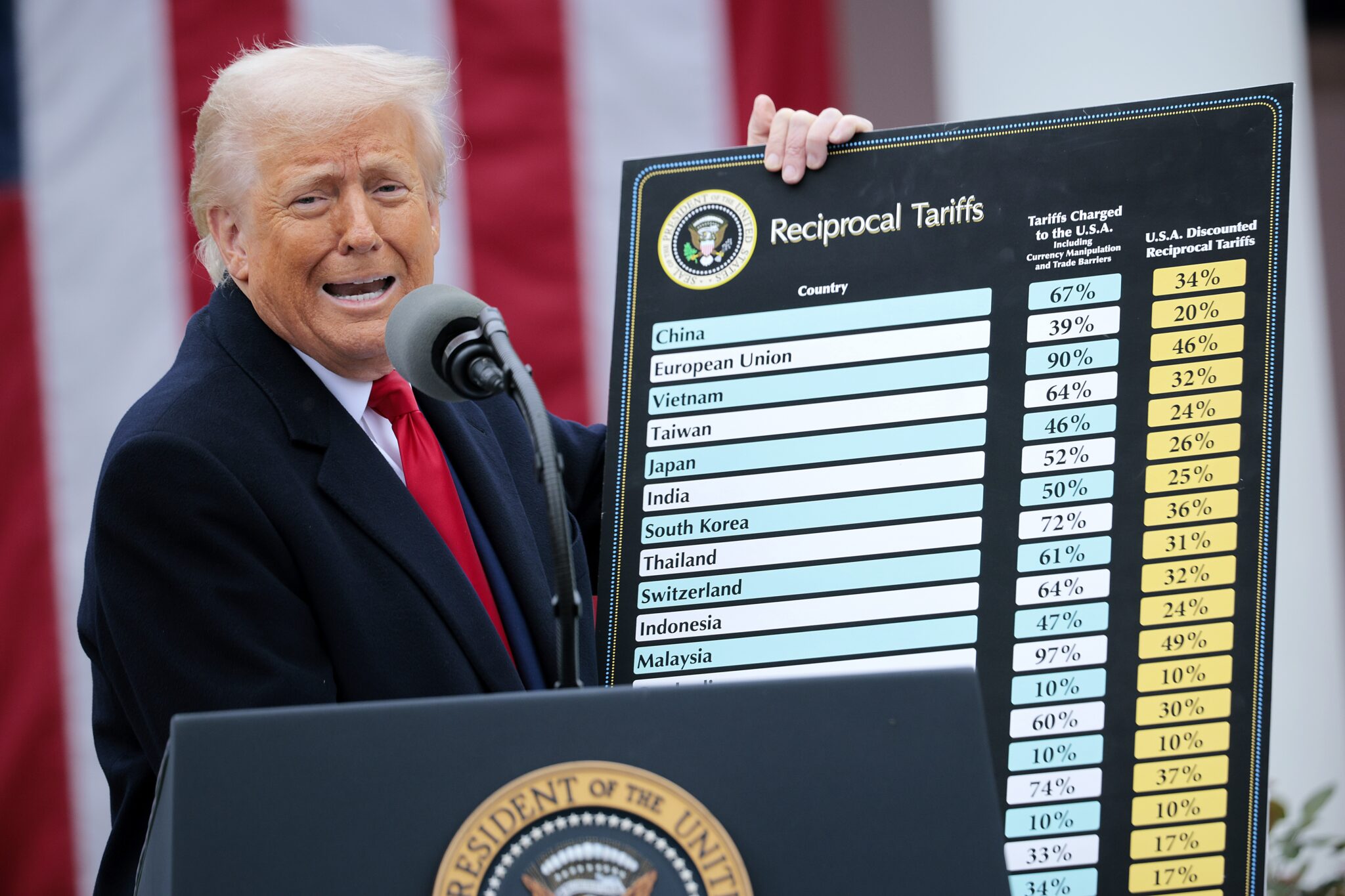
    President Donald Trump holds up a chart while speaking during a “Make America Wealthy Again” trade announcement event in the Rose Garden at the White House on April 2, 2025 in Washington, D.C.  (Photo by Chip Somodevilla/Getty Images)

    By:  Ohio Capital Journal

    Tariffs — and uncertainty over them — are forcing up costs for businesses in Ohio and parts of three other states, according to market surveillance published last week by the Federal Reserve Bank of Cleveland. At least some of those costs are being passed on to customers, the report said.

    The news comes as recent polls show that voters strongly disapprove of the way President Donald Trump, the author of huge new tariffs, is handling the economy.

    Federal fallout

    As federal funding and systems dwindle, states are left to decide how and whether to make up the difference.
    Read the latest >

    The Cleveland Fed represents the Federal Reserve System’s Fourth District — a region that covers all of Ohio and parts of Pennsylvania, Kentucky and West Virginia. Eight times a year, it conducts interviews and online questionnaires with businesses, community organizations, economists and other sources.

    The Beige Book report released last week said those sources “continued to suggest flat business activity in the Fourth District in recent weeks, and they expected activity to remain flat in the months ahead. Retailers noted a pullback in consumer spending, and manufacturers said that ongoing economic and trade policy uncertainty continued to dampen demand for their goods. Demand for professional and business services increased driven by higher demand for consultations amid the shifting regulatory environment.”

    A tariff is a tax on imports that is sometimes imposed to foster domestic industry. Sometimes they’re imposed in retaliation against perceived unfair practices by trading partners, such as China.

    Since taking office, Trump has announced a bewildering array of on-again, off-again tariffs, including 50% ones on steel and aluminum that took effect last week.

    The Consumer Price Index grew at a relatively moderate 2.4% in May, but the New York Times pointed out that it reflects only the initial impacts of the tariffs. While many of Trump’s tariffs have been delayed or are just beginning to take effect, the Cleveland Fed report said their effects are being felt.

    “On balance, contacts indicated that nonlabor input costs rose at a robust pace in recent weeks, continuing an upward trend that began after a period of stability in 2024,” it said. “Contacts from multiple sectors noted that tariffs were now increasing the costs of materials that they import. Some contacts also noted secondary impacts of tariff-related cost increases from domestic producers. For example, one manufacturer said that their U.S.-based raw materials suppliers raised prices to factor in the overtime needed to meet increased domestic demand.”

    It added that its sources of food and hospitality information voiced relief over dropping egg prices. But they “generally expected costs to grow at a strong pace in the coming months.”

    More of the fed’s sources said they increased prices than did in the previous reporting period. Some blamed tariffs.

    “Contacts across industries, particularly those in manufacturing and construction, said that they raised prices to cover costs related to tariffs and to elevated prices of materials such as steel,” the report said. “Auto dealers generally mentioned raising prices of new and used vehicles, and one said that they were offering less discounting because of higher demand.”

    Some of that demand, the report said, was from consumers trying to buy vehicles now because they anticipate higher prices in the future.

    The news comes as Ohio has the nation’s sixth-highest unemployment, consumer confidence remains relatively low, and Americans disapprove of Trump’s handling of the economy.

    A Quinippiac University poll released on Tuesday said that respondents disapproved of him on the economy by a 16-point margin. The president had an overall approval rating of 38%.


    Marty Schladen
    Marty Schladen

    Marty Schladen has been a reporter for decades, working in Indiana, Texas and other places before returning to his native Ohio to work at The Columbus Dispatch in 2017. He’s won state and national journalism awards for investigations into utility regulation, public corruption, the environment, prescription drug spending and other matters.

    Ohio Capital Journal is part of States Newsroom, the nation’s largest state-focused nonprofit news organization.

    MORE FROM AUTHOR