Tag: Ohio Capital Journal

  • Reopening begins for Ohio’s colleges: Here’s how it looks

    Reopening begins for Ohio’s colleges: Here’s how it looks

    Susan Tebben

    By Susan Tebben – The Ohio Capital Journal

    Some of Ohio’s colleges and universities have begun moving students in, but the navigation of a school year amid a pandemic is still a balancing act.

    For Miami University, classes began this week, with all undergraduate courses online or remote. The plan is to keep it that way until at least Sept. 21, according to the plan posted to the school’s website. 

    “When we began planning last spring, we had hoped that the COVID-19 pandemic would be in significant decline before classes were scheduled to begin,” Miami president Greg Crawford told students. “Instead, cases are rising in many states. With 40% of our Oxford students coming from outside Ohio, we’ve been monitoring the situation closely.”

    Those that are on campus are required to wear masks, and as students come back, they can be reported to the Office of Community Standards if they repeatedly refuse to comply with an instructor’s direction to use a mask or face covering.

    Mask requirements are the norm among Ohio’s public colleges and universities, as are 14-day quarantines for students coming from states considered COVID-19 hotspots. 

    Also the norm this school year are phased reopenings, like those at The Ohio State University, Ohio University, Kent State University, Shawnee State University, Cleveland State University, and the University of Cincinnati.

    The first move-in dates for UC, Aug. 14 and 15 were considered “drop-off only,” meaning students could bring their stuff to campus, but then had to return home until the 16th. 

    Another regular part of public colleges’ and universities’ schedules is a return to at least some form of in-person class instruction that ends after Thanksgiving break. The last two weeks, including final exams, will be taken remotely at OSU, Central State University, UC, KSU and Wright State University, among others.

    Kent State and the University of Toledo have eliminated their fall break to allow students to receive a full semester despite adjusted opening dates.

    Toledo said they adjusted their Fall semester “based on the possibility of having a second wave of COVID-19 in late fall,” taking into account CDC data on the pandemic and state recommendations for higher education.

    Bowling Green State University went so far as to cancel their Winter 2021 session and provide a $1,500 credit for the first 2,000 students who cancelled their housing assignment before the school year began this week. 

    “It is important you understand that we are HIGHLY encouraging you not to live on campus this fall,” information on the university’s COVID-19 plan page stated.

    BGSU started their staggered move-in this week for those that had no other option than to take up residence, and are set to begin classes on Aug. 31. Students there will also be online only beginning Nov. 30. 

    OU phased in their reopening by allowing certain graduates and undergraduates “in a carefully selected set of academic programs” to begin their time on campus. Most students will begin remotely on Aug. 24, but students like third-year students in the College of Health Sciences and Professions’ nursing program and juniors and seniors in the Army Reserve Officer Training Corps (ROTC) are eligible to participate in the university’s first phase of schooling. 

    Universities throughout the state sticking with in-person instruction have instituted class-size reductions, along with “hybrid-remote” forms of teaching. Central State spelled out a “cohort attendance” model in its reopening plan, which would break large classes into groups, with the cohorts attending classes on alternating days. This model goes along with a 50% reduction in class sizes, something Wright State anticipates as part of its plan as well.

    “At this time, the university conservatively estimates that one-third of classes will have in-person components while the majority of in-person classes will also deliver all content remotely to provide flexibility to students who are unable or do not feel comfortable returning to campus,” said Wright State president Susan Edwards in a letter to the university community.

    Many of Ohio’s public higher education institutions have also created pledges for students connected to prevention of coronavirus, and in some cases can spur disciplinary action if not signed. 

    Testing and contact tracing for COVID-19 are a regular part of all public school plans, though the ways in which the testing is done vary from school to school

    The spring semester plan is still to be determined for most schools. The University of Akron plans to continue hybrid online and in-person instruction into the spring, but others are still watching the success of their fall semesters to plan for the future.

    “Decisions are forthcoming,” stated the UC reopening plan.


    Susan Tebben

    Susan Tebben is an award-winning journalist with a decade of experience covering Ohio news, including courts and crime, Appalachian social issues, government, education, diversity and culture. She has worked for The Newark Advocate, The Glasgow Daily Times, The Athens Messenger, and WOUB Public Media. She has also had work featured on National Public Radio.
  • Feds release unemployment guidance, could be a long time before supplements reach Ohioans

    Feds release unemployment guidance, could be a long time before supplements reach Ohioans

    By Marty Schladen Ohio Capital Journal

    As promised, the U.S. Department of Labor last week released guidance to the states on how it will disburse money to supplement unemployment checks. But it’s far from clear when — or whether — hundreds of thousands of out-of-work Ohioans will see those funds.

    A $600-a-week federal supplement had been credited with keeping millions of unemployed Americans — and the economy — afloat, but it expired at the end of July. 

    The Democratically controlled House passed an extension of the benefit. The Republican-controlled Senate introduced a bill cutting the supplement to $200 a week, but failed to pass it.

    Then President Donald Trump on Aug. 8 signed a memorandum that would repurpose federal disaster relief funds to provide $300 a week in additional support. But it would exclude people getting less than $100 a week in state benefits — a group comprising many minimum-wage workers and service workers who get a low hourly wage and tips on top of that.

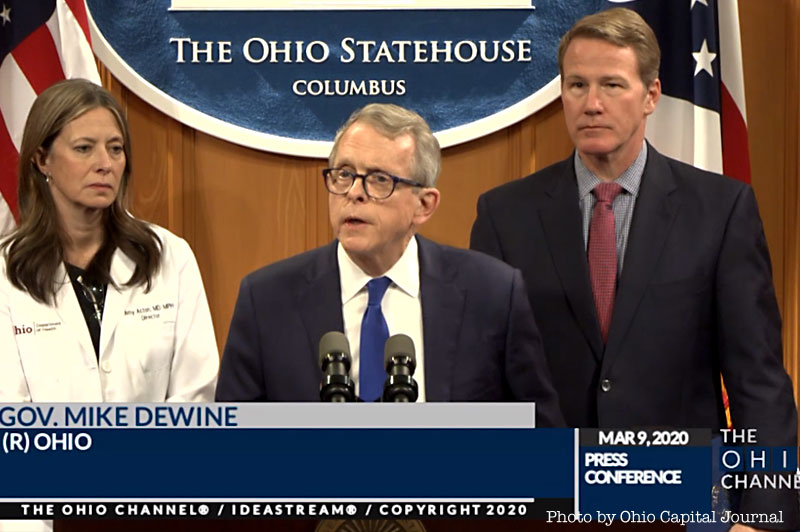
    The administration of Gov. Mike DeWine signed on to the plan on Monday, saying that additional guidance was needed from the Labor Department before any predictions could be made about when funds would be disbursed.

    The money can’t come quickly enough for many Ohioans. 

    According to the U.S. Census’ Household Pulse Survey for the week of July 9-14, nearly 1 million Ohio adults sometimes or often did not have enough to eat in the past week. In addition, more than 400,000 hadn’t paid the previous month’s rent and 360,000 homeowners hadn’t made the previous month’s mortgage payment.

    “This is before the $600 (federal unemployment supplement) expired,” Zach Schiller, research director for the think tank Policy Matters Ohio, said.

    Earlier in the week, DeWine also underscored the urgency of getting money out to unemployed Ohioans. He praised Trump for taking the actions he did and he called on Congress to get busy — something that’s unlikely to happen until early September at the soonest.

    However, state officials have to clear several hurdles before they can start distributing the federal dollars Trump has attempted to repurpose.

    For example, “States will need to develop a self-certification process in accordance with FEMA instructions for claimants to certify weekly that they are unemployed or partially unemployed due to disruptions caused by COVID-19,” the Labor Department guidance says.

    And state officials will have to reprogram antiquated, overwhelmed unemployment systems to process the benefit.

    “We are examining the DOL guidance on lost wages assistance to see what kind of system programming is needed in order to pay these unemployment benefits,” Dan Teirney, DeWine’s press secretary, said in an email. “As noted in the guidance, all states are required to develop a self-certification process for claimants based on instructions from FEMA.”

    He said that once state officials figure all that out, they’ll make beneficiaries whole, but it’s hard to know when that will be.

    “While (the Ohio Department of Jobs and Family Services) intends to pay these retroactive benefits as quickly and efficiently as possible, there are several procedural and programming steps that must take place before that can happen,” Tierney said.
    There is also a serious question about whether the Trump plan is legal. Georgetown University law professor David Super last week wrote that it is a clear violation of the Stafford Act, the federal law governing disaster assistance.

    Schiller criticized the scheme as ill-conceived at a time when so many Ohioans are in desperate need of assistance.

    “Altogether, the whole thing is kind of a half-baked measure,” he said.


    Marty Schladen

    Marty Schladen has been a reporter for decades, working in Indiana, Texas and other places before returning to his native Ohio to work at The Columbus Dispatch in 2017. He’s won state and national journalism awards for investigations into utility regulation, public corruption, the environment, prescription drug spending and other matters.
  • Ohio House speaker, four others arrested amid massive dark-money, pay-to-play allegations

    Ohio House speaker, four others arrested amid massive dark-money, pay-to-play allegations

    All are charged with racketeering

    Make no mistake – the $61 million came from Company A’s ratepayers and ultimately extorted from every residential and commercial electrical utility user in Ohio. The racketeering scheme of lies and deception corrupted Ohio citizen’s ability to overturn corrupt legislation at the ballot box. – David Miller, Loveland Magazine Publisher

    By Marty Schladen The Ohio Capital Journal and David Miller/LovelandMagazine
    ddd

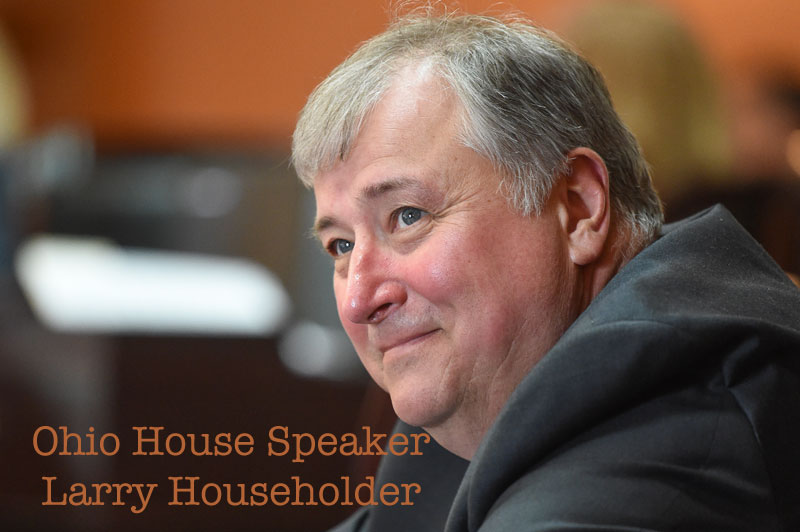
    Cincinnati, Ohio – Ohio House Speaker Larry Householder, four political operatives and a dark-money group were charged Tuesday in a criminal complaint that an Ohio energy company paid them $61 million to get a $1.5 billion nuclear bailout from taxpayers.

    Read the Press Release issued by the Department of Justice

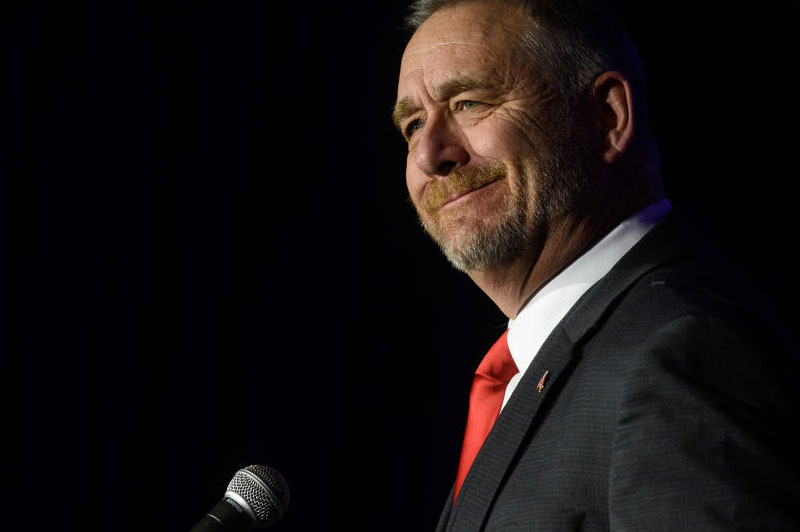
    Neil Clark, a lobbyist who owns Grant Street Consulting – Photo from Grant Street Consulting who exclaim, “Clark’s decades of experience and role in shaping Ohio’s political landscape makes him an indispensable resource to Ohio’s elected leaders, to whom he often serves as a trusted and highly sought after campaign advisor.”

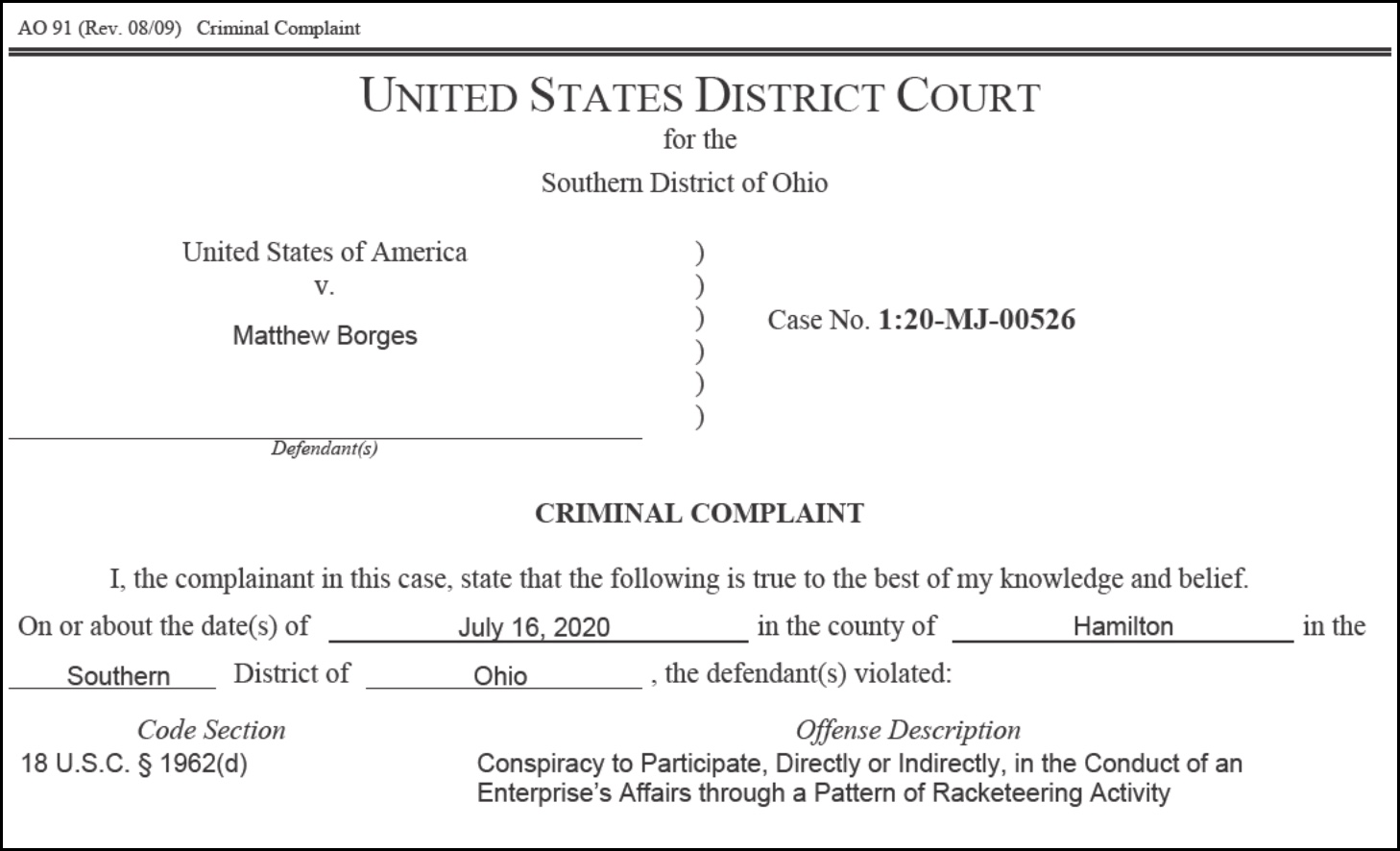
    Charged along with Householder were Matt Borges, a lobbyist who was formerly chairman of the Ohio Republican Party, Neil Clark, a lobbyist who owns Grant Street Consulting, Juan Cespedes, also a lobbyist, and Householder’s aide, Jeffrey Longstreth.

    All are charged with racketeering, which carries a prison sentence of up to 20 years.

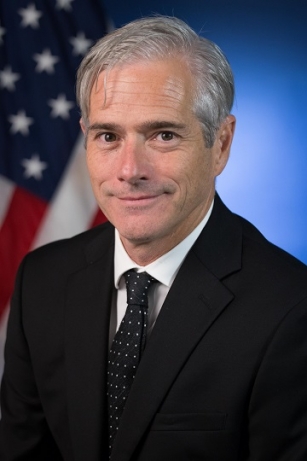
    David M. DeVillers, U.S. Attorney for the Southern District of Ohio

    The alleged conspiracy, which revolved around the bailout of two failing nuclear plants in Northern Ohio, is “likely the largest bribery and money-laundering scheme ever in the state of Ohio,” David M. DeVillers, U.S. Attorney for the Southern District of Ohio, said at a Tuesday afternoon press conference.

    Shortly after the press conference, Ohio Gov. Mike DeWine called on his fellow Republican to step down.

    “I am deeply concerned about the allegations of wrongdoing in the criminal complaint issued today by the U.S. Attorney’s Office,” DeWine, who last year signed the bailout into law, said in a written statement. “Every American has the presumption of innocence until proven guilty.  Because of the nature of these charges, it will be impossible for Speaker Householder to effectively lead the Ohio House of Representatives; therefore, I am calling on Speaker Householder to resign immediately. This is a sad day for Ohio.”

    Read the Criminal Complaint

    ccc

    The criminal complaint says that “Company A,” the former FirstEnergy Solutions of Akron, worked to save its failing nuclear plants by funneling $61 million into Generation Now, a 501(c)(4) “dark money” group controlled by Householder.

    On September 9, 2019, President Donald Trump nominated DeVillers for the United States Attorney in the Southern District of Ohio. The Senate confirmed the nomination in October, and DeVillers took his oath on November 1, 2019.

    “Make no mistake, this is Larry Householder’s 501(c)(4),” the U.S. attorney said.

    The money was used for three general purposes, the complaint said. First it was used to build “Team Householder” through campaign contributions and other measures that helped Householder win the speakership in 2019.

    “In exchange for payment from Company A, Householder’s enterprise helped pass House Bill 6, legislation described by an enterprise member as a billion-dollar ‘bailout’ that saved from closure two failing nuclear power plants in Ohio affiliated with company A,” the complaint said

    The money was also used for the personal benefit of Householder and the other conspirators, DeVillers said. Householder got about $500,000, he said.

    Despite the companies claims of poverty, the interests behind the bailout spent millions — much of it in the form of hard-to-trace dark money on campaign contributions, a xenophobic ad campaign and then on an aggressive effort to stymie a petition drive to repeal the bailout DeWine signed into law a year ago.

    And the money was used to fend off a petition effort to repeal HB6, going so far as to buy plane tickets for and pay $1,000 each to people circulating it to get out of town, DeVillers said.

    The federal prosecutor said that it was crucial to keep the investigation secret until Tuesday. Now it begins a new phase that might be causing some lawmakers, energy executives and some others to lose sleep.

    “We are not done with this case,” he said. “There were things we couldn’t do before. People we couldn’t interview. People we couldn’t subpoena. Documents and search warrants we couldn’t execute. 

    “As of this morning there are a lot of FBI agents knocking on a lot of doors asking a lot of questions, serving lots of subpoenas. That’s going to go on for days.”

    “It takes courage for citizens to assist law enforcement in the ways detailed in the affidavit,” U.S. Attorney David M. DeVillers said. “We are grateful to those who felt a moral duty to work together with agents in bringing to light this alleged, significant public corruption.”

    House Bill 6 is adding $1.5 billion in additional taxpayer bailouts to the $10.2 billion that Akron-based FirstEnergy Solutions and its former parent company, FirstEnergy Corp, have received from taxpayers since 1999. Most of the funds have gone to prop up the Davis-Besse and Perry nuclear power plants in Northern Ohio.

    The company that owns the plants was renamed Energy Harbor after emerging from bankruptcy earlier this year.

    Despite the companies claims of poverty, the interests behind the bailout spent millions — much of it in the form of hard-to-trace dark money on campaign contributions, a xenophobic ad campaign and then on an aggressive effort to stymie a petition drive to repeal the bailout DeWine signed into law a year ago.

    The interests behind the nuclear bailout also contributed heavily to the effort at the beginning of 2019 to elect Householder speaker. He ended up winning the support of 26 Republicans and 26 Democrats, His opponent, Ryan Smith, R-Bidwell, got the votes of 34 Republicans and 12 Democrats.

    The Ohio Republican Party didn’t respond Tuesday to requests for comment.

    The Ohio Democratic Party didn’t respond when asked about the fact that Householder wouldn’t have worn the speakership without Democratic votes. However, the party chairman, David Pepper called on Householder to step down as speaker.

    “As the U.S. attorney indicated, this investigation is ongoing, and we will wait to hear all the facts as they emerge. However, given what was revealed in today’s complaint and the taint of corruption over Ohio legislative activity, we believe Speaker Householder should step down from leadership immediately as he avails himself of his due process rights,” Pepper said in a written statement.

    House Bill 6, which passed 51-38, was quickly signed into law by Gov. Mike DeWine. Under the bill, from 2021 until 2027, every Ohio electricity customer will have to pay a new monthly surcharge that ranges from 85 cents for residential customers to $2,400 for large industrial plants. Ratepayers around the state would also have to chip in up to $1.50 monthly (and up to $1,500 per month for commercial and industrial users) to subsidize coal plants in Ohio and Indiana run by the Ohio Valley Electric Corporation.- cleveland.com

    Starting next January, ratepayers around the state would also have to chip in up to $1.50 monthly (and up to $1,500 per month for commercial and industrial users) to subsidize coal plants in Ohio and Indiana run by the Ohio Valley Electric Corporation.

    This isn’t Householder’s first encounter with federal law enforcement. 

    In 2006, the Justice Department told the FBI that it wouldn’t pursue charges against Householder. The FBI had been told two years earlier that Householder had used his post as head of the House Republican Campaign Committee to overpay some vendors in exchange for kickbacks from them.

    Nor is Householder, 61, of Glenford, the first Ohio House speaker to find himself in the FBI’s crosshairs. In 2018, Speaker Cliff Rosenberger, a Republican, resigned amid an FBI probe of his overseas travel. He has not been charged, but the investigation remains open.

    cccc

  • Ohio Republicans slammed over coronavirus enforcementBy Marty Schladen – July 13, 2020

    Ohio Republicans slammed over coronavirus enforcementBy Marty Schladen – July 13, 2020

    Columbus, OhioThe coronavirus is raging in Ohio, but the state’s Republican leaders seem disinclined to enforce rules intended to protect against it. (How does Hamilton County avoid Level 4 Alert)

    Attorney General Dave Yost won’t say whether he’ll support enforcement of new orders to wear masks in the state’s hardest-hit counties. And the official who issued them, Gov. Mike DeWine, has made several statements indicating that he doesn’t want to see anybody punished for not following measures intended to slow the spread of the deadly disease.

    Mike Samet the Public Information Officer for Hamilton County Public Health told Loveland Magazine on Friday that from an enforcement perspective, as a county agency, the Health Department is not able to issue citations. “Nobody wants to be the mask police. This is education over enforcement, he said. Samet added that he wants people to understand why masks are important now, not punish them for non-compliance.

    Ohio set a record for new cases Friday — 1,525 — after seeing them trend sharply upward over the past few weeks. The case count was nearly triple the three-week average of 531.

    Gov. Mike DeWine, has made several statements indicating that he doesn’t want to see anybody punished for not following measures intended to slow the spread of the deadly disease.

    The news comes as six other states — Alabama, Idaho, Missouri, Montana, Oregon and Texas — set new single-day records of their own on Thursday. It also was the sixth day out of the past 10 in which the United States set one-day records for new cases of the coronavirus, which now has killed more than 3,000 in Ohio and more than 130,000 nationwide.

    Also last week, a New York Times data analysis showed that the disease in the United States is taking on a disturbing racial dimension, with Blacks and Latinos around three times as likely as whites to get the new coronavirus.

    The World Health Organization and the U.S. Centers for Disease Control both have said that widespread mask wearing would reduce the spread of the disease. One study indicated that if 80% of people wore them, the spread would plummet to one twelfth what it would be if nobody did.

    Yet Yost, the state’s top law-enforcement officer, last week didn’t respond to questions about whether he supports enforcement of last week’s orders that people in Ohio’s 12 hardest-hit counties must wear masks inside public buildings.

    In late March, Yost ordered that many abortions be halted in Ohio, arguing that the move was intended to conserve healthcare resources in the face of the coronavirus pandemic.

    In June, he urged a municipal court to drop charges against a couple accused of opening their Cambridge-area restaurant in defiance of an earlier, DeWine-issued health order that it remain closed.

    Then earlier this week, Yost said that the Columbus city government doesn’t have the power to enforce mask orders in state buildings — places where many Republican lawmakers have refused to wear them.

    On Monday, a spokeswoman for Yost explained that the attorney general can’t have any official involvement in cases relating to health orders unless asked by local prosecutors. “We don’t have the authority,” the spokeswoman, Bethany McCorkle, said in a text message.

    She added, however, that Yost has worn a mask since before there was a health order and encourages others to do the same.

    The attorney general and his staff haven’t responded to subsequent questions about the order DeWine issued on Wednesday evening requiring masks in the worst-hit counties.

    David Pepper (Photo from Ballotpedia)

    Ohio Democrats are already up in arms about Republican legislative leaders’ refusal to share details about the spread of coronavirus in the Statehouse and surrounding office towers. David Pepper, the party chairman, on Friday slammed the attorney general for his apparent reluctance to support the enforcement of mask orders.

    “As far as Dave Yost is concerned, refusing to enforce health orders is just one more example that the Ohio GOP has become the party of Donald Trump, Nino Vitale and John Becker,” Pepper said in a text message. “Sadly Ohio COVID cases are spiking because of it.”

    “Even though initially it appeared that Mike DeWine was being guided by scientists and public health experts, it seems that politics and the desires of the business community are driving more of the governor’s decision making now,” party chairman David Pepper said.

    President Donald Trump has repeatedly downplayed the pandemic, floated unproven cures for it and refused to appear in public wearing a mask. Among his other statements, Ohio Rep. Nino Vitale, R-Urbana, last Tuesday took to Facebook to urge Ohioans to stop even getting tested for coronavirus. And Ohio Rep. John Becker, R-Union Township, has introduced legislation that would strip state officials of the power to enforce any health order.

    Meanwhile, in the absence of much support from his party, DeWine has said he doesn’t plan to use his authority under his mask order to arrest people for not following it.

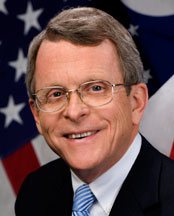
    Ohio Governor Mike DeWine

    “We’re not talking about throwing people in jail,” DeWine said during a press conference Thursday. “This is a law to advise people what to do.”

    DeWine has enjoyed overwhelming, bipartisan support over his handling of the coronavirus. But at least for Ohio’s top Democrat, patience might be wearing thin.

    “Even though initially it appeared that Mike DeWine was being guided by scientists and public health experts, it seems that politics and the desires of the business community are driving more of the governor’s decision making now,” Pepper said. “Even with fewer cases, even West Virginia and Kentucky are being more proactive in addressing the pandemic.”


    The Ohio Capital Journal is a hard-hitting, independent, nonprofit news organization dedicated to connecting Ohioans to their state government and its impact on their lives. The Capital Journal combines Ohio state government coverage with relentless investigative journalism, deep dives into the consequences of policy, political insight and principled commentary.

  • Ohio’s K-12 public schools got cuts. Private, charter schools got cash

    Ohio’s K-12 public schools got cuts. Private, charter schools got cash

    The amount of the state revenue reduction for the Loveland City School District was $1,010,855

    An up-date on 7/12/2020:

    Loveland Treasurer Kevin Hawley reports to the Board in the agenda for their June 23 business meeting:

    Loveland City Schools received approximately $350,000 from the CARES Act. These funds were provided to the state of Ohio and they determined the breakdown for each district. Ohio determined the allocation based on Title I federal funding rates. Title I is a federal grant primarily provided to “schools with high numbers or high percentages of children from low-income families to help ensure that all children meet challenging state academic standards.” This was the way the state determined equity in payments. As a reminder, the state decreased our overall state funding by $1,010,855. These funds are provided specifically for any increased expenses due to COVID-19. Therefore, this will help with any additional expenses incurred due to the pandemic and with the resumption of school in the fall of 2020.

    By Susan Tebben| Tyler Buchanan at the Ohio Capital Journal


    Local Private Schools Receiving Paycheck Protection Program Funds

    Cincinnati Country Day School 2-5m

    Cincinnati Hills Christian Academy 2-5m

    St. Xavier High School 2-5m

    Elder High School 1-2m

    Mount Notre Dame 1-2m

    McNicholas High School 350k-1m

    La Salle High School 350k-1m

    Roger Bacon High School 350k-1m

    Seton High School 350k 1m

    Lebanon Christian School 150k-350k

    Liberty Bible Academy (Mason) 150k-350k

    Ohio educators were at home celebrating “Teacher Appreciation Week” in May when they learned cuts would be made at every public school district in the state.

    These cuts came just as hundreds of private and charter schools in Ohio were approved to receive millions of dollars from the federal government to keep their workers on payroll. Some of these already receive public school funding as part of the EdChoice private school voucher program.

    The federal funding was offered through the Paycheck Protection Program (PPP). It is a program administered by the Small Business Administration which gives low-interest loans to businesses and nonprofits. The loans are forgiven if used primarily to help with payroll costs.

    After the federal government released a list of PPP recipients on Monday, the Ohio Capital Journal reviewed data on the nearly 23,000 recipients in this state to track funding that went to schools.  

    The list does not give an exact dollar figure received by each place, but rather provides a range: $150,000 to $350,000; $350,000 to $1 million; $1-2 million; $2-5 million; and $5-10 million.

    In total, the Capital Journal identified 220 schools in Ohio that received PPP funding. The possible range of the combined funding is between $95 million and $232 million.

    This money went to a variety of schools. Many are religious institutions, such as Chaminade Julienne Catholic High School in Dayton, which received between $1-2 million. The list includes many charter schools, such as the chain of Horizon Science Academy locations in more than a half-dozen cities which took in millions of dollars.

    There are private gifted schools, college preparatory schools and those which operate as nonprofits independent of the traditional public school system. Some are specialized schools for certain areas of study, such as the Global Ambassadors Language Academy in Cleveland, which allows children to learn in language immersion programs for Spanish and Mandarin. The academy took in between $150,000 and $350,000.

    Together, the 220 schools were able to retain many thousands of jobs thanks to the PPP funding. 

    There were additional loans given to Montessori schools, day care centers, pre-schools, after-school programs, summer camps and other entities which serve children. These were not included in the Capital Journal review. 

    PPP money has been limited to businesses and nonprofit entities, thus making public school districts ineligible for funding.

    The Ohio Capital Journal previously reported about a similar disparity within higher education. Dozens of private colleges and universities took in tens of millions of dollars in forgivable PPP loans, while some of Ohio’s public institutions have suffered from severe budget shortfalls in 2020. 

    Public schools hope for future funding

    Public schools are still searching for funding relief after $300 million was cut by Gov. Mike DeWine’s administration in early May as the coronavirus pandemic began to impact state revenues. The amount of the state revenue reduction for the Loveland City School District was $1,010,855.

    Columbus City Schools Superintendent and CEO Talisa L. Dixon told a legislative committee discussing the future of K-12 education as the cuts took place that uncertainty is the greatest factor facing Ohio schools.

    “Uncertainty for the educational programs our families may need and want during this crisis, uncertainty of what our revenues may be as the state discusses further reductions, uncertainty of what our expenses may be in order to bring students back safely,” Dixon said.

    The state education system has seen declining growth not just related to coronavirus cuts, but year over year, according to historic data. On top of decreasing budgets, public schools have had to absorb the expenses of sending some students in low-ranked public schools to private schools through the EdChoice program.

    The Cleveland Heights-University Heights City School District, for example, saw more than one-third of its state aid deducted for EdChoice scholarships in fiscal year 2019, according to a report done by the district.

    According to the PPP awards, a number of Cleveland private schools received funding — examples include the Lutheran High School Association as well as the St. Joseph Academy, each taking in forgivable loans of between $1-2 million.

    Hamilton County’s Indian Hill Exempted Village School District had around one-fourth of its state aid diverted to EdChoice private school vouchers, and Sycamore Community City School District lost about one-fifth.

    In 2020 PPP awards, nearby schools received loans such as Cincinnati Hills Christian Academy (between $2-$5 million) and St. Ursula Academy (between $1-$2 million).

    The leader of a teacher’s union representing 20,000 Ohio educators is taking issue with PPP funding and public school monies going toward private schools. In a recent conference call regarding falling budgets and the need for federal aid, Ohio Federation of Teachers Executive Director Melissa Cropper said the diversion of government funding to private schools has only added to the struggles that impact most students in the state.

    “Ninety percent of our students are educated in public schools, so when we have this money diverted to private schools, we’re impacting 90% of the students that the money is being taken away from,” Cropper said. “So this just continues to create disparities within our education system.”

    Education advocates see other potential solutions to public schools’ budget woes — namely, funding from the federal CARES Act, a COVID-19 relief bill signed into law back in March. A separate HEROES Act includes more funding for public education, including $3.2 billion earmarked for Ohio schools, but the bill has languished in the U.S. Senate after passing in the U.S. House of Representatives. 

    The Ohio Capital Journal is a hard-hitting, independent, nonprofit news organization dedicated to connecting Ohioans to their state government and its impact on their lives. The Capital Journal combines Ohio state government coverage with relentless investigative journalism, deep dives into the consequences of policy, political insight and principled commentary.

  • Dewine: “We’re in a crisis S/state in Ohio”

    Dewine: “We’re in a crisis S/state in Ohio”

    Columbus, Ohio – Governor Mike DeWine Thursday declared that “We’re in a crisis S/state in Ohio.” He was speaking at a COVID 10 news briefing in Columbus.

    The Ohio Capital Journal reported yesterday:

    Ohio Capital Journal

    A resident waits in line to vote at a polling place. Photo by Scott Olson | Getty Images.

    The state said no to masks. Now, Ohio cities are saying yes


    The governor dithered. The state legislature said no way.

    So on Tuesday, the Springfield City Commission took it upon itself to pass a resolution (which lacks the force of law) calling for all residents to cover their faces while indoors, a practice research says will slow the spread of COVID-19 through Ohio.

    By Wednesday, Dayton became the first major city in Ohio to require masks by law. Similarly, Yellow Springs passed a resolution and Bexley passed a local ordinance requiring masks.

    “The mask is a symbol of freedom,” said David Estrop, a Springfield city commissioner, at a hearing, echoing comments from the governor. “It allows us to continue to reopen this state, yet do so in a way that’s safe.”

    By Wednesday, Dayton became the first major city in Ohio to require masks by law. Similarly, Yellow Springs passed a resolution and Bexley passed a local ordinance requiring masks.

    On Wednesday, the Ohio Department of Health reported more than 1,000 new cases, the first time that stat has reached quadruple digits since officials mass-tested inmates in three state prisons in late April. Wednesday marks 16 days of the coronavirus accelerating its spread, as measured by the 10-day average new caseload.

    Despite the worsening coronavirus outlook in Ohio and nationwide, state lawmakers continue to whip up anti-mask fervor. While Gov. Mike DeWine encourages everyone to wear masks, he has refrained from issuing any statewide mandate as the national epidemic worsens and states pause their economic re-openings.

    DeWine demurs

    In April, Gov. Mike DeWine took a hardline stance on masks, saying they’d be the only way business can reopen after he lifted the stay-at-home order.

    Facing pressure from fellow Republican officeholders, he reversed after he realized how “offended” people were by the concept.  

    Last week, referencing worsening outbreaks in Montgomery and Hamilton counties, DeWine floated the idea of implementing a mask mandate on a county-by-county basis.

    However, he has yet to issue any such order. A spokesman declined to say whether DeWine will announce any mask requirement at his next briefing.

    In a statement Wednesday, DeWine applauded Dayton Mayor Nan Whaley, a Democrat, for requiring the use of face coverings.

    “Wearing a mask will allow us to help keep businesses open and help prevent further spikes,” he said. “I encourage other communities to consider following Dayton’s lead.”

    Voted down

    Where masks have found friends in the public health community and Ohio cities, they found enemies in the GOP-controlled state General Assembly.

    Where masks have found friends in the public health community and Ohio cities, they found enemies in the GOP-controlled state General Assembly.

    Both the Speaker of the House and the Senate President have refused to wear masks at legislative functions.

    House leadership voted down a requirement in May that lawmakers and staff wear masks at the Capitol. With exceptions, masks have fallen along party lines — Democrats wear them and Republicans do not.

    In a Facebook post last week, Rep. Jon Cross, R-Kenton, campaigned on refusing to wear masks, let alone supporting legislation requiring them.

    “It’s my RIGHT not to wear a mask, and I do NOT support a government that tries to quarantine the healthy,” he wrote.

    Rep. Nino Vitale, R-Urbana, takes to social media regularly to promote baseless conspiracy theories about masks limiting blood oxygen or how they “force virus into the brain.”

    Rep. Candice Keller, R-Middletown criticizes Bureau of Workers’ Compensation for distributing masks to Ohio businesses.

    Rep. Candice Keller, R-Middletown, produced a Facebook video June 25 criticizing Ohio’s Bureau of Workers’ Compensation for distributing masks to Ohio businesses.

    Despite the lawmakers’ claims, research suggests masks are an effective, inexpensive and non-invasive way to slow the spread of COVID-19.

    An early June study published in The Lancet, a premier medical journal, analyzed 172 observational studies to gauge the efficacy of mitigation strategies. Researchers found wearing face masks results in a “large reduction” in the risk of infection.