Two of Ohio’s top teachers unions are asking the governor to veto a new education bill just passed by the legislature.
The Ohio Senate and House passed Senate Bill 89 last week after it spent months in a conference committee being revised and developed into a bill that, among other things, focuses on the private school voucher program, EdChoice.
The bill passed along partisan lines in both houses of the legislature, with Republican supporters saying the bill was necessary to keep the list of EdChoice eligible schools from ballooning to more than 1,200, and to address one of the biggest barriers to education — poverty.
Democrats challenged the idea that the bill was a solution to the state’s problems, and accused supporters of pushing the bill through without the appropriate amount of public input.
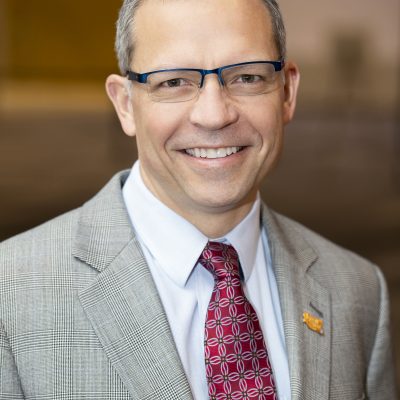
OEA President Scott DiMauro
The leader of the Ohio Education Association said the current version of SB 89 “removes positive aspects of the bill passed by the House and increases voucher eligibility beyond 2020-2021 levels.”
“By grandfathering in previously voucher-eligible students, whether they had used the vouchers or not, SB 89 fails to curb the destructive explosion of the voucher program, contrary to proponents’ claims,” wrote OEA President Scott DiMauro in a statement. “There was no compromise and no consultation with the education community to strike the deal that was passed out by the conference committee.”
Melissa Cropper, head of the Ohio Federation of Teachers, said the bill would only exacerbate the already dire school funding crisis.
Melissa Cropper, head of the Ohio Federation of Teachers
“SB 89 throws more fuel on the fire without providing remedies to ensure that the 90% of Ohio students who attend public schools have the resources they need for a quality education,” Cropper said.
The bill also comes as the House and Senate consider companion bills to overhaul the education system entirely, in response to a decades-old Ohio Supreme Court case that called the system wholly unconstitutional.
DiMauro and Cropper both said if the governor doesn’t veto SB 89, “it is more critical than ever” that House Bill 305 be passed to directly fund charter schools and the voucher program.
Under growing national pressure, U.S. Sen. Rob Portman on Monday conceded that former Vice President Joe Biden is “likely” to be the next president of the United States.
But Portman’s office continued to ignore questions about President Donald Trump’s attempts to get Republican-controlled legislatures to throw out votes and reverse the results of the Nov. 3 election, and he suggested that Trump’s spurious legal challenges have actually been good for democracy.
“Donald Trump is our president until Jan. 20, 2021, but in the likely event that Joe Biden becomes our next president, it is in the national interest that the transition is seamless and that America is ready on day one of a new administration for the challenges we face,” Portman wrote in an op-ed published by the Cincinnati Enquirer.
Ohio’s junior senator, who is up for reelection in 2022, did not criticize Trump’s legal strategy or his subsequent behavior.
Trump and his team have spouted a raft of unsupported conspiracy theories while racking up loss after loss in the courts. According to a New York Times analysis, those theories often have one feature in common: They seek to overturn votes in cities with large Black populations. In other words, at the core of the strategy is disenfranchising Black voters.
“‘Democrat-led city’ — that’s code for Black,” the Times analysis quoted Rev. William J. Barber II, president of Repairers of the Breach, as saying. “They’re coupling ‘city’ and ‘fraud,’ and those two words have been used throughout the years. This is an old playbook being used in the modern time, and people should be aware of that.”
Rather than criticize Trump’s legal strategy, Portman’s op-ed praised it
“The Trump campaign has taken steps to insist that only lawful votes were counted in key states, including filing numerous lawsuits,” it said, explaining that most of those lawsuits have now been resolved. Then it adds, “There were instances of fraud and irregularities in this election, as there have been in every election. It is good that those have been exposed and any fraud or other wrongdoing should be prosecuted to the fullest extent of the law, but there is no evidence as of now of any widespread fraud or irregularities that would change the result in any state.”
Portman and many other Senate Republicans have come under withering fire for their silence as Trump’s attempts to escape electoral defeat have become increasingly desperate.
Long before the election, Trump repeatedly refused to say he’d abide by the results if he lost. But most prominent Republicans refused to criticize him.
On Nov. 5, as Trump’s loss appeared increasingly likely and as he ramped up efforts to throw out votes cast against him, historian Michael Beschloss tweeted that history would be watching how people in power reacted.
Always remember who aided and abetted this abuse of Presidential power — and those who tried to stop it.
Then on Sunday night, legendary reporter Carl Bernstein called Portman out by name, saying he and other GOP senators privately espoused disdain for Trump but avoided crossing him in public — presumably out of fear of getting crosswise with Trump’s base.
“We have a president of the United States for the first time in our history sabotaging his country,” Bernstein said in a Friday appearance on CNN. “Will these Republicans continue to allow this for another day? Because every day it appears more and more that our system cannot handle, was not designed… to handle an aberrant, mad king.”
Bernstein added that he believed the country is in more danger now than it was at the end of the presidency of Richard Nixon, which Bernstein helped to end with his coverage of the Watergate scandal.
As part of a series of tweets, Bernstein said, “The 21 GOP Senators who have privately expressed their disdain for Trump are: Portman, Alexander, Sasse, Blunt, Collins, Murkowski, Cornyn, Thune, Romney, Braun, Young, Tim Scott, Rick Scott, Rubio, Grassley, Burr, Toomey, McSally, Moran, Roberts, Shelby.”
Then he added, “With few exceptions, their craven public silence has helped enable Trump’s most grievous conduct—including undermining and discrediting the U.S. electoral system.
I'm not violating any pledge of journalistic confidentially in reporting this: 21 Republican Sens–in convos w/ colleagues, staff members, lobbyists, W. House aides–have repeatedly expressed extreme contempt for Trump & his fitness to be POTUS. (1/3)
On Monday morning, as Portman was publishing his op-ed, his office ignored questions about Bernstein’s criticism as well.
And rather than criticizing Trump’s false claims of voter fraud, Portman claimed that the president’s recent behavior has been good for American democracy.
“Based on polling, a substantial majority of the nearly 74 million Americans who supported President Trump question the legitimacy of the election,” the op-ed said. “I believe going through a fair and transparent process to ensure the election was properly decided is important for our democracy and to help heal our polarized country.”
Marty Schladen has been a reporter for decades, working in Indiana, Texas and other places before returning to his native Ohio to work at The Columbus Dispatch in 2017. He’s won state and national journalism awards for investigations into utility regulation, public corruption, the environment, prescription drug spending and other matters.
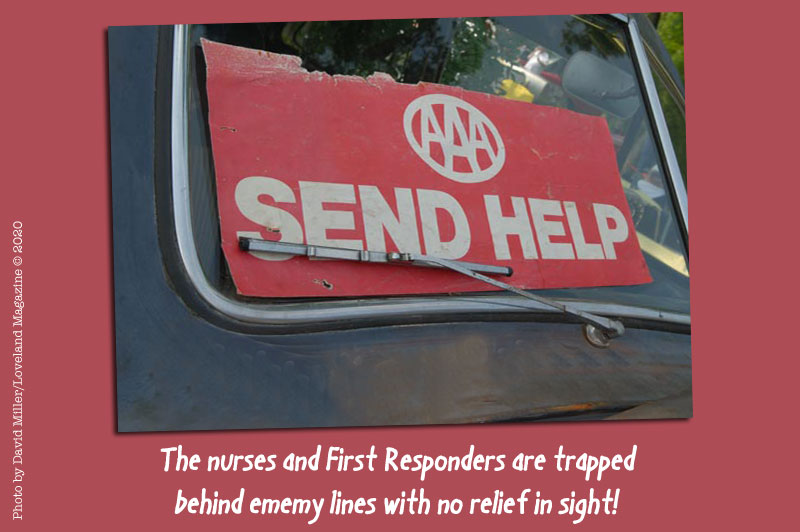
Loveland, Ohio – “Many things are still in flux. We are on daily morning briefings with the Health Department and Homeland Security officials. Many of the questions you have asked are being ironed out at this time,” said Loveland/Symmes Fire Chief Otto Huber.
Loveland Magazine asked both Huber and Loveland Police Chief Sean Rahe several questions yesterday as local delivery of a COVID 19 vaccine approaches. Chief Huber responded on behalf of both department chiefs.
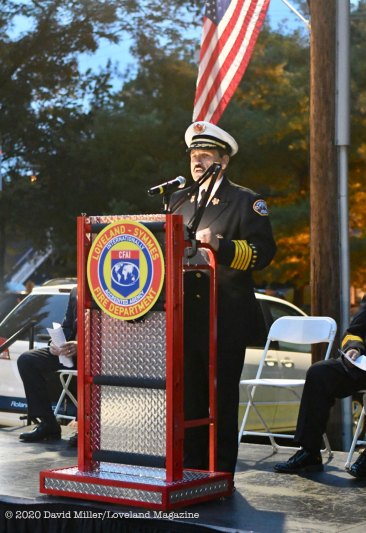
Loveland/Symmes Fire Chief Otto Huber speaking at Loveland’s 9/11 ceremony in September.
First responders will be in Phase 1 of Ohio’s vaccine distribution plan along with high-risk healthcare workers, and seniors living in congregate settings (i.e. nursing homes).
Ohio Capital Journal reported on Tuesday that Federal regulators could allow two COVID-19 vaccines for emergency use as early as December, but getting the vaccines from out-of-state manufacturers to 11.7 million Ohioans poses a web of logistical challenges.
The Ohio Department of Health has identified 10 sites across the state that will receive the pre-positioned vaccine after a COVID-19 vaccine is given emergency-use authorization. Once the Centers for Disease Control and Prevention’s Advisory Committee on Immunization Practices issues its recommendation on how to use the vaccine, these sites will begin administering the vaccine immediately to those who choose to receive it and are identified as able to receive it in the first stage.
The ten pre-positioned sites were selected based on geography, population, and access to ultra-cold storage capacity. The University of Cincinnati Hospital Medical Center in Clifton is the Cincinnati area site.
The Chiefs were asked if they have established any policy about their employees receiving the vaccine when it becomes available and if officers and firefighters will be required to be vaccinated. The chiefs were also asked whether they will be vaccinated. Huber said, “We will be providing the opportunity for our staff to receive vaccines as they are offered.”
Huber also said, “At this point, we will be leaning on our Medical Director Dr. Policastro for guidance. We hope to have a plan finalized with the Health Department very soon. Keeping our staff safe so that we can safely provide service to our residents is our highest priority.”
Loveland Magazine also asked if there was anything that can be shared about plans for distribution in the City of Loveland or Symmes Township when a vaccine is available to the general public and whether local Kroger stores are the designated point of distribution for area residents when the vaccine is universally available. “Loveland and Symmes are both points of distribution however we do not know yet if they will choose to open those PODS,” said Huber.
Under the draft issued by the Statehouse that was released on October 28, Ohio would implement a 4-phase approach to distributing the COVID-19 vaccine once it’s available.
A summary of the phases are as follows:
Phase 1 – High-risk healthcare workers, first responders, seniors living in congregate settings (i.e. nursing homes)
Phase 2 – Public health workers, teachers and school employees, homeless individuals, prison workers and inmates, persons with mental health in group homes or institutions, and individuals with a medical condition putting them at greater risk of mortality due to COVID-19
Phase 3 – Students, young adults, children, and individuals in high risk occupations
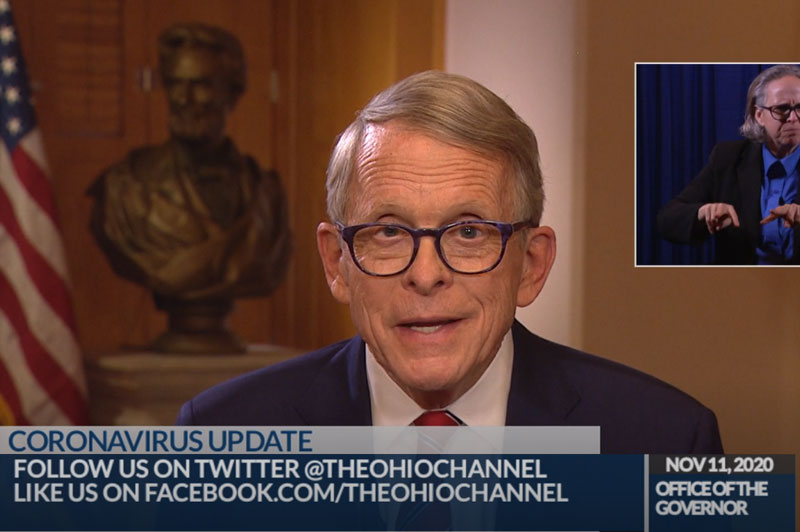
Desperate to slow the spread of coronavirus, Ohio Gov. Mike DeWine on Tuesday announced a new curfew intended to decrease person-to-person contacts and new infections.
The move was greeted with skepticism in some quarters.
DeWine said that starting at 10 p.m. on Thursday, there will be a 21-day statewide curfew from 10 p.m. to 5 a.m. Bars, restaurants and retail stores will have to close. But there will be exceptions for pharmacies, grocery stores, food delivery, drive-through and pickup service.
Technically, people who violate the curfew could be charged with a second-degree misdemeanor, punishable by 90 days in jail and a $750 fine. But as he has with other covid-related health orders, DeWine said he he’s not eager to see people charged.
“We do not expect law enforcement to go pull people over because they’re out beyond 10 o’clock,” he said. “But if they’re seeing something going on, this is a way they can walk up and say, ‘Hey guys, you’re here… there’s a curfew. Why don’t you just go home?’”
The governor added, “No one’s been charged under these health orders,” he said. “That doesn’t mean they couldn’t be, but they haven’t so far.”
The curfew comes as Ohio experiences its most alarming spike in coronavirus infections and hospitalizations since the start of the pandemic early this year.
On Tuesday, state health authorities reported 7,079 new cases over the past 24 hours, a 36% increase over the 21-day average. They also reported 368 new coronavirus hospitalizations, only a little less than the state record of 386 set on Nov. 10.
The swelling numbers have placed Ohio hospital staffs in a “precarious situation,” said Bruce Vanderhoff, chief medical officer for the Ohio Department of Health. He said medical workers are fatigued from fighting the disease since March and they have to balance that work with living in communities and with families where the virus is increasingly prevalent.
DeWine said his goal was to reduce the number of person-to-person contacts and thereby stop the virus from spreading. He asked Ohioans to voluntarily do that through such measures as condensing the number of trips they make to the grocery and buying more when they do. At the same time, he urged people to do what they can to remotely maintain emotional connections.
However, critics noted that the curfew doesn’t go as far as one imposed in the spring. For example, the earlier order imposed limits on how many people can be in stores when they’re open.
Asked what scientific basis he used in issuing the order, DeWine said, “We know the basic science. The basic science is fewer contacts, less spread.”
The likely effectiveness of the curfew was disputed by at least one scientist in the field. Kent State epidemiologist Tara C. Smith tweeted that she didn’t know any professionals who thought it would work.
I haven't met a single public health official who thinks these types of curfews/ 10pm shutdowns will be particularly helpful. Maybe they're out there somewhere–anyone want to explain it to me? I don't know where they're getting their advice from. https://t.co/ZH7OXYhrY3
DeWine, however, might have felt the curfew was as far as he could go. It had the support of the Ohio Restaurant Association, likely meaning that there was some negotiation behind it.
Also, DeWine is a member of a party led by president who in October visited Circleville and said the media were hyping the virus to hurt his reelection chances. The president predicted the media would stop covering coronavirus on Nov. 4 — the day after the election.
Covid skepticism runs so deep in elements of the Republican Party that at the same time that DeWine was announcing the curfew, Ohio Senate President Larry Obhof, R-Medina, was testifying in favor of his bill to repeal an earlier health order requiring bars to stop serving at 10 p.m.
At the exact time @GovMikeDeWine continues to defend/explain his new curfew health order, State Sen. President @LarryObhof is testifying on his bill to reinstate Ohio's normal bar hours
Would rescind the state order prohibiting sales after 10 p.m./consumption after 11 p.m. pic.twitter.com/y0P2ZaCyYS
For his part, DeWine said he hopes the curfew will “push more people toward home.”
“I think if we do these things it gives us a shot at slowing (the coronavirus) down,” the governor said. “Most of what we’re doing and the decisions I’m making are between two bad choices.”
Marty Schladen has been a reporter for decades, working in Indiana, Texas and other places before returning to his native Ohio to work at The Columbus Dispatch in 2017. He’s won state and national journalism awards for investigations into utility regulation, public corruption, the environment, prescription drug spending and other matters.
By Marty Schladen – November 9, 2020 (Ohio Capital Journal)
Some, but not all, Ohio Republican officials on Monday appeared to be distancing themselves from Donald Trump’s unsubstantiated claims that the Nov. 3 election is being stolen from him.
Trump racked up early leads — particularly in some battleground states where Republican lawmakers refused to allow early processing of mail-in votes. A massive portion of the electorate was expected to take advantage of mail-in voting because of the coronavirus pandemic and some states, such as Ohio, were ready to start processing them weeks before Election Day.
Also, Trump for months has been discouraging his supporters from voting by mail. So it was widely expected in states like Pennsylvania, Michigan and Wisconsin that most of the early results to come in would be from Election Day voting and would heavily favor Trump. Those would be followed by mail-in ballots heavily favoring former Vice President Joe Biden and would take days to count.
That’s just what happened, and by late Saturday morning all major U.S. news organizations judged that Biden had built an insurmountable lead in Pennsylvania and projected him to be the winner of the election.
By Monday afternoon Trump’s allies were talking about legal challenges to the vote in several states, but the Washington Post reported that there appeared to be no central strategy. Meanwhile, many others called on Trump to stop undermining the public faith in the electoral process and concede.
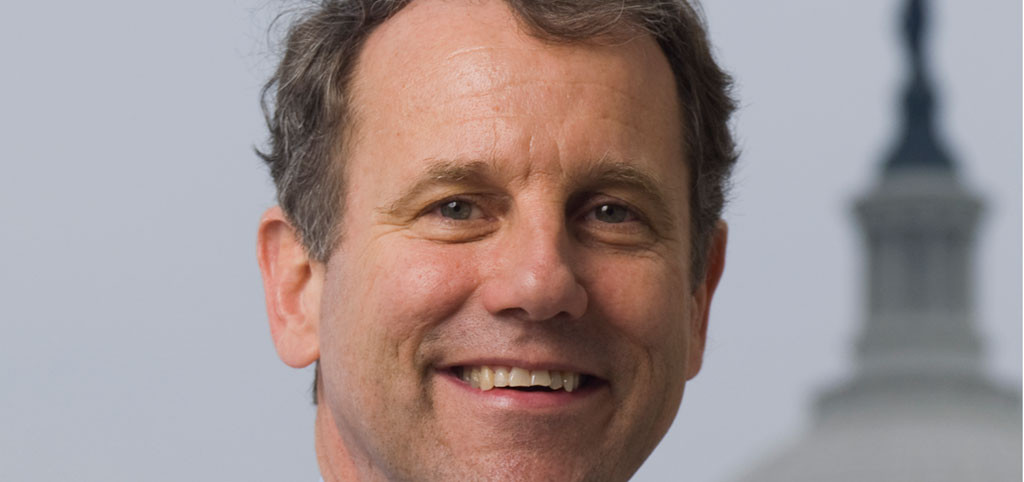
“We all knew the counting process was going to take longer than usual this year because of the once-in-a-lifetime pandemic and higher voter turnout,” U.S. Sen Sherrod Brown, a Democrat, said over the weekend. “Counting votes and making sure every voice is heard is not fraud — it’s democracy at work. The President’s attacks on our democratic process are dangerous, but we will count every single vote.”
U.S. Sen Sherrod Brown
On Sunday, former President George W. Bush became the most prominent Republican to essentially declare the election over when he congratulated Biden.
Early Monday afternoon, Ohio Gov. Mike DeWine, also a Republican, congratulated Biden, although he said Trump has every right to go to court if he wishes.
“I congratulate Vice-President Biden,” DeWine said in a statement. “It would appear that President Trump’s legal team will be filing legal actions. The President’s lawyers have every right to present evidence in court on any legal issues or irregularities involving the election, and the courts are the proper place to hear evidence on these issues. When lawsuits have concluded and election results are certified, it is important for all Americans to honor the outcome.”
The office of Ohio’s top elections official, Secretary of State Frank LaRose, was more direct when asked if LaRose believed Biden had won.
“Yes, he does,” his spokeswoman, Maggie Sheehan, said in an email.
She pointed to an Oct. 6 statement LaRose had made on Fox News.
“When the results on election night say one thing and then when the results change over the ensuing several weeks, that’s not a sign that something nefarious is happening,” he said. “In fact, quite the contrary. It’s a sign that the legal process is being allowed to play itself out so that every legally cast vote can be tabulated. That’s exactly what we need to do.”
Meanwhile another Ohio Republican, Attorney General Dave Yost, is following Trump into court. Politico reported Monday that Yost’s office had filed a friend-of-the-court brief with the U.S. Supreme Court challenging a three-day extension for ballots to be received in Pennsylvania. That is one of the matters Trump and his allies are litigating.
Attorney General Dave Yost
Yost’s office didn’t respond when asked if the attorney general believed Biden had won the election. But Georgetown University Law Professor Josh Chafetz tweeted that the Supreme Court effort was pointless.
Yost released a statement saying that the legal action transcends pollitics.
“This constitutional question will come up again in future elections,” it quoted him as saying. “It is in the best interest of all Ohioans — all of America — to gain a definitive answer, regardless of politics.”
The office of U.S. Sen. Rob Portman didn’t immediately respond when asked if he believed that Biden had won the election. But over the weekend, Portman refused to criticize Trump for appearing in the White House East Room early Wednesday morning to declare himself the winner.
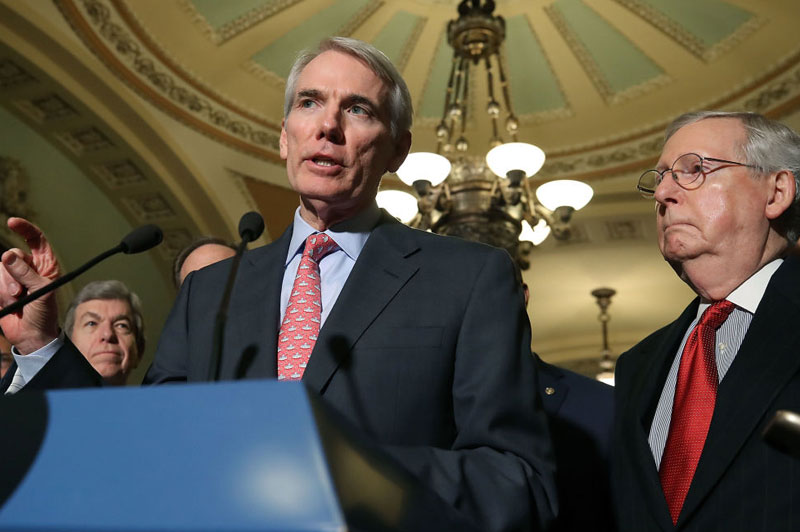
U.S. Sen. Rob Portman
His office referenced a series of tweets posted on Friday that didn’t address whether it was right for a president to call himself the winner of an election in which vast numbers of votes hadn’t been counted.
The office of Ohio Auditor Keith Faber, an ardent Trump supporter, didn’t respond when asked if he believed Biden had won the election.
Ohio Treasurer Robert Sprague didn’t answer whether he thought Biden had won, but he urged patience.
“While news organizations make projections, they do not determine the winner of the Presidential election — the people do,” he said in a statement issued by his office. “That’s why it’s important to allow the elections departments of all 50 states to continue completing their certification processes so the 2020 election can be finalized properly and in accordance with the states’ laws. This process takes time, and it’s in the best interest of our republic to ensure it’s done right, rather than done fast.”
Marty Schladen has been a reporter for decades, working in Indiana, Texas and other places before returning to his native Ohio to work at The Columbus Dispatch in 2017. He’s won state and national journalism awards for investigations into utility regulation, public corruption, the environment, prescription drug spending and other matters.
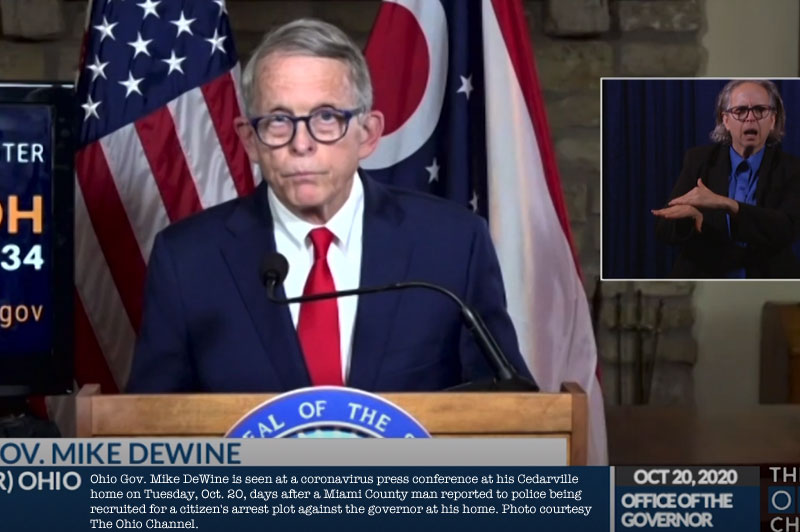
Piqua, Ohio – A Miami County resident reported to police being recruited to take part in a citizen’s arrest of Gov. Mike DeWine at his Cedarville home a week ago, but the plot evidently never materialized.
The plot is alleged to have involved Renea Turner, a former write-in candidate for governor who ran against DeWine in 2018. A state representative says he recently met with Turner prior to the alleged call and she inquired about the governor’s home, the Ohio Capital Journal has learned.
The Ohio State Highway Patrol, which handles security for the governor and his residences, was notified of the report by local law enforcement and is investigating.
At a press conference Friday afternoon to discuss allocation of CARES Act funding in Ohio, DeWine told reporters he was unaware of the alleged plot and had not been briefed on it to that point.
This report to police came just a week after 13 men were arrested for reportedly planning to kidnap Michigan Gov. Gretchen Whitmer and it follows months of protests against DeWine and state health officials.
According to a Piqua Police Department report from Oct. 16, a citizen told an officer about being called earlier that morning by Turner, a Springfield native who is an outspoken critic of DeWine. Turner reportedly asked if they wanted to take part in an attempt to arrest the governor at his home later that weekend and try him for allegations of tyranny.
The Ohio Capital Journal initially declined to identify Turner as the alleged caller, as law enforcement would not confirm if she had been under investigation or charged with a crime and she could not be reached by the Ohio Capital Journal for comment.
The Ohio State Highway Patrol has been made aware of the police report but would not say if an investigation has been launched.
Since the original publication of this story, Turner has spoken on the record with cleveland.com about the call, which she confirmed took place. She told the outlet that she did speak to the Miami County person about placing DeWine under house arrest, but reportedly denied discussing any specific plans.
The Capital Journal is not identifying the person who reported the incident to police after the person asked to remain anonymous for safety reasons, having already followed up with Piqua law enforcement about a threat made against them online.
The person who reported the call told Ohio Capital News that the plot stemmed from anger toward the governor’s response to the COVID-19 pandemic. The person said they too are a critic of DeWine and claimed to have recently filed a citizen affidavit seeking criminal charges against the governor. State Rep. John Becker, R-Union Twp., who has led an impeachment effort against DeWine in the Statehouse, has urged Ohioans to submit such affidavits about the governor.
“Do I think (DeWine) needs to be arrested? Absolutely,” the person said. “But all that needs to happen within the confines of the law.”
They claimed they were initially excited when receiving the call last Friday, thinking the conversation would be about the ongoing search from DeWine critics to find a prosecutor willing to bring charges against him.
“(The caller) said ‘no, we the people, we’re going to arrest him,’” the source said.
According to this person, the caller described several supposed penalties for a citizen’s trial on tyranny — permanent exile or execution.
According to this person, the caller described several supposed penalties for a citizen’s trial on tyranny — permanent exile or execution.
Soon after the call, they decided to contact the police.
“If I don’t do something about this and something happens, I’m either legally culpable or at least I’m going to feel bad,” they said. “Not that I have any love lost between me and Gov. Mike DeWine. Again, I think he needs to be in prison. But again, if (the caller) had done something … I would have felt ethically responsible, right?”
State legislator says Turner recently asked about DeWine’s home in private chat
Becker told the Capital Journal he met with Turner a few weeks ago in Columbus at her request to speak about theoretical criminal charges against the governor. While his focus has been on locating a willing prosecutor, he said Turner spoke about finding a county sheriff to make the arrest.
“I just kind of shrugged my shoulders and said, ‘good luck with that,’” Becker recalled.
Then came an unusual change in subject: Turner wanted to know more about the governor’s residence in Cedarville. Becker said Turner asked whether the personal residence constituted public property during DeWine’s term as governor.
“It was kind of a strange question,” Becker said.
John Becker aided Turner by providing information about DeWine’s residence and if it constituted public property.
After the conversation ended, Becker asked Turner’s question to the Legislative Service Commission, a nonpartisan group which gives private law research to lawmakers. He learned the home remains a private residence, and passed that information along to her.
Becker did not hear again from Turner after that. Earlier this week, he heard from the Miami County resident about the alleged plot. The person told him about Turner and Becker recognized her name from their recent meeting.
Becker said he informed the Statehouse’s sergeant at arms about the situation when returning to work earlier this week. He later posted a YouTube video about the incident, referring to the person who reported the call to police as a “hero.”
Becker confirmed to the Capital Journal he was contacted by the Ohio State Highway Patrol on Friday. The lawmaker said he described to the Patrol his interactions with Turner and the Miami County resident.
Piqua Police Chief Rick Byron told the Capital Journal on Thursday the citizen’s report was turned over to the Patrol.
“At this point, we have not followed up with them and have no plans to do so,” Byron said, noting the alleged caller is not from Piqua and therefore his department does not have jurisdiction. “We’re pretty confident that (the Patrol is) going to handle this situation.”
Dan Tierney, a spokesperson for the governor’s office, referred questions about the situation to the Patrol.
In a brief statement on Thursday, Lt. Tiffany Meeks told the Capital Journal: “For security, the Patrol does not discuss threats or security operations involving the governor.” The Patrol later confirmed to the Dayton Daily News it was “currently investigating the incident.”
Cleveland.com quoted Turner on Friday as saying officials with the Patrol came to her home that morning “to check out my temperament and what my plans are.”
Since the report was made on Oct. 16, the governor has hosted three press conferences at his Cedarville home: his traditional virus-related updates on Oct. 20 and 22, and the CARES Act press conference with legislative leaders on Friday.
After this story was first published, reporters asked DeWine during his CARES Act press conference about his reaction to the alleged plot.
“I don’t know the details of the so-called plan,” he said. “I can’t really comment on that.”
Asked if he was shocked to learn about such a plot, DeWine answered: “No. I’m not shocked by it. At this point in my life, not much shocks me anymore. It’s a sad thing.”
This is the latest in a series of alleged plots targeting political leaders in 2020 for their responses to the pandemic. In Michigan, state and federal law enforcement foiled a plot to kidnap and try Gov. Whitmer, with seven of the men being charged under the state’s anti-terrorism law.
Police in that case have alleged the Whitmer plot was hatched in a meeting held in Dublin, Ohio this summer. The same groupof men also hoped to target Virginia Gov. Ralph Northam.
There is no known connection between these plots and the one reported in Piqua.
Turner is former governor candidate
Turner, of Springfield in Clark County, campaigned for governor as a write-in candidate in 2018.
Turner encountered DeWine on the campaign trail, later posting a picture of themselves together to social media. A post on her Facebook page claims she pretended to be a supporter of DeWine’s, then told him after the picture was taken she was actually campaigning against him.
Turner received 185 votes in the 2018 general election, including one from the person who later reported her call to Piqua police.
Turner has shared several posts from state Rep. Nino Vitale, R-Urbana, who has made headlines throughout 2020 for posting falsehoods about the virus — such as an April claim that it may have been created by Bill Gates.
Turner received 128 more votes as a write-in candidate for Springfield mayor in 2019 before turning her attention back to DeWine amid the coronavirus pandemic.
Her social media pages are littered with conspiracy theories involving the virus, government microchips and vaccine mandates. Many of the posts have been flagged by Facebook as spreading misinformation.
Turner has shared several posts from state Rep. Nino Vitale, R-Urbana, who has made headlines throughout 2020 for posting falsehoods about the virus — such as an April claim that it may have been created by Bill Gates.
Turner shared one post by Vitale from May 18, in which he accused DeWine of “giving himself total dictatorial power.” Vitale also falsely suggested the governor knew about the virus in March 2019, many months before the novel coronavirus was ever discovered.
In July, Turner posted photos of herself protesting health orders at the Ohio Statehouse with a signs referring to the governor as Hitler.
Turner took to the Statehouse again on Thursday, proclaiming she had removed the governor from office through a self-issued declaration. A video shared to Facebook shows Turner taking an oath of office, with a signed sheet of paper claiming her to be the next governor of Ohio.
Turner did not address the Thursday incident in her interview with cleveland.com.
‘It’s wrong morally, it’s wrong legally’
DeWine reiterated on Friday that the plot against Whitmer was “despicable” and added he denounced any effort by people to subvert the legal system and target public officials.
“We are seeing people out there who believe that,” the governor said. “We have an obligation, each one of us as elected officials, opinion leaders, to denounce that and say ‘that is wrong.’ It’s wrong morally, it’s wrong legally, it’s anti-democratic, it’s anti-everything this country stands for.”
While DeWine has enjoyed widespread, bipartisan support throughout 2020 for his response to the pandemic, his administration has also been the subject of intense condemnation. Four legislators have endorsed his impeachment, and dozens of others have supported various bills seeking to limit the executive’s power to handle an infectious disease.
Ohio Gov. Mike DeWine in a Zoom call with reporters in August outside his Cedarville home. Screenshot by Marty Schladen, Ohio Capital Journal.
Repeated protests at the Statehouse led DeWine to move his press conferences from Capitol Square to a government building elsewhere due to “security reasons,” WKYC reported in April.
That same month, Cleveland.com reported that Ohioans protesting the state’s public health orders were seen “driving by DeWine’s Greene County house, filming it and counting cars.” The outlet quoted a DeWine spokesperson as saying security officials were aware of this surveillance but could not comment further.
In May, protesters repeatedly targeted the home of Dr. Amy Acton, who was then serving as director of the Ohio Department of Health. There were reports that some of the protesters were armed with guns, and one person was photographed carrying an anti-Semitic sign. Not long after, Acton resigned as state health director.
In May, protesters repeatedly targeted the home of Dr. Amy Acton, who was then serving as director of the Ohio Department of Health. There were reports that some of the protesters were armed with guns, and one person was photographed carrying an anti-Semitic sign. Not long after, Acton resigned as state health director.
The state has been without a permanent health director in the months since. A replacement was announced in September, but the person selected withdrew from consideration after learning of the harassment leveled against Acton. The Ohio Department of Health continues to be led by an interim director.
Also in May, Democratic House Minority Leader Emilia Sykes reported a phone call to police threatening to kill her father, state Sen. Vernon Sykes, if she did not “step aside” politically.
(This story was edited by Loveland Magazine)
Tyler Buchanan is an award-winning journalist who has covered Ohio politics and government for the past decade. A Bellevue native and graduate of Bowling Green State University, he most recently spent 6 1/2 years as a reporter and editor of The Athens Messenger and Vinton-Jackson Courier newspapers. He is a member of the BG News Alumni Society Board and was a 2019 fellow in the Kiplinger Program in Public Affairs Journalism.
The office of Ohio Sen. Rob Portman won’t say whether he’s one of the Senate Republicans unwilling to support a coronavirus-relief bill under negotiation between the Trump White House and House Speaker Nancy Pelosi.
Ohio Sen. Rob Portman
Senate Majority Leader Mitch McConnell, R-Kentucky, on Tuesday warned the White House not to agree to the bill because the $2 trillion price tag was too high for many in his caucus. That message comes as hopes of passing a relief bill before next year seem to be dimming.
With a raging virus continuing to throttle the economy, Federal Reserve Chairman Jerome Powell earlier this month urged passage of a relief bill to avoid lasting damage. Many other economists have been making the same argument, while those who study poverty say legions of Americans are being added to its numbers.
In Ohio, those who work with the poor warn of cascading homelessness and say food banks are seeing huge demand.
It wasn’t until late July — as federal unemployment supplements were running out — that McConnell introduced his own bill. But he later admitted that he didn’t have enough votes in his own caucus to pass it.
Earlier this month, just after a covid-infected Trump was released from the hospital, he abruptly broke off negotiations with House Democrats. Then he abruptly reversed himself again and by Tuesday he was saying he wanted a bigger package than the $2.2 trillion deal being pushed by Pelosi and the Democrats.
For his part, McConnell has been promoting a bill less than an fourth that size — $500 billion — that would have included an unemployment supplement and aid to schools. Democrats blocked it Wednesday, saying the bill was woefully inadequate.
That brought a blast from Ohio’s Democratic senator, Sherrod Brown.
“Once again, Mitch McConnell is telling Americans, ‘you’re on your own,’” Brown said in an email. “Millions of people are suffering right now and he would rather stall a COVID relief package to continue rushing through an illegitimate Supreme Court nomination. Workers are struggling to figure out how to pay their bills, stay in their homes, and keep their families safe while McConnell would rather focus on his power grab.”
Portman’s staff wouldn’t answer directly when asked whether he supported a relief bill of about $2 trillion, roughly the size of that being negotiated between House Democrats and the Trump administration.
“Rob has consistently called on both parties to come to an agreement on additional covid relief for families and small businesses — legislation that would support increased (coronavirus) testing, provide additional funding for schools and state and local communities, restart the Payment Protection Program, and provide needed liability protections,” spokeswoman Emmalee Cioffi said in an email.
She also provided a transcript of a Sept. 10 speech Portman gave on the Senate floor in which he castigated the earlier covid-relief bill passed by House Democrats as too expensive.
“It’s a $3.5 trillion bill,” Portman said. “And remember, we’ve already spent about $3.5 trillion making this the largest deficit in the history of our country and making our debt now, for the first time since World War II, the size of our entire economy. That concerns all of us, and it should.”
Portman also was highly critical of Obama-era deficit spending amid a historic recession.
But he wasn’t nearly so concerned about deficits in 2017 when he was pushing the Tax Cuts and Jobs Act at a time when the federal unemployment rate was 4.1%.
Portman’s promise was quickly shown to be empty, and by early 2018, the tax cut was projected to add more than $1.3 trillion to the deficit over 10 years. Nor did it deliver the economic growth that Portman, Trump and McConnell promised, the Congressional Research Service reported last year.
Just before Congress passed the tax cuts, Portman told WKSU that he’d support clawing them back if they didn’t produce the promised growth. So far, that hasn’t happened, either.
Marty Schladen has been a reporter for decades, working in Indiana, Texas and other places before returning to his native Ohio to work at The Columbus Dispatch in 2017. He’s won state and national journalism awards for investigations into utility regulation, public corruption, the environment, prescription drug spending and other matters.
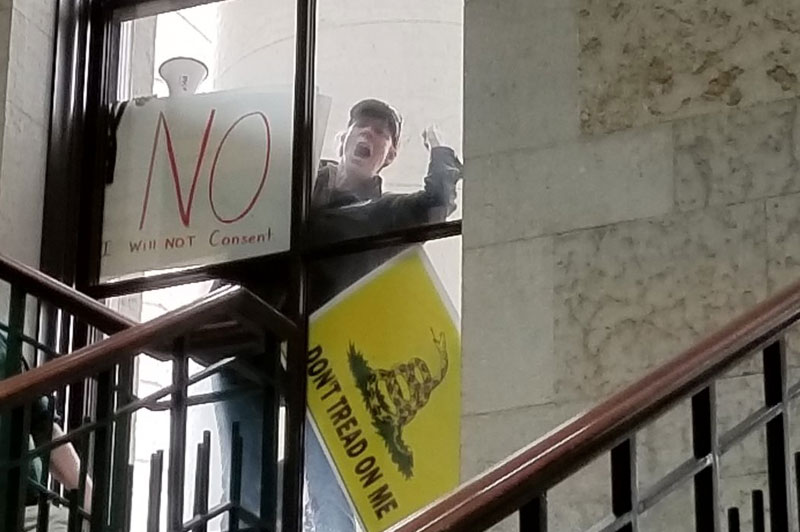
A man protesting Ohio’s health orders at the state Capitol on May 1. Gov. Mike DeWine later repealed most of them only to start reimposing orders on Tuesday as coronavirus cases continued to surge. Capital Journal photo by Marty Schladen
This summer, a cabal of a least 15 extremists meeting in Dublin, Ohio began crafting a violent plan to “storm” the Michigan state Capitol and kidnap Gov. Gretchen Whitmer, law enforcement officials say.
Jake Zuckerman is a statehouse reporter. He spent three years chronicling the West Virginia Legislature for The Charleston Gazette-Mail after covering cops and courts for The Northern Virginia Daily.
The federal allegation, unsealed Thursday morning, details plans of armed assaults on the Michigan State Police, construction of improvised explosive devices, covert meetings held in a Grand Rapids basement accessible by secret trap door, nighttime surveillance of Whitmer’s home, and quasi-military “field training exercises” to prepare for an abduction sometime before the November elections.
“When the time comes, there will be no need to try and strike fear through presence,” Brandon Caserta said Sept. 17, according to prosecutors, opting against attending an armed protest at the State Capitol. “The fear will be manifested through bullets.”
Michigan Attorney General Dana Nessel said to reporters Thursday the group crafted “elaborate plans” that posed a “serious and credible threat to public safety.”
What brought the men to two meetings in central Ohio is unclear: The suspects are all from Michigan and Delaware.
However, the charging document states one paid informant assisted the FBI and secretly recorded the meetings in Dublin on June 6 and July 18. No threats were reported against Ohio government.
At the first meeting, Michigan man Adam Fox and Delaware man Barry Croft huddled for a meeting at an undisclosed Dublin location with 13 other people, including a confidential informant.
They discussed creating a society that followed the U.S. Bill of Rights where they could be “self-sufficient.” They discussed “state governments” they believed violated the U.S. Constitution, and specifically mentioned Whitmer.
They also discussed murdering “tyrants” or “taking” a sitting governor. Fox then reached out to a “Michigan based militia group.” The charging document does not identify the group, though Nessel said affiliates of the “Wolverine Watchmen” were charged.
Fox, working with Croft, met members of the militia group several times in June, including at a Second Amendment rally in Lansing. He later described the Dublin meeting and said he would need 200 men to storm the Capitol to abduct Whitmer.
“Fox explained they would try the Governor of Michigan for ‘treason’ and he said they would execute the plan before the November 2020 elections,” the charging document states.
The alleged conspirators engaged in “field training exercises” in rural Michigan including firearms training and combat drills, and unsuccessfully attempted to construct two improvised explosive devices.
On July 18, the men again met, secretly recorded by an informant, in Ohio. They discussed attacking a Michigan State Police facility and floated the idea of shooting up Whitmer’s vacation home. They eventually settled on kidnapping.
“Snatch and grab, man,” Fox allegedly said. “Grab the fuckin’ governor. Just grab the bitch. Because at that point, we do that, dude — it’s over.”
Prosecutors detailed two episodes of “surveillance” of Whitmer’s home and determined the conspirators considered demolishing a bridge to stave off a police response. An informant provided the FBI with a map of the lake near Whitmer’s home, distance from nearest police departments and estimated response time.
By mid-September, the men successfully detonated an explosive device at a field training exercise.
“I can see several states takin’ their fuckin’ tyrants,” Fox allegedly said. “Everybody takes their tyrants.”
The allegations come amid a time of unprecedented unrest and instability in the U.S., likely a combination of a pandemic, perceived overreach when governments responded, racial unrest, economic devastation of the pandemic, and extremism proliferating on various social media platforms.
Whitmer attracted national attention during the spring and summer for a forceful response to the COVID-19 pandemic. She also drew ire from libertarian and small-government groups for what they saw as overly heavy-handed stay-at-home orders and mask mandates.
In May, hundreds of protesters, many of whom were armed, stormed the Michigan Capitol. President Donald Trump only accelerated instability, calling for Whitmer to “LIBERATE MICHIGAN.”
Political demonstrations this summer have consistently featured armed demonstrators and counter-demonstrators. In Ohio, a violent, self-described neo-Nazi wielded an anti-Semitic sign at a coronavirus protest. Another anti-Semitic sign appeared at a protest outside the home of Ohio’s health director, who is Jewish. She resigned in June.
Earlier this month, the U.S. Department of Homeland Security issued a threat assessment warning of increased extremism in the country.
“The domestic situation surrounding the COVID-19 pandemic creates an environment that could accelerate some individuals’ mobilization to targeted violence or radicalization to terrorism. Social distancing may lead to social isolation, which is associated with depression, increased anxiety, and social alienation, the assessment states.
“Similarly, work disruptions, including unexpected unemployment and layoffs, can also increase risk factors associated with radicalization to violence and willingness to engage in acts of targeted violence.”
An organization representing more than 23,000 police officers, including school resource officers, says allowing teachers to bring guns to school under only a concealed carry permit could do more harm than good.
The Fraternal Order of Police of Ohio said this in a brief to the Ohio Supreme Court, which is considering a case that would keep schools from allowing a firearms authorization policy. The police organization said they were not taking a stand on whether teachers should be armed, but rather the training involved.
Susan Tebben is an award-winning journalist with a decade of experience covering Ohio news, including courts and crime, Appalachian social issues, government, education, diversity and culture. She has worked for The Newark Advocate, The Glasgow Daily Times, The Athens Messenger, and WOUB Public Media. She has also had work featured on National Public Radio.
“An interpretation holding that a school resource officer or security guard needs extensive training to carry a gun in school, but the art teacher does not, is neither just nor reasonable,” the group said in a brief to the court.
While 17 other school districts argued that the “plain language” in the Ohio Revised Code allowed them the right to bring guns to school when authorized, the FOP read the “plain language” as advising schools to the contrary.
“A teacher who carries a weapon into a classroom while teaching is, quite
literally, both ‘armed’ and ‘on duty,’” the organization stated. “There is no reason to depart from this plain language because it yields a ‘just and reasonable’ result, as the Revised Code demands.”
Agreeing with the language, a group of 284 current or former Ohio teachers or school staff members said the law was “unambiguous” in its explanation of the training requirements needed to bring guns to schools. The teachers and staff don’t say school districts should be banned from creating weapons policies.
“But the General Assembly has required that, should they elect to arm teachers, school districts must ensure that they have adequate training, which the legislature has determined was satisfactory completion of an approved basic peace officer training program,” the brief by the teachers and staff stated.
The FOP even went so far as to say the Madison Board of Education’s interpretation “would get people killed.”
In arguing against the firearms policy, the police officer’s group brought up gun-retention skills, accuracy in a gunfight and situational awareness that they say would decrease if teachers were given the responsibility of defending themselves and others in a school shooting.
The brief to the court also said a lack of training would make armed teachers a liability, causing law enforcement to have more difficulty stopping an active shooter, and “may get themselves shot in the process.”
“If nothing else, police officers train on the ‘mental preparedness’ necessary to take a life,” the brief stated. “But in the context of a school setting, undertrained teachers will be mentally unprepared to kill one of their own students.”
Several others submitted document in support of a decisions that keeps gun policies out of the board’s hands, including the Ohio Education Association and the Ohio Federation of Teachers. A group of “experts in school safety and firearms training,” including Dayton Police Department Chief Richard Biehl, a former leader of the Columbus Division of Police Training Bureau and a former Madison Local School District teacher who became a police officer after the 2016 school shooting there, joined in the support of the parents against the firearms policies.
The cities of Columbus and Cincinnati also filed briefs showing their interest in the case, and support of the present law on training of armed personnel in schools.
If an Ohio Senator has his way, the law will change regarding armed personnel in school. The bill passed the Senate Government Oversight & Reform Committee, and is awaiting a full floor vote before moving on to the Ohio House.
Yesterday was the first day Ohioans could cast their ballots for the 2020 General Election.
For those not wanting to wait for Election Day on Nov. 3, or have concerns about voting in-person due to the pandemic, Ohio offers several other ways to vote early.
Voting by mail
Ohioans can vote by mail if they first request an absentee ballot. Those ballots were being mailed out to voters beginning on Tuesday and they should be received soon.
The ballots are to be mailed back to a voter’s county board of elections office or taken to the local offices.
If you haven’t yet requested a ballot, there is still time. Click here for a copy of the form.
Voting by drop box
Ohioans who requested an absentee ballot can drop off their ballot rather than mailing it.
Each county has a drop box located at its board of elections office.
The boxes must be secure and available to voters for 24/7 access.
Clermont County – 76 S. Riverside Drive in Batavia
Hamilton County – 4700 Smith Road in Norwood
Warren County – 520 Justice Drive in Lebanon
Ohioans can drop off both absentee ballot requests and their ballots themselves to these boxes. Boards of elections have been given rigid guidelines requiring that both a Democratic and Republican election official be present when the box’s contents are retrieved. The boxes are emptied once per day.
Drop box access is available through 7:30 PM on election night.
The below map displays the location of each elections office throughout Ohio.













 Jake Zuckerman