Advocates from the Coalition on Homelessness and Housing in Ohio are advising tenants facing eviction to act immediately to get protection under the Centers for Disease Control and Prevention’s new eviction moratorium.
The CDC recently issued the first ever nationwide order temporarily banning the eviction of tenants who are unable to pay rent in order to help prevent the spread of coronavirus, a news release this week from COHHIO said. While the moratorium applies to many cases where people have fallen behind on their rent payments, tenants must follow specific steps in order to qualify, it emphasized.
“This so-called moratorium is not automatic. Tenants need to submit a declaration demonstrating that they are eligible for the moratorium to cover them,” said COHHIO Executive Director Bill Faith. “If you’re behind on rent, don’t wait. See if local emergency rental assistance is available in your community, and file a declaration to make sure you don’t get evicted during this public health crisis.”
Tenants earning less $99,000/year, or $198,000/year for joint tax filers, who are unable to pay full or partial rent due to a loss of income or extraordinary medical expenses are eligible for the CDC’s eviction moratorium, the release said. However, they must file a form certifying that they have tried to obtain government assistance to pay rent and will likely have to move in with another household or become homeless if they are evicted, it noted.
Diane Yentel, president and CEO of the National Low Income Housing Coalition, noted that tenants still have to pay rent each month and could still get evicted when the order expires.
“The very least the government ought to do in the middle of a global pandemic is assure each of us that we’re not going to lose our homes,” she said. “The CDC moratorium keeps people in their homes today, but the rent is still due and the debt that renters owe will build each month until the moratorium expires on Dec. 31. And at that point all the back rent and late fees will be due.”
The release also noted that several communities have allocated funds to help at-risk residents pay the rent during this crisis, but assistance is limited and not available in many areas.
“Furthermore, demand for emergency rental assistance will soon outstrip local resources as the pandemic-induced recession continues into the winter,” the release said, noting that neither U.S. Congress nor the Ohio General Assembly have created an emergency rental assistance program.
Carlie Boos, executive director of the Affordable Housing Alliance of Central Ohio, said the CDC moratorium highlights the need for the state and federal governments to provide emergency rental assistance.
“Allowing tenants to fall deeper and deeper into debt not only ruins Ohioans’ future – it puts the entire housing market at risk,” she said. “Our state and federal leaders must prioritize emergency rental assistance to stabilize both vulnerable families and our vulnerable economy.”
The release advised that tenants who are behind on rent should immediately seek rental assistance and send a declaration form to their landlord, and the court if they have already received an eviction notice.
If you need legal help fighting an eviction, contact your local legal aid. For a directory of legal aid organizations in your community, go to: http://ohiolegalaidalliance.org/
Columbus, Ohio – Gov. Mike DeWine acknowledges that whoever takes over as state health director may face a torrent of criticism just as Dr. Amy Acton did earlier this year.
That’s not a challenge unique to Ohio, the governor also said, vowing the state would continue searching for a permanent replacement to lead the department of health.
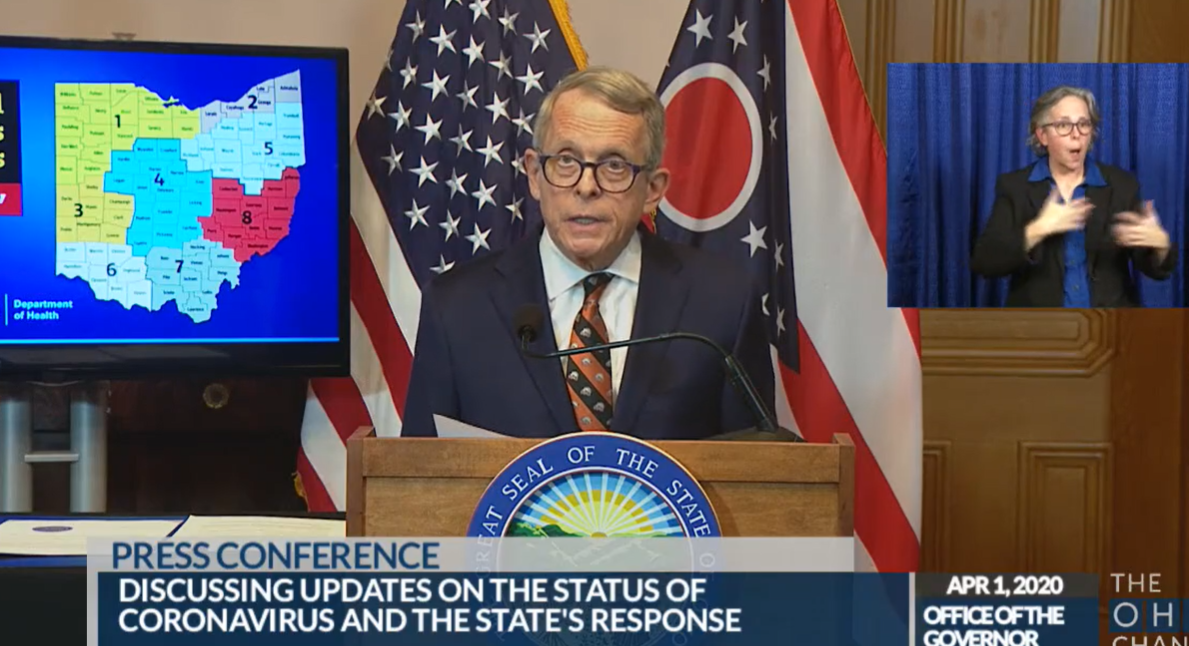
DeWine faced his own scrutiny about the hiring process from reporters at Tuesday’s (September 15 )press conference, the first held since the governor saw his appointed replacement step aside within hours of the hire being made public.
The governor announced on Sept. 10 that Dr. Joan Duwve, an Ohio native, would soon take over as the new state health director. Duwve had been serving as director of public health in South Carolina.
That evening, DeWine later said, he learned that Duwve planned to withdraw from consideration, citing “personal reasons.”
In a statement reported by the Associated Press, Duwve said she had learned about harassment faced by Acton and her family only after having accepted the position. In learning about that, she described making the quick decision to step aside.
Acton was the target of protests held outside her house in Franklin County, with some of the criticism leveled against her fueled by anti-Semitism.
“My family is off limits. I withdrew my name from consideration to protect my family from similar treatment,” Duwve said in her statement.
On Tuesday, DeWine contended that he and members of his team had in fact discussed the Acton harassment issue with Duwve prior to the appointment.
Nevertheless, the governor said his office has moved on and will continue searching for a replacement. The Ohio Department of Health has been led by interim director Lance Himes since the day Acton resigned on June 11. For a time, Acton remained employed as a chief health advisor to DeWine before leaving government entirely in early August.
Dr. Amy Acton addresses reporters at a news conference earlier this year. Capital Journal photo by Jake Zuckerman
There are currently two open leadership positions: for state health director (heading the department of health) and for state medical director.
DeWine said he did not want Ohioans to be worried about the delays in securing a permanent replacement to those posts. He said the department has many other hardworking professionals, and that the Ohio government continues to seek advice and resources from health experts throughout the state.
Does Ohio’s difficulty in finding a replacement reflect poorly on the state? No, said DeWine.
“I don’t think Ohio’s unique,” he said, referencing public protests against health officials elsewhere in America during the coronavirus pandemic.
“We know these are issues that can be divisive,” he continued. “I’ve tried to do everything I can so that we are not divided as a state, because I think we need to be together and fight this battle together.
“I know we’re getting tired,” he later said, “but we have to continue to rally. We have to continue to fight this.”
Tyler Buchanan is an award-winning journalist who has covered Ohio politics and government for the past decade. A Bellevue native and graduate of Bowling Green State University, he most recently spent 6 1/2 years as a reporter and editor of The Athens Messenger and Vinton-Jackson Courier newspapers. He is a member of the BG News Alumni Society Board and was a 2019 fellow in the Kiplinger Program in Public Affairs Journalism.
Thousands of Ohio children who qualify for free or reduced-price meals at school will soon receive money to buy food through the Pandemic-Electronic Benefit Transfer (P-EBT) program, the Ohio Department of Job and Family Services (ODJFS) announced last week.
This funding was made possible by the federal Families First Coronavirus Response Act, a release said, adding that ODJFS provided more than $250 million in P-EBT benefits to more than 850,000 Ohio children last spring. The agency recently received federal approval to issue a second round of benefits for children enrolled in schools operating fully remotely or with a hybrid remote/in-person model, the release said.
“As families juggle the challenges of work, remote learning, and additional responsibilities, I hope that these additional benefits eliminate the stress of providing healthy, nutritious meals,” said Gov. Mike DeWine in the release.
ODJFS is working with the Ohio Department of Education and local school districts to identify all eligible children, which includes children participating in remote learningfor at least five consecutive days between the dates Aug. 1 and Sept. 30 who are already eligible for free or reduced-price meals.
“Ensuring that our most vulnerable children have access to nutritious meals remains a top priority,” said ODJFS Director Kimberly Hall. “As families continue to navigate the challenges related to COVID, we are happy to have the P-EBT program as an additional resource to offer our children and their families.”
As with the benefits issued last spring, the P-EBT benefits will be added to the Ohio Direction cards of families that receive Supplemental Nutrition Assistance Program (SNAP) benefits, the release said. Families that do not receive SNAP benefits will be sent P-EBT cards with the one-time benefit added and no application is needed, it added.
Individuals may qualify for SNAP if their household’s gross monthly income is at or under 130% of the federal poverty guidelines. Ohioans can apply at benefits.ohio.gov.
Ohio’s official utility watchdog wants to know where Akron-based FirstEnergy got the $60 million that federal prosecutors say fueled the largest bribery scandal in Ohio history.
The Office of Ohio Consumers’ Counsel on Tuesday evening filed several motions with the Ohio Public Utilities Commission:
A request for an investigation and a management audit of FirstEnergy.
A requirement that the company show that it hadn’t misused consumer money to support the passage of a nuclear bailout.
And that the regulator reopen a probe into how FirstEnergy spent money intended to upgrade the electricity grid.
In July, the U.S. Attorney’s office charged then-House Speaker, Larry Householder, R-Glenford, in an alleged scheme to funnel FirstEnergy money through 509(c)(4) “dark money” groups in a corrupt effort to elect supportive lawmakers and make Householder speaker.
The feds say the goal was to pass House Bill 6, a $1.3 billion bailout that went primarily to two failing nuclear power plants, but also subsidized two failing coal-powered generators. In addition, the money was used to fund a xenophobic campaign to stop a voter repeal of HB 6 and to line the pockets of Householder and his alleged conspirators, federal officials said.
Also charged were Matt Borges, a lobbyist who was formerly chairman of the Ohio Republican Party, Neil Clark, a lobbyist who owns Grant Street Consulting, Juan Cespedes, also a lobbyist, and Householder’s aide, Jeffrey Longstreth.
In its filing, the consumers’ counsel said it was asking the utilities commission to do its job.
“The (Public Utilities Commission of Ohio) has the right and duty to regulate public utilities, for the protection of the public,” it said. “The PUCO should require FirstEnergy to show that money it collected from consumers, including the distribution modernization charge money, was not improperly used regarding House Bill 6 and that it did not violate any utility regulatory laws or PUCO orders regarding House Bill 6.”
A FirstEnergy spokeswoman said her company will comment through official channels.
“We are unable to comment on pending litigation, but we will respond to the motion by September 23 as required,” External Communications Manager Jennifer M. Young said in an email.
In its filings, the consumers’ counsel noted that “Long before the House Bill 6 subsidies, FirstEnergy was authorized to charge its consumers nearly $7 billion for these and other FirstEnergy power plants as part of the transition to power plant competition (and a supposed end to future power plant subsidies) under Ohio’s 1999 electric deregulation law.”
The documents also focused on $465 million FirstEnergy was allowed to collect from Ohio ratepayers in 2017 and 2018 as a “distribution modernization rider.” In other words, the charge was meant to fund improvements to the lines and poles and other equipment needed to efficiently deliver electricity in Ohio.
The consumers’ counsel pointed to an independent audit showing that at least some of the money was used for other purposes. For example, it was placed in FirstEnergy’s “Regulated Utility Money Pool,” where its out-of-state utilities could borrow from it.
The dividends FirstEnergy paid shareholders also took a big jump once the company started collecting more from ratepayers, supposedly to improve the power grid. The money for dividends from FirstEnergy’s Ohio utilities went from $141 million in 2016 to $350 million in 2017 — the first year of the subsidy — to $400 million in 2018.
The Ohio Supreme Court subsequently declared the charge to be unlawful, but the money wasn’t refunded to ratepayers.
After the court ruling, the utilities commission shut down an investigation into the extra charge and how the money was used. But now the consumers’ counsel says it “should be reopened in light of the new information alleged in the U.S. Criminal Complaint about FirstEnergy’s use of extraordinary amounts of money in its efforts for the passage of House Bill 6.”
After other interested parties have a chance to respond to the consumers’ counsel motions the utilities commission will decide whether to approve them.
Marty Schladen has been a reporter for decades, working in Indiana, Texas and other places before returning to his native Ohio to work at The Columbus Dispatch in 2017. He’s won state and national journalism awards for investigations into utility regulation, public corruption, the environment, prescription drug spending and other matters.
With his impeachment effort against the governor making little progress, state Rep. John Becker pulled up his email and brainstormed a late-night solution.
It was almost 2 a.m. when Becker typed out a request to the Legislative Service Commission, a nonpartisan group that conducts law and policy research for lawmakers.
Becker is among the biggest critics of DeWine in the state legislature
“I believe that Governor DeWine is in violation of (Ohio Revised Code) 2921.45,” Becker wrote in the Sept. 1 email. “What is the process for criminal charges to be filed? Can the (Attorney General) do that? Other options?”
Still waiting for an answer, Becker sent another 2 a.m. request a few days later. He sought more “legislative history and legal case law” involving the 2921.45 section of code.
The law states: “No public servant, under color of his office, employment, or authority, shall knowingly deprive, or conspire or attempt to deprive any person of a constitutional or statutory right.” Violators are guilty of a first-degree misdemeanor, punishable by up to 180 days in jail and a $1,000 fine.
Becker is among the biggest critics of DeWine in the state legislature and views the governor’s response to COVID-19 as amounting to a “constitutional crisis.” The decision to delay primary election voting, the temporary closure of some businesses, the mask mandate — to Becker, these are the instances of DeWine assuming “dictatorial powers” and violating Ohioans’ constitutional rights.
Becker wants to see if DeWine can face criminal punishment for his pandemic response.
“My goal is to get the state opened up and the abuse of power to come to an end,” Becker said to the Ohio Capital Journal.
Impeachment and criminal charges?
Throughout 2020, DeWine has relied on a separate section of state law which gives the Ohio Department of Health authority to make “special or standing orders … for preventing the spread of contagious or infectious diseases.”
On Aug. 24, Becker announced he had drafted articles of impeachment against DeWine. Three fellow Republican legislators immediately gave support for impeachment: Reps. Nino Vitale of Urbana, Candice Keller of Middletown and Paul Zeltwanger of Urbana.
There have been a slew of lawsuits and legislative challenges to that authority. Becker sponsored one of the first bills seeking to limit the power of the state health director and many other Republican-sponsored bills have followed. DeWine has vowed to veto any such bill which interferes with the state’s pandemic response.
On Aug. 24, Becker announced he had drafted articles of impeachment against DeWine. Three fellow Republican legislators immediately gave support for impeachment: Reps. Nino Vitale of Urbana, Candice Keller of Middletown and Paul Zeltwanger of Urbana.
“For my colleagues, it’s put up or shut up,” Becker said.
Becker claims there was support for impeachment from at least one Republican member who wound up not joining as a sponsor.
There was swift backlash from Ohio Republican leaders the day articles were drafted, which Becker thinks quashed any desire for others to join the effort.
“Nobody wants to touch it,” Becker said.
Becker had planned to officially file the articles a week or so after drafting them, but instead is holding off. Once they are filed, no one else can sign on as a sponsor. He’s holding out hope that legislative sentiments may change before the end of 2020.
It would take a majority vote from the Ohio House of Representatives to impeach DeWine, then a two-thirds vote from the Ohio Senate to convict him. With only four representatives currently on board, they are 46 supporters short.
Speaker of the House Bob Cupp, R-Lima, has come out against the impeachment effort, saying that policy disagreements do not rise to the level of removing the governor.
“For my colleagues, it’s put up or shut up,” Becker said.
In a recent YouTube video, Becker acknowledged his colleagues believe the disagreements should be resolved legislatively rather through impeachment.
“Frankly I agree,” Becker said. “Legislation was the way to do it and we have tried that, and the governor has promised to veto everything that we’ve put out there attempting to roll back his power.”
Beyond impeachment, Becker alleges the governor has committed a number of crimes. Among them: that DeWine illegally canceled and rescheduled the primary election.
Hours before the polls were set to open Ohio Department of Health Director Dr. Amy Acton signed an order preventing the polling places from opening. DeWine and Acton feared holding an in-person election would lead to the virus spreading.
Ohio primary election dates are set by the state legislature. Lawmakers unanimously approved a new primary election plan involving an all-mail vote conducted throughout all of April. Becker voted for that plan.
Becker also alleges the mask mandates at churches, public places and businesses are in violation of Ohioans’ civil liberties.
Becker also alleges the mask mandates at churches, public places and businesses are in violation of Ohioans’ civil liberties.
Chief Justice John Roberts, an appointee of President George W. Bush, wrote in the majority opinion that the church restrictions were level with social distancing requirements at other public gatherings. Given the lack of treatment, cure, vaccine or sufficient knowledge about the new disease, he wrote, it’s too early to deem the restrictions unconstitutional.
“Although California’s guidelines place restrictions on places of worship, the restrictions appear consistent with the Free Exercise Clause of the First Amendment,” he wrote.
Tyler Buchanan is an award-winning journalist who has covered Ohio politics and government for the past decade. A Bellevue native and graduate of Bowling Green State University, he most recently spent 6 1/2 years as a reporter and editor of The Athens Messenger and Vinton-Jackson Courier newspapers. He is a member of the BG News Alumni Society Board and was a 2019 fellow in the Kiplinger Program in Public Affairs Journalism.
Along with diseases known to increase risk, the CDC lists 12 other conditions that “might” increase the risk of people who have them. These include other massively common conditions like hypertension, liver disease, pregnancy, smoking and others.
The underlying health conditions that lay a path for severe COVID-19 complications are widespread in Ohio, potentially affecting as much as half the population, according to experts, state data and government research.
Take obesity: Ohio Department of Health 2017 survey data estimates that 34% of Ohioans are obese. Similarly, more than 74,000 Ohioans were diagnosed with cancer that same year.
Dr. Peter Pronovost (Photo by University Hospitals)
“The statistics are about 60% of the public has one or more chronic diseases,” said Dr. Peter Pronovost, a University Hospitals physician. “Four in 10 have two or more diseases.”
The ubiquity of chronic disease in Ohio complicates any policy response when there’s no easy-to-draw line between people at low-risk for COVID-19 and those at higher risk levels.
It also illuminates the reality of a “herd immunity” strategy, as reportedlyoffered by an influential adviser to President Donald Trump.This would entail allowing the virus to run its course through the population unimpeded, purportedly allowing healthier people to develop antibodies at a large enough volume to break down chains of transmission.
The CDC listseight diseases known to increase risk of severe illness from COVID-19. The list, coupled with data from theOhio Annual Cancer Report, Behavioral Risk Factor Surveillance Systemannual report from 2018, and other state and federal sources, shows how deep chronic disease runs in the Buckeye state.
Cancer: 74,000 cases diagnosed in 2017
Chronic kidney disease: About 15% of U.S. adults have chronic kidney disease, per the CDC
COPD (chronic obstructive pulmonary disease): 8.3% of Ohio adults have COPD
Immunocompromised state from solid organ transplant:1,916 Ohioans received organ transplants in 2019
Obesity: 34% of Ohio adults are obese. An additional 34% are overweight
Dr. Nirav Vakharia (Photo by the Cleveland Clinic)
“When we go beyond age as a risk factor … if we’re just thinking about these chronic diseases, they’re so prevalent, it’s hard to isolate a young, healthy cohort,” said Dr. Nirav Vakharia, a physician from the Cleveland Clinic.
Health care groups in Ohio are undertaking different efforts to help residents with some of these conditions to stay at home.
LifeCare Alliance, an in-home health care agency, has seen a spike in the number of meals it has delivered to the homes of its diabetic patients since the pandemic began.
“If you have diabetes, the chances of you having a mild case of the coronavirus is much less — you’re gonna have a harder case, because your immune system just can’t fight it off,” said CEO Charles Gehring. “Patients have been scared to death by coronavirus.”
Similarly, Pronovost, the chief clinical transformation officer with University Hospitals, said the health care network recently accelerated its efforts to provide proactive care for people with chronic diseases.
He said staff is reaching out to patients to ensure they’re properly managing and controlling their diseases, like keeping insulin or blood pressure at healthy levels.
“The idea is we want to make sure chronic disease people are doing all they can to avoid being hospitalized and avoid needing to go to the [emergency room],” he said.
Early data shows the network reduced hospital admissions of certain chronic disease patients by 28%, and emergency visits by 79%, he said.
“The idea is we want to make sure chronic disease people are doing all they can to avoid being hospitalized and avoid needing to go to the [emergency room],” he said.
Along with diseases known to increase risk, the CDC lists 12 conditions that “might” increase the risk of people who have them. These include other massively common conditions like hypertension, liver disease, pregnancy, smoking and others.
As of Wednesday, COVID-19 has killed 4,176 Ohioans. The virus has infected nearly 120,000 state residents and put more than 13,500 in the hospital.
Jake Zuckerman is a statehouse reporter. He spent three years chronicling the West Virginia Legislature for The Charleston Gazette-Mail after covering cops and courts for The Northern Virginia Daily.
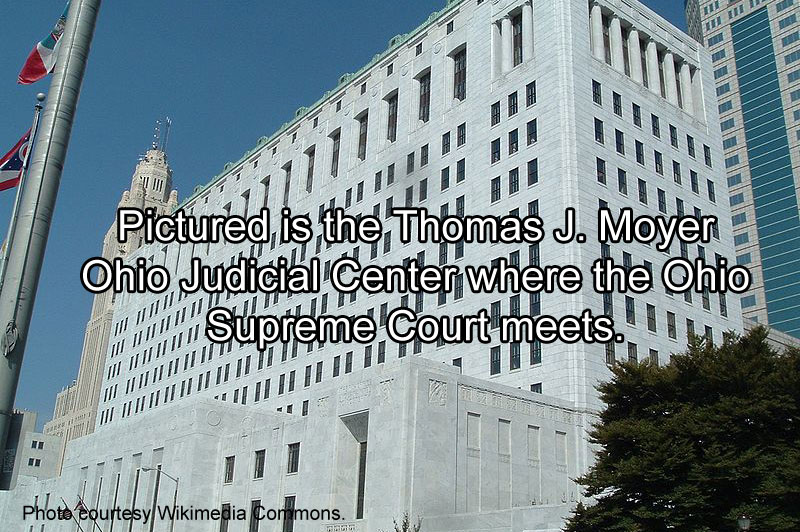
Columbus, Ohio – The Ohio Supreme Court has said a school district can go ahead with a firearm policy for personnel while the state’s highest court decides on their case.
The Ohio Supreme Court granted Madison Local School District’s request to allow the implementation of a policy allowing trained personnel including teachers to be armed on the Butler County district’s grounds Wednesday.
The amount of training the personnel must receive is still up for debate as the Ohio Senate considers a bill to lower that training level.
But just as they allowed the motion, they also sped up the schedule for their own deliberation.
“No stipulations or requests for extension of time shall be permitted, and the clerk of court shall refuse to file any stipulations or requests for extension of time,” the court said in a filing.
The district asked for an expedited timeline because of the upcoming school year, which started Aug. 13. The appeals court decision had “no practical effect” before then, because Ohio Gov. Mike DeWine had already closed schools due to the COVID-19 pandemic.
Attorneys for the school district parents who filed the initial lawsuit said a last-minute halt to the appeals court decision “threatens to upend the expectations of parents who have used the intervening months to make time-sensitive decisions — and commitments — about how to safely educate their children this fall.”
“While parents face a variety of safety concerns when deciding how to school their children in a global pandemic, Madison’s last-minute request would add to the confusion and concerns that parents are currently grappling with, and have already made decisions about,” attorneys for the families wrote in a response to the motion, filed Aug. 12.
The parents disagreed with the district’s argument that allowing the school to implement the policy before the supreme court makes its final decision is “necessary to prevent irreparable injury.”
While both parties want to avoid a school shooting like the one that sparked the policy in the first place, attorneys for the parents said, being barred from implementing the firearm policy “does not prevent Madison from deploying almost any conceivable option to enhance school safety; it simply bars the use of armed staff whose few days of training fall far short of the state mandate.”
The school district has 20 days to file their arguments with the court, and the families have 20 days following that to respond.
Chief Justice Maureen O’Connor and Justice Michael Donnelly disagreed with the decision to expedite the case and temporarily halt the appeals court decision, and Justice Patrick Fischer noted he would have specifically denied the portion of the motion to allow the district’s firearms policy.
Susan Tebben is an award-winning journalist with a decade of experience covering Ohio news, including courts and crime, Appalachian social issues, government, education, diversity and culture. She has worked for The Newark Advocate, The Glasgow Daily Times, The Athens Messenger, and WOUB Public Media. She has also had work featured on National Public Radio.
Loveland, Ohio – To supplement the story below (4 Ohio Republicans join House Dems to pass bill to boost post office funding by $25B) from the Ohio Capital Journal, Loveland Magazine visited two of the closest local U.S. Post Offices to document the number of mailboxes placed outside the buildings. We also documented the days and hours of operation of each.
While unlikely that the Trump Administration would attempt to interfere with the delivery of election-related mail in our heavily Republican voting area, nearly all Loveland mail does go to or from the Dalton Street processing center in Cincinnati. Interfering with mail delivery in the heavily Democratic voting urban areas of Cincinnati’s urban core is not beyond reasonable suspicion. And, the President may use mail problems in any part of the country to delegitimize and dispute the November election results.
One day ago the President tweeted, “The greatest Election Fraud in our history is about to happen. This may top the Democrats illegally spying on my campaign!”
On August 20 the President tweeted this, “They are sending out 51,000,000 Ballots to people who haven’t even requested a Ballot. Many of those people don’t even exist. They are trying to STEAL this election. This should not be allowed!”
Trump said last week on Fox News that he opposes some funding because he doesn’t want it used for mail-in votes, repeating his claim that it would lead to “fraudulent” election results.
WCPO has reported that processing machines from Cincinnati’s Dalton Street post office have been removed and remain offline and unusable.
The Cincinnati Enquirer recently reported that according to Jim Sizemore, president of the American Postal Workers Union in Cincinnati that in May and June, the USPS “pulled the plug on eight mail processing machines in Cincinnati, accounting for 19% of the processing center’s capacity.” The eight machines could process collectively 243,000 pieces of mail an hour according to the Enquirer. Mail is piling up on the floor at the Queensgate facility according to Sizemore.
WCPO’s John Matarese says the VA is now notifying veterans that they should order their medicine earlier than usual because at this time it cannot guarantee on-time delivery. And, by law, it cannot ship medication via private services.
Sen. Rob Portman said on August 21 on his FaceBook page, “A number of veterans have reached out to my office recently expressing concern about delays in the USPS delivery of their critical prescription medications. This is not acceptable. This morning I pressed Postmaster General DeJoy for answers.” And on August 19 Portman said, “We must protect Ohioans right to vote during to the ongoing COVID-19 pandemic. That’s why I sent a letter to the Postmaster General with Congressman Bob Latta calling on the USPS to ensure the timely & accurate delivery of election-related materials in Ohio.”
Rep. Brad Wenstrup told constituents in an email on Monday that the postal service has enough money on hand, “$14 billion cash” and that he voted to “open a $10 billion line of credit through the CARES Act” to help with any COVID-19 issues. Wenstrup said the USPS has enough money on hand to remain “fully function” until August of next year and that Speaker Pelosi has “manufactured a crisis and rushed the House back to vote on an irresponsible and unneeded amount of money on a problem that does not currently exist.”
Paige Pfleger reported in a Cincinnati Public Radio story on August 20 that, “Since the pandemic, even more Ohioans have opted to receive their medications by mail, to avoid possible exposure or to save money.”
Antonio Ciaccia of the Ohio Pharmacists Association is quoted in the story, “We have heard some extreme anecdotes over the last couple weeks where patients are waiting one, two, three weeks for their medications,” and adds that he’s never heard so many complaints about delivery delays.
On August 18, Senator Sherrod Brown is quoted in a Cleveland.com article about mail sorting equipment being dismantled in Cleveland. Brown said, “As the U.S. Postal Service has warned Ohio and other states that it may not be able to meet mail-voting deadlines this November, the visibly idle equipment along with mail delays and post office budget shortfalls have fueled fears that the upcoming election will be undermined.”
Reporter Sabrina Eaton writes in the Cleveland.com article:
President Donald Trump’s assaults on mail-in balloting, even as he has requested an absentee ballot to vote from his new residence in Florida, have raised questions over whether he’s deliberately trying to sabotage an election that will likely have more mail-in ballots than ever because of reluctance to vote in person during the coronavirus pandemic.
In a news conference over the weekend, Trump said universal mail-in voting would be “catastrophic. It’s going to make our country a laughingstock all over the world.”
“The ballots are lost, there’s fraud, there’s theft, it’s happening all over the place,” said Trump. “Now we’re going to do it with this whole, vast, big section of the country? It’s crazy.
Check out these two voter guides recently published by Loveland Magazine with information about requesting absentee ballots. Keep in mind that Ohio officials are recommending you stay ahead of these absolute dates to ensure your mail coming to and from the post office is delivered in time for your vote to count.
Loveland Magazine is interested in hearing from readers if they have experienced any delays in receiving mail (timely delivery of medicine, paychecks and other essentials) or about concerns they may have about receiving absent ballot requests or sending their ballot back to the local Boards of Elections. Please send us your thoughts.
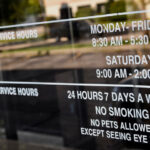
These photos were taken on the evening of August 16 at the Loveland and Symmes post offices. We do not know if any additional boxes were recently removed but is does not appear so. Although the quantity of mailboxes and hours of operation at these locations would not necessarily reflect current delays in mail delivery, we did want to document current conditions in advance of the November 3rd Presidential Election.
Mail boxes at the Symmes Township Post Office at 9370 Fields Ertel Road
Mail boxes at the Loveland Post Office at 200 Loveland Madeira Road
Loveland Post Office at 200 Loveland Madeira Road
Collection times on the mailboxes at the Loveland Post Office at 200 Loveland Madeira Road
Service times at the Symmes Township Post Office at 9370 Fields Ertel Road
Service times at the Loveland Post Office
4 Ohio Republicans join House Dems to pass bill to boost post office funding by $25B
House Speaker Nancy Pelosi said Saturday that mail delays are depriving Americans of timely delivery of medicine, paychecks and other essentials. Photo by Justin Sullivan | Getty Images
WASHINGTON — The U.S. House convened a rare weekend session Saturday in an attempt to stop the U.S. Postal Service from allegedly disrupting mail service to sabotage the November elections.
The Democratic-led chamber passed a bill 257-150 that would infuse $25 billion into the agency as it prepares for a surge in mail-in ballots and bar it from changing operations or service levels in place at the beginning of the year.
The prohibition would remain in effect through January 2021 or for the duration of the coronavirus crisis — whichever is later.
The bill passed largely along party lines, though more than two dozen Republicans joined Democrats in backing the legislation, including four Ohio Republicans: Reps. Troy Balderson (12th District), David Joyce (14th District), Steve Stivers (15th District) and Mike Turner (10th District). Rep. Bob Gibbs (R-7th District) did not vote. No Democrats voted against the bill.
One Republican in favor was Rep. Brian Fitzpatrick of Pennsylvania, who said the post office needed to be funded so his constituents could get their mail delivered on time. “Republicans and Democrats must come together and address the serious challenges that USPS has been facing for some time now,” he said.
Senate Majority Leader Mitch McConnell (R-Ky.) is not expected to take up the measure. He told his hometown paper Tuesday that he doesn’t think a stand-alone bill funding the postal service would pass the chamber.
The White House threatened Friday to veto the post office boost, calling it “an overreaction to sensationalized media reports that have made evidence-free accusations that USPS has undertaken reforms to achieve political rather than operational objectives.”
But House Speaker Nancy Pelosi (D-Calif.) maintains that the administration is trying to suppress votes as the nation heads into a fraught election season in which the postal service will serve as “election central.”
In addition to undermining the integrity of the elections, the delays are depriving Americans of timely delivery of medicine, paychecks and other essentials, Pelosi said at a press conference Saturday.
Democratic lawmakers made similar allegations on the House floor.
The administration has mounted a “sabotage campaign” to manipulate the vote, Rep. Debbie Dingell, a Michigan Democrat, said Saturday morning.
Democratic Rep. Brenda Lawrence of Michigan and a member of the House Oversight and Reform Committee, said the bill would prohibit the postmaster general from making any changes that would undermine the post office. She said the postmaster general has “tried to rip it apart from the inside” and “our democracy is hinging” on delivery of the mail.
“Don’t mess with the USPS,” said Rep. Debbie Wasserman Schultz (D-Fla.).
Republicans charged Democrats with ginning up a manufactured crisis intended to deny the president a second term. House Minority Leader Kevin McCarthy (R-Calif.) said postal problems predate 2020 and the Trump administration.
GOP Rep. Rob Woodall of Georgia called Saturday’s vote a “punctuation mark” at the close of last week’s Democratic National Convention. This “wasteful partisan exercise” will “go nowhere” in the GOP-controlled Senate and “help no one,” he added.
Rep. Debbie Lesko, a Republican from Arizona, echoed the sentiment, calling the controversy “phony political theater.” Pelosi has gone “politically postal,” she said, quoting a recent Wall Street Journaleditorial.
The House approved $25 billion for the postal service in a $3 trillion coronavirus relief package approved in May. Pelosi pointed out Saturday that the USPS board of governors — a bipartisan group of members appointed by Trump — backs the funding.
Trump said last week on Fox News that he opposes some funding because he doesn’t want it used for mail-in votes, repeating his claim that it would lead to “fraudulent” election results.
He said changes to overtime, retail hours and the location of mail processing machines and blue mailboxes were made to save costs and streamline operations but said earlier this week he would suspend some of his moves until after the elections to avoid the appearance of impropriety. He also said he wouldn’t close existing mail processing facilities and would use “standby” resources in October to meet mail surges.
On Friday, he insisted that secure elections are his “sacred duty” and top priority this fall.
But Pelosi on Saturday called DeJoy’s promise into question, pointing to his decision not to replace mail infrastructure that has already been removed. She also pointed to Trump’s comment earlier this week calling for law enforcement officers at polling places.
“It is all designed to suppress the vote,” Pelosi said.
DeJoy is slated to testify again on Monday in a hearing before the Democratic-led House Oversight and Reform Committee, where he is expected to face more withering questioning. Robert Duncan, chair of the U.S. Postal Service Board of Governors, will also appear before the committee.
Allison Stevens is a Washington D.C. reporter for States Newsroom, a network of state-based nonprofit news outlets that includes the Ohio Capital Journal.
Gabby Giffords delivering remarks at the 2020 virtual Democratic National Convention
By Jacob Fischler – The Ohio Capital Journal
Former U.S. Rep. Gabrielle Giffords opened the third night of the Democratic National Convention on Wednesday, recounting her recovery from a gunshot wound to the head and her embrace of activism on gun violence policy.
Giffords, of Arizona, appeared in a pre-taped video that included images of her long, painful rehabilitation from the 2011 assassination attempt. The segment showed her in a hospital bed shortly after the shooting, and then limping, practicing her speech and playing the French horn in the present day.
In her remarks, she said the assault led to her work against gun violence.
“I’ve known the darkest of days, days of pain and uncertain recovery. But confronted by despair, I’ve summoned hope,” she said. “My recovery is a daily fight, but fighting makes me stronger. Words once came easily; today I struggle with speech. But I have not lost my voice.”
In a tweet following her appearance, Giffords’ husband, astronaut and Democratic U.S. Senate candidate Mark Kelly, said it was the longest speech Giffords has given since the attack.
Giffords urged viewers to speak out against gun violence and to vote for Democratic presidential nominee Joe Biden, framing the election as a crossroads where voters could elect to stop gun violence.
The Democratic platform calls for universal background checks, ending online sales of guns and ammunition, banning assault-style weapons and high-capacity magazines and incentivizing states to enact laws that make it easier for law enforcement to temporarily remove guns from people they deem dangerous.
Giffords’ video was preceded by a clip of Biden promising to “never give up this fight” against gun violence.
Shannon Watts, founder of the gun control group Moms Demand Action (Photo Moms Demand Action)
In a statement, Shannon Watts, founder of the gun control group Moms Demand Action, called Giffords “a hero and an inspiration” and said her appearance was evidence that gun control has become a major campaign issue.
The convention’s third night included more appeals to policy than the first two. In addition to the guns segment, speakers addressed climate change and immigration.
Giffords was first elected to Congress in 2006 and retired in 2012 following the assassination attempt in Tucson and became an advocate for tougher gun laws. She founded her own anti-gun group in 2016.
Jacob Fischler is a national correspondent for States Newsroom.
A school funding bill originally sponsored by new Ohio House Speaker Bob Cupp is getting a fresh look and hopefully time in front of legislative committees before year’s end, according the legislator now heading up the bill.
The other original sponsor of the proposed legislation, state Rep. John Patterson, said a substitute bill is in the works that should touch on longstanding concerns the Ohio Supreme Court had about the constitutionality of the state’s education system.
“We’re taking a more balanced approach in the new bill,” Patterson, D-Jefferson, said.
The state’s contribution to education budgets has stagnated over time, while private schools have benefitted from the EdChoice scholarship program, in which some state funding for public school districts has been redirected to religious, charter and community schools.
EdChoice scholarships were frozen at current levels in an omnibus bill responding to the COVID-19 pandemic.
State Rep. John Patterson, D-Jefferson.
Patterson said a substitute version of House Bill 305 seeks to address “overarching criticisms” of the original bill, and the education system itself. One of the major criticisms is the distribution of money in the school funding formula between school districts with varying financial situations.
“Under the current formula, districts are all interconnected, so as one district becomes wealthier, another becomes poorer,” Patterson told the Ohio Capital Journal.
So, in the new plan co-sponsored this time by Rep. Gary Scherer, R-Circleville, the legislators want to reassess the amount that districts are able to raise on their own before they decide what the amount of state aid would be to schools.
The proposed bill would also take the weight solely off of property taxes for school funding, something the 1997 decision by the Ohio Supreme Court in DeRolph v. State of Ohio ruled was a big reason the education system violated the state constitution.
The new plan will combine property and income taxes along with a calculation of a district’s wealth level to “determine a district’s true capacity to raise its fair share,” according to Patterson.
“The question is what is fair for the locals, and what is fair for the state,” Patterson said. “We have fine-tuned for that.”
Ohio House Speaker Bob Cupp (Ohio House Photo)
Disadvantaged students would receive more immediate help than in previous funding models if the new bill is made law. In the original proposal for the bill, aid would have been phased in over time for school districts, but legislators are now looking to channel that aid to districts immediately.
Patterson planned to meet with interested parties — teachers’ unions, public school officials and community school representatives on Tuesday to discuss the plan. One of those parties is the Ohio Federation of Teachers, who said school funding needs a direction that accounts for social and emotional learning as well as test proficiency.
“We’re hopeful that (the sponsors) are moving in the right direction,” said OFT executive director Melissa Cropper. “No school funding formula will be perfect, but having no school funding formula has been a disaster.”
In the next month, simulations of financial situations will be run to test the effectiveness of the bill as it stands, and Patterson hopes the bill will be ready when the Ohio House returns to regular session in September.
After anticipated amendments and passage of the bill, Patterson said implementation of the new formula could take years.
With EdChoice pitting private schools and public schools against each other for funding in the state model, Patterson said concerns were brought from both sides, and his bill plans to address private school issues as well.
“What I’ll say is we have heard their criticism and have addressed their concerns in the substitute bill,” Patterson. “I think they’re going to be pleased.”
The changes made to the bill Cupp once authored have the blessing of the new speaker, according to Patterson.
“Speaker Cupp understands the absolute necessity of passing House Bill 305 in this General Assembly,” Patterson said.
Neither Cupp nor Scherer responded to requests for comment.
Susan Tebben is an award-winning journalist with a decade of experience covering Ohio news, including courts and crime, Appalachian social issues, government, education, diversity and culture. She has worked for The Newark Advocate, The Glasgow Daily Times, The Athens Messenger, and WOUB Public Media. She has also had work featured on National Public Radio.

























 By
By 
