Tag: Ohio Capital Journal

  • CDC issues new detailed strategy for safely reopening K-12 schools

    CDC issues new detailed strategy for safely reopening K-12 schools

    By Ariana Figueroa and Ohio Capital Journal

    Washington, DC – The Centers for Disease Control and Prevention on Friday released updated guidance to provide educators a science-based plan for reopening K-12 schools.

    The agency said it cannot force schools to reopen but can only stress that steps such as wearing masks and physical distancing of at least six feet are key to mitigating the spread of coronavirus.
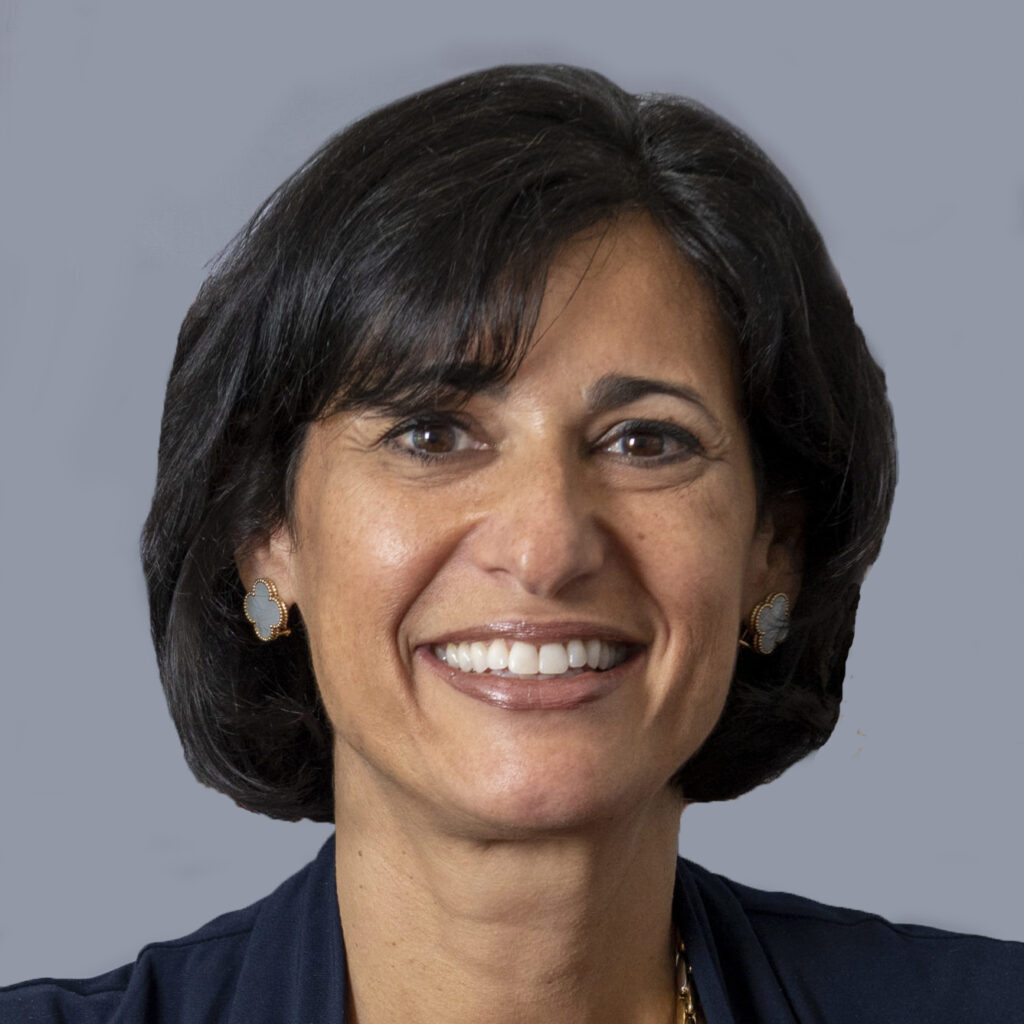
    CDC Director Dr. Rochelle Walensky

    “CDC is not mandating that schools reopen,” CDC Director Dr. Rochelle Walensky said during a briefing with reporters.

    Walensky added that educators should be considered front-line workers in any vaccine rollout. Teachers unions have made similar demands before returning to the classroom.

    “We strongly encourage states to prioritize teachers and other school staff to receive vaccinations,” she said.

    Walensky said that the agency found that in-school learning can take place when proper measures are taken such as mask wearing and social distancing. The agency also said that frequent hand washing, proper cleaning of classroom surfaces and ventilation, along with contact tracing and available rapid testing, are all steps that schools can take to limit outbreaks.
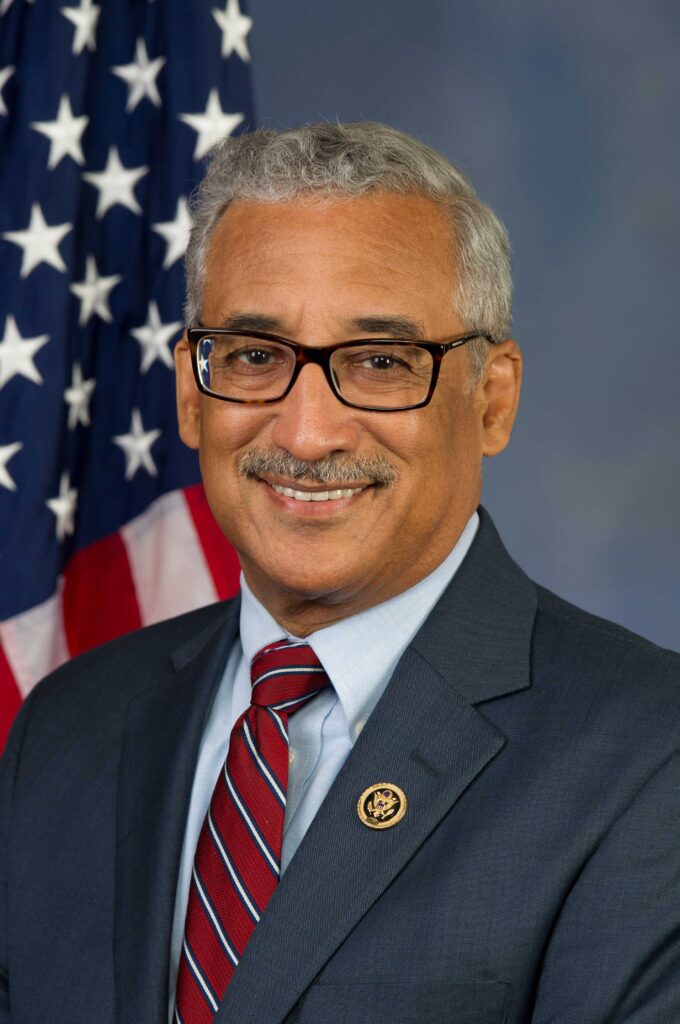
    House Education and Labor Chairman Bobby Scott (D-Va.)

    House Education and Labor Chairman Bobby Scott (D-Va.) said in a statement that in order for schools to implement the CDC guidance, they need funding from the Biden administration’s $1.9 trillion coronavirus relief package. Congress is working to pass the plan and Scott’s committee has included $130 billion for schools to safely reopen.

    “Maintaining physical distancing, updating and repairing ventilation systems, purchasing personal protective equipment, and other important safety measures all cost money that schools do not have,” Scott said. “This is particularly true for schools in low-income areas that lacked adequate funding well before the pandemic.”

    Similarly, the Department of Education released a handbook to coincide with the guidance released by the CDC.

    Walensky said that most COVID-19 clusters that occurred in school settings occurred because there was a breach in wearing a mask.

    The CDC stressed that the safest way for schools to reopen is for there to be a low level of coronavirus infection in the community. The guidance uses a color-coding system to recommend if schools should reopen or continue remote learning.

    Schools are recommended to open if they are in blue areas, which means there are low transmission rates of the virus,  and yellow areas, which means there is moderate transmission.

    If the community is in an orange zone, then the CDC recommends that schools implement a hybrid model or reduce attendance. And a red zone indicates that schools should consider virtual learning for middle and high school students.

    In red zones, elementary schools can continue with a hybrid learning model, the CDC said.

    The recommendations follow President Joe Biden’s efforts to get K-8 students back to in-person learning within his administration’s first 100 days.

    In a statement, Biden acknowledged his ambitious goal of reopening K-8 schools and said those schools will need funding to follow the guidance laid out by the CDC.

    “To meet these guidelines, some schools will need more teachers and support staff to ensure smaller class sizes, more buses and bus drivers to transport our kids safely, more spaces to conduct in-person instruction, and more protective equipment, school cleaning services, and physical alterations to reduce the risk of spread of the virus,” he said.
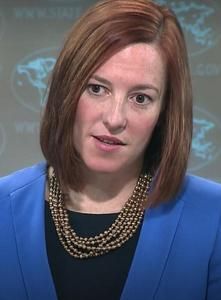
    White House Press Secretary Jen Psaki

    At a Friday briefing, White House Press Secretary Jen Psaki said that Biden’s nominee to lead the Education Department will work to reopen schools. Miguel Cardona, a longtime educator is waiting for a full Senate vote for his confirmation.

    “When Secretary Cardona is confirmed, you know, this will be his top priority and we will leave it to him and his team at the Department of Education, working in close partnership with the CDC and others, to determine how quickly and efficiently” schools can be reopened, Psaki said.

    American Federation of Teachers President Randi Weingarten said in a statement that she felt confident the CDC’s guidance will help schools safely reopen.

    “For the first time since the start of this pandemic, we have a rigorous road map, based on science, that our members can use to fight for a safe reopening,” she said.

  • Judge blasts COVID-19 lawsuit against health department as “incomprehensible”

    Judge blasts COVID-19 lawsuit against health department as “incomprehensible”

    By Jake Zuckerman and Ohio Capital Journal

    A federal judge expressed tremendous skepticism of a lawsuit alleging “absolute tyranny” of the Ohio Department of Health’s response to the COVID-19 pandemic, deeming the plaintiff’s arguments nearly “incomprehensible.”

    U.S. District Judge James G. Carr didn’t rule on ODH’s motion to dismiss the suit, which was filed by a self-described citizens group called Ohio Stands Up.

    However, Carr wrote in an order Tuesday that the plaintiffs didn’t satisfy a basic rule of courtroom procedure requiring them to clearly state what their legal problem is and what they want the court to do about it.

    Carr ordered plaintiffs to show cause for why he shouldn’t dismiss the lawsuit for failing to meet the basic minimum legal standard for a civil complaint.

    He described Ohio Stands Up’s arguments as “a jumble of alleged facts, conclusory and speculative assertions, personal and third-party allegations, opinions, and articles of dubious provenance and admissibility.”

    Ohio Stands Up, Carr wrote, created an “impenetrable thicket of often conclusory and speculative assertions, allegations, contentions, innuendo, and legal arguments and citations.”

    While he did not dismiss the case, he blasted the hundreds of pages of disorganized criticism the plaintiffs leveled against ODH and ordered them to make a case for why the suit shouldn’t be dismissed.

    “It’s simply not my job to try to discern from plaintiffs’ scattered, off-loaded stack of contentions and claims to envision what sort of plausible legal edifice a capable legal architect might erect,” he said.

    The lawsuit itself is rich in conspiracy theory and distortion, baselessly alleging COVID-19, which has killed more than 466,000 Americans since the pandemic started, is no different than the flu, which kills about 35,000 Americans per year.

    It claims the government is disseminating misleading information to fear-monger. The suit claims the true death count of COVID-19 (as of an October filing) is 15,000 — there is no evidence suggesting this is true. It makes similarly apocryphal claims about masks and their efficacy, the origins of COVID-19, and others.

    Earlier reporting from the Ohio Capital Journal identified several ties between Ohio Stands Up and Health Freedom Ohio, an anti-vaccine advocacy group.

    The lawsuit is the first on record for, Tom Renz, lead counsel for Ohio Stands Up. His co-counsel, Robert Gargasz, lost election in November for Lorain County prosecutor after calling for “Marxist anarchists” and “communists” to be shot and “stacked like cordwood.”

    Since filing the ODH suit, Ohio Stands Up has filed another lawsuit against the U.S. Department of Health and Human Services, the CDC, and the National Center for Health Statistics. Renz, Gargasz, and N. Ana Garner, a New Mexico attorney, are representing the group.

    Ohio Stands Up crowdsourced legal funds for its lawsuits. A GoFundMe page lists$120,000 in donations for the suit from 1,600 donors.

    Both Renz and an Ohio Department of Health spokeswoman did not respond to inquiries.

  • ODH to add 4000 COVID-19 deaths that ‘may have been underreported’

    ODH to add 4000 COVID-19 deaths that ‘may have been underreported’

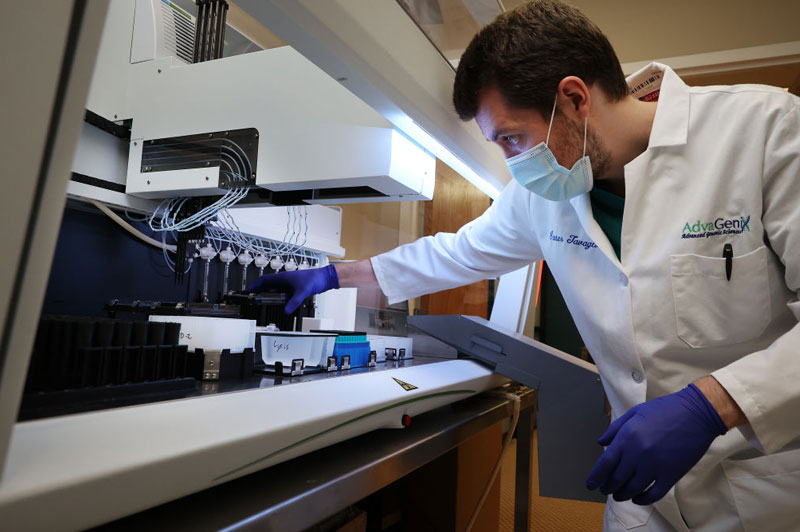
    Lab Technician Carter Tavaglione loads at Janus G3 automated workstation with coronavirus test samples at Advagenix, a molecular diagnostics laboratory, on August 05, 2020 in Rockville, Maryland. Photo by Chip Somodevilla/Getty Images.

    By Jake Zuckerman and Ohio Capital Journal

    As many as 4,000 COVID-19 deaths “may have been underreported” and will be added to the state’s pandemic death toll this week, according to a Wednesday news release from the state health department.

    Under the previous tally from the Ohio Department of Health, 11,856 residents died of COVID-19. The 4,000 unreported deaths will be added later this week.

    “Process issues affecting the reconciliation and reporting of these deaths began in October,” ODH said in a news release. “The largest number of deaths were from November and December.”

    The release contained sparse detail despite the seismic adjustment to the pandemic’s net toll.

    Dan Tierney, a spokesman for Gov. Mike DeWine, said ODH discovered the issue causing the undercounting.

    He said the ‘reconciliation’ issue is between two Ohio databases — one used to track infectious diseases and a separate one for death certificates — but didn’t have details.

    “What the actual error was, I do not have those specifics,” he said.

    The ODH release states the issue was identified by the department “during a routine employee training.”

    ODH spokeswoman Melanie Amato did not respond to questions.

    The news broke as ODH Director Stephanie McCloud was testifying to the House Finance Committee, which is in the process of crafting the state budget. McCloud made no mention of the discrepancy.

    Reached after the hearing, Rep. Allison Russo, D-Columbus, said she wasn’t given any advance warning about the death adjustment.

    She expressed frustration at the lack of a heads-up, especially given the current budget proposal contains a $25 million in public health data infrastructure.

    “She had a perfect opportunity to give us a heads up that this is happening,” Russo said. “This is a 34% increase in our deaths. That’s pretty damn significant.”

    Ohio Auditor of State Keith Faber has been probing ODH’s data processes since the summer. However, he was seeking documentation from people who received “results for [COVID-19] tests the individual did not take,” indicating he was looking for an inflated case count, not a depressed death count.

    ODH’s release states it will continue working with Faber’s office.

    Allie Dumski, a Faber spokeswoman, declined to comment and referred inquiries to ODH.

    “Our audit work on the COVID reporting is ongoing and it is our policy not to discuss until it is completed and released by our office,” she said.

    The Ohio Disease Reporting System, as this outlet has reported, is about two decades old and cannot be queried for information like where Ohioans are becoming infected with COVID-19. This has created a donut hole for policy makers handling time-sensitive decisions like restaurant closures or lockdowns.

    The Indiana state health department last week reported a similar audit identified 1,500 more COVID-19 deaths than it had previously reported.

  • Honoring Black history and fighting for the future of education in Ohio

    Honoring Black history and fighting for the future of education in Ohio

    A Guest Column by Melissa Cropper and Ohio Capital Journal

    On Feb. 1, as Black History Month began in Ohio’s classrooms and virtual classrooms, Gov. Mike DeWine unveiled his proposed budget for the next two years, which continues the education funding policies that systematically underfund public schools that educate Black students and even shift some of that funding away toward unaccountable, for-profit private schools. 

    Black History Month is an important time for our nation’s educators to focus their curriculum around the contributions that African Americans have made in government, industry, art, science, literature, and every field of human endeavor. However, we do a disservice to our students if we don’t also teach about the harder, more painful history of slavery, segregation, disenfranchisement, and racist violence, and if we do not weave it into our everyday curriculum as deeply as it is woven into the fabric of our country.

    Even then, we are not telling the full story if we teach about these topics as relics of the past, as dark chapters of our country’s past that have ended. Racist structures in our society didn’t cease to exist when the Thirteenth, Fourteenth and Fifteenth Amendments were ratified following the Civil War, or after Brown vs. the Board of Education desegregated schools, or after the 1964 Civil Rights Act, or even after Barack Obama’s historic election. 

    Each of those events has been an important step along the way, but as we are reminded all too often, the vestiges of white supremacy live on in our current institutions. We see it in the over-policing and incarceration of Black, brown, and immigrant communities, we see it in our city neighborhoods that were shaped by redlining, and we see it in Ohio’s school funding system. 

    When we teach Black history, educators can make the connections about how the racial injustices of the past have turned into the systemic racial disparities of the present, and how we can demolish the underpinnings of injustice. There is no better place to start than with our broken school funding policies which underfund and segregate schools with large populations of Black students.

    In Ohio, we underfund schools in Black communities with a school funding formula that was found unconstitutional by the Ohio Supreme Court more than 20 years ago because it relied so heavily on local property taxes that it denied an equitable and adequate education to students in low-income areas. 

    We segregate schools in Black communities with voucher and charter policies that divert students and drain funding from local public schools. Often cloaked in the language of racial justice, vouchers and charter schools have the opposite effect when put into practice. The NAACP has often opposed these policies because they “divert much needed funding for public education to private or charter schools, thereby further dismantling the viability of the public education system and limiting the number of children who would be afforded the opportunity of an adequate and effective education.”

    This vicious cycle of underfunding schools in communities of color, and then punishing them for not being able to meet their students’ needs by underfunding them further, must end. We must stop pitting parents and communities against one another, and instead renew our commitment for high quality public schools for all Ohio students. 

    Last year, the Ohio House passed the Fair School Funding Plan with an overwhelming bipartisan majority, yet the Senate refused to take the issue up. The Plan would have put Ohio on a six-year path toward equitable funding of public schools in Ohio, and would have immediately ended punitive and harmful deductions for vouchers and charter schools from local public school funds. 

    This would ensure that public school districts receive money only for the students who are enrolled to attend but without the added penalty of deducting money due to students opting for private or charter schools. These changes would strengthen schools in Ohio’s cities and in our rural areas, giving students from all backgrounds increased opportunities. Despite the Fair School Funding Plan receiving an 84-8 vote in the House, the Ohio Senate allowed the bill to die without even receiving a vote. 

    DeWine had the opportunity to take the hard work and bipartisan agreement for this new school funding formula and insert it as a framework into his budget proposal. Instead, his proposal continues the status quo which is actively undermining our ability to provide an equitable education.  

    As educators, we can not teach Black History without also being activists in our own realm, fighting for an education system that gives every child, no matter their race or where they live, equal access to a high quality, free public education.

  • Scandal-ridden FirstEnergy agrees to give up new upcharge

    Scandal-ridden FirstEnergy agrees to give up new upcharge

    By Marty Schladen and Ohio Capital Journal

    Many FirstEnergy customers weren’t recession-proofed when the coronavirus pandemic hit, but Akron-based FirstEnergy made sure that it was.

    Now, after firing its top management in the wake of a corruption-riddled 2019 law championed by the Akron-based company, FirstEnergy has agreed to stop collecting an upcharge that was part of it, Attorney General Dave Yost said Monday. As it currently stands, the charge is worth about $102 million a year to the company, Yost said.

    “A private company, probably as a matter of morality, shouldn’t be able to guarantee its profits against the marketplace by operation of the law,” Yost said in a virtual press conference.

    Yost last year sued FirstEnergy after federal authorities arrested then-House Speaker Larry Householder and four associates — two of whom later pleaded guilty — in connection with the 2019 passage of House Bill 6. The bill forced all Ohio utility customers to pay more than $1 billion over 10 years to bail out two failing nuclear reactors owned by a former FirstEnergy subsidiary. It also forces ratepayers to pay hundreds of millions propping up two aging, coal-fired power plants — including one that isn’t even in Ohio.

    Prosecutors say FirstEnergy and related groups funneled $61 million through 501(c)(4) “dark money” groups and into an effort to make Householder speaker and to pass and protect the utility bailout. U.S Attorney David DeVillers said it was likely the biggest bribery scandal in Ohio history.

    The bill also contained the mechanism that FirstEnergy agreed to stop collecting from on Monday. 

    In an email, FirstEnergy spokeswoman Jennifer Young said, “FirstEnergy’s Ohio utilities filed an application on Feb. 1 with the Public Utilities Commission of Ohio to end the collection of decoupling revenues permitted by HB 6. This will need to be considered and approved by the PUCO and is the first step toward a partial resolution with the Ohio Attorney General and other parties, subject to court approval. Working to constructively resolve this matter in cooperation with the Ohio Attorney General and other parties is part of decisive actions the board and management are taking to position FirstEnergy for the future and continue to deliver safe, reliable electric service to our customers. FirstEnergy’s leadership is committed to transparency and integrity in every aspect of its business.”

    Even by the standards of arcane utility regulation, “decoupling rider” can make the eyes glaze. But the context in which this one came about might make them pop.

    FirstEnergy’s board last year fired CEO Chuck Jones after an internal investigation found that the company in January 2019 had paid $4 million to a former lobbyist who had just taken a position with the state’s regulator — the Public Utilities Commission of Ohio. That’s when Gov. Mike DeWine appointed Sam Randazzo, a former FirstEnergy lobbyist, to chair the commission.

    Randazzo resigned after federal agents raided his Columbus house in November and DeWine is still looking for a successor. Even though he was supposed to be regulating utilities, emails released in January show that Randazzo played a role in shaping HB 6, the massive energy bill.

    Perhaps not coincidentally, bill’s decoupling rider guaranteed revenue for the company for which Randazzo had previously lobbied and from which Randazzo collected $4 million as he took his seat on the utility commission. 

    The decoupling mechanism was created in 2008 to offset electric company revenue losses due to energy efficiency programs. For example, if an electric company gives away or subsidizes things like LED light bulbs, such a rider would allow the company to recoup revenue it loses from selling less electricity. 

    The kicker with the FirstEnergy decoupling rider is that HB 6 gutted Ohio’s energy efficiency programs at the same time that it all but required the PUCO to approve it. The rider set the high-consumption year of 2018 as the baseline and allowed the company to upcharge its customers to meet that baseline.

    A tracker maintained by the state’s official utility watchdog, the Ohio Consumers’ Counsel, indicates that FirstEnergy has collected $27 million from the rider over the past year.

    “Two million consumers will be paying FirstEnergy about $310,722 per day in 2021, compared to about $51,259 per day in 2020,” consumer counsel spokesman J.P. Blackwood said in a statement issued before Monday’s news. “In other words, every day the legislature delays repealing HB 6, FirstEnergy gets another $310,722 from consumers. What a deal!”

    In a 2019 earnings call, then-First Energy CEO Jones seemed to think it was a good deal. He said the rider made the company “somewhat recession-proof.”

    In a statement issued after his press conference, Yost said the rider was the product of corruption plain and simple.

    “Under its now removed prior leadership, FirstEnergy built a feeding trough that it thought would guarantee it record profits year after year, filled with unearned money out of Ohioans’ pockets,” he said. “This agreement recognizes the corrupt influence used to guarantee a for-profit company above-market returns for years to come by operation of law.”

    Last Wednesday, as he introduced a bill to eliminate the decoupling charge, state Rep. Mark Romanchuk, R-Ontario, noted that it allowed FirstEnergy to lock in nearly $1 billion in annual revenue based on its best earnings in a decade. 

    “This transfers the risk of weather and economic conditions to the ratepayers,” Romanchuk said. “The nation and Ohio are currently experiencing an economic slowdown due to the pandemic. Because the decoupling rider did not account for weaker consumption due to economic conditions, the utility will continue to receive $978 million in distribution revenue at a time when businesses were shut down and families are struggling to make ends meet.”

    A judge has already stopped collection of nuclear bailout funds because of the criminal allegations against Householder and others. But that doesn’t mean FirstEnergy and other Ohio utilities haven’t profited from charges that were later declared to be unlawful.

    There’s no mechanism to recoup the $27 million FirstEnergy has already gotten from the decoupling rider. 

    That’s in addition to more than $1 billion collected from Ohio residents and businesses since 2009 that the state Supreme Court later ruled to be unlawful. Of that, more than $400 million was collected by FirstEnergy that was supposed to upgrade its distribution system but at least some of which was shared with out-of-state utilities.

    Yost said it’s up to the legislature to make well-connected utilities refund money from charges that are declared illegal.

    “It strikes me as fundamentally unjust,” he said. “The law is what it is and we’re stuck with the law until it’s changed.”

  • Poll: Big majority in Ohio support getting rid of the death penalty

    Poll: Big majority in Ohio support getting rid of the death penalty

    By Marty Schladen and Ohio Capital Journal

    Almost 60% of Ohioans support replacing the death penalty with life in prison without the possibility of parole, according to a poll conducted late last year and released on Thursday by the American Civil Liberties Union of Ohio and the advocacy group Ohioans to Stop Executions.

    In addition, a majority supports a full repeal, including 69% of Democrats and 53% of Republicans, according to the online poll of 600 registered voters conducted between Sept. 29 and Oct. 1 by the Tarrance Group, a firm with a B/C rating from FiveThirtyEight.com.

    The numbers represent a big swing in Ohio attitudes toward the death penalty. A Quinnipiac University poll indicated that in 2014, 68% of Ohioans supported the punishment.

    Ohio has had a rough go with executions since then.

    The same year, Dennis McGuire gasped, choked and struggled on his gurney for about 10 minutes before succumbing at the Southern Ohio Correctional Facility. The incident resulted in a years-long moratorium, but after executions were restarted, a federal judge ruled that the state’s execution method was tantamount to cruel and unusual punishment.

    That prompted incoming Gov. Mike Dewine to delay executions in January 2019.

    Then press accounts alerted drug makers that their products had ended up in the death chamber despite written warnings against the practice. Threats to stop supplying the state with drugs for any purpose prompted DeWine to delay all subsequent executions and say that lethal injection no longer appears to be viable in Ohio.

    The poll released Thursday might indicate that he won’t pay much of a political price for his actions.

    Jocelyn Rosnick

    “This poll in Ohio confirms what we’ve been hearing across the state — which is that voters oppose the death penalty,” Jocelyn Rosnick, Policy Director for the ACLU of Ohio, said in a statement. “Whether it’s due to racial disparity, fiscal or innocence concerns, people all across the state and across the aisle believe that it’s time for Ohio to cut ties with the death penalty. Ohio won’t be the first state to pass a full repeal, and we shouldn’t be the last.” 

    The death penalty everywhere in the United States has long been criticized for being disproportionately applied to people of color. The statement accompanying the poll noted that while people of color make up just 15% of Ohio’s population, they make up 56% of inmates on death row.

    That disparity might be reflected in the poll results.

    While 58% of white people surveyed said they supported replacing the death penalty with life in prison without possibility of parole, those rates rose to 64% for Blacks and 68% for Hispanics.

    The survey’s results and other recent events point to an obvious conclusion, said Hannah Kubbins, executive director of Ohioans to Stop Executions.

    “The momentum to repeal the death penalty is at an all-time high,” she said in a statement. “Just last month, Ohio lawmakers passed a bill that exempts individuals with a serious mental illness from receiving a death sentence. This development has sparked more conversations about how Ohio can build a more equitable criminal legal system. Furthermore, we know the death penalty is not an effective response to violence, and that it won’t prevent future violence or heal past violence.” 

  • Untitled post 64629

    by  Tyler Buchanan and Ohio Capital Journal

    David DeVillers, the U.S. Attorney whose office has led the prosecution of former Ohio House Speaker Larry Householder, will soon be replaced, Sen. Sherrod Brown confirmed on Thursday.

    DeVillers was appointed to the position by President Donald Trump and confirmed by a Republican-led U.S. Senate in 2019. Brown told reporters that both U.S. Attorney positions in Ohio would be replaced with Democrats regaining control of the White House and U.S. Senate.

    The U.S. Attorney for the Northern District of Ohio already resigned earlier this month. DeVillers will be staying on until a successor is appointed and confirmed, according to Brown’s office. 

    While it is common for presidents to replace federal attorneys upon taking office, some had called for the Biden administration to keep DeVillers in his post. 

    “Every president is entitled to, with Senate approval, his own team of federal prosecutors,” wrote Mark Weaver, a former deputy attorney general of Ohio, in a Columbus Dispatch guest column last month. “However, as Ohioans know, DeVillers is leading an aggressive and much-needed effort to stem the tide of pernicious public corruption that shatters faith in government.”

    Brown has issued a call for applicants to the U.S. Attorney position, with the web page stating he “will be working to recommend candidates to the Biden Administration.”

    DeVillers became the face of the Householder prosecution when he appeared at a press conference to announce racketeering charges against the speaker and four of his political operatives. The five were arrested July 21 as part of an alleged $61 million bribery scheme to get a $1.3 billion nuclear bailout bill enacted in 2019, which DeVillers described as being “likely the largest bribery and money-laundering scheme ever in the state of Ohio.”

    Two of those charged have since pleaded guilty, while the others (including Householder) have pleaded not guilty and await trial. 

    More recently, DeVillers pledged justice would be served against anyone from the Southern District of Ohio who committed crimes during the attempted U.S. Capitol insurrection:

  • Despite brawls, no OSHP arrests at clashing protests at Ohio Statehouse last Wednesday

    Despite brawls, no OSHP arrests at clashing protests at Ohio Statehouse last Wednesday

    By Jake Zuckerman and Ohio Capital Journal

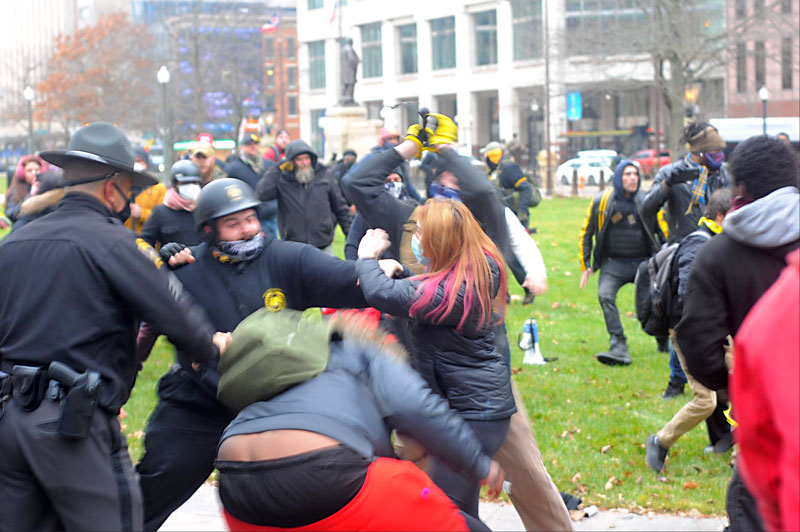
    A pugilistic day of political demonstrations that included two brawls between far-right demonstrators insisting the presidential election was stolen and Black Lives Matter activists ended with no arrests last Wednesday.

    At least two rounds of fisticuffed rumbles with an array of participants broke out at different points through the afternoon along with some more minor spats.

    The Proud Boys, a radical conservative group with white nationalist ties known for violent confrontations with liberal demonstrators, tussled with BLM activists after hours of vitriolic name calling and antagonizing between the two.

    Conservative activist Judi Phelps, a pistol holstered to her leg, yells into a microphone. (Photo by Jake Zuckerman)

    Among the Proud Boys and those alongside them, firearms were everywhere. People were carrying assault style rifles, shotguns and pistols. None were seen used or brandished. One man carried a telescoping baton.

    At least two people standing with BLM activists carried pistols, and one man carried a baseball bat, none of which were seen in use during the fights.

    Photo by Jake Zuckerman

    Members of the Ohio State Highway Patrol, which protects the Capitol building and campus, intervened at times to break up the physical altercations and try to keep the two groups separate or at least in peace.

    OSHP Staff Lt. Craig Cvetan said Thursday the primary function of the officers on the scene were to make sure everybody stays safe, not necessarily make arrests.

    “As you make arrests and try to start apprehending individuals, that takes away those trooper’s ability to separate those groups,” he said.

    He said the officers are well aware of the arsenal of weapons around the protest.

    “Ohio is an open-carry state,” he said. “Certainly, we prefer for people not to have weapons on the Statehouse grounds. It makes it easier for us.”

    The first rumble broke out around 12:40 p.m. It was captured in video via a Statehouse News Bureau reporter.

    The Columbus Police Department assisted in breaking up the fights. Repeated calls to the department seeking information on arrests or lack thereof were sent to a Public Information Officer who did not answer calls and could not accept voicemails.

    A separate fight with at least about 10 people engaged broke out on the Capitol lawn at roughly 3 p.m. OSHP officers broke things up and separated the two groups.

    A man with a holstered pistol engages in a heated argument with a Columbus Police officer after the second brawl. (Photo by Jake Zuckerman)

    Shortly thereafter, the Proud Boys groups left on buses, after which the situation quickly calmed down.

    Meanwhile, in Washington D.C., a mob of insurrectionists were in the process of invading the U.S. Capitol and wreaking havoc inside. One woman was reportedly shot, and three more died due to unspecified medical emergencies.

    Gov. Mike DeWine briefly mentioned the protests at the Ohio Capitol speaking to reporters Thursday. He acknowledged there’s no guarantee that Ohio’s statehouse is safe from a similar invasion. He made no mention of either the fights or the firearms that were present through the event.

  • How Trump could quickly be removed from office using the 25th Amendment

    How Trump could quickly be removed from office using the 25th Amendment

    By Laura Olson and Ohio Capital Journal

    A rapidly rising number of federal lawmakers are calling for President Donald Trump to be removed from office, either through a process outlined in the 25th Amendment or through impeachment.

    Democratic Ohio U.S. Sen. Sherrod Brown Thursday called for invocation of the 25th Amendment to hold the president accountable for Wednesday’s riots.

    “The cabinet and vice president should immediately invoke the 25th Amendment to remove him from office, to prevent him from doing more damage between now and Inauguration Day,” Brown said in a statement.

    The Democratic leaders of the U.S. House and Senate gave their support to calls for his removal that began Wednesday, after Trump incited the crowd of supporters that swiftly became a violent, destructive mob that ransacked the Capitol.

    House Speaker Nancy Pelosi on Thursday condemned Trump as having “committed an unspeakable assault on our nation,” and said that if the vice president and Cabinet officials do not seek to remove Trump, that Congress may begin another impeachment process.

    “That is the overwhelming sentiment of my caucus,” Pelosi said, calling it an “emergency of the highest magnitude.”

    Amid those mounting pressures for his removal, Trump released a video Thursday, finally acknowledging that “a new administration” will begin later this month and that he would focus on “ensuring a smooth, orderly, and seamless transition of power.”

    He did not acknowledge any responsibility for the riot, and told his supporters: “Our incredible journey is only just beginning.”

    Trump’s tenure is set to end in a matter of days, when President-elect Joe Biden is sworn in on Jan. 20. It’s not clear if House Democrats would be able to act before then to carry out articles of impeachment, but in theory, invoking the 25th Amendment could be done quickly.

    Seventeen Democrats on the House Judiciary Committee signed a letter urging Vice President Mike Pence to invoke the 25th Amendment. That group included Reps. Jamie Raskin of Maryland; Steve Cohen of Tennessee; Ted Deutch of Florida; Joe Neguse of Colorado; Mary Gay Scanlon and Madeleine Dean of Pennsylvania; Greg Stanton of Arizona; Cori Bush of Missouri; and Hank Johnson and Lucy McBath of Georgia.

    Here’s more on what the 25th Amendment says, and when it has been used before:

    Why was the 25th Amendment added?

    The 25th Amendment to the U.S. Constitution was approved in 1967, in the wake of President John F. Kennedy’s assassination. It was intended to clarify succession procedures in the event that the president dies, is removed from office, or is “unable to discharge the powers and duties of his office.”

    What exactly does the amendment say?

    It makes clear that the vice president becomes president if the president dies, resigns or is removed from office, and that a new vice president must be nominated.

    There’s also a section on temporarily transferring presidential authority to the vice president, intended for scenarios like the president undergoing anesthesia for surgery.

    A final section provides for transferring presidential power if the president is unable to fulfill his constitutional role but he or she cannot or will not step aside. That provision requires approval from the vice president and a majority of either the Cabinet or another body that Congress may designate. Congress has never created such a commission, though Raskin introduced legislation to do so.

    The number of Cabinet officials who could be involved in such a discussion shrunk by one Thursday, when Transportation Secretary Elaine Chao — who is married to Senate Majority Leader Mitch McConnell (R-Ky.) — resigned.

    When has the 25th Amendment been used? 

    President Ronald Reagan invoked it once, and President George W. Bush did twice when the men underwent medical procedures. They transferred authority to their vice presidents for a matter of hours, according to the National Constitution Center.

    What about impeachment?

    Trump already was impeached by the House in December 2019 on charges of abusing his power and obstructing Congress. The Senate acquitted him of those charges in February 2020.

    That process is legally complex and typically unfolds over a matter of weeks or months. And Pelosi declined on Thursday to offer a timeline on what comes next. If Trump were to be impeached and found guilty, it would prevent him from being eligible for public office in the future.

    Who has signed on to the efforts to remove Trump from office?

    A tally from CNN shows more than 30 congressional Democrats in support of removing Trump through the 25th Amendment or impeachment.

    Some Republicans have joined. U.S. Rep. Adam Kinzinger, (R-Ill.), has called for Trump’s removal. Maryland Gov. Larry Hogan, another Republican, told reporters Thursday that the country “would be better off” if Trump resigned or was removed.

    Even the president of the National Association of Manufacturers has urged Pence to invoke the 25th Amendment.

    Biden declined to address calls to invoke the 25th Amendment on Thursday, instead blaming the president for inciting a mob, and labeling the rioters as “domestic terrorists.”

  • Investigation of $460M in FirstEnergy charges back on, but why was it stopped in the first place?

    Investigation of $460M in FirstEnergy charges back on, but why was it stopped in the first place?

    By Marty Schladen and Ohio Capital Journal

    The Public Utility Commission of Ohio has restarted an audit of $465 million that Akron-based FirstEnergy collected from ratepayers in 2017 and 2018, supposedly to modernize the utility grid.

    The state’s official watchdog, the Office of the Ohio Consumers’ Counsel, wants to know whether any of the money was used in a $61 million bribery scandal. That affair so far has resulted in a $1.3 billion nuclear bailout, the indictment of then-House Speaker Larry Householder and the guilty pleas of two of his associates.

    But why the audit was called off in the first place also raises serious questions.

    Leading the commission in voting to shut down the audit was Chairman Sam Randazzo. He resigned in November after FirstEnergy disclosed that it paid $4 million to someone just before he started regulating the utility in early 2019. Gov. Mike DeWine later said that Randazzo received the payment, but DeWine said he was unaware of it when he appointed the former FirstEnergy lobbyist to chair the PUCO.

    For its part, FirstEnergy fired its CEO, Chuck Jones, when news of the payment came to light.

    The Randazzo-led utility commission’s timing in stopping the audit might seem strange. It came just after the Ohio Supreme Court ruled in January 2020 that the charge FirstEnergy had been collecting was unlawful — seemingly a time when a regulator would want to know more about what happened with the funds.

    A big reason why the court struck down the distribution-modernization charge: Despite allowing FirstEnergy to collect almost a half-billion extra dollars from ratepayers, the PUCO didn’t implement effective rules to ensure that FirstEnergy used the money to update the utility grid.

    “Utility companies can be expected to respond to financial motivations, but not if the commission awards them money up front with no meaningful conditions attached,” the decision said. “The PUCO staff’s wishful thinking cannot take the place of real requirements, restrictions, or conditions imposed by the commission for the use of (distribution-modernization) funds.”

    Not only did the PUCO call off the audit just as the charge was declared illegal, it did so as the auditors were making some interesting findings.

    For example, it found that instead of using all the funds to improve its Ohio distribution system, FirstEnergy was placing some in a “Regulated Utility Money Pool,” from which out-of-state utilities could borrow.

    To justify ending the audit — for which PUCO staff wanted more time — Randazzo and the other commissioners claimed that’s what the Supreme Court wanted.

    “The court directed the commission to eliminate” the distribution-modernization charge, the PUCO wrote in its dismissal. “In support of this ruling, the court specifically objected to the usefulness of the proposed final review, questioning the lack of an effective remedy resulting from such review.”

    However a reading of the Supreme Court’s opinion doesn’t mention any “specific objection” to the audit.

    The relevant passage says that the auditors final report wouldn’t be available until after FirstEnergy had collected and spent the money.

    “Thus, it is not clear what remedy would be available should the commission (or this court on appeal) find that FirstEnergy has misused DMR funds,” the ruling said.

    One reason there’s no remedy, the court noted, is because when it allowed FirstEnergy to jack up its rates, the PUCO didn’t create any mechanism to refund the money to ratepayers if the charge is later declared unlawful or if it is shown the  money was misused.

    “FirstEnergy has been recovering (distribution-modernization) revenue since January 1, 2017, and the commission did not make the (revenue) subject to refund if FirstEnergy does not meet the required conditions,” the court wrote.

    The $465 million FirstEnergy collected from the upcharge isn’t the only such money collected — and kept — by Ohio utilities. The consumer’s counsel reports that since 2009, $1.5 billion has been collected from Ohio ratepayers in upcharges that were later struck down by the courts. 

    As with the FirstEnergy charge, the PUCO didn’t create a mechanism to force other utilities to pay back the extra money they got back, either. 

    FirstEnergy objected to reopening that audit, but wouldn’t comment further Monday. 

    “Due to the ongoing PUCO audits, FirstEnergy is unable to provide additional information at this time,” spokeswoman Jennifer Young said in an email.

    In a filing, the consumers’ counsel slammed the company’s objections.

    “In an unfortunate display of corporate arrogance, the FirstEnergy Utilities are opposing an investigation by their state regulator, the PUCO, into utility consumer protection issues surrounding what has been described by a prosecutor as ‘likely the largest bribery scheme ever perpetrated against the state of Ohio,’” it said. “The PUCO has the authority under Ohio law to investigate the FirstEnergy Utilities and their owner, FirstEnergy Corp. FirstEnergy should get out of the PUCO’s way and cooperate.”