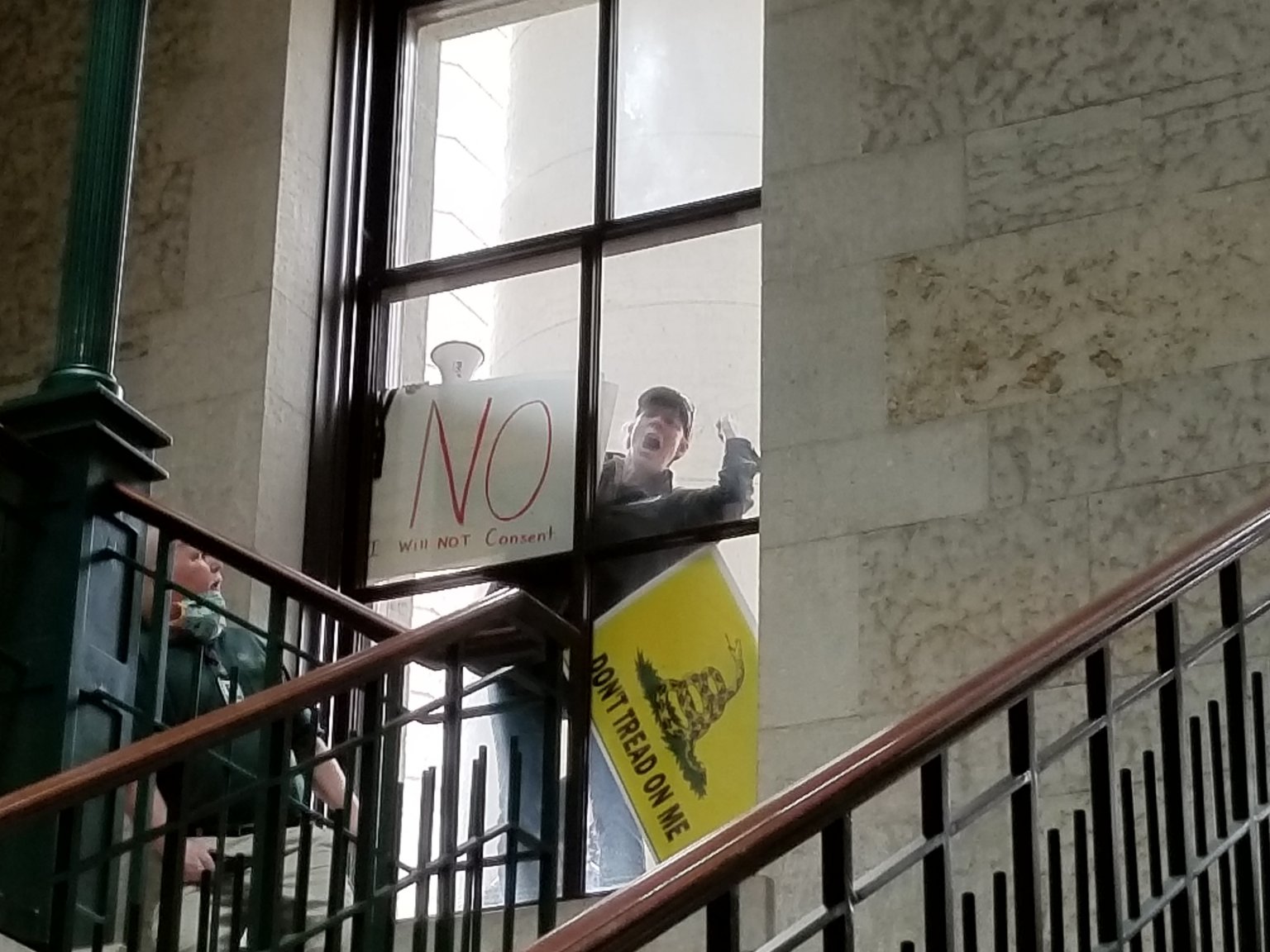
A man protesting Ohio’s health orders at the state Capitol on May 1. Gov. Mike DeWine later repealed most of them only to start reimposing orders on Tuesday as coronavirus cases continued to surge. Capital Journal photo by Marty Schladen
Ohioans were living with the coronavirus for about two months before GOP lawmakers initiated what would be a nearly yearlong effort to squash the state health department’s ability to issue public health orders.
The earliest version of the idea was to limit any order issued by the Ohio Department of Health to a two-week window. After that, a small panel of lawmakers would need to approve the order for it to stay in effect any further.
“We are clearly on the downside of the curve, there is no longer a risk of overwhelming the health care system,” said now-former Rep. John Becker to the House State and Local Government Committee, setting one of the first legislative attacks on the health department in motion via Senate Bill 1.
“I’m not sure there ever was, but that argument did make sense to me initially.”
A review of emails obtained by public records requests, committee hearings, interviews and contemporaneous media reports highlight just how absent public health was from efforts to wrest power from the health department during a pandemic.
In several instances, abortion politics, coronavirus infections among lawmakers, and overly rosy assessments of the pandemic from Republican leaders played a larger role in the legislation than the coronavirus itself.
SB 1 died an unusual death last May when every state Senator — even the bill’s sponsors — voted it down. Its supporters gave varying explanations from the Senate floor. They said it didn’t have an emergency clause, meaning it wouldn’t take effect for 90 days; and it was clumsily drafted.
Then-Senate President Senate President Larry Obhof, one of the most powerful Republicans in the state, later told constituents that Senators killed the bill, in part, because it could have expanded women’s access to abortion.
“A prominent Right to Life organization pointed out that the language, as written, could allow lawsuits challenging health orders that regulate or close abortion clinics,” he said in an email obtained in a public records request.
“Thus, the language could have been used to protect abortion clinics.”
The concern came from a letter the Greater Columbus Right to Life sent to lawmakers. Ohio Right to Life, which operates independently of the Columbus organization, disagreed, according to its director, Michael Gonidakis. However, he tried to stay out of it.
“We had no desire to be involved in that debate,” he said in a recent interview.
A year ago Wednesday, the coronavirus pandemic officially started in Ohio when the decision was made to cancel The Arnold sports festival.
On Thursday, Gov. Mike DeWine gave a primetime address to tell Ohioans that a return to normal is in sight — so long as they don’t become complacent.
“No marathoner pulls out on purpose at the 25th mile marker,” DeWine said.
The governor made some news during the speech. He announced that he would lift all remaining health orders once the number of coronavirus cases drops to 50 per 100,000 Ohioans.
That might seem distant, with Wednesday’s rate standing at 179 per 100,000. But DeWine noted that the rate has been falling rapidly, from 445 on Feb. 23 and 731 on Dec. 3.
“Ohio is on the right path to get us to 50,” DeWine said.
However, such drops can’t be counted on to continue. Federal health officials reported this week that daily numbers appear to be hitting a plateau at levels that might seem low after the past several months, but were perceived as quite high last summer.
Also concerning is that at least six worrisome variants of the virus are struggling to gain a foothold. Some are more transmissible, others more lethal and still others less susceptible to the three vaccines that have been approved in the United States.
DeWine’s unusual primetime speech was to mark the one-year anniversary of Ohio’s fight against the disease.
“None of us then fully understood the battle ahead,” he said. “This has been a tough year. Many of you have lost a parent. grandparent, sibling, spouse. Some of you have even lost a child. Some of you have lost your job. Some of you have lost your business.”
It also was to announce the metrics by which he’ll decide to lift remaining health orders.
But it also seemed a repudiation of two other Republican governors’ announcements in recent days that they were lifting all of their orders — including ones requiring mask wearing in indoor public spaces. Texas Gov. Greg Abbott and Mississippi Gov. Tate Reeves both made such announcements on Tuesday, prompting widespread condemnation from public health experts and from President Joe Biden.
Anthony Fauci, the leading communicable disease expert in the country, said the daily number of new cases needs to be one-sixth of what it is now before ending mask mandates should be considered.
DeWine didn’t mention other states, but he made it clear that Ohio’s mask mandate would remain in place for the time being. As he touted the rapidly growing number of vaccines coming into Ohio, he said, “We have one battle-tested tool that has worked so well and that is the mask.”
The governor also appealed to Ohioans’ community spirit — a spirit that critics have said is lacking in Abbott and Reeves’ approach to the pandemic.
“It’s been a difficult year,” DeWine said. “But we did what Ohioans always do. We rallied together. We sacrificed. We showed the world our Ohio grit. Our communities have come together.”
Washington, DC – The U.S. Senate passed President Joe Biden’s nearly $2 trillion stimulus plan Saturday afternoon after wrangling over an amendment to trim unemployment benefits derailed the bill’s passage for nearly an entire day.
Ohio Democratic U.S. Sen. Sherrod Brown supported the bill while Ohio Republican U.S. Sen. Rob Portman voted against it.
The Senate version, which does not include a federal minimum wage hike and puts limits on the funding for state and local governments, will now make its way to the House for review. Democrats are rushing to pass the relief package so it reaches the president’s desk before the March 14 deadline for unemployment benefits expire, in order to give states plenty of time to avoid missing those payments.
No Republicans voted for the House bill last week. The bill passed the Senate along party lines, 50-49. A tie-breaking vote from Vice President Kamala Harris was not needed because Sen. Dan Sullivan (R-Alaska) had to leave the Capitol after a family emergency.
“This bill will deliver more help to more people than anything the federal government has done in decades,” Senate Majority Leader Sen. Charles Schumer said in a statement on passage of the bill.
House Majority Leader Rep. Steny Hoyer (D-Md.) said in a statement that the House would take up the bill on Tuesday.
The Senate version of the relief package earmarks $10 billion of the $350 billion in aid to state, local governments, territories and tribes to go toward a state’s infrastructure projects such as improving broadband access. The Senate also set restrictions on how the money can be used, saying cities and states can’t use it to pay down pension costs or pay for new attempts to cut taxes.
The bill would provide $130 billion toward helping schools reopen, $14 billion for vaccine distribution and billions more for childcare through a temporary expansion of the child tax credit. The bill also includes a narrower eligibility for individual stimulus checks of $1,400, where individuals making $80,000 and joint tax filers at $160,000 would be phased out.
The Senate version provides for $300 weekly unemployment benefits — lower than the $400 a week in the House bill — through Sept. 6. It also makes the first $10,200 of unemployment insurance nontaxable for households with incomes under $150,000.
It was the unemployment benefits package that stalled the Senate on Friday. More than 400 amendments were introduced to the Senate version of the bill, but as lawmakers were preparing to vote on the first — Sen. Bernie Sanders’ (I-Vt.) proposal to increase the federal minimum wage — Sen. Joe Manchin (D-WVa.) raised objections to an unemployment amendment.
Sen. Tom Carper (D- Del.) had offered an amendment that kept federal unemployment benefits at the current $300 a week but extended the benefits through October, and made the first $10,200 nontaxable.
A competing amendment from Sen. Rob Portman (R-Ohio) also kept benefits to $300 a week, but also cut off the extension in mid-July.
Both sides were attempting to win over Manchin, a moderate Democrat and a crucial swing vote in the 50-50 Senate.
Democrats struck a deal with Manchin after a nine-hour impasse, and passed the amendment 50-49 around 1:30 a.m. Saturday.
“The President has made it clear we will have enough vaccines for every American by the end of May and I am confident the economic recovery will follow,” Manchin said in a statement.
“The President supports the compromise agreement, and is grateful to all the Senators who worked so hard to reach this outcome,” White House Press Secretary Jen Psaki said in a statement after the deal. “It extends supplemental unemployment benefit into September, and helps the vast majority of unemployment insurance recipients avoid unanticipated tax bills.”
Sen. Ben Cardin (D-Md.) told reporters on Capitol Hill Friday that it was unclear what the House will do.
“Will the House take it? I don’t have the answer to that,” he said.
Progressives in the House are already expressing disappointment that the Senate reduced unemployment benefits and stripped out a raise of the federal minimum wage.
“I’m frankly disgusted with some of my colleagues and question whether I can support this bill,” Rep. Bonnie Watson Coleman (D-N.J.) wrote in a tweet.
Sanders’ amendment to increase the federal minimum wage to $15 an hour over a five-year period was defeated 42 to 58. The House included the wage hike in its version even after the Senate parliamentarian ruled that including the provision violated procedural rules, which are being used to approve the stimulus package with a simple majority of 51 votes instead of the 60 typically required by the Senate filibuster.
The current federal minimum wage is $7.25 an hour, for an annual salary of about $15,000, and has not been raised since 2007.
“The result of that is half of our people are now living paycheck to paycheck and many in fact are working for wages that are much too low in order to take care of their families,” Sanders said.
Experts and researchers predict that a gradual increase in the federal minimum wage to $15 an hour would help lift nearly a million people out of poverty and benefit low-income workers across the country, particularly in the South.
Debate over the relief package was also delayed on Thursday by Sen. Ron Johnson (R-Wisc.) who required Senate clerks to read aloud the 628-page bill — a procedure that senators typically waive. Senate clerks started reading the bill Thursday at 3:20 p.m. and finished early Friday morning at 2:04 a.m.
Johnson told reporters on Capitol Hill Thursday that he planned to have members of his party submit hundreds of amendments to prevent Democrats from rushing to pass the bill in the hopes of wearing them down in order to trim the $1.9 trillion package.
“All I’m trying to do is make a more deliberative process on this abusive and obscene amount of money,” he said Thursday.
GOP Senators filed more than 400 amendments. Of those amendments, only three were adopted into the bill. Democrats introduced eight amendments, of which five were passed.
It cost the state of Ohio more than $1 million to send hundreds of troops to the Ohio Statehouse last month to protect against acts of political violence.
All told, taxpayers spent millions of dollars to pay for enhanced security in Columbus and Washington, D.C. following the Jan. 6 events at the U.S. Capitol.
After the deadly insurrection at the nation’s capital, DeWine mobilized around 1,000 troops to D.C. to help with security for President Joe Biden’s inauguration. DeWine also authorized 480 troops to be stationed at the Ohio Statehouse during planned protests on inauguration week.
Military vehicles were placed around the Ohio Statehouse in mid-January. Photo by Jake Zuckerman.
The Ohio State Highway Patrol, normally in charge of protecting the Statehouse grounds, also ramped up security last month.
The cost of stationing troops in Columbus, as approved by the Ohio Controlling Board on Monday, was $1,035,000. Most of this amount ($695,000) went to payroll, with the remainder spent on food, travel costs and other supplies.
The deployment of Ohio troops in D.C. cost more than $2.1 million, but this is paid for by the federal government, according to Stephanie Beougher, the public information officer for the Ohio National Guard.
Public officials had worried about the potential for violence as online extremists turned their attention from the U.S. Capitol to the 50 state capitals. The Ohio Statehouse and other government buildings in downtown Columbus were closed for four days.
Protesters caused more than $150,000 in damage at the Statehouse last May and more than $1 million in damage to nearby businesses and offices. In response, the governor deployed Ohio National Guard troops to Columbus and Cleveland at an eventual cost of $3.2 million.
A Republican state senator recently proposed a bill to install security cameras at the Statehouse and increase the penalties for arson and vandalism.
More than 500,000 Americans have died from COVID-19, but that’s not scaring Catherine Stein.
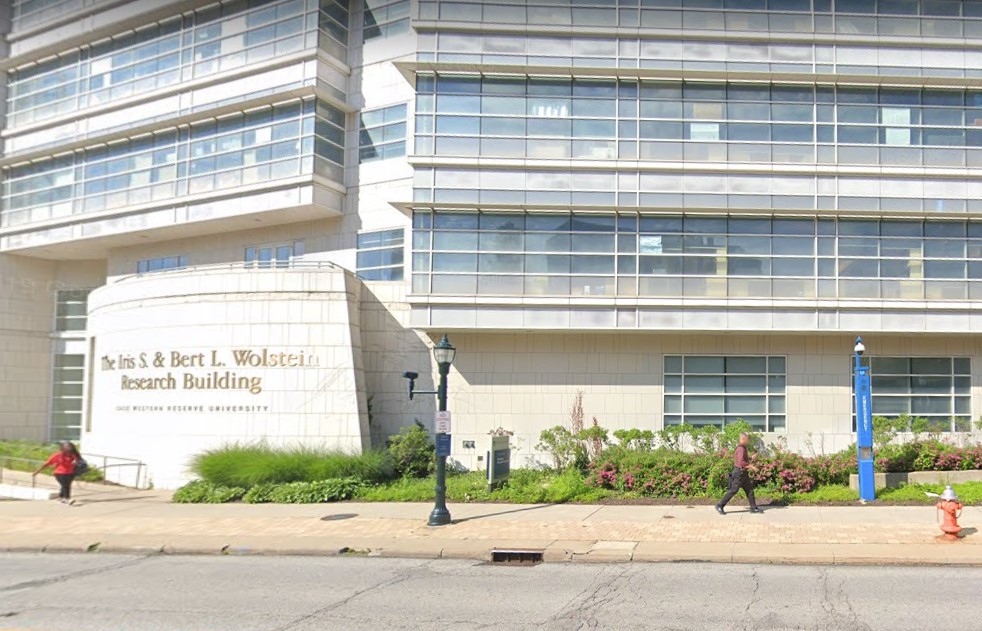
As the pandemic’s death toll rises and the scientific consensus has crystalized regarding how COVID-19 spreads and how to prevent it, Stein, who teaches infectious disease epidemiology at Case Western Reserve University, remains defiant.
COVID-19, she wrote in January 2021, is “not the scary killer the media and government portray it to be.”
The Centers for Disease Control and Prevention, the World Health Organization, the American Medical Association, state health departments, and the rest have it all wrong, according to Stein.
On blogs, research posts published by anti-vaccine political groups, and in testimony to state lawmakers, Stein insists that COVID-19 simply isn’t that bad.
She claims that the Ohio Department of Health pads its case counts; the Ohio Hospital Association inflates hospitalization numbers it provides to ODH; health officials fear monger via flawed projection models; the death count only looks bad because of the rate of people dying of COVID-19 who have preexisting medical conditions; and other assertions downplaying COVID-19.
Catherine Stein. Source: Case Western Reserve University
ODH’s COVID-19 dashboard — which provides daily updates on cases, hospitalizations, infections, vaccinations, testing and more — has been “inaccurate, inconsistent, and confusing,” Stein alleged to lawmakers in June.
Stein’s take on COVID-19, among the leading killer of Ohioans since its emergence, is unmistakably at odds with the greater public health community, nearly all of whom oppose various legislative attacks on the health department that Stein lends her expertise to support.
Case Western Reserve University, where Stein has worked since 2004, emphasized she does not speak on behalf of the university. A spokesman declined to provide any professor from the school of medicine or public health to back Stein’s remarks up.
She is currently conducting research funded by the National Institute of Allergy and Infectious Diseases, the National Institute of Health, and the Gates Foundation, according to the university.
She teaches introduction to epidemiology, infectious disease epidemiology, and other courses.
Her role as a COVID-19 skeptic raises key questions: Where does academic freedom end and counter-factualism begin? Who is an expert and who isn’t?
What do you do with health misinformation during a pandemic in a society that cherishes and protects the freedom of speech?
When lawmakers advanced legislation last year to give themselves the ability to strike down health orders, the Ohio State Medical Association, the Ohio Hospital Association, the state chapter of the American Academy of Pediatrics, an association representing Ohio’s health commissioners, and more all testified in opposition to the idea.
They argued it would politicize public health and allow lawmakers — many of whom refuse to wear masks and regularly downplay the severity of the pandemic — to strike down key public health tools like mask mandates or bar and restaurant capacity limits.
Conversely, Stein emailed several lawmakers to submit testimony in support of the bill. She argued that masks don’t work; the “emphasis on case counts is inappropriate;” and that “this continued focus on fear and likely inflated numbers is doing nothing but hurting families;” and cites research from Health Freedom Ohio, an anti-vaccine group that has refocused its advocacy on COVID-19 issues.
“I refuse to live in fear of a virus with a >99% survival rate,” she wrote in an email to lawmakers, obtained via public records request.
“This fear narrative must stop.”
Email from Catherine Stein to lawmakers, obtained via public records request.
The emails are from a personal account, though they list her as an associate professor at Case Western.
Stein broke from the medical experts and testified in support of different versions of legislation written to allow lawmakers to vote down public health orders. She spoke in support of the bills alongside affiliates of HFO and the Ohio Advocates for Medical Freedom, another anti-vaccine group that has similarly refocused on COVID-19.
In a January 2021 blog post published by All In Ohio, an online hotbed of anti-mask and anti-public health activism and organizing, Stein invoked a piece of misinformation that public health officials have combatted since the coronavirus was first detected — that it’s just the flu.
“People get sick, but these statistics very much resemble influenza,” Stein said. “There have been years with even higher influenza hospitalization rates, even exceeding hospital capacity, but those didn’t get media attention or invoke shutdowns of businesses and church closures.”
The comparison between COVID-19 and the flu is baseless. The CDC estimates that between 12,000 and 61,000 Americans die of the flu in a given year. The U.S. is nearing 500,000 COVID-19 deaths since the pandemic began.
Similarly, no statewide public health order closed churches in Ohio, though many churches chose to do so internally.
About 954,000 Ohioans have been diagnosed with COVID-19. Nearly 50,000 have been hospitalized with the disease. Nearly 17,000 have died.
COVID-19 data comes from public and private labs, hospitals, health departments, urgent care centers and governments across the globe. More than 110 million people worldwide have contracted COVID-19, 2.44 million of whom have died, according to data from Johns Hopkins University.
Historically, epidemiological data on pandemics are usually underestimated, not overestimated. Thus, the CDC tracks “excess deaths” — the rate of mortality above an estimated normal rate of death in a population — to gauge pandemics’ death tolls. Undiagnosed cases, provider issues, data submission issues and more can all warp official counts of cases and deaths.
Stein’s outlook on COVID-19 is on the fringe of the public health community, according to Angy El-Khatib, president of the Ohio Society for Public Health Education.
“You can debate methods of dealing with the issue at hand, but to deny there is an issue at hand is just negligence to me,” she said.
Beyond fighting a wily new virus and its emerging mutations, El-Khatib said, health care workers now also must combat a deluge of COVID-19 misinformation as it proliferates online. She said it’s sad to hear a public health professional is worsening things.
“There’s no denying that the misinformation is out there, and it’s affecting and delaying our response to the pandemic,” she said.
Dr. Cathy Slemp, a former state health officer and bureau of infectious disease director in West Virginia, reviewed Stein’s testimony and writings. She said they seem to reflect her political opinions.
Dr. Cathy Slemp (LinkedIn photo)
“I’d be concerned about both many of the data interpretations made and the website materials cited,” she said. “Few have been nor would they stand up to scientific peer review.”
The university distanced itself from Stein’s comments.
“The views Associate Professor Stein expressed regarding Senate Bill 311 neither reflect nor align with those of Case Western Reserve,” said William Lubinger, a Case spokesman, in a written statement.
William Lubinger, a Western Reserve University spokesman (University photo)
He said all university faculty are free to express their personal perspective as individuals.
However, the university requires students on campus to wear masks, while Stein peddles bunk claims that masks could “adversely affect the health of the mask wearer.”
Stein did not respond to multiple interview requests.
When she reached out in May 2020 to Sen. Kristina Roegner, who sponsored Senate Bill 311, Stein was a familiar name. She testified in support of the “heartbeat bill” Roegner sponsored in 2019, which bans abortions six weeks after gestation.
“I’m not sure you realized this, but my actual career is as an infectious disease epidemiologist,” she wrote.
“I believe the response to COVID-19 has been absolutely wrong at the state level and I will happily testify in favor of your bill.”
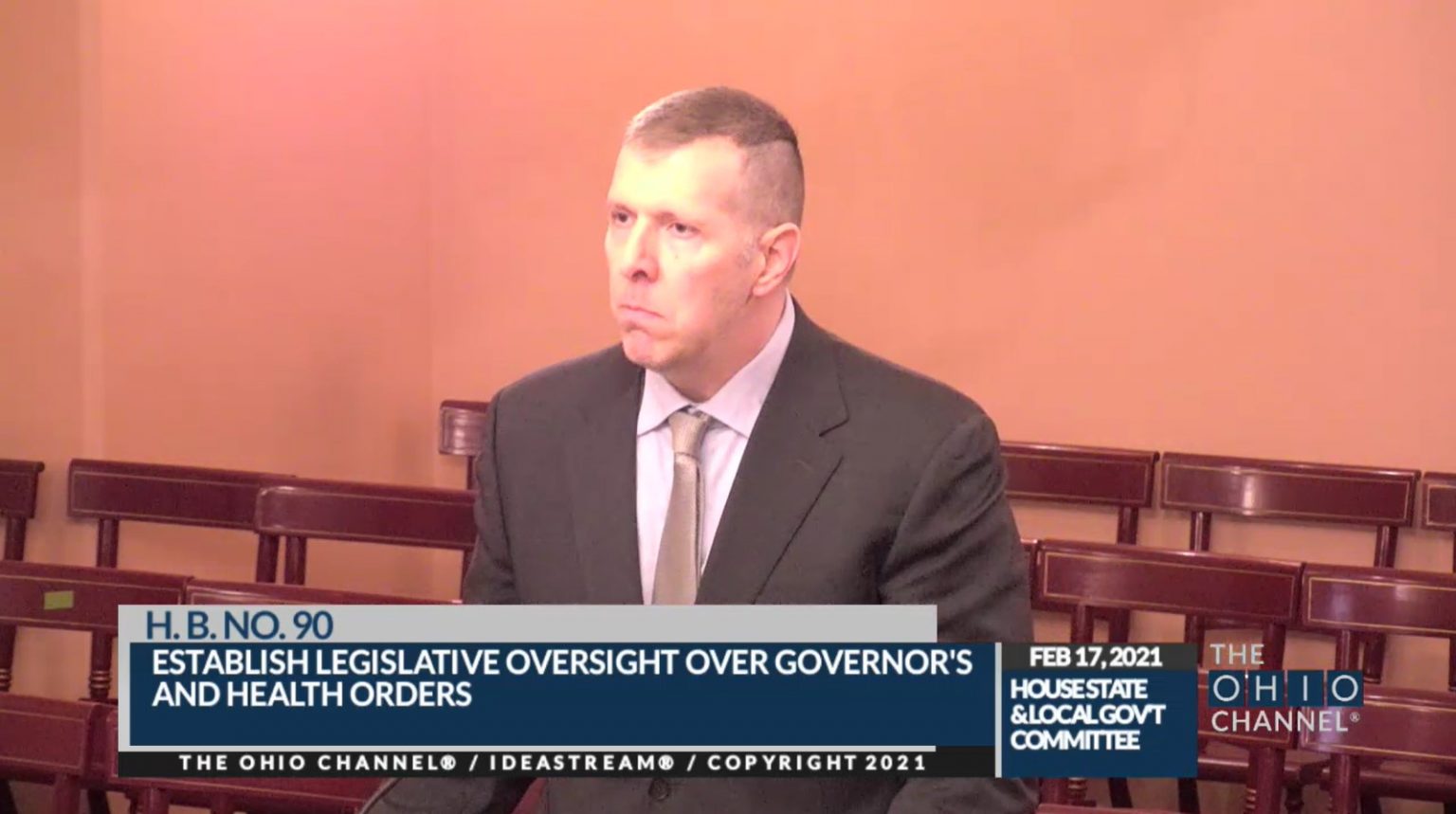
Columbus, Ohio – The opening testimony Wednesday in support of a legislative effort to allow lawmakers to vote down public health orders went far enough off the rails for YouTube to remove footage of the speaker.
The Ohio Advocates for Medical Freedom, an anti-vaccine activism group aligned with Renz, posted to YouTube footage of Renz’s 35-minute, oftentimes rambling testimony to the House State and Local Government Committee.
The video was soon taken down for violating YouTube’s terms of service.
“We have clear Community Guidelines that govern what videos may stay on YouTube, which we enforce consistently, regardless of speaker,” said Ivy Choi, a spokeswoman for Google, which owns YouTube.
The policy states videos cannot spread medical misinformation that contradicts local health authorities’ or the World Health Organization’s medical information about COVID-19.
In his testimony, Renz baselessly claimed no Ohioans under the age of 19 have died of COVID-19. Data from the Ohio Department of Health shows 10 children in the age group have died of the disease during the pandemic.
Similarly, Renz said children can neither contract nor spread COVID-19. He even claimed the CDC says this as well, which is untrue. CDC guidance states children can contract and spread the coronavirus.
While it’s unclear which specific COVID-19 misinformation from Renz sparked YouTube’s decision, there’s a lot to choose from.
Renz’s testimony was a firehose of COVID-19 conspiracy theorizing: He said unspecified entities “provide funding for people to find a COVID-19 death;” the ODH “whitewashes” its coronavirus data; that PCR testing, which public health officials consider to be a premier diagnostic, is “garbage” or “absolutely useless.”
He claimed the lockdown orders of the spring to be “the most drastic curtailment of rights ever taken in American history.” The statement was made without acknowledgement to the enslavement of Black Americans, the mass detention of Japanese Americans to internment camps during World War II, the forced relocation of Native Americans, or any number of national atrocities through American history.
While YouTube removed the footage, Ohio Republican lawmakers praised Renz for the testimony.
Footage of the hearing is still publicly available on the Ohio Channel, and OAMF has since re-uploaded it to Rumble, which has looser content guidelines.
The lawsuit against ODH was Renz first filing in federal court after passing the bar on his fifth attempt, according to records from the Ohio Supreme Court.
His “about me” page for his website claims lists no prior legal experience besides serving as a clerk on the Indian Supreme Court. However, in a prior interview, he said he did not remember when he served on the court and said he did not speak Hindi.
Renz declined to answer questions about his testimony.”
“This should not be right and left and we should not be fighting over facts,” Renz told lawmakers. “The question I would ask to the people who are saying that I’m incorrect or lying, is who are you working for and how much are you getting paid? Because inevitably, I’m finding they typically are working for someone or getting paid somewhere.”
A billion-dollar nuclear subsidy was the subject of an intense fight in 2019 and great controversy since. But the president of the Ohio Senate this week predicted that a repeal will make it through the House, Senate and that Gov. Mike DeWine will sign it.
The reason: The company that owns the nuclear reactors no longer wants the money, he said. And that raises serious questions about whether the subsidies were needed in the first place.
The subsidy was the product of House Bill 6. The legislation was passed in 2019 after a nasty fight which led to federal criminal charges against then-House Speaker Larry Householder, four associates and a dark-money group.
Prosecutors said $61 million from Akron-based First Energy and associated groups was used in the corrupt effort to pass the bailout. Two of Householder’s associates and the dark money group have pleaded guilty, FirstEnergy’s CEO was fired and Gov. Mike DeWine’s appointee to chair the Public Utility Commission of Ohio has resigned as part of the scandal.
Despite intense calls for a full repeal of HB 6, it remains in place — although a Franklin County Judge has temporarily stopped collection of the money by the owner of the nuclear plants, FirstEnergy successor Energy Harbor.
DeWine and others have said they want a repeal, but they want to continue to subsidize the Northern Ohio nuclear plants for environmental reasons.
“We were for nuclear power,” he said Tuesday, referring to his initial support for HB 6. “Nuclear power was the only way in this state, today, that we can have very much non-carbon production. It’s the only way we can do it.”
But early this month, Sens. Jerry C. Cirino, R-Kirtland, and Michael Rulli, R-Salem, introduced legislation, Senate Bill 44, to get rid of the subsidies. On Wednesday it received a hearing by the Senate Energy and Public Utilities Committee.
Despite the governor’s statements, Senate President Matt Huffman, R-Lima, said he expects the repeal legislation to become law.
“I think that provision will likely get passed out of the Senate and I think it will pass out of the House and get signed by the governor,” Huffman told the governing board of the Ohio Consumers’ Counsel, the state’s official utility watchdog. “When I say the House and the governor, I’m not speaking for them, nor have I spoken to them about this. But if a large company that got a subsidy in a dubious way… says ‘We don’t want it,’ that seems to me to be a pretty easy call.”
Energy Harbor, the owner of the plants, didn’t respond to requests for comment on Wednesday. But Huffman was apparently referring to a December 2019 ruling by the Federal Energy Regulatory Commission and Energy Harbor’s response to it.
The ruling said, in essence, that the company that would become Energy Harbor would have to cut its prices if it was going to sell its subsidized nuclear energy onto the massive grid that serves all or part of 13 states, including Ohio.
It would “threaten the competitiveness” of the long-term, or “capacity,” marketplace if companies like Energy Harbor could sell subsidized power on the same basis as power that wasn’t subsidized. So Energy Harbor and the others have to discount it according to a formula, the ruling said.
Recent developments appear to be a sharp reversal from 2019.
As proponents pushed HB 6, they threatened that closure of the Ohio nuclear plants was imminent if they didn’t get a bailout — and quickly. But Huffman’s statements on Tuesday indicate that Energy Harbor has no plans to shutter the plants even now that it isn’t getting the money.
“I don’t want the nuclear power plants to close,” he said. “However, it’s been made clear to me that the plants will not close if this subsidy is removed. In fact, they’re better off because of machinations at another level. In fact, these subsidies will likely harm these power plants.”
There’s other evidence that Energy Harbor’s pre-bankruptcy predecessor, FirstEnergy Solutions, might not have been as broke as it claimed in 2019.
Shortly after emerging from bankruptcy in early 2020, it did an $800 million stock buyback. Such buybacks typically raise stock values, in this case enriching shareholders just months after pleading poverty and winning a $1 billion bailout from Ohio ratepayers.
The federal ruling also raises questions about whether it was wise even to start the bailout fight, which has caused so much damage in Ohio. On June 29, 2018, more than a year before DeWine signed HB 6 into law, FERC issued a ruling strongly foreshadowing what it later did: effectively erase the subsidies bailout supporters had gained if they wanted to sell power into the long-term market.
An epidemiology investigator resigned last week and the head of the Bureau of Infectious Diseases was reassigned after the state health department discovered it undercounted Ohio’s COVID-19 death toll by about 34%.
Karthik Kondapally resigned from the Ohio Department of Health, said Arundi Venkayya, the department’s chief communications officer, in an email last Friday.
Likewise, Sietske de Fijter, the former chief of the Bureau of Infectious Diseases, has been reassigned to an unspecified position in the Bureau of Health Improvement and Wellness. She will also no longer serve as chief epidemiologist.
She will be replaced at the bureau by Kristen Dickerson, who previously served as the manager for statewide health, wellness and special programs at the Bureau of Workers’ Compensation.
Venkayya did not respond when asked whether the changes were made in connection with ODH’s announcement last week that a human error reconciling two mortality data sets led to the omission of about 4,000 deaths from COVID-19.
She did not directly answer who will take over as the state epidemiologist.
“These changes are very recent and we are working through the process,” Venkayya said.
ODH Director Stephanie McCloud, herself a recent transplant from the Bureau of Workers’ Compensation, briefed reporters on the death discrepancy Thursday.
The Ohio State Auditor’s months-long investigation into the state health department’s COVID-19 data practices failed to detect the 4,000 newly discovered COVID-19 deaths announced by the Ohio Department of Health last week.
Auditor Keith Faber’s staff have declined to fully explain how they missed the deaths — which sprung Ohio’s death toll from about 12,000 to 16,000 — or what specifically auditors are investigating.
Both ODH and Faber’s auditors alike missed a broad swath of pandemic mortality as Ohio, like every other U.S. state, looked for an appropriate policy response for an infectious disease that principally spreads through person-to-person interaction.
The health department said it first identified a death data problem Feb. 2 before identifying and announcing the finding Feb. 10. Faber’s staff learned about the 4,000 newly discovered deaths that day.
Faber spokeswoman Allie Dumski claimed last week that the federal Health Insurance Portability and Accountability Act prevented auditors from accessing one of the two databases ODH uses to track COVID-19 deaths.
She later clarified ODH denied “full access” to the database — the Ohio Disease Reporting System (ODRS). She said auditors “would not have been able to identify this miscount” without full access to the database, i.e. the identities of COVID-19 cases.
“As part of our audit, we requested full access to the ODRS database and ODH refused that, citing HIPAA and additional conditions of confidentiality related to the data set,” she said.
ODH Communications Director Arundi Venkayya said the health department cooperated in full with state auditors.
“ODH provided full access to the ODRS database in the form of a CSV file that was downloaded to ODH computers prior to the Auditor’s onsite visit,” she said.
Faber’s staff, according to Venkayya, relayed to ODH that this format would be acceptable.
Upon request, Venkayya also shared emails from state auditors who were seemingly pleased with the data ODH shared.
“We have had very good cooperation in completing the data analysis component of the audit and, if we’ve not already finished, we were working on finishing up the death certificate examination,” wrote Betsy Bashore, a Faber staffer, in a Jan. 11 email about the audit.
“As part of our audit process, we typically meet with our client agency to discuss findings to date. We had delayed this with the transition but really would like to get one scheduled as soon as possible. These usually involve leadership and department heads, particularly those people we have interacted with over the past 4 months.”
Faber did not respond to repeated interview requests over the last week.
Dumski, responding to the ODH emails, said auditors received anonymized data to protect individual identities. This would have prevented auditors from reconciling ODRS data with death certificate data to uncover the uncounted deaths, she said.
ODH posts the ODRS data — stitched together from reports from labs, health departments, hospitals and care providers — on its website. It also regularly reconciles it with death certificate data, which is more accurate but less timely than the disease database.
As the death surge took off, cases started getting missed by this lone employee who failed to notify his superiors, McCloud said.
The precise nature of Faber’s audit remains shrouded in mystery.
He announced the probe in July, stating auditors would “examine case numbers of COVID-19.” Confirming the accuracy of the data, he said, will provide “valuable feedback to key policy makers and increased confidence for all Ohioans on how to best mitigate the spread and impact of this virus.”
The news came amid rumors, amplified by conservatives in media and politics, that health departments were inflating COVID-19 data for political gain. The Ohio House went as far as to pass a “Truth in COVID-19 Statistics” bill. No evidence has been presented to suggest ODH’s data is somehow fraudulent.
An online survey on the auditor’s website fielded documentation that would indicate an overcount of COVID-19 infections, as opposed to an undercount of deaths. The survey sought respondents who received “test results that were later reversed” or “results for tests the individual did not take.”
His office denied a public records request for survey data and supporting documentation. However, a spokeswoman said if there were any “alarming” findings, auditors would work with ODH to address the issue immediately for the benefit of public health.
The survey closed Jan. 23. The audit is slated for release in March.
But now that the second 501(c)(4) dark-money group, Generation Now, has pleaded guilty to being at the heart of one of the biggest bribery and money laundering scandals in Ohio history, Gov. Mike DeWine is refusing to discuss what one of his top aides was told when he formed the first dark money group, Partners for Progress.
Generation Now pleaded guilty earlier this month to being the major conduit of money between Akron-based FirstEnergy and related organizations and the effort to pass House Bill 6, a $1.3 billion bailout that mostly went to two nuclear plants FirstEnergy started spinning off in 2016. DeWine signed the bill into law in 2019.
Last summer, federal authorities arrested then-Speaker Larry Householder and four associates as part of the scandal and two of the associates later pleaded guilty.
As he announced the arrests, U.S. Attorney David DeVillers stressed that the dark money made the massive scandal possible.
“I don’t see how (the conspiracy) could possibly have happened” without it, DeVillers said.
The feds haven’t accused DeWine’s aide, Legislative Affairs Director Dan McCarthy of wrongdoing, but they refer to his dark-money group in an affidavit supporting Householder’s arrest as “Energy Pass-Through.”
Among the activities Generation Now pleaded guilty to was engaging in transactions “designed to conceal the nature, source, ownership and control of the payments” from FirstEnergy and associated companies.
But DeWine and McCarthy don’t want to discuss whether McCarthy intended to obscure that FirstEnergy was bankrolling an effort to prop up nuclear plants it was spinning off.
Asked last week about the matter, DeWine Press Secretary Dan Tierney pointed to a statement McCarthy issued last summer when The Cincinnati Enquirer first reported that he’d started a dark money group that helped fund the HB 6 effort.
In it, McCarthy explained that in addition to his lobby work for FirstEnergy, he had also worked with people who had adversarial relationships with Householder and one of his indicted associates, Neil Clark, so “any insinuation I was involved in this disgusting scheme is without merit.”
But he didn’t explain why he founded Partners for Progress two days after the founding of Generation Now, or why a week later his dark money group got $5 million from FirstEnergy and within a month it was forwarding some of that money to Generation Now.
In early 2019, McCarthy stopped lobbying for FirstEnergy and resigned as president of Partners in Progress to become DeWine’s legislative affairs director. The following October, while McCarthy was advocating for HB 6 in that capacity, FirstEnergy and associates wired $20 million to McCarthy’s former money group and it forwarded $10 million of that to Generation Now the same month, the federal affidavit said.
Despite these and other revelations about DeWine appointees, DeWine on Tuesday declined to give a more complete explanation of what McCarthy believed he was doing when he started Partners for Progress and began funneling money into a now-guilty dark money group.
“As far as I know, Dan McCarthy has been well-respected for many, many years, long before he started working for me as our legislative director and I have faith in his integrity,” DeWine said.