Tag: Ohio constitution

  • Ohio’s pro-abortion rights groups plan fights against total abortion ban bill

    Ohio’s pro-abortion rights groups plan fights against total abortion ban bill

    By:  Ohio Capital Journal

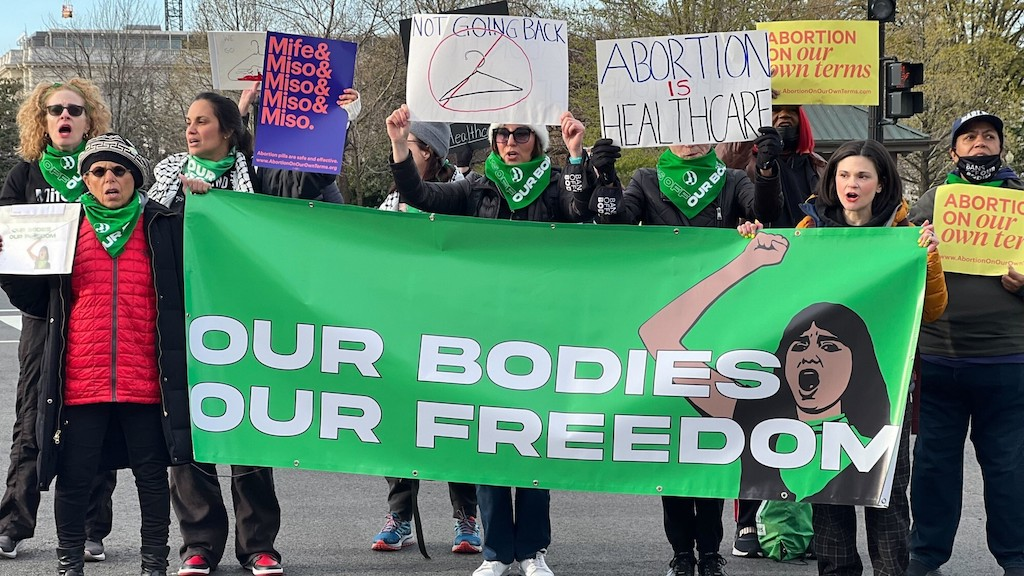
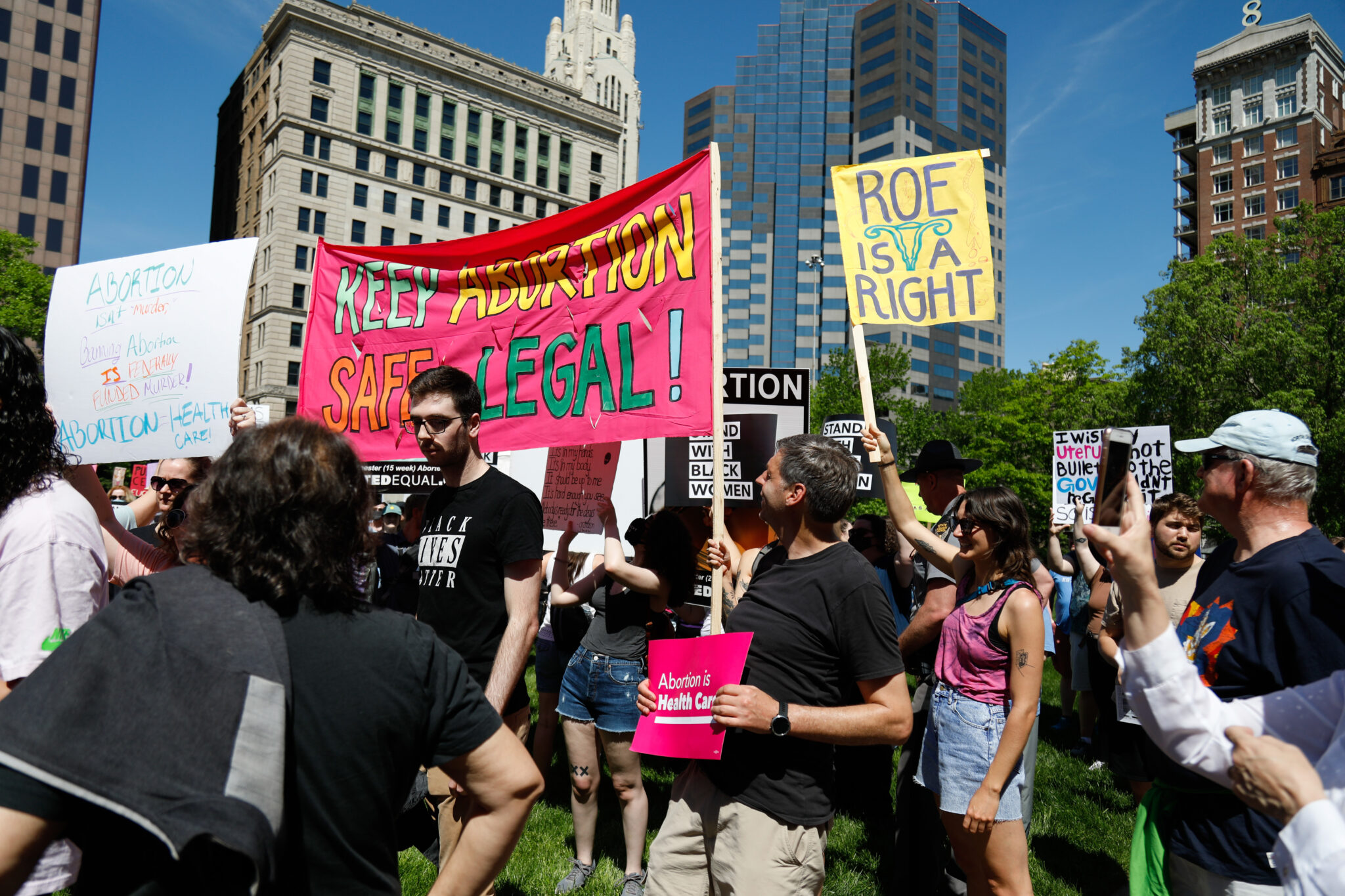
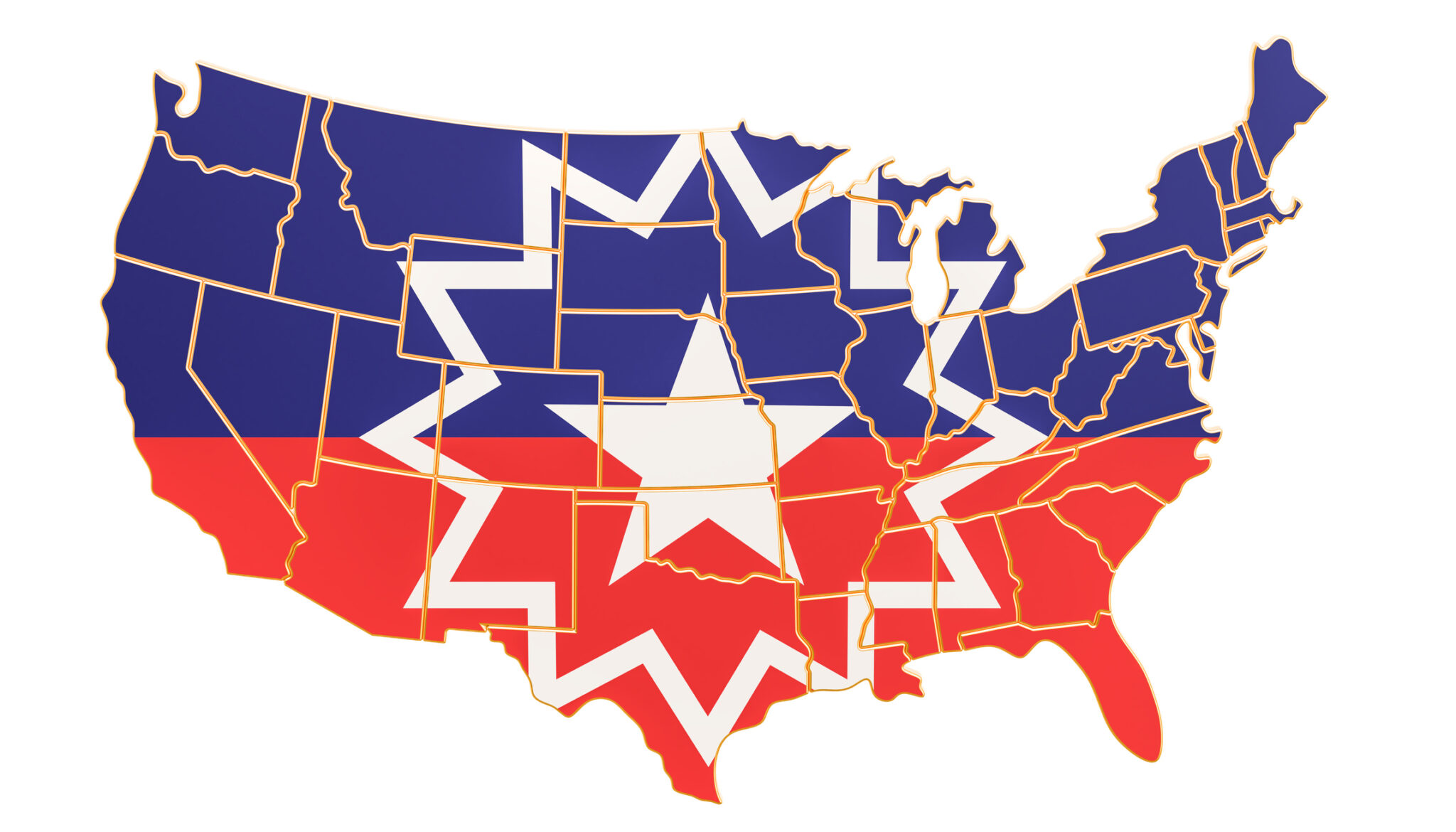
    Pro-abortion rights advocates are taking a proposed total abortion ban in Ohio to heart. Noting the celebration of Juneteenth and Black emancipation, they say the use of the 14th Amendment to try to exert state control over individual freedom and bodily autonomy is vile.

    The new bill a pair of freshman Republican House lawmakers are planning to introduce would ban abortion and criminalize it, along with in-vitro fertilization and certain types of contraception. The measure’s filing was first reported by WEWS.

    The bill is meant as a direct challenge to the state reproductive rights amendment passed by 57% of Ohio voters in 2023.

    Bill supporters say the current constitutional amendment that enshrined reproductive rights into the Ohio Constitution “should be treated as null and void” because, they claim, it violates the equal protection clause of the 14th Amendment “by denying pre-born persons the right to life.”

    The 14th Amendment of the U.S. Constitution protects citizenship and due process, along with equal protection under the law.

    “In appealing to the 14th Amendment, the Ohio Prenatal Equal Protection Act appeals to a higher law; the U.S. Constitution,” the anti-abortion group End Abortion Ohio, who is leading the charge on the bill, said in a statement.

    Austin Biegel, a member of End Abortion Ohio, argued that yes, the bill would go against the majority public opinion of Ohioans, but he justified it by arguing that slavery was once also supported and legal in the U.S.

    Lexi Dotson-Dufault, executive director of the resource and referral service Abortion Fund Ohio, called the use of the 14th Amendment as part of an abortion ban bill “vile.”

    “A bill that bans abortion while citing the 14th Amendment misuses a civil rights protection to justify state control over our marginalized community members, especially Black people,” Dotson-Dufault said.

    A report from the National Partnership for Women & Families in May of last year found that state abortion bans “exacerbate the existing Black maternal mortality crisis,” and “threaten” 7 million Black women nationwide.

    The study found that mothers who can’t access abortion care see negative impacts to their “economic security and development of their existing children.”

    ‘Canary in the coal mine’

    Dotson-Dufault and Ohio Women’s Alliance Deputy Director Jordyn Close believe Republican legislators are emboldened to attempt anti-abortion measures in part because of a Missouri Supreme Court ruling that reinstated a “de facto abortion ban” in May, lifting an injunction that had blocked abortion restrictions.

     Lexi Dotson-Dufault, executive director of Abortion Fund Ohio. Photo courtesy of Lexi Doston-Dufault. 

    The decision came months after that state also approved an amendment to its constitution that protected reproductive rights.

    The pro-abortion rights advocates see no legal standing for the new abortion ban bill, but they also see abortion rights as “the canary in the coal mine when it comes to … rights being stripped away from people.”

    “I don’t think that this bill has any legs to stand on, but I do think that it’s very important to highlight just how gross it is that they would even try it,” Close said. “Because if it’s not this bill, it will be another one introduced in the next session … it just continues because they do not respect Ohioans.”

    Ohio’s constitutional amendment, passed in 2023, protects abortion and other types of reproductive health like fertility treatments and miscarriage care, but more than 30 other regulations still sit on the books in Ohio law.

    Those statutes would have to be undone one by one, even though state courts have blocked some of the laws, as well as a six-week abortion ban that was on the books before Roe v. Wade was overturned by the U.S. Supreme Court.

    But Republicans in the state legislature are also trying to double-down on such regulations.

    State Reps. Mike Odioso and Josh Williams have already filed House Bill 347, a bill which targets informed consent, requiring that 24 hours before an abortion doctors provide not only “medically accurate information that a reasonable patient would consider material to the decision of whether to undergo the elective abortion” — which abortion providers have said they are already required to do — but also “alternatives to abortion, including adoption and parenting.”

    H.B. 347 also puts into law medically controversial and unproven language that “it may be possible to reverse the effects of the abortion-inducing drug” if a medication abortion is taking place.

    This isn’t the first time Ohio lawmakers have attempted to include this language in state law.

    The bill also requires a physician to notify the pregnant person, except in the case of rape or incest, “that the unborn child’s father has a child support obligation, even if the father has offered to pay for the elective abortion.”

    According to a recent midyear analysis from the Guttmacher Institute, 13 states have total abortion bans on the books, with another 28 that have bans between six weeks of gestation and “viability.”

    Ohio’s constitutional amendment places abortion legality at viability, as determined by an individual’s physician.

    The institute’s report also said the first half of 2025 has given rise to anti-abortion state lawmakers who “have continued to push the envelope toward pregnancy criminalization, restrictions on bodily autonomy and laws that recognize fetal and embryonic personhood,” while also reducing funding for resources like sex education.

     Jordyn Close, deputy director of Ohio Women’s Alliance. (Photo by Graham Stokes for Ohio Capital Journal. Republish photo only with original article.) 

    The state-level action comes as the Trump administration spent its first few months in office revoking Biden-era executive orders on abortion, including patient privacy protections, and rolling back guidance on access to emergency abortion care under the federal Emergency Medical Treatment and Labor Act.

    President Donald Trump also pardoned nearly two dozen people convicted under a federal law that bans threats, physical obstruction or force at the entrances to reproductive health clinics.

    The language of that federal law for which Trump issued pardons also bars interference, injury or intimidation for any exercise of First Amendment religious freedom, including at places of worship.

    Efforts to slash federal funding have also touched reproductive health, with cuts to Title X, which funds “family planning” grants and other reproductive health services for low-income individuals, including many services in Ohio.

    Pro-abortion rights groups have already started their fight against the total abortion ban bill with a demonstration on Wednesday that interrupted an anti-abortion gathering in the Statehouse.

    They want to spend more time not only raising their voices in the halls of the legislature, but also educating the voters going into 2026 elections.

    “Even though we had a moment of victory in 2023, the fight is far from over,” Close said. “We have to look toward the next electoral (cycle) to protect our courts, because inevitably when we have these showdowns in the state legislature, the courts is where everything ends up.”

    A spokesperson for Oho House Speaker Matt Huffman said Huffman’s focus remains on the state operating budget until its July 1 deadline, and had no other information on the bill’s introduction or timeline.

    A request for comment from Senate President Rob McColley on whether he would consider such a bill went unanswered on Wednesday.

    Back in November 2024, just before he began his tenure as Senate president, McColley told the Capital Journal “the inaction on the issue kind of speaks for itself,” referring to any effort to undermine the constitutional amendment. He also said since the issue had passed the year before, “there really hasn’t been a lot of discussion about it.”

    “I think, by and large, people realize Ohioans spoke, and that’s the way it is right now,” McColley said then.

    The Ohio Democratic Party said they were staunchly against the abortion ban measure, questioning the priorities of state Republicans, and saying the party with the Statehouse supermajority is attempting to “drag our state into the past.”

    “Ohio women would die under this cruel, disastrous legislation,” said Ohio Democratic Party Chair Kathleen Clyde.

    Susan Tebben
    Susan Tebben

    Susan Tebben is an award-winning journalist with a decade of experience covering Ohio news, including courts and crime, Appalachian social issues, government, education, diversity and culture. She has worked for The Newark Advocate, The Glasgow (KY) Daily Times, The Athens Messenger, and WOUB Public Media. She has also had work featured on National Public Radio.

    Ohio Capital Journal is part of States Newsroom, the nation’s largest state-focused nonprofit news organization.

    MORE FROM AUTHOR

  • Ohio lawmakers are trying once again to remove slavery from state’s constitution

    Ohio lawmakers are trying once again to remove slavery from state’s constitution

    Juneteenth flag. (Getty images)

    By:  Ohio Capital Journal

    Ohio Democratic lawmakers want to eradicate slavery from the Ohio Constitution.

    State Reps. Dontavius Jarrells, D-Columbus, and Veronica Sims, D-Akron, are working on a joint resolution that would remove slavery from the state’s foundational document.

    “This isn’t political,” Jarrells said Wednesday during an Ohio Legislative Black Caucus press conference. “This isn’t personal. This is a moral overdue journey to change our constitution once and for all. Other states have already done it. We simply want Ohio to live up to this promise of freedom.”

    GET THE MORNING HEADLINES.


    The 13th Amendment to the U.S. Constitution abolished slavery and involuntary servitude, except as punishment for being convicted of a crime. The Ohio Constitution currently says “There shall be no slavery in this state; nor involuntary servitude, unless for the punishment of crime.”

    Seven states have removed the slavery loophole from their constitution — Alabama, Oregon, Tennessee, Vermont, Utah, Colorado, and Nebraska, according to the Abolish Slavery National Network.

    “I submit that slavery and or involuntary servitude in any shape, form or fashion, should be disembodied from the sacred pages of the founding document of our great state,” Sims said. “It is time to remove any exception under any circumstances, slavery is a vile, despicable imposition upon another human being.”

    This is not the first time there have been legislative attempts in Ohio to remove slavery from the state’s constitution. Jarrells had a bipartisan joint resolution that was unable to get out of committee during the last General Assembly. A Senate Joint Resolution was also unsuccessful back in 2020.

    If the House and Senate pass the new joint resolution, it would go to the statewide ballot for the voters to decide.

    Wednesday’s press conference was hosted by members of the Ohio Legislative Black Caucus in honor of Juneteenth, a federal holiday Thursday remembering the end of slavery in the United States on June 19, 1865 — two years after the Emancipation Proclamation.

    “Juneteenth signifies the end of slavery, and it’s a time to celebrate,” said State Rep. Terrence Upchurch, D-Cleveland. “Although we are proud of the progress we have made, that does not negate the fact that there are still several challenges Black Ohioans face across the state. People are still struggling with finding housing, healthy foods, good paying jobs, satisfactory education, fair treatment in the justice system, and so much more.”

    Jarrells introduced House Bill 306 last month, also known as the Enact the Hate Crime Act.

    “It empowers victims with real civil remedies and gives law enforcement clear, enforceable tools to hold perpetrators accountable,” he said. “This bill says that every single person in this state deserves to live without fear, and if you are targeted for who you are, this state will stand with you.”

    State Rep. Darnell T. Brewer, D-Cleveland, talked about recent gun legislation he is working on.

    “Gun violence is devastating our communities,” he said. “We can no longer afford to be silent or inactive.”

    Black youth are 11 times more likely to die from firearm homicide than their white peers, according to Brady: United Against Gun Violence.

    Brewer said he plans on introducing a resolution to encourage responsible gun ownership by promoting safe storage practices to prevent children from accessing guns and a resolution on safe firearm storage education.

    “Gun violence is not just an emergency,” he said. “It’s a daily reality.”Infant mortality, when a child dies before their first birthday, is higher for Black babies compared to white babies. The national infant mortality rate is 5.5 per 1,000 live births for babies and 10.9 for Black babies, according to the Centers for Disease Control and Prevention. The infant mortality rate for Ohio Black babies in 2022 was 13.4 per 1,000 live births.

    “Why do we stop caring about babies after they’re born?” State Rep. Derrick Hall, D-Akron, asked.

    State Rep. Ismail Mohamed, D-Columbus, talked about House Bill 281, a bill that would withhold Medicaid funding from hospitals that do not cooperate with the United States Immigration and Customs Enforcement. State Rep. Josh Williams, R-Sylvania Twp., introduced the bill last month.

    “What this bill does is essentially force medical providers to choose between honoring your oath as medical providers or complying with the state’s political agenda,” Mohamed said. “It will discourage immigrant communities from seeking life saving treatment care out of fear.”

    Mohamed also talked about House Bill 1, a piece of legislation that would place restrictions on foreign ownership of land. State Reps. Angie King, R-Celina, and Roy Klopfenstein, R-Haviland, introduced the bill earlier this year.

    “It is arbitrary,” Mohamed said. “It is discriminatory in its face, and will negatively impact economic development in the state of Ohio.”

    Follow Capital Journal Reporter Megan Henry on Bluesky.


    Megan Henry
    Megan Henry

    Megan Henry is a reporter for the Ohio Capital Journal and has spent the past five years reporting in Ohio on various topics including education, healthcare, business and crime. She previously worked at The Columbus Dispatch, part of the USA Today Network.

    Ohio Capital Journal is part of States Newsroom, the nation’s largest state-focused nonprofit news organization.

    MORE FROM AUTHOR

  • Ohio Dems try to repeal laws conflicting with reproductive rights amendment during lame duck

    Ohio Dems try to repeal laws conflicting with reproductive rights amendment during lame duck

    By:  Ohio Capital Journal

    Ohio Democratic lawmakers are asking the state legislature to undo laws on the books that they say conflict with the reproductive rights amendment passed by voters in 2023 that’s now part of the Ohio Constitution.

    Several of those laws have been struck down by judges, either temporarily as a lawsuit continues or in official court rulings, but the laws remain part of the Ohio Revised Code.

    Sponsors of the bills say the constitutional amendment passed last year negates these laws, therefore necessitating the repeal of regulations that require 24-hour waiting periods for abortions and transfer agreements of certain distances for physicians and hospitals who work with abortion clinics, for example.

    “We, the legislature, should not be making choices for all women in the state,” said state Rep. Beth Liston, D-Dublin. “The people of Ohio have said they want these decisions for themselves.”

    Republicans hold a 67-32 majority in the Ohio House and a 25-7 majority in the Ohio Senate, and state Republican leaders opposed the amendment.

     State Rep. Beth Liston, D-Dublin, speaks at a rally to protect abortion rights. (Photo from General Assembly website.) 

    Liston and fellow state Rep. Anita Somani, D-Dublin, both of whom are physicians, brought House Bill 343 to the House Public Health Policy Committee in hopes of “simply ensuring that all of our state laws are now in agreement with that amendment.”

    “Removing these barriers to care will reduce delays in care and actually allow health care providers to serve their patients properly,” Somani told the committee on Wednesday. “We have a health care access problem in Ohio and restrictive laws like these are part of the problem.”

    H.B. 343 wasn’t the only bill Somani presented to the Public Health Policy Committee in an effort to protect reproductive rights.

    House Bill 502, which also saw its first hearing in the committee on Wednesday, would protect access to “assistive reproductive technology,” which includes in-vitro fertilization. Fertility treatments were also listed as one of the rights covered by the constitutional amendment approved by 57% of Ohio voters last year.

    But an Alabama Supreme Court case from this year has caused nationwide concerns about the future of IVF and embryos saved by individuals going through fertility treatments. State supreme court justices in that case ruled that frozen embryos could still be considered children, an issue that has come to be known as “personhood” as federal and state-level entities debate fetal viability and regulation as a whole.

    The “personhood” issue is not foreign to Ohio, which saw a 2022 bill in which state Rep. Gary Click, R-Vickery, said “the unborn” is a “class of people” who have “erroneously been denied their constitutional rights.”

    Click said his legislation would consider a “zygote, embryo or whichever depersonalizing term you choose” a “human with potential” from the moment of fertilization.

    That bill died in the previous General Assembly, though Click has not ruled out bringing the idea back in a future GA.

    Back in March, after the Alabama decision came about, Senate President Matt Huffman, who will soon become Ohio’s House Speaker, said there hadn’t been “any discussion by any member of my caucus or anybody else as far as in the state of Ohio as far as I know” regarding “personhood” or IVF regulations.

    GET THE MORNING HEADLINES.


    But Somani said protection of the technology around IVF “should be explicitly stated in state law so that there is no confusion about the legality of the practice.”

    “We don’t want to make the same mistakes as other states,” she told the committee on Wednesday. “Equating embryos with people confuses those who practice evidence-based medicine and the reproductive care that they can provide.”

    The sponsors cited CDC statistics which showed 2,226 births in Ohio in which IVF was used in 2021. In that same year, more than 86,000 births nationally were attributed to IVF, with 42% of adults saying they have used fertility treatments or know someone who has, according to the CDC.

    “Experiencing infertility can be a mentally, emotionally and physically exhausting journey and we as lawmakers should not be doing anything to increase that stress,” Somani said.

    H.B. 502 would also prevent health care providers from “being compelled to release patient records to third parties, including out-of-state entities or law enforcement,’ and allow lawsuits from individuals who feel their privacy rights are violate with regard to medical information.

    The bill’s co-sponsor, state Rep. Beryl Brown Piccolantonio, D-Gahanna, acknowledged the tight timeline the bill is now under with less than a month before the current General Assembly ends, and all unapproved bills must be reintroduced in the new year. But, she said she hoped the committee would allow supporters of the bill to speak on IVF’s importance, especially with the possible impact of the Alabama Supreme Court ruling.

    “This decision has significant implications for reproductive rights and the legal status of embryos, influencing legislation and public policy across multiple states, including Ohio,” Piccolantonio said.

    YOU MAKE OUR WORK POSSIBLE.

    ____________
    Susan Tebben
    Susan Tebben

    Susan Tebben is an award-winning journalist with a decade of experience covering Ohio news, including courts and crime, Appalachian social issues, government, education, diversity and culture. She has worked for The Newark Advocate, The Glasgow (KY) Daily Times, The Athens Messenger, and WOUB Public Media. She has also had work featured on National Public Radio.

    Ohio Capital Journal is part of States Newsroom, the nation’s largest state-focused nonprofit news organization.

    MORE FROM AUTHOR

  • Ohio’s six-week abortion ban overturned by Hamilton County judge

    Ohio’s six-week abortion ban overturned by Hamilton County judge

    The U.S. Supreme Court ruling in Dobbs v. Jackson Women’s Health Organization in June 2022 ended federal abortion rights. (Photo by Sofia Resnick/States Newsroom.)

    By:  Ohio Capital Journal

    The Ohio Attorney General’s Office says state has 30 days to “determine next steps.” The law will remain struck down unless Attorney General Dave Yost appeals the decision

    A Hamilton County judge has permanently overturned Ohio’s six-week abortion ban that had been tied up in court since its inception in 2019, but was put into effect for several months after Roe. v. Wade was overturned.

    Hamilton County Judge Christian A. Jenkins had already temporarily stopped enforcement of the law when the case entered his courtroom in the fall of 2022 several months after the Dobbs decision overturning national abortion rights established in Roe.

    Thursday’s decision means the law is struck down unless the Ohio Attorney General decides to appeal the decision.

    In November 2023, Ohio voters passed a reproductive rights amendment with 57% support.

    “Ohio’s Attorney General evidently didn’t get the memo,” Jenkins wrote. “For even after a large majority of Ohio’s voters … presumably both women and men — approved an amendment to the Ohio Constitution protecting the right to pre-viability abortion on November 8, 2023, the Attorney General urges this court to leave ‘untouched’ all but one provision of the so-called ‘Heartbeat Act’ clearly rejected by Ohio voters.”

    Hours after the Dobbs decision came down in June 2022, Ohio Attorney General Dave Yost asked a federal court reinstate the six-week abortion ban law, which was approved by the court quickly after the request was made. The ban included no exceptions for rape or incest.

    GET THE OHIO CAPITAL JOURNAL MORNING HEADLINES.


    Just as quickly, though, the law was then shoved back into court by abortion rights advocates. At first, advocates asked the Ohio Supreme Court to rule on the case, but after a period of inaction by the state’s high court, they chose to challenge the law locally, specifically in Hamilton County.

    A separate Hamilton County judge in September eliminated restrictions on telehealth abortion treatment.

    With the approval of the reproductive rights amendment in Ohio, attorneys had a new avenue to challenge the six-week ban. They used the language — which allowed abortion to the point of fetal viability, a determination to be made by the pregnant person’s physician, rather than at a point determined by state law — as a tipping point for arguments that the six-week ban was now unconstitutional. Fetal viability typically comes in a range between 24 to 26 weeks.

    Yost pushed back, saying the reproductive rights amendment could not be used to negate any law or provision that was remotely related to abortion rights.

    However, he also acknowledged it would be quite a battle to argue that the six-week ban did not violate the new constitutional amendment.

    In a legal analysis on the reproductive rights amendment before the vote, that has often been used against him in the year since, Yost said the amendment “will make it harder for Ohio to maintain the kinds of law already upheld as valid prior to last year’s decision in Dobbs.”

    “In other words, the Amendment would give greater protection to abortion to be free from regulation than at any time in Ohio’s history,” Yost wrote.

    He went on to say that “many Ohio laws would probably be invalidated,” and that “others might be at risk to varying degrees.”

    That included the so-called Heartbeat Act, according to him.

    “Ohio would no longer have the ability to limit abortions at any time before a fetus is viable,” he wrote. “Passage of Issue 1 would invalidate the Heartbeat Act, which restricts abortions (with health and other exceptions) after a fetal heartbeat is detected, which is usually at about six weeks.”

    Even so, Yost attempted to argue in the case that certain provisions included in the law should be allowed to stand.

    Jenkins disagreed, saying the state constitution “now unequivocally protects the right to abortion” and that “to give meaning to the voice of Ohio’s voters, the Amendment must be given full effect, and laws such as those enacted by (Senate Bill) 23 must be permanently enjoined.”

    He said that if Ohio courts adopted the state’s arguments, Ohio doctors who provide abortion care would continue to be at risk of felony criminal charges, $20,000 fines, medical license suspensions and renovations, and civil claims for wrongful death.

    “Patients seeking abortion-care would still be required to make two in-person visits to their provider, wait twenty-four hours to receive abortion care, receive state-mandated information designed to discourage abortion and have the reason for their abortion recorded and reprinted,” Jenkins wrote. “Unlike the Ohio Attorney General, this Court will uphold the Ohio Constitution’s protection of abortion rights. The will of the people of Ohio will be given effect.”

    ACLU of Ohio cooperating attorney Jessie Hill, who led the legal challenge in the case, called the ruling “momentous” and a show of “the power of Ohio’s new Reproductive Freedom Amendment in practice.”

    Dr. Sharon Liner, medical director for Planned Parenthood Southwest Ohio Region and one of the parties in the case, said the ruling was “an important step in the right direction for access.”

    “The permanent blocking of the six-week ban brings us one step closer to getting our patients the access they deserve,” Liner wrote in a statement.

    A spokesperson for Yost’s office said in a Friday morning statement that the state has up to 30 days to “determine next steps.”

    “This is a very long, complicated decision covering many issues, many of which are issues of first impression,” spokesperson Hannah Hundley told the Capital Journal.

    Ohio Right to Life and the Center for Christian Virtue were contacted and have not yet provided a response.

    Asked if Gov. Mike DeWine had any comment on the ruling, a spokesperson stated, “No.”


    Susan Tebben
    Susan Tebben

    Susan Tebben is an award-winning journalist with a decade of experience covering Ohio news, including courts and crime, Appalachian social issues, government, education, diversity and culture. She has worked for The Newark Advocate, The Glasgow (KY) Daily Times, The Athens Messenger, and WOUB Public Media. She has also had work featured on National Public Radio.

    Ohio Capital Journal is part of States Newsroom, the nation’s largest state-focused nonprofit news organization.

    MORE FROM AUTHOR

  • Ohio public education supporters look to 2024, lawsuit to hold private voucher system accountable

    Ohio public education supporters look to 2024, lawsuit to hold private voucher system accountable

    Getty Images

    BY:  Ohio Capital Journal

    While marijuana legislation and other bills still sit on the horizon in the second year of this term’s General Assembly, education policy can always be counted on to be a part of the discussion. 2024 should be no different.

    Ohio’s private school voucher program has been a source of strong debate among legislators and education advocates of all kinds since the 1990s, when the program began as a way to allow lower-income students to access private schools, proposed as an effort to improve education outcomes in poor-performing public school districts.

    But as public school advocates still hope to see full funding of the Fair School Funding Plan for districts across the state, they saw eye-popping increases in private school funding through vouchers that worry them almost as much as the foot-dragging that they believe has occurred when talking of public school funding.

    “You should be funding the public schools,” said Stephen Dyer, former state representative and former chair of the Ohio House Primary and Secondary Education subcommittee for the House Finance Committee. “If you want to fund the private schools, fund the private schools, but there’s no reason you can’t do both.”

    Private school voucher expansion by the numbers

    The Ohio Department of Education reported 23,272 participants in the voucher expansion for the 2023 fiscal year, up from the 20,702 reported in 2022 and even more from the year prior, when 17,155 students participated in the state-subsidized program.

    In 2021, 85% of the voucher expansion participants were below 200% of the federal poverty line, and 93% of 2022 participants were below 250% of the poverty line.

    In 2023, language on the ODE data changed to “low-income qualified” to “not low-income qualified,” removing the breakdown of federal poverty percentages. In this year’s report, 67% of participants were “low-income qualified” and 32% were “not low-income qualified.”

    With the most recent state budget, passed this summer, a GOP-led effort to expand eligibility for private school vouchers led to a ballooning of the poverty level allowed for the voucher program to 450% of the poverty line, or a household income of $135,000 or less for a family of four.

    Those receiving a scholarship can move to a private school with $6,165 in state funding for K-8 students, and $8,407 for high schoolers.

    Families with incomes above the $135,000 threshold can still be eligible for at least 10% of the maximum scholarship, even with a higher income, Senate President Matt Huffman’s office said when the budget was passed.

    Public school advocates took issue with the expansion, saying the Fair School Funding Plan, seeking to support public school districts based on their individual needs, should be the focus, considering the vast majority of students in Ohio attend traditional public schools.

    ‘A perversion of the idea behind a voucher’

    Since the most recent voucher participation numbers were released, Dyer did his own analysis of the voucher program, finding “a very different goal” compared to when it began.

    “It’s now going to wealthier, white families to subsidize the decisions they’d already made to send their kids to private schools,” Dyer told the OCJ.

    In an analysis he posted to his blog, Dyer said ODE data showed nearly nine in 10 new applications to the voucher expansion went to white students, and more new vouchers for high schoolers went to families making more than $150,000 annually than went to families making less.

    Dyer also makes an argument that has been made before by those opposing the voucher expansion: increasing private school voucher program causes “resegregation” in the public schools, with the number of white students who are leaving for private schools, vouchers in hand.

    “It’s frankly a perversion of the idea behind a voucher, which was sold as allowing poor students, students of color, students who haven’t traditionally had access to private schools, to have access,” Dyer said in an OCJ interview.

    The most recent data on Ohio’s EdChoice voucher expansion showed 66.4% of participants are white, with the Black population of voucher recipients coming in at 15%, the second highest number reported.

    In 2022, 65.9% of expansion vouchers went to white students, up from 64.1% in 2021.

    A vast majority – 9 in 10 – vouchers come from just 31 school districts, according to Dyer.

    “Those districts’ racial makeup is, on average, 21% white,” he writes in his analysis. “Yet 46% of EdChoice voucher recipients are white – more than double the percentage of white students than attend the 31 public school districts where nine in 10 voucher students would otherwise attend.”

    At the very least as the voucher program continues in Ohio, Dyer hopes a plan to audit the program is forthcoming for the billions of dollars spent to subsidize it. He pointed to an audit of the defunct Electronic Classroom of Tomorrow (ECOT), which exposed false enrollment numbers and led to court battles to claw back more than $60 million in state funding from the online charter school.

    “It’s all of our dollars, so we have a right to say what happens with all of our dollars, and we certainly have a right to audit where our dollars are going,” Dyer said.

    The lawsuit

    With a Republican supermajority in both chambers of the legislature, support of private school vouchers and “school choice” seems assured at least for the foreseeable future, so public school advocates are looking to other avenues to make change.

    Another court battle is still simmering in the Franklin County Court of Common Pleas, a lawsuit that seeks to tamp down on the voucher program in favor of the constitutional obligations the legislature has to properly fund public schools.

    The lawsuit was filed in Jan. 2022, accusing the state of Ohio of improperly and unequally funding private schools, specifically targeting the growth of the voucher program as a drain on public school resources.

    “The legislature has only moved to further expand private school vouchers in Ohio,” the leading group in the lawsuit, Vouchers Hurt Ohio, wrote in a recent statement on the program. “We do not stand a chance of changing their minds or direction so we are forced to sue to get a fair hearing in a court of law where the Ohio Constitution is respected and means something.”

    Amidst the nearly two years the case has been ongoing, time extensions have been granted and Ohio Senate President Matt Huffman has asked to be excused from a deposition due to “legislative privilege,” also arguing the testimony sought from Huffman “is neither legally relevant nor necessary.”

    Franklin County Judge Jaiza Page has not ruled on Huffman’s subpoena, but allowed subpoenas for 42 “non-party private schools” in Ohio as part of the case, selected, according to the lawsuit filers “as a representative sample based on their location, demographics, percent of EdChoice students enrolled and total EdChoice funds received.”

    Parties standing against the public school advocates in the case said the passage of the state budget, including an increase in funding for the Fair School Funding Plan along with the voucher expansion should allow for the dismissal of their complaints on funding of public schools.

    “And while plaintiffs presumably still take issue with the new, amendment program, that does not change the fact that their current complaint challenges legislation that ‘is no longer the operative legislation governing EdChoice,” attorneys arguing for dismissal stated.

    A deadline for documents and evidence in the case was Nov. 30, and the court has requested “expert reports” from both sides by Feb. 23 of next year, with a trial date set for Nov. 4, 2024.


    Susan Tebben
    SUSAN TEBBEN

    Susan Tebben is an award-winning journalist with a decade of experience covering Ohio news, including courts and crime, Appalachian social issues, government, education, diversity and culture. She has worked for The Newark Advocate, The Glasgow (KY) Daily Times, The Athens Messenger, and WOUB Public Media. She has also had work featured on National Public Radio.

    MORE FROM AUTHOR

  • Despite one response, recent polling indicates abortion-rights amendment has a good chance

    Despite one response, recent polling indicates abortion-rights amendment has a good chance

    BY:  Ohio Capital Journal

    A poll released last week received attention because a response to one of its questions. It seemed to show a close contest for an abortion-rights amendment that’s on the ballot next Tuesday.

    But a closer look at that and another recent poll indicate that opponents of the amendment still face an uphill fight.

    Issue 1 would build abortion rights into the Ohio Constitution up to the point of fetal viability outside the pregnant person’s body. It comes after the U.S. Supreme Court last year overturned Roe v Wade, clearing the way for enforcement of harsh state abortion limits already on the books.

    In Ohio’s case, that means banning the overwhelming majority of abortions after about six weeks of pregnancy — even when the pregnancy is the result of rape or incest.

    As horror stories stemming from enforcement of such laws proliferated, state ballot measures protecting abortion rights have been on an unbroken winning streak, with a measure last year carrying conservative Kansas by a gobsmacking 19-point margin.

    Those results leave abortion opponents desperate for a win and abortion-rights advocates eager to continue building momentum.

    So, when Ohio Northern University last week released a poll, one of its findings drew keen interest. It asked whether respondents agreed with the summary language of Issue 1 that will appear on the ballot. While that might sound like a technicality, the exact wording that will be on the ballot is important.

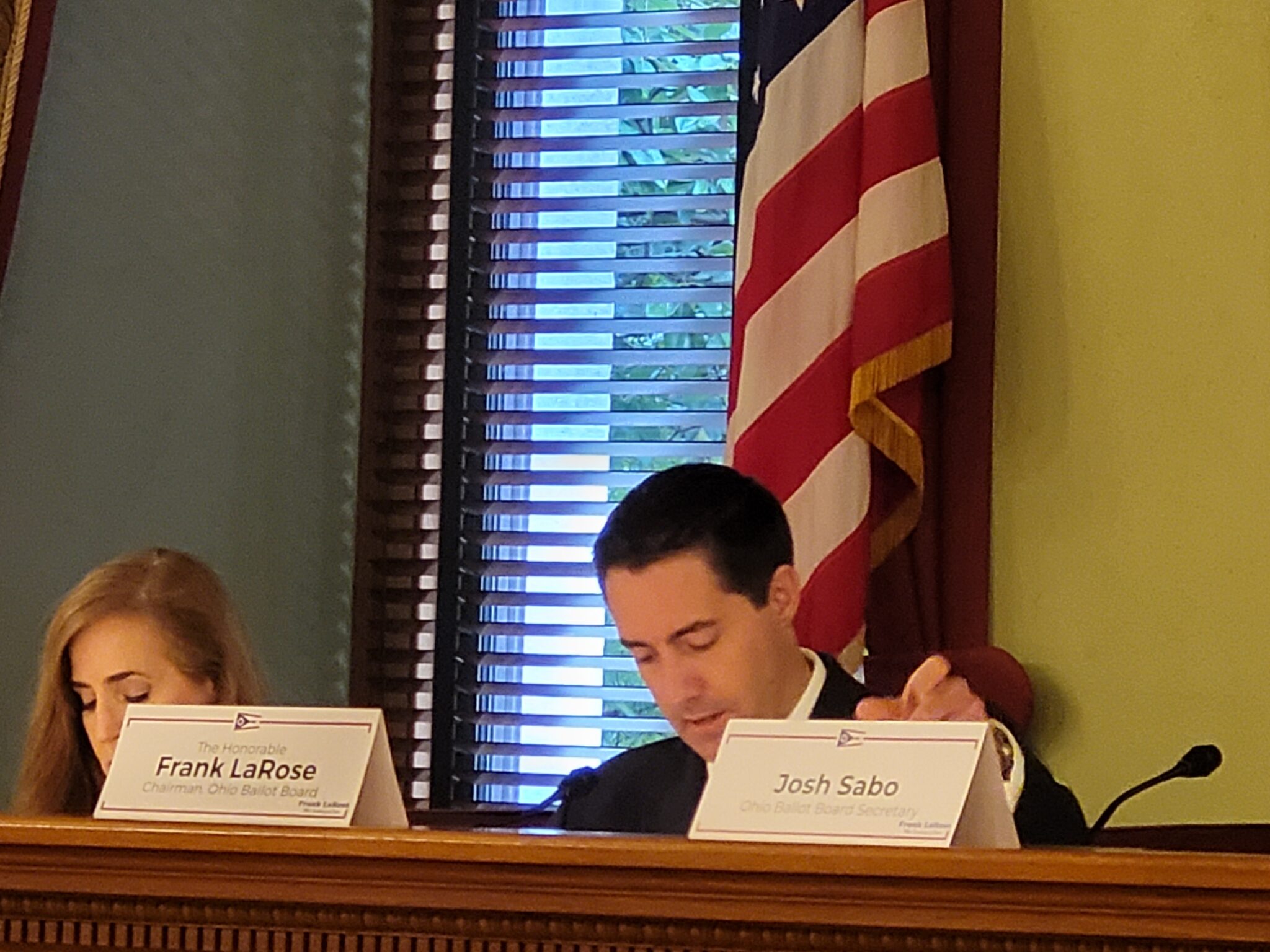
    In August, Secretary of State Frank LaRose, an abortion opponent, led a split Ohio Ballot Board in adopting a ballot “summary.” Not only is the “summary” roughly the same length as the amendment itself, it differs from the amendment in ways that critics say are intended to mislead.

    For example, it substituted the term “unborn child” for “fetal viability.”

    In an attempt to capture the effect that might have on the vote, pollsters at Ohio Northern asked some respondents whether they agreed with that amendment language and asked others whether they agreed with the language proposed by the League of Women Voters. The disparity was big.

    An overwhelming 68% agreed with the amendment as described by the League of Women Voters. But that number shrank to just 52% for the respondents who were asked about the language that will actually be on the ballot, thanks to LaRose and two others on the Ballot Board.

    But what does that mean practically?

    “Change in Ballot language may have big effect on support for Issue 1,” reads the title of that section of the Ohio Northern poll report.

    However, the same poll found that 65% of respondents think that abortion should be legal in most circumstances and 57% believed the Supreme Court shouldn’t have overturned Roe v Wade.

    More to the point, 70% said they had heard “quite a lot about Issue 1” and another 24% said they had heard some about it. That means that almost all respondents know something about the matter and presumably many will have formed opinions before going into the voting booth and seeing the Ballot Board’s language.

    “If this were a more obscure issue, the language would matter vastly more,” said University of Cincinnati political scientist David Niven. “But when this is the headline act of the entire election, almost no one is going to the polls to read the language on the ballot and make up their mind there.”

    If, as their detractors claim, LaRose and two others on the ballot board intended to dampen support for Issue 1 by using the language they did, they picked the wrong topic, Niven said.

    “There’s a boatload of good research that says language matters,” he said. “But it’s entirely based on the idea that you’re confronting this issue based on the language presented to you rather than confronting the issue based on deeply held beliefs.”

    The idea that the controversial ballot language will crash up against already-formed opinions also seems bolstered by another of the poll’s findings: When asked how they planned to vote on Issue 1, 60% said yes.

    That jibes with the results of the Baldwin Wallace University Ohio Pulse Poll released earlier in October. In it, 58% said they would vote in support of Issue 1.

    However, these are just polls — imperfect predictors in the best of circumstances. The fates of Issue 1, marijuana-legalizing Issue 2 and other matters on the ballot depend heavily on what happens Tuesday. That’s because more than 52% of respondents to the Baldwin Wallace poll said they’d wait until Election Day to cast their ballots.


    Marty Schladen
    MARTY SCHLADEN

    Marty Schladen has been a reporter for decades, working in Indiana, Texas and other places before returning to his native Ohio to work at The Columbus Dispatch in 2017. He’s won state and national journalism awards for investigations into utility regulation, public corruption, the environment, prescription drug spending and other matters.

    MORE FROM AUTHOR

  • Ohio Issue 1: Attacks on parental rights do not appear in amendment

    Ohio Issue 1: Attacks on parental rights do not appear in amendment

    BY:  Ohio Capital Journal

    Editor’s Note: This article is part of a series looking at the language of Ohio Issue 1 and the reproductive rights it would impact. The full language of the amendment can be found here.

    __________

    The topic of parental rights does not appear in Ohio Issue 1 on the ballot Nov. 7.

    There is no mention of denying any rights to parents in the process of enshrining reproductive rights like abortion, contraception, miscarriage care and infertility treatment into the Ohio Constitution.

    “I don’t think Issue 1 would affect parent’s rights at all,” said Tracy Thomas, the Seiberling Chair for Constitutional Law and director of the University of Akron’s Center for Constitutional Law.

    Having studied reproductive rights cases in Ohio and nationwide, including the Dobbs case that overturned Roe v. Wade, Thomas said historically, “parental rights have consistently been retained.”

    “I would expect that those (rights) can all stay consistent,” Thomas told the Capital Journal.

    Ohio Attorney General Dave Yost also acknowledged that previous abortion rights court cases have upheld parental consent in a legal analysis of Issue 1 he released in early October.

    Yost went on to say “the amendment does not specifically address parental consent.”

    But, Yost argued, that consent “would certainly be challenged on the basis that Issue 1 gives abortion rights to any pregnant ‘individual,’ not just to a ‘woman.’”

    The term “individual” is currently used 36 times in the Ohio Constitution, including in the definition of “health care system,” the eligibility of officeholders, and clauses on temporary housing and corporate property.

    Only one use of the word “individual” is connected to a gender specifier: the constitutional language on marriage status “only one man and one woman” can be in a marriage “valid or recognized by this state,” and “relationships of unmarried individuals” can not hold the same legal status.

     COLUMBUS, Ohio — OCTOBER 06: Sister Amor of the Bridgettine Sisters of Columbus holds a sign on High Street during the Ohio March for Life against November’s Issue 1 reproductive rights amendment, October 6, 2023, outside the Statehouse in Columbus, Ohio. (Photo by Graham Stokes for Ohio Capital Journal. Republish photo only with original article.) 

    Still, Religious lobbies and anti-abortion rights groups that oppose the amendment have used that message as one of their primary arguments against the measure since the effort to get it on the ballot began.

    In a new ad for the Issue 1 opposition group Protect Women Ohio, a coalition including Ohio Right to Life and other anti-abortion rights groups, Gov. Mike DeWine and First Lady Fran DeWine feature as leaders against the measure.

    Fran DeWine is shown in the ad saying Issue 1 “would deny parents the right to be involved when their daughter is making the most important decision of her life.”

    Gov. DeWine admits in the ad that Ohioans “are divided on the issue of abortion,” but calls Issue 1 “not right for Ohio.”

    The Catholic Conference of Ohio pointed to the first line of the proposed amendment and the word “individual,” saying the use of the word would allow anyone under age 18 to “have an abortion, or make any reproductive decision without their parents’ consent or notification.”

    State Sen. Kristina Roegner, R-Hudson, the sponsor of the six-week abortion ban law that is currently on hold as court cases determine its fate, co-sponsored a resolution in the Ohio Senate on Oct. 11 officially standing against Issue 1.

    In opposing Issue 1, she said the measure was “extreme, nefarious” and would “harm women and take away parental rights.”

    The resolution passed with the GOP majority unanimously approving it. The seven Democratic senators all voted against the measure.

    The resolution itself proclaims “parents are the ultimate arbiter of what is best for their children.”

    In one paragraph of the resolution, sponsors Roegner and state Sen. Michele Reynolds, R-Canal Winchester, write that Issue 1 “will eliminate many, if not all, state laws regarding abortion,” including “parental notification requirements.”

    In the next paragraph, the resolution states Issue 1 “may” eliminate parental rights.

    Senate Minority Leader Nickie Antonio, D-Lakewood, pushed back against the resolution by bringing up a decade-old legal process present in Ohio called “judicial bypass.”

    Judicial bypass, as it stands now, has been around since 2012 in the state, after then-Gov. John Kasich signed a law that prohibits forcing a minor to have an abortion, but leaves in place a legal way for minors to petition juvenile court to bypass parental consent.

    The Ohio Supreme Court explained the process in Rule 23 of a 2015 amendment to its “rules of superintendence,” an internal operations document for all Ohio courts.

    The legal method uses the court system to allow underage individuals to make decisions for themselves where parental consent would typically be necessary, such as in cases of abuse.

    “If the court finds by clear and convincing evidence that the minor is sufficiently mature and well enough informed to decide intelligently whether to have an abortion, the court shall grant the petition and permit the minor to consent to the abortion,” the law states.


    Read Part 1 and 2…


    Susan Tebben
    SUSAN TEBBEN

    Susan Tebben is an award-winning journalist with a decade of experience covering Ohio news, including courts and crime, Appalachian social issues, government, education, diversity and culture. She has worked for The Newark Advocate, The Glasgow (KY) Daily Times, The Athens Messenger, and WOUB Public Media. She has also had work featured on National Public Radio.

    MORE FROM AUTHOR

  • Ohio Ballot Board approves anti-gerrymandering amendment. Proposal to go forward

    Ohio Ballot Board approves anti-gerrymandering amendment. Proposal to go forward

    Ohio Secretary of State Frank LaRose and the rest of the Ohio Ballot Board approve the language of a proposed anti-gerrymandering amendment that is likely to appear on the ballot next year. (Photo by Marty Schladen, Ohio Capital Journal.)

    Signature gathering can proceed

    BY:  Ohio Capital Journal

    Activists who hope to pass an anti-gerrymandering amendment to the Ohio Constitution can now begin gathering the nearly half-million signatures on the need to get the measure on the November 2024 ballot after the amendment was approved as a single issue by the Ohio Ballot Board Thursday.

    Without much ceremony, the board unanimously agreed that the proposed amendment pertains to a single subject, which is required under Ohio law.

    The timing of the approval is significant because early voting on two other measures that are on this year’s ballot started yesterday (Thursday.) Voting has begun on Issue 1, a constitutional amendment protecting abortion rights, and Issue 2, a voter-initiated statute legalizing recreational marijuana. The general election for those measures is Nov. 7.

    Activists trying to get the anti-gerrymandering amendment on next year’s ballot have to gather about 415,000 verified signatures of registered voters. And because of a relatively high rate of rejections in previous efforts, they want to gather hundreds of thousands more than that.

    They say that having the summary language approved now enables them to do their work at county boards of election, where registered voters are gathering to cast ballots on this year’s abortion and marijuana measures. Petition circulators will also be able to work voter-rich environments near polling places on Election Day.

    The approval comes in the nick of time for the activists. Attorney General Dave Yost twice rejected the summary language for the petitions as not adequately reflecting the proposed amendment itself before approving it on its third attempt.

    Ohio is regarded as one of the most extremely gerrymandered states in the country. While Donald Trump carried the state with less than 54% of the vote in 2020, Republicans control 68% of seats in the state House, 78% in the state Senate and 66% of the state’s seats in the U.S. House of Representatives.

    That’s despite the fact that in 2015 and 2018, amendments to curb extreme partisan gerrymandering in the legislature and Congress both passed with more than 70% of the vote.

    After the 2020 Census, the Republican-dominated Redistricting Commission created by those amendments seven times ignored rulings by a bipartisan majority of the Ohio Supreme Court. The rulings said the districts the commission had drawn violated the anti-gerrymandering provisions of those same amendments.

    So now Ohio’s lawmakers are representing districts that the state’s highest court has ruled unconstitutional.

    Former Chief Justice Maureen O’Connor, a Republican, voted with the court’s three Democrats in ruling that the districts were unconstitutional, but she was forced to retire last year because of her age.

    Now she’s working with anti-gerrymandering activists to try to get the latest proposed amendment on next year’s ballot. It attempts to eliminate power grabs when district lines are drawn by creating an independent commission to draw them. That’s in contrast to the current one, which is composed entirely of elected officials.

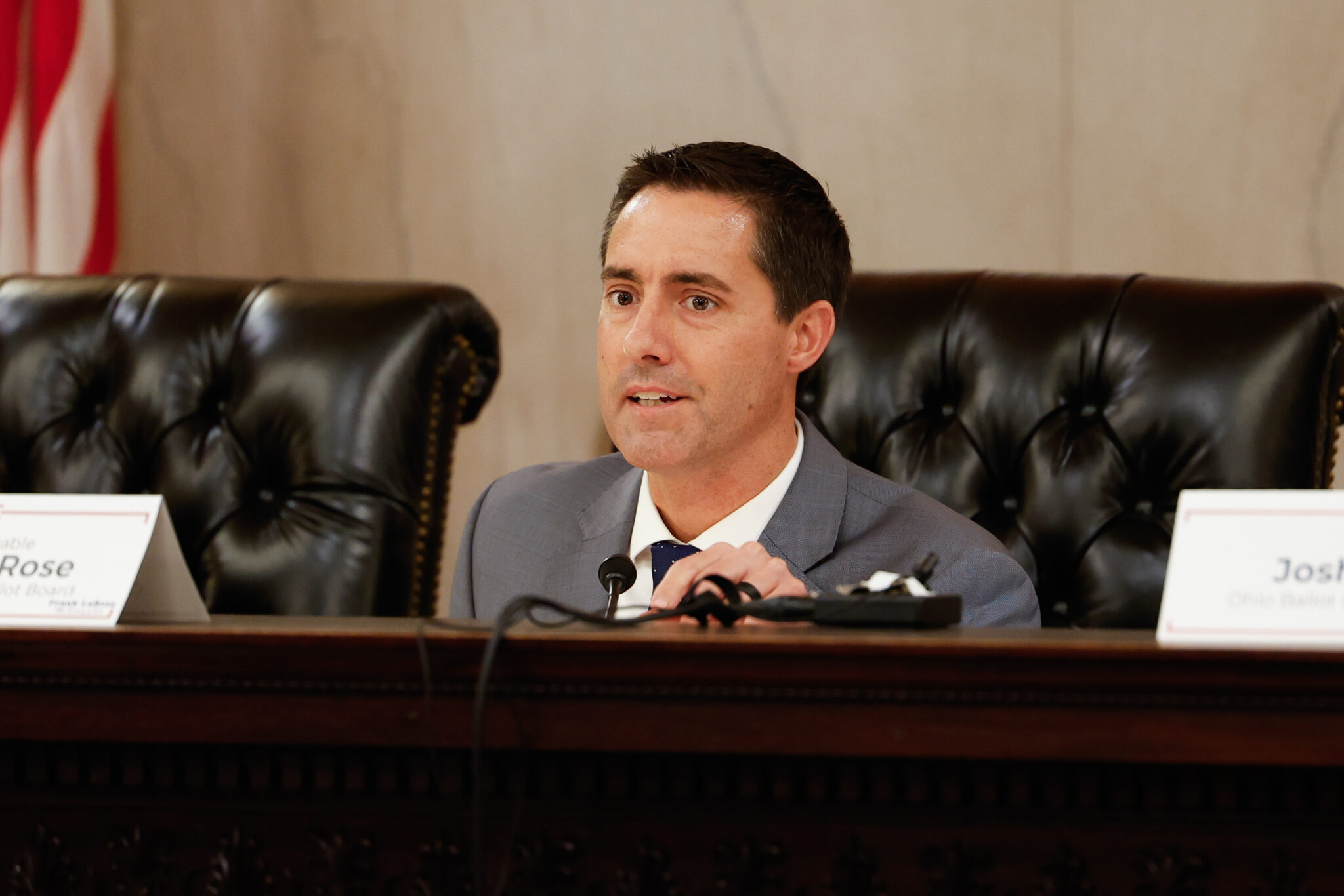
    Ohio Secretary of State Frank LaRose voted with the other Republicans on the Redistricting Commission in support of the current, unconstitutional maps. In his role as head of the Ballot Board, on Thursday he voted to approve the latest proposed anti-gerrymandering amendment. But he emphasized that it was only a vote on whether its language regarded a single subject.

    “I will remind you again that we are not here today to debate the merits of the proposal, but only whether it constitutes a single proposed amendment to the Ohio Constitution,” he said.

    But Sen. Paula Hicks-Hudson, D-Toledo, commented on the merits, anyway.

    “I’d like to recognize and support the citizens of Ohio who have moved to create a fair opportunity… for their districts to be drawn to reflect all the things Ohioans believe are important and to have a government that is responsive to the citizens of the state of Ohio,” she said.

    After that, LaRose again emphasized that the vote wasn’t on the merits of the proposed anti-gerrymandering amendment.


    Marty Schladen
    MARTY SCHLADEN

    Marty Schladen has been a reporter for decades, working in Indiana, Texas and other places before returning to his native Ohio to work at The Columbus Dispatch in 2017. He’s won state and national journalism awards for investigations into utility regulation, public corruption, the environment, prescription drug spending and other matters.

    MORE FROM AUTHOR

  • Ohio Issue 1’s reproductive rights amendment and protection of access to contraception

    Ohio Issue 1’s reproductive rights amendment and protection of access to contraception

    Getty Image

    BY:  Ohio Capital Journal

    Editor’s Note: This article is part of a series looking at the language of Ohio Issue 1 and the reproductive rights it would impact. The full language of the amendment can be found here.

    In the Nov. 7 general election, Ohioans will decide whether or not to approve Issue 1, a constitutional amendment for reproductive rights.

    While the language of the amendment focuses primarily on abortion, it also lists other rights that would be cemented into the state constitution, including miscarriage care, fertility treatments, contraception, and the right to continue one’s own pregnancy. Today we will look at how and why the proposed amendment seeks to protect access to contraception.

    The use of contraception is not illegal in Ohio, and though it’s commonly called “birth control,” the medications are also used for other conditions, like ovarian cysts, polycystic ovary syndrome and endometriosis symptoms.

    Push to ‘reconsider’ contraception case

    Contraception has long been a target of debate, with fears of further regulations increasing after U.S. Supreme Court Justice Clarence Thomas brought up Griswold v. Connecticut during his concurrence to Dobbs v. Jackson Women’s Health, the 2022 decision that overturned the half-century of abortion legalization given in Roe v. Wade.

    The ruling in Griswold overturned a Connecticut law from the 1800s that banned the use of “any drug, medical device or other instrument in furthering contraception,” particularly in marriages. The question at the heart of the Griswold case: “Does the Constitution protect the right to marital privacy against state restrictions on a couple’s ability to be counseled in the use of contraceptives?”

    The court found that the right to privacy held in the Bill of Rights prohibited states from banning contraception for married couples.

    However, in agreeing with the Dobbs decision, Thomas said the nation’s highest court should also “reconsider” cases such as Griswold, with new reflection on the 14th Amendment.

    “After overruling these demonstrably erroneous decisions, the question would remain whether other constitutional provisions guarantee the myriad rights that our substantive due process cases have generated,” Thomas wrote in his 2022 concurrence.

    A congressional effort that was put forth in July 2022 to codify birth control access passed the U.S. House. The effort had unanimous Democratic support, but only had the support of one Ohio GOP representative, former Rep. Anthony Gonzalez.

    The effort was blocked by the U.S. Senate that same month.

    There is federal law that requires health insurance coverage for prescription female contraceptives, but federal law also allows for a refusal clause “that allows churches, associations of churches, religiously affiliated elementary and secondary schools and, potentially, some religious charities and universities to refuse,” according to an analysis by the Guttmacher Institute.

    The institute’s analysis also showed that, as of September 2023, Ohio’s only state-level regulation is an insurance coverage requirement for extended supplies of contraception.

    “The state’s law allows pharmacists to dispense the full amount of a prescription at one time, including contraception, but there is no requirement that health insurance plans cover the cost of accessing a year’s worth of contraceptives at one time,” the Guttmacher research stated.

    Medicaid recipients are allowed access to “pregnancy prevention services” under the Ohio Administrative Code, including “contraceptive management,” along with “fertility awareness, natural family planning (the use of fertility awareness to track ovulation), and risk factor reduction,” according to the code.

    In an August debate on the previous Issue 1, Secretary of State Frank LaRose joined Ohio Right to Life leader Mike Gonidakis in calling claims that contraception regulations could be on the table in the state “fear-mongering,” saying “no reasonable person is talking about banning the use of contraceptives.”

    Back in 2022, state Rep. Jean Schmidt, R-Loveland, who introduced a bill that, if passed, would have banned all abortions in Ohio without exceptions for rape or incest, said she would “listen to both sides of that debate” over whether to ban contraceptions during a July 2022 radio interview.

    Sex ed

    Researchers and advocacy groups say abstinence-only education and anti-abortion politics have already had their impact in the state, and the need to keep contraception at the forefront continues.

    Even in his analysis of Issue 1, Ohio Attorney General Dave Yost spoke of access to contraception (and other rights listed in the proposed amendment), saying those topics “are harder to assess because Ohio does not have specific statutes addressing minors’ access to these medical treatments or products.”

    When Roe v. Wade — the landmark U.S. Supreme Court case that legalized abortion nationwide — was overturned in 2022, Ohio groups immediately feared the already inconsistent sex education standards in the state would take a hit as well.

    State law requires Ohio schools to emphasize abstinence, but does not require them to include lessons on consent, sexual orientation, or gender identity, according to a review by the Sexuality Information and Education Council of the United States (SIECUS).

    In fact, Ohio House GOP members introduced a bill in 2022 that would ban the use of sexual orientation and gender identity as a topic in Ohio schools. State Rep. Mike Loychik, R-Bazetta, the bill’s co-sponsor, said at the time that the bill would “ensure that sexual orientation and gender ideology are not taught in kindergarten through third grade.”

    But bills like House Bill 616 could also “impact age-appropriate sex education,” according to SEICUS, which said those and other policies pushing abstinence-only or no education at all to certain ages can result in district-by-district decisions on sex education.

    “Local control over sex education presents unique challenges that have resulted in glaring disparities in the quality of sex education that students receive,” SEICUS said in an Ohio analysis.

    The March 2023 research used CDC data from the 2019-2020 school year that showed only 38.3% of Ohio’s schools required a course on methods of contraception other than condoms in grades 6, 7 or 8, whereas 82.5% taught high schoolers about methods other than condoms.

    According to the CDC data, only 37% of Ohio schools grades 6 through 12 require more than one health education course.

    The impact of a lack of standardized sex education could have longterm effects, advocates suggest, particularly in the area of unintended pregnancies.

    The U.S. Department of Health and Human Services encourages the use of contraception in its “Healthy People 2030” objective, to help with pregnancy planning and prevention of unintended pregnancies.

    “Nearly half of pregnancies in the United States are unintended, and unintended pregnancy is linked to many negative outcomes for both women and infants,” the federal agency stated on its Healthy People 2030 website.

    Though they acknowledge that teen pregnancy has gone down in the U.S., they cite data that shows “close to 200,000 babies are born to teen mothers every year in the United States.”

    “Adolescents are at especially high risk for unintended pregnancy,” HHS stated.

    This article clarifies the vote of Ohio’s U.S. Representatives on the federal birth control bill.


    Susan Tebben
    SUSAN TEBBEN

    Susan Tebben is an award-winning journalist with a decade of experience covering Ohio news, including courts and crime, Appalachian social issues, government, education, diversity and culture. She has worked for The Newark Advocate, The Glasgow (KY) Daily Times, The Athens Messenger, and WOUB Public Media. She has also had work featured on National Public Radio.

    MORE FROM AUTHOR

  • Split ballot board approves reproductive rights amendment summary written by Ohio Sec. of State

    Split ballot board approves reproductive rights amendment summary written by Ohio Sec. of State


    In a 3-2 decision, the Ohio Ballot Board rejected using the full amendment proposal text for voters to see, and the approved summary language leaves out protecting contraception, fertility treatment and miscarriage care

    BY:  Ohio Capital Journal

    In a 3-2 split decision Thursday, the Ohio Ballot Board rejected using the full text of a proposed reproductive rights amendment on the ballot in November, adopting instead summary language written by the Ohio Secretary of State’s Office that was criticized for being incomplete and inaccurate.

    The board’s approval of the language – which is now titled Issue 1 for the November general election – was the next step in the process of voters deciding whether or not the Ohio Constitution will include the right to abortion, as well as contraception, fertility treatment, miscarriage care, and continuing one’s own pregnancy. Those last four items were all left out of the language approved by the ballot board majority.

    The summary language does not change what the actual amendment would state in the constitution, but would be the last representation of the amendment voters read before the casting their approval or rejection.

    The full text of the amendment will be available at boards of elections during the election, but not in the ballot booths with voters. LaRose said posters with the text will be accessible at voting locations.

    In the summary language approved by the board, the medical term “fetus” is changed to “unborn child,” and the amendment’s “decision” language is changed to “medical treatment.”

    The leader of the Ohio Ballot Board, Secretary of State Frank LaRose, said the changes were made by “staff” of the board, though Democratic board member and state Rep. Elliot Forhan said “I would assume that the buck stops with the secretary of state.”

    LaRose during the meeting also said that, “having worked extensively on drafting this, I do believe it’s fair and accurate.”

    LaRose has been vocal in his opposition of the amendment, even saying the effort around the previous Issue 1, which would have changed the threshold to approve a constitutional amendment had it not been roundly defeated, was targeting the abortion rights fight specifically.

    At the beginning of Thursday’s meeting, he prefaced the board’s activity by saying the group was not there to “debate the merits” of the amendment or the marijuana ballot initiative also on the table at the meeting.

     Ohio Ballot Board member, State Sen. Theresa Gavarone, R-Bowling Green, speaks at the Ballot Board meeting Thursday. (Photo by Graham Stokes for Ohio Capital Journal. Republish photo only with original article.) 

    Board member and state Sen. Theresa Gavarone, however, gave a speech in the middle of the meeting harshly criticizing the amendment and calling it “a bridge too far,” even after multiple comments by LaRose about the neutrality with which the board was supposed to conduct their business.

    “This is a dangerous amendment that I’m going to fight tirelessly against,” Gavarone said. “But that’s not why we’re here today.”

    Gavarone also claimed, as anti-abortion groups throughout the state do as well, that the amendment is “an assault on parental rights.” Neither the amendment nor the summary approved by the board mention parental rights of any kind.

    The senator continued her comments during the board meeting, saying the true nature of the amendment “is hidden behind overly broad language,” despite the fact that the board summary took out pieces of the full text.

    The summary passed by the board does not include a list of the rights to “reproductive decisions” spelled out in the ballot measure, including contraception, fertility treatment, continuing one’s own pregnancy, and miscarriage care, all of which would be impacted under the new constitutional amendment.

    A clause in the proposed amendment that says “the state shall not, directly or indirectly, burden, penalize, prohibit, interfere with, or discriminate against” the exercise of the amendment by an individual or an assistant of the individual was reduced to “the citizens of the state of Ohio” in the summary.

    The phrase “the citizens of the state of Ohio” is also used in the clause summarizing a prohibition of abortion that would only happen if a pregnant patient’s physician finds the pregnancy to be viable.

    The phrase “pregnant patient” in the ballot measure was changed to “pregnant woman” in the summary.

     Ohio Ballot Board member, State Sen. Paula Hicks-Hudson, D-Toledo, speaks at the Ballot Board meeting Thursday. (Photo by Graham Stokes for Ohio Capital Journal. Republish photo only with original article.) 

    State Sen. Paula Hicks-Hudson, the other Democratic member of the ballot board, made two motions to change the language of the summary to bring back the full text or certain clauses of the actual amendment text into the approved language.

    “The full text is clear, it’s concise and it’s direct, which is one of the requirements that’s needed for us to present to voters in the state of Ohio,” Hicks-Hudson said.

    Both motions were rejected 3-2, with LaRose, Gavarone and the final board member, Bill Morgan, voting against the motions.

    Morgan didn’t speak during the meeting other than to register his votes, and didn’t specifically comment on the amendment discussion or language afterward.

    “I think it’s what we were supposed to do, what the ballot board does,” Morgan told the OCJ.

    Groups for and against the initiative anticipated potential issues with the board’s decision, with pro-abortion rights group Ohioans United for Reproductive Rights requesting that the ballot language mirror the amendment itself, so voters could see the entire constitutional change when they vote in November.

    Lauren Blauvelt, a member of the coalition, decried the changes made to the language, and said the group is considering a lawsuit to fight back.

    “The entire summary is really propaganda and we are going to talk about all of the reasons why Ohio voters should just be able to see the language for what it is,” Blauvelt said after the board meeting.

    Anti-abortion groups argued against using the full text, saying it was unnecessary, and Ohio Right to Life president Mike Gonidakis pushed back on calls for a lawsuit against the summary.

    “Any litigation filed on this is going to be thrown out by the Ohio Supreme Court because the statutory responsibility of the ballot board is to provide a fair and accurate representation. That’s what the law requires, and that’s what they did today,” Gonidakis said.

    Gonidakis said he did not work with anyone on the ballot board on the summary language, but he wished the language was “stronger.”

     Mike Gonidakis, president of Ohio Right to Life, talks to the press after the Ohio Ballot Board meeting Thursday. (Photo by Graham Stokes for Ohio Capital Journal. Republish photo only with original article.) 

    “Look, at the end of the day, people are going to make up their minds before they go in the ballot box anyways, and they’re not going to go in and then try to figure out what they want to do by reading something on a screen,” he said.

    The proposed amendment has gone through a rollercoaster of activity since the Ohio Ballot Board approved the measure in March as compliant with the regulations for a constitutional amendment proposal, allowing a petition campaign that resulted in nearly 500,000 supporting signatures from Ohio voters.

    Amid all the necessary hoops through which the abortion rights campaign has jumped, abortion rights groups have also had to battle against lawsuits attempting to block the amendment from voters. Another lawsuit alleged the Ohio Ballot Board hadn’t taken enough time or consideration before certifying that the amendment was compliant.

    The Ohio Supreme Court rejected both lawsuits, clearing the way for voters to see the issue in the Nov. 7 general election.


    Susan Tebben
    SUSAN TEBBEN

    Susan Tebben is an award-winning journalist with a decade of experience covering Ohio news, including courts and crime, Appalachian social issues, government, education, diversity and culture. She has worked for The Newark Advocate, The Glasgow (KY) Daily Times, The Athens Messenger, and WOUB Public Media. She has also had work featured on National Public Radio.

    MORE FROM AUTHOR