Tag: Ohio Public Health Advisory System

  • DeWine’s COVID-19 Update: Vaccine Distribution, Nursing Home Cases Drop, more…

    DeWine’s COVID-19 Update: Vaccine Distribution, Nursing Home Cases Drop, more…

    Ohio Governor Mike DeWine and Lt. Governor Jon Husted yesterday provided the following updates on Ohio’s response to the COVID-19 pandemic. 

    VACCINE DISTRIBUTION UPDATE

    Governor DeWine announced today that Ohio received a total of 214,525 first doses of vaccine this week. A total of 223,025 first doses are scheduled to arrive in Ohio during the week of February 15.

    The federal retail pharmacy program will soon begin allotting doses to Ohio’s more than 160 Rite Aid pharmacies. Vaccine distribution will also expand into all 194 Kroger pharmacies.

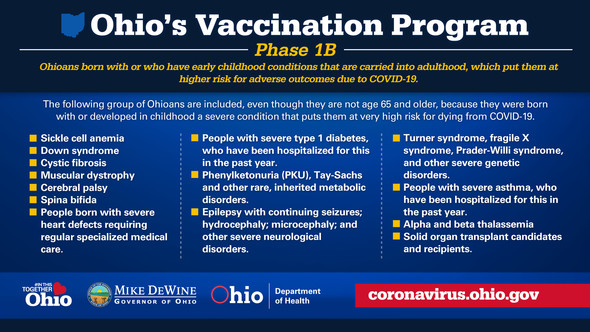
    Those with specific medical conditions that put them at a very high risk of dying from COVID-19 will be eligible for vaccinations next week.

    Ohioans born with the medical conditions outlined below, or those who were diagnosed in early childhood whose conditions continued into adulthood, will qualify to be vaccinated beginning on February 15.

    Phase 1B Conditions

    Dr. Bruce Vanderhoff, chief medical officer at Ohio Department of Health, explained these conditions in more detail. His remarks are available on the Ohio Channel’s YouTube page.

    Approximately 12,000 individuals with these severe medical conditions and developmental disabilities have already been vaccinated, and vaccinations of those in this group will continue.

    NURSING HOME CASES

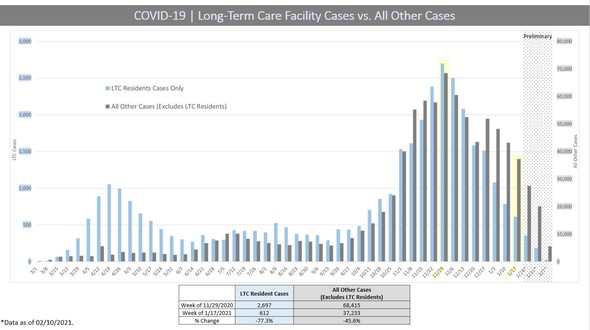
    Governor DeWine announced today that the number of COVID-19 cases in Ohio’s nursing homes has dropped more than 77 percent since late November. This dramatic drop in cases follows Ohio’s aggressive efforts to vaccinate residents and staff in Ohio’s long-term care facilities. 

    As outlined in the chart below, there were 2,697 COVID-19 cases in long-term care facilities in Ohio during the week of November 29, 2021. During the week of January 17, there were 612 positive cases.

    Nursing Home Case Map

    SCHOOL MODEL UPDATE

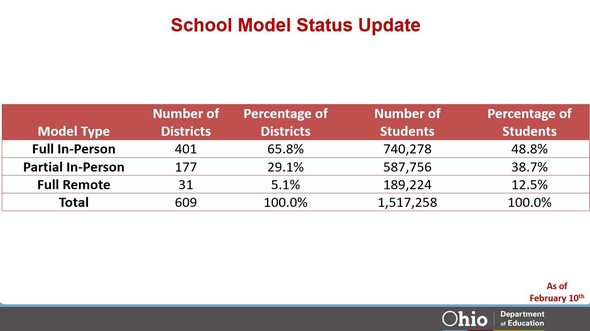
    Governor DeWine shared the latest information on the number of school districts that are physically in school versus those that are fully or partially remote. As a condition to receive priority access to the vaccine, schools were required to commit to full or partial in-person learning by March 1. All but one school district in Ohio have committed to this plan.

    School Update

    OHIO PUBLIC HEALTH ADVISORY SYSTEM

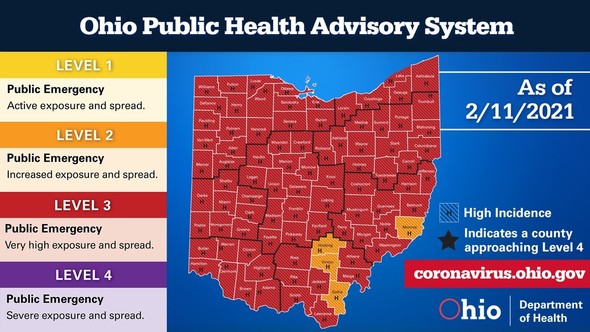
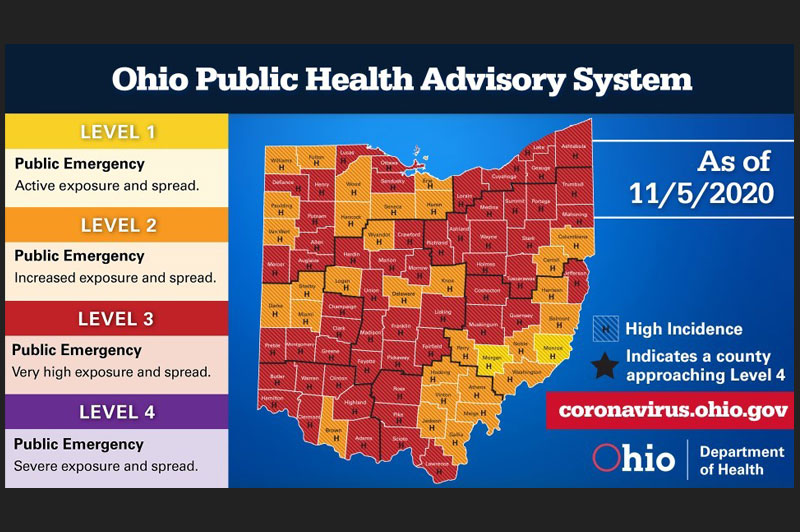
    There was no change in this week’s Ohio Public Health Advisory System map. A county-by-county breakdown outlining the presence of COVID-19 in all of Ohio’s 88 counties can be found on the Ohio Public Health Advisory System’s website.

    Advisory System Map

    CURRENT CASE DATA (2-12-21)

    In total, there are 931,437 confirmed and probable cases of COVID-19 reported in Ohio and 12,577 confirmed and probable COVID-19 deaths. A total of 48,269 people have been hospitalized throughout the pandemic, including 6,908 admissions to intensive care units. In-depth data can be accessed by visiting coronavirus.ohio.gov

    Video of today’s full update, including versions with foreign language translation, can be viewed on the Ohio Channel’s YouTube page

    For more information on Ohio’s response to COVID-19, visit coronavirus.ohio.gov or call 1-833-4-ASK-ODH.

  • “Severe Exposure and Spread” in Hamilton County

    “Severe Exposure and Spread” in Hamilton County

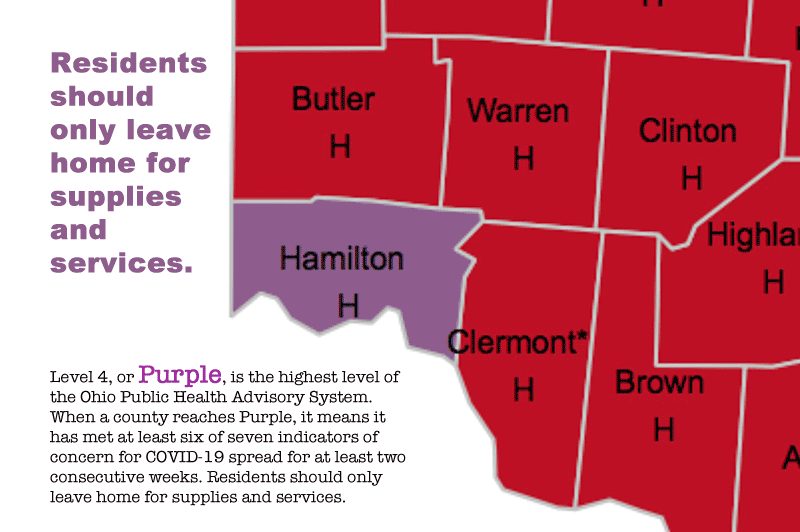
    Loveland, Ohio – Hamilton County is now in the the highest level of the Ohio Public Health Advisory System.

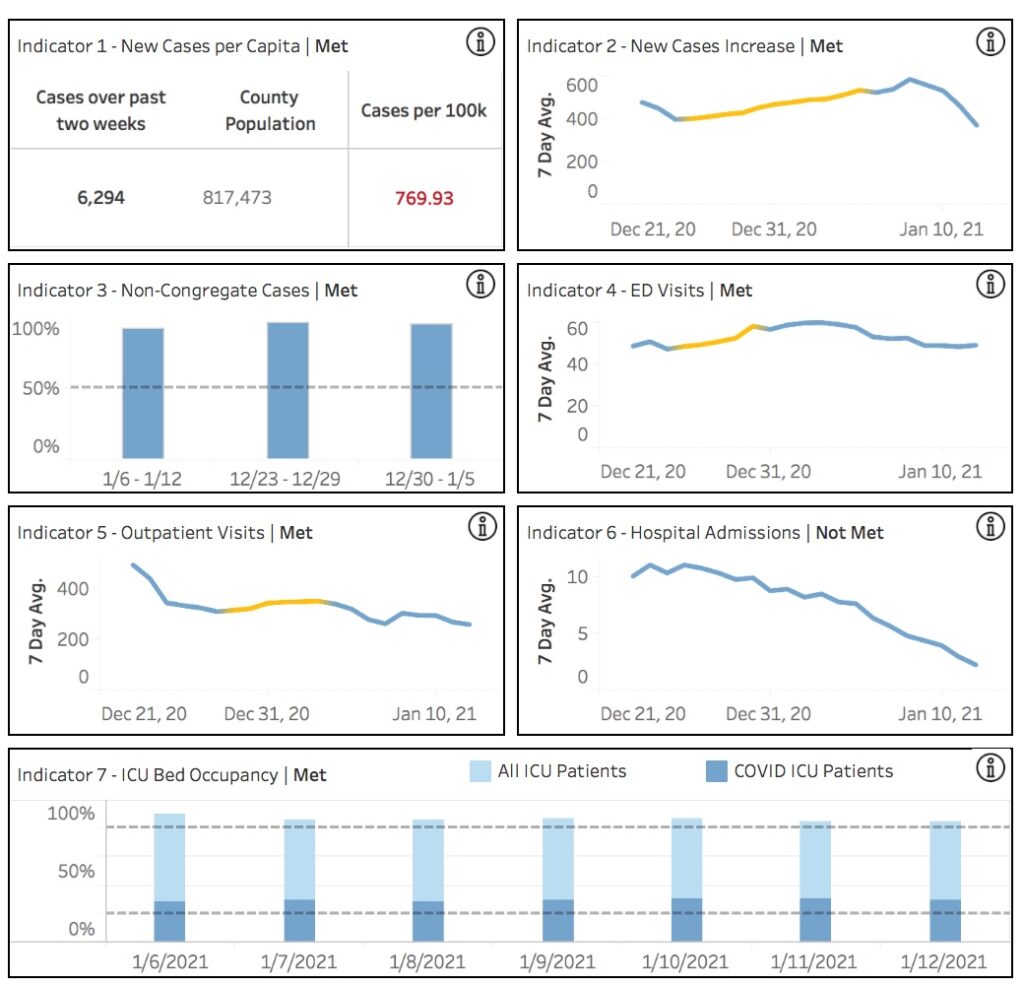
    Level 4, or Purple, is the highest level of the Ohio Public Health Advisory System. When a county reaches Purple, it means it has met at least six of seven indicators of concern for COVID-19 spread for at least two consecutive weeks. Hamilton County has now met all seven indicators of concern.

    Residents should only leave home for supplies and services.

    These measures are indicators of disease spread in the community; disease severity; community concerns about health and the virus; hospital burden; and capacity to manage a possible surge in critical COVID-19 patients.

    1. New cases per capita: There have been more than 50 cases per 100,000 residents over the past two weeks.
    2. Sustained increase in new cases: At some time during the past three weeks, there were at least five consecutive days when the number of cases (by onset date) increased.
    3. Proportion of cases not in a congregate setting: The proportion of cases among people who are not residents of long-term care facilities, group homes, jails or prisons has been more than 50% in at least one of the past three weeks.
    4. Sustained increase in emergency department (ED) visits for COVID-19-like illness: At some time during the past three weeks, there were at least five consecutive days when the number of COVID-19 ED visits increased.
    5. Sustained increase in outpatient visits for COVID-like illness: At some time during the past three weeks, there were at least five consecutive days when the number of people making COVID-19 healthcare visits increased.
    6. Sustained increase in new COVID-19 hospital admissions: At some time during the past three weeks, there were at least five consecutive days when COVID-19 hospital admissions increased.
    7. Intensive care unit (ICU):* The percentage of occupied ICU beds in the region was above 80% for at least three days during the past week, AND more than 20% of ICU beds were being used for COVID-19 patients for at least three days during the past week.

    *Meeting this indicator has been rare because hospitals have been able to make accommodations to meet increased numbers of COVID-19 ICU patients. However, if COVID-19 cases and hospitalizations continue to increase, staffing and resources may not be able to keep up, putting the care of all hospitalized patients (COVID-19 and non-COVID-19) in jeopardy.


    Ohio Governor Mike DeWine, and Lt. Governor Jon Husted today provided this updates on Ohio’s response to the COVID-19 pandemic.


    PHASE 1B VACCINATIONS

    Governor DeWine today highlighted the vaccine distribution timeline for Phase 1B of Ohio’s vaccination program, which is set to begin next week for those ages 80 and up.

    Week of January 18: Vaccine providers will begin receiving their first allotment of vaccines for those ages 80 and older. Vaccines will be delivered on Monday, Tuesday, and Wednesday. Each provider will begin administering vaccines the day after they receive their shipment. All vaccines must be distributed within seven days.

    Week of January 25: Vaccinations are anticipated to begin for those ages 75 and up following the same process outlined above. Vaccinations will also be available to those with severe congenital, developmental, or early-onset medical disorders. Additional information on how these individuals can choose to receive their vaccines is forthcoming.

    Week of February 1: Vaccinations are anticipated to begin for those ages 70 and up following the same process outlined above. 

    Week of February 8: Vaccinations are anticipated to begin for those ages 65 and up following the same process outlined above. 

    “When a new age range opens, that does not mean vaccinations will be complete for the previous age range,” said Governor DeWine. “Vaccinating Ohioans in Phase 1B will take a number of weeks given the limited doses available.”

    Beginning tomorrow, Ohioans aged 80 and up can find additional information about providers administering vaccines by calling their local health department or visiting their local health department website.   

    Additionally, the Ohio Department of Health will launch a tool tomorrow morning on coronavirus.ohio.gov to assist residents looking for a provider that has been allotted vaccines.

    The tool will be searchable by zip code or county, but it will not be updated in real-time. It is critical that those eligible to receive a vaccine consult local resources to determine up-to-date vaccine availability.

    “Providers throughout the state are developing systems that work best for them in terms of scheduling and administering vaccinations,” said Governor DeWine. “As we continue to rollout additional vaccination groups, we will work with our local partners, and modify the process as needed.”

    The Ohio Department of Health is in the process of developing a state vaccination scheduling system.  Additional information is forthcoming.

    NURSING HOME VACCINATIONS

    Governor DeWine announced that Ohio is imminently close to completing the administration of the first round of COVID-19 vaccines in skilled nursing facilities.  

    “When we started distributing the vaccine in Ohio, one of our first goals was to vaccinate our most vulnerable in our nursing facilities,” said Governor DeWine. 

    Ohio partnered with four pharmacies through the Federal Pharmacy Partnership in distribution of the vaccine to skilled nursing facilities. These facilities are a part of Phase 1A. 

    Absolute has administered 100% of the first round of COVID-19 vaccines as assigned.

    As of yesterday, CVS has administered 97% of the first round of COVID-19 vaccines at the 478 assigned facilities. It is anticipated CVS will finish the administration of doses this week.  

    Pharm Script has completed 61 of 63 assigned facilities, and will complete the administration of doses today.  

    Walgreens has completed 95% of the first round of COVID-19 vaccines at the 398 assigned facilities.  

    Within the Federal Pharmacy Partnership, Ohio, with 3.6% of the U.S population, has administered more than 8% of the vaccines in this program nationwide.  This is above the anticipated pace of administering the vaccine. 

    OHIO COUNTY COVID DATA

    A county-by-county breakdown outlining the presence of COVID-19 in all of Ohio’s 88 counties can be found on the Ohio Public Health Advisory System’s website.

     All 88 counties have a level of spread that is at least three times more than what the Centers for Disease Control and Prevention (CDC) considers high incidence. 

    Governor DeWine also discussed key measurements regarding incidence cases per 100,000 residents over two weeks, as well as regional COVID-19 ICU utilization. 

    “We saw new cases per capita at the statewide level increase since last week, which indicates that COVID-19 continues to spread in both urban and rural communities throughout Ohio,” said Governor DeWine

    CURRENT CASE DATA

    In total, there are 807,293 confirmed and probable cases of COVID-19 reported in Ohio and 9,990 confirmed and probable COVID-19 deaths. A total of 42,491 people have been hospitalized throughout the pandemic, including 6,289 admissions to intensive care units. In-depth data can be accessed by visiting coronavirus.ohio.gov

    Video of today’s full update, including versions with foreign language translation, can be viewed on the Ohio Channel’s YouTube page

    For more information on Ohio’s response to COVID-19, visit coronavirus.ohio.gov or call 1-833-4-ASK-ODH.

  • LPD is migrating back to remote working and restricted responses to non-emergency calls

    LPD is migrating back to remote working and restricted responses to non-emergency calls

    Loveland, Ohio – City Manager Dave Kennedy has reported, “With the rising COVID-19 cases around the tri-state, LPD is migrating back to remote working and restricted responses to non-emergency calls.”

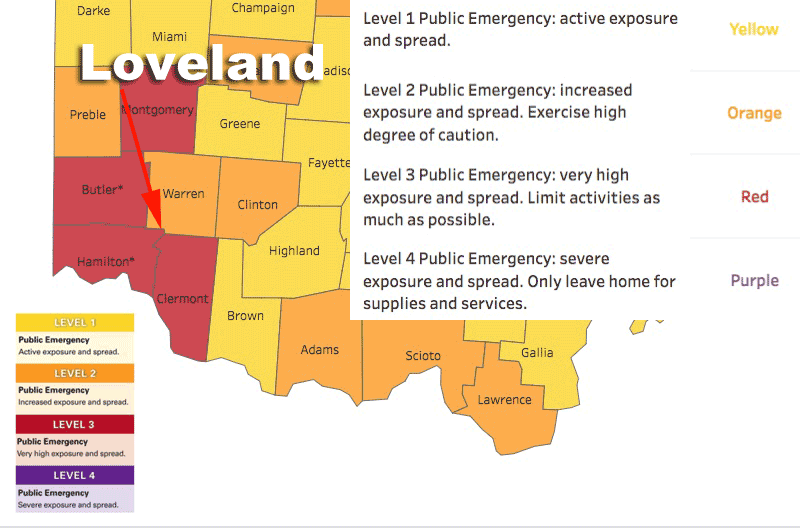
    All of Loveland is currently in RED – Level 3 the Ohio Public Health Advisory System which is defined as “very high exposure and spread”.

    Chief of Police Sean Rahe explained the procedure to Loveland Magazine:

    On July 17th the Loveland Police Department developed a tiered response plan to coincide with the directions provided by the Ohio Department of Health. These new directions were commonly referred to as the county color chart.

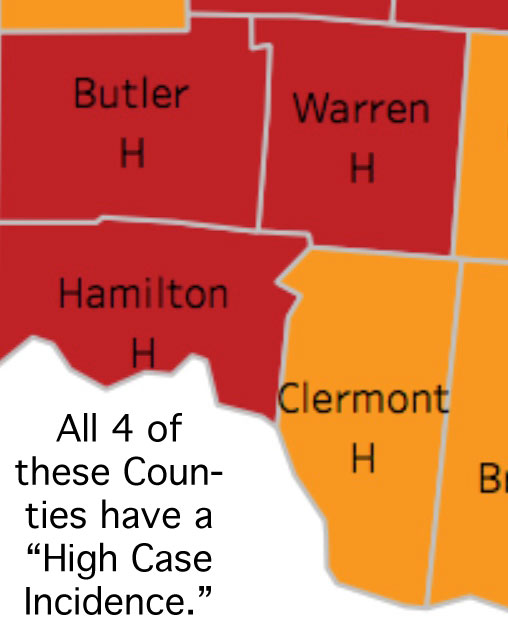
    Several LPD procedures, including response to calls, follow this chart. When two of our 3 counties (Clermont, Hamilton, and Warren) are red LPD is at Tier 2 – Red. Tier 2 includes the following procedures:

    Officers will always continue to respond to priority 1 calls for service and crimes in progress. However, information requests, reports, and non-criminal service calls are handled remotely, if possible. Officers will not respond to medical calls unless requested by emergency medical responders. And non-essential proactive activity is discouraged. 

    STATEWIDE HIGH INCIDENCE 

    New health data compiled by the Ohio Department of Health and reported yesterday found that all 88 counties in Ohio remain at “high incidence” as defined by the Centers for Disease Control and Prevention. 

    According to Thursday’s updated Ohio Public Health Advisory System map, 68 counties are currently rated as having a very high risk of exposure and spread (Red Level 3), up from 56 counties last week. This represents the highest number of Red Level 3 counties since the launch of the advisory system in July. 

    Both Franklin and Tuscarawas counties met six of seven advisory-system indicators and are approaching Purple Level 4. 

    Ohio also had another record-breaking day for new cases reported in a 24-hour period, with 7,101 cases reported between Wednesday and Thursday.

    A total of 268 new hospitalizations were reported, as well as 35 more deaths.

    To date there have been 5,700 deaths attributed to COVID 19 in Ohio.

    Clermont County is currently experiencing 52.6 daily new cases per 100K population.

    Hamilton County is currently experiencing 47.1 daily new cases per 100K population.

    Warren County is currently experiencing 47.2 daily new cases per 100K population.

  • Record-Breaking Cases & Hospitalizations, Statewide High Incidence

    Record-Breaking Cases & Hospitalizations, Statewide High Incidence

    CURRENT COVID-19 DATA
    There are 235,170 confirmed and probable cases of COVID-19 in Ohio and 5,461 confirmed and probable COVID-19 deaths. A total of 20,015 people have been hospitalized, including 3,969 admissions to intensive care units. In-depth data can be accessed by visiting coronavirus.ohio.gov.  Video of today’s full update, including versions with foreign language translation, can be viewed on the Ohio Channel’s YouTube page.  For more information on Ohio’s response to COVID-19, visit coronavirus.ohio.gov or call 1-833-4-ASK-ODH.

    Columbus, Ohio – Ohio Governor Mike DeWine and Lt. Governor Jon Husted today provided the following updates on Ohio’s response to the COVID-19 pandemic. 

    RECORD-BREAKING CASES & HOSPITALIZATIONS
    DeWine announced today that Ohio is once again breaking records in regard to COVID-19 cases and hospitalizations.

    • Between yesterday and today, health officials have reported a total of 4,961 new positive coronavirus cases in Ohio, the highest number of new cases in a 24-hour period to date.

    • There are currently 2,075 patients hospitalized with COVID-19 which is a 55 percent increase in hospitalized patients compared to two weeks ago. 

    • Of the hospitalized patients, 541 people are in intensive care. The previous record for intensive care admissions was 533 in April. 


    “This virus is flaring up, and we have to push it down – the economy depends on it,” said Governor DeWine. “If the virus continues to aggressively spread, people will lose confidence in their ability to safely go to stores, restaurants, and other businesses. If we want to keep our economy moving, we must all live with this virus and we must all be more careful.”

    Governor DeWine stressed that the new record number of cases is not due to increased testing capacity in the state. Since September 24, the total number of tests in Ohio has increased by approximately 44 percent, but positive cases have increased 280 percent in the same time period. If a person is tested multiple times, they are only counted once.

    STATEWIDE HIGH INCIDENCE 

    New health data compiled by the Ohio Department of Health revealed today that all 88 counties in Ohio are now considered “high incidence” as defined by the Centers for Disease Control and Prevention. 

    “There have been so many cases in the past two weeks that the risk of catching this virus in every county of this state is very real and very concerning,” said Governor DeWine. “Again, I ask everyone to recognize their personal responsibility in slowing the spread of this deadly disease. It’s up to every citizen in Ohio to choose to slow the spread by wearing masks, distancing, and making overall smart decisions.”

    According to today’s updated Ohio Public Health Advisory System map, 56 counties are currently rated as having a very high risk of exposure and spread (Red Level 3), up from 43 counties last week. This represents the highest number of Red Level 3 counties since the launch of the advisory system in July. As of today, 86 percent of Ohioans are living in a Red Level 3 county. 

    A county-by-county breakdown outlining the presence of COVID-19 in all of Ohio’s 88 counties can be found on the Ohio Public Health Advisory System’s website.


    NEW OHIO DEPARTMENT OF HEALTH STRUCTURE

    Governor DeWine announced multiple key additions to the existing administration at the Ohio Department of Health (ODH). 


    Chief Medical Officer Dr. Bruce Vanderhoff: 
    Dr. Vanderhoff previously served for more than a decade as a Senior Vice President and as the Chief Medical Officer at OhioHealth. He has years of experience leading large teams in successfully dealing with important healthcare issues in Ohio and prepared OhioHealth to deal with the threat of Ebola and the H1N1 flu pandemic.  

    Director Stephanie McCloud: 
    Director McCloud previously served as Governor DeWine’s administrator of the Ohio Bureau of Workers’ Compensation, managing an agency of 1,800 colleagues and over $28 billion in assets. She has considerable experience in the area of mental health and addiction treatment which is a priority in Ohio’s health improvement plan. 

    Senior Deputy Lance Himes: 
    Himes had previously served as the interim director of ODH where he has played an integral role in running and managing many aspects of the pandemic response operation. He will lead the coordination of the state’s vaccine distribution plan and will continue to work directly with Ohio’s local health commissioners.

    Chief of Staff Kathleen Madden: 
    Madden had previously served as Assistant Director at the Ohio Office of Budget and Management and will now play a key role in keeping ODH’s pandemic and non-pandemic programs and operations on track. She will work to prioritize and resolve critical issues, provide oversight and guidance to ODH staff, and ensure that ODH funds are spent responsibly and strategically. Other key members of the ongoing COVID-19 response who will continue their roles in assisting ODH are: 

    Adjutant General Maj. Gen. John Harris, Ohio National Guard: 
    Maj. Gen. Harris will continue work to ensure complex operations, such as COVID testing and contact tracing, are well-coordinated, monitored, and improved when necessary.  He will also work directly with Senior Deputy Himes on the planning and logistics of the forthcoming vaccine distribution program.  

    Director Ursel McElroy, Ohio Department of Aging: 
    Director McElroy will continue to direct virus prevention efforts for older adults in the community and in long-term settings, including nursing homes and assisted living facilities.  

    Director Lori Criss, Ohio Department of Mental Health and Addiction Services: 
    Director Criss will continue to lead efforts to address the increasing mental health needs of citizens during the pandemic.

    NEW OHIO BWC ADMINISTRATOR
    Governor DeWine announced that John Logue, the Ohio Bureau of Workers’ Compensation’s (BWC) Chief of Strategic Direction, will become the new administrator of Ohio BWC effective on November 16. Logue has worked for 26 years in the industry. Before returning to BWC in 2019, he most recently served as the vice president of client services for International Absence Management Company where he focused on Ohio workers’ compensation.


  • A RED TIDE: 65% of Ohioans now living in counties with ‘very high’ levels of COVID-19

    A RED TIDE: 65% of Ohioans now living in counties with ‘very high’ levels of COVID-19

    Jake Zuckerman is a statehouse reporter. He spent three years chronicling the West Virginia Legislature for The Charleston Gazette-Mail after covering cops and courts for The Northern Virginia Daily.
     
    This story was written by Jake Zuckerman with local news added by Loveland Magazine staff.

    Thursday was Ohio’s worst day of the pandemic and all evidence suggests things are likely to worsen, according to interviews and new state data.

    Nearly 2,200 new COVID-19 infections were reported Thursday, the state’s third record breaking day last week.

    There were 1,041 Ohioans in the hospital with COVID-19 — about 100 shy of the all-time high set in late July. The COVID-19-hospitalized population has nearly doubled since mid-September.

    A “Public Emergency” has been declared in RED counties – with very high exposure and spread.

    On Thursday, Governor DeWine released Ohio’s updated Public Health Advisory System map. New health data compiled by the Ohio Department of Health found that 29 counties currently have a very high risk of exposure and spread (Level 3): Hamilton, Butler, and Warren are among the “RED” counties.

    “We’ve gone up dramatically in a relatively short period of time,” Gov. Mike DeWine said to reporters Thursday.

    “What you’re seeing in today’s numbers should get our attention,” DeWine said. “There’s a red tide flowing all over the state of Ohio.”

    The good news: More Ohioans than ever are being tested for the new coronavirus. The bad news: The rate at which those tests are coming back positive has doubled since Sept. 23, a sign the virus is growing more prevalent.

    Thirteen new counties turned red this week indicating “very high exposure and spread” on the Ohio Public Health Advisory System — a product of seven inputs like hospital visits, outpatient care visits in a county, population-adjusted infection rates and others. Twenty-nine counties are red, spanning about two-thirds of the state’s population.

    “What you’re seeing in today’s numbers should get our attention,” DeWine said. “There’s a red tide flowing all over the state of Ohio.”


    DeWine said some of the newly-turned red counties are slated to host community events like political rallies, pub crawls and social gatherings and that “now is really the time to rethink whether these are in the best interest of the community.”

    He did not address his own administration’s decision to exempt recent rallies for President Donald Trump from the statewide mask requirement.

    View previous week’s DATA

    While DeWine said there are no plans in store for any kind of statewide stay-at-home order, he declined to promise against instituting the policy down the line.

    All told, nearly 176,000 Ohioans have contracted COVID-19. Nearly 17,000 have been hospitalized, and 5,038 have died since March.

    In red counties, health department staff said they continue to see spread at family gatherings like bonfires, birthday parties and barbeques.

    Jennifer Hiestand, a public information officer at the Zanesville-Muskingum County Health Department, estimated 60% of people in public are wearing masks. Contact tracers have found “mini outbreaks” that are seemingly the result of people letting their guards down.

    In red counties, health department staff said they continue to see spread at family gatherings like bonfires, birthday parties and barbeques.

    “People just made the decisions not to social distance or not to wear a mask, those things that they probably should have,” she said.

    Mahoning County Health Commissioner Ryan Tekac said he is seeing a lot of the county’s progress this summer start to erode as cold weather drives people inside.

    “I think there are some concerns right now that individuals are putting their guards down,” he said.

    Ohio’s recent case surge fits in with a national trend. The New York Times reports cases are trending upward in 41 states, especially in the Midwest.

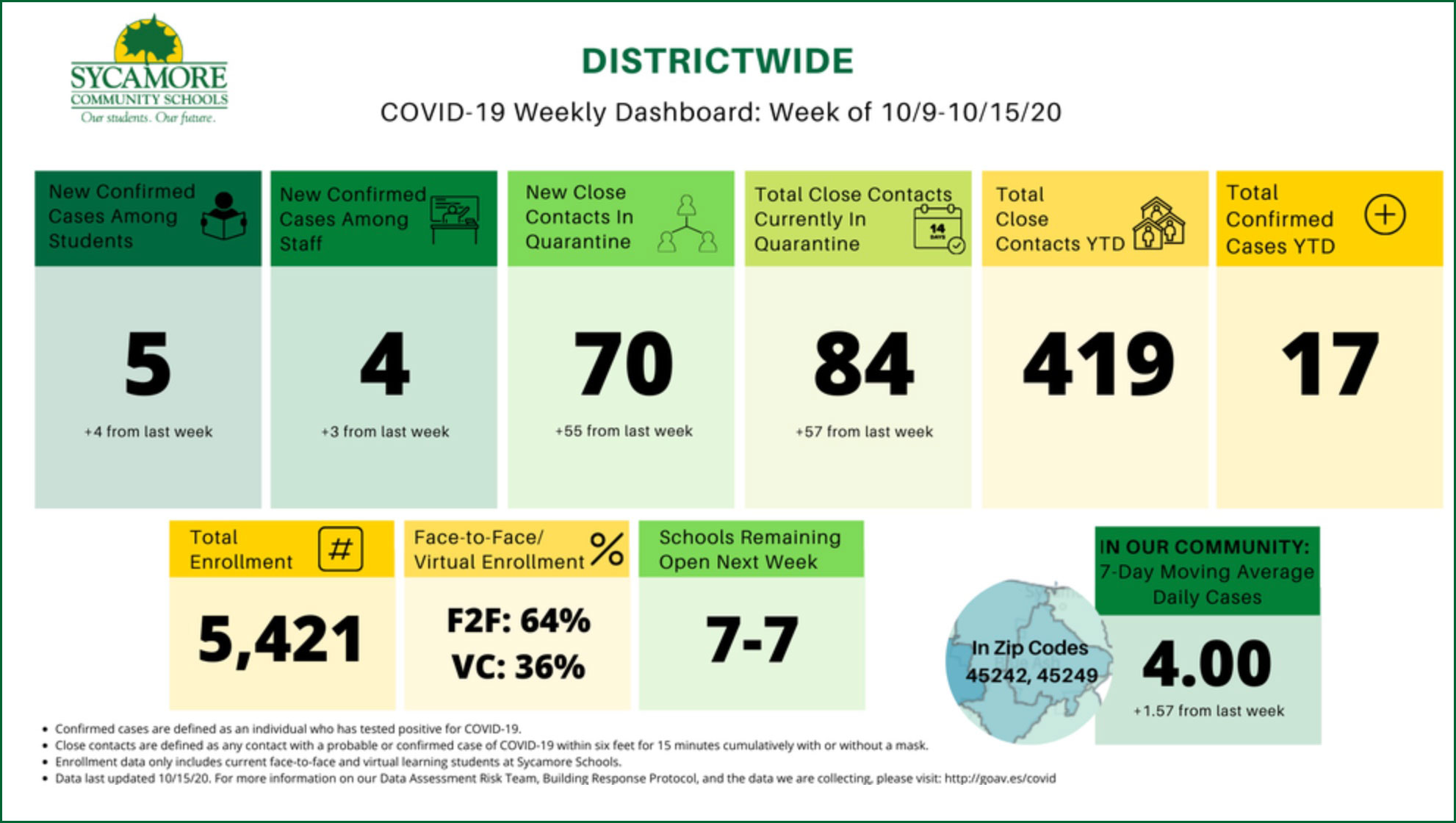
    Sycamore Aves mom reminds us of the importance to stay home if you’re experiencing COVID-19 symptoms. These next few weeks will be crucial. Please do your part so we can stay in school!

    Two holidays are coming up that will test Ohio’s public health discipline — Halloween and Thanksgiving.

    Tekac said there’s a lot of concern, especially with Thanksgiving, about the potential for outbreaks. However, he said people know the guidance; wear masks, keep your distance, wash your hands, outside is better than inside.

    He said at a certain point it comes to individuals making their own good decisions.

    Dr. Anthony Fauci, the top infectious disease expert at the National Institute of Health, told CBS News it’s an “unfortunate fact” that Thanksgiving will cause a lot of spread and suggested skipping out on the tradition this year.

    “I think given the fluid and dynamic nature of what’s going on right now and the spread and uptick of infections, I think people should be very careful and prudent about social gatherings,” he said.

  • Trick or Treat’s a go in Loveland

    Trick or Treat’s a go in Loveland

    -This story has been corrected to reflect that Halloween is on Saturday October 31.

    Loveland Police Chief Sean Rahe

    Loveland, Ohio – City Manager Dave Kennedy announced at last night’s council meeting that Halloween Trick or Treating in Loveland is a go. He said that Police Chief Sean Rahe is reviewing an advisory that was issued by the Ohio Department of health and the City will issue a statement after it has been reviewed.

    Kennedy said, “We hope to move forward full steam and certainly encourage people to follow the rules. We are not going to mess with changing times or dates.”

    Photo by Olivia Smith © 2020

    Although not announced at the meeting, Trick or Treating hours in Loveland have been between 6 and 8 PM for many consecutive years.

    Halloween is on Saturday October 31.

    DeWine recommends children wear masks on Halloween!

    In Ohio Governor Mike DeWine’s announcement of the health department orders he reminded parents that Halloween activities will be different this year than in years past. He encouraged, “parents and children to wear a mask, practice social distancing, avoid large groups, and to stay home if sick.” Dewine also said, “Final decisions on whether to hold or participate in trick-or-treating or other events should be made by local communities, individuals, and parents.”

    The state has developed guidance for Halloween and it can be found at coronavirus.ohio.gov.


    Celebrating Halloween at Re-Start Ohio

    Amid the COVID-19 pandemic, it is important to use caution and plan ahead for Halloween festivities. Decisions on whether to participate should be made by local communities, individuals, and parents/ guardians.

    Always follow current state public health orders and rules/regulations established by your local community, and check the Ohio Public Health Advisory System to determine COVID-19 risk levels in your county before making decisions about Halloween activities. Some communities may choose to cancel Halloween events, so check with local sources before making plans.

    This guidance is designed to help curb the spread of COVID-19. It will be reassessed and updated as the situation evolves and we learn more in the weeks leading up to Halloween.

    Recommended Best Practices

    General Guidance

    • It is strongly recommended that hayrides and haunted houses be canceled/avoided.

    • It is strongly recommended that Ohioans exercise caution when deciding to participate in trick-or-treating and events that put them in close contact with people outside their households. To lower risk, consider safer, socially distant ways to celebrate, such as:

    • Holding a drive-through or drive-in trick-or-treat event, with children in costume and face coverings staying in cars and collecting treats from individuals spaced at least 6 feet apart.

    • Holding drive-by costume or car-decorating contests with judges who are physically distanced.

    • Leaving treats for friends and neighbors.

    • Decorating your home and hide treats as an alternative to trick-or-treating.

    • Holding costume parties or pumpkin carving events or contests online, such as by video conference.

    • Do not hold large in-person Halloween parties. If holding smaller parties, limit attendance to 10 or fewer people and hold the event in an outdoor area where social distancing is possible. Avoid activities, such as bobbing for apples, that foster the spread of infection.

    • Always wear a face covering and stay 6 feet away from people who are not from your household, whether trick-or- treating, passing out treats, or attending attractions or events. Stay home if you are sick. (NOTE: Face coverings should never be placed on children younger than 2 or anyone who cannot easily remove them.)

    • Carry hand sanitizer and use it often, especially after coming into contact with frequently touched surfaces and before eating candy.

    • Select events/attractions that are held outdoors and allow attendees to stay in their cars (such as drive-through event with displays) or socially distance. Avoid events that involve being crowded in a small area or coming into contact with/being touched by others.

    • Consider the people in your household who may be at greater risk of complications if COVID-19 is brought into the home, such as those with certain health conditions, women who are pregnant, or older family members.

    For Parents/ Guardians

    • If taking your children trick-or-treating, limit the number of houses you visit and ask your children to stay as far from treat-givers as possible. For small children, consider holding the bag for them.

    • Wipe off candy wrappers with sanitizing wipes when you arrive home. (NOTE: Never wipe unpackaged food with wipes.) • Allow children to eat only factory-wrapped treats. Avoid homemade treats made by strangers.

    • If your child is at greater risk of complications from COVID-19, contact your doctor before allowing participation in Halloween activities.

    For Community Members

    • For trick-or-treating, reach out to neighbors to discuss ways to ensure 6-foot social distancing, how candy can most safely be distributed, and the need for face coverings.
    • Refrain from having children select their own treats from a bowl/common container or set up a hand-sanitizing station. Consider placing treats on porch steps or a table in the driveway with a sign asking children to take only one. Or use other creative ways to distribute treats, such as using a candy “slide” made of PVC pipe, or hanging treats from a wall or fence.

  • Clermont County elevated to RED COVID 19 Alert

    Clermont County elevated to RED COVID 19 Alert

    The Public Health Advisory Alert System is a color-coded system designed to supplement existing statewide orders through a data-driven framework to assess the degree of the virus’ spread and to engage and empower individuals, businesses, communities, local governments, and others in their response and actions.

    The system consists of four levels that provide Ohioans with guidance as to the severity of the problem in the counties in which they live.  The levels are determined by seven data indicators that identify the risk level for each county and a corresponding color code to represent that risk level.

    Loveland, Ohio – Governor DeWine announced today that new public health data has led the Ohio Department of Health to designate that Clermont County is now among 12 counties as being in a Red Alert Level 3 Public Emergency as defined by the Ohio Public Health Advisory System.

    Clermont County had been in Level 2 until the announcement today.

    Hamilton County remains RED Alert Level 3 however it is on Ohio’s “Watch List” as they are approaching Purple Alert Level 4.

    Mandates for people to begin wearing masks in public in Clermont County will begin at 6 PM on Friday, July 10.

    Governor DeWine announced the creation of the Ohio Public Health Advisory System last week to provide local health departments, community leaders, and the public with data and information on the severity of the COVID-19 spread in the counties in which they live. The system consists of four levels with specific risk-level guidelines. Each level is calculated with data gathered on seven public health indicators.

    Read the Health Order

    Director’s Order for Facial Coverings in Butler, Cuyahoga, Franklin, Hamilton, Huron, Montgomery, and Trumbull Counties in Level 3 Public Health Advisory

    Those in counties designated as Red Alert Level 3 or Purple Alert Level 4 are required to wear a face covering:

      • In any indoor location that is not a residence;
      • When outdoors and unable to consistently maintain a distance of six feet or more from individuals who are not members of their household; or
      • While waiting for, riding, driving, or operating public transportation, a taxi, a private car service, or a ride-sharing vehicle.

    The order does not apply to children under the age of 10 or any other minor who cannot safely wear a face covering. The order also reflects the mask guidance in place for employees and businesses which does not require a person to wear a mask if their physician advises against it, if wearing a mask is prohibited by federal regulation, if communicating with the hearing impaired, when alone in an office or personal workspace, and other similar measures.

    Schools that offer Kindergarten through Grade 12 instruction should follow the guidelines set forth last week by the Ohio Department of Education and the Ohio Department of Health.

    The Ohio Department of Health will update county rankings every Thursday. Any county that increases to Red Alert Level 3 will automatically be included in the face-covering mandate. Any county that decreases from Red Alert Level 3 to Orange Alert Level 2 will automatically be released from the face-covering requirement.

  • Library pausing in-person service Monday due to surge in COVID-19 cases

    Library pausing in-person service Monday due to surge in COVID-19 cases

    Cincinnati and Hamilton County, Ohio – “The health and safety of customers and staff is our first priority,” said Paula Brehm-Heeger in an announcement issued July 2 by the Public Library of Cincinnati and Hamilton County. Paula Brehm-Heeger is the Director of the system of libraries.

    Paula Brehm-Heeger is the Director of the Public Library of Cincinnati and Hamilton County

    Her statement was issued after Thursday’s announcement by Governor DeWine and his team of health professionals unveiled a new monitoring and reporting system for COVID 19 infections in each county.

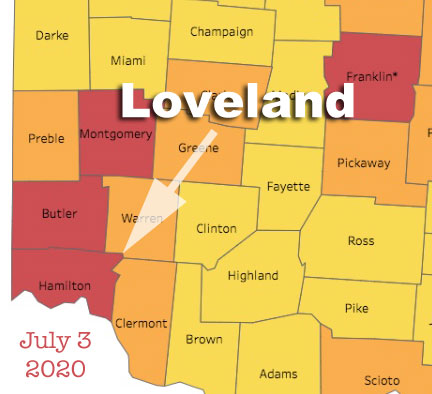
    The “Ohio Public Health Advisory System” is based upon a set of criteria and categorizes all Ohio counties in one of four levels. Counties are rated as:  1) yellow, 2) orange, 3) red or 4) purple — with purple being the highest cautionary rating.

    Seven counties in Ohio are rated “red” including Hamilton County.  The description and guidelines for level three include:

      • Very high exposure and spread
      • Limit activities as much as possible
      • Follow all current health orders

    “Based upon this new information, we have made the difficult decision to pause in-person services in our buildings beginning Monday, July 6,” said Brehm-Heeger. All of the 28 open locations will continue to provide curbside or drive-thru service, and they will continue to open nine more locations to provide these services throughout July.

    This temporary change is a proactive decision to help limit the spread of the virus, according to Brehm-Heeger. “We will monitor news and information from health officials daily so we can bring back in-person service as soon as the situation improves and the key alert indicators start trending downward. We have repeatedly been reminded that the pandemic is fast moving and requires our quick response and ability to adjust plans accordingly.” Thank you for your continued patience and understanding as we adjust to the pandemic and find new ways to serve you.”

    Between now and the middle of July, the Library is phasing services back in, with new locations being added each week. The goal is to be providing services at all locations by mid-July. The exception is Price Hill, as that location is currently closed through the end of 2020 for a major renovation and expansion project. “We’ll use this space to keep you up to date on what is going on. We are excited to see you again,” said Kathy Taylor, Regional Manager in a statement issued on July 3.

    The Loveland Branch currently has Curbside Service only and no Drive-Thru Service is planned.

    Brehm-Heeger said, “Thank you for your continued patience and understanding as we adjust to the pandemic and find new ways to serve you.”


    Hours of Service 

    Beginning June 15, all open locations will be operating from 10 a.m. to 6 p.m., Monday through Saturday.

    Book Drops 

    All locations are accepting returns through their book drops, except Price Hill. Materials are being quarantined for 3 days before being checked-in, so it will be a few days before you see any changes reflected on your account.

    Curbside Service 

    • Curbside: Avondale, Blue Ash, Clifton, College Hill, Delhi, Forest Park, Green Township, Hyde Park, Loveland, Madisonville, Mariemont, Monfort Heights, North Central, Oakley, Pleasant Ridge, St. Bernard, Sharonville, Symmes, Walnut Hills, Westwood, West End and Wyoming
    • Beginning July 6th these branches will open curbside service:  Madeira, Mt. Washington
    • Beginning July 13 these branches will open for curbside service: Bond Hill, Cheviot, Corryville, Deer Park, Green Hills, Miami Township, Northside, Norwood

    Scheduled appointments are not required for curbside service, but calling ahead will make the process more efficient for you, especially if you need to do something other than pick up a hold.

    When you arrive at your location for curbside pick-up, look for the curbside service sign, park, and call the branch at the number on the sign.

    Drive-Thru Service  

    Drive-thrus are at these locations: Anderson, Covedale, Groesbeck, Harrison, Reading, and the Downtown Main Library 

    Scheduled appointments are not required drive-thru service, but calling ahead will make the process more efficient for you, especially for curbside service, or if you need to do something other than pick up a hold. Find phone numbers for all branches on this web page.

    Holds/Borrowing Items 

    If you would like to borrow an item from the library, search our catalog, find the item you want, place a hold on it, and choose which location you’d like to pick up the item from. Or you can call us, and we’ll place the hold for you.

    When the item is ready, you will receive an email notice. You can pick it up anytime between 10 a.m. and 6 p.m., Monday through Saturday.  If you’d like, you can call the location and schedule a time for pick-up.

    In-Person Services 

    Due to the wide community spread of the virus in Hamilton County right now, the Library made the decision to temporarily suspend in-person services. Read more in this blog post from the director.

    We’re Here for You Online and on the Phone 

    • Our eBranch is always open, and we are continuing to provide events like storytimes online on a regular basis. Check our calendar for more information.
    • Call, email or chat with us seven days a week for help with job searching, finding trusted health information, getting assistance with a library resource, and more.

    For the latest Library service updates and resources, please visit our COVID-19 resource page.