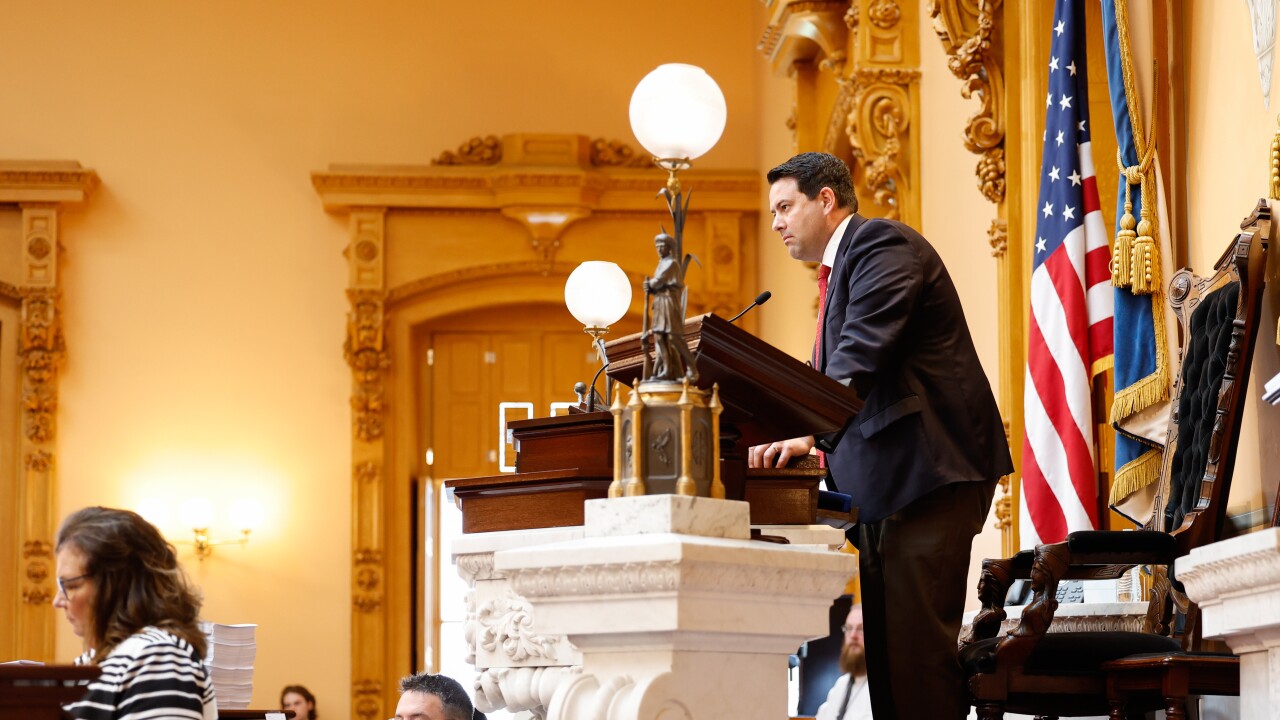
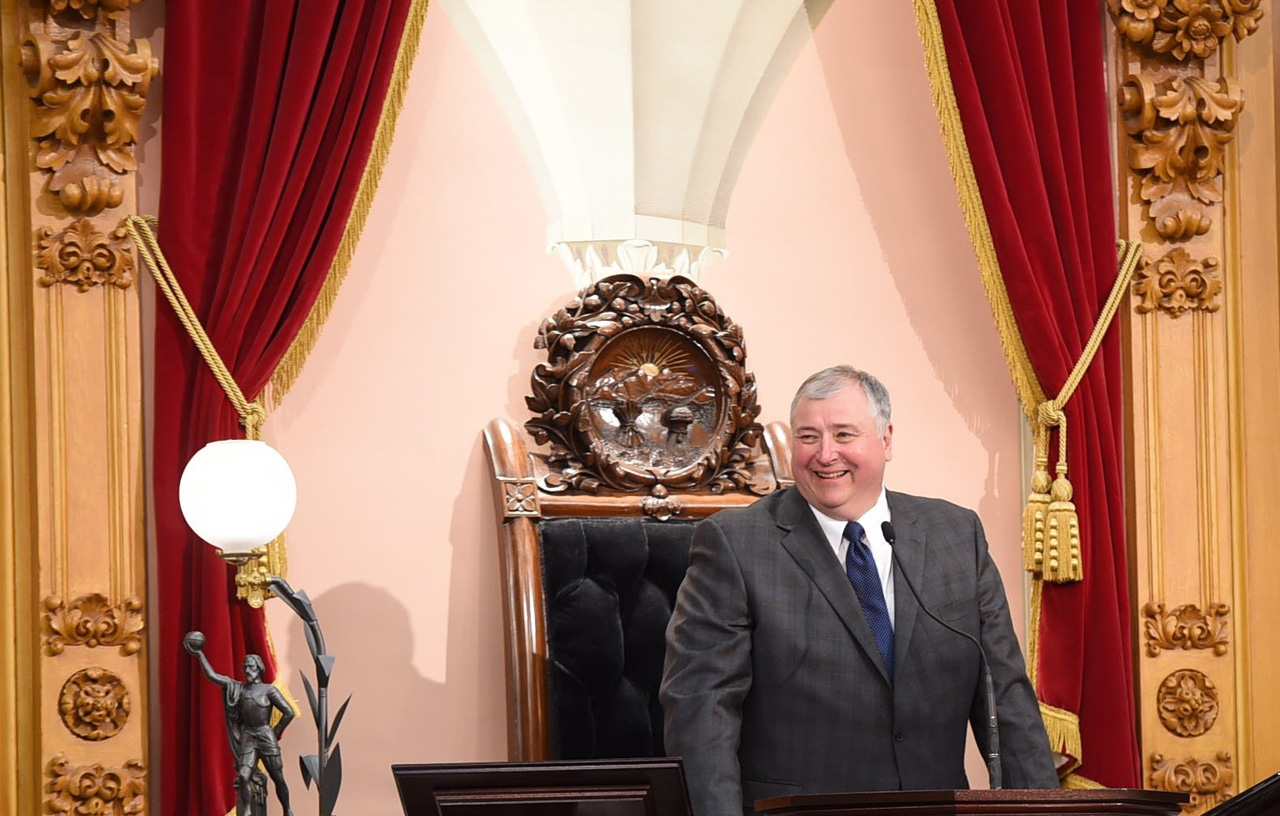
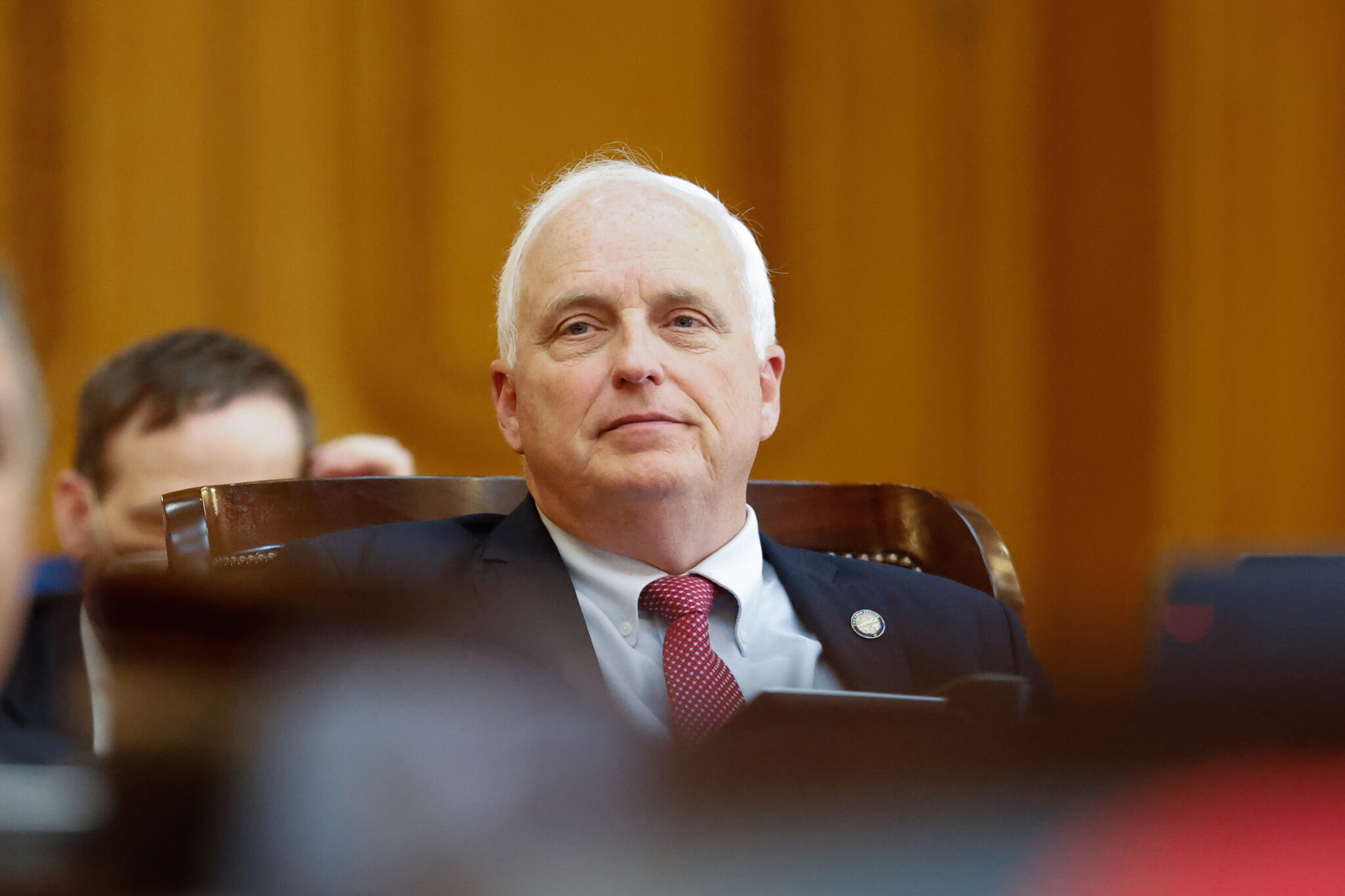
The Ohio Senate has passed a $60 billion state biennial operating budget, which includes a tax cut for the wealthy, some increased public education funding, and $600 million in funding to the Cleveland Browns for their new stadium.
The total budget is expected to be around $200 billion once federal dollars come in.
Ohio House Bill 96 was voted on mainly along party lines, 23-10. State Sen. Bill Blessing, R-Colerain Township, joined the Democrats to vote no.
A measure moving through the Ohio Senate would direct public schools to display historical documents like the Declaration of Independence or the Bill of Rights. It also includes the Ten Commandments, a religious document. The measure is one example in a wave of state legislation attempting to roll back a bright line separating religious displays from public school classrooms.
The proposals take their cue from a bill in Louisiana requiring the display of the Ten Commandments. Five school districts challenged that law. A district court judge blocked it from taking effect, but only in those districts. The case is currently before the U.S. 5th Circuit Court of Appeals.
In 1980, the U.S. Supreme Court overturned a Ten Commandments law in Kentucky. But following a 2022 decision in favor of a high school football coach who regularly prayed with players at games, religious organizations sense an opening.
A Stateline report earlier this year found legislation modeled on Louisiana’s bill in 15 states. That list doesn’t include Ohio’s measure.
What it does
The sponsor, Sen. Terry Johnson, R-McDermott, contends the bill will expose students to documents that have “served as the backbone of our legal and moral traditions as a people.” Schools can also set up monuments inscribed with one of the documents on the list.
An amendment, adopted last week, directs classrooms to display at least four of the approved documents for all classes from 4th grade to 12th.
The lineup includes what you’d expect. In addition to the Declaration and the Bill of Rights the Constitution is an option. But several others, while significant, are a bit of a stretch for a grade school classroom. Schools could display the Articles of Confederation or the Northwest Ordinance. They could go back even further to the Mayflower Compact or Magna Carta.
“Simply put,” Johnson argued, “This legislation intends to reintroduce disciplined historic principles — those same principles upon which our Founding Fathers drew inspiration and put to writing — back to the classroom.”
Classes could also display the United States or Ohio motto. Both were established in the 1950s more than a century after the last Founding Father died.
Support and pushback
For all Johnson’s insistence on legal traditions and historic principles, his supporters give the game away. Among those urging lawmakers to pass the bill, there are no historians or legal scholars, no societies dedicated to the founding or to teaching young people.
Instead, there are just three groups, all of them Christian organizations, backing the effort: The Family Research Council, Christian Business Partnership, and Ohio Christian Alliance.
Last week Ohio Christian Alliance President Chris Long testified that the displays offer “a complement” to existing social studies curriculum. “Students remember better when they have visual aids,” he said.
Democrats on the committee asked whether they should leave decisions about displays to the teachers actually leading classes. Sen. Kent Smith, D-Euclid, drew comparison to the Christian Alliance’s longstanding offer to provide state lawmakers with a framed copy of the Ten Commandments.
“Do you think that might be the way to go in this case?” he asked, suggesting school districts should have the same choice.
Sen. Catherine Ingram, D-Cincinnati, zeroed in on a provision setting a July 1, 2026 deadline, but only for displays stemming from donations. Although Republicans on the panel didn’t offer a straight answer, it appears the deadline would apply to all displays. The measure requires districts to determine the overall cost and then accept either donated funds or donated displays to meet the requirements.
The measure received much harsher criticism at an earlier hearing. Gary Daniels, chief lobbyist for the ACLU of Ohio, rejected arguments that the Ten Commandments are one choice among many, or fundamental the country’s founding. The organizations supporting the bill will start lobbying districts if the bill passes, he argued, and commandments about worship, respecting parents or prohibiting adultery have nothing to do with the founding of the United States.
In short, he said, the bill is “a plainly obvious attempt to impose explicit religious beliefs and practices on young, captive audiences in our public schools.”
Follow Ohio Capital Journal Reporter Nick Evans on X or on Bluesky.
YOU MAKE OUR WORK POSSIBLE.
_______________
Nick Evans
Nick Evans has spent the past seven years reporting for NPR member stations in Florida and Ohio. He got his start in Tallahassee, covering issues like redistricting, same sex marriage and medical marijuana. Since arriving in Columbus in 2018, he has covered everything from city council to football. His work on Ohio politics and local policing have been featured numerous times on NPR.
Ohio Capital Journal is part of States Newsroom, the nation’s largest state-focused nonprofit news organization.
Brielle Shorter, a 20-year-old Ohio State University student, protests against Senate Bill 1 on Jan. 22, 2025. (Photo by Megan Henry, Ohio Capital Journal).
Senate Bill 1 was passed by a 21-11 vote. All nine democrats and two republicans — Bill Blessing and Tom Patton — voted against the bill.
The Ohio Senate passed a controversial higher education bill that would overhaul the state’s public universities during Wednesday’s session. This came one day after more than 800 Ohioans submitted testimony against it. Fourteen people provided supporter testimony. The sponsor of the bill called those numbers “irrelevant.”
Ohio Senate Bill 1 was passed by a 21-11 vote. All nine democrats and two republicans — Bill Blessing and Tom Patton — voted against the bill, which will go to the Ohio House for consideration.
_____________
For Background:
Senate Bill 1 will ban diversity and inclusion efforts, prevent faculty from striking, set rules around classroom discussion, put diversity scholarships at risk, shorten university board of trustees terms from nine years down to six years, and require students take an American history course, among other things.
Regarding classroom discussion, it would set rules around topics involving “controversial beliefs” such as climate policies, electoral politics, foreign policy, diversity and inclusion programs, immigration policy, marriage, or abortion.
“This is needed reform to enhance and make higher education in Ohio better,” Cirino said. “We have to constantly be moving the goal line here for us to be better, to respond to the changes demographically and in the workforce demands for the jobs that our graduates are taking.”
Protester opposing S.B. 1 erupted in chants moments after the bill passed, shouting, among other things, “Who killed higher ed? The Ohio Senate did! Who killed higher ed? Senator Cirino did!”
The protesters continued their chants with the names of different lawmakers as they exited the Senate chamber.
GET THE MORNING HEADLINES.
When asked why this bill was fast-tracked through the Senate, Senate President Rob McColley, R-Napoleon, said the Senate passed a nearly identical bill that Cirino put forward during the last General Assembly.
“Everybody’s minds are pretty much made up as to what we should do in this regard, so we didn’t see the reason to delay this process any further,” he said.
What is in Senate Bill 1?
S.B. 1 would ban diversity and inclusion efforts, prevent faculty from striking, set rules around classroom discussion, put diversity scholarships at risk, shorten university board of trustees terms from nine years down to six years, and require students take an American history course, among other things.
Regarding classroom discussion, it would set rules around topics involving “controversial beliefs” such as climate policies, electoral politics, foreign policy, diversity and inclusion programs, immigration policy, marriage, or abortion.
The bill stipulates classroom discussion allows students to “reach their own conclusions about all controversial beliefs or policies and shall not seek to indoctrinate any social, political, or religious point of view.”
“A lot of it is related to making sure that diversity of thought is practiced as a policy in our universities and community colleges,” Cirino said.
S.B. 1 would affect Ohio’s public universities and community colleges, not private universities.
Senate Democrats tried to make several amendments to S.B. 1 during Wednesday’s Senate Session, but none of the amendments were adopted.
“I wouldn’t view that as a scientific measure of the general support statewide or opposition statewide, to what this actually is,” McColley said when asked about the overwhelming opposition to S.B. 1.
Senate discussion
COLUMBUS, Ohio — JUNE 15: State Sen. Jerry Cirino, R-Kirtland, speaks during the Ohio Senate session, June 15, 2023, at the Statehouse in Columbus, Ohio. (Photo by Graham Stokes for Ohio Capital Journal)
There was two hours of discussion about the bill during Wednesday’s Senate session before the vote took place. All nine Senate democrats spoke against the bill while four Republicans voiced their support of the bill.
“Students are going to leave the state and go somewhere else where their abilities to learn and express free speech aren’t subject to this law,” said state Sen. Bill DeMora, D-Columbus. “This bill is the worst bill.”
The quality of education suffers when legislators gain the authority to control what is taught in universities, said state Sen. Casey Weinstein, D-Hudson.
“This bill invites political interference into academic matters,” he said.
Minority Senate Leader Nickie J. Antonio, D-Lakewood, said S.B. 1 is a detriment to Ohio’s higher education.
“The premise of the bill is that somehow public universities are bastions of liberalism trying to indoctrinate our children,” she said. “I think it will make the state of Ohio universities not favorable to students, especially students with diverse backgrounds that are looking for places to be their full, complete selves.”
State Sen. Kristina Roegner, R-Hudson, spoke in favor of the bill.
“We want Ohio’s colleges and universities to be places where students reach their full intellectual potential, where research and critical thinking are promoted, where free speech is encouraged and where innovation is nurtured and performance is rewarded to be the best, we must be a meritocracy,” she said.
Many college students and faculty have said they would leave Ohio if S.B. 1 passed, but Cirino said he doesn’t believe there is going to be a mass migration out of the state.
“I believe that the better we enhance higher education in Ohio, the more attractive we’re going to be to students of all types,” he said. “I would never participate in anything that destroyed higher ed.”
Megan Henry is a reporter for the Ohio Capital Journal and has spent the past five years reporting in Ohio on various topics including education, healthcare, business and crime. She previously worked at The Columbus Dispatch, part of the USA Today Network.
Ohio Capital Journal is part of States Newsroom, the nation’s largest state-focused nonprofit news organization.
A bill that would expand fracking leases in state public lands, parks, and wildlife areas from three years to five is going to Ohio Gov. Mike DeWine’s desk for his signature.
Once he receives the bill, DeWine will have 10 days to sign the bill into law or veto it.
State Reps. Dick Stein, R-Norwalk, and Patrick Brennan, D-Parma, introduced House Bill 308 last year and it originally defines nuclear energy as green energy in Ohio.
Ohio has two nuclear reactors — Davis–Besse Nuclear Power Station in Northwest Ohio and the Perry Nuclear Power Plant in Northeast Ohio.
The bill passed the Ohio House this summer, with ten Democrats voting against it.
The Ohio Senate added a few amendments to the bill — including one that increases a standard lease for fracking under state parks to five years. The current law is three years.
“We need to continue to frack, and allowing the extension of that is also important,” Sen. Andrew Brenner, R-Delaware, said during last week’s Senate session.
State Sen. Kent Smith, D-Euclid, had many issues with the bill.
“This is perhaps the least popular thing that we will do in the entire General Assembly,” Smith said. “Why are we extending the lease in this amendment again without public consideration?”
The U.S. Department of Energy defines renewable energy as coming from “unlimited, naturally replenished resources, such as the sun, tides, and wind.”
“This bill would designate nuclear energy as green energy, which is kind of mystifying to me, because it’s clearly not,” Smith said. “It has so much radioactive waste, it’s clearly not clean. It’s certainly not renewable.”
H.B. 308 passed last week in the Ohio Senate with a 24-6 vote. Sen. Catherine Ingram was the only Democrat to vote for the bill.
House concurrence
The Ohio House voted 65-26 to concur with the changes made to the bill later that same day. Brennan voted against concurrence on his own bill, saying he hoped it would play out in conference committee.
“I remain steadfast in favor of nuclear expansion in the state of Ohio,” he said. “… I am not anti-fracking, but I believe our state parks are sacrosanct,” he said. “I think when we created our state parks, we created a contract with the people that we would leave our state parks alone. I’m just a purist when it comes to our state parks.”
Only three Democrats voted for concurrence — state Reps. Richard Dell’Aquila, Joe Miller, and Elgin Rogers, Jr.
GET THE MORNING HEADLINES.
State Rep. Don Jones, R-Freeport, lives where fracking takes place in eastern Ohio and said the fracking process has been refined over the years.
“You will never know where fracking has occurred,” he said. “We’re not going to damage our state parks. We’re not going to hurt our state parks.”
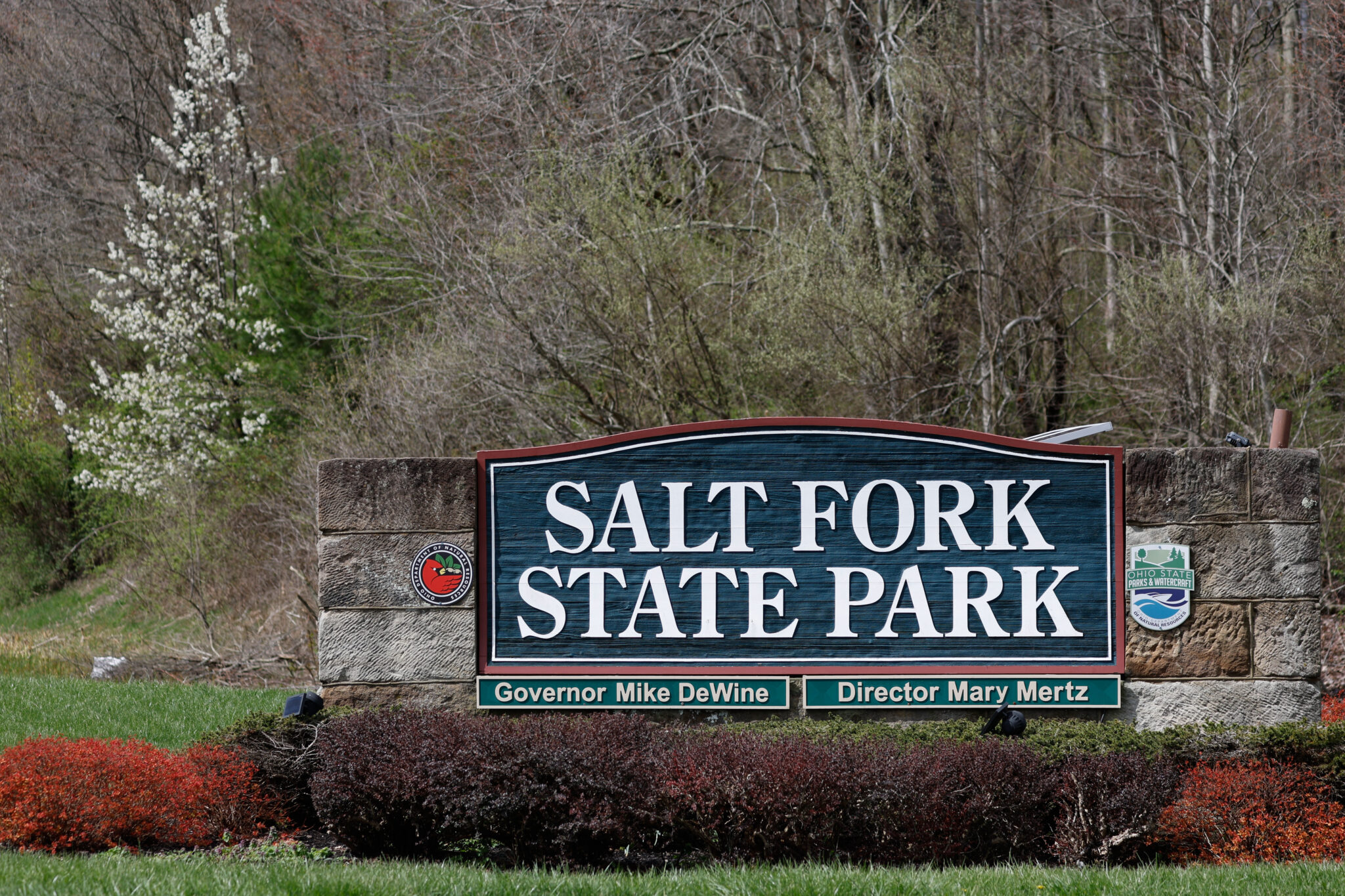
The Ohio Oil and Gas Land Management Commission has selected various bidders to frack Salt Fork State Park, Valley Run Wildlife Area and Zepernick Wildlife Area. The vote on this bill comes days after OGLMC selected an Oklahoma-based company to lease about 30 acres of land in Egypt Valley in Belmont County for fracking.
“This expansion of fracking is going to industrialize our beautiful parks and transform them into places people avoid, not enjoy,” Cathy Cowan Becker, steering committee member of Save Ohio Parks, said about H.B. 308.
Former Ohio Gov. John Kasich signed a law allowing drilling companies to frack in state parks in 2011. Potential drillers need to get permission from the Oil and Gas Commission, but Kasich never appointed anyone to the committee.
A fracking amendment was added to a bill during the last lame duck two years that passed and Gov. Mike DeWine signed it into law in January 2023. The law requires the Ohio Department of Natural Resources to allow fracking for natural gas in Ohio’s public land and state parks.
“Ohio legislators have once again sold out our state parks and public lands to the oil and gas industry through an amendment to an unrelated bill during the lame duck session, with no notice or chance for public testimony,” Becker said.
Megan Henry is a reporter for the Ohio Capital Journal and has spent the past five years reporting in Ohio on various topics including education, healthcare, business and crime. She previously worked at The Columbus Dispatch, part of the USA Today Network.
Ohio Capital Journal is part of States Newsroom, the nation’s largest state-focused nonprofit news organization.
The Ohio House recently passed a bill that would ban transgender people from using the bathroom and locker room that aligns with their gender identity.
Bradie Anderson fears she will be physically harmed if she uses the boys bathroom at her Northeast Ohio high school.
The 14-year-old sophomore is transgender and her mom Anne said she has never had any issues with using the girls restroom at school.
“She’s not going in the boys bathroom,” Anne said. “If my daughter went into the boys bathroom, I would hate to think what would happen to her in there.”
But the Ohio House recently passed a bill that would ban transgender people, like Bradie, from using the bathroom and locker room that aligns with their gender identity. The bill now heads to the Senate for concurrence, but the legislators are on break until after the election.
______
Jean Schmidt (R) who represents Ohio House District 62 is a co-sponsor of HB 183.
Jennifer Gross (R) who represents Ohio District 45 is a co-sponsor of HB 183.
Thomas Hall (R) who represents Ohio District 46 is a co-sponsor of HB 183.
Bill Seitz (R) who represents Ohio District 30 is a co-sponsor of HB 183.
Adam C. Bird (R) who represents Ohio District 63 is a Primary Sponsor of HB 183.
______
“The bathroom bill is going to get kids hurt and put them in harm’s way,” Anne said. “Why would anyone want to put any child, even if you don’t understand who they are, in harm’s way?”
If the bathroom bill were to pass, Anne questions who is going to monitor the bathrooms.
“If you don’t look feminine enough, if you don’t look masculine enough, are they going to be questioned?” Anne said. “Because cisgender people are also going to get pulled into this as well.”
The American Medical Association opposes policies preventing transgender individuals from accessing basic human services and public facilities consistent with gender identity.
Anti-transgender legislation in Ohio
The bathroom bill is one of many anti-LGBTQ+ bills Ohio lawmakers have introduced in the General Assembly — including one that would ban gender affirming care and prevent transgender athletes from playing women’s sports and another that would force educators to out students to their parents.
“These are our kids,” Anne said. “They’re not talking points. They’re real kids.”
Bradie came out eight years ago and was kicked out of Catholic school for being transgender, forcing her to switch to public school where she started experiencing harassment from her middle school peers around the same time Ohio lawmakers started introducing anti-transgender legislation.
“She had been threatened with physical harm, threatening to cut body parts off of her,” Anne said.
The harassment has not stopped Bradie from advocating for herself and others. She has testified in committee meetings against the various anti-transgender bills and started speaking out at protests when she was 11, Anne said.
But all of the anti-transgender legislation in Ohio is taking a toll on Bradie, who receives gender affirming care.
“The last few weeks have been tough,” Anne said. “Bradie’s been crying. She’s been very upset. The combination of being harassed in our town that we live in and all of the anti-trans bills, especially the bathroom bill, gives her major anxiety.”
Bradie loves playing soccer, but because of all the scrutiny around transgender athletes, she’s not sure if she’ll play this fall.
“She’s so much more than being transgender,” Anne said. “She’s sick of the adult bullies coming for her in this town, and a lot of them don’t even have children in the school.”
Despite all of these proposed anti-transgender bills in Ohio, Bradie doesn’t want to move away.
“She shouldn’t have to,” Anne said. “I grew up here, and I’m not going to be run out of town because people are ignorant.”
Megan Henry is a reporter for the Ohio Capital Journal and has spent the past five years reporting in Ohio on various topics including education, healthcare, business and crime. She previously worked at The Columbus Dispatch, part of the USA Today Network.
Ohio Capital Journal is part of States Newsroom, the nation’s largest state-focused nonprofit news organization.
COLUMBUS, OH — JANUARY 24: A protester asks senators to not override Gov. Mike DeWine’s veto of House Bill 68 that would limit medical care for transgender minors and block transgender girls from sports during the Ohio Senate session, January 24, 2024, at the Statehouse in Columbus, Ohio. (Photo by Graham Stokes for Ohio Capital Journal)
Both laws — banning gender-affirming care and local flavored tobacco regulations — are now set to take effect at the end of April.
The Ohio Senate voted to override two of Gov. Mike DeWine’s vetoes Wednesday — one on a bill blocking gender-affirming care for trans youth and the other blocking cities from banning flavored tobacco sales. Both laws are now set to take effect at the end of April.
The Senate voted 24-8 to override DeWine’s veto of House Bill 68, which blocks gender-affirming care for trans youth and prevents transgender athletes from playing women’s sports. The bill prohibits transgender youth from starting hormone therapy and puberty blockers.
“I think parents should make those decisions and not the government,” DeWine said before the vote Wednesday.
The Senate also voted 24-8 to override DeWine’s veto of a provision that would prevent cities from banning flavored tobacco sales. A flavored tobacco ban took effect in Columbus earlier this month after Columbus City Council voted to stop the sale of flavored tobacco products in December 2022.
“It will be a win for big tobacco and it will be a loss for Ohio,” DeWine said before the vote Wednesday.
A three-fifths majority vote from the members of the House and Senate is necessary to override the governor’s veto. The Ohio House voted to override HB 68 earlier this month and voted to override the flavored tobacco ban in December. State Sen. Nathan Manning of North Ridgeville was the only Republican to vote against overriding the Republican governor on the gender-affirming care ban, and state Sen. Louis Blessing of Colerain Township was the sole Republican to vote against overriding DeWine on the tobacco law.
The laws are set to go into effect 90 days after they are delivered to the Secretary of State’s office, meaning it would likely take effect April 23.
House Bill 68
COLUMBUS, OH — JANUARY 24: A protester asking senators to not override Gov. Mike DeWine’s veto of House Bill 68 that would limit medical care for transgender minors and block transgender girls from sports is removed from the gallery during the Ohio Senate session, January 24, 2024, at the Statehouse in Columbus, Ohio. (Photo by Graham Stokes for Ohio Capital Journal)
Ohio Senators discussed House Bill 68 for about an hour before taking a vote. Democrats said they celebrated DeWine’s veto while Republicans expressed their disappointment in last month’s veto.
“There are men and there are women and there are boys and there are girls and they are different,” said State Sen. Kristina Roegner, R-Hudson.
“Gender is not fluid. There is no such thing as a gender spectrum,” she claimed.
State Sen. Bill DeMora, D-Columbus, said this bill becoming law will lead to loss of life.
“Politicians have no business banning evidence-based, life-saving medical care – especially when it is endorsed by every major medical and mental health association,”said Ohio Senate Democratic Leader Nickie J. Antonio, D-Lakewood.
“We should listen to parents, providers and patients, not willfully and purposely pass harmful legislation that will add to the mass exodus of individuals from the state of Ohio,” Antonio said.
A protester was removed from the Senate chamber after she interrupted Roegner.
“Jesus loves the little children, all the children of the world, LGBTQIA,” she screamed. “Jesus would be here on their side today. We need to support them.”
HB 68 has a grandfather clause that would allow doctors who already started treatment on patients to continue.
Gender-affirming care is supported by every major medical organization in the United States. Children’s hospitals across Ohio, the Ohio Children’s Hospital Association, and the Ohio Academy of Family Physicians all oppose HB 68. No Ohio children’s hospital performs gender-affirming surgery on patients under 18 currently.
DeWine said his veto of HB 68 was “about protecting human life.”
“These are gut-wrenching decisions that should be made by parents and should be informed by teams of doctors who are advising them,” he said during a press conference on Dec. 29.
It’s likely this new law will end up in court.
Twenty-two other states have passed a law that bans gender affirming care for transgender youth, but most have faced legal challenges, according to the Human Rights Campaign.
Before the Senate voted to override his veto, DeWine said he does not plan to pursue legal against HB 68.
“The legislature has the constitutional right to override anything, any bill that I sign, or any or any bill that I veto,” DeWine said. “That’s part of our system. And I respect our system. It doesn’t mean I like the vote, but I respect our system.”
Senate President Matt Huffman, R-Lima, told reporters Wednesday he believes HB 68 will hold up in court.
“I do think that it’ll pass constitutional scrutiny,” he said.
State Rep. Gary Click
The bill’s author state Rep. Gary Click, R-Vickery, has denied that HB 68 has any religious backing, but Click can be heard saying in a recorded sermon from 2018 that trans people break from God’s plan for the family.
COLUMBUS, Ohio — JANUARY 10: State Rep. Gary Click, R-Vickery, celebrates the vote to override Gov. Mike DeWine’s veto of HB 68 during the Ohio House session, January 10, 2024, at the Statehouse in Columbus, Ohio. (Photo by Graham Stokes for Ohio Capital Journal. Republish photo only with original article.)
“You’re not born that way,” Click says about trans people during the sermon. “God’s not going to curse you in the wrong body. He’s not going to curse you with desires that cannot be adequately and appropriately and biologically fulfilled correctly.”
Click is a pastor at Fremont Baptist Church and celebrated Wednesday’s Senate vote.
“The SAFE Act and Save Women’s Sports Act are the civil rights issues of our day, ensuring that children have the right to grow up intact and that women are no longer subject to men invading their spaces,” he said in a statement.
Gender-affirming care
Gender-affirming care can “include any single or combination of a number of social, psychological, behavioral or medical interventions designed to support and affirm an individual’s gender identity,” according to the World Health Organization.
Puberty blockers use hormones to pause puberty development and are reversible.
Hormone therapy helps align a person’s body with their gender identity by giving testosterone hormones to those who were assigned female at birth and giving estrogen hormones to those who were assigned male at birth. This is partially reversible.
A 2022 study published in JAMA Network Open found access to hormones and puberty blockers for young people ages 13-20 was associated with a 60% lower odds of moderate to severe depression and a 73% lower odds of self-harm or suicidal thoughts compared to youths who didn’t get these medications.
Transgender athletes
House Bill 6, which prevents trans athletes from playing Ohio women’s sports, was rolled into HB 68 during the summer.
“It’s too bad that House Bill 68 and House Bill 6 were combined into one piece of legislation because the only commonality these two pieces of legislation have is they both target the same small portion of transgender kids,” said State Senator Kent Smith, D-Euclid.
Twenty-three states have passed similar laws in regards to transgender athletes since 2020, according to ESPN.
Currently, if a trans girl wants to play on a team with cis girls in Ohio, she must go through hormone treatments for at least one year or show no physical or physiological advantages, according to the Ohio High School Athletic Association.
“They think that they can erase transgender people with this legislation and the other legislation they’re passing, but our kids will still be trans and trans people will still be trans no matter what they do,” Zelch said. “And we’re here to fight and continue fighting.”
Human Rights Campaign President Kelley Robinson said the override of HB 68 will harm innocent children.
“Despite the fact that they have no medical training, these politicians believe they know better than parents and transgender youth seeking health care. It’s shameful,” Robinson said in a statement.
Dara Adkison, board secretary of TransOhio, said trans youth deserve better.
“Our community is strong and resilient in ways that hateful legislators can not comprehend, and trans Ohioans across the state cannot and will not be legislated away,” Adkison said.
Carson Hartlage, an Ohio medical student, said this is a dark day for the Ohio trans community.
“I was a trans kid who became a trans adult in Ohio, and it feels so dehumanizing to see my home state spend years trying to stop healthcare from my community,” Harlage said.
Tobacco
Back in January 2023, DeWine vetoed a bill that would have prevented any city or municipality from regulating smoking, vaping and other e-cigarette usage and sales. Before the Senate voted to override the tobacco veto, DeWine said a veto override would be horrible for Ohio children.
“I just don’t know how anybody thinks it was a great idea,” DeWine said. “To have more children in the state of Ohio become addicted (to nicotine).”
One out of every five children in Ohio vape, DeWine said.
“It’s the Tutti Frutti and all the other kinds of crazy flavors that masked all nicotine and it gets them addicted,” he said.
The American Cancer Society Cancer Action Network said lawmakers have turned their backs on Ohio kids with the veto override.
“Instead of offering solutions to address the health of Ohioans, lawmakers have now rolled back existing local laws regulating the sale of tobacco products and limited what local governments can do to prevent people from starting to use tobacco and help people quit,” ACS CAN said in a statement.
Municipal home rule gives cities and villages in Ohio the constitutional right to certain powers, including establishing laws in accordance with the self-government clause. Cities have the right to make their own policies, as long as it doesn’t get in the way of laws in the Ohio Revised Code.
Ohio Capital Journal reporter Zurie Pope contributed to this report.
Megan Henry is a reporter for the Ohio Capital Journal and has spent the past five years reporting in Ohio on various topics including education, healthcare, business and crime. She previously worked at The Columbus Dispatch, part of the USA Today Network.
CINCINNATI — Former Ohio House Speaker Larry Householder spent possibly his last moments as a free man around 2:30 p.m. Thursday and they couldn’t have been pleasant.
U.S. District Judge Timothy Black gave the Glenford Republican the maximum possible sentence of 20 years and then ordered blue-shirted U.S. Marshals to immediately take him into custody. He rose, put his hands behind his back, the marshals cuffed him and led the once-powerful pol away.
But before that humiliation, the judge blistered Householder for being the ringleader of a racketeering scandal in which Akron-based FirstEnergy paid him more than $59 million in bribes in exchange for a $1.3 billion bailout, most of which was intended to save two failing nuclear plants in Northern Ohio.
Ratepayers could have used that money for things like education, health care or to start businesses, the judge said.
“You handed that money to suits in private jets,” Black said.
The judge made the speech and imposed the sentence after saying Householder clearly perjured himself during his criminal trial, which lasted from late January until mid-March.
In it, Householder claimed to barely know FirstEnergy executives as federal prosecutors put on a mountain of evidence that Householder flew on their corporate jets, sat in their luxury boxes and dined in fancy restaurants as they plowed tens of millions of the corporation’s dollars into dark-money accounts.
“You conned the people of Ohio and you tried to con the jury, too,” Black said in his gravely voice as Householder, clad in a gray suit and red tie, slumped his bulk back in his chair.
The money from FirstEnergy and one of its subsidiaries was used to elect fellow Republicans in 2018 who would vote to make Householder speaker in early 2019. More than $500,000 of it was used to pay off Householder’s credit card bills, settle a lawsuit and to repair a house he owned in Florida.
Tens of millions more went to pass the corrupt bailout — House Bill 6 — and to fund a thuggish campaign to thwart a citizen-initiated repeal.
Earlier in the hearing, Assistant U.S. Attorney Emily Glatfelter said Householder used FirstEnergy’s dark money to crush a “citizen veto” and “because of this House Bill 6 remains in effect today.”
That’s also because Republican supermajorities in Ohio’s gerrymandered legislature have refused to repeal the corrupt law even after arrests were made, and as they try to make it virtually impossible for citizens to initiate amendments to the Ohio Constitution.
Also arrested in the scandal were lobbyists Juan Cespedes and Jeffrey Longstreth — who cooperated with prosecutors within days of their arrests — and Neil Clark, who died by suicide. Former Ohio GOP Chairman Matt Borges is slated for sentencing at 11 a.m. today, Friday.
Steven Bradley, Householder’s attorney, sought leniency for his client. Referring to the possibility of a 20-year sentence, he said “That is effectively a life sentence for Larry Householder given his age and health situation.”
Householder is 64 and overweight.
Bradley argued that his client was around 60 when the racketeering conspiracy began in late 2016 and that prior to that, Householder did “innumerable” good deeds “for decades.” A 20-year sentence would “effectively give no consideration” to those good deeds, Bradley said.
But when he spoke on his own behalf, Householder appeared to do more to harm his case than to help it, just as he did at trial.
“My greatest commitment is to my creator… My next commitment is to my family,” he read from a prepared statement as he stood at the podium.
Householder said that in the course of 38 years of marriage, “I can count on one hand” the number of nights he spent away from his wife, Taundra. Householder also described the crushing pain they suffered when they lost a four-year-old daughter.
But then he pushed his claims past the point of plausibility.
He said Taundra was planning to retire from her teaching position and next year, when he turns 65, he wanted to retire as well, saying he planned to “hang up my suit and tie.”
Householder made that statement in the same courtroom where, only three months earlier, prosecutors put on testimony and displayed bank records and written messages from early 2020 that showed FirstEnergy and AEP putting money into dark money groups intended to fund an effort to change the state’s term limits so Householder could stay in office for as long as 16 more years.
The former House speaker also implied that he wanted a lenient sentence not for himself, but for his family. Taundra, he said, would be alone while “I’ll be in a cold cell hours away.”
But what might really have set Judge Black off was Householder’s profession of selfless public service.
“My life has been a total and full dedication to making life better for those I serve,” he said.
Black described voters who put out Householder yard signs, donated their hard-earned money to his campaigns, and pushed a button for him in the voting booth.
“I’m not talking about some corporation or the (former FirstEnergy CEO) Chuck Joneses of the world,” Black said. Householder’s constituents who supported him “were saying, ‘I’m choosing to trust you,’ and you betrayed that trust,” the judge said.
Black used Householder’s own words to give the lie to his claims. He quoted several recordings of Householder that were surreptitiously made during the conspiracy and played at trial.
“If you’re going to fk with me, I’m going to fk with your kids,” Householder said in one of them.
“Bottom line, you were a bully,” the judge said.
If the federal racketeering statute didn’t cap sentences for a single count at 20 years, sentencing guidelines would have recommended life for the former House speaker, Black said. One reason for that is because Householder’s use of a mountain of hidden corporate money to elect a legislature, pass an exponentially bigger bailout for the company, and to crush a citizen repeal is “an assault on democracy,” the judge said.
Black explained the special harm done by public corruption like that committed by Householder and his co-conspirators. To do so, he quoted former President Theodore Roosevelt, who ironically advocated the citizen-initiated amendment process in Ohio that Householder’s former Republican colleagues in state government are now trying to gut.
“There can be no crime more serious than bribery,” Roosevelt said in a 1903 message. “Other offenses violate one law while corruption strikes at the foundation of all law.”
When Borges, the former GOP chair, is sentenced today, it’s unclear what he’ll face. His involvement in the conspiracy was considerably less than Householder’s, but Judge Black showed that he’s not much in the mood for leniency when it comes to Ohio’s corrupt political culture.
Also uncertain is when — or if — others might be charged.
Former FirstEnergy CEO Chuck Jones and Vice President Micheal Dowling — as well as former FirstEnergy Solutions President John Kiani — directed the flood of corporate dollars into the Householder-controlled dark money groups, according to prosecutors.
And FirstEnergy admitted in a deferred prosecution agreement that it paid a $4.3 million bribe to Sam Randazzo just as Gov. Mike DeWine was appointing him to chair the Public Utilities Commission. Randazzo the helped draft the corrupt bailout law, according to trial testimony.
On the steps of the Potter Stewart U.S. Courthouse just after the sentencing, U.S. Attorney Kenneth Parker was asked when or whether those men or others might be charged.
“We continue to look through evidence and we continue to listen to recordings and speak to individuals, so if something’s there we’re going to go there, too, and address it,” he said.
MARTY SCHLADEN
Marty Schladen has been a reporter for decades, working in Indiana, Texas and other places before returning to his native Ohio to work at The Columbus Dispatch in 2017. He’s won state and national journalism awards for investigations into utility regulation, public corruption, the environment, prescription drug spending and other matters.
The Ohio Senate passed a bill Wednesday that would create “intellectual diversity” centers at Ohio State University, the University of Toledo, Miami University, Cleveland State University, and the University of Cincinnati.
The party line vote came after an amendment was added during the Senate session that tacks on Miami, Cleveland State, and Cincinnati to Senate Bill 117. The bill now moves to the House for committee consideration.
SB 117 would create the Salmon P. Chase Center for Civics, Culture, and Society at Ohio State University’s College of Public Affairs and the Institute of American Constitutional Thought and Leadership at the University of Toledo’s College of Law. It would also now create centers for civics, culture and society at Miami, Cleveland State and Cincinnati.
“The (Ohio State) center will educate students by means of free, open and rigorous intellectual inquiry, to seek truth, equip students with the skills they need to reach their own informed conclusions in matters of social and political importance,” said Sen. Jerry Cirino, R-Kirtland, one of the bill’s sponsors.
SB 117 amendment
Many Senate Democrats slammed SB 117 and the amendment during Wednesday’s session.
“SB 117 is forcing the installation of conservative think-tanks at our public universities across the state of Ohio and they are using taxpayer money to do it,” said state Sen. Bill DeMora, D-Columbus.
“The amendment is atrocious,” said Sen. Catherine Ingram, D-Cincinnati.
Miami and Cleveland State were not aware of the potential amendment adding them to the bill before Wednesday afternoon’s Senate Session.
“They had absolutely no idea,” Senate Minority Leader Nickie Antonio, D-Lakewood, told reporters when she reached out to her alma mater Cleveland State. “They did not ask for it … and are very concerned about this being imposed on them.”
State Sen. Kent Smith, D-Euclid, did something similar with his alma maters Miami and Cleveland State, and both institutions of higher education said this was the first time they were hearing about the amendment.
“Committees are the best forums for thoroughly studying bills,” he said.
Senate President Matt Huffman said making the amendment on the Senate floor was not ideal.
“Certainly that’s not the best way to do these things,” he said to reporters. “I don’t like substantive floor amendments. We’re at a lengthy legislative break. Secondly, the House in their negotiations of essentially, at least for the moment, have rejected the concept of this higher education reform that we want to have. And so what we really want to do is tee these things up.”
The amendments also clarified that both these centers are “independent academic units in their respective universities,” Cirino said.
COLUMBUS, Ohio — JUNE 15: Senate Majority Floor Leader Rob McColley, R-Napoleon, speaks during the Ohio Senate session, June 15, 2023, at the Statehouse in Columbus, Ohio. (Photo by Graham Stokes for Ohio Capital Journal)
He introduced the bill in May along with Sen. Rob McColley, R-Napoleon — arguing that university faculty are predominantly liberal.
But McColley insisted Wednesday that SB 117 is not a conservative takeover of higher education.
“There is not a single letter, there is not a single word, there is not a single phrase that requires this to teach conservative principles,” he said. “The University of Toledo Law is supportive of this. The Ohio State University does not oppose this either.”
State Sen. Andrew Brenner, R-Delaware, said college students do want these centers, but are afraid to speak out.
“If they speak out, they are afraid it might impact their academic career,” he claimed.
The bill would give UT $1 million in fiscal year 2024 and $2 million in fiscal year 2025 for the Institute, and Ohio State $5 million in fiscal years 2024 and 2025 for the Center.
The bill’s amendment would each give Miami, Cleveland, and Cincinnati $2 million each fiscal year to support the centers, Cirino said.
McColley clarified that what’s in the proposed budget when it comes to SB 117 doesn’t include the three new universities that were added to the bill through Wednesday’s amendment.
The Ohio House has pushed back on the higher education bills being added to the budget.
“We’re maybe not going to get 117 in the budget,” Huffman said. “You don’t know what the deal is until there’s a deal. So we’re just putting 117 forward as a bill.”
Senate Bill 83, also introduced by Cirino and which would overhaul higher education, was added to the budget by the Senate.
Among other things, SB 83 would ban university staff and employees from striking, college students would be forced to take certain American history courses, professor tenure would be based around “bias,” and mandatory diversity, equity and inclusion training would be prohibited, with only specific exemptions.
“The House are not fans of 83,” Huffman said. “I think we’ve offered a pretty good higher education package that they rejected.”
While the constitutional deadline for Ohio Gov. Mike DeWine to sign the budget is Friday, it seems unclear at this point if that is actually going to happen.
“I’m optimistic and I think we’ll see what happens on Friday,” Huffmann said.
Lee Strang
Professor Lee Strang is the John W. Stoepler Professor of Law & Values at the University of Toledo Law School. (Photo from University of Toledo website.)
UT Law Professor Lee Strang first got the idea for the Institute of American Constitutional Thought and Leadership in 2019 after visiting the Georgetown Center for the Constitution and Princeton University’s James Madison Program.
Megan Henry is a reporter for the Ohio Capital Journal and has spent the last five years reporting on various topics including education, healthcare, business and crime at The Columbus Dispatch, part of the USA Today Network.
Public and private education supporters had a mixed bag of reactions to the state budget proposal released by the Ohio Senate GOP on Tuesday.
Public school advocates criticized the bill’s provisions making private school vouchers almost universal at 450% of the federal poverty level, allowing those who may be able to pay for the private education to be eligible for scholarships.
“Paying private school tuition for wealthy families is not a good use of our education dollars, especially when the state is still trying to accomplish the full and fair public school funding that is required by Ohio’s constitution,” Ohio Federation of Teachers president Melissa Cropper said after the budget draft was released.
Ohio Senate GOP leadership proclaimed that “significant reforms” were on the horizon in education policy, with Senate President Matt Huffman saying the new education budget would bring “the results our parents should expect for their children’s education.”
Senate Republicans said school districts would receive “at least the level of state aid they received this school year,” and Senate Finance Committee Chair Matt Dolan, R-Chagrin Falls, touted the increase of the minimum state share of instruction from 5% to 10%, but certain “guarantees” would be eliminated in the current education funding formula.
One of those eliminated guarantees would be $106.8 million to 36 districts, which paid residents for private school scholarships.
“The state now directly funds students where they are educated making this giveaway a wasteful use of taxpayer funds,” an announcement on the budget stated.
Those direct funds will be distributed on a sliding scale based on income if the budget bill passes as written, but the eligibility level in the proposal stands at an annual income of $135,000 for a family of four.
“Every student in Ohio will be eligible for a scholarship worth at least 10% of the maximum scholarship regardless of income,” Senate GOP leaders said in a release.
The full scholarship would award $6,165 for K-8 students and $8,407 for high school students.
Senate Minority Leader Nickie Antonio, D-Lakewood, used her initial reaction to the budget proposal to discredit changes made to the private school vouchers.
“A program that was intended to help low-income children could now subsidize wealthy families to continue to send their children to private schools,” Antonio said in a statement. “Our caucus will be spending the next few days digging into the details to follow the money.”
One thing the budget won’t be paying for under the Senate’s budget proposal is an expansion of a statewide free breakfast and lunch program. The House inserted a provision to make school meals free for anyone whose household income qualified them for free or reduced meals, considered a small win by school nutritionists who asked for completely universal school meals.
In the Senate version, that provision has been removed.
Many of those who dislike the education parts of the budget proposal spoke out against Senate Bill 1, legislation that would restructure the Ohio Department of Education to become the Ohio Department of Education and Workforce (DEW), and work within the governor’s office under two deputy directors, one for primary and secondary education, and another for workforce development.
The bill, and the provision now in the budget draft, “transfers most of the powers and duties of the State Board of Education and the Superintendent of Public Instruction to the DEW,” according to budget documents.
The State Board of Ed and the state superintendent would retain power “regarding educator licensure, licensee disciplinary actions, school district territory transfers and certain other areas,” the budget proposal states.
Odds are opponents will be back to decry the inclusion of SB 1’s language in the new budget. Cropper said including the restructure would be “too big of a reorganization to shove through as part of a budget bill.”
“It deserves more attention and a more thoughtful, deliberative legislative process,” according to Cropper.
The same message was sent by opponents of the bill in the last General Assembly, when that version of the restructuring came late in the GA session, and died as the lame duck session ended.
It reappeared at the beginning of the year, and has been going through the committee process in the last few months.
Some right-wing groups praised the education provisions of the budget, with the Thomas B. Fordham Institute complimenting the preservation of third-grade retention and the expansion of vouchers. The group also said the Senate version has “taken another step towards a more coherent and accountable governance system,” referring to SB 1, which they have supported.
“Greater parent empowerment, accountable school systems and strong evidence-based literacy policies can only help increase student achievement,” said Fordham’s Ohio research director, Aaron Churchill.
The Buckeye Institute’s Greg R. Lawson called the proposal “a significant step toward putting students first,” with the plan to universalize private school vouchers and improve charter school funding.
SUSAN TEBBEN
Susan Tebben is an award-winning journalist with a decade of experience covering Ohio news, including courts and crime, Appalachian social issues, government, education, diversity and culture. She has worked for The Newark Advocate, The Glasgow (KY) Daily Times, The Athens Messenger, and WOUB Public Media. She has also had work featured on National Public Radio.
A consequential firearms measure cruised through the Ohio Senate and is currently waiting on a hearing in the House Insurance committee. The proposal, like numerous previous measures, preempts local action, this time by prohibiting fees or liability insurance for gun owners.
Cities around Ohio are wrestling with increases in violent crime since the pandemic, but many local leaders argue they’re hamstrung by state laws barring most local firearm restrictions.
Columbus, for instance, is currently locked in a court battle with the state to impose three local firearm ordinances. Those laws aren’t particularly draconian — they prohibit high-capacity magazines, criminalize straw sales, and require safe storage. Nevertheless, state officials insist they violate state law preempting local restrictions.
The insurance proposal would extend those preemptions further.
Sen. Theresa Gavarone, R-Huron. Photo from OhioSenate.gov
Liability insurance
Sens. Terry Johnson, R-McDermott, and Theresa Gavarone, R-Bowling Green, insist an insurance requirement for gun owners would infringe on their constitutional rights. They filed a similar bill in the previous general assembly.
“The right of the American citizens to keep and bear arms is as clear as day,” Johnson said on the Senate floor. “And attempts to make it so it’s difficult for law abiding citizens to exercise this right, that’s guaranteed, blazoned into the Constitution, that’s wrong.”
The sponsors aren’t particularly concerned about the fact that they can’t identify a single Ohio municipality that has proposed an insurance requirement. Instead, they point to legislation elsewhere.
“There is a trend of extreme anti-gun measures that directly contradict the Constitution,” Gavarone argued. “In places like California, Illinois, and New Jersey. So we can never discount the fact that it could and probably will be attempted in Ohio.”
“Senator Johnson and I wanted to slam the door shut on present and future attempts on infringement on this particular constitutional right,” Gavarone added.
The sum total of gun owner liability requirements in the U.S. are a state law in New Jersey and a local ordinance in San Jose, California. Both laws are the subject of federal litigation. Illinois lawmakers have proposed insurance requirements in the past, but those measures haven’t made it through the legislature.
COLUMBUS, OH — FEBRUARY 15: Senate Minority Leader Nickie J. Antonio, D-Lakewood. (Photo by Graham Stokes for Ohio Capital Journal. Republish photo only with original story.)
Pushback
In committee, Powell resident Michelle Lee Heym questioned the logic driving the legislation.
“Why would you make access to a lethal weapon easier by prohibiting payment of insurance for normal people?” she asked. “Normal people get insurance when they buy a car, for protecting themselves against sickness or injury. It is almost comical to think one would not buy liability insurance when purchasing a firearm.”
Sen. Hearcel Craig, D-Columbus, criticized the bill as “a performative action that undermines the home rule of Ohio cities and townships.”
Craig argued the prohibition removes a tool for incentivizing safer conduct — like locking up firearms or reporting them as stolen.
More fundamentally, Senate minority leader Nickie Antonio argued the sponsors have their priorities backward. She cited a string of recent victims shot for banal misunderstandings.
“We’re preemptively protecting something that might happen down the road,” she said, “instead of addressing the things that have already happened, and providing some kind of solutions — common sense solutions to address gun violence.”
The measure passed the Senate on a party line vote. The House has referred the bill to the Insurance Committee. The current schedule has it slated for its first hearing May 10.
Nick Evans has spent the past seven years reporting for NPR member stations in Florida and Ohio. He got his start in Tallahassee, covering issues like redistricting, same sex marriage and medical marijuana. Since arriving in Columbus in 2018, he has covered everything from city council to football. His work on Ohio politics and local policing have been featured numerous times on NPR.