Tag: ohio senate

  • Ohio Senate passes education department overhaul

    Ohio Senate passes education department overhaul

    BY: SUSAN TEBBEN – Ohio Capital Journal

    The Ohio Senate passed a bill to overhaul the administration of the state’s education system in a Wednesday vote along party lines.

    The 26-7 party-line vote on Senate Bill 1 came with fierce urgency from GOP supporters that the chances must be completed to improve the way in which education is led in the state.

     State Sen. Andrew Brenner, R-Powell. Official photo.

    Senate Education Committee chair Sen. Andrew Brenner, R-Delaware, complimented the State Board of Education members for being hardworking people with good intentions for the state education system.

    “Yet the structure they find themselves in is sluggish and incapable of getting through the bureaucracies,” Brenner said on the Senate floor.

    Democratic opposition questioned the motives, but also the speed at which the measure was pushed through the chamber, claiming the true intent of the bill hasn’t yet been teased out.

    Senate Education Committee ranking member Sen. Catherine Ingram, D-Cincinnati, said spotlighting districts at the bottom of state report cards or test scores only points to a greater problem not addressed by SB 1.

    “When you continue to point to the lowest achieving districts, unfortunately you are continuing to point to those children who have been left behind all along,” Ingram said.

    After multiple hearings in the last General Assembly and in the current one that included hours of testimony against the bill, Ingram said she fears the desires of the public, and elected school boards in each district, will be overlooked if the bill becomes law.

    “We continue to talk about how we listen to the people,” Ingram said. “I don’t buy it.”

    If SB 1 moves on to be passed by the GOP-majority House, it will change the Ohio Department of Education to the Department of Education and Workforce, and create a new leadership position not under the purview of the Ohio State Board of Education, but under the governor’s cabinet.

    Two deputy directors, one for primary and secondary education and another for workforce, would also be created under the bill.

    If passed, the transfer of duties to the new leadership would happen six months after the bill’s passage.

    The bill would reduce the Ohio State Board of Education’s powers to include hiring a new superintendent of public instruction and dealing with district-level territorial and licensure issues.

    In the Senate Education Committee, several amendments were made, for the most part by Republican legislators.

    Amendments added to the bill before it’s full Senate passage changed the implementation date of the proposed law, taking it from June 30, 2023, to 90 days after full General Assembly passage.

    The committee also adopted an amendment that would allow the superintendent of public instruction to serve as an advisor to the heads of the new department, which was originally a requirement in the bill.

    A Democratic amendment adopted requires the Senate Education Committee to hold at least one in-person meeting before approving a director or deputy director for DEW.

    Scott DiMauro, of the Ohio Education Association, agreed that the bill’s true aim is unclear at this point.

    “I’m still not seeing exactly how restructuring the department get to what are ultimately policy decisions and support decisions,” DiMauro said. “It raises questions about what the impact of this will be.”

    DiMauro said he hopes the House consideration will include changes to ensure a voice for educators and the public.

    “I hope that whatever happens with this whole issue of any kind of restructuring … wherever Senate Bill 1 ends up, that lawmakers are not losing sight of a larger purpose,” he said.

    The bill came back to the Senate hastily after the lame-duck effort last year was rejected at the last minute. Senate President Matt Huffman pledged after the effort went down to bring it back as quickly as possible.

    When asked what he sees as the direct impact of SB 1, Huffman said it would “allow greater opportunity for reforms” and the “ability to act on specific problems.”

    “When I have district meetings, and folks ask me questions and I can’t get the current answer,” Huffman said. “I know that I’m going to be able to get a better answer now.”

    SB 1 now moves to the House for committee consideration.
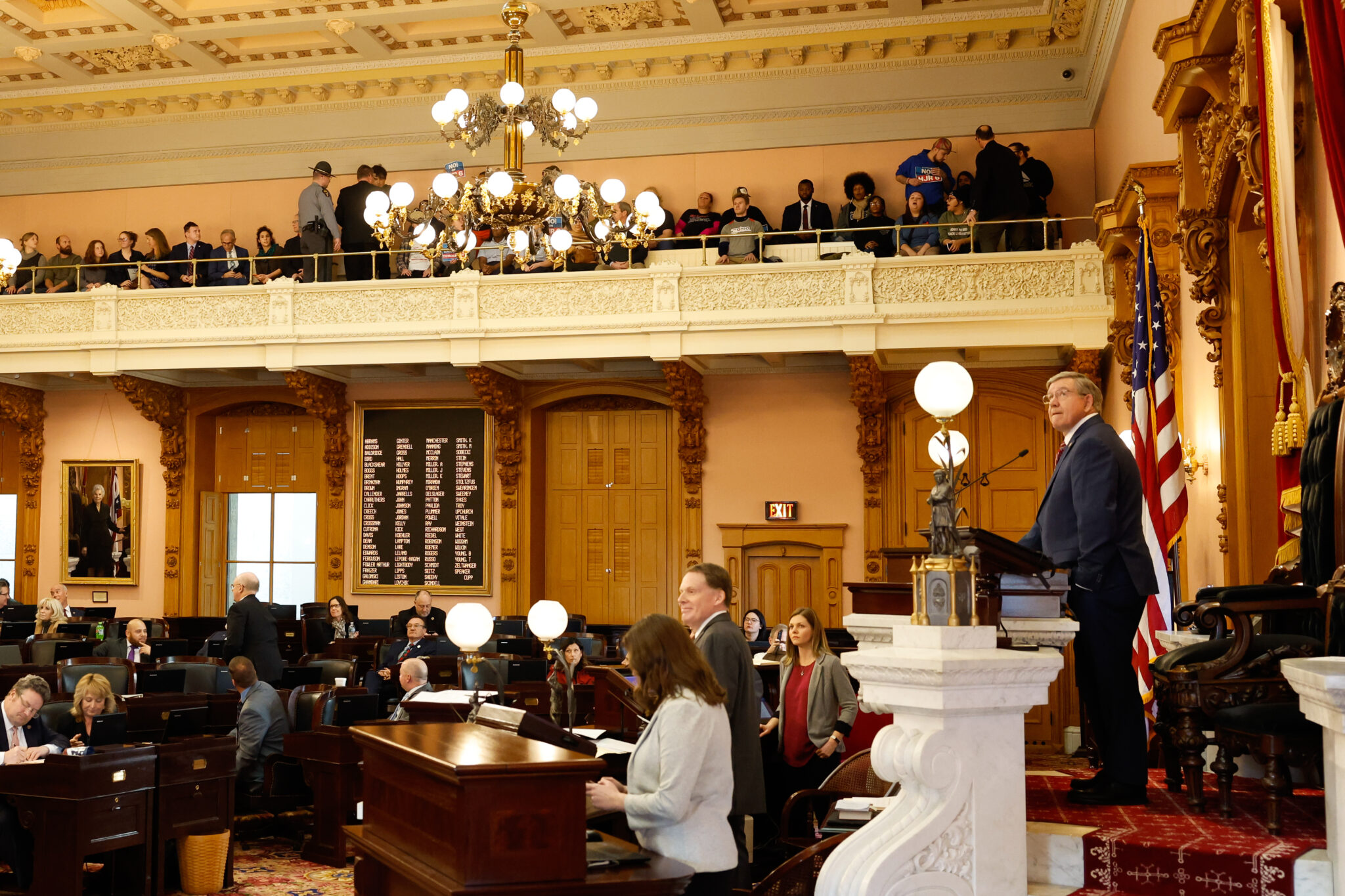
  • Ohio education overhaul falls short

    Ohio education overhaul falls short

    BY: SUSAN TEBBEN – Ohio Capital Journal

    The Ohio House did not agree to Senate amendments to a bill banning trans athletes from participating in youth sports based on their gender identity, leaving behind more than a thousand pages of state education overhauls loaded in at the last minute.

    House Bill 151, with language from Senate Bill 178 attached to it was voted down in the House by a 46-41 vote after 2 a.m. on Thursday morning following an entire day of hemming and hawing.

    The education overhaul is not completely done yet. Even if lawmakers decline to move forward in the current General Assembly, Senate President Matt Huffman previously pledged to bring the bill back in the new year, with a General Assembly that will have an even larger GOP supermajority.

    The education overhaul part of the bill, which entered the House as a standalone this week after passing the Senate last week, would have restructured the Ohio Department of Education into the Department of Education and Workforce, and reduced the state Board of Education roles down to superintendent searches, teacher conduct and licensure issues.

    “The system is not working, it doesn’t prioritize our students,” said bill sponsor state Rep. Don Jones, R-Freeport.

    The department, and most of the roles currently under the state board of ed and state superintendent’s purview would have been put under the governor’s office umbrella, according to the bill.

    The State Board of Education put off hiring a search firm for the next superintendent due to concerns about budgetary changes SB 178 might bring and fears the legislative uncertainty might “pollute” the marketplace of candidates.

    The bill also received pushback from public school education advocates and some homeschooling groups. The Ohio Education Association and the Ohio Federation of Teachers both spoke against the bill in committee hearings, not only decrying claims that the ODE was unresponsive and inaccessible, but also criticizing the pace at which the bill came through the General Assembly.

    SB 178 sponsor state Sen. Bill Reineke, R-Tiffin, said attempts to redo the state agencies have been years in the making and urgency is needed to help improve student success.

    “I’m not looking at growing an organization; I’m looking at making it more efficient and more structurally purposeful,” Reineke said on Tuesday as he defended his bill in House Primary and Secondary Education Committee.

    It was up to that committee to pass the standalone bill over to the House for a full vote, something that didn’t happen in a Tuesday night committee that went until about 9 p.m., or a Wednesday morning meeting that recessed before the House’s session began, and didn’t return even after multiple recesses in that body.

    When committee chair state Rep. Gayle Manning, R-North Ridgeville, was asked the status of the bill or the committee at about 9 p.m. Wednesday night, she said she was waiting to see what the GOP caucus was thinking on the matter.

    Amidst the day-long discussion, the Senate decided to take matters into its own hands, inserting SB 178 into HB 151, originally meant to be a teacher mentorship bill that was made to include a ban on athletes competing on teams based on their gender identity.

    The Senate also tried to slide in language from a bill that would have banned COVID-19 vaccine mandates for K-12 students.

    After the additions, HB 151 passed on a party-line 23-7 vote in that chamber, moving it back to the House.

    The controversial part of HB 151 was added in another late-night move in June, when HB 151 was up for passage in the House before moving on to the Senate. The trans athletes part of the bill no longer includes a requirement for genital inspections of children suspected of being transgender, something Senate President Matt Huffman previously said he wouldn’t support.

    Verification of a student’s gender will be done using a birth certificate in the new version of the bill.

    The bill’s sponsor, state Rep. Don Jones, R-Freeport, wouldn’t speak on the trans athletes part of the bill when he introduced the bill in the Senate, but on the House floor he stood in support of it.

    “This bill only applies to K-12 education, so our daughters in grades kindergarten through 12 will not have to compete with biological males in primary and secondary schools,” Jones said.

    The bill would impact very few Ohio students and policies are already in place to keep equality in youth sports, causing LGBTQ advocates, education leaders and the Ohio High School Athletic Association to stand against the bill as unnecessary.

    The original language of the bill would make changes to the Ohio Teacher Residency Program and teacher mentorship.

    Democrats pushed hard for the House not to support the bill as amended, saying stakeholders needed to be involved and more time was needed to find out the impact of it.

    State Rep. Phil Robinson, D-Solon, continued an argument made by critics of the bill that the volume of the bill didn’t get the proper review by legislators or individuals in Ohio education.

    “Passing something at 1 o’clock or 2 o’clock in the morning that no one’s read and no one’s seen … is not the way to change education in the state of Ohio,” Robinson said.

    State Rep. Jeff Crossman, D-Parma, said the bill was “moving deck chairs on a sinking ship” by addressing issues that don’t solve the true problems in Ohio education.

    State Rep. Juanita Brent, D-Cleveland, said the bill would impact economic success in Ohio by making conferences question coming to the state and businesses wonder whether or not to bring employees to the state. She also said passage of the bill in the middle of the night would send a message to current Ohio voters as well.

    “We’re telling Ohioans who elected us that they can’t be seen in this process,” Brent said.

  • Ohio Senate passes education overhaul

    Ohio Senate passes education overhaul

    BY: SUSAN TEBBEN – Ohio Capital Journal

    The Ohio Senate passed an overhaul of the state Department of Education and Board of Education on Wednesday with heavy criticism for what bill supporters say has been years of dysfunction.

    The measure passed 22-7, and now moves on for House consideration.

     Ohio Senate President Matt Huffman. Official photo.

    Senate President Matt Huffman came down from the dais just to support the measure, which renames the education department to include a workforce element and pares down the roles of the state board of education. It was just passed out of committee the day before, against objections from education advocates.

    Huffman called out the Ohio Department of Education for what he called a lack of accountability.

    “Most of us don’t have contact with the people at the Ohio Department of Education, and there’s a good reason for that: They don’t work for us, they work for the state Board of Education,” Huffman said in a Wednesday floor speech.

    In particular, Huffman said there is a certain “malevolence” within the education department when it comes to school choice and EdChoice private school voucher program processes.

    He believes that discord won’t happen if the department leadership is moved within the executive branch’s purview.

    “If this is a cabinet-level position, under the governor … there is going to be a response to this body and the members of the House, the elected representatives of the people,” Huffman said. “Because governors have an incentive to respond to the legislature.”

    Democrats stood in opposition not to changes to the state’s education system, but how the changes are being made.

    State Sen. Vernon Sykes, D-Akron, a member of the Senate Primary and Secondary Education Committee from which the bill originated, said school governance has been debated “almost the whole time that I’ve been a member of the General Assembly.”

    Is change needed? He says yes.

    “I believe we need to review and revise our education governance structure, but we need an intensive and extensive review, giving all stakeholders adequate opportunity to consider proposals and to give input,” Sykes told his fellow Senate members.

    Responding to criticism that the bill is happening too fast for a proper review, state Sen. Andrew Brenner, R-Delaware, said the bill was crafted over “months” and attempts to make changes have happened multiple times over the years, including the institution of academic distress commissions. Many of the problems, such as decreases in reading comprehension test scores and a lack of an official state superintendent for public instruction, have been years in the making.

    Without immediate action, students will continue to lose learning time and Ohio’s workforce will not be prepared for the new opportunities coming from places like Intel.

    “If kids aren’t literate, they’re not going to be able to do those jobs,” Brenner said.

    Two Republicans, state Sens. Kristina Roegner and Niraj Antani, voted against the measure, but did not make comments during the session.

    State Representatives will need to move fast to get the measure passed by the end of the year, which also marks the end of the 134th General Assembly. If it doesn’t pass, the effort starts over at the beginning of the year.

    House Speaker Bob Cupp said he has yet to look at the bill or discuss it with House colleagues, according to Huffman.

    “We talked generally about it and I expressed the fact that I’m in favor of it and Governor (Mike) DeWine expressed that also,” Huffman said after the Senate vote.

    The Senate president said he does think there is support for it already in the House, but if it doesn’t pass, that won’t spell the end of the matter.

    “I’d like to move that this year and if, for whatever reason, that doesn’t happen in the House, it’ll be coming right back in February,” Huffman said after the Senate vote.

    After the vote, groups on either side of the education debate spoke out on the measure.

    Public school education coalition Honesty for Ohio Education panned the fast-tracked vote.

    “Instead of collaborating with policymakers, the Department of Education, educators, administrators, and communities to build a sustainable solution that would address these very complicated issues, lawmakers are prioritizing a solution that creates more problems than it solves,” said coalition director Cynthia Peeples.

    The Buckeye Institute, a think tank that supported the bill in committee, said passage of the bill was an opportunity for Ohio.

    “By reforming the State Board of Education and the Ohio Department of Education, Senate Bill 178 will better align education with the needs of employers and help overcome historic learning loss in the wake of the pandemic,” said Greg Lawson, research fellow for the institute.

    A spokesperson for the Ohio Department of Education declined to comment on the statements made Wednesday in the Senate or on the bill itself.

  • After Uvalde massacre, Ohio GOP hurtles toward arming state’s teachers

    After Uvalde massacre, Ohio GOP hurtles toward arming state’s teachers

    BY: JAKE ZUCKERMAN Ohio Capital Journal

    The Ohio Senate advanced fast-tracked legislation Tuesday that would allow local boards of education to permit teachers to carry guns in classrooms.

    Passage would eviscerate current law in Ohio that allows teachers to arm themselves only after completing more than 700 hours of police training and receiving approval from their local school board.

    Under House Bill 99 — which was largely rewritten and unveiled at the hearing — a school board could allow teachers to arm themselves. The latest version doesn’t specify any minimum amount of training hours, although it states that four hours must be “scenario-based or simulated training exercises.” Instead, it says teachers would need to undergo “initial instruction and training” to carry a weapon that “shall not exceed” 24 hours. From there, the teacher would need annual recertification training which “shall not exceed” eight hours.

    A local board of education would need to opt in to allow its teachers to arm themselves. That board could choose to mandate additional training, but it wouldn’t be required. The training required in the legislation includes the “scenario-based” training, “tactical live firearms training,” and “realistic urban training.”

    Earlier versions of the bill established a minimum of 20 hours of training, plus concealed carry training (another eight hours). It also called for more specific, somewhat warrior-like training requirements.

    “On signal, take a flanking step while drawing and fire three rounds into the preferred area. Upon completion, take appropriate post-shooting actions,” reads a training requirement of the House-passed version of the bill. “The distance from the target shall be thirty feet, the time allowed shall be eight seconds, and the number of rounds allowed shall be three.”

    The Senate committee vote comes on the heels of the May 24 shooting in Uvalde, Texas, in which a teenager purchased two assault style rifles that he used to kill 19 young children and two teachers. Seventeen others were wounded.

    At Tuesday’s hearing, two men spoke in support of the bill. The rest of the four hours were occupied by dozens of teachers, teachers’ union officials, anti-gun violence activists, and a Fraternal Order of Police lobbyist, all testifying in opposition.

    The teachers who testified argued it’s unrealistic to think an educator would react prudently and fire accurately at a shooter in a chaotic and precarious situation after mere hours of training. They’d need to execute keen marksmanship in a fraught situation to avoid hitting their own students. Several noted the bill makes no consideration as to how teachers must store the weapon, which could yield a flood of gun violence of its own.

    At times, Sen. Frank Hoagland, a Republican who chairs the committee that reviewed the bill, struggled to rein in the testy crowd. After hearing the hours of testimony in opposition to the bill, Republican Senators passed it regardless. The vote was a flex of political power, and drew shouts of “Shame! Shame!” from the crowd.

    Hoagland, and Sen. Terry Johnson, the number two Republican on the committee, both declined interview requests after the hearing. The legislation will likely go to the Senate floor for a vote Wednesday. The House could, in theory, accept the Senate’s changes on the same day and send the bill to Gov. Mike DeWine.

    Republicans in the Ohio House passed HB 99 earlier this year on a 59-33 vote (Republican Rep. Gayle Manning joined Democrats in opposition). Tuesday’s vote came in lieu of the typical process of holding several hearings on a bill before a roll call. Several speakers said they were unable to procure a copy of the latest version of the bill before Tuesday’s hearing.

    As of 2019, 18 states allow anyone with permission from school authority to carry a weapon, according to the National Conference of State Legislatures.

    The idea, which gained popularity after a spate of school shootings in the U.S., is broadly unpopular with educators. In a 2019 national survey of 2,926 teachers, more than 95% indicated they don’t believe teachers should carry a gun in the classroom. Even among the 16% of respondents who were gun owners, only 11.5% of them said being armed while teaching should be a part of teacher’s duties. Gallup polling from 2018 found 73% of teachers oppose the idea.

    More Ohioans died from guns last year than any year on record from the Ohio Department of Health’s data warehouse. Earlier this year, analysis in the New England Journal of Medicine found that firearms have overtaken vehicle crashes as the leading cause of death for American children, teens and young adults.

    In the gun friendly and Republican-dominated legislature, the policy response has included eliminating training and background check requirements to carry a concealed weapon; and eliminating a duty to retreat before responding to a perceived attack with deadly force.

    At Tuesday’s hearing, Rob Sexton, a lobbyist with the Buckeye Firearms Association, argued in support of the bill. He said it gives students a “fighting chance” in the face of a shooter. Rep. Thomas Hall, R-Madison Twp., who sponsored the bill, told Senators at a previous hearing the legislation is about clearing up Ohio law.

    “I’m not here to argue whether or not guns should be in schools,” he said. “I’m here to help clarify a gray area in law that will give schools the tools to protect their students if they wish to utilize them.”

  • Newest abortion restricting bill heading to full House vote after committee approval

    Newest abortion restricting bill heading to full House vote after committee approval

    BY: SUSAN TEBBEN – Ohio Capital Journal DECEMBER 8, 2021 12:55 AM

    Anti-abortion demonstrators march. (Photo by Robert Zullo/ States Newsroom).

    The Ohio House will consider a new abortion regulation that would keep some doctors from being able to work with abortion clinics and could cause felony charges for doctors working on complicated pregnancies.

    Russo furthered an argument made by abortion rights proponents in previous testimony against the bill by saying the regulation “effectively bans and removes access to abortion,” particularly in Southwest Ohio, where two abortion clinics are located.

    Senate Bill 157 passed through the House Families, Aging and Human Services Committee on Tuesday, approved along party lines. It has already been approved in the Ohio Senate.

    The bill would expand the charge of abortion manslaughter, already on the books in Ohio, to include a physicians’ failure to “take measures to preserve the health of a child born alive after abortion,” according to the bill documents.

    Under the legislation, a physician who conducts an abortion but finds the fetus is still alive after the abortion to provide life-preserving care, something that opponents of the bill have said is already a part of state law and medical procedure.

    There is also a provision in the bill that requires the Ohio Department of Health to develop a “child survival form” for a physician to complete if a child is born alive after an attempted abortion, and for ambulatory surgical facilities to submit monthly and annual reports to the ODH.

    The ODH already compiles an annual abortion report based on medical reports signed by physicians of abortions conducted in the state. The report also includes complications, including “failed abortions” that happen in the state and a narrative on the complications.

    The bill’s sponsors referred to an abortion in which a child is born alive as a “botched abortion,” but state data shows the occurrence as a “failed abortion.” According to the most recent years of data on abortions in the state, “failed abortions” are rare, and did not happen in any pregnancies that were viable.

    An amendment made while the bill was in the Ohio Senate prohibits physicians who are funded through a public institution’s medical school from being a part of abortion clinics written transfer agreement variances, which allow a patient to be transferred to a hospital where the physician practices in the case of emergencies.

    Physicians who teach at public medical schools are also not allowed to serve as a consulting physician for abortion-related surgical facility, or the variance can be rescinded, according to the bill.

    Democrats attempted to insert amendments into the bill, including one from state Rep. Allison Russo, D-Upper Arlington, that would remove the transfer agreements variance regulation. Russo furthered an argument made by abortion rights proponents in previous testimony against the bill by saying the regulation “effectively bans and removes access to abortion,” particularly in Southwest Ohio, where two abortion clinics are located.

    “These are medically unnecessary agreements, but on top of that, because of the broad language, this does ban and remove abortion access for one part of the state in Southwest Ohio,” Russo said.

    State Rep. Beth Liston, D-Dublin, introduced an amendment that would take away the word “health” from the bill, leaving the bill to involve a baby’s “life,” which Liston said gives doctors more freedom to do what they feel is best in complicated births and pregnancy plans. Her amendment also sought to remove a requirement that a physician be charged with a third-degree felony for failing to file forms.

    “I think that these changes would minimize the downstream impacts and harm that we might see from this legislation in some small ways,” Liston said.

    Both amendments were quickly voted down along party lines without further discussion.

    The bill now heads for full House consideration, scheduled for 1 p.m. Wednesday.

    Abortion is legal in the state of Ohio up to 22 weeks gestation.

  • Ohio budget amendment now includes severe abortion restriction

    Ohio budget amendment now includes severe abortion restriction

    Columbus, Ohio – The Republican leadership in the Ohio Senate has added an amendment (134HB110-SC4502X2/JF) that would restrict the distance for physicians to be able to work with an abortion clinic and restricts physicians’ ability to work with state-funded medical facilities, medical schools, and teaching hospitals if they also sign onto a variance application with an Ambulatory Surgical Facility.

    Kellie Copeland has served as the Executive Director of NARAL Pro-Choice Ohio since 2002. 

    NARAL Pro-Choice Ohio Executive Director Kellie Copeland said: “Republicans in the Ohio Senate have yet again hijacked the budget process to further their anti-abortion agenda by adding an amendment that would add even more medically-unnecessary licensing restrictions on abortion providers. Abortion providers are a critical part of Ohio’s medical community. Across the state trusted medical providers work hand in hand with abortion clinics, medical schools, and hospitals to ensure patients get access to comprehensive reproductive health care they deserve. This amendment is about stigmatizing and isolating abortion providers. Let’s be clear about what this amendment does: closes the doors to doctors in an effort to close the door to patients. No patient has ever been helped by a closed door. A clear majority of Ohioans support access to safe and legal abortion care, and do not support this restriction.”

  • “Born alive” abortion bill introduced again, despite current law, low statistics

    “Born alive” abortion bill introduced again, despite current law, low statistics

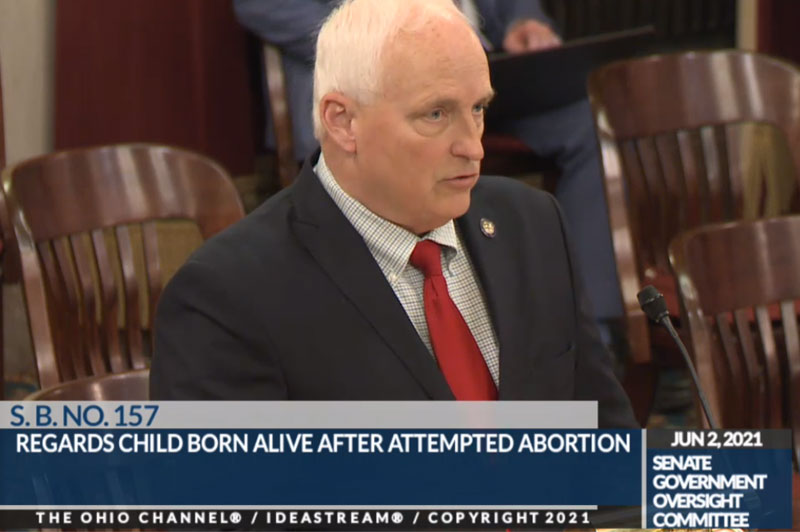
    State Sen. Terry Johnson, R-McDermott, testifies on a new bill regarding “born alive” abortions (Photo by The Ohio Channel)

    By Susan Tebben and Ohio Capital Journal

    Two medical professionals in the Ohio Senate reintroduced a bill that would criminalize physician inaction in “botched abortions,” but say the bill is more about having a reporting system, something that already exists in state law.

    The bill is sponsored by state Sen. Terry Johnson, R-McDermott, who currently works as a drug addiction treatment physician, and former ER doctor Sen. Steve Huffman, R-Tipp City, who still appears to work in a physicians group.

    Johnson said while the bill has punitive aspects for physicians, it is primarily a measure to “provide a reporting system” for abortion procedures in which the baby is born alive after a “failed abortion,” which research shows could only happen closer to the full term of a pregnancy. Full term is considered 40 weeks gestation.

    In Ohio, abortion is legal up to 20 weeks gestation.

    While he said data has settled the dispute in the General Assembly last year that cases of “born alive abortions” were rare or non-existent across the country, Johnson also said the new bill was necessary to find out if it occurred in the state.

    “We don’t want to overlook the fact that we would like Ohio to determine whether this actually happens in Ohio or not, and if it does, we can record it and we can take a cold, hard look at the results of that,” Johnson told the Senate Government Oversight & Reform Committee.

    When asked about current law on infant death, Johnson acknowledged that federal law already makes infant homicide a criminal offense. But when asked to provide an example of occurrences in Ohio, Johnson said the state doesn’t collect that data.

    “In states where they do have a reporting form and where they do pay attention to this, they can gather data and they prove that it happens,” Johnson said. “How would we know in Ohio? We don’t check it.”

    Source: Ohio Department of Health

    State law already requires information about abortions to be reported to the Ohio Department of Health by the physician who performs the abortion, using forms that don’t include identification of the person receiving the abortion. The forms are used to create a yearly abortion report.

    In compliance with current state law, physicians also have to report post-abortion complications, including the number and type of complications and the treatment for those complications, along with the gestational age for each procedure.

    The 2019 state abortion report — the most recent data from the state — said more than half of all abortions in Ohio happened at less than nine weeks gestation, and 26% happened nine to 12 weeks into pregnancy.

    Under the category of “failed abortions” in “post-abortion care for complications” data included in the report, 27 happened at less than nine weeks gestation, and the other 21 happened at nine to 12 weeks.

    None were reported in gestation higher than 12 weeks.

    Of the 356 abortions reported at 19 weeks or more gestation, only one pregnancy was found to be viable, with the majority of viability testing done through ultrasound.

    The CDC considers “early preterm” birth to be less than 34 completed weeks of gestation, and a women’s health webpage for the University of Utah Health says infants are not considered to be viable until after 24 weeks gestation, with the chance of survival before 24 weeks at less than 50%.

    Johnson said Senate Bill 157 is identical to Senate Bill 208, which he brought to the last General Assembly. That bill passed through the Senate but never received a committee hearing in the House before the GA ended at the end of 2020.

    In his testimony along with his cosponsor, state Sen. Huffman pointed to a report from the nationwide anti-abortion organization Family Research Council, citing CDC data of 143 occurrences of live births following abortion procedures between 2003 and 2014, amounting to about 13 per year.

    That report also cited a 2018 study that found the median survival time for those born after the termination of a pregnancy between 20 and 24 weeks gestation was only 32 minutes.

  • Explainer: The proposals to keep Ohio’s redistricting process on track

    Explainer: The proposals to keep Ohio’s redistricting process on track

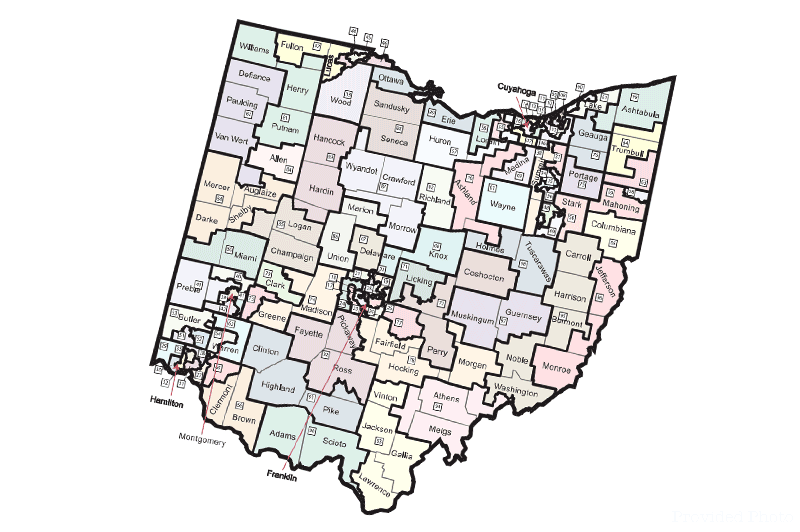
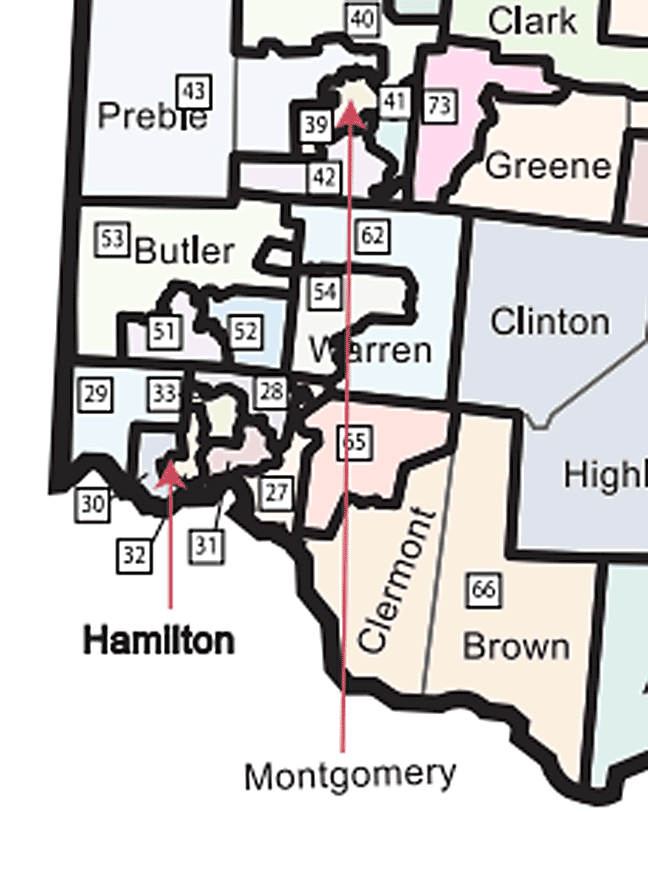
    The current district map for the Ohio House of Representatives. Map courtesy the Ohio Secretary of State.

    (See a complete list of Maps below this article)

    By Tyler Buchanan and Ohio Capital Journal

    Ohio’s redistricting process is in a state of turmoil, with a delay in Census data leading the state to worry about there not being enough time to adequately draw new legislative maps.

    Republicans and Democrats have both presented plans for how Ohio can deal with these delays. In essence, legislative leaders from both parties want to push back the deadline for completing the new maps that will be in place starting in the 2022 elections.

    But the sides propose two very different ways to achieve that goal.

    The next few days will be critical as Ohio lawmakers determine the preferred way of moving forward. The results from this week could have lasting implications for Ohio’s legislative government over the coming decade.

    The current district map for the Ohio House of Representatives.

    Not how Ohio voters drew it up

    Each decade, Ohio redraws its federal legislative seats in the U.S. House of Representatives and state legislative seats in both the Ohio Senate and Ohio House of Representatives. 

    This is done to reflect changes in population and coincides with the U.S. Census, which is also conducted every 10 years.

    After the last redistricting effort a decade ago, Ohio voters chose to reform the process for this year and the decades to follow. In short, voters approved a new system which puts a greater emphasis on transparency and bipartisanship. 

    These new plans — for federal and state maps —  were approved via constitutional amendments on the 2018 and 2015 ballots, respectively. 

    These plans set specific deadlines to meet during the redistricting process.

    Ohio voters could not have anticipated a global pandemic would occur at the same time the U.S. Census Bureau conducted its decennial count of American residents. The pandemic not only made the count more difficult, but has led to delays in processing and distributing census data used by officials to draw new legislative districts.

    The Census Bureau announced this redistricting data will be provided to states by Sept. 30.

    That’s a major problem — Ohio would therefore miss its redistricting deadlines:

    This flow chart shows the new process for redrawing Statehouse districts. Circled is the deadline in question due to the delay in U.S. Census data.
    This flow chart shows the new process for redrawing congressional districts in Ohio. Circled is the deadline in question due to the U.S. Census data delay.

    Plan A involved a federal lawsuit from Attorney General Dave Yost seeking to get the redistricting data released earlier. The case was quickly dismissed. Now the two parties are offering some ideas for Plan B.

    Back to the drawing board

    If the government won’t release data early enough to match Ohio’s deadlines, officials here propose shifting the deadlines back to account for the late data.

    This is not an easy fix. The 2021 deadlines were approved by voters and are thus embedded in the Ohio Constitution.

    Senate President Matt Huffman, R-Lima, suggests the state get approval from voters to move back the deadlines as part of a one-time fix for this unique circumstance.

    State Sen. Matt Huffman, R-Lima. Screenshot courtesy the Ohio Channel.

    The next opportunity to get a constitutional amendment before Ohio voters would be the Aug. 3 special election.

    Both chambers of the Ohio General Assembly (House and Senate) would have to pass a joint resolution to place the constitutional amendment on the August ballot. A three-fifths majority is required in each chamber for passage.

    The deadline for filing this joint resolution with the Ohio Secretary of State’s Office is 90 days before the August election — that’s this Wednesday, May 5. 

    It’s possible, but the Republican leadership would need to work quickly. As of Monday morning a joint resolution has not yet been formally introduced. 

    An amendment requires a majority statewide vote to pass.

    House Democratic Minority Leader Emilia Strong Sykes. Source: Ohio General Assembly.

    Democratic leaders in the General Assembly say there are better options for handling the census delays than a hurried constitutional amendment attempt.

    House Minority Leader Emilia Strong Sykes, D-Akron, and Senate Minority Leader Kenny Yuko, D-Richmond Heights, outlined their party’s own take on Friday for how to move forward.

    “Constitutional amendments should be our final options,” Sykes argued, “not our first.”

    The Democrats believe the best option is to ask the Ohio Supreme Court for an extension of the deadlines as other states, including Michigan, have done. 

    Senate Minority Leader Kenny Yuko is pictured at the Ohio Statehouse in 2018. Source: The Ohio General Assembly.

    “I think (the Supreme Court) could understand that the people have spoken loud and clear, twice already, asking us to put an end to gerrymandering,” Yuko said. “What we’re proposing will do just that.”

    While both plans call for extending the redistricting deadlines, neither party is suggesting to push back the 2022 primary election day to keep the full timeline intact.

    All On The Line Ohio, a left-leaning organization which advocates for a fair mapmaking process, is calling for the primary election to get pushed back by a few weeks.

    Sykes and Yuko said the Democrats would be introducing a plan to ensure the public has an adequate chance to provide input during what could be a truncated redistricting timeline.

    DISTRICT MAPS

    Every 10 years, following the decennial census, Ohio General Assembly and Congressional districts are redrawn to reflect changes in the state’s population in two parallel, but separate processes. The goal of each is to preserve the important one person-one vote principle – that all citizens are equally represented at the Statehouse and in the United States Capitol.

    These maps were drawn based on data from the 2010 U.S. Census and are in effect from 2012-2022.

    The PDF files below contain visual representations of Ohio legislative, judicial and education districts. For more information about what districts you reside in, click here to visit Check My Voter Registration(opens in a new window).

    STATE GENERAL ASSEMBLY DISTRICTS

    FEDERAL CONGRESSIONAL DISTRICTS

    *Equivalency Files are compressed DBF files that can be opened in Excel. 

    EDUCATIONAL & JUDICIAL DISTRICTS

     DISTRICT MAPS BY COUNTY

    The Secretary of State’s office provides by-county breakdown maps of Ohio Legislative Districts. Click here to request a ZIP file of these maps(opens in a new window). For up-to-date county district information, contact your county Board of Elections.

    HISTORICAL DISTRICT MAPS

    The Secretary of State’s office provides, for reference purposes, historical district maps dating back to 1972. Click here to request a ZIP file of these maps(opens in a new window). The file will be e-mailed to you. For up-to-date county district information, contact your county Board of Elections.

  • Ohio House passes state budget; here’s what to know

    Ohio House passes state budget; here’s what to know

    Step closer toward a constitutional school funding model

    By Tyler Buchanan and Ohio Capital Journal

    Loveland, Ohio – Ohio took a step closer toward a constitutional school funding model with the passage Wednesday of a two-year operating budget in the Ohio House of Representatives, a sweeping bill that also proposes an across-the-board income tax cut, a broadband internet expansion plan and more spending to aid businesses struggling from the pandemic.

    The House passed a two-year, $74.4 billion budget for Fiscal Years 2022 and 2023 by a vote of 70 to 27. 

    Democrats took issue with certain portions of the budget, but its education funding reforms helped lead a dozen of them to ultimately join the Republican majority in approving the bill.

    The budget now heads to the Ohio Senate, which will negotiate its own version over the coming months. Members of both legislative chambers will eventually hash out disagreements before a final version is sent to Gov. Mike DeWine for approval this summer.

    “We are investing in Ohio’s priorities and Ohio’s future,” said Rep. Scott Oeslager, R-North Canton, who serves as the House budget chairman as he has for several previous budget cycles.

    Oeslager said the ongoing pandemic has presented a wide array of challenges for Ohio, and the ongoing needs associated with the crisis are evident. He complimented House members for crafting a “balanced, responsible and truly meaningful” budget.

    This budget does not include any federal spending from the American Rescue Plan. Speaker Bob Cupp, R-Lima, said Ohio has not yet received this relief funding and a forthcoming committee would determine how best to spend it. 

    Here are budget highlights as approved by the Ohio House of Representatives.

    Education funding model overhaul

    Amesville Elementary in the Federal Hocking School District. Photo from district website. Lawmakers approved a new education funding model in the House budget passed on Wednesday.

    It has been more than 24 years since the DeRolph v. State decision was handed down by the Ohio Supreme Court, which ruled Ohio’s state funding model does not provide an equal opportunity for all students to learn and is therefore unconstitutional.

    Lawmakers were tasked with determining a more equitable, constitutional funding model — something they have failed to accomplish in the decades since.

    Cupp has led a renewed push to reform the funding system in recent years and said after Wednesday’s vote he was glad this budget achieves that goal.

    The House-approved budget includes a nearly $2 billion increase in school funding, with most districts expected to receive more funding over the next six years. (A spreadsheet showing the funding estimates for each individual district in Ohio was published by The Columbus Dispatch.)

    The Loveland City School District may receive $941,996 additional State tax dollars according to the Columbus Dispatch.

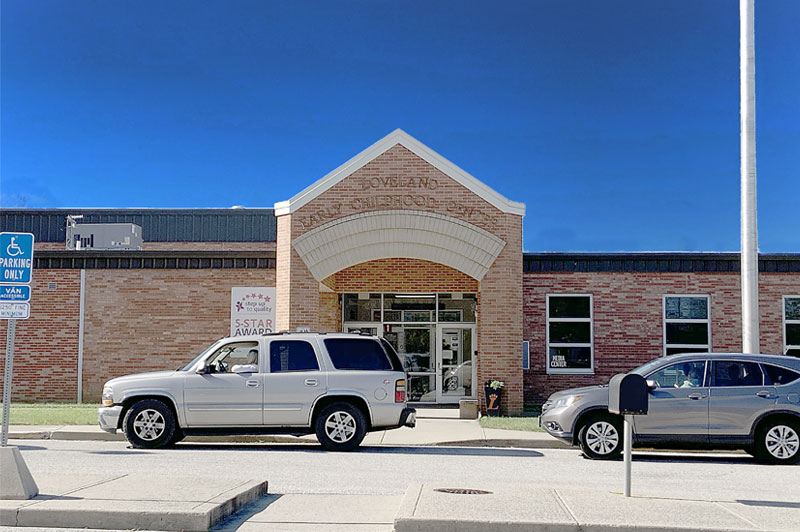
    The Loveland Early Childhood Center in Loveland, Ohio (Photo by David Miller/Loveland Magazine © 2020)

    Cupp said he did not want to speculate on potential disagreements the Senate may have with this funding plan, but hoped there would be more productive conversations between members of the two chambers on this subject.

    “We think they will agree that it is a very good plan going forward,” he said.

    Detailed Ohio Capital Journal reporting on the education reforms included in this budget is forthcoming.

    More spending for COVID-19 relief, and vacating penalties for public health violations

    The budget includes relief spending to benefit a variety of Ohio businesses.

    Millions of dollars would go toward helping entertainment venues, bars, restaurants and hotels. Additionally, there is a “New Business Relief Grant” program to specifically help those businesses that opened after Jan. 1, 2020.

    Republicans also inserted a budget provision that would vacate all public health violations incurred by Ohio businesses since March 2020. 

    A number of Ohio bars, including several on the island village of Put-In-Bay, were cited in 2020 for violating COVID-19 health orders. The House budget would expunge these violations and repay any fines levied against businesses. Photo from the Ohio Investigative Unit.

    Businesses that have faced penalties for violating public health orders, such as not enforcing mask and distancing mandates, would have their violation records expunged. Any disciplinary actions currently in progress would be halted. 

    The state would be forced to repay any fines levied and reinstate licenses revoked. The Legislative Service Commission (LSC) estimates this would amount to $100,000 in fines repaid to health order offenders.

    This provision mirrors a separate bill introduced by Republicans earlier this year

    Cupp defended this provision by saying Ohio businesses failed to abide by public health orders because the virus was an “unknown” phenomenon in 2020.

    “The restrictions were new, they were different, and a lot of businesses sort of got caught up in this administrative web. As we work our way out of the pandemic, we think it’s important to take another look at (the violations) and to give them some sort of the benefit of the doubt…,” Cupp said.

    Tax cuts

    Another main portion of the bill involves income tax cuts and deductions.

    There is a 2% personal income tax cut for all earners, which LSC estimates would save taxpayers around $380 million in the coming two years. 

    “Once more, the wealthy and big businesses will fare far better than working families under this budget,” said Rep. Michael Skindell, D-Lakewood, who unsuccessfully proposed taking out the tax cut and diverting it to other priorities.

    He cited data from the Institute on Taxation & Economic Policy, which was promoted by the think tank Policy Matters Ohio, which shows the tax cut would primarily benefit the richest Ohioans.

    Those earning under $40,000 per year would receive virtually no benefit from this tax cut, the study found. Ohioans earning between $40,000-61,000 per year would see their taxes cut by an average of $7 over the course of an entire year.

    The top 1% of Ohio earners, those making more than $490,000 per year, would comparatively see their taxes cut by an average of $612 each year.

    Skindell said the tax cut shows a “huge disparity and continues the tax shift in this state.”

    Separately, the House budget institutes an income tax deduction on capital gains earnings for Ohio-based “venture capital operating companies.” Such investors could deduct all of their earnings from investments in Ohio businesses and 50% of earnings from investments in businesses elsewhere.

    LSC estimated this provision may cost the state tens of millions of dollars per year in income tax revenue lost.

    Broadband internet expansion

    The House budget includes $190 million in funding toward new broadband internet expansion projects. (Photo by Leonardo Fernandez Viloria/Getty Images).

    Ohio lawmakers have worked toward a bipartisan effort this year of expanding broadband internet access in the state.

    With several bills already progressing toward that end, lawmakers opted to include the proposed “Ohio Residential Broadband Expansion Grant Program” in this budget.

    The budget allocates $190 million over the next two years toward grants to pay for new broadband expansion infrastructure projects.

    Other pieces of the budget

    Here are some other noteworthy provisions from the budget bill:

    • The governor had proposed changing antiquated language in Ohio law to clearly state all couples can adopt children (LGBTQ couples are legally allowed to in Ohio). The governor suggested changing the phrase “husband and wife” to read “legally married couple,” but Republican lawmakers took out this change to leave the original language in place.
    • The budget allocates millions of dollars for firefighting equipment and training, along with millions more for a law enforcement training program.
    • The budget provides $25,000 to Ohio domestic violence groups to give clients travel vouchers, gas cards and ridesharing credits.
    • Millions of dollars will go toward the Foundation for Appalachian Ohio, as well as money for workforce development around the state and in Appalachian communities.
    • The budget includes greater investments for maternal/infant health programs.

    The budget does not include several major proposals from the governor, including gun safety reforms and a $50 million public relations campaign for Ohio.

  • State report cards bill will be improved; testing bill passed through committee

    State report cards bill will be improved; testing bill passed through committee

    (Photo by Getty Images)

    By Susan Tebben and Ohio Capital Journal

    The Ohio Senate passed a bill to modify standardized testing, allowing different pathways for current juniors and seniors to graduate amid a pandemic school year.

    The bill also reinstated an emergency clause to the bill that the House removed in their initial vote on the measure.

    “If we pass this without the emergency clause, this will happen after the school year is over,” said state Sen. Andrew Brenner, R-Powell.

    The emergency clause allows the bill to take effect immediately after the governor signs the bill, rather than 90-days after, as is typical for bills without an emergency clause.

    Juniors and seniors will be able to take or retake high school end-of-course exams if they were unable to take them, and those scores can be used as a final grade, in a change to the House bill, Brenner said.

    Graduation will also be possible for those who earn the Ohio Means Jobs readiness seal, along with the minimum curriculum requirements. To receive the seal on a high school diploma, students “must demonstrate certain professional skills required for success in the workplace,” according to the Ohio Means Jobs site explaining the seal.

    That amendment was introduced by state Sen. Theresa Fedor, D-Toledo, as a way to make work done during the pandemic beneficial to students.

    “This change will help students who have already had to work, and many were considered essential workers during our pandemic, and they have already developed professional relationships and additional demonstration of soft skills like professionalism and critical thinking,” Fedor said during Wednesday’s Senate session.

    The bill now heads back to the House, which will consider the changes made by the Senate.


    Two bills hoping to make changes to Ohio’s education system, one immediately and one seeking long-term change, faced legislative questioning on Tuesday.

    The Ohio Senate Primary and Secondary Education Committee passed a bill that to alter the state’s standardized testing plan.

    Meanwhile, a bill introduced last week that would overhaul the state’s report card system was brought to the House Primary and Secondary Committee by its sponsors, with the acknowledgment that the bill would be subject to change.

    “We know this bill’s not perfect right, because it’s the beginning stages of a bill,” said cosponsor state Rep. Don Jones, R-Freeport.

    One criticism was a reduction in the number of gifted students in a district that would trigger that district to report information on their gifted program. The districts would only need to report the information if there is at least 20 students considered gifted within that district.

    “A lot of districts are smaller and may not have that many, and yet that seems to be an important measure and information for the parents of students in that district,” said state Rep. Mary Lightbody, D-Westerville.

    Jones said bill sponsors plan to meet with the Ohio Association for Gifted Children tomorrow to work on that element of the bill.

    The bill’s measurement of students will be delayed for the same reason sponsors of a state testing bill are trying to modify standardized testing across the state, being conducted in the pandemic-shortened school year.

    “For some schools, we don’t want to start measuring them right away because, let’s face it, we’ve got a learning gap that we’re going to have to try to fill in the 21-22 school year,” Jones told the committee.

    As state report card discussions went on, Senate Primary and Secondary Education Committee passed the bill that would change the state’s standardized testing plan, which typically informs state report cards.

    The bill, which extends the time allowed to take and report state and federally mandated standardized testing, was passed after it was amended to include the emergency clause the House did not approve as they passed the bill.

    One exception to the state testing extensions was for third-grade reading assessment. Sponsors of the bill said previously that the assessment couldn’t be moved because it determines progression to fourth grade.

    That bill now heads to the full Senate for a vote.