Loveland, Ohio – TheGreater CincinnatiTri–Statechapter of the American Red Cross is seeking volunteers for its 2023 Sound the Alarm campaign taking place throughout April.
Volunteers needed to install FREE smoke alarms in homes
Sound the Alarm is part of the larger Red Cross Home Fire Campaign which aims to reduce home fire deaths and injuries by providing disaster preparedness information, home fire safety instruction,and the installation of FREE smoke alarms. Since the program’s inception in 2014, more than 36,000families in Central & Southern Ohio have been made safer throughthe Red CrossHome Fire Campaign.Of theapproximately62,000 disasters the Red Cross responds toacross the countryevery year, more than 90 percent are home fires.
There are two types of volunteer opportunitiesavailable in theCincinnatiarea:
1. Volunteers are being sought to go into designated neighborhoods and leave behind informational door hangers,alerting residents that the Red Cross will soon be in the area to install free smoke alarms. 2. Volunteers are needed to install FREE smoke alarms inarea homes.
Volunteerswho sign up to participate wouldbe working with other Red Cross volunteersand staff,and members oflocal fire departments.
“Just One Day of Your Life Can Change Someone Else’s Forever”
Sound the Alarm volunteeropportunities intheCincinnatiarea: Anyone interested involunteering shouldgo to redcross.org/Cincinnatiand click on the Sound the Alarm information box on the home page.
April 7, 2023 Distribution of informational door hangers Green Acres MobileHomePark 6074 Deerfield Rd, Loveland
April 10, 2023 Smoke Alarm installation event Green Acres MobileHomePark 6074 Deerfield Rd, Loveland
April 11, 2023 Distribution of informational door hangers Mount Airy neighborhood 6121 Colerain Avenue, Cincinnati
April 14, 2023 Distribution of informational door hangers Goshen area 1785 State Route 28,Goshen
April 15, 2023 Smoke Alarm installation event Mount Airy neighborhood 6121 Colerain Avenue, Cincinnati April 17, 2023 Smoke Alarm installationevent 1785 State Route 28,Goshen
April 18, 2023 Distribution of informational doorhangers Alexandria, KY neighborhoods 7951 Alexandria Pike, Alexandria, KY
April 21, 2023 Distribution of informational door hangers 1560 Bethel New Richmond Rd. New Richmond, OH 45157
April 22, 2023 Smoke Alarminstallation event Alexandria, KY neighborhoods 7951 Alexandria Pike,Alexandria, KY
April 24, 2023 Smoke Alarm installation event 1560 Bethel New Richmond Rd. New Richmond, OH 45157
Residents in need of FREE state–of–the–artsmoke alarms can call the Red Cross hotline to make an installation appointment 844–207–4509.
The Ohio Ballot Board submitted its comments to the Ohio Supreme Court, pushing back against claims they abused their power in verifying a proposed abortion amendment to the state constitution.
The Ohio Attorney General’s Office wrote a brief on behalf of the ballot board, saying its members “correctly refused to usurp the people’s power by splitting the petition … into multiple amendments.”
The lawsuit, filed on behalf of two members of Cincinnati Right to Life, argued that the amendment contains more than one constitutional issue, therefore should be split, and should not have been unanimously approved by the ballot board.
The ballot board’s OK allowed pro-abortion rights groups to move forward with signature collection, in which they must collect more than 400,000 valid voter signatures by July 5.
Because the proposed amendment mentions reproductive health and abortion, attorney Curt Hartman argued the ballot measure involved two different issues, a claim pro-abortion rights groups and the Ohio Ballot Board members deny.
“The weakness of (Right to Life members Margaret DeBlase and John Giroux’s) claim is best exemplified by their failure to argue how many proposed amendments are supposedly included within the petition and what those amendments are,” Assistant Attorney General Julie Pfeiffer wrote on behalf of the ballot board.
The ballot board is made up of legislative members, citizens, and the Ohio Secretary of State, who chairs the board. Currently, the legislative members are state Sen. Theresa Gavarone, R-Bowling Green; state Sen. Paula Hicks-Hudson, D-Toledo; and state Rep. Elliot Forhan, D-South Euclid.
Secretary of State Frank LaRose is the chair, and Stoutsville resident William Morgan completes the board.
One of the arguments made in the lawsuit is that no discussion was held when the board met to consider the amendment. LaRose asked for discussion before he asked for a vote, and none happened.
Gavarone was the only one to make a comment, speaking against the amendment, but voting yes to the move, calling it a “procedural” vote.
“(Giroux and DeBlase) fail to show how any alleged failure by the ballot board members to conduct a fulsome discussion amongst themselves before voting to certify the proposed amendment led to a decision that was ‘unreasonable, arbitrary or unconscionable,” the AG’s office wrote in defense of the board.
LaRose made several comments during the meeting explaining that the vote did not represent any comments on the merits of the initiative, and instructed the public not to speak on the merits, as the vote was only to decide whether the measure only involved one constitutional issue.
In response to the lawsuit, Pfeiffer brought up Giroux, who spoke during the public comment portion of the meeting. Giroux called the amendment “intentionally unjust and misleading,” but he “did not offer any specific proposal splitting up the petition or further opine as to the number or content of the separate amendments contained therein,” the board argued to the court.
The ballot board did not need to analyze facts in the case, Pfeiffer argued, only whether the petition contains one amendment “on the face of the document.”
____________________________
SUSAN TEBBEN
Susan Tebben is an award-winning journalist with a decade of experience covering Ohio news, including courts and crime, Appalachian social issues, government, education, diversity and culture. She has worked for The Newark Advocate, The Glasgow (KY) Daily Times, The Athens Messenger, and WOUB Public Media. She has also had work featured on National Public Radio.
Ellen Main, is a stay-at-home mom of two boys in Loveland Schools: one kindergartener and one first grader. Her family lives in the Belle Meade subdivision.
by Ellen Main
Loveland City School District has an operating levy on the May 2 ballot this year. Because Loveland has not passed a school levy in nine years, they are in desperate need of these funds to maintain their current high quality of education. If the levy is not passed, they will move towards State minimum services. Our students and future students deserve better than this. As a mom of two young Loveland students, I am witness to the outstanding and dedicated faculty, staff, and administration in our community. My experience at a recent school event illustrates this perfectly.
Waiting anxiously for the show to begin, I looked around at all the other parents, siblings, grandparents, and other family members sitting in the Loveland Primary School gym and thought how grateful I am to live in this community. After the heartwarming show, during which the look of pride on my son’s face almost made me tear up, we walked through a gallery of children’s art—vibrant paintings, oil pastel drawings, and construction paper weavings covered the hallways from floor to ceiling. My son showed such confidence in finding his art on the walls and explaining it to his family. Then, he led us to his classroom (Ms. Miller, Room 9), where he showed us two beautiful books, one created by him (about koalas) and one created by his classmate, a biography about what makes my son special (my son created one about his classmate too). He proudly showed us all his work, which had an Australian theme (each class had a different country). All of this thanks to the hard work, energy and creativity of Lauren Alten (music teacher) and Kayla McClary (art teacher) as well as the classroom teachers, custodians, administration—too many people to mention.
The “Around the World” Showcase is an example of what makes Loveland Schools such a special place to be. Music, theatre, art, athletics, physical education, robotics and so many other programs we may take for granted won’t be possible much longer if we don’t pass a school levy. Think about the most memorable and important moments of your elementary and secondary education—most likely they were made possible because of school levies being passed.
I was lucky enough to have some extraordinary teachers in the Perrysburg School District in Northwest Ohio. My most memorable experiences had to do with music and theatre, which would not have been available without teachers having the freedom to use their creativity to benefit students both in the classroom and through extracurricular activities. Maybe yours have to do with sports, science club, art, student government, none of which would be possible without our talented educators, who would slowly be cut due to lack of funds. We cannot deny future generations these experiences.
Right now, the employees at Loveland Schools are doing amazing work despite not having the money—92 percent of all Ohio school districts receive more money per student yet we are in the top 2 percent in the state on the Ohio Department of Education scorecard. We cannot keep the talented and hard-working people we have in Loveland Schools now if they feel stressed that they may lose their jobs or if the class sizes are so big they are spending all of their time managing student behavior rather than teaching.
With the passing of the levy on May 2, we can keep not only our schools strong but our community as well. Voting yes for Loveland Schools on May 2 is a vote for our students and future students and also for the well-being of our entire community.
Loveland and Symmes Township, Ohio – From the moment the report of a missing child comes in, to the resolution of the case, every action taken has the potential to make the difference between a successful recovery and a tragic outcome.
The National Center for Missing and Exploited Children (NCMEC) developed the Missing Kids Readiness Program to promote best practices for responding to calls of missing, abducted, and sexually exploited children. Emergency communications centers and law enforcement agencies are recognized for meeting essential training and policy elements demonstrating preparedness for responding to a missing child incident.
To meet the requirements of the Program, the Northeast Communications Center (NECC) located at the Loveland Safety Center on Lebanon Road worked with NCMEC on their missing child policy to ensure it met the critical elements of the model policy for emergency communications centers. In addition, Aaron Burg, Captain of Communications, completed the required agency administrator training and ensured all Dispatchers and Training Officers completed their required training.
“By demonstrating remarkable leadership, and making this commitment of training and preparedness, NECC is communications to its citizens and families that protecting the lives and safety of their children is a top priority,” said Symmes Township in their Spring newsletter.
Armed with the information, knowledge, and operational resources gained through meeting the program criteria, NECC is positioned to respond more quickly, comprehensively, and effectively when a child’s life or safety may be at stake.
NECC becomes the 8th emergency communications center in the State of Ohio and the 2nd in the Greater Cincinnati region to become a member in the Missing Kids Readiness Program.
To learn more about NCMEC and the Missing Kids Readiness Program, click here.
To see the full listing of all MKRP recognized agencies, click here.
Learn more about the Northeast Communications Center (NECC) located at the Loveland Safety Center on Lebanon Road. Since 1999, the Northeast Communications Center has been providing 911 service, emergency, and non-emergency dispatching for the City of Loveland and Hamilton County District 3.
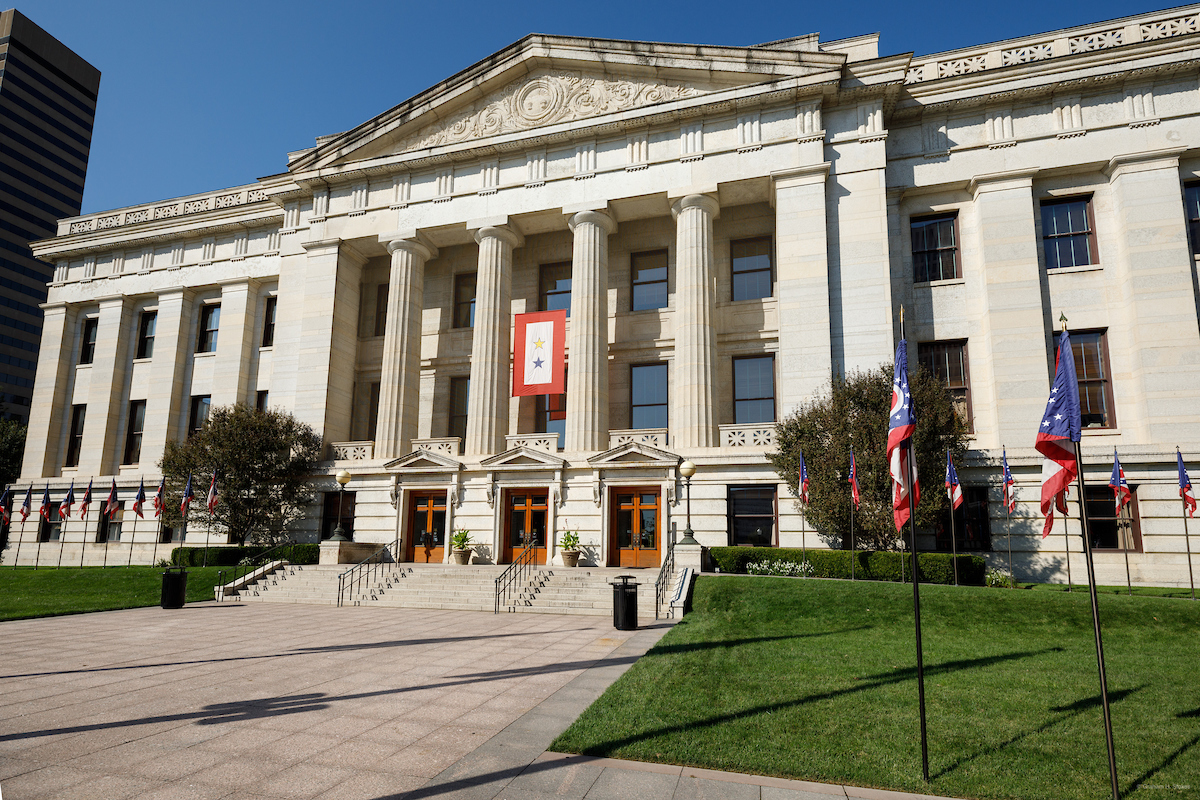
The Oho Statehouse, Columbus, Ohio. (Photo by Graham Stokes for the Ohio Capital Journal. Republish photo only with original story.)
The way that the law is written would only complicate the state’s school-funding woes, take money from libraries, and increase property taxes for farmers and homeowners, it added.
It sounds fair. If everybody paid income taxes at the same rate, the rich would pay more because of their higher incomes and the poor would pay less because they make less in the first place.
But an Ohio proposal to enact such a “flat” state income tax ignores a host of other taxes, said a progressive public policy think tank. And the way that the law is written would only complicate the state’s school-funding woes, take money from libraries, and increase property taxes for farmers and homeowners, it added.
“One of the myths that we have to dispel is that flat taxes make things fair,” said Guillermo Bervejillo, a state policy fellow at Policy Matters Ohio. “It’s quite the opposite. One of the things people forget when they talk about income taxes is that there’s a whole array of state taxes.”
Bervejillo was speaking in reference to House Bill 1, which, as the bill number implies, is a top priority of the Ohio House’s Republican leadership. A spokesperson for that leadership didn’t respond to questions about the many criticisms that Policy Matters made of the bill.
One is that many economists have long argued that so-called “flat” income taxes add to the overall tax burden shouldered by the poor and act as yet another means of lightning that of the wealthy.
“There’s use taxes, sales taxes, excise taxes, taxes that are generally focused around consumption and use,” Bervejillo said.
Graphic from the Center on Budget and Policy Priorities.
He explained that those kinds of taxes are the same for everybody, no matter her or his income. Buy a $100 pair of shoes in Ohio and you pay $5.75 in state sales tax regardless of whether you make $100 in a minute or in a whole day of work.
“You can only buy so much toilet paper,” Bervejillo said, explaining why sales and excise taxes fall more heavily on the poor. “You can only drive so many miles.”
The cumulative impact of those taxes is that the poor pay much more as a percentage of their income in state and local taxes than do the rich.
“On average, the lowest-income 20% of taxpayers face a state and local tax rate more than 50% higher than the top 1% of households,” the Institute on Taxation and Economic Policy said in a report, Who Pays? “The nationwide average effective state and local tax rate is 11.4% for the lowest-income 20% of individuals and families, 9.9% for the middle 20 percent, and 7.4 percent for the top 1%.”
Federal and state income taxes are the few exceptions that were originally structured to be “progressive.” In other words, they were intended to fall most heavily on those with the greatest ability to pay.
And it’s true that if you take those and all other taxes into account, the richest Americans pay a bigger portion of their incomes out in taxes than poorer Americans. But the spread isn’t very wide.
In 2019, the poorest 20% of Americans paid 20.2% of their incomes in taxes, while the richest 1% paid 33.7%, the Institute on Taxation and Economic Policy reported.
But in Ohio if you take just state and local taxes into account, the script is flipped. In 2018, the poorest 20% paid almost twice as much of their income in such taxes — 12.3% — as the richest 1%, who paid just 6.5% of their lavish incomes in state and local taxes, the institute reported.
And if Ohio were to enact a flat income tax, it would come on the heels of other measures in which the state has foregone large sources of revenue largely to the benefit of the wealthy.
Ohio is giving up about $1 billion a year on a tax break for limited liability corporations. It was sold as a way to incentivize mom-and-pop businesses, but a 2017 analysis by the Ohio Legislative Service Commission found that as much as $450 million of that annual benefit was going to the highest 0.5% of Ohio wage earners.
Meanwhile, there’s been no evidence that the cut improved Ohio’s jobs picture. It was 39th among states for job growth in February 2003 — well before the LLC tax cut was implemented, according to data compiled by Arizona State University’s Seidman Institute. By last month, Ohio ranked 46th in year-over-year job growth.
And former Gov. John Kasich created JobsOhio by diverting funds from the state liquor monopoly. It’s spent more than $1 billion on things like incentives for wealthy businesses to locate to Ohio, but the agency has struggled to show that those expenditures have made much of a difference to the state’s jobs picture.
But aside from fairness, Policy Matters raised another objection to HB 1 — it’s not paid for. Working from a fiscal analysis of the bill by the Legislative Services Commission, the group found that after the initial phase-in:
Property taxes on farmers and homeowners would increase at least $600 million a year because of “changes in the bill and the operation of Ohio’s existing property tax limit, known as House Bill 920.”
Schools, libraries and local governments would lose hundreds of millions of dollars a year.
There would be $780 million in annual net losses to the state that are not paid for in the bill.
Bervejillo said it’s not hard to understand why pain would spread to large swaths of Ohioans from the flat-tax proposal.
“At the end of the day, there’s only two things you can do when you cut taxes on the wealthy,” he said. “You can either cut services — and who depends more on services than low-income people? Or you increase sales and use taxes and gas taxes and cigarette taxes that fall disproportionately on low-income and working-class Ohioans.”
_________________________________
MARTY SCHLADEN
Marty Schladen has been a reporter for decades, working in Indiana, Texas and other places before returning to his native Ohio to work at The Columbus Dispatch in 2017. He’s won state and national journalism awards for investigations into utility regulation, public corruption, the environment, prescription drug spending and other matters.
[vc_row][vc_column][vc_column_text]Symmes Township, Ohio – Freddy’s Frozen Custard & Steakburgers will open soon near the At Home store and the Chase Bank in the vicinity at 4047 Montgomery Road. The location is also near the Meijer Express Gas Station and the Meijer store.
Freddy’s is now hiring and training staff.[/vc_column_text][vc_column_text css=”.vc_custom_1680560191642{background-color: #eaeaea !important;}”]
FREDDY?
Freddy Simon believed he was “the luckiest man in the world.”
Freddy grew up on a farm near Colwich, Kansas, just outside of Wichita. After finishing high school, Freddy enlisted in the U.S. Army, serving in the Pacific Rim region during World War II. A self-proclaimed “regular guy”, he was awarded the Purple Heart for injuries sustained during service, as well as a Bronze Star for valor.
Freddy then returned to Kansas, started a family, worked hard in the hospitality industry for 56 years, and raised six children with his wife, Norma Jean.
Freddy’s family values and patriotic service to his country is the foundation of Freddy’s Frozen Custard and Steakburgers®, and these values have inspired us to do everything The Freddy’s Way.
Freddy’s Frozen Custard & Steakburgers® was co-founded in 2002 by brothers Bill and Randy Simon with their friend and business partner, Scott Redler. It was named in honor of Bill and Randy’s father. Together, they built a brand focused on quality, hospitality, cleanliness and timeless traditions.
Quality
Hospitality
Cleanliness
Today, our Freddy’s Family creates fresh, made-to-order, craveable food, served to our guests with genuine hospitality in a fun, inclusive environment.
[vc_row][vc_column][vc_column_text]Loveland, Ohio – It was sunny and warm at the Wicked Pickle in Historic Downtown last Sunday afternoon. That’s where I met singer/songwriter, Jason Ritchie.
In Jason’s intro on his FaceBook page he describes himself as, “I’m just a singer natural born guitar ringer, kind of a clinger to sad old songs.” He is also a project Inspector for the Ohio Department of Transportation and lives in Milford.
Jason is warm and genuinely loves to chat with his audience and play their requests. He seems a Wikipedia of country music and artists. He says, “You yell it, I play it!”[/vc_column_text][vc_video link=”https://youtu.be/eOdUYzcOHzQ”][/vc_column][/vc_row]
What does an AR-15 do to a human body? A visual examination of the deadly damage. – Washington Post
How to Make a Difference
Moms Demand Action is a grassroots movement of Americans fighting for public safety measures that can protect people from gun violence. We pass stronger gun laws and work to close the loopholes that jeopardize the safety of our families. We also work in our own communities and with business leaders to encourage a culture of responsible gun ownership. We know that gun violence is preventable, and we’re committed to doing what it takes to keep families safe.
After Jim Brady, a gun owner, Republican and President Reagan’s Press Secretary, survived a gunshot to his head, he and his wife Sarah, worked tirelessly alongside Democrats and Republicans to pass the bipartisan Brady Bill to ensure background checks were conducted on gun sales. But we cannot rest on that victory. America’s gun violence epidemic continues to worsen. Today, led by Brady President Kris Brown, we work with gun owners and non-gun owners and individuals of all identities and ideologies to create solutions! Together, there is nothing we cannot accomplish.
A movement of nearly 10 million mayors, teachers, survivors, gun owners, students, and everyday Americans.
Ultimately, our movement exists to end gun violence and save lives.
Thanks to the hard work of our volunteers across the country, we have won unprecedented victories against the gun lobby—at the ballot box, in state legislatures, and in corporate America.
Born out of a tragic school shooting, March For Our Lives is a courageous youth-led movement dedicated to promoting civic engagement, education, and direct action by youth to eliminate the epidemic of gun violence.
We aim to create safe and healthy communities and livelihoods where gun violence is obsolete.
From Tragedy To Transformation
Sandy Hook Promise is a national nonprofit organization founded and led by several family members whose loved ones were killed at Sandy Hook Elementary School on December 14, 2012. Based in Newtown, Connecticut, our intent is to honor all victims of gun violence by turning our tragedy into a moment of transformation. By empowering youth to “know the signs” and uniting all people who value the protection of children, we can take meaningful actions in schools, homes, and communities to prevent gun violence and stop the tragic loss of life.
[/vc_column_text][vc_video link=”https://www.youtube.com/watch?v=WXtFhqIhWwo”][vc_column_text]Access to an unsecured firearm in the home increases the risk of injury or death. Protect yourself and your loved ones by storing your guns securely – locked, unloaded, and away from ammunition. Learn more about safe gun storage practices at www.EndFamilyFire.org.[/vc_column_text][vc_video link=”https://youtu.be/UwZXj0rymOU” title=”Access to an unsecured firearm in the home increases the risk of injury or death. Protect yourself and your loved ones by storing your guns securely – locked, unloaded, and away from ammunition. Learn more about safe gun storage practices at www.EndFamilyFire.org.”][/vc_column][/vc_row]
[vc_row][vc_column width=”2/3″][vc_column_text]Loveland, Ohio – The Loveland City School District is asking voters to approve an additional 4.9 mills permanent operating levy that will be on the May 2nd ballot.
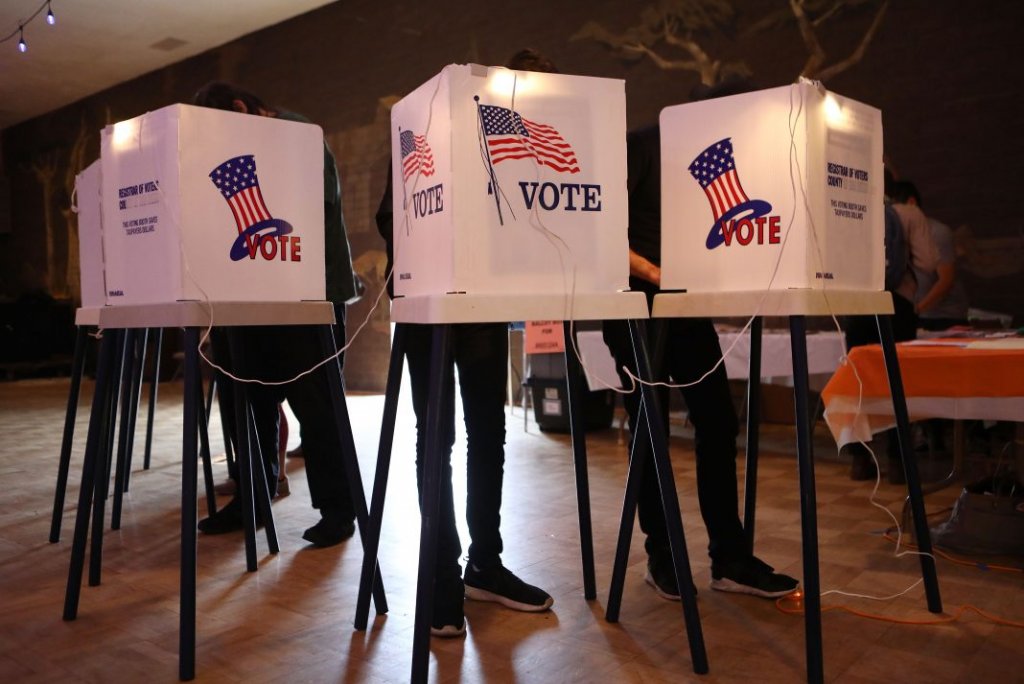
Your voter registration and updated Information Form must be postmarked by the voter registration deadline, the 30th day before the election, to be eligible to vote in that election.
April 3rd is your deadline.
Absentee voting begins April 4th.
If you register in person or online, you must do so by the 30th day before the election. You, or another person acting on your behalf, also may deliver your application to your Board of Election offices.
What are the qualifications to register and vote in Ohio?
If you meet all the following requirements, you are qualified to register to vote in Ohio:
You are a citizen of the United States
You will be at least 18 years old on or before the day of the next general election
You will be a resident of Ohio for at least 30 days immediately before the election in which you want to vote
You are not incarcerated (in prison or jail) for a felony conviction
You have not been declared incompetent for voting purposes by a probate court
You have not been permanently disenfranchised for violating the election laws
You are eligible to vote in elections held in your voting precinct 30 days after you are duly registered to vote in this state. Your Board of Elections office will mail you a notice of your voting location. If you do not receive a timely notice, contact them.
7 PROPOSED TAX LEVY (ADDITIONAL) LOVELAND CITY SCHOOL DISTRICT
A majority affirmative vote is necessary for passage.
An additional tax for the benefit of Loveland City School District for the purpose of current operating expenses that the county auditor estimates will collect $4,903,000 annually, at a rate not exceeding 4.9 mills for each $1 of taxable value, which amounts to $172 for each $100,000 of the county auditor’s appraised value, for a continuing period of time, commencing in 2023, first due in calendar year 2024.
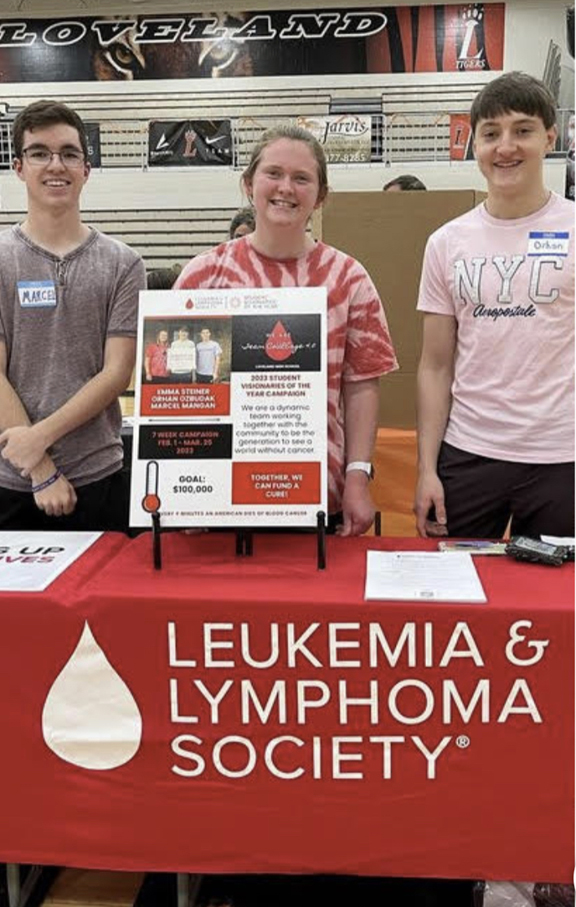
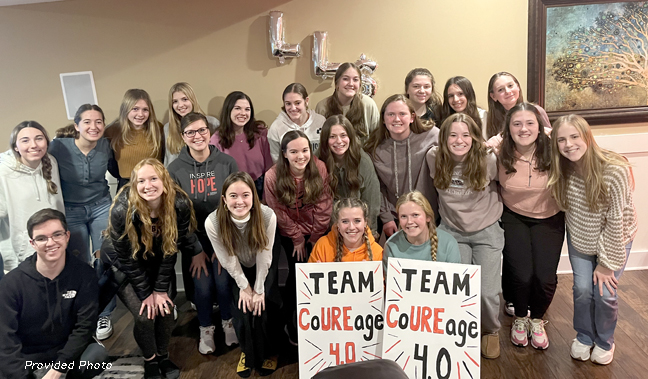
Loveland, Ohio – Team CoUREage 4.0 is a Loveland High School fundraising team for the Leukemia and Lymphoma Society. Emma Steiner, Marcel Mangan, and Orhan Ozbudak were the leaders of a team of over 25 members with a goal throughout a 7-week campaign that ran from February 1st to March 25th to raise as much money and awareness as possible for blood cancer research. Their goal was to raise $100,000.
They raised $214,301 to help fund cancer research and to support cancer patients. This is a record for fundraising for an individual team in Ohio.
At the gala Saturday night at the Great Wolf Lodge in Mason it was announced that a total of $805,365 was raised by all teams.
Emma Steiner said, “My connection to the Leukemia and Lymphoma Society began when a favorite middle school teacher of mine, and now mentor, lost her aunt due to Leukemia.” Steiner is a junior at Loveland High School.
Marcel Mangan, Emma Steiner, and Orhan Ozbudak
Steiner was asked to join Loveland’s Team CoUREage last year. She said, “While fundraising, I got to hear so many touching stories of people affected by blood cancer.” That was more than enough to make her want to accept the nomination to be a candidate for this year’s campaign. “Although I don’t have a direct connection to blood cancer, my grandpa passed away from cancer last year, and I fight so that other families don’t have to experience what my grandpa went through.”
LLS’s Student Visionaries of the Year campaign is a seven-week competition among high schools across the Cincinnati area. Loveland was one of 15 teams raising money for blood cancer research, advocacy, patient support, and ultimately, a cure. However, it is not just a competition among these 15 teams, rather it is a combined effort to help LLS find a cure.
The trio built this year’s campaign using the community as its foundation. Since last August, they have been building partnerships with local businesses securing sponsorships, auction items, and organizing events. So far, they have over 10 events planned to help them raise money for the Leukemia and Lymphoma Society.
They surpassed their goal with secured sponsorships with local businesses, community donations, events, and t-shirt sales. One of the biggest ways that the team fundraised is through donations received by each of their 30 team members.
Team CoUREage 4.0
The goal is to not only raise money for blood cancer but also to raise awareness in our Loveland community about Leukemia and Lymphoma.
Background Info about LLS:
LLS is uniquely able to report on the many advances and accomplishments that have occurred since their founding in 1949. From cutting-edge research and precision medicine innovations to legislative victories that improve access to therapies for cancer patients, LLS plays a leading- and often pioneering- role in the fight against blood cancers. Since 2000, approximately 40 percent of all U.S. Food & Drug Administration (FDA) approved cancer drugs were for blood cancer, and some are now used to treat other forms of cancer and non-malignant diseases. A “win” for blood cancers, therefore, is a win for the cancer community overall.


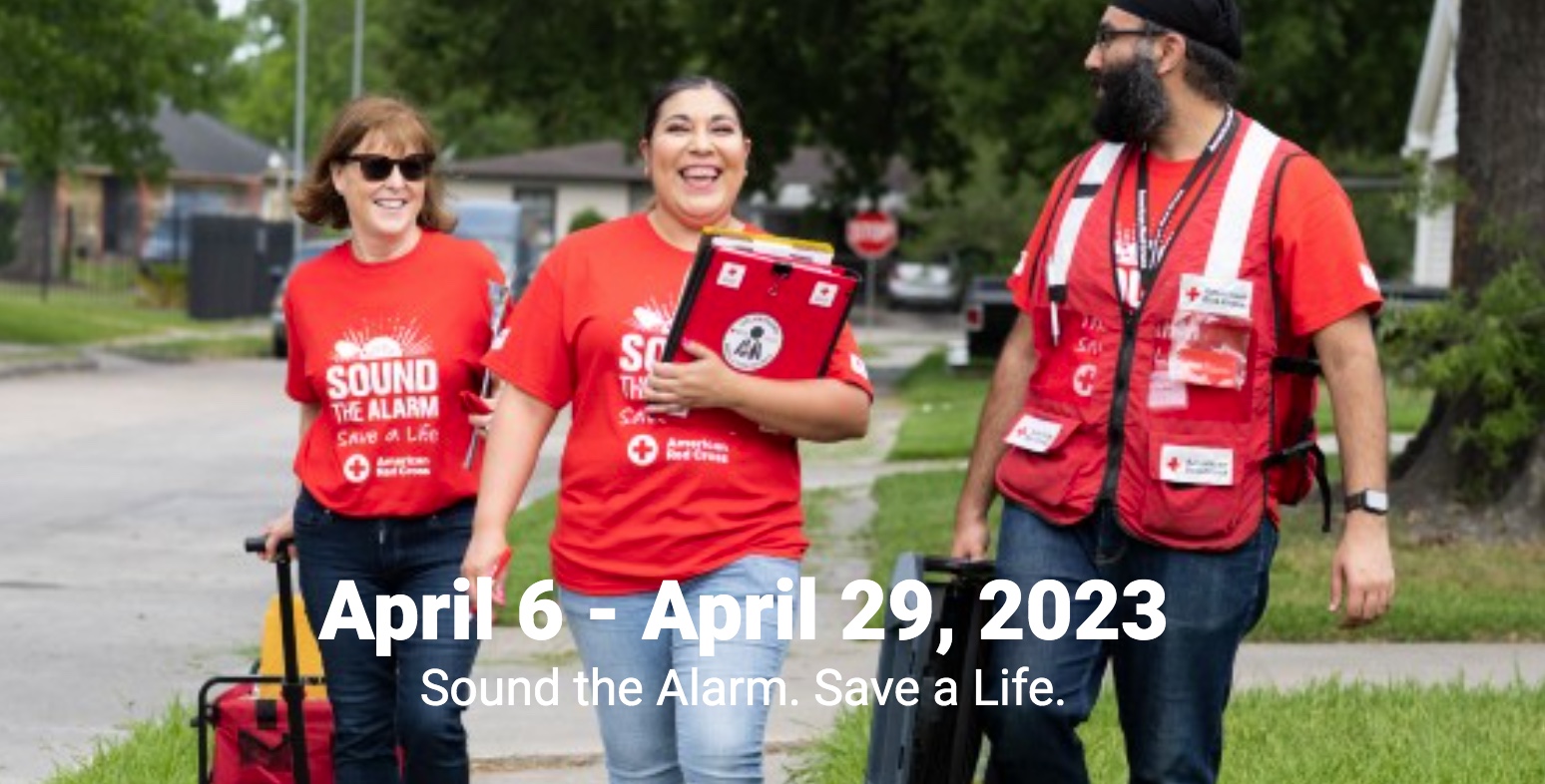
 Loveland, Ohio – The Greater Cincinnati Tri–State chapter of the American Red Cross is seeking volunteers for its 2023 Sound the Alarm campaign taking place throughout April.