Tag: people with disabilities

  • IRS Raises ABLE Account Deposit Limit

    IRS Raises ABLE Account Deposit Limit

    Starting this month, individuals with disabilities can accrue more money than ever before in a special type of account that allows people to save without jeopardizing access to Medicaid and other government benefits.

    Contributions to ABLE accounts can total up to $19,000 for 2025. That’s an increase from $18,000 last year.

    Read on at Disabilityscoop

    ABLE accounts were established under a federal law a decade ago, offering people with disabilities the opportunity to save up to $100,000 without sacrificing eligibility for Social Security and other government benefits. Medicaid can be retained no matter how much is in the accounts.

  • After Tackling ‘R-Word,’ Disability Group Seeks To Erase Stigma Associated With ‘Special’

    After Tackling ‘R-Word,’ Disability Group Seeks To Erase Stigma Associated With ‘Special’

    Former NFL player Dale Moss, center, with Special Olympics athletes Madi Madory, left, and Joshua Olds wearing sweatshirts that are part of the new “Yeah, I am Special” campaign. (Special Olympics)

    by Michelle Diament | disability scoop

    With a new campaign, Special Olympics wants to take back the word “special” and other language that they say has been turned against people with disabilities.

    The international sports organization for people with intellectual disabilities is rolling out the effort dubbed “Yeah, I am Special” with a pair of New York City billboards and a video voiced by ESPN commentator Stephen A. Smith.

    The group is also touting appearances by high-profile supporters like Milwaukee Bucks player Damian Lillard and former NFL player Dale Moss wearing apparel that says “special.”

    This is all a precursor to a global digital campaign planned for next year, Special Olympics said, to address the stigma that’s associated with the word “special” and other similar language used around the world to demean people with disabilities.

    Read on at disabilityscoop…

  • With Changes, United Airlines Looks To Improve Travel For Those With Disabilities

    With Changes, United Airlines Looks To Improve Travel For Those With Disabilities

    (Photo by Thinkstock)

    In what’s being seen as a precedent-setting move, a major airline plans to give travelers with disabilities the ability to filter flights on its website based on accessibility.

    United Airlines said that it will become the first airline to offer people with disabilities the ability to quickly see on its website which flights can accommodate various wheelchairs.

    Starting early next year, individuals will be able to enter the exact dimensions of their wheelchair and the website will prioritize flights on planes with cargo hold doors large enough to accommodate the specified size.

    Read on at Disability Scoop

    Read more stories like this one. Sign up for Disability Scoop’s free email newsletter to get the latest developmental disability news sent straight to your inbox.

  • Law removing harmful language on mental health, disabilities praised by advocates

    Law removing harmful language on mental health, disabilities praised by advocates

    BY: SUSAN TEBBEN – Ohio Capital Journal

    A law recently signed by Ohio Gov. Mike DeWine finally removes derogatory language about people with disabilities from state law, a move years in the making.

    Advocates praised the passage and signing of the Mental Health and Disability Terminology Act, introduced with bipartisan sponsors as House Bill 281.

    The bill was years in the making, and removes words like “idiot,” “lunatics,” and “derangement” that were still a part of Ohio Revised Code.

    “The words are very stigmatizing, they’re very traumatizing and antiquated,” said Katherine Yoder, executive director of Ohio’s Adult Advocacy Centers. “It’s one of those things that as society … and as people’s humanity evolves, language is the most obvious thing that changes.”

    As the work began in 2021 to get the bill into the Ohio House, legislators reacted with surprise, mainly because they thought the changes had already been made.

    State agencies were renamed in 2009 to remove the word “mental retardation” from county and state agencies, but the language remained in revised code.

    Yoder said it’s common for people to think these language changes have been made to eliminate words so commonly known as pejorative, but those not working directly with people with disabilities may overlook changes that haven’t been made.

    So, when the attempt to remove the language was put together in 2021, Yoder was relieved to find the legislative push led by organizations doing the work. It’s one thing to be supportive of the moves and take charge without knowing the world in which people with disabilities live, Yoder said.

    “It’s another thing to kind of step back and allow that community or that cultural group to make the necessary changes and advocate for themselves,” Yoder said.

    Part of the measure’s journey through the Ohio House and Senate was educating legislators in committee meetings. HB 281 passed quickly through the House with state Reps. Dontavius Jarrells, D-Columbus, and Tom Young, R-Washington Twp. at the helm.

    “It’s something that obviously you have to seek out and you have to learn,” Yoder said.

    The legislation was bolstered by a host of organizations, such as Nationwide Children’s Hospital, the Ohio Association of County Behavioral Health Authorities, the Ohio Developmental Disabilities Council, Disability Rights Ohio, and the Mental Health & Addiction Advocacy Coalition.

    “Emphasizing a person’s humanity and individuality rather than defining them solely by a specific characteristic fosters understanding and inclusion, and the use of people-first language in statute will promote more equitable access to the benefits of our laws and civil society,” said Erich Bittner, director of government relations for the Ohio Association of County Boards of Developmental Disabilities, during a November meeting of the Senate Health Committee.

    For the Adult Advocacy Centers, language is particularly important because of the work they do helping crime victims who have developmental disabilities. Language is a “foundational piece” to avoid marginalizing individuals, and when Ohio Revised Code can be cited with antiquated language still included, equity is hard to achieve, according to Yoder.

    In criminal justice, Yoder said there’s a gap in training for those investigating crimes where the victim has disabilities. From talking to victims to creating accessibility at courthouse for those attending court cases, the many layers of changes needed to help start with allowing the voices of the victims to be heard.

    “The justice system was never set up with people with disabilities in mind,” Yoder said.

    With the language changes approved, advocates are hoping to move forward with more changes, like increased representation in criminal justice with forensic interviewers, more specifically trained to help those with disabilities through criminal cases.

    “The goal or the focus (of forensic interviewing) is not helping people with developmental disabilities find their voice,” Yoder said. “They already have their voice. It’s about allowing their voice to be heard.”

    As the year goes along, advocates also hope to receive some of the remaining American Rescue Plan funds to help build facilities for advocacy work, and to tackle crimes like benefits trafficking – the victimization of people with disabilities for their government assistance checks.


  • Congress Approves Boost To Special Ed, Disability Programs

    Congress Approves Boost To Special Ed, Disability Programs

    Michelle Diament for Disability Scoop reports that a newly approved $1.7 trillion federal spending bill will bring more funding for special education while expanding access to ABLE accounts and addressing the use of electric shock on people with disabilities.

    The legislation, which funds the government through September, was signed by President Joe Biden just before the start of the new year.

    It includes over $15 billion for special education, a $904 million jump over last year, and it extends Money Follows the Person, a Medicaid program that helps people with disabilities move from institutions to community-based living, through September 2027.

    In addition, the measure increases the eligibility age for ABLE accounts, a special savings vehicle that allows people with disabilities a way to save money without jeopardizing their government benefits.

    Read on at Disability Scoop…

  • Four ways to help people with disabilities get work

    Four ways to help people with disabilities get work

    ROB MOORE – Ohio Capital Journal

    A bill currently in the Ohio General Assembly would eliminate the subminimum wage for people with disabilities.

    Currently, companies in Ohio are allowed to apply for a waiver from the state minimum wage to hire people with disabilities. The goal of this program is to make it easier for companies to hire people with disabilities and therefore to give more people with disabilities jobs.

    I was talking to Michael Hartnett, a policy analyst I work with at Scioto Analysis about this problem earlier today. He brought up a few options for the state to increase employment of people with disabilities without paying them less.

    Job training

    Providing more funding for job training programs for people with disabilities can help give people with disabilities skills that are valuable for employers. The federal Employment and Training Administration provides funds for training people with disabilities.

    The state of Ohio even has an office called the Bureau of Vocational Rehabilitation. The Bureau specifically focused on providing individuals with disabilities the services and support necessary to help them attain and maintain employment. More funding for training programs referred through the Bureau could increase employment of people with disabilities.

    Grants for making workplaces accessible

    One reason it is hard to hire people with disabilities is because employers may have trouble accommodating workers with disabilities in traditional workplaces. For instance, if a job traditionally requires typing, people with limited dexterity would typically not be a candidate. A grant for a job that requires some typing could allow a company to hire a scribe part- or full-time to type for that person.

    One example of this type of program is the Retaining Employment and Talent after Injury/Illness Network (RETAIN) Initiative, a federal program that Ohio takes part in. Eight state teams received competitive awards to develop and run pilot programs aimed at helping workers stay at or return to the workforce following an illness or injury. A similar program could be developed for counties and cities if this program is successful.

    Subsidizing wages for people with disabilities

    The Earned Income Tax Credit is a popular wage subsidy aimed at bringing low-wage people into the labor force. A weakness of the Earned Income Tax Credit is that it is targeted at families, so people without children often have a small credit. Having a larger credit for people with disabilities or making the state earned income tax credit refundable for people with disabilities are two policy levers policymakers have for making it easier for people with disabilities to go to work.

    Mandates for accommodation

    A final option is to just tell employers they need to accommodate. The Americans with Disabilities Act requires employers to reasonably accommodate workers with disabilities. Strengthening state law around accommodations could require employers in Ohio to work harder to accommodate people with disabilities.

    A 2018 study estimated that making it easier for people with disabilities to work would bring 10.7 million people into the U.S. workforce and would increase national GDP by $25 billion. If this is the case, that means more people with disabilities in Ohio’s workforce would mean hundreds of thousands of new workers and hundreds of millions of more dollars in the state economy. This looks like a win for everyone.

  • Two Ohio lawmakers want to prohibit paying people with disabilities less than minimum wage

    Two Ohio lawmakers want to prohibit paying people with disabilities less than minimum wage

    BY: NICK EVANS –  Ohio Capital Journal

    State Rep. Brigid Kelly, D-Cincinnati. Photo from Ohio House website.

    Thanks to a 2006 constitutional amendment, Ohio’s minimum wage will increase from $9.30 to $10.10 next January. Two Democratic state lawmakers want to make sure all of the state’s minimum wage workers get that raise.

    Under current state law, employers can pay people with disabilities less than the state’s minimum wage. When lawmakers approved the changes in 2000, their stated intent was to open more doors to employment. But Reps. Brigid Kelly, D-Cincinnati, and Dontavius Jarrells, D-Columbus, argue the two tier system harms rather than helps.

    “Frankly, if we’re really serious about giving people more opportunity for a better life, if we’re really serious about ensuring that people have access to jobs, regardless of their disability status,” Kelly said, “then we should certainly, one, not be paying less than a minimum wage, and two, we should be raising the minimum wage.”

    Kelly explained they came across the provisions in a previous general assembly while working on a broader minimum wage increase. She said many lawmakers are surprised when they find out the practice exists.

    But Ohio’s legislative language actually mirrors federal law. Under section 14(c) of the Fair Labor Standards Act, employers can apply for certificates to pay people with disabilities less than minimum wage. According to data from the Department of Labor, 44 Ohio companies have pending applications, 12 had certificates expire earlier this year, and another six hold active certificates.

    Ohio’s Department of Commerce requires employers apply for a license as well but doesn’t post data about license holders on its website.

    To the extent that it can, the Biden administration is attempting to move away from the policy. In an executive order, President Joe Biden required federal contractors offer the same $15/hour minimum wage to all workers regardless of disability status.

    To Kelly, eliminating the dual standard is a no-brainer.

    “If you have someone who does have a disability but is perfectly capable of performing a job, then they should be paid for it,” she said. “For me that that is a nonstarter. I mean, businesses make reasonable accommodations for folks on a regular basis. And that doesn’t involve changing their pay scale, or paying them less than the minimum wage.”

    Kelly and Jarrells have picked up more than ten co-sponsors, but none of those are Republicans. Kelly expressed optimism that colleagues on both sides of the aisle will see it as a commonsense update. Still, she acknowledged it will likely take more than one general assembly for it to gain passage.

    Follow OCJ Reporter Nick Evans on Twitter.

  • Feds issue new rules for COVID-19 vaccines at facilities serving people with disabilities

    Feds issue new rules for COVID-19 vaccines at facilities serving people with disabilities

    by Michelle Diament from disabilityscoop

    Government officials are setting new expectations related to COVID-19 vaccines at institutions for people with disabilities and similar rules are under consideration for group homes as well.

    Long-term care facilities like nursing homes and intermediate care facilities for individuals with intellectual disabilities must educate residents and staff about COVID-19 vaccines and offer shots to them under the interim final rule being published by the Centers for Medicare & Medicaid Services in the Federal Register this week.

    In addition, the facilities are required to report the COVID-19 vaccination status of both residents and staff to the Centers for Disease Control and Prevention on a weekly basis.

    Continuine reading at disabilityscoop

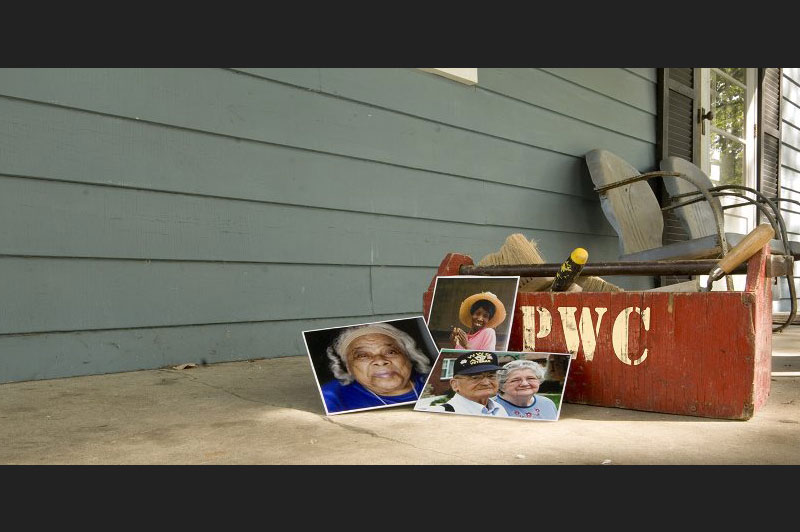
  • PWC provides critical and emergency home repairs

    PWC provides critical and emergency home repairs

    “Everyone in our community should have a safe and healthy place to live, especially in times of crisis.”

    As our community adjusts to the new normal amidst the COVID-19 outbreak, People Working Cooperatively understands that the vulnerable populations we serve daily are scared and anxious about the new health and financial hardships they are facing. At this unprecedented time of crisis, their work of providing critical and emergency home repairs is needed more than ever to ensure the safety and health of our low-income neighbors including families with young children, seniors, people with disabilities, and other at-risk populations. According to the Centers for Disease Control (CDC), community preparedness for COVID-19 should include older adults and people with disabilities and the organizations that support them, to ensure their needs are met.

    The need for PWC’s emergency services will continue to grow as conditions expand and worsen. Those living on the margins will face unemployment, elderly are being asked to self-quarantine and children will remain home for weeks as schools remain closed across the region. Due to these new circumstances, they are constantly being exposed to unhealthy and unsanitary living conditions such as no heat or water, no working toilet, dangerous electrical issues, leaking roofs and the inability to get in or out of their home safely. These emergency issues need to be addressed immediately to not only keep our neighbors healthy and safe, but also to prevent additional stress on our already overwhelmed healthcare providers and hospitals.

    PWC is monitoring the spread of COVID-19, taking precautions to protect our high-risk neighbors and preparing for increased demand and new ways of delivering their services. At this time they have postponed volunteer projects and suspended other non-emergency services, and are focusing on level 1 emergency repairs, or emergencies which pose an immediate threat to the client’s well-being including:

    • Broken water lines where water is pouring, not dripping, out of the line
    • Client’s only accessible commode is blocked or otherwise unusable
    • No water
    • Gas fumes present
    • No heat
    • First-floor doors or windows cannot be closed and/or secured
    • Existing air conditioning is not working and a resident’s health issues could be complicated during a heat emergency
    • An electrical condition that poses a fire threat
    • Accessibility modification to allow a client to return home
    • Main drain/sewage backup

    General Qualifications

    Call Today to see if you Qualify

    PWC’s customer service specialists can be reached at (513) 351-7921 or contact us online

    For More Info about Qualifying

    Please Consider Making a Gift to PWC

    Donate Today!


  • New Emoji Include People With Disabilities

    New Emoji Include People With Disabilities

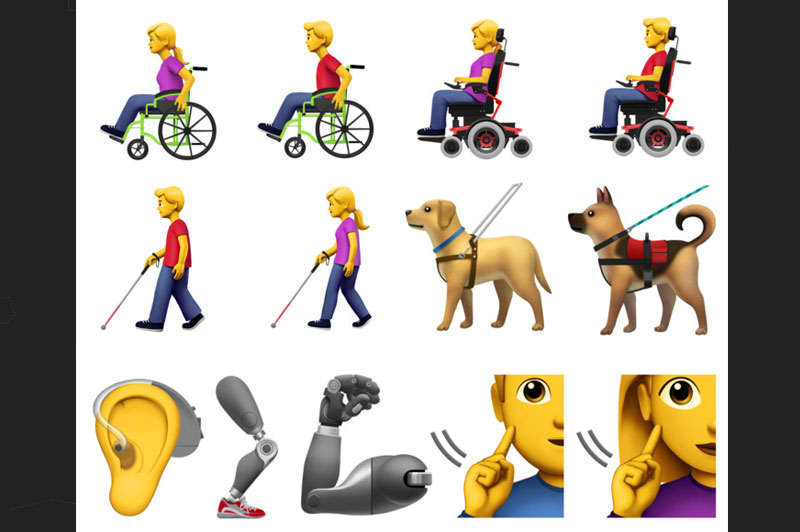
    A dozen icons depicting the experiences of people with disabilities are coming to smartphones and other devices later this year.

    The Unicode Consortium — the organization that standardizes the emoji offered by Apple, Google and other device makers — released 59 new emoji this week. Among them are numerous images portraying various aspects of the disability experience.

    The new disability-related icons were requested by Apple last year.

    Read on at Disability Scoop…


      Relaxed atmosphere and friendly service welcomes you back time and time again! Located in the heart of the Historic Loveland District Just outside Cincinnati, Ohio.