Tag: Public Utilities Commission of Ohio

  • Ohio AG Yost is prosecuting others in utility scandal, but he won’t discuss his own involvement

    Ohio AG Yost is prosecuting others in utility scandal, but he won’t discuss his own involvement

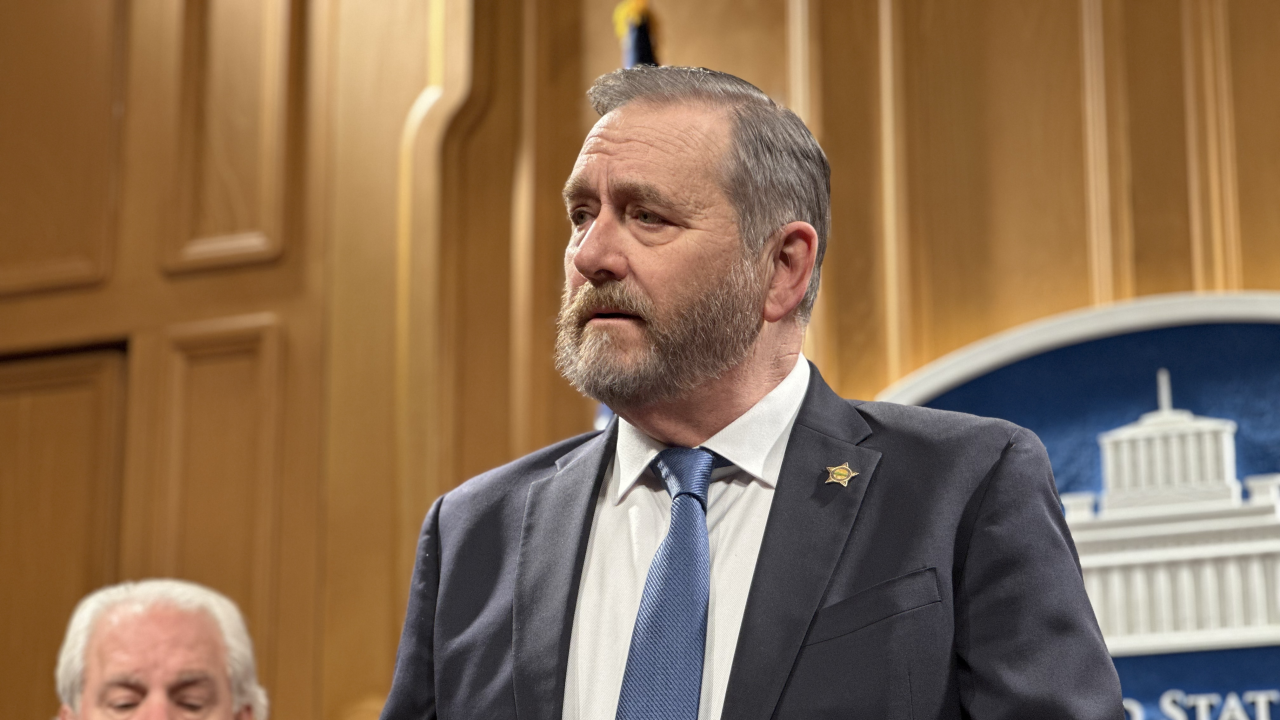
    Ohio Attorney General Dave Yost. (Photo by Morgan Trau, WEWS.)

    BY:  Ohio Capital Journal

    Ohio Attorney General Dave Yost this year brought criminal charges against four figures who were involved in the biggest bribery scandal in state history.

    Many thought they were long overdue. That’s especially true of cases filed against men accused of funding the conspiracy, but who still hadn’t been charged by federal prosecutors four years after the last of the alleged wrongdoing took place — and almost a year after two others began lengthy prison sentences.

    But Yost’s own name came up several times in the federal trial and his office last week again ignored detailed questions about the matter.

    The attorney general played an important role in the defeat of an attempted repeal of the corrupt bailout. And there were claims that he believed that the bailout was a bad law, but kept his mouth shut out of loyalty to one of the conspirators — and to the law’s major beneficiary.

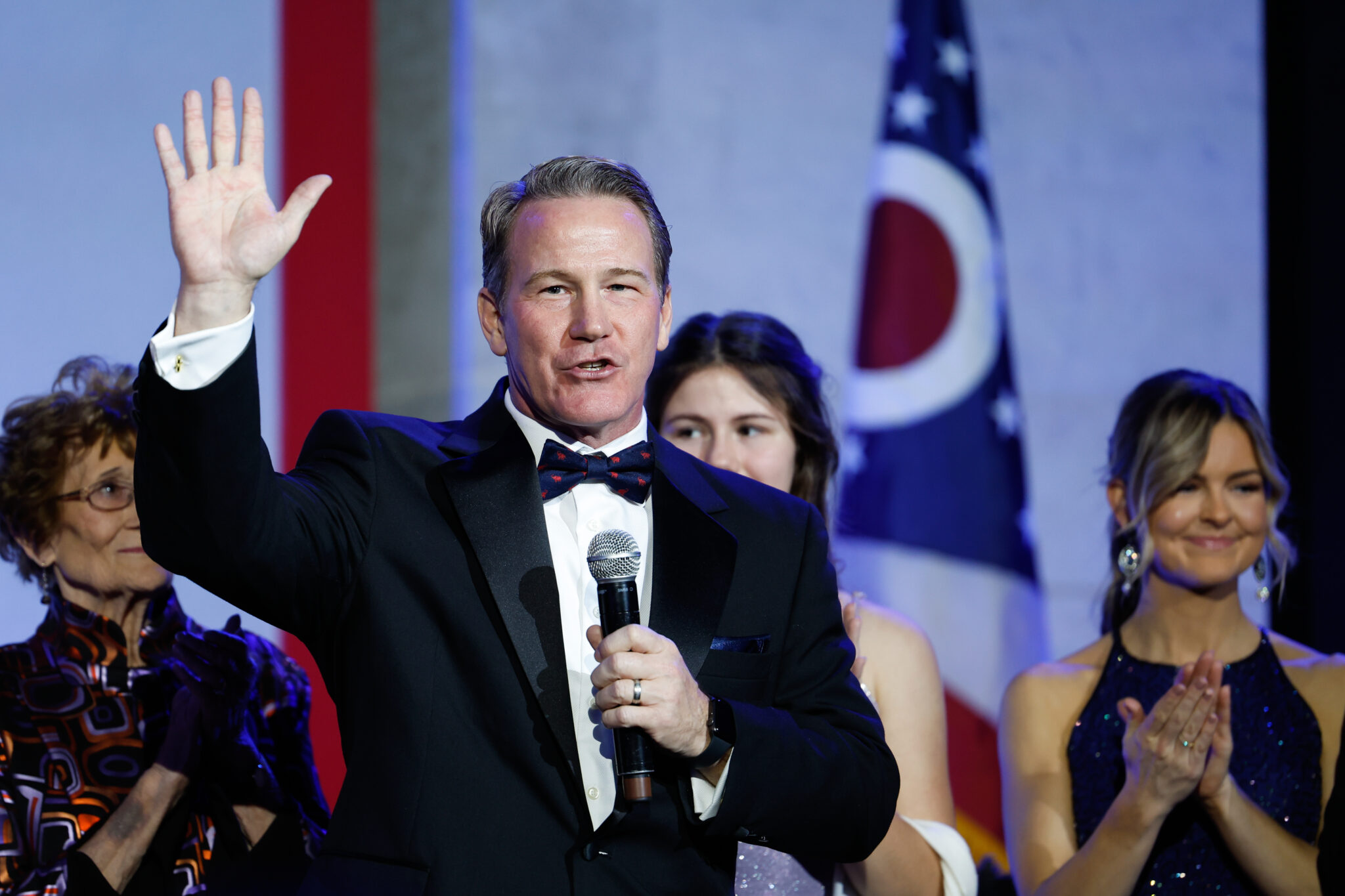
    The issue is politically fraught for Yost because the state charges he filed this year have raised new questions about Lt. Gov. Jon Husted’s involvement in the scandal. Yost and Husted are widely expected to face each other in the 2026 race to be Ohio’s Republican nominee for governor.

    New charges

    Former House Speaker Larry Householder, R-Glenford, was sentenced to 20 years in federal prison last June for his role in a scheme in which Akron-based FirstEnergy paid more than $60 million to make him speaker in 2018 and to pass and protect a $1.3 billion ratepayer bailout the following year. It’s one of the biggest scandals in Ohio history, and so far it has also sent former GOP Chairman Matt Borges to prison for five years, resulted in two more guilty pleas — and seen two defendants die by suicide.

    But U.S. Attorney Kenneth Parker sidestepped a pretty important question last June when he stood in front of the federal courthouse in Cincinnati and boasted to the press about the convictions and sentences his assistants had just won. He was asked, what about the people who paid the bribes? Would they be charged? If so, when?

    All Parker would say was that the investigation was ongoing.

    In December, his team indicted Sam Randazzo, Gov. Mike DeWine’s nominee to be Ohio’s top utility regulator. In a deferred prosecution agreement, FirstEnergy said it paid Randazzo a $4.3 million bribe just before he became regulator. From that post, he did a number of lucrative favors for the company related to the bailout and he improperly helped with other matters as well, according to the indictment.

    But still uncharged by the feds are former FirstEnergy CEO Chuck Jones and Vice President Michael Dowling, the executives alleged to have directed truckloads of company money into 501(c)(4) dark money groups that financed the scandal.

    In February, a team of state prosecutors led by Yost stepped into the void by securing a grand jury indictment against Jones, Dowling and Randazzo. The charges relate to the bailout scandal, and also to a decade’s worth of shady dealings that allegedly paid Randazzo more than $10 million and ripped off industrial energy users and residential customers alike.

    In April, Randazzo died by suicide.

    Other questions

    The state indictment also raised new questions about the cozy relationships between the DeWine/Husted administration, FirstEnergy and Randazzo.

    Weeks before they were inaugurated, DeWine and Husted had dinner in downtown Columbus with Jones and Dowling — FirstEnergy’s top leadership — and discussed whether Randazzo would be acceptable to regulate the company. Jones and Dowling then drove about a mile to Randazzo’s German Village residence and negotiated the $4.3 million payoff, according to text messages that are being used in multiple court proceedings.

    The state indictment alleges that DeWine’s chief of staff, Laurel Dawson, knew about the payoff before the governor appointed Randazzo to chair the Public Utilities Commission of Ohio. But Dawson — whose husband was a FirstEnergy lobbyist who allegedly received a $10,000 loan from Randazzo — isn’t talking publicly about what she knew or what she told her boss.

    DeWine also continues to stand behind his former governmental affairs director, Dan McCarthy, who lobbied the legislature on DeWine’s behalf to pass the bailout law.

    Just before taking that job, McCarthy, too, was a FirstEnergy lobbyist — a job in which he set up a dark-money group that became a conduit for tens of millions in funding for the scandal. In last year’s trial, the prosecution presented evidence that FirstEnergy VP Dowling in 2019 ordered a subordinate to keep the then-DeWine aide’s name off of a $10 million infusion into the corrupt bailout even after being told that it would violate IRS rules to do so.

    DeWine and his staff haven’t explained what McCarthy and Dawson knew about the corrupt machinations as the bailout law was in the works — or when DeWine signed it mere hours after its passage.

    DeWine, Husted and their administration also haven’t explained what they knew about the long, shady relationship between Randazzo and FirstEnergy described in the state indictment. The governor’s spokesman has tried to suggest that it was common knowledge, but extensive evidence shows that Randazzo and FirstEnergy went to great lengths to conceal it.

    DeWine also has said he didn’t know about millions in dark money contributions FirstEnergy made in 2018 to support his gubernatorial bid. But a University of Cincinnati political scientist said it’s simply not believable that a company would make that kind of an expenditure and not make sure the beneficiary knew about it. That seems especially true for a company that subsequently admitted that it paid millions more in outright bribes.

    For his part, Husted won’t comment on the $1 million in dark money FirstEnergy spent supporting his 2018 bid for governor, or whether he  promoted Randazzo for the regulatory job when he dropped his bid and joined DeWine’s ticket.

    The two had history. As House speaker in 2007, Husted appointed Randazzo to the PUCO Nominating Council — a position he held until DeWine nominated him to chair the agency.

    Questions for the Attorney General

    Husted and Yost, the attorney general, are widely regarded as the frontrunners for the 2026 GOP gubernatorial nomination in a state that hasn’t elected a Democrat to that job since 2006.

    There hasn’t been any suggestion that Yost brought charges in the bailout scandal as a way of embarrassing his likely opponent. But at the same time, Yost’s office has avoided questions about his own involvement in the bailout controversy.

    According to text messages presented at last year’s federal court trial, Yost was drawn into the fight at a critical time. The bailout passed the Householder-run House at the end of May 2019, but a month later, opposition was growing in the state Senate.

    Borges, the former GOP chair who had run some of Yost’s political campaigns, had a June 26, 2019 text conversation with Juan Cespedes, who was also being paid to push the corrupt bailout law. Borges intimated that Yost believed that the law was a bad one.

    The AG “‘would be out front (in opposition) if not for (FirstEnergy) support and your involvement,’” Borges quoted Yost as saying.

    A spokesperson for Yost declined to comment at the time, citing the fact that he’d been subpoenaed in the case.

    Regardless of the AG’s view, so many people agreed that the bailout was a horrible law that an effort to undertake the cumbersome repeal process was getting underway even before it passed. Borges noted to Cespedes that Yost would have to give his approval before a repeal could get on the ballot. The AG would try to help them there, too, Borges said.

    If there’s any way the law will allow him to reject the language, he will do it,” Borges texted.

    Regardless of why, Yost ended up doing just that.

    Crucial lost time

    DeWine signed the bailout, House Bill 6, the day the Senate passed it — July 23, 2019. Six days later, repeal advocates had gathered 1,000 signatures from registered voters and submitted a summary of the repeal to Yost for his approval.

    Time was of the essence because under Ohio law, repeal advocates had to gather another 265,000 voters’ signatures within 90 days of the law’s passage to get it on the ballot. But first they had to wait for Yost to approve the ballot summary.

    The attorney general waited the full 10 days allotted him and then issued a rejection letter that seems at odds with any concept of “summary.”

    It was a six-page, 1,535-word document that picked apart the summary in excruciating detail.

    “He listed a lot of different things,” said Rachael Belz, CEO of Ohio Citizen Action, which was strongly opposed to the bailout. “It seemed like a lot to overcome. It didn’t seem very neutral.”

    The repeal was a referendum — the only one for which Yost has considered summary language since he’s been attorney general. Of the 26 other summaries he’s rejected, the vast majority were for proposed constitutional amendments and the rest were for initiated statutes.

    His rejection of the summary for the bailout repeal stands out for its length. It’s more than twice as long as his other rejections are on average, according to information available on the attorney general’s website.

    In the event, Yost’s initial rejection did heavy damage to the repeal effort.

    Proponents on Aug. 16, 2019 submitted a new summary, which Yost certified on Aug. 29, 2019. But by that time, the repeal team had only 54 days left of the original 90 to gather and submit more than a quarter-million valid signatures. Their time to complete the gargantuan task was cut almost in half, in other words.

    What followed was a lying, xenophobic and sometimes-violent campaign to defeat the repeal into which FirstEnergy plowed $36 million in dark money. Perhaps unsurprisingly, the repeal couldn’t get enough signatures and parts of the corrupt bailout law are still on the books.

    Yost’s office didn’t respond to questions about his role in the repeal — or Borge’s statements that were presented at the former political boss’s criminal trial. But for Belz of Citizen Action, there’s plenty of blame to spread among Ohio’s statewide leaders.

    “I don’t think Yost’s hands are clean,” she said. “I don’t think Husted’s hands are clean. I don’t think DeWine’s hands are clean. I don’t know whose hands are clean. Frankly, that’d be a shorter list.”

    Marty Schladen
    MARTY SCHLADEN

    Marty Schladen has been a reporter for decades, working in Indiana, Texas and other places before returning to his native Ohio to work at The Columbus Dispatch in 2017. He’s won state and national journalism awards for investigations into utility regulation, public corruption, the environment, prescription drug spending and other matters.

    Ohio Capital Journal is part of States Newsroom, the nation’s largest state-focused nonprofit news organization.

    MORE FROM AUTHOR

  • DeWine says Randazzo’s ties to First Energy were well known, but the evidence of this is lacking

    DeWine says Randazzo’s ties to First Energy were well known, but the evidence of this is lacking

    BY:  Ohio Capital Journal

    The office of Gov. Mike DeWine has for months been saying that connections between the guy he picked to be the state’s top regulator and a utility at the center of an epic bribery scandal were well known around Capitol Square when DeWine nominated him in January 2019.

    If the relationship were common knowledge, it might seem more innocent that some in DeWine’s administration knew the utility had paid the regulator $4.3 million just before the governor nominated him. However, the administration has provided scant evidence that the claim is true — and there’s considerable evidence suggesting it isn’t.

    The regulator, Sam Randazzo, died by suicide earlier this month and the utility, Akron-based FirstEnergy, has admitted to its role in a scandal that has sent one public official to prison for 20 years and seen yet another defendant die by suicide.

    Meanwhile, DeWine’s lieutenant governor, Jon Husted, won’t talk about a $1 million FirstEnergy contribution to a group supporting him. And DeWine himself hasn’t explained what senior people in his administration with FirstEnergy connections knew about the scheme — in which $61 million in bribes were paid for a $1.3 billion ratepayer bailout.

    Multiple ties

    Among them is Laurel Dawson, who was chief of staff of the incoming DeWine administration at the beginning of 2019. At the same time, her husband, Mike Dawson, was a lobbyist for FirstEnergy.

    A few weeks before, on Dec. 18, 2018, Gov.-elect DeWine and Lt. Gov.-elect Jon Husted had dinner at the Columbus Athletic Club with FirstEnergy CEO Chuck Jones and Vice President Micheal Dowling. At the dinner, they discussed whether Randazzo would be acceptable to head up the Public Utilities Commission of Ohio — the agency that was supposed to regulate the executives’ utility, according to a state indictment of Randazzo, Jones, and Dowling that was filed in February.

    After the dinner, the FirstEnergy executives drove about a mile to Randazzo’s condo and negotiated a $4.3 million payment to Randazzo, the indictment said. FirstEnergy later said the payment was a bribe in a deferred prosecution agreement with the U.S. Justice Department.

    As PUCO chairman, Randazzo helped draft and lobby for the bailout law and did several other lucrative favors for FirstEnergy. His indictment said it capped off a decade-long relationship in which he was a paid “consultant” for FirstEnergy unbeknownst to his law firm or a group of industrial energy users on whose behalf Randazzo was supposed to be negotiating concessions.

    The indictment says at least one person in the DeWine administration — Laurel Dawson — knew that Randazzo had gotten a huge payment from FirstEnergy in the weeks before DeWine nominated him to chair the PUCO at the beginning of February 2019.

    Randazzo told “the Governor-elect through his incoming Chief of Staff that he had received $4.3 million from FirstEnergy, which he claimed was final payment of a ‘consulting agreement,’” Randazzo’s indictment said.

    For her part, Laurel Dawson is cooperating with the state prosecution, but she isn’t commenting publicly.

    Common knowledge?

    In the months since the state indictment of Randazzo and the FirstEnergy executives, DeWine Press Secretary Dan Tierney has been saying that Randazzo’s ties to FirstEnergy weren’t news even at the time the governor was considering him in early 2019 to head the PUCO.

    In February, he told Cleveland’s News Channel 5, “it was well known that Randazzo was a paid consultant for FirstEnergy.”

    Tierney modified that somewhat, telling the Capital Journal earlier this month, “it was well known to our staff that Mr. Randazzo was an energy consultant, and it was well-known to them and many people that Mr. Randazzo was a consultant employed by First Energy.”

    However, it appears that Randazzo and FirstEnergy’s top leadership went to great lengths to keep their relationship secret.

    Many of the counts Randazzo was charged with have to do with his failure to report income from FirstEnergy on state ethics disclosures while he was PUCO chairman. A bill of particulars accompanying the indictment adds that Randazzo didn’t disclose a 2015 consulting agreement with FirstEnergy to the members of his own law firm, McNees, Wallace and Nurick. Randazzo’s membership agreement in the firm barred barred him from outside employment, the filing said.

    Pressed on the matter this week, Tierney said in an email, “Mr. Randazzo testified numerous times at the General Assembly prior to his appointment to the PUCO. In addition, Mr. Randazzo served on the PUCO Nominating Council, which requires ethics disclosures. These were among the reasons Mr. Randazzo’s relationships with utilities and FirstEnergy were well known at the Statehouse and on Capitol Square.”

    The Capital Journal obtained Randazzo’s disclosures from the Ohio Ethics Commission for the period he served on the PUCO Nominating Council — 2007 to 2017. “FirstEnergy” doesn’t appear on any of them.

    Tierney was informed of that and asked whether DeWine’s office could point to any testimony Randazzo gave to the General Assembly in which he divulged his long, profitable relationship with FirstEnergy. Tierney didn’t answer that question, saying instead, “My understanding is that Mr. Randazzo’s business entities are listed on the ethics form(s), and those business entities not only were well known to be associated with Mr. Randazzo on Capitol Square, but also well known to have First Energy as clients.”

    Shell game

    The entity that appears on Randazzo’s ethics disclosures is the Sustainability Funding Alliance of Ohio — a group prosecutors accused Randazzo of using as a shell corporation to skim millions in FirstEnergy money earmarked for his industrial clients. The group’s relationship with FirstEnergy was so secret that the corporation’s top executives feared that a partial disclosure would tank Randazzo’s nomination to the PUCO.

    FirstEnergy Solutions — a subsidiary Jones and Dowling desperately wanted ratepayers to bail out — was going through bankruptcy. One of its filings mentioned the Sustainability Funding Alliance, which Randazzo had also listed on his ethics disclosures.

    The FirstEnergy executives were in a panic about it and their communications show that the connection between their company and Randazzo’s entity was far from well known.

    The DeWine administration is “going to be mad at Sam (and hopefully not us) for not disclosing the financial relationship,” Dowling texted Jones on Jan. 30, 2019, less than a week before DeWine nominated Randazzo. “That’s Sam’s responsibility.”

    When the nomination went through anyway, Dowling told Jones, “A bullet grazed temple,” to which the FirstEnergy CEO replied, “Forced DeWine/Husted to perform battlefield triage.”

    “Secret for-profit entity”

    In his email Monday, Tierney also said, “What media has described as the ‘dossier’ regarding Randazzo’s relationship with First Energy, which is a collection of public domain documents from the time in 2019, shows that much of this was colloquially known on Capitol Square and within the energy advocacy community.”

    The “dossier” Tierney referred to was a 198-page document from a former aide warning DeWine about Randazzo’s murky relationships. It was delivered to Laurel Dawson on Jan. 28, 2019 — about a week before her boss nominated Randazzo.

    Tierney said the document shows that Randazzo’s ties to FirstEnergy were well known. But the first page of the dossier says something quite different.

    “Publicly available documents suggest that PUCO applicant Sam Randazzo has opaque, undisclosed financial ties to FirstEnergy that should be fully examined and made public,” it says. “The enclosed evidence demonstrates that Randazzo personally profits from a secret for-profit entity funded by FirstEnergy Solutions.”

    Catherine Turcer, executive director of Common Cause Ohio, said that it’s past time for DeWine, Husted and their staffs to be much more forthcoming about their involvement in the bailout and about what DeWine and Husted did to investigate whether any member of the administration acted improperly.

    “It makes sense to be as clear as possible about what actually happened,” she said. “And I don’t just want to hear from the governor. I want to hear from the lieutenant governor.”


    Marty Schladen
    MARTY SCHLADEN

    Marty Schladen has been a reporter for decades, working in Indiana, Texas and other places before returning to his native Ohio to work at The Columbus Dispatch in 2017. He’s won state and national journalism awards for investigations into utility regulation, public corruption, the environment, prescription drug spending and other matters.

    Ohio Capital Journal is part of States Newsroom, the nation’s largest state-focused nonprofit news organization.

    MORE FROM AUTHOR

  • Ohio Lt. Gov. Husted won’t say if he knew about $1M dark-money contribution

    Ohio Lt. Gov. Husted won’t say if he knew about $1M dark-money contribution

    Donation came from utility behind massive bribery scandal

    BY:  – Ohio Capital Journal

    Ohio Lt. Gov. Jon Husted is refusing to say whether he was aware of a $1 million contribution in 2017 to a political group that was supporting his bid for governor. Instead, his office is only reiterating that the group wasn’t affiliated with the Husted campaign.

    The massive donation came from Akron-based FirstEnergy, which over the next two years ponied up more than $60 million in bribes in exchange for a $1.3 billion ratepayer bailout — a law that Gov. Mike DeWine signed just hours after it passed.

    The donation was discovered among a trove of documents that a group of news organizations including the Capital Journal requested from the Office of Ohio Consumers’ Counsel.

    As reported last week by the Energy News Network and Floodlight, the documents also contained emails indicating that Husted was lobbying DeWine to support the bailout. The lobbying came just 11 days after Husted abandoned his gubernatorial bid and joined DeWine’s ticket on Dec. 1, 2017.

    “Jon Husted called me to say he was meeting with DeWine on our issue to try and get him aligned to help keep the plants open,” a Dec. 12, 2017 email by FirstEnergy lobbyist Joel Bailey said.

    The plants were money-losing nuclear and coal plants that FirstEnergy wanted to prop up with the bailout and then spin off.

    FirstEnergy in 2021 signed a deferred prosecution agreement in which it admitted to paying bribes to elect a friendly Republican majority to the state House, which would elect a friendly speaker who would pass and protect the corrupt bailout.

    The company also admitted to paying a $4.3 million bribe to Sam Randazzo, DeWine’s pick to chair the Public Utilities Commission of Ohio, who died by suicide last week. A state indictment said that FirstEnergy executives arranged the bribe with Randazzo the same night they discussed his suitability as a regulator at a dinner meeting with Gov.-elect DeWine and Lt. Gov.-elect Husted on Dec. 18, 2018.

    The ensuing scandal has landed former House Speaker Larry Householder, R-Glenford, in federal prison for 20 years, and former Ohio GOP Chair Matt Borges for five. Two others have pleaded guilty and await sentencing. Another defendant, lobbyist Neil Clark, also died by suicide — clad in a “DeWine for Governor” T-shirt.

    DeWine and Husted haven’t been charged in case, and they adamantly deny wrongdoing.

    However, they haven’t publicly discussed just what they knew about Randazzo’s long-standing relationship with FirstEnergy, or what they knew about the torrent of dark money flooding from FirstEnergy into Capitol Square to pass and protect the bailout. They also haven’t discussed what senior administration officials with close ties to FirstEnergy might have known.

    Among the documents turned over once FirstEnergy made its agreement with federal prosecutors was a spreadsheet listing 501(c)(4) political contributions the company made in 2017.

    Such donations are called “dark money” because recipients don’t have to disclose their sources. By law, dark-money contributions can’t go directly to candidates, but they can go to groups that support them, but aren’t supposed to directly coordinate with them.

    The FirstEnergy spreadsheet is only now becoming public because the FBI investigated the scandal and the U.S. Department of Justice brought a prosecution. During the battle over the bailout law in 2019, there were suspicions that FirstEnergy was bankrolling the effort, but the press and public couldn’t know because the money was being funneled through dark-money groups — without which U.S. Attorney David DeVillers said the conspiracy would have been impossible.

    Now that FirstEnergy’s 2017 donation to a Husted-aligned group is known, it raises new questions.

    Special interests sometimes piously claim that they spend millions on politics solely in the interests of “good government.” But as was shown in Householder’s lengthy trial last year, corporate political donations are often — if not usually — intended to buy influence with people in government.

    In order for that to happen, a government official would have to know that a special interest had contributed on his or her behalf. But Husted — who is eyeing a 2026 gubernatorial run — won’t say whether he knew that FirstEnergy in 2017 gave a million bucks to a group supporting his earlier bid.

    His spokeswoman, Hayley Carducci, was asked if Husted knew of the contribution and if he did, when he learned of it. She was also asked if Husted persuaded DeWine to support the FirstEnergy bailout; what Husted knew about Randazzo’s links to FirstEnergy when he was picked to regulate the company; and whether he knew that FirstEnergy was flooding Cap Square with dark money in its effort to pass and preserve the bailout.

    In an email, Carducci repeated her earlier statement: “The Husted campaign never received this donation and is not affiliated with any of these groups.”

    She added, “As for your other questions, we will not be commenting.”


    Marty Schladen
    MARTY SCHLADEN

    Marty Schladen has been a reporter for decades, working in Indiana, Texas and other places before returning to his native Ohio to work at The Columbus Dispatch in 2017. He’s won state and national journalism awards for investigations into utility regulation, public corruption, the environment, prescription drug spending and other matters.

    Ohio Capital Journal is part of States Newsroom, the nation’s largest state-focused nonprofit news organization.

    MORE FROM AUTHOR

  • FirstEnergy gave $1 million to boost Ohio Lt Gov Husted’s campaign before scandal, document shows

    FirstEnergy gave $1 million to boost Ohio Lt Gov Husted’s campaign before scandal, document shows

    Records show Jon Husted worked behind the scenes to bail out the company’s nuclear power plants. The million dollar donation was secret — until now.

    BY:  AND 

    Versions of this story were published by Floodlight, Energy News Network and the Ohio Capital Journal.

    A surge in FirstEnergy political spending ahead of the utility’s push to secure a legislative bailout for its nuclear power plants included a $1 million dark money contribution to support the campaign of Ohio Gov. Mike DeWine’s eventual running mate.

    The previously unreported gift linked to Lt. Gov. Jon Husted’s 2017 primary bid was revealed as part of a raft of documents obtained under Ohio’s public records law by a coalition of news organizations, including Floodlight, Energy News Network, and the Ohio Capital Journal.

    Among the documents are company emails describing behind-the-scenes efforts by Husted to persuade DeWine to support House Bill 6, the utility-backed legislation at the heart of the state’s ongoing $60 million public bribery scandal.

    Neither Husted nor DeWine, whose campaign also benefited from a previously reported $1 million in dark money from the utility, has been implicated in the scheme in which eight people, including the state’s former House Speaker Larry Householder, have been indicted.

    Two of those charged in the multi-million-dollar scandal surrounding the passage of HB 6 may have taken their own lives, including Sam Randazzo, the former chairman of the Public Utilities Commission of Ohio, who was found dead earlier this week of an apparent suicide.

    ‘Confidential’ email details campaign gift

    One of the documents from the Office of the Ohio Consumers’ Counsel Office is a spreadsheet attached to a January 2020 message labeled “confidential.” It shows $1 million went from FirstEnergy to the conservative group Freedom Frontier in 2017, with “Husted campaign” noted as the reason.

    That group backed Husted during his 2017 primary campaign for governor. The group then supported DeWine after Husted dropped out of the race to become his running mate.

    Husted is considered among possible front runners for the Republican nomination for governor in 2026. A January report by the Jon Husted for Ohio campaign committee shows it got roughly $1.7 million last year.

    Husted was also dubbed the “‘Golden Boy’ for FirstEnergy” by lobbyist Neil Clark, a co-defendant with Householder and others in the federal government’s criminal corruption case. Clark died by suicide in 2021.

    In several of the recently released records, Husted is mentioned in the same breath as Householder, the convicted House speaker, and Randazzo, the former PUCO commissioner, by FirstEnergy leadership as they sought to pass and then defend HB 6, the nuclear and coal bailout law at the heart of Ohio’s ongoing corruption scandal.

     FirstEnergy records released via public records request show how executives at the power company relied on Ohio Lt. Gov John Husted and convicted former House Speaker Larry Householder to help them pass a $1.3 billion nuclear bailout bill. 

    Husted has maintained that his support for the 2019 law stemmed from his belief that nuclear energy is an important part of Ohio’s energy portfolio. Parties in HB 6-related shareholder litigation have subpoenaed Husted to answer questions under oath, although a new date needs to be set.

     FirstEnergy records released via public records request show how executives at the power company relied on Ohio Lt. Gov John Husted and convicted former House Speaker Larry Householder to help them pass a $1.3 billion nuclear bailout bill. 

    “The Husted campaign never received this donation and is not affiliated with any of these groups,” said spokesperson Hayley Carducci. By law, candidate campaigns are not supposed to coordinate with groups like Freedom Frontier, which can spend unlimited amounts to support or attack them.

    The document and others reflect a major commitment by FirstEnergy to Husted’s political future. Before 2017, the company’s reported political spending to support Husted was less than $25,000 per campaign, according to data from OpenSecrets.

    Dark money spending rises sharply

    More broadly, the document also indicates a major increase in FirstEnergy’s political spending through nonprofit groups exempt from taxes under Section 501(c)(4) of the Internal Revenue Code. Those, along with privately held corporations, are common structures for dark money organizations — groups that aren’t required by law to disclose the ultimate source of their funding.

    The company’s giving to such groups jumped to more than $12 million in 2017, after much lower levels of $200,000 in 2016 and $100,000 in 2015, according to the spreadsheet.

    Starting in 2014, FirstEnergy had sought bailouts for noncompetitive coal and nuclear plants. And in late 2016, regulators approved a $456 million consumer surcharge that ultimately was held unlawful. Yet the company claimed it needed more.

    The document details once-secret contributions to groups supporting “everyone from the mayor of Akron to President Trump that FirstEnergy made to secure bailouts for its soon-to-be bankrupt coal and nuclear plants and to gain influence on other key issues,” said Dave Anderson, policy and communications manager for the Energy and Policy Institute.

     A spreadsheet details dark money expenditures by northeastern power company FirstEnergy as it sought to secure a $1.3 billion bailout for its struggling nuclear power plants. The sheet reveals a previously unreported $1 million donation to benefit the candidacy of Ohio Lt. Gov. Jon Husted. 

    Anderson added that the spreadsheet also “provides some key new evidence for utility regulators and consumer advocates to use to ensure that every dollar of ratepayer money that FirstEnergy misused to fund its secret political spending is publicly disclosed and refunded, with interest and ideally serious financial penalties.”

    At the time, the author of the document that details the donations, Kristina Housley, was executive assistant to FirstEnergy’s Mike Dowling, who is now a defendant in a state criminal case along with former CEO Chuck Jones.

    Finding out all the details about the dark money spending behind HB 6 is like peeling back the layers of an onion, said Catherine Turcer, executive director of Common Cause Ohio.

    “The reason that transparency matters so much is that money that is spent in the shadows influences elections, and it influences really important policy decisions that impact us every day,” Turcer said. “And we have the right to know what is going on in government and how decisions are being made and who’s attempting to influence those decisions.”

    The ‘Golden Boy’ for FirstEnergy

    A December 2017 email from former FirstEnergy lobbyist Joel Bailey said Husted was working to get DeWine on board with FirstEnergy’s “issues.” FirstEnergy also supported other pro-DeWine/Husted efforts during the election cycle.

     Former FirstEnergy CEO Chuck Jones (top left), former FirstEnergy VP Michael Dowling (top right), former PUCO Chair Sam Randazzo (bottom middle). Graphic by WEWS. 

    After the election, Husted and DeWine dined with Jones and Dowling on December 18, 2018. Later that night, FirstEnergy agreed to pay $4.3 million to energy lawyer Randazzo, who went on to become DeWine’s first pick for chair of the Public Utilities Commission of Ohio. FirstEnergy later identified Jones and Dowling as the two people responsible for paying alleged bribes.

    Husted’s office has been evasive about his recollections, despite Jones noting in texts to Randazzo that the PUCO chair position was discussed in at least general terms. Another text by Jones in 2019 said the DeWine/Husted team was forced “to perform battlefield triage” to secure Randazzo’s nomination after a 198-page dossier provided to DeWine’s staff threatened to derail it.

    Evidence from last year’s criminal trial of Householder, the former Ohio House speaker, and lobbyist Matt Borges also included messages between former FirstEnergy executives Jones and Dowling about Husted working behind the scenes to build support for the bill. Among the actions were efforts to extend the bailout period for the company’s former nuclear power plants in Ohio.

    Husted long a friend of utilities

    Husted had been Ohio’s secretary of state immediately before becoming lieutenant governor. Before that, he served as House speaker in the General Assembly. In that role, he played a pivotal part in securing passage of another major energy bill, Senate Bill 221.

    At the time, Husted supported the law’s clean energy standards that were ultimately gutted by HB 6. However, SB 221 set the stage for so-called electric security plans. Those have let FirstEnergy and other utilities avoid full rate cases for more than a decade, while allowing cross-subsidies and adding multiple additional charges to consumers’ bills.

    “That bill upset the balance” of energy regulation in Ohio, said Ashley Brown, a former PUCO commissioner. “It was a humongous gift for the utilities.”

    Lawmakers repealed HB 6’s $1 billion-plus in subsidies for FirstEnergy’s former nuclear power plants and its recession-proofing provisions in 2021, eight months after the arrests of Householder and others.

    Earlier this year, Husted told NBC4 in Columbus the rest of HB 6 “needs to be completely removed.” He did not respond to Energy News Network questions this week about whether that includes both the law’s subsidies for two 1950s-era coal plants and its gutting of Ohio’s renewable energy and energy efficiency standards.

    FirstEnergy spokesperson Jennifer Young declined to comment on the company’s 2017 donation to Freedom Frontier due to ongoing litigation. However, she added, “FirstEnergy will post information regarding its support of 501(c)(4) social welfare organizations on the company’s website on a quarterly basis.”

    Those disclosures are currently required under the company’s July 2021 deferred prosecution agreement. That agreement expires later this year.

    Meanwhile, FirstEnergy still has not disclosed its dark money spending for the years 2018 through 2020. And proposals for reforms that would require such disclosures from all electric utilities remain stalled in the General Assembly.

    “It’s incredibly frustrating that Ohioans can be aware that dark money impacted decision-making at the statehouse,” Turcer said, “and yet we still haven’t gotten the legislators to create greater transparency.”

    The Energy News Network is a nonprofit news site dedicated to keeping influencers, policymakers and citizens informed of the important changes taking place in the transition to a clean energy system. Floodlight is a nonprofit newsroom that investigates the powerful interests stalling climate action. 

    This article first appeared on Energy News Network and is republished here under a Creative Commons license.

    _____________

    Mario Alejandro Ariza, Floodlight
    MARIO ALEJANDRO ARIZA, FLOODLIGHT

    Mario Alejandro Ariza is an investigative reporter and a Dominican immigrant. His byline has appeared in publications like the South Florida Sun Sentinel, The New Republic, and The Atlantic. Mario wrote a book called “Disposable City: Miami’s Future on the Shores of Climate Catastrophe,” which was published by Bold Type Books. His essays have been featured in The Believer and selected for Best American Essays. He lives in South Florida with a cat, a dog, and a sturdy pair of waterproof boots.

    MORE FROM AUTHOR

    Kathiann M. Kowalski, Energy News Network
    KATHIANN M. KOWALSKI, ENERGY NEWS NETWORK

    Kathi is the author of 25 books and more than 600 articles, and writes often on science and policy issues. In addition to her journalism career, Kathi is an alumna of Harvard Law School and has spent 15 years practicing law. She is a member of the Society of Environmental Journalists and the National Association of Science Writers. Kathi covers the state of Ohio.

    MORE FROM AUTHOR

  • Ohio indictments provide a better picture of squalid relationships that spurred massive scandal

    Ohio indictments provide a better picture of squalid relationships that spurred massive scandal

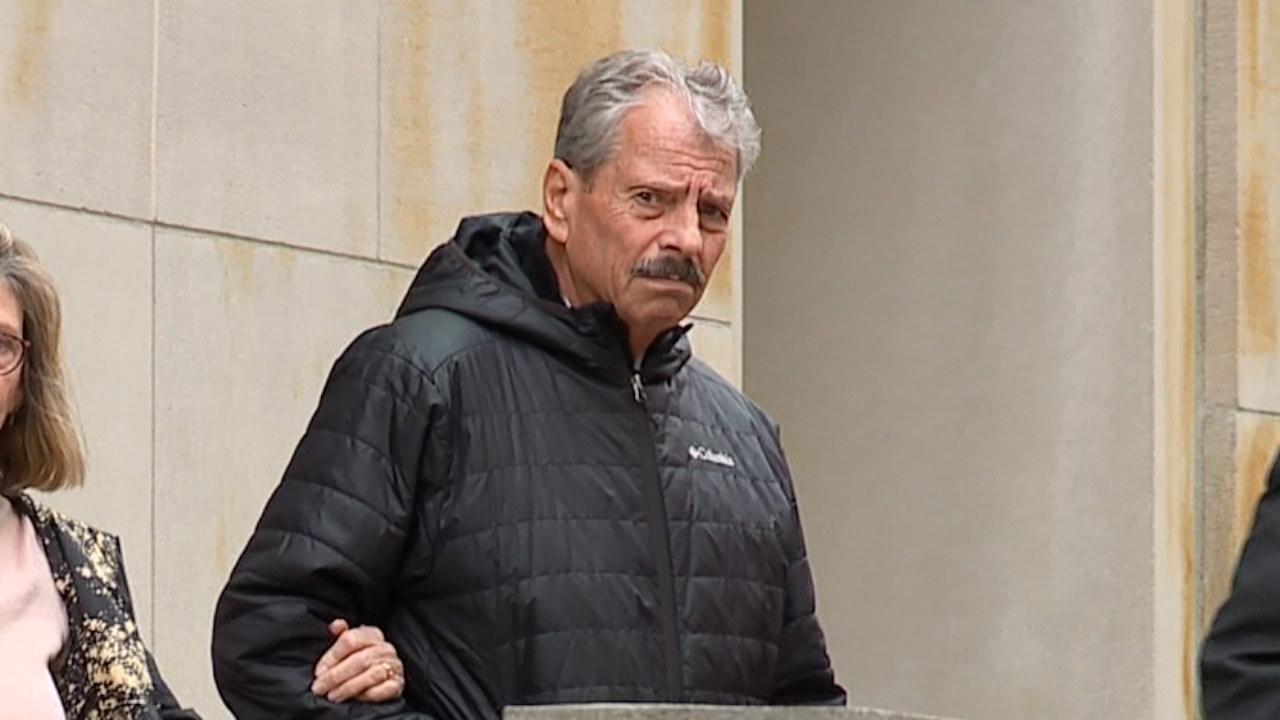
    Former Public Utilities of Ohio Chair Sam Randazzo at court. (Photo by WEWS.)

    BY:  Ohio Capital Journal

    An Ohio grand jury has handed up a 44-count indictment against three players in what is likely the biggest bribery scandal in state history. And when the 50-page indictment was unveiled Monday, it provided new details about a decade of payoffs and conflicts as one of them — who became the state’s top regulator — allegedly did a huge electric utility’s bidding.

    The indictment concerns a $1.3 billion dollar bailout that Akron-based FirstEnergy has already admitted to the federal government that it paid more than $60 million in bribes to purchase.

    Former Ohio House Speaker Larry Householder, R-Glenford, and former state GOP Chairman Matt Borges are serving federal prison sentences for their roles in the 2019 passage of the bailout and the dirty-but-succesful fight to thwart a voter-led repeal.

    When federal prosecutors in 2021 charged those two and three others, they said their investigation continued. But it wasn’t until December that they charged another in the case — Sam Randazzo, a lawyer and longtime energy consultant whom Gov. Mike DeWine nominated to chair the state’s top regulator, the Public Utilities Commission of Ohio.

    That left the people who paid the alleged bribes — FirstEnergy’s top executives — uncharged in a scheme that took place more than four years ago.

    Double dealing

    All that changed Monday when Ohio Attorney General Dave Yost announced state charges against Randazzo and former First Energy CEO Chuck Jones and former Vice President Michael Dowling for their alleged roles in the criminal conspiracy. The three were arraigned in Akron on Tuesday and each pleaded not guilty.

    They were charged in an indictment that alleged shady dealings between the them stretching back 13 years.

    “It all began with a well-lawyered theft in 2010,” the indictment said.

    It went on to describe how Randazzo was general counsel for a group of large FirstEnergy customers — the Industrial Energy Users of Ohio — while also working as a FirstEnergy consultant. Only, the Industrial Energy Users didn’t know that Randazzo was also being paid by the company they were paying him to fight, the indictment said.

    It accuses Randazzo of settling the industries’ claims against FirstEnergy on terms acceptable to FirstEnergy and running the settlements through Randazzo-controlled shell companies where he took a skim — again, unknown to the industrial energy users.

    “His clients, the industrial members of IEU-Ohio, did not know he was a consultant for FirstEnergy,” the indictment said. “Randazzo did not tell them. Years later, some of the money would make its way to IEU-Ohio. Some of it would end up in Randazzo’s pocket.”

    The Industrial Energy Users appear to have engaged in some cynical conduct of their own, however. The indictment describes a 2015 agreement in which FirstEnergy was to pay Randazzo’s company $8.5 million for “consulting services.”

    It was really a cash “side deal” in which FirstEnergy paid the industrial users to drop their objections to a rate hike FirstEnergy wanted, supposedly in the name of “energy security,” the indictment said. In other words, prosecutors said that with Randazzo’s facilitation, FirstEnergy paid off a wealthy, powerful group of electricity users in order to raise rates on everybody else.

    Such arrangements proved quite profitable for Randazzo.

    “Between 2016 and 2019, FirstEnergy paid… $13,152,639.94 to Randazzo’s two shell companies,” the indictment said. “Of that total, Randazzo gave $7,756.903.84 to his IEU-Ohio Client and kept $5,395,736.10 for himself.”

    Cozy relationships

    This is the guy the incoming DeWine-Husted administration thought would be a good candidate to regulate utilities — companies to which Ohioans have little choice in paying their billions.

    The state indictment describes how, on Dec. 18, 2018, FirstEnergy execs Jones and Dowling met with Gov.-elect DeWine and Lt. Gov.-elect Jon Husted at the Columbus Athletic Club and discussed whether the executives wanted Randazzo to regulate their massive electric utility.

    The notion that a governor would ask a huge utility who might be acceptable as a regulator might itself seem startling. But after the dinner, according to the indictment, Jones and Dowling did something even more brazen.

    They went to Randazzo’s German Village condo and pursuant to that, Randazzo solicited a $4.3 million payment from Jones and Dowling, the indictment said. FirstEnergy paid the money “without ever having received an invoice for the payment and without any work or consulting services being performed,” the indictment said. It added that the executives made the payment over the objections of a company lawyer.

    Randazzo told Laurel Dawson, DeWine’s chief of staff, about the payment, calling it a “consulting agreement.” But he didn’t tell her of the other millions he’d gotten from the utility he was seeking to regulate, the indictment said. Randazzo also never told the Ohio Ethics Commission about any of the money he’d gotten from FirstEnergy, the indictment said.

    In Dawson, Randazzo might have had a sympathetic audience. Her husband, Michael Dawson, was a “paid FirstEnergy lobbyist” in 2016, when he’d gotten a $10,000 loan from Randazzo, the indictment said.

    But if his chief of staff told DeWine about the huge payoff Randazzo got from FirstEnergy, it must not have fazed the new governor. DeWine nominated Randazzo to be chairman of the Public Utilities Commission — the ratepayers’ supposed protector — on Feb. 4, 2019.

    Versatile player

    During Householder’s six-week trial in Cincinnati last year, federal prosecutors put on exhaustive evidence of how the FirstEnergy executives financed Householder’s bid to become speaker and to pass the notorious bailout known as House Bill 6.

    “Together, Jones, Dowling, Randazzo and his shell companies worked in concert to steal the power of government and bend it to the will of FirstEnergy,” was the way the state indictment unveiled on Monday put it.

    Most of the details of Randazzo’s involvement in the creation and passage of HB 6 are already known from the federal trial. They show him acting in multiple, conflicting, often-undisclosed capacities — similar to those the state indictment alleges he had already played with FirstEnergy and the industrial energy users.

    Even though he was supposed to be a regulator, Randazzo drafted portions of the bailout legislation and passed them between FirstEnergy officials and a Householder employee who had recently worked for the PUCO. They sometimes only shared printed copies of the huge bill, out of an apparent apprehension about leaving electronic fingerprints.

    According to text messages between Jones and Dowling, Randazzo went so far as to actively lobby for passage of the bailout — which would seem a big departure from the traditional duties of a disinterested regulator.

    Jones and Dowling discussed a meeting about HB 6 that Randazzo had with Sen. Steve Wilson, R-Maineville, and the Senate’s counsel. “We have a good plan to help,” Dowling told his boss.

    Other officials

    Despite the fact that DeWine had reason to know Randazzo was connected to FirstEnergy, the governor made him the state’s top utility regulator and he signed the billion-dollar bailout that benefitted the company the day it passed. And on July 21, 2021 — the day Householder was arrested — DeWine said he wasn’t in favor of repealing the measure.

    The governor subsequently walked that back, but HB 6 is still on the books and Ohio utilities are still getting hundreds of millions in ratepayer subsidies as a result.

    DeWine wasn’t the only state official to act at least peripherally in the scandal.

    Secretary of State Frank LaRose has refused to explain the “private” updates that FirstEnergy CEO Jones said the state’s chief elections official was providing during an attempt to gather signatures to put an HB 6 repeal on the ballot.

    And Yost himself dealt a mortal blow to the signature gathering when he initially rejected the ballot language — cutting nearly in half the time HB 6 opponents had to gather a quarter-million valid signatures. And in text messages presented in the federal trial, Borges told a co-conspirator that Yost thought HB 6 was a bad law, but wouldn’t speak up because of help he’d gotten from FirstEnergy in the past.

    Beyond the bailout

    Randazzo’s alleged help to FirstEnergy wasn’t limited to HB 6. He also thwarted a PUCO look into the company’s books that was likely to force a cut in electricity bills. That would have caused falling stock prices and a hit to Jones’ and Dowling’s portfolios, the indictment said.

    The erstwhile regulator was apparently so helpful that Jones at one point told a FirstEnergy subordinate to back off for fear of being too obvious. In a text message included in the indictment, Jones told Dennis Chack that Randazzo’s pro-FirstEnergy conduct “has a lot of talk going on in the halls of PUCO about does he work there or for us?”

    Even so, Randazzo’s behavior at the PUCO continued to be shameless, urging fellow regulators to join him in lobbying for the corrupt bailout, the indictment said.

    Randazzo “began internally lobbying PUCO staff members between July 2020 and September 2020 to generate strategies to save HB 6, despite facing internal objections about the inappropriateness of the effort to save HB 6,” it said.

    The indictment included a Sept. 15, 2020 email in which Randazzo told subordinates, “One option (and I really think we need to get other commissioners and staff into a proactive mode): We could, on our own initiative, issue a show-cause order to (FirstEnergy) directing (FirstEnergy) to show that no costs associated with HB 6 have been included in any riders or base rates.”

    Had such an order been issued, the result would have been misleading. While the bill didn’t raise consumer costs through riders or base rates, it included a provision that ensured FirstEnergy would collect at least as much as it did in one of its best years and it created a massive subsidy for money-losing coal plants.

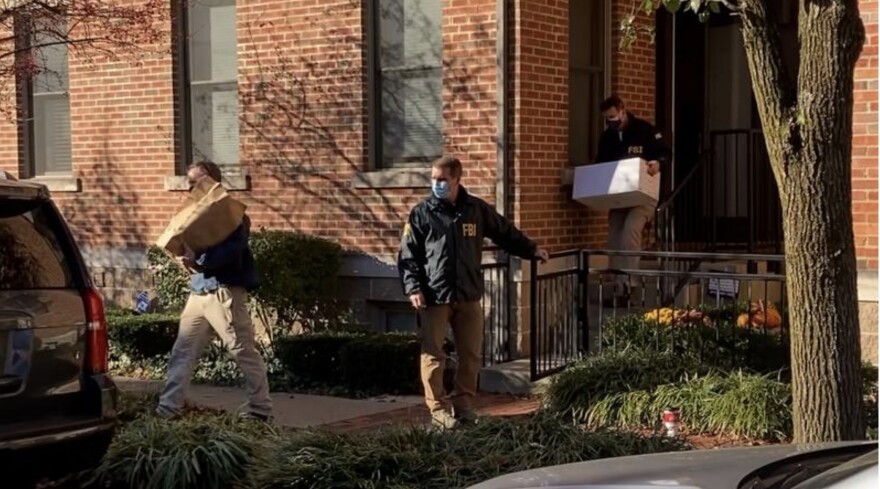
    Randazzo’s efforts seemed finally to end two months later, when the FBI searched his condo.


    Marty Schladen
    MARTY SCHLADEN

    Marty Schladen has been a reporter for decades, working in Indiana, Texas and other places before returning to his native Ohio to work at The Columbus Dispatch in 2017. He’s won state and national journalism awards for investigations into utility regulation, public corruption, the environment, prescription drug spending and other matters.

    MORE FROM AUTHOR


  • Ohio Gov. Mike DeWine and Lt. Gov. Jon Husted subpoenaed in civil suit over bailout scandal

    Ohio Gov. Mike DeWine and Lt. Gov. Jon Husted subpoenaed in civil suit over bailout scandal

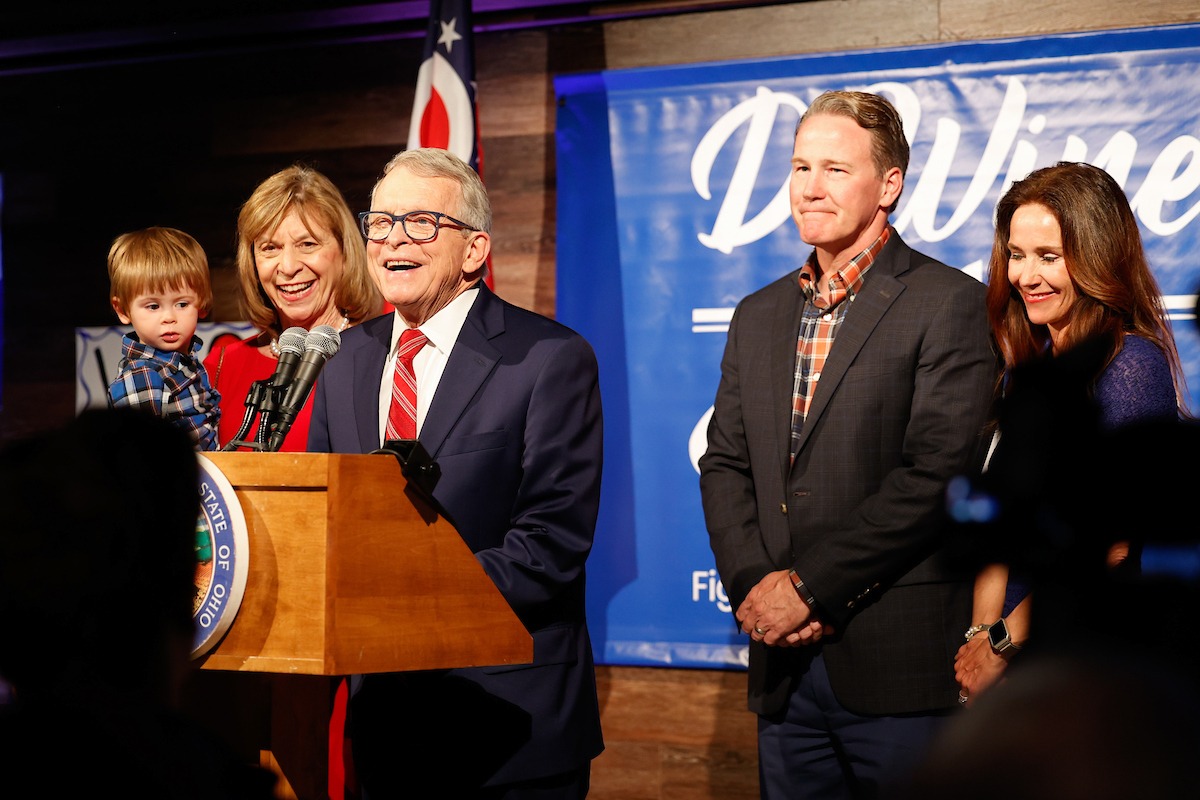
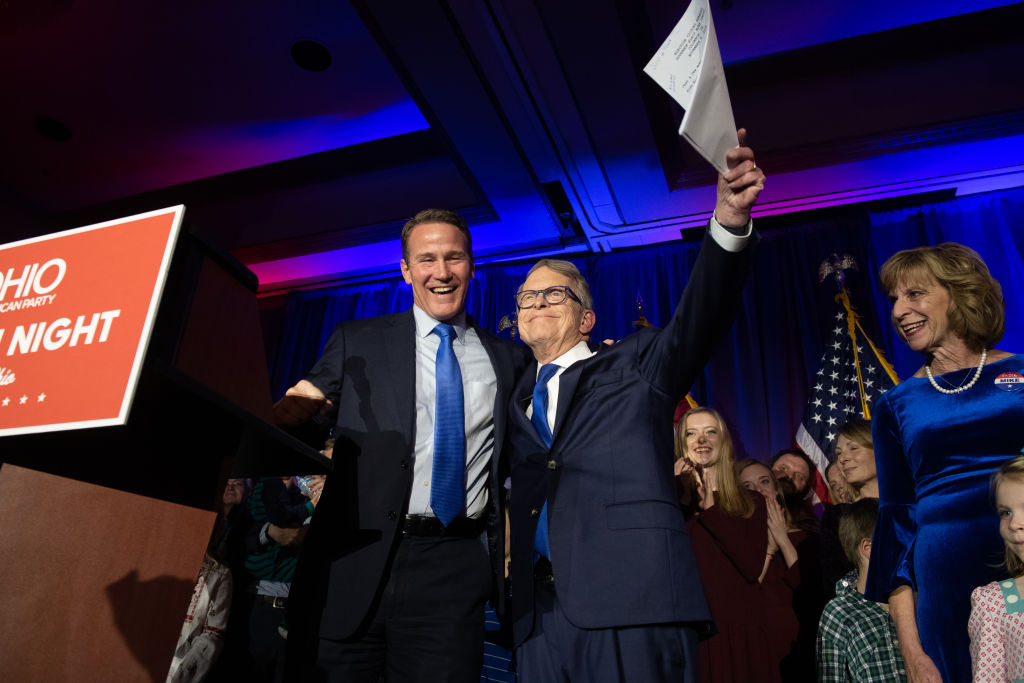
    COLUMBUS, OH — MAY 03: Ohio Gov. Mike DeWine joined on stage by First Lady Fran DeWine, grandson Calvin, Lt. Gov. Jon Husted and Second Lady Tina Husted to celebrate DeWine winning the Republican Party nomination for governor in the Ohio primary election, May 3, 2022, at the DeWine-Husted campaign headquarters, Columbus, Ohio. (Photo by Graham Stokes for the Ohio Capital Journal. Republish photo only with original article.)

    BY:  

    Plaintiffs in a civil suit related to a massive bribery and money-laundering scandal have subpoenaed documents from Ohio Gov. Mike DeWine and they’re scheduling a sworn deposition with Lt. Gov. Jon Husted.

    There have been four criminal convictions so far in the scandal and U.S. Attorney Kenneth L. Parker has said the investigation is continuing. However, there is no indication that DeWine or Husted is an object of it.

    Even so, members of the DeWine-Husted administration were significant players in the scandal and DeWine’s nominee to head up the Public Utilities Commission of Ohio could be a target of the probe.

    The demands for documents and testimony come in a class-action suit that big investors in Akron-based FirstEnergy filed against the company over its involvement in the scheme. Between 2017 and 2020, the company paid out more than $60 million to gain a $1.3 billion ratepayer bailout that was mostly intended to prop up two failing nuclear plants in Northern Ohio.

    Among those already convicted are former Ohio House Speaker Larry Householder, R-Glenford, who was sentenced to 20 years in prison for his role in what federal authorities said might be the biggest bribery and money-laundering scheme in Ohio history. Former state Republican Chairman Matt Borges in June was sentenced to five years for his role.

    However, others who played prominent roles in the scandal are yet to be charged.

    They include former FirstEnergy CEO Chuck Jones and former Vice President Michael Dowling, who directed the money to make Householder speaker in 2018 and then pass and and protect House Bill 6, the corrupt bailout legislation. They also include Sam Randazzo, DeWine’s first nominee to chair the Public Utilities Commission of Ohio.

    Jones, Dowling and Randazzo deny wrongdoing, but in a deferred prosecution agreement, FirstEnergy said Jones and Dowling paid Randazzo a $4.3 million bribe just as DeWine was selecting Randazzo to be FirstEnergy’s top regulator. In that post, Randazzo helped write the corrupt bailout bill and he helped FirstEnergy avoid a scheduled audit known as a “rate case” that was slated for 2024.

    Large investors such as pension and investment funds are suing FirstEnergy over the scandal, arguing that the company violated securities laws by not disclosing its reckless conduct. And then, when the feds made arrests in July 2020, its stock value plummeted — as did their investments.

    The plaintiffs in the civil case have been battling with Randazzo — who is not a defendant — since April over whether he has complied with judges’ orders to produce documents relevant to the $4.3 million in FirstEnergy money he received just before he began regulating the company.

    A magistrate judge and a special master in the case have consistently rebuked Randazzo for not cooperating more fully, with the most recent instance coming last week. Randazzo appealed up the food chain, asking Magistrate Judge Kimberly Jolson not to hold him to a disclosure order from the special master, Shawn K. Judge.

    The plaintiffs in the civil case asked Jolson to make Randazzo comply with Judge’s order to cough up more information. As part of the filing, they provided a table of depositions they’ve scheduled or are in the process of scheduling. To prepare for some, they presumably could use the information and documents they’re demanding of Randazzo.

    One deposition they’re scheduling is of Randazzo himself, which has a “target period” of March 4 to March 29.

    Another is of Husted, the lieutenant governor, which has a target period of Feb. 28 to March 19. Dave Anderson of the Energy and Policy Institute first flagged the document that listed Husted’s deposition.

    Hayley Carducci, Husted’s spokeswoman, on Tuesday said Husted is cooperating.

    “We’re aware of the civil investor lawsuit against First Energy,” she said in an email. “The Lt. Governor has already provided public records pertaining to this, and we will continue to comply as we have done in the past. There’s no new information to disclose.”

    As with Randazzo, Husted is not a defendant in the civil case.

    DeWine also has recently received a subpoena for documents in the civil case.

    “We’re reviewing it with counsel for what can be provided,” Press Secretary Dan Tierney said in an interview. “Our office is subject to the public records act and in a sense this is no different.”

    Tierney pointed out a distinction between the class-action suit and the case which has already convicted Householder and Borges and proceedings that could charge others.

    “This is a civil case and anybody has a right to bring a civil case if they want,” Tierney said of the proceeding in which the governor’s documents had been subpoenaed. “The civil process is where people say they’ve been damaged and they want the court to award damages. That is far different than the criminal case in which the federal government said public integrity laws had been violated.”

    He added, “It still remains in the criminal case that nobody in our office or the lieutenant governor’s office has been questioned or subpoenaed or had any legal filings like that.”

    Even in the absence of such requests, DeWine and his administration were involved several ways in the drafting and passage of the corrupt utility bailout:

    • He nominated Randazzo to head up the PUCO a day after it was publicly revealed that FirstEnergy had paid a group controlled by Randazzo millions of dollars over the years. “Forced DeWine/Husted to perform battlefield triage,” FirstEnergy CEO Jones said in a text message to Dowling. “It’s a rough game.”
    • While he was still a FirstEnergy lobbyist, Dan McCarthy set up Partners for Progress, a 501(c)(4) “dark money” group through which Jones, Dowling and others funneled millions into the conspiracy. DeWine hired McCarthy as his legislative affairs director and kept him in that post for a year after Householder and the others were arrested.
    • HB 6, the bailout legislation, was highly controversial as Householder jammed it through the legislature, other lawmakers testified at his trial. Even so, DeWine signed it the day it passed and when Householder was arrested, the governor’s first position was to keep the law in place — and part of it still is. DeWine reversed himself a day later, calling to repeal and replace the subsidies.

    Morgan Trau contributed to this report.


    Marty Schladen
    MARTY SCHLADEN

    Marty Schladen has been a reporter for decades, working in Indiana, Texas and other places before returning to his native Ohio to work at The Columbus Dispatch in 2017. He’s won state and national journalism awards for investigations into utility regulation, public corruption, the environment, prescription drug spending and other matters.

    MORE FROM AUTHOR

  • Ohio utility regulator front and center in massive bailout scandal

    Ohio utility regulator front and center in massive bailout scandal

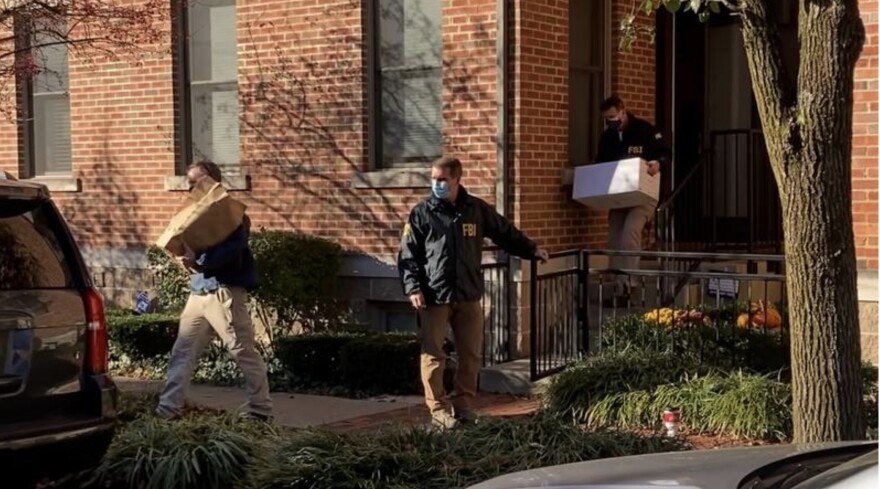
    FBI agents remove boxes of materials from PUCO Chairman Sam Randazzo’s condo in Columbus Nov. 17, 2020. Photo courtesy of Daniel Konik/Statehouse News Bureau.

    BY: MARTY SCHLADEN – Ohio Capital Journal

    CINCINNATI — Ohio’s utility regulator is at the center of a massive bribery and money laundering scandal that has been the focus of a trial here since late last month. In 2019, its chairman and a very recent senior official played a central role in writing corrupt bailout legislation that would give more than $1 billion in subsidies to companies the Public Utilities Commission of Ohio was supposed to be regulating.

    But did their role in the process violate any PUCO rules? The answer is unclear.

    When it comes to being a consumer watchdog, the PUCO doesn’t have the best track record. 

    Since 2008, it has granted more than $1 billion in electric rate increases that were later declared illegal by the Ohio Supreme Court. But, thanks to the way the increases — or “riders” — were written, there’s no way to force utilities to return those ill-gotten gains to ratepayers.

    In at least one of those instances, a regulator might have known the rate hike was illegal when he voted to grant it.

    In June of 2019 — as Akron-based FirstEnergy was funneling millions through dark-money groups to pass the bailout that is the subject of the trial here — the Supreme Court struck down an increase that had already paid the company a non-refundable $460 million. Asim Haque, who months earlier was chairman of the PUCO, sent a FirstEnergy executive a text suggesting that Haque knew the increase was illegal when he voted for it. Haque then said he was just kidding.

    Then, just last month, the PUCO approved an increase of more than 50% in fixed rates for Columbia Gas without making the company go through a formal process to show that it needs the money. That means that after five years throughout much of Ohio, it likely will cost nearly $60 a month just to have gas service  — regardless of whether you live in a 500 square-foot apartment or if you live in a mansion on a five-acre lot. Any payments for gas itself will be in addition to that amount.

    It doesn’t appear that Columbia owner NiSource needed the money. Last year, before the PUCO allowed the rate hike, NiSource’s profits came in $217 million — or 41% — higher than expected. Then, a month after the increase was granted, NiSource announced it was increasing its profit forecast for 2023.

    In a press release, the company boasted of “strong regulatory execution” — including by winning the fixed-rate increase from the PUCO.

    And then there’s House Bill 6, the 2019 law that is the subject of the trial in federal court here that has been ongoing since Jan. 23.

    Former Ohio House Speaker Larry Householder and former Ohio Republican Party Chairman Matt Borges are on trial for their participation in what prosecutors say is likely the biggest bribery and money laundering scandal in Ohio history. They allege that $61 million that mostly came from FirstEnergy was used to make Householder speaker in 2019, and then to pass and protect the $1.3 billion bailout. Most of that money was intended to prop up FirstEnergy’s failing nuclear and coal plants.

    No current or former PUCO employees have been charged in the scandal. But, to put it charitably, the conduct of at least two of them was puzzling — given that the agency’s mission is to protect ratepayers who don’t have a choice about buying the utilities’ products.

    In January 2019, Householder won the speakership and was beginning his push for a FirstEnergy bailout. At the same time,  FirstEnergy lobbyist Ty Pine sent PUCO senior advisor Pat Tully’s resume to Jeff Longstreth, Householder’s right-hand man, according to testimony in the trial. Within weeks, Tully had moved from his PUCO job to one as senior advisor for energy policy in the House Republican Caucus.

    Sam Randazzo, a former FirstEnergy consultant, was confirmed as Gov. Mike DeWine’s nominee to chair the utility commission in April 2019. When he nominated Randazzo, DeWine brushed off warnings that his nominee had “opaque and undisclosed” ties to FirstEnergy.

    In the Householder trial, Tully testified that while Randazzo was still a nominee, he met with Tully, Householder and Rep. Nino Vitale R-Urbana. From there, Tully worked with Randazzo to help draft the utility bailout, HB 6, and to reconcile it with draft legislation submitted by FirstEnergy. The bill secured final passage in July 2019 — months after Randazzo had taken the helm at the utility commission.

    In other words, Ohio’s top utility regulator helped write a law that gave a billion-dollar bailout to a company he was supposed to be regulating on the ratepayers’ behalf. And he was heading an agency that over the previous decade had awarded electric utilities more than $1 billion in illegal, non-refundable rate hikes.

    Randazzo would later resign after the FBI in 2020 raided his Columbus condo. And in a deferred prosecution agreement, FirstEnergy admitted that it paid him $4.3 million just before he became PUCO chairman.

    But does the PUCO have any rules against the role Randazzo played in drafting HB 6? 

    Asked if the agency had a policy prohibiting a commissioner from helping write legislation affecting a utility he or she is supposed to be regulating, spokesman Matt Schilling initially seemed to say that it did not.

    “The PUCO is a state agency and will always be responsive to requests for information or technical assistance to the Ohio General Assembly on matters related to utilities and commercial transportation,” Schilling said in an email last week.

    But in answer to a follow-up, Schilling seemed to say something different. He was asked if that means PUCO believes there was nothing inherently improper about its chairman helping to draft legislation creating subsidies for utilities the agency regulates.

    “No, I never stated anything like that,” Schilling replied. “The PUCO does not comment on ongoing proceedings or court cases.”

    So what about commission employees doing as Tully did when he had a FirstEnergy lobbyist passing out his resume? After all, you might pull punches as a regulator if you’re hoping to land a job with one of the companies you’re supposed to be regulating.

    Schilling’s response might not be very reassuring. He cited a law that “prohibits Commission employees from seeking employment with utilities regulated by the Commission.”

    But Schilling also sent along agency guidance that contains a pretty big loophole.

    “Although this law prohibits Commission employees from soliciting Commission-regulated utilities for employment, it does not prevent employees from considering employment opportunities with these utilities in instances in which the utility approaches the employee,” it said.

    It seems that, after the fact, it might be difficult for the PUCO to figure out who approached whom when an employee jumps ship for a well-paid utility job. And its protections against conflicts of interest during the hiring process don’t seem ironclad.

    “However, if you are contacted by a utility concerning a possible job offer, you must immediately advise your supervisor of the contact so that your supervisor can limit your duties to matters which do not involve the utility in question while any discussions are taking place,” the guidance said.

    In Tully’s case, he didn’t end up directly on FirstEnergy’s payroll. But he did help write a law that the company paid more than $60 million for.

  • Texts, calendars, emails link DeWine to FirstEnergy’s bribery scandal

    Texts, calendars, emails link DeWine to FirstEnergy’s bribery scandal

    BY: JAKE ZUCKERMAN – Ohio Capital Journal

    Gov. Mike DeWine and his administration played a hands-on role passing an allegedly pay-for-play nuclear bailout and appointing an industry-friendly regulator who has since been accused of taking a $4.3 million bribe, documents and messages show.

    Calendar records show DeWine, a Republican, met repeatedly to discuss energy policy with FirstEnergy Corp. officials and at least once with GOP House Speaker Larry Householder, who has been criminally accused of taking a separate, multimillion-dollar bribe from the company to pass the bailout.

    Despite a cautionary letter from environmental groups and a 198-page dossier from his former campaign staffer warning against the move, DeWine appointed Sam Randazzo in 2019 to the head of the Public Utilities Commission of Ohio. FirstEnergy last summer admitted it paid Randazzo a $4.3 million bribe. Randazzo has not been charged with a crime and denies wrongdoing.

    Newly released text messages show FirstEnergy executives describing an open line with the administration on the selection and inside support from Ohio’s chief executive.

    “When the Gov Elect asked me about attributes, I listed integrity, work ethic, creativity, thick skin, circumspection in public statements,” FirstEnergy’s then CEO texted Randazzo about the open PUCO seat in December 2018, just before DeWine took office.

    “You fit all of those.”

     Former FirstEnergy CEO Charles “Chuck” Jones. Source: FirstEnergy, via Flickr

    In one text, FirstEnergy executive Mike Dowling credits DeWine and Lt. Gov. Jon Husted with performing “battlefield triage” to save Randazzo’s appointment before a key vote. Both DeWine and Husted have previously denied that a redacted version of the text message that appeared in criminal documents referred to them.

    Federal prosecutors accused House Speaker Larry Householder of secretly controlling a nonprofit that took $60 million from FirstEnergy. He allegedly used the money to enrich himself personally and politically and to ensure the passage of House Bill 6, which provided a massive bailout to two nuclear plants owned at the time by FirstEnergy. Householder was charged with racketeering and awaits trial. Two alleged conspirators pleaded guilty.

    FirstEnergy admitted last summer to the $60 million payment as well as a separate $4.3 million bribe to Randazzo just before he started as Ohio’s top utility regulator. The payment topped off $22 million in consulting fees to Randazzo since 2010 from the company.

    Court documents from prosecutors reveal no focus on DeWine, who has not been charged with any crime. However, a review of records turned over in subpoenas, public records requests for his official calendars by the Energy and Policy Institute, text messages attached to regulatory filings, and others show DeWine and his staff repeatedly influencing and shepherding HB 6 into law.

    On the campaign trail in July 2018, DeWine visited one of the nuclear plants that would receive a bailout, his official calendar shows. A month later, he met with FirstEnergy executives at their Akron headquarters. In October of that year, DeWine met with FirstEnergy at a fundraiser for Republican governors.

    FirstEnergy contributed about $1 million in total to DeWine’s campaign, political organizations supporting it, and to another nonprofit supporting his daughter’s campaign for county prosecutor, according to the Dayton Daily News.

    After winning a close race, DeWine, Husted, Jones and Dowling celebrated over dinner at The Athletic Club in Columbus. The next day, Jones sent Randazzo the text message (above) indicating they discussed the open PUCO seat.

    In January of 2019, the FirstEnergy officials texted one another trying to fill not just one but two open PUCO seats, all the while mentioning phone calls with “DeWine guys” about it.

    “That’s their plan but nothing certain until Sam’s [Randazzo’s] meeting [with DeWine],” Jones texted Dowling. “Four people in DeWine world, you, Sam, and I know about this.” The PUCO seats would eventually be filled by Randazzo with another commissioner renewed.

    Dowling relayed to the other two men a message from Josh Rubin — a DeWine 2018 campaign adviser and a FirstEnergy lobbyist. He said once Randazzo takes office, DeWine will “lean on him on everything.”

    Several texts focus on HB 6. The bill (and eventual law) would bail out FirstEnergy’s nuclear plants, subsidize two coal plants owned by other Ohio utility companies, and create a “decoupling” mechanism that effectively put ratepayers on the hook to guarantee certain revenue streams of FirstEnergy’s. Prosecutors estimate the bill as worth about $1.3 billion to the company.

    Two days before the bill was introduced, DeWine’s calendar shows a slot for an “Energy Discussion” at the governor’s residence. Later that month, after the bill was repeatedly criticized during an opponent testimony hearing at the statehouse, DeWine, Husted, Randazzo and various staffers all met up at 5 p.m. for what the governor’s calendar calls a “Nuclear Bailout Bill Discussion.”

    Over the next month, DeWine’s calendars show two entries for energy policy meetings, plus a call with Householder about HB 6, and another call on the bill.

    On June 9, 2019, DeWine showed signs of wavering.

    “Sam, what do we know about whether nuclear plants need this boost?” DeWine, using his personal email, wrote to Randazzo. “One editorial suggested testimony was not conclusive.”

    Dowling paid a visit to the governor’s residence the next day. Randazzo responded to DeWine’s email on June 11, casting doubt on the studies referenced in the editorials.

    On July 1, Dowling texted Jones.

    “Just had a long conversation with JHusted just now,” he said, going on to explain that Husted sought to extend the length of the bailout. “All is well.”

    Court records contain another text from Jones stating that “State Official 2,” later confirmed to be Husted, joined with others in “fighting to the end” for a beefier bailout.

    After a long slog, lawmakers passed HB 6 on July 23, 2019. DeWine signed it into law mere hours later.

     FBI agents remove boxes of materials from PUCO Chairman Sam Randazzo’s condo in Columbus Nov. 17, 2020. Photo courtesy of Daniel Konik/Statehouse News Bureau.

    Loyalty to staff and HB 6

    As the FBI made its first arrests, DeWine began a pattern of defending HB 6 on the merits and showing unflinching loyalty to his staffers, some of whom have ties to FirstEnergy.

    Householder, his political strategist, a prominent GOP lobbyist, and two FirstEnergy lobbyists were arrested and charged with racketeering in connection with HB 6 on July 21, 2020. The next day, DeWine stood by the law he signed.

    “Because people did bad things does not mean that the policy is not a good policy,” he said.

    He reversed himself the next day and called for a repeal of the bill.

    In October, FirstEnergy fired Jones, Dowling, and fellow executive Dennis Chack as it waged an internal investigation. The company fired another two executives days later “due to inaction and conduct that the Board determined was influenced by the improper tone at the top.”

    At this point, the public remained unaware of the multimillion-dollar financial arrangement between the embattled FirstEnergy and Randazzo. However, on Nov. 16, 2020, FBI agents were seen raiding Randazzo’s condo and removing boxes of material from inside. The next day, FirstEnergy submitted a little-noticed securities filing outlining the $4.3 million payment.

    Despite the images of FBI agents entering Randazzo’s condo, DeWine publicly defended his appointee.

    “We have no indication he’s under investigation or he’s the target of an investigation. We’ll wait until we find additional facts,” he said in a Nov. 17, 2020 news conference. “Look, the FBI many times will indicate if someone is a target. They have not indicated he’s a target. I have no reason to think he’s a target. I don’t know. So, we’re waiting for additional information, quite candidly. I hired him. I think he’s a good person. If there is evidence to the contrary, then we’ll act accordingly, but not going to act without facts.”

    Randazzo would resign three days after that statement.

    Mid-summer 2021, FirstEnergy signed a deferred prosecution agreement with the U.S. Department of Justice. The company agreed to pay a $230 million penalty and cooperate with investigators to avert a charge of honest services wire fraud.

    The agreement contained a lengthy set of facts from the company, stating it paid the $64 million in bribes in exchange for official action from Householder and Randazzo.

    Days after the agreement was announced, DeWine held a press conference on anti-hazing legislation. Reporters asked questions afterward about the agreement, including a line that refers to “State Official 1” and “State Official 2” lobbying to ensure Randazzo’s appointment. DeWine said he’s “not aware” of anyone in his administration, including himself, appearing in the document. Husted, in a statement, said he too “does not believe” he’s referenced in the document.

    Texts obtained by the Ohio Consumers’ Counsel from FirstEnergy and attached to a regulatory filing contain the unredacted version of the text, identifying DeWine and Husted by name.

    In 2017, a lobbyist named Dan McCarthy created a nonprofit entity called Partners for Progress to engage in “advocacy in support of nuclear power,” tax records show. FirstEnergy would later admit to paying $25 million to Partners for Progress, some $15 million of which went to Householder’s nonprofit.

    DeWine hired McCarthy as his legislative director in 2019, around the time McCarthy stepped down from the organization’s board. In February 2021, after media reports identified McCarthy’s role with Partners for Progress, DeWine defended McCarthy.

    “As far as I know, Dan McCarthy has been well-respected for many, many years, long before he started working for me as our legislative director, and I have faith in his integrity,” DeWine said.

    McCarthy resigned in September 2021.

    DeWine response

    In a phone interview, DeWine spokesman Dan Tierney said the OCC-obtained text messages and meetings listed by the Ohio Capital Journal contain no new information.

    The texts, he said, in fact show the lack of a role from DeWine and Husted within the scandal. He said prosecutors have not subpoenaed him or any of his employees.

    “This all along has been a Larry Householder scandal and a FirstEnergy scandal,” he said.

    When asked whether DeWine, a former prosecutor and attorney general, detected any sense of impropriety during all his contacts with Householder and FirstEnergy leading up to the passage of House Bill 6, he declined comment.

    Husted offered a similar comment through a spokeswoman, stating that “there is nothing new here” in the texts, emails and meetings.

    “This kind of advocacy is well within his responsibilities as a public official, and, as we know, the bill was ultimately passed with bipartisan support,” he said.

  • Utility regulator accused of taking a bribe helped write bill targeting watchdog

    Utility regulator accused of taking a bribe helped write bill targeting watchdog

    FBI agents remove boxes of materials from PUCO Chairman Sam Randazzo’s condo in Columbus Nov. 17, 2020. Photo courtesy of Daniel Konik/Statehouse News Bureau.

    BY: JAKE ZUCKERMAN Ohio Capital Journal

    Ohio’s former top utility regulator, who was accused of taking a $4.3 million bribe, quietly spent months helping write a sweeping energy bill that targeted a state watchdog agency that advocates for Ohio’s residential electric customers, records show.

    Emails that the Public Utilities Commission of Ohio gave in response to two FBI subpoenas show its former chairman, Sam Randazzo, conferred with the bill sponsor and helped draft legislative language. The bill would have limited the reach of the Ohio Consumers’ Counsel and given often-hostile state legislators control of its board.

    The OCC appears at PUCO cases and advocates for residential ratepayers’ interests, which often run counter to those of investor-owned utility companies and industrial-scale energy customers. The agency’s efforts have led to millions in refunds to consumers, including $306 million from FirstEnergy Corp. last year to settle a lawsuit against the company for charging an unlawful profit margin on its customers.

    Akron-based FirstEnergy told prosecutors last summer that it paid a business owned by Randazzo $4.3 million before his 2019 appointment in exchange for “official actions.” The company also said it gave a nonprofit secretly controlled by then-GOP House Speaker Larry Householder $60 million to help pass House Bill 6 — energy legislation worth an estimated $1.3 billion to FirstEnergy. Householder has pleaded not guilty and awaits trial. Randazzo has not been charged with a crime.

    Records released earlier this year showed some of Randazzo’s behind-the-scenes lobbying work on HB 6. The records released last week show his influence spanned further.

    In May 2020, Rep. Nino Vitale, R-Urbana, introduced the text of House Bill 246. The bill would have narrowed the scope of cases the OCC can join and subject the agency to “any reasonable conditions that the commission deems necessary to avoid duplication, repetition or delay.” It also gives state lawmakers appointment power over six of nine seats on the OCC’s board.

    The legislation contained a sweep of other changes as well, including creating new ways for utilities to set their prices, modifying setback rules for wind farms, and allowing the Ohio Power Siting Board to create new setback requirements for solar energy sites.

    In the six months before Vitale unveiled the bill, Randazzo and PUCO staff met with Vitale, drafted elements of the legislation, and helped edit Vitale’s introductory testimony to lawmakers, the subpoenaed emails show. The emails don’t show Randazzo addressing the OCC provisions directly. But in a statement through his attorney, Randazzo equivocated when asked if he drafted or advised on the section.

    “If so but having no recollection of either writing or advising any such language, it would only have been as the result of a request from the legislature,” he said. “It is likely that the utilities had input.”

     Sam Randazzo, then a private sector attorney, testifies before the PUCO in March 2018. Source: The Ohio Channel.

    The PUCO released the emails after the Ohio Capital Journal filed a public records request and an eventual lawsuit seeking them.

    Around Thanksgiving of 2019, Randazzo asked to meet with Maura McClelland, a policy adviser and attorney at the PUCO, to meet and discuss the language of the bill’s “ratemaking piece.”

    HB 246 created a new option for utilities to set prices called “alternative rate plans.” According to nonpartisan analysts with the state Legislative Service Commission, the plans can take into account aspects of fair energy pricing that the current model misses like efforts for energy efficiency or cash flow problems from the companies.

    “In general, alternative rate plans could lead to higher prices paid by ratepayers,” the LSC analysts wrote. “But presumably, PUCO would only approve those higher costs after examining aggregate effects in accomplishing its policy objectives.”

    HB 246 would also allow the PUCO to consolidate parties that it determines have “sufficiently common interests” to speed up cases.

    In a memorandum opposing the bill, the Ohio Manufacturers’ Association said the legislation would block its members from meaningful participation at the PUCO. The manufacturers argued the bill in several areas consistently gives utilities the upper hand over their customers, especially via the ratemaking proposal.

    “The bill is opaque and no clear reasoning exists for why its proposed changes are needed,” the memorandum states.

    Roger Sugarman, an attorney representing Randazzo, said via email that neither Randazzo nor the PUCO were the driving force behind the bill. He said he couldn’t determine if the LSC’s analysis is correct without more details.

    “Without knowing what type of alternative rate plan, or the object of your question and the statutory conditions required to secure PUCO approval, it is not possible to evaluate the LSC analysis,” he said. “In general, rate applications filed by utilities, whether alternative or traditional, lead to higher rates; the question is usually about how much higher.”

    He said some pieces of the bill wouldn’t have affected much change versus current law. Plus, the bill all but died after its first hearing. Randazzo’s time “was occupied by more pressing and important things than HB 246.”

    FBI agents arrested Householder and charged him with racketeering in June 2020. He awaits trial. Agents raided Randazzo’s condo months later. In July 2021, FirstEnergy signed a deferred prosecution agreement with the U.S. Department of Justice. It agreed to pay a $230 million penalty and cooperate with the ongoing investigation into HB 6 to possibly avert a charge of wire fraud.

    In a statement of facts paired with the agreement, FirstEnergy said it paid companies controlled by Randazzo $4.3 million in exchange for official action. The company said it hired Randazzo as a consultant and paid him a total of about $22 million since 2010.

    Before starting in state government, Randazzo represented industrial scale energy users before the PUCO. He spent years fighting against Ohio energy policies that forced utilities to include more renewable energy in their mixes or make their customers’ homes more energy efficient. He also represented subsidiaries of both CenterPoint Energy and Dominion Energy as a lobbyist, as well as a group of citizens opposing a wind farm in Huron County.

    Vitale drew significant media attention via outrageous claims including that Bill Gates invented the novel coronavirus or that Gov. Mike DeWine was bringing “FEMA Concentration Camps” to Ohio in relation to the pandemic. (Randazzo said his position on COVID “pulled in a very direction” than Vitale’s.)

    Vitale also, perhaps more subtly, helped guide HB 6 from legislation to law. He co-sponsored the bill and chaired the House Energy and Natural Resources committee that reviewed it. He first won office with $7,700 in financial backing from Householder’s campaign committee. He voted for HB 6 in 2019 and against repealing it after Householder’s arrest. He was one of 21 lawmakers who voted against expelling Householder from office.

    Vitale didn’t respond to a phone call or emails to his personal and official accounts.

     State Rep. Nino Vitale, R-Urbana. Photo from Ohio House website.

    “As you all know, anyone can be indicted for anything. Anything,” he said in a floor speech last year defending Householder.

    “However, that person deserves to go in front of a jury of their peers and prove their case. They might be guilty, they might not … That’s what makes us different from a communist country.”

    Federal prosecutors alleged that Householder secretly controlled a nonprofit organization that received $60 million from FirstEnergy. He used the money to elect a slate of candidates who would vote him into the House Speaker’s office and in turn support HB 6. He’s also accused of spending the money for personal use. Two alleged conspirators, including Householder’s former political adviser, have pleaded guilty.

    When the anti-OCC bill dropped, few knew or suspected of either Randazzo’s financial ties with FirstEnergy or his lobbying work on the bill. However, after Householder’s arrest and the raid on Randazzo’s home, some raised interest in ensuring the bill’s quick death.

    “This bill is a danger to anyone in Ohio who pays a utility bill and it remains on the Ohio House docket as a direct attack on the OCC and all Ohio residential utility customers,” wrote former Democratic State Senator Leigh Herington in a November 2020 op-ed in the Columbus Dispatch.

    He suggested the legislation was simple retaliation for the OCC’s opposition to House Bill 6 and another bill that allows FirstEnergy a more favorable accounting formula to determine if its collections from customers are “significantly excessive.” (The OCJ previously reported Randazzo lobbied on that legislation as well.)

    Utility companies spend big and wield considerable sway in Ohio politics. As Herington noted, the OCC has seen its size dwindle over the years. Its budget dropped from $9.3 million in 2011 to $5.5 million in 2020.

    The OCC also suggested the bill was retaliatory in nature due to its opposition to HB 6. Vitale’s bill, the agency said in a resolution, would “weaken the independence” of the board as well as its “utility watchdog role.”

    A PUCO spokesman said the emails only show the PUCO working on language related to the agency and the state Power Siting Board. He said he didn’t know why Randazzo and Vitale communicated through personal email accounts.

    “The PUCO does not take a position on proposed legislation,” he said. “We will always be responsive to inquiries from members of the General Assembly as they go through the legislative process.”

  • Millions of Ohioans facing home gas and electric rate hikes

    Millions of Ohioans facing home gas and electric rate hikes

    Duke’s parent company made $820 million in profit in the first quarter of 2022 after netting about $3.6 billion last year. It paid its shareholders $3.1 billion in dividends in 2021 and paid its CEO $16.4 million in salary.

    BY: JAKE ZUCKERMAN Ohio Capital Journal

    Ohio utility companies have asked state regulators for permission to raise home gas, electric and water costs on more than 2.75 million Ohio customers.

    Those charges could be spread between customers of Columbia Gas, AES Ohio, Duke Energy, and Aqua Ohio. The utilities, all investor-owned, are collectively asking for another $400 million in annual charges.

    Any base rate increases require the approval of the Public Utilities Commission of Ohio, which is headed by five commissioners chosen by the governor for five-year terms. The PUCO’s staff review the companies’ requests and pose recommendations to the commissioners, who decide what the utilities can ultimately charge their customers.

    The utilities’ requests come in an inflationary period — consumer prices are up 8.6% over the year ending May 2022 and unleaded gas costs just below $5 per gallon. Last week, the head of the U.S. Federal Reserve said a recession is a possibility.

    “It is bad timing for utilities to be seeking rate increases at the PUCO, with consumers already hurting from soaring energy prices and inflation,” said Bruce Weston, executive director of the Ohio Consumers’ Counsel, a state agency that represents residential ratepayers in PUCO cases.

    “Ohio should lead with its heart and keep Ohioans connected to their utility services.”

    They also come at a turbulent time for the commission. Its former chairman resigned in 2020 after FBI agents were seen raiding his home. Last summer, the utility FirstEnergy Corp. alleged in court documents that it paid him a $4.3 million bribe for regulatory favors. He has denied wrongdoing and has not been charged. The U.S. Department of Justice twice subpoenaed the PUCO last year for records related to the case.

    Two commissioners previously worked for the companies they now regulate. Commissioner Dan Conway previously represented American Electric Power as an attorney in private practice. Commissioner Lawrence Friedeman has worked for IGS Energy, Vectren Energy Delivery of Ohio, Columbia Gas Services, and the Ohio Gas Association.

    Thus far, the PUCO staff has recommended granting slimmed-down versions of rate hike requests from Columbia Gas, Duke and Aqua Ohio. The AES case awaits a key ruling from a PUCO judge. None of the four has reached a final decision.

    A rate freeze would be very bad for customers. It would be damaging to the company’s credit ratings and make it difficult, if not impossible, for the company to provide reliable service.

    – AES Ohio attorney at a PUCO hearing last month

    Columbia Gas

    Columbia Gas asked the PUCO to allow a $221 million annual rate increase for its natural gas distribution service. This would take the form of a fixed fee increase, up from $16.75 per month to $46.31. According to analysis from the Ohio Consumers’ Counsel, that could increase to an $80 fixed cost per month in five years.

    PUCO staff identified some evidence of the company padding its costs in their report. When PUCO staff reviewed Columbia’s cost data provided by the utility to justify the hike, they found the company included $304,000 in costs for a workout facility and locker rooms at its downtown headquarters. The report also found an instance where the Columbia acquired five “thermal cameras” for COVID-19 temperature checks, each at a cost of $14,995. PUCO staff called the spending “significantly excessive” compared to a handheld thermometer.

    The PUCO staff recommended the commissioners approve a more modest base distribution revenue increase of between $35 million and $58 million per year. The OCC urged the PUCO to go even lower, proposing a $9.8 million increase.

    The proposed increase was the subject of a handful of sparsely attended public hearings last month. Evidentiary hearings start next month. They’ll be followed by a round of briefings before a final decision, according to a PUCO spokesman.

    NiSource, the utility’s parent company, made $431 million in profits in the first quarter of 2021. Last year, it paid its CEO $6.6 million, and paid its shareholders $345 million in dividends.

    Company spokesman Eric Hardgrove declined to answer specific questions about the gym or the thermometers.

    “Columbia is committed to our customers and the communities we proudly serve,” he said. “To continue to provide safe, affordable and reliable natural gas service, we must continue to invest in our system to upgrade aging infrastructure, just as investments are made in bridges, roads and other infrastructure in our cities, towns and communities. In addition, Columbia offers a wide variety of energy assistance, energy efficiency, payment plans, and PIPP to help customers afford their utility bills.”

    Duke Energy

    Duke Energy, which services 700,000 customers around Cincinnati, proposed raising both its electric rates and its gas rates. (It has comparatively few gas customers).

    On the electric side, the company requested a 10% base distribution revenue increase, which comes out to about $55 million per year.

    According to the OCC, this means a typical residential customer will see a monthly base distribution charge increase from about $37 to $49, costing roughly $144 per year.

    PUCO staff recommended a more modest increase of about .33% to 3%, or about $2 million and $15 million.

    On the gas side, Duke also filed a pre-application with the PUCO to raise its natural gas rates. However, this is in its early procedural stages and wouldn’t take effect until at least 2023.

    For electric costs, the PUCO is holding public hearings next month before an evidentiary hearing, which could take a week or so. Then comes a round of court filings and a commission decision. A PUCO spokesman guessed a decision could come mid-fall at the earliest.

    The utility’s parent company made $820 million in profit in the first quarter of 2022 after netting about $3.6 billion last year. It paid its shareholders $3.1 billion in dividends in 2021 and paid its CEO $16.4 million in salary.

    Company spokeswoman Sally Thelen said Duke is making smart investments to provide “safer and more reliable and secure” energy to customers while “diligently lowering operation and maintenance” costs. She said Duke is allowed to earn a fair return on its investments.

    “We know how vital electricity is to our customers, communities and region, and that energy is a significant monthly expense for our customers,” she said. “We also know that higher bills are never embraced. That’s why we continue to work hard to keep our costs down. We remain committed to helping our customers who may be experiencing financial hardship and struggling to pay their everyday expenses and energy bills. Duke Energy continues to support its customers, and connect them with available assistance and offer tools and programs – including flexible payment plans – to help manage their energy bills.”

    AES Ohio

    AES Ohio — formerly known as Dayton Power and Light, which serves 527,000 western Ohio customers — asked for a 49% base distribution revenue increase worth about $121 million per year.

    According to the OCC, this would raise an average customer’s bill by about $13.42 per month.

    The utility’s parent company, AES, has faltered compared to its peer companies, reporting a $409 million net loss in 2021, as it paid its CEO $14 million in salary. Addressing the PUCO, AES Ohio’s CEO testified to the company’s “very fragile” financial condition, according to the Dayton Daily News.

    In July 2021, the PUCO staff initially recommended a rate increase to boost AES’ base distribution revenues by at least $61 million. However, staff have since sided with arguments raised by the OCC and said the company’s 2009 agreement with the commission blocks the company from raising its rates.

    The question was put before a PUCO judge at a hearing last month. Jeff Sharkey, an attorney representing AES Ohio, made several arguments against the existence of a rate freeze, including that state law doesn’t give the PUCO the power to order one in the first place. He said the utility has already struggled with reliability. A failure to increase its revenue could harm its credit rating, which threatens the company’s service.

    “A rate freeze would be very bad for customers,” he said, according to a transcript of the hearing.

    “It would be damaging to the company’s credit ratings and make it difficult, if not impossible, for the company to provide reliable service.”

    The case awaits a final decision from the PUCO. Company spokeswoman Mary Ann Kabel defended the rate increase request, stating it covers the cost of grid investments.

    “Since our last distribution rate case in 2015, the updated distribution base rates would allow us to recover for investments required and are already completed as a result of the devastating 2019 Memorial Day tornadoes,” she said. “It also allows us to continue performing important activities, such as enhanced tree trimming to reduce the likelihood and length of outages. Over the years, AES Ohio has taken the necessary steps to keep rates reasonable through efficient distribution operations to meet the growing needs of our customers. Today and with the proposed increase we continue to have with the lowest distribution rates of the investor-owned electric utilities in Ohio.”

    Aqua Ohio

    Aqua Ohio, a subsidiary of Essential Utilities, provides treated water for about 150,000 Ohioans. It proposed to the PUCO a base distribution revenue increase of about $8.3 million (12%). Staff counter-proposed a $2.3 million to $4.1 million revenue increase.

    The application is still pending review.

    An unopposed settlement agreement was filed this month by all parties to the case. That settlement awaits approval from the commission. It calls for a rate hike, though less than the company originally requested. It also calls on the company to fund a $20,000 account annually via its shareholders as a bill-pay assistance program for low income customers, and to start disclosing the number of residential service disconnections per year.

    Aqua Ohio’s parent company, Essential Utilities, made nearly $200 million in profits last quarter and $432 million in profits in 2021. Spokesman Jeff La Rue defended the proposed rate increase.

    “Aqua has invested more than $147 million in water since our last rate case,” he said. “That investment is important to ensure safe and reliable services as well as regulatory and environmental compliance. Our rate case is an attempt to recover a portion of that investment.”